Key Takeaways
- A dal mill modernisation project report is essential for planning upgrades of ₹5 crore or more, securing a bank loan and evaluating whether the investment is financially viable before committing capital.
- Modernisation, capacity expansion and automation are distinct decisions with different cost structures and benefits; a bankable DPR must evaluate each separately and then present the combined project economics.
- Existing plant assessment – covering actual throughput, dal recovery, power consumption, machinery condition and working capital cycle – forms the foundation of any credible expansion proposal.
- Financial projections, DSCR analysis, sensitivity testing and working capital planning are as important as machinery selection; banks evaluate repayment capacity, not just collateral.
- Project Report Bank, led by CA Manish Gugliya, prepares customised detailed project reports, CMA Data and financial projections for existing dal mill units planning modernisation, expansion or automation. Owners can initiate a WhatsApp enquiry for project-specific DPR support.
Author & Context
By CA Manish Gugliya.
CA Manish Gugliya is a practising Chartered Accountant (FCA, DISA from ICAI) with more than 20 years of professional experience in detailed project reports, CMA Data preparation, financial modelling and project finance advisory. This article is written for existing dal mill owners and pulse processors in India planning significant modernisation, dal mill capacity expansion or automation – typically with a total project cost of ₹5 crore or more. All figures in this article are illustrative. Actual dal mill modernisation cost, production capacity, funding structure and financial outcomes must be developed through a customised detailed project report based on project-specific data and assumptions.
Introduction: When an Existing Dal Mill Needs Modernisation
A dal mill plant processes raw pulses into consumable dal – a staple that people eat dal as part of their daily diet across India and in emerging markets worldwide. Yet many operating mills function well below their potential. Ageing basic dal mill machines, inconsistent dal recovery, frequent breakdowns, high power consumption, labour-intensive handling, dust and safety issues are common. A dal mill modernisation project report helps promoters and banks evaluate whether upgrading the existing unit is technically sound and financially viable. A detailed project report is essential for bank funding of such projects, and over 3 lakh entrepreneurs have started businesses with project reports that structured their investment and financing decisions.
The dal mill machine market was valued at $3.24 billion in 2024 and is projected to reach $4.86 billion by 2035, growing at a CAGR of 3.76%. Pulses consumption is projected to grow at approximately 5% annually, and the export of pulses has grown by about 10% annually. This rising demand, combined with increasing demand for consistent quality and food safety standards, is pushing existing mills to modernise or risk losing market share.
Typical modernization objectives include increasing capacity, improving safety and hygiene standards, and achieving a recovery rate of 75% to 80% or higher from pulses. A dal mill modernisation project report essentially upgrades semiautomated pulse-processing units into automated facilities where possible.
It is important to understand the difference between three related but distinct decisions:
- Modernisation: upgrading existing dal mill machines and systems to improve operational efficiency, quality and compliance – without necessarily increasing nameplate capacity.
- Capacity expansion: increasing tonnes per day or per hour output through additional or larger equipment and supporting infrastructure.
- Automation: reducing manual labor, improving process control and monitoring through PLC systems, sensors, automatic conveyors and packing lines.
Many projects combine all three. A bankable project report should quantify which benefits arise from modernisation, which from expansion, and which from automation, so that both the promoter and the lender can evaluate each investment component on its merits.
If you are planning an automatic dal mill plant upgrade of ₹5 crore or more, you can discuss a customised DPR over WhatsApp with Project Report Bank.
Start with an Assessment of the Existing Dal Mill Plant
Any dal mill modernisation project report must begin with a realistic technical and financial baseline of the existing plant – not just catalogues from machinery suppliers. Sourcing quality raw materials impacts the final product’s reputation, and quality control measures are crucial in dal mill operations. The assessment should cover:
Throughput and utilisation:
- Installed capacity (TPD or TPH) from machinery nameplates versus actual demonstrated throughput for at least one full season
- Actual operating days and shift-hours over the last 2–3 financial years, highlighting seasonal utilisation patterns
- Pulse varieties processed (tur, chana, urad, moong, masoor) and the product mix (unpolished, polished, branded retail, bulk B2B, export)
Quality and process parameters:
- Typical raw material quality – grain size, admixture, moisture percentage at receipt; quality raw materials directly impact the output’s market reputation
- Average dal recovery percentage, brokens percentage, by-products (chuni, bhusi) and process losses
- Power consumption per tonne of finished dal and any abnormal downtime records
Manpower, layout and maintenance:
- Number and category of workers per shift, areas of manual handling or rework
- Current machinery list with make, year of purchase and maintenance history
- Plant layout, material flow, dust control, safety and hygiene observations
Financial baseline:
- Current sales turnover by product and customer segment
- Contribution margins per tonne, indirect cost structure
- Working capital cycle in days (raw material holding, processing time, finished goods storage, receivables) and existing bank facilities
Nameplate capacity alone is insufficient for dal mill expansion planning. The DPR must work with realistic effective capacity derived from historical production data.
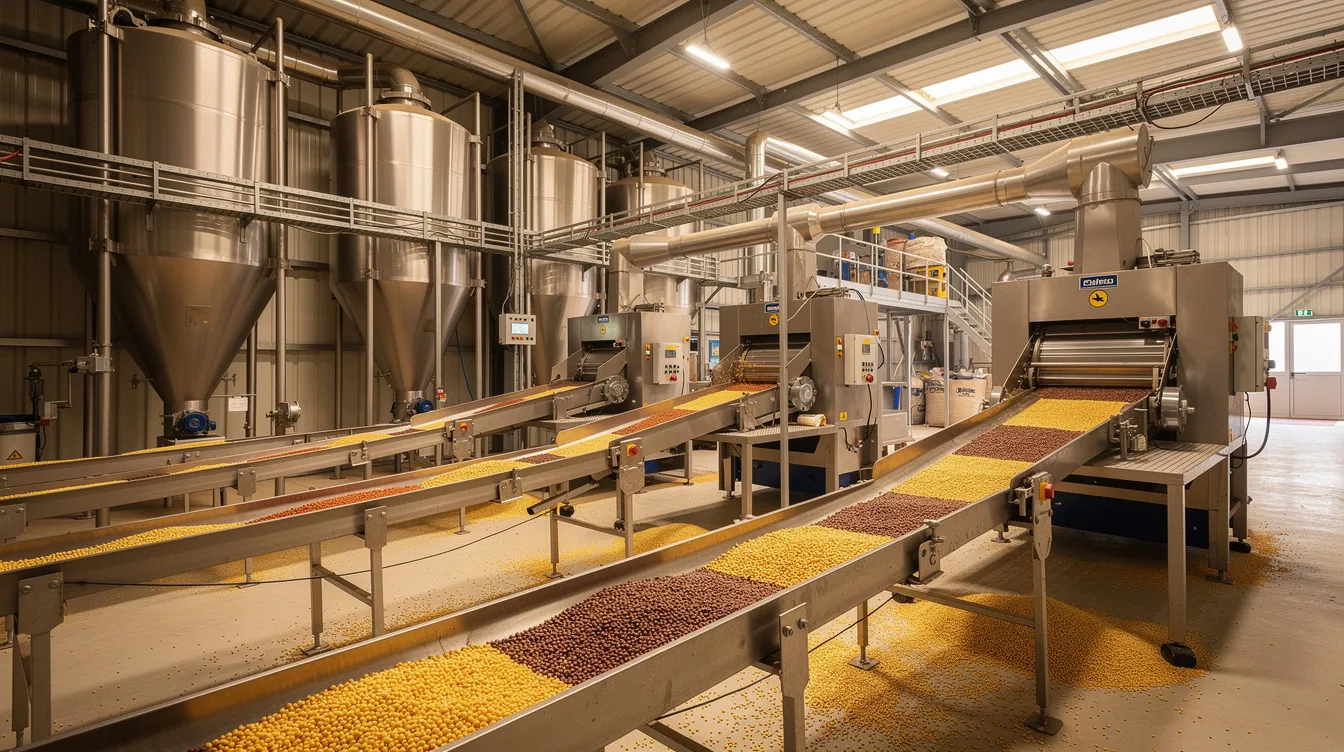
Modernisation vs Capacity Expansion vs Automation
Promoters often use these terms interchangeably. For decision-making and bank discussions, clear distinction is necessary. Improved processing methods enhance product quality and shelf life of pulses, but the route chosen determines investment and returns.
| Parameter | Modernisation | Capacity Expansion | Automation |
|---|---|---|---|
| Objective | Improve efficiency, quality, compliance | Increase TPD/TPH output | Reduce manual handling, improve control |
| Typical investment | New graders, destoners, dust collection, colour sorter, aspiration | Higher-capacity machines, additional lines, storage, power upgrade | Conveyors, PLC controls, sensors, auto bagging |
| Impact on throughput | May improve effective capacity without changing nameplate | Directly increases nameplate and effective capacity | Improves effective capacity through consistency |
| Impact on quality | Significant – better sorting, cleaning, recovery | Moderate – depends on line balance | High – consistency, traceability, reduced rework |
| Impact on labour | Reduces manual rework and handling | May require additional operators | Reduces manual labor and skilled labor dependency |
| Impact on power | Often reduces power per tonne | Increases total power consumption | Mixed – efficiency gains vs. additional controls |
Key considerations:
- Selective machinery replacement – for example, only installing a new colour sorter or replacing an old dehusker – may deliver better ROI than complete plant replacement in many cases.
- Capacity expansion is justified when there is consistent demand, strong local procurement, proven sales channels and adequate working capital. Otherwise, the mill should focus on yield improvement and value addition first.
- Dal mill automation is primarily for consistency, data, safety and labour optimisation. It may not always increase nameplate capacity but can improve effective capacity and reduce unplanned stoppages.
- A modernisation-cum-expansion DPR must quantify separate cost and benefit streams for each element for proper appraisal and dal mill automation ROI analysis.
Identify Bottlenecks Before Increasing Capacity
A classic mistake in dal mill thinking is replacing one high-capacity machine while upstream or downstream sections continue to restrict overall plant throughput. Modernization reduces processing loss through pneumatic conveying systems and closed-loop grading, but only when the entire line is balanced.
Major stages to assess in a typical dal mill unit:
- Raw material receiving, weighing and incoming inspection
- Pre-cleaning and grading
- Destoning and magnetic separation
- Conditioning, tempering and drying (where required)
- Dehusking and splitting operations
- Separation of husk, brokens and whole grains
- Polishing (if market-specific), colour sorting and final grading
- Weighing, bagging, stitching, palletising and dispatch
Critical assessment points:
- Study actual tonnage per hour achieved at each stage, identifying the slowest link in the process chain
- Check utility bottlenecks – inadequate power supply, compressed air, dust extraction and aspiration lines
- Assess storage capacity for raw pulses, intermediate bins and finished products relative to proposed expanded capacity
- Document material flow and identify manual movement, multi-handling or backtracking that waste time and increase losses
- The DPR should propose a balanced line where each stage – from cleaning to packing – can handle the proposed peak throughput without over-stressing any single machine
Machinery and Automation Options for Dal Mill Upgrades
The dal mill machine market now offers a wide range of equipment – from basic dal mill machines to advanced dal mill machines with sophisticated controls. Dal mills require automated, semi-automated, or manual machines depending on scale and budget. The Automatic Dal Mill market was valued at $1.5 billion in 2024, reflecting widespread adoption of higher-technology equipment. Selection must be need-based and budget-conscious, not catalogue-driven.
Cleaning and preparation:
- Upgraded cleaners, graders and destoners for better removal of stones, dust and foreign matter, improving food safety and protecting downstream machines
- Technical specifications should detail the process flow for cleaning, grading, and packaging pulses
Dehusking and splitting:
- Key machines include dehulling, splitting, and polishing machines – the core of any dal mill
- Modernization aims to increase whole-dal recovery using precision rollers and rubber hullers
- Improved dehusking machines with adjustable settings for different pulses, targeting higher recovery and lower brokens
Aspiration and dust control:
- Dust extraction and noise reduction measures are essential for compliance in modernised mills
- Advanced aspiration and dust collection systems improve worker safety and reduce airborne particles
Handling and intermediate storage:
- Bucket elevators, screw conveyors and belt conveyors to reduce manual bag lifting and improve continuous flow
- Intermediate bins and silos to decouple process stages and enable continuous operation across shifts
Quality and finishing:
- Integrating automatic color sorters ensures compliance with food safety standards and is critical for premium retail packs and export buyers
- Polishing options should be discussed with reference to market preference – unpolished segments versus highly polished dal – and are not mandatory for every market
Automation and control:
- Replacing legacy motors with energy-efficient drives reduces power consumption per ton processed; energy efficiency improvements lower labor costs and reduce power consumption overall
- Electric-powered dal mills dominate the market due to efficiency, with electric-powered dal mills having a market valuation of $1.62 billion in 2024
- Common motor powers for dal mill machines include 3.5 HP to 10 HP, and dal mill machines typically operate at capacities of 50-500 kg/hr depending on the stage
- PLC-based control panels, sensors and interlocks to prevent overloads and unsafe operations
- Basic production monitoring and batch traceability systems
- Semi-automatic or automatic weighing, bagging and stitching machines
The dal mill modernisation project report should justify each major machine or automation item in terms of its primary benefit – capacity, quality, compliance or labour saving – to help both promoters and lenders understand the investment logic.
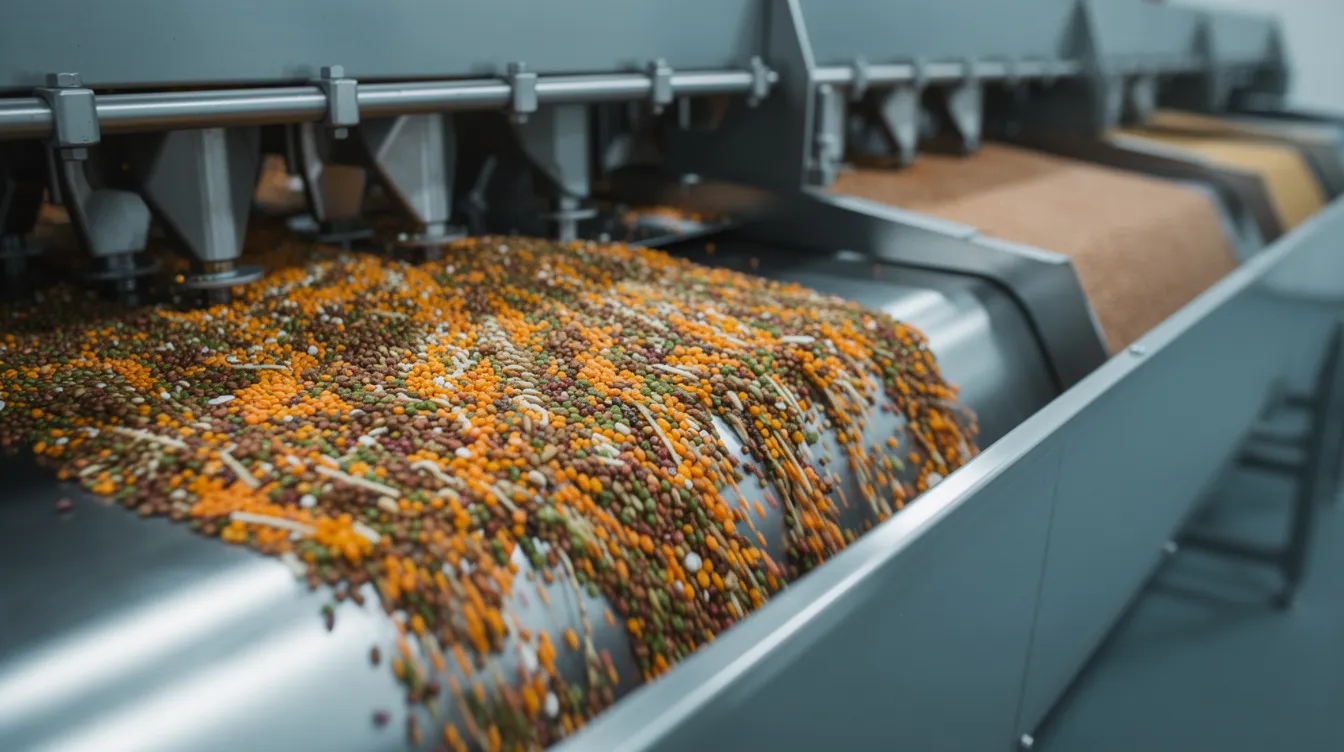
Capacity Expansion Planning, Product Mix and Business Model
Proposed expanded production capacity should be based on realistic demand, raw material availability, finance and management bandwidth – not just machine vendors’ suggestions. A comprehensive business plan outlines operational and financial strategies for the expanded unit. Market analysis identifies local demand and target consumer segments for pulses. The project should identify market demands and competition for sustained profitability. Chana Dal alone reached a market value of $0.81 billion in 2024, reflecting the high demand for processed pulses globally.
Capacity planning parameters:
- Assessment of local and regional raw pulse availability, procurement radius and transportation costs – farmers grow pulses across major production belts, but logistics affect landed cost
- Expected demand from existing buyers, wholesalers, institutional customers, private labels and export houses; market research and market analysis should support volume assumptions
- Planned shifts per day, operating days (typically 270–300 per year) and practical ramp-up schedule over the first 2–3 years
Product mix:
- Share of different pulses in planned capacity and how their processing time, moisture needs and husk removal behaviour affect throughput
- Differentiation between bulk loose sales, contract/private label packing and own brand retail packs, affecting margins and working capital
- Growing demand in the European market and the Asia Pacific region is also relevant for export-oriented units
Business model:
- Own-stock versus job-work dal milling is a critical decision – own-stock ties up more working capital but gives better control over product mix and pricing, while job work reduces price risk but margins depend on processing charges and plant utilisation
- The dal mill expansion project report should clearly state whether projections assume own-stock, job work or a hybrid model, as this directly influences both profitability and bank finance assessment
Land, Building, Layout and Utilities
Many expansion projects underestimate the need for additional covered space, material movement corridors and future expansion allowance. Optimizing plant layout boosts daily throughput with minimal manual intervention.
Layout and building:
- Adequate machinery clearances for safe operation and maintenance access
- Provision for vertical movement (bucket elevators, gravity flow) to minimise cross-movement and manual bag shifting
- Segregation of raw material, in-process and finished goods storage for traceability and hygiene
Utilities and infrastructure:
- Power load estimation for the upgraded automatic dal mill plant, including spare capacity for future machines
- Dust control, ventilation, natural lighting, fire safety compliance and local building codes
- Basic infrastructure – rainwater drainage, internal roads, weighbridge (if warranted by scale) and truck turning space
Phased implementation:
- Where possible, new machinery and civil work should be phased to reduce downtime of the existing plant, with a clear implementation schedule in the DPR
- The project report should include simple layout diagrams (indicative, not to scale) to help banks understand the manufacturing setup and future expansion possibility
Those exploring a completely new site can refer to the article on dal mill feasibility study and project viability for broader greenfield planning considerations.
Dal Mill Modernisation Project Cost and Means of Finance
The total project cost in a dal mill modernisation project report is broader than the machinery supplier’s quotation. The financial analysis must estimate total project costs and means of finance for loan viability. Existing assets, incremental investment and working capital must be considered together.
Major cost heads:
- New dal mill machines and automation (cleaners, graders, destoners, dehuskers, conveyors, colour sorter, packing lines, PLC panels)
- Dismantling, shifting and relocation of existing equipment where reused
- Civil works and building modifications (foundations, mezzanines, dust-proofing)
- Electrical works (cables, panels, transformer or power sanction upgrades)
- Dust collection, aspiration, ducting and material handling
- Storage silos, racks and packing infrastructure
- Freight, insurance, installation and commissioning
- Engineering, consultancy, statutory fees and implementation overheads
- Contingencies for price variation and scope changes
- Margin for enhanced working capital requirements post-expansion
Financial structuring:
- Existing net block of assets should be shown separately from proposed additions to avoid double counting in total project cost
- Outstanding term loans, working capital limits and collateral offered must be clearly presented in the DPR and CMA Data
Means of finance:
- Options include promoter contribution, internal accruals, term loans, working capital limits and, where relevant, unsecured loans from promoters or group concerns
- There is no universal debt-equity ratio; actual structure must be tailored to the promoter’s financials and bank norms
For detailed information on scheme-linked benefits, refer to the guide on dal mill subsidies, bank loans and government schemes. Banks expect internally consistent cost, funding and repayment planning consolidated in a formal detailed project report and CMA Data.
Illustrative Financial Appraisal: Before and After Modernisation
The following numbers are purely hypothetical examples to demonstrate methodology. They are not quotations, industry benchmarks or guaranteed outcomes.
| Parameter | Existing Operations | Post-Modernisation & Expansion |
|---|---|---|
| Installed capacity | 40 TPD | 60 TPD |
| Effective utilisation | 60% (~24 TPD) | 75% over 3 years (~45 TPD) |
| Dal recovery (cleaned input) | 72% | 74% |
| Power per tonne (finished dal) | 65 kWh | 55 kWh |
| Average realisation (blended) | ₹95/kg | ₹100/kg (improved grading) |
| Approximate annual EBITDA | ₹X crore (baseline) | ₹X + incremental benefit |
- Incremental saleable output arises from both higher throughput and slightly better recovery
- Realistic increases in power, labour, maintenance and other operational costs must be reflected rather than assuming flat costs
- Dal output must reconcile with by-products, moisture change and process loss so total material balances are logical
- Incremental benefits should be calculated on a with-project vs without-project basis, avoiding double counting
- Separate analysis is needed for quality-linked price premium (branded, sorted or export-quality good quality dal), supported by credible local market research
For detailed per-kg economics, refer to the article on dal mill production cost and profit margins. The final financial appraisal in the DPR should include profitability, cash flow, break-even analysis and basic return indicators, forming the basis for bank discussions.
Working Capital Requirements After Expansion
Many profitable dal mill expansion projects face stress because dal mill expansion working capital requirements – for raw pulses, stocks and receivables – were underestimated in the planning stage.
Own-stock processing:
- Increased investment in raw material inventory due to higher throughput and potentially longer procurement seasons
- Larger finished goods stock to support continuous dispatch and maintain service levels
- Higher receivables where credit terms remain unchanged but sales volume rises
Job-work or hybrid models:
- Reduced exposure to raw material price risk but dependence on a few key clients
- Lower inventory but possible need for additional short-term finance to handle seasonality
Working capital requirements must be translated into working capital margin (promoter’s share) and cash credit or working capital demand loan limits from banks. Readers seeking a deeper explanation of stock financing and drawing power can refer to the guide on dal mill working capital and cash credit requirements.
Even where a term loan is sanctioned, inadequate working capital limits can restrict practical utilisation of the expanded plant.
Financial Projections, DSCR and Repayment Planning
Any bankable dal mill modernisation project report must include integrated 5–7 year financial projections. Financial projections assess capital costs, working capital needs, and profitability indicators. Investors require detailed financial statements projecting profitability and cash flow for 5-7 years.
Projection components:
- Year-wise capacity utilisation build-up (e.g., 50%, 65%, 75%, 80% of rated capacity)
- Assumptions for dal selling prices, by-product realisation, raw material cost, wages, power and maintenance
- Planned term loan disbursement schedule, interest rate assumptions, repayment tenor, instalment frequency and moratorium period
DSCR and repayment:
- DSCR calculations should consider the combined obligations of existing and proposed term loans
- Installation downtime, commissioning delays and ramp-up periods reduce initial cash flows and must be factored into repayment planning
CMA Data is prepared based on disclosed assumptions and historical performance. It is not a certification of future profits but a structured presentation for banks. Promoters should seek professional help for preparing bank-compliant financial projections and financial modelling. For DPR preparation support, see bank finance DPR and loan proposal assistance.
Feasibility, ROI, IRR, Payback and Sensitivity Analysis
New machines and improved throughput do not automatically mean the investment is economically viable. A proper feasibility study must distinguish between project feasibility – whether the combined investment is commercially justified – and operational improvement.
- ROI (Return on Investment) measures the return relative to total capital deployed; IRR (Internal Rate of Return) considers the time value of money; payback period estimates how long before the investment is recovered
- Project returns (on total investment) differ from equity returns (on promoter capital); additional term loans leverage both upside and downside
Sensitivity analysis should test:
- Small changes in raw pulse prices and finished dal realisations
- Lower-than-planned capacity utilisation in the first 2–3 years
- Project cost escalation and commissioning delay scenarios and their effect on IRR and DSCR
- Interest rate changes, delayed receivables and extended inventory holding
Even a 2% improvement in recovery can yield substantial extra output – but the financial model must show whether the investment required to achieve it is justified. For deeper numerical illustrations, see the article on dal mill ROI, IRR, payback and sensitivity analysis. A structured project feasibility study is usually undertaken before finalising large investments.
Approvals, Licences and Government Scheme Eligibility
Expansion or modernisation of an existing dal mill may alter compliance requirements. Location compliance with zoning laws is vital for dal mills. Statutory approvals include FSSAI registration and pollution control clearances.
Key approvals to review:
- FSSAI registration or licence conditions if product categories, volumes or packaging formats change
- Pollution control consents where expanded capacity alters emissions
- Factory licence, labour law registrations and fire safety clearances if building layout, manpower or installed horsepower changes
- Power connection sanction for increased connected load
Government schemes and subsidies:
- Various central and state schemes for agro-processing, small and medium enterprises and medium enterprises may support eligible projects, subject to specific conditions
- Government funding for agricultural machinery increased by 15% last year, reflecting government support and government initiatives for the sector
- Eligibility depends on enterprise size, location, nature of investment and timely application; government schemes vary by state
For a step-by-step list of regulatory compliances, see dal mill licences and approval requirements. No DPR or consultancy can guarantee approval of subsidy or benefits under any government scheme; these are subject to the rules and discretion of the concerned authorities.
What Banks Examine in a Dal Mill Modernisation or Expansion DPR
For an existing dal mill, banks focus heavily on historical performance along with incremental project viability. A standard project report includes an executive summary, market potential, and financial projections. The executive summary outlines the existing mill’s capacity, bottlenecks, and rationale for modernization.
Key examination points:
- Last 3–5 years audited financial statements, trends in turnover, margins and net profit
- Existing term loans, working capital limits, repayment history and bank conduct
- Clarity of project scope and cost estimates supported by machinery quotations and realistic implementation schedule
Business and market aspects:
- Evidence of market demand for expanded volumes or upgraded product quality – buyer commitments, past market growth, competitive landscape
- Competitor presence in local markets and the promoter’s strategy to maintain or improve market share
Technical and financial appraisal:
- Balanced machinery configuration, realistic capacity utilisation assumptions and well-thought-out plant layout
- Integrated financial projections showing sufficient cash accrual to service existing plus proposed debt, with acceptable DSCR levels
DPRs for modernisation differ from greenfield reports because they must separate base business performance from incremental project benefits and show the combined post-project position clearly. Banks may also seek clarification rounds, site visits and discussion on working capital arrangements.
Promoters can use WhatsApp to connect with Project Report Bank for bank finance DPR and loan proposal assistance.
Documents and Information Required for a Dal Mill Modernisation DPR
Good quality inputs from the promoter significantly improve the relevance and accuracy of a dal mill expansion project report.
- Basic unit details: ownership, constitution, GST, PAN, existing registrations and licences
- Last 3–5 years audited financial statements, income-tax returns and current year provisional results
- Sanction letters and latest statements for all existing term loans and working capital limits
- Details of collateral offered, personal guarantees and any restructuring history
- Existing machinery list with make, model, year and current condition
- Historical production data by pulse type, capacity utilisation, downtime and recovery percentages
- Power consumption records and major maintenance events
- Quotations or budgetary offers for new dal mill machinery upgrade, automation and civil/electrical works
- Proposed expanded capacity, product mix, shift pattern and business model (own-stock vs job work)
- Site details including available land, building drawings and utilities
- Details of major buyers and suppliers, indicative sale price ranges by product
Collation of this information in a structured format enables professional preparation of the detailed project report and CMA Data for submission to banks and financial institutions.
Common Mistakes in Dal Mill Modernisation and Capacity Expansion
Avoiding common planning errors can save substantial capital, time and stress for small mill owners and larger dal mill businesses alike.
- Buying individual high-capacity machines without first mapping process bottlenecks, resulting in low effective throughput
- Assuming immediate full utilisation of expanded capacity instead of planning a phased ramp-up
- Ignoring enhanced working capital needs, leading to cash shortages and under-utilisation
- Overestimating dal recovery percentages or sale prices based only on supplier brochures rather than historical experience
- Underestimating installation downtime, causing longer production disruption than planned
- Treating government subsidy as guaranteed and building it into repayment capacity before formal sanction
- Relying solely on machinery supplier profitability claims without commissioning an independent financial appraisal – a solid project report or professional report prepared independently provides a more reliable basis for decision-making
- Not conducting proper market research on the competitive landscape before committing to expansion
Promoters should rely on a properly prepared dal mill modernisation project report, cross-checked with their own crops of experience, before committing to major investment decisions.
How CA Manish Gugliya and Project Report Bank Can Assist
Project Report Bank is a Chartered Accountant-led professional advisory platform for dal mill promoters across India – not a generic template marketplace or finline project report vendor. The focus is on project-specific financial appraisal and documentation.
- Preparation of customised detailed project reports covering technical assumptions, project cost, means of finance and financial projections for upgraded dal mills
- CMA Data preparation for bank loans, including working capital assessment and projected financial statements
- Project feasibility and viability studies including profitability, cash flow, DSCR, break-even, ROI and IRR for dal mill expansion projects
- Loan structuring, repayment planning and assessment of incremental working capital limits required post-expansion
- Assistance with bank loan proposal preparation, responses to appraisal queries and financial overview documentation
- Investor-ready DPR and financial models where equity or private investment is being considered
Engineering design, construction execution and statutory approvals remain the responsibility of the promoter and qualified technical professionals. Project Report Bank focuses on financial, commercial and documentation aspects.
Dal mill owners planning projects of ₹5 crore or higher are encouraged to initiate a WhatsApp enquiry with basic details of their existing unit and proposed expansion so that a tailored scope and fee proposal can be shared.
Frequently Asked Questions (FAQs)
The following questions address practical concerns frequently raised by dal mill promoters considering modernisation, expansion or automation projects.
How long does it typically take to complete a dal mill modernisation and expansion project?
Timelines vary with scope but typically involve 3–6 weeks for data collection, planning and preparation of the dal mill modernisation project report; 1–3 months for machinery ordering and delivery depending on supplier schedules; 3–8 weeks for civil, electrical and installation work, often phased to minimise downtime; and additional time for trial runs, stabilisation and ramp-up. A proper plan with a detailed implementation schedule should be part of the DPR. These are indicative ranges – each project schedule must be customised.
Can I modernise my dal mill in phases instead of doing a single large project?
Phased modernisation is common and often advisable, especially where cash flow or working capital is constrained. The DPR can be structured into Phase I (critical bottlenecks, essential safety and dust control) and Phase II (capacity enhancement, automation, value-added packing), with cost estimates for each phase. Banks may still prefer visibility on the full roadmap but can finance one phase at a time. This approach also helps dal mill businesses manage their business journey with lower risk.
What information should I prepare before approaching a professional for a dal mill expansion project report?
At minimum, prepare last 3 years’ financial statements, current bank limits and outstanding loans, a machinery list with conditions, production and recovery data, typical selling prices and key buyers, and a brief note on desired future capacity and product mix. Even basic training in organising this data – or having your accountant compile it – accelerates DPR preparation and improves the quality of financial projections. The more structured your inputs, the faster you can accept reports and move toward bank submission.
Does automation always reduce manpower significantly in a dal mill?
Automation mainly reduces manual handling, repetitive tasks and dependency on skilled labor at critical points. It may not eliminate all labour. Some roles shift from manual work to monitoring, maintenance and quality assurance, including food safety training for operators. Dal mill automation ROI should be evaluated on total benefits – throughput, consistency, safety, data, reduced rework – rather than only headcount reduction. A small dal mill may see proportionally different gains from automation compared to a larger unit, and efficient operations depend on how well the technology is integrated with existing workflows.
Is a dal mill a stable business given pulse production and market growth trends?
Pulse production in India supports consistent demand, and people eat dal across all income segments, making it a stable business with relatively predictable consumption patterns. The Asia Pacific region remains the largest market. Dal mill helps maintain food security, and the health benefits of pulses are gaining traction globally. However, profitability depends on maintaining product quality, managing operational costs, securing good quality dal output, and having a proper business plan. Market growth projections are favourable – the growth rate in the dal mill machine market reflects technological advancements and value addition trends – but individual mill profitability requires disciplined project planning and financial management, not just favourable industry trends. Those looking to sell directly to retail or export to the European market need to invest in food safety, grading and packaging standards.