Key Takeaways
- A moong dal processing plant can be established at various scales – from a 2–5 TPD mini dal mill to a 20 TPD semi-automatic or fully automatic unit – each requiring different levels of investment, machinery, and working capital.
- A professionally prepared moong dal processing plant project report covering capacity planning, dal mill machinery, project cost, means of finance, recovery assumptions, and financial projections is essential for securing bank finance, applying under the PMFME scheme, and evaluating commercial viability before committing capital.
- Profitability depends primarily on the raw moong procurement price, dal recovery percentage (typically 72–78%), capacity utilisation ramp-up, and working capital discipline – not merely on installed capacity.
- This article, written from the professional perspective of CA Manish Gugliya, FCA, DISA (ICAI), covers market opportunity, manufacturing process, machinery, project cost, means of finance, financial projections, licences, subsidies, risks, and DPR preparation for moong dal processing in India.
- Serious entrepreneurs and MSME promoters planning a moong dal, green gram, or multi-pulse dal mill project can contact Project Report Bank via WhatsApp for customised DPR, CMA Data, financial modelling, and bank loan proposal assistance.
Introduction – Moong Dal Processing Plant Project Report in India
India is among the world’s largest producers and consumers of pulses, and green gram (moong) holds a prominent position in this market. Processed moong dal – split and dehusked – is in steady demand across households, hotels, institutional kitchens, packaged food brands, and export channels. This consistent consumption base makes moong dal processing a viable manufacturing opportunity for entrepreneurs willing to plan carefully.
A moong dal processing plant project report is a detailed technical and financial document covering plant capacity, dal mill plant layout, machinery selection, project cost, working capital, profitability, DSCR, and risk analysis. A Detailed Project Report is essential for securing funding and regulatory approval from banks, financial institutions, and government subsidy schemes. Generic templates are inadequate for serious projects; customised assumptions for raw moong procurement, recovery rates, power cost, labour cost, utilisation ramp-up, and financing structure are required.
This article is prepared from the perspective of CA Manish Gugliya, FCA, DISA (ICAI), founder of Project Report Bank, with more than 20 years of experience in DPR preparation, CMA Data, project finance advisory, and MSME consulting. Readers planning a moong dal or green gram dal mill project can reach out through WhatsApp for customised DPR and bank loan support.
What Is a Moong Dal Processing Plant?
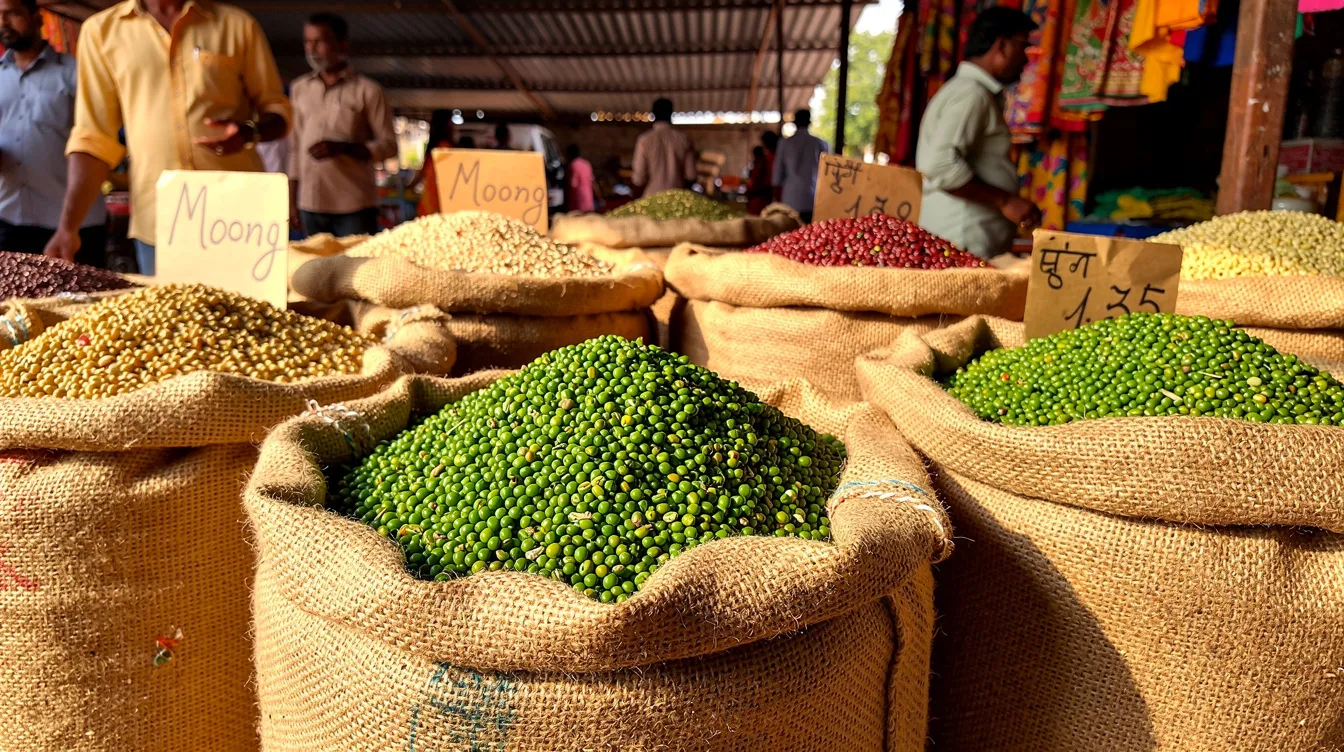
Moong dal is processed green gram (Vigna radiata). The market recognises several commercially relevant product grades: whole green gram (sabut moong), split green gram with husk (chilka moong), dehusked yellow split moong dal, and moong dal flour or other value-added products. Packaging formats vary based on target customers such as retailers, wholesalers, and commercial kitchens – from 500 g consumer packs to 50 kg wholesale bags.
A moong dal processing plant cleans, grades, dehusks, splits, optionally polishes, and packs green gram into these marketable forms. Moong dal processing involves cleaning, grading, dehusking, splitting, and polishing as core operations. Many plants are designed as flexible dal mill units that can also handle processing pulses like black gram (urad), pigeon pea (toor), and Bengal gram (chana), but this article focuses primarily on moong dal.
Capacity is typically expressed in TPD (tonnes per day) of raw green gram input. The output yield is determined by the milling recovery percentage. Estimated production capacity and yield percentages impact revenue projections for the processing plant directly. By-products such as broken dal, husk, and powder also have commercial value as cattle feed ingredients.
Market Demand and Business Opportunities in India
Moong dal enjoys regular household consumption across India – khichdi, dal fry, sprouts, and sweets are staple uses. Institutional demand from canteens, hostels, hospitals, and HORECA segments adds consistent volume. A market feasibility study for any moong dal project should identify both the demand for finished products and reliable procurement sources for raw green gram.
Key customer segments include mandi traders and wholesalers in pulse-producing states (Rajasthan, Maharashtra, Madhya Pradesh, Karnataka), modern retail chains demanding consistent-quality packaged dal, private-label brands looking to outsource dal milling, and potential export traders. Utilizing local agricultural production minimises raw material transport costs in dal processing, and plants located near mandis can reduce logistics waste significantly.
The competitive landscape includes local mini dal mill units and larger automatic plants. Customer satisfaction depends on consistency in colour, natural shine, and low breakage – these factors determine repeat orders. Growing demand for unpolished and minimally processed pulses, increasing share of packaged pulses in modern retail, and innovation in ready-to-cook formats are trends that are widely appreciated by the industry. While moong dal demand is structurally strong, margins are competitive, and a professional project feasibility study is essential to understand price volatility risk and realistic profit expectations.
Moong Dal Processing Plant Capacity Planning
Capacity planning is among the most critical decisions in any moong dal processing plant project. Wrong capacity can either underutilise investment or create repayment stress. Capacity here is expressed as raw green gram input per day, assuming a single 8-hour shift and approximately 300 operating days per year.
| Parameter | 5 TPD | 10 TPD | 20 TPD |
|---|---|---|---|
| Raw green gram input per day | 5 tonnes | 10 tonnes | 20 tonnes |
| Annual raw input (300 days) | 1,500 tonnes | 3,000 tonnes | 6,000 tonnes |
| Indicative manpower | 8–12 persons | 18–25 persons | 25–40 persons |
| Suitable business scale | Micro / small enterprise | MSME / regional processor | Medium-scale regional |
| Likely market strategy | Local mandis, nearby towns | Regional distribution, bulk | Multi-state, institutional, branded |
For a detailed comparison of dal mill capacity planning at 5, 10, 20 and 50 TPD, promoters may refer to dedicated capacity-planning resources.
Professional DPRs typically assume a utilisation ramp-up: Year 1 at 50–60%, Year 2 at 70–75%, and Year 3 onwards stabilising around 80–85%. Higher automation supports higher throughput and lower per-tonne labour cost but requires greater investment. Mini dal mill machines can process 100 kg of raw material per hour and suit micro-scale operations, while automatic plants operate efficiently at 10 TPD and above.
Promoters should choose capacity based on assured raw green gram supply, consistent market demand, equity strength, bank finance eligibility, and availability of land, electricity connection, and skilled labour. Those considering diversification into multiple pulses may evaluate an integrated multi-pulse processing plant project report.
Moong Dal Manufacturing Process and Flow Chart
Moong dal processing is a series of cleaning, conditioning, dehusking, splitting, separation, and finishing operations carried out through specialised dal mill machinery. The process flow is as follows:
- Raw Green Gram Procurement and Intake – quality checks for moisture, foreign matter, grain uniformity
- Pre-Cleaning – removal of stones, dust, and chaff using a cleaner and destoner
- Grading – sorting by size using a grader for uniform dehusking
- Conditioning – tempering with controlled moisture to weaken husk adhesion; rest period of several hours
- Dehusking / Pitting – emery rollers or similar mechanisms separate the husk from the kernel
- Splitting – kernels are split into two halves
- Separation – aspirators and graders separate husk, brokens, and whole kernels
- Optional Polishing – if the market demands dal with a natural shine
- Final Grading and Quality Check – quality control systems ensure that finished product meets required specifications
- Weighing, Packing, and Dispatch
Process parameters – conditioning time, moisture percentage, roller speed, number of passes – change depending on the desired product (chilka versus fully dehusked moong dal), raw grain hardness, and technology used. Efficient process design aims for higher dal recovery, minimal powder and broken loss, consistent product quality, and a dust free operation that protects workers. For a deeper exploration of these steps, readers may refer to the dal milling process and flow chart.
Moong Dal Processing Plant Machinery and Equipment
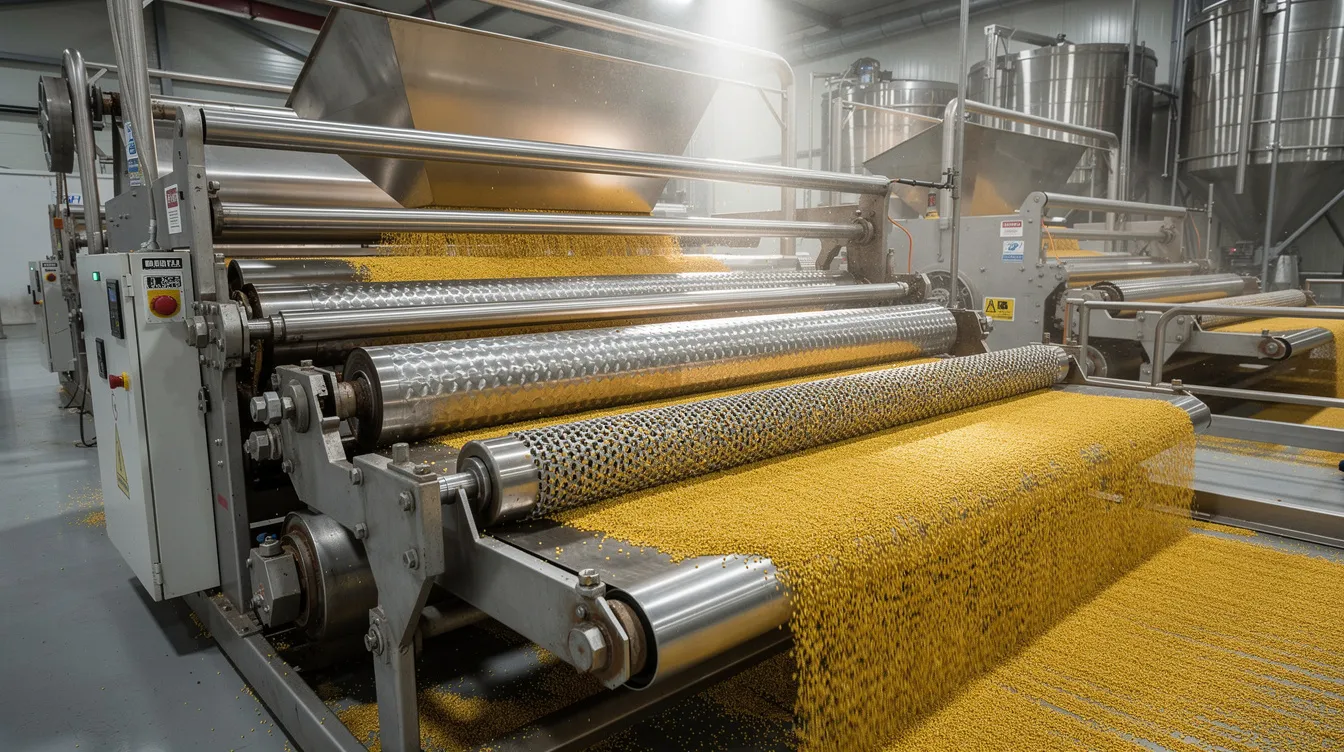
Machinery selection depends on capacity, product mix, automation level, and budget. Essential machinery includes a dehusker, splitter, polisher, and grader as core machines, supported by cleaning and material-handling equipment. Investments in machinery and infrastructure directly affect the operational efficiency of processing plants.
| Machine / Equipment | Main Function |
|---|---|
| Pre-cleaner / vibro cleaner | Removes dust, chaff, and light impurities |
| Destoner | Removes stones and heavy impurities to protect downstream machinery |
| Magnetic separator | Removes ferrous contaminants |
| Grader | Sorts grain by size for uniform processing |
| Conditioning bins / dryer | Adjusts moisture content before dehusking |
| Dehusker (emery roller) | Removes outer husk from green gram |
| Splitter / huller | Splits dehusked grain into two halves |
| Aspirator / separator | Separates husk, brokens, and finished dal |
| Polishing machine | Provides surface finish if required by market |
| Elevators and conveyors | Material handling between stages |
| Dust collection / cyclone | Ensures dust free operation and reduces pollution |
| Weighing and packing machine | Final bagging – manual, semi-automatic, or automatic form-fill-seal |
A mini dal mill machine is designed for efficient pulse milling at lower capacities. Moong dal mill machines cost around ₹1,70,500 per piece for smaller models. For semi-automatic versus fully automatic vs semi-automatic dal mill comparisons, promoters should evaluate labour savings against higher capital cost. Machinery cost and specifications change widely between suppliers and regions; the project report should use indicative costs based on current vendor quotations. For detailed ranges, see dal mill machinery and equipment cost.
Moong Dal Processing Plant Setup Cost in India
All cost figures in this section are illustrative, based on typical MSME-level assumptions in India as of FY 2025–26. Actual figures must be validated with current quotations and local conditions. Project cost for a dal mill typically ranges from ₹15 lakh to ₹1 crore for micro to small units, while medium-scale plants require significantly higher investment.
The ideal project profile for a moong dal processing plant includes details of capacity, planned outputs, and area requirements alongside the following cost components:
| Cost Component (Illustrative 10 TPD Plant) | Indicative Range (₹ Lakh) | Remarks |
|---|---|---|
| Land and site development | 40–60 | Varies by location; often promoter-contributed |
| Factory building and civil work | 90–160 | Processing hall, storage, office |
| Plant and machinery | 180–300 | Dal mill line, packing, material handling |
| Electrical installation | 30–50 | Transformer, panels, cabling, pulses electricity connection |
| Utilities and support equipment | 10–25 | Compressor, water system, DG set |
| QC instruments, furniture, office | 5–15 | Moisture meter, weighing equipment |
| Preliminary and pre-operative expenses | 20–35 | Consultancy, interest during construction |
| Contingencies (5–10%) | 20–40 | Risk buffer |
| Working capital margin | 70–120 | Raw material stock, receivables, cash |
| Total illustrative project cost | 465–805 | Subject to actual quotation and scope |
A 2 TPD dal mill’s machinery cost is approximately ₹10–15 lakh. For a deeper cost breakdown, refer to dal mill plant setup cost in India. The DPR must clearly separate fixed capital investment from working capital margin, as required in CMA Data submissions.
Land, Building and Infrastructure Requirements
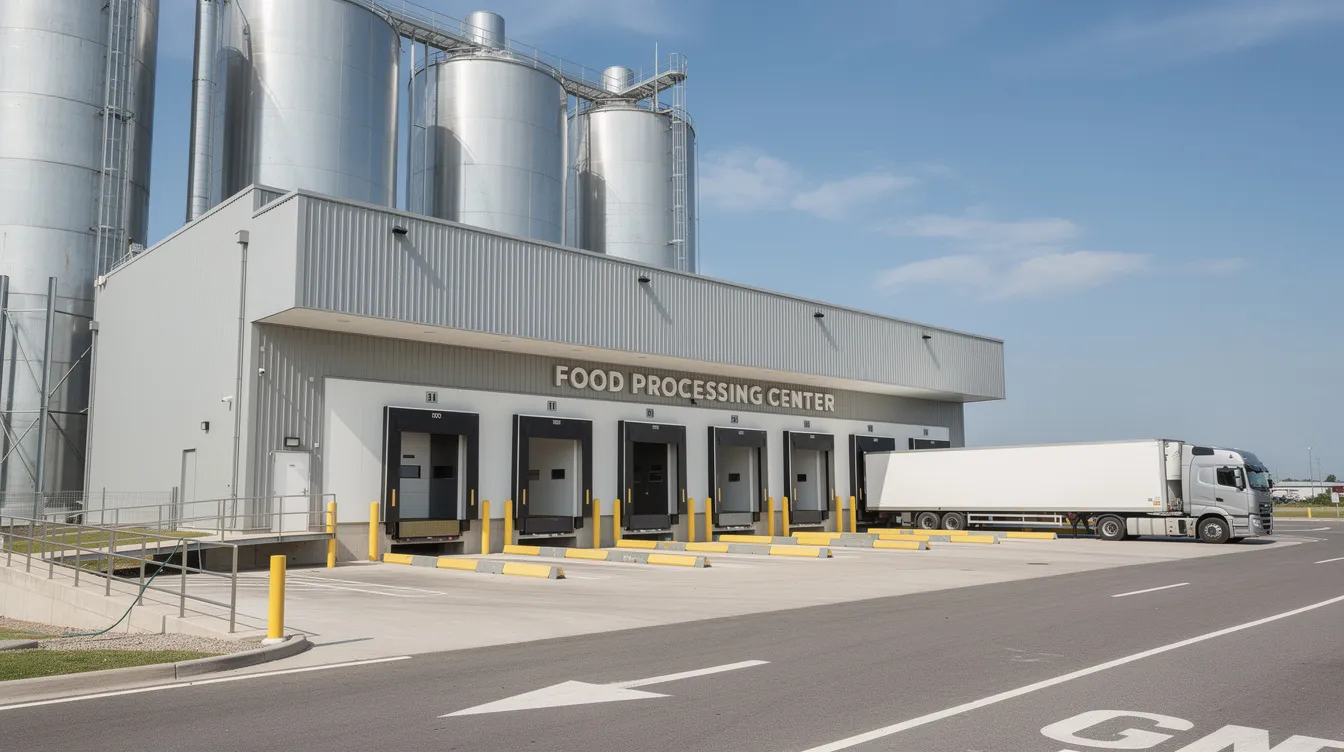
Land requirement for a 5–10 TPD moong dal processing plant depends on building layout, storage needs, and future expansion space. Plant layout should optimise workflow from raw material handling to finished product dispatch with minimal backtracking.
Key functional areas include:
- Raw green gram receiving, sampling, and storage (silos or godowns)
- Pre-cleaning and processing hall with adequate headroom for elevators
- Finished dal and by-product storage zone
- Packing and dispatch bay with loading/unloading access
- Utilities area – transformer yard, DG set, compressor room
- Quality control lab, staff facilities, and office
Infrastructure design should ensure proper ventilation, dust control, and exhaust systems to handle husk and fines. A reliable three-phase electricity connection, all-weather road connectivity, and water source for basic hygiene are essential. The DPR should include a basic plant layout drawing and area statement for compliance with factory and municipal regulations. For more details, see dal mill land, building and plant layout requirements.
Raw Moong Procurement, Recovery Percentage and Yield
Raw material cost is the single largest expense in a moong dal mill. Even small changes in purchase rate or milling recovery percentage can significantly affect profitability and DSCR. Moong dal processing affects raw material recovery and revenue generation at every stage.
Key quality parameters at procurement include moisture content (ideal 10–12%), foreign matter, damaged grains, and uniformity of grain size. Research from ICRISAT field studies shows that milling yield of finished moong dal is approximately 75%, with husk, brokens, and process losses making up the remainder.
Illustrative Mass Balance – Per 1,000 kg Raw Green Gram Input
| Output Category | Yield (%) | Quantity (kg) |
|---|---|---|
| Finished yellow moong dal (dehusked, split) | 72–78% | 720–780 |
| Brokens and chips | 8–12% | 80–120 |
| Husk and powder | 10–15% | 100–150 |
| Process / handling loss | 1–2% | 10–20 |
| Total | 100% | 1,000 |
Better cleaning and conditioning raise dal recovery. Over-polishing may increase shine but also generates more fines. By-products – husk and powder sold as cattle feed, brokens sold at discount – must be included in DPR revenue. A professional financial model should test optimistic recovery (78%), base-case, and conservative recovery (72%) scenarios and evaluate the impact on profitability and break-even when raw moong price or dal selling price changes.
Moong Dal Mill Project Cost and Means of Finance
Banks and financial institutions normally look for a reasonable balance between promoter contribution (equity) and term loan. Promoter’s contribution is typically 10% of the project cost or higher depending on lender requirements and scheme conditions.
An illustrative means of finance structure for a medium-capacity moong dal processing plant:
- Promoter’s equity: 25–40% of total project cost (including land and margin money for working capital)
- Term loan: Covers remaining fixed capital; loan repayment period is usually 5–7 years at 9–12% interest
- Working capital facility: Separate cash credit or overdraft for inventory and receivables
The DPR must present a year-wise repayment schedule, interest calculations, and DSCR under both base-case and stress-case scenarios. Higher promoter contribution provides comfort to banks and may improve sanction terms. Land cost may be treated separately – many banks prefer land already in the promoter’s name as part of equity contribution. Working capital is crucial for managing raw material inventory and operational costs in dal processing. Final sanction terms depend on each lender’s appraisal, borrower profile, and prevailing guidelines.
Moong Dal Processing Plant Financial Projections
Financial projections for a moong dal mill normally cover at least 5 years. The DPR must include technical specifications and financial projections built on integrated assumptions about capacity utilisation, raw green gram purchase price, dal and by-product selling prices, recovery percentages, direct processing costs, overheads, interest, and depreciation. Five-year financial projections must include profit and loss statements, cash flow, and balance sheet.
Key projected statements in a bankable project report:
- Projected profit and loss account
- Projected cash-flow statement
- Projected balance sheet
- Working capital assessment and holding levels
- Key ratios – gross margin, net margin, DSCR, current ratio, ROI, IRR
Realistic assumptions are critical: capacity utilisation in initial years should be moderate, selling price assumptions must reflect market realities, and power tariff and labour cost must reflect local conditions. The projections are decision-support tools, not guarantees of performance. Specialised financial modelling with scenario and sensitivity analysis is particularly helpful for larger plants or when approaching multiple lenders.
Moong Dal Mill Profitability, ROI, DSCR and Break-Even Analysis
The main profitability drivers are the gross milling spread (difference between raw moong cost per kg and blended realisation from dal plus by-products), dal recovery percentage, capacity utilisation, and efficient use of power and labour. Net profit margin is estimated at 8–12% of sales for a well-operated moong dal plant.
Key financial indicators in a DPR:
- EBITDA margin – operating profitability before interest and depreciation
- ROI – return on total project cost
- IRR – internal rate of return over project life
- DSCR – Debt Service Coverage Ratio should be above 1.5 for comfortable debt servicing; banks typically require this as a minimum
- Break-even point – typically achieved within 12–18 months for a well-planned unit, calculated by segregating fixed versus variable costs and determining the contribution margin per tonne
An investment analysis should include ROI, NPV, and cash flow assessments for understanding financial viability. Sensitivity analysis assesses potential impacts of price fluctuations and operating costs on project viability – for example, testing profitability when raw moong price increases by 5–10%, or when actual yield is below expected levels. The distinction between accounting profit, cash flow, and loan repayment capacity is important; even a profitable plant can face cash stress without adequate working capital planning.
Licences, Registration and Regulatory Requirements
Statutory approvals are required for food safety, pollution control, and business registration. Typical requirements for a moong dal processing plant in India include:
- Business constitution registration (proprietorship, partnership, LLP, company)
- Udyam registration for MSME status
- FSSAI registration or licence as a food processing unit
- GST registration for inter-state supplies or above-threshold turnover
- Factory licence and local municipal approvals
- Basic labour-law registrations (ESI, EPF) where applicable
- Pollution control consent – though dal milling is largely dry, dust and noise considerations apply
- Fire safety NOC and building approvals
- Legal metrology and packaging compliance for consumer packs
FSSAI licensing requires adherence to basic food safety, hygiene, and record-keeping standards. Promoters should verify state-specific regulations and allow time buffers in the implementation schedule, as some approvals can influence project timelines.
Government Subsidies and Bank Loan Opportunities
Government schemes may provide financial support for food processing enterprises. The PMFME scheme offers a 35% capital subsidy, with a maximum of ₹10 lakh per unit. A detailed project report (DPR) is mandatory for PMFME subsidy applications. Eligible project costs for PMFME range from ₹15 lakh to ₹1 crore, and the PMFME scheme supports micro food processing enterprises only. Eligible applicants include individuals, cooperatives, and SHGs. The subsidy is released in two installments after loan disbursement.
Other potential support includes MSME credit guarantee coverage (such as CGTMSE-backed lending), interest subvention in select states, and electricity duty concessions. State-specific incentives for food processing are documented in the MoFPI compendium of state schemes.
Bank finance for moong dal mills is typically structured as a term loan for fixed assets and working capital limits for operating needs. Banks assess project feasibility, collateral, promoter background, and DSCR before sanction. Subsidies are not guaranteed – availability depends on government budget, scheme validity, and meeting all conditions. Entrepreneurs should not treat potential subsidy as the sole basis for project viability. A professionally prepared DPR, together with proper CMA Data, helps present a clear case to banks.
Moong Dal Processing Plant Risks and Challenges
Risk management strategies should be built into every moong dal processing plant project report. Major risks include:
- Raw material price volatility – green gram prices fluctuate with season, monsoon quality, and import competition
- Recovery percentage risk – if actual dal yield is lower than assumed, revenue per tonne reduces substantially, impacting profitability and DSCR
- Working capital tightness – delay in payments from buyers, or holding large stocks when prices fall
- Margin compression – competition from local and larger dal mill players can pressure selling prices
- Machinery downtime – regular maintenance and preventive measures reduce downtime and enhance plant productivity
- Dust and husk management – must be properly planned to avoid pollution concerns
- Regulatory changes – GST rates, food safety norms, and scheme modifications
Risk management strategies include diversifying suppliers and ensuring regulatory compliance, hedging procurement through staggered purchases, maintaining strong vendor and buyer relationships, preventive maintenance schedules, adequate insurance, and building conservative assumptions into the financial model. Sensitivity and scenario analysis in the DPR helps promoters and lenders understand how changes in prices, yields, or volumes can affect cash flow and loan servicing.
Importance of a Bankable Moong Dal Processing Plant DPR
A bank-ready DPR demonstrates project viability for loans. CMA data and DSCR calculations are essential in the DPR. The DPR must include a market analysis and projected turnover alongside technical details.
Key components of a strong moong dal processing plant project report:
- Promoter profile and management background
- Detailed project description – capacity, product mix, process flow, machinery list
- Location analysis and raw material availability
- Market potential and marketing strategy
- Detailed project cost estimate with quotations and assumptions
- Means of finance with equity and loan structure
- Implementation schedule and key milestones
- Projected financial statements and key ratios
- Break-even and DSCR analysis
- Sensitivity and risk analysis
Lenders examine promoter contribution adequacy, reasonableness of cost and price assumptions, working capital cycle, projected DSCR, and security cover. CMA Data is prepared alongside the DPR, including projected balance sheet, profit and loss, cash flow statements, and ratio analysis. Professional DPR preparation reflects structured analysis – it does not constitute certification or guarantee of performance. For bank finance DPR and loan proposal assistance, promoters can engage specialised advisory support.
How CA Manish Gugliya and Project Report Bank Can Assist
Project Report Bank is a CA-led professional advisory platform – not a generic template seller – headed by CA Manish Gugliya, FCA, DISA (ICAI), with a team engaged in DPR preparation, CMA Data, project finance, and feasibility studies for manufacturing and agro-processing projects across India.
Services relevant to moong dal and other dal mill projects include:
- Customised moong dal processing plant Detailed Project Reports with capacity-specific costing and projections
- CMA Data preparation and working capital assessment for bank loans
- Financial projections and financial modelling with scenario and sensitivity analysis
- Project cost estimation and means of finance planning
- DSCR, break-even, ROI, and IRR analysis
- Guidance in structuring bank loan proposals and documentation support
- Project feasibility study services for promoters evaluating whether to proceed
Bank Finance DPR and Loan Proposal Assistance services for MSME projects typically start from around ₹25,000, with final professional fees depending on plant capacity, complexity, and scope. All reports are prepared with project-specific assumptions and discussions with clients, not reused templates.
Interested promoters can share basic project details – location, proposed capacity, estimated investment, current status – via WhatsApp for an initial discussion.

Frequently Asked Questions
The following questions address common practical queries from first-time moong dal mill promoters beyond what is covered in the main sections above.
What is the typical investment required for a small moong dal processing plant in India?
For a small-scale mini dal mill processing moong dal at 2–5 TPD input, total project cost – including basic building, machinery, and working capital – can range from several tens of lakh rupees upward depending on location, automation level, and whether land is owned or leased. Eligible project costs for PMFME range from ₹15 lakh to ₹1 crore. Micro-entrepreneurs sometimes start by leasing premises and gradually expand as sales volumes grow. A customised DPR based on actual quotations is essential to arrive at an accurate cost estimate for any specific project.
Is it necessary to process only moong dal, or can the same plant handle other pulses?
Many dal mill plants are designed as multi-pulse facilities able to handle green gram (moong), black gram (urad), pigeon pea (toor), and Bengal gram (chana) using largely the same core machinery with adjustments in settings and sieves. A dedicated moong dal plant can be optimised for that crop’s characteristics, but diversification may reduce risk from seasonal availability and price swings. Those interested can explore an integrated multi-pulse processing plant project report as an alternative model.
How many workers are required to operate a moong dal mill?
Manpower depends on plant capacity and automation level. A small 2–5 TPD mini dal mill may operate with 6–10 workers, while a 10–20 TPD semi-automatic plant may need 18–25 people across shifts including office, quality control, and store management. Fully automatic plants reduce per-tonne labor requirements but need better-trained operators and slightly higher technical skill levels.
Can job-work (toll milling) be a viable model for a moong dal processing plant?
Some plants earn money by doing job-work for traders or brands who supply their own raw green gram and take back finished dal, paying a per-quintal processing charge. This model can reduce working capital requirement but may offer lower margins compared to own-account trading. A DPR can compare job-work, own trading, and hybrid models to see which suits the promoter’s risk appetite and capital strength.
When should I prepare a detailed project report – before or after approaching the bank?
It is advisable to prepare a professional, bankable moong dal processing plant project report before approaching the bank. This allows the promoter to internally check feasibility, required equity, and key assumptions before submitting a structured proposal. The DPR and CMA Data can later be adjusted if banks suggest changes in loan structure, security, or sanction conditions. For guidance on the right project report format for bank loan applications, promoters may consult professional advisory resources.
Conclusion
Moong dal processing in India is a stable-demand but margin-sensitive business. Success depends less on installing the biggest plant and more on understanding milling spreads and recovery, maintaining consistent product quality, planning adequate working capital, and evaluating risk through realistic financial projections. The range of opportunities – from a small mini dal mill to a medium-scale automatic plant – means the development path can be tailored to the promoter’s resources and market access.
A professionally prepared moong dal processing plant project report and DPR helps both the promoter and the lender evaluate feasibility objectively. It provides a structured basis for investment decisions, loan proposals, and operational planning rather than relying on estimates passed around informally.
Entrepreneurs and MSME promoters planning a moong dal, green gram, black gram, or integrated dal mill project are invited to contact Project Report Bank via WhatsApp to discuss customised DPR preparation, CMA Data, financial modelling, and project finance advisory support.
CA Manish Gugliya, FCA, DISA (ICAI) ProjectReportBank.com