
Key Takeaways
- India’s pulse processing value chain spans five distinct manufacturing segments: dal milling, besan and pulse flour, roasted chana and sattu, pulse protein and starch ingredients, and cleaning–grading–sorting–packing units-each with a different operating cost structure, capital investment requirement and risk profile.
- A bankable pulse processing plant project report must go beyond a machinery list to cover project cost, means of finance, CMA Data, DSCR (which should be above 1.5 for term loans), cash flow, break-even and sensitivity analysis under realistic assumptions.
- Raw uncleaned pulses typically account for 88–92% of operating expenses in dal milling, making procurement strategy, recovery efficiency and commodity price management the primary levers of profitability.
- Gross profit margins for pulses processing typically range between 8–12%, and the project’s financial viability depends heavily on capacity utilisation, recovery ratios, by-product realisation and working capital management rather than on optimistic revenue assumptions.
- Project Report Bank, led by CA Manish Gugliya (FCA, DISA), prepares customised, bank-ready DPRs and financial models for pulses processing plant projects across India, tailored to actual machinery quotations, location-specific costs and realistic operating assumptions.
Introduction to Pulse Processing and Pulse-Based Manufacturing Projects in India
India is among the largest producers and consumers of pulses globally. Worldwide production of major pulses exceeds 90 million tonnes annually, and India contributes a substantial share of both output and demand. Pulses serve as a high protein alternative to meat for a large vegetarian population, and rising consumer demand for nutritious food products, plant based dietary patterns, and convenience foods continues to expand the pulse processing sector. The global pulses market was valued at USD 103.25 billion in 2025 and is expected to reach USD 140.23 billion by 2034, growing at a CAGR of 3.5%, driven significantly by rising demand for plant based protein and health conscious eating continues to reshape the worldwide food industry.
The broad value chain runs from procurement of raw pulses at mandis or directly from farmers, through primary processing (cleaning, grading, dehusking, splitting), secondary value addition (besan, pulse flour, roasted products, sattu), and advanced ingredient manufacturing (protein isolates, starch), to final packaging and distribution. Each stage represents a distinct manufacturing opportunity with its own plant capacity requirements, essential equipment, capital costs, working capital intensity and market dynamics.
This article is written from the standpoint of a practising Chartered Accountant who works extensively on DPRs, bank finance proposals and financial viability assessments for MSMEs and mid-sized industrial projects. It introduces the five major pulse processing project categories, helps entrepreneurs compare business models, and explains how a pulse processing plant project report should be structured for serious investment decisions and lender communication.
Overview of the Five Major Pulse Processing Project Categories
Pulse processing plants in India range from simple cleaning and sorting units to complex protein isolate facilities. The business model, operating cost structure, capital investment and target customer segments differ widely across these five categories. A single DPR template cannot suit all five-each requires a tailored pulse processing plant project report reflecting its specific technical and financial characteristics.
| Manufacturing Segment | Major Products | Typical Processing Activities | Principal Customer Segments | Business Model |
|---|---|---|---|---|
| Dal Milling & Integrated Processing | Toor dal, chana dal, moong dal, urad dal, masoor dal | Cleaning, grading, conditioning, dehusking, splitting, polishing | Wholesale traders, retail, institutional buyers | Commodity processing, B2B bulk |
| Besan & Pulse Flour | Besan (gram flour), moong flour, urad flour, specialty pulse flour | Cleaning, grinding, sieving, blending, packaging | Namkeen makers, bakeries, packaged food brands, retail | B2B ingredient supply, branded retail |
| Roasted Chana, Sattu & Value-Added | Roasted chana, coated chana, sattu, pulses based snacks | Roasting, cooling, seasoning, grinding, retail packaging | Retail consumers, institutional buyers, food service | Branded consumer products, bulk B2B |
| Pulse Protein, Starch & Ingredients | Protein concentrates, protein isolates, pulse starch, functional foods | Dry fractionation, wet processing, separation, drying | Plant-based food companies, nutraceuticals, export | B2B specialty ingredients |
| Cleaning, Grading, Sorting & Packing | Export-quality whole pulses, graded and sorted pulses | Pre-cleaning, destoning, gravity separation, optical sorting, packing | Exporters, domestic traders, institutional buyers | Job-work processing, own-account trading |
Processed pulses find diverse application portfolios-they are used in ready to eat meals, processed into flour for various food products, utilised in snacks and convenience foods, used as dietary supplements, and are valuable in animal feed production. This diversity makes pulse processing a key component of India’s agro-processing economy.
Dal Milling & Integrated Pulse Processing Projects
A dal mill converts whole pulses into dehulled, split and often polished dal through a defined manufacturing process that includes cleaning, grading, conditioning, dehusking and splitting. The process may involve oil or water tempering followed by drying, particularly for difficult-to-process varieties such as toor (pigeon pea) and urad (black gram). Integrated pulse processing plants may add optical sorting and packing lines to improve output quality and market value.
Plant capacity in India ranges from small 2–3 TPD dal mills serving local mandis to 25–50 TPD integrated units for regional distribution. Larger pulses processing plants can reach extensive production capacities of 50,000 MT annually. Critical financial drivers include raw material quality, husk and brokens percentage, dal recovery ratio, processing losses, power consumption and labour cost. For example, toor dal recovery typically ranges 63–75% of cleaned input, while chana delivers higher recovery at 78–82%, directly impacting gross margins.
A dal mill project report for bank finance should cover machinery configuration, plant capacity, working capital for raw pulses, expected recovery and by-product revenues (husk, brokens, powder). Typical project cost for a dal mill ranges from ₹15 lakh to ₹1 crore depending on capacity and automation, with machinery costs of ₹8–30 lakh. For detailed DPR guidance on this segment, visit: Dal Milling & Integrated Pulse Processing Project Report and DPR.
Besan, Gram Flour & Specialty Pulse Flour Manufacturing Projects
Besan and pulse flour manufacturing involves cleaning, conditioning, milling and sieving chana dal, moong dal or other pulses to produce flour of different mesh sizes for snacks, bakery, batter mixes and specialty products. A besan plant can operate as an independent unit purchasing dal as input or as part of an integrated processing plant that mills its own dal into flour, affecting both working capital and margin structure.
Key technical considerations include fineness and consistency of pulse flour, protein content, moisture control, microbial load and packaging that protects against infestation and rancidity. Customer segments-namkeen and snack manufacturers, restaurants, sweet makers, packaged food brands and institutional buyers-each have specific quality and credit expectations that shape the revenue model.
A pulse flour plant project report should detail annual processing capacity (typically 5–30 TPD), grinding mills, sifting machinery, dust-collection and cleaning systems, packing machines, quality laboratory requirements and separate warehouse space. For comprehensive coverage, see: Besan, Gram Flour & Pulse Flour Manufacturing Project Report.
Roasted Chana, Sattu & Value-Added Pulse Manufacturing Projects
Roasted chana, coated chana and sattu represent a shift from commodity processing to value-added, often branded, food products. Pulses are processed into roasted snacks, packaged snacks and traditional health foods like sattu, which align with rising consumer demand for alternative food sources and nutritional benefits.
The basic process involves cleaning, grading, soaking (where applicable), roasting, cooling, possible seasoning, grinding to make sattu, and final retail packaging in pouches or jars. While basic manufacturing investment-roasters, coolers, grinding mills, packing machines-may be moderate, serious branding, packaging design, distribution and marketing require substantial additional capital investment and working capital.
Two distinct models exist: bulk manufacturing for B2B buyers (retail brands, institutional customers) versus owning a retail brand where marketing spends, trade schemes and credit terms significantly impact profitability and the business plan. A realistic project report should capture projected sales mix (loose vs branded packs), packaging material consumption, labour requirements and logistics costs. For deeper analysis: Roasted Chana, Sattu & Value-Added Pulses Manufacturing Project Report.
Pulse Protein, Starch & Advanced Ingredient Manufacturing Projects
Pulse protein concentrates, protein isolates and pulse starch are advanced ingredients fundamentally different from conventional dal milling or besan grinding. These plant proteins serve food, nutraceutical and specialised industrial users, and the demand outlook is supported by growing interest in plant derived protein, vegetarian and vegan diets, and sustainable food production with a low environmental footprint compared to conventional livestock farming.
Technical routes include dry fractionation (milling and air classification) and wet processing (soaking, grinding, separation, purification, spray or flash drying). Each technology has different capex, utilities and effluent treatment systems requirements. Several multinational companies in the worldwide food industry are actively sourcing plant based protein ingredients, creating export opportunities for well-positioned Indian manufacturers.
These projects are higher in capital intensity-a mid-scale wet-fractionation plant (50–75 TPD) typically requires ₹25–40 crore in capex. A pulse protein or starch plant DPR must detail utilities (steam, chilled water, compressed air), effluent treatment, product specifications, off-take arrangements and pilot-scale validation. For technically inclined investors: Pulse Protein, Starch & Advanced Ingredients Manufacturing Project Report.
Pulse Cleaning, Grading, Optical Sorting & Packing Projects
Pulse cleaning, grading, sorting and packing plants deal primarily with whole pulses, often on a job-work basis or for bulk trading and export markets. Unlike dal milling, there is no dehusking or splitting-the focus is on removing impurities, stones and discoloured grains to produce export-quality processed pulse commodities.
Main process steps include pre-cleaning, aspiration, destoning, gravity separation, size grading, optical colour sorting and packing into bulk bags or consumer packs. Business models range from own-account processing for traders and exporters to job-work plants charging per tonne processed.
Investment components include cleaners, destoners, gravity separators, colour sorters, conveyors, silos and packing lines, along with dust control and aspirators for workplace safety and environmental management. A project report for this segment should model throughput, expected processing charges, recovery of saleable pulses, reject management and working capital. See: Pulse Cleaning, Grading, Sorting & Packing Plant Project Report.
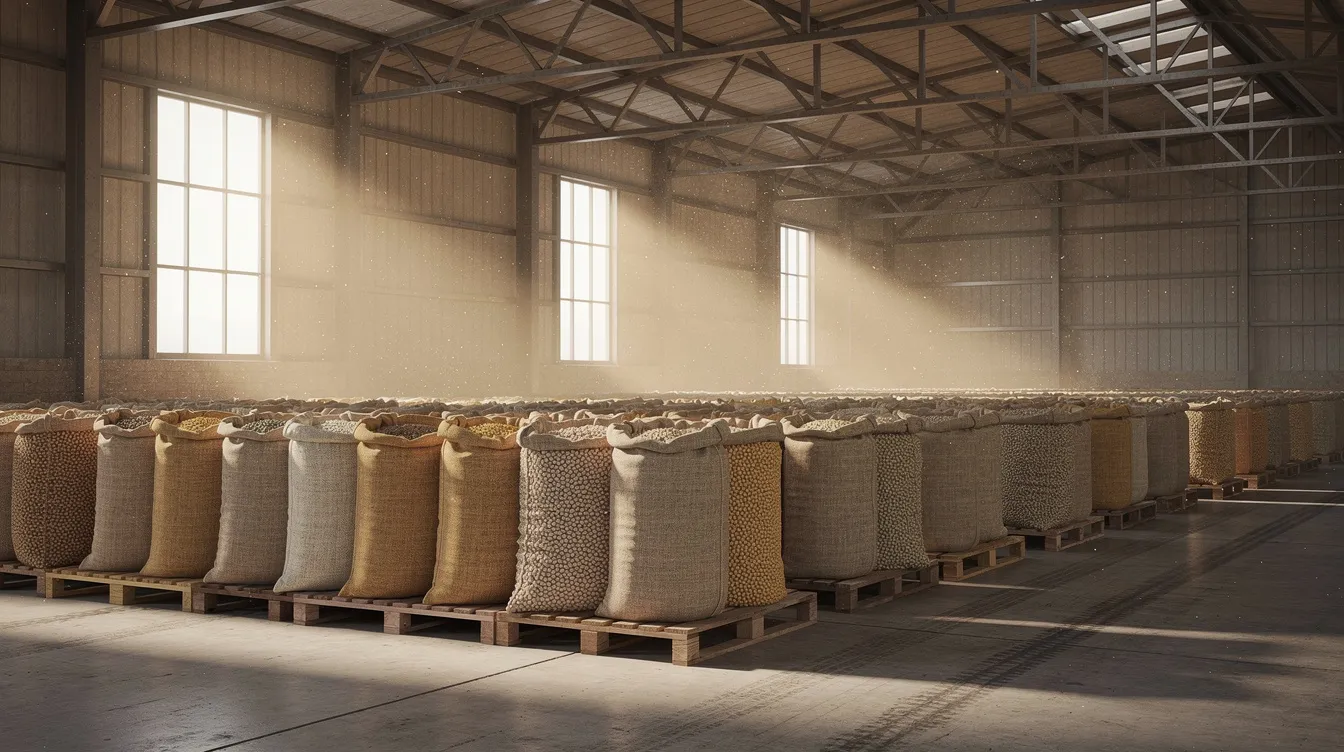
Comparison of the Five Pulse Processing Business Models
Entrepreneurs often compare dal mills, besan plants, roasted chana units, protein–starch plants and cleaning–sorting units before finalising their business plan. The following comparison provides a structured framework.
| Parameter | Dal Milling | Besan & Pulse Flour | Roasted Chana & Sattu | Protein & Starch | Cleaning & Sorting |
|---|---|---|---|---|---|
| Nature | Commodity processing | B2B ingredient + retail | Branded consumer products | Specialty B2B ingredients | Primary processing, trading |
| Technical Complexity | Medium | Medium | Medium | High | Low–Medium |
| Capital Intensity | Low–Medium | Low–Medium | Low–Medium | High | Low–Medium |
| Raw Material Intensity | Very High (88–92%) | High | High | High | High |
| Working Capital | High | Moderate–High | Moderate–High | High | High (if trading) |
| Main Customers | Traders, retail | Food manufacturers, retail | Consumers, retailers | Food/nutra companies | Exporters, traders |
| Key Profitability Drivers | Recovery, procurement | Product quality, branding | Marketing, distribution | Technology, offtake | Throughput, charges |
| Major Risks | Price volatility, recovery | Competition, quality | Brand-building costs | Technology, scale-up | Volume dependence |
| Integration Scope | High | High (with dal mill) | Moderate | Limited initially | High (with dal mill) |
The difference is significant: commodity processing plants (dal milling, cleaning–sorting) operate on thinner margins but higher volumes; consumer product plants (roasted chana, branded besan) require marketing and brand-building investment; and advanced ingredient plants (proteins, starch) demand technology, quality control systems and offtake contracts. The correct model depends on promoter strengths, capital available and risk appetite.
Pulse Processing Plant Setup Cost and Investment Planning
Pulse processing plant setup cost encompasses far more than machinery price. A complete project cost includes land acquisition and site development, factory building and sheds, processing plant and machinery, material handling equipment, electricals and panels, utilities (transformer, compressor, boiler if needed), laboratory and testing equipment, storage silos and warehouses, packing machinery, pollution control and effluent treatment where relevant, and miscellaneous fixed assets.
Total project cost is built by adding working capital margin (for raw pulses, packing material, wages, power, receivables) to fixed capital investment. The typical project cost for a dal mill is ₹15 lakh to ₹1 crore. Mid-scale integrated dal or besan plants may run into a few crore. Advanced protein–starch plants require significantly higher multi-crore investment-small dry fractionation units start around ₹8–12 crore, while wet fractionation isolate plants may need ₹25–40 crore or more.
Location matters considerably-proximity to mandis, state power tariffs, industrial land cost and logistics infrastructure all influence the final project cost. Technology choice (level of automation, optical sorters, imported equipment versus Indian-made) further determines the capital costs reflected in a pulse processing plant DPR.
Capacity Planning for Pulse Processing and Derivatives Plants
Plant capacity is usually expressed in tonnes per day (TPD) or tonnes per hour (TPH), but realistic capacity planning must account for operating shifts, maintenance downtime and seasonal raw material availability. A pulses processing facility can process 50,000 MT annually at commercial scale, but most new projects start smaller and plan phased expansion.
Nameplate capacity (as per OEM) and practical commercial output differ due to machine settings, raw material quality, stoppages and product changeovers. Production capacity utilization in the first year may realistically be 50–60%, increasing over 3–4 years as procurement, production and distribution stabilise. Operational efficiency of pulse processing machinery can reach 99% under optimal conditions, but financial projections should use achievable utilisation levels rather than theoretical maximums.
Some investors design for modular expansion-adding extra cleaning lines, additional grinding mills or new value-added sections-instead of oversizing the initial processing plant, thereby maintaining operational flexibility and reducing initial capital risk.
Machinery, Processing Technology and Automation
Major machinery groups across pulse processing plants include the following:
| Equipment Type | Dal Mill | Besan Plant | Roasted Chana/Sattu | Protein/Starch | Cleaning/Sorting |
|---|---|---|---|---|---|
| Pre-cleaners, destoners | ✓ | ✓ | ✓ | ✓ | ✓ |
| Graders, gravity separators | ✓ | ✓ | ✓ | ✓ | ✓ |
| Dehuskers, splitters | ✓ | – | – | – | – |
| Polishers | ✓ | – | – | – | – |
| Grinding mills, sifters | – | ✓ | ✓ (sattu) | ✓ (dry frac.) | – |
| Roasters, coolers | – | – | ✓ | – | – |
| Roller mills | – | ✓ | – | ✓ | – |
| Optical sorters | Optional | Optional | – | – | ✓ |
| Decanters, centrifuges, dryers | – | – | – | ✓ (wet) | – |
| Packing machines | ✓ | ✓ | ✓ | ✓ | ✓ |
| Dust collection, aspiration | ✓ | ✓ | ✓ | ✓ | ✓ |
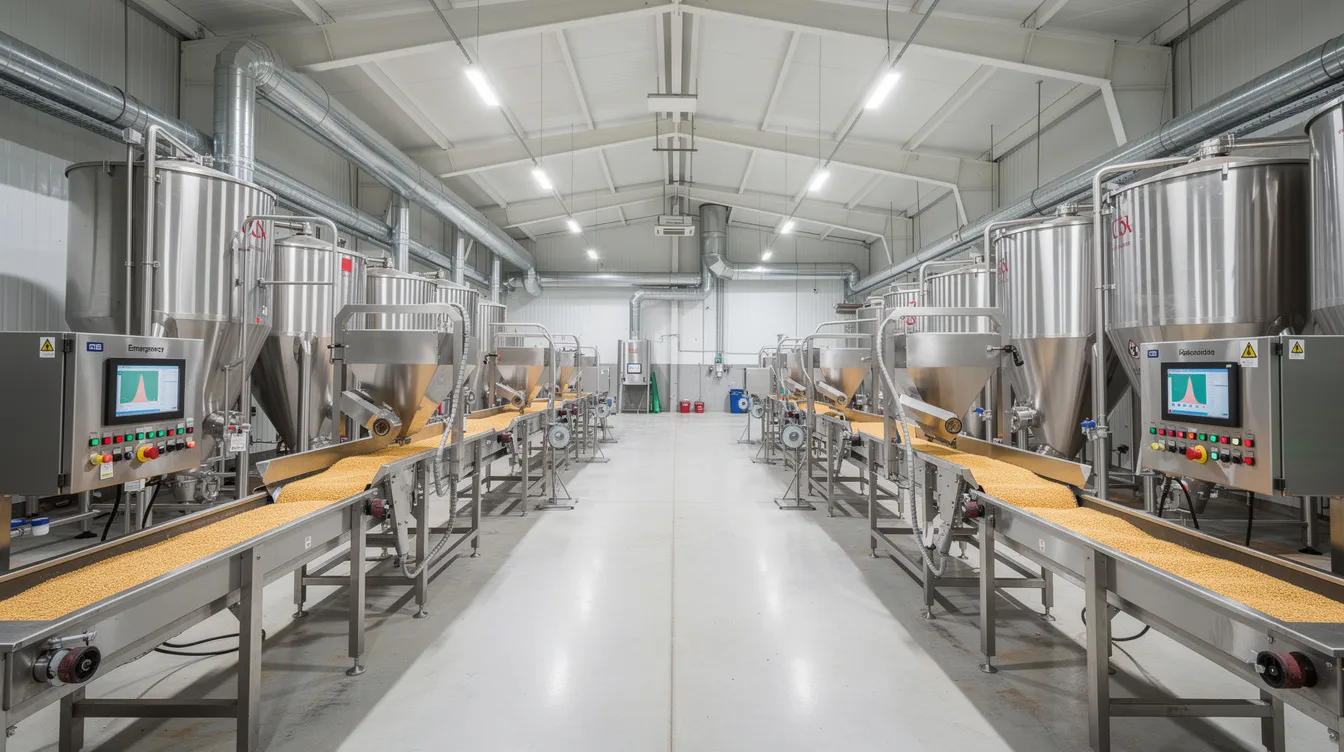
Detailed specifications for necessary machinery include pre-cleaners, roller mills and optical sorters among other various unit operations. Modern plants often adopt PLC automation, SCADA monitoring and aspiration systems for improved yield, food safety and working conditions. Advanced pulse protein plants may require specialised wet-processing equipment such as membrane systems and CIP arrangements. Machinery configuration must be captured with actual OEM quotations in the DPR, as these determine both capital cost and energy consumption.
Raw Material Procurement, Recovery, Yield and By-Product Utilisation
Raw material consumption dominates the operating cost structure-raw uncleaned pulses account for 88–92% of total operating expenses in conventional dal milling. This makes procurement strategy the single most important commercial decision. Raw material sourcing strategies should consider direct procurement from farmers or agricultural markets (mandis), and the procurement strategy involves analysing the availability of raw materials and planning buffer stocks to manage seasonal tightness and pricing trends.
Recovery and process losses directly determine profitability. An illustrative material balance for 1,000 kg of raw toor: after cleaning (~96% retained), dehusking and splitting may yield approximately 650–720 kg of finished dal, 20–50 kg of broken dal, 120–150 kg of husk and powder, and 50–80 kg of process losses. Actual percentages vary by raw material quality, moisture, impurities and plant design. Chana offers higher recovery (78–82%), while urad is more difficult at 62–72%.
By-product utilisation improves net realisation: husk and bran can serve as animal feed, brokens enter secondary markets, and off-grade material finds use where quality permits. Processed pulses are also valuable in animal feed production. A professional pulse processing plant project report should model material balances and test sensitivity of profitability to even 1–2% changes in recovery or raw material cost-for a 10 TPD plant operating 300 days, each 2% improvement in recovery translates to approximately 60 additional tonnes of saleable dal annually.
Land, Building, Infrastructure and Utility Requirements
Infrastructure requirements for pulse processing include land, building and utilities specifications. Typical components include raw material godowns, processing hall, finished goods warehouse, packaging area, quality control lab, administrative block and utility rooms (transformer yard, compressor room, boiler room and ETP where applicable). Land compared to urban industrial estates may be significantly cheaper near agricultural procurement zones, but transport logistics must be evaluated.
Utility requirements encompass power load, backup generators and water needs for processing. Reliable three-phase power is essential; DG backup may be required in areas with unreliable grid supply. Advanced wet-processing plants for proteins and starch need substantially higher water, steam and chilling capacity, along with effluent treatment systems, compared to dry dal milling or besan plants.
Smooth material and vehicle movement-separate entry and exit, weighing bridge, loading–unloading docks and internal roads designed to minimise cross-contamination between raw and finished product-should be incorporated in the plant layout from the design stage.
Licences, Registrations, Food Safety and Regulatory Compliance
Statutory approvals necessary for pulse processing facilities include various local and environmental licences. Compliance requirements include factory licences, pollution control clearances and food safety licences. The basic registrations generally relevant include:
- Business constitution (proprietorship, partnership, LLP, company), PAN, TAN
- Udyam registration for MSME benefits, where eligible
- GST registration where turnover threshold is crossed or inter-state supplies are planned
- FSSAI licence appropriate to manufacturing scale
- Factory Act registration based on state law and employment levels
- Consent from State Pollution Control Board, especially for wet-processing plants with effluent
Quality control measures in food processing must ensure compliance with food safety standards and inspection protocols. Environmental management practices must address dust control and waste management for processing facilities. Export-oriented plants may additionally require Importer–Exporter Code (IEC), APEDA enrolment and compliance with destination-country residue standards.
Revenue Models Across Pulse Processing Projects
Revenue models vary significantly: bulk sale of dal or whole pulses, job-work processing charges, sale of besan and pulse flour to B2B customers, branded consumer packs, private-label manufacturing, and ingredient supply contracts for proteins and starches.
Commodity processing plants (dal, cleaning–sorting) rely on relatively thin per-quintal margins spread over large volumes, making procurement efficiency and production capacity utilization crucial. Branded roasted chana, sattu and retail besan packs shift economics towards marketing, packaging and distribution-gross margins per kg may be higher but selling expenses and credit risk also increase. Ingredient manufacturing may involve offtake agreements, quality-linked pricing and export contracts.
The project report must align projected revenue structure with the chosen business model. Stable demand for processed pulses supports commodity models, while the demand outlook for functional foods, dietary fiber-rich products and plant based protein ingredients supports more specialised, higher-margin approaches.
Project Cost, Working Capital and Financial Projections
A Detailed Project Report must provide technical, operational and financial roadmaps. Financial aspects cover total capital investment and sources of funds. The distinction between fixed capital (land, building, plant and machinery, utilities, pre-operative expenses) and working capital (raw materials, consumables, salaries, utilities, receivables, minimum cash) must be clear.
Financial projections require evaluating costs, profitability estimates and projected profit and loss statements. A professional DPR should present 5–7 year projections: projected P&L, Balance Sheet and Cash Flow Statement, reflecting realistic capacity utilisation and price assumptions. Executive summaries typically include project costs, processing capacity and projected turnovers.
Working capital estimation should model average inventory of raw pulses and packing material, receivables period, creditor terms and the operating cycle. CMA Data for bank loans should include ratio analysis (current ratio, DSCR, debt–equity, interest coverage) and the funding pattern. Projections are tools for decision-making, not guaranteed outcomes-lenders examine whether cash flows can comfortably service proposed term loans under normal operating conditions.
Profitability, ROI, IRR and Financial Viability
Gross profit margins for pulses processing typically range from 8–12%, with typical net profit margins for dal mills reaching 8–15% depending on scale, efficiency and market conditions. The main profitability drivers include contribution margin per tonne, capacity utilisation, recovery rate, raw material cost, power and labour per unit, packing cost, logistics and overhead absorption.
Conventional dal mills and cleaning–sorting units may show modest but consistent EBITDA margins at good utilisation, reflecting healthy profitability potential for well-managed operations. Branded value-added products and advanced ingredients can earn higher margins but carry higher risks. Financial indicators evaluated include ROI, IRR, payback period and break-even volume in tonnes per month.
Analysing at least three scenarios (base case, optimistic, downside) varying raw pulse prices, finished product realisation, recovery percentages and utilisation levels is essential to understand how sensitive DSCR and IRR are to changes. A bankable project report should transparently disclose major assumptions so both promoters and lenders understand where the risks lie.
Bank Finance and DPR Requirements for Pulse Processing Plants
Banks evaluate pulse processing projects under term loan and working capital proposals, requiring a detailed project report supported by CMA Data and realistic financials. The Debt Service Coverage Ratio should be above 1.5 for loans-lenders focus on this alongside current ratio, security, promoter contribution and cash flow adequacy.
Key contents of a bankable DPR include: promoter profile and experience, project rationale, market overview (including assessment of local consumption patterns and competitive landscapes within the pulse sector), products and capacity, process and technology, machinery list with quotations, land and building details, project cost, means of finance, a project implementation schedule that outlines milestones from site selection to production commissioning, and risk analysis.
Schemes like term loans, cash credit limits and, where applicable, government credit guarantee programmes may be used, but sanction depends on bank appraisal and policy. IOB’s Agriculture Cluster Finance offers indicative rates of 8.45–9.45% for pulses-related projects. Project Report Bank prepares customised DPRs and CMA Data by aligning technical details from machinery suppliers with financial modelling based on CA-led analysis.
Government Schemes, MSME Benefits and Industrial Incentives
Several central and state-level government schemes periodically support food and agro processing, MSMEs and manufacturing. Typical benefit categories include capital subsidy as a percentage of eligible plant and machinery cost, interest subsidy on term loans, reimbursement of certain state taxes, and support for quality certification. Under PM-FME, eligible micro food processing units could receive a 35% credit-linked capital subsidy on eligible project cost up to ₹10 lakh per individual unit.
MSME-related credit guarantee frameworks may allow banks to extend collateral-light loans for smaller projects under priority sector guidelines, though approval is not automatic. Promoters should verify current scheme details from official portals (relevant ministries, NABARD, SIDBI, state industrial development bodies) at the time of project planning, as scheme norms, coverage and timelines change. Only schemes actually intended to be used should appear in the DPR’s means-of-finance section with realistic sanction and disbursement timelines.
Risks and Challenges in Pulse Processing and Derivatives Manufacturing
Key risks across the pulse processing sector include:
- Commodity risks: Fluctuations in raw pulse prices, supply disruptions due to weather or policy, and seasonal tightness impacting procurement and margins
- Operational risks: Lower-than-expected recovery, higher breakage, equipment breakdowns, inconsistent quality, underutilisation of plant capacity, higher energy consumption
- Market and credit risks: Dependence on few large buyers, delayed receivables, changes in consumer preferences, increased competition from established brands or imported products
- Technology risks (advanced projects): Inability to achieve lab-to-plant performance, longer customer qualification cycles, stricter specifications leading to rejections
Mitigation strategies include diversified procurement sources, conservative recovery assumptions, annual maintenance planning, quality control systems, customer diversification, adequate working capital buffers and scenario-based financial planning. Environmental management and dust control should be addressed proactively, particularly for plants with effluent generation.
How to Select the Right Pulse Processing Manufacturing Project
Selecting the right project requires matching promoter capabilities with project requirements:
- Promoters with strong mandi and procurement networks may align naturally with dal milling or cleaning–sorting projects
- Those with FMCG or distribution experience may be better suited for roasted chana, sattu or branded besan, where marketing and understanding of industry trends matter
- Technically strong teams with access to process-technology partners are better candidates for pulse protein, starch and advanced ingredient plants
- Promoters focused on eco friendly food systems and export markets should consider cleaning–grading–sorting with optical colour sorting
Preparing preliminary financial comparisons (high-level IRR and DSCR estimates) for 2–3 shortlisted models before spending on detailed engineering or land acquisition is strongly recommended. This parent hub helps narrow down the preferred model; the relevant specialised subcluster hub and a customised pulse processing plant project report take the analysis further.
Opportunities for Integrated Pulse Processing and Value Addition
Common integration pathways include cleaning–grading–sorting plus dal milling in one facility, or dal milling plus besan grinding using part of the dal output. Roasted chana or sattu lines within a dal or besan facility can monetise particular grades or brokens, diversifying revenue streams and improving net realisation.
Integration yields benefits: better utilisation of common infrastructure (land, building, utilities, warehouses), reduced per-unit overheads, stronger bargaining power in raw material procurement, consistent supply across product lines, and the ability to address multiple customer segments. Over the past decade, several processors have expanded from basic dal milling into pulse flour and value-added products.
However, over-integration without adequate management bandwidth or market access complicates operations. The DPR must realistically assess whether each additional activity adds net value to the overall project. Appropriate integration of conventional processing with advanced ingredients should be approached in a phased manner, starting with dry flour fractionation trials where technically feasible.
Importance of a Customised Detailed Project Report
A customised Detailed Project Report is essential for serious investments in pulse processing plants, especially where total project cost runs into multiple crore and bank finance is involved. A robust DPR should include technical configuration tailored to chosen products, realistic capacity planning, sourcing and marketing strategy, item-wise project cost, means of finance, detailed financial projections, sensitivity analysis and risk mitigation measures.
Generic or copy-paste documents usually ignore project-specific realities like local mandi structure, state power tariffs, labour availability and transport logistics. Lenders increasingly look for professionally prepared DPRs and CMA Data that demonstrate understanding of the pulse processing industry. An introduction and market analysis in the DPR should include regional, national and global pulse production trends to establish context.
Professional DPR, Feasibility Study and Bank Finance Advisory
CA Manish Gugliya, FCA, DISA (ICAI) Practising Chartered Accountant since 2006 Manish Gugliya & Company, Chartered Accountants Ratlam, Madhya Pradesh, India | projectreportbank.com
Professional services available for pulse processing projects include:
- Customised Detailed Project Reports (bankable DPRs)
- Project cost and means-of-finance structuring
- Five- to seven-year financial projections and financial modelling
- CMA Data preparation for bank loans
- Project feasibility and viability assessment
- DSCR and cash-flow analysis
- Bank loan proposal documentation and support
- Investor-ready DPRs and fundraising advisory where required
Indicative fees start around ₹25,000 for DPR and loan proposal assistance, and around ₹50,000 for feasibility studies, subject to project scope and complexity. Entrepreneurs, MSMEs and investors seriously considering pulse processing plant projects are invited to share brief project details and machinery quotations via the ProjectReportBank.com website or WhatsApp for an initial professional discussion.
Frequently Asked Questions About Pulse Processing Projects
What are the major types of pulse processing manufacturing projects in India?
The five broad categories are: dal milling and integrated pulse processing, besan and pulse flour plants, roasted chana and sattu value-added products, pulse protein and starch ingredient plants, and cleaning–grading–sorting–packing units for whole pulses. Each serves different customer segments and has a distinct operating cost structure.
How does a dal milling plant differ from a pulse cleaning and sorting plant?
A dal mill performs dehusking and splitting to convert whole pulses into dal, changing the physical form and creating by-products like husk and brokens. A cleaning–sorting plant primarily removes impurities, stones and discoloured grains, preserving pulses in whole form for traders, exporters and processors downstream.
Can a dal mill and besan plant operate together in one facility?
Many promoters integrate dal milling and besan grinding, using part of their dal output as feed for the besan plant. Integration demands additional space, machinery, dust-control measures and careful financial analysis. The combined pulse processing plant project report should evaluate whether integration adds net value after accounting for additional capital and operating complexity.
What mainly determines the setup cost of a pulse processing plant?
Key determinants include plant capacity, level of automation, number of processing stages, quality of buildings and infrastructure, local land and power costs, and whether the project involves only dry processing or more capital-intensive wet processing for proteins and starches. The same capacity mill can cost very differently based on location and technology choice.
How can an entrepreneur obtain a customised pulse processing plant project report?
Entrepreneurs should share basic project details-location, planned capacity, chosen project segment and tentative machinery list-with Project Report Bank through the website or WhatsApp. Based on these inputs, CA Manish Gugliya’s team can propose a professional scope, timeline and fee for a customised DPR tailored to the specific project.
Conclusion – Investment Opportunities in Pulse Processing and Value-Added Manufacturing
Pulse processing in India offers a spectrum of opportunities-from small dal mills with modest capital requirements to sophisticated protein and starch plants demanding multi-crore investment and specialised technology. The worldwide production of pulses, stable demand driven by plant based dietary patterns, and the nutrition benefits of pulses as part of sustainable food production and soil fertility enhancement ensure that this sector will continue to attract entrepreneurial interest.
Success depends on matching project type with promoter capabilities, raw material access, market understanding, working capital strength and readiness to manage commodity and technology risks. A DPR and feasibility study should be treated as essential planning tools rather than formalities for bank loans, especially where integrated pulse processing plants with significant capital investment are being considered.
Entrepreneurs seriously evaluating these projects are welcome to contact Project Report Bank for a professionally prepared, customised pulse processing plant project report and financial model. No guarantee of bank sanction or specific profit levels is implied-the objective is to help promoters make informed, defensible investment decisions backed by structured financial analysis.