Key Takeaways
- This guide explains how to plan, finance, and evaluate grain and agro processing project reports for food processing plants in India, covering primary grain handling through finished foods in the 2026 industry context.
- It is designed for serious industrial investors considering projects of ₹5–100+ crore, addressing DPR preparation, plant cost analysis, financial projections, CMA data, and bank finance documentation.
- Twelve major grain and agro processing segments – rice, wheat, maize, pulses, oilseeds, the breakfast cereal industry, animal feed, ethanol, grain storage, millets, and integrated agro-parks – are mapped with links to detailed hubs.
- Food safety compliance, key equipment selection, manufacturing process design, and industry trends through 2026 are integrated into the project report approach.
- Project Report Bank, led by CA Manish Gugliya (FCA, DISA), prepares customised, bankable DPRs, CMA data, and feasibility studies for food processing and agro projects across India.
Grain and Agro Processing Industry in India – Introduction
India’s foodgrain production reached approximately 376.5 million tonnes in FY 2025-26, reinforcing the country’s position as one of the world’s largest producers of rice, wheat, pulses, and oilseeds. Grain processing plants convert these raw grains into food-grade products – flour, edible oil, breakfast cereal, animal feed, starch, ethanol, and packaged foods – that serve domestic consumption and exports. The global grain processing market is valued at approximately $165 billion, with more than 2.8 billion metric tons of grain processed annually worldwide, and the market is projected to grow at 4.2% annually.
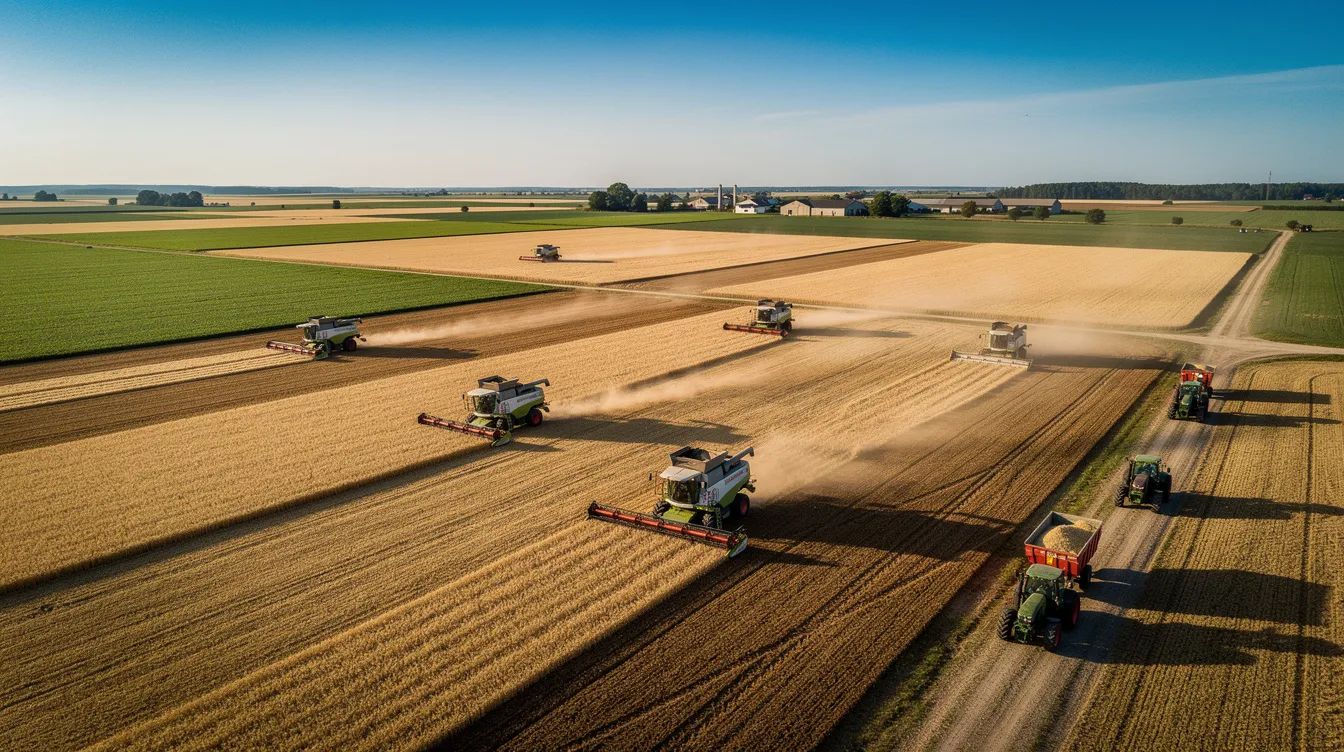
Primary processing includes cleaning, grading, and drying immediately after harvest. Secondary processing involves milling, extraction, or conversion – wheat into bread flour, atta, maida, and suji through roller mills, or oilseeds into crude oil via expellers and solvent extractors. Tertiary processing produces ready-to-eat foods, breakfast cereal, extruded snacks, and fortified products, representing the highest value addition. Corn, wheat, and rice account for over 75% of processed grain volume globally.
India’s domestic food processing market was approximately US $382 billion in FY 2024-25 and is expected to reach INR 68,196.62 billion by 2034. The Indian food processing industry contributes 32% to the total food market. Growing demand for packaged foods, fortified cereals, animal protein (driving feed demand), ethanol blending targets, and organised grain logistics are defining the 2026 industry landscape. Integrated food processing plants and agro clusters reduce post-harvest losses, stabilise farm incomes, and improve export competitiveness.
Projects with ₹5–100+ crore outlay require a Detailed Project Report covering technical design, financial projections, risk analysis, and feasibility assessment before final investment. Detailed project reports are essential for securing bank loans and planning new projects. Project Report Bank provides CA-led industrial advisory, including DPRs, CMA Data, project finance advisory, and food processing plant project reports for Indian manufacturers.
Navigation: 12 Core Grain, Cereal & Agro Processing Segments
The following navigation table lists all 12 specialised clusters covered on Project Report Bank, each linking to an in-depth project report hub.
| No. | Industry Segment | Typical Products | DPR Hub Link |
|---|---|---|---|
| 1 | Poha, Puffed Rice & Value-Added Rice | Poha, murmura, rice snacks | Poha & Value-Added Rice DPR |
| 2 | Integrated Rice Milling | Polished rice, parboiled rice, bran | Rice Milling Plant DPR |
| 3 | Wheat Flour, Atta, Maida & Suji | Atta, maida, suji, bran | Wheat Flour Processing Projects |
| 4 | Maize, Corn, Starch & Derivatives | Starch, glucose, corn grits | Maize & Corn Starch DPR |
| 5 | Grain Storage, Silos & Logistics | Bulk storage, handling, logistics | Grain Storage & Silos DPR |
| 6 | Grain-Based Ethanol & Biofuel | Ethanol, DDGS | Ethanol Plant DPR |
| 7 | Pulses, Dal Milling & Besan | Split dal, besan, pulse flours | Pulses Processing DPR |
| 8 | Oilseed Processing & Edible Oil | Crude/refined oil, DOC, lecithin | Oilseed & Edible Oil DPR |
| 9 | Grain-Based Animal Feed | Cattle feed, poultry feed, pellets | Animal Feed Manufacturing DPR |
| 10 | Millets & Specialty Grains | Ragi flour, bajra flakes, malt | Millet Processing DPR |
| 11 | Breakfast Cereals & Extruded Foods | Corn flakes, muesli, snacks | Breakfast Cereals DPR |
| 12 | Integrated Agro-Processing Parks | Multi-tenant food parks | Agro-Processing Parks |
Click any link above to access in-depth project report guidance for that specific processing industry.
Overview of 12 Major Grain and Agro Processing Industries
This section provides a high-level comparative view for early-stage industry selection. The distinctions below influence plant design, key equipment choices, food safety compliance level, cost and revenue structure, and access to bank finance.
- Bulk staple processing (rice, wheat, pulses) involves commodity-linked margins, high raw material share in operating costs, and B2B channels.
- Value-added segments (breakfast cereal, extruded snacks, fortified millets) carry brand-driven margins but require higher marketing and packaging investment.
- Infrastructure segments (silos, agro-parks) serve multiple tenants with tariff-based revenue models and attract institutional or infrastructure investors.
These differences determine whether a plant project report 2026 should emphasise throughput economics or brand positioning, and whether working capital planning revolves around seasonal procurement or year-round retail distribution.
Detailed Industrial Opportunities Across 12 Processing Segments
Each cluster below briefly examines the manufacturing process, key equipment, market drivers, and why a customised DPR is critical. Effective project reports should include technical specifications and financial projections tailored to each segment’s unique economics.
Poha, Puffed Rice & Value-Added Rice Processing
Industrial poha and puffed rice production uses paddy as feedstock through cleaning, parboiling, roasting, flattening or puffing, grading, and packaging. Key equipment includes paddy cleaners, roasters, flattening machines, puffing units, and food-grade packaging lines. The cost structure features moderate capital investment but higher packaging requirements for branded products. Working capital peaks during harvest-season rice procurement. Growing demand from the snack industry and convenience food sector makes DPRs essential for optimising capacity and product mix. For a detailed guide, see the Poha, Puffed Rice & Value-Added Rice Products DPR.
Integrated Rice Milling & Paddy Processing
Modern integrated rice mills handle paddy intake through parboiling, drying, dehusking, polishing, colour sorting, and by-product recovery (rice bran for oil, husk for boilers, broken rice for feed). Major machinery includes paddy cleaners, parboiling tanks, dehuskers, polishers, colour sorters, and husk-fired boilers. Rice milling recovery is generally 65–68% for raw rice, and conversion costs range from approximately ₹380–550 per quintal at 75% utilisation. DPRs quantify recovery, energy savings, and DSCR under multiple price scenarios. Read the full Integrated Rice Milling Plant Project Report.
Wheat Flour, Atta, Maida & Suji Processing
Roller flour mills produce atta, maida, suji, bread flour, wheat bran, and germ for bakery and biscuit manufacturers. Roller mills are standard for wheat flour milling applications, supported by grain cleaners, de-stoners, plansifters, and pneumatic conveying. Wheat cost dominates operating costs, with thin profit margins dependent on high capacity utilisation. Mid-scale wheat flour mills require $4 million to $15 million in capital investment. Customised DPRs focus on capacity (100–300 TPD), energy efficiency, and realistic margins. Explore Wheat Flour, Atta, Maida & Suji Processing Projects.
Maize, Corn, Starch & Derivatives Processing
A corn processing plant may operate as a dry mill (grits, flour) or wet mill producing starch, glucose, and derivatives. The wet milling flow involves steeping, grinding, separation of germ, fibre, gluten, and starch refining. Major equipment includes steeping tanks, degerminators, centrifuges, evaporators, and spray dryers. These technology-intensive projects require tight quality control and long-term offtake assumptions. Feasibility studies analyse by-product revenue and sensitivity to maize and starch prices. See the Maize, Corn Starch & Derivatives Processing DPR.
Grain Storage, Silos & Logistics
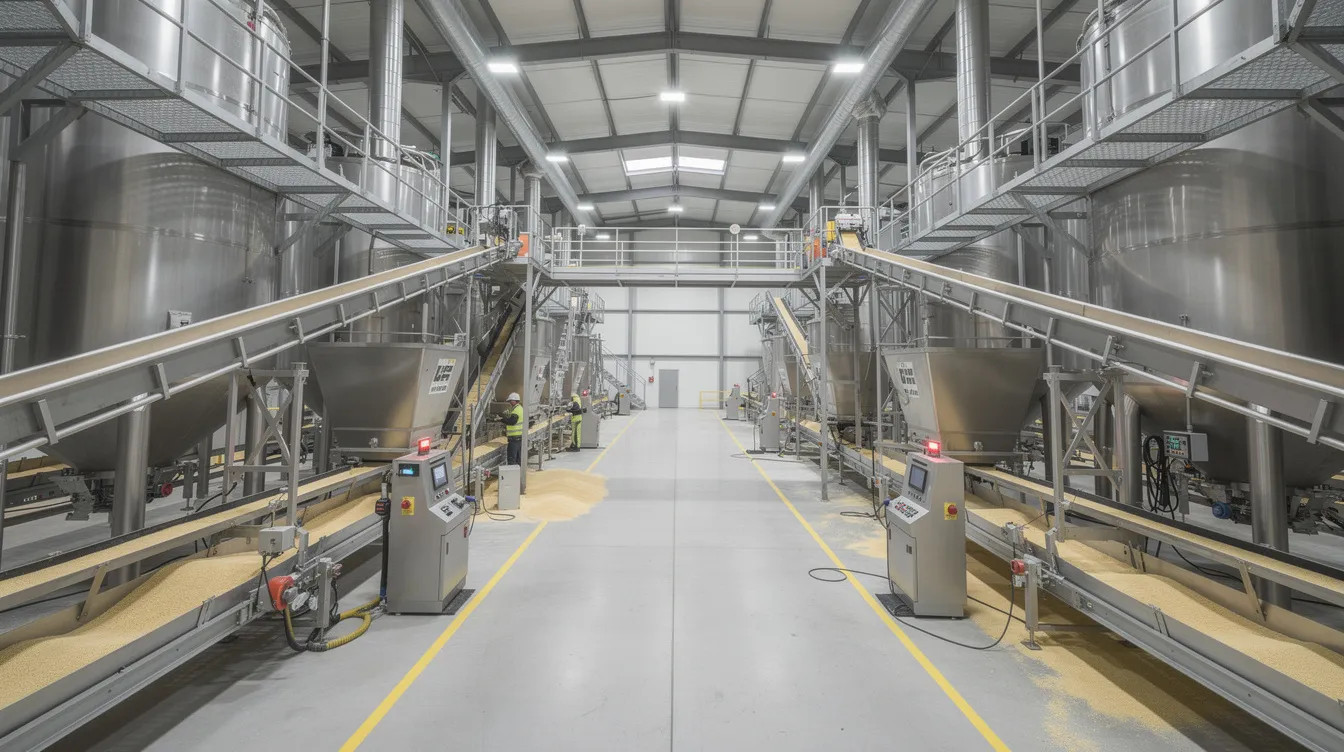
This cluster covers steel silos, bulk grain terminals, and mechanical handling systems. Key operations include grain receiving, pre-cleaning, drying, aeration, temperature monitoring, and dispatch. Bulk grain handling systems include bucket elevators and conveyors, with SCADA for monitoring. Investment is infrastructure-heavy with returns linked to storage tariffs and throughput fees. DPRs must model occupancy rates and integration with surrounding food processing plants. Read the Grain Storage, Silos & Logistics DPR.
Grain-Based Ethanol & Biofuel Projects
Grain-based distilleries use damaged grains, maize, or broken rice through milling, liquefaction, fermentation, distillation, and dehydration. Key equipment includes hammer mills, fermenters, distillation columns, molecular sieve units, and effluent treatment systems. Regulatory dependence on ethanol blending targets and pricing formulae creates policy risk. DPRs must incorporate policy scenarios, water and energy footprints, DDGS revenue for animal feed, and detailed DSCR analyses. See the Grain-Based Ethanol Plant DPR.
Pulses, Dal Milling, Besan & Pulse Derivatives
Dal mills and besan plants process chana, tur, and moong through cleaning, de-husking, splitting, grading, polishing, flour milling, and packing. Hammer mills are commonly used in feed processing plants and pulse grinding applications. Raw material prices are seasonal and affected by MSP; recovery percentages materially impact cost and revenue. Many cereals and pulse-based products can be diversified into high-protein flours. Read the Pulses & Dal Milling Processing Plant DPR.
Oilseed Processing, Edible Oil Extraction & Refining
Integrated oil mills handle mustard, soybean, groundnut, or rice bran through crushing, solvent extraction, degumming, neutralisation, bleaching, and deodorisation. Equipment includes seed crackers, expellers, extractors, desolventisers, and refinery vessels. High commodity exposure to global vegetable oil prices and the dominant raw material share in operating costs require hedging strategies. By-product revenue from oilseed cakes and lecithin influences project viability. See the Oilseed Processing & Edible Oil Refining DPR.
Grain-Based Animal Feed & Feed Ingredient Manufacturing
Feed plants use maize, broken rice, oilseed cakes, DDGS, and additives to produce balanced animal feed pellets or mash. Production stages include grinding, mixing, conditioning with steam, pelleting, cooling, and packaging. Demand growth from organised poultry and dairy runs on thin margins but large volumes, so DPRs must address capacity utilisation and raw material risk. Specialised feeds (medicated, pet food) offer higher margins with additional compliance requirements. Explore the Animal Feed Manufacturing DPR.
Millets, Sorghum, Barley & Specialty Grain Processing
This segment covers ragi, bajra, jowar, barley, and other cereals for flours, flakes, malt, and gluten-free products. Operations include cleaning, dehulling, pearling, milling, roasting, and nitrogen-flush packaging for premium SKUs. The policy push from the International Year of Millets 2023 continues into the 2026 industry landscape, with growing health-conscious urban demand and changing consumer tastes. DPRs must account for brand-building, R&D, and export potential. See the Millet & Specialty Grain Processing DPR.
Breakfast Cereals, Extruded Foods & Ready-to-Cook Grain Products
The breakfast cereal market covers corn flakes, muesli, oats, multigrain flakes, and extruded snacks. The process includes grain cleaning, mixing, extrusion, flaking, drying, coating, and automated packaging. Key equipment includes pre cleaners, twin-screw extruders, flakers, dryers, and coating drums. This food processing plant type is more brand-driven, with higher gross margins but heavier total capital investment in packaging, quality labs, and food safety compliance. Hot cereals and ready-to-cook products expand the product range. DPRs must integrate market research, pricing strategy, and detailed plant cost analysis. Explore the Breakfast Cereals & Extruded Foods DPR.
Integrated Agro-Processing Parks & Grain Industrial Complexes
Large scale agro-processing parks host multiple processing unit types – mills, oil plants, cold storage, packaging units – with shared utilities at a single location. SPV-led or PPP-based development provides common effluent treatment, steam, warehouses, silos, and testing labs. Investment is phased, with revenue from lease, utilities, and services. Park-level DPRs address infrastructure financing and demand from potential investors and tenants. See Integrated Agro-Processing Parks India.
How to Select the Right Grain or Agro Processing Industry
Choosing between a wheat mill, rice mill, breakfast cereal line, ethanol distillery, or oilseed refinery requires structured evaluation rather than anecdotal margins. Promoters should assess raw material availability (local paddy, wheat, maize, millets), target markets (B2B vs branded retail), logistics, utilities, and regulatory frameworks. Technology readiness matters: highly automated plants need larger investment but deliver lower unit operating costs and better compliance. Facilities investing in automation report 15–22% lower operating costs over comparable manual setups.
Capacity utilisation planning – realistic ramp-up over 3–5 years and its impact on EBITDA, DSCR, and IRR – should be modelled through robust financial analysis. Modular grain mills of 1–50 tons/day often yield superior ROI in regional markets where demand does not yet justify large scale operations. Selection should be data-driven based on DPR findings, sensitivity analysis, and promoter strengths.
Grain Processing Plant Setup Cost and Capital Investment in India
Setup costs for grain processing plants range from $250,000 to over $100 million, depending on capacity, process complexity, level of integration, and location. Utility infrastructure can add $500,000 to $2 million to project costs. The table below outlines major cost components.
| Cost Component | Typical Share | Notes |
|---|---|---|
| Land & site development | Low–Medium | Higher in peri-urban locations; land acquisition timing affects project schedule |
| Building & civil works | Medium | Depends on construction standards and climate |
| Plant & machinery | High | Dominant for automated breakfast cereal or starch plants |
| Electrical & utilities | Medium | Power, steam, water, compressed air |
| Pollution control & ETP | Low–Medium | Higher for ethanol, solvent extraction |
| Material handling & storage | Medium | Silos, conveyors, warehouses |
| Laboratory & quality control | Low | Essential for food safety compliance |
| Pre-operative & contingencies | Low | Interest during construction, trial runs, DPR fees |
| Margin for working capital | Medium | Seasonal raw material financing |
Pre-operative costs – interest during construction, salaries during trial runs, consultancy and DPR fees, statutory approvals – are capitalised in financial projections. Accurate CapEx requires vendor quotations and bills of quantities rather than generic cost-per-TPD estimates. A project report includes cost breakdowns and machinery specifications that lenders use for appraisal.
Plant Capacity Selection, Machinery and Technology
Over-sized plants in wheat or rice can struggle with under-utilisation, while under-sized breakfast cereal or ethanol plants may be uncompetitive on unit cost. Capacity planning involves TPD or KLPD design, operating days per year (typically 300), shift planning, and a ramp-up schedule over 5 years. Modular grain processing plants often achieve superior ROI in regional markets where demand is still developing.
Equipment selection impacts throughput and energy costs significantly. Grain cleaning equipment includes pre cleaners and colour sorters. Drying systems manage moisture levels in grain processing. Choosing between local and imported equipment involves a trade-off between higher upfront CapEx and lower long-term operating costs. Automation trends – PLC/SCADA, inline moisture control, optical sorters – support consistent quality, traceability, and operational flexibility in 2026 industry conditions. DPR and engineering studies should allocate space for capacity doubling and by-product lines.
Raw Material Procurement and Supply Chain Economics
Raw materials account for 60–70% of total operating expenses in food processing, and in some segments this share reaches 80–90%. Seasonal procurement – buying during harvest versus staggered purchasing – has direct implications for storage, quality degradation, and financing cost. DPRs assess raw material requirements and utility needs to ensure the processing unit can sustain planned throughput.
Price volatility is driven by MSP announcements, import/export policy, monsoon variations, and global price trends for vegetable oils or maize. Supply chain models range from direct procurement via farmers and FPOs to NCDEX-linked contracts. Quality parameters – moisture, foreign matter, damaged kernels, oil content, protein – directly impact yields, energy use, and finished product quality through various unit operations. Financial implications include inventory holding period, credit terms, working capital requirement, and warehouse receipt financing, all reflected in CMA Data.
Grain and Agro Processing Plant Financial Projections
Professional DPRs for grain and agro processing include 7–10 year financial projections. DPRs detail capital investment and operating expenses, production assumptions, sales volumes, and overheads. Gross profit margins for food processing plants typically range between 30–40%, while payback periods for grain processing plants are typically five to eight years.
| Financial Indicator | What It Tells the Banker/Investor |
|---|---|
| DSCR (≥1.25–1.50) | Whether cash flow can service debt obligations |
| IRR (typically 15–25%) | Return on total investment over project life |
| NPV | Present value of net cash flows above cost of capital |
| Break-even (sales & capacity) | Minimum production/sales for cost recovery |
| ROE | Return generated on promoter’s equity |
| Payback period | Time to recover total capital investment |
Sensitivity analysis tests the impact of 5–10% adverse movement in raw material price, product realisation, or capacity utilisation on DSCR and IRR. A well-structured financial analysis provides a clear understanding of mass balance, production yields, and profitability under multiple scenarios. Agriculture financing institutions require DPRs to follow specific financial metrics.
Bank Loan DPR, CMA Data and Project Finance
For bank term loans and working capital, lenders expect a bankable DPR alongside CMA Data. The DPR covers promoter profile, detailed project description, cost and means of finance, projected financial statements, DSCR, break-even analysis, and risk assessment. CMA data preparation follows Indian bank formats covering historical financials, projected balance sheets, fund flow statements, and working capital assessment.
NABARD publishes bankable project reports for agricultural activities, and MSME Development Institutes offer project profiles for small and medium agro-processing units. However, crowdsourced platforms may feature outdated financial figures in project reports. Standardised formats help ensure consistency and reliability, but consultancies offer customised project reports tailored to loan requirements and project specifics. Final sanction depends on each bank’s credit policy, CIBIL checks, and overall risk appetite.
Government Schemes, Subsidies and Industrial Incentives
Central schemes such as PMKSY and state industrial policies can support eligible food processing and agro projects. Government bodies provide standardised Detailed Project Reports for agro-processing segments. Local state bodies publish district-specific feasibility studies for agro-processing projects, and PLISFPI targets processed food output with an outlay of ₹10,900 crore through 2026-27.
Eligibility depends on project type, location, size, and compliance with scheme timelines. Policies change periodically; DPRs should reference latest official notifications. Promoters should factor subsidies as upside scenarios in financial projections rather than core assumptions, demonstrating project viability even without incentives.
Statutory Approvals and Regulatory Requirements
Approvals vary by state, scale, product, and process. In 2026, grain processing plants face significant compliance costs across multiple regulatory frameworks. Core registrations include incorporation, PAN, GST, MSME/Udyam, and sectoral registrations. Food safety compliance via FSSAI licensing applies to all human food products – flour, breakfast cereal, edible oil, poha, and ready-to-cook foods. DPRs must comply with local zoning and environmental regulations.
Environmental clearances include Pollution Control Board consents and factory licences. Specialised approvals cover distillery licences for ethanol, solvent extraction permits, and dust hazard norms for grain silos. For export-oriented units, compliance with EU Regulation 852/2004 requirements applies. FDA FSMA governs food-grade grain processing in the U.S. for export facilities. OSHA mandates safety standards for grain handling facilities, and compliance with EPA air quality regulations is required for grain dust emissions in international markets. Non-compliance costs exceed the cost of proper regulatory adherence. Export registrations through APEDA or commodity boards apply where units intend to export processed grain products.
Feasibility Study and Industrial Project Risk Assessment
Feasibility studies are independent assessments covering market, technical, financial, environmental, and regulatory aspects before committing full CapEx. A DPR includes market analysis and project feasibility – demand estimates, competitor mapping, price trends, and customer segments. Project reports for grain processing should cover market feasibility and cash flow analysis.
Technical feasibility evaluates process selection, technology providers, plant layout, and utility sizing. Financial feasibility includes base-case projections, DSCR, IRR, and stress-testing with downside scenarios. Project risks include construction delay, cost overrun, technology underperformance, regulatory changes, and capacity utilisation shortfalls. Structured risk analysis and sensitivity modelling help promoters understand worst-, base-, and best-case outcomes.
Integrated Agro Processing Parks and Multi-Product Industrial Complexes
Integrated parks represent an evolution from standalone mills towards cluster-based value chains. Shared utilities (ETP, boilers, cold storage), common testing labs, and integrated logistics reduce per-unit CapEx. Typical tenants include leading manufacturers across rice, flour, oilseed, feed, and the breakfast cereal industry. Park-level DPRs address phased development, infrastructure financing, and revenue models. Details are available in the Integrated Agro-Processing Parks guide.
How to Prepare an Investor-Ready Grain Processing DPR
An investor-ready DPR ties together technical design, cost and revenue projections, and risk-return profile into a consistent document. Key chapters include: (1) Executive summary, (2) Promoter background, (3) Industry and market analysis using latest 2026 industry data, (4) Product and manufacturing process description, (5) Machinery and key equipment specifications, (6) Land, building, and site infrastructure.
Remaining elements: (7) Raw material and utility planning, (8) Project cost and means of finance, (9) 7–10 year financial projections with scenarios, (10) Risk and sensitivity assessment, (11) Implementation schedule, (12) Feasibility conclusions. Technical consultants prepare detailed financial modelling and feasibility studies that align yields, recoveries, and energy consumption with financial calculations. Professional analysis in project reports provides detailed insights on project costs and potential profitability. Project Report Bank creates customised DPRs ensuring assumptions match the specific grain, product mix, process route, and location – not generic templates.
Professional DPR, Feasibility and Project Finance Advisory Services
Project Report Bank is a Chartered Accountant–led advisory firm specialising in detailed project reports, CMA Data, financial modelling, and project finance for grain and agro-processing plants. CA Manish Gugliya, FCA, DISA (ICAI), brings more than 20 years of professional experience in project finance, industrial DPRs, and manufacturing-sector advisory.
Core services include bankable DPRs for rice, wheat, maize, pulses, oilseed, animal feed, breakfast cereal, and ethanol plants. Additional support covers CMA Data for bank loans, loan structuring, DSCR and repayment profiling, working capital assessment, and advisory for expansion or diversification in existing food processing plants. Financial performance assessment and business requirements analysis are tailored to each project.
Serious promoters planning investment opportunities of ₹5 crore to ₹100 crore or larger are invited to contact Project Report Bank through the website’s enquiry form or WhatsApp for a personalised consultation.
Frequently Asked Questions About Grain and Agro Processing Projects
The following FAQ addresses key questions on DPR scope, plant economics, and documentation. Each project still requires case-specific analysis and a customised DPR.
What information is needed to start a DPR for a grain or agro processing plant?
Promoters should provide proposed location, target products (e.g. atta, breakfast cereal, edible oil, animal feed), tentative capacity, land status, estimated investment range, and any existing market arrangements. Project Report Bank also requests basic KYC, past financials for existing units, and any technology or machinery preferences to prepare a tailored scope addressing specific business requirements.
How long does it typically take to prepare a detailed project report?
For a single-product grain processing plant with standard technology, DPR timelines are usually 2–4 weeks from receipt of complete inputs. Complex projects like integrated agro-processing parks or grain-based ethanol plants take longer due to additional technical, regulatory, and financial modelling requirements.
Can one DPR cover both term loan and working capital finance requirements?
A well-structured DPR for a food processing or agro processing plant does cover both project cost (for term loan) and working capital assessment. However, banks may require a separate CMA Data file. Project Report Bank routinely aligns DPR projections with CMA Data formats so that both proposals remain consistent.
How do 2026 industry trends affect the choice between commodity processing and value-added products?
While primary milling remains essential, 2026 industry trends favour value-added segments – breakfast cereals, millet-based health foods, branded edible oils, and fortified grain products – reflecting growth in the food sector and changing consumer tastes. DPRs should analyse core processing economics alongside opportunities to add downstream product lines based on market research and promoter capabilities. The breakfast cereal market and extruded foods segment, in particular, show strong investment opportunities.
Does Project Report Bank assist with investor presentations in addition to DPRs?
Apart from DPRs for banks, Project Report Bank prepares investor-ready documents including financial models, pitch decks, and valuation-linked summaries for agro processing and food processing plant projects. These are customised assignments using the same data and assumptions as the core DPR, designed to meet potential investors’ expectations for a comprehensive overview of the project’s financial and commercial viability.
Conclusion – Investing in India’s Grain and Agro Processing Industry
India offers substantial investment opportunities across 12 major grain and agro-processing segments – from core rice and wheat mills to high-value breakfast cereal industry operations, ethanol distilleries, and integrated agro-parks. Aligning technology selection, plant capacity, raw material strategy, and food safety compliance with robust financial projections separates viable projects from speculative estimates. Technological advancements in automation, extrusion, and optical sorting continue to reshape the processing industry landscape.
Professionally prepared grain and agro processing project reports give promoters and lenders a realistic view of cost, revenue, DSCR, IRR, and risk. The numbers should tell a logical business story, built on defensible assumptions rather than optimistic projections.
Serious entrepreneurs, manufacturers, and potential investors planning new or expansion projects should engage Project Report Bank for customised DPRs, feasibility studies, and project finance advisory before committing large capital.