Key Takeaways
- This article serves as a central guide for preparing a millet and specialty grain processing plant project report in India, covering industry trends, plant setup, machinery and technology requirements, capital investments, profitability and project finance across multiple grain categories.
- Multiple project options exist – from integrated millet processing plants and sorghum or barley mills to extruded snacks and instant millet foods – each with different investment sizes, margins, risk factors and customer profiles.
- Project success depends less on generic “industry profitability” and more on capacity utilisation, raw material sourcing, customer contracts, product mix and efficient operations. Raw millet grains account for 70–80% of operating expenses in most grain processing businesses, making procurement strategy a critical determinant of viability.
- Project Report Bank, led by CA Manish Gugliya, FCA, DISA (ICAI), prepares customised DPRs, financial projections, CMA Data and feasibility studies for bank loans and investors – each built on project-specific assumptions rather than generic templates.
- The article links to 19 detailed project reports and feasibility guides so readers can explore specific millet, sorghum, barley and specialty grain processing plant projects in depth.
Introduction – Investment Opportunities in Millet and Specialty Grain Processing in India
Millets, sorghum, barley and specialty grains such as quinoa, amaranth and buckwheat have undergone a significant repositioning in India over the past decade. Once categorised as “coarse cereals” and associated largely with subsistence farming, these grains are now recognised as high-value nutritional ingredients – rebranded as “nutri-cereals” or “Shree Anna” under government nutrition policies. The International Year of Millets in 2023 accelerated public awareness and institutional support, while the growing health food sector continues to drive millet demand in urban areas. For serious investors, this means that preparing a structured millet and specialty grain processing plant project report is no longer optional – it is essential for evaluating whether a proposed project can deliver sustainable returns.
The global millet market was valued at USD 13.93 billion in 2025 and is expected to reach USD 19.70 billion by 2034, exhibiting a CAGR of 3.9% from 2026 to 2034. India, producing approximately 18 million tonnes of millets in 2024–25, remains one of the largest raw material bases globally. Millet products are increasingly popular due to health and wellness trends, and product innovation in millet continues to contribute to market growth. However, market growth at the macro level does not automatically translate into project-level profitability. The difference between a viable plant and an underperforming one lies in capacity planning, procurement economics, product-market fit and financial discipline.
It is important to understand the tiers of opportunity. Basic grain cleaning and milling represents primary processing – relatively simpler but with tight margins. Specialty ingredient production (malted grains, puffed millets, composite premixes) adds complexity and margin. Branded value-added foods (biscuits, breakfast cereals, instant mixes, snacks) carry the highest potential margins but demand significant investment in branding, distribution and working capital. Each tier requires a different approach to investment opportunities, risk assessment and financial modelling. Millets require different processing arrangements compared to mainstream grains like rice or wheat, which makes technology selection and process design particularly important.
Project Report Bank focuses on professional DPRs, financial modelling, feasibility studies and project finance advisory – not on selling generic templates. This article will help promoters understand their options before committing capital of ₹5 crore to ₹100 crore or more.
Explore Millet, Sorghum, Barley & Specialty Grain Processing Project Reports
Detailed, project-specific guides are available for each major grain processing and value-added food manufacturing opportunity. This hub article provides a comprehensive market overview and navigational framework; readers can explore individual DPR articles for in-depth assumptions, machinery lists and financial analysis.
Core Grain Processing Projects:
- Integrated Millet Processing Plant Project Report – multigrain cleaning, dehulling and milling in one integrated facility
- Ragi Processing Plant Project Report – finger millet cleaning, milling and flour manufacturing
- Bajra Processing Plant Project Report – pearl millet flour and semolina production
- Small Millet Processing Plant Project Report – foxtail, kodo, little and barnyard millet dehulling and grading
- Sorghum Milling Plant Project Report – jowar flour, grits and composite ingredients
- Industrial Barley Pearling and Milling Plant Project Report – pearled barley and barley flour
- Industrial Barley Malting Plant Project Report – malt for breweries, distilleries and food applications
- Quinoa, Amaranth and Buckwheat Processing Plant Project Report – specialty pseudocereal processing and packaging
Value-Added Millet Manufacturing Projects:
- Millet-Based Biscuits Manufacturing Plant Project Report – health-positioned biscuit manufacturing
- Ready-to-Eat Millet Breakfast Cereals Manufacturing Plant Project Report – flakes, granola and fortified cereals
- Millet Noodles, Pasta and Vermicelli Manufacturing Plant Project Report – ready-to-cook extruded products
- Millet-Based Extruded Snacks Manufacturing Plant Project Report – puffed curls, rings and multigrain snacks
- Puffed Millet and Roasted Millet Ingredient Processing Plant Project Report – B2B ingredient supply
- Instant Millet Porridge and Upma Mix Manufacturing Plant Project Report – ready-to-cook blends and instant mixes
Investment, Machinery, Finance and Feasibility:
- Automatic Millet Dehulling and Milling Machinery, Plant Layout and EPC Cost – equipment selection and EPC planning
- Millet Processing Plant Setup Cost, Capital Investment and Project Economics – capex structure and project economics
- Millet Processing Plant Financial Projections, DSCR, IRR and Profitability – financial analysis and viability metrics
- Millet Processing Plant Bank Loan DPR, CMA Data and Working Capital – bank finance documentation
- Large-Scale Millet Processing Plant Feasibility Study and Investor Readiness – independent feasibility and investor preparation
Throughout this article, relevant links to these project reports appear contextually where each topic is discussed in more depth.
Understanding India’s Millet, Sorghum, Barley and Specialty Grain Processing Industry
India is one of the world’s largest producers of millets and sorghum, with Rajasthan, Maharashtra and Karnataka contributing the bulk of cultivated area. Barley production is significant in northern states, while specialty grains like quinoa, amaranth and buckwheat serve emerging premium niches. Market analysis should examine both national and regional consumption trends for coarse cereals, as demand patterns vary substantially across geographies. Industry trends point towards rising urban health consciousness, institutional demand from mid-day meal programmes and foodservice, and growing export inquiries for millet-based ingredients.
Major grain categories include:
- Pearl millet (bajra), finger millet (ragi), and small millets (foxtail, kodo, little, barnyard, proso) as core coarse cereals
- Sorghum (jowar) – both food and fodder, with emerging gluten-free market growth
- Barley – for food, animal feed and the malting industry
- Quinoa, amaranth and buckwheat – pseudocereals botanically distinct from true cereals but used similarly in gluten-free and health foods
Typical industrial grain processing steps and the unit operations involved include:
- Pre-cleaning, aspiration and destoning with magnetic separation
- Grading and sizing for kernel uniformity
- Dehulling and decortication for millets and sorghum
- Pearling for barley (multiple passes for desired degree)
- Milling via hammer mills, roller mills or stone mills
- Malting (steeping, germination, kilning) for barley
- Extrusion, puffing and roasting for value-added foods
- Blending, fortification and packaging
The distinction between primary processing plants (producing cleaned whole grain, grits and flour), secondary ingredient plants (malted grains, puffed millets, flakes, premixes) and branded food manufacturing plant units (biscuits, breakfast cereals, instant mixes) is fundamental. Each category has different direct and indirect costs, regulatory requirements and margin structures.
Major Industrial Millet and Specialty Grain Processing Projects in India
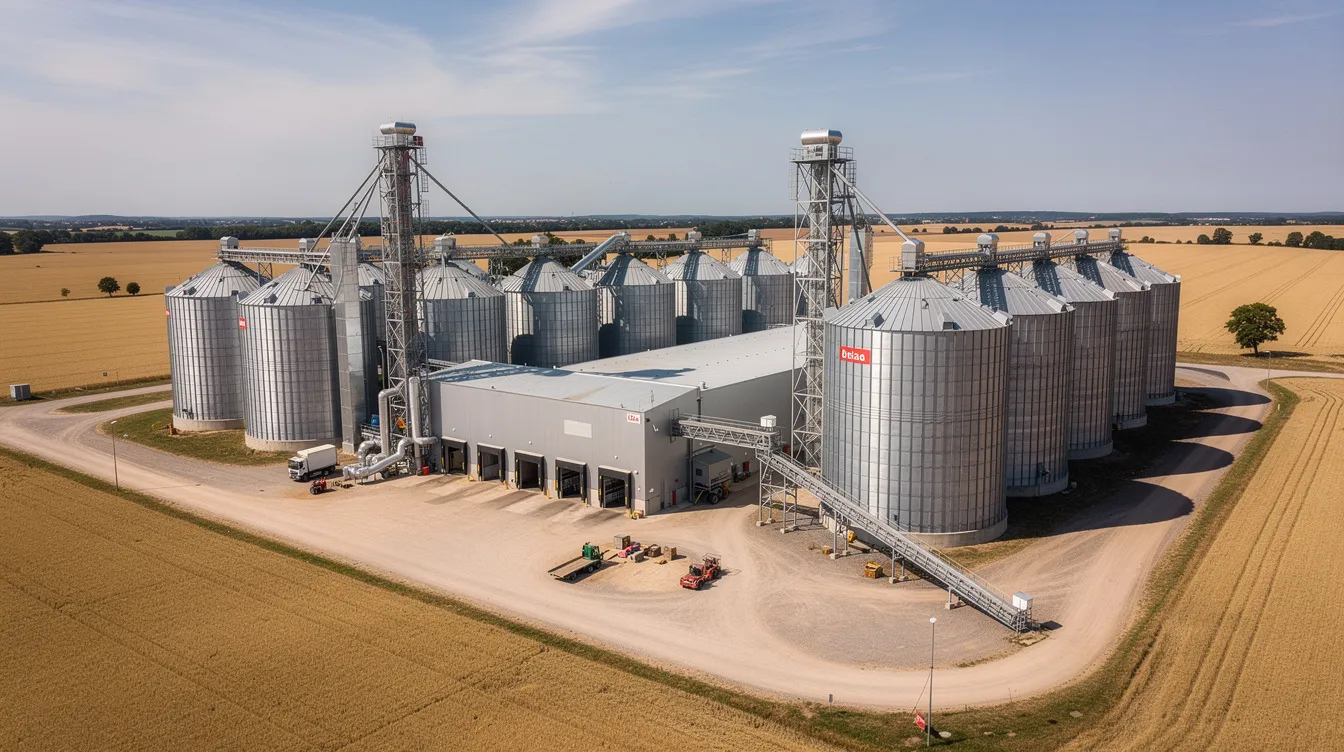
Multiple specialised processing opportunities exist, and each requires a plant project report tailored to the product, plant capacity and target market. The subsections below outline each major project category; readers can click through to dedicated DPR articles for detailed assumptions, machinery lists and financial projections.
Integrated Millet Processing Plants
Integrated millet processing plants handle multiple millets within one line – cleaning, grading, dehulling and milling – often at 2–10 TPH capacity or more. Key unit operations include grain reception, destoning, dehulling, colour sorting, milling and automated packing for B2B sale to flour mills, food manufacturers, institutional kitchens and exporters. The Integrated Millet Processing Plant Project Report covers plant layout, machinery configuration, capacity planning, utilities, manpower requirements and investment analysis.
Ragi Processing and Flour Manufacturing Plants
Ragi (finger millet) has strong consumption in southern and central India. Flour is used for porridges, malted foods, bakery and infant nutrition. Process flow includes intake, cleaning, destoning, partial dehulling, conditioning, milling to flour, sieving and packing. Ragi plants are often 1–5 TPH. The Ragi Processing Plant Project Report provides the equipment list, project cost structure and detailed manufacturing plant economics.
Bajra Processing and Milling Plants
Bajra processing plants produce flour and semolina-type products for chapati flours, multigrain blends and snacks. Process elements include grain cleaning, kernel sizing, destoning, dehulling or polishing and then milling. Bajra flour is often blended with wheat and other grains, making B2B tie-ups with FMCG companies important. The Bajra Processing Plant Project Report offers a structured millet processing plant project report specific to Indian markets.
Small Millet Processing Plants
Small millets (foxtail, kodo, little, barnyard, proso) have small grain size and tight husk, requiring specialised dehullers with careful settings to maximise recovery. These plants often start at lower capacities but achieve premium price trends for properly dehulled, uniform-sized grain. The Small Millet Processing Plant Project Report covers machinery combinations, plant layout and project economics.
Sorghum Milling and Flour Processing Plants
Sorghum mills convert grain to flour, grits and sometimes flaked products used in bakery, snacks, composite flours and animal feed. Sorghum flour is increasingly in demand as a gluten-free base, creating B2B ingredient opportunities. The Sorghum Milling Plant Project Report provides a detailed processing plant project report covering capacity options and financial projections.
Industrial Barley Pearling and Milling Plants
Barley pearling plants remove outer layers to produce pearled barley for food, brewing adjuncts and health foods. Controlling the degree of pearling to meet client specifications involves managing yield versus quality trade-offs. The Industrial Barley Pearling and Milling Plant Project Report covers machinery cost structure and industry trends.
Industrial Barley Malting Plants
Barley malting is more capital- and quality-intensive than simple milling. Process stages include raw barley grading, steeping, germination, kilning, malt cleaning and storage, all requiring strict process control. The Industrial Barley Malting Plant Project Report covers plant capacity selection, machinery configurations, utility requirements and total capital investment analysis.
Quinoa, Amaranth and Buckwheat Processing Plants
These specialty grains and pseudocereals serve health-food, gluten-free and export markets with lower volumes but higher unit value. Operations include cleaning, de-saponification for quinoa, dehulling for buckwheat, grading, milling and vacuum-flushed packing. The Quinoa, Amaranth and Buckwheat Processing Plant Project Report addresses feasibility challenges including raw material availability and export standards.
Value-Added Millet Food Manufacturing Opportunities
Commodity grain processing carries low margins at high volume. B2B ingredients add moderate margin with more processing. Branded foods offer higher potential margins but demand significant marketing investment and working capital. Blending and processing units are required for product versatility across these tiers. Each opportunity below has its own dedicated DPR.
Millet-Based Biscuits Manufacturing Plants
These plants use millet flours blended with wheat and other cereals to manufacture health-positioned biscuits. Core machinery categories include mixers, rotary moulders, tunnel ovens, cooling conveyors and packing machines. Key success drivers: recipe development, brand strength, consistent flour quality and packaging shelf-life. See the Millet-Based Biscuits Manufacturing Plant Project Report.
Ready-to-Eat Millet Breakfast Cereals Plants
Products include flakes, multigrain breakfast mixes, granola-type products and fortified cereals. Markets include modern trade, e-commerce and white-label manufacturing. The Ready-to-Eat Millet Breakfast Cereals Manufacturing Plant Project Report provides detailed process flow diagrams and profitability analysis.
Millet Noodles, Pasta and Vermicelli Plants
These plants produce ready-to-cook products targeted at domestic and export markets seeking gluten-reduced options. Process steps include dough preparation, extrusion, cutting, drying and packing. See the Millet Noodles, Pasta and Vermicelli Manufacturing Plant Project Report.
Millet-Based Extruded Snacks Manufacturing Plants
Products include puffed curls, rings and multigrain extruded snacks. Commercial factors include flavour innovation, packaging requirements and high dependence on branding. The Millet-Based Extruded Snacks Manufacturing Plant Project Report covers plant layout and profitability drivers.
Puffed Millet and Roasted Millet Ingredient Plants
These plants supply puffed and roasted millets as ingredients to snack makers, breakfast cereal brands and bakeries. B2B bulk ingredient sale reduces branding costs but increases the importance of quality assurance and contracts. Refer to the Puffed Millet and Roasted Millet Ingredient Processing Plant Project Report.
Instant Millet Porridge and Upma Mix Manufacturing Plants
Products include instant ragi porridge mixes, multigrain upma mixes and khichdi mixes. Key factors include taste profile, reconstitution time, shelf-life and regulatory compliance on nutritional benefits claims. See the Instant Millet Porridge and Upma Mix Manufacturing Plant Project Report.
Millet Processing Plant Machinery, Automation and EPC Planning
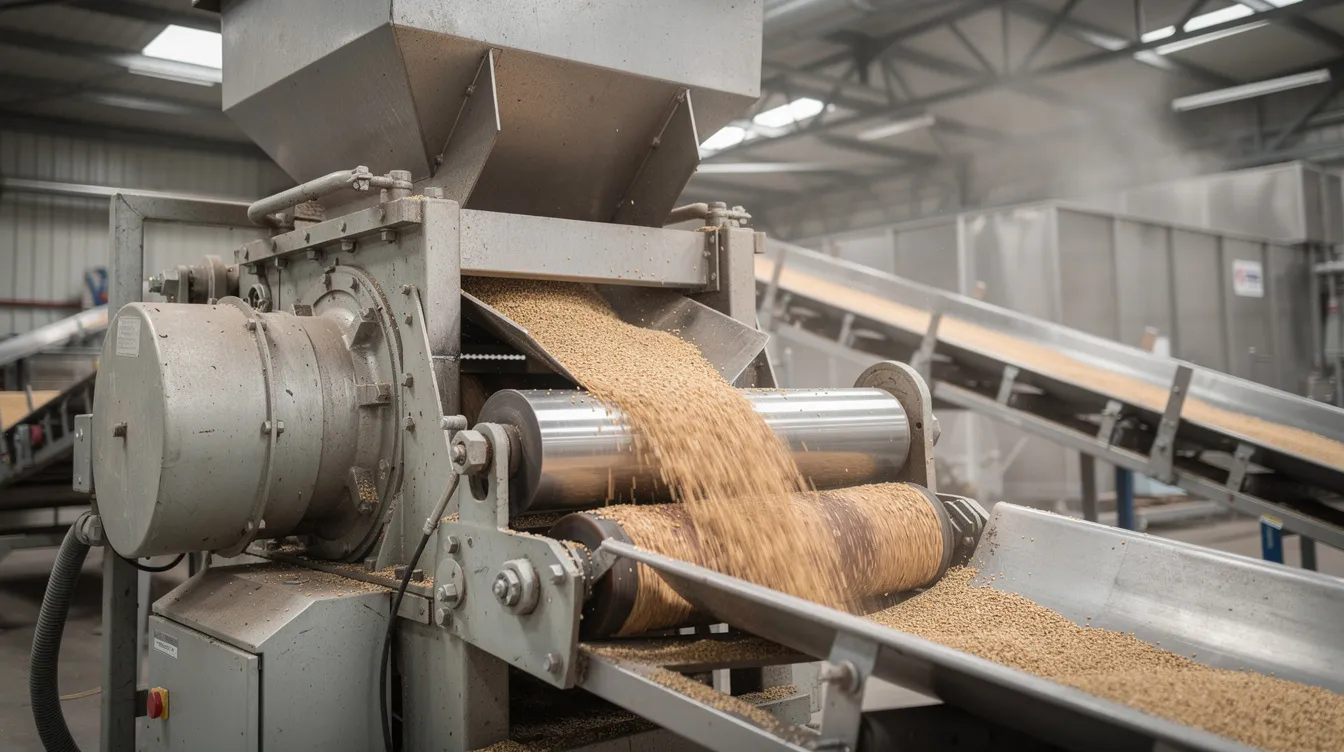
The choice of machinery and automation level strongly influences plant capacity, labour requirement, yield, product quality and overall operating costs. High-quality machinery is essential for millet processing operations. Essential equipment includes grain cleaning and grading machines. De-husking and milling systems are crucial for millet processing. Sorting and sieving equipment is necessary for quality control. Packaging and sealing machines ensure product integrity.
Major machinery blocks for a typical millet processing plant include:
- Grain receiving systems, intake pits, conveyors and bucket elevators
- Pre-cleaners, de-stoners, aspirators and magnetic separators
- Graders, thickness separators and colour sorters
- Dehulling and decortication machines with husk separation
- Hammer mills or roller mills with plansifters
- Pneumatic handling and dust extraction systems
- Blending, fortification and packaging machines (FFS, bagging, stitching)
Semi-automatic plants require more human resource requirements at each process stage, while fully automatic and integrated plants use PLC and SCADA-based monitoring for energy optimisation and reduced manpower. EPC considerations include single OEM versus multiple suppliers, integration responsibility, erection timelines, trial runs and performance guarantees.
The Automatic Millet Dehulling and Milling Machinery, Plant Layout and EPC Cost guide provides deeper insight into equipment selection and indicative EPC cost structures.
Millet Processing Plant Setup Cost and Capital Investment
Capital investment varies based on plant capacity and technology. Millet processing plant setup costs include capital investments and operating expenses, and the total project cost should include land, building, machinery, utilities and working capital. A detailed project cost statement should separate fixed capital investment from pre-operative expenses.
Standard capex heads that a plant project report should cover:
- Land purchase or lease and site development (boundary, roads, drainage)
- Buildings and civil works for processing, storage, utility block and QC labs
- Plant and machinery including taxes and transportation requirements
- Erection, installation, trial runs and initial spares
- Electricals, DG set, transformers and internal wiring
- Utilities: compressed air, water systems, effluent treatment, fire-fighting
- Laboratory instruments and quality-control equipment
- Furniture, office equipment and IT systems
- Pre-operative expenses (consultancy, interest during construction, staff costs)
- Contingency margin and margin money for working capital
| Capex Head | Illustrative % of Total Project Cost |
|---|---|
| Land & Site Development | 8–12% |
| Buildings & Civil Works | 15–20% |
| Plant & Machinery | 35–45% |
| Electricals & Utilities | 5–8% |
| Pre-operative & Contingency | 5–8% |
| Working Capital Margin | 10–15% |
Note: These are illustrative allocations for a hypothetical mid-size plant, not quotations.
Infrastructure costs and infrastructure requirements vary significantly by location. The Millet Processing Plant Setup Cost, Capital Investment and Project Economics article provides more granular capex structures.
Capacity Planning and Economies of Scale
Choosing the right plant capacity is central to a bankable plant project report. The proposed processing facility may range from 10,000 to 20,000 MT annual capacity depending on market demand and raw material availability.
Key capacity terms:
- Installed capacity: theoretical output per hour or per day
- Practical capacity: after changeovers, maintenance and stoppages
- Capacity utilisation: percentage of practical capacity used, typically 50–60% in Year 1 ramping to 85–90% by Year 3–4
- Operating days and shift patterns (e.g., 300 days × 2 shifts)
Example: A 3 TPH millet processing plant running 16 hours per day for 300 days per year at 85% practical efficiency yields approximately 12,240 tonnes of available capacity annually (3 × 16 × 300 × 0.85). Financial projections then apply utilisation assumptions to this figure.
Larger plants may achieve lower per-tonne processing costs but demand stronger marketing and supply contracts. Smaller units offer flexibility but face higher unit fixed costs. Raw material sourcing and storage – seasonal procurement, buffer stock and warehousing – directly affect working capital. Site selection must ensure access to raw materials and utilities, and proximity to suppliers minimises transportation costs.
Manufacturing Economics and Profitability Analysis
While many brochures claim uniform profit margins, real-world margins vary widely. Gross profit margins range between 25–35% depending on product mix, procurement strategy and market positioning. Operating costs are driven by raw millet grain expenses – raw materials account for 70–80% of total operating expenses. Operating costs also include labour, maintenance and quality control.
Key cost and revenue drivers:
- Raw material consumption and price trends for each grain
- Recovery and yield percentages (grain to final product), including bran and by-products
- Power, fuel and utility requirements per tonne
- Direct labour and technical supervision
- Packaging materials and formats
- Freight, logistics and distribution
- Selling, general and administrative expenses
| Factor | Plain Grain Milling | Malting / B2B Ingredients | Branded Foods / Snacks |
|---|---|---|---|
| Margin Sensitivity | High raw material price sensitivity | Moderate, quality-driven | Lower raw material sensitivity, brand-driven |
| Marketing Spend | Low | Low–Moderate | High |
| Working Capital Intensity | Moderate | Moderate–High | High |
| Technical Complexity | Low–Moderate | High | Moderate–High |
| Variable costs dominance | Very high | High | Moderate |
Break-even utilisation matters critically. Even a plant with reasonable gross margins can fail if fixed costs are high and utilisation remains low. Sensitivity checks – changing raw material costs by ±10%, selling prices by ±5%, or utilisation assumptions – reveal the impact on EBITDA and cash flow. Reliable suppliers for raw millet grains ensure consistent quality and long-term contracts help stabilise pricing mechanism for raw material procurement.
Financial Projections, DSCR, IRR and Project Viability
Any bankable millet processing plant project report must translate technical assumptions into 7–10 year detailed financial projections. Financial projections assess ROI and long-term sustainability. Financial viability indicators include break-even point, debt service coverage ratio and internal rate of return.
Key financial statements and analyses:
- Projected profit and loss account covering revenues, cost of goods sold, operating expenses, interest and depreciation
- Projected balance sheet showing fixed assets, working capital, term loans and net worth
- Cash-flow statement segregating operating, investing and financing cash flows
- Loan repayment schedule with interest and principal
- DSCR year-wise (lender-acceptable thresholds typically ≥1.25–1.5)
- IRR for project and for equity, plus net present value at a suitable discount rate
- Payback period and break-even year
Project IRR measures return on total capital investment including debt, while equity IRR measures the return on the promoter’s own funds. Both matter for different stakeholders. The working capital cycle (inventory days, receivable days, payable days) impacts cash flows and DSCR even when the income and expenditure projections show accounting profits. The Millet Processing Plant Financial Projections, DSCR, IRR and Profitability article explains these concepts with illustrative models.
Bank Loans, CMA Data and Project Finance
Most medium and large millet, sorghum, barley or specialty grain processing plants are funded through promoter equity and bank term loans, plus separate working capital limits. Financing institutions often assess risk factors when considering project funding.
Bank-finance elements that must align with the plant project report:
- Term loan requirement based on fixed-asset and pre-operative cost
- Promoter contribution and proposed debt–equity ratio
- Working capital facilities: cash credit, packing credit or bill discounting
- Collateral and security expectations per bank policy
CMA Data (Credit Monitoring Arrangement data) – 5–7 years of projected financial statements, fund flow, ratios and working-capital assessment – is typically required for bank appraisal. Working capital typically requires a buffer of 3 to 6 months of raw material inventory. Assumptions must be supported by machinery quotations, implementation schedules and projected utilisation ramp-up.
The Millet Processing Plant Bank Loan DPR, CMA Data and Working Capital article addresses financing strategy in detail.
Feasibility Study, Risk Assessment and Investor Readiness
A standard DPR prepared for bank term-loan appraisal differs from an independent feasibility study commissioned before committing large capital or bringing in investors. A comprehensive quality control system is crucial for production and must be addressed in both.
Core components of a feasibility study:
- Market feasibility: market segmentation, demand assessment, competitor mapping, regional breakup, pricing mechanism benchmarking
- Technical feasibility: technology requirements options, machinery suppliers, energy and water requirement, site suitability assessment
- Raw material feasibility: region-wise grain availability, seasonal patterns, price volatility
- Location analysis: proximity to farmers, target markets, labour availability and state policies – land required and site development considerations
- Regulatory and environmental feasibility
- Financial viability: realistic projections under multiple utilisation and price scenarios, expected ROI analysis
- Risk assessment: sensitivity analysis, scenario planning, key risk mitigations
Investor readiness requires robust documentation, a clear equity story, reasonable valuations, governance clarity and transparent assumptions. The Large-Scale Millet Processing Plant Feasibility Study and Investor Readiness article provides detailed insights and a complete roadmap.
Regulatory Approvals and Food Safety Compliance
Compliance involves obtaining necessary licences and registrations for food safety and operations. Food safety compliance should adhere to standards like FSSAI, ISO or HACCP guidelines. Key regulatory procedures and compliance areas include:
- FSSAI: Central or State licence depending on turnover; product and process approvals; mandatory hygiene practices
- State Pollution Control Board: Consent to Establish and Consent to Operate for dust, noise, solid waste and effluent management
- Factory Act: registration, health and safety provisions, working-hours rules
- Fire and building safety approvals
- Trade, GST, PAN, TAN and other business registrations
- Legal Metrology: label declarations, net quantity, MRP, batch coding for packaged commodities
- Key certifications required: BIS, AGMARK standards where applicable; voluntary certifications (ISO 22000, HACCP, BRCGS) for export or large buyer contracts
Export-related compliance includes phytosanitary requirements and destination-country regulations on pesticide residues and allergen labelling. Not every approval listed is mandatory for all plants; actual requirements depend on location, total size of operations, product portfolio and applicable laws.
Government Schemes and Industrial Incentives
Various central and state schemes can partially support eligible millet processing projects, but availability, terms and eligibility criteria change over time and must be verified at the project stage.
Key schemes relevant as of mid-2020s:
- PMFME scheme – credit-linked subsidy for micro food processing units; over 4,612 millet-based units approved by December 2025 with subsidy of approximately ₹91.20 crore
- Agriculture Infrastructure Fund (AIF) – interest subvention on post-harvest and processing infrastructure
- MSME and state industrial policy incentives – capital subsidy, interest subsidy, SGST reimbursement or electricity duty concessions in select states
- PLISFPI Millet Based Products component – ₹800 crore outlay from FY 2022–23 to FY 2026–27
Schemes are not automatic or guaranteed. Promoters should factor incentives as upside potential rather than base-case viability. The core specialty grain processing plant feasibility study should establish that the project is viable even without subsidies.
Comparative Investment Opportunities – Selecting the Right Millet and Specialty Grain Processing Business
Entrepreneurs should compare multiple processing options rather than assuming any single “best” project. Key comparison dimensions include raw material dependence, technical complexity, customer type, investment intensity, marketing requirements and working capital intensity.
| Project Type | Supply Risk | Complexity | Primary Buyer | Investment Intensity | Marketing Need |
|---|---|---|---|---|---|
| Integrated Millet Processing | Moderate | Moderate | B2B | Medium–High | Low |
| Ragi / Bajra Milling | Low–Moderate | Low–Moderate | B2B / Retail | Low–Medium | Low–Moderate |
| Small Millet Processing | High (fragmented) | Moderate | Niche B2B / B2C | Low–Medium | Moderate |
| Sorghum Milling | Moderate | Low–Moderate | B2B | Low–Medium | Low |
| Barley Pearling | Moderate | Moderate | B2B / Industrial | Medium | Low |
| Barley Malting | Moderate–High | High | Breweries / Distilleries | High | Low |
| Specialty Grain Processing | High | Moderate–High | Premium B2C / Export | Medium | Moderate–High |
| Extruded Snacks | Low–Moderate | Moderate–High | B2C Retail | Medium–High | High |
| Breakfast Cereals | Moderate | Moderate–High | B2C / Institutional | Medium–High | High |
| Instant Food Mixes | Moderate | Moderate | B2C / Online | Medium | High |
Farmers’ collectives may focus on regional milling. Mid-sized food businesses may look at B2B millet ingredients. Larger corporates may explore barley malting or integrated multigrain processing with downstream branded products offering nutritional benefits.
How to Prepare a Bankable Millet and Specialty Grain Processing Plant DPR
Preparing a Detailed Project Report requires a structured approach. A professionally prepared millet and specialty grain processing plant project report goes far beyond basic templates and must integrate technical, market, regulatory and financial analysis. A DPR covers technical feasibility, market dynamics and financial viability within one cohesive document.
Typical DPR structure:
- Executive Summary – snapshot of project, investment, capacity, products and profit projections
- Promoter and Project Background – experience, rationale, proposed location
- Market Study and Demand Assessment – target segments, key players, pricing, growth drivers
- Product and Capacity Planning – grains, products, by-products, planned capacities
- Manufacturing Process and Technology Selection – detailed process flow, quality standards
- Machinery and Plant Layout – equipment list, necessary infrastructure and material movement
- Project Cost and Means of Finance – capex breakdown and plan for equity, term loans
- Raw Material and Operating Cost Projections – detailed cost sheets with micro level information by product and year
- Working Capital Assessment – stocking norms, credit policies
- Financial Statements – loss account, balance sheet, cash flow and term loan schedule
- DSCR, IRR, NPV and Break-Even Analysis – key metrics for lenders and investors
- Sensitivity, Risk and Implementation Assessment – risk factors, mitigation, implementation schedule
Generic downloadable reports often use unrealistic assumptions or outdated raw material pricing and therefore fail during bank appraisal. Customised DPRs are built on project-specific data and current market conditions.
Professional DPR, Feasibility Study and Project Finance Advisory
Project Report Bank is a specialised professional advisory platform supporting millet, sorghum, barley and specialty grain processing plant promoters across India. Core services include:
- Customised Detailed Project Reports for new processing plants and value-added food units
- Bank loan DPRs, CMA Data preparation and working-capital assessment
- Financial models covering capacity ramp-up, DSCR, IRR, sensitivity analysis and risk assessment
- Independent feasibility studies for large-scale or multi-product plants
- Investor-ready DPRs, information memoranda and pitch support for equity funding
- Expansion and diversification project appraisal for existing millers and food manufacturers
Each assignment is developed with project-specific assumptions, supplier quotations and realistic implementation timelines.
Planning a Millet, Sorghum, Barley or Specialty Grain Processing Project?
Whether you are considering a new industrial processing plant, capacity expansion or value-added food manufacturing unit, a properly prepared DPR and feasibility study can support informed investment and financing decisions. ProjectReportBank.com provides customised industrial DPRs, financial projections, feasibility assessments, CMA Data and project finance advisory services. Contact us with your proposed project location, product range, estimated investment and planned processing capacity.
Frequently Asked Questions
What is the typical investment range for a millet processing plant in India?
Investment ranges widely – from low single-digit crores for basic primary-processing plants to tens of crores for integrated, automated facilities or barley malting units. Project costs include capital expenditures and operational expenses. Precise figures must be developed through a project-specific DPR using current machinery quotations, land and building estimates and realistic implementation timelines.
Is a millet processing plant always profitable given current industry trends?
While macro trends are positive, profitability depends on procurement efficiency, product positioning, utilisation levels and sales realisation. Overcapacity, weak marketing or unrealistic pricing assumptions can make even well-equipped plants struggle. Promoters should rely on realistic financial modelling rather than broad industry claims of fixed profit margins.
How do I decide between grain milling and launching branded millet food products?
Grain milling is more B2B-oriented with tighter margins but lower marketing spends, while branded products can offer higher margins but require significant investment in brand-building and distribution. Some promoters phase the project – beginning with primary processing to understand raw material economics before launching branded SKUs. This phasing and capital allocation strategy should be evaluated during DPR preparation.
What financial ratios are most important in a millet processing DPR?
Financial viability indicators include break-even point, debt service coverage ratio (DSCR) and internal rate of return (IRR). Net present value, payback period and sensitivity of DSCR to utilisation and price changes are equally important. Banks typically expect average DSCR of 1.25–1.5 or higher.
How early should I commission a DPR or feasibility study?
It is best to start once products, tentative capacity range and preferred location are broadly shortlisted – but before finalising machinery orders or acquiring land. Early professional analysis can prevent over- or under-sizing the plant and committing to unsuitable technology. Contact Project Report Bank at the concept stage so the DPR guides investment decisions rather than merely completing a formality.
Related Project Reports and Feasibility Guides
Readers can explore specific DPRs and guides below for deeper planning:
Core Grain Processing Projects: Integrated Millet Processing Plant · Ragi Processing Plant · Bajra Processing Plant · Small Millet Processing Plant · Sorghum Milling Plant · Industrial Barley Pearling and Milling · Industrial Barley Malting Plant · Quinoa, Amaranth and Buckwheat Processing
Value-Added Millet Manufacturing Projects: Millet Biscuits · Millet Breakfast Cereals · Millet Noodles, Pasta and Vermicelli · Millet Extruded Snacks · Puffed and Roasted Millet Ingredients · Instant Millet Porridge and Upma Mix
Investment, Machinery, Finance and Feasibility: Automatic Machinery and EPC Cost · Setup Cost and Capital Investment · Financial Projections, DSCR and IRR · Bank Loan DPR and CMA Data · Large-Scale Feasibility Study
Planning any millet, sorghum, barley or specialty grain processing plant? Reach out to Project Report Bank with your proposed product range, plant capacity and location for customised advisory.