Key Takeaways
- A small millet processing plant project report is the starting point for sizing plant capacity, estimating capital investment, structuring means of finance and testing financial viability before committing funds to land, building or machinery.
- Foxtail, kodo, little and barnyard millets each require distinct dehulling settings, screen configurations and moisture control; a single processing line can handle multiple millets with changeover, but the DPR must account for yield differences and equipment adjustments across grain types.
- Commercially viable small millet processing units in India typically begin at 5-10 TPD input capacity; project economics depend on raw millet procurement cost (which constitutes 70-80% of operating expenses), product recovery efficiency and selling prices for millet rice, millet flour and by-products.
- Financial metrics such as DSCR, IRR, net present value, break-even capacity utilisation and sensitivity to raw material price swings determine bankability and investor readiness.
- A customised DPR and feasibility study from Project Report Bank, prepared under the supervision of CA Manish Gugliya, FCA, DISA (ICAI), provides the structured financial analysis that banks, NBFCs and equity investors expect before sanctioning project finance.
Introduction – Small Millet Processing Industry in India
India declared 2023 the International Year of Millets, and the policy push accelerated consumer awareness, retail penetration and institutional procurement of millet based foods across the country. Small millets; foxtail, kodo, little and barnyard; moved from regional staple food crops into mainstream packaged foods, health food sector products and institutional nutrition programmes. The global millet market was valued at USD 13.93 billion in 2025 and is projected to reach USD 19.70 billion by 2034, exhibiting a CAGR of 3.9% from 2026 to 2034. Within this global millet industry expansion, India holds a central position as both a producer and a growing consumer of processed millet products.
Industrial millet processing plants convert raw millet grains into dehulled millet rice, flour, semolina, broken grains and blended products. These outputs serve packaged food brands, convenience food industry manufacturers, restaurant and cafe owners, food service establishments, institutional buyers and export-oriented businesses. Primary processing covers millet cleaning, destoning, grading, dehulling and husk separation. Further value addition extends to flour milling, flaking, blending and processing units for multi-grain atta, ready to eat meals, breakfast mixes and extruded snacks that simplify millet consumption for urban consumers seeking healthy and quick foods.
A professionally prepared small millet processing plant project report is the foundation for plant design, capital expenditure budgeting and financial feasibility assessment. This article, written from the professional perspective of CA Manish Gugliya (Project Report Bank), guides promoters through capacity planning, machinery selection, project cost structuring, DPR preparation and bank or investor appraisal for industrial-scale millet processing plant setup. Promoters considering multi-millet lines that include pearl millet or finger millet alongside small millets can refer to the Integrated Millet Processing Plant Project Report for a broader configuration framework.
Before committing capital, promoters should be clear on three points:
- Realistic assumptions on raw material availability, procurement pricing and seasonal variation
- Defensible yield and recovery estimates based on the specific millets and machinery selected
- A detailed project report with projected financial statements, DSCR analysis and sensitivity testing that a bank or investor can appraise independently
Types of Small Millets and Their Industrial Processing Potential
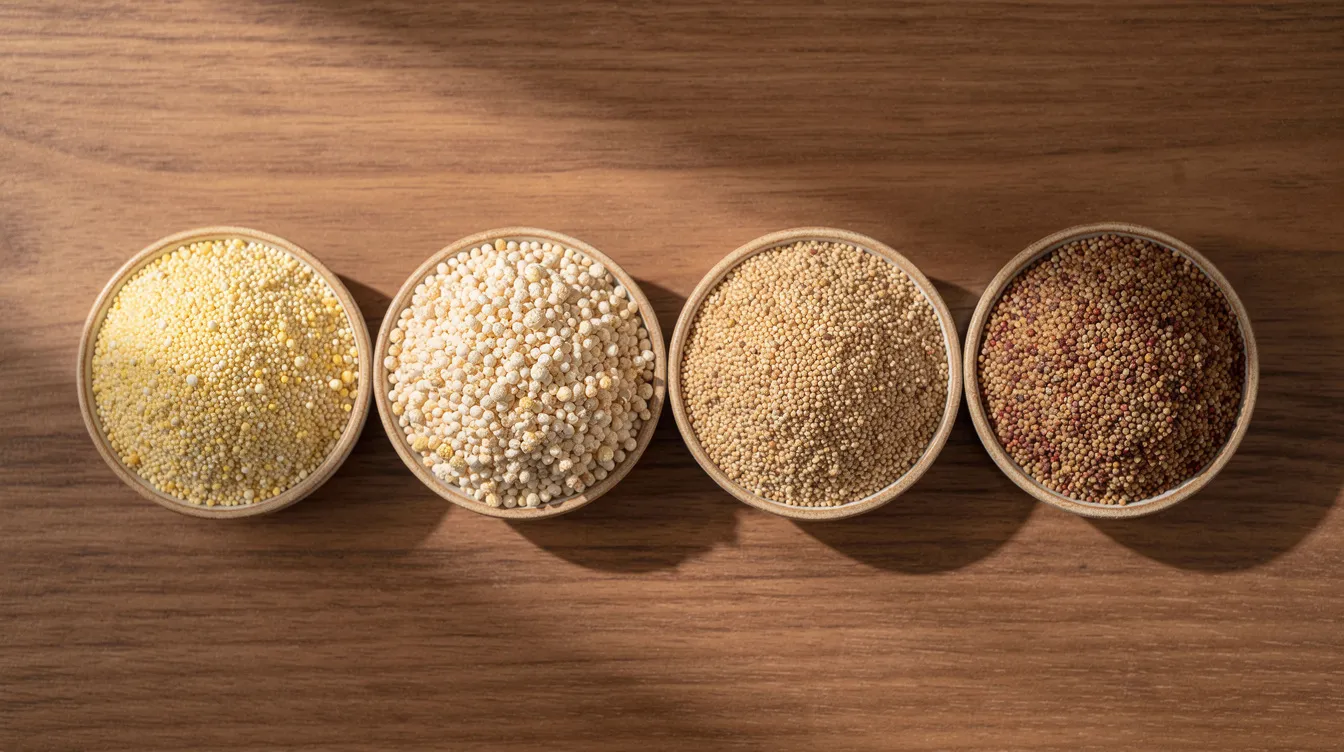
Small millets in Indian agro-processing include foxtail, kodo, little and barnyard millet. These are small seeded cereal grains with distinct grain sizes, husk adhesion characteristics and end-use profiles. All require dehulling as the core processing step, but hull tightness, breakage tendency and lipid content vary, directly influencing machinery selection, process parameters and finished product quality.
A small millet processing plant project report should specify whether the plant will handle one millet or multiple millets and define the target product mix: millet rice, flour, multi-grain blends or standardized cereal materials for downstream food manufacturers.
Foxtail Millet Processing
Foxtail millet has a medium-small grain with a relatively hard kernel. It dehulls comparatively well under controlled moisture conditions. Research on double-stage dehulling at approximately 12% moisture content recorded head grain yield of about 95.84% with broken grains around 4.16%. Processed products include foxtail millet rice, flour for multigrain atta, breakfast mixes, and RTE/RTC mixes. Growing demand from urban health-food consumers and packaged food brands makes foxtail millet one of the more commercially accessible small millets for new processing units.
Processing requires pre-cleaning, destoning, precise grading, controlled dehulling with calibrated speed and feed rate, aspiration for husk separation and optional polishing. Hull adhesion is moderate, but excessive dehuller speed generates powder and broken grains that reduce the proportion of premium whole-kernel output.
Kodo Millet Processing
Kodo millet has a tightly bound husk (glumes), requiring more aggressive or multi-pass dehulling. Field studies show hulling efficiency of 70-75% for kodo millet with approximately 10% broken even after several passes; improved prototypes using centrifugal or double-chamber designs raised efficiency by 5-10% over traditional models. Kodo millet rice is used in upma mixes, porridges and traditional foods, and has strong appeal among diabetic and wellness-focused consumers seeking nutritional benefits and dietary fiber from millet consumption.
Kodo is more susceptible to fungal damage and mycotoxin contamination when stored improperly. FSSAI food safety requirements for moisture, aflatoxin and foreign matter must be met, and the processing plant needs to include periodic lab testing as a routine quality measure, addressing anti nutrient concerns that buyers and regulators monitor.
Little Millet Processing
Little millet kernels are very small, demanding precise grading and carefully designed dehuller surfaces. Recovery efficiency for whole millet rice is sensitive to grain maturity and uniformity. Research indicates double-pass dehulling prototypes achieved around 88-89% hulling efficiency with 5-10% breakage under optimal settings. Industrial applications cover millet rice, flour for breakfast mixes, biscuits, weaning foods and nutrition and wellness products for domestic and export markets.
Gravity separators and colour sorters play a critical role in improving quality for premium “unpolished” or “organic” little millet rice sold to high-end brands. Good procurement practices, with emphasis on grain uniformity and low foreign matter, directly affect processing yield and the operating cost structure.
Barnyard Millet Processing
Barnyard millet has higher fibre and lipid content than the other three, making post-processing rancidity a real risk. Storage and packaging must use oxygen and light barriers. Products include barnyard millet rice for fasting foods, quick-cooking mixes, roasted snacks, flakes and flour for gluten-free applications. Dehulling requires multiple gentle passes rather than one aggressive pass; research on improved prototypes raised hulling efficiency to about 80-82% in two passes with 5-10% broken. Quality parameters include low foreign matter (under 2%), moisture below 12%, uniform grain size and minimal black or immature kernels; colour sorting helps achieve these specifications for nutritious foods targeting the retail consumption segment.
Comparison Table – Processing Characteristics of Small Millets
| Parameter | Foxtail Millet | Kodo Millet | Little Millet | Barnyard Millet |
|---|---|---|---|---|
| Grain Size | Medium-small | Medium | Very small | Small-medium |
| Hull Tightness | Moderate | Tight (glumes) | Moderate-tight | Moderate |
| Processing Complexity | Lower | Higher | Higher (due to size) | Moderate-high |
| Typical Head Yield Range | 82-96% (optimised) | 70-82% | 80-89% | 70-82% |
| Primary Products | Rice, flour, mixes | Rice, upma mixes | Rice, flour, blends | Rice, flakes, flour |
| Dehuller Type | Impact/centrifugal | Multi-pass abrasive or centrifugal | Small-grain centrifugal | Gentle multi-pass |
| Colour Sorter Need | Optional | Recommended | Recommended | Recommended |
Foxtail millet is often the easiest starting point for new millet processing operations because of its higher yield potential and established market demand. Kodo and little millet command premium prices in specific consumer segments but require tighter process control and better machinery calibration.
Small Millet Processing Plant Capacity Planning
Capacity planning determines machinery sizing, building footprint, small millet processing plant cost, utility requirements, manpower and the quantum of bank finance needed. A small millet processing plant project report must define installed input capacity (raw millet per day), effective operating days per year (typically 270-300 for a single-shift, multi-shift plants vary), capacity utilisation percentage and finished product output after accounting for husk removal, broken grains and fines.
Millet processing plants typically process between 500 kg to 1 ton of raw millet per shift at entry-level commercial scale, while larger plants with annual production capacity ranging from 10,000 to 20,000 MT handle 20-50 TPD or more. Realistic initial capacity utilisation in year one may be 45-60%, ramping up as supplier relationships, buyer networks and production stability improve. DPR projections must reflect this phased ramp-up.
| Capacity (TPD Input) | Typical Promoter | Approximate Land (Covered + Open) | Automation Level | Market Focus |
|---|---|---|---|---|
| 5 TPD | MSME / First-time promoter | 3,000-5,000 sq ft covered | Semi-manual | Local and regional |
| 10 TPD | Established MSME | 5,000-8,000 sq ft covered | Semi-automatic | Regional and state-level |
| 20 TPD | Mid-corporate / Diversifying agri-business | 8,000-15,000 sq ft covered | Automatic | Multi-state, B2B |
| 50 TPD | Large food processor | 15,000-25,000+ sq ft covered | Fully automated | National, export |
Not all capacities are equally economical. Ultra-small plants can struggle with per-unit fixed cost and limited marketing reach. Plants at 50 TPD and above require robust raw material supply chains, extensive processing capacities and established B2B buyers to sustain throughput. Promoters who anticipate future expansion into multiple millets or value-added products may benefit from reviewing the Integrated Millet Processing Plant Project Report for multi-line site planning.
Small Millet Processing Plant Manufacturing Process
The industrial production sequence for small millet processing follows this flow:
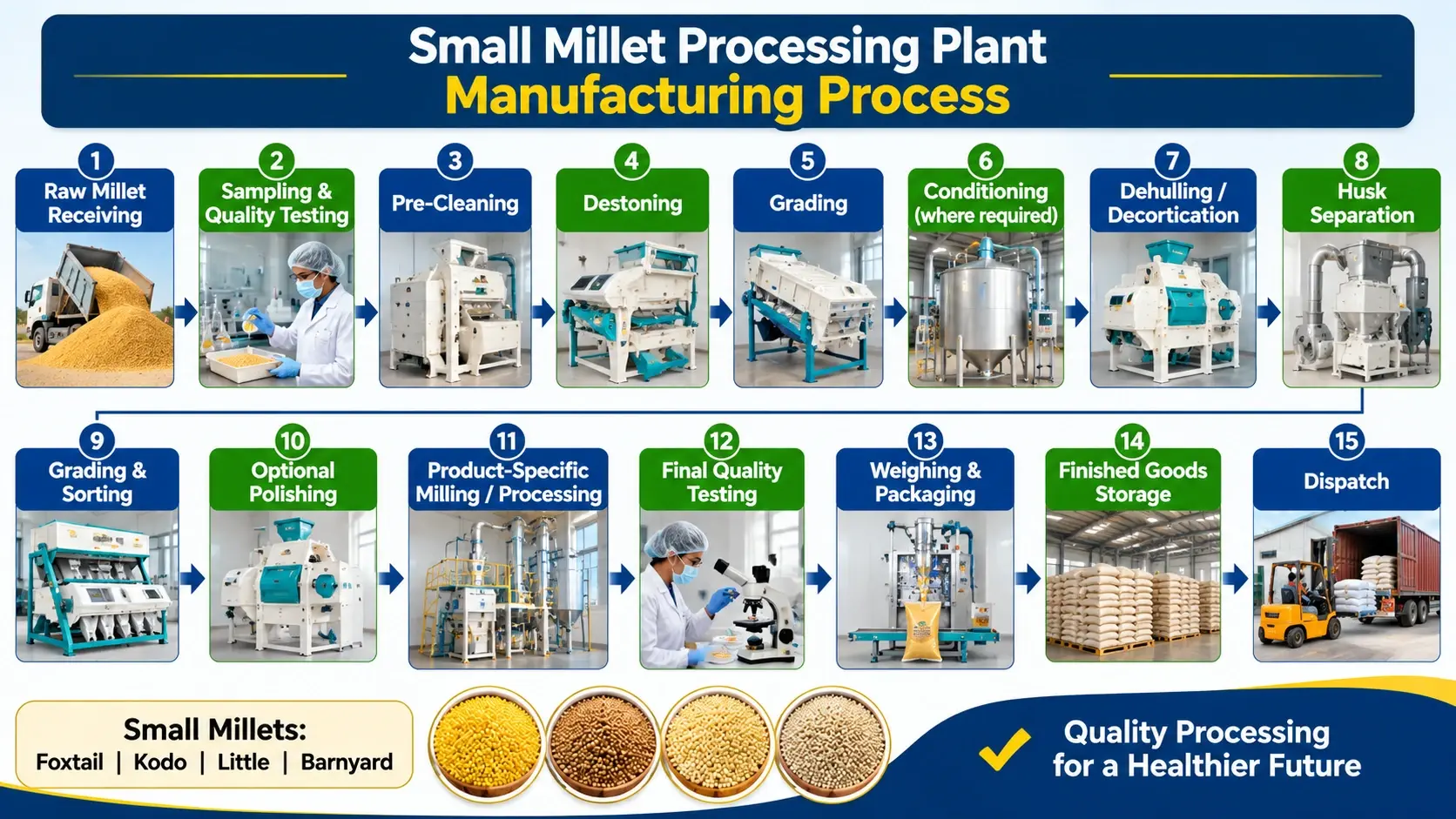
Raw Millet Receiving → Sampling & Quality Testing → Pre-Cleaning → Destoning → Grading → Conditioning (where required) → Dehulling / Decortication → Husk Separation → Grading & Sorting → Optional Polishing → Product-Specific Milling / Processing → Final Quality Testing → Weighing & Packaging → Finished Goods Storage → Dispatch
Millets should be cleaned, graded, dehulled, and potentially milled into flour during processing. Each stage has a defined purpose. Pre-cleaning removes straw, dust and loose foreign matter. Destoning separates stones and dense impurities that can damage dehullers. Grading sorts grain by size to feed uniform kernels into the dehuller, which directly affects yield. Moisture content in millets should be adjusted to an ideal range of 9% to 11% before dehulling, though some varieties perform well at 12%. Dehulling removes the husk through impact, abrasion or centrifugal force. Husk separation via aspiration recovers clean dehulled grain. Sorting and sieving equipment is necessary for quality control, removing defective or immature kernels. Milling converts dehulled grain into flour or semolina for specific product lines. Quality control measures include moisture testing and the removal of foreign matter during processing.
Process parameters differ by millet variety. Kodo requires more careful moisture control and often multiple dehulling passes. Barnyard millet benefits from quick processing and prompt packaging to limit oxidation. Little millet needs multiple light dehulling passes to avoid powdering due to its very small kernel size.
| Unit Operation | Primary Equipment |
|---|---|
| Pre-cleaning | Air screen cleaner, winnower |
| Destoning | Gravity destoner |
| Grading | Rotary sieve, vibrating grader |
| Conditioning | Tempering bins, moisture sprayer |
| Dehulling | Centrifugal/impact dehuller |
| Husk separation | Aspirator channel |
| Sorting | Gravity separator, colour sorter |
| Polishing | Brush polisher (optional) |
| Flour milling | Hammer mill, pin mill, pulveriser |
| Packaging | Weighing, filling, sealing machines |
Output streams include dehulled millet rice (primary product), broken grains (sold at lower prices or used in blended products), millet flour or semolina, and by-products such as husk (useful as biomass fuel or animal feed). Each stream must be quantified in the DPR for accurate revenue projection.
Small Millet Processing Machinery and Equipment
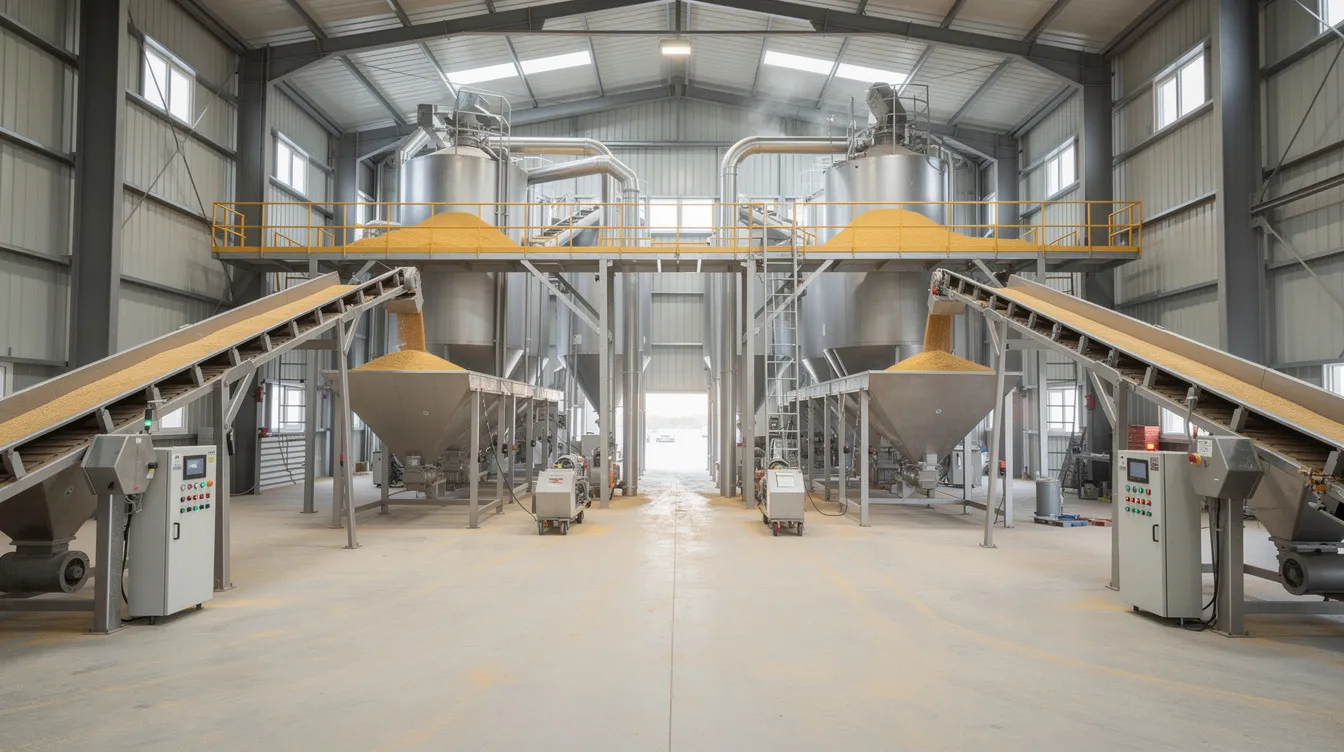
The machinery configuration is central to small millet processing plant cost and must be finalised based on target capacity, number of millet types, desired product mix and automation level. Equipment for millet processing includes cleaners, graders, dehuskers, and packaging machines. De-husking and milling systems are essential for millet processing. Blending and processing units are used in millet production where multi-grain products are part of the product mix. Packaging and sealing machines are required for finished products.
The main equipment groups span raw grain receiving and handling (bucket elevators, conveyors), pre-cleaners and separators, destoners, grading machines, conditioning equipment, millet dehullers and decorticators, husk aspiration and separation systems, gravity separators, colour sorters, optional polishing machinery, flour milling equipment (hammer mills, pin mills, pulverisers), sieving and classification systems (plansifters), dust collection and aspiration equipment, weighing and filling and packaging machines, electrical panels, compressors and other utility equipment. Millet processing requires grain cleaning and grading machines as the first line of defence for product quality. For promoters evaluating specialty flour plant machinery and equipment cost, flour milling components often represent a separate cost centre.
Selection considerations include stainless steel versus mild steel contact surfaces (stainless is preferred for food-grade processing), ease of cleaning for allergen control, local vendor service support, energy consumption per tonne, spare parts availability and line-balancing compatibility between machines from different manufacturers. Automation options range from manual bag feeding and semi-automatic bagging to PLC-based line control; higher automation reduces manpower per tonne but increases capital expenditure.
Maintenance planning should cover periodic bearing checks, sieve and rubber roller replacement schedules, dust filter cleaning and a critical-spares inventory. The DPR should include maintenance cost provisions in operating expense estimates.
Small Millet Processing Plant Cost and Capital Investment
There is no universal investment figure for a small millet processing plant. Small millet processing plant cost depends on capacity, level of automation, land location, building type, small millet processing machinery choices and whether polishing, colour sorting and flour milling are included. Capital investment varies based on plant capacity and technology. Equipment costs are the largest component of capital expenditure, and machinery costs account for the bulk of fixed asset investment in most plant configurations.
Standard project cost components include:
- Land and site development
- Factory building and civil construction
- Main processing machinery
- Electrical installations and utilities
- Material handling and storage facilities
- Packaging and weighing equipment
- Laboratory and quality testing equipment
- Installation, commissioning and engineering
- Preliminary and pre-operative expenses
- Contingency provisions (typically 5-10% of fixed cost)
- Working capital margin
A structured cost estimation approach works best: estimate built-up area from plant capacity, approximate civil cost per square foot based on the specific region, obtain supplier quotations for major equipment, then add engineering, contingencies and pre-operative costs. As an illustration, a published model for a 500 kg/day flour and snacks unit estimated total cost at approximately ₹18.5 lakh, with machinery at ₹7.7 lakh and civil works at ₹5.2 lakh; this represents a micro-scale entry point. Commercial plants at 10-20 TPD involve substantially higher total capital investment. Capex does not scale linearly; a 20 TPD dehuller does not cost four times a 5 TPD dehuller, but storage, utilities and automation scale closer to proportionally.
Raw material cost will dominate operating expenditure (millet processing plant operating costs are 70-80% raw materials), so even a precise capex estimate is insufficient to judge feasibility without a complete small millet processing plant feasibility study covering revenue, operating costs and cash flows. Final project cost estimation and means-of-finance planning should be carried out through a customised DPR.
Raw Material Procurement and Finished Product Recovery
Major millet-producing states for small millets include Karnataka, Andhra Pradesh, Telangana, Tamil Nadu, Chhattisgarh and Uttarakhand. Site selection must ensure access to raw materials and utilities, and proximity to these production belts reduces logistics cost and quality risk. Raw materials should be sourced from local farmers or Farmer Producer Organizations, government-regulated mandis and direct procurement from farmer groups; contract farming improves consistency and traceability, supporting sustainable agriculture and enhancing income generation for farming communities.
Key quality parameters at intake are variety, purity, moisture content, foreign matter percentage, mould and insect damage. These parameters directly influence dehulling efficiency and processing losses. Seasonal procurement planning is essential: millet production peaks during specific harvest windows, and the plant must plan raw material storage in godowns or silos and working capital to buy stocks when prices are lowest.
An illustrative mass-balance framework: from 100 kg of raw foxtail millet, a well-configured plant may recover approximately 82-83 kg of whole dehulled millet rice, 4-5 kg of broken grains and the remainder as husk and fines. For kodo and barnyard millets, whole-kernel recovery may be lower (70-82 kg) with higher broken and husk fractions. Actual percentages must be validated through lab-scale trials, vendor trial-run data and operating experience. Even a 2-3 percentage point improvement in millet rice yield can materially alter profitability, and DPR sensitivity analysis should test different yield scenarios. By-products (husk for biomass fuel or cattle feed, broken for low-cost food ingredients) contribute incremental revenue.
Land, Building, Plant Layout and Infrastructure
A well-designed plant layout ensures clear flow from raw to clean zones, minimal cross-contamination and efficient material handling. A 1,500 to 2,500 sq. ft. space is ideal for small-scale millet processing plants at micro or entry-commercial level. For 10-50 TPD industrial plants, covered area requirements increase to 5,000-25,000+ sq ft, and promoters should reserve 20-30% extra space for future expansion.
Typical sections include raw material unloading and inspection, pre-cleaning and destoning, dehulling and grading, polishing and colour sorting room, flour milling room (if applicable), packing section, finished goods warehouse, raw material storage godown, quality control laboratory, utility and maintenance rooms, and administrative facilities. Critical infrastructure elements include concrete floors for heavy machinery, sufficient floor-to-roof height for bucket elevators (typically 15-20 ft minimum), adequate lighting, pest control provisions, waste management systems and drainage for cleaning water.
Dust control is a design priority. Dust collection ducts should connect to all dehullers, graders and flour mills, with local exhaust points. Flour milling areas should be enclosed separately to reduce explosion risk and maintain hygiene. The DPR submitted to banks and investors should include an indicative plant layout drawing.
Utilities, Power, Manpower and Operating Requirements
Connected electrical load is estimated by summing kW ratings of all motors (pre-cleaners, destoners, dehullers, colour sorters, compressors, packaging machines) with a safety margin of 15-20%. Contract demand (kVA) and average running load will differ; improved impact dehullers consume approximately 5 kW per tonne processed, while older abrasive multi-pass systems may draw 30 kW per tonne. Water requirements are limited in dry millet processing but cover conditioning, domestic use, cleaning and sanitation. Compressed air is needed for pneumatic valves and packaging machines. Backup power (DG sets) depends on local grid reliability.
Manpower categories include plant manager, production supervisors, machine operators, helpers, electricians, fitters, quality assurance staff, storekeepers and administrative personnel. More automated plants need higher-skilled technicians but fewer manual labourers per tonne processed. The DPR should include a separate operating cost schedule estimating power cost, water and utilities, repairs and maintenance, and manpower costs for at least the first 7-10 years of operation. Operating costs are expected to rise due to inflation and market fluctuations, and these escalation assumptions should be built into the financial model.
Small Millet Processing Plant Financial Projections
Financial projections translate technical assumptions into commercial numbers; this is the core component of any small millet processing plant project report submitted to banks and investors. Revenue projections should be built product-wise: millet rice volumes, flour volumes and by-product volumes, multiplied by realistic selling prices with prudent annual escalation assumptions. Capacity utilisation ramp-up from year one (45-60%) to stabilised levels (75-85%) over 3-4 years must be reflected.
Raw materials account for 70-80% of total operating expenses in millet processing. Other cost categories include power and utilities, direct labour, repairs and maintenance, packaging material, inward and outward freight, distribution costs, quality testing, insurance, administrative overheads and sales and marketing expenses. Depreciation based on Companies Act or Income Tax rates, interest on term loans, working capital interest and income tax should be modelled to derive projected PAT and free cash flow.
Projected profit and loss statements should be included in a bankable project report, along with cash flow statements and projected balance sheets for at least 7-10 years. Financial projections include ROI, NPV, and payback period analysis. Gross profit margins for millet processing range from 25-35%, and net profit margins for millet processing are estimated at 10-15%, depending on product mix, scale and raw material pricing. Scenario analysis under base, optimistic and conservative cases should test project robustness.
DSCR, IRR, NPV, Break-Even and Profitability Analysis
Lenders evaluate repayment capacity; investors evaluate return on capital. Both require structured profitability analysis, not just revenue projections. Key financial metrics include debt-service coverage ratio and return on investment.
DSCR is computed from projected cash accruals (PAT plus depreciation plus non-cash charges) divided by annual principal repayment plus interest obligations. Banks typically require average DSCR above 1.25-1.50 for term loans. IRR and net present value are investor-oriented metrics that depend on discount rate assumptions and full-lifecycle cash flows, including capex and working capital changes. Financial viability metrics for a project report include cash flow projections and break-even analysis. Break-even capacity utilisation indicates the minimum throughput needed to cover fixed costs and is a practical indicator of project resilience.
EBITDA and operating margins for millet processing are sensitive to raw material price fluctuations and recovery rates. Sensitivity analysis should test the impact on DSCR and IRR when raw millet prices increase by 10-15%, yields decline by 3-5%, or selling prices soften by 10%. A comprehensive project report should outline all operational and regulatory considerations for compliance and include these downside scenarios. Project Report Bank develops project-specific profitability analysis rather than presenting generic return assumptions.
Working Capital Requirements and Bank Finance
A well-designed plant can face cash flow stress if working capital is insufficient. In seasonal agri-processing, raw millet must often be procured in bulk during harvest, locking funds into inventory. Working capital components include raw millet inventory, packaging materials, consumables, finished goods in stock and trade receivables, net of trade payables.
Seasonal procurement of small millets often requires higher inventory build-up after harvest, temporarily increasing working capital needs. Banks may structure cash credit or overdraft limits to accommodate seasonal peaks. Term loans fund capital expenditure; working capital facilities fund operating cycles. Means of finance in the DPR should clearly show promoter contribution, term loan, and working capital arrangements.
CMA Data preparation is mandatory for medium and large bank limits in India. Project Report Bank prepares CMA Data aligned with bank formats, including projected fund flow and ratio analysis. Banks assess current ratio, working capital cycle days, DSCR and promoter margin when sanctioning limits for a millet processing unit.
Government Approvals, Food Safety and Regulatory Requirements
Regulatory compliance for millet processing in India spans food safety, factory and labour laws, GST and, where applicable, pollution control and municipal approvals. FSSAI registration is mandatory for food processing units in India; as of April 2026, units with turnover up to ₹1.5 crore require FSSAI registration, while larger operations need a state or central licence depending on turnover thresholds. Adherence to relevant grain and flour standards, proper labelling (ingredient list, nutritional values, allergen declarations, batch coding, shelf-life), and periodic product testing are essential for food safety compliance and rising retail availability of millet products.
Factory Act registrations apply where the plant meets thresholds for workers and power; ESI/EPF registrations are required for eligible employees. GST registration and correct classification of millet-based products under the GST tariff must be maintained. Dust and noise from dry processing may necessitate consent from the State Pollution Control Board. Local zoning laws and building approvals should be verified before land acquisition.
Government schemes provide financial support for micro food processing enterprises, including credit-linked subsidies under the PMFME scheme. Eligibility and terms for these schemes change periodically; promoters should verify current official notifications and may seek professional assistance to evaluate scheme applicability for their specific project.
Market Opportunities, Product Diversification and Commercial Strategy
Growing demand for healthy foods drives millet product popularity. Millet products cater to health-conscious consumers seeking gluten-free options, supporting digestive health and steady energy release. The millet market exhibits consistent market growth across domestic and international channels, with India’s millet exports in 2025-26 reaching approximately 138.69 thousand tonnes worth ₹543.40 crore. Demand drivers include urban consumption of millet-based breakfast cereals, flour blends, RTE/RTC mixes and institutional use by hospitals, corporate canteens and government nutrition programmes. The target market for millet products includes local retail grocers and health-conscious consumers, as well as large-scale B2B buyers.
Core product lines from a small millet processing unit include clean dehulled millet rice (polished or unpolished), millet flour, multigrain atta, idli and dosa mixes, ready-to-cook khichdi and upma mixes and intermediate ingredients for snack and bakery manufacturers. Incorporating millet into processed foods and nutritious millet value addition products helps strengthen nutritious millet supply chains and supports environmentally sustainable food systems. Diversification into related grains is possible with separate lines; promoters can refer to the Bajra Processing Plant Project Report for pearl millet processing and the Ragi Processing Plant Project Report for finger millet flour manufacturing to evaluate related opportunities.
Packaging strategies should protect against moisture and ensure product integrity. Bulk 25-50 kg bags serve B2B buyers; 500 g to 5 kg retail packs with barrier properties and nitrogen flushing work for millet flour and high-fat products like barnyard millet flour. Millet research continues to expand product possibilities. Brand positioning, organic certification, gluten-free claims backed by testing, and established buyer relationships reduce offtake risk. The DPR should include a realistic go-to-market strategy, not assumptions about rapid brand creation without marketing budgets.
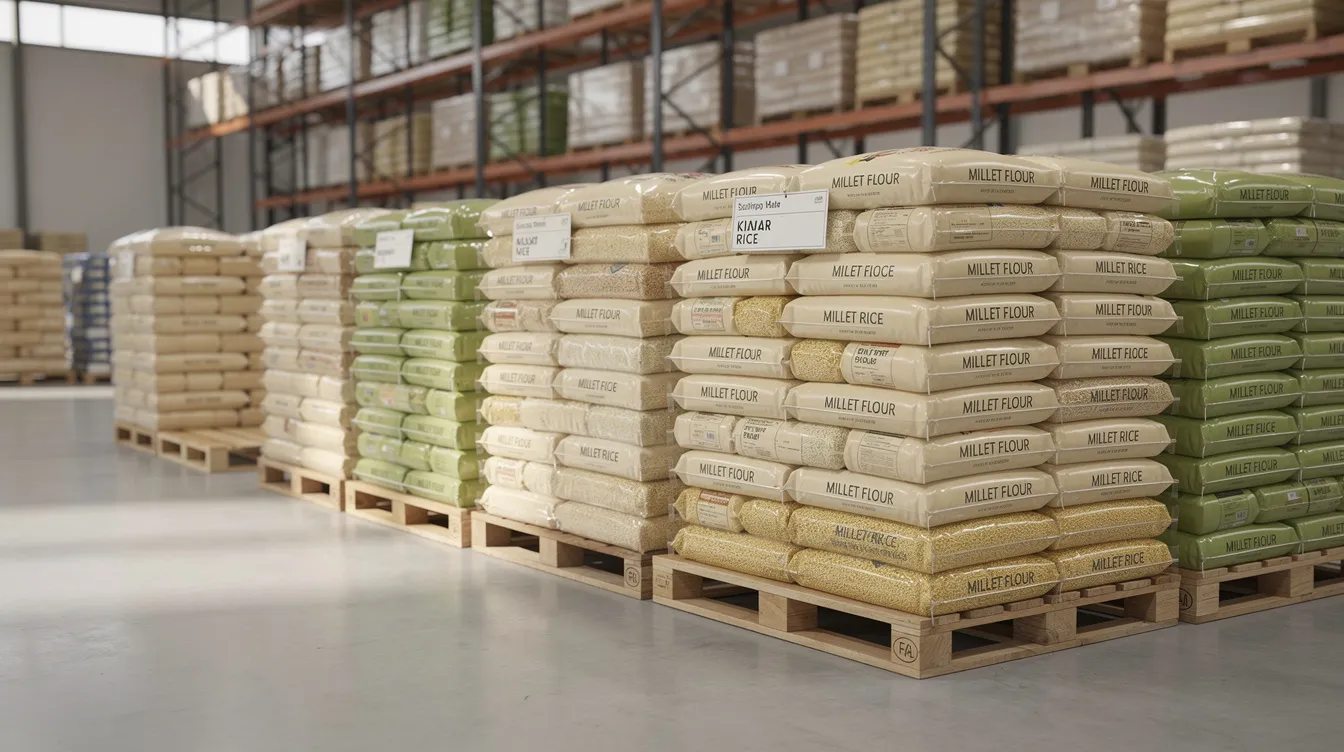
Small Millet Processing Plant Feasibility Study
A thorough small millet processing plant feasibility study integrates technical, commercial, financial and managerial aspects. Technical feasibility covers suitability of selected processing machines for planned capacities, multi-millet handling capability, utilities availability and future expansion potential. Conventional processing equipment required for each millet type must be matched to the target product mix. Raw material feasibility evaluates long-term availability of foxtail, kodo, little and barnyard millets in the catchment area, competition from other buyers and climate variability affecting supply chain disruptions.
Commercial feasibility addresses expected demand for millet rice and flour, the competitive landscape among leading millet processors, price benchmarks and potential for contract manufacturing with established brands. Industry trends in the millet market continue to support medium-term demand growth.
Financial viability analysis projects profitability, DSCR, IRR, payback period and NPV under multiple scenarios. Project implementation typically requires about 4 to 6 months from planning to production launch. Small changes in recovery, selling price or capacity utilisation can shift these metrics from comfortable to marginal.
| Risk Factor | Likelihood | Financial Impact | Mitigation |
|---|---|---|---|
| Raw material price spike | Medium-High | Reduced margins, potential losses | Diversified sourcing, harvest-season bulk buying |
| Yield shortfall | Medium | Lower revenue per tonne processed | Machine calibration, regular maintenance, quality intake |
| Machinery breakdown | Low-Medium | Production downtime, maintenance cost | AMC, critical spares inventory |
| Market demand shortfall | Medium | Underutilisation, revenue below projection | B2B contracts, product diversification |
| Regulatory changes | Low | Compliance costs | Professional advisory, periodic compliance review |
Bankability and investor readiness depend on both financial numbers and promoter capability: experience in agro-processing, marketing networks, professional management strength and governance practices matter as much as projected IRR.
Importance of a Professional Small Millet Processing Plant DPR
A detailed project report prepared by an experienced financial and project advisor is different from a generic downloadable profile. It is tailored to specific plant capacity, location, product mix and financing plan. A professional DPR provides the structured basis for both internal decision-making and external funding discussions.
Major components of a robust DPR include: industry overview and demand assessment, technical configuration and machinery list, plant layout concept, project cost estimate and means of finance, implementation schedule, detailed financial projections (P&L, cash flow, balance sheet for 7-10 years), ratio analysis, DSCR and IRR calculations, and risk and sensitivity analysis. A detailed project report is what banks use to assess assumptions, collateral coverage, repayment capacity and promoter contribution when appraising term loan proposals.
A well-documented DPR also guides project execution: machinery ordering, building design, hiring plans and procurement timelines. It serves as a benchmark against which actual performance can be tracked. Promoters evaluating related specialty grain projects can review the Sorghum Milling Plant Project Report to see how DPRs are tailored by grain type. For millet processing plants, crop-specific yield data, machinery parameters and seasonal working capital cycles must be modelled with care. An Integrated Rice Milling and Processing Plant Project Report offers a useful comparison of how grain processing DPRs handle similar technical and financial structures.
Professional DPR and Financial Feasibility Services for Small Millet Processing Projects
Project Report Bank is a Chartered Accountant-led professional advisory platform headed by CA Manish Gugliya, FCA, DISA (ICAI), with more than 20 years of professional experience in DPR preparation, project feasibility, financial modelling, CMA Data and project finance advisory for agro-processing industries.
Services relevant to small millet processing projects include customised small millet processing plant project report preparation, capacity and configuration planning, project cost and means-of-finance structuring, CMA Data for bank loans, DSCR and repayment analysis, working capital assessment and sensitivity analysis. These services are tailored for entrepreneurs, MSMEs and established food processing businesses planning greenfield millet processing units or expansion of existing grain processing operations and millet processing operations.
Promoters planning a foxtail kodo little barnyard millet processing plant can share basic project details, including proposed location, planned plant capacity in TPD, target small millets, intended product mix and tentative investment budget, through the Project Report Bank website at https://projectreportbank.com/ for a customised evaluation. A well-prepared DPR and feasibility study reduces risk for both promoters and financiers and improves the chances of timely financial closure.
Conclusion
Small millets present a strong medium- to long-term processing opportunity in India, supported by nutritious grains awareness, government encouragement of millet consumption and growing demand from processed food manufacturers and the health food sector. The global millet market size continues to expand, and eastern colorado seeds as well as other research institute programmes are contributing to improved millet varieties. Food security considerations and the role of millets in supporting sustainable agriculture add further momentum to the sector.
Successful implementation rests on four factors: assured raw material availability, a technically sound conventional processing equipment configuration matched to the target millets, efficient product recovery and yield management, and proven commercial offtake at viable margins. Capital expenditure and working capital must be carefully planned, with realistic capacity utilisation ramp-up and risk buffers built into the financial model to ensure long-term viability.
Before committing to land, machinery orders or term loan applications, promoters should obtain a professional small millet processing plant project report and financial feasibility analysis tailored to their specific project. The difference between a well-structured project and an underperforming one often lies in the quality of planning and financial analysis done before the first rupee is spent.
Frequently Asked Questions
1. Can I add sprouted or ready-to-eat millet products later without changing the core plant?
The core dehulling, cleaning and milling line for small millets can remain largely unchanged when adding downstream value-added products. Sprouting requires separate soaking, germination and drying equipment. Extrusion for snacks needs a distinct machinery block. These additions are typically planned as a second-phase investment once basic millet rice and flour operations are stabilised and cash flows are proven. DPR updates will be needed to size extra utilities (steam, hot air, drying capacity) and assess incremental capital expenditure and returns.
2. How different is a small millet processing unit from a generic rice mill?
Both use pre-cleaners, destoners and graders, but small millets have much smaller grains and tighter husks than paddy. Small millet processing requires specialised millet dehullers with smaller screen apertures, unique sieve combinations and often colour sorting to manage defect grains invisible to standard rice-mill grading equipment. Attempting to adapt a standard rice mill without proper millet-focused processing machines usually results in poor recovery and downgraded product quality.
3. Is it necessary to have separate lines for foxtail, kodo, little and barnyard millets?
Many commercial plants use the same core line for multiple small millets, changing sieves, machine settings and sometimes dehulling elements between batches. Full separate lines are justified only at higher throughputs or where organic or allergen segregation is critical. The DPR should account for equipment-changeover time, cleaning protocols between batches and the impact on effective annual production capacity when planning multi-millet operations.
4. Do I need my own consumer brand, or can the plant operate on B2B sales?
Many successful millet processing units operate as B2B suppliers of millet rice and flour to established packaged food brands, which reduces marketing cost and brand-building risk. The DPR can model scenarios with later brand development once volumes and cash flows are stabilised. Own-brand retail requires additional investment in consumer packaging, marketing, e-commerce and distribution infrastructure. B2B-first is a lower-risk entry strategy for most first-time promoters.
5. How early should I engage with banks or investors?
Engage after a preliminary concept and rough capacity are defined but before signing land or machinery purchase contracts. At this stage, Project Report Bank can prepare a feasibility-focused DPR and initial financial model to support funding discussions. Once the DPR, cost estimates and means-of-finance plan are ready, a bankable report and CMA Data can be used for formal loan appraisal. Starting financial planning early avoids costly mid-project changes to machinery specifications, building design or financing structure.