Key Takeaways
- A millet processing plant bank loan DPR must integrate project cost, plant capacity, financial analysis, DSCR, and working capital assessment in a format that banks can appraise directly.
- Indian banks evaluate both the detailed project report and CMA Data together when deciding term loan and cash credit limits for millet processing units.
- Realistic assumptions on capacity utilisation, raw material availability, millet market demand and seasonal procurement are more important than optimistic profit projections.
- Working capital for raw millet grains, packaging, finished goods inventory and receivables is frequently underestimated, causing cash flow stress after commissioning.
- Project Report Bank, led by CA Manish Gugliya, FCA, DISA (ICAI), prepares customised DPRs, CMA Data and project finance models for millet processing plants across India.
- This article addresses bank loan eligibility, documentation, government schemes, common rejection reasons and practical financial planning for millet processors.
Introduction – Millet Processing Plant Bank Loan DPR in the Current Millet Market
India’s millet market has gained substantial momentum since the International Year of Millets 2023. Millets have seen increasing demand due to health-awareness trends, with consumers and the food processing industry increasingly incorporating millet into processed foods, nutrition and wellness products, and healthy and quick foods. The global millet market size was valued at USD 13.93 billion in 2025 and is projected to reach USD 19.70 billion by 2034, while India produces about 38% of the world’s millet output. Millet exports from India reached 89,165 tonnes in 2024-25. These nutritious grains – once considered staple food crops in dryland regions – are now central to the health food sector, the convenience food industry, and the retail consumption segment.

For promoters planning a millet processing plant, a Detailed Project Report is essential for securing bank financing. However, a technically feasible millet processing unit with proper machinery and process flow is not automatically a bankable project. Banks evaluate DPRs for market potential and repayment capacity – meaning the DPR must demonstrate that projected cash flows can comfortably service proposed debt. Millet processing plant setup costs vary by capacity and technology, from small units processing 600 kg/day to industrial processing plants with annual production capacity ranging up to 20,000 MT/year. This scale directly influences the financing structure.
Adopting millet as a commercial processing opportunity requires rigorous financial planning. This guide covers what banks expect, how CMA Data should be prepared, and how working capital requirements should be assessed for millet processing operations.
Why Millet Processing Plants Require a Bankable Detailed Project Report
A bankable detailed project report for a millet processing plant goes well beyond a concept note or machinery catalogue. A comprehensive DPR structure includes an executive summary, market overview, technical process description, project cost, means of finance, projected financial statements covering 3 to 7 years, DSCR analysis, working capital assessment, and risk analyses. A DPR must demonstrate both technical feasibility and financial viability.
Key DPR components include:
- Project profile, promoter background, and legal entity details
- Local and national market trends analysed for millets – identifying target markets is essential for revenue generation strategies, whether for millet flour, millet rice, or nutritious millet value addition products
- Technical process flow: cleaning, dehulling, grading, milling, and packaging
- Plant capacity, annual production capacity and utilisation ramp-up
- Project cost estimation supported by quotations
- Means of finance and promoter contribution
- Projected P&L, balance sheet, cash flow, and sensitivity analysis
Machinery quotations alone do not constitute a processing plant project report. Banks need integrated financial analysis that connects capacity, yield, revenue, operating expenses, and debt repayment. Professional advisory services enhance the quality of DPR preparation by ensuring all elements reconcile. Investor-ready DPRs require clear financial modeling and viability analysis, though the emphasis for bank proposals remains on repayment capacity and cash flow adequacy.
Millet Processing Plant Project Cost and Means of Finance
Project cost for a millet processing plant includes fixed assets plus the promoter’s margin for working capital – not the entire working capital facility. For a medium-scale unit with extensive processing capacities of approximately 10,000 MT/year, an illustrative project cost may aggregate around ₹1,800–2,200 lakh, depending on automation and value addition. Machinery costs account for the largest share of capital costs, typically 45–55% of total capital investment. Human resource requirements, distribution costs, and pre-operative expenses must also be budgeted.
| Component | Illustrative Amount (₹ Lakh) |
|---|---|
| Land and site development | 150 |
| Factory building and civil works | 280 |
| Plant and machinery | 900 |
| Electrical installation and utilities | 80 |
| Raw material storage and handling | 60 |
| Packaging equipment | 50 |
| Quality control lab | 20 |
| Preliminary and pre-operative expenses | 60 |
| Interest during construction | 70 |
| Contingency | 80 |
| Margin for working capital | 150 |
| Total project cost | 1,900 |
Means of finance for this illustrative plant setup:
| Source | Amount (₹ Lakh) | Share |
|---|---|---|
| Promoter contribution (equity) | 570 | 30% |
| Term loan | 1,330 | 70% |
| Total | 1,900 | 100% |
The promoter’s margin for working capital (₹150 lakh above) covers only the equity portion of working capital. The bank-funded working capital limit (cash credit) is assessed separately. More detailed capital cost breakdowns, including EPC options for automatic millet processing plants, are discussed in Millet Processing Plant Setup Cost, Capital Investment & Project Economics.
Millet Processing Plant Bank Loan Eligibility and Financing Structure
Banks assess millet processing plant loan eligibility based on both borrower and project factors:
- Promoter background includes educational qualifications and business experience, especially in agro-processing or grain trading
- Credit history, CIBIL score, and existing banking conduct
- Legal entity type (proprietorship, partnership, LLP, company)
- Land ownership or long-term lease in a location compliant with local zoning laws, and millet processing plants require proximity to raw materials for procurement efficiency
- Collateral security and promoter’s financial net worth
Financing structure typically involves a term loan for fixed assets and a separate cash credit facility for working capital. Margin percentages, interest rates, and repayment tenors differ across banks. For instance, some public sector banks require 25% promoter margin for machinery and 30% for land and building. Professional project finance advisory is crucial for MSME and manufacturing projects to structure the proposal correctly. Promoters should document all sources of equity – share capital, internal accruals, or unsecured promoter loans – with supporting evidence.
Millet Processing Plant CMA Data – Format and Bank Appraisal Requirements
CMA Data is a structured financial statement pack that Indian banks use to appraise both term loan and working capital facilities. For millet processors, CMA Data typically contains:
- Existing and proposed credit facilities (funded and non-funded)
- Past three years’ audited financial statements (for existing entities)
- Projected operating statements, balance sheets, and fund flow statements
- Working capital assessment with current asset and liability schedules
- Key financial ratios and operating cost structure
For greenfield millet processing units, banks rely entirely on projections and promoter credentials. For established grain millers diversifying into millets, historical turnover and margins provide a baseline. Leading millet processors with existing banking relationships benefit from demonstrated financial analysis.
CMA assumptions – capacity utilisation, raw material costs, selling prices, inventory holding – must reconcile precisely with DPR projections. Discrepancies between DPR and CMA Data are among the most common causes of appraisal delays. Financial projections assess capital investment and operating costs, and the operating cost structure must align across both documents. For guidance on how banks analyse CMA submissions, see How Banks Analyse CMA Data for Mudra Loan Applications.
Millet Processing Plant Working Capital Requirements
Working capital is critical for millet processing operations because raw material requirements are seasonal, inventory holding is unavoidable, and B2B credit terms extend the cash cycle. Raw materials account for 70–80% of total operating expenses, making procurement planning central to working capital management.
Key working capital components include:
- Raw material inventory: Pearl millet, finger millet, foxtail millet, kodo millet, barnyard millet, little millet, and other small seeded cereal grains. Raw millet grains must be procured and stored during harvest seasons to ensure year-round operations. Raw material sourcing strategies should ensure consistent supply throughout the year, with raw material storage capacity sized for 30–60 days of consumption.
- Work-in-progress: Cleaned, dehulled, and partially processed millet – typically 1–3 days.
- Finished goods: Millet rice, millet flour, rava, and flakes – typically held for 15–30 days.
- Trade receivables: Credit to wholesalers, food service establishments, restaurant and cafe owners, modern retail, and institutional buyers typically runs 30–60 days.
- Trade payables: Supplier credit for raw millet is often 15–30 days.
Working capital assessments must consider inventory management and operating expenses including wages, electricity, packaging, and logistics. The operating cycle formula is:
Operating Cycle = Inventory Days + Receivable Days − Payable Days
Health awareness drives demand for millet among health-conscious consumers, supporting millet consumption and rising retail availability, but the working capital cycle remains a practical constraint that must be financed.
Illustrative Working Capital Assessment for a Millet Processing Plant
Assumptions: Installed capacity 10,000 MT/year; operating days 300; capacity utilisation 60% (Year 1, producing 6,000 MT); average raw millet cost ₹28,000/MT; processing recovery 75%; average finished product selling price ₹52,000/MT; raw material holding 45 days; finished goods holding 20 days; receivables 45 days; payables 30 days.
Annual raw material consumption: 6,000 ÷ 0.75 = 8,000 MT = ₹2,240 lakh. Annual sales: 6,000 MT × ₹52,000 = ₹3,120 lakh.
| Particulars | Amount (₹ Lakh) |
|---|---|
| Raw material inventory (45 days) | 276 |
| Packing material inventory | 15 |
| Work-in-progress inventory (2 days) | 18 |
| Finished goods inventory (20 days) | 171 |
| Trade receivables (45 days) | 385 |
| Other operating current assets | 20 |
| Total current assets | 885 |
| Less: Eligible current liabilities (payables, 30 days) | 184 |
| Working capital gap | 701 |
| Less: Promoter’s working capital margin (25%) | 175 |
| Indicative bank finance required | 526 |
Banks may assess working capital using either the turnover-based method (approximately 25% of projected annual turnover) or the operating-cycle method illustrated above. Operating costs are expected to rise due to inflation and market fluctuations, so projections should build in appropriate escalation. The precise method depends on limit size, bank policy, and MSME classification.
Term Loan vs Cash Credit for Millet Processing Plants
Millet processing projects typically require both a term loan for plant setup and cash credit for day-to-day working capital.
| Feature | Term Loan | Cash Credit |
|---|---|---|
| Purpose | Fixed assets (land, building, machinery) | Raw materials, inventory, receivables |
| Tenure | 5–10 years | Renewed annually |
| Repayment | Monthly/quarterly instalments | Revolving; interest on utilised amount |
| Security | Hypothecation of fixed assets; mortgage | Hypothecation of stock and book debts |
| Appraisal basis | DSCR, project cash flows | Drawing power from eligible current assets |
| Margin | 25–30% promoter equity | 20–25% on stocks and receivables |
Millet processors may also use WCDL (Working Capital Demand Loan) or bill discounting where applicable, and these should be integrated into CMA Data.
Millet Processing Plant Financial Projections, DSCR and Debt Repayment Capacity
Robust five- to seven-year financial projections are the backbone of any millet processing plant bank loan DPR. Key elements include production plan by product, capacity utilisation build-up, processing yields, selling prices, and raw material cost assumptions. Financial projections include ROI, net present value, and profit-loss analysis. Gross profit margins for millet processing generally range from 25–35%, though this varies significantly with product mix and scale.
DSCR Formula: DSCR = (Profit After Tax + Depreciation + Interest on Term Loan) ÷ (Interest on Term Loan + Term Loan Principal Repayment)
Debt Service Coverage Ratio should be ideally above 1.5 to ensure loan repayment capacity, though banks do not guarantee sanction at any specific DSCR level. Break-Even Point analysis is crucial for understanding profitability thresholds – in model DPRs for small millet units, BEP has been observed around 70–75% capacity utilisation. Sensitivity analysis should test lower capacity utilisation, higher raw millet prices, selling price pressure, and extended receivable cycles. Dietary fiber content and nutritional benefits support steady energy release and consumer demand, but revenue assumptions must still be conservative.
For detailed DSCR workings, IRR calculations, and profitability models, refer to Millet Processing Plant Financial Projections, DSCR, IRR & Profitability Analysis.
Plant Machinery, Capacity Planning and Technical Bank Appraisal
Banks examine machinery lists, plant layout and capacity calculations carefully. A millet processing unit requires grain cleaning and grading machines as the first unit operations. Primary processing includes cleaning, grading, and dehulling, while secondary processing involves milling, flaking, and puffing. Dehulling is necessary for small millets before cooking, and millets are processed into flour, flakes, and snacks through scientific processing. De-husking and milling systems are essential for producing flour and finished millet products.
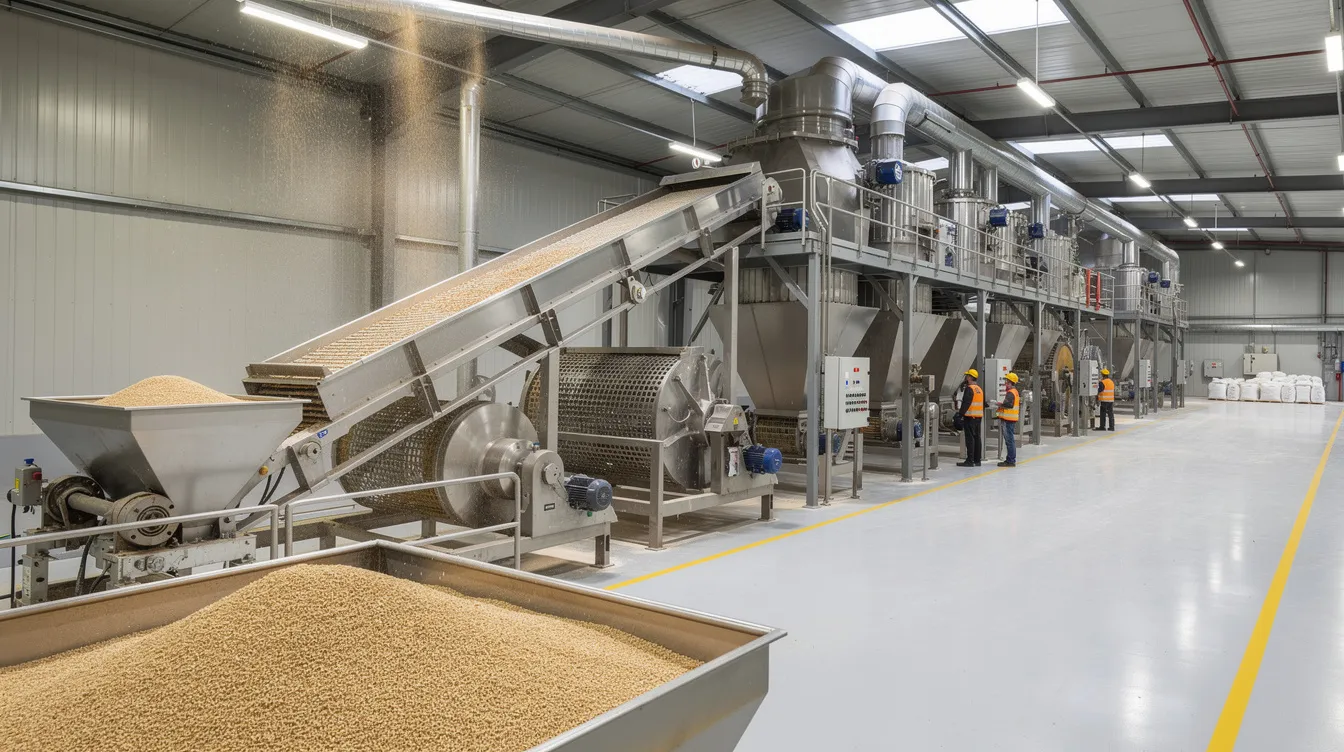
On costs, single-chamber dehullers cost between ₹52,000 to ₹1.05 lakh each, while double-chamber dehullers for kodo millet range from ₹1.03 lakh to ₹2 lakh. A basic millet processing unit can start with a few lakh rupees of machinery, though commercial-scale conventional processing equipment required for bank-financed projects involves substantially higher investment. Conventional processing equipment includes destoners, aspirators, polishers, hammer mills, and packaging lines. Plant layout should optimise workflow and safety, quality assurance systems are essential for millet processing, and machinery must comply with industry safety standards. Waste management systems should also be incorporated for husk and by-product handling, and addressing anti nutrient concerns in millets through proper processing helps produce standardized cereal materials.
For automated configurations, see Automatic Millet Dehulling & Milling Machinery, Plant Layout & EPC Cost. For smaller units, refer to the Small Millet Processing Plant Project Report. Related grain processing benchmarks are available in the Sorghum Milling Plant Project Report.
Bank Loan Documentation Checklist for Millet Processing Plants
Complete documentation accelerates bank appraisal. Key documents include:
- KYC and promoter documents: PAN, Aadhaar, identity and address proofs, promoter net worth statements
- Constitution documents: Partnership deed, MOA/AOA, board resolutions
- Registrations: Udyam (MSME), GST, PAN of entity. Statutory approvals include FSSAI license and GST registration
- Project documents: Detailed project report, CMA Data, financial projections, machinery quotations, plant layout, implementation schedule
- Property documents: Land ownership or lease deed, building plans, valuation reports
- Regulatory approvals: FSSAI, pollution control consent, factory licence, electricity connection
- Financial history: Three years’ audited financials and income tax returns (existing entities), recent bank statements
- Security documents: Collateral property details, title reports
Site selection must comply with local zoning laws. Each bank may have variations in its checklist – promoters should confirm requirements with their specific lender.
Government Schemes and Credit Support for Millet Processing Plants
Millet processing plants may access government schemes depending on MSME status, investment size, and product profile. The PMFME scheme supports micro food-processing enterprises with credit-linked capital subsidy – as of December 2025, 4,612 micro millet processing units had been approved. The PLI Scheme for Millet-Based Products (PLISMBP) offers incentives for value-added millet products, with an outlay of ₹800 crore. CGTMSE coverage may be available for eligible MSME borrowers, reducing collateral requirements.
State-level policies may offer additional capital subsidies for food processing units, supporting sustainable agriculture and enhancing income generation in millet production areas. Schemes to strengthen nutritious millet supply chains and simplify millet consumption are expected to continue boosting demand in the global millet industry. However, subsidies should never be the primary justification for investment – they are project support, not revenue drivers. Environmentally sustainable food systems and supporting digestive health through nutritious foods are important policy drivers, but promoters must verify current eligibility from official sources, including for international seed varieties such as those from eastern colorado seeds programmes that may influence raw material genetics.
Common Reasons Banks Reject Millet Processing Plant Loan Proposals
Many millet processing plant bank loan proposals fail due to planning and documentation gaps, not concept weakness:
- Overestimated capacity utilisation (assuming 90%+ in Year 1)
- Unrealistic raw millet procurement prices without market evidence
- Optimistic selling prices without demonstrated market linkages or off-take arrangements
- Inadequate working capital planning – ignoring seasonal stockholding and supply chain disruptions
- Insufficient promoter contribution or unsubstantiated equity sources
- DPR figures not matching CMA Data projections
- Missing plant layout, generic machinery quotes, or absence of product-wise recovery data
- Ignoring GST, tax implications, or regulatory approvals
Corrective steps: Revise assumptions conservatively, strengthen the equity base, improve market evidence, reconcile all financial documents, and engage a professional DPR and CMA consultant before resubmission.
How Professional DPR and CMA Preparation Improves Bank Loan Readiness
Professional DPR and CMA preparation aligns technical, financial and banking perspectives:
- Validates project cost estimates and plant setup assumptions against actual quotations
- Ensures working capital requirements reflect realistic millet market conditions
- Reconciles DPR, CMA Data, and projected financial statements to eliminate discrepancies
- Applies DSCR analysis, break-even calculations, IRR, payback period, and sensitivity tests
- Prepares responses to typical credit appraisal queries
No advisor can guarantee loan sanction, but a properly structured proposal with defensible assumptions significantly improves credibility with lenders.
Professional Millet Processing Plant DPR, CMA Data & Project Finance Advisory by Project Report Bank
Project Report Bank, led by CA Manish Gugliya, FCA, DISA (ICAI), provides Chartered Accountant-led project finance advisory for millet processing plants and agro-processing units across India. Core services include:
- Customised millet processing plant bank loan DPRs
- CMA Data preparation for term loan and working capital
- Financial projections with DSCR, IRR, and sensitivity analysis
- Working capital assessment and loan structuring
- Project feasibility studies and financial viability analysis
The practice also covers value-added product lines – see Millet-Based Extruded Snacks Manufacturing Plant Project Report and Ready-to-Eat Millet Breakfast Cereals Plant Project Report for related DPR examples.
All DPRs and CMA Data are prepared project-specifically based on actual quotations and realistic assumptions. Serious promoters planning millet processing investments may initiate contact via WhatsApp or email, sharing project location, proposed capacity, estimated investment, and required financing.
Frequently Asked Questions
What is a millet processing plant bank loan DPR and how is it different from a basic project profile?
A millet processing plant bank loan DPR is a comprehensive, bank-focused document covering technical process, plant capacity, project cost, means of finance, projected financials over 3–7 years, DSCR, working capital requirements, and risk analysis. A basic project profile or concept note typically outlines the idea and approximate investment without the financial depth needed for credit appraisal. Banks rely on the DPR to build their internal appraisal, so it must be data-driven and internally consistent.
Is CMA Data mandatory for a millet processing plant loan in India?
Most banks require CMA Data for working capital facilities and combined term loan plus cash credit proposals. For smaller, purely term-loan proposals, some lenders may accept simplified projections. However, preparing CMA Data from the outset makes future working capital enhancements smoother and faster to process.
How much working capital does a typical millet processing unit require?
Working capital depends on plant capacity, raw millet stockholding period, finished goods inventory, and customer credit terms. Medium-scale millet processing plants often require working capital limits amounting to 15–25% of projected annual turnover. The precise requirement should be derived from a detailed working capital assessment using realistic assumptions for the specific project.
Can a new millet processing company without prior history get a bank term loan?
Banks do finance greenfield millet processing units, provided promoters demonstrate adequate capital, relevant experience, and a credible DPR with viable projections. In such cases, banks rely more on project viability, promoter background, collateral security, and the overall risk profile rather than historical financials. Partnering with experienced technical professionals and securing raw material linkages strengthens the proposal.
How can I ensure my millet processing plant DPR is considered bankable?
Base all assumptions on verifiable data – actual machinery quotations, realistic plant capacities, current raw millet prices, and practical selling prices. Reconcile DPR figures with CMA Data, projected balance sheets and cash flows. Ensure DSCR and working capital coverage remain comfortable even under moderate stress scenarios. Engaging a professional DPR and project finance advisor who understands bank appraisal practices helps anticipate lender questions and incorporate risk-mitigation strategies.
Conclusion – Structuring a Bank-Ready Millet Processing Plant DPR and Finance Plan
A successful millet processing plant financing exercise requires more than machinery quotations and an optimistic profit figure. It needs a coherent DPR, consistent CMA Data, realistic working capital planning, and defensible repayment projections. Indian banks examine DSCR, the operating cycle, plant capacity utilisation, promoter contribution, and risk mitigation before approving term loans and cash credit for millet processors. The millet market presents genuine opportunity – with market growth in both domestic millet consumption and exports for nutritious foods across the global millet industry – but the investment decision must be grounded in sound financial analysis.
Promoters planning millet processing plants should treat DPR preparation as a serious analytical exercise, not a formality. For customised DPRs, CMA Data, working capital assessments and project finance advisory tailored to your specific millet processing project, reach out to Project Report Bank.
CA Manish Gugliya FCA, DISA (ICAI) More than 20 years of professional experience in project reports, financial projections, CMA Data, project finance and business advisory.