
India’s millet processing industry is entering a phase where the choice between manual operations and integrated automatic lines carries direct consequences for project economics, bankability and long-term commercial viability. This article examines automatic millet dehulling and milling machinery from the perspective of industrial plant configuration, layout engineering, equipment cost structure and EPC budgeting for commercial processing plants in India, typically in the 500 kg/hour to 5 TPH capacity range.
Key Takeaways
- Automatic millet dehulling and milling machinery encompasses integrated cleaning, dehulling, milling, grading and packaging lines with mechanised conveyors and PLC-based controls; selecting grain-specific dehulling technology directly determines kernel recovery, product quality and operating profitability.
- Machinery cost, installed EPC cost and total project cost (including land, building, working capital and pre-operative expenses) are three distinct investment layers that must not be conflated; a mid-scale plant’s total capital investment can be nearly double the machinery-only figure.
- Plant layout, dust control zoning and material-flow design are not afterthoughts but engineering decisions that influence capacity utilisation, food safety compliance, worker safety and the ability to service bank debt from projected cash flows.
- Project Report Bank, led by CA Manish Gugliya, provides customised Detailed Project Reports, feasibility studies, CMA Data and project finance advisory for millet processing projects. It does not sell machinery or act as an EPC contractor.
- Entrepreneurs planning serious investment should validate technical design with competent engineers, conduct pilot dehulling trials on actual grain lots and prepare a professional DPR before finalising machinery orders or approaching banks.
Introduction – Investment Opportunities in Automatic Millet Processing
India produced 18.59 million tonnes of millets in 2024-25, with Rajasthan alone holding 29.86% of the country’s millet area. The millet market was valued at USD 13.93 billion in 2025 and is expected to reach USD 19.70 billion by 2034, driven by health conscious consumers seeking naturally gluten free, fiber rich grain alternatives to wheat and rice. Growing demand for dehulled millets and millet flour used in breakfast cereals, snacks, bakery products, noodles, porridge, flakes, bread, ready-to-cook mixes and snack foods has made millet processing a commercially attractive segment within the food processing industry.
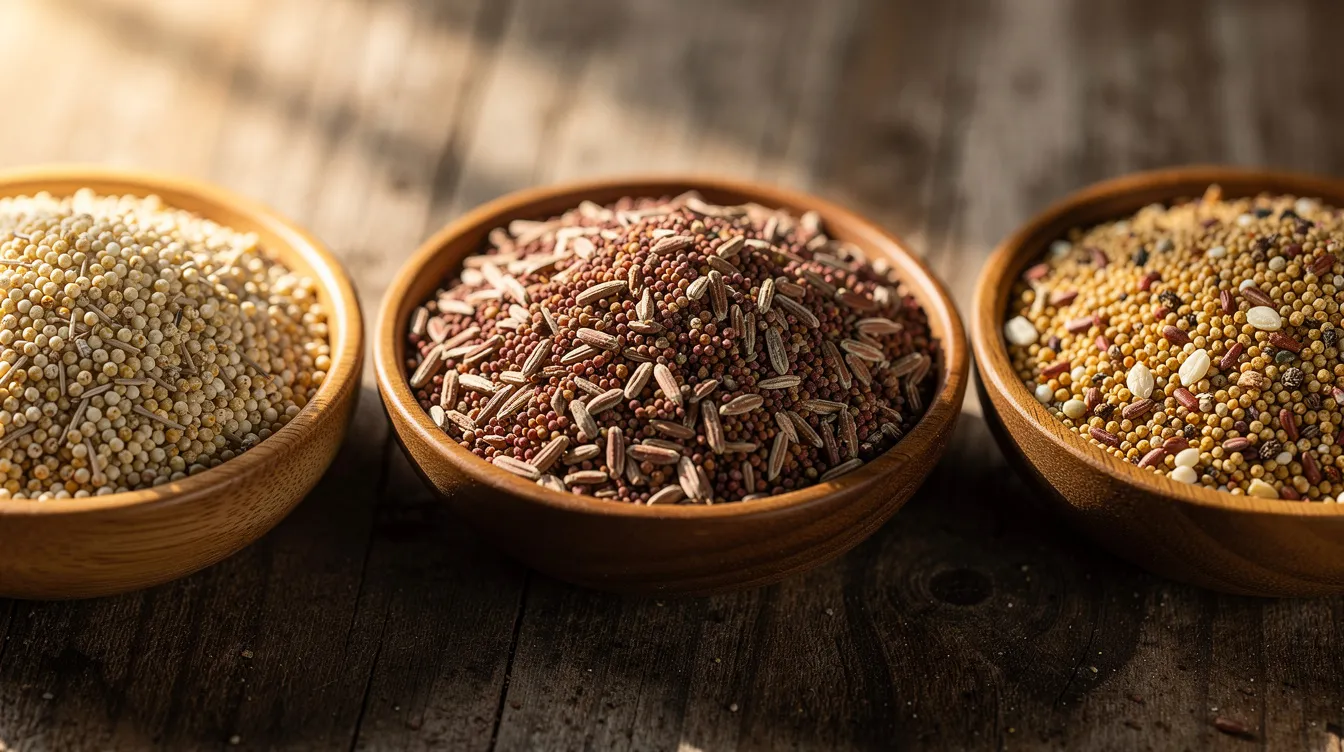
A fully automatic millet processing plant integrates various processing machines into a continuous line covering cleaning, dehulling, milling, grading and packaging with mechanised conveying and PLC-based controls. High-quality machinery is essential for millet processing efficiency, and the distinction between manual, semi-automatic and fully automatic lines matters considerably. Manual or village-tier units handle 50–100 kg/hour with high labour dependence and inconsistent yield. Semi-automatic units operate at 100–500 kg/hour with local controls. Fully automatic plants target 1–5 TPH with reliable output, lower per-tonne labour cost and the documentation trail required for bank-financed projects.
What matters more than the lowest machinery quotation is yield recovery, uptime and process reliability. Millet processing requires a complete integrated line for efficiency, and correct machinery selection combined with scientific plant layout planning can improve capacity utilisation, reduce dust and wastage, lower power cost per tonne and support higher product quality grades. Establishing a robust supply chain ensures consistent raw material quality, and securing reliable suppliers through long-term relationships is equally important for sustained production.
For readers interested in full project economics covering capacity, raw material requirements, production processes and financial projections, the Integrated Millet Processing Plant Project Report provides a comprehensive DPR framework. This article concentrates specifically on machinery configuration, plant layout and EPC cost structure.
Understanding Industrial Millet Dehulling and Milling Technology
Millet grains consist of an outer husk, bran layer, starchy endosperm and germ. The critical processing distinction is that small millets like little millet, foxtail millet, kodo and barnyard millet have tightly adhering husks requiring dedicated dehulling, while finger millet (ragi) and sorghum are usually milled without separate husk removal. Pearl millet (bajra) may be processed either way depending on the end product. Millet processing systems must consider the unique characteristics of each millet variety, including grain hardness, husk tightness, size and breakage tendency.
Different millet varieties require varying dehulling technologies and settings. Three principal mechanical approaches exist:
- Abrasive emery-type dehullers – rubbing surfaces remove husks but often cause excessive breakage, particularly in fragile small millets.
- Centrifugal impact dehullers – use an impeller and aspiration to separate husks with better yield. DHAN Foundation experiments with double-chamber centrifugal dehullers achieved head kernel recovery of approximately 95% for little millet under optimised conditions.
- Rubber-roll decorticators – gentle shearing action with adjustable gap, suitable for small millets where minimising breakage is critical.
Dehulling units must be designed specifically to handle the outer husk of millets while minimizing grain breakage. Grain dryers and moisture conditioning systems ensure moisture levels are optimal for processing, typically 10–12% for many small millets. Too dry results in kernel cracking; too moist and the husk clings, reducing separation efficiency.
Auxiliary operations include vibro-screen cleaners, destoners, magnetic separators and aspiration-based husk separation. For flour production, hammer mills, pin mills or roller mills are used after dehulling, followed by sieving and plansifting. Dehulling recovery and flour yield are sensitive to grain moisture, varietal mix, machine settings and operator skill. Small millets require gentler dehulling methods compared to major millets like bajra. For variety-specific processing economics, the Ragi Processing Plant Project Report and Bajra Processing Plant Project Report provide focused analysis. The abrasive processing principle also has parallels with barley pearling, covered in the Industrial Barley Pearling & Milling Plant Project Report.
Automatic Millet Dehulling and Milling Manufacturing Process
Millet processing involves multiple stages including cleaning, dehusking and polishing, each requiring specific equipment configured for the target product. The following table maps the full process flow from raw millet reception to packaging. Millets can be processed into both whole grains and flour, requiring different machinery setups; flour lines need additional milling, sifting and dust-control equipment beyond the dehulling stage.
| Process Stage | Machinery | Technical Objective | Key Parameters | Quality Checks |
|---|---|---|---|---|
| Raw Millet Receiving | Hopper, weighing system | Receipt and initial QC | Moisture ≤12%, foreign matter check | Moisture meter, visual inspection |
| Pre-Cleaning | Vibratory pre-cleaner, aspiration | Remove dust, chaff, light impurities | Screen size, vibration amplitude | Cleanliness percentage |
| Destoning | Destoner / density separator | Separate stones and heavy foreign particles | Blower power, feed rate uniformity | Stone count in output |
| Magnetic Separation | Magnetic separator | Remove metal particles | Magnet strength, food-grade material | Metal-free certification |
| Size Grading | Length separator / grader | Uniform grain size for even dehulling | Slot/mesh sizes, number of fractions | Size distribution variance |
| Moisture Conditioning | Tempering bin, misting system | Adjust moisture to optimal range | Target moisture 10–12%, resting time | Moisture uniformity |
| Dehulling / Decortication | Centrifugal or rubber-roll dehuller | Remove husk while preserving kernel | Impeller speed, gap settings, VFD control | Unhulled %, breakage rate |
| Husk Separation | Air aspirator, cyclone separator | Clean husk from kernels | Airflow velocity, cyclone design | Husk content in product |
| Optional Polishing | Emery/abrasive polisher | Improve appearance for retail grade | Polishing time, speed, heat control | Colour uniformity |
| Optional Colour Sorting | Optical colour sorter | Remove discoloured/defective kernels | Resolution, rejection rate, throughput | Defect count |
| Milling (Flour Line) | Hammer mill / pin mill | Reduce kernels to flour or grits | Mesh size, feed rate, power draw | Particle size distribution |
| Sieving / Plansifting | Multi-deck plansifter | Separate fine flour from coarse | Deck count, mesh sizes, RPM | Fine-to-coarse ratio |
| Final Quality Testing | Lab equipment | Verify moisture, purity, microbial limits | FSSAI parameters | QC report |
| Weighing & Packaging | Automatic bagging, labelling | Pack into final format | Pack sizes, accuracy, seal integrity | Weight tolerance, shelf life labelling |
Destoners separate stones and foreign particles from raw grains to protect downstream machinery. For premium retail products and breakfast cereal inputs, optional polishing and colour sorting are inserted after dehulling. A small-millet line requires a dedicated dehuller and husk separator, whereas a finger millet flour unit typically involves direct cleaning followed by milling. The Small Millet Processing Plant Project Report provides further detail on this distinction. The flow described here is for conceptual understanding; conversion into detailed P&ID drawings must be done by qualified process engineers.
Complete List of Machinery Required for an Automatic Millet Processing Plant
Choosing the right machinery for millet processing depends on the scale of production, target millet varieties and final product form. Essential equipment includes grain cleaning and grading machines, de-husking and milling systems, sorting and sieving equipment for quality control, blending and processing units to enhance product versatility, and packaging and sealing machines for finished products. Automated packaging systems streamline the transition from processing to market-ready products and improve shelf life consistency.
| Equipment Group | Main Function | Indicative Capacity | Key Selection Parameters | Automation Options |
|---|---|---|---|---|
| Pre-cleaner & Vibro Separator | Remove foreign matter, dust | 500–5,000 kg/hr | Multi-deck screens, SS contact parts | PLC bypass, auto cleaning |
| Destoner | Remove stones, grit | Matched to feed | Stone removal efficiency, blower power | Auto stone discharge |
| Magnetic Separator | Remove metal contaminants | All capacities | Magnet strength, food-grade design | Fixed or auto-cleaning |
| Size Grader | Uniform size for dehulling | 100–5,000 kg/hr | Adjustable screen/slot, accuracy | Semi to fully automatic |
| Moisture Conditioner | Adjust grain moisture | Batch or continuous | Moisture control, uniformity | Sensor-integrated |
| Dehuller / Decorticator | Remove husk / outer layers | 300–5,000 kg/hr | Centrifugal, rubber-roll or abrasive; VFD | Speed-adjustable, auto feed |
| Husk Aspirator & Cyclone | Separate husk from kernels | Matched to dehuller | Airflow, cyclone design | Integrated with dehuller |
| Polisher | Surface bran removal | 50–500 kg/hr | Roller material, heat control | Adjustable passes |
| Colour Sorter | Remove defective kernels | 500–2,000+ kg/hr | Resolution, speed, rejection rate | Fully automatic |
| Hammer / Pin Mill | Flour or grits production | 0.5–5 TPH | Fineness, heat generation, power | Feed-rate controlled |
| Plansifter | Flour grading | Matched to mill | Deck count, mesh size | Auto operation |
| Conveyors & Elevators | Material movement | Must exceed peak flows | Speed, height, cleanability | Interlocked with PLC |
| Storage Bins / Silos | Buffer and inventory | Weeks of raw material | SS vs MS, aeration, insect control | Level sensors |
| Dust Collection System | Worker safety, loss prevention | Based on extraction points | Blower capacity, filtration level | Auto pulse cleaning |
| PLC / Control Panels | Process sequencing, safety | Sized to all motors | HMI, interlocks, VFDs, remote options | Full SCADA possible |
| Weighing & Packing | Final product packing | 500g to 50 kg packs | Accuracy, sealing, labelling | Fully automatic |
| Lab & QC Equipment | Testing (moisture, microbial) | Basic to advanced | Instrument accuracy, calibration | Digital recording |
| Air Compressor & Utilities | Pneumatic controls, cleaning | Based on equipment needs | Pressure, redundancy | Auto start-stop |
Capacity assessments must match the throughput of all machinery to ensure operational efficiency. Selecting machines purely on nameplate throughput or lowest quotation frequently leads to problems: practice yields often reach only 60–80% of rated capacity under real conditions. Promoters should insist on test-running actual raw millet batches at the supplier’s facility.
For plants considering downstream value addition, machinery for puffed snacks, extruded snacks or breakfast cereals may follow the core line. The Millet Extruded Snacks Manufacturing Plant Project Report and Millet Breakfast Cereals Plant Project Report address these configurations.
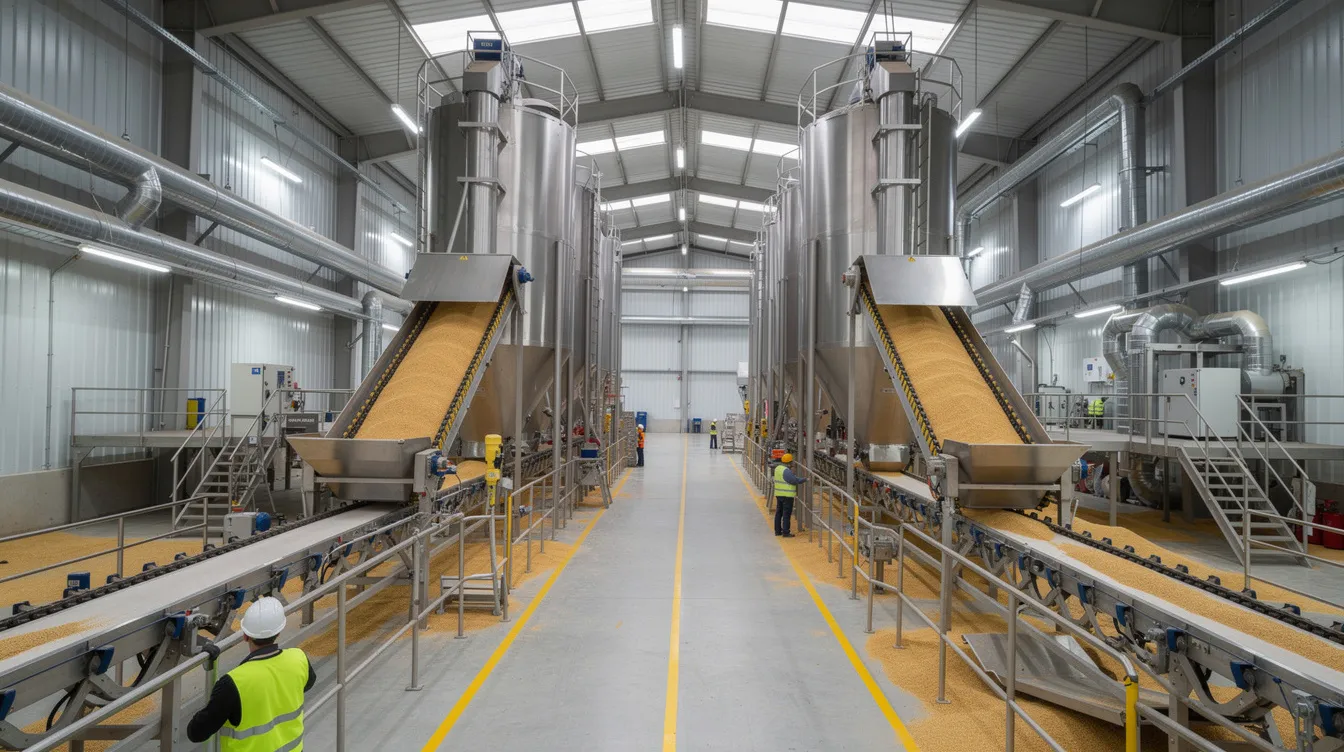
Automatic Millet Processing Plant Capacity Planning
Plant capacity is usually specified in kg/hour or TPH, but bank and investor evaluations rely on annual tonnage and realistic capacity utilisation. A millet processing plant can produce 10,000 to 20,000 MT annually depending on configuration. Typical capacity tiers in India include:
- 500 kg/hour – small scale MSME units, often single-shift, local market focus
- 1 TPH – commercial units targeting regional distribution, suitable for medium-sized enterprises
- 2–3 TPH – multi-shift operations, branded retail or bulk supply, bankable project scale
- 5 TPH – large integrated food processing companies, export-oriented units
Illustrative Capacity Calculation (2 TPH Plant):
| Parameter | Theoretical | Realistic (75% Utilisation) |
|---|---|---|
| Rated Capacity | 2,000 kg/hr | 2,000 kg/hr |
| Operating Hours/Day | 16 | 16 |
| Operating Days/Year | 300 | 300 |
| Annual Throughput | 9,600 tonnes | 7,200 tonnes |
The gap between rated and practical throughput arises from downtime, cleaning, product changeovers and moisture variations. Capacity for foxtail or little millet dehulling may be lower than for pearl millet on the same machine because of grain size and husk behaviour. Securing reliable suppliers and establishing a steady supply of raw material through long-term contracts stabilise pricing for raw millet grains and support consistent production planning. Seasonal availability of specific millets influences the decision between one flexible line versus dedicated lines for different millet groups.
When planning for expansion, promoters should leave space for a second dehuller, size elevators and dust collection for approximately 1.5x future capacity, and ensure building foundations can support additional equipment.
Millet Processing Plant Machinery Cost in India
This section provides an indicative cost structure for automatic millet processing plant machinery in India. Actual prices vary with OEM, specifications, taxes and market conditions. Machinery costs represent the largest portion of capital expenditure in any millet processing project.
Indicative Machinery Cost by Capacity Band:
| Capacity | Core Machinery Range | Key Inclusions |
|---|---|---|
| 500 kg/hr (basic) | ₹15–50 lakh | Cleaner, destoner, dehuller, mill, packer |
| 1 TPH (semi-auto) | ₹50 lakh–₹1.5 crore | Above plus colour sorter, PLC controls, conveyors |
| 3 TPH (fully auto) | ₹1.5–3 crore+ | Full automation, multi-grain capability, silos, SCADA |
Factors that push prices higher include imported colour sorters, high-level PLC/SCADA automation, stainless steel construction throughout, larger storage silos, and integration with downstream cereal or snack manufacturing lines. A basic bajra flour milling unit at small scale may show plant and machinery cost of approximately ₹7.7 lakh, while the total capital investment for a basic millet processing unit is ₹18.52 lakh including all project components.
The ex-works machinery price is different from installed machinery cost, which includes GST, packing and forwarding, inland freight, insurance, foundation bolts, erection, commissioning and basic training. This difference can add 20–50% to the vendor quotation. Promoters should collect multiple technical-commercial offers, harmonise specifications and use a professional DPR to benchmark vendor offers before negotiation.
Automatic Millet Processing Plant Layout and Design
Plant layout must optimize workflow and safety. Good layout minimises cross-movement between clean and dusty zones, reduces labour, enhances food safety and supports regulatory compliance. Key functional zones include:
- Raw millet unloading and inspection area
- Raw material storage (silos or godowns)
- Cleaning and grading hall
- Conditioning and dehulling section
- Husk handling and extraction zone
- Milling and sifting section
- Finished goods storage and packing area
- QC laboratory
- Utilities and electrical room
- Administration and worker amenities
For capacities above approximately 2 TPH, a multi-level gravity-aided arrangement reduces conveyor requirements and energy consumption. Linear ground-floor layouts are simpler but require more mechanical movement of material. Dust control requires physical separation between the high-dust dehulling area and the final packing zone, with dedicated dust collectors, airlocks and smooth, food-grade floor and wall finishes.
Structural considerations include adequate headroom for bucket elevators, clear maintenance access around dehullers and mills, emergency exits, fire-fighting equipment zones and properly earthed electrical rooms. The layout described here is an indicative concept; final GA drawings and structural design must be prepared and approved by competent engineers and the appointed EPC contractor.
Building Area, Land and Infrastructure Requirements
Total land and built-up area requirements depend on capacity, building typology and storage philosophy.
| Capacity | Production Built-Up Area | Total Site Area (Approx.) |
|---|---|---|
| 500 kg/hr | 400–600 sq.m | 0.25–0.5 acres |
| 1 TPH | 600–1,000 sq.m | 0.5–1 acre |
| 3–5 TPH | 1,500–3,000+ sq.m | 1–2+ acres |
Machine footprint is only a fraction of total operational area. Aisles, service passages, QC lab, admin block, loading bays and circulation roads must be accounted for. Infrastructure components often overlooked include weighbridge, internal paved roads, boundary wall, rainwater drainage, firefighting water tanks and staff facilities. Compliance with local zoning laws is necessary for plant setup, and land requirements should factor possible future diversification into puffed millet, breakfast cereals or millet noodles. The Millet Noodles, Pasta & Vermicelli Plant Project Report explores downstream land and infrastructure considerations.
Utilities and Electrical Power Requirements
Power, compressed air, dust collection and water systems must be sized based on a detailed equipment list and OEM data sheets. Key utility categories include connected electrical load (motors, drives, auxiliaries), contracted demand (kVA), compressed air for pneumatic gates and packaging, process and domestic water, and dust-collection air volume.
| Equipment Example | Motor Rating (Approx.) |
|---|---|
| Pre-cleaner | 2–5 kW |
| Destoner | 3–7 kW |
| Dehuller (per unit) | 7–15 kW |
| Hammer Mill | 15–40 kW |
| Dust Collection Blower | 5–15 kW |
| Conveyors & Elevators (total) | 10–25 kW |
A small unit might need 20–50 kW connected load; mid-scale 100–200 kW; and large fully automatic lines over 200–300 kW. Dust collection and aspiration systems significantly add to both power load and capital expenditure but are essential for worker safety, product recovery and housekeeping. Backup power through DG sets may be necessary depending on location. Promoters should insist on a utility load list from the selected machinery vendor or EPC contractor before locking project cost and bank loan requirements.
Millet Processing Plant EPC Cost in India
EPC (Engineering, Procurement and Construction) in millet processing covers the full scope from process design to operator training. The distinction between machinery supply and full turnkey execution is critical for project budgeting.
Indicative EPC Cost Breakdown by Major Heads:
| Cost Head | Typical Share of EPC Value |
|---|---|
| Core Process Machinery | 40–50% |
| Civil & Structural Works | 15–25% |
| Electrical & Instrumentation | 10–15% |
| Utilities & Auxiliaries | 8–12% |
| Engineering & Supervision | 5–10% |
| Contingency | 5–10% |
Three commercial models exist: (a) machinery-only supply, where civil, electrical and utilities remain the promoter’s responsibility; (b) supply-plus-installation, where the vendor erects and commissions equipment but the promoter handles civil work; and (c) single-point turnkey EPC, where one contractor handles everything. Turnkey shifts integration risk to the contractor but typically costs more.
Items frequently excluded from EPC proposals include land cost, statutory fees, financing costs, pre-operative expenses and working capital margin. These still form part of total project cost from a banking perspective. Serious investors should align EPC contracts with assumptions used in the DPR so that bankable financial projections match technical scope.
Turnkey Millet Processing Plant – EPC Contractor Selection
Choosing the right machinery supplier or EPC contractor is often more important than marginal price savings. Evaluation criteria should include:
- Experience with millet dehulling, especially small millets and multi-grain plants
- Documented reference installations with verifiable recovery and throughput data
- Performance guarantees covering dehulling recovery (e.g., ≥90–95%), throughput, power consumption per tonne and uptime
- Warranty terms, spare parts availability and service response commitments
- Design responsibility, civil support drawings and automation philosophy
- Staged payment terms, retention amounts and liquidated damages for delay
Promoters should engage independent advisors for DPR preparation and financial structuring alongside technical consultants when evaluating large EPC contracts. Performance trials before final acceptance are essential.
Millet Dehulling and Milling Plant Project Cost
Project cost is broader than machinery or EPC contract value. Banks assess the entire cost including working capital and pre-operative components.
| Project Cost Head | Indicative Share |
|---|---|
| Land & Site Development | 5–10% |
| Building & Civil Works | 15–20% |
| Plant & Machinery (Installed) | 35–45% |
| Electrical & Utilities | 8–12% |
| Preliminary & Pre-operative Expenses | 3–5% |
| Contingency | 5–8% |
| Margin Money for Working Capital | 5–10% |
Setting up a basic millet processing unit at small scale costs approximately ₹18.52 lakh as total capital investment, while mid-scale automatic plants with full automation can require several crore. A credit-linked subsidy of 35% is available for eligible millet projects under schemes like PMFME. Heavier automation, additional sorting or polishing lines, or integration with value-added products like puffed millets increase fixed capital but can improve contribution margins. Working capital requirements are influenced by the need to stock multiple millet varieties, and raw millet grains account for 70–80% of operating expenses, making procurement planning critical.
Any project-cost illustration is based on assumed specifications. Entrepreneurs must obtain current quotations, civil estimates and applicable tax rates before freezing investment decisions.
Production Yield, Recovery and Operational Economics
Even small differences in dehulling recovery and power consumption per tonne can significantly impact the profitability of a millet processing plant.
Illustrative Mass Balance – Foxtail Millet (per 100 kg raw input):
| Output Component | Approximate % |
|---|---|
| Dehulled Whole Kernels | 70–75% |
| Husk + Dust + Light Rejects | 18–22% |
| Broken Kernels | 4–6% |
| Fines / Sorting Rejects | 2–4% |
Key drivers of yield include raw grain quality, effectiveness of cleaning, precision of moisture conditioning, type and setting of dehuller, and operator skill. Raw materials account for 70–80% of total operating expenses, making recovery percentages financially critical. Long-term contracts stabilize pricing for raw millet grains and help manage this dominant cost element.
Operational cost elements include power (kWh per tonne, varying by technology), labour (per-shift staffing based on automation level), maintenance and consumables (emery stones, screens, bearings). Practical steps to improve yield include regular calibration of dehullers, segregated processing of different millet lots, preventive maintenance and monitoring of specific energy consumption.
Actual recoveries vary significantly by millet variety. For instance, kodo and barnyard millets typically show lower expected rice recovery of 60–64% compared to little millet or foxtail. Serious investors should validate vendor claims through pilot trials before building financial projections.
Automation, PLC Controls and Industry 4.0 in Millet Processing
In millet processing, automation typically means central electrical panels, PLC-based sequencing logic, VFDs on critical drives like dehullers and mills, level sensors in bins and interlocked material-flow controls. Typical PLC/SCADA applications include automatic start/stop sequences, overload protection, bin level monitoring, real-time tonnage display and alarm logging.
For larger plants, Industry 4.0 possibilities include remote monitoring, production dashboards, predictive maintenance using vibration sensors and integration with ERP systems for batch traceability. Additional automation raises capital expenditure but can reduce manpower by 30–40%, minimise downtime and product losses, and may be justified for 2–5 TPH multi-shift plants supplying organised retail or export markets.
Practical guidelines for deciding automation level:
- Plants operating over 4,000 hours/year generally benefit from higher automation
- Locations with limited availability of skilled operators justify automated controls
- Clients requiring online quality documentation and traceability (FMCG companies, exporters) expect PLC-monitored production
- Cost-benefit should be evaluated in the DPR before committing to SCADA-level investment
Quality Standards, Licences and Regulatory Requirements
Millet processing plants are food businesses and must comply with Indian food safety, factory, labour and environmental regulations. Key requirements include:
- FSSAI licence under cereals and cereal products category, with licence tier dependent on annual turnover
- Food safety systems – GMP, GHP and typically HACCP for larger units; food-grade stainless steel contact surfaces
- Factory approvals – factory licence, building permission, fire safety clearance, electrical safety certification
- Environmental consents – pollution control board consent mainly for dust and noise; dry millet milling is generally classified as a low-pollution “Green category” activity and has limited environmental impact
- Worker compliance – ESI/EPF registrations, PPE, health and safety provisions, quality assurance and quality control documentation
- Packaging and labelling – Legal Metrology rules and FSSAI labelling norms (nutritional value declarations, batch codes, manufacturer details)
Norms and fee slabs change over time. Promoters should rely on updated official sources or professional compliance consultants.
Common Machinery Selection and EPC Planning Mistakes
- Choosing dehullers optimised for one millet and expecting equal performance on all varieties – leads to poor recovery and high breakage on unsuitable grains.
- Under-sizing cleaning and grading equipment – causes chokes, frequent stoppages and uneven dehuller feed, reducing throughput.
- Over-rating plant capacity without accounting for small-millet dehulling limits – projected production volumes become unachievable, weakening DSCR.
- Ignoring dust-collection systems to save cost – creates health hazards, regulatory non-compliance and fire risk.
- Omitting adequate husk and waste handling – leads to cross-contamination and housekeeping problems.
- Failing to provide sufficient storage and buffer bins – disrupts continuous operation and increases downtime.
- Neglecting proper electrical load estimation – results in undersized transformers and frequent tripping.
- Accepting vendor capacity claims without trial data on actual grain lots – creates unrealistic financial projections.
- Not planning for future expansion – leads to expensive retrofitting when demand grows.
- Awarding EPC solely on lowest price – often results in poor-quality equipment, missing scope items and costly delays.
A structured DPR, independent technical validation and careful contract drafting significantly reduce these common risks.
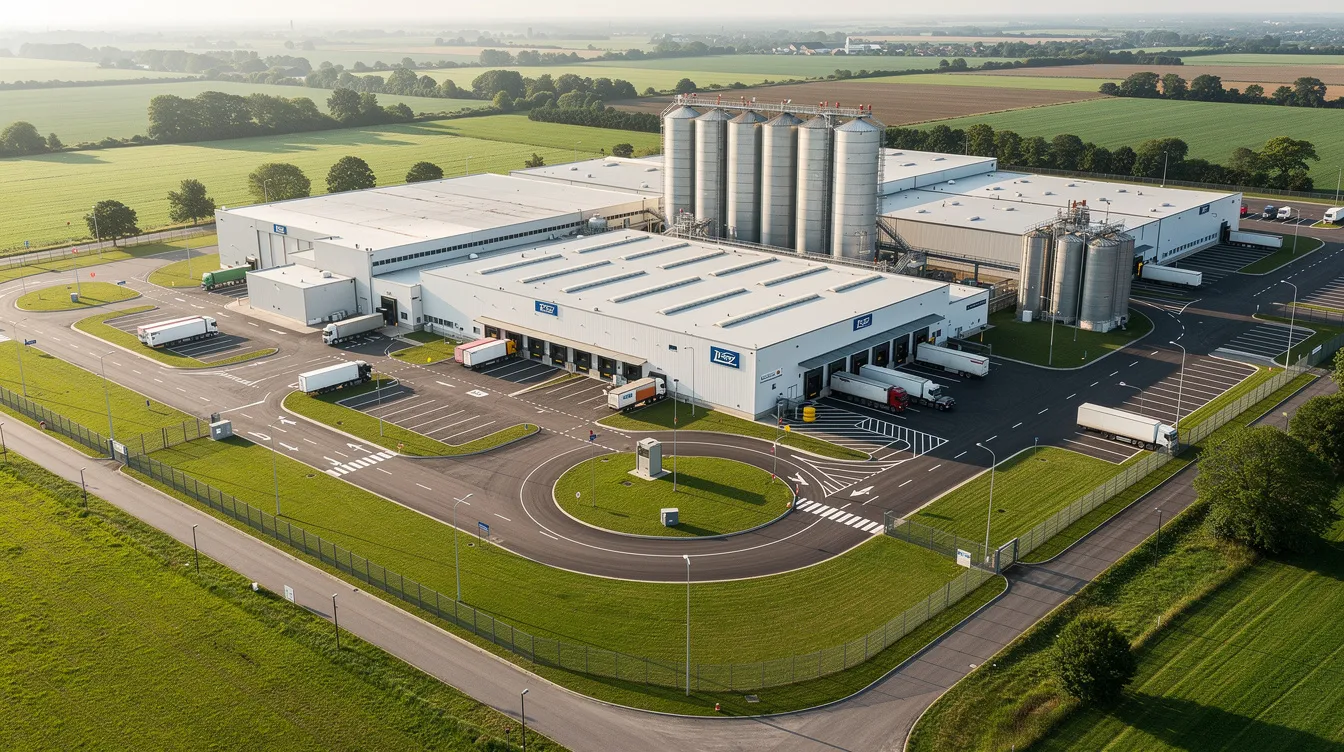
Financial Feasibility of an Automatic Millet Processing Plant
Banks and investors assess millet processing projects using standard financial indicators. A detailed project report helps outline project feasibility and investor readiness for agricultural projects. Key metrics include total project cost, means of finance (debt-equity ratio), capacity utilisation build-up, sales realisation per tonne, raw material cost share, EBITDA margin, working capital cycle, break-even point, DSCR, IRR and payback period.
Gross profit margins for millet processing typically range between 25–35%, and projected profit after tax for a well-structured millet unit can reach approximately ₹13.92 lakh by year two. Operating costs are projected to increase significantly by year five due to input price escalation, making conservative forecasting essential.
Impact of Recovery Improvement on EBITDA (Illustrative):
| Parameter | Recovery at 70% | Recovery at 80% |
|---|---|---|
| Raw Millet Input (tonnes) | 1,000 | 1,000 |
| Saleable Dehulled Output | 700 | 800 |
| Additional Revenue | – | +14.3% |
| Approximate EBITDA Impact | Base | Significantly Higher |
Bankers compare projected DSCR and break-even levels with industry benchmarks. Market assumptions for selling prices, procurement costs, power tariffs and labour cost escalation should be based on recent data and conservative forecasts. A full DPR contains year-wise projected P&L, cash flow and balance sheet for at least 7–10 years, which underpins bankability. Agriculture sector dynamics, the nutritional benefits of millets and the role of farmers in the supply chain all feed into the demand-side assumptions of any feasibility study.
How CA Manish Gugliya Helps in Millet Processing Plant DPR and Project Finance
CA Manish Gugliya is a practising Chartered Accountant with over two decades of experience in industrial DPRs, CMA Data, project finance advisory and investment analysis for food and agro-processing projects across India. Professional project finance advisory includes detailed project report preparation and financial projections tailored to each client’s specific project configuration.
Project Report Bank supports millet processing entrepreneurs by preparing customised Detailed Project Reports that integrate technical configuration with realistic financial projections and bank-compliant documentation. Core services include capital cost estimation, plant capacity and utilisation planning, project cost and means-of-finance structuring, DSCR and repayment schedule analysis, profitability and IRR evaluation, working capital assessment and CMA Data preparation for banks. Preparing CMA data is essential for securing bank loans for project financing, and integrated project reports include details on capacity, layout, raw materials and production processes.
Project Report Bank is an independent financial and project advisory platform. It does not sell machinery or act as an EPC contractor. Instead, it works alongside clients, technical consultants and OEMs to evaluate quotations and align them with financial viability. Investing in professional advisory services enhances project feasibility evaluation and minimizes investment risks.
Serious project promoters planning medium or large-scale millet processing units should seek a project-specific techno-economic feasibility study before placing orders or committing large capital. Contact CA Manish Gugliya through ProjectReportBank.com for a customised millet processing plant DPR, financial feasibility assessment and bank loan proposal support.
Conclusion – Planning a Bankable Automatic Millet Processing Project
Successful automatic millet dehulling and milling projects in India depend on grain-specific technology selection, well-engineered layouts, correctly sized machinery, properly budgeted EPC scope and disciplined operational control of yield and costs. Machinery cost, EPC cost and overall project cost including working capital must be clearly distinguished and realistically estimated before committing capital or seeking bank finance. The millet market continues to expand as demand for processed millet products grows across retail, food service and export channels, and this demand can cater to both health-focused consumers and mainstream food manufacturers.
Entrepreneurs and investors should combine sound technical advice with professional financial modelling, DPR preparation and project finance advisory to enhance bankability and long-term viability. Contact Project Report Bank and CA Manish Gugliya for customised DPRs, feasibility studies and loan documentation for automatic millet processing plants and related value-added millet product lines.
Frequently Asked Questions
What is the typical cost of setting up a fully automatic millet processing plant in India?
Cost varies significantly with capacity and automation level. A basic small-scale unit may require a total capital investment of approximately ₹18.52 lakh, while a mid-scale 2–3 TPH fully automatic plant with PLC controls, colour sorters, silos and packaging lines can require ₹3–8 crore or more as total project cost including land, building, working capital and pre-operative expenses. Machinery costs alone are only one layer; promoters must budget for installed EPC cost and total project cost separately.
Can one machinery line process pearl millet, foxtail millet and little millet equally well?
Multi-millet processing is technically feasible but requires flexible equipment with adjustable screens and dehullers specifically designed for different grain sizes. Small millets need gentler dehulling settings than pearl millet, and throughput often drops when switching from larger to smaller grains. Dedicated dehullers for specific millet groups may be necessary to maintain acceptable recovery and product quality across varieties.
How can millet dehulling recovery be improved in a commercial plant?
Key improvement measures include precise moisture conditioning before dehulling, selecting the appropriate dehuller type for each millet variety (centrifugal or rubber-roll for small millets), proper size grading to ensure uniform feed, regular calibration and maintenance of dehuller components, and using VFDs to optimise impeller speed. Pilot trials on actual grain lots should be conducted at the supplier’s facility before finalising equipment orders.
What should be included in a millet processing plant DPR for bank finance?
A bankable DPR should cover project cost estimation with itemised breakdown, means of finance including promoter contribution and term loan structure, technical configuration and machinery schedule, plant layout and capacity utilisation build-up, year-wise projected P&L, cash flow and balance sheet for 7–10 years, DSCR and IRR analysis, working capital assessment, CMA Data, sensitivity analysis and risk assessment. The report should distinguish between assumed parameters and verified data.
Is bank financing available for industrial millet processing projects in India?
Banks regularly finance agro-processing and food processing projects including millet processing, subject to satisfactory project feasibility, promoter contribution, collateral and DSCR projections. A credit-linked subsidy of 35% may be available for eligible micro food processing units under government schemes like PMFME. A professionally prepared DPR with CMA Data is typically required for loan appraisal.