An integrated millet processing plant project report is a structured, bankable document that combines technical design, machinery evaluation, project cost estimation and multi-year financial projections for a facility capable of producing multiple millet-based products. For entrepreneurs and industrial promoters considering this sector in India, professional project planning is the foundation on which investment decisions, bank finance proposals and operational strategy should rest.
Key Takeaways
- An integrated millet processing plant project report is a comprehensive DPR covering technical feasibility, machinery selection, project cost, means of finance and 7–10 year financial projections for a multi-product millet facility.
- Total capital investment depends heavily on plant capacity (20–200 TPD), product mix, automation level, location and raw material sourcing strategy – no single generic figure applies.
- Integrated plants differ fundamentally from standalone milling units by handling cleaning, dehulling, flour, rava, grits, flakes and by-products across multiple millet varieties.
- Professional DPR, CMA data and feasibility analysis are essential for bank finance, DSCR assessment, working capital limits and investor discussions.
- Project Report Bank, led by CA Manish Gugliya (FCA, DISA, ICAI), provides customised DPR preparation, financial modelling and project finance advisory for integrated millet processing projects across India.
1. Introduction – Integrated Millet Processing Industry in India
India is a leading millet-producing country with significant cultivation spread across Rajasthan, Karnataka, Maharashtra, Telangana, Andhra Pradesh and several other states. Demand for millets has risen due to health trends and government initiatives, including the declaration of 2023 as the International Year of Millets and continued central and state-level policy support. Government initiatives promote millet as “nutri-cereals” in India, reinforcing their nutritional value and positioning them alongside wheat and rice in public distribution and institutional feeding programmes.
The global millet market was valued at USD 13.93 billion in 2025 and is expected to reach USD 19.70 billion by 2034, reflecting growing demand driven by increasing health awareness, interest in gluten-free foods and the search for climate-resilient crops. Millet products are in high demand due to health awareness trends, with health conscious consumers seeking alternatives to refined wheat and polished rice.
However, the distinction between primary millet processing and integrated millet processing matters. Primary processing involves cleaning, grading and basic dehulling for sale as whole grain. Integrated processing encompasses end-to-end handling – from raw grain intake through multiple downstream product lines such as flour, rava, grits, flakes and ready-to-cook mixes – within a single coordinated facility.
Government schemes encourage millet cultivation and processing, but such incentives do not replace the need for independent commercial viability assessment. Institutional, retail and B2B opportunities exist across food manufacturers, catering operations, export buyers and modern trade brands, but capturing these requires deliberate market planning.
Project Report Bank, under CA Manish Gugliya, prepares customised millet processing DPRs, CMA data and feasibility studies for entrepreneurs, MSMEs and industrial promoters across India, combining technical understanding with structured financial analysis.
2. What Is an Integrated Millet Processing Plant?
An integrated millet processing plant is an industrial facility that handles raw millet intake, primary processing and multiple downstream product lines in a single coordinated setup. Integrated millet processing plants handle cleaning, grading, dehusking and milling as core operations, distinguishing them from standalone flour mills producing a single output.
Core functional blocks include:
- Raw millet procurement and intake
- Pre-cleaning and aspiration
- Destoning and separation
- Grading by size
- Dehulling or decortication (where required)
- Sorting (including optional optical colour sorting)
- Flour milling, rava and grits production
- Optional flaking or puffing lines
- Quality testing, packaging and dispatch
Some equipment – elevators, conveyors, cleaners, aspirators and packing machines – can be shared across millet varieties, while dehullers and certain screens often require millet-specific adjustments. The plant is designed as a continuous or semi-continuous flow line, with line balancing between cleaning, dehulling and milling sections to prevent bottlenecks.
An integrated millet processing plant project report should describe these processing blocks, their capacity, interconnections and utility requirements in detail.
3. Types of Millets Suitable for Industrial Processing
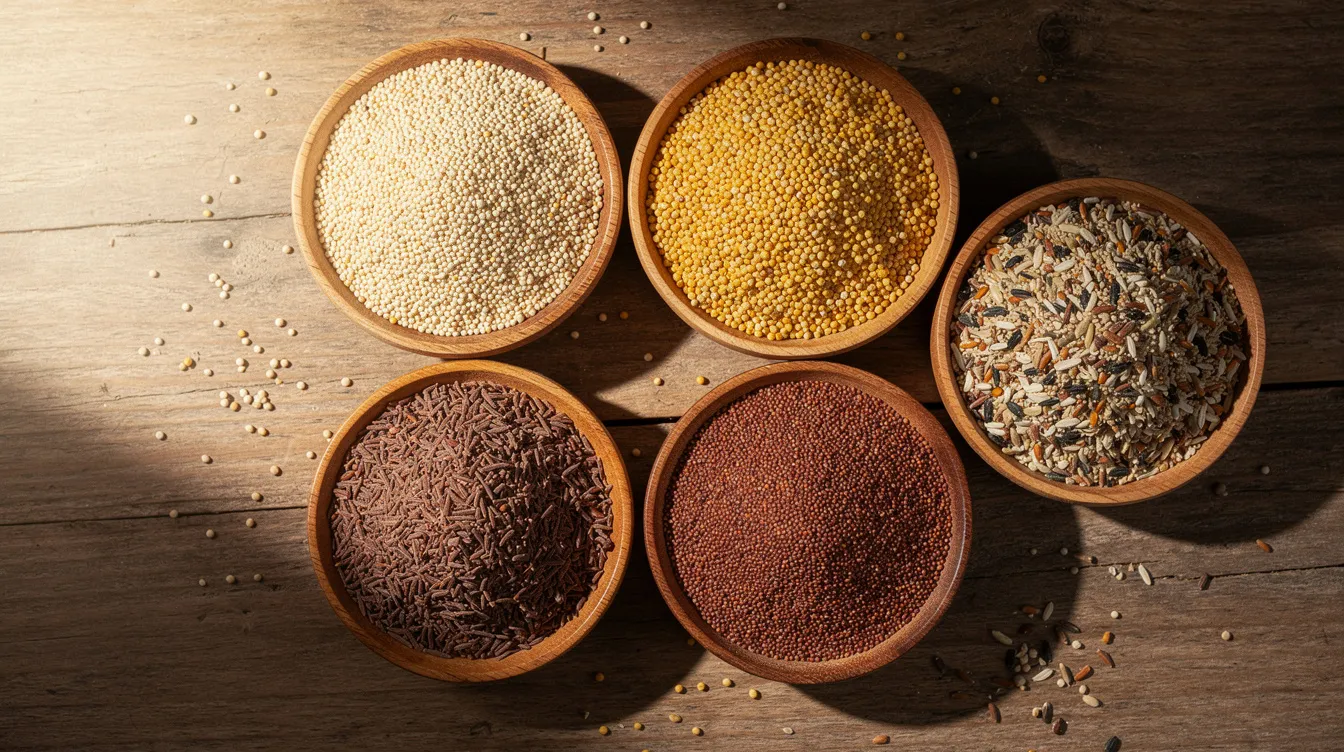
Different millet species have varied grain size, husk tightness, oil content and cooking uses, directly influencing machinery choice, dehulling efficiency and final products.
| Millet Type | Key States | Processing Characteristics | Typical Products | Machinery Considerations |
|---|---|---|---|---|
| Pearl millet (bajra) | Rajasthan, Gujarat, Haryana | Moderate grain size, higher fat content | Flour, blended atta, flakes | Controlled milling to manage rancidity |
| Finger millet (ragi) | Karnataka, Tamil Nadu | Small grains, tight husk | Flour, malted products, weaning foods | Specialised decorticator for fine flour |
| Foxtail millet | Andhra Pradesh, Karnataka | Small, elongated grain | Dehulled grain, rava, breakfast items | Precise grading; careful dehulling to avoid breakage |
| Little millet | Karnataka, Tamil Nadu, MP | Very small grain | Dehulled grain, flour, blends | Finer screens, adapted dehuller |
| Kodo millet | MP, Tamil Nadu, Chhattisgarh | Small, round grain | Dehulled grain, flour | Similar to little millet requirements |
| Barnyard millet | Uttarakhand, Tamil Nadu | Very small, lightweight | Dehulled grain, porridge, snacks | Requires careful aspiration and dehulling |
| Proso millet | MP, Karnataka, Tamil Nadu | Medium grain | Dehulled grain, flour, animal feed | Moderate processing difficulty |
One generic dehuller cannot process all millet types efficiently. A well-prepared DPR should map each intended variety to suitable machinery, expected recovery and changeover procedures. Industrial promoters generally prioritise two to four core millets in the initial phase and expand as sourcing and market linkages mature.
4. Finished Products and Revenue Streams
Product diversification allows an integrated plant to de-risk revenue by serving different customer segments. Millets can be processed into flour, flakes and ready-to-eat products, among other formats.
| Product Category | Customer Segment | Additional Processing | Value Addition Level |
|---|---|---|---|
| Cleaned and graded whole millets | B2B traders, exporters | Minimal | Low |
| Dehulled millets | Food manufacturers, retail | Dehulling, polishing | Medium |
| Millet flour (single or multigrain) | Retail, bakery, institutional | Milling, sifting | Medium |
| Rava and grits | Retail, ready-to-cook brands | Sizing, grading | Medium–High |
| Flakes | Health-food brands, retail | Flaking, drying | High |
| Pre-mixes (idli, dosa, porridge) | B2C retail, e-commerce | Blending, packing | High |
| Bran and husk | Feed mills, extraction units | Separation | Low |
Bulk B2B supply (25–50 kg bags) demands quality consistency and credit management. Branded retail products (500 g – 2 kg pouches) offer higher per-unit realisation but require greater working capital, packaging cost, marketing and distribution investment. The detailed project report should present a realistic product mix with projected sales quantities, pricing assumptions and margin expectations.
5. Integrated Millet Processing Plant Capacity Planning
Capacity planning directly influences machinery and technology requirements, land and building needs, working capital and sourcing requirements. Millet processing plants typically require an annual capacity of 10,000 to 20,000 MT for commercially meaningful operations.
| Parameter | 20 TPD | 50 TPD | 100 TPD | 200 TPD |
|---|---|---|---|---|
| Annual throughput (300 days) | ~6,000 MT | ~15,000 MT | ~30,000 MT | ~60,000 MT |
| Automation level | Semi-automatic | Semi to fully automatic | Fully automatic | Fully automatic with PLC/SCADA |
| Approximate product lines | 2–3 | 3–4 | 4–6 | 5–8 |
| Typical promoter profile | First-time MSME | Established grain processor | Regional industrial group | Large agro-industrial company |
Key planning parameters include daily operating hours, number of working days per year (typically 270–330), installed versus effective capacity, and phased ramp-up utilisation over three to five years. Product mix affects capacity: a higher flour share versus whole-grain dehulled output changes milling load, packaging speed and storage needs.
Strategies for phased expansion – designing civil construction and utilities to accommodate additional milling lines or a separate flaking line – should be incorporated into the DPR from the outset. Similar capacity-planning principles apply in related grain processing projects such as integrated rice milling and processing plants.
6. Complete Integrated Millet Processing Manufacturing Process
The unit operations involved in integrated millet processing follow a detailed process flow:
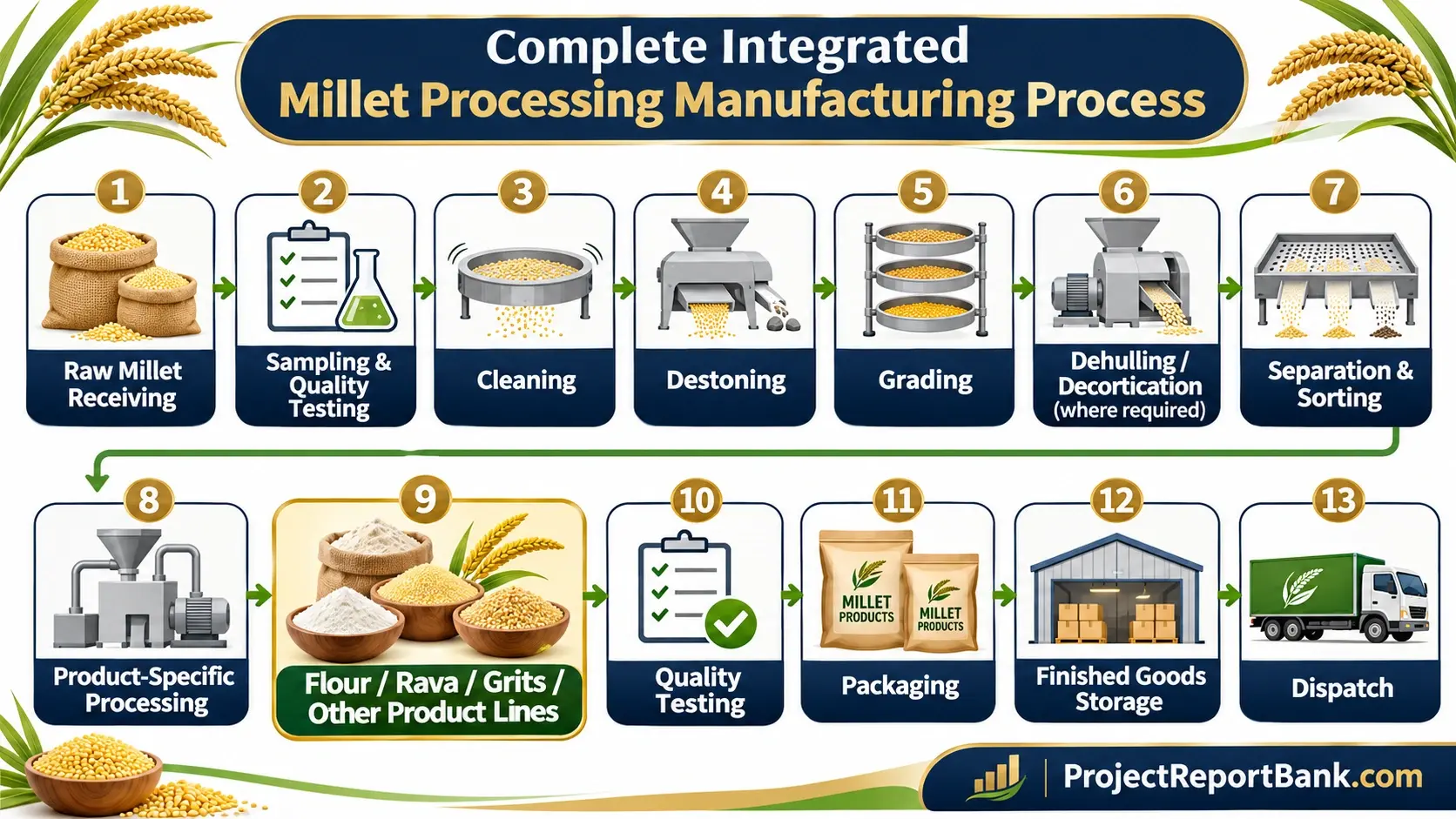
Raw Millet Receiving → Sampling & Quality Testing → Cleaning → Destoning → Grading → Dehulling / Decortication (where required) → Separation & Sorting → Product-Specific Processing → Flour / Rava / Grits / Other Product Lines → Quality Testing → Packaging → Finished Goods Storage → Dispatch
DPRs should evaluate the operational process from procurement to packaging. Each stage requires attention:
- Receiving and sampling: moisture and impurity checks at intake; acceptable moisture typically up to 12%
- Cleaning and destoning: removal of dust, chaff and stones (1–3% loss)
- Dehulling: husk and bran removal varies significantly – small millets may lose 25–35% as husk and bran, while larger millets like bajra retain more
- Milling: routing to flour mills, rava and grits machinery or flaking units depending on product plan
- Quality control: moisture testing and foreign matter checks, microbiological parameters, packaging integrity
Process parameters – moisture conditioning, dehuller settings, milling gap – must be adjusted for each millet type. The DPR should include indicative yields for each planned product, calibrated to the main millets being processed, since a single blanket recovery percentage across all varieties will distort financial projections.
7. Integrated Millet Processing Plant Machinery and Equipment
Project reports should include detailed machinery and equipment specifications. Millet processing plants require grain cleaning and grading machines, de-husking and milling systems, sorting and sieving equipment, and packaging and sealing machines as essential components. Operational efficiency depends on high-quality, corrosion-resistant machinery designed for continuous industrial use.
| Equipment | Function | Key Selection Criteria |
|---|---|---|
| Receiving hoppers, conveyors, elevators | Raw material intake and transport | Capacity matched to TPD; food-grade construction |
| Rotary/vibratory pre-cleaners | Removal of dust and light impurities | Adjustable screens for different grain sizes |
| Aspirators and magnetic separators | Fine impurity and ferrous metal removal | Airflow calibration; maintenance access |
| Destoners | Stone and heavy impurity separation | Gravity or pressure type; throughput rating |
| Graders and plan sifters | Size segregation for efficient dehulling | Multiple screen decks; quick changeover |
| Dehullers/decorticators | Husk removal from millet grains | Millet-specific types; vendor trials essential |
| Hammer/impact mills, roller mills | Flour, rava and grits production | Adjustable gap; temperature control |
| Colour sorters | Premium quality grading | Justified for export or retail brands |
| Form-fill-seal packaging machines | Retail and bulk packing | Semi-auto vs fully automatic; nitrogen flushing option |
| Dust collection and aspiration systems | Hygiene and safety | Cyclone separators; compliance with PCB norms |
| Electrical panels, PLC/SCADA | Automation and control | Scalability; local service support |
The ICAR-CIAE millet mill dehuller achieves approximately 95% dehulling efficiency for small millets at around 100–110 kg/hr, costing approximately ₹50,000 excluding motor. For detailed machinery cost benchmarking in flour processing, promoters may also refer to specialty flour plant machinery and equipment cost analysis.
Promoters should obtain at least two to three detailed quotations from credible suppliers and conduct trials with specific millet varieties before finalising procurement.
8. Millet Processing Plant Machinery Cost in India
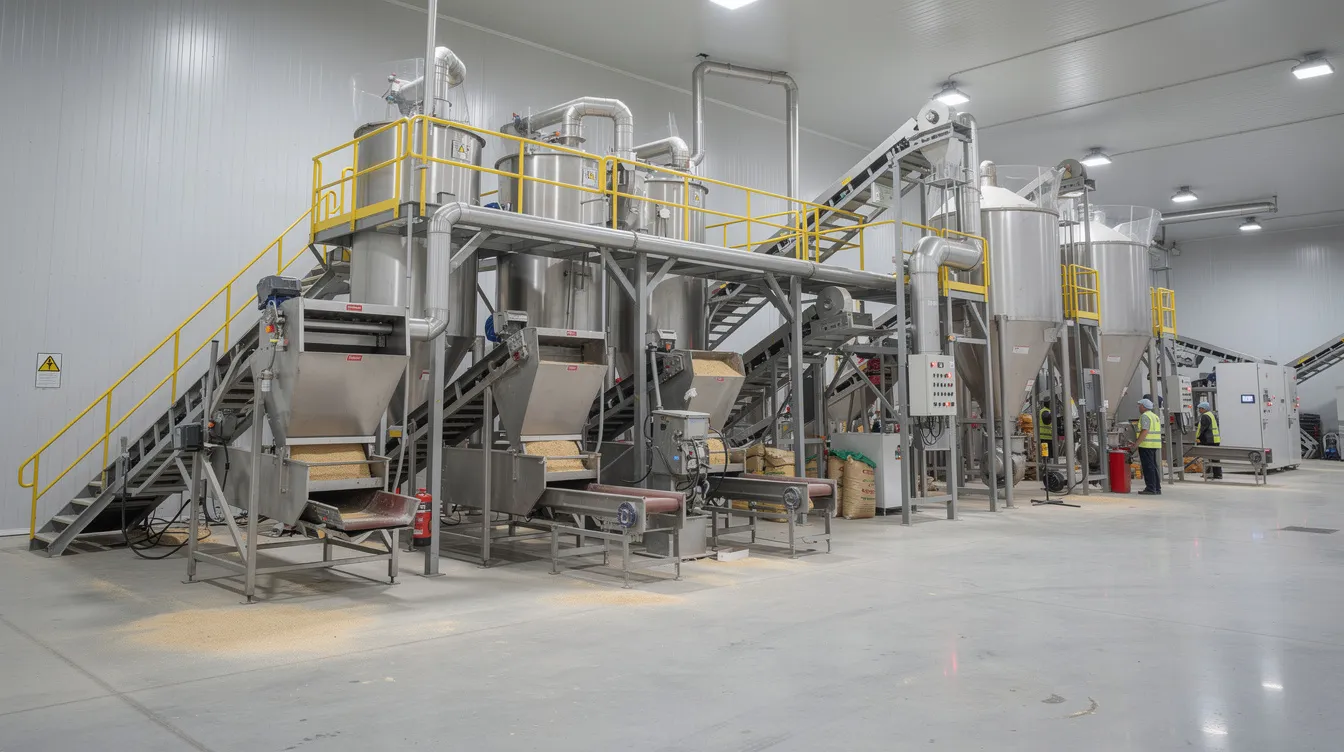
Millet processing plant machinery cost in India varies significantly based on capacity, vendor choice, automation level and inclusion of optical sorting, flaking or premix lines. Equipment costs represent a significant portion of capital expenditure in any integrated millet plant.
Indicative reference points from recent industry listings:
- Complete plant (cleaning to milling) at 2 TPH (~48 TPD): machinery cost approximately ₹31.45 lakh for core equipment only
- Full mid-scale setup (destoner, dehusker, separator): approximately ₹6 lakh
- Minor millet dehulling machine (up to 500 kg/hr): approximately ₹1.2 lakh
Total installed machinery cost exceeds basic ex-factory price by including freight, insurance, foundation, erection, commissioning, operator training, initial spares and applicable taxes. A semi-automatic 20–30 TPD plant may prioritise essential processing lines, while a 100–200 TPD facility typically invests in parallel lines, higher automation and sophisticated quality control systems.
Project Report Bank builds machinery cost blocks in the DPR on the basis of actual supplier quotations or realistic benchmarks, not outdated generic lists.
9. Land, Building, Layout and Infrastructure Requirements
Site selection must ensure access to raw materials and utilities. Proximity to millet cultivation clusters in states like Rajasthan, Karnataka and Maharashtra reduces freight costs and improves sourcing reliability.
Key layout considerations:
- Unidirectional material flow from dirty to clean areas for food safety compliance
- Separate zones for raw material storage, processing, packing, finished goods and utilities
- Floor loading capacity for heavy equipment; adequate clear heights for bagging systems
- Power connection with backup DG set; water supply; dust extraction and pest-proofing
- Provision for future expansion without disrupting existing operations
Construction costs vary considerably depending on whether the plant uses industrial sheds or food-grade RCC structures. The DPR should estimate land requirements and built-up area based on the selected capacity, using practical benchmarks from similar agro-processing projects.
10. Integrated Millet Processing Plant Setup Cost in India
Capital investment varies based on plant capacity and technology. The millet processing plant setup cost in India encompasses both fixed capital expenditure and working capital margin.
| Investment Component | Scope |
|---|---|
| Land and site development | Industrial plot, levelling, boundary |
| Civil construction | Factory, warehouse, utilities block, office |
| Plant and machinery | Primary and secondary processing lines |
| Electrical installation | Panels, wiring, earthing, lighting |
| Utilities | Compressed air, DG set, water treatment |
| Pre-operative expenses | Engineering, DPR, trial runs, training |
| Contingency | Buffer for price variations |
| Working capital margin | Inventory, receivables, operating cash |
As a reference, a sprouted millet processing plant of 600 kg/day capacity showed total capital investment of approximately ₹4.72 crore, including land and building (₹1.05 crore), plant and machinery (₹2.47 crore) and working capital for two months (₹90.44 lakh). Larger integrated plants will have proportionally different cost structures depending on location, product mix and automation level.
11. Raw Material Procurement and Supply Chain Planning
India’s millet cultivation is concentrated across Rajasthan, Karnataka, Maharashtra, Uttar Pradesh, Telangana, Andhra Pradesh and other states. Seasonality is a critical factor – most millets are harvested during Kharif or specific Rabi windows, requiring plants to plan annual procurement and storage strategies.
Key raw material requirements include varietal purity, moisture level (ideally ≤12%), minimal foreign matter and uniform grain size. Sourcing models range from APMC mandis and traders to direct procurement through FPOs and contract arrangements.
A consistent supply of raw millets is essential for uninterrupted operations. Inventory management – balancing price risk against storage cost and quality deterioration – directly affects working capital. The integrated millet processing plant project report should detail target sourcing regions, procurement channels, seasonal price considerations and risk mitigation measures.
12. Manufacturing Cost and Production Economics
The millet processing plant’s operating costs are 70–80% raw materials. Raw millet grains account for 70–80% of operating expenses, making procurement price the single largest determinant of competitiveness.
Other operational costs include cleaning and milling losses, labour costs (skilled, unskilled and supervisory), power and fuel, packaging materials, repairs and maintenance, quality control expenses, and administrative and selling overheads including distribution costs.
The DPR should present a transparent cost sheet showing cost per kg for each key product at different capacity utilisation levels (e.g. 60%, 75%, 90%). Yield and recovery assumptions must be millet-specific and product-specific. For instance, from every 1,000 kg of a selected small millet received, expected impurities, husk and bran removal, and processing losses must be subtracted to estimate net saleable output of dehulled grain, flour, rava and by-products.
13. Financial Projections and Profitability Analysis
Financial projections in DPRs typically cover a 5-to-10 year horizon, built on realistic assumptions regarding capacity utilisation ramp-up, selling prices and costs. Financial projections include income and expenditure projections, balance sheet and cash flow statements.
Key financial metrics for project viability include NPV, IRR and break-even point. Gross profit margins for millet processing range between 25–35%, depending on product mix, procurement efficiency and value addition level. Operating costs are projected to increase significantly by the fifth year due to inflationary pressures and maintenance requirements.
Break-even analysis is included in detailed project reports to establish the minimum utilisation at which the plant covers all costs. For reference, the sprouted millet processing case study showed an IRR of approximately 16% with a break-even at roughly 72% capacity utilisation.
Sensitivity analysis should test impacts of lower utilisation, higher raw millet cost, lower selling price or delayed ramp-up on DSCR and IRR. Financial analysis aids in securing funding and formulating strategies for sustainable operations.
Project Report Bank prepares millet processing financial models that align technical capacity with realistic market absorption and banking norms, as discussed in our guide on preparing professional DPR, CMA data and financial advisory services.
14. Bank Loan, Project Finance and CMA Data Requirements
Working capital assessment is essential for operational finance in project reports. Typical funding involves promoter equity contribution (generally 25–30% of project cost), term loan for fixed assets and sanctioned working capital limits.
Lenders review projected DSCR, cash flows, break-even levels and sensitivity scenarios. CMA data requirements include projected and historical balance sheets, profit and loss statements, fund flow statements and current asset and liability computations – all consistent with the DPR assumptions.
Banks verify alignment between the project report, machinery quotations, licences and promoter experience. Inconsistencies between these documents can delay or weaken the sanction process. For guidance on CMA data preparation, promoters may refer to the complete CMA data preparation guide.
15. Government Schemes, Subsidies and Incentives
Government schemes may provide financial support for integrated food processing enterprises. Under PMFME, 4,612 micro food processing enterprises engaged in millet processing have been supported with ₹91.20 crore in subsidy as of December 2025. The PLI scheme for millet-based products has approved ₹793.27 crore to 29 applicants.
PMKSY components, state food processing policies and MSME incentives (capital subsidies, interest subsidies, stamp duty concessions) may also be applicable depending on project size and location.
However, not every integrated millet processing plant will automatically receive subsidies. Promoters must study official scheme guidelines, eligibility criteria and application timelines. Core project feasibility should remain sound even without incentives – potential subsidy should be treated as an additional benefit rather than the primary basis for investment.
16. Licences, Registrations and Regulatory Compliance
Regulatory compliance in food processing involves FSSAI and pollution control approvals, among other requirements. Key compliance areas include:
- FSSAI licence: registration for units up to ₹1.5 crore turnover; state licence up to ₹50 crore; central licence above that threshold
- Factory registration under state Factory Acts with safety provisions
- Pollution Control Board consents for dust and noise control
- GST registration and correct HSN classification
- Legal Metrology requirements for packaged commodities
- Fire safety, labour law registrations (ESI, EPF) and building approvals
Relevant regulations vary by state, project size and product range. The DPR should include a regulatory roadmap while actual licences must be obtained during implementation.
17. Market Opportunities and Demand Assessment
Market analysis in DPRs should examine demand-supply dynamics for millets rather than relying on generic global statistics. Key domestic segments include institutional buyers, food ingredient manufacturers, branded FMCG companies, health-food brands and export-oriented businesses.
Export opportunities exist for cleaned, graded and dehulled millets in markets seeking gluten-free and sustainable grain alternatives, though this requires compliance with food safety standards and sometimes organic certification.
Commercial constraints are real: millets still compete against wheat and rice in price-sensitive segments. Sensory preferences, cooking habits and shelf-life considerations (particularly flour rancidity due to higher fat content in pearl millet) influence repeat purchases. A thorough market assessment – mapping potential industrial and institutional customers, meeting distributors and understanding actual product formats that move – should precede capital commitment.
18. Commercial Feasibility and Risk Assessment
The millet processing plant depends on multiple factors beyond gross margins. A comprehensive market overview of supply, demand and competitive landscape is essential.
| Risk | Business Impact | Suggested Mitigation |
|---|---|---|
| Raw material supply variability | Production disruption, cost increase | Diversify sourcing regions; staggered purchases |
| Dehulling underperformance | Lower recovery, reduced margins | Vendor trials; performance guarantees in contracts |
| Slow market adoption | Revenue shortfall, inventory build-up | Secure part-supply agreements before commissioning |
| Working capital stress | DSCR shortfall, cash flow gaps | Conservative utilisation assumptions; adequate margins |
| Subsidy disbursement delays | Funding gap | Do not factor subsidy into base case viability |
Project Report Bank incorporates risk and sensitivity analysis in DPRs, enabling promoters and lenders to appreciate both upside potential and downside scenarios.
19. Integrated Plant vs Standalone Millet Processing Units
| Parameter | Standalone Cleaning/Grading | Standalone Dehulling | Simple Flour Mill | Integrated Multi-Product Plant |
|---|---|---|---|---|
| Capital expenditure | Low | Moderate | Moderate | High |
| Product range | Cleaned grain only | Dehulled grain, by-products | Flour | Multiple (flour, rava, grits, flakes) |
| Revenue diversification | Limited | Narrow | Single product | Broad |
| Management complexity | Low | Low–Medium | Medium | High |
| Competitive edge | Minimal | Moderate | Market-dependent | Strong positioning |
Integrated plants offer broader product portfolios and greater flexibility but require higher capital, stronger management capabilities and well-planned marketing. The decision should be justified in the DPR with supporting market and financial analysis.
20. What Should a Bankable Integrated Millet Processing Plant DPR Include?
A detailed project report outlines technical feasibility and financial viability in a single coherent document. Recommended contents include:
- Executive summary and promoter profile
- Project concept, product mix and capacity justification
- Market demand and competition analysis
- Raw material sourcing plan
- Technical feasibility, process description and plant layout
- Detailed machinery list with specifications and vendor quotations
- Capital cost estimates (land, building, machinery, utilities, pre-operative, contingency)
- Working capital assessment aligned with CMA norms
- Means of finance and debt-equity structure
- 7–10 year financial projections (P&L, balance sheet, cash flows)
- DSCR, IRR, NPV, break-even and payback period analysis
- Sensitivity analysis and risk assessment
- Implementation schedule and regulatory roadmap
A bankable DPR improves the quality of discussions with lenders and investors, supports faster appraisal and helps promoters test assumptions before committing capital.
21. Why Choose ProjectReportBank.com for Integrated Millet Processing Plant DPR Preparation?
ProjectReportBank.com is a Chartered Accountant-led professional advisory platform specialising in industrial DPRs, project finance analysis and financial modelling for manufacturing and processing projects in India. Under the leadership of CA Manish Gugliya (FCA, DISA, ICAI), with over 20 years of professional experience, the platform provides:
- Customised detailed project report preparation with project-specific assumptions
- Financial projections, modelling and sensitivity analysis
- Project cost estimation and means of finance planning
- DSCR and loan repayment analysis
- Working capital assessment and CMA data preparation
- Bankable DPRs aligned to Indian bank formats
- Investor-ready documentation and fundraising advisory
As an independent advisory firm – not a machinery supplier or lender – Project Report Bank offers objective evaluation of machinery options, capacities and investment levels, delivering tailored solutions aligned with each client’s business priorities.
22. Frequently Asked Questions
The following questions address common queries from promoters planning integrated millet processing projects in India.
What is an integrated millet processing plant project report?
It is a comprehensive detailed project report focused specifically on an integrated millet processing facility, covering technical design, machinery configuration, capacity planning, project cost, means of finance and 7–10 year financial projections. It is structured to meet the appraisal requirements of Indian banks and investors, including DSCR, IRR, sensitivity analysis and risk assessment. This is distinct from a basic business plan – it is a bankable, number-driven document built on documented assumptions and supporting vendor quotations.
Can one processing line handle all millet varieties efficiently?
Common machines such as cleaners, aspirators and elevators can handle multiple millet types with screen and setting changes. However, dehulling and fine milling requirements differ by variety – smaller millets like little, barnyard and kodo may need different dehulling technology compared with bajra or proso millet. Promoters should plan modular or flexible machinery setups and conduct vendor trials with their specific millet mix before finalising procurement.
Is millet processing always profitable in India?
Profitability is project-specific and depends on sourcing cost, plant efficiency, product mix, selling prices, competition and utilisation levels. Well-planned integrated plants with strong market linkages and disciplined cost management can achieve gross profit margins of 25–35%, but plants set up purely on generic growth stories without adequate feasibility analysis may struggle. The millet industry rewards those who model costs conservatively and build market linkages proactively.
How should promoters decide the ideal capacity for a new millet processing plant?
Capacity should be based on realistic assessment of raw millet availability within an economical radius, confirmed product demand and the promoter’s ability to manage marketing and distribution. First-time promoters often start at 20–50 TPD with civil and utility provisions for later expansion services once market response is validated. Industry trends suggest that the right capacity balances sourcing capability with market absorption.
What documents are required for a millet processing plant DPR for bank finance?
Banks typically expect a complete DPR with financial projections, promoter KYC and financial statements, machinery quotations from credible vendors, preliminary licences and approvals plan, land documents, and CMA data covering projected balance sheets, P&L and fund flow statements. Procurement research, cost research and market assessment supporting the revenue assumptions strengthen the proposal. Company incorporation assistance documentation and factory setup support records may also be required depending on the stage of project implementation.
23. Conclusion and Professional Call to Action
Integrated millet processing plants can serve the growing demand for value-added products from millets in India and export markets, supported by sustainable agriculture practices and favourable market growth trends. However, commercial success depends on appropriate capacity choice, robust sourcing for consistent supply, careful machinery selection, disciplined operational expenditure management and data-backed financial planning that accounts for realistic human resource requirements and market trends.
An integrated millet processing plant project report is essential for evaluating project feasibility, structuring capital expenditure, projecting cost and revenue, assessing DSCR and preparing a credible case for bank finance or investor funding. Quality assurance, operational efficiency and regulatory approvals must be addressed alongside financial metrics.
Planning an Integrated Millet Processing Plant in India?
ProjectReportBank.com provides professional DPR preparation, financial projections, feasibility studies, CMA data and project finance advisory for industrial manufacturing projects. Serious entrepreneurs, MSMEs and industrial promoters are invited to contact ProjectReportBank.com through its official website or WhatsApp channel to discuss their proposed millet plant capacity, location, product mix, estimated investment and financing requirements.