Key Takeaways
- The millet processing plant setup cost in India ranges broadly from approximately ₹15 lakh to ₹1 crore for small units (up to 5 TPD), while integrated 10 TPD plants with dehulling, flour milling, and packaging typically require ₹1.5–3.0 crore (land-exclusive) and ₹2.5–4.0 crore (land-inclusive) at 2026 price levels.
- Raw materials account for approximately 70–80% of total operating expenses, making procurement strategy, seasonal inventory management, and realistic recovery assumptions the most critical drivers of profitability.
- Gross profit margins for millet processing typically range between 25–35%, while net profit margins are estimated at 10–15% for well-managed plants operating at reasonable capacity utilisation.
- Bank finance, working capital planning, and DSCR-based viability assessment are essential for any serious millet processing project, requiring a professionally prepared detailed project report and CMA data.
- Project Report Bank, led by CA Manish Gugliya, FCA, DISA (ICAI), provides customised DPRs, financial feasibility studies, and project finance advisory for millet processing and value-added millet manufacturing projects across India.
Introduction: Millet Processing Plant Setup Cost, Investment & Financial Planning
India’s millet processing sector has moved beyond traditional village-level operations into an organised industrial food processing opportunity. Rising consumer demand for millet flour, millet-based ready to eat meals, breakfast cereals, extruded snacks, and nutritious millet value addition products has created commercially significant demand across B2B ingredient supply, institutional channels, and branded retail segments. Health conscious consumers and the broader convenience food industry are driving interest in healthy and quick foods made from these small seeded cereal grains.
The millet processing plant setup cost, however, varies enormously depending on whether the project involves primary millet processing – cleaning, grading, dehulling, and basic flour production – or integrated value-added manufacturing encompassing snacks, instant mixes, and packaged processed foods. Plant capacity, automation level, land and building investment, utility infrastructure, and food safety-compliant design all influence total capital investment.
Before committing several crores to a millet processing facility, a promoter needs to understand whether the proposed capacity, product mix, and financial structure can support the intended debt and generate adequate returns. This requires more than a rough cost estimate. It requires a professional detailed project report incorporating realistic production assumptions, operating cost structure, working capital assessment, and sensitivity analysis.
This article provides a structured framework for understanding millet processing plant setup cost, capital investment components, operating economics, and financial feasibility indicators relevant to serious project promoters, manufacturers, and investors planning commercially viable projects in India.
Millet Processing Industry Overview in India
India is among the world’s largest producers of millets. According to APEDA data, total millet production in India stood at approximately 18.59 million tonnes in 2024–25, with Rajasthan, Maharashtra, and Karnataka contributing the largest shares of millet cultivation area. The global millet market is projected to reach USD 19.70 billion by 2034, reflecting the scale of the global millet industry and rising retail availability of millet-based consumer products.
Major millet varieties processed commercially in India include:
- Pearl millet (bajra) – the largest volume millet, widely used for flour and animal feed
- Sorghum (jowar) – used for flour, millet rice, and food service establishments
- Finger millet (ragi) – valued for its nutritional value and dietary fiber content
- Foxtail millet, kodo millet, little millet, and barnyard millet – categorised as minor or small millets, increasingly popular in the health food sector and among restaurant and cafe owners
Key industrial users include flour mills, breakfast cereal manufacturers, snack producers, nutraceutical brands, institutional buyers (mid-day meal programmes, defence), and private-label contract processors. Business models range from B2B bulk ingredient supply to own-brand retail products and toll processing for other brands, with the retail consumption segment growing steadily.
Millet consumption is supported by the nutritional benefits of these naturally gluten free grains – high in fibre, micronutrients, and positioned as staple food crops supporting sustainable agriculture and environmentally sustainable food systems. However, the commercial viability of a millet processing unit depends not on nutritional positioning alone, but on realistic capacity planning, cost management, and DPR-backed demand assessment aligned with current market trends.
Types of Millet Processing Plants and Business Models
Millet processing technology depends on the final products being manufactured. A project promoter must first decide the scope of millet processing operations before estimating investment. Basic grain cleaning and grading requires a lower investment compared to integrated flour milling or value-added snack manufacturing. The principal configurations include:
- Primary cleaning and grading plants – receiving raw millet grains, cleaning, destoning, grading, and dispatching to downstream millers or institutional buyers
- Dehulling and polishing plants – removing husk from small millets to produce edible kernels; requires specialised decortication machinery
- Flour milling plants – producing millet flour (atta, rawa, suji, multigrain blends) from cleaned or dehulled grain
- Integrated multi-millet processing plants – handling multiple millet varieties through cleaning, dehulling, milling, grading, and packaging in one facility
- Instant food and ready-mix plants – producing millet-based idli, dosa, porridge, or upma mixes to simplify millet consumption for urban consumers
- Snack and breakfast cereal units – extruded snacks, flakes, puffed millets, and cereal products for the nutrition and wellness products market
- Contract processing and packaging operations – toll processing for other brands, requiring flexible capacity and packaging automation
Each model has different machinery requirements, raw materials investment, and working capital intensity. More complex product portfolios require higher CapEx for food safety systems, quality control laboratories, packaging automation, product development, and waste management systems. Readers evaluating smaller integrated setups can explore the Small Millet Processing Plant Project Report for a focused configuration.
| Business Model | Core Operations | Investment Intensity | Target Markets | Typical Margin Profile |
|---|---|---|---|---|
| Primary cleaning & grading | Cleaning, destoning, grading | Low | Bulk millers, traders | Low margin, high volume |
| Dehulling & polishing | Decortication, grading | Low–Medium | Flour millers, retail | Moderate |
| Flour milling | Milling, sifting, packing | Medium | Retail, HoReCa, institutional | Moderate |
| Integrated multi-millet | Full chain: clean to pack | Medium–High | Multi-channel | Moderate–Good |
| Instant food & ready mixes | Blending, cooking, drying, packing | High | Urban retail, e-commerce | Higher margin, higher risk |
| Snacks & breakfast cereals | Extrusion, puffing, coating, packing | High | FMCG retail, modern trade | Higher margin, brand-dependent |
| Contract processing | Flexible processing for third parties | Medium | Brand owners, exporters | Lower margin, stable volume |
Millet Processing Plant Capacity Planning
Plant capacity must be defined clearly – typically as raw grain input in metric tonnes per day (TPD) under specific shift and utilisation assumptions. A small-scale plant has a capacity of approximately 10,000 MT/year, which roughly corresponds to a 30–35 TPD operation at 300 working days. Higher capacity generally requires higher initial investment in machinery, storage, utilities, and working capital.
Representative capacity tiers and their typical profiles:
| Capacity (TPD) | Business Profile | Automation Level | Indicative Investment Band (Land-Exclusive) |
|---|---|---|---|
| 1 | Pilot/cluster unit, single product | Manual/semi-auto | ₹15–30 lakh |
| 5 | Small commercial MSME | Semi-automatic | ₹80 lakh–1.5 crore |
| 10 | Typical MSME integrated plant | Semi-auto to automatic | ₹1.5–3.0 crore |
| 25 | Mid-scale regional processor | Automatic | ₹3.5–6.0 crore |
| 50 | Large regional/national brand | Fully automatic | ₹7–12 crore |
| 100 | Industrial-scale, extensive processing capacities | Fully integrated, PLC | ₹12–25 crore+ |
Operating days per year (typically 300), number of shifts, and capacity utilisation ramp-up (often 50–60% in year one, stabilising at 80–90% over 2–3 years) directly affect financial projections and annual production capacity. Different millet varieties and products influence achievable recovery and throughput – readers planning bajra-specific projects can refer to the Bajra Processing Plant Project Report for variety-specific details, while sorghum projects are covered in the Sorghum Milling Plant Project Report.
Plant capacity significantly affects capital investment requirements. The unit processing cost per kilogram declines with scale, but larger plants also require proportionally greater working capital for raw millet and finished-goods inventory, more sophisticated logistics infrastructure, and broader distribution costs.
Millet Processing Plant Setup Cost in India – Capital Investment Structure
The cost to set up a millet processing plant typically ranges from ₹15 lakh to ₹1 crore for small units (1–5 TPD primary processing), while integrated 5–10 TPD plants with dehulling, milling, and packaging require substantially more. Capital investment varies by plant capacity and technology, product scope, automation, site location, and food safety compliance level. All figures discussed here are illustrative and assumption-based as of 2026, not vendor quotations.
Major capital cost heads include:
- Land purchase or lease and site development – boundary wall, internal roads, levelling
- Factory building and civil construction with food safety-compliant internal finishes
- Core processing machinery: cleaning, grading machines, destoning, magnetic separation, dehulling/decortication, milling, optical sorting, and sifting
- Material handling systems – elevators, conveyors, storage silos and bins
- Dust collection, aspiration, and basic pollution-control systems
- Automatic or semi-automatic weighing, bagging, and packaging machinery
- Electrical installations and utilities – power distribution, control panels, DG set, compressors, water supply
- Quality control and food safety testing equipment
- Storage warehouses and godowns for raw material storage and finished goods
- Engineering, installation, and commissioning charges
- Preliminary and pre-operative expenses – consultancy, DPR preparation, technical fees, establishment costs during construction
- Interest during construction (IDC) for projects with extended implementation timelines
- Contingencies (typically 5–10% of fixed capital) and initial margin for working capital
Machinery costs represent the largest portion of capital expenditure. Automation level impacts machinery costs at startup significantly – a fully automated PLC-based line costs several times more than semi-automatic configurations for the same throughput.
| Cost Head | 5 TPD Plant (₹ Lakh) | 10 TPD Plant (₹ Lakh) |
|---|---|---|
| Land (1–2 acres, semi-industrial) | 50–100 | 80–150 |
| Building & civil works | 40–70 | 70–120 |
| Plant & machinery (installed) | 50–80 | 100–180 |
| Electrical & utilities | 8–15 | 15–30 |
| Other fixed assets (furniture, vehicles, lab) | 5–10 | 10–20 |
| Pre-operative & preliminary expenses | 5–10 | 8–15 |
| Contingencies | 5–10 | 10–20 |
| Margin for working capital | 15–30 | 25–50 |
| Total project cost (land-inclusive) | 178–325 | 318–585 |
| Total project cost (land-exclusive) | 128–225 | 238–435 |
Basis: 2026 indicative estimates for semi-industrial locations. Actual costs require project-specific quotations and a customised DPR.
Project Report Bank prepares detailed capital cost assessments with machinery breakups, civil work estimates, and financial analysis structured for bank or investor appraisal.
Millet Processing Plant Machinery Cost, Layout & EPC Requirements
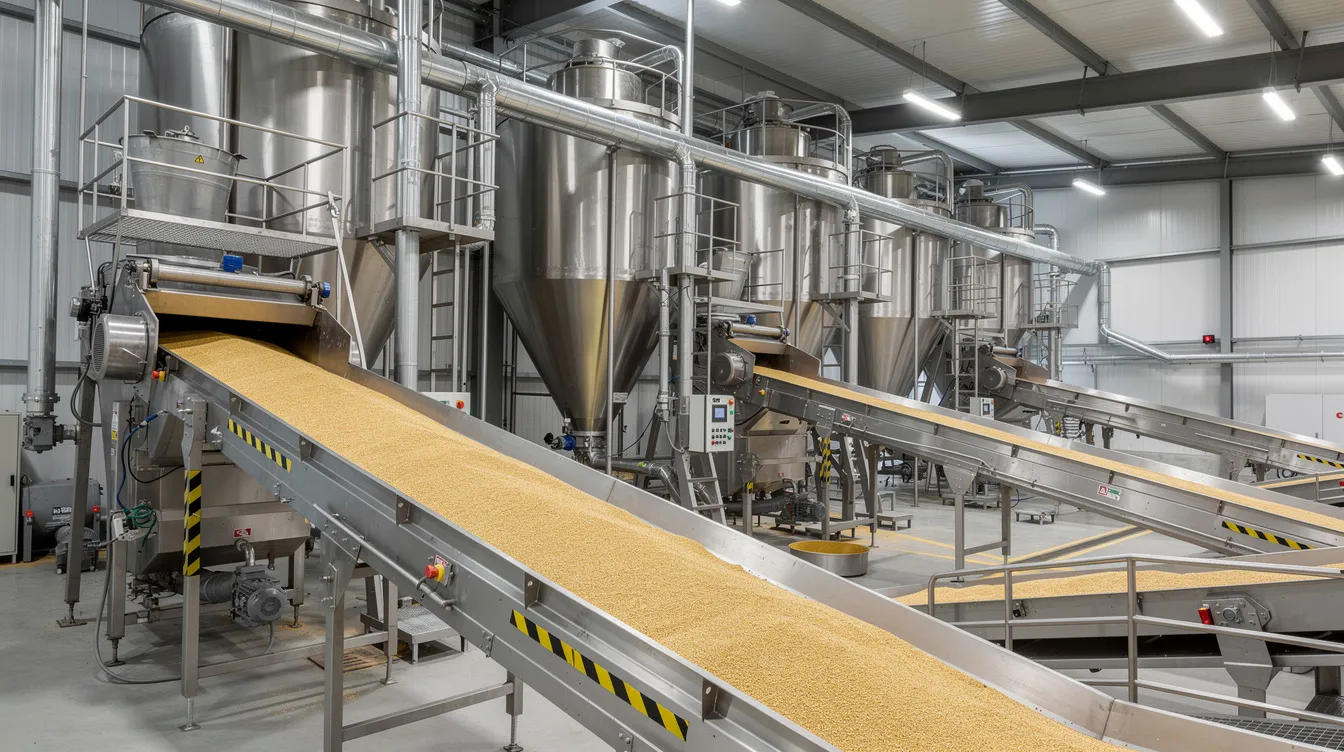
Machinery selection and engineering, procurement, and construction (EPC) planning critically affect both CapEx and long-term operating reliability. Millet processing requires grain cleaning and grading machines, de-husking and milling systems, sorting and sieving equipment for quality control, and packaging and sealing machines for finished products. Quality testing equipment is necessary to maintain standards for packaging and product safety. Machinery must comply with industry safety and efficiency standards.
The typical machinery train includes:
- Receiving hoppers and pre-cleaners
- Fine cleaners, aspirators, and destoners
- Magnetic separators
- Dehuskers (abrasive or centrifugal, depending on millet type)
- Pulverisers, roller mills, or hammer mills
- Sifters, graders, and optical sorters
- Blending and mixing equipment (for multispecies or fortified products)
- Automatic or semi-automatic packaging lines
Semi-automatic lines involve manual sack handling and semi-auto bagging, suitable for 1–5 TPD. Fully automatic lines use mechanised material transfer, PLC-based controls, and higher throughput – appropriate for 10 TPD and above. Stainless steel food-contact surfaces, energy-efficient motors, and integrated dust-control systems add cost but improve compliance and recovery.
Plant layout should optimise workflow and safety, with linear product flow from raw material receiving to finished goods dispatch, clear separation of raw and finished zones, and provision for future capacity expansion. Readers interested in detailed machinery specifications and EPC planning can refer to automatic millet dehulling and milling machinery and EPC cost. Those exploring flour milling configurations may also find the specialty flour plant machinery and equipment cost page useful.
Land, Building, Storage & Infrastructure Requirements
Exact land requirement depends on plant capacity, storage configuration (silos versus godowns), truck circulation space, and planned expansion. Site selection must ensure proximity to raw materials, adequate road connectivity, and availability of power and water.
Major blocks in a typical millet processing plant include:
- Raw grain receiving and weighment area
- Pre-cleaning and main processing hall
- Finished goods packing and dispatch section
- Quality control laboratory
- Utility block (transformer, compressor, water treatment)
- Administrative offices and amenities
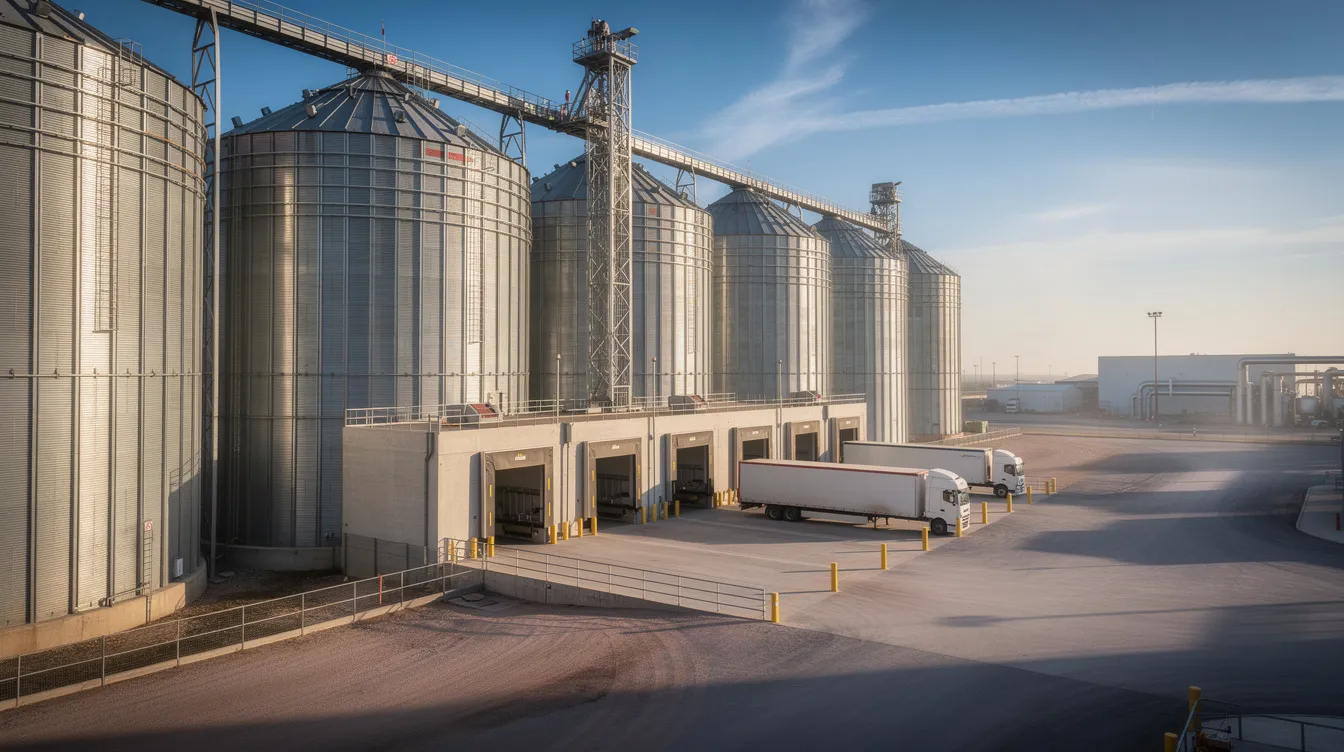
- Raw material storage (covered warehouse or silos) to manage procurement seasonality – for a 10 TPD plant, 3,000–5,000 sq ft of covered storage may be needed for 2–3 months of grain inventory
- Finished goods warehouse with racking or palletised storage
Quality inspection and storage systems ensure product safety throughout the supply chain. Adequate ventilation, dust control, and hygienic finishes are essential in food-contact areas. Infrastructure provisions include internal roads, weighbridge (for larger capacities), power connection, water supply, drainage, and rainwater management. A project-specific layout is a standard component of a professional DPR prepared by Project Report Bank.
Raw Material Cost, Procurement Economics & Market Linkages
Raw millet grains are the primary feedstock for processing, and raw material pricing significantly affects operational expenses. Raw materials account for approximately 70–80% of total operating expenses, making procurement strategy the single most important driver of profitability.
Key procurement considerations include:
- Farm-gate vs mandi vs trader procurement – landed price and quality consistency differ significantly by channel; reliable suppliers minimise transportation costs for raw materials
- Seasonality – sourcing seasonal raw materials often locks up capital during harvest periods, requiring bulk procurement and adequate storage capacity
- Quality specifications – moisture content, foreign matter, damaged grain, and varietal purity directly affect cleaning losses and downstream recovery
- Price differentials – pearl millet (bajra MSP ₹29/kg), finger millet (ragi MSP ₹52.05/kg), and sorghum (₹40.23/kg) have materially different raw material requirements and cost structures
- Long-term contracts stabilise pricing for raw materials and reduce exposure to spot-market volatility
- Storage economics – transport cost, fumigation, insurance, and interest on inventory (carrying cost) must be factored into the total landed cost of key raw materials
Project Report Bank’s DPRs typically include 5–10 year raw material price assumptions, sensitivity checks, and sourcing risk analysis aligned with current market trends and government support price data published by NIIR/APEDA.
Millet Processing Recovery, Yield & Material Balance
Realistic recovery assumptions are central to DPR preparation and financial modelling. Recovery – the proportion of edible product obtained from raw grain – differs substantially by millet variety, grain quality, machine type, and desired product specifications.
Research indicates that modern double-chamber centrifugal dehullers achieve 70–85% dehulling recovery for small millets with breakage rates of only 4–5%, while older abrasive dehullers yield significantly less. For minor millets like kodo, barnyard, and foxtail, rice recovery (dehusked edible kernel) is typically in the 60–65% range.
Illustrative material balance – finger millet (ragi), cleaning + dehusking + flour milling:
| Stage Output | Quantity (kg per 100 kg input) | Notes |
|---|---|---|
| Clean grain after pre-cleaning | 97–98 | Stones, dust, foreign matter removed |
| Dehusked kernel | 72–78 | Husk/bran removed |
| Flour (fine milling) | 65–72 | Depending on fineness, mesh size |
| Bran and husk | 18–25 | Saleable as cattle feed |
| Broken grain and fines | 4–6 | Partial recovery as by-product |
| Cleaning losses (dust, stones) | 2–3 | Non-recoverable |
Recovery percentages differ by millet variety, grain quality, moisture levels, machine settings, and whether the target product is whole grain, fine flour, or semolina. By-products such as bran and broken grain generate supplementary revenue, partially offsetting raw material cost.
Millet Processing Plant Operating Cost Structure
Operating costs include utilities, labor, and maintenance expenses in addition to the dominant raw material component. Segregating variable and fixed costs is essential for accurate financial projections and break-even analysis.
Variable costs:
- Raw millet grain (the largest component – approximately 70–80% of operating expenses)
- Packaging materials (bags, pouches, labels, cartons)
- Power and fuel
- Consumables (spares, lubricants, cleaning chemicals)
- Inward and outward logistics
Fixed costs:
- Factory salaries and wages
- Administrative overheads
- Insurance, statutory compliance, audit, and legal expenses
- Security, housekeeping, and minimum utility charges
- Depreciation (non-cash but affects book profits and tax)
| Expense Head | % of Total Operating Cost (Illustrative, 10 TPD) |
|---|---|
| Raw millet grain | 70–75% |
| Packaging materials | 5–7% |
| Power & fuel | 3–5% |
| Labour (production + admin) | 5–8% |
| Repairs & maintenance | 1–2% |
| Quality control & testing | 0.5–1% |
| Distribution costs & logistics | 2–4% |
| Other overheads | 2–4% |
Actual operating cost ratios must be developed project-specifically as part of a customised financial analysis.
Millet Processing Plant Revenue Model & Product Mix
Revenue models for a millet processing facility range from bulk B2B ingredient sales and toll/contract processing charges to own-brand retail packs and institutional supply tenders. Product mix materially influences average realisation per kilogram:
- Bulk bags (25–50 kg) command lower prices than branded consumer packs (500g–1 kg)
- Value-added products such as ready mixes, puffed millets, and breakfast cereals substantially improve average realisation but require additional marketing, branding, and distribution investment
- By-products (bran, husk, broken grain) generate supplementary revenue
- Quality differentiation (organic, fortified, multigrain blends) justifies premium pricing but requires certification and food safety compliance
Downstream opportunities such as instant millet porridge and upma mixes, millet extruded snacks, and millet noodles, pasta, and vermicelli represent product lines that alter revenue mix and investment profile for leading millet processors and emerging brands. The global millet market size continues to expand as rising consumer demand creates opportunities in both the health food sector and the mainstream convenience food industry.
Millet Processing Plant Profitability & EBITDA Analysis
Profitability must be assessed using a 5–10 year projected Profit & Loss statement and cash-flow model, not just per-kg margins. Financial projections should include ROI, NPV, and payback period alongside operating profitability measures.
Illustrative annual P&L – 10 TPD integrated millet plant (stabilised year, 75% utilisation, 300 days):
| Item | Amount (₹ Lakh) |
|---|---|
| Raw millet processed (2,250 MT) | – |
| Finished goods output (~1,575 MT at 70% recovery) | – |
| Annual sales revenue | 630 |
| Raw material cost | 450 |
| Packaging & consumables | 35 |
| Power, fuel & utilities | 22 |
| Labour & overheads | 38 |
| Total operating expenses | 545 |
| EBITDA | 85 |
| EBITDA margin | ~13.5% |
| Depreciation | 18 |
| Interest on term loan | 22 |
| Profit before tax | 45 |
| Tax (assumed 25%) | 11 |
| Net profit after tax | 34 |
| Net profit margin | ~5.4% |
Gross profit margins for millet processing typically range between 25–35% depending on product mix and procurement efficiency, while net profit margins are estimated at 10–15% for well-run operations at stabilised capacity. The difference between EBITDA margin and net profit margin reflects the impact of depreciation, interest burden, and taxation. CA Manish Gugliya’s financial models also consider ramp-up years, inflation, maintenance capex, and sensitivity to price changes.
Working Capital Requirements for a Millet Processing Plant
Working capital needs are often underestimated but essential before revenue starts flowing. Initial raw material purchases often represent a significant part of the initial investment, particularly when bulk procurement is done during harvest season.
Key working capital components:
- Raw millet stock: typically 2–4 months of consumption, depending on sourcing radius and seasonality
- Packaging materials: 15–30 days
- Finished goods inventory: 15–30 days of sales
- Trade receivables: 15–45 days depending on channel (B2B vs retail vs institutional)
- Less: trade payables and supplier credit received
Net Working Capital = Inventory + Trade Receivables + Other Operating Current Assets − Trade Payables − Other Operating Current Liabilities
For a 10 TPD plant at 75% utilisation, net working capital requirement may range from ₹60 lakh to ₹1.2 crore depending on inventory norms and credit terms. Banks typically fund working capital through cash-credit or overdraft facilities, requiring the promoter to bring in 20–25% margin money. Seasonal working capital peaks during grain procurement season demand careful liquidity planning. Project Report Bank prepares bank-compliant CMA data and working capital assessment as part of a holistic DPR and project finance advisory.
Bank Loan, Promoter Contribution & Project Financing Structure
Millet processing projects are typically financed with a combination of promoter equity, term loan, and working capital limits, subject to bank appraisal and lender-specific credit norms.
- Debt–equity norms: Banks generally expect promoter contribution of 20–35% of total project cost, with the balance funded through term loan (typical debt-equity ratio of 1.5:1 to 2:1)
- Term loan coverage: Land (if financed), building, eligible plant & machinery, and associated fixed assets
- Loan tenure: Typically 7–10 years including 6–12 months moratorium on principal repayment
- Security: Primary charge on project assets, possible additional collateral or personal guarantees
- Appraisal requirements: A robust DPR, 5–10 year financial projections, CMA data, and DSCR analysis
| Means of Finance | 10 TPD Plant Example (₹ Lakh) |
|---|---|
| Promoter equity (30%) | 120 |
| Term loan (70%) | 280 |
| Total project cost | 400 |
| Working capital limits (separate) | 80 |
Project Report Bank assists in preparing bankable project reports, means-of-finance plans, and loan structuring, though sanction depends on lender policies and promoter profile.
Financial Feasibility – DSCR, IRR, NPV & Break-Even Analysis
Lenders and investors evaluate millet processing projects using multiple financial indicators:
- DSCR (Debt Service Coverage Ratio): Cash Accruals ÷ Annual Debt Service (principal + interest). Lenders typically require DSCR ≥ 1.3–1.5 in stabilised years.
- Project IRR: Internal Rate of Return on total project investment; for food processing projects, 16–20% is generally considered reasonable.
- Equity IRR: Return on promoter’s own contribution, usually higher than project IRR due to leverage effect.
- NPV (Net Present Value): Present value of future cash flows minus initial investment, discounted at the project’s cost of capital.
- Break-even capacity utilisation: The utilisation level at which total revenue equals total cost. Many millet flour units break even at 45–50% utilisation; value-added units may require 60–70% or higher.
- Payback period: Typically 4–7 years depending on capacity, debt load, and utilisation trajectory.
These indicators are projections based on stated assumptions, not guaranteed outcomes. CA Manish Gugliya routinely prepares multi-scenario feasibility models for term-loan appraisal and investor presentations for millet and other agro-processing projects.
Sensitivity Analysis & Major Financial Risks in Millet Processing
Millet processing margins can be sensitive to multiple variables. Structured sensitivity analysis is essential for any credible processing plant project report.
| Scenario | Directional Impact |
|---|---|
| Raw millet price increases by 10% | EBITDA margin compresses by 5–7 percentage points; DSCR may fall below lender comfort |
| Selling price of finished products falls by 5% | EBITDA declines proportionally; net profit margin may halve |
| Capacity utilisation 15 points lower than projected | Fixed costs spread over less output; DSCR and IRR decline materially |
| Machinery cost escalation of 10% at setup | Higher depreciation and interest burden; payback period extends |
| Interest rate increases by 2 percentage points | Net profit compressed; DSCR weakened in early years |
| Processing recovery 2–3 points lower than assumed | Output and revenue fall; raw material cost per kg of finished goods rises |
| Inventory and debtor periods increase | Working capital locked up; cash-flow stress, potential need for additional funding |
Risk mitigation strategies include procurement contracts with farmers, diversified product mix, realistic capacity ramp-up assumptions, conservative gearing, and adequate contingency provisions in project cost.
Government Schemes, Regulatory & Food Safety Requirements
Regulatory compliance and food safety are as important as engineering and finance. Licensing requirements can add costs based on plant turnover. Government schemes can offer financial support for millet processing setups, though eligibility and terms must be verified from current official notifications.
Statutory requirements include:
- Entity registration (company, LLP, partnership, or proprietorship)
- Factory licence and labour law compliance
- FSSAI licensing – from April 2026, registration applies up to ₹1.5 crore turnover, state licence up to ₹50 crore, central licence above that
- GST registration and applicable rates on millet products
- Pollution control board consents (air/dust emissions)
- Building plan approvals, fire safety NOCs, and local body permissions
Government incentive schemes for food processing, agro-processing clusters, and MSMEs are periodically available at central and state levels. The PMFME scheme, for example, provides credit-linked subsidies for eligible micro food processing enterprises. However, plain flour or dehusked grain may not qualify under all incentive categories. Project Report Bank incorporates the implications of applicable schemes into DPRs and financial analysis, but cannot guarantee sanction of any subsidy or incentive.
Integrated Millet Processing vs Value-Added Manufacturing
Value-added products require additional processing equipment and quality control systems beyond what primary processing needs. The incremental CapEx for downstream manufacturing – extruders, roasters, dryers, ovens, coating systems, and specialised packaging lines – can equal or exceed the base processing plant investment.
| Parameter | Primary Processing | Value-Added Manufacturing |
|---|---|---|
| CapEx level | Low–Medium | High–Very High |
| Technical complexity | Moderate | High |
| Regulatory stringency | Standard FSSAI | Enhanced (allergen control, shelf-life testing, product-specific standards) |
| Margin potential per kg | Moderate | Higher, but variable |
| Business risk | Lower | Higher (brand building, product acceptance, rejection risk) |
| Working capital intensity | Moderate | High (more standardized cereal materials, packaging materials, ingredients) |
Higher value addition does not automatically translate into higher profitability. Increased fixed overheads, R&D costs, distribution costs, and brand-building expenses can erode margins unless volume and market acceptance are achieved. Readers exploring downstream expansions can review pages for puffed millet processing, millet breakfast cereals, and millet biscuits manufacturing.
Common Reasons Millet Processing Projects Become Financially Unviable
Many agro-processing projects fail not due to lack of demand but due to planning and execution gaps. A well-prepared DPR and feasibility study can identify these risks before substantial capital is committed.
Common pitfalls include:
- Oversizing plant capacity relative to realistic market access and working capital availability
- Optimistic recovery and yield assumptions not validated by pilot trials with actual machinery
- Underestimation of raw material price volatility and logistics cost
- Excessive automation and CapEx without corresponding volume or labour savings to justify the investment
- Weak sales and distribution strategy – reliance on a single buyer or channel
- Inadequate provision for maintenance, spares, and production downtime
- Misaligned debt structure – short moratorium and high EMIs relative to the capacity ramp-up period
Preventive measures include pilot trials with shortlisted machinery, structured demand assessment, robust financial modelling with sensitivity analysis, and phased capacity expansion. An independent DPR by CA Manish Gugliya can help promoters identify these risks upfront and plan mitigations before investing crores of rupees.
Why a Detailed Project Report (DPR) & Professional Financial Analysis Are Essential
Banks, investors, and informed promoters expect a thorough DPR – not a generic template – before committing to a millet processing project. A high-quality millet processing DPR from Project Report Bank typically covers:
- Technical concept, process flow, unit operations, and plant configuration
- Detailed plant setup cost estimates with machinery and civil-work breakups
- Annual production capacity ranging across projection years with realistic utilisation profiles
- 5–10 year projected financial statements (P&L, balance sheet, cash flow)
- Working capital assessment and CMA data preparation
- DSCR, IRR, NPV, payback, and break-even analysis
- Sensitivity and scenario analysis for major risk variables
- Regulatory, food safety, and quality control requirements
- Project risk assessment and mitigation strategies
The DPR serves bank term-loan appraisal, investment discussions, and internal decision-making on capacity, product mix, and phasing of machinery raw materials investment. Project Report Bank operates as a professional project advisory firm, not a project report download portal.
Need a Bankable Millet Processing Plant DPR & Financial Feasibility Study?
If you are a serious project promoter, manufacturer, or investor planning a millet processing or value-added millet project in India, ProjectReportBank.com can provide customised professional support:
- Industrial detailed project reports for primary and integrated millet processing plants
- Realistic millet processing plant setup cost estimation and capital budgeting
- 10-year financial projections, DSCR, IRR, NPV, and break-even evaluation
- CMA data preparation and bank loan proposal documentation
- Feasibility and viability studies for expansion or diversification into millet-based products
- Investor-ready business plans and fundraising advisory
Professional guidance is based on project-specific analysis and does not guarantee loan sanction, subsidies, or fixed investment returns. Share your project details for a tailored proposal.
CA Manish Gugliya, FCA, DISA (ICAI) ProjectReportBank.com Website: https://projectreportbank.com/
Related Millet Processing & Value-Added Project Reports
For readers exploring specific millet processing configurations, the following pages provide focused project-level details on machinery, cost, and financial feasibility:
- Automatic Millet Dehulling & Milling Machinery, Plant Layout & EPC Cost
- Small Millet Processing Plant Project Report
- Bajra Processing Plant Project Report
- Sorghum Milling Plant Project Report
- Puffed Millet Processing Plant Project Report
- Instant Millet Porridge & Upma Mix Plant Project Report
- Millet Extruded Snacks Manufacturing Plant Project Report
- Millet Noodles, Pasta & Vermicelli Plant Project Report
- Millet Breakfast Cereals Plant Project Report
- Millet Biscuits Manufacturing Plant Project Report
Each linked page focuses on a specific configuration or product line, while this article provides the overarching cost and feasibility framework for millet processing projects.
FAQs – Millet Processing Plant Setup Cost, Economics & Practical Considerations
These FAQs address common practical questions promoters ask about cost, finance, and feasibility beyond the detailed sections above.
What is the approximate millet processing plant setup cost for a new project in India?
Starting a small millet processing plant (1–2 TPD basic cleaning and packing) can cost around ₹15 lakh to ₹30 lakh (land-exclusive). A 5 TPD integrated cleaning, dehulling, and flour plant typically requires ₹80 lakh to ₹1.5 crore (land-exclusive) and ₹1.3–2.5 crore (land-inclusive). A 10 TPD integrated plant with packaging may need ₹1.5–3.0 crore (land-exclusive) and ₹2.5–4.5 crore (land-inclusive) at 2026 price levels. These are broad planning ranges. Actual investment depends on location, design, conventional processing equipment required, machinery brand selection, and scope of value addition, and should be finalised through a customised DPR.
How much capital is typically required as promoter’s contribution for a millet processing plant?
Banks generally expect 20–35% of total project cost as promoter contribution, with the exact percentage depending on lender policy and project risk profile. In addition, the promoter must usually provide margin money (20–25%) for working capital limits. Promoter equity must typically be brought in upfront or in phased tranches during project implementation. CA Manish Gugliya can help structure the means of finance realistically within a professionally prepared project report.
Is millet processing financially viable for MSME entrepreneurs?
Many MSME millet processing projects can be viable provided capacity and product mix match realistic local or regional demand, raw material sourcing and working capital are managed efficiently, and financial projections use achievable selling prices and utilisation levels. Lenders typically consider a DSCR above 1.3–1.5 and project IRR exceeding the cost of capital as reasonable indicators. Actual returns vary by project and are never guaranteed. A project-specific feasibility study helps identify whether a particular configuration is commercially sustainable.
Can an existing grain or flour mill be upgraded into an integrated millet processing unit?
Many wheat or rice mills can be retrofitted or expanded with additional millet cleaning, dehulling, and specialised milling lines, subject to suitable building layout, adequate electrical load and utilities, and proper segregation to meet millet product food safety norms. Conventional processing equipment such as destoners and grading machines may already be available. Such brownfield upgrades require a tailored technical-cum-financial study to assess incremental CapEx, revenue, and profitability – a service Project Report Bank regularly undertakes for existing processors.
Why should I invest in a professional DPR instead of using a generic project report template?
A professional DPR uses project-specific capacity, product mix, pricing, and cost assumptions rather than standardised figures that may not reflect local realities. It includes bank-compliant financial statements and CMA data, incorporates sensitivity analysis and regulatory requirements, and models realistic capacity ramp-up. Generic templates often ignore local raw material realities, working capital needs, and lender norms, which can lead to under-funded or non-viable millet processing projects. For a business where raw materials account for 70–80% of operating expenses and recovery assumptions directly determine revenue, project-specific analysis is not optional – it is the foundation of a sound investment decision.