Key Takeaways
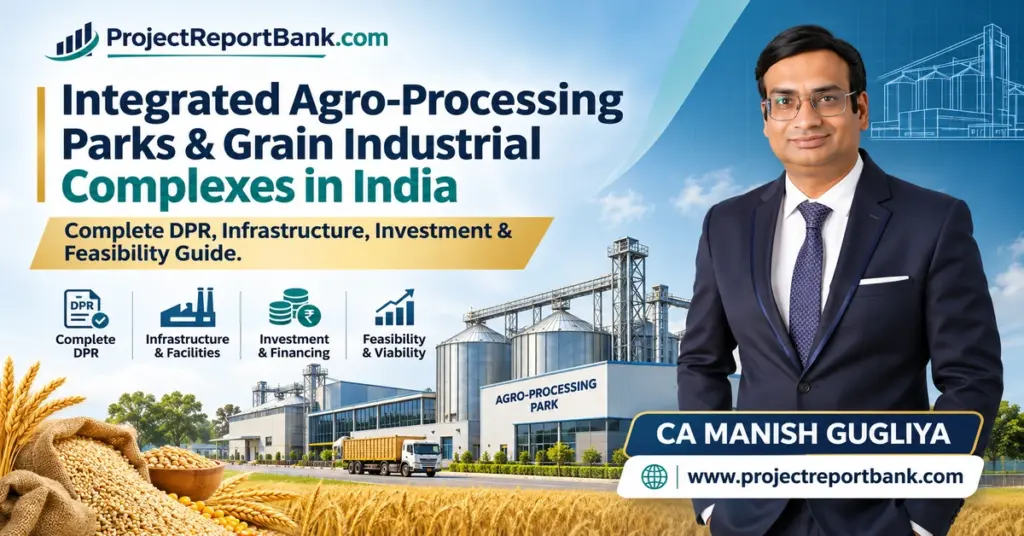
Integrated agro-processing parks in India are planned industrial estates that bring together grain processing, food manufacturing, warehousing, and logistics under shared infrastructure. These parks serve smallholder farmers, FPOs, cooperatives, and large processors by connecting rural transformation centres and collection centres with centralised agro-processing hubs. This article is a practical DPR, feasibility, and investment guide prepared from the professional advisory perspective of Project Report Bank.
- Modern integrated agro industrial parks combine common infrastructure (internal roads, power distribution, water supply, effluent treatment, bulk grain storage, quality labs, and common packaging facilities) with multiple tenant units to unlock value addition across the agricultural value chain.
- Developers planning such parks typically need ₹5 crore to ₹100+ crore, structured as a mix of promoter equity and term loans, supported by a bankable DPR, CMA Data, and detailed financial modelling that includes DSCR and IRR analysis.
- Commercial success depends on the right land and location, a compatible industry mix with committed anchor tenants, phased development aligned with occupancy, and strong linkages with farmers, FPOs, and rural transformation centres for raw material continuity.
- Selection of park type (grain industrial complex, multi-tenant food park, agro-processing cluster) should match catchment crops, regional market demand, state-level policy incentives, and investor risk appetite.
- Project Report Bank, led by CA Manish Gugliya, FCA, DISA (ICAI), provides customised DPRs, feasibility studies, financial projections, and project finance advisory for integrated agro processing parks, grain industrial complexes, and multi-tenant food park projects across India.
Introduction: Integrated Agro-Processing Parks in India
Agriculture employs 58% of India’s population, yet a large share of farm produce loses value between harvest and consumption due to inadequate processing, storage, and logistics infrastructure. India’s food processing industry is valued at $260 billion, and the food processing sector is growing at over 15% annually. Integrated agro-processing parks represent a structured response to this gap: planned industrial estates where multiple food and grain processing units share common enabling infrastructure, utilities, and services under a single development framework.
These parks typically adopt a hub-and-spoke model. A central agro-processing hub or food park houses processing units, warehouses, silos, labs, and packaging facilities. Connected to this hub are collection centres that grade and sort produce from surrounding farms, and rural transformation centres that aggregate volumes, provide targeted training, and ensure local produce meets quality standards before dispatch to the processing hub. This architecture improves agricultural productivity, reduces post-harvest losses, and creates employment opportunities at regional and village level.
Integrated agro-processing parks in India take several forms: integrated agro industrial parks handling grain at scale, multi-tenant agro-food processing parks combining diverse food sectors, and scheme-linked agro-processing clusters. Each differs from a standalone processing plant in one fundamental respect: shared infrastructure reduces per-unit capital cost, and co-location of complementary industries creates value chain efficiencies that isolated facilities cannot replicate.
This article, authored by CA Manish Gugliya of Project Report Bank, covers DPR structure, project cost, infrastructure planning, revenue model, DSCR and IRR analysis, bank finance, government schemes, and feasibility study aspects for projects typically above ₹5 crore.
What Is an Integrated Agro-Processing Park?
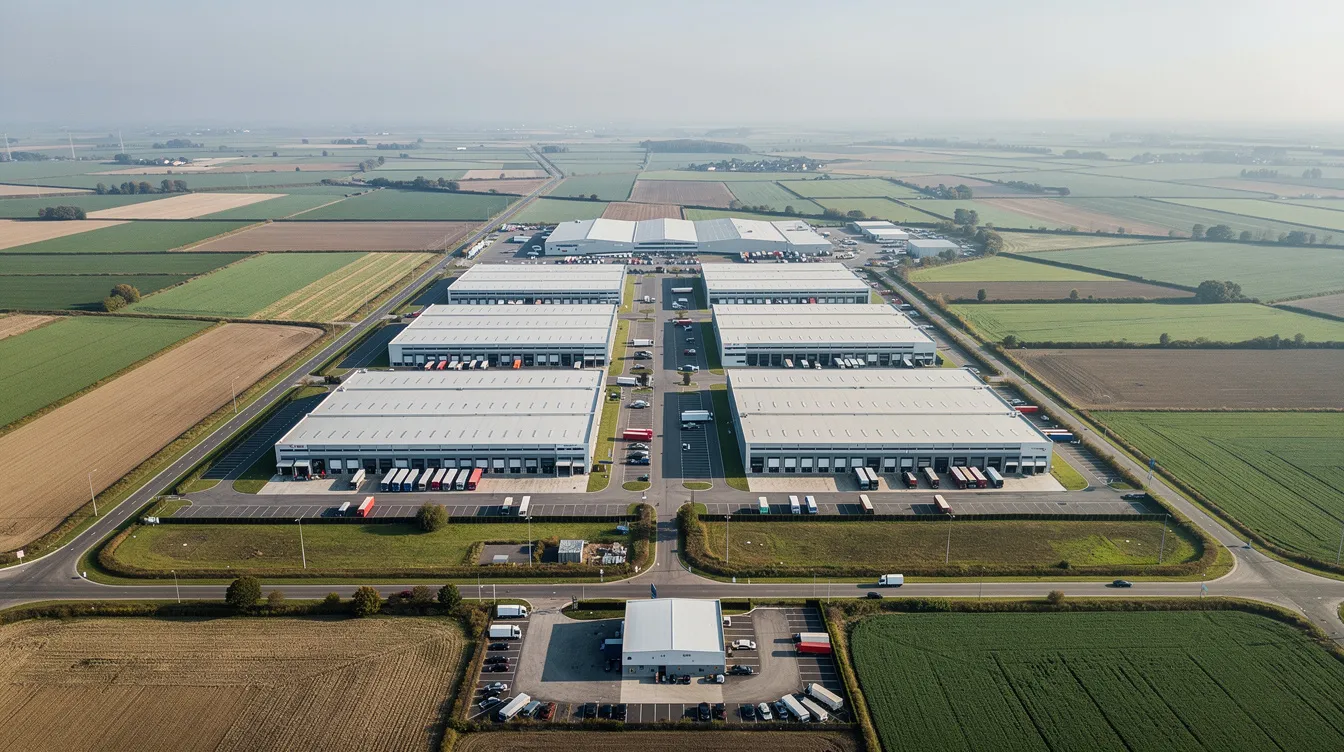
An integrated agro-processing park is a planned industrial estate dedicated to agro and food processing industries, built around shared infrastructure, common utilities, and integrated value chains that connect farm-level raw materials to finished consumer products.
The park developer or SPV creates the foundational layer: land development, internal roads, power distribution network and substation, water supply and treatment, effluent treatment, administrative buildings, quality-testing laboratories, bulk grain storage silos, warehouses, and common packaging facilities. Tenant units (rice mills, flour mills, dal mills, solvent extraction plants, cold storages, feed plants, packaging units) install their own plant and machinery within allotted plots.
This creates a clear division:
- The developer or SPV owns the land, infrastructure, and common facilities, and earns revenue through lease rentals, utility charges, and service fees.
- Individual processing-unit operators (the tenants) run their own operations, purchase raw materials, manufacture products, and sell to their own markets.
Parks can be multi-tenant or anchor-led. Multi-tenant parks host 15 to 50 independent units across diverse food sectors. Anchor-led parks revolve around one to three large processors whose committed capacity attracts smaller units, aggregators, packaging suppliers, and logistics providers. Integrated agro-food parks enhance agricultural productivity and rural development by bringing processing capacity close to production areas, reducing transit losses, and creating regional employment.
Agro-processing hubs within these parks transform raw products into higher-value goods: paddy becomes rice, bran, and husk-based fuel; wheat becomes flour, semolina, and bran; oilseeds become refined oil, cake, and lecithin. This industrial ecosystem distinguishes integrated parks from isolated factories. Agro-food parks facilitate knowledge transfer among farmers and processors, strengthening the link between production and market.
For project-specific DPR guidance, the Integrated Grain Industrial Complex Project Report and Multi-Tenant Agro Food Processing Park Project Report pages offer detailed treatment of each model.
Major Types of Agro-Processing Parks and Grain Industrial Complexes
Developers in India commonly consider six broad typologies, each with a different industry mix, infrastructure profile, and investment range.
Integrated grain industrial complexes handle grain cleaning, drying, milling, storage, and by-product utilisation at scale. These estates typically cover 50 to 150+ acres and involve investments of ₹50 crore to ₹100+ crore. Mega food parks are located in Tumkur, Fazilka, and Nalbari; Gujarat Mega Food Park focuses on food processing infrastructure. Mega food parks enhance agricultural value chains in India by concentrating processing capacity, warehousing, and logistics.
Multi-tenant agro-food processing parks host a heterogeneous mix: units processing pulses, spices, ready-to-eat products, dairy, bakery items, snacks, fruits, and vegetables. These parks suit regions with diverse crop bases and target both domestic consumers and export markets.
Agro-processing clusters are often smaller, scheme-driven developments designed in accordance with programs like PMKSY, serving regional crops. Under the APC scheme, at least five processing units with a combined minimum investment of ₹25 crore are mandated, with minimum land of 10 acres.
Grain milling and storage industrial parks focus on rice, wheat, or maize milling alongside silos, warehouses, and logistics. Projects like an integrated rice milling and processing plant could serve as anchor operations within such parks.
Integrated food processing and packaging parks combine processing with advanced packaging, printing, and labelling infrastructure.
Specialised agro-processing estates target a single commodity group: spice parks, oilseed parks, or fruit and vegetable processing estates, often aligned with state-level agricultural strengths.
Selection of park type should align with catchment crops, regional policy incentives, investor risk appetite, and target market demand; these considerations are explored in the feasibility study section below.
Industry Mix, Anchor Tenants and Integrated Value Chains
Bankability and long-term viability depend on the right mix of industries and committed anchor tenants, not just on land and physical infrastructure. A grain industrial complex, for example, might combine grain cleaning and drying, rice or wheat milling, dal mills, edible oil extraction, feed mills, food extrusion (snacks, breakfast cereals), and packaging units. An atta chakki plant or a puffed rice manufacturing unit could function as smaller tenant operations within a larger park.
Anchor tenants are large processors or brands committing to long-term occupancy. They reduce demand risk, attract complementary SMEs and logistics providers, and provide confidence to lenders during DSCR evaluation. Without anchors, occupancy projections in a DPR become speculative.
Agro-processing hubs transform raw agricultural products into higher-value goods, creating by-product flows that form the basis of industrial symbiosis. Bran and husk from milling move to feed plants or bioenergy units. Packaging units and labs serve multiple tenants. Warehousing and grain aggregation centres link back to rural transformation centres and collection centres.
Tenant selection should also consider compatibility: environmental categories, utility loads (power, steam, water), and traffic patterns must align to avoid regulatory or infrastructure conflicts. The detailed guide on industry mix and value chain integration covers these design decisions.
Illustrative tenant mix for a 50-acre grain complex in central India: maize and soybean cleaning, maize starch unit, soy meal processing, oil extraction, cattle feed plant, and biomass boiler unit, with shared warehousing and a common quality lab.
Land Requirement, Location Selection and Industrial Master Planning
Integrated agro-processing parks are location-sensitive assets. Poorly chosen land or weak master planning can make even well-financed projects commercially weak.
Typical park sizes vary based on typology:
| Parameter | Agro-Processing Cluster | Multi-Tenant Food Park | Grain Industrial Complex |
|---|---|---|---|
| Indicative land area | 10 to 25 acres | 25 to 75 acres | 50 to 150+ acres |
| Processing plots (approx.) | 50 to 60% | 45 to 55% | 40 to 50% |
| Roads, utilities, green belt | 25 to 30% | 25 to 35% | 30 to 35% |
| Common facilities | 10 to 15% | 15 to 20% | 15 to 25% |
These are planning illustrations, not statutory norms. Minimum land requirement for agro-processing clusters is usually 10 acres under the APC scheme framework.
Land must be classified or convertible to industrial use under the relevant state’s land-use policy. Proximity to APMC mandis, agricultural markets, rural transformation centres, and highways or railheads affects logistics cost and raw material access. Agricultural catchment analysis should map major crops, seasonal patterns, procurement radius, presence of FPOs and cooperatives, and competing buyers in the region.
Master planning should segregate zones for processing units, warehouses, silos, utilities, green belts, truck parking, and worker amenities. Internal road hierarchy, truck turning radii, fire tender access, and separation of raw and finished goods traffic are design essentials that influence daily operations and tenant satisfaction.
For a detailed treatment of land selection criteria and master planning principles, refer to the agro processing park land requirement guide.
Common Infrastructure and Industrial Utilities
Shared infrastructure is what differentiates integrated agro industrial parks from standalone units. It directly affects CAPEX per tenant, operating cost per square foot, and long-term tenant retention.
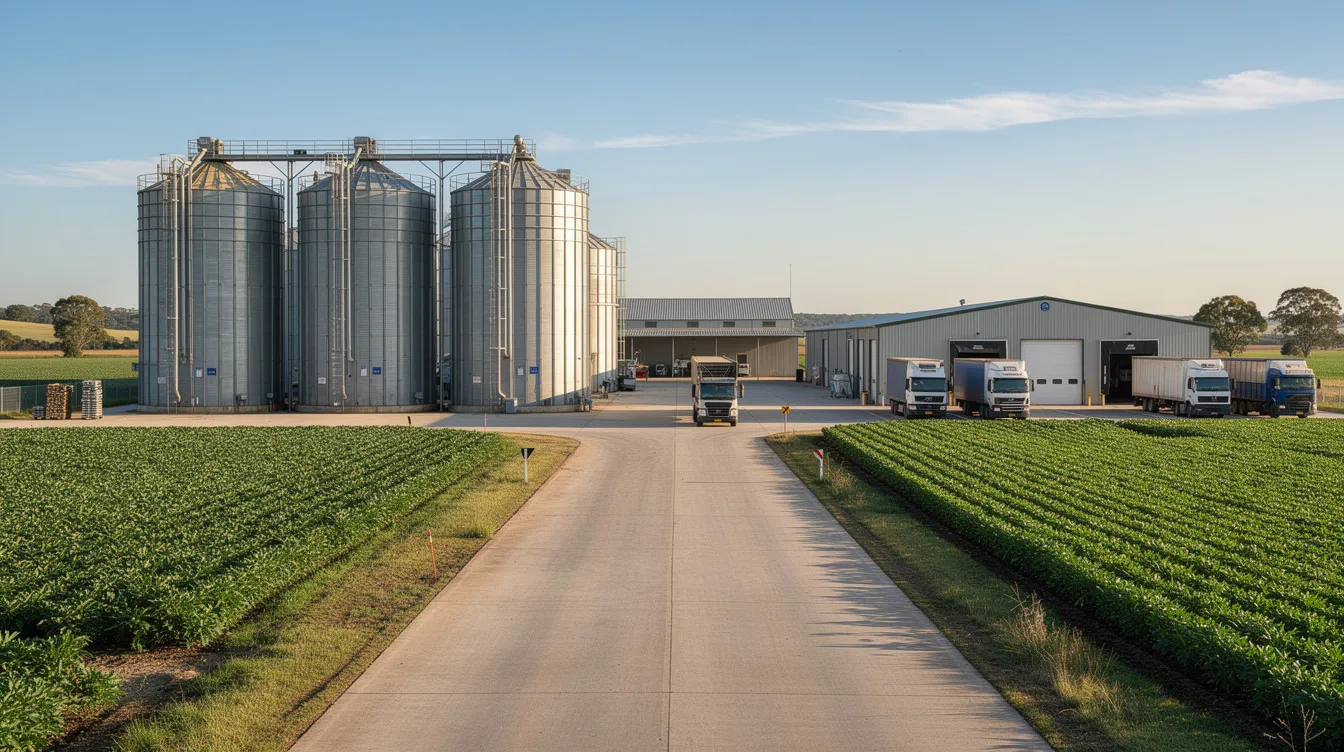
A common infrastructure layout includes storage, testing laboratories, and utilities for processing units. Agro-processing parks require heavy foundational infrastructure for sustainability. The following components are typical:
- Power distribution network, dedicated substation, and DG backup
- Water sourcing (borewells or surface), treatment plant, storage tanks, and distribution pipelines
- Central boiler or steam generation system where technically feasible for multiple tenants requiring process steam (e.g., rice parboiling, oil extraction, milk processing)
- Effluent treatment plant (ETP), sewage treatment plant (STP), and wastewater recycling
- Stormwater drainage and rainwater harvesting
- Internal roads (9 to 18 m width for main corridors), street lighting, weighbridge, truck parking, and security gate complex
- Warehousing, cold storage, bulk grain storage silos, and material handling systems
- Central quality-testing and food safety laboratories
- Common packaging facilities and potentially a shared incubation or pilot plant area
Sizing of utilities (transformer capacity, boiler output, ETP throughput) should match the planned phase and industry mix. Overbuilding utilities in Phase I adds to interest during construction and inflates early-year costs. Modular, expandable designs reduce this risk.
Robust common utilities increase developer investment but reduce each tenant’s individual setup cost and compliance burden, improving occupancy over time. Utility planning should account for pollution control board standards, fire safety codes, and FSSAI hygiene requirements for food processing tenants.
The specialised articles on common utilities and common packaging facilities cover equipment specifications, capacity sizing, and maintenance considerations in detail.
Agro-Processing Park Setup Cost and Capital Investment
Project costs include land acquisition, civil works, plant and machinery, and working capital. The exact figures depend on park size, infrastructure scope, land price, and phasing. The numbers below are illustrative for DPR-structuring purposes, not market quotations.
Illustrative cost breakdown for a hypothetical 50-acre multi-tenant agro-processing park (assumed total developer-level project cost: ₹80 crore)
| Cost Head | Approx. Share (%) | Illustrative Amount (₹ crore) |
|---|---|---|
| Land acquisition or long-term lease | 12 to 15% | 10 to 12 |
| Site development (boundary, grading, roads) | 8 to 10% | 6 to 8 |
| Civil construction (admin, common facilities, basic sheds) | 18 to 22% | 15 to 18 |
| Utilities (power, water, ETP/STP, boiler, pipelines) | 15 to 18% | 12 to 14 |
| Common infrastructure (warehouses, silos, labs, cold storage, packaging) | 18 to 22% | 15 to 18 |
| Engineering, design, PMC fees | 3 to 4% | 2.5 to 3 |
| Statutory approvals and pre-operative expenses | 2 to 3% | 1.5 to 2.5 |
| Interest during construction (IDC) | 5 to 7% | 4 to 5.5 |
| Contingencies | 3 to 5% | 2.5 to 4 |
| Initial working capital for SPV operations | 3 to 5% | 2.5 to 4 |
Tenant-level investment (processing machinery, process buildings, tenant working capital) is separate from the developer SPV’s project cost. A DPR may summarise aggregate tenant investment for ecosystem sizing, but the developer’s bankable project cost and means of finance address only park-level CAPEX.
Land costs vary by state: Gujarat private industrial park land ranges from ₹3,500 to ₹7,000 per sq m; Maharashtra MIDC land from ₹5,000 to ₹12,000 per sq m; UP and MP are lower. Construction costs for light industrial sheds run ₹2,800 to ₹3,100 per sq ft; heavy industrial buildings ₹4,300 to ₹5,000 per sq ft in Tier-1 regions.
The agro processing park setup cost article provides deeper analysis of line-item costing and cost optimisation strategies.
Developers planning projects in the ₹5 crore to ₹100+ crore range who need a customised cost estimation, DPR, and project finance financial model can contact Project Report Bank for a professional engagement tailored to their specific land, location, and industry mix.
Revenue Model, Lease Rentals and Project Economics
An agro-processing park is a rental and services-based infrastructure business. Clarity on revenue streams is essential in any grain industrial complex project report or park DPR.
Principal revenue sources:
- Lease premium or upfront plot charges (one-time or staggered over 2 to 3 years)
- Recurring ground rent or lease rentals for industrial plots
- Rentals for developer-built sheds, warehouses, and cold stores
- Infrastructure maintenance charges and common area maintenance (CAM)
- Utility charges (power distribution margins, water, steam, effluent treatment)
- Usage charges for common packaging facilities and labs
- Income from third-party warehousing and logistics services
- Ancillary revenues (canteen concessions, training centre usage)
One-time receipts (plot sale or long lease premium) improve early cash flow but do not support long-term DSCR. Recurring operational revenues from rents, utilities, and services provide the foundation for park valuation and debt servicing capacity.
Occupancy ramp-up is the single largest variable in revenue forecasting. A typical assumption: Year 1 occupancy at 30%, Year 2 at 50%, Year 3 at 70 to 80%, stabilising by Year 5. Lease tenure, annual escalation clauses, and tenant credit quality all influence project economics. The agro processing park revenue model article covers tariff structuring, rental-versus-sale-led parks, and scenario analysis.
Financial Projections, DSCR, IRR and Investment Returns
Financial modelling for integrated agro-processing parks must account for long gestation, phased occupancy, and high infrastructure CAPEX. Financial modeling includes calculating Internal Rate of Return (IRR) and Debt Service Coverage Ratio (DSCR) over a 10 to 15 year projection horizon.
Core financial projection structure:
- Development phasing and occupancy schedule (Phase I, II, III)
- Revenue build-up from rents, utilities, and services
- Operating expenditure: maintenance, staff, utilities procurement, admin, and marketing
- EBITDA, PAT, and cash flows
- Debt servicing schedule with moratorium during construction
Illustrative DSCR scenario for a ₹80 crore park (65:35 debt-equity, 10% interest, 12-year repayment after 2-year construction)
| Scenario | Year 3 DSCR | Year 5 DSCR | Avg DSCR (Yr 3 to 12) |
|---|---|---|---|
| Base case (70% occupancy by Year 3) | 1.15 | 1.45 | 1.35 |
| Optimistic (80% by Year 3) | 1.30 | 1.60 | 1.50 |
| Delayed occupancy (50% by Year 3) | 0.90 | 1.25 | 1.15 |
Under MoFPI’s APC scheme scoring, projects with IRR above 20% earn full marks; DSCR above 2.5 receives full score. Banks underwriting agro-processing projects typically require a minimum average DSCR of 1.25 to 1.35x.
Sensitivity analysis testing occupancy shortfalls, rental compression, utility cost increases, and construction cost overruns should be part of every integrated agro processing park feasibility study and bank or investor due diligence. The financial projections article details full model construction.
Developers and institutional investors seeking customised financial modelling, DSCR, and IRR analysis can engage Project Report Bank for professional project finance advisory.
Bank Loan DPR, CMA Data and Project Finance
A Detailed Project Report (DPR) comprehensively covers technical and financial dimensions. For a park developer seeking bank finance, the DPR should contain:
- Promoter background and SPV structure
- Project description, objectives, and link to farmers, FPOs, and rural transformation centres
- Land and location details with legal title status
- Master plan and infrastructure design summary
- Detailed project cost and means of finance
- Implementation schedule and phasing
- Revenue model and 10 to 15 year financial projections
- DSCR, IRR, and sensitivity analysis
- Risk factors and mitigation measures
CMA Data for bank loans aligns with the lender’s format: projected balance sheet, profit and loss, fund flow, ratio analysis, and loan repayment schedule. Developer SPV CMA Data is distinct from individual tenant CMA Data; the developer’s projections focus on rental income, utility margins, and infrastructure OPEX, while tenants’ CMA Data addresses commodity procurement, manufacturing margins, and inventory cycles.
Typical debt-equity structures range from 65:35 to 70:30 for park developers, with interest rates in the 9 to 12% range for project finance term loans in agro-processing. Banks focus on minimum DSCR thresholds, security and collateral coverage (fixed assets coverage ratio of 1.25x or above), and promoter track record. Repayment periods of up to 15 years are available for food and agro-processing infrastructure.
The bank loan DPR and CMA Data article addresses preparation requirements for lender discussions.
Government Schemes, Subsidies and Industrial Incentives
Financial assistance may be available through government schemes such as MoFPI subsidies. Policy support has been a driver for agro-processing parks and clusters in India, but schemes and incentives change over budget cycles. Promoters must verify current status, eligibility, and guidelines from MoFPI and concerned state departments.
The PMKSY umbrella scheme was approved with an allocation of ₹4,600 crore. The Agro-Processing Cluster component provides capital grants on eligible project costs, subject to caps (up to ₹10 crore per cluster in the past cycle). The Mega Food Park scheme, which expected collective park investment of around ₹250 crore with 25 to 30 processing units over 50 to 100 acres, was discontinued for new approvals from April 2021, though ongoing projects continued to receive support.
Promoters should confirm the current application window and eligibility criteria directly with MoFPI. The PMKSY Agro Processing Cluster Scheme and state government incentives articles provide context on central and state-level aid.
In DPR financial projections, incentives should be treated conservatively. Projects should remain viable even if certain incentives are delayed or not sanctioned. Timing mismatches between CAPEX outflow and subsidy receipt can stress early-year cash flows and DSCR.
Statutory Approvals, Environmental Compliance and Licensing
Regulatory compliance is multi-layered and varies by state, park location, industry mix, and project size. No single checklist fits all integrated agro processing parks in India.
Statutory approvals include licenses from local authorities and environmental clearances. The agro-processing project must comply with various product safety and quality standards. Environmental Impact Assessments (EIA) are required for agro-processing parks where triggered by applicable regulations.
Broad categories of approvals include:
- Land-use conversion or confirmation of industrial classification
- Layout and building plan approvals from the local development authority or industrial development corporation
- Consent to Establish and Consent to Operate from State Pollution Control Board
- Fire safety NOC and factory inspectorate approvals where applicable
- Water abstraction permissions for groundwater usage
- FSSAI licensing for food processing tenants and lab operations
Some approvals fall at developer level (land, park-wide ETP/STP, utilities), while others are tenant-specific (FSSAI, unit-level pollution consents, factory licence). Licence timelines and compliance costs should be incorporated into the project schedule and pre-operative expenses in the DPR. The statutory approvals article provides a more detailed guide for promoters.
PPP, SPV and Joint Venture Development Models
Many integrated agro industrial parks are developed either by private developers on their own land or through Special Purpose Vehicles, sometimes in partnership with state agencies, APMCs, or large corporate anchors. Public-private partnerships improve supply chain efficiency in agro-food parks and distribute development risk.
Three main models:
- Pure private developer model: Single promoter group holds full ownership and bears all risk, retaining full control over tenant selection, pricing, and operations.
- PPP model: Joint development with state agencies, PSUs, or marketing boards. Land and certain infrastructure may be contributed by the government entity; the private partner manages construction and operations.
- Multi-shareholder SPV or joint venture: Private-private or public-private, with anchor tenants or private investors holding equity alongside the developer.
Governance structures (board composition, shareholder agreements), equity participation, CAPEX and OPEX sharing, and contractual risk allocation need to be documented before investments are committed. The PPP, SPV and joint venture models article covers legal and commercial structuring for these options.
Promoters should plan exit and dilution strategies early (bringing in an infrastructure fund or strategic investor at a later stage) and ensure that shareholder agreements and the DPR allow for such possibilities.
Grain Procurement, Farmer and FPO Linkages and Supply Chain Planning
Unlike generic industrial parks, integrated agro-processing parks depend on robust agricultural supply chains and relationships with smallholder farmers, FPOs, cooperatives, and aggregators. Supply chain assessments are vital for ensuring continuity of raw material feedstock.
Procurement planning involves identifying key crops (rice, wheat, maize, pulses, oilseeds, horticultural produce such as fruits and vegetables), mapping seasonal availability, and establishing a procurement radius. The presence of Farmer Producer Organisations and cooperatives in the catchment area strengthens raw materials supply continuity and pricing stability.
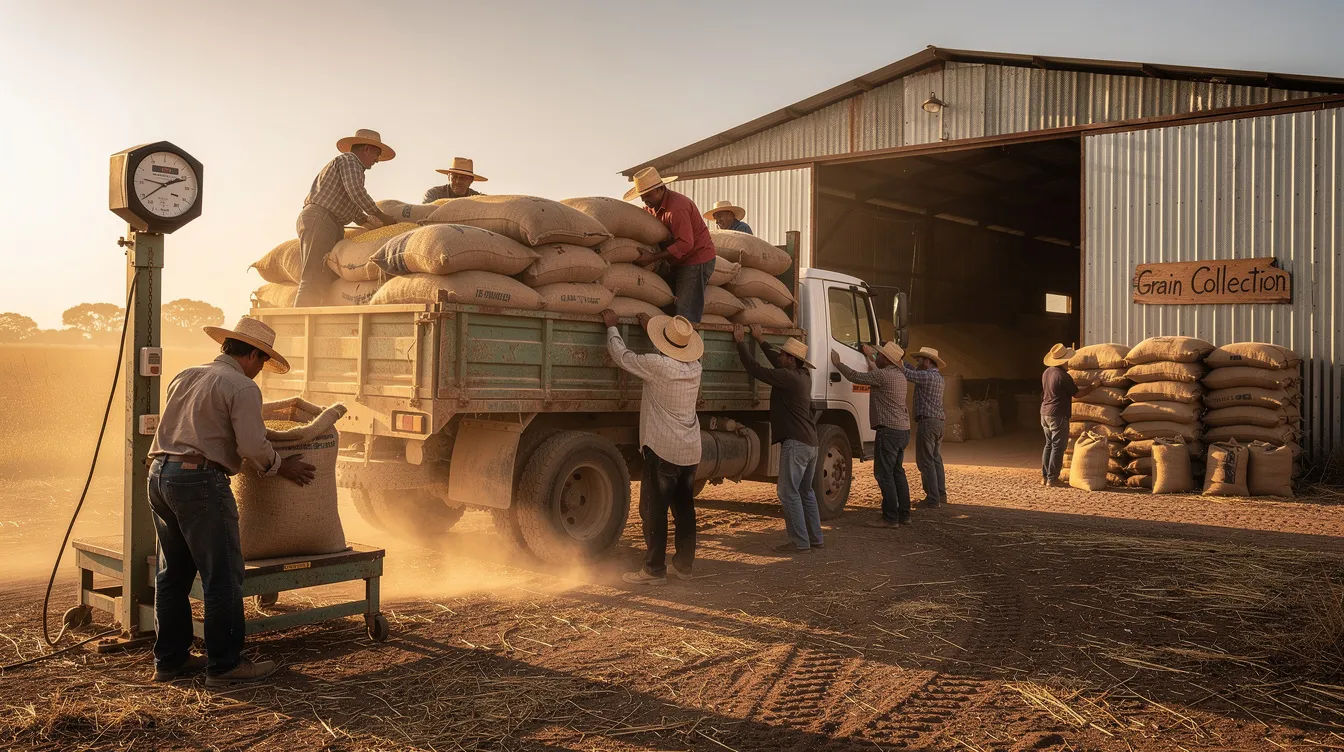
Collection centres grade and sort produce from smallholder farmers. Rural transformation centres ensure local produce meets quality standards and serve as local hubs for capacity building, extension workers’ support, and aggregation. Contract farming or long-term procurement relationships, where permitted, add predictability for both farmers and processors.
Inbound grain transport, grading, drying, silo or warehouse storage, inventory management, and dispatch to park units form the logistics backbone. These facilities can also serve as rural transformation centres, bringing knowledge and access to smallholders who otherwise lack connections to industrial markets.
The grain aggregation and FPO linkages article details models of FPO engagement, pricing strategies, and logistics frameworks.
Industrial Symbiosis and Waste-to-Value Opportunities
Industrial symbiosis in agro-processing parks means using by-products, energy, and water streams from one tenant as inputs for another, improving resource efficiency and park-level profitability.
Typical waste-to-value and symbiosis opportunities:
- Rice husk and other biomass as boiler fuel or input for biomass power plants
- Bran, broken grains, and oilseed cake as raw materials for animal feed, fish feed, and pet food
- Organic sludge from ETP/STP for composting or biogas generation
- Shared water reuse systems for non-contact applications
- Waste heat from boilers or dryers redirected to adjacent processes
Careful tenant mix planning at DPR stage (feed mills, biomass power, composting operations close to grain mills) converts waste-disposal liabilities into revenue streams and supports sustainability goals. India’s first integrated rice and biomass-based bioethanol refinery in Odisha, producing 100 kilolitres per day using broken rice and agricultural residue, illustrates the innovation potential when grain processing waste is valorised systematically.
Regulatory compliance (emission norms, waste handling rules) must guide all waste-to-value initiatives. The industrial symbiosis article covers symbiotic flows, layouts, and commercial structuring.
Phased Development and Infrastructure Expansion Strategy
Most successful integrated agro processing parks in India follow a phased strategy aligned with demand, anchor-tenant commitments, and financing capacity, rather than building out fully on Day 1.
- Phase I: Core infrastructure (access roads, power, water, limited warehouses, basic utilities) plus early anchor tenants and essential common facilities. This phase should be designed to achieve operational viability and begin generating lease revenue.
- Phase II: Expansion of plots, warehouses, silos, cold storage, and enhanced utilities after achieving a committed occupancy level, often 60 to 70%.
- Phase III: Value-added common facilities (advanced packaging houses, R&D centres, training academies, waste-to-value plants) and densification of remaining land.
Distributing CAPEX across phases manages debt drawdown, controls interest during construction, and reduces DSCR risk in the event of slower-than-expected occupancy. DPRs and feasibility studies prepared by Project Report Bank build financial projections in phase-wise modules, including scenarios for delayed or accelerated phase triggers. The phased development article covers layouts and financial implications of multi-phase strategies.
Integrated Agro Processing Park Feasibility Study
A feasibility study is needed to ensure commercial viability when setting up parks. It evaluates location, technical concept, market demand, regulatory framework, financial viability, and implementation risks before capital is committed.
Core components of an integrated agro processing park feasibility study:
- Market and demand assessment: industry gap analysis, competitor parks, and tenant appetite. Demand-supply gap analysis helps assess market potential for processed commodities. Market assessment evaluates domestic and export demand for processed outputs.
- Location and catchment feasibility: raw materials availability, farmer groups, logistics connectivity, and policy support
- Technical feasibility: park concept, industry mix, and infrastructure options
- Financial feasibility: CAPEX, OPEX, revenue model, DSCR, IRR
- Regulatory feasibility: land-use compliance, environmental norms, zoning
- Risk analysis and mitigation recommendations
Investor and lender due-diligence checklist:
| Item | What to Verify |
|---|---|
| Land title | Clear, unencumbered, industrial use confirmed |
| DPR | Realistic assumptions, consistent projections |
| Environmental clearance | Consent to Establish obtained or in progress |
| Anchor tenant MoUs | Binding commitments or letters of intent |
| DSCR and IRR | Meet lender thresholds (avg DSCR above 1.25x) |
| Promoter track record | Prior infrastructure or agri-sector experience |
| Compliance | Lending norms, collateral coverage (FACR above 1.25x) |
Project Report Bank recommends a staged approach for projects of ₹25 crore and above: preliminary feasibility, then detailed feasibility, then full DPR and bank finance documentation. The feasibility study article offers in-depth guidance.
Common Project Risks and Mitigation Strategies
Well-conceived integrated agro industrial parks still face substantial risks. DPRs should address these openly rather than assuming best-case scenarios.
| Risk | Mitigation |
|---|---|
| Land acquisition issues, title disputes, or conversion delays | Thorough legal due diligence; preference for clear-title industrial land |
| Lower-than-expected occupancy or tenant defaults | Pre-commitment from anchor tenants before construction; phased development |
| CAPEX escalation and construction delays | Fixed-price EPC contracts where feasible; 5 to 10% contingency provision |
| Power or water shortages | Backup DG sets; dedicated borewells with permit; modular utility design |
| Environmental compliance violations | Proactive pollution control; ETP designed with 20 to 30% buffer capacity |
| Over-leverage leading to DSCR stress | Conservative debt-equity ratio; restrict early-phase borrowing |
| Policy or subsidy uncertainty | Do not build financial viability solely on grant receipt; maintain base-case viability without subsidy |
Sensitivity analysis, discussed earlier, provides the numerical framework to quantify these risks. Project Report Bank’s feasibility and DPR work routinely includes practical, experience-based risk identification specific to each project’s location and model.
Step-by-Step Roadmap for Establishing an Agro-Processing Park in India
- Concept formulation: Define park type, target sector (grain, horticulture, milk, mixed), scale, and development goals.
- Preliminary catchment and market study: Map crops, potential tenants, competing parks, logistics access.
- Land identification and due diligence: Verify title, zoning, conversion requirements, proximity to raw material sources.
- Engage technical and financial advisors: Master planners, EPC consultants, and project finance professionals such as Project Report Bank for DPR and financial modelling.
- Detailed feasibility study: Location, technical, financial, and regulatory feasibility; select development model (private, PPP, SPV/JV).
- DPR preparation and financial modelling: Full project cost, means of finance, revenue model, DSCR, IRR, sensitivity analysis.
- Bank and investor discussions: Present DPR and CMA Data; evaluate government schemes and state incentives; finalise financing.
- Statutory approvals and clearances: Land-use, building plan, environment, fire safety, water permissions.
- Tendering, EPC contracting, and phased construction: Phase I infrastructure, utilities, and anchor-tenant plots.
- Tenant onboarding and operational ramp-up: Lease and utility agreements, commissioning, quality control systems, and supply chain activation.
Farmer linkage and rural transformation centre planning should be integrated early in the roadmap, not treated as an afterthought, especially for projects targeting schemes aligned with smallholders and FPOs.
Frequently Asked Questions
What is the typical time frame to develop an integrated agro-processing park from land acquisition to commercial operations?
For a mid-sized park (25 to 50 acres), expect 18 to 30 months from land possession to Phase I commissioning, assuming approvals proceed without major delays. Construction of core infrastructure (roads, power, water, ETP, basic warehouses) typically takes 12 to 18 months. Tenant onboarding can begin during late-stage construction. Larger grain industrial complexes covering 100+ acres may require 30 to 42 months for full Phase I development. Regulatory approvals, particularly land-use conversion and environmental consents, are the most common source of delay.
Can a smaller group of entrepreneurs develop a mini agro-processing park of 10 to 15 acres?
Yes. The APC scheme under MoFPI has supported clusters as small as 10 acres with a minimum of five processing units and ₹25 crore combined investment. Smaller parks work well when the promoter group includes at least one anchor processor with established operations. Financial viability depends on achieving sufficient occupancy to cover common infrastructure maintenance and debt service. Project Report Bank can assess whether a smaller park meets bankability thresholds through customised financial modelling.
How do rural transformation centres and collection centres connect with an integrated agro industrial park?
Rural transformation centres operate in the agricultural catchment area, serving as aggregation and quality-assurance points where smallholder farmers deliver produce. Collection centres handle initial grading, sorting, and weighing. These centres feed raw materials to the central agro-processing hub through scheduled logistics. The park developer or SPV may operate these centres directly or work through FPOs and cooperatives. The information flow (crop quality data, volumes, pricing) from these centres also supports research-based procurement planning at the park level.
What kind of professional team is needed to plan and execute a grain industrial complex project?
A typical project requires a master planner or industrial architect, EPC or civil contractor, utility design engineers, a Chartered Accountant or project finance consultant for DPR and financial modelling, a legal advisor for land and SPV structuring, and agricultural or food technology consultants for industry mix and process design. For bank finance, CMA Data and bankable project reports need to be prepared by professionals with experience in lender requirements. Project Report Bank brings together the financial advisory and DPR work for such projects under the guidance of CA Manish Gugliya.
How early should potential tenants and anchor processors be onboarded during project planning?
Anchor tenant discussions should begin during or before the detailed feasibility stage, well before construction. Binding MoUs or letters of intent from anchors improve bankability, reduce occupancy risk, and allow infrastructure sizing to match actual demand. Many DPR projections that assume rapid occupancy fail because tenant engagement was deferred to post-construction. A pre-committed anchor covering 30 to 40% of park capacity provides a solid base for both revenue projections and lender confidence.
Professional DPR, Feasibility and Project Finance Advisory by Project Report Bank
Project Report Bank is a specialised DPR, feasibility, and project finance advisory platform led by CA Manish Gugliya, FCA, DISA (ICAI), with more than 20 years of professional experience in Indian project finance and industrial advisory.
Core services for integrated agro-processing parks, grain industrial complexes, and food park projects:
- Customised Detailed Project Reports (DPR) for park developers and SPVs
- Bank finance DPR and CMA Data preparation for term loans and working capital
- Financial projections and financial modelling, including DSCR, IRR, NPV, and sensitivity analysis
- Integrated agro processing park feasibility studies and commercial viability assessment
- Advisory on means of finance, loan structuring, promoter contribution planning, and DSCR optimisation
- Investor-ready DPRs, business plans, and pitch decks for equity investors or strategic partners
Each DPR is customised based on specific land, location, industry mix, policy incentives, and promoter objectives. Project Report Bank does not sell generic templates.
Serious promoters, SPVs, agro-industrial developers, and institutional investors planning projects in the ₹5 crore to ₹100+ crore range can initiate contact through the official website or WhatsApp enquiry for confidential discussions.
Project Report Bank helps structure realistic, bank-ready projects but does not guarantee loan sanctions, subsidies, or specific investment returns. Outcomes depend on project merits, lender policies, and regulatory approvals.