An agro processing park is not a single factory. It is a multi-tenant infrastructure estate with shared utilities, common processing facilities, warehouses, cold chains and logistics – designed to transform raw agricultural produce into higher-value goods at scale. Financing such a project requires a fundamentally different approach from financing an individual food processing unit.
Banks and term-lending institutions do not appraise agro processing parks as simple manufacturing proposals. They evaluate them as infrastructure projects with long implementation timelines, phased tenant occupancy, multiple revenue streams and complex risk profiles. A standard MSME project report – however well prepared – cannot address the questions a credit officer will ask about a ₹15 crore or ₹50 crore multi-tenant agro processing development.
This article explains, in practical terms, how an agro processing park bank loan DPR should be structured, what CMA Data preparation involves for such projects, how project finance is appraised by lenders, and where proposals commonly fail. The objective is to help serious project promoters understand what it takes to present a lender-ready investment case.
Key Takeaways
- An agro processing park bank loan DPR must comprehensively cover land title, infrastructure planning, tenant mix, revenue model, project cost, means of finance, DSCR and risk analysis – all presented in a format that a bank credit officer can directly use for appraisal.
- Agro processing park project finance differs from single-unit agro processing loans because banks appraise long implementation timelines, phased occupancy assumptions, multi-tenant cash flows and infrastructure-style risk rather than product-market risk alone.
- Professional CMA Data for agro processing parks converts the DPR’s projections into standardised bank formats showing term-loan servicing capacity, working-capital needs and key financial ratios across the projection period.
- Weak tenant-demand evidence, unrealistic lease income assumptions and incomplete DPR documentation are among the most common reasons why agro processing park bank loan proposals above ₹5 crore face delays or outright rejection.
- Project Report Bank, led by CA Manish Gugliya, FCA, DISA (ICAI), prepares customised, bankable DPRs, CMA Data and financial models for agro processing parks, integrated grain industrial complexes and multi-tenant agro food parks across India.
Agro Processing Park Bank Loan DPR – Introduction and Importance
An agro processing park – sometimes referred to as an agro-food park, agro processing cluster, or food processing industrial estate – is a planned development where multiple food and agriculture processing units operate within a common infrastructure framework. These parks typically include shared utilities such as power distribution, water supply, effluent treatment, internal roads and drainage, along with common facilities like cold storage, testing laboratories, packaging centres and warehousing. The concept is designed to enhance agricultural productivity, reduce post-harvest losses and promote rural development by creating backward and forward linkages between farm-gate production and end-market distribution.
Agro-processing projects of this nature require detailed project reports for bank finance. However, the DPR for a park developer or SPV is qualitatively different from a DPR for a single rice mill or dairy plant. The park developer’s business model depends on attracting tenants, collecting lease rentals, operating common facilities and managing infrastructure – not on manufacturing a specific product.
Banks evaluate such projects through a risk-reward lens focusing on cash flow predictability. A bankable DPR must demonstrate technical feasibility and financial sustainability across the entire park lifecycle, not just for a single production line.
Lenders specifically look for:
- Clear and marketable land title with possession, and compliance with land-use requirements
- Infrastructure planning that reflects realistic EPC costs and phased construction timelines
- Anchor-tenant commitments or credible letters of intent from prospective processing units
- Occupancy phasing that accounts for realistic ramp-up rather than immediate full tenancy
- A revenue model combining lease rentals, plot allotments, common utility charges and warehousing income
- Demonstrated ability to service term loans – particularly for exposures above ₹5 crore – through projected cash flows
- Park-level cash flows (lease rentals, plot sales, common utility charges, warehouse rentals) are structurally different from individual agro processing unit cash flows. Banks appraise the SPV or developer entity as an infrastructure business, not as a single factory.
A bankable DPR must establish a credible business case and demonstrate market demand for the proposed park through real market data and feasibility studies. For promoters seeking a comprehensive understanding of how agro processing clusters are conceptualised, the Agro Processing Cluster Project Report provides relevant context, while the Multi-Tenant Agro Food Processing Park Project Report examines the multi-tenant development model in greater detail.
At Project Report Bank, the DPR is positioned as a lender-ready document: clear assumptions, transparent workings, reconciled project cost and means of finance, and sensitivity-tested financial projections – not a generic descriptive document that a bank will return for revision.
Project Financing Models for Agro-Processing Parks
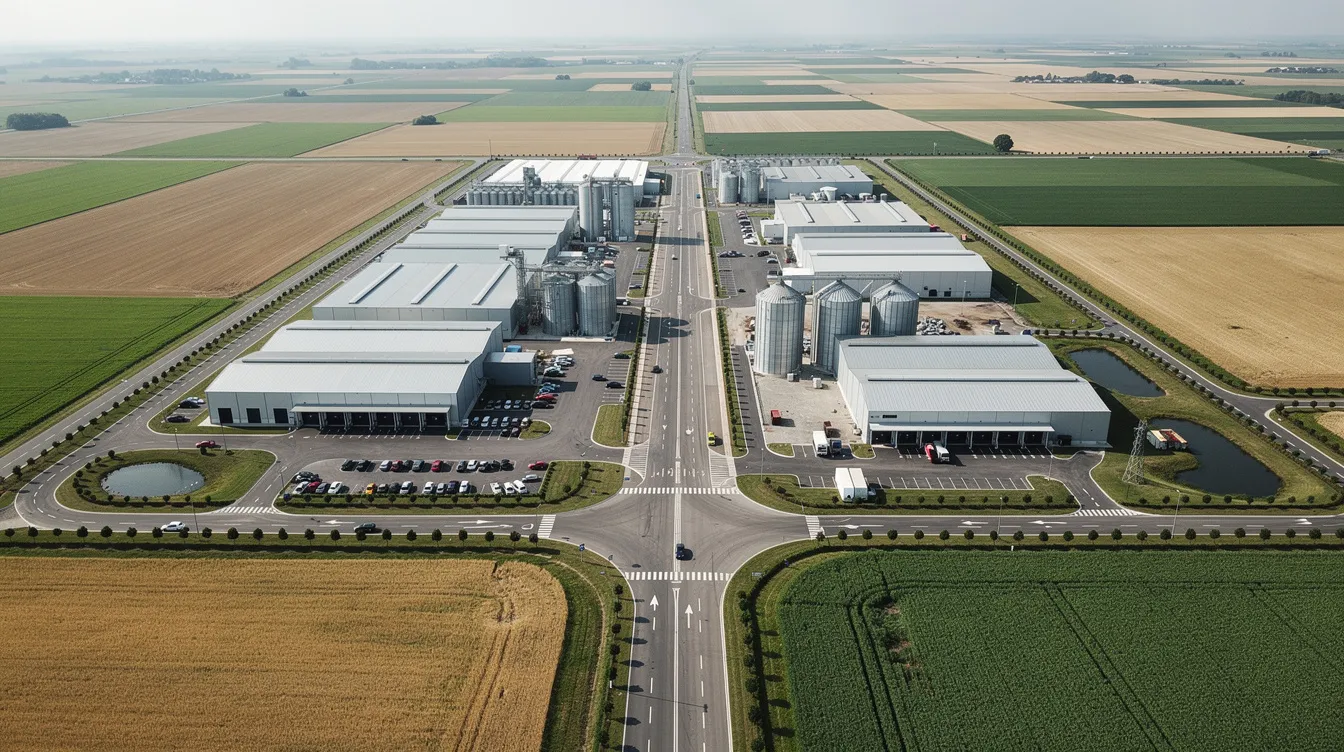
Agro processing parks can be financed under multiple models – developer-owned, SPV-based, lease-only, PPP-supported, or mixed sale-and-lease – and the DPR must clearly state which model the project follows, because each model affects the cash-flow structure, risk allocation and security arrangement differently.
Common financing and ownership models include:
- Privately developed and owned parks: A single promoter or company acquires land, develops infrastructure and leases plots or built-up space to tenants. All project risk and reward rests with the developer.
- SPV with multiple sponsors: Two or more stakeholders form a Special Purpose Vehicle to develop the park. Cash flows are ring-fenced within the SPV. Banks often prefer this structure for large projects because it isolates project risk from the sponsors’ other businesses.
- State or central agency-promoted PPP parks: A government entity provides land or viability-gap funding, while a private developer handles construction, operations and tenant management. Revenue-sharing and risk-allocation are governed by concession agreements.
- Lease-only parks with no outright sale of plots: The developer retains ownership of all land and leases plots or built-up space on long-term agreements. This creates predictable recurring revenue but delays cash recovery.
- Anchor-tenant-led parks: One to three large processing units commit as anchor tenants, providing demand certainty, while remaining plots are allocated to smaller MSME participants. This model significantly strengthens the loan proposal.
There is an important distinction between financing the park developer and financing individual agro processing units operating within the park. The developer’s revenue depends on occupancy, lease collections and utility charges. An individual tenant’s revenue depends on its own production, product markets and raw material costs.
| Parameter | Park Developer Finance | Individual Tenant Unit Finance |
|---|---|---|
| Borrower profile | SPV / developer company | Individual processing company |
| Collateral nature | Park land, infrastructure, common facilities, revenue escrow | Unit machinery, building, promoter guarantee |
| Revenue sources | Lease rentals, plot sales, utility charges, warehousing | Product sales, by-product revenue |
| Typical tenure | 7–15 years (longer, with moratorium) | 5–8 years |
| Risk profile | Occupancy, tenant demand, infrastructure O&M | Raw material, product market, capacity utilisation |
Understanding how industry mix and value chain integration influence these structures is essential for DPR preparation, as is appreciating how integrated grain industrial complex configurations create differentiated project finance requirements.
Bank Loan Eligibility and Documentation for Agro Processing Parks
For agro processing park bank finance, lenders appraise both the promoter (financial strength, credit history, experience in infrastructure or agriculture) and the project (technical and economic feasibility), especially for loans above ₹10–15 crore where detailed credit appraisal is mandatory.
Key eligibility aspects include:
- Adequate promoter contribution – banks expect a meaningful equity stake, and the exact debt-equity expectation varies by lender, project risk and location. Under certain government schemes, the minimum promoter equity may be specified (for example, 20% in general areas under the APC component of PMKSY).
- Acceptable DSCR on projected cash flows – the year-wise and average DSCR must demonstrate that the park generates sufficient surplus to service debt under both base-case and stress scenarios.
- Clear land title and possession – statutory approvals required include environmental clearance and consent from pollution control boards. Banks will not disburse substantially until land and approvals are substantially secured.
- Credible occupancy assumptions supported by LOIs or MOUs from anchor tenants, market surveys, or comparable park data.
Essential documentation typically includes:
| Document Category | Key Requirements |
|---|---|
| Promoter-level documents | Incorporation certificate, MOA/AOA, audited financial statements (3 years), promoters’ net worth statements, credit history |
| Project-level technical documents | DPR with technical specifications, master plan, infrastructure layout, EPC quotations, process flow sheet, plant layout details |
| Legal and land documents | Title deeds, registered lease agreements, change of land-use (CLU) approvals, possession certificate, encumbrance certificate |
| Financial documents and CMA Data | Projected P&L, balance sheet, cash flow, fund flow, working capital assessment, ratio analysis, means of finance |
| Occupancy / tenant evidence | LOIs / MOUs from prospective tenants, market survey data, anchor-tenant commitments |
| Implementation schedule | Phase-wise Gantt chart, milestone definitions, commissioning timeline, expected Date of Commencement of Commercial Operations (DCCO) |
Providing letters of intent from prospective tenants can significantly strengthen a DPR, particularly for projects above ₹10 crore where banks seek tangible evidence of demand. Detailed guidance on land requirement and site selection and anchor tenant selection and plot allotment supports the documentation that banks expect at appraisal stage.
Detailed Project Report (DPR) Preparation for Bank Finance
A bankable agro processing park bank loan DPR is a structured document that banks can directly use for credit appraisal. It is not a generic copy of a “mega food park” template downloaded from the internet. Every projection, every cost estimate and every assumption must be traceable to verified data – vendor quotations, site surveys, market studies and regulatory confirmations.
The DPR structure typically includes:
- Executive summary: A concise overview of project concept, promoter credentials, total investment, proposed financing and expected financial outcomes. Key components of a bankable DPR include this executive summary and the promoter profile.
- Promoter and management profile: Experience in agro processing, infrastructure development, logistics, food industry or related sectors. Audited financial statements, net worth computation and track record in similar projects.
- Project concept and objectives: The park’s vision, target agriculture and food processing sectors, expected employment generation, and the role the park will play as a rural transformation centre ensuring local produce meets quality standards.
- Agricultural resource assessment: Availability of raw materials in the project region, seasonal patterns, existing processing capacity, and the gap the park intends to address. Collection centres within or connected to the park that grade and sort produce according to standards should be described.
- Market assessment: The DPR structure includes sections on market assessment and agricultural resource assessment. This involves a market survey and economic feasibility report covering demand for processing capacity, rental benchmarks, comparable parks, tenant demand profiles and competition analysis. Knowledge transfer mechanisms – training centres, incubation facilities – that enhance tenant capability should also be addressed.
- Site analysis and connectivity: Road, rail and port access; proximity to raw material catchment areas and consumption markets. The DPR specifies land and building requirements with rates.
- Infrastructure and common facilities: Internal roads, drainage and storm-water systems, power distribution, water supply, effluent treatment, warehousing, cold storage and testing laboratories within the park, and common packaging and quality-testing facilities. For deeper technical context, the infrastructure layout and EPC cost analysis for integrated grain complexes is relevant, as is the dedicated coverage of agro processing park common utilities and common packaging facilities.
- Master planning and zoning: Processing zones, warehousing zones, logistics corridors, common facility areas, green buffers and administrative blocks. Plot sizing for different tenant types (large anchor units, medium processing units, MSME units).
- DPR covers process flow sheet and plant layout details for common facilities and shared infrastructure.
The financial components of the DPR include:
- Capital cost estimates for each project component, with the DPR outlining total capital investment and profitability analysis
- Revenue model covering all income streams
- Projected P&L, cash flows and balance sheets – financial projections should cover at least a 5-year window in a bankable DPR, though 7–10 years is common for infrastructure projects
- The DPR includes a cash flow statement and repayment schedule aligned with the proposed loan structure
- Project implementation schedule with phase-wise milestones
- Risk-mitigation narrative addressing construction, occupancy, regulatory and financial risks
The DPR should be aligned with RBI and bank appraisal expectations, including the requirement that land, approvals and financial closure be substantially in place before major disbursements.
Agro Processing Park CMA Data Preparation
CMA Data – Credit Monitoring Arrangement Data – is a structured financial information statement that banks use to assess term loan and working capital limits. CMA data is essential for bank loan applications in agro-processing, and for agro processing park projects, it serves a distinct purpose: translating the DPR’s multi-year, multi-revenue-stream projections into standardised formats that credit officers can efficiently compare against internal norms.
Typical CMA Data components for an agro processing park include:
- Projected operating statement (income and expenditure) for each year of the projection period
- Projected balance sheet showing assets, liabilities and net worth progression
- Fund-flow statement tracking sources and uses of funds
- Cash-flow statement demonstrating actual cash availability for debt servicing
- Working capital assessment (operating cycle method or turnover method, as applicable)
- Key ratio analysis: current ratio, DSCR, interest coverage ratio, debt-equity ratio, leverage indicators
| CMA Schedule / Statement | Key Information | Purpose for Bank |
|---|---|---|
| Operating statement | Revenue streams, operating costs, EBITDA, net profit | Evaluate recurring profitability and margins |
| Projected balance sheet | Assets, liabilities, equity, reserves | Track net worth growth and leverage |
| Fund-flow statement | Sources and application of funds by year | Verify alignment of financing with expenditure |
| Cash-flow statement | Cash from operations, investing, financing | Assess actual cash available for loan repayment |
| Working capital assessment | Inventory, receivables, creditors, cash buffer | Determine working capital limits needed |
| Ratio analysis | DSCR, ICR, current ratio, D/E ratio | Quick reference for credit decision |
CMA Data must be consistent with the DPR’s projections. Any mismatch between the project cost in the DPR and the opening balances in the CMA balance sheet, or between revenue timing in the DPR and income in the CMA operating statement, is treated as a red flag by credit officers. Projected balance sheets are included in these financial assessments and must reconcile completely.
Project Report Bank, led by CA Manish Gugliya, prepares agro processing park CMA Data tailored to bank formats and integrates ratios that highlight debt-servicing ability under multiple scenarios – base case, conservative and stress.
Total Project Cost and Means of Finance
Agro processing park project cost is infrastructure-heavy. Unlike a single processing unit where machinery dominates the capital budget, a park’s investment is spread across land development, road networks, utility systems, common facilities, warehousing and administrative buildings – often phased over 2–4 years for large developments.
Project costing includes capital expenditure for land, civil works, and plant machinery for common facilities. Major project cost heads include:
- Land acquisition or long-term lease (minimum 10 acres under APC scheme in general areas; 5 acres in NE/Himalayan regions)
- Site formation, levelling, compound walls and boundary development
- Internal roads, drainage and storm-water management systems
- Water supply, distribution, effluent treatment and sewage systems
- Power distribution infrastructure, transformers and backup generation
- Warehouses, cold storage facilities and silos
- Common processing, grading, sorting and packaging facilities
- Administration buildings, training centres and incubation facilities
- Interest during construction (IDC) and pre-operative expenses
- Contingency provisions (typically 5–10% of hard costs)
Total capital investment must be clearly defined in the projections, with each head supported by quotations, technical estimates or clearly stated assumptions.
The means of finance typically comprises:
- Promoter equity and quasi-equity (subordinated loans, internal accruals)
- Term loans from banks, NBFCs or institutional lenders
- Possible capital subsidies or grants under applicable government schemes
- Unsecured loans from promoters or group companies
- Tenant deposits or upfront plot consideration (where applicable)
| Component | Description | Typical Share (%) |
|---|---|---|
| Promoter equity | Cash equity, land contribution at fair value | 20–30% |
| Term loan | Bank / FI project loan | 40–55% |
| Capital subsidy / grant | Under eligible government schemes (if applicable) | 10–35% (varies) |
| Unsecured promoter loans | Subordinated to bank debt | 5–10% |
| Contingency / margin | Working capital margin, buffers | As required |
Note: The percentages above are illustrative and vary by project structure, location, scheme eligibility and lender requirements.
For a detailed item-wise understanding of how these costs are estimated, the agro processing park setup cost article provides deeper analysis. The present article focuses on how those costs translate into project finance and bank appraisal considerations.
Term Loan, Working Capital and Project Finance Structuring
Agro processing park finance usually combines long-term project loans for infrastructure creation with limited working-capital limits for operational expenses. Loan structuring is essential for project finance in agro-processing, and careful alignment of repayment, moratorium and security with projected cash flows is what separates approved proposals from rejected ones.
Key aspects of term-loan structuring include:
- Debt-equity sizing aligned with the project’s cash-generation capacity, promoter resources and lender requirements – not determined solely by minimising promoter contribution
- Repayment period matched to the project’s revenue profile, typically 7–12 years for agro processing parks, with longer tenures for lease-only models
- Moratorium covering the construction period and initial occupancy phase (often 12–24 months after commencement of commercial operations)
- Structured instalments – ballooning or graduated repayment where banks permit, reflecting the reality that park revenues ramp up gradually
- Prepayment provisions and refinancing flexibility
- Loan structuring includes repayment schedules and interest charts that demonstrate year-wise debt servicing
Effective loan structuring improves cash flow management for projects, and loan structuring should align with project cash flow projections. Repayment capacity analysis is crucial in loan structuring – a park that generates strong cash flows in later years but faces thin margins during ramp-up needs a structure that accommodates that pattern.
Working capital assessment evaluates short-term financial health and determines the funds needed for daily operations. At the park level, working capital requirements include:
- Receivable cycles on lease rentals, common utility charges and service fees
- Operating expenses for utilities, maintenance, security and administrative staff
- Minimum cash buffer for contingencies
- Linkage with tenant security deposits or advances that may offset some receivable exposure
Effective working capital management enhances liquidity and operational efficiency. Agro-processing projects require tailored working capital assessments because the park’s operating cycle differs from a manufacturing unit’s inventory-receivable-creditor cycle. Working capital assessments help in financial planning for agro-projects by ensuring that the developer maintains adequate liquidity throughout the ramp-up period.
| Parameter | Term Loan | Working Capital |
|---|---|---|
| Purpose | Infrastructure creation, construction | Day-to-day operations, maintenance |
| Tenure | 7–15 years | Annual renewal (typically) |
| Primary security | Land, buildings, infrastructure | Current assets, receivables |
| Repayment source | Lease rentals, plot income, utility charges | Operating surplus |
| Bank monitoring | Milestone-based disbursement, DSCR covenants | Quarterly stock/receivable statements |
In larger projects, lenders may adopt project finance-style appraisal – escrowed park revenues, DSRA (Debt Service Reserve Account), financial covenants on minimum DSCR, restrictions on dividend distribution during repayment – and these features should be anticipated in the DPR and financial model. Under RBI’s Project Finance Directions, 2025, banks are required to ensure that at least 90% of project cost is financially closed before major disbursements, and DPR along with CA-certified financial models must be in place.
Revenue Models and Financial Projections
Agro processing park revenue models can combine plot sales, long-term leases, facility rentals, warehousing income and service charges. Banks scrutinise these assumptions closely because revenue is the primary source of debt repayment, and agro-processing projects should demonstrate market demand in proposals.
Typical revenue streams include:
- Upfront plot-sale consideration (where the park model involves outright sale of developed plots)
- Long-term lease rentals per square foot or per acre, typically with contractual escalation clauses
- Rentals from common processing and packaging units
- Warehousing and cold-storage charges based on capacity utilisation
- Utility and common-maintenance charges recovered from tenants
- Training, incubation and knowledge-transfer centre fees
- One-time connection or development fees charged at plot allotment
It is critical to distinguish between one-time, refundable and recurring revenues:
- Refundable security deposits appear as liabilities, not income – they cannot be counted as revenue for debt servicing
- Non-refundable upfront fees are one-time income and should not be annualised
- Recurring lease rentals and service charges are the backbone of sustainable debt servicing – only these can be reliably used for long-tenure term loan repayment
Loan proposals must include cost economics and profitability analysis that clearly separate these categories.
An illustrative occupancy and revenue ramp-up might look like this:
| Year | Occupancy (%) | Lease Rental Growth (Cumulative) | Notes |
|---|---|---|---|
| 1 | 15–25% | Base rental | Construction completion, initial tenants |
| 2 | 30–45% | Base + 5% escalation | Anchor tenants operational |
| 3 | 50–65% | Base + 10% | MSME plot allotments accelerate |
| 4 | 65–80% | Base + 15% | Common facilities fully operational |
| 5 | 75–90% | Base + 20% | Stabilised occupancy |
| 6–7 | 85–95% | Base + 25–30% | Mature operations |
These figures are purely hypothetical and illustrative. Actual occupancy and rental escalation depend on location, tenant demand, park configuration, market conditions and lease terms. They must not be treated as industry benchmarks.
For detailed line-item financial projections tailored to specific projects, the agro processing park financial projections article provides further depth, while noting that projections for bank and investor discussions are prepared project-specifically by Project Report Bank.
DSCR, IRR, NPV, Break-Even and Loan Repayment Capacity
Banks rely heavily on DSCR and related metrics to evaluate whether an agro processing park can comfortably service term loans through various economic cycles. Financial viability is established through key financial metrics like IRR and NPV, and these metrics form the quantitative core of the bank’s credit decision.
Key metrics explained:
- DSCR (Debt Service Coverage Ratio): Measures the ratio of cash available for debt service (typically net profit after tax + depreciation + interest on term loan) to total debt obligations (principal repayment + interest). The Debt Service Coverage Ratio must ideally be greater than 1.5 in financial projections, though acceptable levels vary by lender, project type and risk profile. For agro infrastructure projects, banks generally expect average DSCR of approximately 1.25× to 1.35×, with many insisting that no single year falls below 1.0×.
- Project IRR (Internal Rate of Return): The discount rate at which the NPV of all project cash flows equals zero. Indicates the project’s return on total capital employed.
- Equity IRR: The return specifically to equity investors after debt service, reflecting the promoter’s return on invested equity.
- NPV (Net Present Value): The present value of projected future cash flows minus the initial investment, indicating whether the project creates value above the cost of capital.
- Break-Even Capacity / Occupancy: The minimum occupancy or revenue level at which the park covers all costs including debt service. Break-even point calculations are crucial for financial projections.
| Metric | What It Indicates | Interpretation for Lenders |
|---|---|---|
| DSCR | Cash surplus available after meeting debt obligations | Higher DSCR = greater comfort; year-wise trends examined |
| Project IRR | Overall return on project investment | Must exceed weighted cost of capital |
| Equity IRR | Return to promoter’s equity | Indicates promoter incentive to complete and operate |
| NPV | Net value creation by the project | Positive NPV = project adds economic value |
| Break-even occupancy | Minimum tenancy to cover all costs | Lower break-even = greater margin of safety |
| Interest coverage ratio | EBITDA relative to interest expense | Indicates ability to meet interest obligations |
Illustrative DSCR Calculation (Hypothetical)
Assume a project with the following hypothetical numbers in a stabilised year:
- Net profit after tax: ₹2.80 crore
- Depreciation: ₹1.50 crore
- Interest on term loan: ₹1.20 crore
- Annual principal repayment: ₹2.00 crore
DSCR = (₹2.80 + ₹1.50 + ₹1.20) ÷ (₹2.00 + ₹1.20) = ₹5.50 ÷ ₹3.20 = 1.72×
This is a purely illustrative calculation. Actual acceptable DSCR levels differ across lenders and are subject to project-specific credit assessment. Agro-processing projects require detailed cost economics analysis and profitability analysis to support such computations.
Banks require a repayment schedule in project finance documentation. However, strong ratios alone do not guarantee sanction. Banks also consider qualitative aspects – promoter strength, land and legal risk, tenant profile, market conditions, and the overall credibility of the DPR narrative. Therefore, DPRs must balance quantitative metrics with transparent narrative analysis.
Financial Risks and Sensitivity Analysis in Agro Processing Parks
Agro processing park projects face multi-dimensional risks – land and regulatory risk, construction risk, occupancy risk, revenue risk, operating cost risk and interest-rate movement – which must be explicitly analysed in a professional DPR. A Parliamentary Committee analysis noted that large agro-parks often require 3 to 5 years to become operational, which compounds these risks significantly.
Key risk categories include:
- Slower-than-expected tenant occupancy: The single largest risk. If anchor tenants delay or MSME plot allotments are slower than projected, lease rentals fall short and DSCR deteriorates.
- Cost overruns and EPC delays: Infrastructure-heavy projects are vulnerable to civil construction delays, material cost increases and contractor performance issues.
- Higher utility and maintenance costs: Power, water, effluent treatment and security costs can escalate beyond projections, compressing operating margins.
- Lower-than-projected lease rentals: Competitive parks in the same region, or economic slowdowns, can push actual rentals below assumptions.
- Delayed collections and tenant defaults: Even with committed tenants, collection cycles may be longer than modelled, affecting cash flows.
- Interest rate changes: For floating-rate loans, an increase of 100–200 basis points can materially affect debt service obligations.
Sensitivity analysis should test downside scenarios such as:
- 10–20% higher project cost (testing for cost overruns)
- 1–2 year delay in achieving target occupancy
- Lower rental realisation (10–15% below base-case assumptions)
- Higher interest cost (100–200 basis points above base rate)
The impact on DSCR, IRR and payback period under each scenario should be computed and presented.
| Risk | Description | Potential Impact | Mitigation Strategy |
|---|---|---|---|
| Land / title | Unclear title, pending CLU, encumbrance | Project stalls, loan disbursement delayed | Title insurance, legal due diligence, registered lease |
| Regulatory approvals | Environmental clearance delays, pollution board consent | Construction cannot commence | Apply early, engage environmental consultants |
| Construction delays | EPC contractor performance, material shortages | Cost overrun, IDC increases, DCCO missed | Fixed-price EPC contracts, milestone penalties, contingency |
| Occupancy risk | Slow tenant uptake, anchor tenant withdrawal | Revenue shortfall, DSCR drops below threshold | Anchor MOUs before sanction, phased construction |
| Operating cost escalation | Utility, maintenance, staffing costs exceed budget | Margin compression, working capital strain | Long-term utility contracts, escalation pass-through to tenants |
| Funding / interest rate | Delayed subsidy, rate increases | Higher debt service, cash flow pressure | Conservative interest assumptions, DSRA, fixed-rate options |
Lenders appreciate DPRs which transparently acknowledge risks and show credible mitigation – strong anchor-tenant MOUs, phased construction, adequate contingency in project cost and conservative revenue assumptions.
Government Schemes, Subsidies and Institutional Finance
Agro processing parks may be eligible under certain central and state schemes, including components under the Ministry of Food Processing Industries’ Pradhan Mantri Kisan SAMPADA Yojana (PMKSY). Government schemes support agro processing parks by offering grants for infrastructure. Under the Agro Processing Cluster (APC) component of PMKSY, eligible projects may receive grant-in-aid of 35% of eligible project cost in general areas and 50% in difficult or Northeastern regions, subject to a maximum of ₹10 crore per project.
Types of support that may be available include:
- Capital subsidy on eligible infrastructure components under central schemes
- Interest subvention in designated regions or for specific categories of borrowers
- Credit guarantee coverage for smaller borrowers within the park
- Viability-gap support in PPP-style parks under state industrial policies
- State-level incentives such as electricity subsidy, stamp duty remission or land cost support
Institutional lenders like NABARD, certain state financial corporations and SIDBI may participate in financing large agro processing infrastructure projects, often with their own appraisal norms and documentation requirements. NABARD’s Special Food Processing Fund (SFPF) has been deployed for such projects, though operational challenges have been noted – out of a corpus of approximately ₹2,000 crore, only about ₹1,179.71 crore was sanctioned for 40 projects as on March 2025.
Promoters must maintain scheme-wise checklists, submit utilisation certificates on time and ensure that all agricultural inputs, processing infrastructure and common facilities meet scheme-specific eligibility criteria. Projects should not be structured purely around expected subsidies.
CA Manish Gugliya’s advisory focuses on preparing financially robust DPRs that stand independently, with any potential subsidy modelled as an upside rather than the primary repayment source. This approach protects the project from disruption if subsidy disbursement is delayed or reduced.
Common Reasons Banks Reject Agro Processing Park Loan Proposals
Many agro processing park proposals fail at appraisal not because the core idea is weak, but because documentation, assumptions or financial structuring do not match lender expectations. Understanding these failure points is essential for any promoter preparing a serious loan application.
Common rejection or delay reasons related to promoter and project fundamentals:
- Insufficient promoter equity contribution or over-reliance on unsecured loans to meet the equity component
- Unclear land title, pending conversion of land use, unregistered lease deeds or possession not transferred
- Absence of realistic tenant pipeline – verbal assurances without firm MOUs or LOIs from anchor tenants
- Optimistic occupancy and rental assumptions without supporting market data, comparable park benchmarks or tenant surveys
Financial-model issues that trigger rejection:
- Mismatch between project cost in the DPR and the means of finance schedule
- Cash-flow projections not aligned with the proposed repayment schedule – for example, assuming substantial plot-sale revenue in early years that may materialise slowly
- Inadequate DSCR under conservative assumptions, or DSCR falling below 1.0× in any year during the loan tenure
- Incomplete CMA Data, missing ratio analysis schedules, or inconsistency between DPR projections and CMA statements
- Absence of sensitivity or risk analysis
Generic “mega food park” DPRs downloaded from the internet, without proper localisation, project-specific financial tailoring or validated assumptions, are frequently rejected or returned by banks for revision. These documents lack the traceability that credit officers require – every revenue assumption, every cost estimate, every occupancy projection must be linked to verifiable data.
A professionally prepared agro processing park bank loan DPR and CMA Data significantly reduces such avoidable objections and shortens the approval cycle. Projects where the DPR aligns with the bank’s appraisal framework from the outset move through credit committees more efficiently.
How to Prepare a Bankable Agro Processing Park DPR – Lender-Readiness Checklist
A “bankable” DPR is not just descriptive – it is a decision document that answers a credit officer’s questions on viability, risks, security and repayment capacity in a structured and verifiable manner. The quality of the DPR directly determines how many rounds of queries the bank needs before reaching a credit decision.
A step-by-step approach to preparing a lender-ready DPR:
- Define project concept and target industry mix – what types of food and agriculture processing units will operate, what value chain the park serves, what backward and forward linkages it creates
- Carry out site and infrastructure planning – confirm land availability, connectivity, utility access, zoning requirements
- Conduct market and tenant-demand assessment – survey potential tenants, benchmark rentals, obtain LOIs or MOUs from credible processors
- Design revenue and occupancy model – distinguish recurring revenues from one-time receipts, model realistic ramp-up, preserving conservative assumptions
- Prepare detailed cost estimates and phasing – obtain EPC quotations, compute IDC and pre-operative expenses, include adequate contingency
- Build financial model and CMA Data – integrated P&L, balance sheet, cash flow, fund flow, working capital, ratio analysis across a minimum 5–7 year projection window
- Run sensitivity and risk analysis – test downside scenarios, compute stressed DSCR, identify break-even occupancy
| Area | Key Requirement | Status / Action |
|---|---|---|
| Land and approvals | Clear title, CLU, environmental clearance, building permits | Verify and document before DPR finalisation |
| Promoter financial strength | Net worth ≥ 1.5× grant sought (under APC), equity commitment | Compile audited statements, net worth certificate |
| Tenant / occupancy evidence | LOIs, MOUs, market survey, comparable benchmarks | Obtain written commitments from anchor tenants |
| DPR completeness | All technical, commercial and financial sections covered | Cross-check against bank appraisal checklist |
| CMA Data accuracy | Consistent with DPR, all schedules complete | Reconcile project cost, revenue, balances |
| DSCR and ratio thresholds | Year-wise and average DSCR, current ratio, leverage | Compute under base and stress cases |
| Security and collateral clarity | Primary security (land, buildings), additional collateral if needed | Prepare list of securities offered |
Park-level agro processing DPRs should be supported by related technical content – such as detailed project reports on integrated grain complexes or agro processing clusters – but must still present a single, coherent investment case to the bank.
Project Report Bank’s professional role encompasses customised DPR preparation, independent validation of assumptions, ratio-driven CMA Data, and iterative support during bank queries. The objective is to ensure that the promoter’s investment case reaches the credit committee in a form that minimises turnaround time and avoidable objections.
Frequently Asked Questions on Agro Processing Park Bank Loan DPR and Project Finance
The following questions address practical finance-focused concerns that promoters and developers frequently raise during agro processing park project planning.
What is the minimum project size for which a detailed Agro Processing Park Bank Loan DPR is necessary?
While even smaller projects benefit from structured planning, a fully developed bankable DPR and CMA Data become almost essential once total investment crosses roughly ₹5 crore. For larger integrated parks above ₹20–25 crore – where multiple lenders, institutional financiers and possibly government scheme agencies are involved – a comprehensive, professionally prepared DPR is practically mandatory. At these levels, banks conduct detailed technical-economic viability studies and require CA-certified financial models.
How is an agro processing park DPR different from a DPR for a single food-processing unit?
A single-unit DPR focuses on one company’s plant, machinery, production capacity, raw material requirements and product-level cash flows. An agro processing park DPR covers multi-tenant infrastructure, common utilities, phased occupancy, aggregated lease rentals and service revenues. It often uses an SPV structure with escrowed cash flows and more complex risk allocation. The park developer’s revenue depends on tenant demand and occupancy – not on manufacturing a specific product – making the appraisal framework closer to infrastructure project finance than manufacturing project finance.
Do banks always require collateral beyond the agro processing park assets themselves?
Security expectations differ across lenders and projects. Some banks may largely rely on primary security – land, buildings and infrastructure of the park – while others may seek additional collateral such as personal guarantees from promoters or charge on other assets. The requirement depends on promoter profile, project leverage, DSCR comfort, location and the bank’s internal credit policy. The DPR should present a transparent view of all security available without assuming that collateral waivers will be granted. In some documented cases, banks have required both park assets and personal guarantees from promoters.
Why do banks insist on CMA Data when the DPR already has financial projections?
DPR projections are narrative and model-driven, embedded within the larger project story. CMA Data reorganises the same numbers into standardised multi-year statements that banks can quickly compare with their internal norms and across other proposals. For agro processing parks, properly aligned CMA Data helps credit officers track term-loan repayment capacity, working-capital cycles and financial ratios in a consistent, regulated format. Any discrepancy between the DPR and CMA Data raises immediate credibility concerns.
Can an existing industrial park be converted into an agro processing park and still obtain project finance?
Conversion or expansion of an existing industrial park is possible, but banks will expect a revised DPR reflecting the new agro processing focus. This should include investment in sector-specific infrastructure such as cold storage and cold chain facilities, quality testing laboratories, food-grade packaging units and waste-management systems. Updated occupancy and revenue projections, clear legal and approval status for the changed use, and revised CMA Data are essential. Historical performance of the existing park can strengthen the appraisal if properly analysed in the DPR.
How long does it typically take for an agro processing park to become fully operational?
Large agro processing parks and food parks often require 3 to 5 years to become fully operational, covering construction, infrastructure commissioning, tenant onboarding and occupancy ramp-up. This long gestation period is one reason why banks require extended moratorium periods, phased disbursement aligned with construction milestones, and realistic occupancy assumptions in the DPR. The financial model must reflect this timeline rather than assuming immediate revenue generation.
What role do anchor tenants play in strengthening a bank loan proposal?
Anchor tenants – typically one to three large processing companies that commit to significant space within the park – substantially reduce occupancy risk and provide revenue certainty during the critical early years. Their MOUs or LOIs serve as tangible evidence of demand, which banks weigh heavily during appraisal. A park with committed anchor tenants covering 30–40% of leasable area is in a materially stronger position than one relying entirely on speculative future demand from smaller units.
Should potential government subsidies be included in the means of finance?
Government subsidies under schemes like the APC component of PMKSY may be included in the means of finance, but must be treated with caution. Subsidy release is typically credit-linked and tied to actual expenditure and compliance. Banks do not treat expected subsidies as guaranteed funding. Professionally prepared DPRs model subsidies as a supplementary source rather than the primary basis for loan repayment, ensuring that the project remains viable even if subsidy disbursement is delayed or reduced.
Conclusion and Professional Advisory CTA
An agro processing park bank loan DPR, supported by accurate CMA Data and realistic project finance structuring, is central to securing term loans and working-capital limits for large agro processing parks, integrated grain complexes and multi-tenant food parks. These are not simple manufacturing proposals – they are infrastructure investments with multi-year implementation timelines, complex revenue models and layered risk profiles.
- Professionally prepared DPRs clearly present project cost, means of finance, occupancy assumptions, revenue model, DSCR, IRR and risk analysis in a way that aligns with bank appraisal requirements and reduces sanction delays.
- Consistent CMA Data, validated assumptions, and transparent sensitivity analysis demonstrate to credit committees that the promoter understands the project’s financial dynamics – not just its technical concept.
- Every projection should be defensible, every assumption traceable, and every risk acknowledged with a credible mitigation strategy.
Planning an Agro-Processing Park or Integrated Grain Industrial Complex?
CA Manish Gugliya, FCA, DISA (ICAI), through ProjectReportBank.com, provides customised bank finance DPRs, CMA Data, detailed financial projections, feasibility studies and project finance advisory for large-scale industrial and agro-processing projects across India. The approach is to learn from each project’s specific context – location, tenant mix, infrastructure scope, regulatory environment – and build a financial case that a bank can appraise with confidence.
Serious promoters, SPVs and developers planning agro processing parks, integrated grain industrial complexes or multi-tenant food parks are invited to connect through the website’s WhatsApp facility with details of their proposed project location, approximate investment, park configuration and bank or investor finance requirements.
Professional advisory and DPR preparation do not constitute a promise or guarantee of bank loan sanction, subsidy approval or specific financial performance. All projections are estimates based on stated assumptions and are subject to actual business conditions.