Key Takeaways
An Integrated Grain Industrial Complex in India is a multi-unit campus where grain milling, storage, and value-added food grains processing plants share common infrastructure, utilities, and logistics. Rather than each unit duplicating investments in silos, substations, effluent treatment, roads, and quality laboratories, tenants on the campus share these facilities through a centrally managed infrastructure backbone. This model reduces post harvest losses, improves compliance readiness, and delivers meaningful capital savings.
Well-planned shared infrastructure – including internal roads, bulk storage silos, electrical substations, boilers, common effluent treatment plants, quality-control laboratories, and fire protection systems – can reduce total project cost for participating tenants by approximately 15–25% compared to stand-alone plants, while improving operational reliability and bankability. The economies of scale in utilities, maintenance, and logistics are difficult to replicate when each unit operates independently.
This article focuses on master layout planning, shared utility design, and realistic, component-wise EPC cost ranges (in ₹ crore) for a typical 40–60 acre grain industrial complex in India. All numbers presented are indicative and based on publicly available cost norms and industry benchmarks as of 2025–26. Actual EPC and infrastructure cost must be finalised through a customised Detailed Project Report (DPR), site-specific engineering, and vendor quotations. Project Report Bank, led by CA Manish Gugliya, FCA, DISA (ICAI), provides specialised DPR preparation, financial modelling, and project finance advisory for integrated grain industrial complex projects across India.
Introduction
India produced an estimated 353.96 million tonnes of food grains in 2024–25, underlining both the scale of the country’s agricultural output and the growing urgency to build post-harvest infrastructure that matches this production. Despite this output, the government’s own assessment identifies a storage gap of approximately 46.92 LMT in the cooperative sector alone, with significant capacity shortfalls in grain-surplus states like Punjab and Haryana. Initiatives such as the 2023 “World’s Largest Grain Storage Plan in Cooperative Sector” and the ongoing mission to build steel silos in PPP mode reflect policy recognition that India’s grain handling infrastructure needs a fundamental upgrade.
Against this backdrop, the concept of integrated grain industrial complex infrastructure has gained serious traction among promoters, developers, and financial institutions. Instead of isolated mills and godowns scattered across procurement zones, an integrated complex brings multiple grain-processing units onto a single campus with centralised utilities, common storage, bulk handling, and shared logistics. This approach makes multi-tenant grain processing parks viable, bankable, and operationally efficient.
This article is intended for promoters planning ₹10 crore to ₹100+ crore grain industrial projects, agro-processing park developers, EPC contractors preparing bid estimates, and banks or investors evaluating capital expenditure proposals for such complexes. Readers seeking overall project-setup guidance – including machinery, product mix, and revenue modelling – can refer to the Integrated Grain Industrial Complex Project Report. The present article focuses specifically on shared infrastructure, layout planning, and EPC cost.
What Is an Integrated Food Grains Industrial Complex?
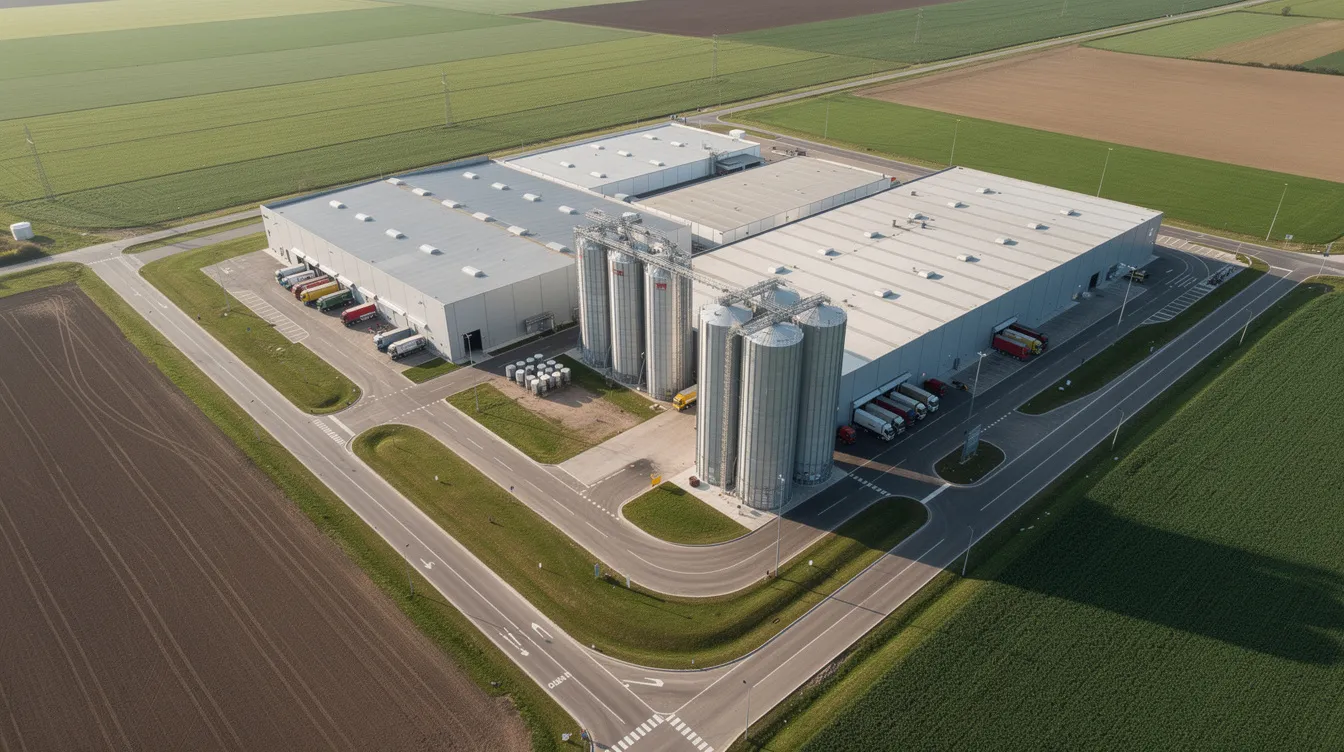
An Integrated Grain Industrial Complex is a planned industrial campus hosting multiple grain-based processing units – rice mills, wheat flour mills, pulses dal mills, maize processing plants, malting units, animal feed mills, and value-added ready-to-cook product lines – with shared infrastructure and integrated logistics. An Integrated Grain Industrial Complex combines various post-harvest functions into a single ecosystem, covering receiving, storage, processing, and logistics infrastructure within a common boundary.
The complex differs from a single large plant in several important ways. Multiple independent units, often under separate company ownership, operate their own process machinery and internal production lines. However, they share the backbone infrastructure for grain reception, bulk storage, utilities, quality testing, environmental compliance, and material dispatch. This structure requires a systems-engineering approach during planning, and collaboration across various engineering and financial disciplines during implementation.
Typical Indian capacity ranges for such complexes vary widely. A 50-acre complex might house 8–15 units with combined input of 800–1,500 TPD of food grains including wheat, paddy, maize, and pulses. Processing and value addition infrastructure within these units transforms raw grains into consumer-ready products, while shared assets serve the entire campus.
The distinction between independent and shared facilities is important for cost planning. Each unit typically owns its own process machinery, in-plant conveyors, internal electrical panels, and unit-specific utilities. However, common weighbridges, bulk storage silos, warehouses, effluent treatment, internal roads, firefighting networks, and power substations are shared. This is conceptually similar to the Agro Processing Cluster Project Report framework, where multiple agro-industrial units benefit from common infrastructure development.
Common infrastructure development models in India generally fall into three categories: (a) a developer-owned SPV that acquires land, builds shared infrastructure, leases plots, and charges common infrastructure fees; (b) cooperative or state agency-developed complexes under government schemes; and (c) anchor-tenant-led parks where a large mill anchors the complex with smaller satellite units. Each model has different implications for governance, cost sharing, and financial structuring.
Value-chain integration across units is a significant advantage. By-products from one unit – rice bran for oil extraction, broken rice for starch or puffed rice production, wheat bran for cattle feed – can become raw materials for another unit on the same campus, reducing logistics cost and improving overall complex economics. The details of structuring such complementary industries are explored further in Agro Processing Park Industry Mix & Value Chain Integration.
India’s broader industrial investment landscape is also evolving rapidly. The total estimated investment opportunity in clean industrial projects is $433 billion, and green ammonia projects lead with 49 identified initiatives, reflecting the scale of capital flowing into organised industrial infrastructure. While grain complexes are a distinct category, they benefit from the same policy momentum toward planned, scientific, and bankable industrial development.
Integrated Food Grains Processing Complex Layout and Master Planning
Master planning and proper integrated grain processing complex layout are as important as choosing the right grain processing machinery. Poor layout can permanently lock in inefficiencies – cross-traffic between raw material and finished goods, undersized utility corridors, inadequate fire access – that increase logistics costs and reduce operational throughput for the entire life of the complex. Getting the layout right at the design stage is significantly cheaper than retrofitting later.
Site selection for a grain complex should consider multimodal access to transportation networks, including proximity to national highways, state highways, or rail sidings, as well as reliable power supply and adequate water availability. Land requirement typically ranges from 25–40 acres for a compact cluster of mid-sized mills, 40–60 acres for a larger integrated grain industrial complex, and up to 80–100 acres where rail siding, large silos, and future expansion are envisaged. These ranges exclude stamp duty, registration, and financing costs, which vary significantly across states. Detailed guidance on choosing appropriate sites is covered in Agro Processing Park Land Requirement & Site Selection.
High-level zoning principles should separate the complex into distinct functional blocks:
- Grain reception and cleaning zone (entry-side)
- Storage silos and warehouses
- Processing unit plots
- Packaging and logistics/dispatch zone (outbound-side)
- Utility yards (boilers, DG sets, substations)
- Administrative and laboratory buildings
- Green buffer belts and future expansion reserves
The following illustrative land allocation for a hypothetical 50-acre site shows how zones might be distributed:
| Zone | Approximate Share (%) | Approximate Area (Acres) |
|---|---|---|
| Entry, weighbridges, truck parking and logistics | 10% | 5.0 |
| Processing unit plots (anchor + medium + small units) | 30% | 15.0 |
| Bulk storage – silos and warehouses | 25% | 12.5 |
| Utility blocks – substation, boiler house, ETP, water | 10% | 5.0 |
| Internal roads, circulation, and drainage | 15% | 7.5 |
| Green belt, buffer zone, and future expansion | 10% | 5.0 |
| Total | 100% | 50.0 |
Processing plots of 1–3 acres might be offered to small and medium units, with larger 5–8 acre plots reserved for anchor plants such as a 500 TPD rice mill or a 600 TPD wheat flour mill. Planning anchor tenant demand is a critical early-stage exercise, discussed in detail in Agro Processing Park Anchor Tenant Selection & Plot Allotment.
Internal roads should have main carriageway widths of 9–12 m and secondary roads of 6–7.5 m, with turning radii designed for 16–20 tonne trucks. Segregation of truck and staff/visitor movements reduces safety risks and congestion. Raw material receiving corridors – weighbridge locations, truck queuing lanes, and parking bays – should be near the entry, while finished-goods dispatch yards and loading docks should face the outbound side to minimise cross-traffic.
Fire access requires 4–5 metre wide peripheral fire tender roads around silos and warehouses, with fire water tanks and pump houses located centrally. Statutory clearances between buildings must comply with state fire service recommendations and the National Building Code.
Future expansion requires planning for utilities and infrastructure to accommodate scaling. Reserving 10–20% of land for Phase-II units and designing utility ring mains sized for at least 120–150% of initial demand avoids expensive retrofitting. Substation capacity, ETP modules, and steam distribution networks should all be designed with modular expansion in mind.
Shared Infrastructure for Food Grains Processing Plants
Shared infrastructure for grain processing plants forms the backbone of an integrated complex, delivering cost sharing, improved reliability, and easier compliance management across all tenants. The following paragraphs address each major shared facility, its technical requirements, and approximate investment implications.
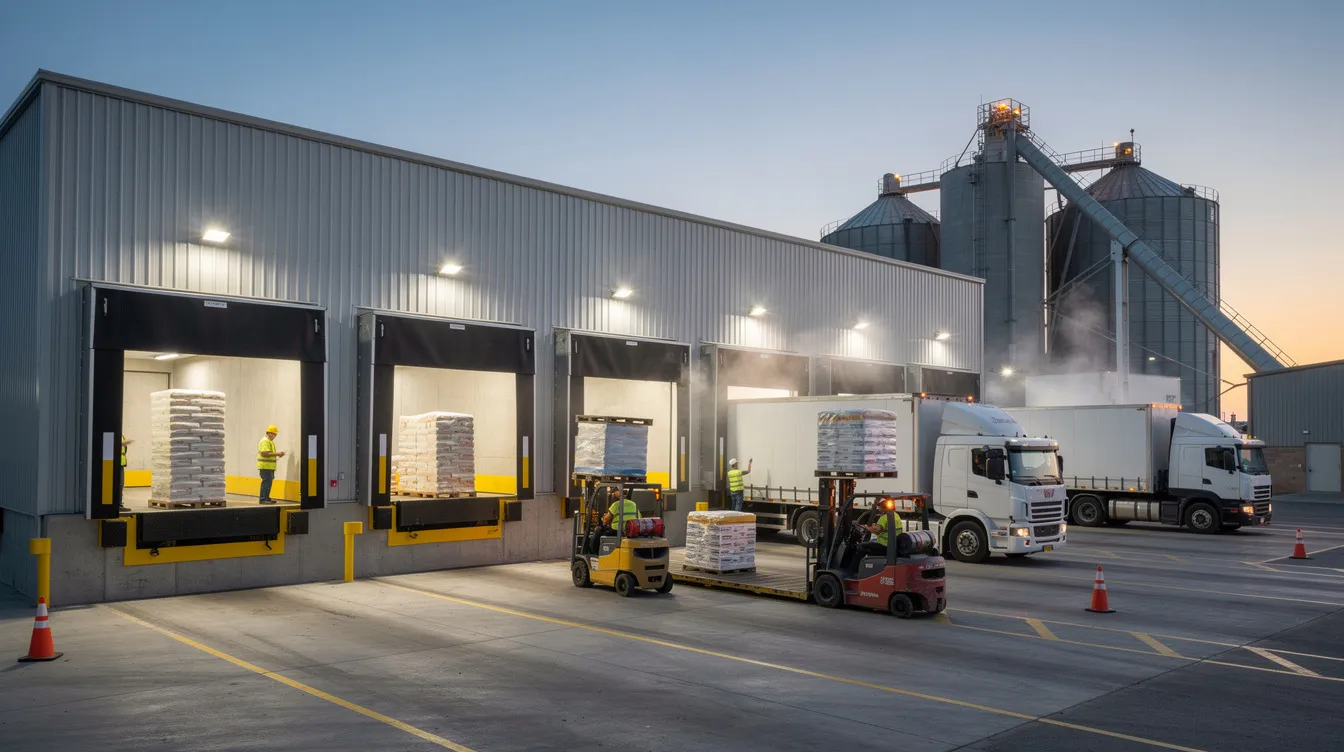
Receiving infrastructure includes automated weighing and sampling systems for incoming grains. A typical grain receiving setup includes a 60–80 tonne electronic weighbridge, common truck unloading pits, mechanical sampling points, and covered intake areas sized for 100–150 truck movements per day. For a 50-acre complex, indicative CAPEX for weighbridges and intake civil works may range from ₹0.75–1.50 crore, though actual cost depends on automation level, site conditions, and design standards. These are estimate ranges, not fixed quotations.
Centralised grain cleaning and grading makes economic sense when multiple units process similar raw grain. A central cleaning plant with pre-cleaners, destoners, graders, and aspiration channels – sized at 50–150 TPH – can serve the entire complex, reducing duplication of equipment. However, units processing specialty grains or requiring proprietary cleaning sequences may prefer unit-level equipment. The decision should be made during the DPR preparation stage based on tenant mix and grain types.
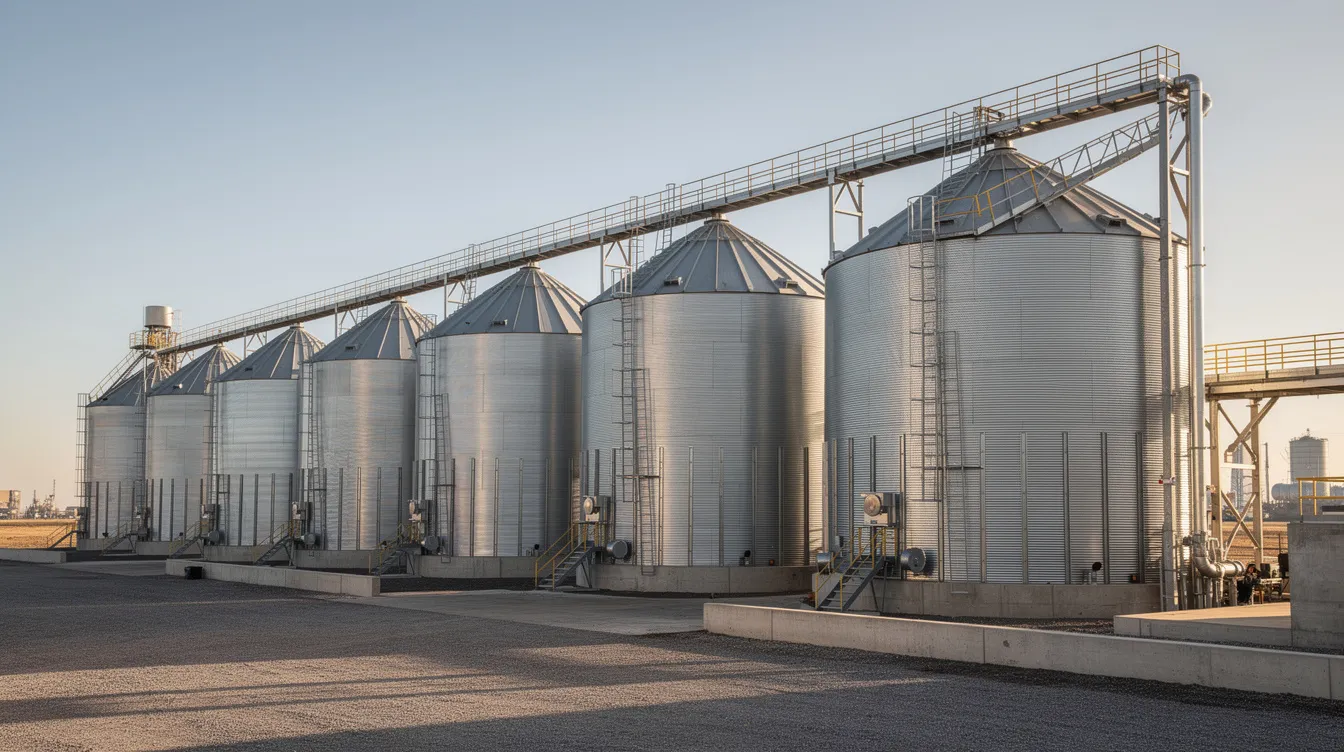
Bulk storage facilities need to include monitoring systems for temperature and moisture. A mixed storage model using steel silos (4–6 silos of 5,000–10,000 MT each) plus flat warehouses (20,000–30,000 sq ft transit godowns) provides flexibility for different grain types and holding periods. Aeration systems prevent insect activity and manage grain temperature and moisture levels during storage. According to MoFPI-approved cost norms, steel silos cost approximately ₹5,900/MT and dry warehouses approximately ₹4,900/MT, though actual costs range from ₹5,000–9,000/MT for silos and ₹3,500–6,000/MT for warehouses depending on specification, automation, and site conditions. Scientific storage in well-designed silos reduces losses from 2–5% in conventional warehouses to below 0.5% annually.
A network of belt conveyors and bucket elevators links intake pits, cleaners, silos, and dispatch points. Design should address dust control, explosion venting in high-dust areas (grain dust is combustible), and redundancy in critical routes. Environmental protections are necessary for dust emissions and effluent treatment throughout the handling chain.
Electrical infrastructure typically requires a 33/11 kV substation for a mid-sized complex with 8–15 MVA total connected load. A 5 MVA, 33/11 kV substation in India is tendered at approximately ₹2–3 crore for supply, erection, testing, and commissioning. For complexes with higher loads, costs scale significantly – a 50 MVA substation may cost ₹45–50 crore. Internal HT cabling, LT distribution panels, ring main units, and metering for each unit add to the electrical backbone investment.
For complexes with parboiled rice, maize starch, or value-added processing, a shared boiler house with multiple boilers is often justified. Industrial water tube boilers in the 10–20 TPH capacity range are indicatively priced at ₹90 lakh to ₹1.8 crore per unit, depending on pressure, automation, fuel type, and IBR compliance. Fuel options include rice husk, briquettes, and coal (where permitted). Central boilers offer scale advantages but create a single-point dependency that must be mitigated through redundancy (N+1 design).
Compressed air systems (screw compressors, receiver tanks, ring mains) and water supply networks (borewells, storage reservoirs, overhead tanks, process water distribution) serve the entire campus. Water demand depends on process type – parboiling operations require significantly more water than dry milling – and must be planned with adequate reserves for firefighting.
Water treatment and wastewater management includes softening plants, RO where needed for process water, separate storm-water drains, and a central Effluent Treatment Plant (ETP). Industrial ETPs sized at 250 KLD cost approximately ₹80 lakh to ₹1.8 crore for equipment and installation. Capacity and design must comply with State Pollution Control Board norms, with separate solid-waste handling for husk, bran, screenings, and rejects to avoid contamination.
Quality assurance laboratories analyze moisture content and contaminant levels in grains. A central lab equipped for moisture, FCI grade parameters, aflatoxin, pesticide residue, and microbiological checks can serve multiple tenants, supporting exports and premium market access for processed food grains. This shared asset reduces duplication and improves testing consistency.
Fire protection includes common hydrant and sprinkler networks, underground fire water tanks (400–800 KL each), diesel and electric fire pumps, hydrant points near silos and warehouses, and smoke/heat detection. Compliance with state fire services recommendations drives the design and cost of these systems.
Internal roads, paved to industrial standards, cost approximately ₹1,200–1,800 per sqm depending on pavement type and traffic load. Storm-water drainage, RFID-based access control, CCTV, boom barriers, and segregated parking for trucks and staff vehicles complete the site infrastructure. Automated bagging and palletizing lines, where shared, can be housed in a central packaging hall serving multiple units, with container stuffing points and third-party logistics interfaces for efficient distribution of products.
Multi-tenant complexes typically structure service charges and operational protocols through the infrastructure SPV. How such service charges, metering, and operational agreements are designed for shared utilities is explored in the Multi-Tenant Agro Food Processing Park Project Report.
Industrial Layout and Infrastructure Integration
Integrated layout aligns the process flow – from grain receipt to finished goods dispatch – with site circulation, utilities, and hygiene zoning to minimise double handling, contamination risk, and energy loss. Every metre of unnecessary grain movement adds cost and increases the probability of quality degradation.
The typical flow works as follows: trucks arrive at the complex boundary, are weighed at the common weighbridge, and move to intake pits. Grain is cleaned (centrally or at unit level), moved via conveyors to storage silos, drawn from silos to individual processing plants, processed into finished products, packed, and routed to dispatch yards. At each interface point, shared infrastructure hands off to unit-level operations. Clear demarcation of these boundaries is essential for cost allocation, quality responsibility, and food safety compliance.
Segregation of clean and dusty operations is a fundamental design principle. High-dust zones (intake pits, pre-cleaning, husk handling) should be physically separated from clean zones (polishing, grading, blending, packaging). This separation supports compliance with FSSAI standards and is necessary for units targeting export markets or modern retail supply chains. Food safety and cross-contamination controls include zoning into raw, semi-processed, and finished product areas, pest-control planning, controlled access to packaging blocks, and HACCP-friendly layouts.
Inter-unit grain movement – for example, from a parboiling plant to a dry milling unit, or from a rice mill to a puffed rice manufacturing unit – should use enclosed conveyors or dedicated bulk transfer within the campus, maintaining traceability and preventing lot mix-ups.
Shared utilities and service corridors should be located along rear or side easements of plots. Steam pipes, power cables, compressed air lines, water mains, and communication ducts are best routed in accessible trenches or overhead racks, allowing maintenance without disturbing plant operations.
Phased expansion provisions should leave logical space for adding silos, additional cleaning lines, new production units, or cold storage without disrupting existing traffic and utility networks. Designing the substation, ETP, and steam distribution with modular capacity additions in mind at the outset saves significant cost over the life of the complex.
Consider a notional layout with grain reception and cleaning on the northern boundary, storage silos arranged centrally, processing plots on the eastern and western flanks with rear-access utility corridors, and finished goods dispatch yards along the southern boundary with direct highway access. Administrative and laboratory buildings sit near the main gate, while boiler and ETP facilities occupy a separate utility block to the west, downwind from processing areas. This arrangement minimises cross-traffic, reduces dust migration into clean zones, and provides logical expansion space along the southern and eastern periphery.
Integrated Food Grains Industrial Complex EPC Cost in India
EPC (Engineering, Procurement & Construction) cost for integrated grain industrial complex infrastructure varies widely by location, soil conditions, specification level, and whether the complex includes high-end automated silos and bulk-handling systems or largely warehouse-based storage. Project costs vary by region and project components, and even within the same state, soil type, water table, and local labour rates can shift costs by 15–20%.
The EPC estimate presented here covers only common and shared infrastructure for an assumed sample project: a 50-acre multi-tenant grain complex with approximately 1,000 TPD aggregate grain input. Individual unit process machinery, unit-specific internal utilities, working capital, and land cost are excluded. Land cost, interest during construction, GST, IDC, and pre-operative expenses are also excluded from this illustration. A full DPR and financial model would integrate all these components for lender appraisal.
The following component-wise EPC cost table is illustrative, based on 2025–26 cost norms and industry benchmarks:
| Component | Assumed Specification | Indicative EPC Cost (₹ Crore) |
|---|---|---|
| Site development – grading, boundary wall, internal roads & pavements, drainage, landscaping | 50 acres, industrial-grade pavements, storm-water drains | 25–40 |
| Storage & bulk handling – steel silos (4–6 units), flat warehouses, conveyors, elevators, aeration & fumigation | ~25,000–30,000 MT storage capacity | 35–50 |
| Electrical infrastructure – 33/11 kV substation (~10–15 MVA), HT/LT ring mains, cabling, street lighting | Sized for 10–15 MVA connected load | 15–25 |
| Boilers & steam utilities – shared boiler house (2×10–20 TPH), steam distribution, insulated piping | For complexes with parboiling/starch operations | 5–12 |
| ETP, water treatment & environmental facilities – common ETP, water treatment, storm-water management | Moderate wastewater load (1–2 MLD equivalent) | 4–10 |
| Admin, quality lab, gate complex, packaging hall | Central lab, office blocks, weighing station, workshop | 2–5 |
| Fire protection, safety & security – hydrant network, fire tanks (400–800 KL), pumps, CCTV, access control | As per fire safety NOC and NBC requirements | 3–6 |
| Engineering, project management & contingencies – design fees, EPC margin (7–12%), contingency (5–10%) | On base cost | 8–15 |
| Total shared infrastructure EPC (indicative) | ₹97–163 Crore |
Under moderate specifications and good design, the practical range for a 50-acre complex with 1,000 TPD input falls between ₹120–160 crore. For lower specifications (simple warehouses, less automation), the cost may be ₹90–110 crore. For very high specifications (full automation, heavy silos, ZLD-compliant ETP, high-regulation zones), costs can reach ₹180–220 crore. These ranges align with MoFPI-approved norms and industry benchmarks for storage and utility infrastructure.
To put construction costs in context, project costs differ enormously across India – the estimated cost for residential accommodation in a location like Doda is $0.99 million, while industrial land in Maharashtra’s Shendra-Bidkin industrial area commands approximately ₹1.62 crore per acre. A quick Google search for grain processing infrastructure costs will show wide variation, which is precisely why project-specific engineering and DPR preparation are essential.
Shared Infrastructure Cost Versus Independent Plants
Promoters and investors frequently ask whether it is cheaper to build stand-alone plants or participate in a shared integrated grain industrial complex. The practical answer depends on scale, location, and the quality of shared infrastructure management, but the directional economics are clear.
Consider a conceptual comparison: five independent 200–300 TPD grain plants, each building its own access roads, weighbridges, small-scale silos, substations, ETPs, and laboratories, versus the same units located within a common complex sharing these facilities. The duplication of civil works, utility equipment, and compliance infrastructure in the independent model typically causes 15–25% higher total infrastructure CAPEX per unit compared to participating in a shared complex.
Centralised boilers, substations, ETPs, labs, and maintenance teams spread fixed O&M costs across multiple units, improving unit-level cost per tonne of grain processed. However, proper metering and cost-allocation mechanisms – fixed charges for capacity reservation plus variable charges per tonne handled or per kWh consumed – are essential to avoid disputes between the developer and tenants.
Higher utilisation of large shared assets (weighbridges, silos, substations) delivers better economics when occupancy is high, but places stress on the infrastructure SPV’s cash flows if tenant occupancy is low or ramp-up is delayed. Centralised planned maintenance and shared spares inventory reduce per-unit maintenance cost and provide better bargaining power for service contracts.
The main limitation of shared infrastructure is dependency. If the common boiler or substation fails, multiple units are affected simultaneously. Clear service-level agreements, redundancy in critical equipment, and well-defined governance mechanisms between the developer and unit owners are essential to address this operational risk.
A hypothetical independent 250 TPD rice mill might spend 20–30% more on infrastructure outside process machinery if located alone – covering its own substation, roads, weighbridge, storage, ETP, lab, and fire protection – compared to a similar unit participating in a shared complex. For promoters evaluating this trade-off, a comparative feasibility model is the practical tool for decision-making. Promoters interested in rice milling within such complexes can also refer to the Integrated Rice Milling & Processing Plant Project Report for unit-level cost benchmarks.
EPC Contracting Models
Choosing the right EPC contracting model is critical for controlling integrated grain industrial complex EPC cost, timelines, and construction quality. The model directly affects risk allocation, coordination complexity, and the developer’s management burden.
Turnkey EPC involves a single contractor assuming end-to-end responsibility – design, procurement, construction, and commissioning – for the shared infrastructure. Payment is typically milestone-linked. The advantage is single-point accountability, which lenders prefer. The disadvantage is higher contractor margins and less flexibility for the developer to influence vendor selection or negotiate component pricing independently.
EPCM (Engineering, Procurement and Construction Management) allows the developer to retain multiple work packages while an EPCM consultant manages design coordination and procurement. This model suits developers wanting more control over costs and vendors, but it requires the developer to accept interface risks between packages and invest in capable project management.
Multiple-package contracting tenders civil, mechanical, electrical, storage systems, and utilities separately. Benefits include competitive pricing and specialisation, but challenges include coordination difficulties, claims risk, and schedule management across many contractors.
Design-build is often used for specialist packages such as silos, ETP, and substations, where a single vendor designs and installs the system with clear performance specifications. Performance guarantees on throughput, energy consumption, storage losses, and equipment reliability are typically part of such contracts.
Selection of contractors should prioritise prior experience with grain handling and food-processing utilities, financial strength, on-time delivery track record, and willingness to provide performance guarantees and post-commissioning maintenance support.
Lenders and investors prefer clear, bankable EPC frameworks with defined liquidated damages for delay and performance shortfalls. This influences project finance structuring, CMA data preparation, and the loan structuring process. Integrated projects require collaboration across various engineering and financial disciplines, and the contracting model should facilitate rather than hinder this coordination.
Project Implementation Schedule
Large integrated grain industrial complexes generally require 18–30 months from land acquisition to commercial operations, depending on regulatory approvals, EPC scope, and site conditions. The time required for each phase varies, but realistic scheduling is essential for cost control and lender confidence.
Feasibility and engineering (3–6 months): Pre-investment activities include market study, technical feasibility assessment, DPR preparation, financial modelling, and engagement with banks and investors. Project feasibility studies assess a project’s viability before investment, and feasibility studies evaluate financial projections and project economics. A feasibility study includes analysis of project costs and funding sources. Professional advisory services enhance the accuracy of feasibility studies at this stage. This is when CA Manish Gugliya and Project Report Bank are typically engaged to prepare bankable documentation.
Land development and approvals (3–6 months, overlapping): Land acquisition or lease, change of land use (if applicable), layout approval from industrial development authorities, and clearances for access roads and utility connections.
Regulatory and environmental approvals (parallel track): Environmental clearance (if applicable), Consent to Establish from State Pollution Control Board, and fire safety design approvals can run in parallel with detailed engineering.
EPC tendering and procurement (3–5 months): Preparing tender documents, pre-qualifying EPC bidders, evaluating offers, negotiating contracts, and finalising technical specifications with OEMs. This is a practical stage where cost commitments are locked in.
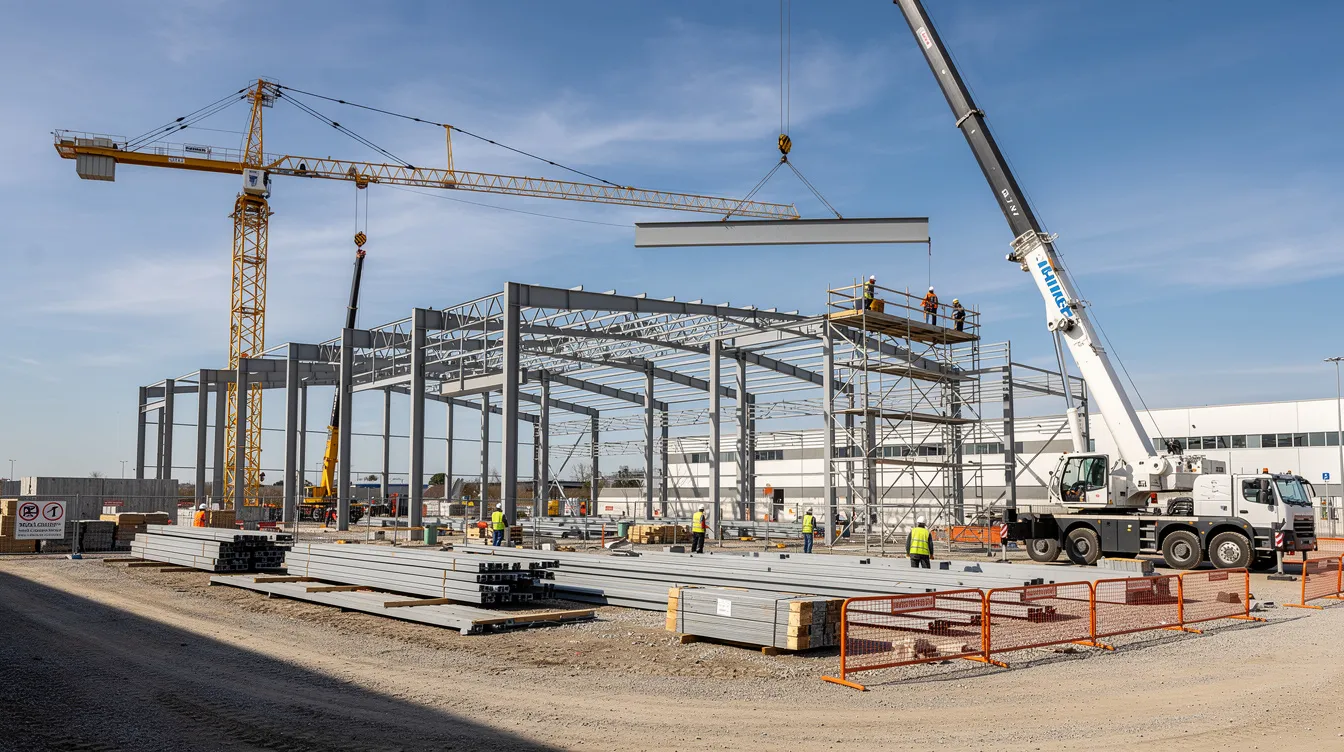
Civil construction (8–14 months): Grading, roads, foundations, buildings, silos, and warehouses. Monsoon seasons in most Indian states add risk and may require seasonal planning. No silo erection should begin before foundation curing and anchor-bolt checks are completed – a common dependency that delays ignore at great cost.
Utility installation and integration (overlapping with late civil work): Substation, boilers, ETP, pipelines, conveyors, automation systems, and integration testing across packages. Phased development of projects helps manage costs and execution risks during this stage.
Testing, commissioning, and phased operations (2–4 months): Functional testing, trial runs with grain, calibration of weighbridges and lab equipment. Phase-I units may start operations while Phase-II infrastructure is still being completed. Commissioning costs – trial runs, wastage, adjustments – are often under-budgeted and should be specifically provided for in the DPR.
Financial Feasibility of Shared Infrastructure
Beyond engineering, the success of integrated grain industrial complex infrastructure depends on bankable financial modelling, realistic capital budgeting, and clear cost-sharing structures for common facilities. Financial modelling projects future financial performance and assesses project viability through detailed analysis. Financial projections are a key component of financial modelling, and sensitivity analysis is often included in financial models to test resilience under adverse scenarios.
Capital expenditure allocation: Total shared infrastructure CAPEX is typically split between developer equity and term loans, with common equity-debt ratios of 30:70 or 40:60 in Indian project finance. Bank finance requires detailed project reports for approval, and CMA data is essential for bank loan applications. Loan structuring is a critical component of bank finance, and working capital assessment is necessary for project financing – even for the infrastructure SPV itself.
Shared operating expenses and cost recovery: Major O&M items include power for utilities, boiler fuel, maintenance, security, housekeeping, insurance, and management costs. These are recovered through fixed charges (based on plot size or reserved capacity) and variable charges (per tonne of grain handled or per kWh consumed), with minimum off-take obligations for anchor tenants.
Tenant occupancy and utilisation: Occupancy ramp-up assumptions – for example, 50–60% in year one, 70–80% in year two, stabilising at 85–90% from year three onwards – significantly influence revenue, EBITDA, and project IRR for the infrastructure SPV. Optimistic occupancy assumptions are a common source of financial stress in shared infrastructure projects.
DSCR and debt servicing: Stable service revenue with controlled O&M cost leads to predictable EBITDA margins, which drive the Debt Service Coverage Ratio (DSCR) and lender comfort. Cash flow analysis assesses liquidity for loan repayment, and effective cash flow management enhances project profitability. Cash flow projections are crucial for financial planning across the project’s debt tenure. Bank finance supports new manufacturing and processing projects, and lenders expect 8–10 year projected financial statements reflecting occupancy dynamics.
Sensitivity analysis: Lenders expect downside tests – for example, impact of 20% lower occupancy, 10% higher EPC cost, or 15% tariff increase in power or fuel – on DSCR and payback period. A project that remains financially sustainable after moderate adverse changes is more bankable than one where small variations create debt-servicing problems.
Bankable financial models must be customised to specific capacity, tenant mix, state-level tariffs, and financing structure. Generic template numbers are inadequate for projects of this scale and complexity.
Regulatory and Statutory Requirements
Regulatory requirements differ by state, project size, process type, and location (industrial estate versus greenfield). The following outlines typical categories rather than exhaustive legal advice. Promoters should always verify current applicability with local authorities and professional consultants.
Factory-related approvals: Requirements under the Factories Act and state Factory Rules include factory registration, building plan approval, and safety inspections – both for the developer/SPV and for individual processing units within the complex.
Environmental and pollution-control permissions: Environmental clearance (where thresholds are triggered), Consent to Establish (CTE), and Consent to Operate (CTO) from State Pollution Control Boards are required for common utilities like ETP, boilers, and DG sets. Each unit may need separate consents for its process effluents. If Zero Liquid Discharge (ZLD) is mandated by the state, ETP costs increase substantially.
Food safety and quality regulations: Individual units must obtain FSSAI licences for food grains processing and packaging. Complex-level infrastructure – common labs, storage – should be designed to support FSSAI compliance and, where relevant, export certifications.
Building and fire safety: Building plan sanctions from local development authorities, fire NOC from state fire services for warehouses and silos, compliance with National Building Code (NBC) guidelines where applicable.
Power, water, and boiler permissions: State power utility approvals for substations and HT connections, groundwater extraction permissions where applicable, and boiler registration and inspection under Indian Boiler Regulations (IBR). IBR-compliant boiler design adds compliance cost but is non-negotiable.
Labour and occupational health: The SPV/developer and individual units must comply with labour laws, ESI, PF, and occupational health and safety norms – particularly important in high-dust grain handling areas.
Regulatory timelines should be integrated into the project schedule, and statutory fees, consultant charges, and compliance infrastructure should be budgeted separately within the DPR.
Major Project Risks and Mitigation
Even technically sound integrated grain industrial complex infrastructure can face serious financial and operational stress if key risks are not identified and mitigated early through design, contracts, and financial structuring. Feasibility studies help identify potential risks and challenges before capital is committed.
Underutilised shared infrastructure: Building silos, ETP, boilers, and substations sized for full occupancy before tenants are secured is a common mistake. Mitigation includes phased development, anchor-tenant agreements with binding commitments, and realistic occupancy ramp-up assumptions in the financial model.
Infrastructure oversizing or undersizing: Overspecifying high-cost assets leads to heavy interest and depreciation burden with low utilisation. Undersizing critical utilities creates bottlenecks and expensive retrofit costs. Demand studies, process simulations, and third-party technical reviews help calibrate capacity correctly.
EPC cost escalation and construction delays: Commodity price volatility, design changes during construction, weak contractor capacity, and monsoon disruptions are common causes. Fixed-price EPC contracts with clear scope, adequate contingencies (5–10% of base cost), and milestone-linked payments mitigate this risk.
Poor industrial layout: Suboptimal layout locks in high internal logistics costs, congestion, and fire-safety issues permanently. Early engagement of experienced industrial planners and peer review of master plans before construction is a low-cost, high-impact mitigation.
Utility interruptions and single-point failures: Dependence on a single boiler, transformer, or ETP creates vulnerability. N+1 design philosophy for critical equipment and robust O&M contracts address this risk.
Inadequate tenant demand and credit risk: If tenant units fail to ramp up, default on service charges, or shut down, the shared infrastructure SPV’s cash flows suffer. Strict credit evaluation of tenants, minimum commitment contracts, and diversification of industry mix across cereals, pulses, and value-added food grains are practical mitigations.
A well-prepared DPR with sensitivity and risk analysis can pre-empt or minimise most of these issues by quantifying their financial impact before the promoter commits capital.
Why a Detailed Project Report and Feasibility Study Are Essential
Detailed Project Reports are essential for project finance. For an integrated grain industrial complex infrastructure project, the DPR is the central document that integrates engineering, layout, EPC cost, regulatory requirements, and financial projections into a coherent case for banks and investors. DPR preparation involves customized analysis and project-specific assumptions – not generic templates that ignore site conditions, tenant mix, and state-level regulatory differences. DPRs assist in evaluating project feasibility before investment decisions are finalised. Professional advisory services enhance the quality of DPRs, especially for projects of this scale and complexity.
A professional DPR prepared by Project Report Bank and CA Manish Gugliya includes 5–10 year financial projections, detailed means of finance, DSCR and sensitivity analysis, promoter contribution planning, and loan structuring aligned with phased implementation. DPRs include financial projections and viability analysis that lenders require for appraisal. CMA Data, IRR calculations, break-even analysis, payback period, and scenario analysis are all expected components for large infrastructure-heavy projects.
Feasibility studies should compare multiple technical options – all-silo versus hybrid silo-plus-warehouse storage, central versus decentralised boilers, different EPC contracting models – with their CAPEX/OPEX trade-offs and risk profiles clearly quantified. The goal is a defensible investment case, not an optimistic sales pitch.
Serious promoters, industrial developers, and investors planning ₹10 crore to ₹100+ crore grain complexes are invited to engage Project Report Bank for customised DPRs, financial models, and project finance advisory.
CA Manish Gugliya, FCA, DISA (ICAI) ProjectReportBank.com More than 20 years of professional experience in project reports, financial projections, CMA Data, project finance, and business advisory.
Frequently Asked Questions
What is a realistic minimum scale for developing an integrated grain industrial complex in India?
From a financial and infrastructure-efficiency perspective, a practical minimum scale is usually around 20–25 acres of land with at least 4–6 anchor and medium units, aggregating 400–700 TPD of grain throughput. Smaller clusters can be developed but tend to lose economies of scale in utilities and silos – the fixed cost of a substation, ETP, or boiler house does not reduce proportionally when spread across only two or three units.
Promoter strategy, location, grain procurement availability, and a committed tenant pipeline are more critical than sheer land area. Project Report Bank can help test different scale options through comparative feasibility models, quantifying the financial impact of 25-acre versus 50-acre configurations before land and EPC commitments are made.
Should land for the complex be purchased or taken on long-term lease?
Outright purchase involves higher upfront investment but provides greater collateral value for lenders and full control over development. Long-term lease in industrial estates or government-developed parks requires lower upfront outlay but comes with lease conditions, escalation clauses, and potential transfer restrictions. Many large agro parks use a mix – purchasing land for core infrastructure and anchor units while leasing parcels for smaller satellite units.
The choice should be evaluated within the financial model, considering lender preferences, state industrial policy (several states in India, including Haryana and Punjab, offer specific industrial land policies for agro-processing), and the expected holding period of investors.
Can government subsidies significantly reduce shared infrastructure cost?
Several central and state schemes periodically support agro-processing, storage, and logistics infrastructure – including the Agriculture Infrastructure Fund (AIF), Agricultural Marketing Infrastructure (AMI), and state-specific agro-industrial development initiatives. However, eligibility, quantum, and disbursement timelines vary, and subsidy release often involves detailed compliance documentation and time lags.
In bankable DPRs, subsidies are treated as potential upside. Base project viability – DSCR, IRR, payback – should stand even without grants to avoid over-dependence on uncertain government approvals. This conservative approach strengthens the promoter’s position with both lenders and private investors.
How are service charges for shared infrastructure typically structured?
Common structures combine fixed monthly or annual infrastructure charges (based on plot size or reserved capacity) with variable charges per tonne of grain handled, per kWh of power consumed, or per cubic metre of water or effluent treated. Anchor tenants typically agree to minimum off-take obligations that underpin the infrastructure SPV’s base revenue.
Transparent metering, clear contracts, and predictable escalation clauses (often linked to WPI or CPI indices) are essential to avoid disputes and ensure stable cash flows. The service charge structure should be modelled during the DPR stage, not improvised after operations begin.
At what stage should we involve Project Report Bank and CA Manish Gugliya?
Serious promoters should involve Project Report Bank at the pre-investment stage – ideally before locking land, signing large EPC contracts, or committing to specific infrastructure specifications. Early involvement allows capacity planning, layout optimisation, shared versus independent facility comparison, and financing structure to be evaluated before irreversible capital commitments are made.
Early-stage engagement enables preparation of a robust DPR, financial model, CMA Data, and bankable documentation that can be shared with lenders, investors, and potential tenants to accelerate decision-making and reduce expensive rework during implementation.