Key Takeaways
- This guide covers planning agro processing clusters (APCs) in India with investments typically between ₹10 crore and ₹200+ crore, not micro or home-based food units.
- An agro processing cluster combines multiple food processing industries with shared basic enabling infrastructure (roads, power, water, effluent treatment plant) and core infrastructure (warehouses, cold storage, food testing laboratory, common processing facilities).
- Under the Ministry of Food Processing Industries’ agro processing cluster scheme (PMKSY), eligible projects can receive grants-in-aid of 35% of eligible project cost in general areas and 50% in specified difficult areas, subject to a ₹10 crore cap per project.
- A bankable agro processing cluster project report must include technical planning, market analysis, detailed cost estimates, 10-year financial projections, DSCR and IRR analysis, and a realistic assessment of government grants and bank finance.
- Project Report Bank, led by CA Manish Gugliya, provides customised APC DPR preparation, feasibility studies, CMA Data and project finance advisory for serious promoters.
Introduction: Role of Agro Processing Clusters in India
Agro processing clusters strengthen India’s agricultural value chain by connecting farmers, food processing industries and markets through shared modern infrastructure. Unlike a standalone food processing unit with its own utilities and logistics, an APC creates a multi-unit campus where several enterprises share common facilities such as cold storage, warehouses, IQF tunnels, steam generation boilers, quality laboratories and utilities, reducing per-unit capital costs and improving market linkages.
For projects in the ₹10–200+ crore range, a professionally prepared agro processing cluster project report is essential before committing capital. The detailed project report must evaluate technical feasibility, raw material security, financial projections, government scheme alignment and bankability. This article provides a comprehensive investment and DPR guide for promoters, infrastructure developers and farmer producer organizations evaluating the cluster approach to food processing development in India.
What Is an Agro Processing Cluster?
An agro processing cluster, as defined under MoFPI’s framework, is a geographically defined area of at least 10 acres with a minimum of 5 food processing units and common infrastructure developed through a cluster-based approach. The scheme aims to create modern infrastructure linking groups of producers and processors for integrated development of the food processing sector.
Basic enabling infrastructure includes internal roads, boundary wall, street lighting, water supply, electricity supply with power backup, drainage, effluent treatment plant, parking bay, weighbridge, and common office space.
Core infrastructure includes dry warehouse facilities, cold storage (chilling and frozen chambers), pre-cooling chambers, ripening chambers, IQF tunnels, sorting and packing facilities, specialized packaging lines, a food testing laboratory, and steam generation boilers.
One Project Execution Agency (PEA) or SPV develops and operates the common infrastructure. Individual entrepreneurs set up food processing units on allotted industrial plots or in rental sheds. APCs differ from Mega Food Parks (which require larger scale and different grant norms) and from Common Facility Centres under MSME schemes (narrower scope). Eligible organizations under the APC scheme include private sector companies, proprietorship firms, cooperatives, NGOs and farmer producer organizations, subject to scheme conditions.
Agro Processing Cluster Business Opportunities in India
APCs enable multiple food processing industries to co-locate around a common raw material catchment, sharing cold chain and logistics. Key value-chain opportunities include:
- Grain and cereal processing: Rice milling, wheat flour mills, breakfast cereals and extruded snacks sharing silos and quality labs
- Fruit and vegetable processing: Pulp-making, IQF frozen vegetables, dehydration units sharing cold storage, pre-cooling and blast freezers
- Dairy and allied processing: Milk chilling, paneer, ghee, flavoured milk units leveraging common refrigeration and utilities infrastructure
- Oilseed crushing and edible oil refining: Expellers, filtration and packing facilities sharing quality labs (with careful zoning for fire safety)
- Spices and condiments: Cleaning, grinding, blending units using common labs and packing facilities
- Ready-to-eat and ready-to-cook foods: Frozen snacks, RTC meals leveraging IQF lines and well equipped supply chain infrastructure
- Animal feed manufacturing: Using bran, oilseed cake and agro-residues from other cluster units
Storage-oriented units (grain, pulses, spices) share warehouses, weighbridges, and labs easily. Perishable-focused units (fruit, dairy, frozen RTE) share cold storage and chilled logistics. Sectors like oilseed solvent extraction or meat processing require dedicated zoning within the cluster.
Types of Agro Processing Cluster Projects
APCs can be specialised or diversified depending on regional agricultural produce and investor strategy.
| Cluster Type | Key Shared Infrastructure | Usual Investor Profile | Illustrative Investment Band |
|---|---|---|---|
| Grain-based processing cluster | Silos, warehouses, labs, sorting lines | Private / FPO | ₹10–25 crore |
| Fruit & vegetable cluster | Cold storage, IQF, pre-cooling, pack house | Private / PPP | ₹25–75 crore |
| Integrated food processing cluster | Full cold chain, lab, utilities, multiple sheds | Private / JV | ₹25–100 crore |
| Export-oriented cluster | Cold chain, testing lab, packaging, logistics hub | Private / JV | ₹75–200+ crore |
These bands are hypothetical planning scenarios. Revenue models shift by type: rental- and utility-fee income dominates integrated clusters, while privately promoted agro-industrial parks may generate higher land sale or lease income. Public private partnership structures may involve state agencies as co-developers. Project structure, SPV shareholding and risk-sharing must align with the chosen type and be documented in the DPR.
Location Selection and Raw Material Mapping
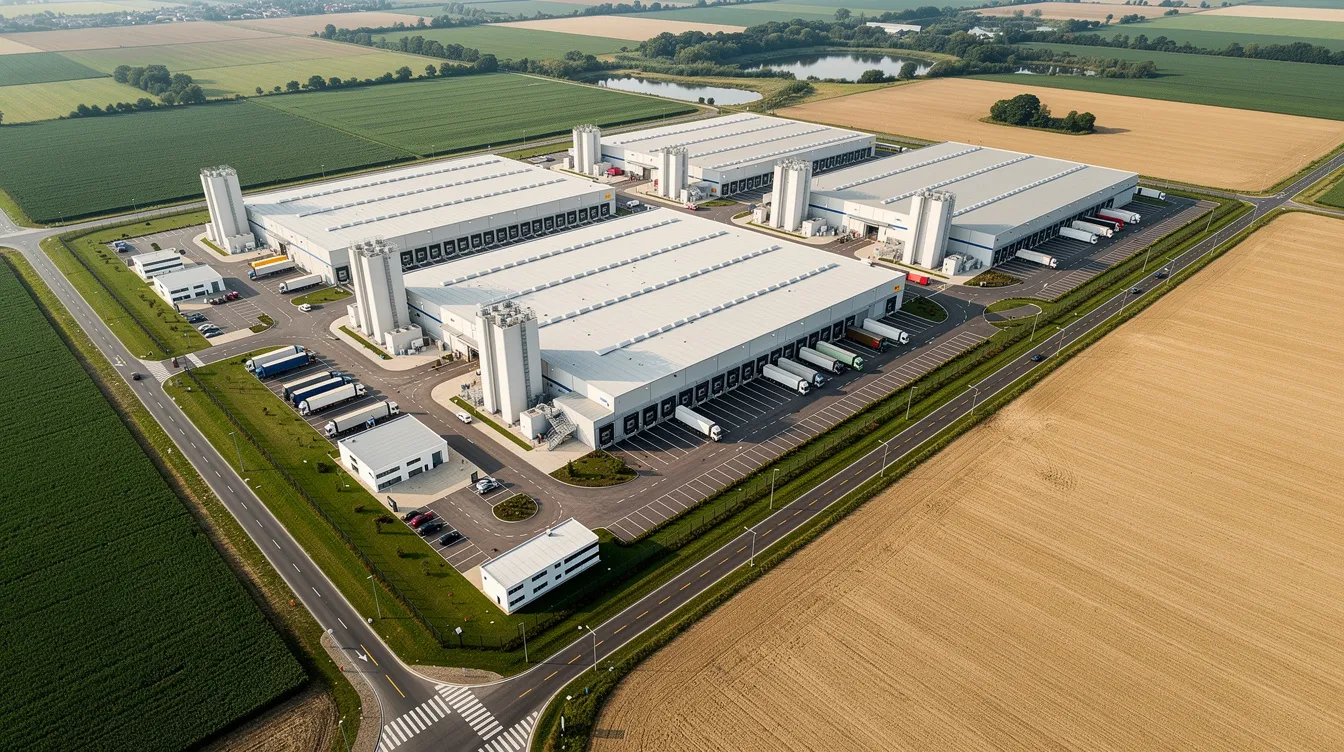
Cluster location has the single largest impact on raw material security, logistics cost and long-term viability. Proposals should demonstrate raw material availability within a specified radius, supported by district-wise production data over 3–5 years from official sources.
Key factors include seasonal procurement windows and perishability, proximity to mandis and FPOs for farm-gate procurement, road connectivity to national highways and consumption centres, export logistics to ports or ICDs, 24×7 power availability and industrial water access, and suitable land use zoning. Change of Land Use approvals frequently cause major delays in APC projects. State governments may offer complementary incentives such as stamp duty concessions or power tariff subsidies, and competition among states to attract private investment in food processing is increasing.
A professional raw material mapping study should be a formal chapter in the agro processing cluster project report.
Agro Processing Cluster Infrastructure Requirements
APC infrastructure planning divides into basic enabling infrastructure and core infrastructure, per MoFPI’s APC scheme guidelines. Basic enabling infrastructure includes roads, drainage, and power supply distribution, water supply networks, effluent treatment plant, parking bays, weighbridge, security and admin building. Core infrastructure includes cold storage and sorting facilities, warehouses, IQF tunnels, pre-cooling chambers, ripening chambers, common food testing laboratory equipment, steam boilers, and material handling equipment such as forklifts and dock levellers.
The DPR must clearly segregate common infrastructure (funded by the cluster developer, potentially supported via grants-in-aid) from unit-specific plant and machinery (funded by individual food processing units, not eligible under APC infrastructure grants).
Plant Layout and Cluster Master Planning
Master planning must integrate food safety zoning, material flow, traffic circulation and utility corridors. Processing zones should be separated from raw material receiving yards and waste handling areas. One-way material flow from gate to receiving, processing, storage and dispatch minimises contamination risk. Utility corridors for power, water, steam and effluent lines should be planned with expansion capacity. A hypothetical 20-acre APC might allocate approximately 40–50% to industrial plots, 15–20% to roads and circulation, 15–20% to common facilities, 5–10% to utilities and ETP, and 5–10% to green belt and future expansion.
Agro Processing Cluster Setup Cost in India
APC setup cost varies significantly by location, land price and cold chain intensity. All figures below are illustrative planning ranges.
| Project Category | Illustrative Investment Range |
|---|---|
| Regional agro processing cluster | ₹10–25 crore |
| Medium integrated cluster | ₹25–75 crore |
| Large integrated agro-industrial cluster | ₹75–200+ crore |
Indicative percentage allocation (assumption-based):
| Component | Approximate Share |
|---|---|
| Land acquisition or lease | 10–20% |
| Buildings and industrial sheds | 25–35% |
| Cold storage and core facilities | 20–30% |
| Utilities, power and ETP | 10–15% |
| Professional fees and pre-operative expenses | 5–10% |
| Contingency | 5–8% |
The total project cost must include preliminary expenses, interest during construction, and initial working capital margin. A professionally prepared DPR should recalibrate these for each specific location using recent quotations and state-specific construction rates.
Agro Processing Cluster Investment and Feasibility Analysis
Feasibility has two distinct layers: the cluster developer’s infrastructure business and the individual food processing unit’s manufacturing business. The DPR should clearly separate both. Market feasibility requires assessing demand for industrial plots from food processing industries, identifying anchor units that drive initial occupancy, and analysing competing clusters within a 100–250 km radius.
Financial feasibility for the developer involves plot or shed lease rate assumptions, occupancy ramp-up year-by-year, tariffs for utilities and cold storage services, and O&M costs. The DPR should compute project IRR, equity IRR, and sensitivity analysis on occupancy rates, rental tariffs and cost overruns.
Business Model and Revenue Sources
APC revenues typically combine one-time land monetisation and recurring service incomes: sale or long-term lease of industrial plots, rental income from factory sheds, cold storage and dry warehouse rentals, user charges for sorting, grading and packing facilities, utility recovery charges, testing laboratory fees, and maintenance charges. Key risks include under-occupancy, customer concentration, and regulatory constraints on commercialisation of assets created with grants-in-aid. The DPR must align the revenue model with conditions of any government scheme.
Agro Processing Cluster Financial Projections
Bankable financial projections should cover at least 10 years from commissioning. Project viability should be illustrated with financial projections over 7 to 10 years capturing capex phasing, occupancy ramp-up, operating margins and debt servicing. Financial ratios such as IRR and NPV are key indicators of project attractiveness. The Debt Service Coverage Ratio should ideally average between 1.5 and 2.0 over the loan tenure. Dairy processing financial projections follow a similar analytical framework for individual unit-level feasibility.
The model should include project IRR vs equity IRR (clearly distinguishing returns on total project cost from returns to promoter equity), payback period, NPV, and break-even occupancy analysis. Sensitivity testing on ±10–15% changes in occupancy, tariffs and debt cost should be integral to the DPR’s risk analysis. CMA Data preparation for banks must reconcile with these projections.
Working Capital Requirements
Working capital for the cluster developer is typically modest: trade receivables from tenants, monthly energy and O&M bills for cold storage operations, and limited spares inventory. For individual agro processing units, working capital is substantial due to seasonal agricultural produce procurement, finished goods inventory and trade receivables from distributors. Mixing unit-level raw material funding into cluster-SPV cash flows distorts DSCR and misleads lenders. Professional models keep these layers clearly separated.
Bank Loan DPR and Project Finance
Banks assess infrastructure projects on financial viability and technical feasibility. A bankable APC DPR should contain a clear means of finance table (equity, term loan, grants-in-aid), DSCR calculations over loan tenure, collateral structure, and promoter guarantees. The combined net worth of promoters must be at least 1.5 times the grant amount sought. Minimum promoter equity contribution is 20% of project cost in general areas and 10% in difficult areas, with at least 20% through term loan. Engaging with banks early can streamline the appraisal process for project finance. A detailed project report is essential for securing bank loans and grants. Third-party technical validation can strengthen project reports for funding applications.
Government Schemes and Incentives
The central sector scheme for creation of infrastructure for agro processing clusters (APC) is implemented under Pradhan Mantri Kisan Sampada Yojana (PMKSY) by the Ministry of Food Processing Industries (MoFPI). The scheme’s operational guidelines were updated in April 2025.
Key features:
- Financial assistance pattern: Grants cover 35% of eligible project cost in general areas. Grants cover 50% of project costs in North Eastern States, namely Himalayan States (Himachal Pradesh, Jammu & Kashmir, Uttarakhand), islands, and state notified ITDP areas, as well as for SC/ST entrepreneur-led PEAs
- Maximum grant amount: Rs. 10 crore per project
- Minimum investment: At least 5 food processing units must be established per cluster with minimum aggregate investment of Rs. 25 crores (excluding land and common infrastructure cost)
- Land requirement: Minimum 10 acres of land is required for the cluster (owned or leased for at least 50 years)
- Grant release: Grants are released in four instalments based on expenditure milestones against eligible project cost
- Monitoring: The operational phase is monitored and evaluated by MoFPI
Since 2020, 40 agro processing clusters have been approved. However, implementation challenges are common. Eligible organizations include NGOs, cooperatives, private sector companies and farmer producer organizations. The scheme aims to encourage entrepreneurs to set up food processing units based in clusters with shared infrastructure, promoting farmers welfare through better market linkages and reduced post-harvest losses.
State-level incentives (capital subsidies, interest subsidies, SGST reimbursement) may complement central grants. Approval under any scheme is not automatic or guaranteed. The north east states and ITDP areas receive enhanced financial assistance to encourage private investment in food processing.
Licences, Approvals and Regulatory Compliance
Statutory clearances from local bodies and environmental authorities are necessary for compliance. Typical approvals include land use conversion or CLU, building plan approval, Consent to Establish and Operate from State Pollution Control Board, fire NOC, electrical safety approvals, FSSAI licensing for each food business operator, boiler registration, factory registration, groundwater permissions where applicable, and GST registration. Import Export Code is needed for export-oriented units. The DPR should include a regulatory roadmap outlining approvals, responsible party, timelines and sequencing.
Risk Assessment and Mitigation
A robust DPR should include a risk analysis matrix linking key risks to financial sensitivity scenarios:
- Land and regulatory risk: Title disputes, CLU delays, environmental clearance – mitigated through due diligence before purchase and early regulatory engagement
- Occupancy risk: Under-occupancy of plots or sheds – mitigated through anchor tenant MOUs and phased development aligned with occupancy milestones
- Cost and time overruns: Common in cold storage and ETP construction – mitigated through adequate contingency (5–10%) and fixed-price EPC contracts
- Raw material volatility: Crop failures affecting tenant operations – mitigated through diversified catchment mapping and multi-crop cluster design
- Governance risk: Weak SPV management – mitigated through experienced project execution agency selection and co-operation among stakeholders
Sensitivity analysis should model worst-case combinations (cost overrun plus occupancy delay) to check DSCR headroom.
Agro Processing Cluster DPR – Detailed Project Report Contents
A bankable agro processing cluster project report should include: executive summary, promoter profile and SPV governance structure, cluster concept and business model, location analysis with agricultural resource mapping, market demand assessment, infrastructure plan (basic enabling and core), master layout, technical specifications, capital expenditure estimates with BOQ-level detail, operating cost projections, revenue assumptions with benchmarking, means of finance, ten-year financial projections, DSCR, IRR, NPV and break-even analysis, risk and sensitivity analysis, implementation schedule with grant disbursement triggers, government scheme analysis, and regulatory roadmap.
Generic downloadable project reports are inadequate for investment decisions in the ₹25–100+ crore range. Lenders and investors expect tailor-made assumptions, defensible data and professional scrutiny. Where cluster developers seek investors, DPRs can be adapted into investor-ready information memoranda and pitch decks.
Investor Readiness and Funding Strategy
APCs involve both infrastructure investment and food processing value chain risk. Funding options include promoter equity from agro groups, strategic investors (large food companies, logistics players), institutional investors interested in revenue-generating industrial infrastructure, and joint ventures or public private partnership structures with state industrial corporations. Investor readiness requires a clear SPV structure, documented anchor tenant pipeline, and realistic IRR ranges supported by a professionally prepared financial model.
Common Mistakes in Agro Processing Cluster Planning
Many APC proposals fail at bank appraisal or implementation due to avoidable errors:
- Acquiring large tracts of land before robust demand and raw material mapping
- Overestimating number and speed of tenant sign-ups, producing optimistic occupancy curves
- Underestimating cost of power, water and ETP systems for cold storage-heavy clusters
- Relying solely on grants-in-aid without fallback financial viability scenarios
- Combining financials of cluster SPV and in-house processing units, making cash flows opaque to lenders
- Inadequate contingency provisioning over 18–30 month implementation periods
- Weak DSCR planning with aggressive debt leaving no cushion for delays
Serious promoters should engage professional advisors early, use conservative assumptions, and structure finances so that even with lower grants or slower occupancy, the project remains serviceable.
Frequently Asked Questions
How long does it typically take to make an agro processing cluster operational?
MoFPI guidelines prescribe completion within 24 months in general areas and 30 months in north east states, Himalayan states and difficult areas. Realistic planning should add 6–9 months for DPR preparation, appraisal and sanction, making the total concept-to-operations cycle around 30–36 months in most cases.
Can a purely private promoter develop an agro processing cluster?
Yes. Private limited companies, LLPs, partnerships and proprietorship firms are eligible as Project Execution Agencies under the APC scheme, subject to net worth and other criteria. Private developers not seeking grants can still create agro-focused industrial parks, but access to MoFPI grants requires adherence to scheme norms and monitoring conditions.
How much land is practically required for a viable mid-sized cluster?
While the minimum is 10 acres, medium integrated agro processing clusters with multiple units, warehouses and cold storage typically require 15–25 acres for smooth circulation, utilities and future expansion. Optimal land size should be calculated during master planning based on number and type of food processing units based in the cluster.
Do all 5 food processing units need to be finalised before DPR preparation?
At least 5 units with minimum aggregate investment commitment are required under the scheme. While all may not be fully constructed at application stage, securing anchor and associate units with clear investment intent (MOUs, LOIs, profiles) greatly strengthens the proposal and helps size infrastructure correctly in the DPR.
When should I engage Project Report Bank for my agro processing cluster DPR?
Ideally after preliminary land identification and raw material mapping but before land purchase or EoI submission. Early engagement allows CA Manish Gugliya’s team to structure the project cost, means of finance, grant planning and bankability correctly from the start, reducing rework and strengthening the case with MoFPI, banks and investors.
Conclusion and Professional Call to Action
Agro processing clusters, when properly planned, unlock significant value in India’s food processing and agricultural supply chains. However, the creation of viable clusters demands rigorous feasibility assessment, realistic financial projections and a professionally prepared detailed project report that addresses scheme compliance, bankability and investor expectations.
Project Report Bank, led by CA Manish Gugliya, FCA, DISA (ICAI), provides customised agro processing cluster DPRs, feasibility studies, CMA Data, financial modelling and project finance advisory for serious promoters across India.
Contact via: www.projectreportbank.com (WhatsApp preferred)
Share your proposed cluster location, total land area, intended processing industries, approximate investment size, ownership model and financing requirements for a tailored professional assessment before committing capital.