Key Takeaways
Understanding the agro processing park setup cost in India requires examining land price, infrastructure scope, cold chain requirements and target industry mix. Here are the key investment benchmarks under 2025–26 price conditions:
- A 10-acre agro processing park in a Tier-3 or peripheral agro belt may require a total project cost of approximately ₹30–45 crore including land and basic common facilities, while a 25-acre park in a Tier-2 location typically falls in the ₹60–90 crore range, and a 50-acre integrated food park or mega food park-scale development can reach ₹130–200 crore or more depending on land pricing and infrastructure intensity.
- Common park infrastructure-internal roads, utilities, warehousing, cold chain infrastructure, testing laboratories and effluent treatment-is a separate cost category from tenant-specific plant and machinery investments. Estimating project costs requires separating shared park infrastructure from individual processing units.
- Project economics depend heavily on occupancy levels, lease and rental rates, phased development strategy, and the financed term-loan structure including DSCR, project IRR and payback period.
- Land cost alone can swing total project cost by 30–50%, ranging from ₹20–40 lakh per acre in remote agro belts to ₹1.5–3.0 crore per acre near peri-urban corridors.
- A customised Detailed Project Report and financial model, prepared by an experienced project finance adviser, is essential before finalising investment decisions of this scale.
Introduction: Agro Processing Park Setup Cost & Investment Context in India
An agro processing park is a planned, multi-tenant industrial estate designed to house food processing units, agro processing operations and related services within a shared infrastructure campus. These parks serve the broader agro processing value chain-grains, oilseeds, pulses, spices, dairy, fruits and vegetables-by providing common utilities, cold storage, warehousing, testing and packaging facilities that individual food processing industries would find expensive to develop independently.
This article examines agro processing park setup cost, capital investment and project economics in India with 2025–26 level indicative benchmarks. All figures presented are illustrative and based on publicly available case studies, policy documents and professional experience. They are not quotations or guaranteed cost estimates.
Setting up an agro-processing park requires capital expenditures for land and infrastructure that vary substantially by location, scale and infrastructure intensity. A small 10-acre agro processing park in a Tier-3 peripheral location may require approximately ₹30–45 crore including land, while a 25-acre park could cost ₹60–90 crore and a 50-acre integrated food park-style development could reach ₹130–200 crore or beyond. These ranges reflect differences in land pricing, cold chain scope, construction quality and the targeted industry mix.
Agro processing parks differ from stand-alone agro processing units (single-factory investments), from agro processing clusters (smaller scheme-driven developments under MoFPI guidelines) and from integrated grain industrial complexes (grain-centric campuses with milling, storage and logistics). The article is written from the perspective of CA-led project finance advisory and covers CAPEX estimation, OPEX, revenue models, financial projections, IRR, DSCR and bankability considerations relevant to serious project promoters.
Concept & Business Models: Agro Processing Park, Agro Processing Clusters & Mega Food Parks
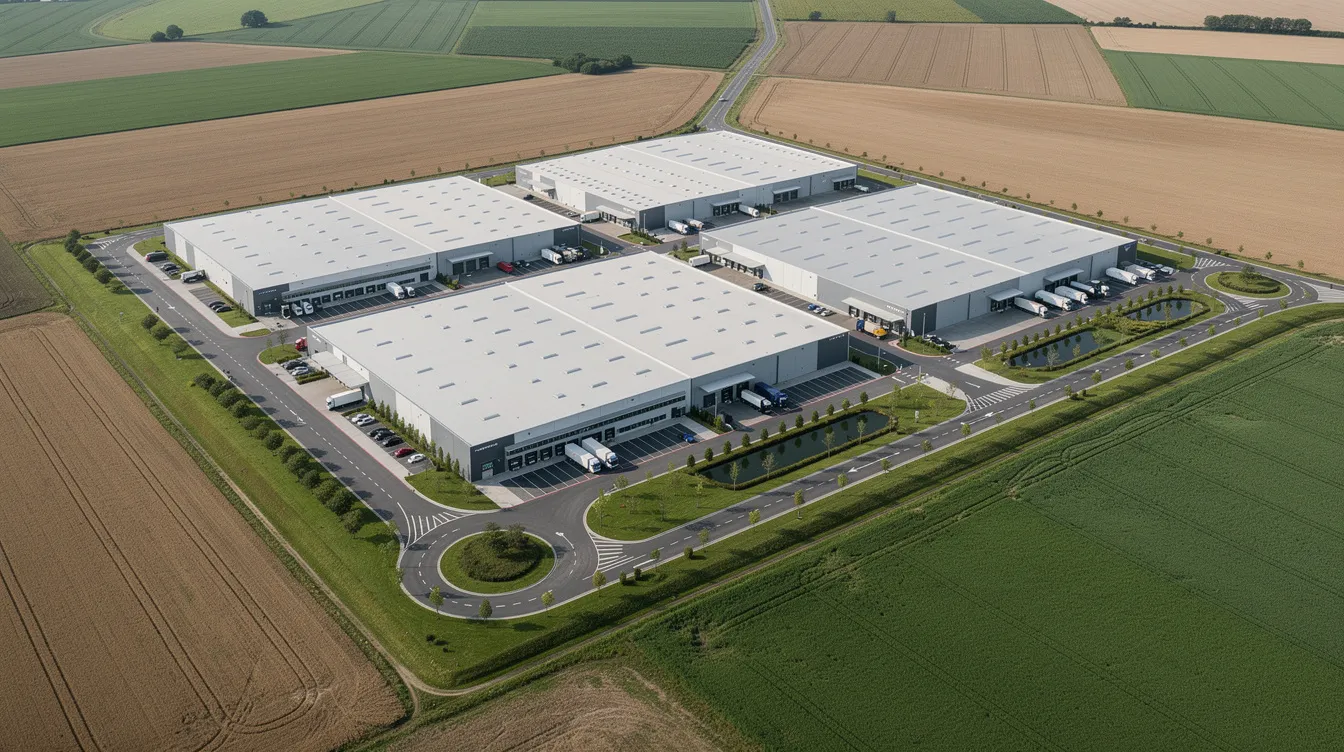
An agro processing park functions as a planned industrial estate focused specifically on food processing and agro processing units. The park developer builds common infrastructure-roads, power distribution, water supply, effluent treatment, cold storage and warehousing-and allocates plots or built-up sheds to individual processing units that operate as tenants. This model reduces the capital burden on each tenant and provides shared facilities and modern infrastructure that smaller processors could not afford individually.
Differentiating Park Models
It is important to distinguish between related but distinct development models:
- An agro processing cluster, as defined under MoFPI schemes, is typically a smaller development (minimum 10 acres) with basic enabling infrastructure and a limited number of processing units. Over 40 agro processing clusters have been approved since 2020 under government initiatives. For a detailed understanding of this model, readers may refer to the Agro Processing Cluster Project Report.
- An agro processing park is a broader, multi-tenant industrial park with more extensive common utilities, cold chain, testing and packaging facilities, typically spanning 15–50 acres and hosting a wider mix of food processing industries.
- An integrated grain industrial complex is a grain-centric campus integrating milling, silos, drying, sorting and logistics infrastructure, as discussed in the Integrated Grain Industrial Complex Project Report.
- A mega food park is a large-scale development (50–100 acres for the central processing centre alone) typically promoted under the Mega Food Park Scheme, which supports food processing infrastructure development including collection centers, primary processing centers and a central processing center. The average investment per mega food park is approximately ₹250 crore, and each project typically involves 25–30 food processing operations. When fully operational, each such project benefits around 25,000 farmers through direct procurement linkages and value addition of agricultural produce.
Well-known examples include the Avantee Mega Food Park, Paithan Mega Food Park, Zoram Mega Food Park, Cremica Mega Food Park, MITS Mega Food Park, Tripura Mega Food Park, Satara Mega Food Park, Srini Mega Food Park and the Indus Mega Food Park, each representing varying scales of integrated mega food park development across different states.
Business Models and Developer Roles
The park developer may be an individual promoter, an infrastructure company, a special purpose vehicle promoted by a group of processors, or a state government industrial development corporation. Common business models include:
- Self-operated single-owner parks where the developer retains land ownership and leases built-up factory sheds.
- Multi-tenant lease-based models with long-term plot leases and built-to-suit sheds, as explored in the Multi-Tenant Agro Food Processing Park Project Report.
- A mix of outright plot sale combined with shared utility charges and common facility fees.
- PPP or SPV-based development structured around anchor tenants and phased infrastructure creation.
The choice of model directly affects the agro processing park setup cost structure, revenue timing and financing requirements.
Land Requirement, Site Selection & Development Cost
Estimated land acquisition for agro-processing parks is typically a minimum of 10 acres for a viable development. Small parks may occupy 10–15 acres, medium developments 15–25 acres, and large integrated food parks 40–50 acres or more. The land required should ideally be a single contiguous parcel with adequate road frontage and a shape suitable for efficient plot layout, internal roads and utility corridors.
Land Acquisition Options
Developers typically acquire land through one of the following routes:
- Outright purchase of private agricultural land followed by conversion to industrial or food park zoning
- Purchase of land within a notified industrial estate where conversion is already complete
- Long-term lease from state industrial development corporations at concessional rates
- PPP arrangements on government-owned land
Land Cost Variation by Location
Land cost varies dramatically by geography and is one of the largest variables in the total project cost:
| Location Type | Indicative Land Cost (₹ per acre, 2025–26) |
|---|---|
| Tier-3 agro belts (parts of Madhya Pradesh, Chhattisgarh, Telangana, Odisha) | ₹20–40 lakh |
| Tier-2 agro hubs (Indore, Nagpur, Aurangabad belt) | ₹80 lakh–₹1.5 crore |
| Peri-urban corridors near metros | ₹1.5–3.0 crore or higher |
These are broad benchmarks drawn from publicly reported allotment rates and market observations. Actual land costs must be verified locally. For instance, Telangana food park land allotments near Khammam have been reported at approximately ₹25 lakh per acre in agro-zone locations.
Site Selection Factors
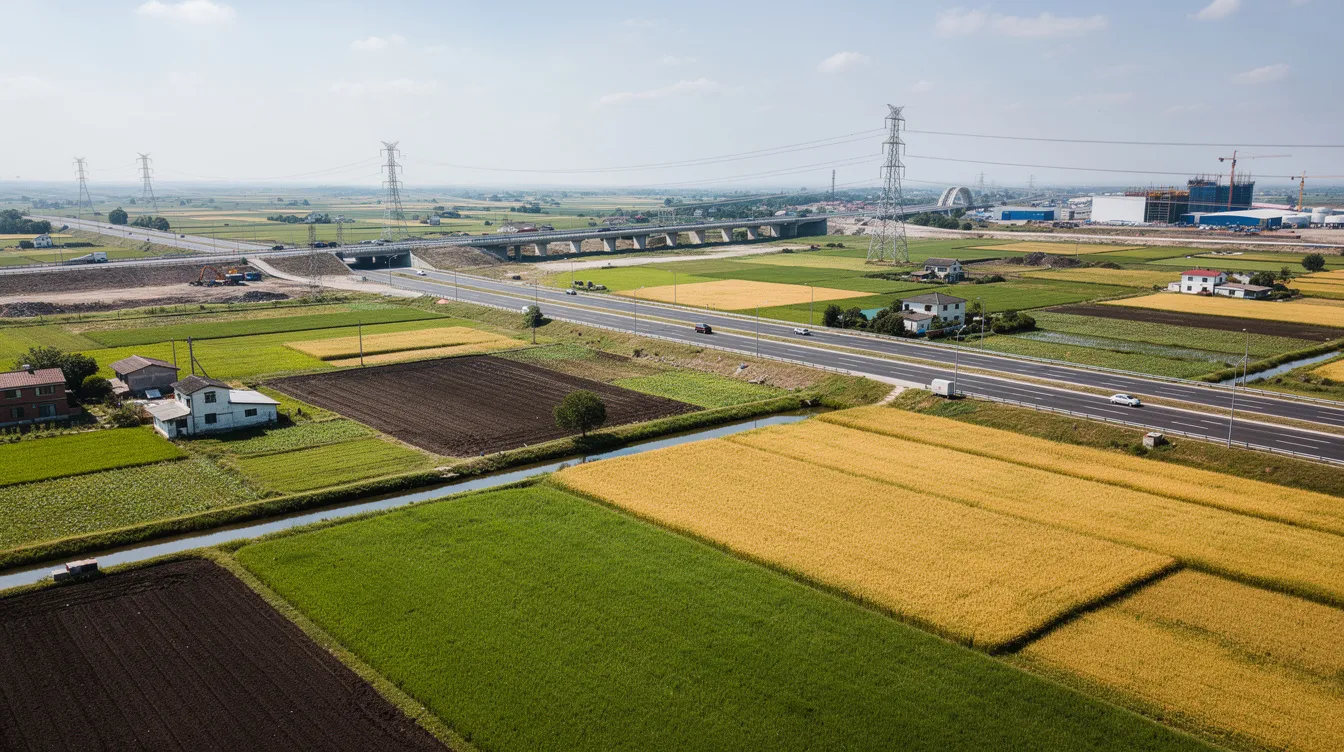
Major site selection factors that influence both agro processing park setup cost and long-term viability include proximity to raw material catchment areas (farms, APMCs, mandis), access to national and state highways, availability of power and water, land use zoning and environmental clearance history, flood risk and soil bearing capacity. Detailed guidance on technical land-planning considerations is available in the article on Agro Processing Park Land Requirement and Site Selection.
Land Development Cost Components
Cost components for agro-processing parks include site development and basic infrastructure such as site grading and levelling, internal road and drainage networks, boundary wall and fencing, gate complex with security and access control, and basic landscaping. Indicative per-acre land development costs (excluding land purchase) range from ₹30–70 lakh per acre depending on road width, drainage specifications, streetlighting and security systems.
Total Capital Investment & Project Components
The total agro processing park project cost in India is driven by a logical bundle of project components. The critical distinction is between common infrastructure CAPEX borne by the park developer and individual plant and machinery CAPEX borne by tenant industries. Individual processing units require specific infrastructure within agro-processing parks-their own machinery, internal utilities and production-specific civil works-which is not part of the park developer’s investment.
Major Project Components
The developer’s investment typically covers:
- Land acquisition or lease premium
- Land development, internal roads and drainage
- Civil construction: factory sheds, processing halls, warehousing, cold storage buildings, administrative block and utility buildings
- Internal electrical distribution, substation, DG backup and streetlighting-basic enabling infrastructure includes power supply and water supply systems
- Water supply, storage and water treatment plant
- Steam and boiler infrastructure where required by the targeted agro processing industry mix, including provision for steam sterilization units
- Effluent treatment plant (ETP), sewage treatment plant (STP) and solid-waste handling-common infrastructure in agro-processing parks includes provision for wastewater treatment
- Common warehousing including dry warehouses and cold chain infrastructure (cold storage, ripening chambers, pre cooling chambers, mobile pre coolers and specialized storage facilities)
- Common packing facilities, testing laboratories and dispatch facilities
- IT, communication, security systems, CCTV, weighbridge
- Engineering, consultancy, project management and EPC fees
- Preliminary and pre-operative expenses-pre-operative and soft costs encompass consultancy and legal fees
- Interest during construction (IDC)
- Contingency provision
- Initial working capital margin for park-level operations
The coordination of common utilities planning and common packaging, testing and dispatch facilities directly influences both CAPEX estimation and future revenue potential.
Illustrative CAPEX Breakdown: 25-Acre Park in Tier-2 Location
| Project Component | Indicative Cost (₹ Crore) | % of Total |
|---|---|---|
| Land acquisition (25 acres × ~₹1.0 crore/acre) | 25.0 | 33% |
| Site development, roads, drainage, boundary | 5.5 | 7% |
| Civil construction (sheds, admin, utility blocks) | 14.0 | 19% |
| Electrical distribution, substation, DG | 3.5 | 5% |
| Water supply, storage, WTP | 2.0 | 3% |
| ETP, STP, waste management | 1.5 | 2% |
| Cold storage & warehousing (500 MT capacity) | 5.0 | 7% |
| Common packaging, testing, lab | 2.5 | 3% |
| IT, security, weighbridge, misc. | 1.5 | 2% |
| Engineering, consultancy, EPC fees | 3.0 | 4% |
| Preliminary & pre-operative expenses | 2.5 | 3% |
| Interest during construction | 4.0 | 5% |
| Contingency (~5%) | 3.0 | 4% |
| Working capital margin | 2.0 | 3% |
| Total indicative project cost | ~75.0 | 100% |
This table is purely illustrative and would need to be fine-tuned during DPR preparation with project-specific quotations, engineering layouts and local cost verification. GST, stamp duty, registration charges and statutory fees should also be factored into the total agro processing park project cost in India.
Core infrastructure includes cold storage and warehousing facilities, which together with irradiation facilities and food safety laboratories can represent 10–15% of total CAPEX in cold chain-intensive parks. Agro processing clusters under government schemes also require common basic enabling infrastructure of a similar nature.
Capacity-Based Investment Scenarios: 10-Acre, 25-Acre & 50-Acre Agro Processing Parks
Comparing the agro processing park investment cost across different scales helps promoters understand how economies of scale, land pricing and infrastructure scope interact. Below is an illustrative comparison under 2025–26 price conditions.
| Parameter | 10-Acre Park | 25-Acre Park | 50-Acre Park |
|---|---|---|---|
| Typical location | Tier-3 agro belt | Tier-2 agro hub | Tier-2 / peri-urban |
| Land cost per acre (indicative) | ₹30 lakh | ₹1.0 crore | ₹2.0 crore |
| Total land cost | ₹3.0 crore | ₹25.0 crore | ₹100.0 crore |
| Site development & roads | ₹2.5 crore | ₹5.5 crore | ₹9.0 crore |
| Civil construction & sheds | ₹8.0 crore | ₹14.0 crore | ₹25.0 crore |
| Utilities, cold chain & common facilities | ₹7.0 crore | ₹11.0 crore | ₹22.0 crore |
| Pre-operative, IDC & contingency | ₹5.0 crore | ₹9.5 crore | ₹14.0 crore |
| Working capital margin | ₹1.0 crore | ₹2.0 crore | ₹3.0 crore |
| Total project cost | ₹26–35 crore | ₹67–80 crore | ₹170–200 crore |
| Approximate capital cost per acre | ₹2.6–3.5 crore | ₹2.7–3.2 crore | ₹3.4–4.0 crore |
| Estimated tenant plots | 5–8 | 12–18 | 25–30 |
These figures are consistent with publicly reported benchmarks. The HAFED Mega Food Park in Rohtak, Haryana (approximately 50 acres) had a total project cost of approximately ₹172.83 crore, while the Nandvan Mega Food Park in Mathura (57.41 acres) was estimated at ₹120.77 crore at older price levels. Tamil Nadu’s small food park programme envisages parks of approximately 10 acres each at around ₹27.4 crore per park. After adjusting for 25–40% inflation in construction materials and cold chain equipment since 2018–19, the ranges above are reasonable under current conditions.
Capital cost per acre does not always decline linearly with size because larger parks in peri-urban locations carry higher land costs. However, the per-acre cost of utilities, roads and common facilities does benefit from economies of scale. The targeted industry mix and value chain integration significantly affects infrastructure intensity-a park focused on cold chain-dependent horticulture processing will cost more per acre than one anchored by grain mills.
Where a 50-acre park integrates grain handling, silos and logistics, it begins to function as an integrated grain industrial complex, and the infrastructure layout and EPC cost analysis for such developments becomes relevant.
Financing Structure & Means of Finance
The agro processing park setup cost must be translated into a workable means-of-finance plan. Typical capital structures for Indian agro processing park developments follow these broad patterns:
| Source | Typical Share |
|---|---|
| Promoter equity | 30–40% |
| Term loans from banks / FIs | 50–65% |
| Grant / viability gap / strategic equity (where eligible) | 0–15% |
Financing differs between purely private park developers, special purpose vehicle structures promoted by a group of agro processors, and PPP models involving state government industrial agencies. Tenant contributions-advance lease deposits, infrastructure development charges, upfront plot premiums-also affect project cash flows and can partially offset the developer’s equity requirement, though lenders evaluate these carefully.
Government Scheme Support
Government schemes can provide significant funding for agro-processing projects, though eligibility and quantum must be verified from official MoFPI or state government notifications at the time of project planning. Under the agro processing cluster scheme, grants cover 35% of eligible project cost in general areas and 50% of project costs in North Eastern States and difficult areas, with a maximum grant amount of Rs. 10 crore per project. Under the Mega Food Park Scheme, eligible projects can receive up to 50% capital grant in general areas and up to 75% grant in difficult areas, subject to a maximum of ₹50 crore. The Mega Food Park Scheme specifically supports cold chain infrastructure development alongside other core infrastructure.
Grants are disbursed against completed, eligible project components based on proportionate expenditure verification and not as upfront funding. The approved grant and total grant figures are linked to successful completion of defined project milestones. The eligible project cost excludes land, which means promoters must fund land acquisition entirely from equity or commercial borrowings.
Lender appraisal typically focuses on adequacy of promoter contribution and net worth, quality of the detailed project report and its assumptions, projected DSCR over the loan tenure, security cover, tie-ups with anchor tenants and minimum assured occupancy.
Operating Expenses & Revenue Model of an Agro Processing Park
Establishing the infrastructure is only part of the investment challenge. Sustainable project economics depend on realistic operating expenses and a diversified revenue model that generates sufficient cash to service debt and provide returns to promoters. Working capital encompasses raw material procurement and operational expenses for the park’s own operations-utilities, maintenance supplies, consumables and administrative needs.
Recurring Operating Expenses
Typical annual OPEX for a park developer includes:
- Staff salaries and wages (administration, technical, security, maintenance)
- Electricity for common areas, pumping, cold storage operations
- Water, fuel for DG sets and boiler operations, consumables
- Repairs and maintenance of roads, sheds, utilities and equipment
- Insurance for assets and third-party liability
- Statutory compliance costs including environmental clearances and food safety certifications
- Marketing, tenant relations and promotional activities for the park
- Administrative overheads and professional fees
Agro-processing facilities must be designed to handle seasonal peaks in production, which means utility costs and cold storage energy consumption may vary significantly across the year. This seasonality must be reflected in monthly cash-flow projections rather than simple annual averages.
Revenue Streams
Revenue for the park developer comes from multiple sources, and it is important to distinguish recurring annuity-type revenues from one-time or lumpy receipts:
Recurring revenues:
- Long-term industrial plot leases (annual ground rent)
- Factory shed rentals for built-up units
- Common facility usage charges (ETP, boiler, steam, compressed air, laboratory)
- Warehousing and cold-storage rental income from dry warehouses and cold chain operations
- Utility recovery (power, water) with margin on bulk tariffs
- Packaging, testing and dispatch service income from related services
- Parking, weighbridge and logistics handling charges
One-time or lumpy revenues:
- Plot premium or development charges collected upfront
- Refundable security deposits (not revenue but improve cash position)
Occupancy levels-the percentage of plots leased and sheds occupied-are the single most important revenue driver. Securing a minimum critical mass of anchor tenants before full-scale development reduces revenue risk substantially. The process of anchor tenant selection and plot allotment deserves careful strategic attention during the planning stage itself.
In the Nandvan Mega Food Park, approximately 25.6 acres out of 57.41 acres (about 45%) was designated as leasable area, with the remainder consumed by common infrastructure, roads and utilities. This leasable-area ratio is a useful benchmark for revenue modelling.
Project Economics, Financial Feasibility & Sensitivity
Agro processing park financial feasibility is best assessed through 5–10 year projections covering profit and loss, cash flows and key ratios under conservative, base and optimistic scenarios. All financial projections are estimates and should not be treated as guaranteed returns.
Illustrative 10-Year Projection Framework (25-Acre Park)
Key assumptions:
- Total project cost: ~₹75 crore
- Debt-equity ratio: 60:40 (₹45 crore term loan, ₹30 crore equity)
- Phased occupancy: 40% in Year 1, 60% in Year 2, 75% in Year 3, 85–90% from Year 4 onwards
- Average lease rate: ₹8–12 per sq. ft per month for built-up sheds
- Annual rental escalation: 5%
- Operating cost escalation: 5–7% per annum
- Loan tenure: 8–10 years with 12–18 month moratorium
- Value addition through processed products drives tenant willingness to pay premium rates
Key financial outputs analysed:
| Metric | Indicative Range (Base Case) |
|---|---|
| Stabilised annual revenue (Year 4+) | ₹12–18 crore |
| EBITDA margin | 45–60% |
| Break-even occupancy | 50–60% of leasable area |
| Time to operational break-even | Year 2–3 |
| Average DSCR (over loan tenure) | 1.4–1.8x |
| Project IRR | 14–18% |
| Equity IRR | 18–24% |
| Simple payback on equity | 6–9 years |
| NPV (at 12% discount rate) | Positive under base case |
These ranges are hypothetical illustrations based on the assumptions stated above. Actual outcomes will depend on location, occupancy, rental rates, construction costs and financing terms, all of which must be modelled in a customised DPR.
Sensitivity Analysis
Project viability should be tested against adverse scenarios:
- 10–15% higher construction cost: Increases total project cost by ₹7–11 crore, reducing IRR by 1.5–2.5 percentage points and increasing payback period.
- Slower occupancy ramp-up: If occupancy reaches only 60% by Year 4 instead of 85%, DSCR may fall below 1.2x in early years, creating debt-servicing pressure.
- Lower-than-expected rentals: A 15% reduction in rental rates compresses EBITDA margins and extends break-even by 1–2 years.
- 6–12 month construction delay: Increases IDC significantly, delays revenue commencement and can reduce equity IRR by 2–4 percentage points.
The rural sector and rural areas where many of these parks are located often present challenges around capacity building, workforce availability and infrastructure connectivity, which should be factored into realistic projection timelines. Post harvest losses reduction and creating employment opportunities are important development objectives, but the financial model should be built on revenue and cost fundamentals rather than development aspirations alone.
Risk Factors, Approvals & Mitigation Strategies
Agro processing park development involves several categories of risk that must be addressed during project planning.
Regulatory and approval risks:
- Land conversion and change of land use can cause significant delays, especially near urban zones. Agro-processing parks necessitate environmental compliance and clearances from State Pollution Control Boards (consent to establish and operate), along with building plan approvals, fire NOC and FSSAI-related considerations for common facilities. State-level clearances may also be required from local municipal or panchayat authorities in states like West Bengal, Andhra Pradesh and others with specific agricultural land policies.
Construction and EPC risks:
- Underestimation of quantities and costs, contractor delays, escalation in steel and cement prices, and interface risks between civil, electrical, mechanical and cold chain vendors. Agro-processing park projects often leverage project management consultancy for successful execution to mitigate these risks.
Market and occupancy risks:
- Inability to attract enough tenants, competition from government-developed food parks in locations like Udham Singh Nagar, West Godavari or West Tripura, and changes in crop patterns reducing attractiveness of agricultural products processing in that region.
Financial risks:
- Higher-than-projected interest rates, delayed disbursement of term loans or separate amount of approved subsidies, and DSCR pressure during early years due to low occupancy.
Mitigation Strategies
- Robust pre-project feasibility study and market assessment before committing capital
- Early MOUs or LOIs with anchor tenants and confirmed demand from agriculture and food processing enterprises
- Phased development of infrastructure aligned with confirmed tenant demand, reducing idle investment
- Fixed-price or well-structured EPC contracts with performance guarantees
- Conservative debt sizing with adequate moratorium, ensuring the benefit of grant or aid flows through to the project timeline
- Professional DPR preparation covering all project components with sensitivity analysis
DPR, Bank Finance Documentation & Role of Project Report Bank
For agro processing park projects involving ₹30–200+ crore of capital, an investment-grade Detailed Project Report is not optional-it is the foundation for both investment decisions and bank appraisal. Detailed Project Reports are crucial for securing financing for agro-processing parks of this scale.
A professional DPR for an agro processing park should cover concept justification, promoter profile, detailed industry mix planning, land requirement and master plan, comprehensive CAPEX estimates with rate justifications, implementation schedule, tenant acquisition strategy, revenue model with tariff and lease framework, and complete financial projections including sensitivity and risk analysis.
Beyond the DPR, bank-finance documentation includes CMA Data for working capital assessment, term-loan application formats, projected balance sheet, P&L and cash-flow statements, DSCR workings, repayment schedules and compliance with infrastructure lending guidelines.
Professional Advisory from Project Report Bank
Project Report Bank, led by CA Manish Gugliya, FCA, DISA (ICAI), with more than 20 years of professional experience, provides customised DPR preparation, project cost assessment, means-of-finance planning, detailed financial projections with DSCR, IRR, NPV, payback and sensitivity analysis, CMA Data preparation, bank loan proposal structuring and investor-ready documentation for agro processing and food park projects across India.
The approach is to combine practical business understanding with structured financial analysis-realistic assumptions, transparent calculations, and a proposal that the promoter can understand and confidently present to financial institutions or investors.
Serious promoters, infrastructure companies and agro processing groups planning park development may explore customised project feasibility and DPR services through www.projectreportbank.com.
Frequently Asked Questions
What is the minimum viable size and investment for an agro processing park in India?
While micro parks below 5 acres exist in some states, a professionally planned agro processing park usually starts from about 8–10 acres for meaningful viability. At this scale, total agro processing park setup cost typically falls in the ₹30–40 crore range including land and basic common facilities in lower land-cost regions. Higher land prices, advanced cold chain requirements or provision for mobile pre coolers and specialised storage can quickly increase this requirement. The scheme guidelines also specify a minimum of 10 acres for agro processing centre or cluster developments eligible for government support.
How long does it typically take to plan, construct and operationalise an agro processing park?
A realistic 18–30 month window from concept to commercial operations should be expected for a 20–30 acre park. This breaks down approximately into 6–9 months for land acquisition, regulatory approvals and DPR preparation; 9–15 months for infrastructure construction including civil, electrical and utility works; and 3–6 months for commissioning, tenant fit-outs and initial operations. Regulatory delays in land conversion or environmental clearances and EPC bottlenecks can extend this timeline materially, which is why conservative IDC assumptions are important in financial modelling.
Can a developer phase the investment instead of building the entire park upfront?
Phased development is a common and often preferable strategy. Starting with 30–50% of the land area and essential utilities to serve anchor tenants, then expanding roads, sheds, cold chain and processing halls progressively, helps manage cash flows, reduce interest during construction and align CAPEX with confirmed demand. Careful phasing also allows the developer to adjust infrastructure specifications based on actual tenant requirements rather than speculative assumptions, reducing the risk of over-building or under-utilisation in early years.
How do government schemes like agro processing clusters or mega food park schemes impact project economics?
MoFPI and certain state government schemes provide capital subsidy or grant support for eligible common infrastructure components. Under agro processing cluster schemes, grants cover 35% of eligible project cost in general areas and 50% in difficult areas and North Eastern States, with a cap of Rs. 10 crore per project. The mega food park project scheme offers higher support-up to 50% in general areas and 75% in difficult areas, capped at ₹50 crore. These grants can meaningfully improve project IRR and reduce promoter equity strain. However, actual benefit depends on the scheme in force at the time of application, project location, compliance with guidelines and successful completion of eligible milestones. Eligibility must be verified against current official notifications from MoFPI or the relevant state government before incorporating grant income into project economics.
At what stage should promoters involve a professional DPR and project finance adviser?
Ideally, a professional adviser should be engaged once the concept, broad location and approximate land parcel are identified-well before major financial commitments are made. This allows land selection, master planning, cost estimation, means of finance and preliminary bank discussions to be guided by integrated financial modelling rather than ad-hoc decisions. Promoters who finalise land purchases, initiate construction or commit to EPC contracts before completing a proper feasibility study often face funding gaps, unrealistic cost estimates or financing structures that do not align with actual project cash flows.