Key Takeaways
- The agro processing park PPP model is a contractual framework between a public authority and a private developer; the SPV is the project-specific legal entity that executes the project; and a joint venture is the equity partnership between co-owners of that SPV. A single agro processing park often combines all three.
- Project bankability depends on clear land ownership or long-term leasehold rights, a viable and diversified revenue model (lease rentals, common utility charges, cold storage and warehousing income, food processing service fees), and a robust Detailed Project Report supported by realistic financial modelling and DSCR analysis.
- Government schemes administered by the Ministry of Food Processing Industries can provide grants in aid for agro processing cluster projects and food parks, but eligibility depends on scheme-specific criteria, minimum land and investment thresholds, and strict compliance with implementation timelines.
- Risk allocation in PPP projects should be tailored to the capabilities of the private and public partners – construction and delay risks are primarily allocated to the private execution agency, while land acquisition risks are typically the responsibility of the government.
- Project Report Bank, led by CA Manish Gugliya, FCA, DISA (ICAI), provides professional DPR preparation, financial modelling and project finance advisory for agro processing parks, mega food parks and food processing industries across developing regions of India.
Introduction
Integrated agro processing parks, mega food parks and agro processing clusters have emerged as critical instruments for value addition in Indian agriculture. The food processing sector reduces post-harvest losses significantly, generates substantial employment opportunities, and transforms raw agricultural products into higher-value goods for domestic and export markets. Agro-processing hubs provide processing, packaging, storage, and marketing services that strengthen rural development and enhance agribusiness value chains.
For any large greenfield food park, the agro processing park PPP model – alongside SPV and joint venture structures – directly influences funding, control, risk sharing, and long-term sustainability. Poor structuring of ownership, land rights, and cash-flow allocation has undermined several older mega food parks, making sound project structuring a non-negotiable requirement.
The typical stakeholders in such projects include Central and State governments, State Industrial Development Corporations, the Ministry of Food Processing Industries, institutional investors, private industrial groups, anchor tenants from the food processing sector, commercial banks, and development finance institutions. Each stakeholder brings distinct interests and capabilities – land, capital, regulatory facilitation, operational expertise, or market access – and the development model must align these interests within a commercially viable and bankable framework.
Public-private partnerships improve supply chain efficiency in agriculture and can reduce post-harvest losses significantly. The PPP model should provide better value-for-money compared to traditional public procurement methods, which is why the selection of an appropriate ownership structure deserves careful analysis before any capital commitment.
Understanding Agro Processing Park Development Models
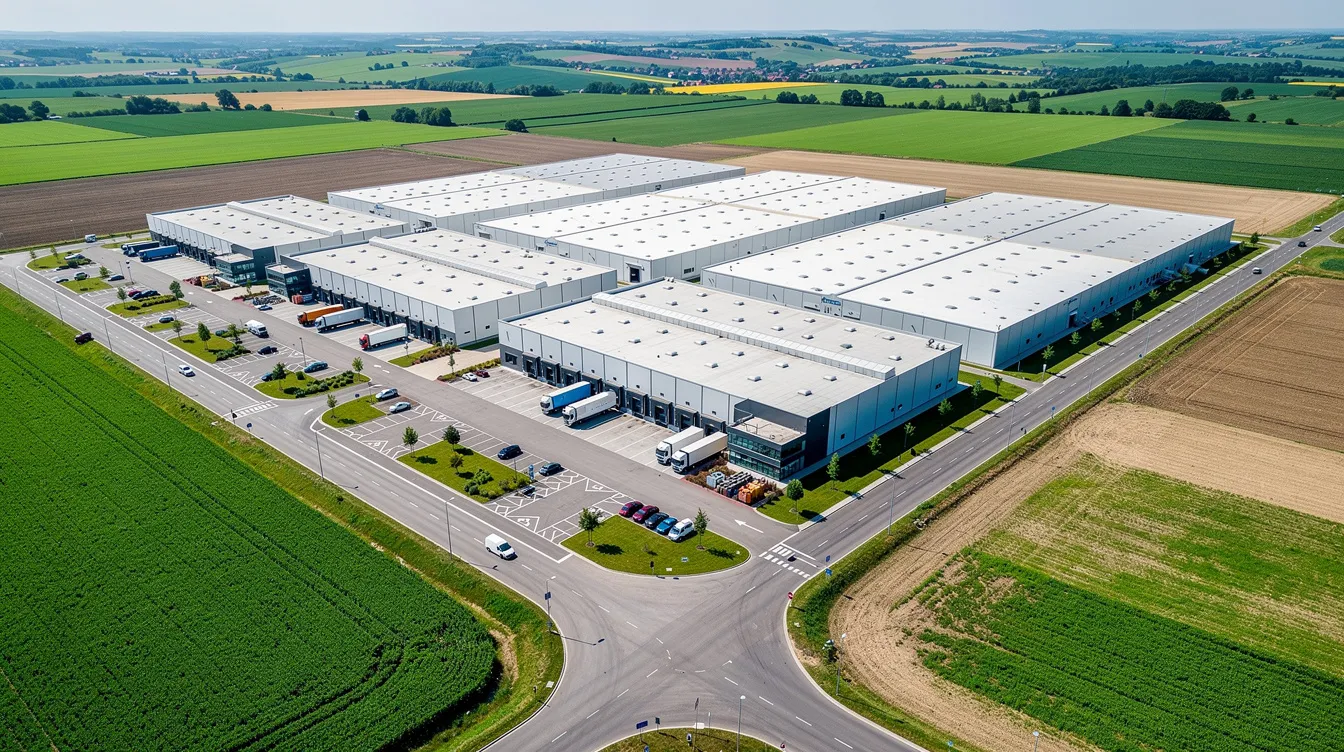
An agro processing park is an integrated industrial infrastructure project combining land, common utilities, warehousing, cold storage units, and shared food processing facilities for multiple tenant units. A viable agro-processing park structure splits into three pillars: enabling infrastructure, core infrastructure, and processing units. The park provides economies of scale, forward linkages to markets, and backward linkages to farmers and raw material sources.
The main development alternatives include:
- Fully private developer-owned park – a single promoter or corporate group develops the park on owned or leased land without formal government participation.
- Public private partnership (PPP) – a concession or participation contract between a government authority and a private developer, with defined obligations, tenure, and risk-sharing.
- Government-supported private development – private promoter receives financial assistance through grants or subsidies without a formal PPP concession.
- SPV-based project company – a project-specific legal entity (typically under the Companies Act, 2013) that ring-fences project assets, liabilities, and cash flows.
- Equity joint venture (JV) – two or more parties (government agency, private developer, anchor processors, financial investors) share ownership and governance through equity participation.
- Consortium-led parks – multiple food processing companies or cooperatives collaborate to develop shared infrastructure.
- Anchor-industry-led integrated complex – a large industrial group develops a park anchored around its own processing operations, attracting additional tenants.
The core idea is that PPP is a contractual arrangement, SPV is a legal entity, and JV is an equity partnership. One agro processing park can simultaneously be a PPP project implemented through an SPV with JV ownership. The Mega Food Park Scheme, introduced in 2008 to enhance processing facilities, required implementation through SPVs – demonstrating how scheme-driven food parks may impose additional requirements on shareholding, land, minimum processing capacity, and project timelines.
For deeper planning references on specific formats, refer to the Agro Processing Cluster Project Report and the Multi-Tenant Agro Food Processing Park Project Report.
Agro Processing Park PPP Model in India
A public private partnership in the agro processing context is a contractual framework where a government authority (State Industrial Development Corporation, municipal body, or central agency) engages a private partner to design, build, finance, operate, and potentially transfer an agro processing park or food park. Agro-processing parks typically follow a Design-Build-Finance-Operate-Transfer model, though variants such as BOT and BOOT are also used depending on the specific tender and state policy.
Key characteristics of the agro processing park PPP model include:
- Government acts as landowner or concessioning authority, providing land, trunk infrastructure (external roads, power connectivity, water supply), and regulatory facilitation.
- Private partner mobilises capital, constructs internal infrastructure including internal roads, water supply, and drainage (which constitute basic enabling infrastructure), attracts anchor food processing industries, and manages day-to-day operations.
- Concession tenure typically ranges from 30 to 45 years, with user-charge and lease revenue rights vested in the SPV during the concession period.
- Revenue-sharing or concession-fee mechanisms define the government’s financial participation in project cash flows.
- Performance standards, SLA obligations, and termination conditions are contractually defined.
A PPP model aligns government support with private sector capital. Construction and delay risks are primarily allocated to the private execution agency in PPP models, while land acquisition risks in agro-processing parks are typically the responsibility of the government. The scheme faced challenges like land acquisition delays in several states, which is why clear risk allocation is essential.
In practice, PPP structures for agro processing have been successfully implemented. For example, Leap India developed modern grain storage silos under PPP with FCI across 38 locations in five states covering approximately 1.725 million metric tonnes capacity, implemented through SPVs under DBFOO concession agreements spanning over 30 years. Morocco’s irrigation PPP increased citrus production by 82% by 2017, demonstrating the international applicability of PPP frameworks in agriculture.
Public-private partnerships can enhance market access for farmers and encourage private investment in infrastructure for agro processing. However, specific PPP structures for agro processing clusters may be influenced by guidelines of MoFPI and relevant State Industrial Development Corporation tenders, and tender conditions override generic PPP typologies. Detailed DPR preparation and concession-aligned financial modelling are essential before bidding or signing any concession.
Agro Processing Park SPV Structure
A Special Purpose Vehicle is a project-specific company – typically a private limited company under the Companies Act, 2013 – created to develop, own, and operate the agro processing park. The SPV ring-fences project risks, enables project-specific borrowing, provides clear shareholding and governance, and facilitates investor entry and exit.
The SPV may serve as:
- Concessionaire under a PPP agreement with a government authority
- Developer-owner of a fully private park
- Captive infrastructure company for an industrial group
- Operating company managing food processing infrastructure on leased government land
Common processing units must be operationalised to retain tenant engagement within agro-processing parks, and the SPV bears primary responsibility for ensuring this.
An illustrative SPV ownership structure might include a private infrastructure developer holding 45% equity, a regional food processing group at 25%, a cold-chain logistics partner at 15%, and a financial investor at 15%. Their respective responsibilities would be:
| Partner Category | Typical Equity Range | Primary Responsibilities |
|---|---|---|
| Infrastructure Developer | 40–55% | EPC execution, park management, tenant acquisition |
| Anchor Food Processing Group | 15–30% | Demand anchoring, industry credibility, raw material networks |
| Logistics / Cold Chain Partner | 10–20% | Cold storage operations, warehousing, supply chain management |
| Financial Investor | 10–20% | Capital, financial governance, exit-driven return expectations |
Project finance is generally raised in the name of the SPV with security over leasehold or freehold land, common facilities, a debt service reserve account, escrow of lease rental and service-charge receivables, and assignment of concession or development rights. Shareholders’ agreements must address related-party transactions, especially where anchor food processing units are simultaneously shareholders and tenants.
For detailed SPV-level capital planning, refer to Agro Processing Park Setup Cost and Capital Investment and Agro Processing Park Financial Projections, DSCR and IRR.
Agro Processing Park Joint Venture Model
A joint venture is an equity partnership between two or more parties who collectively own and control the agro processing park SPV. Unlike a PPP (which is a government-private contractual relationship), a JV defines how equity partners share ownership, governance, capital contributions, profits, and exit rights.
Common JV combinations include:
- State Industrial Development Corporation with a private infrastructure developer
- Private landowner contributing land with a food processing industrial group contributing capital and expertise
- Consortium of multiple food processing companies and cooperatives pooling resources
- Strategic logistics or cold chain company joining with regional project promoters
- Domestic-foreign investor JVs for large-scale agro processing parks
Capital contributions may take the form of cash equity, valuation of land as contribution in kind, technology contributions, brand or market access, and management expertise. When landowners contribute land as equity, independent valuation at entry is essential to lock in partner shareholding even as the park’s land value may appreciate over time.
JV agreements must address management rights, board representation, reserved matters requiring super-majority approval, dividend policy, pre-emption rights, tag-along and drag-along provisions, lock-in periods, and deadlock resolution mechanisms (such as arbitration or buy-sell options). Agro-food parks facilitate knowledge transfer through training programs and collaborate with research institutions for innovative agricultural practices, objectives that JV partners should jointly support.
Public-private partnerships and JV structures can also enhance market access for farmers by integrating local producer organisations and cooperatives into the park’s supply chain, ensuring raw material security through stable arrangements with local farming communities.
PPP vs SPV vs Joint Venture – Comparative Analysis
PPP, SPV, and JV are complementary dimensions rather than mutually exclusive options. However, investors and promoters need to understand their distinct implications for control, financing, risk, and exit.
| Aspect | PPP Model | SPV Structure | JV Model |
|---|---|---|---|
| Nature | Concession / participation contract with government | Project-specific legal entity | Equity partnership between co-owners |
| Ownership of assets | Reverts to government at concession end (typically) | SPV owns or holds leasehold rights | Owned by JV partners through the SPV |
| Development agreement | Concession agreement with government authority | Self-developed or contractual with landowner | Shareholders’ agreement + JV agreement |
| Funding responsibility | Shared – government provides land/VGF; private raises debt/equity | SPV raises all project finance | JV partners contribute equity; SPV raises debt |
| Government participation | Formal – as concessioning authority | None or limited (may receive lease rent) | Possible as equity partner |
| Lender comfort | Concession agreements provide revenue assurance | Depends on promoter credibility and land rights | Requires robust JV and shareholders’ agreements |
| Operational control | Shared per concession terms | Full control with SPV management | Shared per JV agreement |
| Revenue rights | User charges / lease rentals per concession | Full revenue rights with SPV | Revenue shared per JV terms and dividend policy |
| Exit flexibility | Restricted by concession terms | Stake sale subject to lender consent | Tag-along, drag-along, put/call options |
| Typical use case | Government-tendered food parks, grain storage PPPs | Privately promoted agro processing parks | Multi-partner development, land-for-equity projects |
A simple fully private SPV works well when the promoter owns clear land and has strong capital. A JV-SPV is beneficial when multiple parties bring complementary strengths – land, capital, processing expertise, or market access. A formal PPP concession is strategically advantageous when the government is willing to provide land, trunk infrastructure, or viability gap funding. Lenders generally prefer a well-governed SPV with bankable concession or development agreements, regardless of whether the agro processing park SPV structure is within a PPP or a purely private framework.
Capital Investment and Project Financing Structure
Major cost heads in a typical agro processing park include land acquisition or long-term lease premium, site development, internal roads, common utilities (power distribution, water treatment, effluent treatment), cold storage facilities (which are essential to reduce post-harvest losses), warehousing, common packaging and food testing facilities, administrative blocks, and contingency including interest during construction.
The means of finance typically comprise:
- Promoter equity (private equity must contribute a minimum of 20% of the total project cost for agro-processing parks)
- Strategic investor equity
- Term loans from banks and financial institutions
- Potential grants in aid from MoFPI or State schemes
- In rare cases, subordinated debt or quasi-equity
A well-structured funding mix is essential for a bankable agro-processing park project. Consider the following illustrative example for a ₹50 crore project (all figures are hypothetical and subject to eligibility assessment):
| Component | Amount (₹ Crore) | Remarks |
|---|---|---|
| Land lease premium | 5.00 | 33-year lease from State agency |
| Infrastructure & civil works | 30.00 | Roads, utilities, cold storage, warehousing |
| Equipment & machinery | 8.00 | Common processing, packaging, testing |
| IDC & contingency | 7.00 | ~14% of project cost |
| Total project cost | 50.00 | |
| Grant (illustrative, 35%) | 14.00 | Subject to APC scheme eligibility |
| Promoter equity (35%) | 17.50 | From JV partners |
| Term loan | 18.50 | 12-year tenure, DSCR ≥ 1.25x |
Project bankability depends on realistic occupancy ramp-up, lease rental assumptions, service-charge recoveries, and sensitivity analysis on lower-than-expected food processing unit participation. For lender-facing documentation, refer to Agro Processing Park Bank Loan DPR and CMA Data and for revenue-structure analysis, see Agro Processing Park Lease Rental and Revenue Model.
Land Ownership, Industrial Plot Allotment and Developer Rights
For agro processing parks and mega food parks, clear and bankable land title – freehold or long-term lease – is often the single most critical factor for lenders and institutional investors. Land ownership and right-to-use structures include:
- Government-owned land leased to the SPV under a concession or development agreement (e.g., KINFRA Mega Food Park offered 30-year leases renewable up to 90 years)
- Privately purchased land with clear title and change-of-land-use permissions
- Land pooled or contributed in kind by local landowners as equity into the JV
- Land held under long-term lease from a State Industrial Development Corporation
Industrial plot allotment to tenant food processing units involves anchor tenant selection based on investment commitment and processing capacity, long-term lease deeds (typically 30–33 years with renewal options), upfront premium versus recurring lease rent, and step-in rights for lenders. When land is contributed as equity in a JV, its valuation must be independently established and locked in at entry, even though park land value may appreciate over the project’s life.
At concession expiry, assets may revert to the government authority, and tenant leases must be structured to align with this timeline. For detailed guidance, see Agro Processing Park Land Requirement and Site Selection and Agro Processing Park Anchor Tenant Selection and Plot Allotment.
Revenue Sharing and Commercial Sustainability
Commercial sustainability of any agro processing park PPP model, SPV, or JV depends on a balanced and predictable revenue mix rather than on land monetisation alone.
Key recurring revenue streams include:
- Long-term lease rentals from food processing and agro processing units
- Common utility charges (power distribution, water, effluent treatment)
- Cold storage and warehousing charges
- Common processing line usage fees
- Packaging and food testing charges (for more detail, see Agro Processing Park Common Packaging and Food Testing Facilities)
- Facility management and maintenance income
Non-recurring cash flows – upfront plot allotment premiums, security deposits, connection charges, and capital grants – should not be confused with sustainable operating income.
Revenue-sharing differs between structures: in PPP parks, a concession fee or revenue share may be payable to the government authority; in JV parks, dividends flow to equity partners per the shareholders’ agreement. Tariff setting must balance affordability for MSME food processing industries with adequate returns for investors and lenders, keeping in mind competing industrial areas and sector economics. Agro-food parks also facilitate innovation transfer from research to farmers, which supports long-term tenant retention and park viability.
For common utility revenue analysis, refer to Agro Processing Park Common Utilities.
Government Schemes and Institutional Support
Multiple Central and State schemes can support agro processing, food processing industries, and agro processing clusters, but eligibility is specific to each scheme and subject to change. Promoters must always consult the latest official guidelines.
Key features of the PMKSY Agro Processing Cluster Scheme (as per the latest available 2025 guidelines):
- Eligible agencies include government bodies, PSUs, private companies, NGOs, cooperatives, FPOs, and SHGs
- Minimum land requirement of 10 acres of contiguous land (purchase or lease for at least 50 years)
- At least 5 food processing units with aggregate investment of minimum ₹25 crore
- Grant of 35% of eligible project cost in general areas; 50% in difficult areas, NE, Himalayan states, and SC/ST applicants, with maximum grant capped at ₹10 crore per project
- Projects must be completed within 24 months (general areas) or 30 months (difficult areas)
The Agro Processing Cluster Scheme supports decentralised infrastructure development. Approved grants under the Agro Processing Cluster Scheme increased to ₹542.20 crore by 2023, and APC projects achieved broader coverage across 21 states by that year. Government grants can cover a significant percentage of eligible project costs under specific schemes.
The Mega Food Park Scheme was introduced in 2008. It aims to establish integrated processing facilities in clusters and to reduce post-harvest losses in food processing. Financial constraints have hindered the Mega Food Park Scheme’s progress in several cases, and the scheme was discontinued for new approvals from April 2021.
State governments provide additional support through concessional land, stamp duty relief, SGST reimbursements, electricity duty exemptions, and capital or interest subsidies. However, forming an SPV or structuring a PPP or JV does not automatically entitle the project to grants in aid; fulfilment of all scheme conditions and timely project execution is essential for disbursement.
For regulatory compliance, see Agro Processing Park Statutory Approvals and Environmental Clearance.
Legal, Regulatory and Contractual Framework
Agro processing parks sit at the intersection of company law, land law, industrial regulation, food safety, environmental law, and infrastructure concession law, requiring coordinated legal and financial planning.
Key regulatory domains include:
- Companies Act, 2013 for SPV and JV company formation and governance
- State land and industrial development laws for acquisition, change of land use, and title clearances
- Environmental laws – EIA clearances, consent to establish and operate from Pollution Control Boards
- Factory licences and FSSAI permissions for food processing units
- GST and tax implications of park operations
Core contractual documents include shareholders’ agreement, JV agreement, concession or development agreement, land lease or development-rights agreement, EPC contract, O&M contract, tenant allotment or lease agreements, facility management contracts, and loan and security documents. These documents must be aligned with the financial model and DPR assumptions – for instance, tenure mismatch between concession period and loan repayment schedule creates a bankability gap.
This article provides commercial and financial perspective only. Detailed legal documentation should be drafted and reviewed by specialist legal counsel working alongside financial advisors.
Governance, Risk Allocation and Investor Protection
Most agro processing parks are long-term assets spanning 25–40 years, making governance quality, risk allocation, and investor protection mechanisms as important as initial land and capital structure. Risk allocation in PPP projects should be tailored to the capabilities of the private and public partners. Effective project management requires a clear implementation roadmap and established performance indicators.
| Risk Category | Best-Placed Party | Contractual Mechanism |
|---|---|---|
| Land acquisition & title | Government authority | Concession condition precedent |
| Construction cost overrun | SPV / EPC contractor | Fixed-price EPC, liquidated damages |
| Occupancy / demand risk | SPV / developer | Pre-lease commitments, phased development |
| Anchor tenant withdrawal | SPV / developer | Lock-in periods, performance security |
| Grant disbursement delay | Government / scheme authority | Milestone-linked disbursement schedule |
| Operations & maintenance | O&M operator / SPV | O&M contract with SLA and penalties |
| Regulatory change | Government | Change-in-law provisions in concession |
| Debt servicing | SPV | DSRA, escrow of receivables |
Governance mechanisms should include independent directors, audit committees, quarterly reporting to lenders, related-party transaction policies, and conflict-of-interest safeguards where anchor tenants are also shareholders. Well-drafted concession agreements address step-in rights, substitution of concessionaire, refinancing, change of control, and termination payments.
How to Select the Right Development Model
There is no single universally superior development model. The appropriate combination of PPP, SPV, and JV must be derived from land ownership, project size, government interest, investor appetite, and targeted industry mix.
Decision factors include:
- Who controls the land – government, private promoter, or farmer groups?
- Is there an active government scheme or PPP tender opportunity?
- Can promoters raise the required equity independently or do they need JV partners?
- Are strategic partners (logistics, cold chain, anchor processors) available and willing?
- What is the probability of securing committed anchor tenants?
- What is the scale and complexity of common infrastructure components?
Illustrative scenarios:
- Private industrial group owning contiguous land opts for a simple private SPV – maximum autonomy and speed.
- State Government offers land through a PPP tender, attracting a qualified private food park developer under a concession.
- Multiple food processing companies form a JV-SPV to build a shared agro processing cluster, pooling capital and demand.
- Large integrated grain and cereal processing complex developed with a financial investor as minority partner – see Integrated Grain Industrial Complex Project Report and Integrated Grain Complex Infrastructure Layout and EPC Cost for related planning.
Before locking in any structure, promoters should commission a pre-feasibility or detailed feasibility study including alternative structuring options and comparative financial projections.
DPR, Financial Modelling and Bankability Requirements
For any agro processing park PPP model, SPV structure, or JV, a detailed and internally consistent DPR is the foundation for lender appraisal, investor decision-making, and government scheme applications. A Detailed Project Report must outline capital costs, operational costs, and financial projections. The main goal of the feasibility study is to attract qualified private-sector partners and financing.
Essential contents of a bankable DPR include:
- Market assessment and demand forecasting (demand forecasting is crucial for assessing market conditions for agro-processing parks)
- Proposed industry mix and value chain integration
- Land and site analysis, layout and infrastructure design
- Capital cost estimates and means of finance
- Ownership and governance structure
- Implementation schedule with milestones
- 10–15 year financial projections: P&L, cash flow, balance sheet
- DSCR analysis, project IRR, equity IRR, breakeven occupancy levels
- Sensitivity analysis on occupancy, tariffs, costs, and grant disbursement timing
- Risk allocation framework
Lenders, equity investors, and government agencies each require different perspectives on the same project – base case, downside case, grant-eligible component segregation, and ring-fencing of scheme-supported assets. Project Report Bank, under CA Manish Gugliya, prepares customised DPRs, CMA Data, financial models, and investor-ready documentation for agro processing parks, food parks, and agro processing clusters, reflecting realistic sector assumptions.
Illustrative Case Study – Hypothetical Agro Processing Park SPV
This is a fully hypothetical case prepared for illustration only. It does not represent any actual project, performance, or scheme sanction.
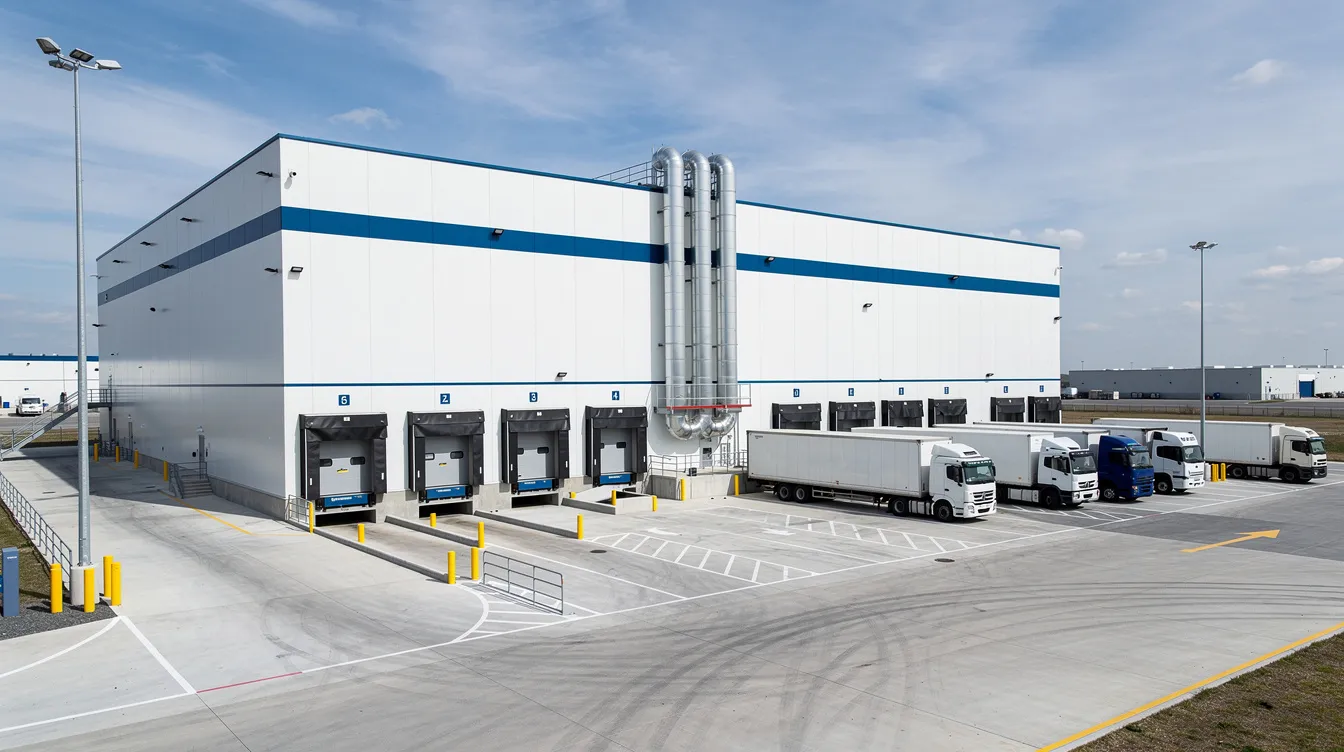
Consider a 45-acre agro processing park located in a developing region, structured through an SPV jointly owned by a private infrastructure developer (50%), a regional food processing group (30%), and a logistics and cold-chain partner (20%). Land is obtained on a 33-year lease from a State Industrial Development Corporation. The park targets tenants from fruit and vegetable processing, grain and cereal milling, dairy processing, and ready-to-eat food segments.
Key features:
- Indicative project cost: ₹48 crore including internal roads, utilities, common cold storage, warehousing, and a packaging centre
- Notional grant support: ₹10 crore under a relevant APC-type scheme (hypothetical, subject to eligibility)
- Equity from JV partners: ₹16 crore (approximately 33%)
- Term loan: ₹22 crore with a 12-year tenure and expected DSCR of 1.30–1.50x after stabilisation
Governance includes board representation for each JV partner, an independent director, quarterly reporting to lenders, and a professional park management company appointed through an O&M contract. The financial investor has a defined exit path after a minimum 7-year lock-in.
Revenue streams include long-term industrial-plot lease rentals, warehousing charges, cold storage tariffs, common packaging and testing charges, and facility management fees – diversified revenue reduces reliance on any single source. An agro-processing park must ensure raw material security through stable supply chains with local farmers; collection centres need skilled extension officers for effective farmer engagement. Agro-processing hubs organise training programs for farmers and collaborate with research institutions for innovative agricultural practices.
Key project risks – slower occupancy, delay in commissioning, policy change – are mitigated through phased development, pre-lease commitments from anchor tenants, and conservative leverage. Agro-processing clusters require integrated processing facilities, and the SPV’s implementation plan phases common infrastructure delivery ahead of tenant unit commissioning to attract investment and demonstrate operational readiness.
Frequently Asked Questions
Can one agro processing park combine PPP, SPV and JV structures together?
Yes. A common approach involves the government authority signing a PPP concession with an SPV, which itself is owned as a JV between a private developer, anchor food processing industries, and possibly a financial investor. All three concepts operate simultaneously within one project. The PPP defines government-private contractual obligations, the SPV ring-fences project assets and liabilities, and the JV defines equity ownership and governance among co-investors.
How can private landowners or farmer groups participate beyond selling land?
Subject to valuation and regulatory compliance, landowners can contribute land as equity into the project SPV or hold minority JV stakes, receive lease rentals or revenue-share, and also set up their own processing units in the park. However, they must carefully evaluate risks, lock-in periods, and liquidity constraints before committing. Independent valuation at entry is essential, and shareholder protections (pre-emption rights, tag-along provisions) should be agreed upfront.
Are small and mid-sized MSME food processing units at a disadvantage in PPP-based parks?
Well-designed PPP and SPV models can actually support MSMEs by providing shared infrastructure at scale – cold storage, packaging, and food testing facilities that individual MSMEs could not afford independently. However, tariff design, lease terms, and eligibility conditions must consciously avoid favouring only large units. DPRs and concession frameworks should model MSME affordability and occupancy to ensure inclusive park development.
What realistic timeline should promoters expect from concept to financial closure?
Depending on land readiness and approvals, serious agro processing park projects may take 12–24 months from initial concept, pre-feasibility, and DPR preparation to financial closure and commencement of construction. PPP tenders and environmental clearances are often the longest steps. Projects in difficult areas or those requiring change of land use may take even longer.
How does Project Report Bank support structuring and financing of such parks?
Project Report Bank, led by CA Manish Gugliya, assists with feasibility studies, DPR preparation, detailed financial modelling for SPVs and PPPs, CMA Data, bank and investor presentations, and comparative evaluation of alternative PPP, JV, and SPV structures. The objective is to help promoters evaluate the proposed ownership and investment structure through defensible financial analysis before committing major capital.
Conclusion
Choosing an appropriate combination of PPP contract structure, SPV company format, and JV equity partnership is central to the success of agro processing parks, mega food parks, and agro processing clusters in India. Agro-processing hubs enhance agribusiness value chains and rural economies, but this potential is realised only when the development model is commercially sound, governmentally compliant, and bankable.
Robust DPRs, realistic financial projections, clear land and concession rights, balanced revenue models, and strong governance frameworks are essential for attracting banks, investors, and credible anchor tenants from the food processing industries. The final model should be supported by feasibility assessment, legal and commercial due diligence, detailed financial modelling, and alignment with lender or investor requirements.
Planning an Agro Processing Park, Industrial Food Processing Cluster or Joint Venture Project in India?
Professional DPR preparation, feasibility analysis, financial projections, and project finance advisory can help promoters evaluate proposed ownership and investment structures before committing significant capital. For customised DPR preparation, SPV and JV financial modelling, CMA Data, and investor-ready documentation, contact CA Manish Gugliya, FCA, DISA (ICAI) through www.projectreportbank.com.