
A besan manufacturing project report is the foundation document for any entrepreneur or MSME planning to set up a gram flour processing unit in India. Whether you are evaluating a small 100 kg/hr besan mill or a larger automatic plant, the project report brings together technical feasibility, project cost, machinery planning, production process details, working capital assessment, and financial projections into a single, banker-friendly document. Detailed project reports are critical for MSMEs planning new manufacturing or processing projects, and a well-structured DPR is essential for loan applications across banks and financial institutions.
Key Takeaways
- A typical besan mill project cost ranges from ₹5–40 lakh depending on capacity, machinery automation, and infrastructure, with larger semi-automatic or automatic setups crossing ₹40 lakh.
- A comprehensive project report is essential for securing bank loans and attracting investors – it must cover plant machinery, production capacity, raw materials, working capital, profitability, DSCR, and CMA data together.
- India’s besan market is valued at approximately ₹32,000 crore, with branded packaged besan growing at 12–15% annually, while around 70% of the market remains with unorganised mills.
- Project Report Bank, led by CA Manish Gugliya, FCA, DISA (ICAI), prepares customised DPRs, CMA data, and feasibility reports for besan gram flour projects – not generic templates.
- This guide covers the complete planning framework: market assessment, business models, technical layout, project cost, financial projections, licences, risk analysis, and professional advisory for entrepreneurs and investors across India.
Introduction to Besan (Gram Flour) Manufacturing & Project Report
Besan, also known as chickpea flour or gram flour, is a staple ingredient in Indian cooking. From pakoras and sev to ladoos and baked goods, besan is used across many cuisines and food processing segments. Demand for besan is consistent and non-seasonal year-round, driven by household consumption, namkeen and snacks manufacturing, sweet shops, bakery, and institutional foodservice. Current market trends for besan reflect strong demand in both domestic and commercial sectors.
Starting a besan mill plant is a viable MSME food processing idea. The sector offers opportunities for entrepreneurs willing to invest in quality, consistency, and proper planning. The organised segment is growing as consumers increasingly prefer branded, hygienic products over loose besan from unorganised mills.
A besan manufacturing project report is a structured document that combines technical details of the besan plant – machinery, production process, raw materials, utilities – with financial projections, working capital estimates, and bank loan planning. This report is required for standard term loan and cash credit applications from banks, and it can be aligned with formats prescribed for schemes such as PMEGP, PMFME, and Mudra loan programmes.

Market Overview for Besan Gram Flour & Food Processing
Besan is central to India’s food processing industry. It serves as a primary input for snacks (sev, boondi, pakoda), sweets (ladoos, barfi), bakery products, ready-mix powders, and a wide range of prepared foods. Food processing companies require besan in 25–50 kg bulk packaging, while retail consumers buy branded pouches for home cooking. Besan is a key ingredient for over 70 lakh street food vendors across India.
Key market observations relevant to any besan manufacturing project report:
- India’s besan market is estimated at approximately ₹32,000 crore, with organised, branded packaged besan growing at 12–15% annually.
- Roughly 70% of the market is still held by unorganised mills, creating an opportunity for quality-focused new entrants.
- Regional demand is strongest in North, Central, and Western India due to chana-based cuisine traditions.
- The target market for besan includes local retail markets and wholesale grain merchants, as well as namkeen and snack manufacturers who consume besan as a primary ingredient.
Market assessment directly influences plant capacity selection, product mix (fine besan, coarse flour, premium grades), and whether to focus on bulk or retail supply. A serious project report must begin from realistic market assumptions rather than speculative demand estimates.
Business Models for a Besan Mill Plant
The same besan mill machinery can support different business models and revenue strategies. The choice of model affects investment intensity, working capital, marketing effort, and risk. The project report must clearly state which business model – or combination – the promoter is planning, as this drives capacity planning, machinery selection, and financial projections.
| Business Model | Raw Materials | Sales Channel | Branding Responsibility | Working Capital Intensity | Risk Level |
|---|---|---|---|---|---|
| Besan from purchased chana dal | Chana dal (split) | Bulk / wholesale | Low | Moderate | Low–Medium |
| Integrated dal mill + besan plant | Whole Bengal gram (chana) | Bulk + retail | Medium | Higher | Medium |
| Bulk supply to snack/namkeen units | Chana dal | B2B institutional | None | Moderate | Medium |
| Branded retail besan in pouches | Chana dal | Retail / distributors | High | High | Medium–High |
| Contract / private-label packing | Chana dal | As per buyer specs | Low | Lower | Low |
Each model presents trade-offs. Bulk supply to institutional buyers requires competitive pricing and consistent quality but minimal branding investment. Branded retail demands higher capital for packaging, design, and distribution but yields better margins. Contract manufacturing offers lower risk but limits pricing power. Entrepreneurs exploring food business ideas should evaluate these trade-offs carefully before finalising their business plan.
Scope & Objective of the Besan Manufacturing Project Report
A proper besan manufacturing project report is not just a subsidy formality – it is a decision-making and bank-finance document. The project report should reflect operational viability and market demand, and financial advisory within the report includes capital structure planning and means of finance for project implementation.
A bank ready project report for a besan plant should cover:
- Project background, promoter profile, location, and competitive positioning
- Description of the besan mill plant, target market, and product range
- Production process flow, machinery list, utilities (power, water), manpower, and quality control arrangements
- Detailed project cost, means of finance, working capital assessment, term loan repayment schedule, profitability, cash flow, DSCR, and break-even analysis
Technical Aspects: Besan Plant Layout, Machinery & Production Process
The technical section of the project report describes how gram flour will be produced on the shop floor, covering plant layout, material flow from raw gram or chana dal to finished besan, and hygiene and safety considerations.
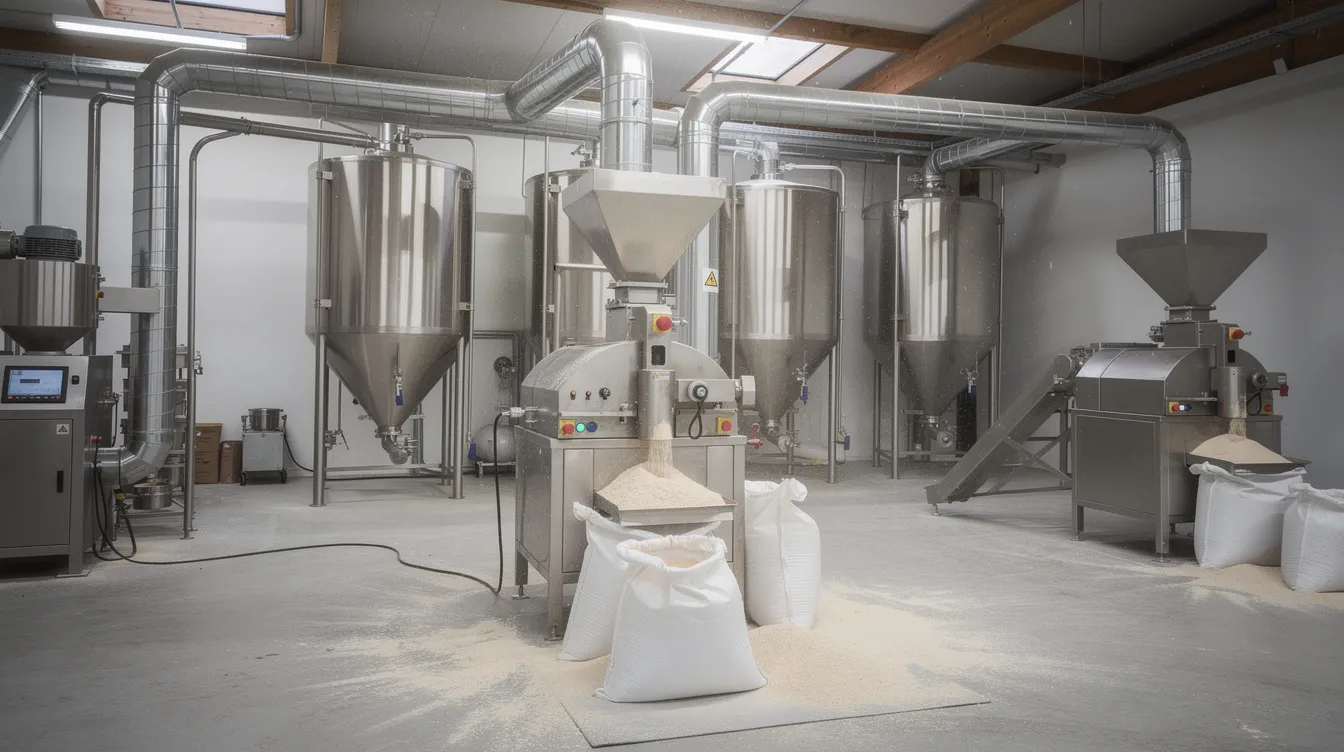
The manufacturing process of besan involves cleaning, grading, de-husking (if starting from whole gram), milling, sieving, and packaging. A typical besan mill produces 100–200 kg of flour per hour depending on machinery configuration and output capacity.
Key machinery for a small-to-medium besan mill plant:
- Cleaning equipment: vibro separators, destoner, magnetic separator
- Dehusker / chana dal mill (if processing whole Bengal gram)
- Grinding mill (pin mill, hammer mill, or pulveriser) for fine besan production
- Rotary sifter or centrifugal dressing machine for separating coarse and fine fractions
- Bucket elevators and material handling conveyors
- Dust collection system – dust control measures are necessary in pulse milling to comply with pollution control norms
- Weighing and packing machine
Quality control in manufacturing besan involves controlling grinding fineness and batch consistency. The speed of the grinding machine, mesh size of sifters, and moisture levels all contribute to consistent quality in the finished product. For a detailed equipment selection guide, refer to besan manufacturing machinery and automation planning.
Project Cost Components for Besan Mill Plant
The project cost in a gram flour project report must list each cost head clearly rather than presenting only a lump-sum figure. Project cost assessments include both fixed capital and working capital requirements. A typical besan mill costs ₹5–40 lakh depending on scale and automation.
Key cost components:
- Land / building: Rental or construction, depending on location
- Plant & machinery: A 100–200 kg/hr besan mill typically costs around ₹10–15 lakh. Within this, gram splitting machines cost ₹1.5–3 lakh, besan grinding mills range from ₹2–5 lakh, and packaging machines for besan cost ₹1–2 lakh.
- Electrification and wiring: Power infrastructure is a significant operational cost in besan milling
- Installation, commissioning, and civil foundations
- Furniture, office equipment, and tools
- Pre-operative expenses: Consultancy, registration, training, interest during construction
- Contingency provision
- Margin for working capital
Banks consider the complete investment – not just machine price – when sanctioning a loan amount. Presenting only machinery cost without accounting for building, electrical, installation, and pre-operative expenses creates a funding gap during implementation. For a detailed cost breakdown by project size, see the guide on besan manufacturing project cost and means of finance.
Working Capital, Raw Materials & Operating Assumptions
Working capital in a besan gram flour unit represents funds locked in chana or chana dal stock, packing material, finished goods inventory, and receivables, minus supplier credit.
Primary raw materials include Bengal gram (whole chana) or chana dal, packaging material (BOPP or PP pouches, labels, cartons), and consumables such as stitching thread and cleaning accessories. Procurement of raw chana dal requires quality assessment including moisture content and size – poor-quality input directly reduces besan recovery and product quality.
A besan manufacturing project report should specify these operating assumptions clearly:
- Daily production capacity (e.g., 100–200 kg/hr), shifts per day, and operating days per month
- Annual capacity utilisation ramp-up: Year 1 at perhaps 60–75%, increasing progressively
- Material recovery percentage: approximately 85–90% output from chana dal input, with some coarse by-product
- Inventory holding period, credit terms to customers, and raw material purchase cycle
Moisture management is essential in storage and handling of besan to prevent spoilage, and packaging must prevent moisture absorption to maintain quality and extend shelf life. Seasonal price variations in gram affect stock planning and directly influence profit margins. For procurement strategies, refer to chana dal procurement and inventory planning for besan.
Financial Projections, CMA Data & DSCR Analysis
The banker primarily examines the financial section of the besan manufacturing project report for viability and repayment capacity. Banks expect internally consistent financial projections for loan approval – revenue, costs, assets, and borrowing assumptions must align logically across all statements.
Key financial components:
- Financial projections should cover 5 years and include projected P&L, balance sheet, and cash flow statements
- CMA data (Credit Monitoring Arrangement data) is mandatory for loans above ₹10 lakh, prepared in RBI-compliant format showing projected limits, utilisation, and financial ratios
- Banks require a Debt Service Coverage Ratio (DSCR) of at least 1.25; a 500 kg/day besan plant, with realistic assumptions, may achieve a DSCR of 1.5–2.0
- Working capital assessment linked with inventory, receivable, and creditor cycles
Conservative assumptions – realistic capacity utilisation, practical selling price, controlled expenses – make the project report more credible to bankers than overly optimistic projections. Exact figures in the projections must flow from clearly stated operational assumptions. For further details, see the guide on besan plant financial projections, CMA data, and DSCR.
Profitability, Break-Even & Risk Analysis for Besan Mill
The besan mill business can be profitable, but margins depend on raw material prices, selling price, recovery rate, efficiency, and capacity utilisation. Proper risk management strategies should be outlined in a project report to mitigate financial uncertainties.
Key profitability indicators a project report should address:
- Gross margin per kg – the difference between selling price and total production cost per kg of besan
- Break-even analysis, which identifies the sales volume at which the business covers its costs
- Payback period and approximate ROI / IRR ranges under realistic assumptions
- Sensitivity analysis, which tests the impact of market condition changes on profitability estimates – for instance, what happens if raw material cost rises by 5–10% or capacity utilisation drops by 15%
For a detailed feasibility and risk framework, see besan manufacturing feasibility study and project viability.
Licences, Registrations & Compliance for Besan Plant
Besan manufacturing falls under food processing, so multiple registrations are needed even for a small besan mill plant. An FSSAI licence is mandatory for food processing units in India. Legal compliance includes obtaining all necessary licences and permits before commencing commercial production.
Typical registrations:
- Udyam (MSME) registration
- GST registration
- FSSAI licence (category based on turnover or capacity)
- Local trade licence / Shops & Establishment registration
- Factory licence (where applicable based on number of workers)
- Pollution / consent to operate (depending on local norms and plant scale)
- Fire and safety NOC (depending on building type)
Compliance with local trade and factory permissions is necessary for operational approvals. Packaging and labelling must follow food safety rules including nutritional information, batch numbers, and FSSAI logo display. Banks now evaluate regulatory risk while appraising food processing projects, so the project report must confirm planned compliance.
Business Plan, Marketing Strategy & Branding for Gram Flour
A strong marketing and branding strategy increases the sustainability of a besan mill, especially in competitive markets with growing demand for quality products. The business plan section of the project report should outline target customers, geographical coverage, and promotional activities.
Marketing routes to evaluate:
- Wholesale bulk supply to snack and namkeen manufacturers
- Local kirana and supermarket distribution for packed besan
- Online and marketplace sales for branded retail packs
- Institutional supply to canteens, restaurants, and catering firms
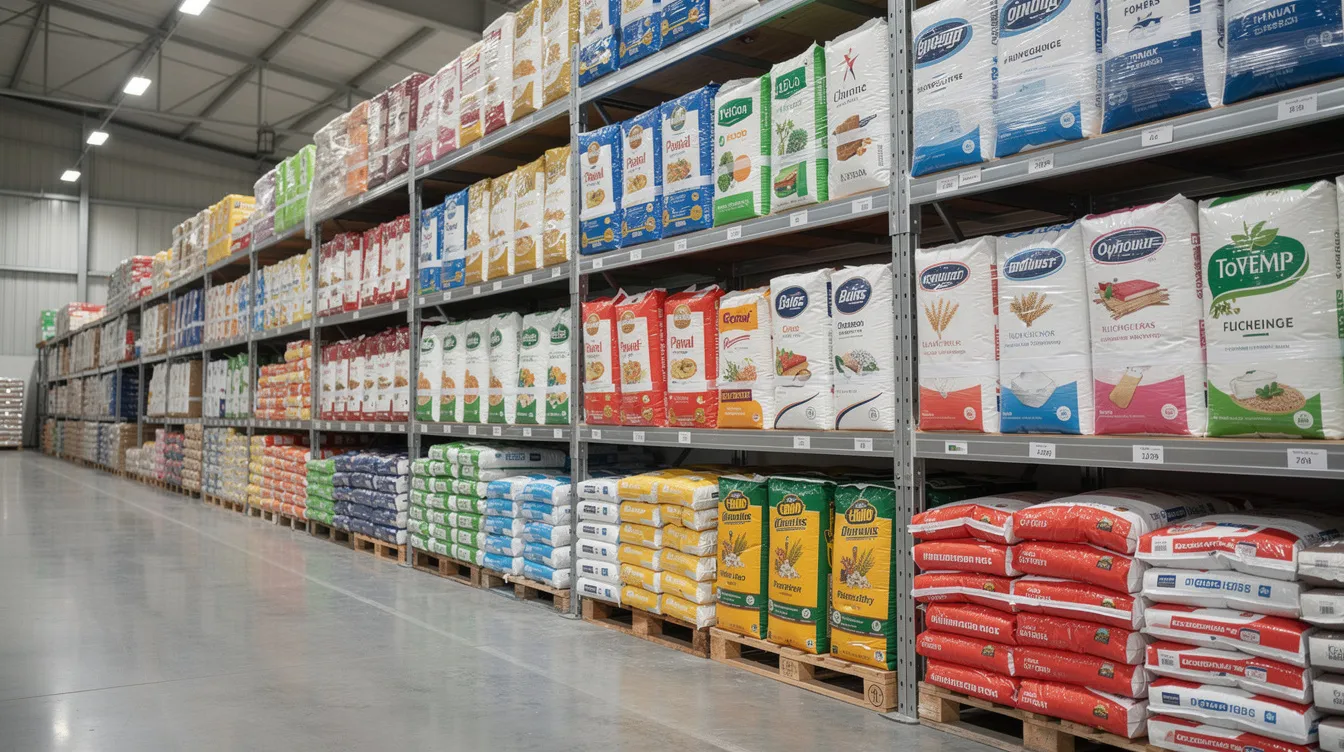
Creating a clear brand identity – logo, packaging design, and positioning as hygienic, pure gram flour – is important where the project focuses on retail packs. This requires additional design and packaging investment. These commercial plans translate into projected sales volumes and average realisation per kg in the financials of the project report.
Role of Professional DPR & CA-Led Advisory (Project Report Bank)
Bank managers and lending institutions prefer professionally prepared besan plant DPRs with logically structured assumptions and CMA data. Professional advisory services are necessary for clients lacking in-house expertise in project finance, financial modelling, and bank documentation.
ProjectReportBank.com offers professional services for detailed project report preparation. Specific support for a besan gram flour project includes:
- Customised Detailed Project Report (DPR) for establishing a besan mill
- Bank-finance-ready CMA data in prescribed format
- Project cost structuring, term loan and working capital planning
- DSCR and break-even analysis
- Guidance on presenting the proposal to banks
The DPR for a typical besan mill plant, including financial projections and CMA data, is prepared on a project-specific basis with professional fees starting from approximately ₹25,000, depending on project scope. While a strong project report improves the prospects of loan sanction, no consultant or CA can guarantee bank approval – sanction depends on the bank’s independent appraisal and the promoter’s credit profile.
CA Manish Gugliya, FCA, DISA (ICAI) Proprietor, Manish Gugliya & Company, Chartered Accountants Ratlam, Madhya Pradesh, India Website: projectreportbank.com
To discuss a customised besan manufacturing project report, share your tentative capacity, location, and machinery quotations via the website’s WhatsApp enquiry option.
Sample Besan Mill Project Report Structure
A complete besan plant DPR typically follows this structure:
- Executive Summary
- Promoter / enterprise profile and company details
- Market overview and demand analysis for besan
- Technical details of besan plant and production process
- Raw material and utility planning
- Project cost and means of finance
- Production programme and sales assumptions
- Working capital assessment
- Profit & Loss projection (5 years)
- Cash flow and balance sheet projections
- DSCR and break-even analysis
- Risk factors, mitigation, and implementation schedule
Annexures typically include machinery quotations, projected CMA data tables, ratio analysis, and scheme-specific formats for PMEGP or other subsidies where applicable. Numbers and content are tailored for each client’s besan mill plant – a customised report built on real quotations and project-specific assumptions is always more credible than a generic template.
Frequently Asked Questions (FAQ) – Besan Manufacturing Project Report
What basic information is needed to prepare a besan mill project report?
You should have a tentative production capacity (e.g., 100–200 kg/hr or daily output), proposed location, at least preliminary machinery quotations, and an understanding of your target market (bulk, retail, or both). Details about land availability, promoter background, and proposed means of finance help the advisory team prepare more accurate financial projections.
Are exact machinery quotations required before preparing the DPR?
Having vendor quotations strengthens the project report significantly. However, a preliminary DPR can be initiated based on indicative machinery costs and updated once firm quotations are received. Banks prefer reports backed by real quotations rather than estimated machinery figures.
Can the same besan manufacturing DPR be used for multiple banks?
Yes, the core project report structure is generally acceptable across banks. However, some banks may require adjustments to CMA data format, ratio presentation, or specific annexures. A professionally prepared DPR is designed to be adaptable without requiring a complete rewrite.
How long does it take to prepare a customised besan plant project report?
Depending on information availability and project complexity, a customised DPR with CMA data and financial projections typically takes 7–15 working days. Delays usually occur when machinery quotations or promoter financial details are pending.
Can projections in the report be revised based on bank feedback?
Yes. Financial projections are working documents. If a bank suggests adjusting capacity utilisation assumptions, margin levels, or working capital parameters, the financial model can be updated and revised statements prepared accordingly. This is a routine part of the bank appraisal process.