
Key Takeaways
- Chana dal procurement decisions directly affect besan quality, production continuity, product loss, and working capital in any besan plant or besan mill plant. The lowest per-kg purchase price does not equal the lowest effective cost per kg of saleable gram flour.
- Calculating raw material requirements starts with planned saleable besan output divided by realistic recovery rates; for a standalone plant purchasing ready chana dal, saleable recovery from dal to besan is typically 95 to 97 percent.
- Inventory planning (safety stock, reorder point, inventory days) translates directly into rupees blocked in raw material, which must be funded through promoter contribution and bank working capital limits.
- Quality parameters such as moisture, broken grains, foreign matter, and colour of incoming chana dal determine finished besan characteristics, milling efficiency, and product loss.
- Project promoters preparing DPRs, CMA Data, and financial projections for bank finance must build procurement assumptions on validated recovery data, realistic supplier lead times, and defensible inventory norms.
Introduction: Why Chana Dal Procurement Matters in Besan Manufacturing
Besan is made from ground chana dal. In a standard Indian besan plant, the cost of chana dal typically accounts for 65 to 75 percent of total production cost. India produces over 10 million tonnes of desi chickpeas annually, and the besan market is growing due to increasing population and steady demand across households, the food processing industry, and institutional buyers. Besan has a long shelf life and is widely used in food preparation for snacks, sweets, spices blends, batters, and everyday cooking.
Proper procurement of chana dal influences besan quality and production stability. Purchasing at the lowest quoted price per kg may seem attractive, but once moisture, impurities, recovery, freight, storage, and financing costs are considered, the effective cost per kg of saleable chickpea flour can differ materially from the purchase price. A thorough market analysis is essential before starting a besan mill, and banks and investors routinely scrutinise raw material procurement assumptions in Detailed Project Reports and CMA Data submissions.
This article covers the practical framework for chana dal procurement and inventory planning. For detailed plant setup guidance, readers may refer to the besan manufacturing from chana dal resource and the besan manufacturing plant setup cost in India guide published on Project Report Bank.
Procurement Models: Chana Dal vs Whole Gram vs Mixed Sourcing
A besan manufacturer can obtain raw material through three routes: (a) purchasing ready chana dal (bengal gram split and dehusked), (b) purchasing whole gram (chickpeas) and processing it in-house through dehusking and splitting, or (c) combining both approaches depending on market conditions and availability.
Each model changes machinery needs, process flow, and financial structure. Buying ready chana dal keeps the plant simpler; hammer mills are commonly used for industrial besan production and the machine investment is lower. An integrated gram processing and besan plant requires dehuskers, splitters, and conditioning equipment, generates by-products such as husk and brokens, and introduces additional inventory categories and working capital requirements.
This article focuses on plants purchasing ready chana dal. For promoters evaluating whether whole gram processing is viable at their scale, the chana dal vs whole gram for besan: cost and viability analysis provides a structured comparison. Recovery from whole chana to dal runs approximately 78 to 82 percent; from ready chana dal to besan, recovery is typically 95 to 97 percent. The choice affects profitability, by-product revenue, and the project’s overall financial profile.
Calculating Chana Dal Requirements from Planned Besan Output
Accurate raw material planning prevents stockouts, idle capacity, and overinvestment in inventory. The core formula is:
Chana dal requirement = Planned saleable besan output ÷ Saleable besan recovery rate
“Saleable recovery” means the fine besan that reaches the packing stage after accounting for dust, sieving rejects, and handling losses. The recovery rate of besan from chana dal is typically high; for well-maintained equipment, expect 95 to 97 percent. Sieving separates fine besan from coarser particles after grinding, and oversize fractions are often reground, but some dust and spillage is unavoidable.
Besan mills can process capacities from 100 kg/hr to 3,000 kg/hr. Planning variables include annual saleable besan quantity, working days per year, targeted capacity utilisation in years one through three, and expected recovery validated through trial runs.
Illustrative example:
| Parameter | Assumption |
|---|---|
| Planned saleable besan output | 2,400 tonnes/year |
| Saleable besan recovery | 96% |
| Chana dal requirement | 2,400 ÷ 0.96 = 2,500 tonnes/year |
| Working days per year | 300 |
| Daily chana dal consumption | 2,500 ÷ 300 = 8.33 tonnes/day |
| Monthly consumption (25 days) | ~208 tonnes/month |
Chana dal must be cleaned and conditioned before milling. Recovery assumptions should come from machinery supplier data, trial runs at the actual plant, and reference material on besan manufacturing recovery, yield and process losses rather than marketing brochures. Guard against double-counting; if dust loss of 2 percent is already deducted, do not deduct again for “sieving losses” separately unless those represent a genuinely additional stream. All loss percentages should sum logically to 100 percent of input.
Supplier Identification and Evaluation for Chana Dal Sourcing
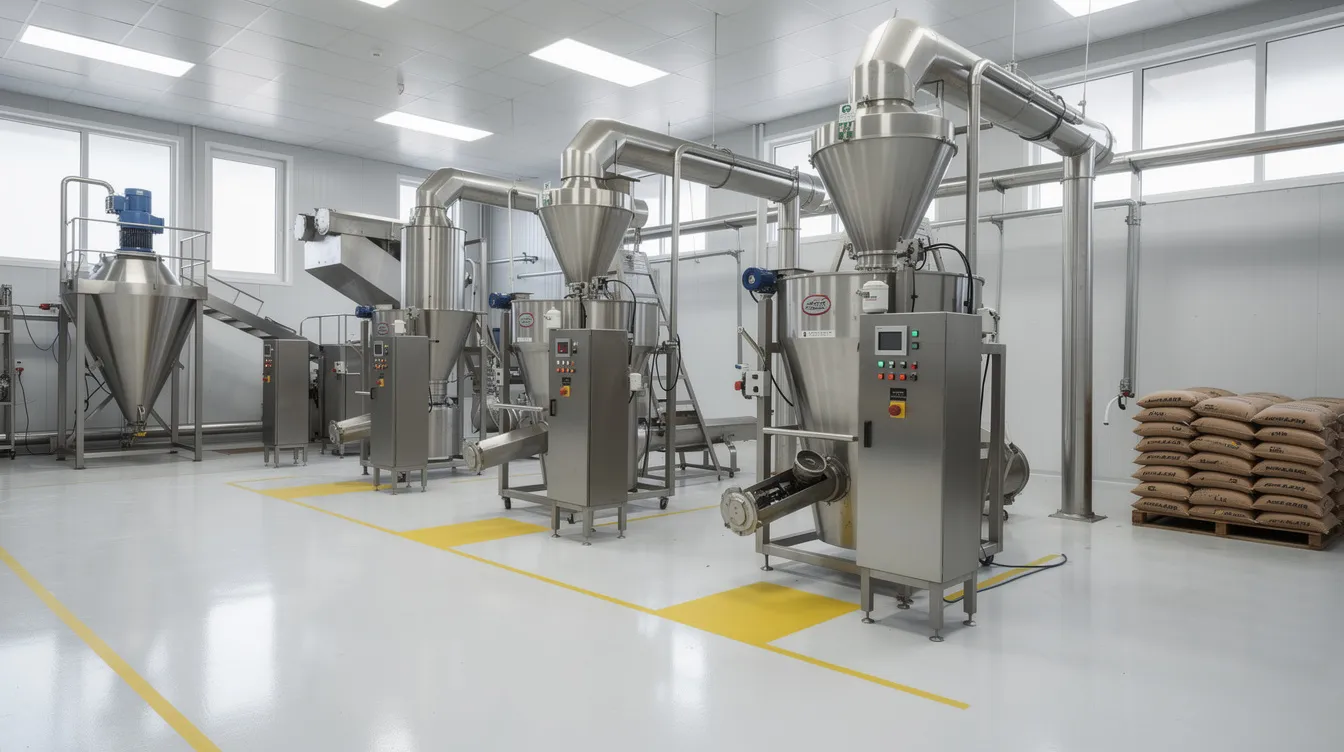
Main sourcing channels for besan manufacturers include dal mills in producing regions (Madhya Pradesh, Rajasthan, Maharashtra, Uttar Pradesh), local traders and wholesalers, aggregators, and in some cases farmer producer organisations for longer-term contracts. Small scale units often rely on nearby mandis, while larger food processing plants may source from multiple suppliers across states.
| Evaluation Parameter | What to Check |
|---|---|
| Consistency of quality | Moisture, brokens, colour batch-to-batch |
| Delivered cost | Ex-mill price plus freight, unloading, handling |
| Supply capacity | Tonnes per month the supplier can reliably deliver |
| On-time delivery | Track record on promised delivery dates |
| Payment terms | Credit period, advance requirements |
| Traceability & documentation | Invoice, lot details, test reports |
| Rejection/replacement policy | Terms for returning off-spec material |
| Backup availability | At least one alternate approved supplier |
Having at least one qualified backup supplier reduces production disruption during seasonal shortages and is viewed positively in bank appraisals for working capital limits. A simple A/B/C rating of suppliers based on performance helps maintain procurement discipline. For a comparable approach to raw material planning in another grain processing business, the paddy procurement guide for rice mills illustrates analogous evaluation frameworks.
Purchase Quality Specifications and Their Link with Besan Quality
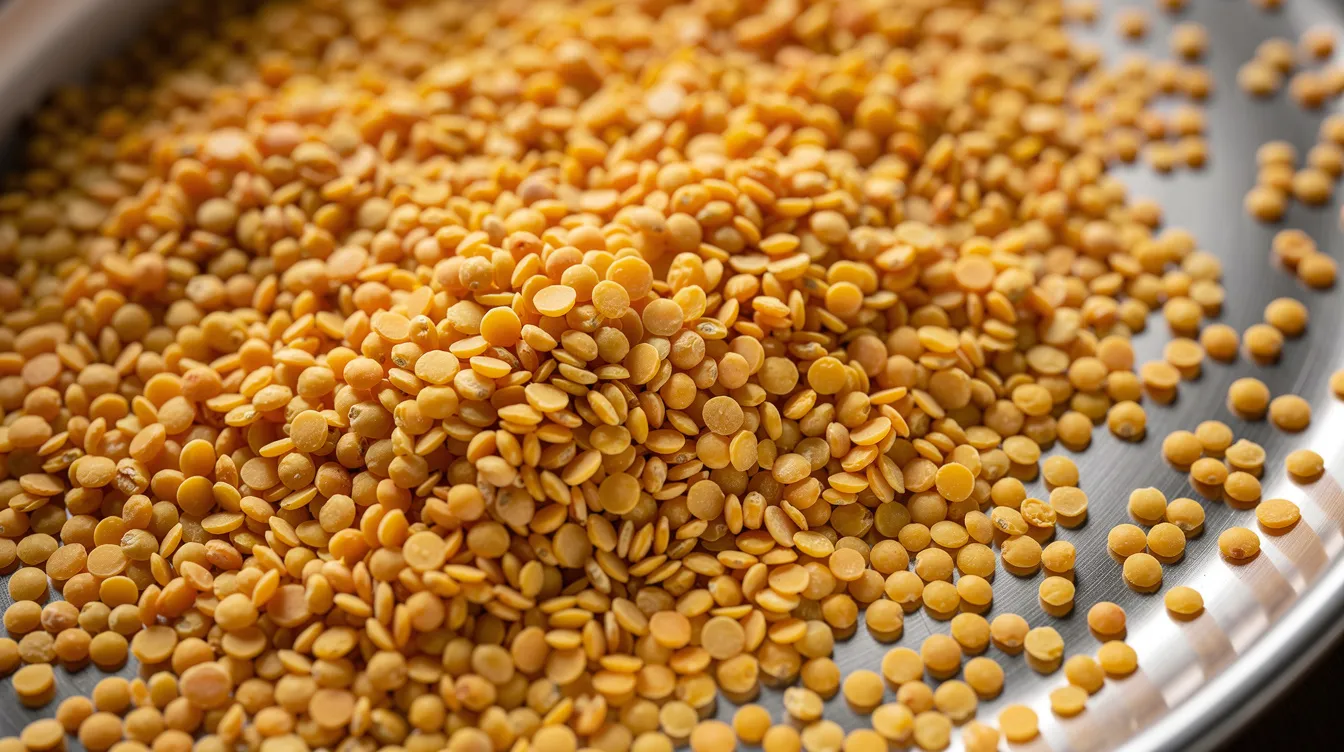
High-quality chana dal is critical for premium-grade besan production. The sensory attributes of chana dal, including colour and aroma, directly affect finished product quality. Ground material from clean, well-graded dal produces fine besan with uniform particle size, consistent texture, and a bright yellow colour. Quality chana dal improves cooking consistency and taste for consumers, and chana dal quality directly affects customer satisfaction and business reputation for the manufacturer.
Key parameters for a written purchase specification:
- Moisture: Chana dal should have a moisture level of 10 to 12 percent for good milling. FSSAI regulatory standards permit up to 16 percent, but excess moisture in chana dal causes milling efficiency reduction and microbial growth. Proper moisture content in chana dal is critical for milling; even a 2-percent increase above 12 percent can affect the grinding chamber performance and increase dust clogging.
- Foreign matter and other impurities: Chana dal needs to be free from foreign matter, stones, and damaged grains. FSSAI limits foreign matter to 1 percent, damaged grains to 5 percent, and the total of foreign matter, other edible grains, and damaged grains to 7 percent.
- Broken grains: Premium chana dal has minimal broken grains and impurities. Maintaining uniform grain size of chana dal ensures consistent milling performance and reduces waste during grinding.
- Insect damage: Weevilled grains should not exceed 3 percent by count. Adulteration with kesari dal is prohibited in chana dal to maintain food safety.
- Colour and odour: Bright, uniform appearance; sweet, dry odour; no musty or off smells.
Food safety standards must be adhered to when procuring chana dal. Certification under the PFA Act is necessary for besan production. Distinguish between legal requirements, buyer specifications from retailers or institutional customers, and your plant’s own acceptance criteria. High-quality chana dal reduces preparation time and food wastage in downstream use. Different grades of chana dal may be suitable for different products; over-specifying quality for low-margin bulk supply unnecessarily increases cost. For besan quality benchmarks that should inform purchase specifications, the besan quality parameters resource covers colour, fineness, nutritional value, protein content, and shelf-life considerations.
Landed Cost vs Effective Raw Material Cost per kg of Besan
Three cost concepts matter: the supplier’s base quotation, the landed cost at plant gate, and the effective raw material cost per kg of saleable besan. Effective procurement involves maintaining a balance between cost and quality of chana dal; the cheapest quoted price is not necessarily the cheapest finished product.
Landed cost components: basic purchase price, freight and logistics, unloading and local handling, transit insurance if applicable, testing charges, and applicable taxes (with input tax credit treatment per prevailing GST rules and the unit’s eligibility).
Effective raw material cost per kg of saleable besan = Net attributable raw material cost ÷ Saleable besan output
Continuing the earlier example: if landed cost of chana dal is ₹88 per kg (basic ₹85 plus ₹3 freight and handling) and recovery is 96 percent, effective raw material cost per kg of besan = ₹88 ÷ 0.96 = ₹91.67 per kg. If a cheaper lot at ₹82 per kg has higher moisture and impurities reducing recovery to 93 percent, the effective cost becomes ₹82 ÷ 0.93 = ₹88.17 per kg for the chana dal component alone, but the higher product loss and additional cleaning cost narrow the apparent saving.
Any by-product credit (husk, brokens, lower-grade flour) should be shown transparently as separate income and not deducted twice in the cost sheet or DPR.
Planning Purchases Around Demand, Seasonality and Price Movements
Besan is a key ingredient in Indian kitchens year-round, and bulk consumers include restaurants, caterers, and institutional kitchens. Demand is relatively steady, but chana supply is seasonal; the Rabi harvest brings peak mandi arrivals from March through May. Procurement strategies for chana dal should consider seasonal price fluctuations. Mandi data shows chana dal prices have ranged from approximately ₹50 to ₹108 per kg over a recent 52-week period.
Purchasing patterns include: regular replenishment based on current demand, staggered procurement with modest seasonal stocking, and scheduled deliveries from contracted suppliers. Whether a plant serves distributors, wholesalers, or branded retail consumers influences purchase planning; the target market and sales model should drive procurement timing.
Buying larger quantities may offer a price advantage and assured availability, but increases financing cost, storage risk, and working capital tied in raw material inventory. Speculative stocking based on anticipated price rises should be labelled as a scenario in DPRs, not presented as guaranteed savings.
Inventory Policy: Safety Stock, Reorder Point and Inventory Days
Chana dal inventory planning balances uninterrupted production against funds blocked in stock. Banks review raw material holding norms when assessing working capital.
Key formulas:
Reorder point = Average daily consumption × Procurement lead time (calendar days) + Safety stock
Raw material inventory days = Usable raw material stock ÷ Average daily consumption
Safety stock should reflect variability in demand, supplier reliability, and transport uncertainty. Very high safety stock inflates working capital unnecessarily. Distinguish between physical stock in the godown, usable stock (excluding wet, damaged, or under-quality lots), and inventory position (usable stock plus open purchase orders minus material committed for confirmed orders).
Small scale besan units with local suppliers and short lead times can operate with lower safety stock. Larger plants depending on distant sources may need 30 to 45 days. Each project should calculate its own norms.
Illustrative Inventory and Cost Calculation
All figures below are assumptions for illustration, not current market prices.
| Parameter | Value |
|---|---|
| Daily saleable besan output | 10 tonnes |
| Working days per month | 26 |
| Recovery (dal to besan) | 90% |
| Daily chana dal consumption | 10 ÷ 0.90 = 11.11 tonnes |
| Procurement lead time | 10 calendar days |
| Safety stock | 5 days’ consumption = 55.55 tonnes |
| Reorder point | (11.11 × 10) + 55.55 = 166.65 tonnes |
| Target inventory days | 30 days |
| Stock at target level | 11.11 × 30 = 333.3 tonnes |
| Assumed landed price | ₹70/kg |
| Stock investment at target | 333,300 kg × ₹70 = ₹233.31 lakh |
Working days versus calendar days matters: production runs on working days, but lead time covers calendar days including weekends and holidays. Bank assessment typically uses calendar days for lead time and consumption norms based on operating days.
Working Capital Impact of Chana Dal Procurement
Chana dal purchases form one component of operating working capital alongside work-in-progress, finished goods (packed besan), trade receivables, and trade payables.
Operating working capital requirement = Raw material inventory + Work in progress + Finished goods + Receivables − Trade payables
This is a simplified operating view commonly used in DPRs. Increasing inventory days from 15 to 45 can increase funds blocked in raw material by two to three times, which must then be financed. Banks assess working capital against norms for holding days, and details form part of CMA Data and drawing power calculations. The sanctioned cash credit limit will not equal total working capital requirement; margins, other current assets, and liabilities also apply.
Realistic procurement cycles, credit terms from suppliers, and credit terms to customers should feed into financial projections so that repayment capacity and DSCR analysis reflect actual business practice. For a detailed treatment of plant investment and working capital planning, the besan manufacturing plant setup cost in India guide provides a structured breakdown.
Storage and Stock Protection for Chana Dal
Storage conditions for chana dal should prevent infestations and moisture damage. Besan is made from 80 percent of processed chana dal; if that dal deteriorates in storage, the finished flour quality drops and product loss increases.
Key practices:
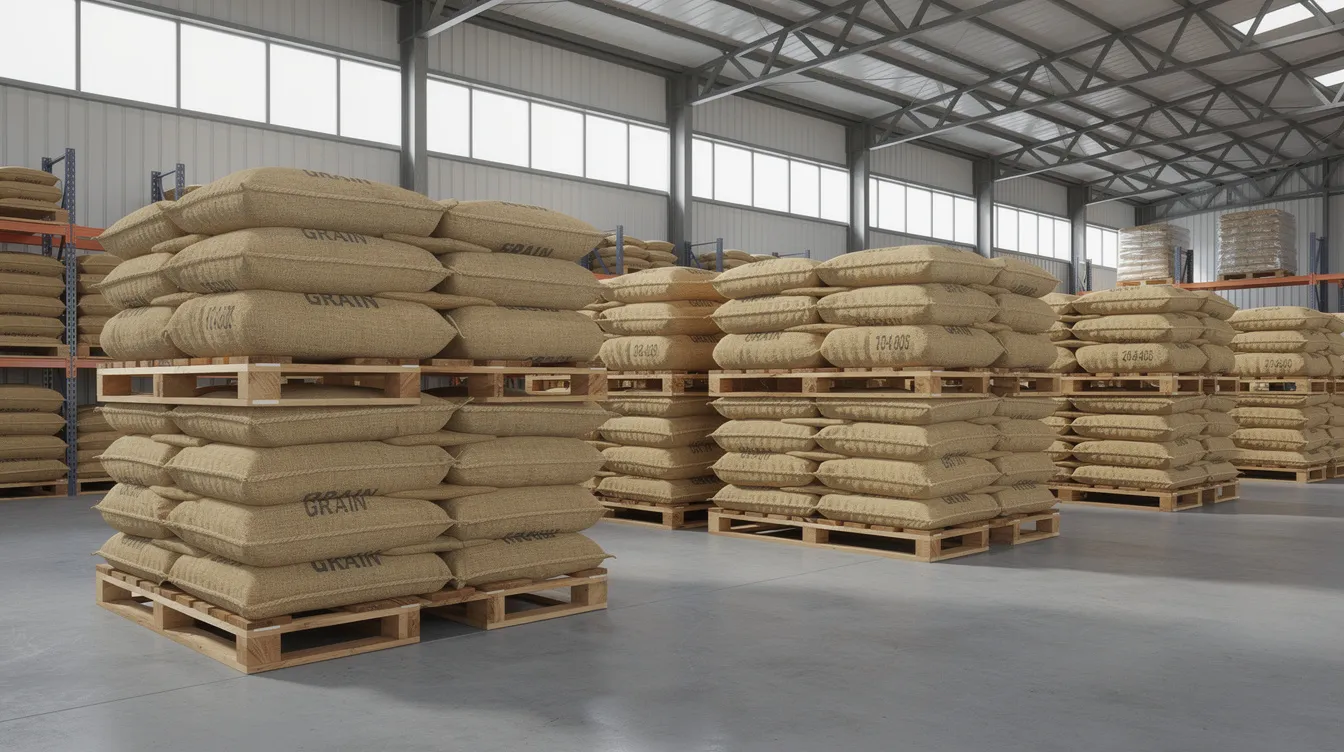
- Store in dry, cool, well-ventilated godowns. Stack bags on pallets, away from walls and floors.
- Provide adequate aisle space for inspection and equipment movement.
- Monitor moisture regularly; maintain chana dal moisture between 12 and 14 percent during storage.
- Identify lots by batch number, supplier code, and receipt date.
- Implementing FIFO inventory control is essential for chana dal storage management; use FEFO where shelf-life or customer contracts require it.
- Segregate rejected or suspect material immediately.
- Conduct periodic physical stock verification and reconcile with book records.
Storage design should align with material flow from unloading area to godown to the grinding section. The besan plant land requirement, building and factory layout resource covers layout considerations relevant to this.
Procurement and Inventory Control Workflow
A practical stepwise workflow:
Purchase planning → Supplier approval → Purchase order → Receipt and weighment → Sampling and quality checks → Acceptance or rejection → Stock entry → Storage → Production issue → Reconciliation
Documents at each stage include: purchase request, approved supplier list, purchase order, goods receipt note, weighment slip, quality inspection report, stock ledger entry, and material issue slips to production. Testing samples before accepting chana dal is crucial to ensure quality. The handling and processing of chana dal are vital for maintaining its quality during milling.
Even small scale besan plants should maintain basic documentation. Lenders review purchase and stock records during inspections. Recording batch-wise consumption of chana dal allows management to track actual versus standard consumption, identify abnormal losses, and refine procurement norms. Simple digital tools or spreadsheets work for many MSME units; larger besan mill plants may use integrated ERP systems. Government schemes support upgrading micro food processing units, including besan mills, and documented procurement systems strengthen subsidy and finance applications.
Monitoring Procurement Performance and KPIs
Structured monitoring prevents procurement from becoming a purely price-driven activity that ignores product quality and efficiency.
| KPI | What It Measures |
|---|---|
| Landed purchase cost per kg | All-in cost at factory gate |
| Supplier rejection rate | % of lots or quantity rejected |
| On-time delivery rate | Supplier reliability |
| Average inventory days | Funds locked in stock |
| Stockout incidents per year | Production disruption risk |
| Storage/handling losses | Physical deterioration |
| Actual vs standard consumption | Process efficiency |
| Saleable recovery % | Besan produced per tonne of dal |
| Supplier concentration | % volume from top 2-3 suppliers |
| Funds tied in raw material | Working capital deployment |
Review these monthly. Sustained lower recovery or frequent rejections should trigger review of the milling operation, equipment maintenance, and the supplier base. These metrics are valuable when updating DPRs and presenting performance data to banks.
Common Mistakes in Chana Dal Procurement and Inventory Planning
Many besan units, particularly at small scale, repeat avoidable errors:
- Purchasing solely on price: Ignoring moisture, broken content, and impurities leads to lower saleable recovery and higher effective cost per kg of besan.
- Excessive seasonal stocking without funding plan: Working capital strain and storage risk outweigh the price saving if godown conditions are inadequate.
- Optimistic recovery in DPRs: Using 98 percent recovery in projections when actual plant data shows 94 percent produces misleading profitability and DSCR figures.
- No backup supplier: A single-source dependency creates production risk during seasonal lean months.
- Mixing lots without traceability: Makes it impossible to identify the source of quality problems or batch-specific losses.
- Ignoring freight, handling, and financing costs: These items can add ₹3 to ₹7 per kg to the base purchase price and must appear in the DPR cost sheet.
- Assuming bank CC limit covers all stocking: Sanctioned limits, margins, and drawing power restrict actual available finance; unrealistic inventory assumptions weaken the finance proposal.
Procurement Planning Checklist for Besan Manufacturers
Before commencing production or applying for finance, verify:
- [ ] Procurement model confirmed (ready chana dal, whole gram, or mixed)
- [ ] Written quality specifications with moisture, brokens, foreign matter, and colour criteria
- [ ] At least two evaluated and approved suppliers with backup arrangements
- [ ] Monthly and daily chana dal requirement calculated from planned capacity and validated recovery
- [ ] Purchase approval process and authority limits documented
- [ ] Landed cost vs effective cost per kg of besan understood and computed
- [ ] Inventory norms defined: inventory days, safety stock, reorder point
- [ ] Procurement plan aligned with expected sales schedule and demand from the target market
- [ ] Storage capacity assessed: suitable godown, pallets, pest control, moisture monitoring
- [ ] FIFO/FEFO procedures in place
- [ ] Physical stock verification schedule and reconciliation procedure established
- [ ] KPIs defined and review frequency decided
- [ ] Procurement assumptions documented in DPR, CMA Data, and working capital assessment
These elements are routinely scrutinised in professional project reports prepared for bank finance and investor presentations. For a comprehensive besan mill project report, each checklist item feeds into specific sections of the financial model.
Frequently Asked Questions
How much chana dal inventory should a besan plant maintain?
There is no universal standard. Plants with reliable nearby suppliers and short lead times (7 to 10 days) can operate with 15 to 20 days of average consumption. Units depending on distant sources or seasonal buying may need 30 to 45 days. In DPRs, inventory days should be justified with assumptions on procurement cycle, supplier credit, and storage capacity rather than copied from another project. Banks will verify whether the assumed holding period matches the plant’s actual procurement pattern.
How is chana dal consumption calculated for financial projections?
Consumption equals planned saleable besan output divided by the expected recovery rate, then converted into daily and monthly figures using working days and capacity utilisation assumptions. If a plant plans 2,400 tonnes of saleable besan per year at 96 percent recovery, it needs 2,500 tonnes of chana dal annually. Recovery used in projections should be validated with trial runs and updated once actual plant performance data is available. Standard cost sheets and variance analysis help track actual consumption against plan.
Is bulk procurement of chana dal always more economical?
Not necessarily. Bulk purchases may reduce the per-kg price, but they increase interest cost on blocked funds, risk of quality deterioration during extended storage, and exposure to prices moving lower after purchase. For many MSME units, a balanced approach of moderate seasonal stocking plus regular replenishment proves more sustainable. The net benefit should be assessed within the project’s cash flow model.
Should a besan plant purchase whole gram or ready chana dal?
The decision depends on scale, access to raw gram at favourable prices, available capital for additional machinery (dehuskers, splitters), capability to manage more complex food processing operations, and availability of local markets for by-products such as husk and brokens. Smaller besan mill plants commonly start with ready chana dal to keep processes simpler. Larger projects may consider whole gram after detailed feasibility analysis. The price spread between whole chana and ready chana dal (currently around ₹15 to ₹20 per kg in many mandis) sets the potential margin for the integrated route, but that margin must cover additional equipment, labour, and process losses.
How does chana dal stocking affect working capital limits from banks?
Higher targeted inventory days increase the value of raw material inventory in working capital calculations, raising the overall funds needed to operate the plant. Banks finance only a portion of this requirement after applying margins and considering trade payables. Unrealistic stocking assumptions can either make the project harder to finance or strain promoter contribution. When preparing CMA Data and bank proposals, state clearly the assumptions on inventory holding, supplier credit, and customer credit so that drawing power calculations match practical operating conditions.
Professional Support from Project Report Bank
I am CA Manish Gugliya, FCA, DISA (ICAI), practising since 2006 at Manish Gugliya & Company, Ratlam, Madhya Pradesh. Through Project Report Bank, I assist besan manufacturers and project promoters across India with customised DPRs, financial projections, working capital assessment, and CMA Data preparation. Procurement assumptions for chana dal, including landed cost, recovery, inventory norms, and supplier credit, are integral to the financial models I prepare.
If you are planning a new besan plant or evaluating expansion, you are welcome to share your proposed capacity, location, and sales model for a tailored discussion. Initial contact is welcome via WhatsApp. No guarantee can be offered on loan sanction or profitability, but disciplined chana dal procurement and inventory planning supported by sound financial analysis strengthen the overall project profile.
CA Manish Gugliya FCA, DISA (ICAI) Manish Gugliya & Company, Ratlam, Madhya Pradesh