
Key Takeaways
- A multiproduct pulse flour plant grinds several pulses – chickpea, moong, urad, masoor, yellow peas and others – on shared or selectively dedicated equipment. A professionally prepared DPR is essential before committing capital, as it provides a comprehensive roadmap covering technical configuration, financial projections and bankability assessment.
- Pulse flour manufacturing plant setup cost is driven by machinery, building, utilities, electrical systems, dust control and working capital – not merely the cost of a single pulveriser. Underestimating ancillary investment is a common planning error.
- Pulse flour manufacturing profitability depends on realistic capacity utilisation, saleable recovery from each pulse type, disciplined product-mix management and working capital control. Gross profit margins for pulse processing typically range between 8–12%, and achieving this consistently requires operational discipline.
- Different business models – bulk B2B ingredient supply, private label manufacturing, own-brand retail packs and job-work grinding – carry different risk–return profiles. Each must be modelled separately in the financial projections.
- Project Report Bank, led by CA Manish Gugliya, FCA, DISA (ICAI), prepares customised multiproduct pulse flour manufacturing plant project reports, financial projections, CMA Data and bankable DPRs for Indian entrepreneurs and project promoters.
Introduction: Purpose of a Multiproduct Pulse Flour Manufacturing Plant Project Report
A multiproduct pulse flour manufacturing plant is a commercial facility designed to process several types of pulses into flour – besan from chickpeas, moong flour, urad flour, masoor flour, pea flour, bean flours and other pulse-based products – using shared cleaning, grinding and packing infrastructure. This is fundamentally different from a single-product besan mill or a dal milling unit. The complexity lies in managing multiple raw materials, varied grinding characteristics, changeover schedules and distinct quality specifications across products.
A multiproduct pulse flour manufacturing plant project report is a structured document that analyses the technical configuration, pulse flour manufacturing plant setup cost, operating assumptions, working capital cycle and pulse flour manufacturing profitability for such a facility. DPRs provide a comprehensive roadmap for pulses processing units, covering capital and operational expenditure analysis alongside revenue and cash-flow projections.
The central investment question is straightforward: can the proposed capacity, product mix and target customers generate sufficient cash flow to service term loan obligations and sustain working capital needs?
This article covers market context, products, manufacturing process, machinery, land and building, project cost, working capital, cost of production, profitability analysis, financial projections, sensitivity analysis, licences and regulatory compliance, and CA-led advisory support for pulse flour project planning.
Two points deserve emphasis at the outset:
- More SKUs do not automatically increase profits. Each additional product introduces changeover time, cleaning requirements and quality management complexity that must be reflected in the DPR and financial model.
- A proper business plan outlines the strategic objectives and operational details of the project. Assumptions should be defensible and grounded in market reality, not designed to produce attractive-looking numbers.
What Is a Multiproduct Pulse Flour Manufacturing Plant?
Pulse flour refers to finely ground flour produced from pulses such as chickpeas, lentils, peas, beans and similar crops. A multiproduct facility produces several pulse flours – sequentially or through parallel lines – on shared or selectively dedicated equipment. This is distinct from a standalone besan plant (which processes only chana) or a dal mill (which produces split pulses, not flour).
Model 1: Purchased-Dal Route
The plant purchases cleaned, dehusked dal – chana dal, moong dal, urad dal – and converts it into flour through grinding, sifting and packing. This model requires lower capital expenditure, simpler operations and fewer process stages. However, it creates higher dependence on dal suppliers for quality and pricing, and the unit foregoes by-product value from husk and brokens.
Model 2: Integrated Whole-Pulse Processing
The plant starts with whole pulses, performing cleaning, grading, dehusking and splitting before milling into flour. This integrated approach resembles a dal mill combined with a flour plant. Capital expenditure is significantly higher, but the operator gains better control over raw material quality, generates by-product streams (husk, bran and broken pulses usable as animal feed) and potentially achieves better economics at scale. For a gram/besan-specific illustration of how integration works, see the integrated gram processing and besan plant project report.
A common grinding line can handle several pulses sequentially. However, cleaning between products, colour variation, flavour taint and allergen or gluten cross-contamination must be managed through documented SOPs and scheduled production runs. Lack of gluten in pulse flours affects dough handling properties differently from wheat flour, and any processing line that also handles gluten-containing materials requires robust segregation protocols.
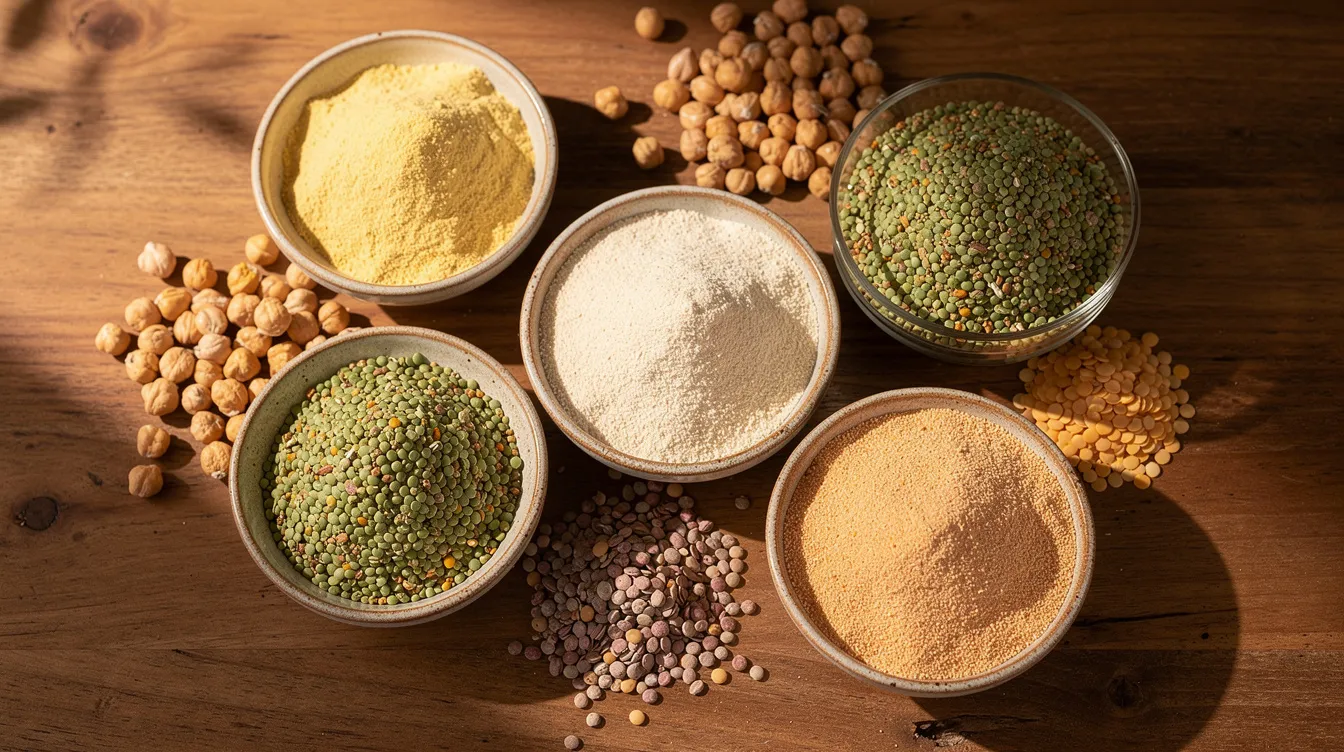
Products, Pulse Flours and Customer Segments
Product selection must be demand-led, not machinery-led. Each pulse flour has specific functional properties, sensory characteristics and application suitability. Over 60% of food manufacturers find pulse flour flavors challenging to work with in certain formulations, which means flour performance in the end application must be validated before committing to production volumes.
| Product | Raw Material | Potential Applications | Typical Customer Category | Key Quality Consideration |
|---|---|---|---|---|
| Besan / Chana Flour | Chana dal or whole chickpea | Namkeen, pakoda batter, sweets, snacks | Snack manufacturers, foodservice, retail | Colour consistency, particle size, oil absorption |
| Moong Flour | Moong dal or whole moong | Papad, instant mixes, baby food | Papad units, food companies, exporters | Fineness, taste neutrality, moisture |
| Urad Flour | Urad dal or whole urad | Idli/dosa batter, papad, vada premix | Batter manufacturers, instant-mix brands | Fermentation performance, viscosity |
| Masoor Flour | Masoor dal or whole masoor | Bakery products, soup mixes, blends | Food ingredient companies, bakeries | Colour (reddish tint), granulation |
| Yellow Pea Flour | Yellow peas (whole or split) | Meat alternatives, protein concentrates, snacks | Plant-based food manufacturers, exporters | Protein content, functional properties |
| Pulse Blends | Multiple pulses (as per spec) | Custom formulations, multi-pulse rotis, nutritional mixes | Private-label buyers, functional foods brands | Accurate labelling, batch consistency |
Pulse flour is an ingredient in snacks, bakery products and convenience foods. Chickpea flour is popular for gluten free bread products, and pulse flours can replace wheat flour in various recipes where protein enrichment or gluten free formulations are required. Pulse flour enhances the nutritional profile of baked goods and is used in gluten-free baking applications across processed food products.
The distinction between whole-pulse flour (with husk) and dehulled pulse flour matters. Whole-pulse flour retains higher dietary fiber content and darker colour, while dehulled flour offers lighter colour, smoother texture and wider suitability for food applications. Blends must be accurately described and labelled; presenting cheaper pulse flour as besan or another named flour amounts to adulteration and is a regulatory and commercial risk.
Pulse Flour Market Context and Demand Drivers
The global pulse flour market is projected to reach USD 43.85 billion by 2034, with an expected CAGR of 12.2% from 2026 to 2034. The broader pulse processing market is expected to reach USD 140.23 billion by 2034. North America accounted for a substantial share of the pulse flour market in 2025, driven by rising consumer demand for plant based proteins, gluten free foods and cleaner-label ingredients.
Over 90 million tonnes of pulses are produced globally each year, providing substantial raw material supply for flour processing. The demand for gluten-free and high-protein flour is growing steadily, and this is accelerating pulse flour adoption across food manufacturing. Pulse flour is increasingly used in ready-to-eat meals and snacks as food companies reformulate products for health conscious consumers seeking nutritional advantages, plant based diets and alternative flours.
In India, besan remains the dominant pulse flour by volume, but industrial demand for moong, urad and pea flour is rising with newer product development, export-oriented snacks and functional foods. The food processing industry is experimenting with pulse ingredients for nutritional value, texture modification and protein enrichment.
However, challenges persist. Flavor and texture issues hinder pulse flour adoption in certain categories. Limited consumer awareness restricts pulse flour market growth in some segments, particularly outside traditional Indian applications. Quality of pulse flour can vary significantly by batch or supplier, which complicates consistent supply agreements with large food manufacturers.
The Middle East represents an important export or private-label market for pulse-based snacks and gluten free products, though export feasibility must be buyer- and specification-led rather than assumed. Market segmentation by pulse type, application and geography should inform the product mix decisions in any pulse flour manufacturing business plan.
Business Models: How to Position a Multiproduct Pulse Flour Plant
The same plant and machinery can support multiple business models, each affecting pricing, margins, working capital and risk profile differently.
- Bulk B2B ingredient supply (25–50 kg bags or bigger) offers stable demand and predictable volumes but involves tighter margins and longer credit periods. This model suits pulse flour suppliers serving namkeen plants, snack manufacturers and instant-mix producers.
- Private label contract manufacturing involves producing branded retail packs for retailers or food companies. It requires packaging flexibility, quality documentation and readiness for customer audits. Margins are moderate, and consistency in flour quality is critical.
- Own-brand retail packs (1 kg, 500 g) command higher gross margins but require marketing spend, distribution networks and slower brand-building. Packaged flour for retail also involves more complex labelling compliance.
- Job-work or contract grinding involves charging per kg of grinding, with the client owning the raw material and finished goods. This model requires minimal working capital but generates lower revenue per kg. The principles of own-stock versus job-work dal milling provide useful context for understanding ownership and working capital implications, though pulse flour processing economics must be assessed separately.
- Export supply becomes feasible once the plant has validated specifications, documentation and logistics. Importing-country regulations and buyer contracts must be studied before committing investment.
Market Assessment and Customer Validation
A market feasibility study is essential for validating product demand and pricing before finalising the DPR. DPRs help identify market demand and operational challenges – but this identification must be grounded in actual market engagement, not assumptions.
Practical market validation involves discussions with local snack manufacturers, namkeen plants, large retailers, wholesalers and institutional buyers to estimate realistic off-take of each pulse flour. Preparing sample lots and getting them tested by potential buyers for functionality – fry colour, texture, flavour, oil uptake, dough handling – before finalising product specifications is strongly recommended.
Typical buyer qualification steps include sample approval, trial batch evaluation, plant visit or audit, price negotiation and purchasing terms including quality parameters and rejection clauses.
The DPR should incorporate realistic assumptions on order quantities, ramp-up periods and credit terms obtained during these discussions. Assuming full-capacity sales from year one without buyer commitments is a common planning error.
Mapping the competitive landscape – existing besan and pulse flour players, their price points, packaging formats and visible strengths – helps identify the new unit’s competitive advantage.
Product Mix and Capacity Planning
Capacity planning is crucial for maximising efficiency and meeting market demand. The concept of rated capacity (e.g., kg per hour of a pulveriser on a specific pulse) differs from saleable output after accounting for downtimes, maintenance, cleaning, changeovers and milling process losses.
Illustrative Capacity Calculation:
Assume a pulveriser with a rated capacity of 500 kg/hour on chana dal. With a single 8-hour shift, 300 operating days per year, and 80% effective machine utilisation (after changeover, cleaning and maintenance), the gross annual throughput would be approximately 960 tonnes. With a saleable recovery of around 90% from purchased chana dal, actual saleable besan output would be approximately 864 tonnes per year. This throughput figure refers to raw material input converted to finished flour output.
Different pulses grind at different practical rates due to hardness, oil content and sieve settings. Chana and yellow peas are harder and may grind slower than masoor or moong. Product-wise hourly throughput must be estimated separately for accurate production capacity planning.
For large-scale projects, the proposed pulses processing facility may be designed for a capacity of 50,000 MT annually. However, such a facility involves substantially higher capital expenditure, land requirements and utilities.
Changeover planning in a multiproduct plant requires grouping similar-colour or similar-flavour products, planning cleaning time between allergen-critical runs and accounting for line flushing losses in the cost model. Packing capacity constraints – number of pouches or bags per hour – must also be evaluated, as they often become the effective bottleneck in overall plant throughput.
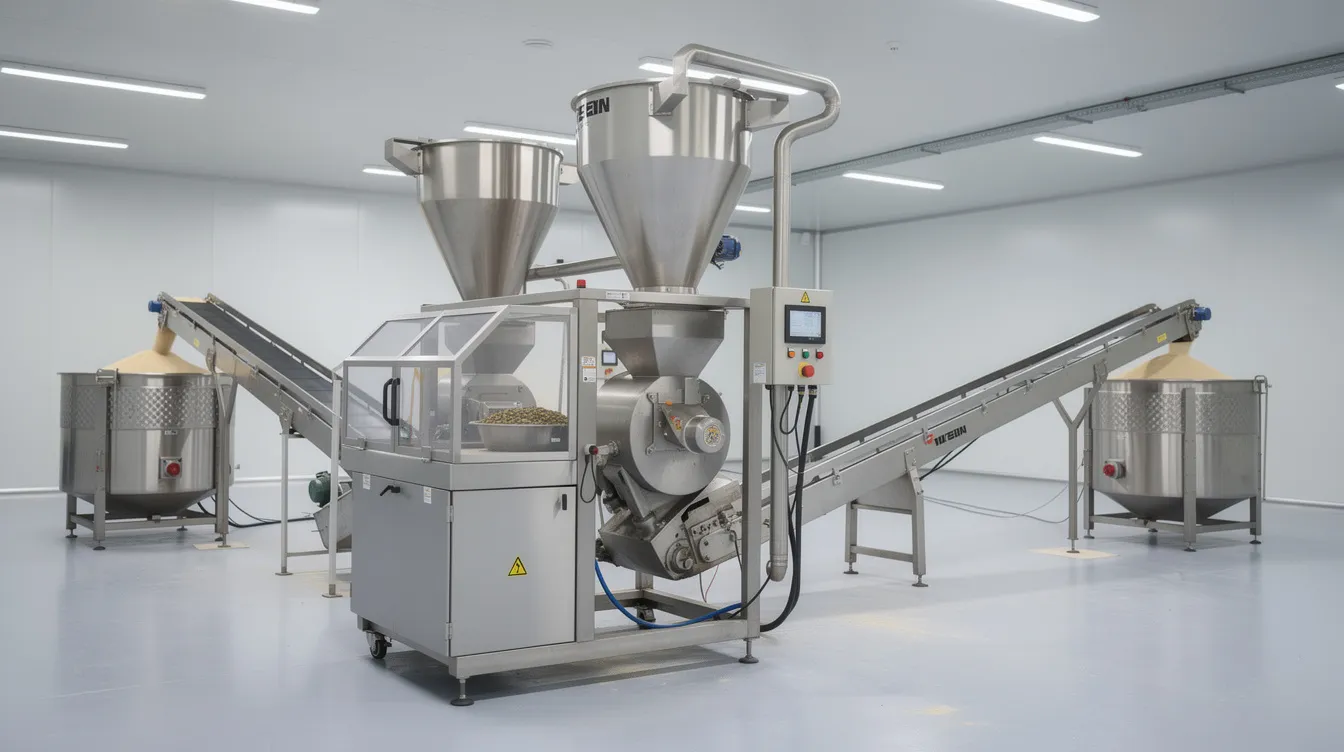
Raw Material Procurement and Quality Management
Key raw materials include whole pulses (chickpea, moong, urad, masoor, yellow peas) or cleaned dal, sourced through mandis, traders, large aggregators or imports where relevant. Chana dal, a core raw material for besan, has been trading around ₹82–88 per kg in major Indian mandis. Raw material costs typically represent a significant portion of production costs – approximately 90% of total operating cost in pulse processing units.
Quality parameters to be checked at procurement include moisture percentage, foreign matter, damaged and discoloured grains, infestation, variety consistency and size gradation. Raw material quality directly affects flour characteristics, recovery, shelf life and customer acceptance.
Buying whole pulses offers by-product value (bran, husk, brokens usable as animal feed) but requires more machinery and process steps. Purchased dal simplifies operations but exposes the unit to dal millers’ margins and quality variability. For chana/besan-specific projects, the besan manufacturing from chana dal article explains the purchased-dal route in detail.
Existing dal millers considering adding flour manufacturing as a downstream line should evaluate the additional investment through the lens of dal mill modernisation, expansion and automation.
Storage and inventory management practices are critical: silo or bag storage, fumigation, FIFO/FEFO rotation, segregation by lot, temperature and humidity control to minimise insect growth and quality deterioration.
Raw material price volatility is a significant risk. Fluctuations in raw material prices can disrupt pulse flour production economics. Seasonal advance buying, diversified sourcing strategies and maintaining adequate buffer stock can partially mitigate procurement risk.
Pulse Flour Manufacturing Process Flow
Pulse flour manufacturing can involve processes like cleaning, grading, and milling. The exact engineering design should be finalised with machinery suppliers after raw material trials. An operational plan in a pulse flour project includes raw material sourcing and utility requirements alongside the process steps below.
Numbered Process Steps:
- Receiving and primary inspection – incoming pulses or dal are weighed, visually inspected and documented for lot traceability.
- Pre-cleaning and magnetic separation – removal of foreign matter (stones, dust, strings, metal particles) using pre-cleaners, aspirators and magnets.
- Destoning and grading – gravity-based separation of stones and size-based grading of pulses.
- Optional dehusking and splitting – applicable only for whole-pulse processing; involves dehulling machines and splitters to remove husk and separate cotyledons.
- Conditioning – moisture adjustment where required for specific pulse types to improve grinding efficiency and flour quality.
- Grinding through pulveriser or suitable flour mill – the core milling process, converting dal or dehusked pulse into fine flour.
- Sifting and classification – multi-deck sifters or plansifters separate flour by particle size; oversize particles are recirculated for re-grinding.
- Approved blending – where the product plan includes multi-pulse blends, controlled mixing using a blender with documented ratios.
- In-line foreign-body control – metal detection or other validated controls suited to the process.
- Packing and sealing – weighing, filling into pouches or bags, sealing with batch/lot coding, date and label.
- Finished goods storage and dispatch – temperature-controlled or ambient storage with proper stacking, FIFO rotation and dispatch documentation.
The purchased-dal route skips dehusking and splitting but still requires thorough cleaning and size adjustment. The integrated whole-pulse route adds dedicated dehusking and splitting stages.
Key technical considerations include temperature control during grinding (excessive heat can cause flavour damage and discolouration), maintaining consistent particle size through appropriate sieves, managing dust via extraction systems, and ensuring cross-contamination control between different pulse types. Ordinary milling does not provide a validated microbial kill step; heat treatment, where required, must be specified separately. Batch identification, lot coding and traceability from raw material to finished product are required for food safety and recall readiness.
Pulse Flour Manufacturing Machinery and Equipment
Pulse flour manufacturing machinery selection should be based on target capacity, product mix, desired fineness, hygiene standards and available utilities. Suppliers should run trials on intended pulses before finalisation. For a broader perspective on specialty flour plant machinery and equipment cost across categories, see the linked guide.
| Equipment | Function | Essential or Configuration-Dependent | Selection Consideration |
|---|---|---|---|
| Pre-cleaner | Removes foreign matter, dust, oversized particles | Essential | Throughput capacity, aspiration efficiency |
| Destoner | Separates stones by gravity | Essential | Feed rate, stone size range |
| Magnetic separator | Removes ferrous metal contaminants | Essential | Gauss strength, cleaning access |
| Dehusker / Splitter | Removes husk, splits pulse (integrated model) | Configuration-dependent | Pulse-type suitability, husk removal efficiency |
| Pulveriser / Impact mill | Grinds dal into flour | Essential | Capacity (kg/hr), power draw, particle size control |
| Plansifter / Multi-deck sifter | Classifies flour by mesh size | Essential | Number of decks, mesh interchangeability |
| Dust extraction / Cyclone | Controls airborne dust in plant | Essential | Air volume, filtration efficiency |
| Blender | Mixes flours for custom blends | Configuration-dependent | Batch size, mixing uniformity |
| Weighing and filling machine | Fills pouches/bags to target weight | Essential | Accuracy, speed, pack-size flexibility |
| Sealing machine | Seals filled packs | Essential | Seal integrity, speed |
| Metal detector | Detects metal contaminants in finished packs | Essential | Sensitivity, reject mechanism |
| Laboratory equipment | QC testing (moisture, particle size, colour) | Essential | Test requirements, accuracy |
| Electrical panels and utilities | Power distribution, motor controls, compressors | Essential | Load capacity, safety standards |
Different grinding technologies – hammer mill, pin mill, impact pulveriser – influence particle size distribution, heat generation and energy use. Advanced machinery with better heat management and consistent flour quality output must be matched to product quality requirements. Stainless steel contact parts are important where food safety, corrosion resistance and ease of cleaning for frequent product changeovers are priorities.
Written performance guarantees, energy-consumption estimates, maintenance requirements and spare-parts availability should be obtained from machinery vendors. Actual prices must be verified directly at the time of project planning; illustrative benchmark data from published sources suggests machinery costs can range from ₹15–30 lakh for small plants to ₹250–500+ lakh for large, fully automatic integrated facilities.
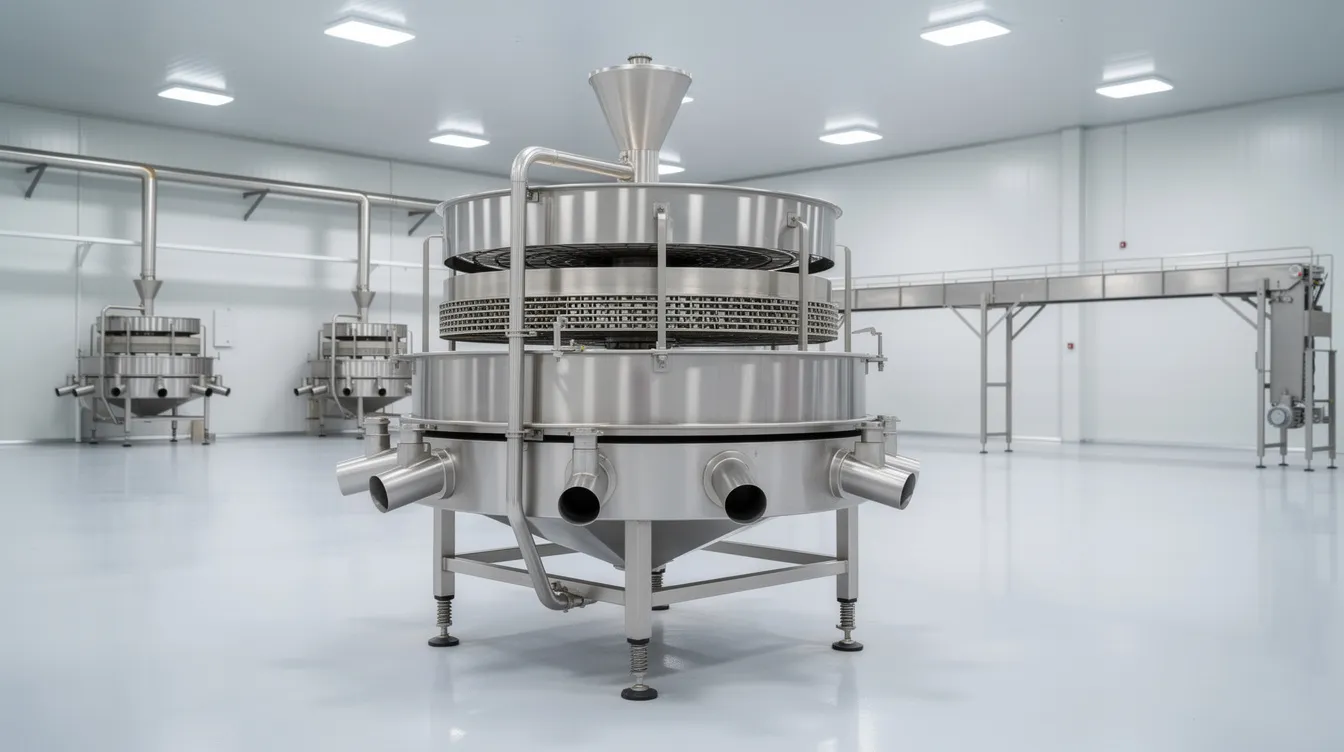
Land, Building and Plant Layout Planning
Land and building requirements depend on plant capacity, stockholding days for raw pulses and finished goods, and type of handling systems (manual versus mechanised). The DPR must state assumptions clearly rather than using generic area figures.
Key functional areas include:
- Raw material unloading yard and bag or silo storage
- Cleaning and grading section
- Dehusking and splitting area (for integrated model)
- Grinding and sifting section
- Packing hall
- Finished-goods godown
- QC laboratory
- Utility block (electrical room, compressors, dust extraction)
- Administrative office and staff facilities
Layout principles should ensure linear material flow, physical segregation of raw and finished areas, dust and noise management, provision for future expansion and isolation of high-risk operations (grinding, with associated dust explosion risk) from administrative zones.
Hygiene and safety infrastructure – hand-wash and gowning areas, pest-proofing measures, proper ventilation, fire safety systems (particularly important in dusty environments) and safe walkways – must be incorporated. A basic layout drawing prepared jointly with machinery suppliers and a local architect should be integrated into the detailed project report for lender discussions.
Pulse Flour Manufacturing Plant Setup Cost Structure
Actual setup cost depends heavily on capacity, automation level, building specifications and location. The DPR should show a structured cost estimate rather than a single aggregate number. The financial projections in a project report include capital investments and operating expenses analysis.
Major Fixed-Cost Heads:
| Cost Head | Remarks |
|---|---|
| Land purchase or lease deposits | Location-dependent; industrial area preferred |
| Site development | Levelling, fencing, approach road |
| Building and civil construction | Factory shed, storage, office, lab, utilities |
| Processing machinery and ancillaries | Cleaners, dehuskers, pulverisers, sifters, conveyors |
| Packing machinery | Weighing, filling, sealing, coding |
| Electrical system and cabling | HT/LT panels, motor starters, lighting |
| Dust extraction and pneumatic conveying | Cyclones, bag filters, blowers |
| Laboratory setup | Moisture meters, sieve sets, colour meter |
| Furniture and office equipment | Admin and QC |
| Pre-operative expenses | Licensing, consultant fees, trial-run costs |
| Contingency provision | Typically 5–10% of capital cost |
For bank discussions, the project cost must clearly separate fixed capital investment from working capital margin. This ensures term loan and cash credit limits can be structured properly. Supporting vendor quotations, civil cost estimates and utility tariff confirmations should be included as appendices.
Governments may offer subsidies and support for MSME and manufacturing projects through various central and state schemes. Eligibility and availability should be verified against current scheme guidelines at the time of application – these should not be assumed in the financial model without confirmation.
Working Capital Requirement and Operating Cycle
The working capital cycle for a multiproduct pulse flour plant follows a predictable pattern: cash → raw pulses and packaging → work in process → finished flour → credit sales → receivables → cash.
Key working capital components include:
- Raw pulse inventories (typically 30–45 days of consumption, higher if seasonal stocking is planned)
- Packaging materials (15–20 days)
- Work in process (minimal, usually 1–2 days)
- Finished goods (15–30 days of sales, depending on dispatch frequency)
- Trade receivables (30–60 days for B2B customers, shorter for retail)
- Less: Trade payables (credit received from pulse suppliers, typically 15–30 days)
Illustrative Working Capital Calculation:
Assume monthly raw material consumption of ₹50 lakh, monthly sales of ₹55 lakh, inventory holding of 30 days for raw materials, 20 days for finished goods, and receivables at 45 days. The gross working capital requirement before supplier credit would be approximately ₹1.12 crore. Subtracting 15 days of supplier credit (approximately ₹25 lakh) gives a net working capital requirement of approximately ₹87 lakh. The bank cash credit limit typically covers 60–75% of eligible current assets, with the promoter funding the margin.
For background on stock-financing concepts in related industries, the article on working capital, cash credit and stock financing in dal milling provides useful context, though flour plants may have different storage patterns and credit cycles.
Practical factors affecting working capital include seasonal stocking to avoid price spikes, different credit norms across B2B and retail customers, and the impact of export orders or private-label contracts on inventory buildup and receivable timelines. Bulk B2B sales may require substantial working capital even when packing costs are relatively low.
Cost of Production and Pulse Flour Production Cost per Kg
The elements of cost per kg of finished pulse flour include:
- Raw material cost adjusted for recovery percentage
- Power and fuel per kg of grinding (pulveriser, blower, sifter energy consumption)
- Direct labour per kg
- Packaging material cost per kg (for packaged flour)
- Factory overheads (maintenance, quality control, cleaning)
- By-product credits (husk, brokens), if applicable
Recovery differs between whole-pulse integrated processing and purchased-dal grinding. The DPR should use separate mass-balance sheets for each product-route combination. Applying the recovery rate of whole-pulse processing to purchased-dal grinding would overstate losses and distort cost calculations.
Conceptual Comparison:
| Cost Element | Besan (from Chana Dal) | Moong Flour (from Moong Dal) |
|---|---|---|
| Raw material cost per kg | ₹85 (illustrative) | ₹110 (illustrative) |
| Saleable recovery | ~90% | ~88% |
| Effective raw material cost per kg flour | ~₹94 | ~₹125 |
| Processing + packing cost per kg | ~₹4–6 | ~₹4–6 |
| Approximate production cost per kg | ~₹98–100 | ~₹129–131 |
These figures are illustrative. Actual costs must be computed from current mandi prices, verified recovery rates and local utility tariffs.
In a multiproduct plant, common costs (maintenance staff, general power overheads, rent) must be allocated across products for contribution analysis, usually based on machine hours or throughput weight. Understanding realistic production cost per kg is essential for setting selling prices, negotiating with B2B buyers and assessing the sensitivity of margins to raw material price fluctuations.
Pulse Flour Manufacturing Profitability and Break-Even Analysis
Profitability assessment requires distinguishing between gross margin (sales minus direct variable costs), contribution (towards fixed costs), EBITDA, and net profit after interest and tax.
Product-wise contribution margins are computed by subtracting raw material, processing, packaging and variable selling costs from product-wise realisations. Pulse flour gross profit margins typically range between 8–12%, though these can be higher for specialised or branded products and lower for bulk commodity supply.
Economic viability is supported by projecting break-even point and return on investment. Break-even analysis identifies the minimum capacity utilisation or sales volume needed to cover fixed costs – including salaries, depreciation, interest and administrative overheads.
An illustrative 5-year profitability snapshot in the DPR should show:
- Year 1: 45–50% capacity utilisation, low or breakeven EBITDA
- Year 2: 60–65% utilisation, positive EBITDA, DSCR approaching 1.2–1.3
- Year 3 onwards: 75–85% utilisation, improving EBITDA margins and comfortable DSCR
The operating cost for a pulses processing plant is projected to increase significantly by the fifth year due to inflation, higher raw material costs and expanded production volumes. This must be reflected in the financial model.
Profitability in a multiproduct environment depends on optimising product mix towards higher-contribution products, controlling changeover losses and maintaining consistent quality to avoid rejections and returns. Pulse flour market demand shifts can also alter the optimal product mix over time.
Financial Projections, CMA Data and Bankability
A bankable multiproduct pulse flour manufacturing plant project report requires the following financial statements for at least 5–7 years:
- Projected Profit and Loss Statement
- Projected Balance Sheet
- Cash Flow Statement
- Term Loan Amortisation Schedule
Financial projections should include a Profit and Loss statement, Cash Flow statement and Balance Sheet, prepared from a consistent set of documented assumptions. CMA Data for bank loans in India organises detailed assumptions on production, sales, raw-material consumption, expenses and working capital into standardised formats that lenders use for credit appraisal. Bank loan applications require detailed financial documentation and compliance data.
Key bankability parameters include:
- DSCR (Debt Service Coverage Ratio) – typically lenders look for 1.25 or above
- Projected current ratio – minimum 1.33 is common
- Break-even utilisation – the percentage at which operations cover all costs
- Payback period and IRR – financial projections in DPRs cover ROI and NPV analysis
DPRs assess raw material, utility and infrastructure requirements to ensure that production assumptions are grounded in practical capabilities. Customisation of detailed project reports is important for securing project finance – generic templates with unverified assumptions rarely satisfy experienced lenders.
Interest rates and repayment schedules are critical in financial modelling for projects. Sensitivity analysis (discussed in the next section) must demonstrate how the project performs under stress scenarios. Investor presentations should be clear and backed with solid financial data when equity fundraising is part of the means of finance.
Project Report Bank, under CA Manish Gugliya, prepares customised financial projections and project finance DPRs for pulse flour projects but does not certify future performance. Projections are always based on documented assumptions and are estimates of future performance, not guarantees of results.
Sensitivity Analysis and Key Investment Risks
Risk analysis identifies potential challenges and strategies for mitigation in project plans. Sensitivity analysis assesses how different variables impact project profitability. The following are major risk variables for a multiproduct pulse flour plant:
| Risk Variable | Impact on Project |
|---|---|
| Raw pulse price increase (+15–20%) | Compresses gross margins unless selling prices are revised; may reduce DSCR below comfort levels |
| Selling price decline (–10%) | Directly reduces revenue and contribution; break-even utilisation rises |
| Lower capacity utilisation | Raises fixed cost per kg; extends payback period |
| Lower flour recovery | Increases effective raw material cost per kg of saleable flour |
| Extended customer credit (60+ days) | Increases working capital requirement; may cause cash flow stress |
| Higher power or packaging costs | Adds to processing cost; reduces EBITDA margins |
The DPR should include at least base case, optimistic case and stress case scenarios with clearly stated assumptions, making the impact on DSCR and equity IRR visible to promoters and lenders.
Operational risks specific to multiproduct plants include product-changeover complexity, risk of cross-contamination between pulse types, quality inconsistencies between production lots and dependence on a few major B2B customers for stable demand.
Mitigation strategies include maintaining a diversified customer base, staggered procurement to manage raw material price volatility, quality assurance systems for consistent quality, gradual capacity scale-up during the initial years, and maintaining adequate working-capital buffers rather than operating at the edge of bank limits. Multiple products diversify revenue only when there is sufficient market demand and manageable production complexity for each.
Licences, Regulatory Compliance and Food Safety
Statutory compliance is necessary for food safety and environmental regulations in manufacturing. A commercial pulse flour plant in India typically requires:
- FSSAI licence – basic registration up to ₹1.5 crore turnover; State licence between ₹1.5 crore and ₹50 crore; Central licence above ₹50 crore
- Factory registration under applicable state factory and labour laws
- GST registration
- Local municipal trade licence
- Pollution control / environmental clearances where required by the state pollution control board
Food-safety expectations include implementation of hygiene and sanitation protocols, pest control, documented SOPs for cleaning, record-keeping and periodic product testing. Labelling must properly declare product name, ingredients, net quantity, batch/lot number, best-before date, manufacturer details, nutritional information and allergen declarations as per prevailing regulations.
Using claims like “gluten free” or “high protein” requires compliance with specific standards, validated testing and robust segregation controls. Pulse flours are naturally gluten free in most cases, but cross-contamination during processing or storage must be prevented and tested. These claims should not be assumed as generic features of all pulse flour products without appropriate validation. Nutritional quality claims in food science require regulatory backing.
Environmental regulations relating to dust emissions, noise and waste disposal must be addressed through appropriate dust extraction, noise insulation and housekeeping systems. Promoters should consult qualified food technologists and legal professionals for plant-specific regulatory compliance.
Operational Efficiency, Quality Systems and Competitive Advantage
Operational efficiency in grinding, packing and material handling reduces cost per kg and supports competitive pricing in the pulse flour market. Even small improvements in power consumption per tonne, reduction in changeover time and lower rework rates can materially affect annual profitability.
Key quality-system elements include:
- Incoming raw-material inspection (moisture, damage, foreign matter)
- In-process checks (granulation, temperature, colour)
- Finished-product testing (particle size distribution, moisture, sensory evaluation)
- Retention samples for each batch
- Complaint-handling mechanisms with documented corrective actions
Quality control procedures must be implemented to ensure product consistency and safety. Consistently meeting customer specifications on particle size, colour and flavour builds trust, enabling long-term contracts and possibly premium pricing. Consumer awareness of pulse flour products is growing, and buyers increasingly expect documented quality systems.
Competitive advantage levers beyond price include assured and predictable consistent flour quality, on-time delivery, technical support to B2B customers on flour performance in recipes, and flexibility to develop custom blends and pack sizes. Investments in basic laboratory equipment, operator training and preventive maintenance often pay off through lower rework, fewer customer rejections, better plant uptime and stronger pulse utilization rates.
Practical Implementation Roadmap and Timelines
Project implementation schedules help track key milestones from conception to production. The logical sequence for a multiproduct pulse flour plant is:
- Market study and buyer discussions – 1–2 months
- Product and specification finalisation – concurrent with market study
- Selection of business model and capacity – 2–4 weeks
- Machinery shortlisting and supplier trials – 1–2 months
- Preliminary plant layout and utility planning – 2–4 weeks
- Preparation of detailed DPR and financial model – 2–3 months
- Bank finance application and sanction – 2–4 months (variable)
- Civil construction and machinery ordering – 4–6 months
- Installation and commissioning – 1–2 months
- Trial production and quality validation – 2–4 weeks
- Commercial despatches – beginning of revenue generation
These timelines are indicative and project-specific. Aligning customer development (sample approvals, contracts) with plant installation is critical so that the unit does not face prolonged idle periods after commissioning.
Maintaining clear documentation throughout – approvals, contracts, test reports, vendor communications – supports both bank appraisal and internal decision-making. Project Report Bank can assist from the detailed financial and DPR side, while machinery selection, civil design and food-technology validation should be done with appropriate domain experts and suppliers.
How CA Manish Gugliya and Project Report Bank Can Assist
CA Manish Gugliya is a practising Chartered Accountant (FCA, DISA from ICAI) based in Ratlam, Madhya Pradesh, leading Project Report Bank as a professional project finance advisory platform for manufacturing and processing projects across India.
Core services relevant to a multiproduct pulse flour plant include:
- Customised Detailed Project Report (DPR) preparation
- Project feasibility and viability analysis
- Detailed financial modelling with product-mix scenarios
- CMA Data preparation for bank loans
- Working capital assessment
- Loan-structuring and means-of-finance planning
- Bankable project reports with ratio analysis and repayment schedules
- Support in responding to typical banker queries during appraisal
Professional fee guidance: Bank Finance DPR and Loan Proposal Assistance starts at ₹25,000, subject to project scope and complexity. Payment terms are 30% payable in advance and 70% after the first complete draft, before final release. This is the professional advisory fee, not the plant investment.
Serious entrepreneurs and investors planning a multiproduct pulse flour manufacturing project may connect through the WhatsApp option available on the Project Report Bank website for discussion on a project-specific multiproduct pulse flour manufacturing plant project report.
Frequently Asked Questions (FAQs)
The following questions address specific concerns that typically arise when planning a multiproduct pulse flour manufacturing plant.
What is a multiproduct pulse flour manufacturing plant?
It is a commercial facility that cleans and mills multiple pulses – chickpeas, moong, urad, masoor, yellow peas and others – into different flours on shared machinery, with controlled changeovers, documented cleaning protocols and quality systems. It is distinct from a single-product besan mill or a dal milling unit, as it is designed to serve multiple pulse flour products and customer segments from the same production infrastructure.
Can besan, moong flour and urad flour be produced on the same line?
In many cases, the same grinding and sifting equipment can process different pulses in separate batches. However, production planning must account for cleaning time between products, dust removal, colour and flavour taint management, and cross-contamination controls – particularly if the facility also handles any gluten-containing materials. Milling technologies suitable for one pulse may need adjustment in sieve settings or feed rates for another.
What factors drive pulse flour manufacturing plant setup cost the most?
The major cost drivers are desired installed capacity, number of products, chosen operating model (purchased-dal versus integrated whole-pulse), level of automation in material handling and packing, building specifications, dust-control systems and the working capital margin needed for stocking raw pulses and extending customer credit. Key cost factors also include location, power tariffs and civil construction costs, which vary significantly across Indian states.
How is pulse flour production cost per kg generally calculated?
Cost per kg combines raw material cost adjusted for saleable recovery, power and fuel consumption during grinding, direct labour allocation, packaging material cost, factory overheads (maintenance, quality control, cleaning) and any by-product credit. A CA-prepared DPR shows itemised cost build-ups for each major product, distinguishing variable from fixed cost components. Sustainable food production in this context means achieving production costs that support viable selling prices over the long term.
What should a bankable multiproduct pulse flour manufacturing plant project report include?
A bankable report typically covers technical configuration and production capacity planning, detailed project cost with means of finance, projected Profit and Loss, Balance Sheet and Cash Flow statements for 5–7 years, working capital assessment, DSCR and break-even analysis, sensitivity scenarios showing stress-case outcomes and clearly documented assumptions. Supporting documents include machinery quotations, civil estimates, market validation evidence and regulatory compliance documentation. Project Report Bank prepares such DPRs tailored to the promoter’s specific project plan and pulse inclusion strategy. The global market opportunity – with the pulse flour market expected to grow at a CAGR of 12.2% – provides context, but each project must demonstrate viability on its own assumptions.