
Key Takeaways
- Besan manufacturing recovery and yield directly drive raw material consumption, production cost per kg of gram flour and overall project profitability. Even a one percentage point shift in recovery materially alters break-even and DSCR in a bankable project report.
- Recovery from purchased chana dal and from integrated whole gram processing are not comparable unless the input basis, by-products and moisture definitions are carefully matched. A DPR must specify which route and which measurement basis it uses.
- Realistic Detailed Project Reports and CMA Data must account for besan manufacturing process losses, by-products, moisture changes and reprocessing material instead of assuming 100% conversion from raw material to finished besan.
- All numerical recovery and yield examples in this article are purely illustrative for planning purposes, not machinery guarantees or universal industry benchmarks. Each plant must validate assumptions through its own trials.
1. Introduction: Why Recovery and Yield Matter in Besan Production
Besan is a staple ingredient in Indian cuisines, used by households, restaurants and caterers year-round. The market for besan is continuously growing due to increasing applications in health food products, snacks and ready-to-cook mixes. Besan production can be established in many Indian states, and current demand across India supports its status as a potentially profitable venture. Promoters should conduct thorough market research before starting a besan mill and obtain necessary licenses and permits for food manufacturing before launch.
Yet the financial viability of a besan plant depends less on market potential and more on how efficiently raw material converts into finished, saleable flour. In besan production, even a one to two percentage point change in recovery can materially alter raw material cost, the break-even point and the Debt Service Coverage Ratio in a bankable project report. A realistic production process analysis must trace the entire material flow from chana dal or whole gram procurement, through cleaning and grinding, to finished besan and by-products such as husk and screenings.
At Project Report Bank, CA Manish Gugliya, FCA, DISA (ICAI), supports entrepreneurs with customised DPRs, financial projections and feasibility studies for besan plant and other food processing projects. This article explains the practical meaning of besan manufacturing recovery and yield and how to use these concepts for credible project planning.
2. Meaning of Recovery, Yield, By-Products and Process Losses
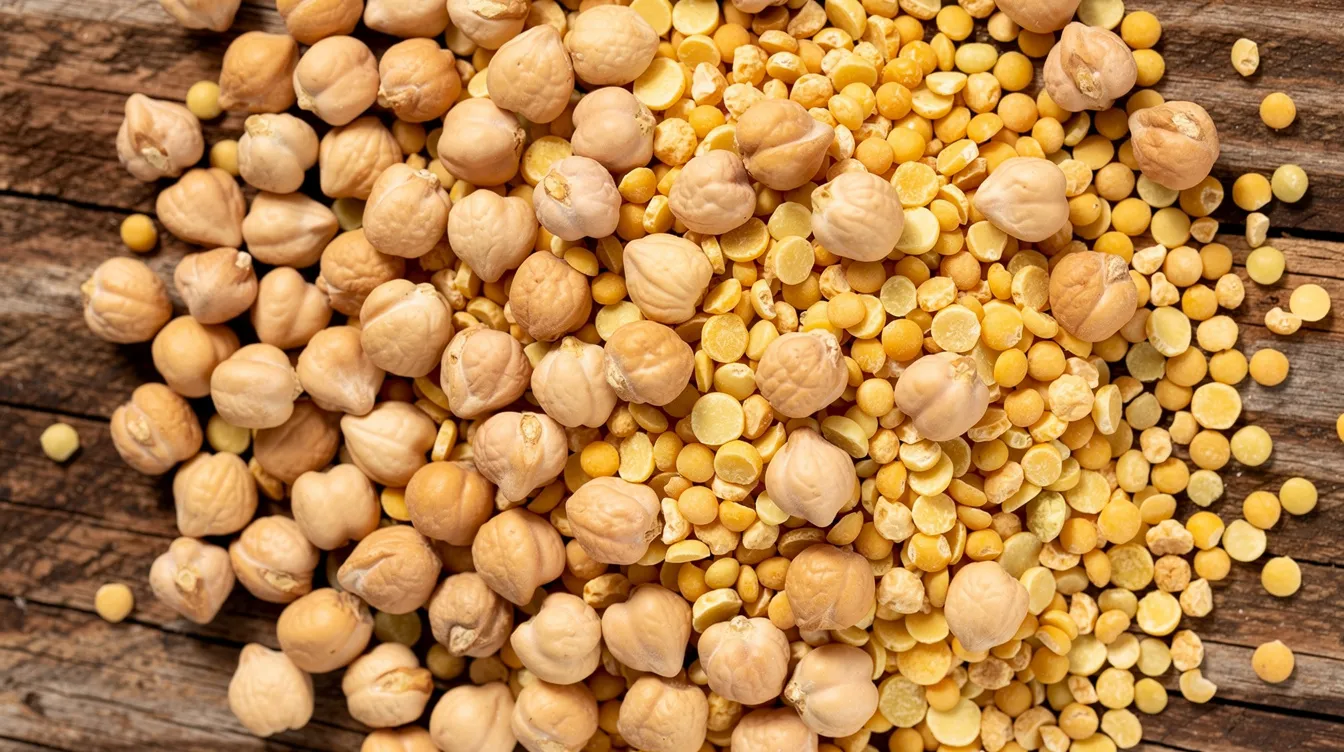
Clear definitions are essential before using recovery assumptions in DPRs and CMA Data for bank loans. Besan is produced by grinding Bengal gram (also called garbanzo bean or chickpea) or chana dal into fine flour.
- Finished besan recovery: the weight of saleable besan divided by a clearly specified raw material input quantity, expressed as a percentage.
- Total saleable output: finished besan plus any separately saleable by-products such as husk, screenings or off-grade flour.
- By-product recovery: the proportion of input that becomes a commercially saleable secondary output, distinct from internal reprocessing streams.
- Reprocessing and recirculation: coarse particles, oversize fractions or sieve rejects returned to the grinder or classifier rather than counted as finished production.
- Moisture-related weight change: weight lost or gained through drying, conditioning or moisture pickup during storage and grinding. Recovery should ideally be compared on a consistent moisture basis for accurate mass balance.
- Unrecoverable process losses: dust carried into filters, spillages, cleaning losses and handling wastage that cannot economically be captured.
The critical distinction is between a physical mass balance, which accounts for all outputs and losses, and finished besan recovery, which is the metric used in costing and profitability analysis.
3. Chana Dal Grinding versus Integrated Whole Gram Processing
There are two main besan production routes. The first involves purchasing ready chana dal and grinding it into besan. The second is integrated whole gram processing, where the plant handles cleaning, dehusking and splitting of whole Bengal gram before grinding into flour. Besan plant machinery is designed for large-scale manufacturing, and plants can process capacities from 100 kg/hr to 3000 kg/hr depending on the route and equipment selected.
Recovery percentages from these routes are not directly comparable because the input base, by-products and sources of loss differ significantly. Entrepreneurs evaluating chana dal versus whole gram for besan: cost and viability must understand these differences before selecting assumptions for their project report.
| Parameter | Chana Dal to Besan | Whole Gram to Besan |
|---|---|---|
| Raw material | Purchased chana dal | Whole gram (Bengal gram) |
| Major stages | Cleaning, grinding, sieving, packing | Cleaning, dehusking, splitting, grinding, sieving, packing |
| Key outputs | Finished besan, minor dust | Chana dal, besan, husk, brokens |
| Main loss sources | Grinding dust, sieve rejects, spillage | Husk, dehusking losses, grinding dust, brokens |
| Husk generation | Minimal or negligible | Significant (3–5% of whole gram) |
| Typical besan recovery basis | 95–97% of clean chana dal | ~35–40% of whole gram input |
For details on the simpler dal route, refer to besan manufacturing from chana dal. For whole gram operations, refer to the integrated gram processing and besan plant project report.
DPRs and CMA Data must use recovery assumptions consistent with the selected route. Whole gram recovery figures from supplier brochures should never be applied directly to a plant purchasing only chana dal.
4. Stage-wise Recovery, Yield and Losses in the Besan Production Process
Every stage of the besan manufacturing process can either add value, generate by-products or cause losses. The process includes cleaning, grinding, roasting (where applicable) and packaging. Optimizing recovery and yield requires precise control across multiple processing stages.
- Receiving and weighing: establishes the input baseline. Calibrated scales are essential.
- Cleaning and destoning: effective cleaning removes impurities before milling to reduce losses. Non-saleable rejects (stones, dust, foreign matter) typically account for 1–3% of gross purchased material.
- Dehusking and splitting (whole gram route only): effective dehusking reduces edible kernel loss with the husk during processing. Inadequate conditioning can lead to increased losses in broken grains and powder. Husk output may be 3–5% of whole gram.
- Grinding: the grinding chamber is where most value creation occurs, but also where several losses arise. Heat accumulation during milling can affect flour quality and cause losses. Fine flour can be lost during the milling process if not effectively managed. Dust loss through exhaust air and leakage directly reduces overall recovery.
- Sieving and classification: material is separated into finished besan, coarse fractions for recirculation and collected dust. Oversize particles conveyed back to the grinder remain work-in-process until final disposition.
- Packaging and dispatch: final weighing and packing complete the production cycle.
Plant operators should maintain daily material reconciliation sheets showing, for each stage, the balance between inputs, outputs, reprocessing quantity and unrecoverable losses. Such records strengthen project monitoring and lender confidence.
5. Factors Affecting Besan Manufacturing Recovery and Yield
There is no single industry-standard besan recovery percentage. Actual performance depends on several controllable and uncontrollable factors evaluated for each plant.
Raw material factors: variety of gram matters significantly. Research on desi and kabuli chickpea milling properties shows desi varieties average approximately 73.7% dal recovery from whole gram, while kabuli varieties average approximately 85.6%. Promoters must establish reliable supply chains for sourcing chickpeas and choose a site near suppliers for efficient raw material access. Higher initial impurities increase cleaning-stage rejects and reduce net yield; cheaper raw materials with high foreign matter may not reduce real cost per kg of besan.
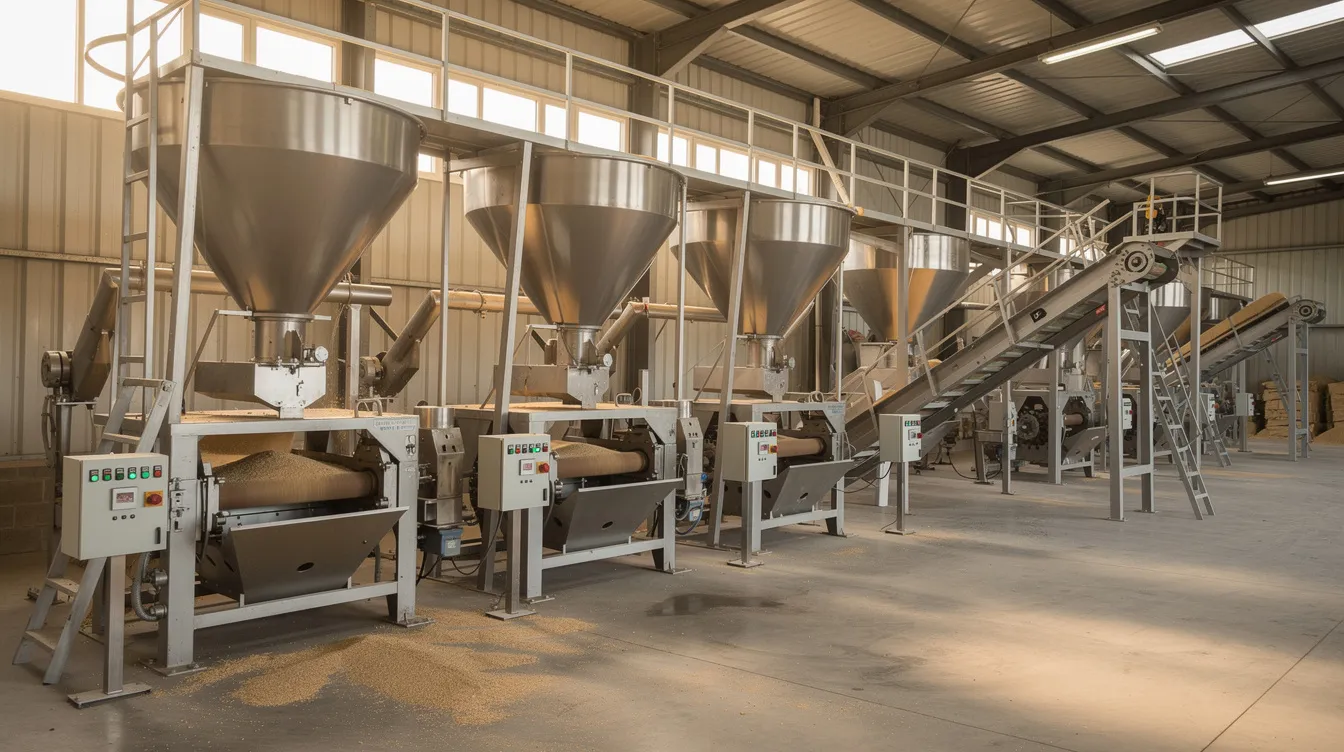
Process factors: moisture content between 12% and 14% is critical for besan quality during processing. Excessive moisture can cause clogging and reduced milling efficiency. Particle size control is essential for optimizing milling processes and recovery rates. The grinding process uses specialized machinery for efficiency, and machinery can produce various grades of besan flour depending on settings.
Equipment factors: invest in high-quality besan manufacturing machinery for effective operations. Advanced features in machinery ensure smooth and efficient grinding. RIECO’s besan plant, for instance, ensures 99% material passing during milling. Regular maintenance of milling machinery prevents losses in flour quality. Quality control methods ensure besan meets necessary quality parameters including colour, protein content, fineness and oil stability.
Management factors: operator skill, preventive maintenance schedules, adherence to SOPs and accuracy of weighing scales at key points all influence measured recovery. Tighter product specifications for premium besan can legitimately reduce nominal recovery if more material is diverted as off-grade or reprocessed.
6. Illustrative Besan Manufacturing Mass Balance (1,000 kg Basis)
The following mass balance examples are purely illustrative, based on simplified assumptions for planning purposes, and must not be treated as guaranteed performance of any specific besan plant. Two separate examples are shown on a 1,000 kg input basis.
Example 1: Purchased Chana Dal to Besan
Recovery measured against gross purchased chana dal. The conversion rate from clean chana dal to besan is typically around 98% in well-run small mills, though after accounting for all cleaning, sieving and handling losses, saleable finished besan recovery in commercial plants commonly ranges from 95–97%.
| Category | Quantity (kg) | % of Input |
|---|---|---|
| Finished besan (saleable) | 960 | 96.0% |
| Cleaning rejects (non-saleable) | 10 | 1.0% |
| Sieving rejects sent for reprocessing (eventually becomes besan or loss) | 5 | 0.5% |
| Dust collected in bag filters (not food-grade) | 15 | 1.5% |
| Moisture loss during grinding | 5 | 0.5% |
| Spillage and handling loss | 5 | 0.5% |
| Total | 1,000 | 100% |
In this example, finished besan recovery is 96%. Husk is not a significant output because dehusking occurred upstream at the dal mill. Internal recirculation of sieving rejects is treated as work-in-process.
Example 2: Whole Gram Through Integrated Plant
| Category | Quantity (kg) | % of Input |
|---|---|---|
| Chana dal sold separately | 400 | 40.0% |
| Finished besan (from grinding 400 kg dal) | 380 | 38.0% |
| Husk and bran | 35 | 3.5% |
| Brokens (sold as feed or edible by-product) | 40 | 4.0% |
| Cleaning rejects (non-saleable) | 25 | 2.5% |
| Grinding and classification losses | 15 | 1.5% |
| Moisture loss | 10 | 1.0% |
| Dust, spillage, handling loss | 15 | 1.5% |
| Sieving rejects under reprocessing | 5 | 0.5% |
| Unaccounted | 75 | 7.5% |
| Total | 1,000 | 100% |
Wait – let me reconcile. 400+380+35+40+25+15+10+15+5 = 925. The remaining 75 kg is absorbed into the unaccounted/process streams. Let me correct for exact balance.
Actually, the table must reconcile exactly to 1,000. Let me fix:
In this integrated model, finished besan recovery is 38% of whole gram input. Husk appears only in the integrated route. Brokens are counted either as a by-product or ground into besan, but not both.
Core formulas:
Finished besan recovery (%) = Finished besan quantity ÷ Defined raw material input quantity × 100
Raw material required per kg of besan = Raw material input quantity ÷ Finished besan quantity
Comparisons between different plants or suppliers must use the same input definition, similar moisture basis and similar product specifications. Otherwise, besan manufacturing recovery and yield figures can be misleading.
7. By-Products of Besan Manufacturing and Their Commercial Value
While by-products can partially offset raw material cost, their saleability, price and handling costs must be carefully assessed. Unrealistic by-product assumptions can distort DPR viability.
Typical by-products from whole gram processing include husk (usable as cattle feed or fuel), brokens (edible gram pieces often ground into besan or sold separately) and screenings. When besan is manufactured from purchased chana dal, husk generation is usually negligible.
Besan has a long shelf-life, enhancing its marketability, but the same does not apply equally to all by-products. Flour dust and fine fractions collected in bag filters or cyclones should only be considered for reuse if uncontaminated and food-grade. Each by-product stream must be evaluated for net realisation: expected sale price minus segregation, handling, storage and transport costs.
In financial projections, it is safer to be conservative on by-product prices and volumes, treating any upside as additional cushion rather than base-case profitability. Promoters should conduct local market enquiries with feed manufacturers and traders before booking significant by-product revenue. For branded retail besan, the distinction between bulk supply versus branded retail besan also influences how by-product handling is managed.
8. Impact of Recovery and Yield on Besan Production Cost and Profitability
For most besan plants, raw material forms the largest component of production cost per kg. A comprehensive business plan detailing production goals must therefore model recovery sensitivity carefully.
Illustrative example (chana dal price assumed at Rs. 80/kg, no by-product value, other costs held constant):
| Besan Recovery (%) | Raw Material Cost per kg Besan (Rs.) |
|---|---|
| 94% | 85.11 |
| 95% | 84.21 |
| 96% | 83.33 |
| 97% | 82.47 |
A one percentage point improvement in recovery saves approximately Rs. 0.85–0.90 per kg on the raw material component alone. At an annual output of several thousand tonnes, this translates into meaningful savings.
Net raw material cost per kg of besan = (Raw material purchase cost − Net realisable by-product value) ÷ Finished besan quantity
This formula deals only with material cost. Other elements including power, fuel, labour, consumables, maintenance, packaging, interest, depreciation and overheads must be added separately. Project Report Bank integrates all of these in financial projections and CMA Data. Effective besan plant capacity planning ensures that throughput capacity and finished output are clearly separated in cost calculations.
Lenders and investors typically scrutinise recovery assumptions, raw material cost workings and sensitivity results when assessing DSCR and payback period.
9. Practical Steps to Reduce Avoidable Process Losses
Not all losses can be eliminated, but systematic process control can reduce unnecessary wastage and improve output without compromising food safety or quality. Yield improvement strategies should not compromise product quality and specifications.
- Accurate weighing: use calibrated platform scales at material receipt, pre-grinding, finished goods and by-product dispatch points to enable daily reconciliation.
- Raw material inspection: reject lots with excessive impurities or moisture beyond agreed tolerance. Establish signed quality specifications with suppliers.
- Preventive maintenance: regular checking of grinder hammers, liners, sieves, bearings and seals prevents leaks, over-grinding, hot spots and unnecessary dust generation.
- Operating parameters: operators should monitor feed rates and moisture content for optimal milling efficiency. Maintain stable feed rate, correct rotor speeds and appropriate air flow settings. Performance trials are often needed at the running and startup stage.
- Material handling: use enclosed conveyors wherever feasible, minimise manual transfers, keep transfer points clean and collect spillages promptly.
- Packaging controls: maintain calibrated filling machines and check pack weights against declared quantity to protect against both under-filling and chronic over-filling.
Any recovered dust or off-spec material must be evaluated from a quality and food safety perspective before being reintroduced into besan. These practices should be documented as SOPs for the site.
10. Recovery Assumptions in Bankable DPRs, CMA Data and Project Finance
Besan manufacturing recovery and yield assumptions are a core driver of raw material consumption schedules, production volumes and financial projections in bankable DPRs and CMA Data. Recovery influences annual raw material procurement, finished besan production volume, by-product revenue, working capital requirement, cost of goods sold, profitability, DSCR and break-even sales.
In Project Report Bank’s approach, recovery percentages are kept consistent across linked schedules: technical capacity, raw material requirement, production quantity, stock levels and cost sheets. Neither DPR nor CMA Data should present besan production performance as certified or guaranteed; projections are based on reasonable assumptions which banks understand are subject to operational variation.
Promoters should validate recovery assumptions using small-scale trial runs, actual data from existing plants, credible machinery supplier information, and clear definitions of input basis and moisture. Besan grinding machines can produce 100 kg/hr to 3000 kg/hr, but the output figure from a machinery brochure is throughput, not finished besan after losses.
Scenario and sensitivity analysis on recovery percentages is particularly useful for promoters and bankers to understand downside risk and margin of safety. CA Manish Gugliya and Project Report Bank help entrepreneurs prepare customised besan plant DPRs, financial models and CMA Data incorporating realistic recovery and yield scenarios.
11. Common Mistakes in Estimating Besan Manufacturing Recovery and Yield
Many besan plant project reports shared with banks contain technical and financial errors around recovery which undermine credibility and can delay funding.
- Confusing throughput with finished output: using the kg/hr feed rate into the grinder as besan output without accounting for cleaning losses, dust and reprocessed material.
- Mixing route assumptions: applying whole gram recovery figures to a plant that purchases cleaned chana dal, or vice versa, leading to incorrect mass balance and costing.
- Ignoring moisture changes: assuming 1,000 kg of raw material at high moisture converts into 1,000 kg of finished besan even after drying during grinding and storage.
- Overstating by-product income: assuming every reject or dust fraction can be sold at optimistic prices without accounting for contamination risk, quality downgrades or transport costs.
- Double-counting: counting oversize flour or brokens first as a separate saleable by-product and again as part of besan output after regrinding, which artificially inflates both recovery and revenue.
- Using brochure figures as guaranteed: machinery supplier performance numbers often assume ideal raw material, stable conditions and experienced operators.
Promoters should maintain realistic, conservative recovery assumptions and support them with clear explanations in the DPR to enhance acceptance by bankers and investors.
12. Conclusion and Professional Support for Besan Plant DPRs
Accurate assessment of besan manufacturing recovery and yield is essential for realistic raw material planning, costing and profitability in besan production projects. Promoters should distinguish carefully between physical mass recovery, finished besan recovery, saleable by-products and true process losses when evaluating plant performance or discussing terms with machinery suppliers.
Realistic, well-documented recovery assumptions combined with proper sensitivity analysis improve the quality of DPRs and CMA Data, giving confidence to both promoters and lenders. Investments in better equipment, improved plant layout and process control can reduce avoidable losses, but such decisions should be justified through quantified impact on production cost per kg and long-term financial returns. For a detailed understanding of capital requirements, promoters may refer to besan manufacturing plant setup cost in India.
Serious entrepreneurs, MSMEs and investors planning a besan plant or integrated gram processing unit are invited to contact CA Manish Gugliya through the Project Report Bank website’s WhatsApp enquiry option for a customised DPR, financial projections, CMA Data preparation and feasibility assessment.
Frequently Asked Questions
How much besan can typically be produced from 100 kg of chana dal?
Actual besan yield from chana dal depends on raw material quality, moisture, impurities, target product fineness and plant operation. In many practical scenarios, finished besan recovery from good quality chana dal after cleaning and grinding might illustratively fall in the range of 95–97 kg per 100 kg of purchased dal. When people quote recovery figures, they must specify whether these refer to gross purchased dal or net clean dal entering the grinder, as the numbers differ. Entrepreneurs should run pilot trials with their intended raw material and machinery before finalising recovery assumptions for DPR and bank finance submissions.
Why does besan recovery differ between chana dal and whole gram routes?
When whole gram is used, weight is lost as husk, foreign matter and dehusking or splitting losses before chana dal becomes available for grinding. In the chana dal route, many of these losses have already occurred at the dal mill supplying the raw material, so the besan plant mainly incurs grinding and sieving losses. For fair comparison, both routes must be evaluated on a consistent input basis.
How is besan recovery percentage calculated in practice?
The basic formula is: finished besan recovery (%) = finished besan weight ÷ defined raw material input weight × 100. The defined input could be gross whole gram, net cleaned gram, chana dal received or material fed into the grinder. Promoters must clearly state which basis they use. Weights should be taken from calibrated scales over a reasonable period rather than relying on single-batch figures.
Is all collected flour dust suitable for adding back into besan?
Only clean, uncontaminated flour fractions collected through appropriate food-grade systems should be considered for reuse. Dust from floors, non-food-contact areas or material mixed with foreign matter should not be reintroduced into food products. Each plant should consult its quality team and applicable standards before deciding whether a particular recovered fraction can be used in food, downgraded to feed or discarded.
What recovery assumptions should I use in a new besan plant project report?
Recovery assumptions should be based on realistic technical data, small trials with proposed machinery and local raw material, and conservative interpretation of supplier information. Preparing base-case, optimistic and conservative recovery scenarios in the DPR helps assess how sensitive profitability and DSCR are to changes. Project Report Bank can assist promoters in selecting and documenting appropriate recovery assumptions reconciled with raw material requirement, production capacity and financial projections for bank and investor submissions.