Key Takeaways
- This article explains how to plan and evaluate a broken rice and damaged foodgrain ethanol plant in India, covering project cost, machinery, raw material sourcing, financial projections, DSCR, break-even and bankable DPR preparation.
- Content is written from the professional advisory perspective of CA Manish Gugliya, FCA, DISA (ICAI), for serious project promoters, banks and investors considering grain based ethanol manufacturing.
- The discussion covers ethanol production from broken rice and damaged grain, conversion technology, capacity options from 60 to 150 KLPD, government policy for ESY 2025-26, by-product revenue from DDGS, and risk analysis specific to the Indian market.
- All financial illustrations are indicative planning frameworks based on industry data; actual project economics depend on plant capacity, location, feedstock cost, technology selection and confirmed offtake arrangements.
Introduction – Broken Rice & Damaged Foodgrain Ethanol Opportunity in India
India’s ethanol blending programme aims for E20 by 2025, and grain-based feedstock is projected to supply 72.5% of ethanol by 2026. This shift from molasses to grain has opened a window for rice mill owners, grain processors and industrial investors to convert low-value broken rice and damaged foodgrains into fuel-grade ethanol for oil marketing companies.
Broken rice, which represents a low-value fraction of the rice milling process, contains approximately 68.45% starch, making it well suited for bio ethanol production. Ethanol production from broken rice contributes to reducing greenhouse gas emissions compared to gasoline, supports sustainable resource utilization, and reduces food waste by converting non-food-grade grain into renewable energy. Using broken rice as feedstock adds value to what would otherwise remain a feed-grade or industrial-grade commodity.
However, installed distillery capacity in India now exceeds OMC offtake, and any new broken rice ethanol plant project report must account for competitive bidding, feedstock price volatility and confirmed supply arrangements. A project-specific DPR and feasibility study, prepared with conservative assumptions, is the foundation for any bankable investment proposal. Promoters planning a broken rice or damaged foodgrain ethanol plant can contact Project Report Bank on WhatsApp for a customised DPR before committing capital.
What Is a Broken Rice & Damaged Foodgrain Ethanol Plant?
A grain based ethanol distillery converts starch-rich broken rice and damaged foodgrains into fuel-grade ethanol, typically at 99.5% purity or higher through molecular sieve dehydration, for supply to oil marketing companies and industrial buyers. The plant is a continuous-operation industrial unit combining grain handling, fermentation, distillation, dehydration, DDGS production and utility systems.
The feedstock categories relevant for such plants include:
- Broken rice generated during rice milling (typically 100% broken kernels, graded by size and foreign matter)
- Damaged rice and damaged wheat classified as non-issuable by FCI, within defined moisture, fungus and infestation thresholds
- Surplus FCI rice supplied under government-approved arrangements such as the Open Market Sale Scheme (Domestic)
“Damaged foodgrain” does not mean spoiled or unsafe material. It refers to grain that has been declared non-issuable for public distribution due to specific quality failures (excess moisture, insect damage, weathering) but remains legally eligible for industrial use. Distilleries receiving such grain test for moisture, starch content, foreign matter and fungal contamination before acceptance.
The distinction between food-grade grain, feed-grade grain and industrial-grade broken grain is important: only feedstock categories approved under Ministry of Petroleum & Natural Gas and Department of Food & Public Distribution notifications can be used for ethanol under the Ethanol Blending Programme.
Indian Ethanol Industry Outlook and Market Opportunities in 2026
The Ethanol Blended Petrol Programme and E20 roadmap have transformed India’s ethanol industry from a molasses-dependent sector into a multi-feedstock manufacturing ecosystem. India’s ethanol market is projected to grow to $7.38 billion by 2024, and actual volumes have grown sharply since ethanol blending rates increased from 1.6% to 4.9% between 2013 and 2018.
The government allocated 7.2 million tonnes of rice for ethanol in 2026. For ESY 2025-26, the Government of India permitted 52 lakh metric tonnes (LMT) of surplus rice from FCI for ethanol distilleries under the OMSS framework. Government mandates continue to drive the demand for biofuels like ethanol from broken rice, and grain-based ethanol production accounts for 72.5% of India’s supply by 2026.
The feedstock mix has shifted from molasses-based ethanol toward grain based ethanol. In ESY 2025-26, grain-based ethanol contributed approximately 6.24 billion litres, led by maize at around 3.45 billion litres, FCI rice at 2.14 billion litres and damaged food grains at 0.64 billion litres. Ethanol can be blended with gasoline in ratios up to 85% in countries like Brazil, though India’s current focus remains on E20.
While demand for fuel ethanol remains strong, there is no confirmed government policy for E25 or E30 blending. Promoters should not assume automatic absorption beyond E20. OMC long-term offtake tenders, pricing formulae and plant location relative to supply depots all affect project viability and freight realisations.
Broken Rice and Damaged Foodgrain Availability in India
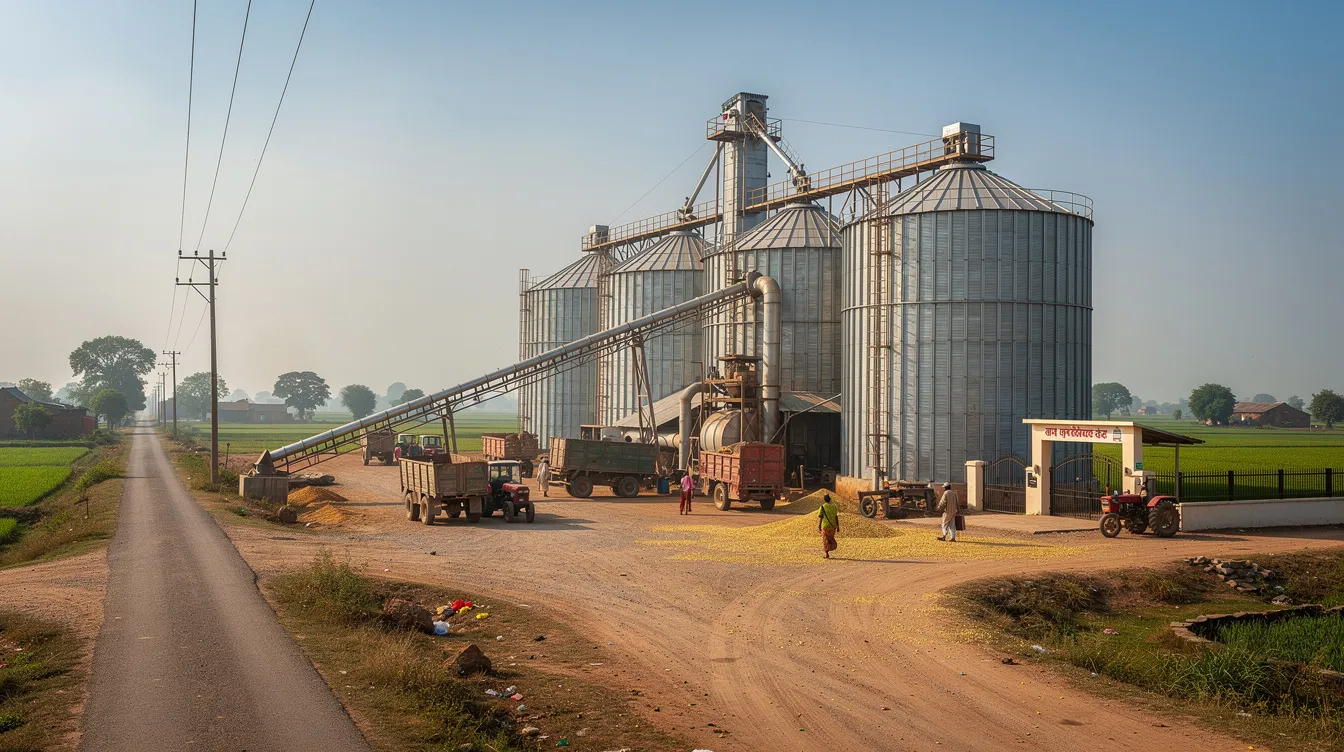
The main supply sources for broken rice include rice mills generating broken fractions during milling, FCI depots storing surplus and non-issuable rice, grain traders handling damaged wheat and paddy, and procurement from mandis and APMC yards. Integrated rice milling plants, as described in the Integrated Rice Milling & Processing Plant Project Report, can secure internal broken rice supply and improve overall rice-milling economics.
Ethanol production from rice is priced at Rs 23.2 per kg under the FCI reserve price for surplus rice in ESY 2025-26. Open market broken rice (100% broken WR) has recently been trading at approximately ₹27,200 per metric tonne in several states, reflecting a premium over FCI allocations.
Seasonality matters: rice harvest cycles (kharif and rabi), wheat seasons and regional patterns in eastern India, Chhattisgarh, Telangana and Punjab directly impact continuous ethanol production. Quality parameters for broken rice used in ethanol production include moisture (typically below 14%), foreign matter, damaged kernels and fungal contamination, each tested at the distillery gate.
Warehousing, silos and logistics infrastructure play a critical role in feedstock security. For related infrastructure planning, refer to the Grain Storage, Silos & Logistics Project Report for grain handling and bulk storage systems.
Broken Rice to Ethanol Manufacturing Process and Flow Sequence
Ethanol production processes involve several stages including fermentation and distillation. The complete process flow for a broken rice ethanol plant follows this sequence:
Raw Material Receipt → Cleaning → Milling/Slurry Preparation → Liquefaction → Saccharification → Fermentation → Distillation → Molecular Sieve Dehydration → Ethanol Storage and Dispatch
Cleaned broken rice is milled and mixed with water to form a slurry. Alpha-amylase enzyme is added during liquefaction to break down starch into dextrins. During saccharification, glucoamylase and protease enzymes convert dextrins into fermentable sugars. Fermentation in ethanol production typically uses yeast, specifically Saccharomyces cerevisiae, which converts glucose to ethanol and CO2 over 48-72 hours.
The no-cook process for ethanol reduces energy consumption compared to conventional methods. Modern GSHE (granular starch hydrolyzing enzyme) processes operate at lower temperatures, and research published in the Journal of Industrial Microbiology & Biotechnology shows that fermentation efficiency reached 97 to 98% using GSHE, compared to conventional processes that achieve 81 to 90% fermentation efficiency. Ethanol yield from broken rice was 12.09% v/v at 2.5 kg GSHE per MT of grain. Ethanol production from broken rice can save 49.5 MT of steam daily compared to conventional high-temperature cooking processes.
Ethanol can be produced with a purity of 99.5% or higher through distillation processes, with molecular sieve dehydration achieving 99.8% ABV for fuel-grade product.
By-product handling involves whole stillage processing through centrifugation, thin stillage recycling and DDGS drying. Zero Liquid Discharge (ZLD) systems are essential for managing wastewater in ethanol distilleries, and most environmental clearances now require ZLD or near-ZLD designs with spent wash concentration and integrated evaporation.
Broken Rice Ethanol Plant Machinery and Equipment
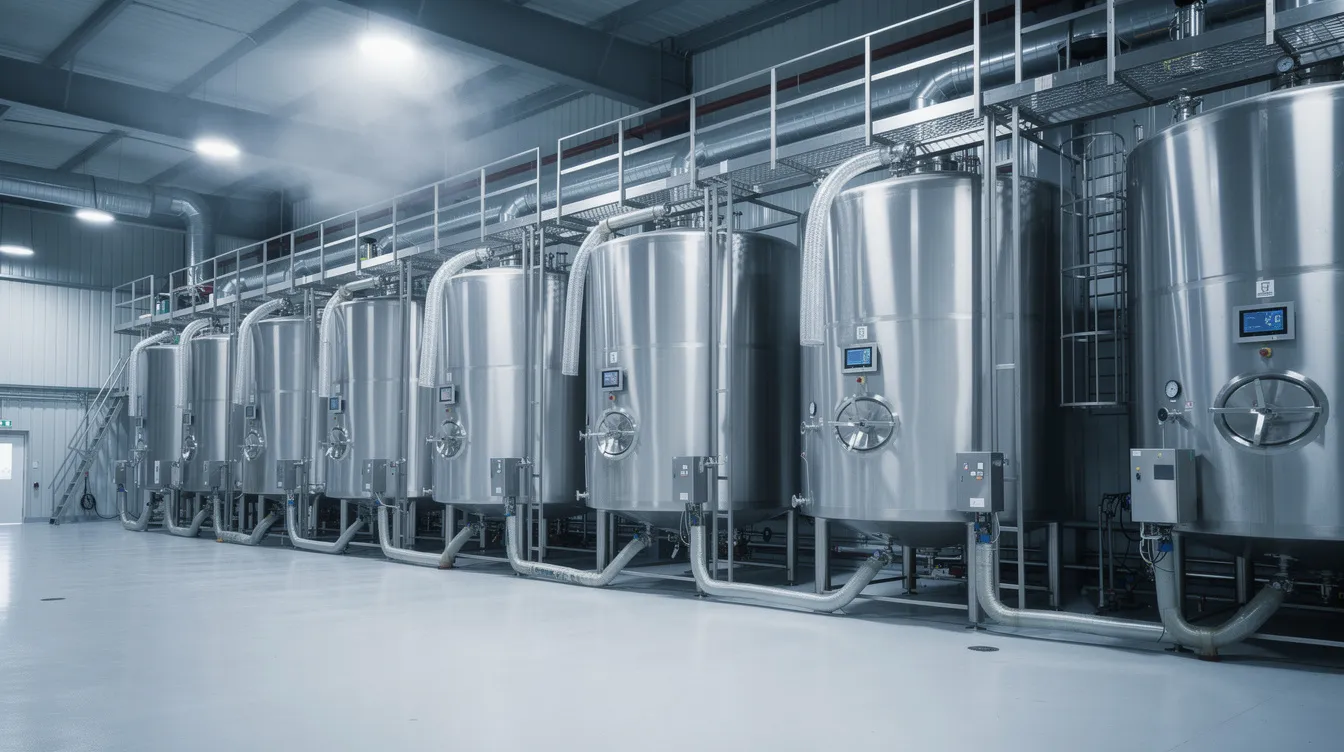
Machinery selection depends on plant capacity, technology supplier, level of automation and environmental compliance requirements. The following table summarises the key machinery groups for a grain based ethanol distillery.
| Machinery Group | Key Equipment | Function |
|---|---|---|
| Grain Handling | Intake pits, bucket elevators, chain conveyors, cleaners, de-stoners, storage bins | Raw material receipt, cleaning and storage |
| Milling & Slurry | Hammer mills, grain conditioners, slurry tanks, mash pumps | Size reduction and slurry preparation |
| Process Equipment | Liquefaction tanks, saccharification tanks, fermenters with agitation and cooling, yeast propagation vessels | Starch conversion and fermentation |
| Distillation & Dehydration | Analyser, rectifier and recovery columns; molecular sieve dehydration units | Ethanol purification and dehydration |
| By-product Recovery | DDGS dryers (ring/flash/rotary type), evaporators, CO2 recovery (optional) | Value recovery from stillage |
| Utilities | Boilers (25-30 TPH for 100 KLPD), cooling towers, air compressors, power systems | Steam, cooling and compressed air supply |
| Environmental | Water treatment plant, effluent treatment, ZLD infrastructure | Compliance with pollution control norms |
| Electrical & Automation | Transformers, MCC panels, DCS/PLC control systems | Power distribution and process automation |
Machinery cost varies with capacity. A 60 KLPD plant has a higher per-KLPD cost due to lack of scale, while a 150 KLPD unit benefits from economies of scale. Imported versus Indian equipment, environmental compliance design and level of cogeneration also influence total machinery investment.
Ethanol Plant Capacity Planning – 60, 100 and 150 KLPD Options
KLPD (Kilo Litres Per Day) is the standard capacity measurement for ethanol distilleries in India. Plant capacity for ethanol production can range from 30 to 250 KLPD, though 60 to 150 KLPD represents the most common range for standalone grain based distilleries.
| Parameter | 60 KLPD | 100 KLPD | 150 KLPD |
|---|---|---|---|
| Daily Ethanol Output | 60,000 litres | 1,00,000 litres | 1,50,000 litres |
| Annual Production (330 days) | 198 lakh litres | 330 lakh litres | 495 lakh litres |
| Broken Rice Consumption (per day) | ~146 MT | ~244 MT | ~366 MT |
| Annual Grain Requirement | ~48,180 MT | ~80,520 MT | ~1,20,780 MT |
| Approximate Steam Demand | 15-18 TPH | 25-30 TPH | 38-45 TPH |
| Power Demand | ~1.8 MW | ~3 MW | ~4.5 MW |
| Direct Manpower | 60-80 | 80-120 | 120-160 |
Assumptions: 330 operating days/year, ethanol yield of 410 litres per metric ton of broken rice, typical specific steam and power consumption. These are indicative planning norms only.
Smaller plants (60 KLPD) require lower absolute capital but carry higher per-unit production cost. Larger plants (150 KLPD) benefit from economies of scale but face greater feedstock procurement risk and require a larger raw-material catchment area. Actual optimal capacity must emerge from a location-specific raw-material survey and structured feasibility study rather than generic benchmarking.
Broken Rice Ethanol Plant Setup Cost in India
The difference between installed machinery cost and total project cost is substantial. A promoter receiving a machinery quotation of ₹40-50 crore for a 100 KLPD plant must account for civil works, utilities, storage, pollution control, electricals, pre-operative expenses, interest during construction and contingencies, which together can more than double the machinery-only figure.
Major cost heads for a typical 100 KLPD broken rice ethanol plant include:
- Land and site development: ₹5-10 crore (varies by state and location)
- Civil works and buildings: ₹15-25 crore
- Plant and machinery (including installation): ₹40-55 crore
- Utilities (boiler, cooling towers, water treatment): ₹8-12 crore
- Storage tanks, piping and instrumentation: ₹5-8 crore
- ETP and ZLD infrastructure: ₹5-10 crore
- Electrical installations: ₹3-5 crore
- Pre-operative expenses and interest during construction: ₹5-10 crore
- Contingencies: ₹3-5 crore
Total fixed capital investment for a 100 KLPD broken rice ethanol plant typically falls in the range of ₹90-135 crore, depending on technology, location and environmental compliance design. ICRA’s analysis estimates CapEx for a 100 KLPD grain distillery at approximately ₹135 crore inclusive of all components.
Construction and commissioning for a 100 KLPD unit typically takes 14-20 months from financial closure. Delays increase interest during construction and push back revenue generation.
Project Cost and Means of Finance Structure
Total project cost is financed through a combination of promoter equity, term loan and working capital facilities. The illustrative means-of-finance structure below is for a 100 KLPD broken rice ethanol plant with an estimated total project cost of ₹160 crore (including working capital margin).
| Source | Amount (₹ Crore) | Share |
|---|---|---|
| Promoter’s Equity | 55 | 34% |
| Term Loan | 90 | 56% |
| Working Capital Margin (from internal accruals/equity) | 15 | 10% |
| Total | 160 | 100% |
Banks typically expect a debt-equity ratio of 1.5:1 to 2:1 for ethanol projects. Term loan tenure ranges from 7-10 years with a moratorium of 12-18 months. Interest rate sensitivity on DSCR is material: a 1% increase in interest rate can reduce average DSCR by 0.10-0.15 points in the initial years.
For promoters seeking structured bank finance DPR and loan proposal assistance, Project Report Bank prepares bankable term-loan proposals with detailed financial projections aligned to lender appraisal requirements.
Ethanol Yield, DDGS Production and Revenue Model
Ethanol yield per tonne of broken rice depends on starch content, process efficiency, enzyme quality and distillation losses. Broken rice contains 68.45% starch, ideal for ethanol production. Higher starch content in broken rice improves ethanol yield. Granular starch hydrolyzing enzyme (GSHE) improves ethanol yield from broken rice; under optimized conditions, research has documented yields of approximately 477 litres per MT, though conservative DPR planning typically assumes 410 litres per metric ton.
Illustrative mass balance for 1 MT of broken rice (planning assumptions):
| Output | Approximate Quantity |
|---|---|
| Ethanol (99.8% ABV) | 410 litres |
| DDGS | 280-320 kg |
| CO2 (recoverable) | 150-170 kg |
| Process losses & water | Balance |
Dried Distillers Grains with Solubles (DDGS) are a valuable by-product from ethanol production. DDGS with 25-30% protein content is sold as cattle and poultry feed at prices ranging from ₹18,000 to ₹28,000 per MT depending on composition and region.
Revenue model elements include: fuel ethanol sales to OMCs at notified ex-distillery prices (₹64,000/KL for damaged foodgrain ethanol, ₹60,320/KL for surplus FCI rice ethanol in ESY 2025-26), DDGS sales, and in some plant designs, CO2 recovery and sale. Gross revenue must be adjusted for freight, taxes and credit terms to arrive at realistic net realisation.
Operating Cost and Working Capital Requirements
The operating cost structure for a broken rice ethanol plant is dominated by raw material cost, which accounts for approximately 70-75% of variable expenses.
- Broken rice and damaged grain procurement: ₹23,200-27,200 per MT depending on source
- Enzymes and chemicals: ₹1.5-2.5 per litre of ethanol
- Yeast: ₹0.3-0.5 per litre
- Power and fuel (coal/biomass for boiler): ₹3-5 per litre
- Water, labour, repairs, administration, selling expenses: balance
Ethanol production costs from grain are INR 23 to 28 per litre. Fluctuations in seasonal broken rice prices can impact operating margins; production efficiency and profitability are influenced by feedstock price volatility. A ₹1,000 per MT increase in broken rice price raises production cost by approximately ₹2.4 per litre of ethanol.
Working capital cycle includes 15-30 days of raw material inventory, 7-10 days of finished ethanol and DDGS stock, and OMC payment periods (typically 15-21 days from delivery). A 100 KLPD plant may require ₹20-25 crore as working capital limit. For bank appraisal of working capital and CMA Data preparation, promoters should ensure inventory and receivable assumptions are consistent with actual operating plans.
Financial Projections, Profitability, DSCR and Break-Even Analysis
A broken rice ethanol DPR typically includes 7-10 year financial projections with capacity utilisation ramp-up: 60% in year 1, 75% in year 2, 85-90% from year 3 onward. These projections generate the projected Profit & Loss account, balance sheet, cash-flow statement, EBITDA, PAT, DSCR, payback period, ROI and IRR that lenders use for appraisal.
ICRA estimates for a 100 KLPD grain distillery operating 330-340 days/year indicate revenues of ₹200-210 crore per annum, an operating profit margin of 16-19%, and payback in approximately 3.5-4 years.
Break-even analysis for a grain ethanol plant calculates fixed versus variable costs and the contribution margin per litre. Published DPR data indicates break-even at approximately 53-54% capacity utilisation for a 100 KLPD plant, though this is sensitive to raw-material pricing and ethanol realisation.
Under a conservative scenario (grain price 10% higher than base, capacity utilisation 70%, DDGS realisation 15% lower), DSCR may drop below 1.3x in early years, stressing debt serviceability. An optimistic scenario (full FCI allocation at reserve price, 90%+ utilisation) can yield IRR above 25%. For detailed financial projections and modelling, Project Report Bank builds integrated models tested across multiple scenarios.
Feasibility Study and Sensitivity Analysis
Economic feasibility studies are vital for assessing the viability of new ethanol projects. A proper broken rice based ethanol plant feasibility study covers four dimensions: technical feasibility (process, yield, utilities), financial feasibility (returns, debt serviceability, cash flow), market feasibility (OMC offtake, DDGS demand, feedstock availability) and environmental feasibility (ZLD compliance, air emissions, water balance).
Key sensitivity parameters include:
- Broken rice price increase of ₹2,000-3,000 per MT above base case
- Ethanol ex-distillery price reduction of 5-10%
- DDGS realisation drop of 15-20%
- Capacity utilisation at 65% instead of 85%
- Interest rate increase of 1-2%
- Project cost escalation of 10-15%
Each of these variables can shift DSCR, IRR and payback period by 1-3 years. Threshold analysis should identify the combination at which the project becomes financially unviable. Location-specific factors (water availability, effluent norms, DDGS demand, regional feedstock competition) also require dedicated analysis rather than generic assumptions.
Government Policy, Subsidies, Approvals and Regulatory Compliance
Under the National Policy on Biofuels, 2018, damaged food grains including broken rice are explicitly permitted for ethanol production under NBCC approval. The PM JI-VAN Yojana supports second generation ethanol projects using agricultural residues and other waste biomass. Compliance with environmental regulations is a critical factor for ethanol plant operations.
Grain-based distilleries with ZLD producing ethanol solely for the Ethanol Blending Programme are classified under Category B2 under the MoEF&CC EIA Notification amendment dated 16 June 2021, simplifying environmental clearance. Mandatory approvals include:
- Environmental Clearance (where applicable based on capacity)
- Consent to Establish and Consent to Operate from State Pollution Control Board
- State excise licences
- Factory registration under the Factories Act
- Boiler and pressure vessel inspection approvals
- PESO storage approvals for ethanol
- Fire NOC and groundwater/water-withdrawal permissions
Central and state subsidy or interest-subvention schemes may be available, but eligibility depends on scheme validity, capacity, location and compliance at the time of application. Promoters must verify current circulars and not rely on historical scheme information.
Broken Rice Ethanol vs Maize Ethanol Plant – Practical Comparison
Neither broken rice nor maize is universally the better feedstock. The choice depends on location, procurement logistics and risk tolerance.
| Parameter | Broken Rice | Maize |
|---|---|---|
| Raw Material Availability | Rice milling clusters, FCI surplus | Maize-growing states (MP, Karnataka, Bihar) |
| Price Volatility | Linked to rice market and FCI policy | More stable in producing regions |
| Ethanol Yield (L/MT) | 400-430 | 380-420 |
| DDGS Protein Content | 25-30% | 28-32% |
| Storage & Handling | Moisture-sensitive, needs covered storage | Relatively easier to store |
| Food-vs-Fuel Policy Risk | Higher; FCI supply can be paused | Lower; primarily feed/industrial crop |
| OMC Ex-Distillery Price (ESY 2025-26) | ₹60,320-64,000/KL | ~₹66,070/KL (with incentive) |
Production costs for molasses-based ethanol are INR 20 to 23 per litre, while grain-based ethanol production is more energy-intensive than molasses-based. Among grain feedstocks, maize currently dominates supply at approximately 3.45 billion litres in ESY 2025-26. For promoters evaluating maize as an alternative, the Maize-Based Ethanol Plant Project Report & DPR provides a comparative framework. Final feedstock choice must be supported by a dedicated raw-material survey and scenario-based financial modelling.
Key Risks Before Investing in a Grain-Based Ethanol Plant
- Feedstock risk: Broken rice availability and pricing can shift between seasons and policy cycles. A ₹2,000/MT movement in grain price shifts EBITDA margin by 2-4 percentage points.
- Policy and regulatory changes: FCI supply volumes, ethanol procurement prices and feedstock eligibility can change between ethanol supply years.
- OMC offtake uncertainty: Installed capacity now exceeds current OMC demand; new plants may face allocation constraints and competitive bidding.
- Technology performance risk: Actual ethanol yields and utility consumption may differ from design estimates during ramp-up.
- Environmental compliance risk: Delays in EC, CTE/CTO or ZLD commissioning can hold up production and revenue.
- Financial and debt-servicing risk: Aggressive debt-equity ratios combined with lower-than-expected utilisation create DSCR stress in early years.
Mitigation strategies include long-term procurement arrangements, diversified feedstock basket (broken rice, damaged wheat, maize), conservative capacity-utilisation assumptions, appropriate debt-equity mix and robust contingency planning. Stress-testing projections under adverse conditions must form part of the DPR and feasibility study.
Why a Bankable DPR Is Essential for a Broken Rice Ethanol Project
A bankable Detailed Project Report for a broken rice ethanol plant integrates technical configuration, machinery selection, project cost estimation, funding structure, financial projections, risk analysis and compliance mapping into a single coherent document.
Bankers evaluating a broken rice ethanol plant project report examine: realistic raw-material assumptions, sensitivity analysis across multiple scenarios, DSCR trends over the full debt tenure, promoter background and net worth, and consistency between capacity, production and revenue assumptions. A generic vendor brochure or copy-paste report does not meet the appraisal standards of commercial banks or development finance institutions.
CA Manish Gugliya’s experience in ethanol DPRs, project finance and CMA Data positions Project Report Bank as an advisory partner rather than a template seller. Promoters planning a damaged foodgrain ethanol plant DPR can initiate a WhatsApp discussion to scope a customised report for their specific capacity, location and feedstock plan.
Professional DPR and Project Finance Advisory by Project Report Bank
Project Report Bank, led by CA Manish Gugliya, FCA, DISA (ICAI), supports ethanol distillery promoters with end-to-end advisory: DPR preparation, financial modelling, CMA Data, and structured interaction with lenders. Core services relevant to broken rice and damaged foodgrain ethanol projects include project cost estimation, means-of-finance planning, bankable financial projections, DSCR and IRR analysis, CMA Data preparation and working capital assessment.
For capital structure design and term-loan planning, Project Finance Advisory & Loan Structuring Services provides structured support. Project Report Bank improves documentation quality and financial clarity but does not guarantee loan sanctions or specific investment returns. Serious entrepreneurs and investors seeking a customised broken rice ethanol plant DPR can reach out on WhatsApp for an initial advisory discussion.
Frequently Asked Questions
The following FAQs address additional practical questions about broken rice ethanol plants not fully covered in the main discussion.
What plant capacity is usually viable for a broken rice ethanol project?
Capacities below 50-60 KLPD often struggle to achieve economies of scale for fuel ethanol sold to OMCs. The 60-150 KLPD range is common for standalone grain based distilleries in India. Capacity choice must account for raw-material catchment (typically a 100-150 km radius for grain procurement), logistics, OMC depot proximity and promoter financial strength. A plant at 100 KLPD requires approximately 80,000 MT of broken rice annually; if the local catchment cannot support this volume, the project faces elevated freight cost or feedstock risk.
How much ethanol can be produced from 1 tonne of broken rice?
A typical planning range is 400-430 litres per MT of good-quality broken rice under modern GSHE-based processes. Ethanol production efficiency from broken rice is 97-98% under optimized enzyme dosage, though DPR financial projections should use conservative yield assumptions closer to 410 litres per MT. Actual performance depends on starch content (broken rice contains 68.45% starch), process design and plant efficiency, validated during trial runs and stabilised operations.
Can a project rely only on damaged foodgrain from FCI for feedstock?
Relying solely on FCI allocations carries risk because allocation volumes, eligibility conditions and pricing are policy-driven and can change between ethanol supply years. For example, ESY 2025-26 requires bidders to source at least 40% of their grain feedstock from surplus FCI rice during the first three quarters. Combining multiple feedstock sources, including broken rice from local mills, damaged grain from permitted channels and possibly maize, reduces dependence on any single policy-driven stream.
What are the key environmental permissions for a broken rice ethanol plant?
Main requirements include environmental clearance (for capacities or expansions requiring it under EIA Notification), consent to establish and consent to operate from the State Pollution Control Board, effluent treatment and ZLD obligations, and solid-waste and air-emissions compliance. Grain-based distilleries with ZLD supplying only to the Ethanol Blending Programme qualify for B2 category under the 16 June 2021 notification, which simplifies the EC process. Requirements differ between states, and specific compliance mapping must form part of the DPR.
How long does it take to prepare a DPR and achieve financial closure?
A professionally prepared broken rice ethanol DPR takes 4-8 weeks depending on data availability and plant complexity, followed by several months of lender appraisal, clarifications and sanction process. Starting DPR and feasibility work early helps promoters align land acquisition, technology tie-up and bank finance timelines. Total period from DPR initiation to financial closure may range from 6-12 months depending on promoter preparedness and lender processing timelines.
CA Manish Gugliya FCA, DISA (ICAI) Practising Chartered Accountant 20+ Years of Professional Experience in DPR Preparation, Project Finance, CMA Data, Financial Modelling and Industrial Project Advisory