India’s ethanol sector has expanded rapidly, but industry momentum alone does not make every ethanol manufacturing plant a sound investment. Before committing ₹100–500 crore to a new distillery, a promoter needs a structured ethanol distillery feasibility study that tests whether the project works on paper under realistic – and stressed – conditions. This article examines what such a study must cover, from feedstock economics and process engineering to DSCR, IRR and working capital, written from the perspective of a practising Chartered Accountant advising project promoters across India.
Key Takeaways
A feasibility study helps determine whether to proceed with a project or walk away before capital is committed. For an ethanol manufacturing project, this means evaluating ethanol production cost against current procurement prices, stress-testing the financial model under adverse grain-price and utilisation scenarios, and verifying that environmental and regulatory requirements can be met within the projected budget and timeline.
Industry growth under the Ethanol Blended Petrol (EBP) Programme does not guarantee that any specific ethanol plant will be profitable. A project located in a surplus-grain region with low power tariffs may perform very differently from one in a grain-deficit area with high logistics cost. Feasibility must be assessed at the micro, site-specific level.
A grain-based ethanol plant can be viable only when raw materials, utilities, by-product markets and bank finance are realistically assessed through cost analysis, sensitivity analysis and stress testing. Project Report Bank, led by CA Manish Gugliya (FCA, DISA ICAI), prepares customised feasibility reports, Detailed Project Reports and financial projections for ethanol producers and ethanol project promoters planning new distilleries in India.
Introduction – Why Ethanol Distillery Feasibility Matters in India
India’s ethanol demand has been driven primarily by the National Policy on Biofuels 2018 (as amended 2022), which advanced the E20 target – blending 20% ethanol in petrol – to the Ethanol Supply Year (ESY) 2025-26. India achieved E10 ethanol blending in petrol by June 2022, and blending touched approximately 17.98% in ESY 2024-25. Ethanol production capacity is expected to grow significantly by 2026, with total requirements projected at roughly 1,000–1,100 crore litres annually to meet E20.
This macro picture provides strong government support and stable demand, making ethanol an attractive biofuel and alternative fuel opportunity. Ethanol production involves rigorous evaluations of market demand and technical feasibility at the project level. However, each ethanol manufacturing plant is exposed to feedstock prices, technology selection, location constraints and financing structure – factors that macro-level blending targets cannot override.
A professional ethanol distillery feasibility study bridges the gap between national policy optimism and project-level commercial reality. It covers technical feasibility, financial viability, environmental compliance, working capital planning and project risk analysis. This article offers key insights into how such a study is structured, what it evaluates and why it matters for informed project planning and financial planning.
What Is an Ethanol Distillery Feasibility Study?
An ethanol distillery feasibility study is a structured evaluation of whether an ethanol manufacturing project is technically sound, commercially practical and financially viable at a specific location with a defined capacity and feedstock. A feasibility study for an ethanol distillery assesses technical and economic viability before the promoter commits capital.
It is useful to distinguish between levels of assessment. A preliminary feasibility focuses on a quick go/no-go evaluation – is there enough feedstock nearby, is the market accessible, does the project economics look reasonable at a high level? A detailed techno-economic feasibility report (TEFR) goes deeper into engineering, process design, equipment specifications and project economics. A Detailed Project Report (DPR) typically includes the full financial model, means of finance, expenditure projections, CMA Data and bank-ready documentation. A bankable financial viability study layers sensitivity analysis and stress testing on top of these projections.
A standard framework for ethanol plant feasibility includes market and commercial analysis, technical design, CapEx and OpEx estimation, revenue modelling and risk assessment. Market analysis evaluates local and national demand for ethanol and by-products. Conducting a feasibility study entails analysing all aspects of the business chain – from grain procurement to ethanol sold to Oil Marketing Companies.
Technical Feasibility of a Grain-Based Ethanol Distillery
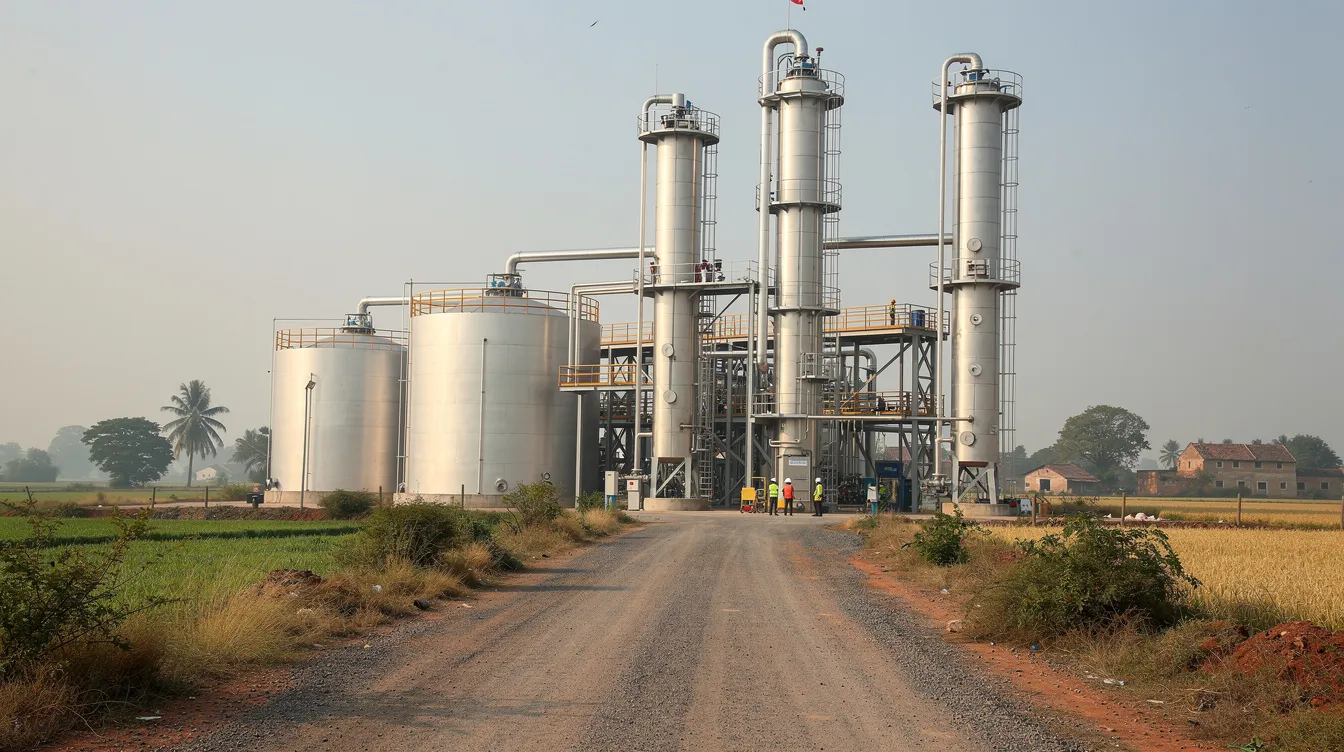
Most new Indian ethanol manufacturing projects are grain-based, using maize, broken rice, surplus food grains and other grains as feedstock. Ethanol production from sugarcane and grains is common, but grain-based plants now dominate new project proposals. Technical analysis assesses plant capacity and technology requirements for each feedstock configuration.
The production process for grain-based ethanol follows a defined sequence: grain handling, milling equipment, liquefaction, saccharification, fermentation in fermentation tanks, distillation and molecular sieve dehydration. A detailed understanding of this flow is essential for any feasibility report – the grain-based ethanol manufacturing process and flow chart provides a step-by-step reference. Process technology choice affects capital cost and utility consumption – dry milling configurations, for example, have different CapEx and energy profiles compared to wet milling.
Technical feasibility requires assessing the production process and expected yields. Key performance indicators include specific steam consumption (typically 3.0–4.5 kg steam per litre for grain feedstock), electricity consumption (0.35–0.55 kWh per litre) and ethanol yield per tonne of grain. Ethanol production requires detailed engineering for utilities and safety systems – boilers, turbines, cooling towers, compressed air and heat exchangers form core infrastructure requirements, which are discussed in detail in the guide to ethanol distillery boiler, steam, power and utilities.
Vendor selection with proven references, commissioning support and performance guarantees remain critical inputs. Technology risk – underperformance versus guaranteed yield or higher-than-expected energy consumption – directly affects operational efficiency and project viability.
Feedstock Availability and Raw Material Feasibility
Feedstock selection significantly affects an ethanol distillery’s profitability. Raw materials typically account for 70–80% of operating costs in ethanol production, making feedstock cost the single most important variable in project economics.
Maize has emerged as India’s leading grain feedstock for ethanol. In ESY 2024-25, approximately 13.11 million tonnes of maize were used, with grain feedstocks accounting for roughly 72% of ethanol allocation. Assessing regional availability of maize, broken rice and damaged foodgrains involves mapping procurement radius, aggregation from mandis, transportation costs and competition from poultry feed and starch industries within the supply chain.
Seasonal price and supply variations require careful planning. A plant typically needs 30–60 days of raw material inventory, which ties up significant working capital. Grain quality – specifically starch content and moisture – directly affects ethanol yield per tonne. The ethanol plant raw material requirements and yield analysis provides detailed consumption benchmarks.
A critical point: lower purchase price does not automatically reduce ethanol production cost if the grain is of inferior quality and gives reduced ethanol yield or higher processing losses. A feasibility study should model multiple feedstock scenarios – maize-only, maize plus broken rice, and multi-feedstock – similar to the approach in a multi-feedstock ethanol distillery project report. Feedstock choice impacts plant configuration and operating economics fundamentally.
Ethanol Plant Capacity Selection and Scale Viability
Common grain-based ethanol plant capacities in India range from 30 KLPD to 200 KLPD and higher. Capacity planning is a strategic decision that affects CapEx intensity, per-litre fixed cost, feedstock logistics and marketing flexibility. A thorough discussion of ethanol plant capacity planning from 30 to 200 KLPD helps promoters evaluate these trade-offs.
| Parameter | 30 KLPD | 60 KLPD | 100 KLPD | 200 KLPD |
|---|---|---|---|---|
| CapEx intensity per KLPD | Higher | Moderate | Moderate–Lower | Lower |
| Per-litre fixed cost | Highest | High | Moderate | Lowest |
| Daily grain requirement | ~100–110 TPD | ~200–220 TPD | ~330–360 TPD | ~660–720 TPD |
| Staffing requirement | Lower | Moderate | Moderate–High | High |
| Operational flexibility | Limited | Moderate | Good | Best with multi-feedstock |
Smaller capacities (30–60 KLPD) need lower investment but suffer from higher per-litre fixed cost. Plants at 100–200 KLPD achieve better economies of scale but require robust feedstock procurement and offtake arrangements.
Capacity utilisation is a powerful driver of viability. A 100 KLPD plant running at 70% utilisation produces roughly 23.1 million litres annually, while the same plant at 95% produces about 31.35 million litres. The difference in per-litre fixed cost allocation is substantial. The feasibility study should simulate at least three utilisation levels – 70%, 85% and 95% – to test sensitivity of production cost and DSCR.
Capital Investment and Project Cost Feasibility
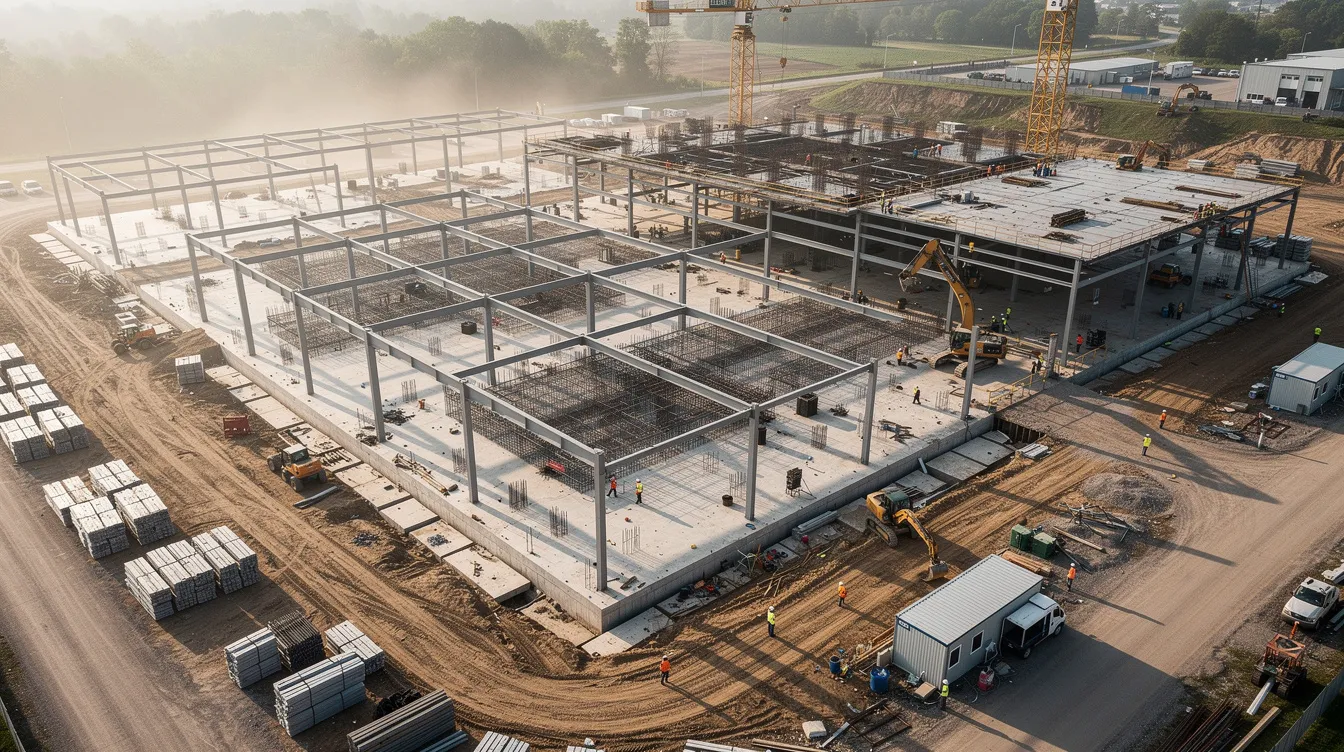
Capital expenditure for a grain-based ethanol manufacturing plant depends on capacity, feedstock, technology and location. Typical CapEx heads include land acquisition and site development, civil works and construction, process plant and machinery, boiler and turbine, storage tanks, milling equipment, water treatment, ETP and ZLD systems, electrical and instrumentation, pre-operative expenses, contingency and margin for working capital.
Industry benchmarks for capital cost:
| Plant Type | Capacity | Estimated Setup Cost |
|---|---|---|
| Molasses-based | 60–100 KLPD | ₹50–150 crore |
| Grain-based | 60–100 KLPD | ₹100–200 crore |
| Molasses-based | 200–500 KLPD | ₹150–500 crore |
| Larger grain-based | 200+ KLPD | ₹200–600 crore |
Ethanol plant utilities represent 25–40% of capital cost, covering boilers, cooling systems, power systems and water treatment. Dual feed configurations – designed to handle both molasses and grain – increase capital costs by 15–25%. Detailed guidance on ethanol plant land, building and layout requirements and grain-based ethanol plant setup cost in India helps promoters validate these estimates.
Cost overruns are common. Civil works foundations, regulatory-imposed design changes and delays in implementation can push actual spend 10–15% above initial estimates. The ethanol plant project cost and means of finance framework integrates CapEx structure with funding pattern for a realistic DPR.
Operating Cost and Ethanol Production Economics
Operating cost determines ethanol production cost per litre and whether the plant can produce ethanol at a margin above the ex-mill procurement price. Financial evaluation includes calculating capital and operational expenditures in an integrated model.
Major operating cost elements include:
- Grain cost (typically 70–80% of total operating cost)
- Steam and power (coal, biomass or purchased electricity)
- Enzymes, chemicals and yeast
- Water and effluent treatment
- Labour costs and maintenance
- Logistics and distribution costs
- Administrative overheads and environmental compliance expenses
A simple unit-economics framework: divide total annual operating cost by effective litres produced to arrive at cash operating cost per litre. If a 100 KLPD plant operating 330 days at 85% utilisation produces ~28 million litres and incurs ₹175–190 crore in annual OpEx, cash cost per litre falls in the range of ₹62–68. Against an ex-mill ethanol price of ₹65–72 per litre (depending on feedstock), the margin is thin and highly sensitive to grain price and capacity utilisation.
Ethanol production gross profit margins typically range between 20–30%, but this depends heavily on feedstock landed cost, by-product realisation and variable costs being tightly managed. The difference between cash operating cost and fully loaded cost (including depreciation and interest) matters for margin analysis and DSCR calculations. Detailed cost modelling practices are explained in ethanol plant financial projections, working capital and DSCR.
Revenue Feasibility – Ethanol, DDGS and CO₂
The primary revenue stream for a grain-based ethanol plant is fuel-grade ethanol sold to Oil Marketing Companies under the EBP Programme. The ethanol sold realisation depends on government-notified ex-mill procurement prices, which for ESY 2025-26 are approximately:
| Feedstock | Ex-Mill Price (₹/litre) |
|---|---|
| Maize | ₹71.86 |
| Damaged food grains | ₹64.00 |
| FCI surplus rice | ₹60.32 |
| Sugarcane juice / sugar / syrup | ₹65.61 |
| B heavy molasses | ₹60.73 |
| C-Heavy molasses | ₹57.97 |
Securing offtake agreements is vital for project viability and revenue generation. Promoters must use current, verifiable pricing during financial modelling rather than outdated assumptions.
By-product recovery can contribute significant revenue. DDGS production as protein-rich animal feed is the most material by-product revenue – detailed economics are covered in the guide to DDGS production, revenue and profitability. CO₂ recovery from fermentation off-gas requires additional investment and depends on proximity to industrial applications such as beverage, welding gas or pharmaceutical industry users; the CO₂ recovery plant cost and feasibility guide discusses this further.
A feasibility study should run financial projections both with conservative by-product realisations and with minimal by-product credit. Overestimating DDGS or CO₂ revenue is a common modelling error.
Financial Viability Assessment and Key Ratios
Financial viability integrates projected Profit & Loss, Balance Sheet and Cash Flow statements to assess whether the ethanol project can meet its obligations and deliver acceptable returns. Financial models assess outcomes under various feedstock price scenarios to test resilience.
Key metrics in an ethanol plant project report:
- EBITDA and operating margin: measure operating profitability before financing and depreciation
- Break-even quantity: the litres needed to cover all fixed and variable costs at the expected selling price
- DSCR (Debt Service Coverage Ratio): cash available for debt servicing divided by principal plus interest due; lenders typically expect comfortable average DSCR over the loan tenure, without a single rigid benchmark
- IRR (Internal Rate of Return): the discount rate at which NPV equals zero; ethanol projects generally target an IRR of 15–20%. Project IRR differs from equity IRR – the latter is higher when leverage is used effectively
- NPV (Net Present Value): positive NPV indicates the project creates value above its cost of capital
- Payback period: typical payback periods for ethanol projects range from 6–9 years
The internal rate of return on equity is often meaningfully higher than project IRR due to the leverage effect of debt financing, but this also amplifies downside risk. ROI and payback period help promoters judge whether an ethanol plant investment compares favourably with alternative opportunities or renewable energy sources.
Illustrative 100 KLPD Ethanol Distillery Feasibility Framework
Disclaimer: This section provides an illustrative framework only and does not constitute actual or recommended project figures. All values are indicative ranges for conceptual understanding.
Assumed technical parameters: installed capacity 100 KLPD, 330 operating days per year, annual production approximately 28–31.35 million litres (at 85–95% utilisation), grain consumption approximately 3.2–3.6 kg per litre of ethanol, steam consumption 3.0–4.5 kg per litre.
Capital cost structure (indicative): total project cost in the range of ₹230–310 crore, comprising plant and machinery (71–76% of fixed capital), civil works (7–9%), land and site development (6–8%), utilities, contingency and pre-operative expenses. Working capital margin typically 5–8% of project cost.
Revenue framework: ethanol sales at ₹65–72 per litre depending on feedstock, DDGS at conservative local market rates, optional CO₂ credit. Total revenue for a 100 KLPD plant at 85% utilisation may fall in the range of ₹200–220 crore annually.
Projected P&L logic: Revenue minus operating costs gives EBITDA. EBITDA minus depreciation minus interest gives profit before tax. After tax adjustment, net profit is derived. DSCR is computed from cash profit plus depreciation (and other non-cash charges) divided by annual debt service. Even a ₹3–4 per litre swing in maize cost or ethanol price can materially alter DSCR and IRR for this scale of ethanol project.
Working Capital Feasibility and Funding Structure
Even a profitable ethanol distillery on paper can face stress if working capital is under-estimated or poorly structured. Typical working capital components include raw material inventory (grain for 30–60 days), chemicals, work-in-progress, finished goods (ethanol, DDGS), receivables from OMCs and trade creditors.
A CMA Data-based assessment converts these components into working capital limits – cash credit and bill discounting – required from banks along with promoter’s margin money. Common funding patterns for ethanol manufacturing projects in India involve 70:30 or 75:25 debt-equity ratios, where term loan plus working capital facilities must be synchronised with project cash flows.
The distinction between accounting profit and actual cash flow is critical. A plant may show healthy net profit but still face liquidity pressure if loan repayment schedules are aggressive or if the moratorium period is too short. Detailed working capital analysis aligned with ethanol plant financial projections, working capital and DSCR practices ensures that the funding structure supports actual operations.
Sensitivity Analysis, Stress Testing and Risk Assessment
Sensitivity analysis is central to any ethanol distillery feasibility study because many variables – grain price, ethanol price, plant uptime – are uncertain. Financial models must test the project under adverse conditions, not just base-case assumptions.
| Sensitivity Parameter | Direction | Impact on DSCR | Impact on IRR |
|---|---|---|---|
| Maize price +10% | Adverse | Falls by 0.15–0.25 | Drops 2–4% |
| Ethanol selling price -5% | Adverse | Falls by 0.10–0.20 | Drops 1.5–3% |
| Capacity utilisation drops to 70% | Adverse | Falls significantly | Drops 3–5% |
| DDGS realisation -15% | Adverse | Moderate decline | Drops 1–2% |
| Steam/power cost +15% | Adverse | Falls by 0.08–0.15 | Drops 1–2.5% |
| Commissioning delay 6 months | Adverse | First-year DSCR drops | Payback extends |
Combined-stress scenarios – for example, higher grain price plus lower selling price plus delayed commissioning – reveal worst-case outcomes that lenders and sophisticated investors scrutinise carefully. The competitive landscape among ethanol producers means that marginal plants with thin margins are most exposed.
Environmental, Water and Regulatory Feasibility
Environmental compliance is essential in ethanol distillery feasibility studies. A regulatory assessment reviews legal requirements for operating an ethanol distillery, including several approvals that must be factored into project timelines and pre-operative expenses.
Key regulatory approvals required:
- Environmental Clearance (EC): typically takes 12–18 months under EIA Notification 2006
- State Pollution Control Board Consent to Establish: required before construction begins
- Distillery Licence: varies by state and requires detailed understanding of local excise policy
- PESO approval: mandatory for ethanol storage and handling of flammable liquids
- Fire NOC and boiler inspection certificates
Approvals should progress in parallel to reduce timelines. Ethanol plants must comply with Zero Liquid Discharge regulations – ZLD design is mandatory, affecting both CapEx and operating cost. The guide to ethanol plant water consumption, ETP and ZLD discusses these requirements. Environmental design choices like spent wash incineration, multi-effect evaporation, condensate polishing and biogas recovery all influence the mass balance and cost structure.
Promoters should consider location-specific aspects – groundwater availability, distance from habitations, land acquisition constraints and state excise policy – when selecting the site.
Major Risks in Ethanol Distillery Projects and Mitigation
Risk assessments are crucial for mitigating potential project pitfalls. Major risk categories include:
- Market and policy risk: changes in EBP targets, procurement mechanisms or government policies on ethanol blended petrol pricing; the long-term sustainability of current procurement prices is not guaranteed
- Feedstock procurement risk: crop failure, competing uses for grain, export controls, or local demand from starch and feed industries inflating prices
- Technology and commissioning risk: underperformance versus guaranteed yield, extended stabilisation period – key players among technology vendors must demonstrate proven references
- Environmental compliance risk: delays in obtaining clearances, additional conditions imposed by authorities, unexpected ZLD or effluent treatment costs
- Financing and interest-rate risk: higher interest cost, lower DSCR due to delays, inadequate promoter contribution
- Operational risk: management capability, labour availability, logistics disruptions
Mitigation measures include multi-year feedstock contracts, multi-feedstock capability for operational flexibility, conservative pricing assumptions in financial models, partnering with strong technical vendors, adequate insurance, interest subvention (where available through government schemes) and capital subsidies planning where eligible. Renewable energy integration for captive power can reduce fuel use cost sensitivity.
When Is an Ethanol Distillery Project Financially Viable? – Practical Decision Framework
Viability is project-specific and emerges from the interaction of feedstock, technology, location, funding, offtake and management capability. No generic answer replaces a project-specific ethanol distillery feasibility study.
Decision checklist for promoters:
- Secure feedstock at competitive landed cost within practical procurement radius
- Validate ethanol and DDGS pricing against current market demand and OMC tender rates
- Confirm production cost per litre is comfortably below the expected selling price
- Achieve average DSCR comfortably above 1 under both base and stressed scenarios
- Project IRR exceeds the weighted average cost of capital
- Payback falls within a timeframe acceptable to the promoters (typically 6–9 years)
- Environmental and regulatory approvals are achievable within planned timelines
- Working capital limits from banks are adequate for the operating cycle
Positive NPV, sustainable cash flow after debt servicing and adequate working capital are more important than headline profit figures. The feasibility report should be treated as a live decision document, updated when key assumptions change before financial closure.
Role of a Chartered Accountant in Ethanol Project Feasibility and Bank Finance
The Chartered Accountant plays a central role in structuring ethanol plant feasibility, finance and documentation for banks and investors. CA-led teams prepare Detailed Project Reports integrating technical inputs with financial projections, project cost assessment, means of finance and DSCR analysis.
Preparation of CMA Data, projected balance sheets, cash-flow statements and ratio analysis is essential for term loan and working capital appraisal. At Project Report Bank, under CA Manish Gugliya, the focus is on realistic assumption setting – validating raw material prices, utility tariffs, tax rates, interest rates and implementation timelines against current Indian market conditions. The project feasibility study services page outlines this advisory approach.
All financial projections are estimates based on defined assumptions and are not a guarantee of future profitability or loan sanction. The insights provided in any project report or plant project report are tools for informed decision-making, not certifications of future results.
Frequently Asked Questions – Ethanol Distillery Feasibility Study
The following questions address practical issues often raised by ethanol plant promoters and investors.
Is a grain-based ethanol distillery automatically profitable under the EBP Programme?
Profitability is not automatic. It depends on local grain landed cost, achievable ethanol yield, plant capacity utilisation, interest cost and efficient operation of utilities and ZLD systems. A project can be located in a high-demand region but still underperform financially if feedstock or power costs are unfavourable, or if implementation is delayed. The automotive industry and fuel additive market provide stable demand, but cost competitiveness remains the promoter’s responsibility.
How does maize price volatility affect ethanol plant DSCR and IRR?
Maize constitutes the largest share of operating cost. A sustained increase in maize price without a corresponding ethanol price rise directly squeezes EBITDA margin, causing DSCR to fall and IRR to decline while extending the payback period. This must be captured via sensitivity analysis in every feasibility report. Archer Daniels Midland Company and other global ethanol producers face similar feedstock cost dynamics – the risk is structural, not temporary.
Can by-products like DDGS and CO₂ make an otherwise weak ethanol project viable?
While DDGS and CO₂ can significantly improve overall economics – sometimes adding ₹3–5 per litre equivalent margin – they should be treated as upside or risk-mitigating revenue, not as the sole basis for viability. Feasibility reports should first test whether ethanol sales alone, with conservative by-product credits, can support debt servicing. By-product revenue depends on local market demand – including alcoholic beverages, feed and industrial applications – which varies by location. Cellulosic biomass applications for industrial use remain nascent.
What minimum information is needed to start an ethanol plant feasibility study?
Key inputs include proposed location, preferred feedstock mix (maize, broken rice, damaged foodgrains), tentative capacity (for example 60, 100 or 200 KLPD), approximate land availability, promoter’s equity capacity and initial understanding of offtake arrangements. With these basics, a feasibility consultant can structure preliminary technical options, project cost ranges and high-level financial projections.
When should a promoter approach banks – before or after preparing a feasibility report?
Serious engagement with banks should ideally happen after at least a preliminary ethanol distillery feasibility study and outline DPR are prepared, so that discussions are based on credible numbers and structured assumptions. Banks may provide initial feedback on appetite and broad terms, but detailed appraisal and sanction typically require a professional DPR, CMA Data and financial projections.
Conclusion and Professional Advisory from Project Report Bank
An ethanol distillery project in India can be a sound investment only when technical design, feedstock strategy, cost structure, environmental compliance and financing plan are examined together through a rigorous feasibility study. Macro-level growth in ethanol blended petrol demand does not remove project-level risks such as maize price spikes, implementation delays, technology underperformance or liquidity shortfalls.
A professionally prepared ethanol distillery feasibility report, DPR and financial model help promoters take informed go/no-go decisions, align expectations with lenders and design a resilient capital structure. The numbers should tell a logical business story – defensible, stress-tested and realistic.
Need an Ethanol Distillery Feasibility Study, DPR or Financial Viability Assessment?
CA Manish Gugliya, FCA, DISA (ICAI), provides professional assistance in project feasibility studies, Detailed Project Reports, financial projections, CMA Data and project finance advisory for ethanol manufacturing projects across India. Reach out via www.projectreportbank.com – WhatsApp is the preferred enquiry channel.