Distillers dried grains with solubles are a nutrient-rich co product from ethanol production, and in grain-based distilleries across India, DDGS production contributes to the economic viability of ethanol plants by generating additional revenue. This article examines the production process, yield calculations, pricing, costs and profitability of DDGS for Indian ethanol plant promoters planning projects in the 30 to 200 KLPD range.
Key Takeaways
- DDGS production in ethanol plants creates a high protein animal feed co product that can contribute an estimated 10-15% to overall plant EBITDA under favourable conditions, but this contribution depends on drying costs, energy efficiency, quality consistency and buyer logistics.
- One ton of corn produces approximately 309 kg of DDGS under standard dry-grind conditions; Indian maize-based plants may achieve 280-320 kg per ton, while broken rice yields roughly 260-300 kg per ton on a 10-12% moisture basis.
- DDGS price per ton in India varies widely: maize DDGS trades around ₹12,500-15,500 per ton, while rice DDGS commands ₹22,000-29,000 per ton, driven by protein content, grain source, location and animal feed market conditions.
- Promoters must use conservative DDGS price assumptions and run sensitivity analysis on realisations before committing capital; optimistic by product income should not be used to justify otherwise marginal ethanol projects.
- Project Report Bank, led by CA Manish Gugliya, FCA, DISA (ICAI), provides customised DPR preparation, financial projections and DDGS-linked feasibility analysis for grain-based ethanol distilleries.
Introduction – Why DDGS Revenue Matters in Ethanol Plant Profitability
The primary goal of ethanol production is converting grain starch into ethanol. After starch extraction and fermentation, the remaining nutrients in the grain; protein, fiber, fat and minerals; concentrate into a residue that can be dried and sold as DDGS for animal feed. Producing DDGS reduces the environmental footprint of ethanol production by converting what would otherwise be waste into a marketable feed ingredient.
For Indian grain-based ethanol plants operating under OMC contracts, ethanol realisation is the dominant revenue line. DDGS sales add a second revenue stream that supports operating margins, improves cash flow and strengthens viability indicators such as DSCR, IRR and payback period. Carbon dioxide recovery sometimes adds a third, smaller stream.
That said, DDGS income is not guaranteed. Prices fluctuate with supply and demand in the animal feed market, grain costs shift, and drying operations can face downtime. Promoters who assume consistently high DDGS realisations in their financial projections risk overstating project viability. At Project Report Bank, we treat DDGS as a separate revenue and cost centre in grain-based ethanol DPRs, with dedicated yield assumptions, pricing sensitivity and working capital analysis, so that both promoters and lenders can evaluate this income stream on defensible terms.
What Is DDGS in a Grain-Based Ethanol Plant?
DDGS stands for Distillers Dried Grains with Solubles. When grains such as corn, broken rice or wheat are fermented to produce ethanol, the non-starch portion remains behind. DDGS contains concentrated protein, fiber, fat, and minerals. The quality of DDGS depends on grain composition, fermentation efficiency, and drying conditions.
Three forms of distillers grains exist. Wet distillers grains (WDG) contain 65-70% moisture, have a shelf life of only a few days, and can serve nearby dairy cattle or livestock operations. Dried distillers grains (DDG) are the solid residue after drying but without the solubles fraction. DDGS combines DDG with the evaporated thin stillage syrup, creating a more nutritionally complete product. DDGS is easier to store and transport than wet distillers grains due to its reduced moisture content, typically around 10-12%.
DDGS contains approximately 85% of the energy value in corn. Corn DDGS has about 27% protein content, along with fat, fiber, phosphorus and other nutrients that make it an excellent feed ingredient for cattle feed, poultry feed, dairy cattle rations and aquaculture diets. Rice DDGS may contain 40-45% protein in some specifications, though variability is higher. The nutritional value, colour, odour and flowability of the finished product all influence buyer acceptance and pricing, which is why process control matters for both domestic sales and ddgs exports potential.
DDGS Manufacturing Process in Ethanol Distilleries
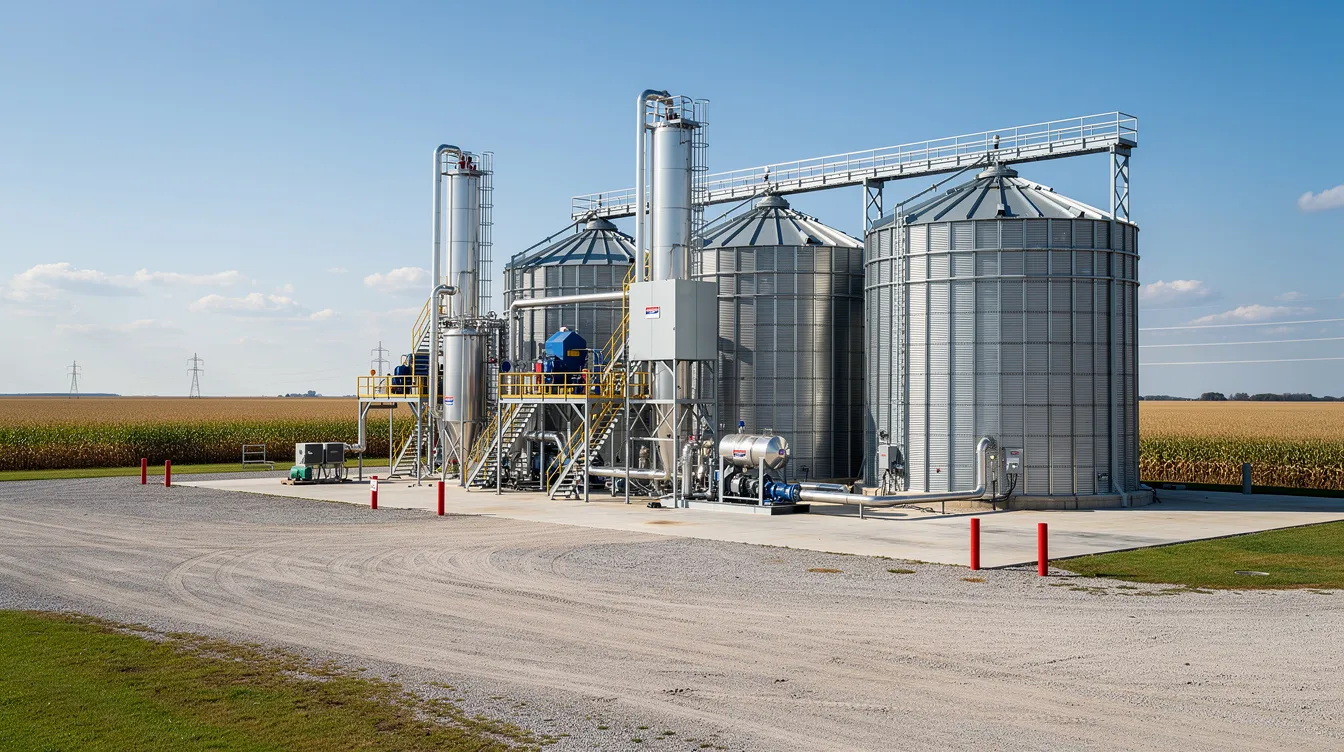
The manufacturing process of DDGS occurs concurrently with ethanol distillation through several steps. DDGS production starts with cleaning and grinding maize or other grains into a fine meal, which is then mixed with water and enzymes for liquefaction and saccharification. For a detailed explanation of the upstream process, refer to the grain-based ethanol manufacturing process guide and ethanol production technology overview.
During the ethanol production process, yeast ferments sugars from the slurry to produce ethanol and carbon dioxide. The fermentation process takes 48 to 72 hours. The distillation process produces approximately 95% ethanol by volume. Distillation separates ethanol from the fermented mash, leaving whole stillage.
The DDGS production process proceeds as follows:
Whole Stillage → Decanter Centrifuge → Wet Cake + Thin Stillage → Multi-Effect Evaporator (thin stillage to syrup) → Mixer (wet cake + syrup) → Rotary/Ring/Flash Dryer → Cooler → Screener → DDGS Storage
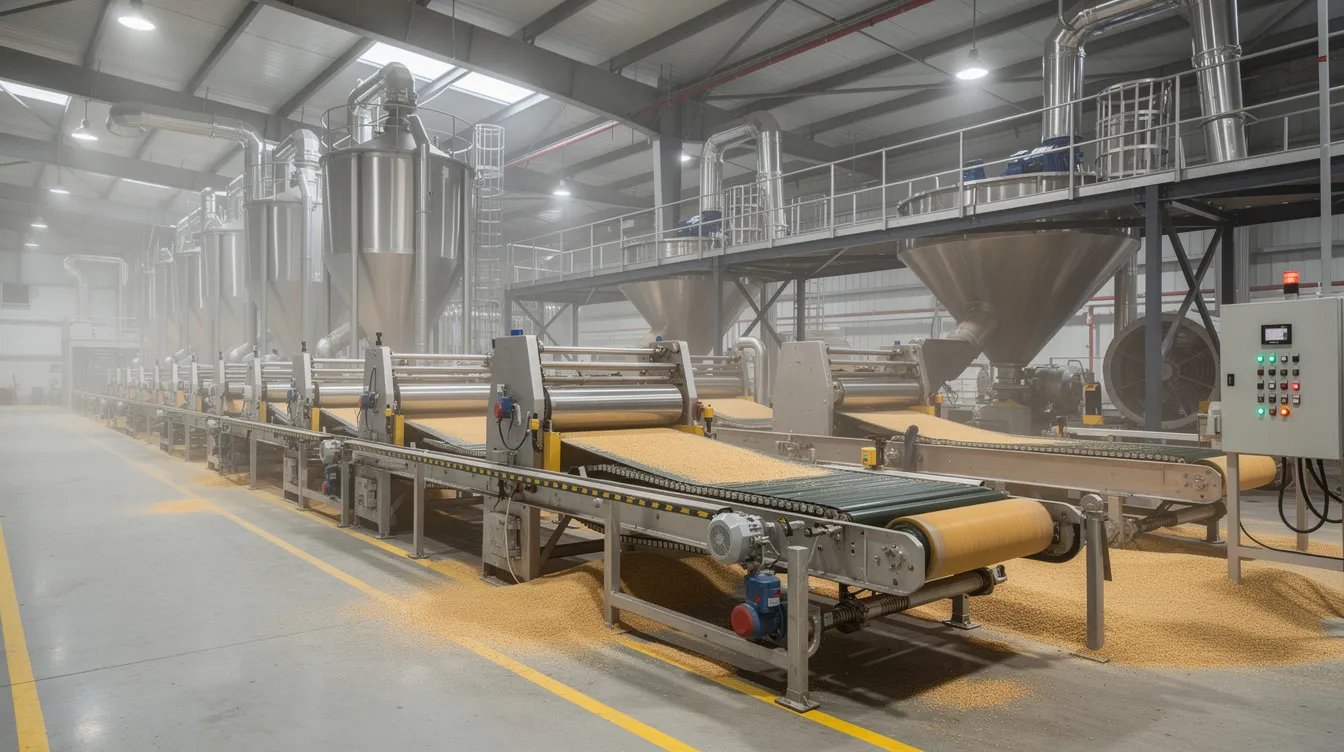
Centrifugation separates whole stillage into wet distillers grains and thin stillage. Thin stillage is concentrated into a nutrient-rich syrup through evaporation using multi-effect evaporators. This syrup is blended back with the wet cake before drying. The drying process reduces moisture content to around 10%. Moisture content must be controlled to prevent spoilage.
Key equipment includes decanter centrifuges, multi-effect evaporators, DDGS dryers (rotary, ring or flash type), coolers and material handling systems. Sizing must match the ethanol plant capacity. Steam consumption for the dryer is substantial; in one Karnataka facility, the DDGS dryer alone consumed 16 TPH of steam out of 45 TPH total plant requirement. Efficient solids separation and dehydration increase the overall effectiveness of ethanol production. DDGS production requires careful selection of high-quality maize or grain to ensure consistent downstream product quality.
DDGS Production Yield from Maize and Broken Rice
DDGS yield depends on the grain consumed per kilolitre of ethanol, the starch content and extraction efficiency, and the residual protein, fiber and oil that remain after the ethanol production process. Yield is best expressed as kilograms of dried DDGS per metric ton of grain input, on a specified moisture basis.
Under standard US dry-grind conditions, one ton of corn produces approximately 309 kg of DDGS at 10% moisture. The typical yield of DDGS from one bushel of corn is approximately 7.7 kg. For Indian maize with 58-62% starch, practical yields fall in the range of 280-320 kg of dried DDGS per ton of maize. For broken rice with higher starch (68-72%) but lower oil and fiber, yields are roughly 260-300 kg per ton.
Data from TruAlt Bioenergy in FY 2026 indicated maize delivers about 18% DDGS yield (dried basis) at approximately 380 litres of ethanol per ton, while rice delivers about 22% DDGS yield at approximately 480 litres per ton. Higher starch extraction for ethanol may lower DDGS mass slightly but can concentrate the protein content, which in turn affects feed pricing.
DDGS yield from grain-based ethanol plants cannot be predicted from installed KLPD capacity alone. It requires knowledge of actual grain composition, process technology, solids losses in thin stillage, dryer operation, and target product moisture. At Project Report Bank, yield assumptions for both maize DDGS and rice DDGS are cross-checked with technology suppliers and reconciled with raw material consumption analysis.
DDGS Production Capacity for 30–200 KLPD Ethanol Plants
The table below provides a scaled view of DDGS output across common plant sizes, based on internally consistent assumptions rather than generic rules. For a detailed discussion of ethanol capacity sizing, see the ethanol plant capacity planning guide for 30 to 200 KLPD.
Assumptions: Maize feedstock; ethanol yield 380 L/MT; DDGS yield 300 kg per ton of maize (10-12% moisture); 330 operating days per year; 90% capacity utilisation.
| Plant Size (KLPD) | Daily Grain Input (MT) | Daily DDGS Output (MT) | Annual DDGS Production (MT) |
|---|---|---|---|
| 30 | ~71 | ~21 | ~7,030 |
| 60 | ~142 | ~43 | ~14,060 |
| 100 | ~237 | ~71 | ~23,460 |
| 150 | ~355 | ~107 | ~35,190 |
| 200 | ~473 | ~142 | ~46,860 |
Actual DDGS production will vary if capacity utilisation is lower than 90%, if the plant switches between maize and broken rice (which alters both ethanol yield and DDGS yield per ton), or if shutdowns and ethanol offtake restrictions reduce operating days. The Grain Ethanol Manufacturers Association (GEMA) estimates that India’s 18,525 KLPD grain-based ethanol capacity has a DDGS output potential of about 11,115 MT per day across 86 plants.
DDGS Price per Ton in India – Market and Realisation Factors
As of October 2026, DDGS prices in India vary by grain source, protein level, moisture, geography and contract size. DDGS prices in India move weekly with ethanol production volumes and feed ingredient demand. DDGS prices depend on grain costs and freight rates.
Major drivers of ddgs price include:
- Ethanol production volume across grain-based plants (higher output increases ddgs availability and can depress prices)
- Underlying grain prices for maize, broken rice and damaged foodgrains
- Demand from poultry integrators, dairy cattle feed manufacturers and aquaculture industries
- Quality parameters: protein content, fat, fiber, mycotoxins, flowability and colour
- Prices of competing feed ingredients, particularly soybean meal (which rose over 40% in 2025-26)
- Transport costs and plant location relative to feed demand centres
Current indicative prices for corn DDGS fall in the range of ₹12,500-15,500 per ton (bulk feed-grade); rice DDGS commands ₹22,000-29,000 per ton due to higher protein content. The gap between quoted ex-plant prices and net realisations (after bagging, handling, brokerage, freight and credit cost) can be ₹1,000-3,000 per ton or more. DPRs must model net realisation, not headline price.
DDGS competes with soybean meal, mustard cake, wheat bran and other high protein feed ingredients. When soybean meal prices rise, demand shifts toward DDGS as a lower cost alternative. Promoters should obtain 2-3 recent buyer quotations from feed mills, poultry integrators and traders before finalising DDGS revenue assumptions.
DDGS Revenue Calculation for Ethanol Plants
The core formula is straightforward:
Annual DDGS Revenue = Annual Saleable DDGS Production (MT) × Average Net Selling Price (₹/MT)
Worked illustration for a 100 KLPD maize-based plant:
- Grain input: ~237 MT/day at 90% utilisation
- DDGS output: ~71 MT/day (300 kg per ton of maize, dried)
- Operating days: 330
- Annual DDGS production: ~23,460 MT
- Assumed net DDGS price: ₹14,000/MT (conservative, after logistics and bagging)
- Annual DDGS Revenue: ~₹32.84 crore
The table below scales this calculation across plant sizes:
| Plant Size (KLPD) | Annual DDGS (MT) | Net Price (₹/MT) | Annual Revenue (₹ crore) |
|---|---|---|---|
| 30 | 7,030 | 14,000 | ~9.84 |
| 60 | 14,060 | 14,000 | ~19.68 |
| 100 | 23,460 | 14,000 | ~32.84 |
| 150 | 35,190 | 14,000 | ~49.27 |
| 200 | 46,860 | 14,000 | ~65.60 |
This is gross revenue. Contribution margin from DDGS must deduct incremental operating and marketing costs specific to DDGS production and sale. Project Report Bank integrates DDGS revenue per KLPD into comprehensive 10-year financial projections and cash-flow models linked with DSCR calculations.
DDGS Production Cost and Operating Expenses
DDGS production cost in India should be analysed on an incremental basis: the costs that arise because the plant chooses to dry and sell DDGS rather than dispose of wet cake locally.
Major cost components include:
- Steam and fuel: Evaporator and dryer consume a large share of the plant’s steam load
- Electricity: Decanters, pumps, conveyors, cooler, screener, packaging equipment
- Labour: Staff dedicated to DDGS section operations and bagging
- Maintenance: Decanter, evaporator and dryer maintenance and spares
- Consumables: Bags, stitching materials, laboratory consumables for quality testing
- Handling and logistics: Loading, in-plant transport, storage, freight to buyer
Raw grain purchase cost is allocated primarily to ethanol; loading it again to DDGS understates profitability. A rational approach allocates feedstock cost based on relative revenue contribution or mass balance, while incremental DDGS costs are tracked separately.
An approximate incremental processing cost of ₹3,000-6,000 per ton of DDGS is a reasonable planning range, depending on steam fuel costs, dryer efficiency, labour rates and transport distance. Each project must estimate a per-ton DDGS processing cost and compare it to expected net realisation to assess whether investment in the DDGS drying plant is financially justified.
DDGS Profitability and Contribution to Ethanol Plant EBITDA
DDGS profitability is best assessed as incremental contribution to overall distillery EBITDA, not as a standalone business.
Illustrative contribution for a 100 KLPD maize-based plant:
| Item | Amount (₹ crore/year) |
|---|---|
| Annual DDGS Revenue | ~32.84 |
| Incremental Costs (₹5,000/MT × 23,460 MT) | ~11.73 |
| DDGS Contribution to EBITDA | ~21.11 |
This contribution, at roughly 64% margin on DDGS revenue, may represent 10-15% of total plant EBITDA under good conditions. DDGS income materially improves DSCR, interest coverage and break-even utilisation.
The overall project viability, however, still depends primarily on ethanol realisation under OMC contracts, feedstock cost and availability, and plant capacity utilisation. Promoters and lenders should stress-test DDGS prices and volumes at 10-30% lower realisations in sensitivity analysis before concluding on viability.
Maize DDGS vs Rice DDGS – Production, Quality and Marketability
India’s two primary grain-based DDGS types serve overlapping but distinct market niches.
| Parameter | Maize (Corn) DDGS | Rice DDGS |
|---|---|---|
| Protein content | ~28-32% | ~40-45% (variable) |
| Fat/Oil | Higher (~8-12%) | Lower (~2-4%) |
| Fiber | Moderate | Variable |
| Energy density | Higher (85% of corn energy) | Moderate |
| Dryer performance | Oil can cause fouling | Easier drying, less rancidity risk |
| Buyer familiarity | Widely accepted by poultry and cattle feed mills | Growing acceptance; specification testing needed |
| Price range (₹/ton) | 12,500-15,500 | 22,000-29,000 |
Corn DDGS offers higher energy and fat. Rice DDGS may offer higher protein on some specifications but with greater batch-to-batch variation. Multi-feedstock plants shifting between maize and broken rice should expect variation in DDGS nutritional quality, making consistent lab testing and specification certificates essential for long-term contracts. For feedstock-specific analysis, see Project Report Bank’s guides on maize-based ethanol plants, broken rice ethanol plants and multi-feedstock distilleries.
DDGS Demand in India’s Animal Feed Industry
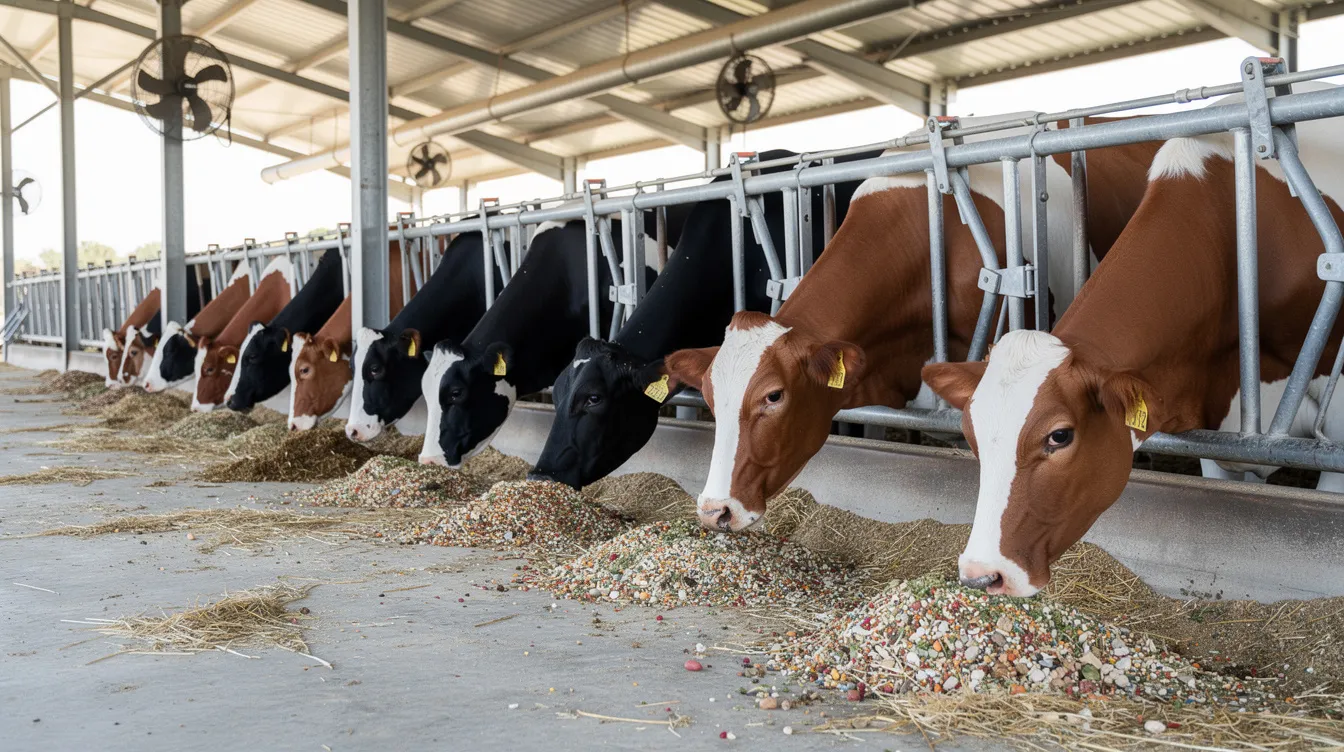
DDGS serves as a protein and energy source in feed formulations for poultry, dairy cattle, dairy cows, swine (limited in India), aquaculture and other livestock. The livestock industry increasingly views DDGS as a practical substitute for costlier protein sources.
Demand drivers include growth of integrated poultry industries and layer farms, expansion of organised cattle feed and dairy cattle feed manufacturers, and cost pressure on soybean meal. DDGS serves as a low-cost protein source for aquaculture, and poultry farmers include it in formulations where DDGS can be safely added at 5-8% in starter broiler diets and at higher levels in grower and finisher poultry diets. For dairy cows, DDGS inclusion supports milk production when balanced with other nutrients and essential amino acids.
The global DDGS market size was valued at USD 16.8 billion in 2024 and is expected to reach USD 32.32 billion by 2034, reflecting increasing demand worldwide. Some ethanol producers in India and the Middle East are exploring ddgs exports to capture this sustainable growth.
Feed buyers demand stable nutritional quality, verifiable specifications (protein, metabolisable energy, amino acid profile, mycotoxin status) and consistent supply. Plants located near poultry clusters, cattle feed hubs or ports achieve better realisation and lower freight cost. Proper storage in covered godowns with moisture and pest control prevents caking, quality deterioration and price discounts.
DDGS Revenue Sensitivity Analysis
Both bankers and investors expect sensitivity analysis on DDGS revenue because price and offtake risk are real.
Sensitivity table for a 100 KLPD plant (23,460 MT annual DDGS, base price ₹14,000/MT):
| Scenario | Price (₹/MT) | Volume (MT) | Revenue (₹ crore) | Revenue Drop |
|---|---|---|---|---|
| Base Case | 14,000 | 23,460 | 32.84 | – |
| 10% price drop | 12,600 | 23,460 | 29.56 | -10% |
| 20% price drop | 11,200 | 23,460 | 26.28 | -20% |
| 30% price drop + 10% volume loss | 9,800 | 21,114 | 20.69 | -37% |
In the worst scenario above, DDGS contribution to EBITDA drops by over ₹12 crore, which directly affects DSCR and break-even ethanol utilisation. Conservative banking DPRs should treat DDGS revenue as partial margin support rather than a guaranteed income stream, especially over 7-10 year projection periods. Professional project feasibility study services can help quantify these downside risks before capital commitment.
DDGS Revenue in Ethanol Plant DPR and CMA Data
In a professional grain-based ethanol DPR, DDGS should appear with:
- Specific production assumptions: yield per ton of grain, moisture basis, operating days
- Pricing assumptions with basis and source (buyer quotations, not historical peaks)
- Separate line item in revenue projections with clear working notes
DDGS revenue flows into the projected profit and loss account, affects EBITDA and contribution, and impacts the cash flow statement through DDGS inventory (finished goods) and receivables from feed buyers. In working capital assessments, DDGS adds current assets: typically 15-30 days of finished stock and 15-45 days of receivables depending on buyer profile.
In CMA Data for bank finance proposals, DDGS inventory and receivables influence the current ratio, margin money requirement and drawing power. Financial institutions now examine DDGS assumptions with care, particularly where promoters rely on DDGS income to justify viability. Project Report Bank structures ethanol DPRs to present DDGS economics transparently, with conservative pricing and separate CMA Data preparation for the animal feed revenue segment.
Key Risks in DDGS Production and Profitability
Technical risks: Variability in raw grain supply quality (mycotoxins, moisture, broken percentage, other impurities) directly affects DDGS nutritional quality. High mycotoxin levels in DDGS affect livestock productivity and can cause outright rejection by feed mills. Mechanical breakdowns in decanters, evaporators or dryers force WDG disposal instead of dried DDGS sales, losing the price premium. Inconsistent moisture control leads to over-drying (weight loss, dust) or under-drying (caking, spoilage, shorter shelf life).
Market risks: A sudden fall in ddgs price due to oversupply (when all ethanol plants supply ddgs simultaneously at high utilisation), or slower-than-expected development of local animal feed demand, can reduce realisations below incremental cost. Extended credit periods to feed mills create receivable build-up and cash flow strain. Wheat ddgs, imported DDGS and alternative protein sources also influence competitive dynamics.
Logistics and storage risks: DDGS can cake during transportation due to temperature changes. Inadequate warehouse capacity, monsoon-season moisture ingress, and infestation cause discounts and buyer claims.
Policy risks: Changes in grain allocation for ethanol under food-security concerns, modifications in the ethanol blending programme, or adjustments to OMC pricing frameworks can alter overall plant utilisation and DDGS output. All risks should be captured in the project risk analysis section of the DPR with mitigation strategies and contingency provisions.
How to Improve DDGS Revenue and Operating Efficiency
Practical steps for ethanol plant ddgs producers:
- Control moisture precisely to meet buyer specifications without excessive over-drying; target consistent particle size and colour
- Implement regular lab testing for protein, fat, fiber, digestible protein and mycotoxins; share certificates of analysis with buyers
- Adopt efficient multi-effect evaporators and dryers with proper insulation and waste heat recovery
- Maintain decanters and dryers on schedule to prevent unplanned downtime and quality issues
- Diversify buyers across poultry, dairy, cattle and aquaculture industries to reduce concentration risk
- Explore contracts with organised feed manufacturers; assess ddgs exports where quality and logistics justify it, but avoid over-dependence on export markets
- Plan warehouse layout for FIFO stock rotation; keep inventory days within 15-25 days to minimise quality risk and working capital blockage
These practices improve DDGS contribution over time but must be evaluated project by project. No fixed percentage improvement in margins should be assumed in financial projections. Some promoters also explore industrial applications for DDGS beyond traditional animal feed, though these remain niche.
Professional Financial Advisory for Ethanol Distillery Projects
CA Manish Gugliya, FCA, DISA (ICAI), has over 20 years of professional experience in DPR preparation, CMA Data, project finance and financial modelling for manufacturing and agro-processing projects, including grain-based ethanol and DDGS plants.
Project Report Bank supports ethanol plant promoters with customised DPRs covering ethanol, DDGS and other by products; financial projections linked with grain-based ethanol plant setup cost analysis; and project feasibility covering ROI, IRR, DSCR and break-even analysis. The specific value for DDGS economics includes realistic yield and price assumptions, correct cost allocation between ethanol and distillers grains, and structured sensitivity analysis on DDGS contribution to EBITDA for lenders and investors.
To discuss your ethanol-cum-DDGS project, contact CA Manish Gugliya:
- WhatsApp (preferred): Send your project brief for a prompt response
- Phone / Email: Available on www.projectreportbank.com
Frequently Asked Questions
How much DDGS is typically produced per litre of ethanol?
DDGS output per litre depends on the grain used, starch content, ethanol yield and process efficiency. As a broad planning assumption, ethanol producers sometimes use a range of 0.7-1.1 kg of DDGS (10-12% moisture) per litre of ethanol. This must be validated with the technology supplier and reconciled with raw material consumption data for the specific project. The figure varies between maize and broken rice feedstocks.
What is an indicative DDGS yield per ton of maize and broken rice?
For maize-based plants, DDGS yield is approximately 280-320 kg per ton of maize on a 10-12% moisture basis. For broken rice-based plants, the range is roughly 260-300 kg per ton due to differences in oil, fiber and protein content. These are indicative ranges; actual yields must be verified with the technology supplier and reflected accurately in the DPR mass balance.
Can DDGS revenue alone make an ethanol plant financially viable?
DDGS is an important co product improving overall EBITDA and DSCR, but ethanol realisation and plant utilisation remain the primary profitability drivers. DDGS income should be treated as supplementary support and tested under lower-price scenarios. Using high DDGS revenue assumptions to justify an otherwise marginal ethanol project is a common error in financial projections.
Is it necessary for smaller plants (30-60 KLPD) to install a DDGS dryer?
Some smaller plants near strong local dairy or cattle feed demand sell wet distillers grains instead of dried DDGS, which reduces capex and energy consumption but limits market radius and shelf life. Whether to install a dryer should be evaluated through a dedicated cost-benefit and payback analysis in the project feasibility study, considering local buyer capacity and transport distances.
How should DDGS inventory and receivables be planned in working capital assessments?
DPRs and CMA Data should assume a reasonable stocking period for DDGS; typically 15-30 days of finished stock and 15-45 days of receivables, depending on buyer profile. These assumptions should be disclosed clearly so banks can assess the working capital requirement arising from the animal feed segment. Poultry farmers and cattle feed mills may have different payment cycles, which should be factored into receivable estimates.
Conclusion
DDGS production in ethanol plants has become a measurable value driver for grain-based distilleries in India, with steady demand from poultry, dairy cattle, aquaculture and the broader livestock industry. For a 100 KLPD plant, DDGS revenue under conservative assumptions can reach ₹30+ crore annually, with an incremental contribution margin of 60-65% after drying and handling costs. This revenue stream strengthens cash flow, improves DSCR and lowers the break-even utilisation threshold for the overall ethanol project.
The difference between a credible ethanol DPR and an unreliable one often lies in how DDGS revenue is modelled. Realistic yield assumptions, net realisations (not headline prices), careful estimation of incremental processing costs, and disciplined sensitivity analysis are the foundation of bankable DDGS projections.
For customised DPR preparation, CMA Data, financial projections and project finance advisory for grain-based ethanol and DDGS projects, reach out to CA Manish Gugliya and Project Report Bank via WhatsApp or phone at www.projectreportbank.com.