Key Takeaways
- A CO₂ recovery plant integrated with a grain-based ethanol distillery can convert fermentation gas into a saleable by-product, but viability depends on CAPEX, operating cost, local demand and confirmed buyer arrangements.
- Indicative CO₂ recovery plant cost in India ranges from approximately ₹3 crore for small units to ₹25 crore for large installations-project-specific DPR and supplier quotations are essential for accurate estimation.
- For 30–200 KLPD ethanol plants, fermentation CO₂ can support 15–120 TPD liquid CO₂ capacity, subject to recovery efficiency and operating days.
- Bankability depends on realistic financial projections, DSCR, IRR, payback period and reasonably assured offtake agreements with CO₂ customers.
- Project Report Bank, led by CA Manish Gugliya (FCA, DISA), provides customised DPR, feasibility studies, financial modelling and bank finance documentation for CO₂ recovery projects.
Introduction – Why CO₂ Recovery Matters for Ethanol Distilleries
Grain-based ethanol fermentation generates substantial carbon dioxide as a natural by-product. The stoichiometry is straightforward: every mole of glucose yields two moles of ethanol and two moles of CO₂, producing roughly 0.49 kg of CO₂ per kg of sugar converted. For a 100 KLPD distillery, this can mean 50 TPD or more of raw gas available for capture.
Historically, Indian distilleries vented this gas. Today, rising industrial demand for CO₂-particularly in food, beverage, cold chain and dry ice applications-has turned CO₂ recovery into a genuine revenue opportunity. However, capturing CO₂ is not automatically profitable. The real question is whether the incremental investment in purification, compression, refrigeration, storage and logistics generates adequate returns after accounting for power costs, maintenance and market realisations.
This article examines the CO₂ recovery plant cost in India, the underlying process technology, capacity planning, machinery, operating economics, market dynamics and financial feasibility from a professional project-finance perspective. Serious promoters planning such investment may connect with Project Report Bank via the website or WhatsApp for customised CO₂ recovery plant DPR and project finance advisory.
What Is a CO₂ Recovery Plant in an Ethanol Distillery?
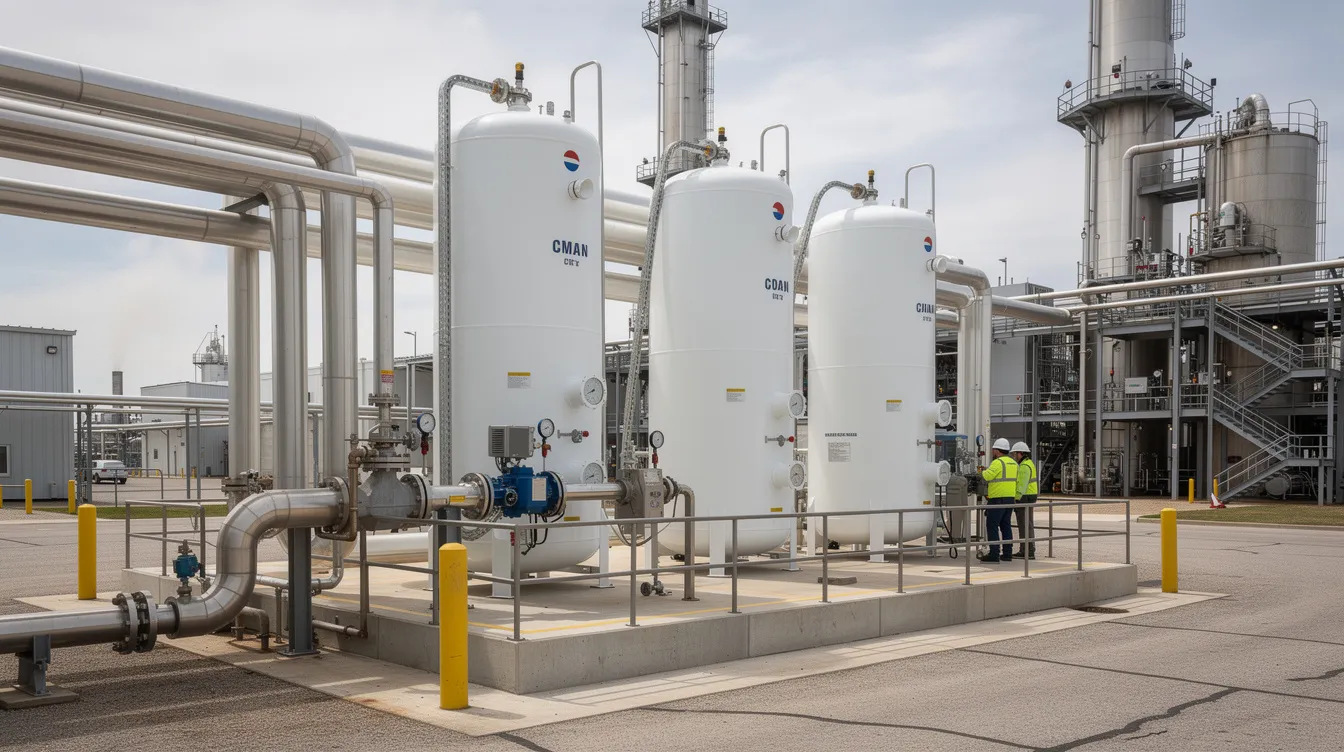
A fermentation CO₂ recovery plant is a system that captures raw CO₂ released during ethanol fermentation, then purifies, compresses and liquefies it for industrial sale. Unlike combustion flue gas-which contains NOx, SOx and particulates-fermentation CO₂ is biogenic and relatively clean, making it easier and less expensive to recover.
Key distinctions worth noting:
- Recovered CO₂ gas: raw, unpurified gas collected from fermenters.
- Purified liquid CO₂: compressed and liquefied to approximately –20°C, suitable for industrial applications.
- Food-grade CO₂: requires ≥99.9% purity with strict trace-impurity limits, continuous quality testing, and compliance with applicable specifications.
- Dry ice: solid CO₂ produced from liquid CO₂ using additional equipment.
This article focuses on CO₂ recovery integrated with grain-based ethanol fermentation, not standalone flue gas capture units.
CO₂ Recovery Process & Technology
Technology selection directly affects both CAPEX and OPEX, making it the first design decision that determines overall CO₂ recovery plant feasibility. The process follows these steps:
- Fermentation gas collection – CO₂ exits fermenters through gas headers at low pressure (typically inlet pressure of 0.5 kg/cm² at 40°C).
- Foam trap and moisture separation – removes yeast carry-over, foam and condensate.
- Gas scrubbing – water scrubbing removes alcohol vapour and soluble impurities.
- Multi-stage compression – compressors raise pressure to approximately 21 kg/cm² output pressure; an Ingersoll Rand CO₂ compressor, for instance, offers 1,000 kg/hr output capacity. A used Ingersoll Rand CO₂ compressor with similar specifications can reduce initial CAPEX for smaller projects.
- Dehydration and purification – a dual tower activated carbon filter system (typically 100 kg per unit capacity) removes odours and organics; molecular sieve dryers reduce dew point to specification levels.
- Refrigeration and liquefaction – cascade or single-stage refrigeration condenses CO₂ into liquid form.
- Storage and loading – insulated, pressure-rated storage tank vessels hold liquid CO₂ for tanker dispatch.
A well-designed CO₂ recovery system achieves 80–90% recovery of theoretical gas. Losses occur through venting, leaks, downtime and impurity rejection. Contamination from fermentation odours, alcohol carryover and compressor oil demands proper design and maintenance, especially for food-grade output. For background on how fermentation generates CO₂, read about ethanol production technology.
CO₂ Recovery Plant Capacity Planning for 30–200 KLPD Ethanol Distilleries
CO₂ generation links directly to ethanol output. Per the fermentation equation, each litre of ethanol produced generates approximately 0.76 kg of CO₂ theoretically. Capacity planning must start from the distillery’s KLPD rating and expected operating days.
Assumptions: grain-based feedstock, 330 operating days/year, 85% CO₂ recovery efficiency, ethanol at standard proof.
| Ethanol Capacity (KLPD) | Theoretical CO₂ (TPD) | Recoverable CO₂ at 85% (TPD) | Annual Saleable CO₂ (MT) |
|---|---|---|---|
| 30 | ~25 | ~21 | ~6,930 |
| 60 | ~50 | ~42 | ~13,860 |
| 100 | ~88 | ~75 | ~24,750 |
| 200 | ~175 | ~149 | ~49,170 |
A CO₂ recovery plant can process 10 to 24 tons per day for smaller configurations, and increasing CO₂ recovery capacity from 10 to 24 tons per day is a common scaling path. CO₂ recovery plants can produce up to 24 tons per day in single-line setups. The difference between theoretical generation, technically recoverable gas and saleable quantity after quality rejections is substantial-often only 45–50% of theoretical in practical distillery conditions. Oversizing wastes CAPEX; undersizing limits revenue and extends payback period.
CO₂ Recovery Plant Machinery & Equipment Requirements
Machinery selection defines both project cost and achievable purity. Promoters should obtain quotations from experienced CO₂ plant suppliers rather than relying on generic packages. The main distillery machinery is separate; CO₂ recovery equipment is an add-on. Investment in technology should focus on solving operational bottlenecks specific to the target purity and capacity.
Key equipment includes: fermentation gas collection headers, foam separator and gas scrubber, multi-stage CO₂ compressors with inter-stage coolers, purification units (activated carbon beds, molecular sieves), refrigeration and liquefaction device, liquid CO₂ storage tanks (insulated pressure vessel), pumps, piping and loading arms, instrumentation and control systems, safety and gas detection systems, and lab equipment for purity testing. Integration with existing ethanol plant utilities-cooling water, power supply, instrument air-can reduce incremental investment when installed as part of a combined project. Indian vs imported equipment options affect both cost and lead time; Indian-manufactured compressors and storage tanks are now extensively available.
CO₂ Recovery Plant Setup Cost in India
Establishing a CO₂ recovery plant in India involves capital expenditures based on scale and technology. The estimated cost breakdown for CO₂ recovery plants includes civil works, machine costs, storage, electrical infrastructure, piping, insulation, pre-operative expenses, contingency and working capital margin. Cost drivers for CO₂ recovery plants include purification requirements, automation levels, target purity (industrial vs food-grade), and OEM selection. Factors affecting the cost also include source material purity and recovery method chosen.
Indicative CAPEX ranges (illustrative; must be validated through vendor quotations and project-specific DPR):
| Plant Size | Saleable CO₂ (TPD) | Indicative CAPEX Range | Key Inclusions |
|---|---|---|---|
| Small | 10–20 | ₹3–7 crore | Basic purification, compression, small liquefaction, low automation |
| Medium | 40–60 | ₹7–12 crore | Full liquefaction, larger storage, automation, food-grade capability |
| Large | 80–120 | ₹12–25 crore | High purity, major storage, tanker filling, robust safety systems |
A CO₂ recovery plant costs approximately ₹2.5 crore (25,000,000 INR) per unit at the smaller end. For reference, a biogas plant with CO₂ recovery may cost around ₹10 lakh (1,000,000 INR) for basic gas separation without liquefaction. A 48-TPD plant in Odisha was budgeted at approximately ₹4.34 crore. High capital investment may be necessary for large-scale industrial carbon capture projects. Typical carbon dioxide recovery plant costs vary significantly by production capacity and specifications.
From a CA’s perspective, it is important to separate core machinery CAPEX from interest during construction, contingency and working capital margin for proper loan structuring, depreciation planning and overall project cost assessment. Incremental land and layout requirements for the CO₂ unit must be planned with adequate space for storage tanks and tanker movement.
Operating Cost & Cost of Liquid CO₂ Production
OPEX is dominated by energy consumption, which is a major operational cost for running CO₂ recovery plants. Power for compressors and refrigeration typically consumes 0.20–0.30 kWh per kg of CO₂. At industrial electricity tariffs of ₹6–9 per kWh, energy cost alone can be ₹1.20–2.70 per kg. Carbon dioxide purity levels greatly influence operational costs and plant design-food-grade requirements add purification media, testing and compliance costs.
Other recurring cost heads: maintenance and spares (2–5% of machinery value annually), consumables such as activated carbon and molecular sieves (₹200–500 per MT), operating manpower, water and utilities, quality testing, insurance and administrative overheads.
Plant-gate cost per MT = Total annual OPEX ÷ Annual saleable output (MT). Delivered cost to the customer includes transport, tanker logistics and handling losses. The difference between plant-gate cost and delivered cost can be ₹1,000–3,000 per MT depending on distance and format (tanker vs cylinder).
Market Demand, Applications & Selling Price of CO₂ in India
Market demand for CO₂ varies by region and season, impacting profitability of recovery plants. The demand for CO₂ is increasing in various sectors including dry ice production and industrial applications. Liquid CO₂ markets include food and beverage industries requiring 99.9% purity. The CO₂ recovery plant market is evolving towards application-specific solutions, with demand for CO₂ recovery plants increasing in food-grade applications. Market growth is influenced by procurement behavior and supply-chain complexity.
Key buyer segments: carbonated beverage manufacturers, brewery operations, food-freezing and cold chain units, welding and fabrication shops, chemical plants and dry ice manufacturers. One cannot rely on a single pan-India selling price. Industrial gaseous CO₂ may fetch ₹3–6 per kg, while purified liquid CO₂ commands ₹6–12 per kg depending on purity, volume and delivery terms.
Promoters must conduct structured market due diligence: map local industrial belts, interact with potential long-term customers, assess existing supplier competition, and explore offtake agreements before committing capital. Desirable operational characteristics for CO₂ recovery plants include nearby industrial consumers and reliable feedstock from the ethanol plant.
CO₂ Recovery Plant Revenue & Profitability Analysis
CO₂ recovery plant profitability must be analysed as an incremental project. Financial modeling is crucial for CO₂ recovery project planning. Effective financial modeling should consider variable operational costs and investments alongside fixed cost elements.
Illustrative model (assumed: 50 TPD CO₂ plant, 330 days, 85% utilisation, ₹7,000/MT average net realisation):
- Annual saleable CO₂: ~14,025 MT
- Gross revenue: ~₹9.82 crore
- Estimated OPEX: ~₹5.50–6.50 crore
- EBITDA: ~₹3.30–4.30 crore
EBITDA (Earnings Before Interest, Tax, Depreciation and Amortisation) is only a starting point. Cash flow analysis is an essential part of financial projections that must account for loan repayments, tax and working capital changes. The incremental CO₂ revenue can meaningfully improve the overall economics and DSCR of the integrated ethanol distillery-but shared costs must not be double-counted. For professional-grade scenario modelling, consider financial projections and modelling services.
Project Cost, Means of Finance & Working Capital
Banks evaluate CO₂ recovery plant loans by examining the project cost split between fixed assets and working capital, promoter equity contribution, debt-equity structure (commonly 70:30 for MSME projects) and projected DSCR.
Working capital for a CO₂ recovery plant covers: consumable inventory, receivables from industrial buyers (typically 30–60 days), and operating cash. DSCR (Debt Service Coverage Ratio) measures whether projected cash flows can comfortably service term-loan instalments and interest-lenders typically expect average DSCR of 1.5× or higher. Promoters seeking bank finance DPR and loan proposal assistance should prepare CMA data aligned with the integrated project’s financial structure.
ROI, IRR, Payback Period & Financial Feasibility
Professional project evaluation goes beyond EBITDA. ROI and IRR are key metrics in financial projections for CO₂ recovery projects. Financial projections assess project feasibility and viability through:
- ROI: Annual net profit as a percentage of total investment
- IRR: Discount rate at which NPV of project cash flows equals zero
- Payback Period: Time to recover initial CAPEX from net cash flows
- Break-even: Volume or revenue at which the plant covers all costs
- DSCR: Cash available for debt service relative to repayment obligations
A 60 KLPD distillery CO₂ project in Tamil Nadu projected IRR of ~18% with payback around 6 years at conservative realisations of ₹3,000/MT. At higher food-grade realisations, returns improve substantially. Terminal value and salvage value of machinery may marginally affect NPV calculations. For detailed feasibility assessment, explore project feasibility and viability services.
Sensitivity Analysis – What Happens When CO₂ Prices Decline?
Sensitivity analysis helps evaluate financial risks in projects. CO₂ recovery plant feasibility is highly sensitive to selling price, plant utilisation, power tariffs and buyer offtake. Operational risks in CO₂ recovery include supply interruptions and compliance with technical standards.
| Variable | Change | Impact on IRR |
|---|---|---|
| CO₂ selling price | –20% | IRR may drop 4–6 percentage points |
| Electricity tariff | +20% | IRR may drop 2–3 percentage points |
| Operating days | –15% | Revenue and IRR decline proportionally |
| CAPEX overrun | +15% | Payback extends, DSCR weakens |
| Recovery efficiency | –10% | Lower saleable volume, reduced margins |
A technically sound plant may become commercially unattractive if local CO₂ demand is weak, uptime is low, or transport costs rise beyond the economic radius. Both base-case and downside scenarios must be modelled before any investment decision.
Environmental Benefits, Carbon Utilisation & Compliance
CO₂ recovery from ethanol fermentation reduces direct atmospheric venting, converting waste gas into a reused industrial product. Brazil and India are examples of countries leveraging CO₂ recovery within broader climate policies. However, using captured CO₂ in beverages or welding is carbon utilisation, not permanent sequestration. Carbon credits and compliance markets can provide additional revenue for CO₂ recovery activities, but eligibility must be verified per current programme availability-automatic incentives should not be assumed.
Compliance requirements include PESO certification for pressure vessels, SPCB environmental clearances, applicable BIS or customer purity standards for food-grade CO₂, safety protocols for high-pressure and cryogenic handling, and proper operator training. Project feasibility studies for CO₂ recovery must account for local regulations and safety requirements.
Integrated Ethanol Plant – CO₂ Recovery vs DDGS Revenue
In a grain-based ethanol plant, DDGS production and CO₂ recovery are the two primary by-product revenue streams. DDGS revenue is linked to livestock feed markets and grain prices; CO₂ revenue depends on industrial gas demand, purity specifications and logistics.
CO₂ typically contributes a lower share of total distillery revenue compared to DDGS but can significantly improve margins where strong nearby demand exists. For a maize-based ethanol plant, the combined by-product revenue from both streams diversifies earnings risk. The accounting discipline of not double-counting shared costs-administration, land, utilities-between the ethanol, DDGS and CO₂ segments is critical for accurate incremental return analysis.
When Is a CO₂ Recovery Plant Financially Viable?
A CO₂ recovery plant in an ethanol distillery is likely viable when:
- Ethanol capacity is 60 KLPD or higher with consistent, high operating days
- Power tariffs are competitive (below ₹8/kWh industrial rate)
- Industrial CO₂ consumers are located within 150–200 km radius
- Offtake visibility exists through confirmed or reasonably assured buyer commitments
- CAPEX is proportionate to achievable net realisations and volume
Unfavourable scenarios include remote locations far from industrial clusters, unreliable power supply, oversupply of CO₂ from competing plants in the region, or fluctuating ethanol production that limits CO₂ feed. CO₂ recovery plants are used extensively in distilleries and manufacturing industries, but each project’s commercial merit must be evaluated independently through a full feasibility study.
Importance of a Detailed Project Report for CO₂ Recovery Plants
From my experience preparing DPRs for ethanol and by-product recovery projects, I consistently find that the difference between a successful CO₂ recovery investment and a financially stressed one lies in the quality of pre-investment analysis.
A bankable CO₂ recovery plant project report should cover: technical configuration and process flow diagram, capacity planning linked to ethanol output, machinery specification and supplier comparison, layout and utility integration, CO₂ market study and customer profiling, detailed cost estimates, financing structure, 7–10 year financial projections, DSCR, ROI, IRR, break-even and sensitivity analysis.
A robust DPR supports bank appraisal, investor discussions and internal decision-making. At Project Report Bank, we prepare customised DPRs, CMA data, financial models and bank finance documentation based on practical, project-specific assumptions-not generic templates. The information and data inputs come from the promoter’s actual project parameters, and every document is designed to be defensible before lenders and investors.
Promoters may share basic project details via the website or WhatsApp contact for a project-specific proposal.
Frequently Asked Questions
The following answers address additional investor queries on CO₂ recovery plant cost, operation and feasibility.
What is the minimum practical capacity for a CO₂ recovery plant in an ethanol distillery?
While small units processing 10 TPD are technically possible, plants generally become more economical from around 15–20 TPD of saleable liquid CO₂ upward. This usually corresponds to roughly 30 KLPD or higher ethanol capacity with 300+ operating days. Below this order of magnitude, the fixed costs of compression, refrigeration and storage may not generate adequate returns relative to CAPEX.
Can an existing grain-based ethanol distillery retrofit a CO₂ recovery system?
Retrofitting is common and commercially viable if fermentation gas headers, adequate space for equipment, utility connections and market access are available. However, it requires detailed engineering assessment, integration with the existing control system, and planned downtime. A retrofit-specific DPR and site assessment are recommended before placing any equipment order.
How long does it usually take to commission a CO₂ recovery plant after ordering?
For a medium-size plant, a realistic range is 8–12 months from firm purchase order to commissioning. This timeline depends on vendor lead time for compressors and refrigeration equipment, civil works readiness, regulatory approvals (PESO, SPCB) and integration with existing ethanol operations. Sweden-based and European OEMs may have longer delivery periods than Indian manufacturers.
Is there a big cost difference between industrial-grade and food-grade CO₂ recovery plants?
Achieving consistent food- or beverage-grade CO₂ requires additional purification steps, higher-specification equipment, dedicated lab testing facilities and quality management systems. This can add 15–30% to machinery CAPEX and some additional OPEX for consumables and compliance. However, food-grade CO₂ also commands a higher selling price (₹8–12/kg vs ₹3–6/kg for industrial grade), so the premium investment may be justified where buyer demand exists. One can download applicable specifications from BIS or obtain them from the customer for detailed cost estimation.
How does the working capital cycle typically look for a CO₂ recovery business?
Working capital is primarily tied up in receivables from industrial customers (often 30–60 days), limited inventory of spare parts and consumables, and operating cash for power and manpower. The cycle is relatively short compared to manufacturing businesses with raw material procurement. Proper financial projections are needed to size cash credit limits, and the solution should be integrated with the overall ethanol plant’s working capital assessment.
Conclusion – Should an Ethanol Distillery Invest in CO₂ Recovery?
A CO₂ recovery plant integrated with a grain-based ethanol distillery can convert what was once a waste gas into a valuable, saleable product. The performance of such an investment, however, depends entirely on sound technology choice, realistic CAPEX and OPEX assumptions, competitive power costs and, most critically, confirmed nearby CO₂ demand from industrial buyers.
Decision-makers should not rely on generic cost estimates or optimistic market assumptions. A project-specific DPR, structured market study and rigorous financial model-including IRR, DSCR and sensitivity analysis-are essential before committing capital. For many 60–200 KLPD ethanol plants in the right locations, CO₂ recovery can materially improve overall project profitability. For others, it may be prudent to defer the investment or scale it to match realistically achievable offtake.
Ethanol plant promoters and investors considering CO₂ recovery may contact Project Report Bank through the website or WhatsApp for customised project reports, feasibility studies and bank finance advisory prepared under the guidance of CA Manish Gugliya, FCA, DISA (ICAI).