Key Takeaways
- Feedstock price volatility – particularly maize and broken rice – is the single largest risk driver for grain-based ethanol plants, with raw materials accounting for 70–80% of operating expenses.
- Capacity utilisation in Indian ethanol plants frequently falls well below nameplate capacity in early years; actual data shows plants operating at 40–50% utilisation despite projections of 85–90%, severely compressing DSCR and cash flow.
- Strong ethanol demand under the Ethanol Blended Petrol (EBP) Programme does not automatically translate into guaranteed offtake for every plant – in ESY 2025-26, oil marketing companies allocated only about 1,048 crore litres against offers exceeding 1,776 crore litres.
- A properly prepared Detailed Project Report with sensitivity analysis, realistic utilisation assumptions and conservative pricing is essential before committing ₹50–250 crore to an ethanol project.
- Risk can be mitigated but not eliminated through diversified feedstock sourcing, conservative financial projections, appropriate debt–equity structure and professional financial modelling.
Introduction – Why Ethanol Plant Investment Risks Must Be Evaluated Before Investing
India’s ethanol industry has expanded rapidly over the past several years. The Ethanol Blended Petrol programme, government initiatives to reduce dependence on fossil fuels, and goals of enhancing energy security have created a strong policy-driven push toward higher ethanol blending. India’s ethanol production capacity has tripled from approximately 680 crore litres in 2018 to 1,970 crore litres in 2025, and the country aims for 20% ethanol blending by 2025/26. Ethanol demand is projected to reach approximately 1,600 crore litres by 2030, and India’s ethanol market is expected to grow at 7.5% CAGR until 2029.
However, a growing Indian ethanol market does not make every individual ethanol plant a profitable business. A modern grain-based ethanol plant in the 60–200 KLPD range typically involves a capital outlay of ₹80–250 crore including civil works, plant and machinery, utilities and environmental compliance systems. Even a 30 KLPD ethanol plant requires an investment of approximately ₹50–60 crore. At these investment levels, errors in feedstock cost assumptions, capacity utilisation estimates or ethanol demand projections can be financially damaging.
From a project finance perspective, banks and investors in India now insist on realistic capacity utilisation build-up, documented feedstock procurement strategy, OMC offtake analysis, working capital planning and DSCR-based term-loan structuring before funding ethanol projects. This article examines the major ethanol plant investment risks in India – feedstock price volatility, capacity utilisation shortfalls, demand and pricing uncertainty, financial structuring gaps, policy and environmental risks, and by-product revenue fragility – and discusses practical mitigation strategies for entrepreneurs and lenders evaluating project feasibility.
Major Investment Risks in Grain-Based Ethanol Plants
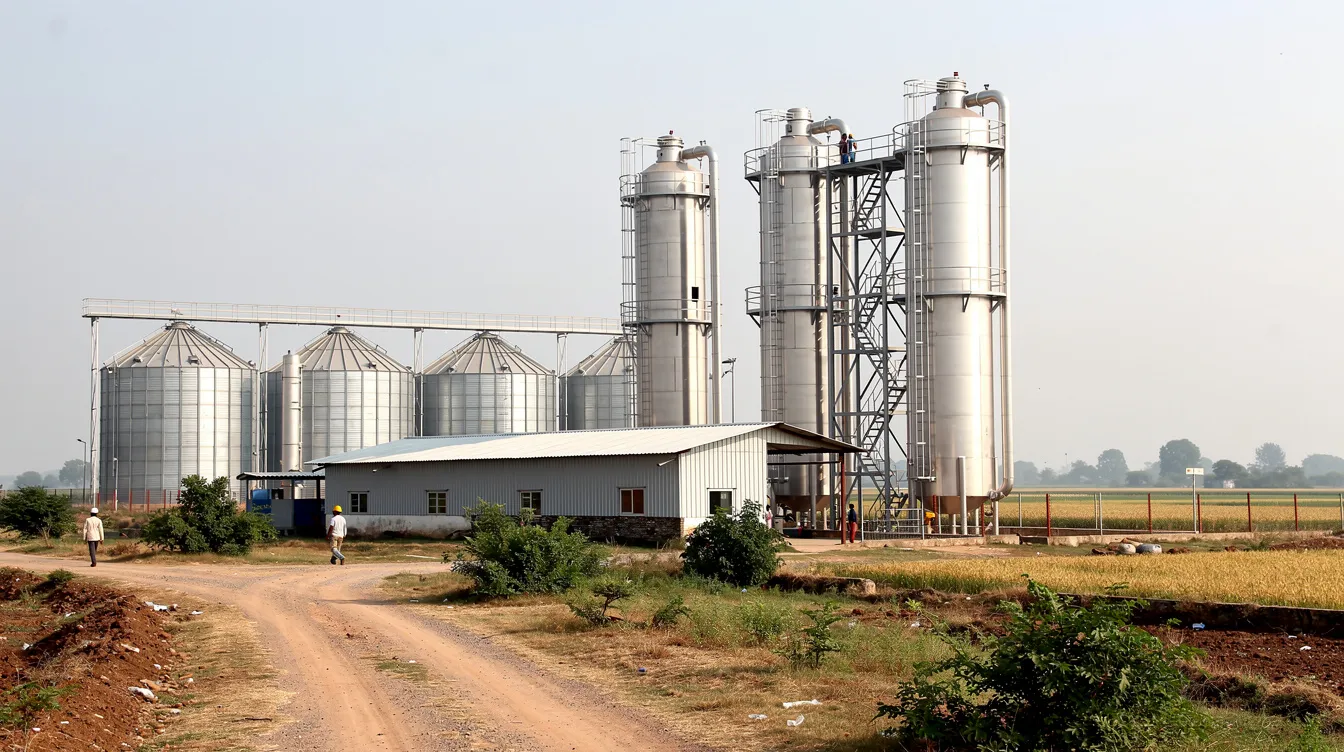
A grain-based ethanol plant uses starchy feedstocks such as maize, broken rice, damaged food grains or surplus food grains to produce ethyl alcohol. Risk levels vary significantly depending on state, raw material zone, plant capacity and financing terms. Establishing an ethanol plant in India involves regulatory and operational investment risks that must be assessed project by project.
The following table summarises the principal risk areas:
| Risk Area | Typical Severity | Key Financial Impact | Primary Mitigation |
|---|---|---|---|
| Feedstock price volatility | High | EBITDA margin, cost per litre | Diversified sourcing, inventory buffer |
| Raw material availability | Medium–High | Production volume, utilisation | Multiple suppliers, mixed feedstock |
| Capacity underutilisation | High | Fixed cost per litre, DSCR | Conservative ramp-up assumptions |
| OMC procurement uncertainty | Medium–High | Revenue, dispatch delays | Location near depots, tender strategy |
| Pricing and margin compression | Medium | IRR, payback period | Conservative price assumptions |
| Working capital intensity | Medium | Liquidity, cash flow | Adequate WC limits, receivable management |
| Debt repayment and DSCR risk | High | Loan servicing, covenant breach | Balanced debt–equity, moratorium period |
| Project cost overruns and IDC | Medium | Equity IRR, total project cost | Contingency provisions, phased execution |
| Government policy changes | Medium | Feedstock eligibility, pricing | Policy tracking, feedstock flexibility |
| Environmental and water compliance | Medium | Capex, operating cost, delays | Early EC engagement, ZLD budgeting |
Severity is higher for greenfield plants, highly leveraged projects and smaller-capacity units with limited bargaining power. Ethanol production gross profit margins range from 20–30%, leaving limited cushion for adverse movements in any of these risk areas. A professional detailed project report and feasibility study should explicitly quantify and grade each risk rather than listing them qualitatively.
Feedstock Price Risk – Maize, Broken Rice and Other Grains
Feedstock costs can constitute 60–75% of total ethanol production cost for a grain-based plant. Production costs for ethanol are significantly affected by feedstock prices, and raw materials account for 70–80% of operating expenses. This makes feedstock the single largest risk driver.
Ethanol production relies on feedstocks such as sugarcane molasses and maize. Sugarcane molasses is a primary feedstock due to its abundance in India, while starch-based feedstock is a major source for grain-based ethanol production. Corn and broken rice are year-round feedstock options for ethanol. Damaged food grains can be used to produce ethanol, preventing wastage. Agricultural residues like rice straw and wheat straw are also considered low-cost feedstocks, though their commercial-scale adoption remains limited. Ethanol can also be produced from sugarcane juice and molasses, but molasses supply is seasonal and linked to sugar production cycles.
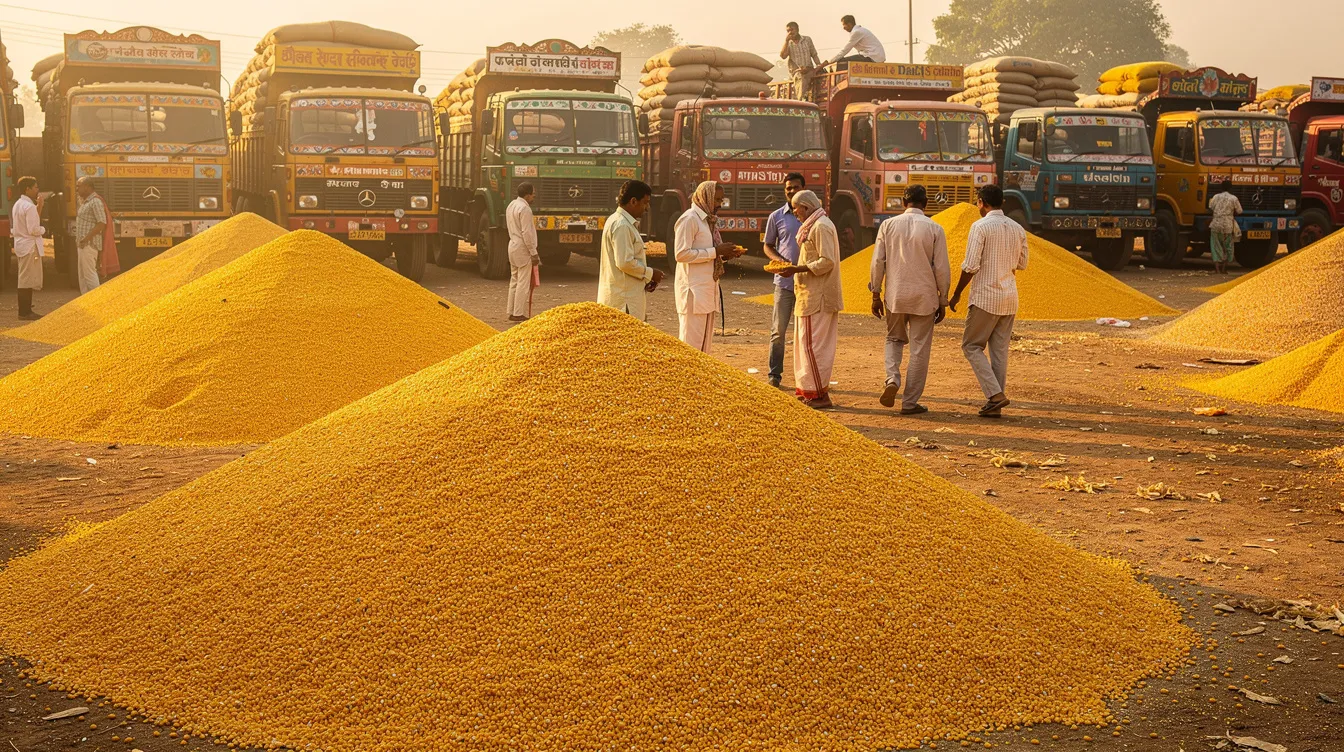
Grain prices fluctuate due to factors like monsoon performance, domestic yields, MSP declarations, export policies and competing demand from the poultry, feed and starch industries. For example, maize mandi prices averaged approximately ₹2,177 per quintal in March 2025, dropped to ₹1,635 in November 2025 and rose again to ₹2,009 in August 2026. Feedstock volatility can impact ethanol production and food security, and the push towards grain-based ethanol can affect food security and cause inflation in years of poor harvest.
Illustrative cost impact: At maize cost of ₹20,000 per tonne and a typical yield of approximately 380 litres per tonne, raw material cost per litre works out to about ₹52.6. With the ESY 2025-26 ex-mill ethanol price for maize at ₹71.86 per litre, the gross margin before other costs is approximately ₹19.3 per litre. A 10% rise in maize price to ₹22,000 per tonne increases raw material cost per litre to approximately ₹57.9 – compressing margin by ₹5.3 per litre, a substantial reduction for a business with already thin margins.
Mitigation options include diversified sourcing across multiple mandis and states, evaluating a mixed feedstock approach combining maize and broken rice where technically and legally permitted, maintaining strategic inventory during harvest months and establishing supplier relationships across the supply chain. However, long-term contracts in agricultural commodities have inherent limitations, and feedstock availability can shift sharply in drought or pest-affected years.
Capacity Utilisation Risk – Why Installed Capacity Does Not Guarantee Profitability
Installed capacity – say 120 KLPD nameplate – represents what a plant can theoretically produce under rated conditions. Actual capacity utilisation, measured as average daily output over an operating year, is almost always lower. Feasibility studies assuming 90–100% utilisation from the first operating year are often unrealistic.
Real-world data confirms this gap. A large ethanol producer in Karnataka with installed ethanol production capacity of 2,000 KLPD achieved average actual output of approximately 628 KLPD in FY 2025 – roughly 45% utilisation. In prior years, the same operator achieved approximately 74% in FY 2023 and 42.6% in FY 2024. Ethanol production creates 200–300 jobs per 100 KLPD plant, but those fixed employment and overhead costs remain whether the plant runs at 45% or 90%.
Consider a hypothetical 100 KLPD plant operating 330 days per year:
| Utilisation | Annual Output (Lakh Litres) | Fixed Cost per Litre (Relative) | DSCR Pressure |
|---|---|---|---|
| 60% | ~198 | High | Severe – DSCR likely below 1.0 |
| 75% | ~248 | Moderate | Stressed in early years |
| 85% | ~281 | Manageable | Adequate if margins hold |
| 95% | ~314 | Low | Comfortable if sustained |
Lower utilisation increases fixed cost per litre, can push DSCR below 1.0 in early years, and may keep the project EBITDA-positive but cash-flow negative after debt service. Break-even for ethanol manufacturing typically ranges from 3 to 5 years, and lenders expect conservative utilisation build-up in DPR projections – typically 55–65% in Year 1 ramping to 80–90% over 3–4 years.
Ethanol Demand Risk, OMC Procurement and Pricing Uncertainty
India’s blended petrol EBP programme and E20 targets create structural ethanol demand, supported by the National Policy on Biofuels. However, government blending targets do not guarantee unlimited market access for ethanol producers. E10 is the most common ethanol blend currently operational across India, and India’s ethanol retail network has over 1.03 lakh outlets with ethanol storage capacity of approximately 77.8 crore litres.
Ethanol produced depends significantly on state-owned oil marketing companies. Ethanol producers participate in OMC tenders for allocation, which depends on feedstock type, plant location, distance to depots and compliance status. In ESY 2025-26, distilleries offered approximately 1,776 crore litres but OMCs allocated only about 1,048 crore litres, indicating significant risk of partial allocation. Ethanol capacity is regionally concentrated in states like Uttar Pradesh and Maharashtra, and logistical inefficiencies arise from regional surpluses and deficits in ethanol production. Logistical challenges exist in transporting ethanol across regions in India.
Ethanol procurement pricing in India is regulated by the central government. For grain-based feedstocks, ex-mill prices are fixed per Ethanol Supply Year regardless of feedstock cost swings during that period. The Ethanol Blended Petrol Program guarantees procurement from OMCs, but this is at the programme level – an individual plant’s offtake depends entirely on tender success. Ethanol economics in India are influenced by government policies and procurement prices, and ethanol pricing is primarily controlled through fixed procurement prices from state-owned companies. This disconnect between fixed realisation and volatile input costs creates margin compression risk that must be evaluated in every feasibility study.
Financial Risks – Project Cost, Working Capital, Interest and Debt Repayment
Many ethanol project difficulties arise not from technology but from financial planning gaps. High initial capital expenditure for medium-to-large distilleries is common in ethanol production. Ethanol production plant setup costs range from ₹50–60 crore for smaller units to ₹250 crore or more for larger facilities. Under-budgeted civil works, cost escalation in steel, cement and machinery between DPR stage and order placement, and delays leading to higher interest during construction can significantly erode equity IRR.
Working capital intensity is a particular concern. Grain procurement requires upfront payments, finished ethanol inventory may build up if dispatch is delayed, and receivable days from OMCs can be rigid. Operating costs are projected to increase significantly by the fifth year as maintenance, labour and utility costs rise. When feedstock prices spike but ethanol realisation remains fixed for the supply year, the cash conversion cycle tightens.
A plant may report accounting profit (PAT positive) but face cash-flow stress if term-loan instalments begin before volumes ramp up adequately. Banks in India typically expect minimum average DSCR above 1.25–1.35 on projected basis, reasonable promoter contribution, and sensitivity analysis demonstrating DSCR resilience under moderately adverse scenarios. Over-optimistic debt–equity ratios with limited contingency margins for cost overruns create substantial risk for equity investors.
Ethanol Plant Profitability and Sensitivity Analysis
Sensitivity analysis tests how project profitability responds to changes in key assumptions. For ethanol projects, the critical variables are feedstock price, ethanol realisation, capacity utilisation and operating costs. Ethanol production can reduce operational costs by up to 15% compared to certain conventional fuel processes, but this benefit depends on operational efficiency and production efficiency being maintained.
Consider an illustrative base case for a hypothetical 100 KLPD grain-based ethanol plant:
- Feedstock: maize at ₹20,000/tonne, yield 380 litres/tonne
- Ethanol realisation: ₹71.86/litre (ESY 2025-26 maize rate)
- Raw material cost: ~₹52.6/litre
- Capacity utilisation: 85% (stabilised year)
- Debt: 70% of project cost at ~13% interest
| Scenario | Change | Impact on Per-Litre Margin | Effect on DSCR/IRR |
|---|---|---|---|
| Feedstock +10% | Maize rises to ₹22,000/tonne | Margin drops ~₹5.3/litre | DSCR falls; IRR compressed |
| Utilisation 85%→70% | Production down ~17.6% | Fixed cost per litre rises sharply | DSCR may breach 1.0 |
| Realisation −5% | Ex-mill price drops ~₹3.6/litre | Margin drops; payback extends | IRR falls below hurdle rate |
| Operating costs +10% | Power, steam, maintenance increase | EBITDA reduced | Break-even utilisation rises |
| Combined adverse | Feedstock +10% and utilisation at 70% | Severe margin and cash-flow compression | DSCR likely below 1.0; default risk |
These are illustrative, not industry benchmarks. However, they demonstrate that ethanol plant ROI and IRR are highly sensitive to relatively modest changes in input assumptions. The combined adverse scenario – entirely plausible given historical feedstock and utilisation data – shows how IRR can fall below typical hurdle rates of 12–15%. Ethanol plants face competition over feedstock and overall capacity expansion can lead to oversupply risks, reinforcing the need for project-specific stress testing.
India’s ethanol production capacity is expected to reach 2,400 crore litres by FY27, driven by government subsidies and capital subsidy support. But capacity expansion at the industry level does not guarantee that each plant’s project economics will remain attractive.
Government Policy, Environmental and Regulatory Risks
While government support through the National Policy on Biofuels, financial incentives and the EBP programme promotes ethanol blending, investors must also consider policy and regulatory risks. Government policies supporting ethanol include the Interest Subvention Scheme for ethanol projects. However, the Indian government may restrict usage of certain food grains in years of shortage – the ban on sugarcane juice/syrup for ethanol from December 2023 is a recent example of abrupt feedstock eligibility changes.
Environmental clearances, Consent to Establish, and Consent to Operate from State Pollution Control Boards are mandatory. The clearance process typically takes 6–10 months including baseline monitoring, public hearing and expert committee approvals. Water-intensive distillation processes require Zero Liquid Discharge systems. Water availability is a critical factor in site selection for ethanol plants, and first-generation ethanol feedstocks are highly water-intensive, raising environmental sustainability concerns. Ethanol distilleries generate high-strength wastewater and must comply with environmental norms. Fresh water consumption norms may require plants to limit usage to approximately 4 KL per KL of ethanol produced.
Complex clearances are required to set up an ethanol plant in India, including environmental clearance, land conversion, factory licence, fire NOC, storage and excise permissions. Delays here extend project timelines and increase interest during construction. A DPR should map approval timelines, compliance capex and recurring O&M costs for environmental systems explicitly.
By-Product Revenue Risks – DDGS and CO₂ Recovery
Grain-based ethanol plants produce DDGS (Dried Distillers Grains with Solubles) – a protein-rich cattle and poultry feed ingredient – and CO₂ from fermentation that can be recovered and sold where viable. Many promoters rely heavily on projected DDGS revenue and CO₂ income to strengthen profitability and IRR.
However, DDGS demand fluctuates with the livestock feed market, faces competitive pressure from soybean meal and global feed ingredients, and requires quality-dependent drying technology with additional energy costs. CO₂ recovery requires proximity to beverage, dry-ice or industrial buyers and food-grade quality specifications that increase capital and operating costs. Technological challenges can impact the efficiency of second-generation ethanol plants and related by-product recovery systems.
The conservative approach is to treat by-product income as margin enhancers rather than the primary justification for the project. Sensitivity analysis should test reduced by-product realisations alongside other adverse scenarios.
Risk Mitigation Strategies for Ethanol Plant Investors
Risks in ethanol projects cannot be eliminated but can be reduced through structured planning. Ethanol’s project economics must evaluate operational efficiency and environmental compliance alongside commercial viability. Ethanol production requires robust infrastructure for utilities and transportation.
Key mitigation strategies:
- Feedstock diversification: Source from multiple suppliers across districts, use mixed feedstock (maize plus broken rice) where permitted, and maintain strategic inventory during harvest months.
- Realistic capacity planning: Align plant capacity with assured feedstock availability and realistic OMC allocation. Consider phased capacity expansion rather than overbuilding upfront.
- Technology selection: Choose proven process technology with performance guarantees from reputable machinery suppliers to minimise downtime and production losses.
- Conservative financial assumptions: Avoid assuming sharp ethanol price increases or full utilisation from Year 1. Factor in logistics costs and distance disadvantages to certain depots.
- Balanced financing: Maintain appropriate debt–equity ratio with adequate promoter contribution. Equity investment should provide sufficient cushion for early-year cash flow variability.
- Working capital adequacy: Design cash conversion cycle matching receivable and payable terms. Secure sanctioned working capital limits with headroom for feedstock price spikes.
- Compliance planning: Engage environmental consultants early. Budget explicitly for ETP/ZLD systems and statutory licences to avoid infrastructure development delays.
- Monitoring: Establish MIS for cost tracking and periodic review of DSCR and covenant compliance.
These mitigation levers should be embedded into a professionally prepared DPR and financial model.
How Banks and Investors Evaluate Ethanol Plant Investment Risks
From an advisory perspective, Indian banks and institutional investors approach ethanol plant term-loan proposals with increasing scrutiny of several factors beyond just market demand and industry trends.
Key evaluation areas include:
- Promoter profile: Experience in agro-processing or distilleries, net worth, banking track record
- Technical feasibility: Technology provider credentials, plant configuration, integration with utilities
- Feedstock linkages: Evidence of raw material availability in the catchment area, supplier MOUs, price-risk discussion
- Market and offtake: Location relative to OMC depots, tender participation strategy, market trends assessment
- Financial projections: Revenue assumptions, capacity utilisation build-up, operating margins, break-even analysis and DSCR
- Stress resilience: Whether DSCR remains above 1.0 when feedstock prices rise 10–15% or utilisation dips moderately
Unrealistic projections or absence of sensitivity analysis weaken a proposal and can delay or reduce sanction limits. A high-quality DPR with transparent assumptions improves credibility with lenders. Vehicle technology developments such as flex fuel vehicles and higher ethanol blends may expand market demand over time, but banks evaluate current confirmed demand, not speculative future markets. Vehicle sales of flex fuel vehicles remain nascent.
When Is a Grain-Based Ethanol Plant a Financially Viable Investment?
A grain-based ethanol plant can be a financially viable investment when several key factors align, but investors should not assume universal profitability from favourable policy headlines. Ethanol is recognised as a sustainable alternative and alternative fuel that reduces greenhouse gas emissions and carbon emissions compared to fossil fuels. The environmental benefits and the role of renewable energy sources and renewable fuels in reducing reliance on fossil fuels are well established. However, strong market demand and increasing demand at the policy level do not substitute for project-level economics.
Conditions favouring viability include:
- Reliable local feedstock availability at competitive cost, ensuring primary feedstock security over the long term
- Reasonable distance to OMC depots or industrial buyers for alcoholic beverages and industrial chemicals
- Plant capacity aligned to feedstock catchment and realistic allocation, with phased expansion
- Healthy per-litre contribution margin in base case before counting by-product revenues
- Debt–equity structure supporting DSCR norms under conservative assumptions
- Promoters prepared for early-year cash-flow volatility with contingency funds
A significant portion of promoters who approach our practice discover through feasibility analysis that proceeding at a smaller capacity – or modifying the feedstock strategy – yields better risk-adjusted returns than the originally planned scale. Sometimes the right decision is “not yet” or “at reduced capacity.”
Frequently Asked Questions
These FAQs address practical concerns commonly raised by first-time ethanol project promoters and MSMEs evaluating ethanol plant investment risks in India.
What is the biggest single risk in a grain-based ethanol plant in India?
Feedstock cost volatility – particularly maize and broken rice prices – is generally the most consequential risk because it directly affects 60–75% of production cost per litre. Since ethanol realisation is fixed for each supply year, any significant upward movement in grain prices compresses margins immediately. This risk is amplified for plants without diversified sourcing or adequate inventory buffers.
How early should I start financial planning and DPR work before approaching banks?
Ideally, 6–12 months before approaching banks. Environmental clearances alone can take 6–10 months. A bankable DPR with realistic financial projections, feedstock procurement evidence, technology vendor finalisation and statutory clearance mapping needs sufficient preparation time. Rushing this process typically results in weaker proposals and longer bank query cycles.
Can flexibility in feedstock (maize and broken rice) significantly reduce risk?
Yes, using multiple permitted feedstocks can partially mitigate price spikes in any single grain. However, it requires plant design capable of handling different feedstocks, and OMC tender terms may link pricing to specific feedstock categories. The benefit is real but not unlimited – both grains may rise simultaneously during poor harvests.
How often should an operating ethanol plant update its financial projections and DSCR analysis?
At minimum quarterly, and whenever a significant change occurs – feedstock price movement beyond 10%, change in OMC allocation, utilisation deviation from plan, or interest rate revision. Banks often require periodic DSCR monitoring as a loan covenant. Proactive monitoring allows early corrective action rather than reactive firefighting.
Is it safer to plan a smaller ethanol plant first and expand later?
In many cases, yes. A smaller plant with high utilisation often generates better risk-adjusted returns and DSCR than a larger under-utilised facility. Ethanol production capacity in India is expected to reach 2,400 crore litres by FY27 through ongoing capacity expansion. Phased expansion allows promoters to validate feedstock availability, build OMC relationships and demonstrate operational efficiency before committing additional capital. Each case depends on project-specific feasibility, lender policies and promoter resources.
Conclusion – Evaluate Downside Risks Before Committing Capital
India’s ethanol industry and the ethanol blended petrol programme provide a strong demand backdrop. India’s ethanol production capacity has surged due to government initiatives, and ethanol demand is projected to reach 1,600 crore litres by 2030. But the commercial success of a specific grain-based ethanol plant depends on disciplined risk assessment and conservative financial planning – not on macro market demand alone.
The most critical risk clusters remain feedstock price and availability, capacity utilisation and operational efficiency, OMC procurement and pricing, working capital and debt servicing pressure, policy and environmental regulatory compliance, and by-product realisation uncertainty. Each of these can individually stress project returns; in combination, they can render an otherwise promising investment unviable.
From a project finance advisory standpoint, every ethanol project promoter should commission a customised detailed project report with realistic financial modelling, sensitivity analysis covering multiple adverse scenarios, DSCR-based repayment design and a clear-eyed assessment of whether the numbers support a go or no-go decision. Profit margins in ethanol production do not forgive poorly structured financing or overoptimistic assumptions.
Planning to invest in a grain-based ethanol plant or expand an existing distillery?
Before committing substantial capital, it is advisable to undertake a detailed feasibility study and bankable DPR with scenario and sensitivity analysis. CA Manish Gugliya provides DPR preparation, financial modelling, CMA Data, project finance advisory and investor-ready documentation for industrial projects across India.
Website: www.projectreportbank.com
Author: CA Manish Gugliya, FCA, DISA (ICAI)