Key Takeaways
- A grain-based ethanol plant in the 30–200 KLPD range typically requires Environmental Clearance (where applicable), State Pollution Control Board Consent to Establish (CTE) and Consent to Operate (CTO), State Excise or distillery licence, Factory Licence, PESO approvals and Fire NOC before commercial production can begin.
- Approval requirements and processing timelines differ by state, plant capacity, land zoning, water source, feedstock and whether ethanol produced is intended for fuel blending under the Ethanol Blended Petrol Programme, industrial use or potable applications.
- Environmental Clearance under EIA Notification 2006, pollution control board consents and land-use approvals must usually be secured before major civil works commence; starting construction without these can attract regulatory action and jeopardise bank financing.
- Approval delays directly impact ethanol plant setup cost, interest during construction, DSCR and overall project bankability – making regulatory planning inseparable from DPR preparation and feasibility analysis.
- Project Report Bank, led by CA Manish Gugliya, FCA, DISA (ICAI), supports promoters with customised DPRs, feasibility studies, financial projections and approval-linked project planning. We do not issue, process or guarantee any government licences or clearances.
Introduction – Why Ethanol Plant Licences Matter for 30–200 KLPD Projects
India’s ethanol demand story has moved from policy aspiration to industrial reality. Ethanol production in India is supported by the Ethanol Blended Petrol Programme, and the country achieved its E10 blending target in June 2022, with the E20 target advanced to 2025. This policy momentum has triggered a wave of 30–200 KLPD grain-based ethanol projects across multiple states.
For these ethanol plants, regulatory approvals are not a box-ticking exercise after project conception. They define when construction can begin, when banks release term-loan tranches, and whether the entire process stays within the budgeted project cost and implementation schedule. Ethanol is an alcohol-based product regulated for fuel blending or industrial applications, and the licensing framework reflects this complexity. Ethanol can be produced from molasses, grains and agricultural waste – each feedstock carrying distinct environmental, excise and safety implications.
Regulatory requirements vary by state, pollution load, land category, ethanol production capacity, site location and intended end use. A grain-based plant supplying fuel ethanol to oil marketing companies under government blending programmes faces a different approval pathway than a molasses based distillery producing rectified spirit for industrial or potable purposes. A dual feed facility handling different feedstocks introduces further regulatory layers.
This article provides a structured, practical overview of ethanol plant licences in India for promoters and industrial investors planning grain-based ethanol manufacturing projects. The guidance reflects the project-finance advisory perspective of CA Manish Gugliya, covering how regulatory milestones connect with DPR preparation, bank appraisal and financial feasibility – not legal opinion or guaranteed approval timelines.
Policy Context – Ethanol Blending, Interest Subvention and Project Pipeline
The National Biofuels Policy 2018 and subsequent updates have established a long-term framework for higher ethanol blending percentage with petrol. The policy allows using damaged food grains and renewable feedstock for ethanol production, expanding the raw material base beyond sugarcane juice and molasses.
- India aims for 20% ethanol blending by 2025. The country’s current ethanol production capacity is 1,528 crore litres, and ethanol production capacity in India is expected to exceed 1,700 crore litres by 2025. Ethanol demand is projected at 1,350 crore litres by 2025.
- In 2021–22, India produced 3.75 billion litres of ethanol, of which 84% came from sugarcane juice and molasses. The central government is actively encouraging grain-based capacity to diversify feedstock dependence.
- The government supports ethanol production through interest subvention schemes, which have been routed through banks to encourage new distilleries, capacity expansion and ZLD upgrades. These interest subvention schemes have been a significant driver for 60, 100 and 200 KLPD ethanol projects entering the project pipeline.
- This policy support makes regulatory clarity a core requirement in any bankable DPR. Lenders evaluating ethanol projects expect promoters to demonstrate not only commercial viability but also a realistic regulatory roadmap.
For a deeper understanding of long-term demand drivers and the Ethanol Blending Policy, E20 Programme & Industry Outlook in India, readers may refer to our dedicated article on the subject. This article focuses specifically on licences and approvals required for project implementation.
Overview of Licences and Approvals Required for Ethanol Plants
There is no single “ethanol plant licence” that a promoter can apply for and receive. Instead, obtaining an ethanol plant license in India involves coordinating with government bodies at the central, state and local levels. Ethanol production requires environmental and safety approvals from multiple authorities, and the setup process requires navigating multiple central and state government departments.
The following table summarises the key approvals required for a typical 30–200 KLPD grain-based ethanol plant:
| Approval / Licence | Responsible Authority | Stage Required | Applicability |
|---|---|---|---|
| Environmental Clearance | MoEFCC / SEIAA | Pre-construction (where applicable) | Conditional – depends on capacity, category, feedstock, notifications |
| Consent to Establish (CTE) | State Pollution Control Board / PCC | Pre-construction | Mandatory for all plants |
| Consent to Operate (CTO) | State Pollution Control Board / PCC | Pre-commissioning | Mandatory before commercial production |
| Distillery / Excise Licence | State Excise Department | Pre-commissioning | Mandatory – type varies by product |
| Fire Safety NOC | State / Local Fire Department | Pre-construction and pre-commissioning | Mandatory – building and tank farm |
| Factory Licence | State Factory Inspectorate | Pre-operation | Mandatory under Factories Act, 1948 |
| PESO Approvals | Petroleum & Explosives Safety Organisation | Pre-commissioning | Conditional – triggered by storage quantity and configuration |
| Groundwater / Surface Water Permission | CGWA / State Groundwater Authority / Irrigation Dept | Pre-construction | Conditional – depends on source and zone |
| Land-Use Conversion / CLU | Revenue / Planning Authority | Pre-construction | Required if land is not industrial-zoned |
| Building Plan Approval | Municipal / Industrial Development Authority | Pre-construction | Mandatory |
| Boiler Registration | State Boiler Inspectorate (IBR) | Pre-commissioning | Mandatory for all steam boilers |
| Electrical Inspector Approval | State Electrical Inspectorate | Pre-commissioning | Mandatory for HT/LT installations |
| Hazardous Waste Authorisation | SPCB | Pre-commissioning / recurring | Conditional – depends on waste type |
- Approvals such as SPCB CTE, CTO, factory license and building-plan sanction are almost always mandatory.
- Environmental clearance applicability depends on capacity, project category and prevailing MoEFCC notifications at the time of application.
- Groundwater permission depends on the water source and whether the location falls in a notified area.
- Actual approval lists differ by state. Some states require additional permits in coastal regulation zones, ecologically sensitive areas or industrial development corporation estates. Promoters should confirm requirements through a state-specific regulatory mapping at the feasibility stage.
Environmental Clearance for Grain-Based Ethanol Plants
The Ministry of Environment, Forest and Climate Change regulates environmental clearances in India. Under the EIA Notification 2006, distilleries and organic chemical industries fall within the scheduled list and may require prior environment clearance before construction.
- Project category – A, B1 or B2 – depends on distillery type, ethanol capacity, feedstock, location and whether the project is standalone or part of a larger complex. Not all grain-based ethanol plants automatically qualify for the same category.
- Under MoEFCC Notification S.O. 2339(E) dated 16 June 2021, grain-based ethanol distilleries with Zero Liquid Discharge producing ethanol solely for the Ethanol Blended Petrol Programme can be classified as Category B2. This exempts certain requirements such as full public hearing, provided the proponent files a notarised affidavit confirming exclusive supply to the EBP programme.
- For Category A projects, the MoEFCC Expert Appraisal Committee (EAC) handles appraisal. For eligible Category B projects, the State Environment Impact Assessment Authority (SEIAA) and State Expert Appraisal Committee (SEAC) are the competent bodies.
- The PARIVESH online portal is the standard filing mechanism. Typical documents include Form 1/1A, prefeasibility report, draft Terms of Reference where required, baseline environmental data, risk assessment, project maps and a detailed process flow diagram.
- The Environmental Clearance process may involve a public consultation for certain project categories. Promoters must check the latest MoEFCC circulars rather than assuming automatic exemption.
- Typical EC conditions for ethanol manufacturing include: zero liquid discharge compliance, maximum freshwater consumption (often capped at approximately 4 KL per KL of ethanol), stack emission limits, greenbelt requirements of around 33% of plot area, online continuous emission monitoring, and periodic compliance reports.
- Environmental clearance typically takes 12–18 months to obtain. Poor EC planning can delay a project significantly, and this regulatory risk should be factored into DPR timelines and contingency cost within the ethanol plant setup cost model.
Pollution Control Board Approvals – Consent to Establish (CTE) and Consent to Operate (CTO)
Consent to Establish is required from the State Pollution Control Board before construction begins. Consent to Operate must be obtained before starting production. These consents are issued under the Water (Prevention & Control of Pollution) Act, 1974 and Air (Prevention & Control of Pollution) Act, 1981.
The typical sequence is:
- Apply for consent to establish CTE with site details, layout, proposed water and air pollution control measures, process description, water balance and ETP/ZLD scheme.
- Obtain CTE before commencing major civil works.
- After equipment installation and pollution-control system commissioning, apply for consent to operate CTO.
- SPCB inspection verifies actual setup, trial-run emissions and effluent data before granting CTO.
Ethanol plants are categorised as Red Category industries due to their high pollution potential. CTE and CTO applications are increasingly processed online, requiring uploads of DPR, plant layout, water balance, ETP/ZLD design and EC reference where applicable.
Key environmental design aspects critical to CTE and CTO approval include effluent treatment and reuse, spent wash handling, condensate polishing, air emissions from boiler stacks, odour management, noise and solid-waste management. For detailed technical requirements, readers may refer to Ethanol Plant Water Consumption, ETP & ZLD – Requirements & Cost in India, which explains how ZLD configuration, water recycling and effluent load directly affect SPCB approvals and ongoing compliance cost.
CTO typically has a defined validity period (often five years or state-specific), with renewal obligations, consent conditions on production cap in KLPD, limits on different feedstocks, wastewater quantity and requirements for online monitoring and periodic reports.
State Excise and Ethanol Distillery Licence Requirements
Alcohol regulation is predominantly a state subject, and state excise laws govern distillation, storage, denaturation and movement of ethanol, rectified spirit and related products. A distillery licence is mandatory for ethanol production in India.
- Permissions differ significantly between fuel ethanol supplied to oil marketing companies, industrial alcohol for chemical or pharmaceutical use, and potable alcohol or extra-neutral alcohol (ENA) for beverages. Ethanol must meet fuel specifications to be procured under government blending programmes, and ethanol prices vary by feedstock – with sugarcane juice priced at approximately ₹65.61 per litre under recent government-fixed rates, while grain-based ethanol carries its own remunerative price structure.
- Typical state excise approvals for a grain-based ethanol plant include a distillery licence, bonded warehouse permissions, denaturation permissions where applicable, transport passes or export permits, and procedures for ethanol dispatch to OMC depots.
- The ethanol distillery excise licence often requires proof of environmental clearance (if applicable), SPCB CTE, land documents, plant layout, security measures and well structured stock-accounting systems.
- Daily production and stock registers, digital or manual gate passes, periodic returns and excise officer supervision conditions are standard operational obligations that can influence working-capital cycles and administrative costs.
- Details such as licence names, fees and documentation differ substantially by state. Promoters must refer to their specific State Excise Department notifications rather than copying formats from other states.
PESO Licence Requirements and Storage Safety Approvals
Ethanol is a flammable liquid, and its purity, flash point, storage quantity and tank configuration determine whether Petroleum and Explosives Safety Organisation approvals are triggered. PESO approval is needed for ethanol storage and handling in plants above prescribed thresholds.
Common situations requiring PESO licensing in ethanol plants include:
- Bulk above-ground storage tanks for ethanol, rectified spirit or ENA above prescribed capacity thresholds
- Tank-truck loading and unloading gantries
- Storage of denaturants or certain fuels used in boilers
- Handling of pressurised gas systems associated with the plant
Typical documents for PESO applications include site layout with separation distances, tank farm drawings with dyke walls and bunding, earthing and lightning protection details, fire-fighting systems, material-of-construction specifications and quantitative risk assessment where required.
PESO approvals are separate from Fire NOC but closely linked in terms of safety design. Tank farm layout, bund sizing and separation distances must be integrated into early engineering layouts to avoid costly rework during the approval process. Promoters should not generalise PESO as mandatory for every small storage tank – thresholds and classification under relevant petroleum and flammable-liquid rules need verification on a case-by-case basis.
Fire NOC and Industrial Safety Requirements
Ethanol plants store and handle large quantities of flammable liquids, operate steam systems, high-pressure vessels and hot surfaces, making fire NOC and industrial safety approvals critical for worker safety and project insurance.
Key elements of fire NOC applications include:
- Fire-water reservoirs with adequate capacity
- Hydrant network and monitors across the facility
- Sprinkler and foam systems for tank farms
- Fire pump house with diesel and electric backup
- Fire alarm systems, emergency exits, escape routes and access roads for fire tenders
Fire departments typically review building plans, tank farm locations, separation distances and electrical classifications, and may require modifications before construction permissions are finalised.
Boiler and pressure-part safety obligations under Indian Boiler Regulations and state boiler inspectorate rules are closely connected to industrial safety. For a comprehensive discussion of boiler, steam, power and utilities requirements, including IBR compliance and emission norms, readers may refer to our dedicated article.
Compliance with Factories Act provisions – safety committees, periodic mock drills, on-site and off-site emergency plans – is often mandatory and may be cross-checked by factory inspectorate, fire department and PESO during different stages of project approval.
Land, Zoning and Building Plan Approvals
Correct land-use zoning is foundational. Starting construction on agriculturally-zoned or residential land without proper conversion can jeopardise environmental clearance, SPCB consents and bank finance at later stages.
Typical land approvals include:
- Land purchase or long-term lease documentation with clear title
- Land-use conversion from revenue authorities if the site is not already industrial-zoned
- Industrial-zone allotment from industrial development corporations where applicable
- Non-agricultural (NA) permissions where required by state land-revenue laws
Municipal or local planning authorities must approve building plans and site layout, ensuring compliance with development-control regulations, height limits, setbacks, road widths and fire-safety norms.
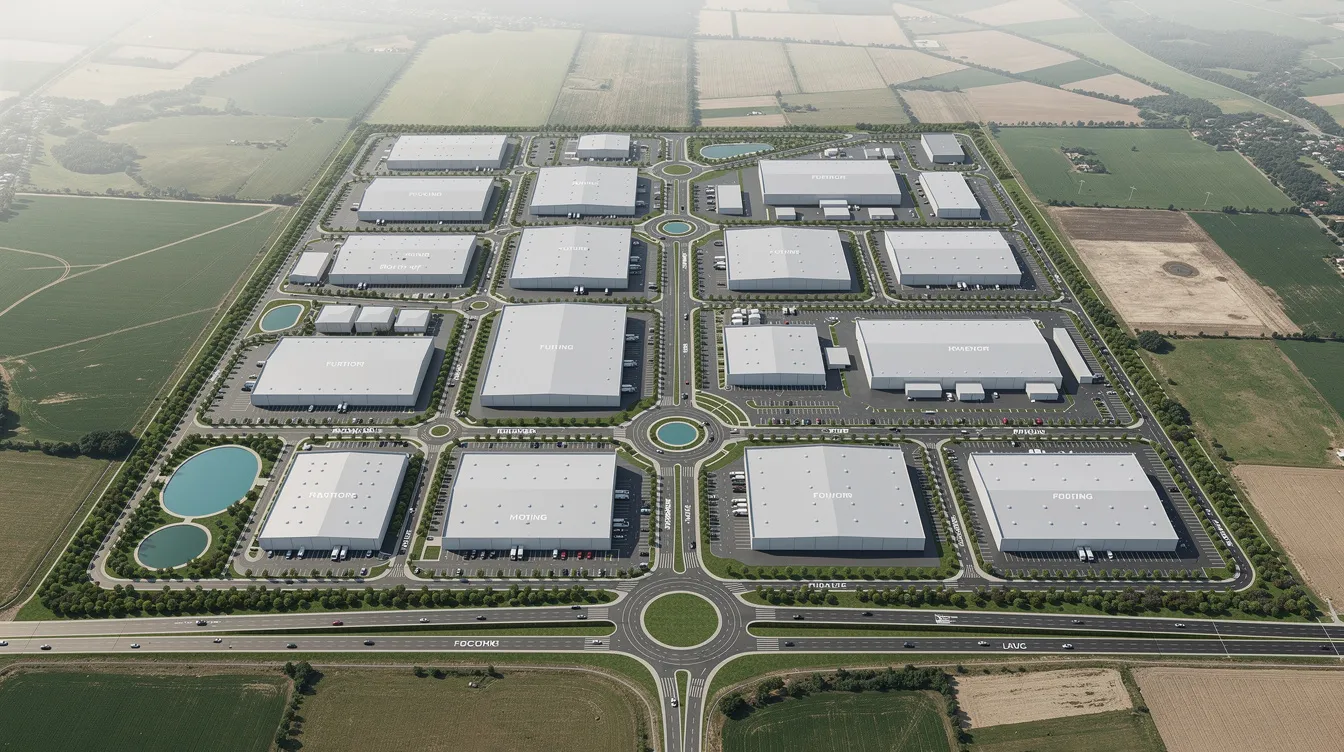
For recommended land areas and layout allocations for 30–200 KLPD ethanol plants – covering process blocks, storage, utilities, greenbelt and roads – readers may refer to Ethanol Plant Land, Building & Layout Requirements in India.
Early coordination between architects, process engineers and regulatory advisors avoids later changes in tank farm placement, ZLD units, greenbelt and truck movement corridors required by EC or Fire NOC conditions.
Factory Licence and Labour Law Registrations
Ethanol distilleries are covered under the Factories Act, 1948, and a factory license is mandatory under this legislation. Registration and licence must be obtained before occupancy and commercial operation.
Factory-licence prerequisites include:
- Approved building plans from competent local authority
- List of machinery including boilers and pressure vessels
- Installed horsepower or kW capacity
- Number of workers, shift details and safety systems including guarding, ventilation and lighting
Other labour-related registrations that should be planned in parallel include registration under applicable labour codes, ESI, EPF, professional tax (where applicable) and contractor registrations during the construction phase.
Factory inspectors may cross-verify environmental and fire-safety provisions – safe grain-handling, confined-space entry procedures, storage of chemicals used in ethanol production – while granting or renewing factory licences.
Water Source Permissions, Groundwater and Surface-Water Clearances
Reliable water supply and clear legal rights to withdraw water are crucial for ethanol production, ZLD operation and fire-fighting capacity. Water-source planning deserves strong attention from the feasibility stage itself.
- Depending on state and location, promoters may need permissions from the Central Ground Water Authority (CGWA), state groundwater authorities, irrigation departments or industrial development corporations.
- Some states require hydrogeological studies for borewell applications, and notified zones may have restrictions on groundwater extraction.
- A detailed water balance – in KLD and KL per KL of ethanol – must cover process water, cooling-tower make-up, boiler feed, domestic use and fire-water. This balance must align with EC conditions, SPCB consent terms and ZLD design commitments.
- Regulators increasingly cap freshwater consumption per KL of ethanol. Several recent EC approvals have limited freshwater drawl to approximately 4 KL per KL of ethanol produced.
- Unsynchronised water-source permissions – for instance, groundwater rejected after EC assumed borewell drawal – can force expensive redesigns and must be risk-assessed during feasibility.
Effluent Treatment, ZLD and Hazardous-Waste Authorisation
Modern grain-based ethanol plants are generally expected to operate with Zero Liquid Discharge systems, which are mandatory for ethanol distilleries in India, particularly for fuel ethanol supplied under government blending programmes. Ethanol plants must comply with waste management and effluent treatment regulations enforced by SPCBs and MoEFCC.
Typical components of effluent and waste-management systems include:
- Segregated drains for process and non-process streams
- Conventional ETP for biological treatment
- Condensate polishing units (CPU)
- Reverse osmosis (RO) and multiple-effect evaporation (MEE) systems
- Dryers or agitated thin-film dryers (ATFD) for achieving ZLD
- DDGS handling for solid co-product fraction
SPCBs may require separate authorisation for hazardous wastes such as used oil, ETP sludge, spent resins and membranes and chemical containers. Membership of an authorised Treatment, Storage and Disposal Facility (TSDF) may be required if on-site management is not approved.
Effluent infrastructure often accounts for 10–20% of total ethanol plant project cost and must be fully captured in DPR and environmental-clearance submissions. EC and CTO compliance conditions will typically stipulate online monitoring, record keeping and third-party analysis, all of which carry recurring costs.
Boiler, Steam, Power and Electrical Safety Approvals
Boilers, steam pipelines and power-distribution systems are central to ethanol plants and fall under multiple safety and environmental regulations. Utilities represent 25–40% of ethanol plant capital costs, and their design must be validated by qualified engineers.
Approvals typically required include:
- Boiler registration and certification under Indian Boiler Regulations (IBR), with the new Boilers Act, 2025 and IBR 2026 now in effect
- Periodic inspections by state boiler inspectorate
- Emission-compliance checks for boiler stacks against CPCB and SPCB norms
- Electrical inspector approval for HT/LT installations, transformers, earthing and cable routing
Boiler size, fuel type (biomass, coal, gas), cogeneration configuration and steam distribution must be presented consistently across DPR, EC and SPCB applications. For a detailed discussion, including how utilities can form 25–35% of operating costs and their regulatory implications, readers may refer to our dedicated article.
Incorrect or incomplete boiler and electrical design in early submissions can trigger queries from multiple authorities – SPCB, boiler inspectorate and electrical inspector – each causing independent delays.
Documents Required for Ethanol Plant Licences and Environmental Approvals
Most delays in the ethanol plant approval process arise from inconsistent or incomplete documentation rather than from the fundamental concept of ethanol manufacturing. The detailed project report includes analysis of raw material availability and capital investment and forms the backbone of most regulatory submissions.
Company and Promoter Documents:
- Certificate of incorporation, Memorandum and Articles of Association, board resolutions
- PAN, GST registration, KYC of promoters and directors
Land and Site Documents:
- Land-ownership or lease deeds with survey maps and mutation records
- Site coordinates with latitude and longitude
- Land-use and zoning certificates, CLU where applicable
Technical Documents:
- Detailed Project Report covering project cost, means of finance, ethanol production capacity, technology selection, different feedstocks, utilities and machinery
- Process-flow diagrams and mass and energy balance
- Plant layout with equipment list, elevation drawings and tank farm arrangement
Environmental and Safety Submissions:
- Water balance in KLD and KL/KL ethanol
- Effluent characteristics and ETP/ZLD design with vendor specifications
- Air emission calculations and stack height proposals
- Greenbelt plan and baseline environmental data
- Risk assessment and disaster-management plan
Financial Projections and Viability Documents:
- Projected P&L, cash flows, DSCR analysis, break-even analysis
- CMA Data for bank loan proposals
- Means of finance and promoter contribution details
These documents are often required concurrently by EC authorities, SPCB, banks and excise departments. Maintaining consistency across submissions is essential.
Step-by-Step Approval Roadmap for a 30–200 KLPD Grain-Based Ethanol Plant
While sequences vary by state and site, a well organized roadmap helps avoid dead-ends such as purchasing land where zoning, water or EC are unlikely to be granted. The end-to-end timeline for setting up an ethanol plant is typically 30–48 months, and capacity planning for ethanol plants typically ranges from 30 KLPD to 500+ KLPD.
Phase 1 – Pre-Investment Planning:
- Initial concept and market assessment aligned with the industry outlook for biofuels and renewable energy
- Detailed feasibility and regulatory mapping, including assessment of environmental regulations applicable to the project
- Preliminary land shortlisting with zoning and water-source checks
- Preparation of DPR and technical-environmental annexures
Phase 2 – Pre-Construction Approvals:
- Filing for environmental clearance where applicable through PARIVESH
- Obtaining land-use conversion and local-body NOCs
- Simultaneously initiating SPCB CTE, fire-safety design review and preliminary PESO consultations for tank farm concept
Phase 3 – Construction and Installation:
- Post-EC detailed engineering and procurement
- Final CTE grant
- Building-plan sanction and factory plan scrutiny
- Major civil works and structural construction
- Equipment erection and commissioning, including fermentation, distillation, dehydration units and machinery
Phase 4 – Pre-Operation and Commissioning:
- Safety-system testing and compliance verification
- SPCB CTO application with trial-run data
- State Excise operational permissions and PESO licences
- Trial runs and commercial operation commencement
Certain approvals – EC, CTE, distillery licence – are often treated as conditions precedent by lenders. Sequencing should be discussed early with project finance bankers and advisors to synchronise financing and construction.
Illustrative Timelines and Interdependencies
Statutory timelines and actual processing times differ by authority, workload and completeness of submission. Promoters should avoid treating any timeline as a guarantee. The average time to establish an ethanol plant in India can range from 18 to 24 months for the approval and construction phase, depending on project complexity and state.
- Feasibility and DPR preparation: typically 2–4 months
- Environmental clearance process: potentially 12–18 months for complex projects; simpler B2 category projects may take less, but baseline studies and documentation still require several months
- SPCB CTE: typically 2–6 months depending on state
- Building-plan approval and Fire NOC: often overlapping with EC and CTE stages
- Equipment procurement, civil works, erection and commissioning: 12–18 months
- SPCB CTO and excise licence: typically 2–4 months after commissioning readiness
Key interdependencies:
- EC is often required before CTE can be granted
- Land-use conversion and site-ownership clarity are needed before both EC and CTE
- Boiler and tank-farm design must be stable before Fire NOC and PESO submissions
- Factory licence depends on completion and certification of buildings and safety systems
Promoters should maintain a consolidated approvals tracker and Gantt-chart style bar diagram so that lenders, EPC vendors and internal teams stay aligned on realistic commissioning dates.
Ethanol Plant Licence and Environmental Clearance Costs – Budgeting Considerations
While individual government fees may be modest compared to overall project outlay, the combined cost of studies, consultants, pollution-control infrastructure and delays can be material. Ethanol plant setup costs range from INR 50–600 crore depending on capacity and configuration. Typical capital cost for a 60–100 KLPD molasses plant is INR 50–150 crore, while a 200–500 KLPD grain-based plant costs INR 200–600 crore.
| Cost Head | 30 KLPD | 60 KLPD | 100 KLPD | 200 KLPD |
|---|---|---|---|---|
| Statutory application fees (EC, SPCB, PESO, Fire, Factory) | Modest – state-specific | Modest – state-specific | Moderate – state-specific | Moderate – state-specific |
| Environmental studies, baseline data, modelling | Budget provision required | Budget provision required | Significant | Significant |
| Legal, technical and environmental consultants | Project-specific | Project-specific | Project-specific | Project-specific |
| Water treatment, ETP, ZLD capex | Notable share of fixed capital | Notable share of fixed capital | 10–20% of project cost | 10–20% of project cost |
| Boiler, emission-control and safety capex | Included in utilities | Included in utilities | 25–40% of capital cost | 25–40% of capital cost |
| Recurring monitoring, sampling, compliance | Annual provision | Annual provision | Annual provision | Annual provision |
For a detailed breakdown of how environmental and approval-related infrastructure fits within total project cost and means of finance, readers may refer to our dedicated article. Environmental compliance infrastructure may account for a notable share of total fixed capital and should be provided for explicitly rather than treated as miscellaneous.
Promoters should also budget for interest during construction and contingency to cover potential extension of approval timelines. Ethanol projects typically target an IRR of 15–20% and payback of 6–9 years – targets that can shift materially if interest charged during an extended construction period is underestimated. A Chartered Accountant-led DPR should distinguish between one-time approval costs, ongoing compliance expenses and periodic renewals, so that lenders see realistic profitability under regulatory-compliant operations.
Regulatory Approvals and Bank Loan Sanction
Banks and financial institutions evaluate regulatory risk carefully when appraising ethanol projects. Incomplete approvals can restrict or delay term-loan disbursement, directly affecting project implementation.
- A comprehensive, bankable DPR must map all required ethanol plant approvals, expected timing, associated costs, and demonstrate how these are integrated into project cost, means of finance and implementation schedule.
- Lenders may grant in-principle sanction based on a robust DPR and promoter strength, but often make key approvals – EC, CTE, distillery licence – conditions precedent to first or subsequent disbursements.
- Financing options may include government interest subvention schemes for ethanol projects, but conservative assumptions on subsidy realisation, approval timelines and interest subvention help protect DSCR under stress scenarios.
- For detailed guidance on financial projections, working capital and DSCR analysis in the context of ethanol projects, readers may refer to our dedicated article.
- Transparent discussion of regulatory status with lenders, backed by proper documentation and correspondence from authorities, enhances credibility and can smooth the appraisal process.
Impact of Approval Delays on Project Economics and DSCR
In ethanol projects costing ₹100–500 crore, time overruns caused by delayed licences can materially inflate interest during construction, EPC costs and even feedstock contracts, shifting project IRR and DSCR downward.
Typical financial impacts include:
- Additional months of interest charged during construction – often the single largest avoidable cost overrun
- Extended overheads for project staff, site supervision and insurance
- Escalation in construction and machinery costs if supplier quotations expire
- Late start of revenue generation from ethanol sales and by-products like DDGS
- Potential revision of ethanol supply contracts with oil marketing companies
Feasibility models should include sensitivity analyses for 6–12 month delays in key approvals, showing promoters how DSCR, payback period and IRR change under realistic stress scenarios. Lenders view robust regulatory planning and realistic contingency budgeting as positive risk mitigants, improving the project’s bankability as captured in CMA Data and term-loan proposals.
Common Reasons for Ethanol Plant Approval Delays
Many regulatory setbacks are predictable and avoidable through pre-investment due diligence and project planning discipline.
Common causes of delay:
- Selecting land without confirming industrial zoning, buffer-zone requirements or proximity to ecologically sensitive areas
- Underestimating water-source limitations or failing to secure groundwater permissions early
- Incorrect classification of the project under EIA Notification categories
- Incomplete or inconsistent technical data across EC, CTE and excise applications
- Weak ETP/ZLD design or insufficient land allocation for environmental infrastructure
- Frequent design changes in capacity, feedstock mix or utility configuration after EC or CTE application, causing authorities to seek fresh clarifications
Preventive measures:
- Early regulatory mapping aligned with site selection
- Alignment between EPC process design and submission documents
- Engaging experienced environmental consultants for baseline studies and EIA documentation
- Using a CA-led DPR to maintain financial and technical coherence across all filings
- Completing a structured ethanol distillery feasibility study that explicitly covers regulatory and environmental risks before committing large equity
Ethanol Plant Statutory Compliance Checklist (Pre-Construction to Operation)
The following table serves as a practitioner-friendly summary to help promoters track compliance readiness across different project stages:
| Approval | Authority | Applicability | When Required | Key Documents | Status to Verify |
|---|---|---|---|---|---|
| Environmental Clearance | MoEFCC / SEIAA | Capacity/category dependent | Pre-construction | Form 1/1A, EIA, DPR, affidavit | Applied / Granted / NA |
| SPCB CTE | State Pollution Control Board | All plants | Pre-construction | DPR, layout, water balance, ZLD design | Applied / Granted |
| SPCB CTO | State Pollution Control Board | All plants | Pre-commissioning | Trial-run data, emission reports | Applied / Granted |
| Distillery / Excise Licence | State Excise Dept | All plants | Pre-commissioning | EC, CTE, layout, security plan | Applied / Granted |
| Fire NOC | Fire Department | All plants | Pre-construction / pre-commissioning | Building plans, fire systems design | Applied / Granted |
| Factory Licence | Factory Inspectorate | All plants | Pre-operation | Building approval, machinery list, safety | Applied / Granted |
| PESO Licence | PESO | Storage-dependent | Pre-commissioning | Tank drawings, dyke walls, risk assessment | Applied / Granted / NA |
| Land-Use Conversion | Revenue / Planning Authority | Non-industrial land | Pre-construction | Land records, NA permission | Applied / Granted / NA |
| Building Plan Sanction | Municipal / IDA | All plants | Pre-construction | Architectural drawings, layout | Applied / Granted |
| Groundwater Permission | CGWA / State Authority | Borewell-dependent | Pre-construction | Hydro-geological report | Applied / Granted / NA |
| Boiler Registration | State Boiler Inspectorate | All plants with boilers | Pre-commissioning | IBR design approval, inspection | Applied / Granted |
| Electrical Inspector Approval | State Electrical Inspectorate | All plants | Pre-commissioning | HT/LT design, earthing | Applied / Granted |
| Hazardous Waste Authorisation | SPCB | Waste-type dependent | Pre-commissioning / recurring | Waste inventory, disposal plan | Applied / Granted / NA |
| Labour Registrations (ESI, EPF) | Respective authorities | All employers | Pre-operation | Employee details, registration forms | Applied / Granted |
Promoters should periodically review and update this checklist as laws evolve, especially when they expand ethanol production capacity, change feedstock mix or modify plant configuration.
Role of DPR, Feasibility Study and Professional Advisory in Regulatory Planning
A robust DPR and feasibility study create the backbone for consistent technical, environmental and financial submissions to multiple authorities. The whole process of regulatory compliance benefits from a single, coherent source document that all stakeholders – regulators, lenders, EPC contractors – can reference.
Core functions of a professionally-prepared DPR include:
- Defining ethanol production capacity and mapping different feedstocks and ethanol production routes
- Sizing utilities and ZLD systems with validated engineering data
- Estimating project cost, means of finance, working capital and financial projections
- Scheduling implementation with regulatory milestones integrated into the project timeline
- Providing sensitivity analysis for delays, cost escalation and feedstock-price volatility
CA Manish Gugliya’s project-finance perspective helps integrate regulatory-cost heads, interest during construction, contingency and interest subvention assumptions into realistic financial projections and DSCR analysis, aligned with bank appraisal criteria.
Project Report Bank offers customised DPR preparation, bank finance DPR and loan proposal assistance, feasibility-study services and financial modelling. We do not issue or guarantee any government licences or clearances. Our role is to ensure that the documentation supporting your ethanol project is technically sound, financially defensible and aligned with the requirements of regulators and lenders.
Promoters should plan their regulatory strategy in tandem with financial closure and EPC selection, rather than as an afterthought once construction has started.
Frequently Asked Questions on Ethanol Plant Licences in India
The following FAQs address common doubts not fully covered in the sections above. Answers reflect practical advisory perspective and acknowledge state-wise variations.
What are the main licences required to start a 60–100 KLPD grain-based ethanol plant in India?
For a typical 60–100 KLPD grain-based ethanol plant, core approvals required generally include appropriate land-use permissions, environmental clearance where applicable under EIA Notification 2006, state pollution control board consent to establish CTE and later consent to operate CTO, a state excise or distillery licence for production, storage and movement of ethanol, factory registration under the Factories Act, Fire NOC, PESO approvals for tank farm and loading or unloading facilities where triggered, water-source permissions and boiler and electrical safety certifications. Exact requirements differ by state and site conditions, and promoters should undertake a formal regulatory mapping before committing to land purchase or construction.
Is Environmental Clearance always mandatory for grain-based ethanol projects?
Distilleries and organic-chemical projects fall within the EIA Notification schedules, but whether a particular grain-based ethanol plant requires EC – and at what category – depends on parameters such as capacity, configuration, feedstock, location and applicable exemptions at the time of filing. Some projects producing fuel ethanol exclusively for the EBP programme with ZLD may qualify for Category B2 under specific MoEFCC notifications, but this is not automatic. Promoters should perform a formal applicability check using current notifications and, where necessary, seek professional environmental advisory.
Can I start civil construction for my ethanol plant before getting Environmental Clearance or CTE?
Starting construction or significant site preparation before obtaining required prior approvals – such as environmental clearance where applicable and SPCB consent to establish – can attract regulatory action and may create serious issues during later appraisal by authorities and banks. Promoters should restrict themselves to preliminary activities such as surveys, soil testing and non-permanent structures until prior approvals are in place, and should take site-specific legal advice if in doubt.
Does a fuel ethanol plant require the same excise licence as a potable alcohol distillery?
Excise frameworks vary widely by state. In many states, fuel ethanol supplied to oil marketing companies is regulated under a distinct category from potable alcohol, with different procedures, security requirements and taxation treatment. Plants producing ethanol for industrial supply or for sugar mills converting B heavy molasses or C heavy molasses operate under different excise classifications than plants producing ENA for beverages. Promoters must review their state’s excise rules and may need specialised distillery or industrial-alcohol licences tailored to fuel ethanol rather than licences designed for IMFL or ENA-based beverages. Companies like Praj Industries and other technology providers often guide promoters on process design, but the excise licence remains the promoter’s responsibility.
When should I approach banks for project finance – before or after getting approvals?
Serious promoters typically prepare a bankable DPR and feasibility study, initiate discussions with banks in parallel with key approval applications, and aim for in-principle sanction while EC, CTE and key permits are under process. Lenders often disburse only after specified conditions precedent – such as EC grant, CTE or distillery licence – are met. This means regulatory planning and financing strategy must be synchronised from the outset to minimise interest during construction and avoid cash-flow strain. The supply of complete, consistent documentation to both regulators and banks is essential for maintaining project momentum and sustainable growth of the venture.
Professional Advisory by CA Manish Gugliya
Regulatory approvals are not an afterthought in ethanol project planning. They define when construction can begin, when revenue starts, and whether financial projections remain defensible. A well structured DPR that integrates regulatory milestones with realistic financial modelling is the foundation of a bankable ethanol project.
At Project Report Bank, we prepare customised Detailed Project Reports, feasibility studies, CMA Data, financial projections and bank-finance proposals for ethanol projects and other industrial ventures. Our work is based on project-specific analysis, practical assumptions and professional financial assessment – not generic templates.
If you are planning an ethanol project and need expert guidance on DPR preparation, project finance advisory or financial modelling, you may connect with us through WhatsApp for a preliminary discussion.
CA Manish Gugliya FCA, DISA (ICAI) More than 20 years of professional experience in Detailed Project Reports, project finance, CMA Data, financial projections and industrial project advisory.