Key Takeaways
Ethanol plant capacity planning is one of the most consequential decisions an Indian promoter will make before committing capital to a grain based ethanol project. Here are the core messages from this article:
- Optimal ethanol plant capacity depends on feedstock security, confirmed market offtake, financing strength and risk tolerance. A larger plant is not automatically a more profitable investment.
- KLPD (kilolitres per day) translates into annual ethanol production only after adjusting for realistic operating days (320–340) and capacity utilisation (typically 70–90%). A 100 KLPD plant at 85% utilisation produces roughly 28 million litres per year, not 33 million.
- Grain availability within the procurement radius, utility sizing, distillers dried grains (DDGS) realisations and policy stability are critical to the financial feasibility of ethanol plants in India.
- India’s installed ethanol production capacity has increased over fourfold to 1,810 crore litres, but demand under E20 is approximately 1,300–1,400 crore litres, creating a surplus that new entrants must factor into capacity planning.
- Project Report Bank, led by CA Manish Gugliya, FCA, DISA (ICAI), prepares customised DPRs, financial models and CMA Data for 30–200 KLPD ethanol plants. Reach out via WhatsApp for a professional consultation; bank-finance DPR services start around ₹25,000 depending on scope and complexity.
Introduction – Why Ethanol Plant Capacity Planning Is Important
India’s ethanol blending programme has moved from under 1.5% blending in 2013–14 to achieving the government’s ambitious target of 20% ethanol blending with petrol (E20) by ESY 2025–26, ahead of schedule. The country now has roughly 2,000 crore litres of installed capacity across grain based and molasses-based distilleries. Yet ethanol production capabilities across many plants remain underutilised, with grain-based facilities averaging around 57% capacity utilisation over recent years. The ethanol market in India is projected to grow to USD 11.8 billion by 2034, but growth must be matched by disciplined capacity planning.
Deciding between a 30, 60, 100, 150 or 200 KLPD plant is a strategic decision that shapes total project cost, working capital needs, debt servicing and long-term profitability. Higher production capacity reduces unit fixed costs but magnifies feedstock, market and financing risks if capacity utilisation falls below plan. The link between plant size and availability of grains such as maize, broken rice and damaged food grains within a viable procurement radius is often underestimated. Environmental compliance, including effluent treatment and ZLD norms, adds progressively to both capex and opex as capacity increases. A typical ethanol plant requires 12–18 months from approval to commissioning, and some larger projects have needed 20 months from groundbreaking to first ethanol dispatch.
DPRs are essential for ethanol plant project planning. They include financial modeling and project feasibility analysis, facilitate access to bank financing for ethanol plants, and help secure government subsidies for ethanol projects. This article provides a professional decision-making guide for investors and promoters evaluating ethanol plant capacity in India.
Understanding Ethanol Plant Capacity – What Does KLPD Mean?
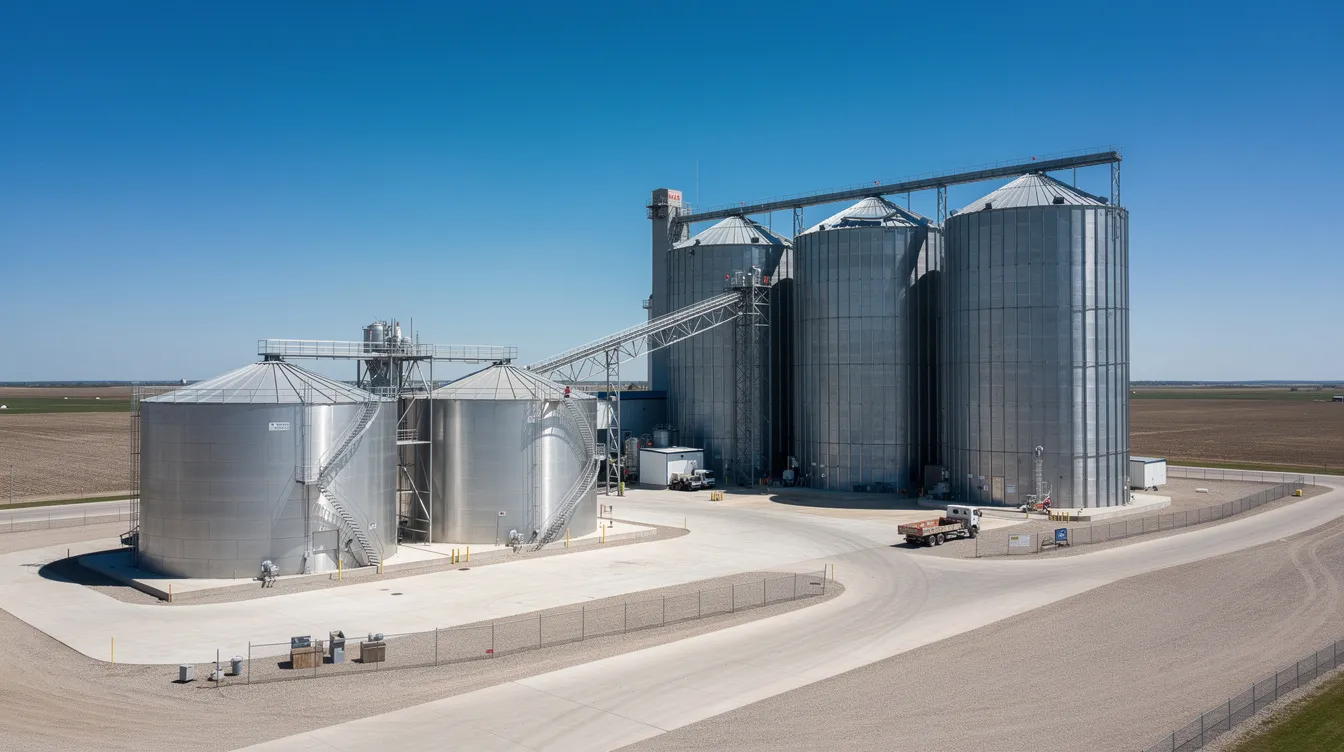
KLPD stands for kilolitres per day and represents the rated daily ethanol production capacity of a distillery under standard operating conditions. One KLPD equals 1,000 litres per day. The distinction between installed capacity and actual production is important: nameplate KLPD represents design capability, while sustainable operating capacity reflects what the plant achieves after accounting for maintenance shutdowns, process upsets and feedstock disruptions.
Annual ethanol production is calculated as:
Annual production (litres) = Rated KLPD × 1,000 × Planned operating days × Capacity utilisation %
Typical operating days for grain based ethanol plants in India range from 320 to 340 days per year, with industry DPRs commonly assuming 330 days. For a 100 KLPD plant operating 330 days at 85% utilisation, annual output equals approximately 28.05 million litres. At 70% utilisation, this drops to about 23.1 million litres, and at 90%, it rises to roughly 29.7 million litres. Capacity planning for ethanol production facilities requires balancing feedstock availability with realistic utilisation expectations. Lenders and investors focus on achievable production, not the installed capacity printed on a DPR cover page.
Ethanol Plant Capacity Options – 30, 60, 100, 150 and 200 KLPD
In India, typical grain based ethanol plant sizes fall in the 30–200 KLPD range, with 30 KLPD suited to smaller regional entrepreneurs and 200 KLPD or above for well-capitalised corporate or integrated agro players. Proven process technologies scale differently in ethanol production, and feedstock availability is critical for preventing plant downtime at every scale. None of these capacities is automatically profitable; each must be evaluated through a project-specific DPR, feasibility study and financial model.
30 KLPD Ethanol Plant
A 30 KLPD ethanol plant represents an entry-level commercial grain based distillery capacity. A 30 KLPD ethanol plant needs an investment of approximately ₹50–60 crore including land, building, plant and machinery, and working capital. At a maize yield of roughly 380–400 litres per tonne, the plant requires about 75 tonnes of grain daily. Land requirements are typically 8–12 acres. Per-KLPD cost is relatively higher due to limited economies of scale, but bank exposure limits are easier to manage and promoter equity requirements remain moderate. Constraints include higher unit production cost and tighter DSCR if ethanol realisation softens.
60 KLPD Ethanol Plant
A 60 KLPD plant offers a practical mid-size capacity that balances regional feedstock supply with better economies of scale. Published DPR examples show total investment around ₹130–175 crore for a greenfield plant with full compliance scope including ZLD and DDGS drying. Daily grain intake rises to approximately 150 tonnes, requiring larger boiler and turbine systems, expanded fermentation and distillation sections, and higher technical manpower. Working capital requirements increase proportionally. Many 60 KLPD projects interest regional agro groups and mid-sized industrial investors with moderate risk appetite. Plant layout can often accommodate later expansion to 90–120 KLPD with measured additional capex.
100 KLPD Ethanol Plant
The 100 KLPD capacity serves as a commonly preferred benchmark in India’s grain based ethanol segment. Total funding typically ranges from ₹230–310 crore for a greenfield plant with full scope. ICRA research indicates that setting up a 1G ethanol plant costs approximately ₹1.3–1.6 crore per KLPD, with 71–76% allocated to plant and machinery. Daily feedstock requirement at roughly 400 litres per tonne yield is about 250 tonnes of grain. These plants must secure long-term offtake visibility and multi-feedstock operational flexibility to manage price and availability risks. Ethanol production creates 200–300 jobs per 100 KLPD plant, contributing meaningfully to local employment.
150 KLPD Ethanol Plant
A 150 KLPD ethanol plant is a large regional facility suited to promoters with strong balance sheets, established agro-processing networks or backing from industrial groups. Daily grain intake reaches approximately 375 tonnes, requiring procurement from multiple districts, suitable railway or road connectivity and well-designed silos. Boiler capacity, power generation, fermentation trains and cooling and water treatment loads are all significantly higher. Commercial risks increase as the project depends on high capacity utilisation (80–90%) to justify the investment, and vulnerability to structural feedstock shortages or regulatory shifts becomes more pronounced. Designing plant and utilities to step up to 200 KLPD later can provide expansion flexibility if future conditions support scaling.
200 KLPD Ethanol Plant
A 200 KLPD ethanol plant is a major facility, typically implemented by large integrated agro companies, grain-based distillery groups, or sugar mills diversifying from molasses. Total funding may range from ₹360–480 crore including full scope. A new corn or grain-based distillery at this scale will have a capacity of 200 KLPD, requiring roughly 500 tonnes of grain daily at standard maize yields. Such plants require robust capital structure, multi-feedstock capability and potentially dual product mix including fuel ethanol and industrial grade. Capital expenditure must align with available financing and risk tolerance. While unit production cost can be very competitive, the risk of under-utilisation or policy changes is higher and must be stress-tested in the DPR.
Comparison of 30 KLPD to 200 KLPD Ethanol Plants
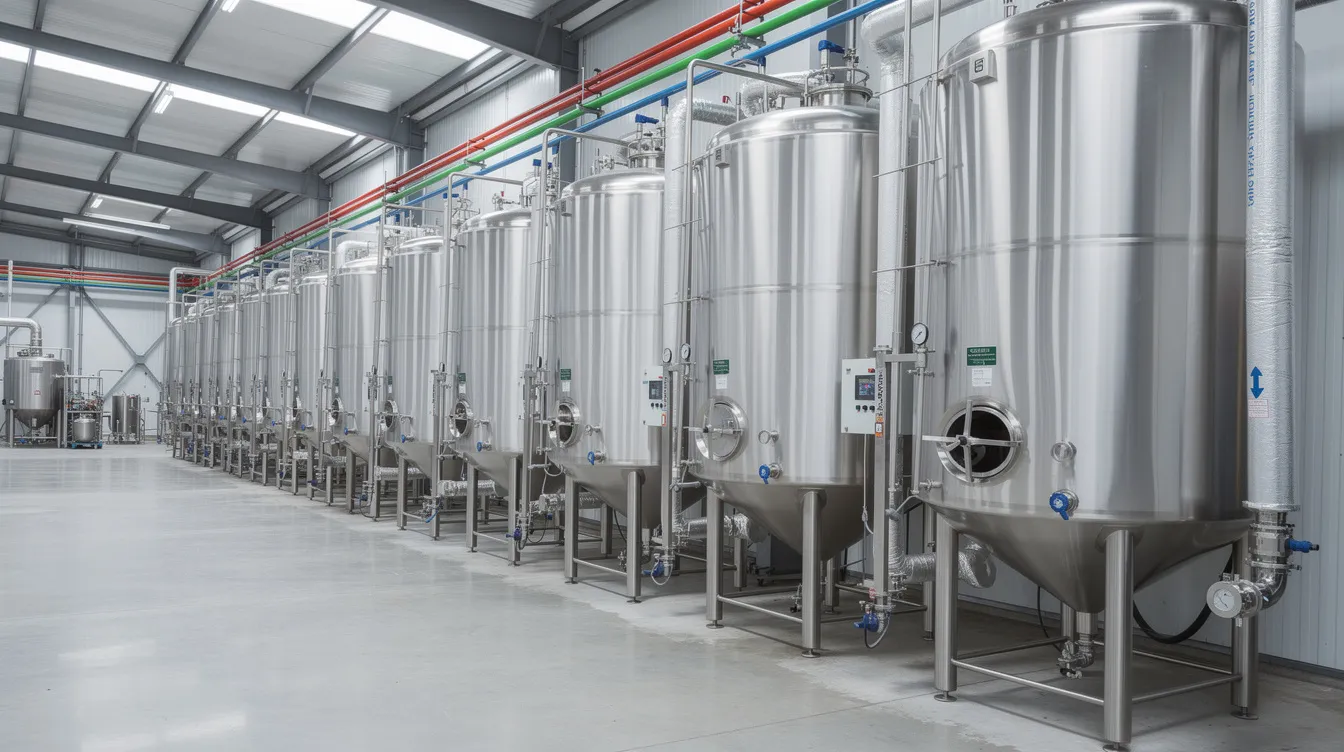
The following table provides an illustrative comparison across capacity bands. All figures are indicative and based on typical grain-based configurations; actual numbers depend on feedstock, technology, location and compliance requirements.
| Parameter | 30 KLPD | 60 KLPD | 100 KLPD | 150 KLPD | 200 KLPD |
|---|---|---|---|---|---|
| Daily ethanol output (litres) | 30,000 | 60,000 | 100,000 | 150,000 | 200,000 |
| Annual production (330 days, 80%) | ~7.9 Mn L | ~15.8 Mn L | ~26.4 Mn L | ~39.6 Mn L | ~52.8 Mn L |
| Daily grain requirement (~400 L/t) | ~75 tonnes | ~150 tonnes | ~250 tonnes | ~375 tonnes | ~500 tonnes |
| Land requirement (approx.) | 8–12 acres | 12–18 acres | 15–20 acres | 20–25 acres | 25–30+ acres |
| Investment intensity (per KLPD) | Higher | Moderate–High | Moderate | Moderate–Low | Lower |
| Working capital intensity | Low–Moderate | Moderate | Moderate–High | High | Very High |
| Expansion flexibility | Limited | Good | Good | Moderate | Limited |
Economies of scale clearly reduce per-litre fixed costs as capacity rises, but absolute investment, debt burden and feedstock procurement complexity increase proportionally. Regulatory compliance is influenced by plant size and emissions profiles, with larger plants facing more stringent environmental scrutiny.
Raw Material Requirements for Different Ethanol Plant Capacities
India’s grain based ethanol plants primarily use maize, broken rice, and surplus or damaged food grains such as wheat or paddy permitted under government policy. Ethanol can also be produced from sugarcane juice and molasses through sugar mills, though this article focuses on the grain route. Maize and broken rice are available year-round for ethanol production, making them preferred feedstocks for continuous operations. Agricultural residues like rice straw and wheat straw are low-cost feedstocks under development for second-generation processes. Damaged food grains can be used to prevent wastage in ethanol production while supporting the country’s food security objectives.
Conversion yields vary by feedstock: maize yields approximately 380–400 litres per tonne, while broken rice with higher starch content (68–72%) can yield 410–460 litres per tonne. Moisture content, starch percentage and fermentation efficiency directly affect actual output. For promoters evaluating maize-based projects, a Maize-Based Ethanol Plant Project Report & DPR provides detailed feedstock and conversion analysis. Similarly, for rice-based configurations, a Broken Rice & Damaged Foodgrain Ethanol Plant DPR addresses regulatory eligibility and yield assumptions.
Illustrative feedstock calculations:
- 100 KLPD using maize (yield ~380 L/t, 330 days, 85% utilisation): Daily grain = ~263 tonnes; annual grain ≈ 73,700 tonnes.
- 200 KLPD using broken rice (yield ~460 L/t, 330 days, 80% utilisation): Daily grain = ~435 tonnes; annual grain ≈ 114,800 tonnes.
Feedstock flexibility is a significant advantage. A Multi-Feedstock Ethanol Distillery Project Report helps promoters design plants capable of switching between maize, broken rice and permitted damaged grains depending on seasonal price and supply conditions.
Land, Building and Infrastructure Requirements
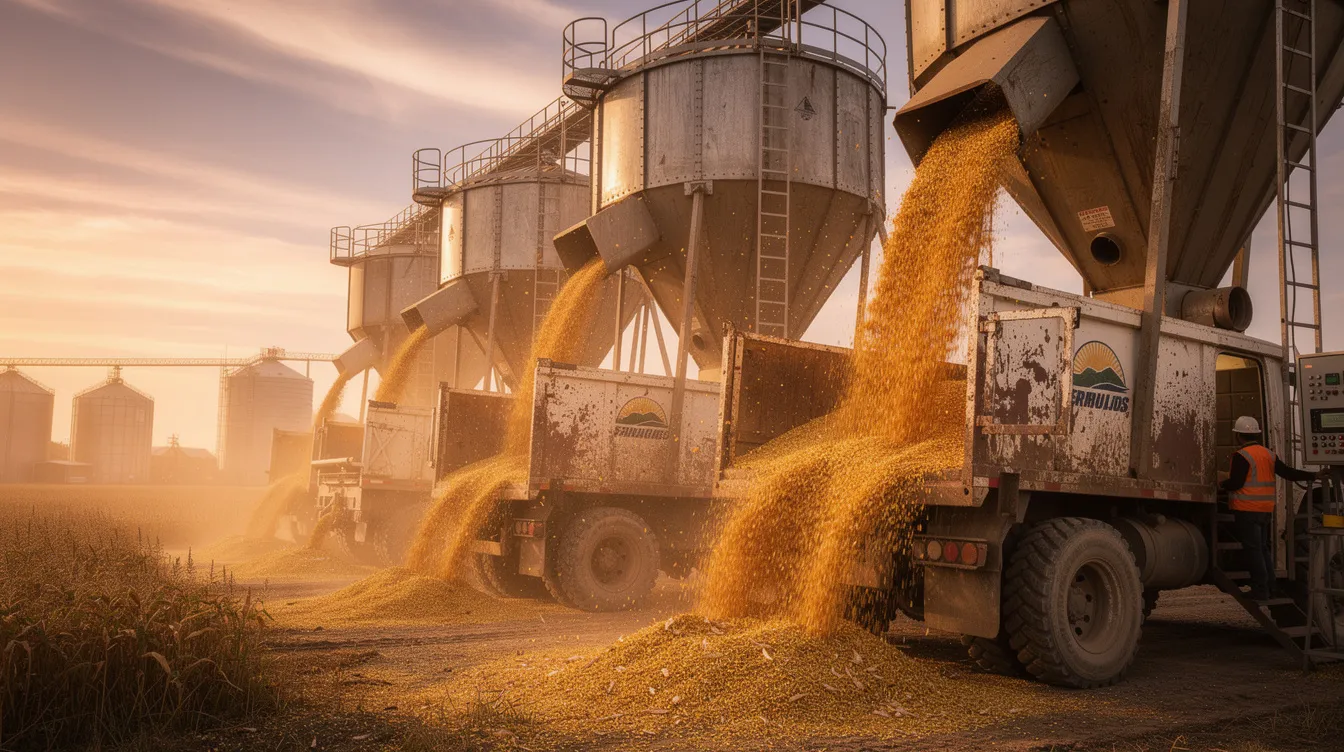
Land needs grow with ethanol production capacity but also depend on technology layout, statutory buffer zones, fire safety norms and future expansion provision. Key functional blocks include grain unloading and storage, milling and liquefaction, fermentation tanks, distillation and dehydration sections, DDGS drying and storage, boiler house, utilities (cooling towers, water treatment, compressed air), ETP/ZLD systems, finished ethanol storage and dispatch bays, administrative buildings and weighbridge. A compact 30 KLPD plant might fit within 8–12 acres, while a 200 KLPD facility may require 25–30 acres or more. Approvals from state industrial authorities, Fire Department and Pollution Control Board influence site development standards. Logistics and transportation access are essential for cost-effective shipping of products and procurement of feedstock.
Utility Requirements and Plant Sizing
Utilities including steam, power, water, cooling and effluent treatment must be sized for peak load and anticipated capacity utilisation, with margin for future expansion. High-capacity plants need robust infrastructure for utilities and process heating. Captive power generation through cogeneration using rice husk or coal-fired boilers becomes standard in larger distilleries. Process water, cooling water and recycling systems are critical, as ethanol expansion increases wastewater and stillage generation. Designing for thermal and energy integration helps maintain efficiency during production surges. Capacity planning requires evaluating utility loads and regulatory mandates, including ZLD compliance where mandated by state pollution control boards.
For detailed equipment specifications, the article on Ethanol Distillery Machinery, Equipment & Cost covers process equipment across the Grain-Based Ethanol Manufacturing Process & Flow Chart. Utility design should remain slightly ahead of current capacity where promoters foresee expansion, to avoid expensive retrofits.
Ethanol Plant Investment Cost vs Production Capacity
Ethanol plant investment comprises land and site development, civil works, process plant and machinery, utilities and offsites, storage, pre-operative expenses, interest during construction, contingencies and margin money for working capital. Cost per KLPD typically declines as capacity moves from 30 to 200 KLPD due to economies of scale, but absolute rupee investment and debt burden rise sharply. For reference, a 300 KLPD ethanol plant in Bihar had a CapEx of INR 380 Crore, while another feasibility study for a large-scale project required an investment of INR 400 Crore. Working capital often forms 10–25% of overall funding and must be carefully assessed alongside term loans.
Project Report Bank prepares capacity-wise financial models for 30, 60, 100, 150 and 200 KLPD options, allowing promoters to compare DSCR, IRR and payback before finalising project size.
Capacity Utilisation and Annual Ethanol Production
Capacity utilisation represents actual ethanol output as a percentage of rated capacity over operating days. Market demand for fuel-grade ethanol dictates the baseline volume, and the Ethanol Blended Petrol Program guarantees procurement from oil marketing companies including Indian Oil, Bharat Petroleum and Hindustan Petroleum. One reference facility achieved 78% utilization by month 15 of operations, illustrating a realistic stabilisation curve.
| KLPD | 60% (330 days) | 80% (330 days) | 90% (330 days) | 100% (theoretical) |
|---|---|---|---|---|
| 30 | 5.94 Mn L | 7.92 Mn L | 8.91 Mn L | 9.90 Mn L |
| 60 | 11.88 Mn L | 15.84 Mn L | 17.82 Mn L | 19.80 Mn L |
| 100 | 19.80 Mn L | 26.40 Mn L | 29.70 Mn L | 33.00 Mn L |
| 150 | 29.70 Mn L | 39.60 Mn L | 44.55 Mn L | 49.50 Mn L |
| 200 | 39.60 Mn L | 52.80 Mn L | 59.40 Mn L | 66.00 Mn L |
The 100% scenario is for theoretical comparison only. Conservative assumptions of 80–90% are recommended for financial planning. Lower-than-planned utilisation pressures EBITDA, DSCR and loan repayment schedules, reinforcing the need for sensitivity analysis in every DPR.
DDGS Production and By-Product Planning
Distillers dried grains with solubles (DDGS) is the key by-product of grain based ethanol production, widely used as high-protein animal feed. Larger capacities (100–200 KLPD) generate significant DDGS volumes requiring marketing tie-ups with feed manufacturers. Quality factors including protein content, moisture and particle size affect selling price. At scale, DDGS sales meaningfully support operating margins and partially cushion periods when ethanol realisations soften or grain prices spike. Other by-products such as CO₂ recovery, where installed, can further improve project returns. Every DPR should separately model by-product revenues with realistic per-tonne assumptions rather than uniform pricing across states.
Financial Feasibility of 30–200 KLPD Ethanol Plants
Financial feasibility integrates technical assumptions with market factors to evaluate viability. Revenue drivers include ethanol sale price under OMC contracts, DDGS realisations and any industrial or potable grade diversification. The largest operating cost is feedstock, followed by power and fuel, chemicals, enzymes, salaries, water and environmental compliance.
Standard metrics in DPRs and bank appraisals include EBITDA margin, DSCR, IRR, payback period and break-even capacity utilisation. Financial modelling for one reference project showed a post-tax IRR of 21.6 percent, with Year-2 revenue reaching INR 520 Crore. A feasibility study evaluated four candidate locations in Bihar to identify optimal site selection. These numbers demonstrate that returns are achievable but depend entirely on project-specific conditions and process efficiency. For technology and process considerations, refer to Ethanol Production Technology – Dry Milling, Fermentation & Distillation.
Sensitivity analysis showing how DSCR and payback shift when utilisation drops to 60% or grain prices rise 20–30% is not optional-it is essential for any ethanol DPR to be taken seriously by lenders.
Bank Finance and DPR Requirements for Capacity Planning
Banks and financial institutions funding ethanol plants expect a comprehensive, bankable Detailed Project Report justifying proposed capacity and project structure. A robust DPR must cover promoter profile, justification for selected KLPD based on feedstock and demand analysis, detailed project cost, means of finance, working capital assessment, financial projections for at least 7–10 years, DSCR analysis, break-even, IRR and sensitivity scenarios, marketing and offtake plan, and implementation schedule. DPRs facilitate access to bank financing for ethanol plants and help secure government subsidies.
The Interest Subvention Scheme offers interest benefits on ethanol production loans, reducing effective borrowing costs. Bihar’s Biofuels Production Promotion Policy provides capital subsidies for distilleries in eligible locations. Viability Gap Funding supports ethanol project financial viability where upfront costs are high relative to initial cash flows.
For professional structuring, Project Finance Advisory & Loan Structuring Services and Bank Finance DPR & Loan Proposal Assistance from Project Report Bank cover CMA Data, term loan structuring and security documentation.
Ethanol Industry Outlook and Capacity Planning Risks in 2026
The government targets 20% ethanol blending with petrol, and this milestone has been achieved ahead of schedule. India’s ethanol production capacity increased to 1,810 crore litres, but demand under E20 plus industrial and other uses is approximately 1,300–1,400 crore litres, creating a surplus of roughly 600–700 crore litres annually. No decision has yet been made to move beyond E20, and any higher blending mandates would require further technical studies. This overcapacity risk should directly influence capacity planning and financial structuring for new ethanol plants.
Grain-price fluctuations driven by monsoon variation, export bans, MSP decisions and competition from feed, starch and public distribution requirements remain a persistent risk. Environmental compliance costs continue rising. Existing competition from molasses-based and grain-based distilleries means new entrants must realistically assess whether local demand and logistics support another large facility. Ethanol plant promoters should also explore how India’s ethanol blending programme interacts with sustainability and carbon emissions reduction objectives. For integrated sugar groups comparing routes, Grain-Based vs Molasses-Based Ethanol – Cost & Viability provides a useful comparison framework.
Which Ethanol Plant Capacity Is Suitable for Investors?
Capacity selection must align with promoter resources, location and risk profile. A structured approach involves assessing long-term feedstock availability, evaluating offtake options including OMC depots and industrial users, determining equity capacity and comfortable bank exposure, considering local infrastructure and defining risk appetite.
- 30–60 KLPD may suit first-time ethanol promoters with limited equity but strong local grain access. Bottleneck identification across unit operations is essential for efficiency in production at this scale.
- 100 KLPD fits mid-sized groups targeting balanced economies of scale and manageable risk. Preventive maintenance is vital for high asset availability in continuous processes.
- 150–200 KLPD generally require corporate-grade governance, structured project finance and strong procurement and marketing capabilities. A grain-based distillery can produce 300 KLPD of ethanol, but such scale demands exceptional expertise.
One reference project involved sourcing from 12,400 smallholder farmers by Year-2, illustrating the procurement network required for large plants. Starting with a moderate capacity and planning an expansion path is often more prudent than investing directly in 200 KLPD in an untested region. A comparative, capacity-wise DPR and financial model prepared by a professional advisor helps promoters, boards and lenders converge on an optimal capacity decision aligned with sustainable growth objectives.
Frequently Asked Questions
What is the meaning of KLPD in an ethanol plant?
KLPD stands for kilolitres per day and is the standard unit for describing rated daily ethanol production capacity in India. A 100 KLPD plant is designed to produce 100,000 litres of ethanol per day under standard operating conditions. Lenders and DPRs convert KLPD into annual litres using assumed operating days and capacity utilisation to arrive at commercially achievable production figures.
How much ethanol can a 100 KLPD plant produce annually?
Assuming 330 operating days and 85% capacity utilisation, annual production equals approximately 28.05 million litres (100 × 1,000 × 330 × 0.85). Actual output varies with maintenance schedules, raw material disruptions and process efficiency. OMC supply commitments and guaranteed demand contracts should be aligned with realistic annual production rather than theoretical maximums.
How much grain is required for a 100 KLPD ethanol plant?
At a typical maize yield of 380–400 litres per tonne, a 100 KLPD plant requires approximately 250–263 tonnes of grain daily. Annual grain procurement at 85% utilisation over 330 days would be roughly 70,000–74,000 tonnes. Exact requirements depend on chosen feedstock, starch content and technology supplier performance guarantees.
Can a 60 KLPD ethanol plant be expanded to 120 KLPD later?
Expansion is technically feasible if the original plant is designed with modular process trains, adequate utility sizing and sufficient land for additional fermentation and distillation capacity. Promoters must plan for this at the project-concept stage, including layout, boiler and power sizing and statutory clearances mentioning potential future capacity to expand. A dedicated expansion feasibility study and revised DPR will be required.
What factors do banks examine when financing ethanol projects?
Banks evaluate promoter contribution, project cost justification, feedstock availability analysis, technology supplier credentials, detailed financial projections, DSCR over the loan tenure, break-even capacity, IRR, sensitivity analysis, marketing and offtake arrangements, collateral and implementation timelines. Overly optimistic assumptions on utilisation or pricing typically weaken the proposal’s credibility with credit committees.
Conclusion – Selecting the Right Ethanol Plant Capacity
Optimal ethanol plant capacity planning in India hinges on four pillars: secure grain supply, realistic offtake, robust financing and disciplined operations. India’s ethanol blending programme provides a strong policy foundation, but project success depends on plant-specific planning, cost control and conservative assumptions. Investors should compare multiple capacity options through scenario-based financial models, carefully reviewing DSCR, IRR, payback and downside risks for each alternative. The efforts of the government have created an enabling environment, but the market position of each new facility depends on its own fundamentals.
Serious promoters evaluating 30–200 KLPD ethanol projects are welcome to contact Project Report Bank via WhatsApp for customised DPR preparation, capacity-wise financial modelling, CMA Data and project finance advisory. Our approach is to combine practical analysis with defensible assumptions, so the numbers tell a logical business story that promoters can confidently present to any bank or investor in the country.
CA Manish Gugliya, FCA, DISA (ICAI) Founder, Project Report Bank | Over 20 years’ experience in project finance, DPR preparation and industrial project advisory across India, including Pune, Uttar Pradesh, Tamil Nadu and other major industrial regions.