Key Takeaways
- Boiler fuel and electricity together can contribute 25–35% of operating cost in a grain-based ethanol plant, directly influencing EBITDA, cash flow and DSCR.
- Ethanol distillery boiler requirements must be sized in TPH based on a validated steam balance covering distillation, dehydration, DDGS drying and ZLD evaporation; not on thumb rules alone.
- Electricity, water, cooling, compressed air and wastewater treatment systems collectively define ethanol plant utilities requirements and must be engineered and costed in the DPR with conservative assumptions.
- Energy-efficiency measures such as condensate recovery, waste-heat recovery and variable frequency drives can reduce steam and power consumption per litre, improving profitability across 300+ operating days per year.
- Final boiler and utility sizing must come from qualified EPC or OEM engineering; Project Report Bank focuses on integrating these inputs into financial modelling, DPR preparation and feasibility analysis.
Introduction: Why Boiler, Steam, Power & Utilities Matter in Ethanol Projects
In a grain-based ethanol distillery, utilities run continuously for 20–22 hours per day. Steam drives liquefaction, distillation, dehydration and DDGS drying. Electricity powers milling, pumps, fans, cooling towers and automation. Water circulates through boilers, condensers and cooling systems. If any of these systems falter, production stops and money is lost.
For Indian ethanol distilleries processing corn, rice or other grain feedstocks, utility costs represent 25–35% of total operational expenditure. Raw material costs account for 50–60% of operational expenditure. Together, these two cost blocks determine whether the facility generates enough cash to service its debt. Ethanol plant steam consumption and ethanol distillery power requirements are not abstract engineering numbers; they translate directly into cost per litre, EBITDA margin and DSCR.
An oversized boiler wastes capital investment and operates at poor part-load efficiency. An undersized boiler forces production curtailment. Both outcomes weaken loan repayment capacity. This article, written from the advisory perspective of CA Manish Gugliya, connects ethanol distillery boiler requirements and power planning with project finance, bank loan viability and long-term profitability for 30–200 KLPD grain-based ethanol plants in India.
Major Utility Requirements of a Grain-Based Ethanol Distillery
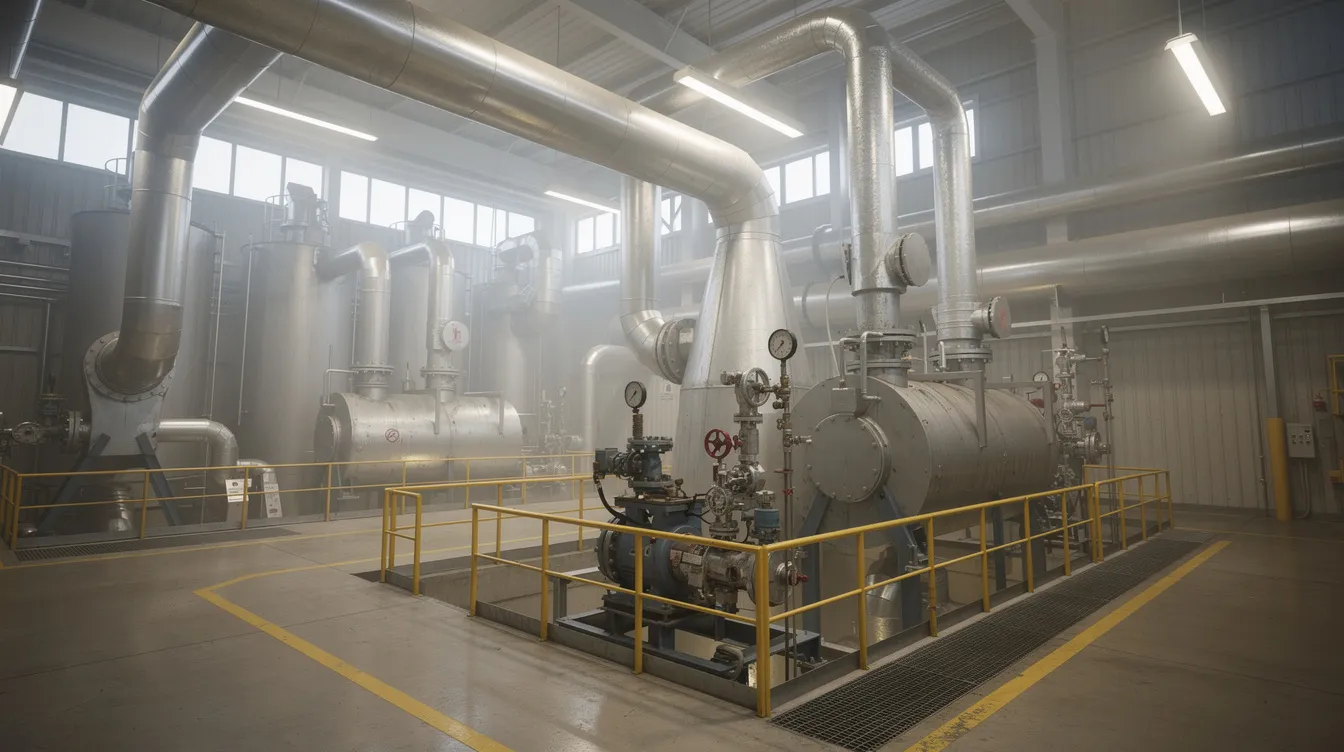
A grain-based ethanol plant requires several interdependent utility systems: industrial steam generation and distribution; electrical power supply; boiler feedwater treatment (softening, DM or RO); process and cooling water circuits; compressed air and instrument air; effluent treatment including multi-effect evaporators (MEE) for ZLD compliance; and fire-safety water networks.
Each utility links to specific process steps. Steam is consumed during liquefaction (where starch is converted into fermentable sugars using enzyme action), distillation (where ethanol produced from fermentation by yeast is separated and concentrated), molecular sieve dehydration (to produce anhydrous ethanol), and DDGS drying. The process involves solid-liquid separation and distillation stages that are both heat- and power-intensive. Fermentation converts sugars into ethanol but itself consumes relatively little steam; however, the downstream separation and drying stages are the largest energy consumers. For a detailed breakdown of each production step, refer to the Grain-Based Ethanol Manufacturing Process & Flow Chart.
Cellulosic ethanol (2G) plants differ in utility intensity. Second-generation ethanol uses lignocellulosic biomass as feedstock, and the manufacturing process includes pretreatment and enzymatic hydrolysis steps that demand additional steam and power. Capital expenditure for a 2G ethanol plant is substantial, with annual production capacity ranging from 50,000 to 200,000 KL and break-even typically ranging from 7 to 12 years. Gross profit margins for 2G ethanol range from 25–35%, while net profit margins are projected at 10–20%. Operational costs in 2G production are driven by raw material procurement at about 50–60% of OpEx, with utility costs accounting for 25–35% of operational expenditures. The focus of this article, however, remains on grain-based projects.
A realistic utility balance is a core section of any bankable DPR. Linking steam and power demand to Ethanol Plant Capacity Planning ensures that CAPEX, OPEX and financial projections remain internally consistent.
Ethanol Distillery Boiler Requirements and Capacity Planning
Boiler capacity, expressed in TPH (tonnes of steam per hour), must exceed peak process steam demand with margins for reliability, blowdown losses and start-up loads. Ethanol distillery boilers require high steam capacity and pressure; ethanol production involves high-pressure steam requirements, with typical working pressures of 32–45 kg/cm²(g) in plants that integrate cogeneration or back-pressure turbines.
Major steam users in a grain-based ethanol plant include distillation columns, molecular sieve dehydration units, multi-effect evaporators for spent wash concentration, and DDGS dryers. In a 120 KLPD project (DSK Foods), the documented breakdown was approximately 3–4 TPH for liquefaction, 9 TPH for distillation, 3 TPH for dehydration and 7–8.5 TPH for DDGS drying.
Modern boilers can be 50% smaller than traditional fire tube boilers while delivering equivalent output, and should produce steam quickly, ideally under five minutes from cold start. Boiler design must consider specialized ash handling capabilities, particularly when burning high-ash fuels like rice husk.
Best practice for 60–200 KLPD plants is an N+1 boiler configuration: at least two boilers so that one can operate at minimum safe load during maintenance of the other. A 100 KLPD bioethanol project in Assam, for instance, proposed two 30 TPH boilers plus one 20 TPH multi-fuel unit. Boiler house location, stack height and fuel-yard planning must align with overall Ethanol Plant Land, Building & Layout Requirements.
Grain based ethanol plant boiler capacity must be decided after a rigorous heat and mass balance by qualified process engineers, not solely on thumb rules.
Steam Requirements for 30–200 KLPD Ethanol Plants
Ethanol plant steam consumption scales with capacity but varies with process configuration. Practitioners often refer to “steam per litre of ethanol” (kg steam/litre), but reported values range from about 1.95 kg/L (distillation and evaporation only, in a 150 KLPD project) to 5.65 kg/L (full plant including DDGS drying, in a 60 KLPD facility). These are plant-specific numbers, not universal standards.
| Plant Capacity | Indicative Steam (kg/L) | Approx. Boiler TPH Range | Key Steam Consumers |
|---|---|---|---|
| 30 KLPD | 4.5–6.0 | 8–12 | Distillation, dehydration, evaporation |
| 60 KLPD | 4.5–5.7 | 15–20 | Above + DDGS dryer |
| 100 KLPD | 4.0–5.5 | 25–35 | All process sections + cogeneration extract |
| 150 KLPD | 3.5–5.0 | 30–50 | Full MEE/ZLD + large-scale DDGS |
| 200 KLPD | 3.5–5.0 | 45–65 | High integration, multi-boiler config |
Ranges are illustrative and must be validated by EPC/OEM engineering for each project.
DDGS drying is one of the largest steam consumers; including a full-fledged DDGS plant can add 1.5–1.7 kg steam per litre. Feedstock type matters: a 120 KLPD project distinguished rice versus corn feed, with steam generation varying between approximately 26 and 29 TPH. Technology selection (multi-effect distillation, vapour recompression) and heat integration also shift specific consumption materially. Promoters should use these ranges for preliminary financial models and cross-reference Ethanol Plant Capacity Planning for capacity-utility linkage.
Types of Boilers Used in Ethanol Distilleries
Boiler type and fuel selection is a strategic decision affecting long-term utility operating cost, emissions compliance and financing risk. Ethanol distilleries often utilize biomass as boiler fuel; rice husk, corn cobs, briquettes and bagasse are common in Indian projects. Coal-fired boilers appear where biomass supply is inconsistent, though they face stricter regulatory scrutiny.
Fluidised-bed combustion (FBC) boilers are a frequent choice for 60–200 KLPD plants because they handle mixed agro-residues and meet emission norms with appropriate pollution-control equipment. A 100 KLPD plant in Madhya Pradesh, for example, proposed a 25 TPH AFBC boiler feeding both the distillery and a 2.7 MW turbine. Boilers must be integrated with air pollution control equipment for compliance. Newer boilers can reduce NOx emissions to as low as 9 ppm, a relevant consideration for producers operating near populated areas.
| Parameter | Biomass FBC | Coal-Fired | Gas-Fired |
|---|---|---|---|
| Fuel Flexibility | High | Low | Low |
| Ash Handling | Complex | Moderate | Minimal |
| Emission Profile | Moderate (with ESP) | Higher SOx/PM | Lowest |
| Capital Cost Level | Medium-High | Medium | High |
| Cogeneration Suitability | Good | Good | Limited at this scale |
Boiler and steam systems form a major part of the machinery cost block. For a detailed cost breakdown, see Ethanol Distillery Machinery, Equipment & Cost.
Boiler Fuel Consumption and Operating Cost
Fuel consumption per tonne of steam depends on fuel calorific value (GCV), boiler efficiency and steam pressure. A simplified illustrative calculation for a 100 KLPD plant:
- Assume: 4.5 kg steam per litre; 100,000 litres/day; boiler efficiency 80%; rice husk GCV 3,200 kcal/kg; delivered fuel price ₹4,000/tonne
- Daily steam: 450 tonnes; fuel needed: ~450 × 650 kcal per kg steam ÷ (3,200 × 0.80) ≈ 114 tonnes/day
- Daily fuel cost: 114 × ₹4,000 = ₹4.56 lakh; cost per litre: ~₹4.56
All assumptions are illustrative. Actual values depend on EPC design and site conditions.
Energy-efficient boilers can reduce costs by 20–30% monthly through better combustion control, regular soot-blowing, proper excess air management and fuel-moisture control. High levels of potassium in spent wash require corrosion-resistant materials in boilers, and zero-liquid discharge norms may require co-firing of concentrated spent wash, adding complexity and maintenance cost. Condensate recovery and economiser installation are high-impact measures; returning hot condensate to the boiler reduces both feedwater demand and fuel consumption.
The financial chain is direct: higher steam demand leads to higher fuel usage, which increases variable cost per litre, compresses EBITDA margin and weakens DSCR if selling price remains regulated or formula-linked.
Electricity and Power Requirements for Ethanol Distilleries
Ethanol distillery power requirements include large motor loads (ID/FD fans, DDGS dryer drives, large pumps) and numerous smaller drives across grain handling, milling, fermentation agitators, distillation controls, cooling-tower fans and air compressors.
Connected load (sum of motor ratings) differs from maximum demand and average operating load. A 60 KLPD plant in Madhya Pradesh reported power requirement of approximately 1.8 MW. For a 100 KLPD facility with cogeneration, connected loads typically fall in the 2.0–3.0 MW range. In a 120 KLPD project, electricity cost contributed approximately ₹3.25 per litre of ethanol produced, forming a major component of variable cost.
| Plant Capacity | Connected Load Range | Approx. kWh/Litre | Annual kWh (330 days) |
|---|---|---|---|
| 30 KLPD | 0.8–1.2 MW | 1.5–2.0 | 15–20 lakh |
| 60 KLPD | 1.5–2.0 MW | 1.3–1.8 | 26–36 lakh |
| 100 KLPD | 2.0–3.0 MW | 1.2–1.7 | 40–56 lakh |
| 150 KLPD | 3.0–4.5 MW | 1.1–1.5 | 55–75 lakh |
| 200 KLPD | 4.0–6.0 MW | 1.0–1.4 | 66–92 lakh |
Indicative ranges; final values depend on process design and equipment selection.
Power factor improvement using capacitor banks and correct contract demand optimisation with the DISCOM prevent unnecessary fixed charges and penalties. Lenders examine electricity cost assumptions as part of project risk appraisal.
Captive Power Generation and Cogeneration Options
Some ethanol plants generate captive power using a high-pressure biomass boiler feeding a back-pressure steam turbine generator. The turbine produces electricity while exhaust steam at lower pressure serves process heating. A 100 KLPD project in M.P. paired a 25 TPH AFBC boiler with a 2.7 MW extraction-cum-condensing turbine. A 150 KLPD project proposed 3.2 MW captive generation for internal use.
Cogeneration improves overall energy efficiency but requires higher CAPEX, a reliable fuel supply chain and skilled O&M personnel. The decision between grid electricity and captive generation should rest on medium-term projections of power tariffs, fuel costs and state electricity policy, not only on the current moment’s price differential. Lenders scrutinise cogeneration projects for technical and fuel-supply risks; promoters should justify the business case through a detailed Project Feasibility Study rather than treating cogeneration as a default deployment.
Cooling Towers, Water Treatment and Other Utilities
Ethanol plant utilities requirements extend beyond steam and power. Cooling towers reject heat from condensers and evaporators. A 150 KLPD project reported cooling tower and distillation water use of approximately 630 m³/day. Boiler feedwater must meet strict quality standards (softened, demineralised or RO-treated) because poor water treatment accelerates scaling, tube failure and unscheduled downtime.
A 60 KLPD plant needed approximately 1,200 KLD total water, with 715 KLD recycled and net fresh water requirement of 485 KLD. Compressed air systems (plant air and instrument air) are critical for pneumatic valves and automation. Water use and wastewater generation connect to environmental compliance and Grain-Based Ethanol Plant Setup Cost in India, as cooling towers, WTP and ETP/MEE represent a major portion of utility CAPEX.
Boiler, Steam, Power and Utilities Setup Cost in India
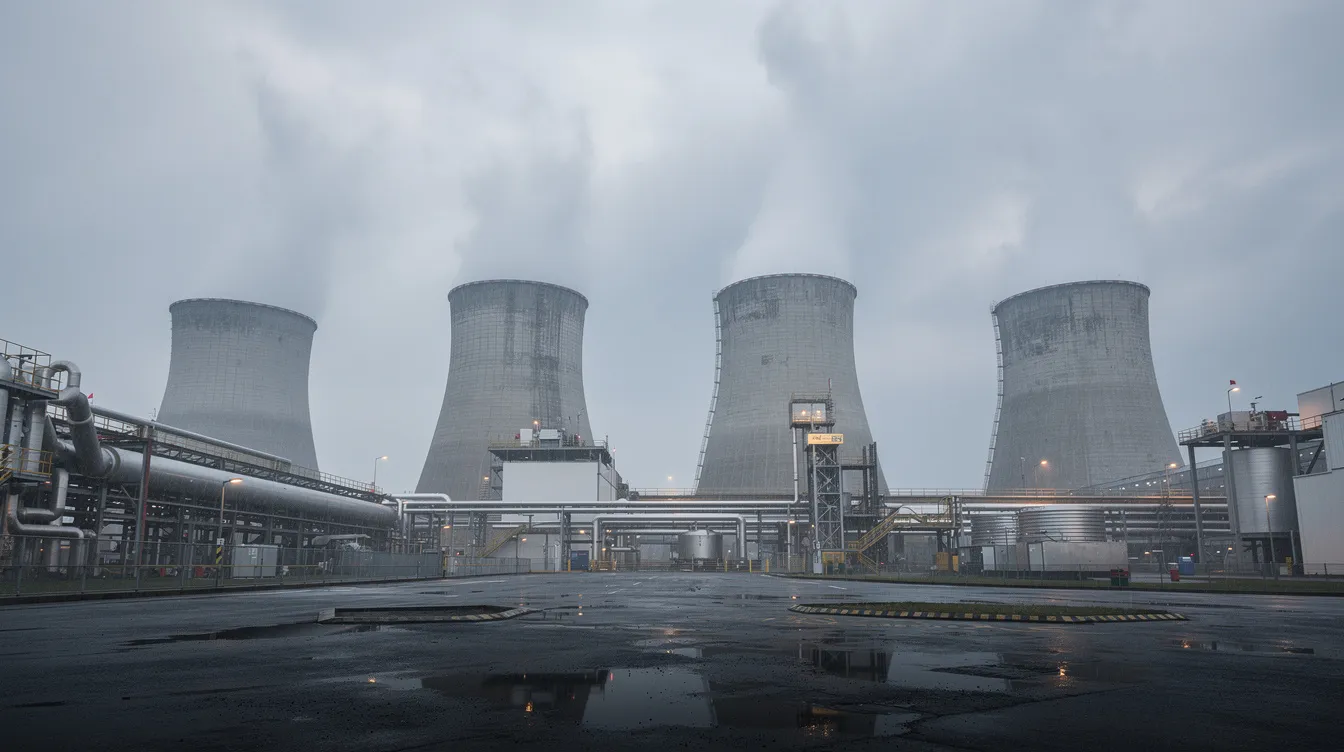
For typical 60–150 KLPD grain-based ethanol projects, boiler, steam, power and utility systems together form 25–40% of total machinery and utilities investment. The difference between bare equipment cost (ex-works) and installed cost (including foundations, piping, erection and commissioning) can be 30–50% of equipment value.
Main utility CAPEX heads include: boiler(s) and auxiliaries; fuel-handling and storage; chimneys and ESP/bag filters; steam distribution piping and insulation; electrical substation, transformers, LT panels and cabling; DG sets; cooling towers and pumps; WTP, RO, DM plant; compressed air; ZLD/MEE systems; and utility control and monitoring. A 60 KLPD project reported total project cost of approximately ₹60.3 million including an 18 TPH boiler and 1.8 MW power plant. Cost levels vary with scale, boiler type, cogeneration inclusion and automation extent. Budgetary numbers should be validated against vendor quotations and reference projects. For the full machinery investment structure, refer to Ethanol Distillery Machinery, Equipment & Cost.
Utility Operating Cost and Impact on Ethanol Manufacturing Cost
Recurring utility expenses feed directly into manufacturing cost per litre. From a 120 KLPD project example: boiler fuel cost (rice husk) contributed approximately ₹6.11 per litre; electricity contributed approximately ₹3.25 per litre. Water and chemical costs added ₹0.05–₹0.10 per litre. These together represented a substantial share of variable cost.
Sensitivity analysis is essential. If biomass fuel prices rise 15–20%, or electricity tariffs are revised upward, or actual steam consumption per litre exceeds assumed levels, EBITDA compresses and DSCR weakens. Promoters should model downside cases so that debt obligations remain serviceable under adverse utility-cost movements. For a comparison of how utility intensity varies between feedstocks and should influence technology and market strategy, see Grain-Based vs Molasses-Based Ethanol.
Energy Efficiency and Steam Optimisation Opportunities
Key steam-side measures include high-rate condensate recovery, flue-gas economisers, air preheaters, steam-line insulation and regular steam-trap maintenance. Process-integration strategies such as multi-effect distillation, vapour recompression and heat recovery from stillage reduce steam duty at the flowsheet level.
On the power side, IE3/IE4 motors, variable frequency drives on large fans and pumps, and power factor correction reduce both kW demand and kVA charges. Periodic third-party energy audits and online boiler performance monitoring help identify inefficiencies. Every paise saved on per-litre utility cost improves operating margin; over 330+ operating days, this materially improves annual EBITDA and DSCR. Modern process designs integrate energy efficiency from the flowsheet level, as discussed in Ethanol Production Technology.
Environmental and Statutory Compliance for Boiler and Utility Systems
Regulatory compliance is mandatory for boilers in ethanol production facilities. Boiler construction must adhere to regional high-pressure codes such as the Indian Boiler Regulations (IBR), and the Boiler Act 2025 mandates registration, periodic inspection and operator qualifications. The ASME Boiler and Pressure Vessel Code governs the design of pressure parts in boilers used in the industry.
Boilers must maintain compliance with specific emissions limits based on fuel type. For agro-based solid fuel boilers, CPCB norms specify SO₂ limits of 600 mg/Nm³ and NOx limits of 300 mg/Nm³ at 6% dry O₂. Continuous emissions monitoring may be necessary for compliance with air quality standards. Modern distilleries must meet clean air regulations, and boilers used in distilleries must ensure safe fuel handling and operational procedures. Boilers in ethanol distilleries have specialized operational and environmental requirements that must be addressed in project planning. Boiler maintenance should take only a few hours to minimize downtime and maintain expected production schedules.
Workplace safety requirements include fire safety NOC, electrical safety approvals, and adherence to the Factories Act. While Project Report Bank incorporates compliance costs into feasibility analysis, detailed statutory interpretation and engineering design must be handled by specialist consultants and licensed professionals.
Utility Planning in a Bankable Ethanol Plant DPR
A bankable DPR must document steam and power load assessments, boiler capacity and pressure levels, fuel sourcing assumptions, electricity-supply strategy, water balance and effluent-treatment schemes. These inputs translate into CAPEX, annual OPEX, cash-flow projections, DSCR and payback period calculations. The overall timeline to start production for ethanol plants is typically 24 to 48 months, during which utility infrastructure must be planned, procured and commissioned.
Banks evaluate the reasonableness of utility-consumption assumptions, tariffs, energy-efficiency provisions and environmental-compliance costs. Sensitivity analysis showing the impact of higher steam consumption, tariff hikes or lower capacity utilisation on DSCR and equity returns strengthens the proposal. For professional support with DPR preparation and loan structuring, see Bank Finance DPR & Loan Proposal Assistance.
Common Utility Planning Mistakes in Ethanol Distillery Projects
Frequent errors include undersized boilers that cause steam shortage at peak load, oversized boilers with poor part-load efficiency, and inadequate condensate recovery. On the power side, overestimating connected load leads to unnecessarily high contract demand charges; underestimating running load results in tripping.
Water-related mistakes include undersized cooling towers, ignoring seasonal water-availability variations and assuming unrealistic 100% water recycling without technical solution or justification. Financial-modelling errors often involve using optimistic steam and power figures without EPC validation, or ignoring fuel-price escalation over the loan tenure.
Mitigation requires early EPC engagement, design margins, benchmarking against reference plants, and stress-tested utility-cost scenarios. Feedstock choice and yield assumptions also influence energy requirements and should be aligned with utility planning; for more context see Ethanol Plant Raw Material Requirements & Yield.
Professional DPR, Project Cost and Financial Feasibility Assistance
CA Manish Gugliya is a practising Chartered Accountant (FCA, DISA from ICAI) with over 20 years of experience in project finance, DPR preparation, financial modelling and feasibility analysis. Project Report Bank provides professional advisory services for ethanol distillery projects: realistic project cost estimation, detailed financial projections, CMA Data preparation, loan structuring and investor-ready documentation.
For ethanol projects, the firm helps promoters and investors integrate utility engineering inputs from EPC vendors into robust financial models, evaluating scenarios on steam and power consumption, fuel price changes, capacity utilisation and policy risks. Project Report Bank does not provide boiler design, engineering certification or operate as consultants for denatured ethanol compliance; it incorporates vendor data to assess project viability, DSCR, IRR and payback under conservative assumptions.
Interested ethanol project promoters can request a customised DPR and feasibility assessment through the WhatsApp enquiry channel at www.projectreportbank.com.
Frequently Asked Questions
What boiler capacity is typically required for a 100 KLPD grain-based ethanol plant?
For a 100 KLPD ethanol plant, the steam requirement depends on specific consumption per litre, DDGS drying configuration and ZLD design. Practical projects have proposed boiler capacities in the 25–35 TPH range. A 100 KLPD project in Madhya Pradesh used a 25 TPH AFBC boiler integrated with a 2.7 MW turbine. Promoters should treat any thumb-rule TPH number as a starting point and rely on the final utility data sheet from process engineers before placing boiler orders or freezing project cost.
Is captive power generation always economical for ethanol distilleries?
Captive power or cogeneration is not automatically the low cost option. Its attractiveness depends on local grid tariff and reliability, boiler fuel cost, capital cost of turbine-generator sets and the facility’s ability to operate and maintain a more complex system. A comparative financial analysis of long-term cost per kWh from grid versus captive generation under realistic load factors is essential before committing capital.
Can cellulosic ethanol plants use the same utility approach as grain-based distilleries?
While many utility principles are common, 2G cellulosic ethanol plants have higher steam and power intensity due to biomass pretreatment and enzyme-driven hydrolysis. They may rely on lignin-fired boilers for partial energy self-sufficiency. A separate, technology-specific energy balance must be prepared. Grain-based assumptions should not be transported directly into 2G feasibility models, where the economics and sustainability considerations differ.
Why should utility assumptions be stress-tested in ethanol project finance models?
Utilities are recurring costs exposed to fuel price inflation, tariff revisions and efficiency variations. Underestimating them compresses margins and weakens DSCR, particularly when ethanol selling prices are linked to government-set formulae. Performing sensitivity analysis on steam and power costs, capacity utilisation and interest rates demonstrates to lenders and investors whether the project remains viable at scale under reasonable downside conditions.
How does DDGS drying affect boiler and fuel requirements?
DDGS drying is one of the largest steam consumers in a grain-based ethanol plant. Documented projects indicate that the dryer alone can add 1.5–1.7 kg steam per litre of ethanol, which can increase fuel consumption by 30–40% compared to a wet-cake-only configuration. While DDGS as a by-product generates revenue and can benefit profitability, the incremental boiler CAPEX and fuel OPEX must be collected and modelled accurately so that the net economics are clear.
Conclusion
Correctly planned ethanol distillery boiler requirements, steam distribution, power infrastructure and water systems are central to both technical reliability and commercial success. Boiler capacity and efficiency determine steam generation cost. Steam and power consumption per litre determine utility cost. Utility cost affects EBITDA and free cash flow. These, in turn, drive DSCR, bankability and long-term project viability.
With evolving ethanol blending policy and no guarantee of full-capacity offtake by the oil marketing companies, plants must handle variations in utilisation while managing utility costs competitively. Weak utilisation increases fixed utility costs per litre and can break the demonstration of repayment capacity that lenders expect to see.
Serious ethanol plant promoters should integrate conservative, validated utility planning into their DPRs. For customised ethanol project financial analysis, DPR preparation, CMA Data and loan proposal support aligned with Indian banking practices, contact CA Manish Gugliya and the Project Report Bank team at www.projectreportbank.com.