Key Takeaways
- Modern grain-based ethanol production in India follows an integrated sequence: dry milling of maize or broken rice, enzymatic starch conversion (liquefaction and saccharification), yeast fermentation, multi-column distillation, molecular sieve dehydration and DDGS recovery. Each step has direct implications for plant investment, operating cost and financial viability.
- Technology choices across milling, fermentation mode, distillation system and energy integration directly affect ethanol yield, steam and power consumption, water use, capital cost and operating cost per litre. These variables flow into DSCR, IRR and long-term project viability in any Detailed Project Report.
- India achieved its E20 blending target ahead of schedule in 2026, but evolving ethanol demand and the risk of overcapacity mean that realistic assumptions and a bankable DPR are essential before finalising ethanol production technology for a new plant.
- By-product handling – distillers grains, CO₂ recovery, stillage treatment – and environmental compliance are integral parts of ethanol production technology. They are not afterthoughts and significantly affect project economics.
- Project Report Bank, led by CA Manish Gugliya, FCA, DISA (ICAI), provides customised DPR preparation, financial modelling and project-finance advisory for entrepreneurs evaluating grain-based ethanol projects across India.
Introduction – Understanding Ethanol Production Technology in India
Ethanol production technology has moved to the centre of India’s energy transition. Driven by the Ethanol Blended Petrol Programme, which was launched in 2003, and the National Biofuel Policy of 2018 that expanded ethanol feedstock sources, India has built substantial grain-based and molasses-based distillery capacity over the past decade. Ethanol blending reduces dependence on imported crude oil and supports domestic agriculture. As of July 2026, India officially achieved 20% ethanol blending in all petrol sold nationwide, ahead of its earlier timeline. First-generation ethanol processes offer moderate lifecycle GHG reductions of 20% to 60% compared with conventional gasoline, making fuel ethanol a meaningful part of the country’s decarbonisation strategy.
In practical terms, ethanol production technology refers to the integrated set of industrial processes and equipment – dry milling, fermentation process, ethanol distillation process, molecular sieve dehydration, DDGS drying, utilities and automation – that convert grain starch into fuel grade ethanol for blending with petrol. For an investor, technology selection is not purely an engineering matter. It is a financial decision that shapes ethanol recovery, product quality (anhydrous versus hydrous, fuel versus industrial ethanol), steam and power requirements, water consumption, labor costs and long-term operating costs per litre.
India’s E20 journey has been impressive, but actual blending levels and offtake volumes can fluctuate across regions and supply years, creating demand uncertainty for new fuel ethanol production projects. About 68% of ethanol blended in recent periods came from grain-based sources, reflecting a structural shift away from reliance on molasses. Realistic project appraisal, technology due diligence and a detailed bankable DPR are therefore critical before committing to large-capex plants. Readers evaluating setup investment may also find the discussion on grain-based ethanol plant setup cost in India helpful.
I write this article from the perspective of a Chartered Accountant advising on project finance and feasibility. The technical process descriptions here are intended to help promoters understand how technology choices affect project economics. Detailed process design must always be validated with qualified ethanol plant technology providers and engineering consultants.
What Is Grain-Based Ethanol Production Technology?
Ethanol production technologies are categorised by feedstock generations and processing methods. First-generation processes use food crops like corn and sugarcane, while second-generation ethanol utilises agricultural residues instead of food crops. This article focuses on 1G grain-based ethanol, where starch-rich grains – maize, broken rice, damaged foodgrains, and sometimes wheat or sorghum – are converted to ethyl alcohol through enzymatic hydrolysis and fermentation. Starch-based feedstocks include corn, wheat, and cassava globally, though in India maize and rice dominate the raw materials landscape.
The basic chemistry is straightforward: starch, a polysaccharide stored in grains, is first liquefied using alpha-amylase enzymes at high temperature, then saccharified using glucoamylase into fermentable sugars (primarily glucose syrup). Yeast then ferments these sugars into ethanol and carbon dioxide. The resulting liquid, called beer or wash, is then separated and concentrated through distillation and dehydration.
The main steps in grain-based ethanol production include grain reception and storage, dry milling, slurry preparation, liquefaction and saccharification, fermentation, distillation process, ethanol dehydration and by-product handling (distillers grains and thin stillage treatment). This process differs from molasses-based ethanol in several ways: grain routes require milling and enzymatic conversion, handle higher fermentation solids, produce DDGS as the main co products rather than spent wash, and typically operate with a different plant configuration. Sugarcane ethanol offers a positive energy balance utilising bagasse as fuel, but sugar-based production is seasonal in India, whereas maize and broken rice offer year-round availability in many states, improving capacity utilisation and working capital management. For a detailed comparison, the article on grain-based versus molasses-based ethanol cost and viability provides additional reading.
Second-generation processes use lignocellulosic biomass – cellulosic feedstocks include wood biomass and crop residues such as corn stover, wheat straw and other agricultural residues, and even woody biomass and energy crops. Lignocellulosic conversion requires pretreatment to break down lignin before cellulosic ethanol production can proceed. While 2G cellulosic ethanol can reduce greenhouse gas emissions by 70% to 90% and 2G technologies yield up to 340 litres of ethanol per dry ton of biomass, these processes are at different commercial stages and should be evaluated separately from the mature 1G grain-based technology discussed here.
Complete Ethanol Production Technology – Process Overview
The grain-based ethanol manufacturing process follows a well-defined sequence. Grains arrive at the plant, are cleaned and milled into flour, mixed into a slurry with water, enzymatically liquefied and saccharified to produce fermentable sugars, fermented by yeast to produce ethanol and CO₂, distilled to concentrate the alcohol, and finally dehydrated using molecular sieves to produce fuel grade ethanol for storage and dispatch.
Key by-product and effluent streams arise at specific points: whole stillage exits the distillation columns and flows to DDGS recovery (centrifugation, evaporation and drying), CO₂ from fermentation can be captured where commercially viable, and condensate streams and spent lees are routed to effluent treatment or recycled back into the process. Over 90% of U.S. ethanol production uses dry milling as the primary processing route, and over 90% of U.S. ethanol production is corn-based, reflecting how globally proven and commercially dominant this technology pathway has become. Dry-grind processing is used for ethanol production from corn grains and forms the template for most Indian grain-based distilleries as well.
| Process Stage | Input | Main Equipment | Main Output | Key Considerations |
|---|---|---|---|---|
| Grain Cleaning | Raw grain | Destoners, sieves, magnets | Clean grain | Moisture 12–14%, foreign matter removal |
| Dry Milling | Clean grain | Hammer mills or roller mills | Grain flour | Particle size 500–1,000 microns |
| Slurry Preparation | Flour + water | Slurry tanks, mixers | Grain slurry | Solids 28–34% w/w, pH adjustment |
| Liquefaction | Slurry + alpha-amylase | Jet cooker / reactor | Liquefied mash | Temperature 85–95°C, residence time control |
| Saccharification | Liquefied mash + glucoamylase | Saccharification tanks | Sugar-rich mash | Temperature ~55–60°C, pH control |
| Fermentation | Sugar mash + yeast | Fermenters (1,000–1,600 KL) | Beer (8–12% ethanol) | 36–60 hours, temperature and contamination control |
| Distillation | Fermented beer | Multi-column distillation system | Rectified spirit ~95–96% | Multi-pressure design, heat integration |
| Molecular Sieve Dehydration | Rectified spirit vapour | Molecular sieve beds | Anhydrous ethanol ≥99.5% | Cyclic adsorption-regeneration |
| DDGS Recovery | Whole stillage | Centrifuges, evaporators, dryers | DDGS (animal feed) | Moisture ~10–12%, protein content |
For a detailed step-by-step flow diagram, readers can refer to the grain-based ethanol manufacturing process and flow chart. While the process route is broadly similar across plants, technology vendors differ significantly in design details, heat-integration strategies and automation levels, which is why promoter due diligence remains essential.
Dry Milling Technology for Ethanol Production
Most modern grain-based fuel ethanol plants in India use the dry milling process because it requires less capital and operating costs than wet milling. Over 91.1% of fuel ethanol production in the U.S. is from dry milling, and Indian plants have adopted the same approach for dedicated fuel ethanol manufacturing. The goal of dry milling is to optimise starch accessibility for enzymes while managing power consumption, equipment wear and downstream slurry-handling challenges.
For clarity, dry milling here refers to grain milling for ethanol production – not to metalworking processes sometimes found in unrelated technical literature. The subsections below cover each stage. Readers evaluating ethanol distillery machinery, equipment and cost will find complementary investment-level detail.
Grain Cleaning and Preparation
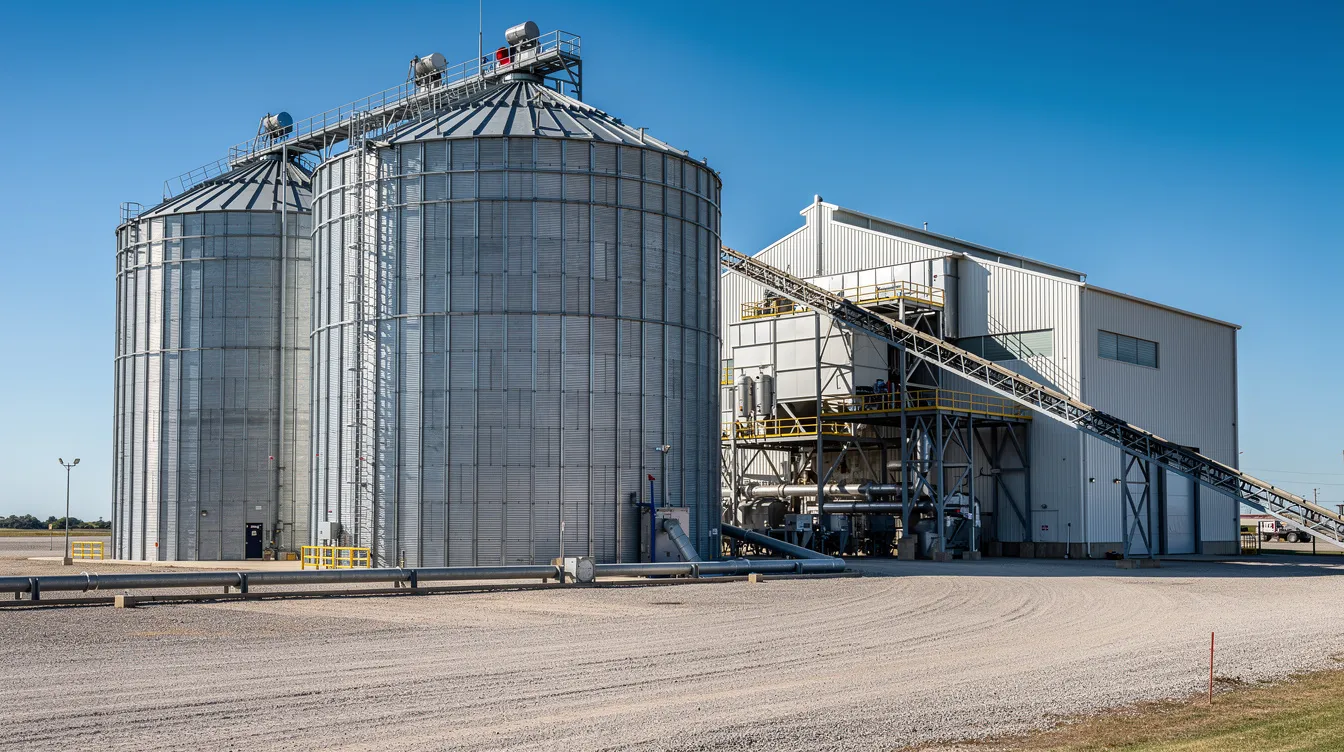
Grain reception involves weighing, sampling and quality assessment. Cleaning uses destoners, vibrating sieves and magnetic separators to remove stones, dust, husk and metal particles. Poor cleaning increases maintenance costs, contamination risks and equipment damage downstream.
Moisture content at reception should typically be 12–14% for maize under Indian conditions. Proper storage – in silos rather than open godowns – reduces fungal growth and preserves starch yield. Automated grain handling with belt conveyors, bucket elevators and aspiration systems improves throughput consistency and reduces labor costs. Ethanol production capacity in India is expected to reach 40% from Uttar Pradesh alone, where large grain handling infrastructure already supports several operational plants.
Hammer Milling and Particle Size Reduction
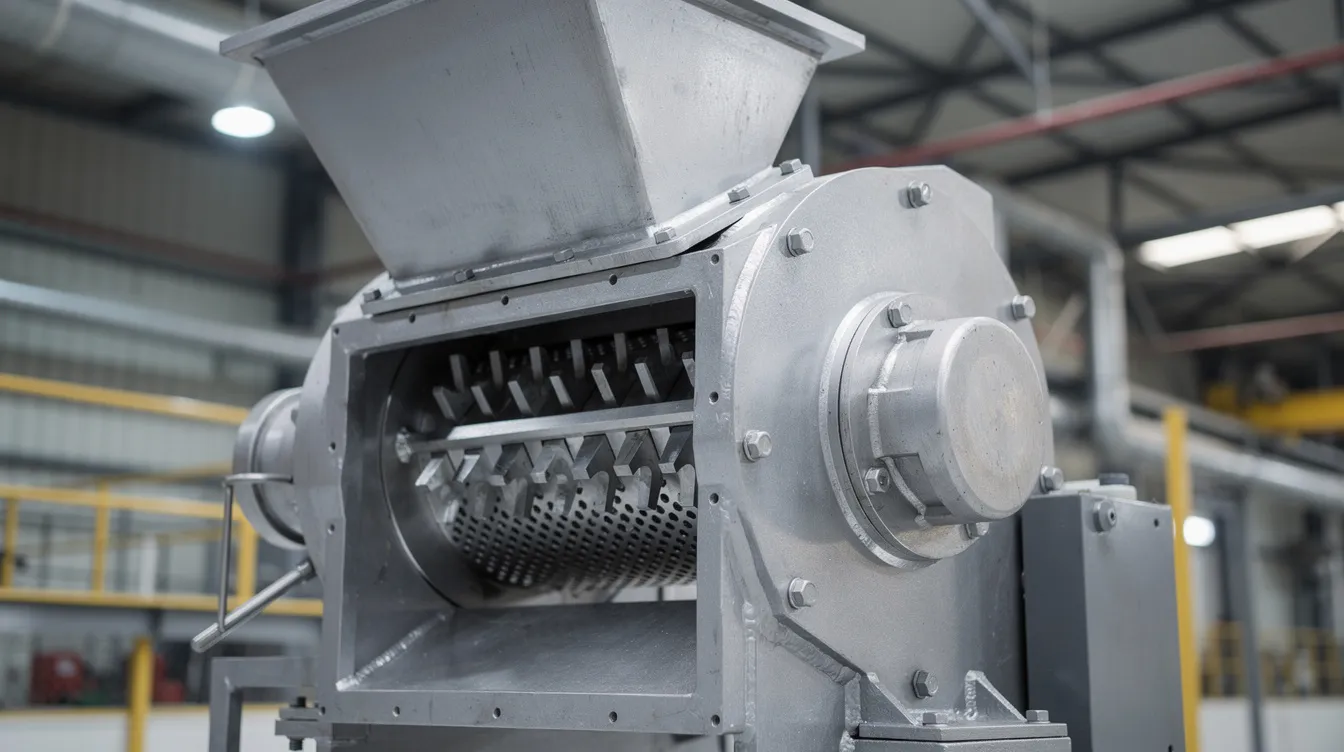
Hammer mills or roller mills reduce grain to a target particle size distribution, typically 500–1,000 microns depending on the technology supplier. Finer grinding generally increases starch accessibility and can support a high ethanol yield per tonne, but it also raises energy consumption, creates dust explosivity risk and increases slurry viscosity.
Mill capacity must match plant size and operating hours. A 200 KLPD plant requires substantially larger milling infrastructure than a 60 KLPD facility. Standby milling capacity is commonly provided to reduce downtime risk during maintenance.
Slurry Preparation and Mixing
Ground grain flour is mixed with process water and backset (recycled thin stillage or condensate) in slurry tanks to a target solids content of 28–34% w/w in modern dry-grind ethanol plants. pH adjustment, nutrient addition and controlled agitation create a homogeneous mixture critical for efficient heat transfer during liquefaction and uniform enzyme contact. Slurry tanks are typically mild steel with protective lining or stainless steel, equipped with robust agitators and level instruments.
Enzymatic Liquefaction Technology
Liquefaction partially hydrolyses gelatinised starch into shorter-chain dextrins using thermostable alpha-amylase enzymes at elevated temperature. The slurry is heated via steam injection or heat exchangers to 85–95°C, held in a liquefaction reactor or jet cooker for a specified residence time, and then cooled. Maintaining proper pH and calcium ion concentration prevents enzyme denaturation. Ethanol production from starch can reduce energy costs by 30–40% compared with alternative conversion pathways when properly optimised, making liquefaction control a meaningful lever for operating economics.
Saccharification and Sugar Conversion
Glucoamylase – and sometimes pullulanase – further hydrolyses dextrins into fermentable sugars at lower temperature, typically around 55–60°C. This stage can occur in a separate saccharification tank or through simultaneous saccharification and fermentation, where enzyme addition and yeast inoculation proceed together in the same vessel. Higher saccharification efficiency increases fermentable sugar concentration and potential ethanol yield but may influence viscosity and contamination risk. Enzyme performance is sensitive to temperature, pH, solids content and mixing, all of which must be controlled through plant automation.
Important Operating Parameters in Dry Milling
Key parameters that collectively determine downstream fermentation efficiency include grain starch content and impurities, target grind size, slurry solids percentage, liquefaction temperature-time profile, pH range, and enzyme quality and dosage.
From a financial viewpoint, milling efficiency and enzyme performance directly affect specific power consumption per tonne of grain, enzyme cost per litre of ethanol and overall grain-to-ethanol conversion efficiency. Reference plant data from Regreen-Excel technology shows yields of approximately 450 litres per tonne of broken rice and approximately 395 litres per tonne of maize – small differences that have a significant effect on raw material cost per litre. Performance claims must be supported by vendor data and reference-plant experience rather than optimistic DPR assumptions.
Dry Milling vs Wet Milling – Technology Comparison
Both dry milling and the wet mill process can produce ethanol from grains, but they differ significantly. The term “wet milling” should not be confused with the wet-grind slurry handling steps within a dry-mill ethanol plant. Traditional industrial wet-milling processing separates corn into component parts – starch, germ, fibre and gluten – before fermentation, supporting multiple co products. Wet milling produces more high-value co products than dry milling but at substantially higher capital and operating cost.
| Parameter | Dry Milling | Wet Milling |
|---|---|---|
| Process Complexity | Lower | Higher |
| Capital Investment | Lower | Significantly higher |
| Water Consumption | Moderate | Higher (steeping) |
| Energy Requirements | Less energy overall | More energy for steeping and separation |
| Main Co Products | DDGS | Corn oil, gluten, fibre, starch |
| Equipment Count | Fewer major units | More separation and processing units |
| Maintenance | Simpler | More complex |
| Ideal Application | Dedicated fuel ethanol | Integrated starch and food ingredient complexes |
Dry milling accounts for 91.1% of U.S. fuel ethanol production, confirming its dominance for dedicated ethanol manufacturing. For Indian investors, the choice must align with the business model – single-product fuel ethanol versus multiple co products – and should be evaluated through sensitivity analysis in the project DPR.
Ethanol Fermentation Technology
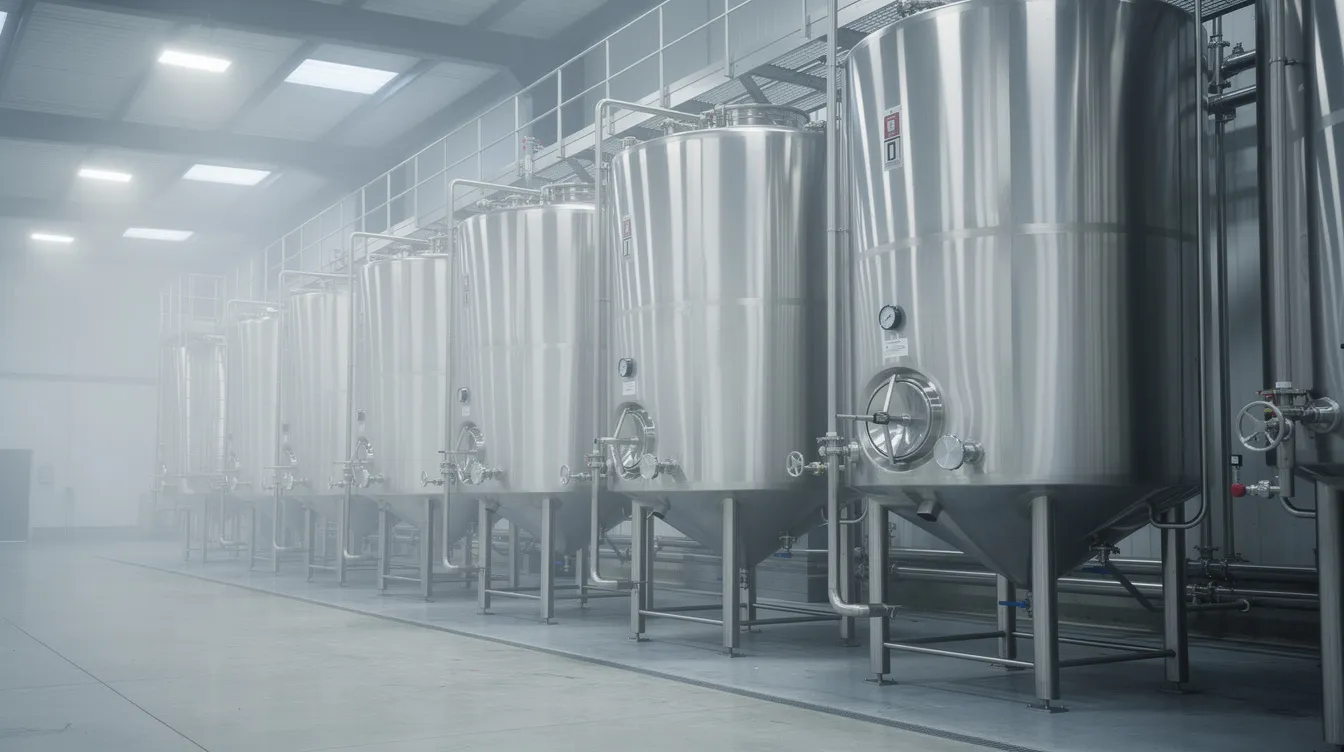
The fermentation process is the core biological step where yeast converts fermentable sugars into ethanol and carbon dioxide. Industrial ethanol fermentation must balance ethanol yield, productivity, ethanol concentration in the beer and contamination control. These trade-offs vary across batch, fed-batch and continuous fermentation technologies.
Principles of Industrial Ethanol Fermentation
The basic biochemical reaction converts glucose into ethanol and CO₂, with heat as a by-product. Only a theoretical maximum yield is achievable; actual industrial yields are lower due to by-product formation and process losses. Sugar concentration, nutrient availability, yeast health, temperature, pH and presence of inhibitory compounds all affect both yield and fermentation time. Heat generated during fermentation must be removed via cooling systems, with direct implications for power consumption and chiller capacity.
Batch Fermentation Technology
Batch fermentation is the traditional mode: fermenters are filled, inoculated with yeast, allowed to ferment to completion, then emptied and cleaned. Typical cycle times in Indian grain-based plants are 48–60 hours. Advantages include simplicity, easier contamination control and flexible operation at variable capacities. Disadvantages include longer downtime between batches and lower volumetric productivity. Batch sizes and the number of fermenters are designed to support plant capacity – for example, a 300 KLPD plant like Ramshy Bio in Telangana uses four fermenters each of 1,600 KL capacity.
Fed-Batch Fermentation Technology
Fed-batch is a variation where substrate is added progressively, allowing better control of sugar concentration, osmotic stress and ethanol toxicity on yeast. This can improve yields over simple batch in some configurations. However, it requires additional complexity in automation and feeding systems. Commercial adoption depends on technology vendor design, operator capability and cost-benefit analysis rather than being automatically superior.
Continuous Fermentation Technology
In continuous fermentation, mash and yeast enter while beer leaves more or less continuously, using multiple fermenters in series. This continuous process targets higher volumetric productivity and potentially smaller fermenter volumes per KLPD. Advantages include more stable steady-state operation. Challenges include higher sensitivity to contamination, stronger instrumentation requirements and more complex cleaning routines.
| Parameter | Batch | Fed-Batch | Continuous |
|---|---|---|---|
| Complexity | Low | Moderate | High |
| Contamination Risk | Lower | Moderate | Higher |
| Volumetric Productivity | Lower | Moderate | Higher |
| Automation Requirement | Basic | Moderate | Advanced |
| Capital Cost (Fermentation) | Moderate | Moderate-High | Can be lower per unit output |
| Flexibility at Low Utilisation | Good | Good | Limited |
| Operator Skill Requirement | Standard | Higher | Highest |
Yeast Selection and Fermentation Efficiency
Industrial yeast strains for grain-based ethanol should demonstrate high ethanol tolerance, good osmotolerance, fast fermentation rate and robustness under Indian ambient conditions. CRISPR technology enhances yeast strains for better ethanol conversion efficiencies, and this is an area of ongoing improvement globally. Yeast preparation, propagation and infection control strategies affect fermentation efficiency and yeast cost per litre.
Dry milling typically yields 14–18% ethanol after fermentation in the beer, depending on initial solids loading, enzyme efficiency and yeast performance. Food waste can produce ethanol at 15–20% concentration under certain conditions, but grain-based production remains more predictable and scalable.
Fermentation Temperature, pH and Contamination Control
Operating ranges for temperature and pH are vendor-dependent and must be validated with process engineers. CIP systems, hygienic fermenter design and strict monitoring of lactic acid bacteria and wild yeast prevent yield losses. Inadequate contamination control can significantly increase cost per litre through lower ethanol yield, higher enzyme and chemical consumption and unplanned downtime.
Improving Ethanol Yield and Productivity
Practical strategies include optimised mash solids, better enzyme cocktails, improved yeast nutrition, tighter temperature control and accurate online monitoring. Advanced automation and data logging help operators identify underperforming fermenters. These improvements connect directly to financial outcomes: higher ethanol yield per tonne of grain reduces raw material cost per litre and can meaningfully improve DSCR and IRR over the project life when captured in the DPR.
Ethanol Distillation Technology
The ethanol distillation process concentrates ethanol from fermented wash – typically 8–12% v/v alcohol – to rectified spirit. This is among the most energy-intensive sections of the plant. Industrial distillation systems use multiple columns, heat integration and different pressure levels, very different from simple laboratory examples.
Principles of Industrial Distillation Columns
Distillation exploits boiling-point differences between ethanol and water. The distillation process includes a fractionating column for separation, using trays or structured packing to create multiple equilibrium stages. Typical column types in ethanol plants include analyser, rectifier and dehydration feed columns. Key operating variables – reflux ratio, column pressure and feed composition – affect energy use and separation efficiency. Ethanol production from corn involves a two-stage distillation system in many international configurations, and Indian plants follow similar multi-column approaches.
Multi-Pressure Distillation and Heat Integration
Multi-pressure distillation operates some columns at higher pressure and others at lower pressure, allowing vapour from one column to serve as a heat source for another. This significantly reduces steam consumption per litre of ethanol compared with simple single-pressure designs. Ethanol distillation utilises heat exchangers for energy efficiency, and well-integrated systems can approach steam consumption of approximately 3.0 kg per litre of ethanol, compared with 4.0–4.5 kg per litre in less optimised configurations.
Distillation Efficiency, Steam Consumption and Operating Cost
Inefficiencies such as poor insulation, suboptimal reflux ratios and fouling of heat-transfer surfaces increase steam consumption and therefore fuel cost and exhaust gas emissions. Ethanol distillation achieves 95–96% purity due to azeotropes between ethanol and water, beyond which conventional distillation cannot proceed economically. A distillation system can produce over 100,000 litres of ethanol daily, and ethanol distillation systems at larger scales can produce over 100,000 litres daily across Indian plants now operational. Investors should examine vendor proposals critically and conduct sensitivity analysis in project financial models for steam and power consumption.
Molecular Sieve Dehydration Technology for Fuel-Grade Ethanol
Ethanol distillation can achieve a purity of 95–96% after processing, but the ethanol-water azeotrope prevents further concentration through ordinary distillation alone. For fuel ethanol used in petrol blending, anhydrous ethanol meeting BIS standards (typically ≥99.5% v/v) is required. Molecular sieves – synthetic zeolite beds – preferentially adsorb water from ethanol-water vapour, producing nearly anhydrous ethanol.
The system operates cyclically: while one bed adsorbs water, another regenerates under vacuum or reduced pressure. Twin or multiple beds ensure continuous operation. Careful temperature and pressure control and monitoring of water content are essential to meet fuel-grade specifications under Indian standards. Molecular sieve units consume energy for vapour generation and regeneration but avoid chemicals and are the dominant dehydration choice for large-scale fuel ethanol production.
Downstream, storage tanks must be dry, pipelines water-free and appropriate denaturant added according to OMC contract requirements before dispatch.
DDGS Recovery and By-Product Processing Technology
DDGS – dried distillers grains with solubles – is the main co product of grain-based ethanol plants and an important protein- and energy-rich animal feed. The recovery process involves centrifugation to separate wet cake from thin stillage, evaporation of thin stillage to syrup, mixing syrup back with wet cake, and drying to produce DDGS at target moisture of approximately 10–12%.
Technology choices for dryers (rotary drum, ring or flash dryers), multi-effect evaporators and waste heat recovery systems affect energy consumption and operating cost. DDGS quality – protein content, moisture uniformity, mycotoxin control – influences market price and offtake arrangements in India’s poultry and livestock feed industries.
Optional CO₂ recovery from fermentation off-gas is commercially feasible where proximity to industrial CO₂ users exists. Capturing fermentation-derived CO₂ shifts facilities towards net-zero carbon intensity, though the investment in compression, purification and liquefaction must be justified by local demand. Higher energy return on invested energy is also achieved by using unfermented lignin as fuel in certain integrated biorefinery configurations, though this applies more to 2G processes.
Energy-Efficient Ethanol Production Technology
Fuel and power costs are major operating expenses. Key energy-saving measures include high-efficiency boilers with condensate recovery, proper steam trap management, multi-effect evaporation, multi-pressure distillation and waste heat recovery from dryer exhaust or boiler flue gases. A heat recovery system includes exchangers, condensate return lines and preheaters that use hot process streams to warm incoming mash or process water, avoiding expensive retrofits when designed correctly at the engineering stage.
On the electrical side, variable frequency drives on large motors, high-efficiency pumps and fans, and optimised chiller operation reduce both consumption and maximum demand charges. As a benchmark, approximately 1 kWh of electricity generates 1.81 litres of ethanol in well-optimised plants, underscoring how electrical efficiency directly affects unit cost.
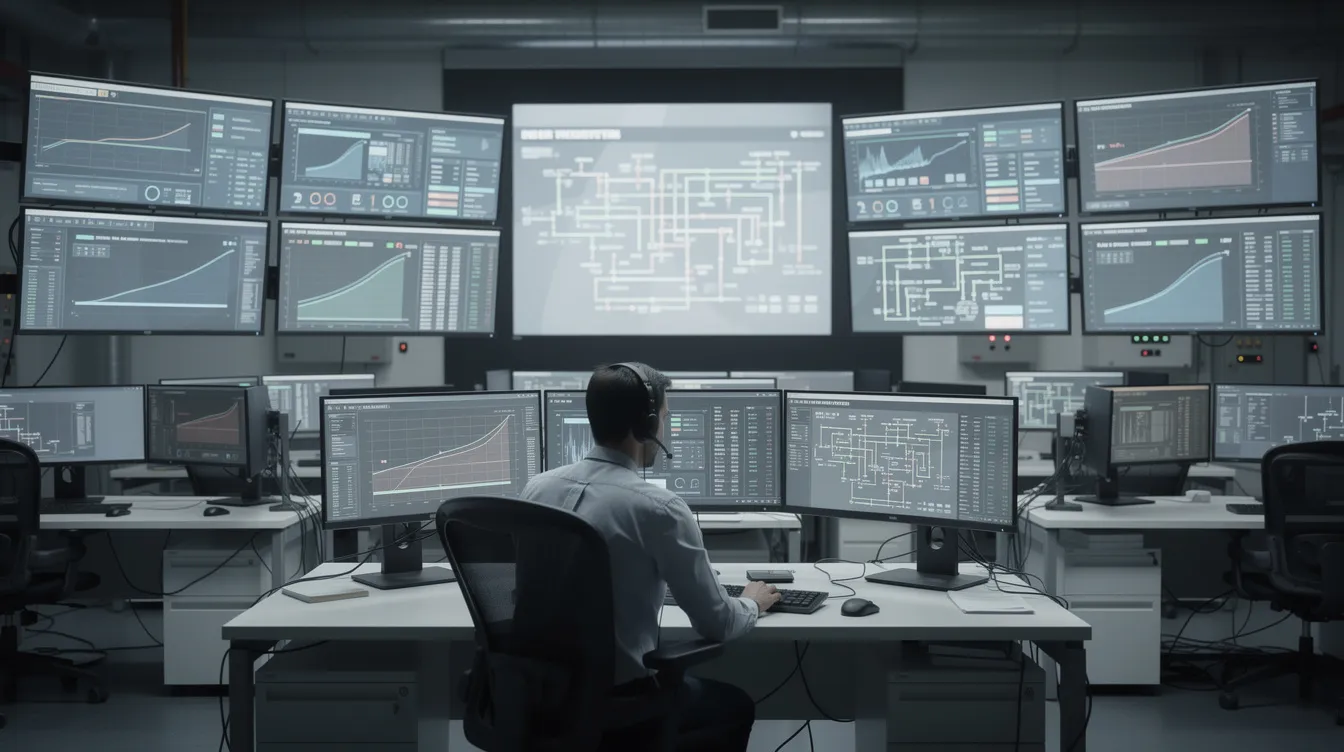
Modern biorefineries utilise biotechnology, AI, and carbon capture systems to push efficiency further. AI-driven process control optimises fermentation cycles in ethanol production, enabling real-time adjustments that reduce energy waste and improve yield consistency. SCADA systems and energy-monitoring dashboards help plant management track specific steam and power consumption continuously.
Ethanol Plant Technology Selection for 60, 100 and 200 KLPD Capacities
Typical grain-based ethanol plants in India range from 60 KLPD to 300 KLPD and above. Technology configuration changes as scale increases, affecting both capital investment and economies of scale. Ethanol production capacity exceeds 100,000 litres per day in most commercially viable configurations. The average daily ethanol production rate is 260,000 litres for mid-scale plants, while the average daily ethanol production rate can reach 649,000 litres for the largest integrated facilities.
| Parameter | 60 KLPD | 100 KLPD | 200 KLPD |
|---|---|---|---|
| Milling Capacity | 1 mill, limited redundancy | 1–2 mills, some redundancy | 2+ mills, full redundancy |
| Fermenters | 2–3, smaller volume | 3–4, moderate volume | 4–6, large volume |
| Distillation | Basic multi-column | Multi-column, some heat integration | Advanced multi-pressure, full integration |
| Boiler / Utilities | Smaller (15–25 TPH) | Medium (25–40 TPH) | Large (40–60+ TPH), captive power feasible |
| Automation Level | Semi-automatic | Moderate SCADA | Full SCADA with advanced controls |
| Per-Litre Capex | Higher | Moderate | Lower |
| Absolute Investment | ₹80–150 crore (indicative) | ₹150–250 crore | ₹300–400+ crore |
Ethanol production costs about $25 million for a facility at smaller scales globally, but Indian project costs vary with location, technology vendor and infrastructure requirements. For reference, the IMARC Purnia project (300 KLPD) was estimated at approximately ₹380 crore, while Grainspan Nutrients invested approximately ₹520 crore for a combined 350 KLPD capacity across two plants. Design parameters also depend on operating days, maintenance shutdowns and turndown flexibility, all of which should be modelled in the DPR.
Grain-Based Ethanol Technology for Different Feedstocks
Although the core ethanol production technology is similar across grain types, feedstock characteristics – starch content, oil and fibre levels, hardness, mycotoxin risk – significantly influence plant performance. Maize, broken rice and damaged foodgrains are the main feedstocks for grain-based ethanol in India.
Maize-Based Ethanol Production Technology
Maize is the dominant grain for ethanol production globally, with corn kernels typically containing 68–70% starch. Maize hardness affects milling energy and wear on hammer mills, while oil content and protein levels influence DDGS composition. Year-round availability in states like Madhya Pradesh, Bihar and Karnataka makes maize attractive for continuous plant operation. Readers evaluating maize-specific projects can refer to the maize-based ethanol plant project report and DPR for detailed guidance.
Broken Rice and Damaged Foodgrain Processing
Broken rice and damaged foodgrains are widely used in Indian distilleries due to government procurement policies and competitive pricing. Process considerations include higher variability in quality and moisture, more stringent screening requirements and adjustments in enzyme strategy due to different starch and protein profiles. The broken rice and damaged foodgrain ethanol plant DPR discusses these feedstock-specific considerations further.
Multi-Feedstock Ethanol Distillery Technology
Multi-feedstock plants process more than one grain type using adaptable milling, slurry preparation and fermentation systems. True multi-feedstock capability requires adjustable milling settings, feedstock-specific process recipes for enzymes and temperatures, and careful DDGS marketing planning as product composition varies with feedstock mix. Grain-plus-molasses flexibility requires substantially more additional systems than simply switching between rice and maize. The multi-feedstock ethanol distillery project report covers this topic in detail.
Ethanol Production Technology and Environmental Compliance
Environmental compliance covers process water use, effluent treatment, air emissions from boilers and dryers, noise levels and solid-waste management. 1G processing requires significant water inputs and results in wastewater management issues that must be addressed at the design stage. Water consumption in starch fermentation generates significant volumes of liquid effluent that require proper treatment.
Spent wash and stillage streams need adequate effluent treatment plants, anaerobic digesters, multi-effect evaporators and, where required by state pollution control boards, Zero Liquid Discharge systems. The Purnia project in Bihar, for instance, includes ZLD infrastructure as part of its regulatory compliance design.
In DDGS drying, dust and odour control through cyclones, bag filters and scrubbers is essential. Water recycling and condensate reuse reduce fresh-water draw but must be designed carefully to avoid contaminant build-up. While 2G cellulosic processing generally requires robust chemical recovery to prevent runoff, 1G grain-based plants face their own distinct compliance challenges. No single generic treatment arrangement automatically guarantees compliance – promoters must work with environmental consultants for site-specific solutions.
How Technology Selection Affects Ethanol Plant Project Cost and Profitability
From a Chartered Accountant’s perspective, ethanol production technology choices flow directly into project cost estimates, operating-cost structure, profitability, DSCR, IRR and payback period.
Fixed capital investment varies with choices such as basic versus advanced multi-pressure distillation, level of automation, type of DDGS dryer, boiler efficiency and environmental infrastructure. Major operating-cost drivers include raw material conversion efficiency (litres of ethanol per tonne of grain), specific steam and power consumption, enzyme and chemical costs, manpower, maintenance and by-product realisations.
Consider two illustrative scenarios for a 100 KLPD plant:
| Parameter | Configuration A (Basic) | Configuration B (Energy-Efficient) |
|---|---|---|
| Steam Consumption | ~4.2 kg/L ethanol | ~3.2 kg/L ethanol |
| Annual Fuel Saving | Baseline | Meaningful reduction |
| Ethanol Yield | ~380 L/tonne grain | ~400 L/tonne grain |
| Capex | Lower | 15–20% higher |
| Maintenance Complexity | Simpler | Moderate |
| DDGS Dryer Integration | Standard | Waste heat integrated |
At current ethanol price levels – estimated at approximately $0.5 per litre for reference – the savings from Configuration B compound significantly over years of operation. Annual profit from ethanol production can reach $6.46 million in well-run facilities, but a seemingly cheaper plant with poor efficiency can become uneconomical at high grain prices or lower ethanol realisations. This is why rigorous financial modelling and sensitivity analysis using a techno economic evaluation framework are essential before technology selection.
Important Technology Selection Risks for Ethanol Investors in 2026
Key technology-related risks include overestimation of ethanol yield, underestimation of steam and power consumption, inadequate testing of local feedstock, lack of redundancy in critical equipment and bottlenecks in distillation or dehydration sections. Plants that do not achieve design thermal efficiency may see steam consumption drift upward, eroding margins.
Project execution risks include delays from incomplete engineering design, vendor coordination issues, late delivery of imported components and longer-than-expected stabilisation periods. The Purnia project took approximately 20 months to commissioning. Delayed cash flows in the early stages reduce DSCR and IRR.
Operating risks encompass unexpectedly high DDGS dryer fuel consumption, effluent-treatment systems underperforming, and frequent breakdowns due to poor-quality fabrication. Regarding market risk, if capacity additions outpace OMC offtake growth, temporary or regional oversupply of fuel ethanol could emerge. India’s E20 target has been achieved, but no formal decision beyond E20 has been made. Investors should plan for realistic, not best-case, utilisation levels.
Technology proposals must be examined with a risk lens, including backup power arrangements, availability of experienced operating teams and long-term service agreements with suppliers.
Importance of a Detailed Project Report Before Choosing Ethanol Technology
A professionally prepared DPR for a grain-based ethanol plant should contain a clear project concept, capacity plan, feedstock strategy, process description, technology alternatives, vendor quotations and realistic assumptions on yields and utility consumption.
The financial analysis components include detailed project cost, means of finance, term-loan structuring, projected profit and loss, cash-flow statements, DSCR analysis, break-even capacity utilisation, ROI, IRR and sensitivity analysis for key variables such as grain cost and ethanol price. DPRs prepared for bank finance or investor discussions must incorporate plant-technology choices explicitly, showing how higher-efficiency options influence operating costs and viability.
Financial projections are tools for decision-making based on defined assumptions, not guarantees of plant performance. Technical guarantees remain the responsibility of technology suppliers and EPC partners. Promoters seeking bank finance DPR and loan proposal assistance or financial projections and modelling services can engage with Project Report Bank for customised analysis.
How Project Report Bank Assists Ethanol Project Investors
I am CA Manish Gugliya, a practising Chartered Accountant (FCA, DISA from ICAI) with more than 20 years of professional experience in project finance, feasibility studies, DPR preparation and financial modelling for manufacturing and processing projects across India.
Project Report Bank supports ethanol project promoters through customised DPR preparation for grain-based ethanol plants, project-feasibility assessment, plant-cost estimation, means-of-finance planning, CMA Data preparation and bank loan proposal structuring. We work alongside engineering consultants and ethanol technology suppliers – handling financial modelling, viability analysis, DSCR and sensitivity scenarios – while specialised engineers remain responsible for detailed process design and performance parameters.
Services are tailored to specific project conditions – feedstock mix, capacity, state location and policy environment – rather than based on generic templates. The focus is on helping promoters understand realistic project risks and returns before committing capital.
Interested entrepreneurs and project promoters can reach out via WhatsApp through ProjectReportBank.com for a preliminary project discussion. We do not promise loan approvals, subsidies or guaranteed returns.
Frequently Asked Questions – Ethanol Production Technology
These answers address common practical questions from Indian ethanol project promoters and investors.
What technology is commonly used for grain-based ethanol production in India?
Most Indian grain-based plants use dry milling followed by enzymatic liquefaction and saccharification, yeast fermentation, multi-column distillation and molecular sieve dehydration to produce fuel grade ethanol meeting OMC specifications. Variations exist in milling equipment, fermentation mode (batch, fed-batch, continuous) and distillation configuration depending on capacity and technology vendor.
How does dry milling differ from wet milling for ethanol production?
The dry milling process grinds whole grain into flour and ferments the entire mash, generating DDGS as the main co product. It involves less capital and simpler operations for dedicated fuel ethanol. In contrast, the wet mill process steeps grain and separates it into starch, germ, fibre and gluten before fermentation, supporting multiple high-value co products but requiring higher investment and more complex operations suited to large integrated agro-processing complexes.
Which fermentation technology is better – batch or continuous?
There is no universally superior option. Batch fermentation is simpler and often chosen for moderate-capacity plants or promoters in the early stages of ethanol operations. Continuous fermentation can provide higher productivity but demands stronger automation and operating expertise. Promoters should evaluate options with their technology supplier and reflect the selected mode’s impact on capex, operating cost, flexibility and risk in their DPR.
What factors affect ethanol yield from maize?
Ethanol yield from maize depends on starch content, milling particle size, enzyme performance, fermentation efficiency, yeast health, temperature and pH control and distillation losses. Maize typically yields approximately 395 litres per tonne in Indian plants, though this varies. A significant amount of yield variation comes from differences in grain quality across procurement batches and seasons.
What should investors check before finalising an ethanol technology supplier?
Key checkpoints include reference plants operating in India with similar capacity and feedstock, realistic guarantees on grain-to-ethanol yield and utility consumption, after-sales service arrangements, availability of critical spares and clear division of responsibilities for commissioning and training. These checks should be integrated with independent financial modelling and sensitivity analysis so that technology commitments align with the project’s risk appetite and funding structure. Other applications of similar due diligence apply across industries, but ethanol projects warrant particular care given the scale of investment.
Conclusion – Choosing the Right Ethanol Production Technology
Successful grain-based ethanol projects depend on carefully selected production technology – from dry milling and enzymatic starch conversion through fermentation, distillation, molecular sieve dehydration and DDGS processing – that matches feedstock, capacity, energy resources and operator capabilities. Technology choices directly affect capital cost, operating cost per litre, energy and water footprint, environmental compliance and long-term financial viability, especially in a market where biofuels demand, ethanol prices and blending levels can change over time.
Promoters should base decisions on sound technical advice from process engineers combined with rigorous financial assessment through a customised DPR, financial projections and sensitivity analysis. The future of India’s ethanol sector holds promise, but commercially successful projects require clear-eyed planning rather than optimistic assumptions.
Serious entrepreneurs, MSME promoters and established industries evaluating grain-based ethanol projects are welcome to reach out to Project Report Bank for ethanol project feasibility studies, DPR preparation and project-finance advisory via WhatsApp or the contact form at ProjectReportBank.com.
CA Manish Gugliya FCA, DISA (ICAI) More than 20 years of professional experience in project reports, financial projections, CMA Data, project finance and business advisory.