Key Takeaways
A greenfield grain based ethanol plant in India in 2026, including land, building, plant and machinery, DDGS dryer, ZLD system and basic cogeneration, requires total project funding in the following indicative ranges: approx ₹130–175 crore for 60 KLPD, approx ₹230–310 crore for 100 KLPD, and approx ₹360–480 crore for 200 KLPD. These ranges include fixed capital, interest during construction, pre-operative expenses, contingency and working capital margin.
- Total ethanol plant investment cost comprises fixed capital (land, building, plant and machinery, utilities), plus working capital margin, interest during construction (IDC), pre-operative expenses and contingency provision.
- Ethanol plant cost per KLPD generally declines with larger capacity due to economies of scale in boilers, utilities and dryers, but only where feedstock procurement, product offtake and infrastructure are adequately planned.
- Setting up a grain based ethanol plant requires substantial capital outlay, and every project needs a tailored, bankable detailed project report and CMA Data before approaching banks for term loans and working capital.
- All figures in this article are indicative 2026 estimates derived from recent project disclosures and industry benchmarks. They should be validated with current vendor quotations, site conditions and technology scope.
Introduction – Understanding Grain-Based Ethanol Plant Setup Cost in India
India’s E20 blending programme, which mandates 20% ethanol blending with petrol, has created consistent demand for fuel-grade ethanol. The first grain based ethanol plant in India opened on May 1, 2021, and since then dozens of projects have been commissioned or are under implementation. Grain based ethanol production using maize, broken rice and wheat has become a preferred route for new entrants because it does not depend on sugar mill infrastructure or sugarcane crushing schedules.
For a greenfield project with DDGS dryer, ZLD and basic cogeneration, indicative 2026 total project cost ranges are: ₹130–175 crore for 60 KLPD, ₹230–310 crore for 100 KLPD, and ₹360–480 crore for 200 KLPD. Costs vary with location, technology, automation level and the scope of environmental compliance.
Three cost concepts matter for planning. Fixed capital investment covers land, building, plant and machinery, and utilities. Total project cost adds IDC, pre-operative expenses and contingency to fixed capital. Overall funding requirement further includes working capital margin. A promoter who confuses these will either underestimate funding or present inconsistent numbers to a lender.
These estimates are indicative benchmarks from recent public DPRs, published investment disclosures and industry data, not firm EPC quotations. At Project Report Bank, CA Manish Gugliya prepares customised detailed project reports, CMA Data and financial models for ethanol projects, helping promoters present bankable proposals grounded in project-specific assumptions.
What Is a Grain-Based Ethanol Plant?
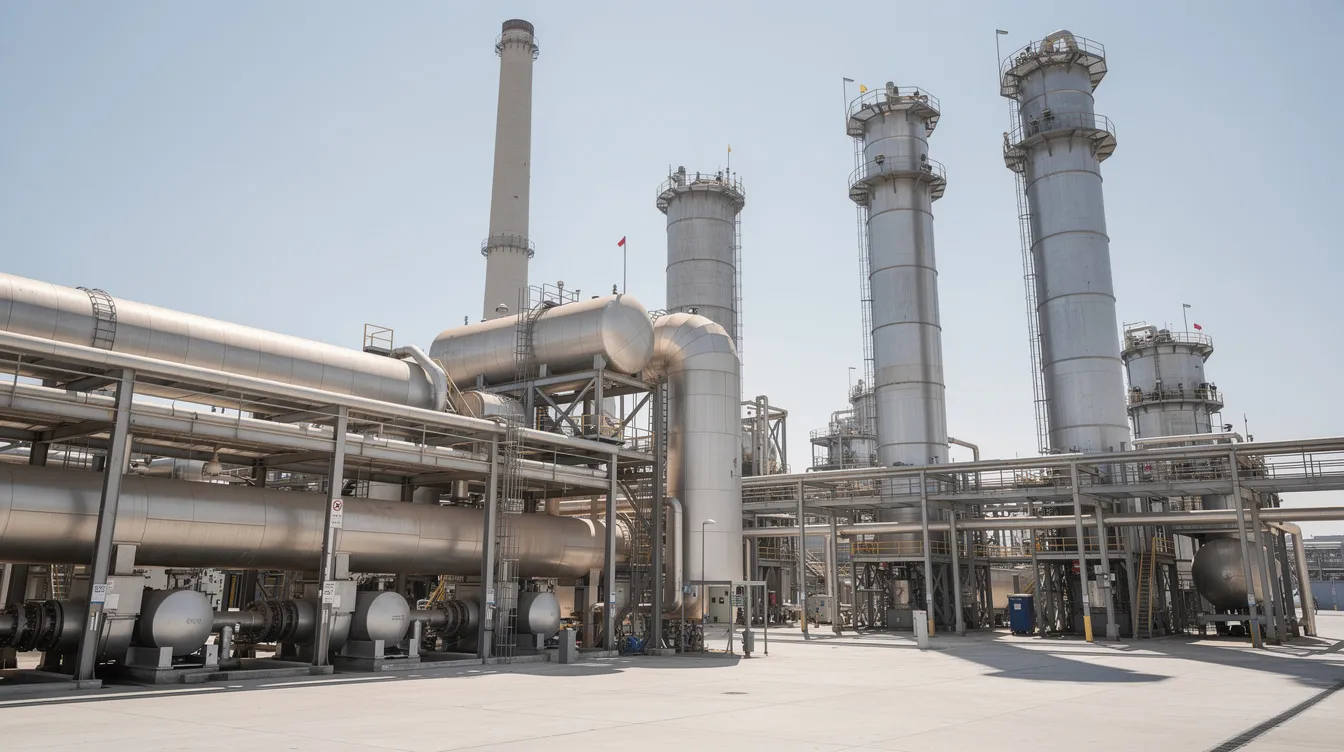
A grain based ethanol plant converts cereal grains into fuel-grade ethanol (99.5%+ purity) through a biochemical process. Unlike a molasses based distillery that uses sugarcane juice or molasses as feedstock, a grain plant processes maize, broken rice, damaged foodgrains, surplus millets or wheat. The DPR must clearly define primary and secondary feedstocks, since raw material selection directly affects equipment sizing, operating cost and by-product revenue.
The ethanol production process follows defined process flow diagram sequences: grain handling and milling using hammer mills, slurry preparation, liquefaction and saccharification (where starch converts to fermentable sugars), fermentation in tanks where yeast cells contents break down sugars into alcohol, distillation through columns essential for ethanol separation, molecular sieve dehydration, and finally ethanol storage. The specification manufacturing process for fuel-grade ethanol requires strict control of alcohol type and purity; an alcohol physical properties table detailing density, boiling point and water content is typically part of the DPR documentation.
Ethanol production involves grain handling, milling, and fermentation. Beyond ethanol, plants generate distillers dried grains with solubles (DDGS) as cattle and poultry feed. Ethanol production from broken rice can yield DDGS with over 80% protein content, and CO₂ recovery is viable in some projects. Ethanol plants can generate revenue from these by-products, improving overall project economics. Ethanol production can also utilize broken rice as a raw material, as detailed in the Broken Rice & Damaged Foodgrain Ethanol Plant Project Report. For maize-focused projects, see the Maize-Based Ethanol Plant Project Report & DPR in India.
Grain-Based Ethanol Plant Setup Cost by Capacity – 2026 Estimates
Capital cost depends on plant capacity, technology selection, automation level, environmental compliance and available infrastructure. Costs vary with daily production capacity measured in Kilo Liters Per Day (KLPD). According to ICRA research, setting up a 1G ethanol plant costs ₹1.3–1.6 crore per KLPD, with plant and machinery accounting for 71–76% of that figure in grain based distilleries.
| Plant Capacity | Indicative Fixed Capital (₹ Cr) | IDC, Pre-Op & Contingency (₹ Cr) | Working Capital Margin (₹ Cr) | Total Estimated Funding (₹ Cr) |
|---|---|---|---|---|
| 60 KLPD | 110–145 | 15–22 | 6–10 | 130–175 |
| 100 KLPD | 180–250 | 30–40 | 10–20 | 230–310 |
| 200 KLPD | 300–400 | 40–55 | 20–30 | 360–480 |
These estimates assume a greenfield site with land acquisition, DDGS dryer, full ZLD system, basic cogeneration (biomass or coal-fired boiler with TG set), and standard automation. GST on machinery and civil construction cost are included. The 60 KLPD benchmark aligns with a published DPR showing total capital investment of approx ₹134 crore including working capital. The 200 KLPD range corresponds with IMARC estimates of ₹150–400 crore for 100–250 KLPD capacity.
These are order-of-magnitude benchmarks for preliminary planning and bank discussion. Actual EPC quotations, civil tenders and supplier offers must be obtained before financial closure.
Detailed Grain-Based Ethanol Plant Setup Cost Breakdown
For a representative 100 KLPD grain based ethanol plant, the following table shows the share of each cost component within fixed capital:
| Cost Component | % of Fixed Capital | Indicative ₹ Crore |
|---|---|---|
| Land acquisition & site development | 4–6% | 8–12 |
| Industrial buildings & civil works | 10–14% | 20–30 |
| Grain handling, cleaning, silos & milling | 5–7% | 10–15 |
| Liquefaction & saccharification equipment | 6–8% | 12–18 |
| Fermentation systems | 5–7% | 10–15 |
| Distillation & dehydration machinery | 15–20% | 30–42 |
| Boiler, TG set & power systems | 12–18% | 24–38 |
| DDGS processing, drying & storage | 6–9% | 12–19 |
| Water treatment, ETP & ZLD | 5–8% | 10–17 |
| Electrical, instrumentation & automation | 5–7% | 10–15 |
| Ethanol storage tanks & safety systems | 3–4% | 6–8 |
| Engineering, erection, commissioning & contingency | 5–8% | 10–17 |
| Total Fixed Capital | 100% | ~180–250 |
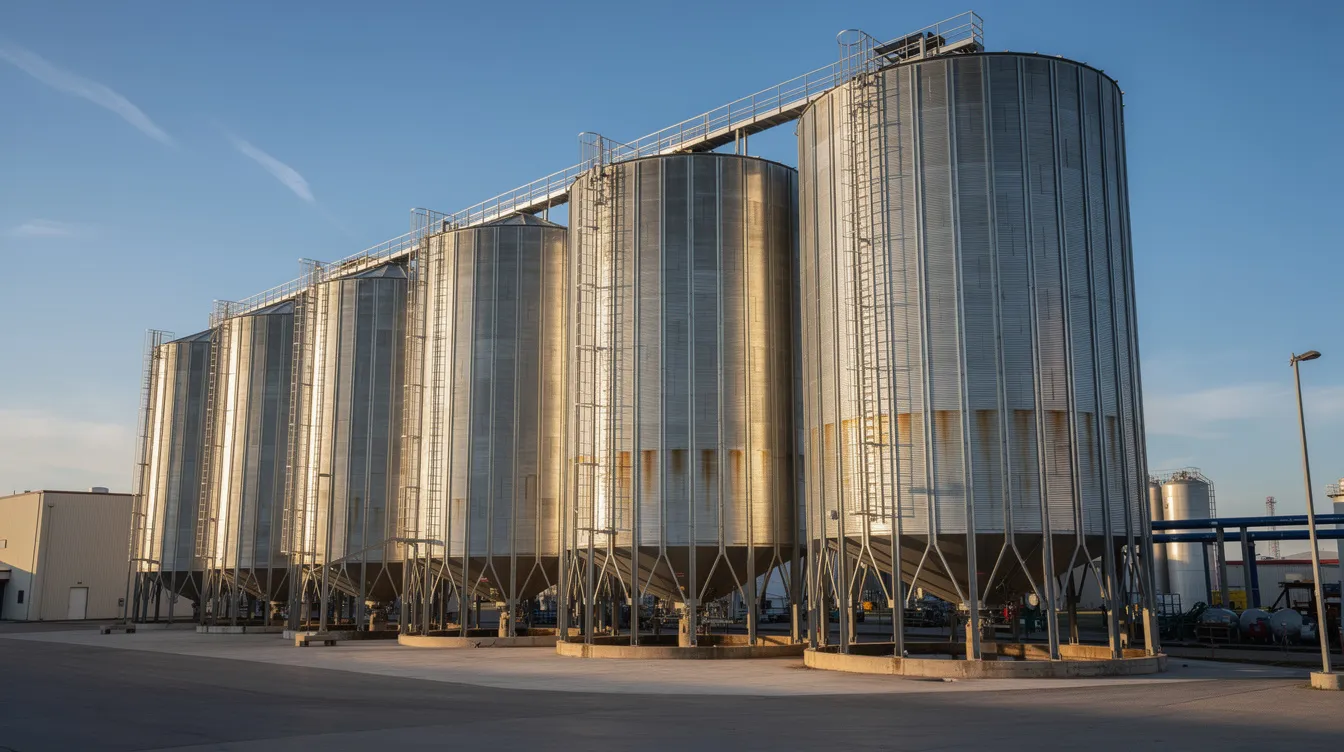
Plant and machinery typically account for 45% to 55% of capital expenditure when distillation, dehydration, fermentation and boiler systems are combined. Ethanol plants require silos for grain storage and cooling towers for temperature control across fermentation and distillation. Zero Liquid Discharge systems are essential for environmental compliance in ethanol plants, and these along with DDGS dryers often consume 15–20% of fixed capital combined.
Operating expenses that recur typically dictate the gross margins of the plant, so capex decisions on boiler fuel type, automation and ZLD technology carry long-term cost implications. Captive power generation helps mitigate energy costs in ethanol production by reducing grid dependency. Promoters frequently underestimate civil works, pre-operative costs, IDC and contingency, creating funding gaps during implementation.
100 KLPD Grain-Based Ethanol Plant – Illustrative Investment Calculation
This worked example assumes a greenfield 100 KLPD based ethanol plant in a state with moderate land cost, standard grain-based technology, and commissioning around FY 2026–27.
| Cost Component | ₹ Crore (Indicative) |
|---|---|
| Land & site development | 10 |
| Building & civil construction | 25 |
| Core plant & machinery (distillation, dehydration, fermentation, liquefaction) | 80 |
| Boiler, TG set & utilities | 30 |
| DDGS plant & allied systems | 15 |
| ETP, ZLD & pollution control | 14 |
| Electrical & automation | 12 |
| Erection & commissioning | 8 |
| Pre-operative expenses | 5 |
| Contingency (5%) | 10 |
| Interest during construction | 18 |
| Margin for working capital | 15 |
| Total Project Cost | ~242 |
Fixed capital (land through automation) totals approx ₹194 crore. Total project cost, including IDC, pre-operative expenses, contingency and working capital margin, reaches approx ₹242 crore. The project report covers pollution control and wastewater treatment as part of the ETP and ZLD line item. Total working capital facilities (bank CC limits and short-term loans) will typically exceed the margin amount shown here.
Financial projections should assess profitability, cash flow, and investment returns for this project. A professionally prepared DPR and financial model should test DSCR, IRR and payback under multiple grain price and capacity utilisation scenarios. If the measurement organism used in fermentation quality control varies from the assumed yeast shape and strain, ethanol yield changes, and the financial model must account for that sensitivity.
Land, Building and Infrastructure Requirements
Typical grain based ethanol plants require 15 to 30 acres of land, depending on capacity. A 60 KLPD unit may need 12–18 acres; a 200 KLPD plant, 25–35 acres. Exact requirements depend on plant layout, DDGS and ZLD footprint, internal roads, statutory green-belt norms and future expansion provisions. Land cost for an ethanol plant can start at approx ₹1 crore (₹10,000,000) per acre in rural industrial zones and increase several-fold in peri-urban locations.
Site development includes boundary wall, internal roads, weighbridge, security gate, stormwater drainage, rainwater harvesting and an administrative office block. Key buildings cover the process block, fermentation and distillation house, boiler and TG building, grain storage godowns, DDGS dryer shed, ETP/ZLD area, tank farm and utility structures.
Infrastructure requirements include reliable power supply or captive generation, water source and storage, grain handling and rail/road connectivity, fire-fighting systems, and hazardous-area-classified electrical installations. Brownfield projects on existing industrial land with shared utilities and a common boiler can reduce project cost and timelines by 20–30% compared to greenfield setups.
What Factors Increase or Reduce Ethanol Plant Setup Cost?
Ethanol plant capital expenditure per KLPD is not fixed. A 300 KLPD project in Haryana had a total project cost of approx ₹200 crore (around ₹0.67 crore per KLPD), while smaller plants often cost ₹1.3–1.6 crore per KLPD. Larger capacity spreads fixed costs over more litres, but absolute investment, feedstock requirement and risk also increase.
Technology choices matter: multi-pressure distillation columns, molecular sieve dehydration, DCS/SCADA automation, and multi-feedstock flexibility each add to capital cost. Cell yeast spares and chemical consumables also vary by technology supplier.
Ethanol production cost scales directly with grain throughput and local commodity prices. The average cost to produce one liter of ethanol depends heavily on grain prices and yields, making procurement radius and supply chain solutions critical. Location factors such as industrial vs rural land price, distance from grain mandis, availability of water and power, and proximity to OMC depots influence effective setup cost. State-level incentives or infrastructure support can reduce or increase the net investment.
Environmental and regulatory compliance, including ZLD, air-pollution control equipment and CO₂ recovery, adds both capex and recurring operating cost. Environmental compliance includes wastewater treatment and emissions control systems, both of which must be budgeted from day one.
Grain-Based vs Molasses-Based Ethanol Plant Setup Cost
Grain based ethanol distillery setup cost differs from molasses based plants in several ways. Grain plants invest more in grain handling, milling infrastructure and DDGS drying equipment. DDGS dryers alone add 5–7% to plant and machinery cost. Molasses plants, by contrast, do not need milling or DDGS equipment but require intensive spent-wash handling and often incineration boilers. The molasses route depends on cane crushing and sugar-mill linkages, while grain plants depend on agri-market dynamics for maize or broken rice procurement.
Neither route is universally cheaper. A molasses plant co-located with a sugar mill benefits from existing infrastructure, while a standalone grain plant on a greenfield site bears the full burden of civil works, utilities and effluent management. For a deeper comparison, see Grain-Based vs Molasses-Based Ethanol – Cost & Viability in India.
Promoters should choose their feedstock route after location-specific feasibility analysis. Sugarcane juice availability, grain supply stability, by-product markets and logistics all play a role in determining which alcohol production pathway is more viable for a given project.
Working Capital Required for a Grain-Based Ethanol Plant
Beyond fixed investment, a grain based ethanol plant requires substantial working capital. Feedstock typically represents 60% to 70% of total operational costs, and raw materials and energy consumption constitute the vast majority of ongoing costs. Working capital finance is crucial for managing operational costs before revenue generation.
Key working capital components include: raw grain inventory (30–45 days of maize, broken rice or wheat), chemicals and enzymes, coal or biomass fuel stock, DDGS inventory, finished ethanol stock, receivables from OMCs, and routine cash expenses. For a 100 KLPD plant, working capital margin is typically ₹10–20 crore. A published 60 KLPD DPR estimated one month’s working capital at ₹8.48 crore.
Banks finance working capital through cash credit, overdraft, WCDL or bill discounting. Only the margin portion (typically 25% of the assessed limit) is funded as part of total project cost. Realistic assumptions on ethanol sale price, grain cost and payment cycle in the detailed project report and CMA Data are essential to avoid liquidity stress once production starts.
For a reference point at the smaller end: daily expenditure for a 5 KLPD ethanol plant is approx ₹269,950, with monthly expenditure of approximately ₹8,098,500, illustrating how operating costs scale with capacity.
Bank Loan and Promoter Contribution for Ethanol Plant Setup
Grain based ethanol plant projects in India are typically financed through a mix of promoter equity, unsecured loans from promoters or group entities, term loan from banks or financial institutions, and working capital facilities. Loan structuring is essential for project finance and capital investment planning.
Lenders expect minimum promoter contribution (often 25–33% of project cost), clear means of finance, adequate collateral, and a demonstrated capacity to service debt. The debt-equity structure should be determined by the project’s cash-generation capacity and not simply by attempting to minimise promoter contribution.
A bankable detailed project report and CMA Data for an ethanol manufacturing project must contain realistic project cost, means of finance, implementation schedule, projected P&L, cash flow, DSCR analysis, break-even and sensitivity tests. For professional DPR and loan proposal preparation, see Bank Finance DPR & Loan Proposal Assistance.
Lenders evaluate feedstock linkages, offtake agreements with OMCs, management experience, environmental clearance status, and regulatory stability. Ethanol selling prices are influenced by government procurements and market demand, making offtake visibility a critical lender concern.
Promoters planning grain based ethanol projects can reach CA Manish Gugliya via WhatsApp for customised DPR, financial modelling and funding advisory. Projections are prepared for appraisal and decision-making; they are not guarantees of loan approval.
Government Policies, Approvals and Subsidies – 2026
India’s ethanol blending roadmap reached the E20 target, with 20% blending mandated for petrol supply. India’s ethanol demand trajectory earlier envisaged reaching higher blending levels, with E20 being the current operational standard. The report must include sections on environmental management and compliance to satisfy regulatory requirements.
Approvals required for a grain based ethanol plant include: environmental clearance (EC) from MoEFCC or state SEIAA, Consent to Establish and Operate from State Pollution Control Board, Excise licence, PESO approval for ethanol storage, factory and boiler registration, fire NOC, and building plan approvals.
Government subsidies can cover up to 40% of the project cost for ethanol plants under certain central and state schemes, including the government’s 40% principal subsidy on project costs under specific programmes. However, scheme eligibility, sunset dates and state-level availability differ widely. As of 2026, promoters must verify current notifications from the relevant page of government portals instead of relying on older announcements.
Subsidy should be treated as a potential benefit and upside in financial projections, not as the core justification for project viability. A pdf copy of the relevant scheme notification should be maintained as part of project documentation.
Is Setting Up a New Grain-Based Ethanol Plant Financially Sensible in 2026?
While ethanol remains strategically important for India’s biofuels and energy transition, investment decisions in 2026 must consider existing commissioned capacity, plants under implementation, and evolving OMC procurement policies. Feasibility studies evaluate the commercial viability of ethanol projects and should be completed before capital is committed.
Opportunity factors include E20 compliance demand, diversification into industrial ethanol and specialty alcohol type grades, growing DDGS demand in the feed sector, and potential CO₂ revenue. A 5 KLPD ethanol plant can reach daily income of ₹662,340 under favourable conditions, while daily income from ethanol production at a smaller scale is approx ₹320,000. Ethanol currently sells for ₹64 per liter plus 5% GST for fuel-grade supply. Total project cost for a 5 KLPD ethanol plant is ₹85,870,500, with net profit after expenses reaching ₹127,416,500 annually under base-case assumptions for that size.
Risks include grain price volatility, competition for feedstock with food and feed sectors, variability in DDGS realisations, logistical bottlenecks and policy changes. Promoters should prepare base-case, downside-case and stress-case scenarios, checking DSCR, IRR and payback under adverse assumptions. Project Report Bank can conduct independent feasibility studies and viability assessments before promoters commit land, capital or bank loans.
How CA Manish Gugliya Can Assist with Ethanol Plant Project Planning
Project Report Bank is a Chartered Accountant-led advisory practice that prepares detailed project reports, financial models and project finance documentation for manufacturing and process plants, including grain based ethanol projects across India. Services include customised DPR preparation, ethanol plant cost estimation, means-of-finance structuring, CMA Data, DSCR and cash-flow analysis, sensitivity analysis, and investor or bank presentation material prepared in professional sources and formats.
All projections and DPRs are prepared for decision-making and lender appraisal purposes. They are not guarantees of profit, loan approval or subsidy sanction. CA Manish Gugliya’s experience in project finance and industrial project advisory helps align ethanol project assumptions with what banks, NBFCs and investors expect in 2026.
To start a discussion, share your proposed capacity, location and feedstock plan with CA Manish Gugliya via WhatsApp for an initial consultation and customised engagement proposal.
Frequently Asked Questions
What is the cost of setting up a grain based ethanol plant in India?
Total project cost ranges from approx ₹130–175 crore for 60 KLPD to ₹360–480 crore for 200 KLPD, including land, building, plant and machinery, ZLD, DDGS dryer, cogeneration, IDC, pre-operative expenses and working capital margin. Total investment for a 5 KLPD ethanol plant is approx ₹85,870,500 at the smaller end of the scale.
How much investment is required for a 100 KLPD grain ethanol plant?
A greenfield 100 KLPD grain based ethanol plant in India requires an estimated total project cost of approx ₹230–310 crore, depending on location, technology, land cost and the extent of automation and environmental compliance included.
How much land is typically required for a grain based ethanol plant?
Land requirements range from 12–18 acres for a 60 KLPD plant to 25–35 acres for 200 KLPD. The exact size depends on plant layout, ZLD footprint, grain storage, DDGS area, green-belt norms and future expansion provisions.
Is working capital part of ethanol plant setup cost or separate?
Only the working capital margin (typically 25% of assessed working capital) is included in total project cost for bank-financing purposes. The full working capital facility, covering grain inventory, receivables and operating expenses, is sanctioned separately as cash credit or short-term borrowing by the bank.
Can banks finance most of the grain based ethanol plant cost, and what documents are essential?
Banks typically finance 67–75% of project cost as a term loan, with the promoter contributing the balance as equity. Essential documents include a bankable detailed project report, CMA Data, financial projections with DSCR and sensitivity analysis, environmental clearance, land documents and promoter KYC. Promoters with project-specific queries should contact Project Report Bank for customised guidance based on their capacity and location.
Conclusion – Plan Your Ethanol Plant Investment with Realistic Financial Assumptions
Grain based ethanol plant setup cost in India is multi-component and project-specific. No single number applies across capacities, locations and technology choices. Validating EPC quotations, including all infrastructure and pre-operative expenses, allowing for adequate contingency, and correctly sizing working capital facilities are each essential steps before committing funds.
Long-term viability depends not just on capital cost but on feedstock security, technology reliability, ethanol offtake and risk-managed financial structuring. A project should not be justified solely on optimistic demand projections or assumed subsidies.
Serious entrepreneurs and industrial investors planning a grain based ethanol project can connect with CA Manish Gugliya via WhatsApp or the Project Report Bank website for ethanol plant DPR, feasibility analysis, CMA Data and project finance advisory.
CA Manish Gugliya FCA, DISA (ICAI) Practising Chartered Accountant | Project Finance, DPR & Financial Advisory www.projectreportbank.com.