Key Takeaways
- An integrated agro processing park feasibility study must combine technical master planning, commercial demand validation, and detailed financial modelling at the park developer or SPV level, not just for individual processing units.
- The study must explicitly evaluate raw material catchment, hub-and-spoke design with rural transformation centres and collection centres, infrastructure phasing, and anchor tenant risk to produce credible evidence of viability.
- Project Report Bank, led by CA Manish Gugliya, prepares investor-ready DPRs with DSCR, IRR, NPV, sensitivity analysis, and comprehensive agro processing park risk assessment tailored to Indian bank and investor expectations.
- Investor readiness requires land and statutory clarity, realistic occupancy and tariff assumptions, secured anchor tenants, and transparent SPV governance and financing structures.
- This article provides indicative financial tables, risk matrices, and project finance insights to help serious promoters design bankable, commercially viable integrated agro industrial parks connected to smallholder farmers.
Introduction – Why Integrated Agro Processing Parks Require Professional Feasibility Studies
India’s push for agro industrial development has accelerated significantly since 2020, with central and state governments encouraging integrated agro industrial parks, food processing clusters, and value chain development infrastructure that connects agricultural producers to organised markets. Globally, the concept has demonstrated its potential – the Integrated Agro-industrial Park Support Project in Ethiopia, with a budget of USD 78 million, aims to support 800,000 farming households and create 200,000 new sustainable jobs within five years. These numbers illustrate the scale of structural transformation that well-planned agro-processing hubs can drive.
An integrated agro processing park feasibility study addresses a fundamentally different challenge from a standalone factory DPR. A rice mill or dairy plant involves one production line, one raw material stream, and one revenue model. An agro industrial park involves multiple processing units, shared utilities, logistics infrastructure, industrial park-level land development, and investment horizons spanning decades. The hub-and-spoke concept, where a central processing hub is supported by rural transformation centres and village-level collection centres, ensures raw material aggregation from smallholder farmers and drives inclusive rural transformation and poverty reduction.
The feasibility question is therefore not simply whether food processing is profitable. It is whether the park as an infrastructure investment can achieve adequate occupancy, generate sustainable revenue, service its debt, and deliver acceptable returns to equity investors. This requires professional feasibility analysis that evaluates park-level economics, multi-tenant coordination, common-facility utilisation, and risk diversification. At Project Report Bank, led by CA Manish Gugliya (FCA, DISA), we prepare these assessments to convert conceptual integrated agro projects into bankable, financeable investment proposals for term loans and equity funding.
What Is an Integrated Agro Processing Park Feasibility Study?
An integrated agro processing park feasibility study is a structured assessment covering technical, market, commercial, financial, legal, regulatory, and environmental aspects of a proposed agro industrial park project. A Detailed Project Report (DPR) is essential for integrated agro-processing parks, and the feasibility study forms its analytical foundation.
Different stages of assessment serve different purposes. A preliminary opportunity note identifies whether a location and concept merit further investigation. A pre-feasibility study examines broad viability without detailed engineering or financial modelling. A detailed feasibility study provides rigorous technical and commercial analysis. A bankable DPR formats these findings for bank finance submissions with CMA data and repayment analysis. An investor-ready DPR adds equity IRR, NPV, valuation, governance structures, and scenario analysis for institutional or strategic investors.
| Document | Primary Audience | Depth of Financial Analysis | Risk & Scenario Coverage |
|---|---|---|---|
| Preliminary Opportunity Note | Promoter, internal team | Indicative cost estimates only | Qualitative only |
| Pre-Feasibility Study | Promoter, early-stage investors | Broad cost-revenue estimates | High-level risk identification |
| Detailed Feasibility Study | Developer, SPV, advisors | Detailed projections, DSCR, IRR | Structured risk matrix, sensitivity |
| Bankable DPR | Banks, financial institutions | CMA data, repayment schedules, DSCR | Downside scenarios, collateral assessment |
| Investor-Ready DPR | Equity investors, PE funds, DFIs | Equity IRR, NPV, valuation | Full scenario modelling, exit analysis |
The usual contents of a comprehensive feasibility study include project concept, industry mix, raw material mapping, demand for industrial plots, utilities planning, infrastructure design summary, cost estimates, revenue model, project finance structure, risk matrix, and DSCR/IRR/NPV analysis. A DPR should include a market assessment and raw material analysis for the project area.
Technical Feasibility of Integrated Agro Processing Parks
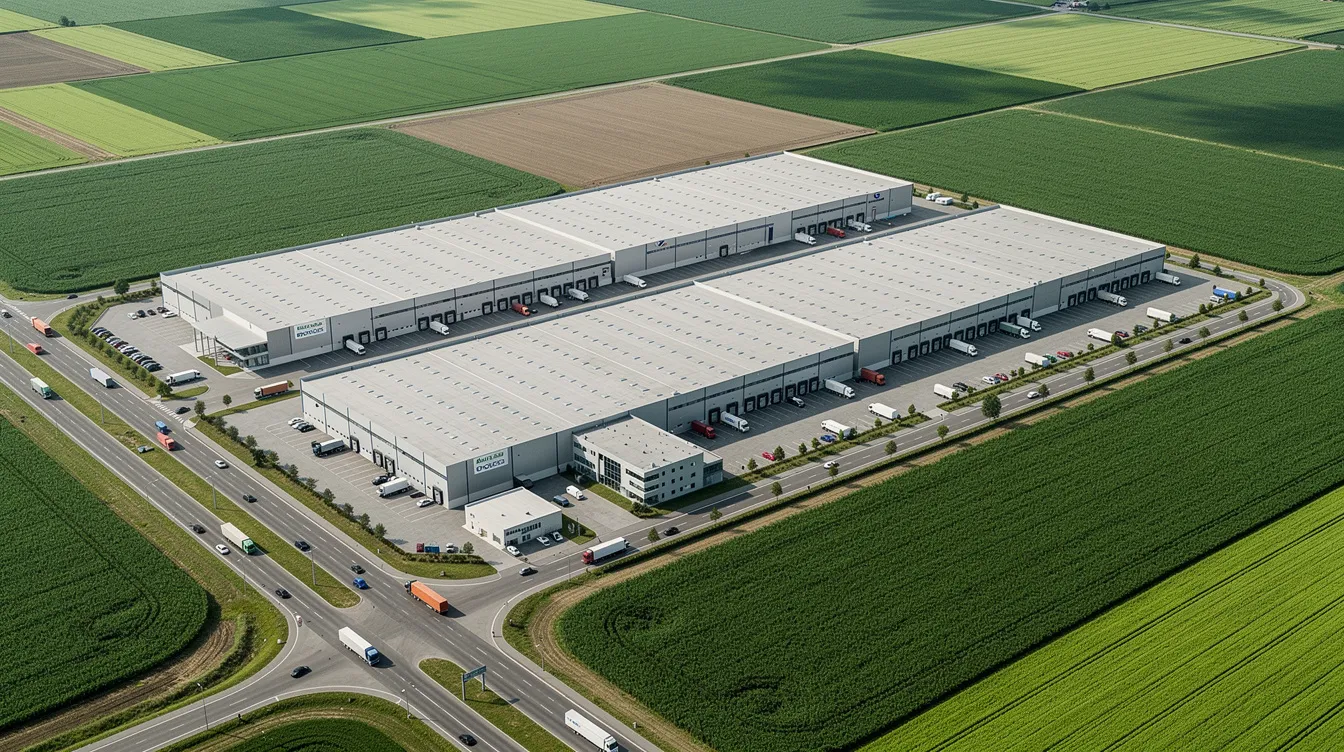
Technical feasibility determines whether the proposed site, infrastructure design, and utility systems can physically support an operational agro industrial park. Site suitability for an agro-processing park includes topography and proximity to transportation networks.
Industrial land should ideally be a contiguous parcel of 25 to 100 acres (as a hypothetical assumption depending on scale), located near high-production agricultural districts with stable power supply and legally clear title within industrial or agro-industrial zoning. For detailed guidance on land sizing and layout, readers may refer to our discussion on agro processing park land requirements.
Connectivity is critical: all-weather road linkage to mandis and rural transformation centres, access to state or national highways, possible rail siding, and reasonable distance to ports or major consumption cities. The Ethiopia IAIP project, for reference, includes plans to develop 5 kilometres of access roads connecting parks to supply chains, illustrating how connectivity planning is integral to park feasibility.
Raw material catchment analysis involves mapping crops, milk, livestock, and horticulture output within a 50 to 150 km radius, analysing seasonality, evaluating competition for raw material, and confirming alignment with the proposed food processing units.
Basic enabling infrastructure includes roads, power, water, and effluent treatment plants. Internal infrastructure planning must cover power distribution (designed substation capacity), water intake and treatment, steam or boiler requirements, cold rooms, ripening chambers, warehouse blocks, and stormwater drainage. Effluent Treatment Plants are necessary for managing wastewater in agro-processing parks, and environmental clearances are required for projects involving agro-processing. Potable water systems and waste management plants must also be planned, as demonstrated in the Ethiopia IAIP where both are developed within the parks.
Technical Feasibility Checklist:
- Land title clarity, topography, and soil bearing capacity
- Utilities access: power grid proximity, water source availability
- Flood, erosion, and environmental risk assessment
- Road and highway connectivity
- EPC constructability and phasing possibilities
- Regulatory zoning and Change of Land Use status
- Designed capacities for power, water, ETP, and cold storage
| Parameter | Hypothetical Illustrative Value |
|---|---|
| Land area (CPC) | 50–80 acres |
| Designed power capacity | 5–10 MVA |
| Water demand | 500–1,000 KLD |
| ETP capacity | 200–500 KLD |
| Cold storage capacity | 2,000–5,000 MT |
All values are hypothetical assumptions for illustration only, not current quotations or benchmarks.
Industry Mix, Anchor Tenant Selection & Commercial Feasibility
Commercial feasibility in integrated agro industrial parks depends on designing the right industry mix aligned with local agricultural strengths – cereals, pulses, oilseeds, fruits and vegetables, dairy, spices, ready-to-eat products, or animal feed. The selection of compatible agro-processing industries determines supply chain efficiency, inter-unit synergies, and overall market demand for the park’s offerings.
Anchor tenants play a decisive role. A large flour mill, solvent extraction plant, dairy processor, or integrated grain processor that commits early to plots can influence utility sizing, attract smaller satellite units, and stabilise park cash flows. Under earlier Mega Food Park guidelines, anchor investors were required to have a minimum investment of ₹10 crore and at least 51% stake.
Inter-unit material flows and by-product utilisation improve resource efficiency: bran to feed units, fruit waste to biogas plants, whey to protein recovery. Contract farming can enhance raw material availability for processing units in agro-parks, creating reliable linkages between producers and processors.
| Tenant Category | Typical Infrastructure Dependency |
|---|---|
| Grain milling (rice, flour, dal) | Silos, warehouses, heavy power |
| Oil extraction / solvent plant | Steam, ETP, bulk storage |
| Fruits & vegetables processing | Cold storage, ripening chambers, labs |
| Dairy processing | Cold chain, steam, water treatment |
| Spice grinding & packaging | Common packaging, quality labs |
| Cold-chain exporters | Deep-freeze storage, logistics yard |
| Feed manufacturing | Warehouse, by-product supply linkages |
Tenancy risk requires careful distinction: signed lease agreements represent committed occupancy, pipeline leads represent forecast occupancy, and actual operational occupancy emerges only once tenants commence production. Commercial feasibility must be validated through field surveys, stakeholder consultations, and realistic take-up assumptions rather than optimistic marketing targets.
Agro Processing Park Investment Feasibility & Project Cost Assessment
The integrated agro processing park feasibility study must clearly separate developer or SPV investment in land and common infrastructure from tenant-level investment in individual factories, machinery, and working capital. The financial model for agro-processing parks should differentiate between park and individual unit viability.
Major cost heads for the SPV include:
- Land acquisition or long-term lease rights
- Site development, grading, and boundary walls
- Internal roads and drainage
- Power substation and distribution network
- Water intake, treatment, and pipeline distribution
- Common utility systems (steam, compressed air)
- Warehousing and logistics facilities
- Cold storage blocks
- ETP and STP
- Administrative, training, and service buildings
- Engineering, consulting, and statutory approval expenses
- Pre-operative expenses and interest during construction (IDC)
- Contingencies
Promoter equity contributions typically range from 20% to 30% of total project costs, with the balance funded through term debt, and where eligible, government grants. Phased development can help manage the financial burden in large infrastructure projects of this nature.
| Cost Head | Hypothetical Allocation (₹ Crore) |
|---|---|
| Land & site development | 60 |
| Roads, drainage & boundary | 30 |
| Power & water infrastructure | 50 |
| Warehouses & cold storage | 80 |
| ETP, STP & utilities | 20 |
| Admin & training buildings | 10 |
| Consulting & approvals | 10 |
| IDC & contingencies | 40 |
| Total illustrative SPV capex | 300 |
These figures are hypothetical assumptions for illustration only. For more granular cost breakdowns, refer to our discussion on agro processing park setup costs.
Total ecosystem investment (SPV plus all tenants) may be several times the SPV’s direct capex, which is relevant in discussions with government agencies and private investors evaluating economic development impact and job creation potential.
Revenue Model & Commercial Sustainability
Sustainable operations for an agro industrial park depend primarily on recurring income streams rather than one-time receipts.
Recurring revenue sources:
- Industrial plot lease rentals (e.g., ₹100–150 per sqm/year based on benchmarks from existing parks)
- Factory shed rentals
- Warehouse and cold storage rentals
- Utility margin on power, steam, and water supply
- ETP and common-facility usage charges
- Maintenance and common-area service levies
One-time or non-operating receipts:
- Lease premiums or upfront development charges
- Refundable security deposits
- Government capital assistance or subsidy receipts where applicable
Tariff-setting must balance cost-plus recovery with competitive alignment against nearby industrial parks and affordability for MSME tenants. Break-even analysis determines the minimum operating level needed for viability – typically expressed as the occupancy percentage at which operating revenue covers all fixed costs and debt service. For a deeper treatment of tariff structures, see our detailed piece on the agro processing park revenue model.
Variations in occupancy, tariffs, or utility margins over a 10–15 year period can significantly stress the sustainability of the revenue model, making conservative assumptions essential.
Financial Feasibility – DSCR, IRR, NPV & Investment Returns
Agro processing park financial feasibility is assessed at the SPV level using projected income statements, balance sheets, and cash flow statements, distinct from tenant business economics. Financial projections in a DPR should include profit and loss statements and cash flow analysis over a 10 to 15 year horizon.
Projections are built on assumptions of phased occupancy, rental escalation, utility volumes, O&M costs, inflation, interest rates, and capital expenditure phasing. Working capital assessments should account for all inventories and trade receivables.
Key metrics include Project IRR versus Equity IRR, Net Present Value at an appropriate discount rate, DSCR based on cash flow available for debt service versus term-loan obligations, and payback period. Debt service coverage ratios above 1.5 are generally considered healthy in project finance, though positive EBITDA alone does not guarantee adequate debt-service capacity. Projects may be financially viable but still need assessments for cash flow and liquidity management, particularly during early years when occupancy is ramping up.
| Year | Occupancy (%) | Revenue (₹ Cr) | O&M Cost (₹ Cr) | EBITDA (₹ Cr) | Debt Service (₹ Cr) | DSCR |
|---|---|---|---|---|---|---|
| 1 | 25 | 8 | 6 | 2 | 4 | 0.50 |
| 2 | 50 | 16 | 8 | 8 | 12 | 0.67 |
| 3 | 70 | 23 | 10 | 13 | 14 | 0.93 |
| 4 | 85 | 28 | 11 | 17 | 14 | 1.21 |
| 5 | 95 | 32 | 12 | 20 | 14 | 1.43 |
| 7 | 100 | 37 | 14 | 23 | 14 | 1.64 |
| 10 | 100 | 42 | 16 | 26 | 14 | 1.86 |
All values are hypothetical assumptions for illustration only. Integrated agro processing park investment feasibility should always be summarised with viability assessment under base, downside, and stress cases rather than presenting a single IRR figure. For detailed modelling approaches, refer to agro processing park financial projections.

Agro Processing Park Risk Assessment – Major Risks & Mitigation
Agro processing park risk assessment is a structured review of land, regulatory, construction, financing, occupancy, operational, and market risks. The risk matrix below summarises major categories:
| Risk | Potential Impact | Probability | Financial Consequence | Mitigation Strategy | Responsible Stakeholder |
|---|---|---|---|---|---|
| Land title disputes or delayed CLU | Project stall, legal costs | High | Cost escalation 10–20%, 12–18 month delay | Early title due diligence, state-level facilitation | Promoter, legal counsel |
| Delayed statutory/environmental approvals | Construction delay | Medium-High | IDC increase, revenue postponement | Parallel processing of approvals, experienced consultants | SPV, regulatory advisors |
| EPC cost overruns | Budget breach | Medium | 5–15% capex increase | Fixed-price EPC contracts, contingency provisioning | SPV, EPC contractor |
| Anchor tenant withdrawal | Revenue shortfall, credibility loss | Medium | Significant DSCR deterioration | Binding MoUs with penalties, diversified tenant pipeline | SPV management |
| Lower-than-expected occupancy | Revenue below debt-service needs | Medium | Cash-flow stress in years 1–4 | Conservative leverage, extended moratorium, phased construction | SPV, lenders |
| Raw material supply variability | Tenant operational disruption | Medium | Tenant defaults, reduced utility revenue | Hub-and-spoke with collection centres for smallholders, contract farming | Tenants, farmer cooperatives |
| Utility cost escalation | Margin compression | Medium | Reduced EBITDA if tariffs cannot be passed through | Cost-plus contracts, periodic tariff revision clauses | SPV operations |
| Interest rate increases | Higher debt burden | Medium | DSCR reduction | Fixed-rate portions, hedging, conservative gearing | SPV, lenders |
| Competing industrial parks | Demand diversion | Low-Medium | Occupancy lag, tariff pressure | Location advantage, superior infrastructure, strategic partnerships | SPV, marketing |
| SPV governance failures | Investor/lender confidence loss | Low | Potential project failure | Well-drafted SHA, independent directors, reporting standards | Board, investors |
Mitigation strategies should include early title due diligence, phased development activities, diversified tenant mix, minimum off-take agreements, conservative leverage, DSCR covenants, robust environmental management plans, and strong SPV governance.
Sensitivity Analysis & Stress Testing
Sensitivity analysis is crucial for assessing the impact of fluctuating raw material costs on financial viability, along with variations in occupancy, tariffs, construction costs, and interest rates.
Core variables to stress-test include slower occupancy ramp-up, lower-than-expected rentals, higher construction costs, delay in commercial operation date, lower utility margins, and higher borrowing costs.
| Indicator | Base Case | Downside Case | Severe Stress Case |
|---|---|---|---|
| Average DSCR (years 1–10) | 1.35 | 1.10 | 0.85 |
| Year-5 occupancy | 95% | 75% | 55% |
| Project IRR | 16% | 12% | 7% |
| Peak funding gap (₹ Cr) | Nil | 15 | 40 |
All scenarios are hypothetical illustrations, not actual project results.
The downside case assumes a 12-month occupancy lag combined with 8% capex overrun. The severe stress case models significant tenant onboarding delays plus rental pressure from competing parks. This analysis guides promoters and lenders in deciding prudent debt-equity ratios, moratorium periods, contingency provisioning, and conditions for proceeding from one construction phase to the next.
Agro Processing Park Investor Readiness – What Investors Evaluate
Agro processing park investor readiness involves aligning project documentation, governance, and economics with the due-diligence expectations of banks, infrastructure funds, strategic investors, and development finance institutions. Private investors and lending institutions evaluate fundamentally different dimensions of the same project.
Core investor evaluation areas:
- Clear land rights and absence of encumbrances
- Master plan and technical feasibility grounded in credible evidence
- Independently validated demand for plots and utilities
- Anchor tenant commitment strength and financial capacity
- Regulatory approval roadmap and statutory compliance status
- Management team competence and track record
Financial-track evaluation covers quality of financial projections, transparency of assumptions, realistic DSCR and IRR ranges, evidence of promoter equity funding capacity, clear debt-repayment structure, and well-articulated downside risk responses.
Investor-Readiness Checklist:
- Land title report and CLU confirmation
- Completed technical feasibility and master plan
- Anchor tenant MoUs or letters of intent
- Detailed financial model with base, downside, and stress cases
- SPV incorporation documents and shareholder agreement
- Statutory approval roadmap
- Promoter equity commitment evidence
- Independent market demand validation
- Environmental compliance plan
Integrated agro-food parks also enhance knowledge sharing among stakeholders. Agro-processing hubs facilitate knowledge transfer through training programs covering modern agricultural techniques and quality standards. Rural transformation centres organise farmer field schools for hands-on learning and demonstrations for capacity building. Extension workers ensure seamless knowledge flow between farmers and researchers, while agro-food parks advocate for policies benefiting the agricultural sector. These elements of innovation and targeted training through extension services strengthen the development narrative for investors evaluating social and economic impact.
Planning an Integrated Agro Processing Park? Consult Project Report Bank for investor-ready DPRs and financial models prepared under the guidance of CA Manish Gugliya, with experience across complex project finance documentation for agro-processing infrastructure.
Project Finance, SPV Structuring & Debt–Equity Planning
Most integrated agro industrial parks are implemented through Special Purpose Vehicles. SPV shareholding patterns vary: single developer-owned, joint venture between private promoter and state agency, PPP structures, or consortiums of agro-processing companies. For detailed PPP and joint venture models, see our discussion on agro processing park SPV and joint venture structures.
Key project finance concepts include ring-fencing of cash flows within the SPV, limited recourse lending, security packages for lenders (mortgage on land, charge on receivables, DSRA), and covenants linked to DSCR, occupancy, and additional borrowing.
Typical cash flow waterfall: Revenue → O&M expenses → Statutory payments → Debt service (interest + principal) → DSRA replenishment → Reserves for major maintenance → Distributions to equity holders
Debt-equity planning requires determining prudent gearing based on projected DSCR and sensitivity results, timing equity infusions appropriately, and arranging working-capital lines once park operations stabilise. Funding sources for agro-processing parks can include government grants and bank loans, supplemented by promoter equity and institutional investment. For bank-finance documentation, promoters may refer to our guidance on preparing bank loan DPRs and CMA data.
Government Schemes, Subsidies & Industrial Incentives
Central and state governments periodically announce schemes to support agro-processing infrastructure. However, promoters must confirm current notifications, eligibility, and funding status from official portals before relying on incentives.
Under the Pradhan Mantri Kisan SAMPADA Yojana, 1,735 projects had been approved as of mid-2026, with completed projects creating capacity of 294.21 LMT per year and benefiting approximately 37.76 lakh farmers. The Agro Processing Cluster sub-scheme provides grant-in-aid up to ₹10 crore per project, at 35% of eligible project cost for general areas and 50% for SC/ST, NE, and ITDP areas.
Some states offer industrial incentives including capital subsidies, stamp-duty concessions, SGST reimbursements, power-tariff subsidies, or interest subsidies depending on project location and compliance commitments.
In financial projections, uncertain subsidies should be treated either as upside scenarios or included only after in-principle approval, not as guaranteed base-case inflows, to maintain conservative investment feasibility and lender confidence.
Bankable DPR vs Investor-Ready DPR – Key Differences
Both documents stem from the core integrated agro processing park feasibility study, but their emphasis differs based on the target stakeholder.
| Dimension | Bankable DPR (for Lenders) | Investor-Ready DPR (for Equity Investors) |
|---|---|---|
| Primary objective | Demonstrate repayment capacity | Demonstrate risk-adjusted equity returns |
| Key metrics | DSCR, cash flow adequacy, collateral | Equity IRR, NPV, valuation |
| Risk analysis | Downside scenarios, security coverage | Full scenario modelling, governance risks |
| Market validation | Demand study supporting revenue | Independent validation with competitiveness analysis |
| Governance discussion | Promoter credentials, compliance | SHA, board composition, exit routes |
| Valuation content | Generally not required | Essential for investment discussions |
| Scenario depth | Base and downside cases | Base, downside, stress, and upside cases |
Project Report Bank routinely customises DPRs for both bank-finance submissions and equity-investor presentations, ensuring consistency in assumptions while tailoring emphasis.
When Should Developers Commission a Feasibility Study?
Large integrated agro industrial park projects should commission a structured feasibility study before committing irreversible capital.
Key decision points:
- Before final land acquisition or lease execution
- Before approaching state agencies for formal approvals
- Before issuing RfPs for EPC contractors
- Before signing long-term MoUs with anchor tenants
- Before applying for major term loans
- Before starting new phases in a multi-phase park
- When market conditions, cropping patterns, or competitive landscapes change materially
Feasibility is not a one-time formality. It is an evolving decision-support tool throughout the park’s development lifecycle, updated as assumptions about occupancy, costs, and market demand require revision.
How ProjectReportBank.com Supports Agro Processing Park Developers
Project Report Bank is a professional project finance advisory practice led by CA Manish Gugliya (FCA, DISA, ICAI), with more than 20 years of experience in feasibility studies, DPRs, CMA data, financial models, and investor documentation for agro-processing parks and industrial infrastructure.
Services for integrated agro industrial parks:
- Comprehensive technical-commercial feasibility studies
- Integrated agro-processing park DPR preparation
- Project cost and means-of-finance planning
- DSCR, IRR, and NPV analysis
- Sensitivity and risk assessment
- Bank loan DPR and CMA data preparation
- Investor-ready DPR and fundraising documentation
- Industry mix design and value-chain linkage planning
Our advisory approach integrates infrastructure planning with rural transformation centres and collection centres serving smallholder farmers, aligning park development with inclusive economic growth objectives. For related advisory experience, see our work on multi-tenant agro food processing parks and integrated grain industrial complexes.
Promoters planning projects of ₹5 crore to ₹100 crore or more are invited to discuss site location, preliminary concept, and financing goals to scope a customised feasibility assignment.
Frequently Asked Questions
How long does it typically take to complete an Integrated Agro Processing Park Feasibility Study and DPR?
Timelines typically range from 8 to 16 weeks depending on data availability, site complexity, and the number of stakeholder consultations required. The process moves through stages: initial data collection and site assessment, technical planning, demand validation, financial modelling, risk assessment, and iterative review. Projects requiring extensive raw material catchment mapping or multiple collection centre evaluations may take longer.
How are rural transformation centres and collection centres incorporated into park feasibility?
The feasibility study maps catchment areas and logistics routes, estimates aggregation volumes from smallholder farmers across the supply area, and assesses the capex required for satellite infrastructure. Rural transformation centres connect smallholder farmers to agro-processing hubs, ensure local produce meets quality standards, organise farmer field schools for hands-on learning, and empower farmers to adopt modern technologies. The study provides high-level planning and cost estimates for these elements without detailed engineering design.
Can the same SPV own both the integrated agro industrial park and some anchor processing units?
This structure is possible but introduces governance complexities. The SPV must maintain ring-fenced accounting, transparent transfer-pricing assumptions in the financial model, and arm’s-length lease terms to maintain lender and investor confidence. The advantage is aligned incentives for park success; the risk is potential conflicts of interest in utility pricing or plot allotment priorities.
Do feasibility studies guarantee bank loans or investor funding for agro processing parks?
A professional feasibility study significantly strengthens project evaluation and improves transparency for all participants and stakeholders. However, no consultant can guarantee loan sanctions or investment commitments. Funding decisions ultimately rest with lenders and investors based on their own credit assessment, risk appetite, and due diligence. A well-prepared study increases the probability of favourable outcomes but does not substitute for the funder’s independent evaluation.
How often should financial projections for an agro industrial park be updated after operations start?
Financial projections should be revised at least annually, and updated more frequently on major events such as commissioning of new phases, significant occupancy deviations from forecast, policy changes affecting subsidies or tariffs, or material changes in interest rates or operating costs. Ongoing revision supports proactive risk management and provides lenders with current performance visibility against original assumptions.
Conclusion – Turning Agro Processing Park Concepts into Bankable & Investor-Ready Projects
Integrated agro industrial parks anchored by agro-processing hubs, rural transformation centres, and collection centres can unlock substantial value for smallholder farmers and regional economies when supported by rigorous feasibility analysis. They enhance agricultural productivity, create employment and competitiveness across supply chains, and contribute to meaningful economic development in developing regions.
The difference between a concept note and a bankable investment proposal lies in realistic technical design, validated demand and occupancy assumptions, prudent debt-equity structures, detailed agro processing park risk assessment, and conservative sensitivity analysis. Every serious promoter, SPV, and institutional developer planning an integrated agro industrial park, grain complex, or multi-tenant agro food processing park should commission a customised integrated agro processing park feasibility study and investor-ready DPR before making final investment commitments.
Planning an Integrated Agro Processing Park or Grain Industrial Complex? Obtain a professionally prepared feasibility study, risk assessment, financial model, and investor-ready DPR from CA Manish Gugliya through ProjectReportBank.com. Discuss your proposed investment, site location, industrial infrastructure requirements, and financing objectives.