Key Takeaways
- A well-designed agro processing park industry mix aligns anchor units, supporting units and by-product users to create an integrated value chain that maximises raw material utilisation across the park.
- Inter-unit value chain integration improves resource efficiency, reduces logistics cost and strengthens financial viability, DSCR and IRR for both developers and individual tenants.
- Industry selection must be based on regional crop patterns, market demand, environmental compatibility and bankability rather than land availability alone.
- A 100-acre integrated agro processing park can be structured around grain, oilseed, feed, breakfast cereals and allied units sharing common silos, utilities and logistics infrastructure.
- Project Report Bank, led by CA Manish Gugliya, FCA, DISA (ICAI), prepares customised DPRs, financial models and bankable documentation for integrated agro processing parks across India.
Introduction
The food processing industry contributes around 9% to India’s GDP and has created over 7 million employment opportunities across the country. India has 41 approved Mega Food Parks under the Pradhan Mantri Kisan SAMPADA Yojana (PMKSY), of which 25 are currently operational, while the Agro-Processing Cluster scheme, also part of PMKSY, has sanctioned over 62 clusters. These numbers reflect the scale of policy commitment, but the commercial success of each park depends on something that policy alone cannot guarantee: the right agro processing park industry mix.
Agro processing parks differ from generic industrial estates in a fundamental way. Agro-food parks consist of agro-processing hubs and collection centres, linked through a hub-and-spoke model that connects rural transformation centres, village level aggregation points and centralised processing facilities. This structure is designed to reduce post-harvest losses, enable value addition at every stage and integrate smallholder farmers into stable supply chains. When the industry mix within the central hub is carefully planned, these parks can create value-added products from raw agricultural materials while generating consistent throughput for shared infrastructure.
A well-planned industry mix can connect smallholder farmers, rural transformation centres and agro processing hubs to create stable raw material flows, processing volumes and employment. Agro-food parks also facilitate knowledge transfer across agricultural value chains, improving the quality and consistency of inputs reaching the processing units. The challenge, however, is that selecting industries is not a straightforward exercise. It requires analysis of local agriculture, crop calendars, processing economics, environmental compatibility, inter-unit material flows and financial viability.
This article, written from the advisory perspective of CA Manish Gugliya and Project Report Bank, covers industry selection strategy, inter-unit value chain integration, shared infrastructure planning, financial modelling, risk assessment, implementation phasing and DPR requirements for agro processing parks in India. The objective is to provide practical strategic and financial insights rather than generic information.
What Is an Agro Processing Park Industry Mix?
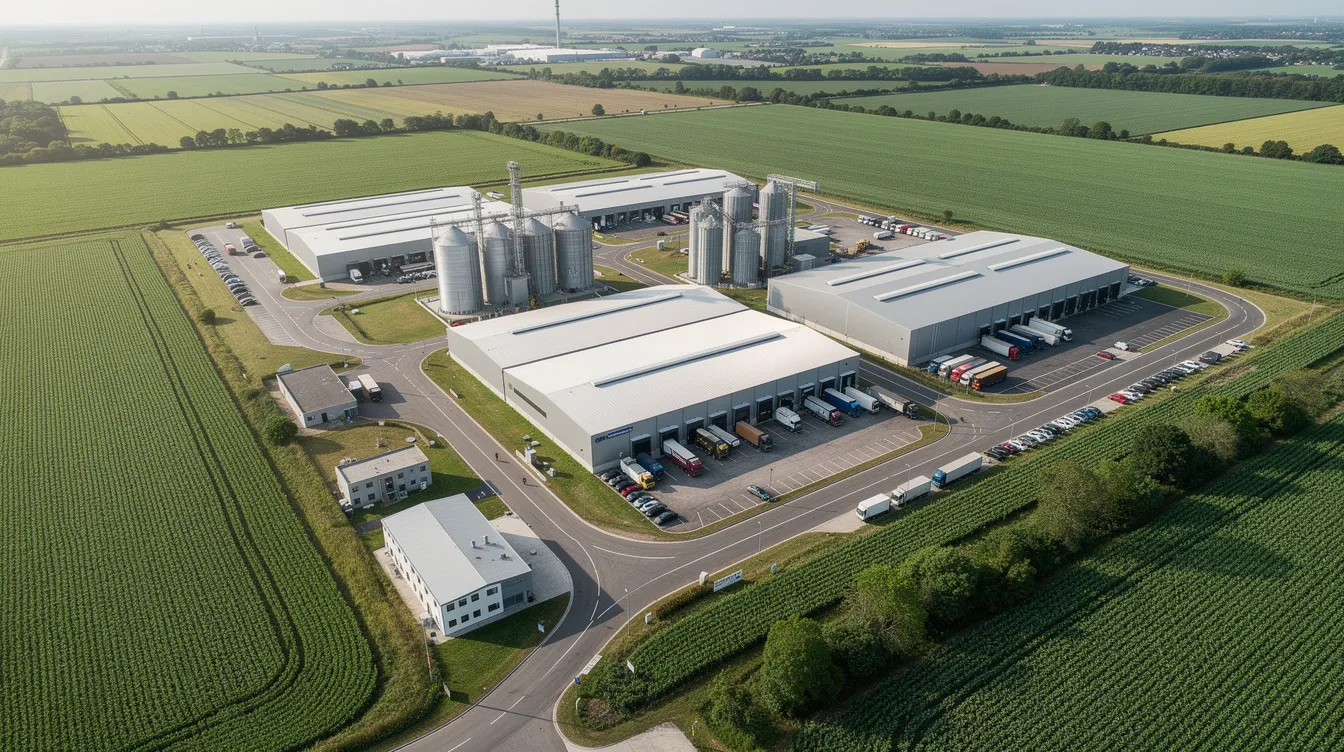
An agro processing park industry mix refers to the composition of anchor, supporting and downstream manufacturing units that together cover the farm-to-market agro processing value chain within a single planned industrial complex. The mix determines what gets processed, how by-products are utilised, which shared facilities are needed and how financial returns are distributed across the park.
Anchor industries are the high-volume primary processors that drive throughput and justify large-scale common infrastructure. Typical anchor units include modern rice mills, wheat roller flour mills, maize dry milling plants, oilseed solvent extraction and refining facilities, and integrated grain-based animal feed plants. Agro-processing hubs transform raw agricultural products into higher-value goods, and these anchor units form the core of that transformation.
Supporting industries operate at smaller scale but add processing depth and absorb intermediate products. These include packaging converters, cold storage operators, pulse and millet processing units, spice blending facilities, premix and fortification plants, and puffed or flaked cereal manufacturers. Food business parks streamline the food processing value chain by ensuring these supporting units are physically co-located with their upstream suppliers.
Downstream manufacturers and FMCG units create consumer-facing products such as breakfast cereals, extruded snacks, ready-to-eat meals and branded flour products. Secondary processing increases profit margins by turning raw materials into consumer-ready goods, and these downstream units capture the highest value addition per tonne.
Common infrastructure facilities, including silos, warehouses, testing laboratories, effluent treatment plants and logistics yards, are shared by multiple tenants. Common infrastructure reduces individual investment costs in agro processing parks and makes smaller units financially viable by spreading fixed costs across several users.
Industrial interdependencies are the connective tissue of the park. One unit’s by-product or intermediate product becomes another’s raw material. Rice bran moves to oil extraction. Wheat shorts go to feed mills. Broken grain feeds snack and breakfast cereal units. These interdependencies are what distinguish an integrated agro processing park from a collection of unrelated factories sharing a boundary wall.
Why Industry Mix Is Important for Agro Processing Park Feasibility
Park feasibility depends not only on land cost, subsidies or policy incentives but on whether the industry mix generates sufficient occupancy, throughput and integrated agro processing flows to sustain shared infrastructure and deliver adequate returns.
A balanced mix ensures full utilisation of raw materials sourced from farmers, minimises wastage and stabilises demand at agricultural collection centers and rural transformation centres. Effective agro-processing parks reduce post-harvest losses and food waste by ensuring that produce moves rapidly from farm gate to processing lines. Primary processing stabilises raw agricultural produce to minimise losses, and when multiple processing steps occur within the same park, the proportion of raw material converted into saleable output increases significantly.
Infrastructure efficiency is directly tied to industry mix quality. Silos, weighbridges, cleaning and grading lines, boilers, power distribution systems and water treatment plants become financially viable only when shared utilisation is consistently high. A park with only two or three tenants cannot justify a 10,000 MT silo complex or a centralised effluent treatment plant.
Logistics advantages are substantial. Co-location of processing, feed and packaging units reduces in-park material movement, eliminates external trucking for intermediate products and improves turnaround time. Food business parks enhance supply chain efficiency for farmers by shortening the distance between raw material receipt and final processing.
Each additional processing step inside the park boundary increases the total economic output per tonne of raw material procured. Grain to flour to extruded snacks represents progressively higher value addition, and a park that captures three or four stages of this chain generates more revenue, more employment and more tax revenue than one limited to primary milling.
From a financial perspective, the quality of the industry mix directly influences DSCR, IRR, break-even occupancy and the developer’s internal cash flow stability. Risk diversification is also improved when the park combines multiple crops (rice, wheat, maize, oilseeds, millets) and multiple end-use markets (feed, food, industrial), reducing dependence on any single commodity or price cycle.
Agro Processing Park Industry Selection Strategy
Industry selection must be rooted in local agricultural production patterns. An agro processing park in Punjab or Haryana will naturally anchor around rice and wheat processing, while a park in Madhya Pradesh or Gujarat may centre on oilseed extraction and refining. India’s crop production in FY 2025-26 reached approximately 150.18 million tonnes of rice, 117.95 million tonnes of wheat, 43.41 million tonnes of maize and 43.06 million tonnes of oilseeds. Successful agro-processing parks integrate multiple commodities based on local agricultural strengths and agro-processing parks should focus on local agricultural production to ensure supply stability.
Developers must analyse crop calendars, yield trends, post-harvest loss rates and smallholder farmers’ existing marketing channels through collection centres and cooperatives. Agricultural collection centers are critical for establishing supply chains in agro-processing parks. Understanding seasonal availability helps determine whether anchor units can operate year-round or whether multi-commodity flexibility is needed.
Market demand assessment should cover flour, semolina, edible oil, de-oiled cake, animal feed, breakfast cereals, extruded snacks and ready-to-cook grain products. The Production Linked Incentive Scheme supports food processing and several state policies provide additional incentives for value addition and agricultural development, making certain industries more attractive in specific regions.
Capital intensity varies considerably. A fully automated solvent extraction plant may require ₹18–35 crore for a 100–200 TPD capacity, whereas a simple hammer-mill feed unit can be established for a fraction of that amount. Technology level, automation requirements and environmental compatibility must be evaluated alongside financial viability.
Environmental and regulatory considerations influence industry clustering. Stack emissions from solvent extraction units (hexane), effluent loads from oil refining, noise from milling and solid waste from de-husking all require careful assessment. The MoFPI operational guidelines for Agro Processing Clusters assign scoring weightage to environmental compliance alongside financial metrics.
Industry Selection Scoring Matrix
| Selection Criterion | Weight | Rice Milling | Oilseed Extraction | Maize Dry Milling | Animal Feed | Breakfast Cereals |
|---|---|---|---|---|---|---|
| Raw Material Availability | 20% | High | Medium–High | Medium | Derived | Derived |
| Market Demand | 20% | High | High | Medium | High | Growing |
| CapEx Intensity | 15% | Medium | High | Medium | Medium | Medium |
| Employment Generation | 10% | Medium | Medium | Medium | Medium | Medium |
| By-Product Potential | 15% | High | High | Medium | Low | Low |
| Integration Suitability | 20% | High | High | Medium | High | High |
Selection of Anchor Industries and Supporting Manufacturing Units
Anchor units are the industries whose throughput justifies shared infrastructure investment and whose raw material demand supports stable procurement from farmers. Banks and financial institutions assess the credibility and commitment of anchor tenants when appraising park DPRs, and confirmed anchor occupancy significantly strengthens a park’s bankability.
Typical anchor industries include modern rice mills processing 200–500 TPD paddy, wheat roller flour mills at 150–300 TPD, maize dry milling units at 100–200 TPD, oilseed solvent extraction plants at 150–300 TPD, and integrated grain-based animal feed mills at 200–500 TPD. These units generate high volumes, substantial by-products and consistent demand for utilities and logistics.
Supporting manufacturing units include premix and fortification plants, packaging converters, spice blending and condiments units, puffed and flaked cereal plants, bakery-base manufacturing and cold storage operators. Cold storage facilities extend the shelf life of perishable products and serve both primary processing units and downstream FMCG manufacturers.
Millet and specialty grain processing can function as both anchor and supporting units in regions where millets are promoted for nutrition, agricultural productivity improvement and climate resilience. The growing policy emphasis on millets creates additional incentives for parks that include dedicated millet processing capacity and capacity building programmes.
National programmes and state industrial policies provide incentives for agro processing and value addition. Government provides financial grants to food processing entrepreneurs through various central and state schemes. Aligning anchor and support units with these programmes improves access to subsidies, concessional finance and infrastructure support.
Project Report Bank’s specialised reports, including the Integrated Grain Industrial Complex Project Report, Oilseed Processing and Edible Oil Refining Project Report, Grain-Based Animal Feed Manufacturing Project Report, Millet and Specialty Grain Processing Plant Project Report and Breakfast Cereals and Extruded Foods Project Report, can inform anchor and supporting unit planning with detailed capex, process and financial analysis.
Anchor and Supporting Industry Combinations
| Anchor Industry | Recommended Supporting Units | Logical Relationship |
|---|---|---|
| Rice Milling | Rice bran oil extraction, biomass power, broken-rice snack units | Bran, husk and broken rice flow to supporting units |
| Wheat Flour Milling | Bakery base, pasta/vermicelli, cattle feed | Bran and shorts feed downstream and feed units |
| Oilseed Solvent Extraction & Refining | Feed mill (DOC), packaging, lecithin extraction | De-oiled cake is primary feed ingredient |
| Maize Dry Milling | Snack/extrusion, feed mill, starch (future phase) | Grits to snacks, germ and bran to feed |
| Integrated Animal Feed Mill | Premix/vitamin blending, packaging | Receives by-products from multiple anchors |
Inter-Unit Value Chain Integration in Agro Processing Parks
Inter-unit value chain integration means establishing continuous material flows from primary processing units to secondary and tertiary units within the same park boundary. Utilizing by-products from one processing unit can serve as inputs for another unit, and this principle is what converts a park from a real-estate development into an industrial ecosystem.
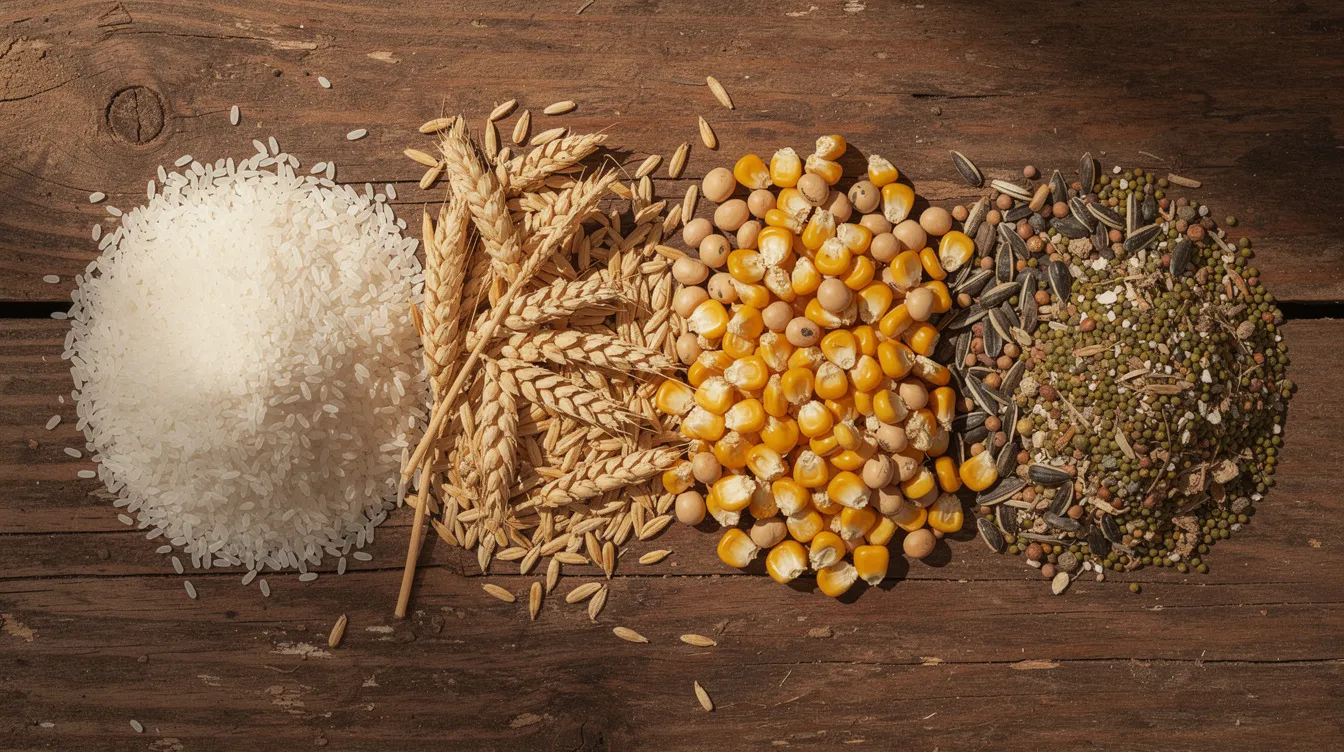
In rice processing, paddy enters the rice milling plant and produces polished rice, rice bran, husk and broken rice. Rice bran moves directly to an oil extraction unit within the park. Husk feeds biomass-based boilers that generate steam or electricity for common use. Broken rice becomes raw material for puffed rice or snack and breakfast cereal manufacturers.
In wheat processing, grain enters the flour mill and produces atta, maida and semolina. Wheat bran and shorts flow to animal feed units. Semolina moves to pasta, vermicelli or extruded-snack units within the park.
In maize processing, the maize dry mill produces grits, flour and germ. Grits feed extrusion plants for snacks. Germ goes to oil extraction. Bran and screenings move to feed units.
In oilseed processing, oilseeds enter solvent extraction and refining to produce edible oil and de-oiled cake. The de-oiled cake, which constitutes the largest output by weight, flows directly to animal feed manufacturing within the park.
Rural transformation centres ensure local produce meets quality standards before it reaches the park. Collection centres grade and sort produce from smallholder farmers, and these centres empower farmers to negotiate better market access. Rural transformation centres connect smallholder farmers to agro-processing hubs and facilitate knowledge transfer through farmer field schools and demonstrations. They help farmers meet agro-processing quality standards and empower farmers to adopt modern technologies and improve efficiency. Agro-processing hubs also provide training programs for farmers through extension workers and targeted training sessions at the village level.
Agro-food parks integrate farmers into larger supply chains, and connecting smallholder farmers to stable procurement arrangements is essential for maintaining year-round raw material flows. Rural transformation centres support farmer cooperatives for better market access, and farmer cooperatives improve bargaining power in agro-food parks.
Industry-Wise Material Flow and Integration Matrix
The following table maps each proposed anchor industry against supporting and downstream units, identifying material flows, internal buyers, logistics advantages and integration requirements.
| Anchor Industry | Primary Outputs | By-Products | Internal Buyers in Park | Logistics Advantage | Storage Requirement | Quality Norms |
|---|---|---|---|---|---|---|
| Rice Milling | Polished rice | Bran, husk, broken rice | Oil extraction, biomass boiler, snack units | Eliminates bran/husk trucking | Silos (paddy), warehouse (rice) | Moisture <14%, grading standards |
| Wheat Flour Milling | Atta, maida, semolina | Bran, shorts | Feed mill, bakery base, pasta unit | Bran moves within park | Silos (wheat), warehouse (flour) | Moisture <12%, gluten content |
| Maize Dry Milling | Grits, flour, germ | Bran, screenings | Snack/extrusion, feed mill, oil extraction | Grits to extrusion same campus | Silos (maize) | Moisture <14%, aflatoxin limits |
| Oilseed Extraction & Refining | Crude/refined oil | De-oiled cake, hulls | Feed mill, packaging unit | DOC moves directly to feed | Warehouse (oilseeds, DOC) | Oil content in DOC <1%, FFA norms |
| Animal Feed Mill | Compounded feed | Fines, dust | Packaging, poultry/dairy markets | Receives multiple by-products | Warehouse (ingredients, finished) | BIS standards, moisture <11% |
| Millet Processing | Millet flour, flakes | Husk, bran | Breakfast cereal, snack units | Cleaned millet to downstream | Warehouse (millets) | Moisture <12%, stone/foreign matter |
| Breakfast Cereal/Extrusion | Cereals, snacks | Trimmings, off-spec | Packaging, feed (off-spec) | Adjacent to grain mills | Cold/ambient warehouse | FSSAI compliance, shelf-life testing |
Note: Rice husk to biomass boiler for steam/power and ETP sludge to composting represent circular-economy waste-stream reuse within the park.
Shared Infrastructure and Common Facility Integration
Shared infrastructure is the economic backbone of an agro processing park and a key justification for government support and concessional finance. Without common facilities, each tenant would need to invest independently in storage, testing, power, water and waste treatment, making smaller units unviable.
Core shared facilities include industrial grain storage silos (typically 10,000–30,000 MT combined capacity), covered warehouses, cold rooms, pre-cooling units, weighbridges, laboratory and quality-testing facilities, internal roads and truck parking areas. The Punjab Agro Mega Food Park in Ludhiana provides an operational example with 10,000 MT dry warehouse capacity, 10,000 MT steel silos, 4,000 MT positive cold storage and 1,000 MT frozen storage.
Technical utilities include power substations, captive or open-access power arrangements, steam and hot water systems from centralised boilers, compressed air networks, industrial water supply, firefighting systems and effluent treatment plants. Agro processing parks should balance primary processing and waste utilisation, and centralised ETP/CETP systems serve this purpose by treating combined effluent from multiple units at lower per-unit cost.
Properly planned shared infrastructure supports inter-unit integration by standardising handling, grading, moisture control and quality parameters, ensuring reliable in-park material flows. When all incoming grain passes through a common cleaning and grading facility, every downstream unit receives material that meets agreed specifications.
Detailed infrastructure planning for agro processing clusters and multi-tenant agro food processing parks requires careful alignment between developer and tenant requirements.
Shared Infrastructure Allocation
| Infrastructure Category | Typical Capacity | Primary User Industries | Developer’s CapEx Share (Illustrative) | Tenant Contribution |
|---|---|---|---|---|
| Grain Silos | 10,000–30,000 MT | Rice, wheat, maize mills | 70–80% | Usage charges |
| Cold Storage | 3,000–5,000 MT | FMCG, dairy, horticulture | 60–70% | Rental per MT |
| Quality Testing Lab | Multi-parameter | All tenants | 80–90% | Testing fees |
| ETP/CETP | As per pollution load | All processing units | 70–80% | Proportional charges |
| Power Substation | Based on connected load | All tenants | 80–90% | Per-unit tariff |
| Weighbridges | 2–4 units, 60–100 MT | All tenants | 90–100% | Per-weighment charge |
By-Product Utilisation and Circular Industrial Economy
By-product utilisation is critical for environmental compliance, cost reduction and additional revenue generation. Waste recovery units enable circular economy practices within agro-processing parks, and the financial returns from by-products can meaningfully improve overall park economics.
Key agro processing by-products include rice bran (6–8% of paddy weight), rice husk (20–22%), broken grain (5–15%), wheat bran (20–25% of wheat), maize germ (6–8%), de-oiled cakes from oilseeds (typically 70–80% of oilseed input weight in solvent extraction) and various hulls and screenings.
These by-products can be channelled into animal feed manufacturing, biomass energy generation, bio-fertiliser production or further processed ingredients. Rice husk, for instance, has a calorific value suitable for biomass boilers that can supply steam to the entire park, reducing external fuel costs and carbon footprint simultaneously.
Cascading use of materials and industrial symbiosis can be embedded into park design from the outset. Innovation in waste-to-resource models creates internal buyers and stable off-take arrangements that improve the operational certainty of both the producing and consuming units.
By-Product Integration Table
| Source Industry | By-Product | User Industry in Park | Processing Required | Commercial/Environmental Benefit |
|---|---|---|---|---|
| Rice Milling | Rice bran | Oil extraction unit | Stabilisation, extraction | Revenue from bran oil; prevents rancidity |
| Rice Milling | Rice husk | Biomass boiler | Combustion | Steam/power for park; reduces fuel cost |
| Wheat Flour Mill | Wheat bran, shorts | Animal feed mill | Grinding, mixing | Feed ingredient; eliminates external sourcing |
| Oilseed Extraction | De-oiled cake | Animal feed mill | Grinding, blending | High-protein feed ingredient |
| Maize Dry Mill | Germ | Oil extraction | Mechanical pressing | Maize oil; additional revenue stream |
| All Units | ETP sludge | Composting unit | Aerobic composting | Organic fertiliser; waste compliance |
Agro Processing Park Industry Mix Business Models
Developers can choose different business models depending on location, raw material base, investor appetite and target markets. Each model has distinct capex, risk and value addition characteristics.
Grain-centric parks are dominated by rice, wheat and maize processing units with strong integration into animal feed, breakfast cereals and flour-based products. These parks suit high-productivity grain surplus belts and benefit from large-volume, year-round operations.
Oilseed and feed-processing parks are built around large solvent extraction units, edible oil refining, packaging and integrated feed mills using de-oiled cakes. These parks suit oilseed-producing regions and can achieve high throughput with relatively fewer anchor units.
Integrated food-processing parks combine primary grain and oilseed processing with ready-to-eat, ready-to-cook, frozen and chilled product manufacturing. These parks target both domestic and export markets and involve more complex regulatory requirements but offer higher unit margins.
Diversified multi-tenant parks mix agro processing with packaging, logistics, cold chain, spice processing and beverage units. These parks are designed for broader investor participation and suit regions where no single crop dominates the agricultural landscape.
Business Model Comparison
| Parameter | Grain-Centric | Oilseed & Feed | Integrated Food Processing | Diversified Multi-Tenant |
|---|---|---|---|---|
| Primary Anchors | Rice, wheat, maize mills | Solvent extraction, refining | Primary + secondary + FMCG | Mixed processing + services |
| Typical Supporting Units | Feed, flour products, packaging | Feed mill, packaging, logistics | Cold chain, packaging, R&D | Cold chain, spice, beverage |
| CapEx Profile | High (large milling) | High (extraction + refining) | Very High (multi-stage) | Medium (varied units) |
| Risk Profile | Commodity price dependent | Oil/DOC spread dependent | Market + regulatory risk | Lower concentration risk |
| Value Addition Potential | Medium–High | Medium–High | High | Medium |
| Suitable Regions | Punjab, Haryana, UP, MP | MP, Gujarat, Rajasthan | Metro-adjacent, export zones | Mixed cropping regions |
Illustrative Industry Mix for a 100-Acre Agro Processing Park
The following is an illustrative planning model for a 100-acre agro processing park situated in a grain-surplus region. This is not a standard template but a reference framework that would be customised based on specific location, crop mix and investor requirements.
Rural transformation centres and collection centres outside the park would feed into the 100-acre complex through organised procurement and long-term contracts with smallholder farmers and cooperatives, ensuring year-round raw material availability.
Illustrative Land-Use Allocation
| Plot Category | Area (Acres) | % of Total |
|---|---|---|
| Anchor Industrial Plots (rice, wheat, oilseed, maize, feed) | 35 | 35% |
| MSME Sheds (millet, snacks, packaging, premix) | 15 | 15% |
| Warehouses & Grain Silos | 12 | 12% |
| Cold Storage & Deep Freeze | 5 | 5% |
| Utilities (power, water, ETP, boiler house) | 8 | 8% |
| Internal Roads & Truck Parking | 10 | 10% |
| Green Belt & Buffer Zone | 7 | 7% |
| Administrative Block, Lab, Training Centre | 5 | 5% |
| Future Expansion Reserve | 3 | 3% |
| Total | 100 | 100% |
Agro Processing Park Investment and Financial Structure
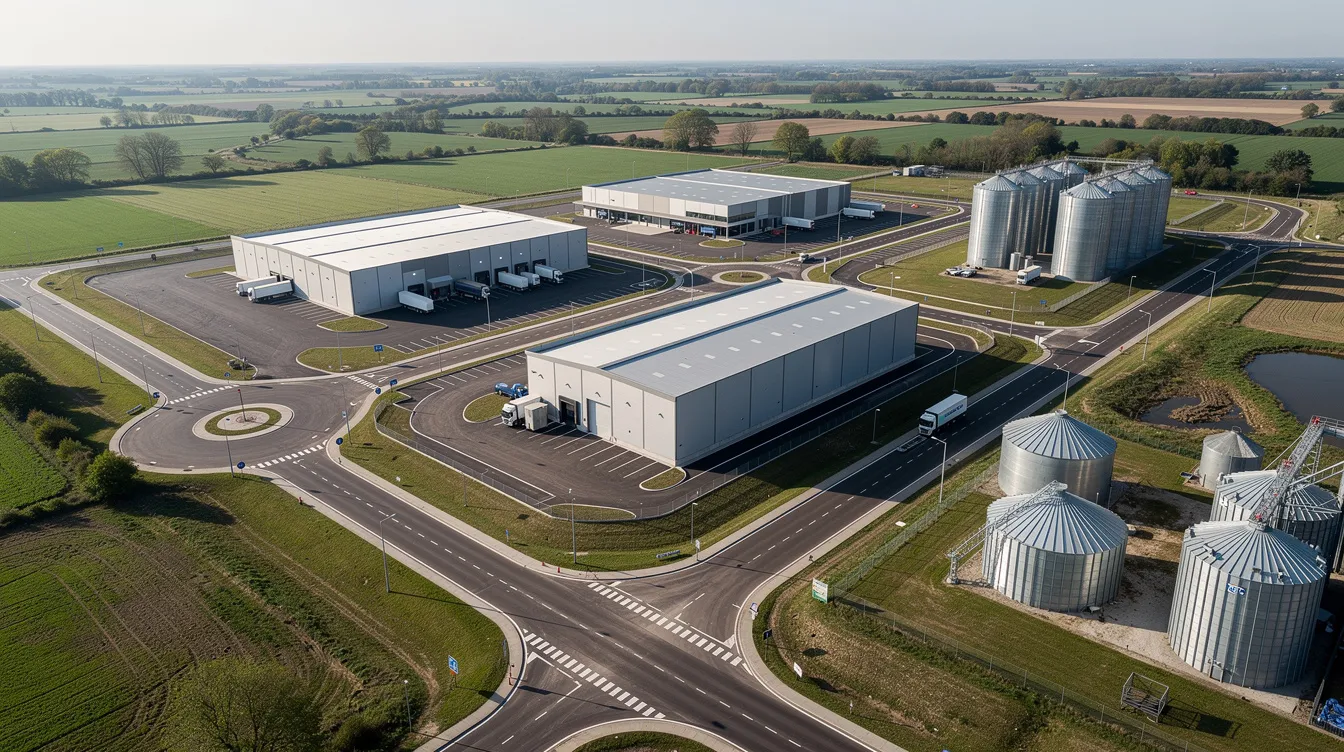
Investment in an agro processing park involves two distinct layers: developer investment in land, site development, roads, drainage, power and water networks, shared utilities, administrative buildings and common warehouses and silos; and tenant investment in individual plant and machinery, building, working capital and operational setup.
Typical funding structures for the developer SPV include promoter equity (25–35%), term loans from banks or financial institutions (40–50%), and state or central government grants and viability gap funding where applicable. Public-private partnerships enhance supply chain efficiency in agro-food parks and can improve the developer’s capital structure. Government provides financial grants to food processing entrepreneurs through schemes such as the Mega Food Park Scheme and APC scheme.
Revenue streams for the park SPV include upfront plot sale or long-term lease premiums, recurring lease rentals, utility charges, warehousing income, handling fees, testing and laboratory charges, and common service fees. These recurring revenues are critical for debt servicing and must be projected carefully in the financial model.
Banks review both developer and tenant investment when appraising park-linked projects, and the financial strength of anchor tenants directly affects the developer’s creditworthiness. Project Report Bank can structure means of finance, promoter contribution planning, loan structuring and CMA Data for both park developers and large anchor tenants.
Financial Benefits of Inter-Unit Value Chain Integration
Inter-unit integration directly reduces logistics costs, improves inventory turnover and enhances margins for park tenants and the developer SPV. When by-products move between adjacent units rather than being trucked to external buyers, transportation costs, loading and unloading events, and transit losses are minimised.
Working-capital management improves when intermediate goods move quickly between in-park units with shorter payment cycles and reliable quality parameters. A feed mill sourcing de-oiled cake from an adjacent solvent extraction plant can maintain lower stock holding than one dependent on external supply from a distant location.
Shared procurement, grading and quality-testing services at the park level improve pricing for farmers while still allowing processors to protect their margins.
Illustrative Comparison: Standalone vs. Integrated Units
| Parameter | Standalone Rice Mill + Separate Feed Unit | Integrated Units in Park |
|---|---|---|
| Bran Logistics Cost per Tonne (Illustrative) | ₹800–1,200 | ₹100–200 |
| Stock Holding Days for Bran/DOC | 15–25 days | 3–7 days |
| Wastage/Moisture Loss (Illustrative) | 1.5–2.5% | 0.3–0.8% |
| EBITDA Margin Impact (Illustrative) | Baseline | +1.5–3.0 percentage points |
Note: All values are purely illustrative assumptions for comparative understanding and should not be treated as industry benchmarks.
Financial Feasibility, DSCR, IRR and Project Bankability
Lenders and private investors evaluate agro processing park proposals using DSCR, IRR, NPV, payback period and break-even occupancy as key financial indicators. The MoFPI guidelines assign full marks for IRR above 20% and DSCR above 2.5 in APC project appraisals. Financial modeling is crucial for assessing the viability of agro-processing projects at this scale.
Occupancy assumptions significantly affect outcomes. A park projecting 60–70% occupancy in initial years rising to 85–90% over three to five years will show a very different DSCR trajectory than one assuming 90% occupancy from year one. Project feasibility studies are essential before developing agro-processing facilities, and realistic occupancy ramp-up is one of the most critical assumptions.
Park-level operating expenses including maintenance, staff salaries, security, common utility power consumption, road and drain repair, insurance and administration must be factored into long-term financial projections covering 10–15 years.
Sensitivity analysis around variables such as slower occupancy, higher capex, higher interest rates or lower tariff realisation is essential. A project that maintains adequate DSCR even under moderate stress scenarios is genuinely bankable, as opposed to one that appears viable only under optimistic assumptions.
Financial feasibility assessments should integrate specific agro processing park industry mix assumptions rather than treating the park as a generic real-estate development. Project Report Bank prepares scenario-based financial models and bankable DPRs tailored to particular park concepts and industry mixes.
Risks in Agro Processing Park Industry Mix Planning
Even technically sound parks can underperform if risks attached to industry mix, raw materials and tenants are not properly assessed and mitigated.
- Tenant concentration risk arises when a few large anchor units dominate throughput. If a major tenant exits or scales down, park revenue and shared infrastructure utilisation can decline sharply.
- Raw material risk includes climate variability, monsoon failure, pest attacks and policy changes affecting MSP and exports that can impact grain and oilseed availability. Research into regional crop resilience and seasonal patterns is essential.
- Infrastructure underutilisation risk materialises if projected numbers of agro processing, feed or breakfast cereal units do not arrive within planned timelines. Many existing Mega Food Parks have faced partial occupancy challenges.
- Environmental and regulatory risks include tightening norms on emissions, discharge and solid waste that may restrict certain solvent extraction, effluent-heavy or high-noise industries.
- Financial and implementation risks such as cost overruns, land acquisition challenges, delays in utility connections and slower-than-expected tie-ups with rural transformation centres can erode returns.
Mitigation strategies include diversified industry mix, phased development, long-term off-take agreements, crop-insurance awareness for smallholders, robust environmental planning and conservative financial assumptions in the DPR.
Phased Implementation and Tenant Development Strategy
Phased implementation is advisable for parks above 75–100 acres, both to manage capex and to match infrastructure investment with actual tenant demand.
Phase I should focus on core infrastructure (roads, power, water, ETP, silos and warehouses) and onboarding two to three anchor units that can immediately generate throughput, credibility and initial revenue. This phase establishes the park’s operational identity and provides a foundation for attracting supporting tenants.
Phase II involves bringing in supporting units such as animal feed plants, millet processors, breakfast cereal and extrusion units based on confirmed material-flow linkages with Phase I anchors. This is also the stage where extension workers and training facilities begin operations to support farmers and groups associated with the park.
Phase III covers downstream FMCG, value-added food processing, advanced packaging units, R&D centres and possibly renewable-energy or waste-processing units. Agro-processing hubs provide training programs for farmers during this phase, and research facilities may be established to enhance agricultural productivity and innovation in processing technology.
Tenant development strategies include targeted investor outreach, roadshows with banks, collaboration with Farmer Producer Organisations and use of state industrial-promotion agencies. A carefully staged tenant mix also allows alignment of rural transformation centres and collection centres over time as more smallholder farmers are integrated into stable value chains.
DPR Requirements for Agro Processing Park Industry Mix Planning
A bankable Detailed Project Report is mandatory for serious funding discussions with banks, financial institutions and potential equity investors. Investor-ready documentation is vital for funding agro-processing ventures of this scale and complexity.
Core components of a DPR for agro processing parks include project concept, location analysis, crop and raw material assessment, market and demand analysis, and competitive landscape. A dedicated section on the agro processing park industry mix is essential, detailing anchor and supporting industries, planned capacities, inter-unit material flows and linkages with smallholder farmers via rural transformation centres and collection centres.
Infrastructure planning chapters must cover land development, utilities, shared facilities, environmental management and compliance with state and central norms in accordance with applicable regulations. Financial modelling requirements include detailed capex estimation, means of finance, working-capital assessment, projected profit and loss statements, cash flow projections, DSCR, IRR, sensitivity analysis and risk assessment. Annexures should summarise policy incentives and relevant central and state schemes without promising eligibility.
Project Report Bank prepares customised DPRs, CMA Data for bank loans and investor-ready documentation, providing project promoters with insights, factors and knowledge necessary for informed investment decisions. These are not generic templates but professionally structured analyses that serve both lenders and stakeholders.
Frequently Asked Questions
What minimum land area is practical for an integrated agro processing park?
While focused processing clusters can operate on 10–20 acres, a truly integrated agro processing park with multiple anchor units, shared silos, cold storage and centralised utilities generally becomes viable from about 75–100 acres onwards. Below this scale, the fixed cost of common infrastructure (ETP, laboratories, power substation, internal roads) cannot be spread across sufficient tenants. The exact threshold depends on local land prices, crop density and the number of processing stages planned. Parks in high-land-cost areas near urban centres may need to be more compact and vertically integrated, while those in rural surplus regions can spread across larger areas at lower per-acre development cost.
How can smallholder farmers and FPOs be effectively integrated into the park?
Integration requires establishing rural transformation centres and village level collection centres as aggregation and quality-control points outside the park boundary. Long-term supply contracts with Farmer Producer Organisations, transparent pricing mechanisms linked to quality grades, and capacity building programmes covering post-harvest handling and natural resources management help ensure consistent supply. Collection centres empower farmers to negotiate better access to markets, and cooperatives improve bargaining power in negotiations with processors. The park developer’s DPR should include a backward-linkage plan detailing procurement volumes, pricing mechanisms, quality parameters and support services for smallholders.
Is it necessary to finalise all tenants before approaching banks for finance?
Banks expect at least a clear pipeline of anchor tenants through MoUs or letters of intent, along with a robust agro processing park industry selection strategy in the DPR. It is not essential to have every MSME tenant signed before initial financial closure. However, the DPR must demonstrate that the planned industry mix is logical, that anchor tenants have credible financial standing and that the market demand for the park’s outputs is substantiated. Phased implementation allows the developer to onboard additional tenants as the park gains credibility and operational track record.
How is an agro processing park different from a standard industrial estate?
Agro processing parks are designed around crop-linked value chains, inter-unit material flows, shared post-harvest and processing infrastructure, and systematic linkages with smallholder farmers. Standard industrial estates typically provide land, roads, power and water but do not plan for material-flow integration, common grading and testing, centralised storage or backward linkages with agriculture. The success of an agro processing park depends on industrial interdependencies, whereas a generic estate succeeds primarily on plot occupancy regardless of tenant compatibility.
How can Project Report Bank support my agro processing park proposal?
Project Report Bank, under CA Manish Gugliya, FCA, DISA (ICAI), delivers end-to-end advisory for integrated agro processing parks: concept refinement, industry mix design, value-chain integration mapping, detailed financial modelling, bank-finance DPRs, CMA Data and investor-ready documentation. With more than 20 years of professional experience in project reports, financial projections and project finance, CA Manish Gugliya provides customised analysis aligned with lender expectations and policy requirements. Each park requires a unique approach based on its location, crops, scale and funding structure, and Project Report Bank ensures that the documentation reflects these specific factors rather than relying on generic templates.
Conclusion and Professional Advisory Call-to-Action
A carefully designed agro processing park industry mix and strong inter-unit value chain integration enhance utilisation, value addition, profitability and long-term sustainability for developers, tenants and farmers. Attention to anchor selection, supporting unit compatibility, by-product utilisation, shared infrastructure planning and phased implementation is essential for achieving satisfactory DSCR and IRR.
Each park is unique. Regional crop patterns, land availability, market proximity, investor appetite and regulatory environment all create distinct requirements that demand customised DPRs, financial projections and risk analysis rather than generic models.
Planning an Integrated Agro Processing Park or Industrial Food Processing Complex?
CA Manish Gugliya, FCA, DISA (ICAI), through ProjectReportBank.com, provides customised Detailed Project Reports, industrial feasibility studies, financial projections, bank-finance DPRs, CMA Data and investor-ready project documentation for substantial agro-processing investments in India.
Project promoters are invited to share their proposed location, land area, estimated investment, industry mix and financing requirements through the website’s WhatsApp contact facility to initiate a professional consultation for DPR preparation, feasibility studies, bank loan proposals and investor documentation.