
Key Takeaways
- A dal mill feasibility study must jointly assess raw material sourcing, recovery ratio, project cost, working capital, market realisations, and repayment capacity – machinery price and assumed margins alone cannot establish viability.
- Profitability in dal milling depends on procurement prices, product mix, capacity utilisation, operational efficiency, and funding structure, not on generic industry averages or brochure-level recovery claims.
- Project Report Bank, led by CA Manish Gugliya, evaluates technical, market, financial, and bankability aspects before large capital is committed to any pulse processing plant.
- Financial projections are important for assessing project viability in dal milling, and a structured feasibility study supports bank appraisal and investor discussions – but it cannot guarantee loan sanction or project performance.
By CA Manish Gugliya
The analysis in this article is based on professional project finance work spanning over 20 years, covering Detailed Project Reports, dal mill feasibility reports, CMA Data preparation, and financial modelling for pulse mills across India. All numbers and cases used here are illustrative assumptions for understanding purposes and should not be treated as verified industry benchmarks or recommendations.
1. Introduction: Why a Feasibility Study Matters Before Setting Up a Dal Mill
India produces 13.19 million tonnes of pulses annually, contributing roughly 25% of global pulses output. Approximately 75% of India’s pulses are processed by dal mills, and with pulses consumption increasing at approximately 5% annually, increased interest among entrepreneurs in setting up pulse processing units is understandable. The rising demand for processed pulses, combined with government initiatives under schemes like PMFME, has made dal milling an attractive sector.
However, the common promoter approach – taking a dal mill machines quotation, assuming 70–80% recovery, and multiplying output by today’s retail prices – does not constitute a feasibility assessment. A dal mill feasibility study must jointly evaluate raw material sourcing, manufacturing process performance, dal recovery ratio, sales realisations, operating costs, working capital requirements, and debt servicing capacity. Even a technically sound plant can fail if procurement arrangements, storage planning, market access, or cash flow management are weak.
Project Report Bank helps promoters test dal mill project viability before committing to land, building, and machinery purchases through structured feasibility and financial analysis.
2. What is a Dal Mill Feasibility Study?
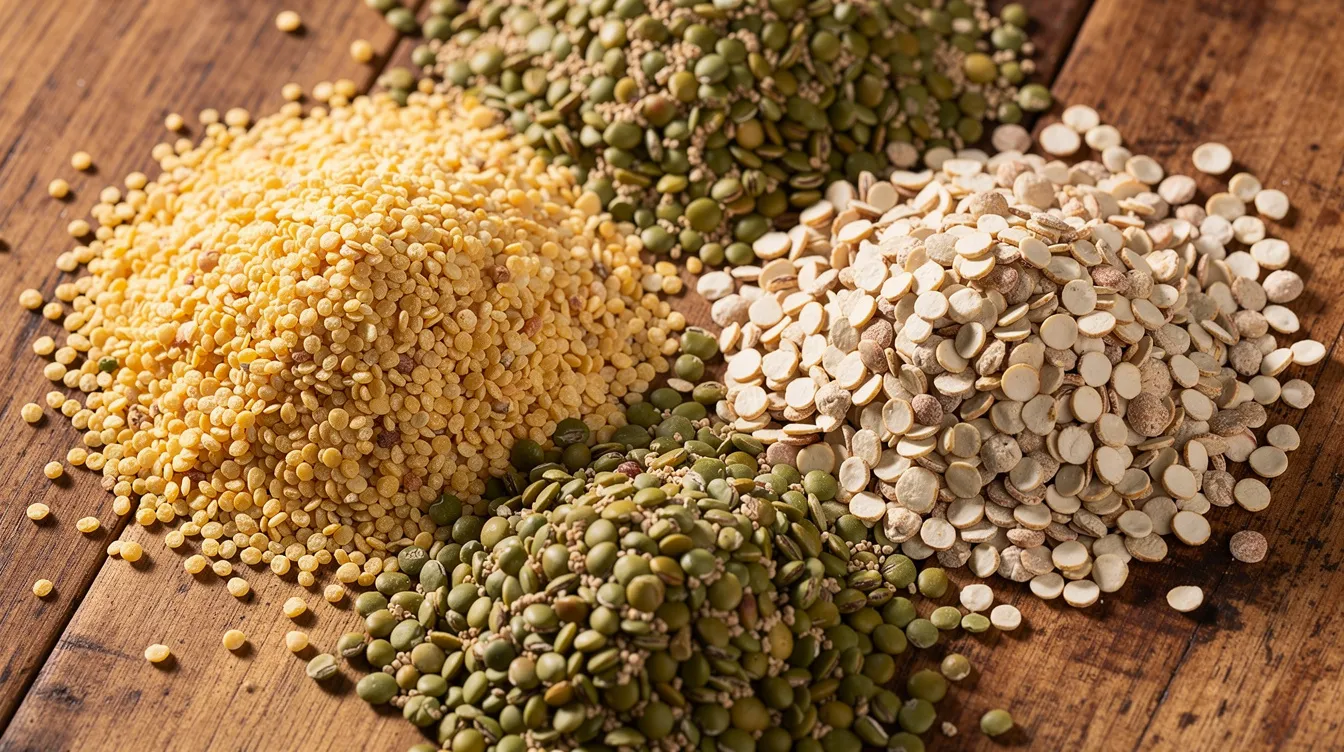
A dal mill feasibility study is a structured evaluation of technical, market, operational, financial, and implementation feasibility for a proposed pulse processing plant. A feasibility study evaluates viability, profitability, and operational practicality of a pulse milling plant before capital is deployed. It is distinct from a machinery quotation (which shows only equipment cost and rated capacity), a simple Excel projection (typically based on generic assumptions), and a full Detailed Project Report, which builds on feasibility findings with bankable documentation.
| Dimension | What It Covers |
|---|---|
| Technical Feasibility | Plant capacity, technology, machinery configuration, factory layout, utilities |
| Market Feasibility | Demand assessment for specific pulses, customer segments, competition, realisations |
| Operational Feasibility | Ability to source raw pulses, run the mill efficiently, maintain consistent quality |
| Financial Viability | Capital expenditure, operational expenditure, revenue projections, DSCR, IRR |
| Implementation / Bankability | Promoter credentials, funding structure, regulatory compliance, project timeline |
A dal mill feasibility report evaluates project costs and financial performance, and its conclusions may lead to resizing the plant, changing the pulse mix, or revising the funding plan before a DPR is finalised.
3. Market Feasibility and Sales Planning
Market research for a dal mill must be specific to the proposed location, target pulses, and customer segments – not based on generic national consumption data. A feasibility study includes a market analysis and demand assessment for specific pulses, covering local, regional, and export potential. Key target customer segments include wholesalers in nearby mandis, regional distributors, institutional buyers (hotels, caterers, and food processors preparing hot dishes in bulk), retailers and modern trade outlets, and private-label or contract packing clients.
The strategic choice between bulk supply versus branded dal packaging has a direct bearing on investment in packaging machinery, branding costs, and working capital. The competitive landscape within a 150–200 km radius – covering existing mills, their machine type, quality positioning, and freight policies – should be mapped carefully.
Ex-factory realisations differ significantly from retail MRP. Typical deductions include trader margins (5–12%), retailer margins (8–15%), GST, outward freight, packing costs, and quality discounts. Market demand for pulses is driven by key drivers such as increasing awareness of health benefits, consistent demand across Indian households, and growing demand in the european market and other countries. The export of pulses has grown by about 10% annually, adding another dimension. However, market growth projections must be tested against realistic payment cycles (15–60 days credit) and concentration risk if a few clients dominate sales.
4. Raw Pulse Availability and Procurement Feasibility
Dal mill viability is highly sensitive to raw material sourcing. Pulse prices for tur, chana, urad, and moong vary substantially by season and region. Major sourcing options include local mandis, regional APMC markets, direct procurement from farmers and FPOs, and trader or commission agent networks. Each channel carries different price, quality, and reliability characteristics. Dal mills are concentrated in pulse-producing areas like Indore, where location proximity to pulse-producing areas can significantly reduce transport costs and improve access to quality pulse grain.
Seasonal procurement windows play a crucial role – tur arrivals are typically heaviest after the kharif harvest, while chana procurement peaks during the rabi season. Quality parameters at procurement include moisture content (ideally 11–13%), foreign matter, damaged grains, and varietal uniformity – all of which directly affect conditioning needs and dal recovery. Quality raw materials impact the output’s market reputation and long-term buyer relationships. Holding 2–4 months of raw material stock requires dedicated godowns, pest control, insurance, and working capital finance, adding to storage and financing costs.
For detailed operational guidance, refer to raw pulse procurement, storage and seasonal inventory planning for dal mills. Promoters in rural areas near pulse-producing districts often have a sourcing advantage, but must still plan for off-season supply gaps and price volatility.
5. Technical Feasibility and Machinery Suitability
Technical feasibility determines plant capacity, technology, machinery, and factory layout appropriate for the intended pulse mix and quality targets. The typical pulse processing line includes cleaning, destoning, conditioning (where pulses are conditioned to loosen husks before de-husking and splitting), pulse conditioning, dehusking and splitting, grading, colour sorting, grading and packaging, and packing. Dal mill machinery includes de-huskers and polishers as core equipment, with advanced dal mill machines now enabling real time monitoring and higher throughput.
Decisions on machine type and automation level are significant. A mini dal mill (0.5–1 TPH) suits small-scale rural processing, while an automatic dal mill or fully automatic versus semi-automatic configuration targets commercial volumes. Automatic dal mills dominate the market due to their efficiency, and the 100–200 kg/hr capacity segment holds the largest market share. Increasing mechanization and technological advancements continue to reduce manual labor, reduce breakage, and improve productivity with minimal manual intervention.
The dal mill machine market is projected to reach $4.86 billion by 2035, growing at a CAGR of 3.76% during the forecast period. Electric-powered dal mills had a market valuation of $1.62 billion in 2024, and the asia pacific region remains the fastest growing segment due to widespread adoption. Gaining traction among small and medium enterprises, these systems are seeing increased interest in the asia pacific market for their ability to deliver consistent quality at scale.
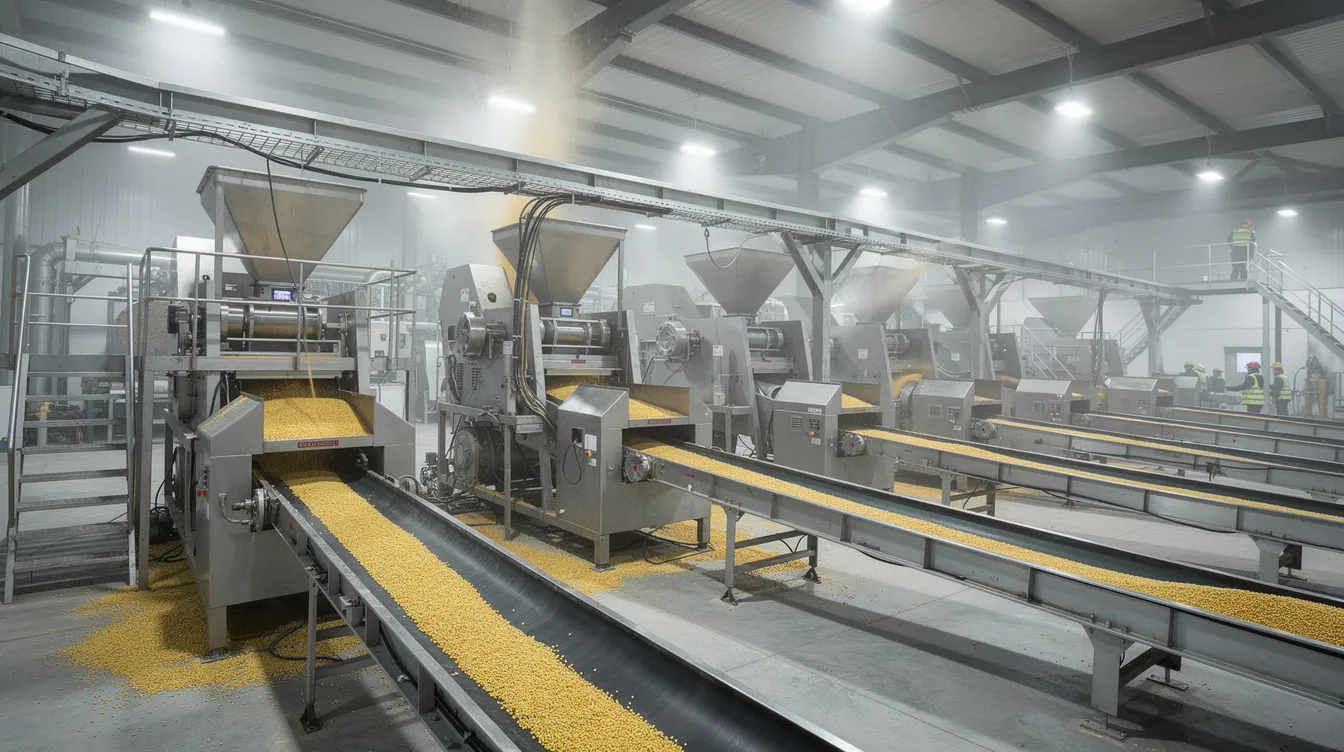
Plant layout should provide separate areas for raw material storage, processing, finished goods, loading–unloading, and future expansion. Refer to dal mill land, building and plant layout requirements and dal mill power consumption and utility requirements for project-specific estimation rather than copying generic benchmarks.
Production capacity in terms of rated TPD must be adjusted for actual operating hours, maintenance downtime, and pulse changeover time. Availability of spares, after-sales service, and operator training also form part of technical feasibility.
6. Recovery Ratio, Product Mix, and Production Economics
Recovery ratio is central to dal mill profitability. Dal milling generally yields 72% to 80% of finished dal from whole grain, and the dal recovery percentage varies by pulse type and processing method. Relying on brochure-based “85% recovery” without testing is risky. For pigeon peas (tur), commercial recovery typically ranges 63–75%, while chana achieves 78–82% under good conditions. De-husking efficiency of improved dal mills is approximately 95%, and split pulses yield stands at 80–85% depending on pulse variety. Negative impacts on profitability can result from low recovery rates in dal milling processes – even a 1–2 percentage point reduction can significantly affect contribution per tonne.
The following illustrative mass-balance table for 1,000 kg of raw tur pulse demonstrates how outputs distribute. Product quality and consistent quality in processing directly influence realisations.
| Output Component | Quantity (kg) | Illustrative Rate (₹/kg) |
|---|---|---|
| Head Dal (Split) | 680 | 155 |
| Broken Dal | 60 | 100 |
| Husk | 140 | 15 |
| Chuni / Powder | 80 | 18 |
| Process & Handling Loss | 40 | – |
| Total | 1,000 |
Each output carries a different selling price and market. Head dal commands a premium, while dal mill by-products such as husk, chuni, and broken dal serve feed and industrial markets at lower rates. Value addition through better conditioning and accurate machine settings helps reduce breakage and improve the product mix. For detailed recovery benchmarks, see dal mill recovery ratio and milling losses.
7. Project Cost and Funding Structure
Project cost includes fixed capital investment and margin for working capital. Typical fixed investment components cover land or lease deposit, civil construction, shed and warehouse, main dal mill machinery and auxiliary equipment, electrical and DG setup, storage godowns, pre-operative expenses, and contingency.
| Capacity | Indicative Fixed Capital (₹) |
|---|---|
| Mini (1–2 TPD) | 25–60 lakh |
| 5 TPD Semi-Automatic | 1.50–2.50 crore |
| 10 TPD Commercial | 3.50–6.00 crore |
| 20 TPD Semi/Fully Auto | 7.00–11.00 crore |
These are illustrative ranges, not standards.
Working capital requirement covers raw material stock, finished goods inventory, receivables, and operating cash, less trade payables. It is important to distinguish between total working capital requirement, working capital margin (promoter’s contribution), and bank borrowing via cash credit or overdraft limits.
Means of finance typically involve promoter equity (25–30%), term loan (70–75% of fixed capital), and working capital limits from banks. Government schemes such as PMFME offer capital subsidies or low-interest loans for food processing projects, and government support through such government initiatives can meaningfully improve the funding structure. However, promoters should verify latest eligibility norms independently. For detailed structuring, refer to dal mill project cost and means of finance.
8. Operating Cost and Contribution Analysis
Operating expenses encompass recurring costs like electricity, labor, and maintenance. Beyond raw pulses, dal mill operational costs include packaging material, power, fuel, repairs, quality control, insurance, administration, and selling and distribution expenses. Packaging material and transport are key components in calculating operational costs, and transportation costs can be significant depending on sourcing and delivery distances.
Variable costs (raw pulses, packing, power, freight) and fixed or semi-fixed costs (salaries, rent, depreciation, interest) should be separated for contribution analysis:
- Trading spread = output realisations minus raw material cost
- Contribution = spread minus variable costs
- EBITDA = contribution minus fixed operating expenses
- Profit before tax = EBITDA minus interest and depreciation
Quality control measures are implemented at every stage of pulse processing, and there is a growing emphasis on maintaining product quality and food safety standards as necessary safeguards rather than optional overheads. A strong emphasis on operational efficiency improves contribution, which in turn supports better DSCR and overall dal mill project viability.
9. Financial Viability Assessment
Financial viability assesses capital expenditure, operational expenditure, and revenue projections over at least 7–10 years. Capacity utilisation assumptions should reflect a realistic ramp-up: 50–60% in year 1, 65–75% in year 2, and 80–90% once raw material and market support stabilise.
Revenue should be projected pulse-wise and product-wise, with separate realisations for head dal, broken dal, and by-products. The overall financial analysis must include cash flow and projected profitability across the projection horizon. Working capital cycle analysis – covering raw material holding days, finished goods days, receivables, and payables – directly affects bank working capital requirements.
A break-even point indicates the capacity utilisation percentage where revenues equal costs. For many dal mills, break even analysis shows first-year break-even at around 40–60% utilisation.
A healthy debt service coverage ratio indicates sufficient operating profit to service debt. DSCR is computed as cash accruals (profit after tax plus depreciation) divided by total debt obligations (interest plus principal). Banks typically require DSCR of 1.25 or above. Project IRR measures return on total investment, while equity IRR reflects the return on the promoter’s own funds. For detailed lender-focused modelling, see dal mill financial projections, CMA Data and DSCR.
10. Illustrative Dal Mill Feasibility Assessment (With Assumptions)
All figures below are illustrative assumptions only, not industry benchmarks.
Assumed Parameters: 24 TPD rated capacity, 300 working days, 2 shifts, 70% utilisation in year 1 (rising to 85% by year 3), processing 60% tur and 40% chana.
| Item | Year 1 (Illustrative) |
|---|---|
| Raw Pulse Input | ~5,040 tonnes |
| Finished Dal Output (~72% blended recovery) | ~3,629 tonnes |
| Broken + By-products | ~1,159 tonnes |
| Revenue (dal + by-products) | ~₹48–55 crore |
| Raw Material Cost | ~₹40–46 crore |
| Other Operating Expenses | ~₹3–4 crore |
| EBITDA | ~₹2.5–4 crore |
| Interest + Depreciation | ~₹1.5–2.5 crore |
| Profit After Tax | Modest in year 1 |
Cash flow differs from profit because of loan principal repayments, working capital changes, and any additional capital expenditure. Under these assumptions, DSCR may range between 1.30–1.60 in stabilised years, suggesting the project may be serviceable – but this needs project-specific validation.
Project Report Bank offers customised financial projections and financial modelling services tailored to each client’s actual capacity, pulse mix, and funding structure.
11. Sensitivity Analysis and Downside Scenarios
Sensitivity analysis tests how dal mill profitability and DSCR change when key variables deviate from base-case assumptions:
| Scenario | Change | Likely DSCR Impact |
|---|---|---|
| Raw material cost +10% | Margin compression | DSCR may drop 0.15–0.25 |
| Dal selling price −5% | Revenue decline | DSCR may drop 0.10–0.20 |
| Recovery −2 percentage points | Lower output | DSCR may drop 0.10–0.15 |
| Utilisation 60% instead of 75% | Under-absorption | DSCR may fall below 1.25 |
| Combined downside | All above together | DSCR may fall below 1.00 |
In practice, raw and finished prices often move together, but not always with the same timing or magnitude, creating short-term margin pressure and working capital strain. If small negative changes push DSCR below acceptable levels for several years, promoters should rework capacity, funding structure, or sourcing strategies before proceeding.
12. Major Risks and Practical Mitigation Measures
| Risk | Mitigation |
|---|---|
| Procurement price spikes | Diversify sourcing locations, forward contracts, FPO partnerships |
| Poor quality raw pulses | Gate-level QC, moisture checks, supplier audits |
| Low recovery | Test runs, operator training, machinery calibration |
| Storage losses / infestation | Proper godowns, fumigation, insurance, eco friendly practices |
| Machinery breakdown | Preventive maintenance contracts, reputed manufacturers |
| Weak offtake / market access | Customer diversification, institutional supply contracts |
| Customer payment defaults | Credit limits, collateral, payment security |
| Liquidity crunch | Conservative working capital estimates, adequate promoter margin |
| Implementation delays | Realistic timelines, early regulatory clearances, contingency budgets |
Maintaining product quality throughout the chain is a cost effective way to build market reputation and sustain offtake.
13. When is a Dal Mill Project Commercially Viable?
A dal mill is more likely to be commercially viable when:
- Dependable raw material sourcing exists at competitive prices
- Clear target market with tested product acceptance and consistent demand
- Blended recovery supports satisfactory contribution per tonne
- DSCR remains above 1.25 and IRR exceeds the promoter’s required return
- Promoter can fund adequate equity margin and working capital gaps
- High demand in target geography supports the planned production capacity
The feasibility study may recommend resizing the plant, revising the product mix to focus on higher-recovery pulses, or adopting a phased investment approach. In some cases, the honest conclusion may be to defer or drop the project – this saves promoters from larger future losses and is itself a cost effective outcome of professional analysis.
14. What Banks Examine in a Dal Mill Proposal
Mortgage providers consider debt-service coverage, liquidity, and promoter’s contribution before financing a dal mill. Banks evaluate promoter background and experience, credit history, adequacy of equity contribution relative to project cost, machinery quotations, civil cost estimates, and documentation for legal clarity.
Bankers scrutinise raw material arrangements, market assumptions, capacity utilisation ramp-up, and whether working capital estimates align with CMA Data and projected operations. DSCR, break even analysis, and sensitivity analysis from a dal mill feasibility report help banks understand risk but do not ensure automatic sanction.
Project Report Bank supports preparation of bankable project reports and CMA Data through its bank finance DPR and loan proposal assistance services.
15. Information Required to Prepare a Dal Mill Feasibility Study
Quality of feasibility output depends on the clarity of information shared by the promoter:
- Project location and land status (owned, leased, or proposed)
- Proposed installed capacity (TPD) and expected working days
- Pulse mix (for example, 60% tur, 25% chana, 15% moong) and expected product mix
- Preferred machine type (mini dal mill, semi-automatic, or fully automatic line) and any existing quotations
- Tentative project cost budget and promoter equity availability
- Targeted banks, expected credit terms with buyers and suppliers
- Nearby mandi details, raw material availability, and indicative selling channels
Regulatory compliance includes mandatory registrations such as GST and food safety licenses. A dal mill setup requires compliance with zoning laws, FSSAI registration, and local pollution control norms. Government schemes should be explored but eligibility verified independently.
For structured feasibility work, refer to project feasibility study services offered by Project Report Bank.
16. Professional Assistance from Project Report Bank and How to Proceed
Project Report Bank, under the leadership of CA Manish Gugliya, supports entrepreneurs and small and medium enterprises with dal mill feasibility studies, dal mill profitability analysis, customised dal mill project reports, and bank finance documentation across India. Services include project feasibility and viability studies, bankable DPR preparation, financial projections, CMA Data and DSCR analysis, working capital assessment, loan structuring, and sensitivity analysis for lenders and investors.
Project feasibility study and project viability services start from ₹50,000, subject to scope, capacity, and complexity. No claim of assured loan approval or guaranteed returns is made.
To discuss your project, share your proposed location, planned capacity, target pulse mix, machinery quotation, estimated project cost, and own-fund availability via WhatsApp. A customised feasibility and advisory proposal will follow.
17. Frequently Asked Questions
Is a dal mill business profitable in India?
Profitability depends on location-specific factors: raw pulse sourcing cost, achievable recovery, market access, operational efficiency, and funding structure. With pulse production in India supporting both domestic and export demand, and increasing demand driven by health benefits – pulses are widely used in preparing hot dishes and sweet dishes across Indian cuisine – the sector offers opportunity. However, a dal mill feasibility study and sensitivity analysis must be completed before concluding on profitability for any specific project, since the growth rate of market share depends on local conditions, not national averages.
What does a dal mill feasibility report typically include?
A dal mill feasibility report typically covers project overview, market research and demand assessment, raw material analysis, technical configuration and manufacturing process description, capacity planning, project cost, means of finance, working capital assessment, operating cost analysis, break even analysis, DSCR, IRR, and key risks with mitigation. At Project Report Bank, such reports are tailored to each client’s specific pulse mix, capacity, and funding plan – not produced from generic templates.
How does dal recovery affect project viability?
Even a 1–2 percentage point change in recovery significantly affects saleable dal output per tonne and therefore contribution and DSCR, especially in larger plants. For a 10 TPD plant running 300 days, a 2% recovery drop could mean dozens of fewer tonnes of finished dal annually, costing several lakhs in lost revenue. Pilots, test runs, or consulting with machinery suppliers help set realistic recovery assumptions.
Why is working capital so important for a dal mill?
Dal mills must often buy raw pulses seasonally during harvest windows and hold stocks for months, while selling on credit to wholesalers and distributors. Inadequate working capital can force under-utilisation of plant capacity or distress sale of inventory, damaging overall project viability even when the plant is technically sound. Proper working capital assessment – covering inventory, receivables, and operating cash needs – is essential.
Can a feasibility study help in getting a bank loan for a dal mill?
A well-prepared dal mill feasibility report and bankable DPR strengthen the case by presenting realistic assumptions, detailed project cost, financial projections, CMA Data, and risk analysis. However, final loan sanction depends on the bank’s independent appraisal, policies, collateral adequacy, promoter profile, and sector exposure. A feasibility study supports the application but cannot guarantee approval.