India’s ethanol blending programme has transformed the commercial landscape for distillery projects. For any entrepreneur or investor planning a grain based ethanol plant, the procurement mechanism used by oil marketing companies determines revenue visibility, capacity utilisation and bankability. This article explains the OMC ethanol procurement process, tender cycle, feedstock-wise pricing, allocation logic, supply agreements and their direct impact on project finance and DPR preparation.
Key Takeaways
- Oil marketing companies (IOCL, BPCL, HPCL) procure ethanol through annual tenders for each ethanol supply year (ESY), such as ESY 2025–26. This structured procurement drives revenue predictability for ethanol plants across India.
- Government-notified, feedstock-wise ethanol prices for sugarcane juice, C heavy molasses, B heavy molasses, maize, surplus rice and damaged food grains form the base for project revenue. These are administered rates, not negotiated prices.
- Winning an OMC tender and receiving quantity allocation is essential, but does not automatically guarantee 100% capacity utilisation or long-term offtake for the plant’s entire economic life.
- Banks examine OMC ethanol procurement contracts, realistic ESY allocations, DSCR and sensitivity to grain and ethanol price changes before funding a 30–200 KLPD distillery.
- Project Report Bank, led by CA Manish Gugliya, provides professional assistance in preparing bankable DPRs, financial projections, CMA data and sensitivity analysis for ethanol projects targeting OMC supply.
1. Introduction – Why OMC Ethanol Procurement Matters for Investors
India’s Ethanol Blended Petrol (EBP) programme and the broader E20 target have created a structured, policy-driven market for anhydrous ethanol. The country aims for 20% ethanol blending by 2025–26, and by September 2025, blending had already reached approximately 19.17%. Ethanol procurement is structured to transition towards cleaner energy and reduce crude oil imports, making this programme a national priority.
For context, ethanol supply for 2022–23 was projected at 450 crore litres. For ESY 2025–26, oil marketing companies OMCs have invited bids for approximately 1,050 crore litres, reflecting the scaling of demand over just three years. Public sector oil marketing companies procure ethanol for the Ethanol Blended Petrol Programme in India, and the procurement volumes now run into tens of thousands of crores of rupees annually.
Entrepreneurs planning grain based ethanol plants in the 30–200 KLPD range treat OMC tenders as the primary offtake option. The procurement price, allocation quantity and supply terms directly affect project feasibility, cash flow projections, working capital requirements and bankability. This is not a market where revenue can be assumed without understanding the tender process.
Project Report Bank, led by CA Manish Gugliya, FCA, DISA (ICAI), provides professional advisory for DPR preparation, financial modelling and project finance for ethanol projects. The focus is on helping promoters understand procurement realities and build financially defensible project proposals.
2. What Is OMC Ethanol Procurement in India?
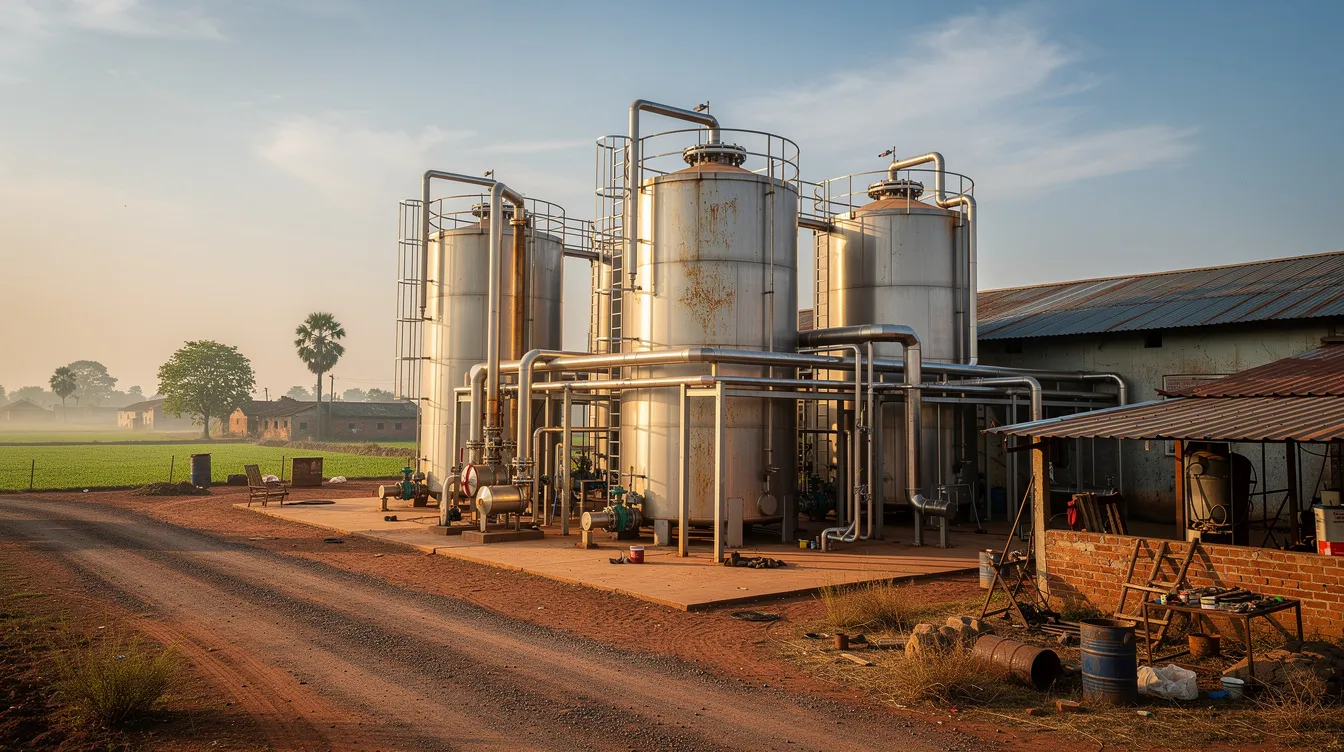
OMC ethanol procurement refers to the tender-based purchase of denatured anhydrous ethanol by Indian Oil Corporation, Bharat Petroleum Corporation Limited and Hindustan Petroleum Corporation Ltd for blending with petrol at their depots and terminals.
The ethanol supply year runs from November 1 to October 31. All contracts, allocations, performance tracking and penalties are measured within this ESY calendar rather than the financial year. For example, ESY 2025–26 covers November 2025 through October 2026.
OMCs aggregate ethanol demand depot-wise and publish tenders for the relevant ethanol supply year. While procurement is decentralised at the depot and location level, it is coordinated centrally through joint tenders or aligned policies under the Ministry of Petroleum & Natural Gas. The OMC ethanol agreement links suppliers to India’s fuel supply chain, making distilleries a functional part of the country’s petroleum infrastructure.
Distilleries supply ethanol to specific OMC depots, generally on an ex-distillery plus transportation basis, with quality conforming to BIS standards. For a broader understanding of the policy framework driving this demand, promoters may refer to the ethanol blending policy and EBP E20 programme overview.
3. How the OMC Ethanol Tender & EOI Process Works (Step-by-Step)
OMCs typically float Expression of Interest (EOI) notifications and detailed tenders every ethanol supply year ESY. OMCs utilize unified digital platforms for tendering and bid evaluations to ensure transparency. The ethanol procurement process involves portal registration, tender issuance and bid submission processes in a defined sequence. Bidders must follow the digital process on IOCL, BPCL and HPCL tender portals.
The process works chronologically as follows:
- Publication of EOI / Tender Notice: OMCs publish depot-wise projected ethanol quantity requirements for the upcoming ESY, specifying feedstock categories and quarter-wise volumes.
- Registration: Vendors register on the relevant e-tender portal and download the tender document along with annexures, eligibility checklists and depot lists.
- Feedstock and Capacity Declaration: Bidders declare which feedstock routes they will use (sugarcane juice, sugar syrup, B heavy molasses, C heavy molasses, maize, surplus rice, damaged food grains) and offer quantities in KL per quarter linked to their installed capacity.
- Bid Submission: Online bid forms are completed with digital signatures, and technical documents are uploaded, including licences, capacity proofs and quality certifications. Bidders confirm acceptance of administered ethanol prices and standard commercial conditions.
- Evaluation: OMCs evaluate bids based on technical compliance and capacity verification. Ineligible or incomplete bids are rejected. Remaining offers are ranked based on depot demand, feedstock, logistics and supplier credentials.
- Allocation & LOA: Provisional allocation letters are issued. Suppliers must furnish a bank guarantee before signing the ethanol supply agreement. Successful bidders must sign an ethanol supply agreement including performance guarantees.
It is essential for investors to understand that EOIs, tenders, supply orders and long-term offtake arrangements are distinct stages. A bid submission is not an allocation. An allocation is not a purchase order.
4. Eligibility Criteria for Supplying Ethanol to OMCs
Eligibility for supplying ethanol to OMCs is both statutory and plant-specific. It covers licences, feedstock permissions, plant readiness, quality control and logistics capability.
Regulatory requirements include:
- Industrial licence and excise permissions
- Pollution control board consents (CTE and CTO)
- Environmental clearance for distillery operations and spent wash treatment
- State-specific ethanol production and storage approvals
- Fire safety NOC and PESO clearances
Feedstock eligibility depends on prevailing rates and applicable policy for the ESY. Permitted routes currently include sugarcane juice, B heavy molasses, C heavy molasses, maize, broken rice, surplus rice from FCI and damaged food grains unfit for human consumption. Eligibility can change between ESYs, so promoters must check the latest ethanol procurement policy.
Plant readiness requires minimum installed capacity (KLPD), denaturation facilities, automated metering, calibrated storage tanks and the ability to produce denatured anhydrous ethanol meeting BIS specifications. Distilleries must maintain sufficient storage capacity and quality monitoring during dispatch and delivery. Quality control measures must be enforced to ensure ethanol complies with national standards.
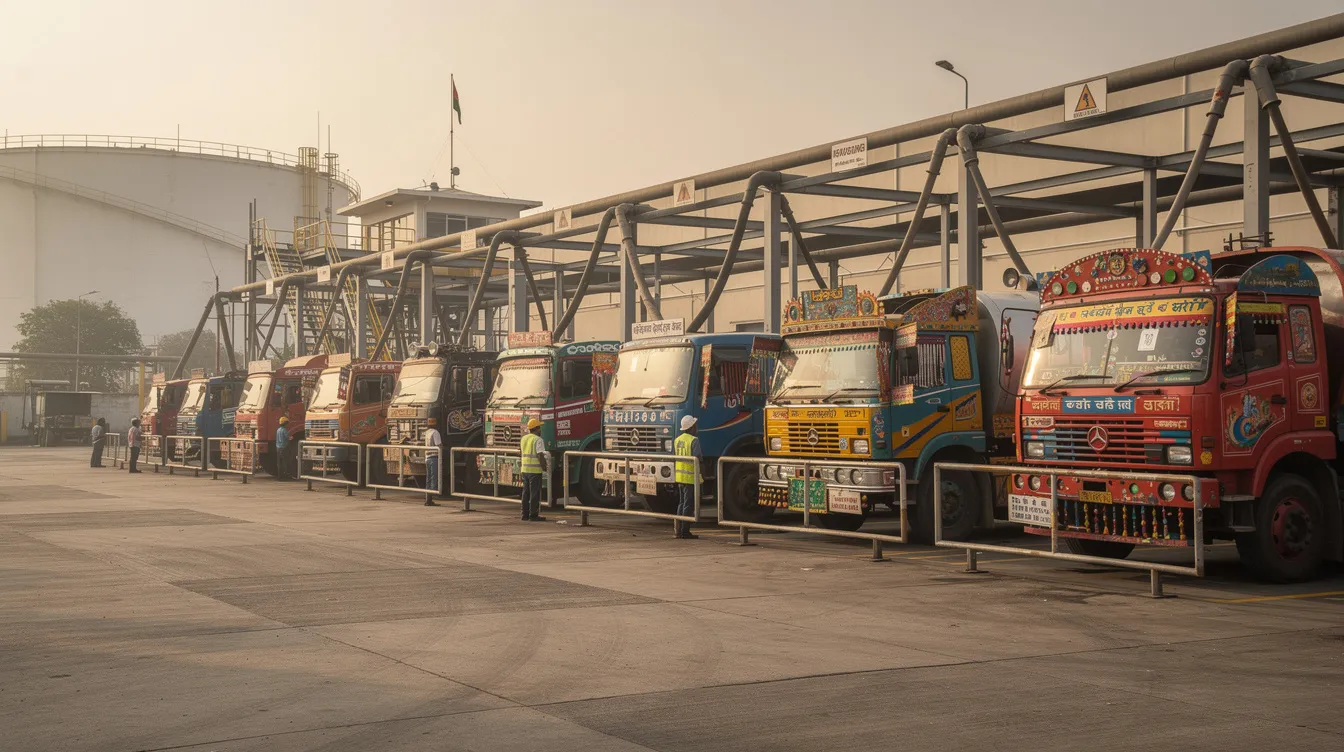
An in-house QC laboratory or access to accredited third-party testing is essential. Plants must also demonstrate logistic readiness, including proximity to OMC depots, approved tanker loading facilities and the ability to dispatch ethanol on schedule.
Detailed eligibility is always tender-specific. A professionally prepared DPR and licensing roadmap helps identify eligibility gaps early-something covered in depth in our guide on ethanol plant licences and regulatory approvals.
5. Documents Required for OMC Ethanol Tender Registration
Incomplete documentation is a major cause of bid rejection. Promoters should treat this as a compliance checklist before each ESY tender submission.
Corporate documents: Certificate of Incorporation, Memorandum & Articles of Association (or Partnership/LLP deed), PAN, GST registration, UDYAM/MSME registration if applicable.
Statutory approvals: Distillery licence, ethanol production permission, excise registration, pollution control consents (CTE, CTO), factory licence, fire safety NOC, environmental clearance.
Technical and capacity documents: Installed capacity certificates, plant and machinery invoices, production flow diagrams, tank calibration charts, independent engineer certificates (where demanded), historical production data for existing operational plants.
Financial documents: Audited financial statements for the last 2–3 years (for existing units), net worth and turnover details, sanction letters for term loans, solvency certificates.
Quality and compliance records: BIS compliance certificates, laboratory accreditation, prior supply performance certificates from OMCs.
New greenfield plants under construction may need to submit project approvals, financial closure details and expected commissioning timelines to participate in a part of the ESY period. Project Report Bank assists promoters in compiling financial and capacity information into bank-ready formats, supporting the document preparation process without involvement in the OMC tender itself.
6. OMC Ethanol Procurement Pricing in India (Feedstock-Wise)
Ethanol prices for the EBP programme are administered based on the feedstock route. Ethanol prices are government-determined and not negotiable by suppliers. The Cabinet Committee on Economic Affairs (CCEA) and the Ministry of Petroleum & Natural Gas notify ex-mill rates for each ethanol supply year, and these rates remain valid for the full ESY period, though mid-year revisions are possible.
Relief amounts vary by feedstock type for ethanol pricing. Historically, OMCs increased ethanol procurement prices for six months starting June 2022, and the relief package applied to ethanol supplies invoiced until November 30, 2022, indicating that the government does intervene to support producers during cost fluctuations.
ESY 2025–26 Ex-Mill Ethanol Prices by Feedstock
| Feedstock Type | Ex-Mill Rate (₹/litre) |
|---|---|
| Maize | 71.86 |
| Sugarcane juice / sugar / sugar syrup | 65.61 |
| Damaged food grains | 64.00 |
| B heavy molasses | 60.73 |
| Surplus FCI rice | 60.32 |
| C heavy molasses | 57.97 |
Source: PIB / Government of India notification for ESY 2025–26. Rates as notified; subject to revision.
Over and above the ex-mill price, suppliers receive transportation reimbursement based on distance slabs and applicable GST (5%). The weighted average delivered cost including transport and GST works out to approximately ₹71.18 per litre across major OMCs for ESY 2025–26.
For a detailed comparison of procurement price versus production cost, promoters should review the ethanol production cost per litre, revenue and profitability analysis.
7. How OMCs Allocate Ethanol Supply Quantities Depot-Wise
Quantity allocation is based on demand–supply optimisation, not simply proportionate acceptance of all bids. OMCs allocate ethanol based on nationwide blending targets and individual depot requirements.
Allocations for ethanol supply depend on plant capacity and proximity to receiving oil depots. OMCs consider the following inputs:
- Depot-wise demand based on projected petrol sales and the ethanol blending target
- Existing long-term contracts and preferential allocations for cooperative sugar mills and Dedicated Ethanol Plants (DEPs)
- Geographical distribution of ethanol plants and distance-slab logistics
- Feedstock priority (sugarcane routes generally preferred over grain based routes when offers exceed requirements)
Ethanol procurement practices help mitigate risks associated with agricultural variability in feedstock supply by diversifying across feedstock categories.
A plant may receive full allocation at some depots, partial at others and zero at many locations. The allocated quantities for one ESY do not automatically carry over. To illustrate: Avadh Sugar & Energy Ltd reported tendering 1,776 crore litres, receiving allocation of 1,048 crore litres, and actually supplying just 148 crore litres as of December 2025. This gap between allocation and actual supply is common in early quarters.
Ethanol procurement frameworks balance cost efficiency with regulatory compliance and supply assurance. Serious DPRs and bank appraisals should model multiple allocation scenarios-60%, 80% and 100% of installed capacity-rather than assume the full plant output will always be purchased.
8. Ethanol Supply Agreements, Logistics & Payment Terms with OMCs
Once allocation is finalised and a bank guarantee is required before signing the OMC agreement, suppliers sign ethanol supply agreements for the ESY defining commercial, operational and legal terms. A bank guarantee is required before signing the ethanol agreement, typically 3–5% of the contracted value.
Key Contractual Elements
- Duration: Typically one ESY cycle (November to October)
- Committed quantities: Depot-wise, feedstock-wise, quarter-wise
- Price: Ex-mill rate as per government notification plus transport and GST
- Quality: Must comply with BIS standards for denatured anhydrous ethanol
Logistics
Suppliers arrange transport to designated OMC locations using approved tankers. Dispatch scheduling is managed through OMC online systems. The ESY structure impacts supplier performance tracking, with monthly and quarterly supply targets monitored closely.
Payment Terms
Documentation must match exactly for timely payments from OMCs. Typical documents include the invoice, lorry receipt, QC report and weighbridge records. Payment is generally released within approximately 21 days from receipt and QC clearance. Suppliers must maintain compliance to avoid payment delays caused by mismatched documentation, quantity variations or quality disputes.
Penalties and Performance
Suppliers face penalties for short-supply during the ESY. Performance monitoring and contractual penalties are key components of ethanol procurement oversight. Suppliers must ensure timely delivery of ethanol as per agreements or expect price reduction clauses, liquidated damages and potential reduction in future allocation. Performance benchmarks may require meeting 75% or more of monthly indents and 90% or more of quarterly indents.
9. Revenue & Profitability of an OMC-Supplying Ethanol Plant (Illustrative Model)
This section provides a simplified, illustrative calculation for a 100 KLPD grain based (maize) ethanol distillery supplying to OMCs during one ESY. All numbers are hypothetical and for educational purposes only.
Assumptions
- Operating days: 330 per year
- Capacity utilisation: 85%
- Annual ethanol production: 28,050 KL
- Ethanol yield: ~380 litres per tonne of maize
- Maize cost: ₹22,000 per tonne
- OMC ethanol procurement price (maize route): ₹71.86 per litre
- DDGS realisation: ₹15,000 per tonne (~310 kg DDGS per tonne of maize)
Illustrative Revenue Working
| Item | Amount (₹ Cr approx.) |
|---|---|
| Ethanol revenue (28,050 KL × ₹71.86) | 201.6 |
| DDGS revenue (~22,900 tonnes × ₹15,000) | 34.4 |
| CO₂ and other by-products | 3.0 |
| Total Revenue | ~239.0 |
Against this, operating costs (maize procurement, utilities, chemicals, labour, maintenance, logistics to depots) and financial costs (interest on term loan and working capital, depreciation) must be deducted. Gross sales from ethanol and by-products should never be equated with profit.
Variations in ethanol prices, grain cost or allocation levels can be tested through sensitivity analysis. For deeper financial workings, refer to the ethanol plant raw material requirements and yield analysis.
10. Impact of OMC Procurement on Bank Finance & DPR Preparation
From my experience preparing DPRs for ethanol projects across capacity ranges, OMC procurement assumptions are central to every bank appraisal for a 30–200 KLPD distillery. Lenders do not simply accept projected revenue at face value.
Selling price assumptions: Banks verify whether the DPR uses the latest notified OMC rates for the applicable ESY, applies reasonable escalation and accounts for multiple feedstock routes.
Quantity allocation and capacity utilisation: There is a material difference between installed capacity and achievable operating capacity. Banks examine whether projected ethanol volumes are backed by actual allocation letters or are simply assumed at full capacity. A realistic ramp-up period over the initial 2–3 years is expected.
Feedstock availability and price sensitivity: Maize and broken rice supply in the catchment area, dependence on FCI surplus stocks, potential export restrictions or MSP changes directly affect contribution per litre and must be stress-tested.
Working capital and receivables: Credit days from OMCs (typically 21 days), grain inventory holding, finished ethanol stock and tanker turnaround times all affect cash flow projections and DSCR. For detailed analysis of these metrics, see our guide on working capital management and DSCR analysis for ethanol plants.
OMC offtake should never be treated as a guaranteed long-term contract unless supported by a signed agreement. DPRs should show downside scenarios of lower ESY allocations and model their impact on DSCR and loan repayment. Project Report Bank provides specialised support in ethanol plant DPR preparation and bank finance documentation, including scenario and sensitivity analysis on ethanol price, raw material cost, logistics cost and allocation percentage.
11. Common Challenges Faced by Ethanol Plant Promoters in OMC Procurement
Even technically sound plants face procurement and tender-related hurdles that can erode margins if not anticipated during project planning:
- Policy and regulatory shifts: Changes in ethanol procurement policy across ESYs, modification of eligible grain types, or shifts in preference between sugarcane and grain based ethanol can alter a plant’s commercial position.
- Feedstock and cost volatility: Spikes in maize or broken rice prices, competition from the feed and poultry sectors, and government restrictions on certain foodgrains during supply shortfalls can compress margins significantly.
- Logistics and location: High transport costs to distant OMC depots, limited tanker availability and increased turnaround times reduce effective daily dispatch and add to the cost per litre.
- Documentation and compliance: Errors in tank calibration charts, mismatches in production data, missing clearances or late submission of revised capacity details frequently cause bid rejection or reduced allocation.
- Payment and cash flow risks: Occasional delays due to quality disputes, documentation errors or short-supply penalties affect the working capital cycle. Suppliers face penalties for short-supply of ethanol quantities, further impacting profitability.
Promoters often underestimate these operational factors when projecting DSCR, IRR and payback period in their initial feasibility studies.
12. Practical Strategies for New Ethanol Plant Investors
Based on practical experience with ethanol project DPRs, the following strategies can help promoters navigate the OMC procurement landscape more effectively:
- Design for feedstock flexibility: Build the plant to handle multiple grains-maize, broken rice and other permitted feedstocks-to manage cost fluctuations and remain eligible under changing procurement policy for each ESY.
- Plan capacity realistically: Select 60–150 KLPD or higher capacity only after evaluating local grain availability, the OMC depot network within an economical range and logistics cost per litre. Our ethanol plant capacity planning guide covers this in detail.
- Monitor tenders proactively: Register on IOCL, Bharat Petroleum Corporation Ltd and HPCL tender portals. Subscribe to alerts and review draft tender conditions early to align plant commissioning timelines.
- Secure licences early: Obtain all essential licences, pollution control consents and environmental clearances well before tender deadlines.
- Build conservative financial projections: Integrate multiple allocation scenarios, a buffer in working capital and in-depth sensitivity analysis on grain cost and logistics into the DPR.
- Diversify revenue streams: Explore industrial ethanol, chemical and pharma markets or export opportunities (where permissible) as a hedge against OMC allocation risk, while treating OMC procurement as the anchor demand.
13. Frequently Asked Questions on OMC Ethanol Procurement
13.1 How can a new ethanol plant start supplying to OMCs?
Build a compliant distillery with the required installed capacity, obtain all statutory licences and environmental clearances, and register on the tender portals of Indian Oil Corporation, Bharat Petroleum Corporation and Hindustan Petroleum. Participate in the EOI and tender for the upcoming ethanol supply year, receive allocation, furnish the required bank guarantee, sign the ethanol supply agreement and begin depot-wise supplies as per the schedule.
13.2 Where can promoters find current OMC ethanol tenders and ESY 2025–26 notifications?
Tenders are published on the official e-tender portals of IOCL, BPCL and HPCL, the Central Public Procurement Portal (CPPP) and are sometimes advertised in national newspapers. Always rely on official sources. As of October 2026, ESY 2025–26 tender documents remain valid and accessible on these portals.
13.3 Is an ethanol supply agreement with OMCs mandatory to obtain bank finance?
Banks strongly prefer documentary evidence such as allocation letters or signed agreements. However, they can fund projects based on robust DPRs, promoter profiles and policy visibility. The absence of a firm offtake document increases perceived risk and may affect loan terms, interest rates or the quantum of finance sanctioned.
13.4 Can grain based (maize or broken rice) ethanol plants participate in OMC tenders?
Yes. Grain based ethanol from maize and broken rice is eligible under current policy, subject to feedstock-wise pricing. For ESY 2025–26, maize attracts an ex-mill rate of ₹71.86 per litre-the highest among all feedstock routes. Promoters must check the latest tender for any changes in eligibility or caps on specific feedstock categories. For feedstock planning, the maize-based ethanol plant project report provides useful reference.
13.5 What happens if OMC allocation is lower than plant capacity for a given ESY?
The plant can supply only the allocated quantities to OMCs and must explore alternate markets-industrial ethanol, chemical users or export where permissible-for the balance production. Future ESY allocations may improve if the plant demonstrates reliable supply performance, maintains complete documentation and strengthens its logistics position relative to OMC depots.
14. Conclusion – Making OMC Procurement Part of a Bankable Ethanol Project
Understanding the OMC ethanol procurement process, ethanol supply year dynamics, eligibility requirements, administered pricing and allocation risks is essential before committing capital to a distillery project. The ethanol blending target of 20% and procurement requirements exceeding 1,000 crore litres annually create a substantial commercial opportunity, but one that must be evaluated with realistic assumptions.
Promoters should base their DPRs and financial projections on officially notified ethanol prices, conservative allocation assumptions, realistic capacity utilisation and clearly modelled working capital cycles and DSCR scenarios. Professionally prepared feasibility studies, sensitivity analysis and CMA data provide comfort to both investors and lenders and help avoid over-optimistic expectations from ESY 2025–26 and subsequent procurement cycles.
If you are planning a grain based ethanol distillery and need a bankable DPR, financial projections, CMA data or project viability analysis, feel free to connect with me for a professional discussion.
CA Manish Gugliya FCA, DISA (ICAI) More than 20 years of professional experience in project reports, financial projections, CMA data, project finance and business advisory. Connect via WhatsApp for advisory discussions