Author: CA Manish Gugliya, FCA, DISA (ICAI) Professional Experience: 20+ years in Chartered Accountancy, project reports, bank financing, and business feasibility Website: ProjectReportBank.com
Key Takeaways
- Pearl millet (bajra) is India’s largest millet crop by acreage and production volume. The global millet market was valued at USD 13.93 billion in 2025, and India produces about 38% of the world’s millet, positioning bajra processing as a viable manufacturing investment.
- A professionally prepared bajra processing plant project report (detailed project report) should cover industry trends, market research, plant setup, machinery and technology requirements, raw materials planning, project cost, means of finance, and opportunities cost and revenue analysis before any capital is committed.
- Commercial bajra plants in India are typically planned across capacities of 5, 10, 25, 50, and 100 TPD. Capital investments, machinery requirements, and financial feasibility differ at each scale, and a one-size-fits-all approach does not work.
- Project Report Bank, led by CA Manish Gugliya, prepares customised, bankable detailed project reports and CMA Data for bajra processing and milling projects across India, covering financial projections, DSCR, IRR, sensitivity analysis, and bank-finance documentation.
- All financial numbers in this article are illustrative. They must be validated for each specific millet processing unit, location, product mix, and financing structure before investment decisions.
Introduction: Bajra Processing Plant Project Report in India
Bajra (pearl millet) ranks among the most resilient of India’s staple food crops. In 2025-26, India produced approximately 10.85 million tonnes of bajra over 6.96 million hectares. Total millet production in India reached 18.59 million tonnes in 2024-25, of which bajra constitutes the single largest share. Demand for millet products is growing due to trends towards health-focused diets, gluten-free food preferences, and the post-2023 International Year of Millets momentum in food manufacturing.
The millet market is no longer a niche segment. Millet product sales in India increased from ₹35 crore in 2020-21 to ₹814 crore in 2024-25, reflecting a shift from traditional consumption to commercial packaged foods, multigrain atta, ready mixes, and institutional supplies. The global millet market was valued at USD 13.93 billion in 2025, and India produces about 38% of the world’s millet, making the country both the largest producer and a growing exporter.
A bajra processing plant project report is a detailed project report that integrates technical details, market research, plant setup, machinery selection, raw material planning, project cost estimation, and financial analysis covering profitability, DSCR, IRR, and loan servicing capacity. A DPR should cover technical, operational, and financial aspects in a single document. For entrepreneurs and investors evaluating a commercial-scale millet processing plant, preparing this report before committing to land, machinery procurement, or bank term loan applications is a prerequisite for informed decision-making.
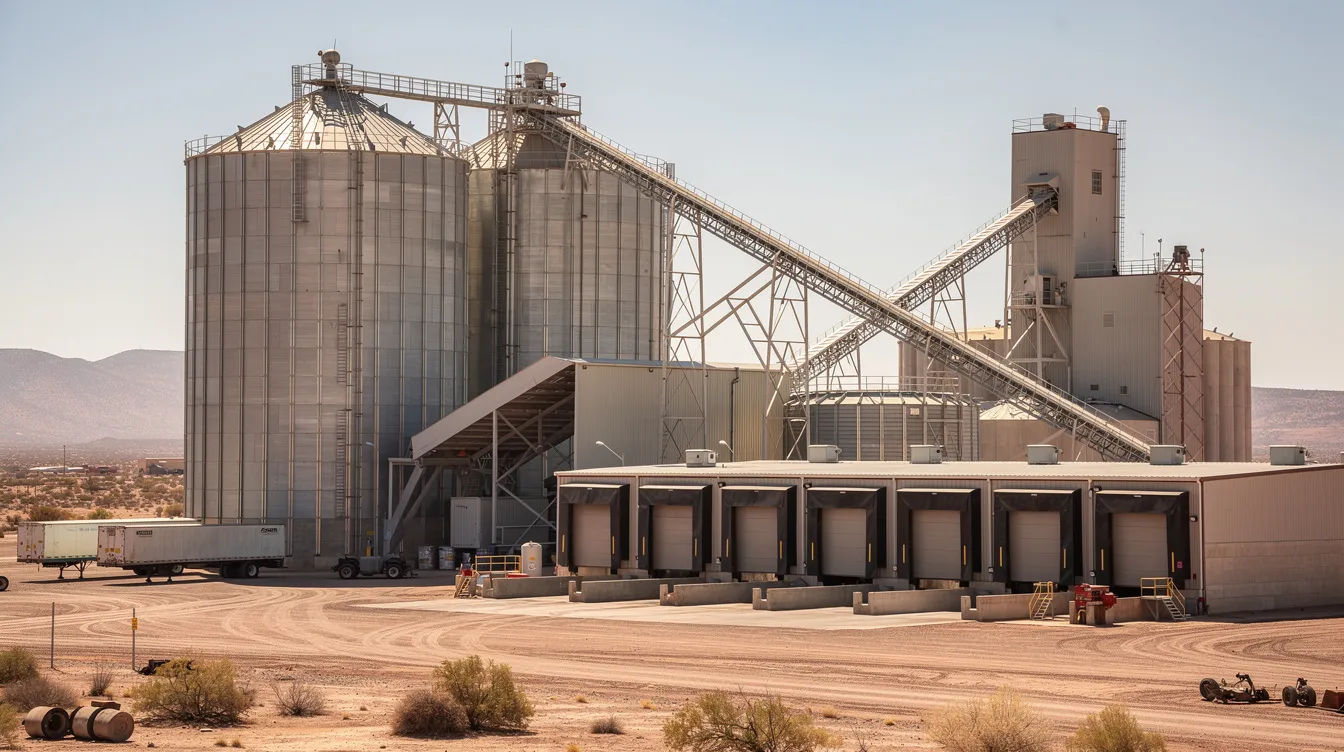
Industrial Scope and Business Opportunities in Bajra Processing
Business models in bajra processing range from a stand-alone flour mill producing commodity-grade whole bajra flour in bulk bags, to an integrated millet processing plant combining cleaning, dehulling, milling, blending, and branded retail packaging under one roof. The economics, machinery, working capital, and risk profiles of these two approaches differ in every measurable dimension.
Cleaned and graded bajra grain itself has commercial value for bulk traders, seed companies, and institutional buyers. Quality parameters (moisture below 12%, foreign matter below 1%, minimal insect damage) determine realisation per quintal. This segment involves lower capital but lower margins.
Whole bajra flour; whether chakki-style or hammer-milled; feeds demand from bakeries, multigrain atta manufacturers, and regional food markets. The millet market is expected to reach USD 19.70 billion by 2034, and millet flour is a primary product category driving that growth. Millet exports from India were 89,165 tonnes in 2024-25, indicating export potential for consistent, certified suppliers. APEDA allocated ₹80 crore for millet exports in 2025-26.
Value-added product lines include dehulled bajra grits, meal, and specialty cuts used in breakfast cereals, instant mixes, and baby foods. These carry higher realisation per tonne but require additional equipment (dehullers, graders, blenders) and quality control infrastructure.
Millet-based food ingredient manufacturing; bajra flour for gluten-free products, nutritional mixes, bakery premixes, and extrusion-based snacks; connects to the broader millet market growth in both domestic and international market analysis research. Entrepreneurs seeking a comprehensive market overview of this space should evaluate how their product mix aligns with consumer and institutional demand before finalising plant design.
Secondary and by-product utilisation is worth considering. Bran, fine screenings, and broken grain from bajra milling may be usable (subject to quality and regulation) in formulated cattle and poultry feed. Evaluating this revenue stream requires knowledge of local feed-market demand and regulatory compliance. For those considering a dedicated line, the Specialty Flour Plant Machinery & Equipment Cost article provides context on by-product processing equipment and economics.
A dedicated bajra mill differs from a multi-millet integrated facility in machinery configuration, raw material sourcing, and product positioning.
Bajra Processing Plant Capacity Planning
Capacity planning must align with three variables: confirmed or reasonably estimated market demand, raw material availability within an economical procurement radius, and the promoter’s capital budget. Indian commercial bajra milling plants typically operate at capacities of 5, 10, 25, 50, or 100 tonnes per day (TPD). A millet processing plant at the larger end can produce 10,000 to 20,000 MT annually, depending on operating shifts and plant configuration.
The right capacity depends on the entrepreneur’s profile. A 5-10 TPD unit suits a regional MSME serving local mandis or a small branded flour line. A 25-50 TPD plant fits state-level brands, institutional suppliers, and food ingredient manufacturers. Plants at 100 TPD and above serve multi-state distribution, large institutional contracts, or integrated food processing operations.
Operating days (typically 270-300 per year for grain mills) and shift patterns (single 8-hour or double 16-hour shifts) directly influence annual throughput. Running double shifts at a 25 TPD plant produces the same annual output as a single-shift 50 TPD plant, but with different capital cost and payback period profiles.
| Capacity (TPD) | Daily Intake (Tonnes) | Annual Intake (at 280 days, single shift) | Typical Business Model | Key Infrastructure Needs |
|---|---|---|---|---|
| 5 | ~5.5-6 | ~1,540-1,680 | Regional MSME, local branded flour | Small godown, single-phase or LT power |
| 10 | ~11-12 | ~3,080-3,360 | State-level distribution, bulk + retail | Moderate storage, 3-phase HT power |
| 25 | ~27-30 | ~7,560-8,400 | Institutional supply, B2B ingredient | Silo or large godown, dedicated transformer |
| 50 | ~55-60 | ~15,400-16,800 | Multi-state brand, integrated processing | Multiple silos, ETP, fire safety systems |
| 100 | ~110-120 | ~30,800-33,600 | Industrial-scale, export-oriented | Full infrastructure, rail/road connectivity |
Table is illustrative. Actual figures depend on product mix, recovery, shifts, and machinery configuration.
Practical factors affecting capacity choice include local procurement radius, logistics costs, existing customer tie-ups, availability of skilled labour, and industrial power availability. Project Report Bank customises capacity-utilisation assumptions and ramp-up schedules (Year 1-3) in each bajra processing plant project report and financial projection.
Raw Material Requirements and Bajra Procurement Strategy
Raw material (pearl millet grain) constitutes 65-75% of total operating costs in a typical bajra milling plant. Sourcing raw materials involves understanding local agricultural yield and market conditions, and procurement strategy is central to financial feasibility.
India’s major bajra-growing regions are Rajasthan (41-45% of national output), Uttar Pradesh (20-22%), Haryana (10-13%), and Gujarat (11-12%). Gujarat shows yields of 2,400-2,500 kg/ha, while Rajasthan averages 1,100-1,200 kg/ha. Proximity to these production centres reduces transport costs and improves grain freshness.
Bajra is primarily a Kharif crop, harvested between September and November. Seasonal procurement planning requires buying 6-9 months of grain requirement within a 2-3 month window, or using staggered purchasing from mandis, FPOs, and traders to manage price trends and price volatility. The minimum support price (MSP) for bajra in 2025-26 is ₹2,775 per quintal, setting a floor for procurement costs.
Grain-quality parameters directly affect milling recovery and product quality. Moisture content for safe storage and milling should be 10-12%. Higher moisture increases fungal growth, rancidity (due to bajra’s lipid content), and storage losses. Foreign matter, broken grains, and insect damage reduce effective yield and require additional cleaning stages.
For plants processing above 25 TPD, investing in structured grain storage (silos with aeration and moisture monitoring) becomes financially justifiable compared to traditional godown storage. The Integrated Rice Milling Processing Plant Project Report discusses bulk grain handling and storage infrastructure applicable to cereal processors.
Inventory-carrying costs; interest on funds blocked in stock, storage losses, fumigation costs; must be captured in the working-capital calculations within the DPR. A management strategy for procurement that balances bulk buying (lower per-unit cost) against inventory carrying cost (higher working capital) is a key modelling decision in every bajra processing plant project report.
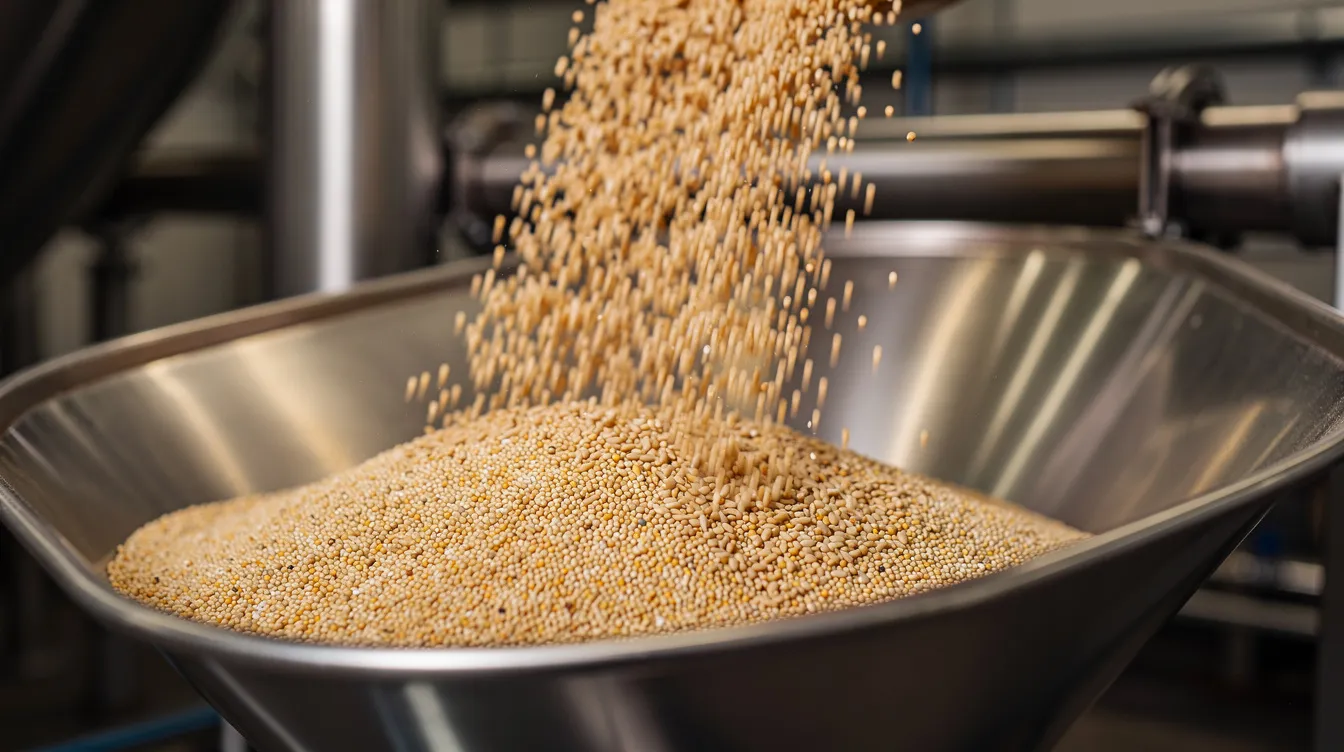
Bajra Processing and Milling Manufacturing Process
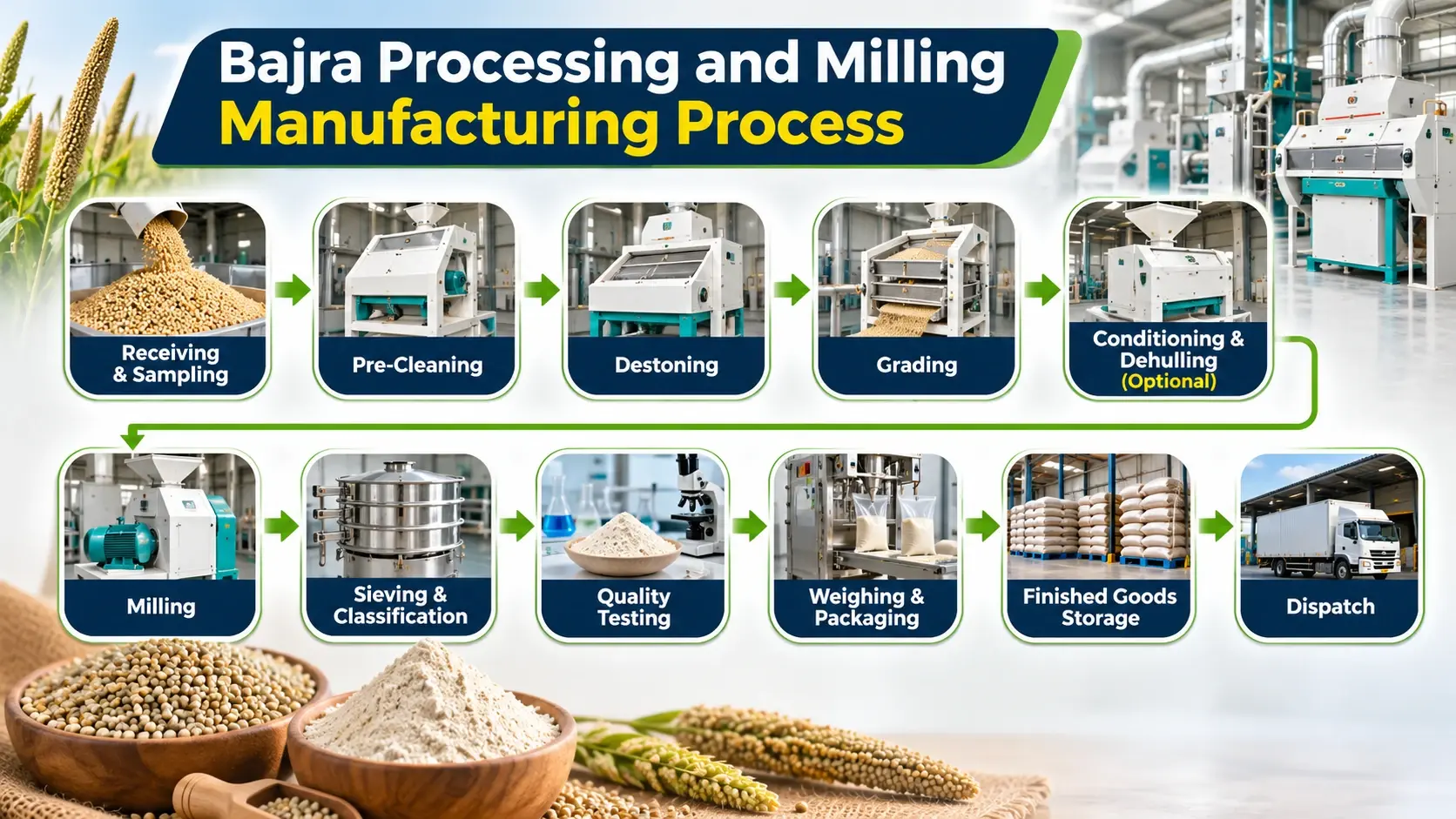
The industrial process flow for bajra milling follows this sequence: raw bajra receiving, sampling and quality testing, pre-cleaning, destoning, grading, optional conditioning and dehulling, milling, sieving and classification, product quality testing, weighing and packaging, finished goods storage, and dispatch. Millet processing involves cleaning, dehulling, grading, and milling as the core unit operations involved.
Receiving and Sampling: Incoming grain is weighed, sampled for moisture, foreign matter, and insect damage, and assigned a quality grade that determines pricing and processing parameters.
Pre-Cleaning and Destoning: Aspirators, vibratory screens, and destoners remove dust, stones, chaff, metal pieces, and lightweight impurities. This stage determines the cleanliness of the grain entering the mill and directly affects machinery wear and product purity.
Grading: Grading separates the grain by size to ensure uniform milling. Uneven grain sizes lead to inconsistent flour particle size and reduce recovery.
Conditioning and Dehulling (Optional): Conditioning involves adjusting grain moisture (typically by tempering) before dehulling. Dehulling machines are essential for removing husks from small millets when producing dehulled flour or grits. Research indicates the husk fraction in pearl millet varies between 1.5% and 29.3% of grain weight depending on variety and degree of decortication. In motorized dehulling, about 71.9% dehulled grain is recovered versus 63.6% in manual methods.
Milling: Milling machines grind millet into flour or rava. Hammer mills or pulverisers are common for whole bajra flour; roller mills apply where graded products (fine flour, semolina) are required. Motorized milling produces flour yields of approximately 87.4%, compared to 38% for manual methods.
Sieving and Classification: Plansifters or vibro sieves separate flour into fine flour, coarse meal, and bran fractions. The mesh size selected determines the product grade and recovery percentages.
Quality Testing: Granulation, moisture, and where applicable microbial parameters are checked before packaging. Quality control standards must ensure that the final product meets safety and health regulations, and assurance criteria defined by FSSAI.
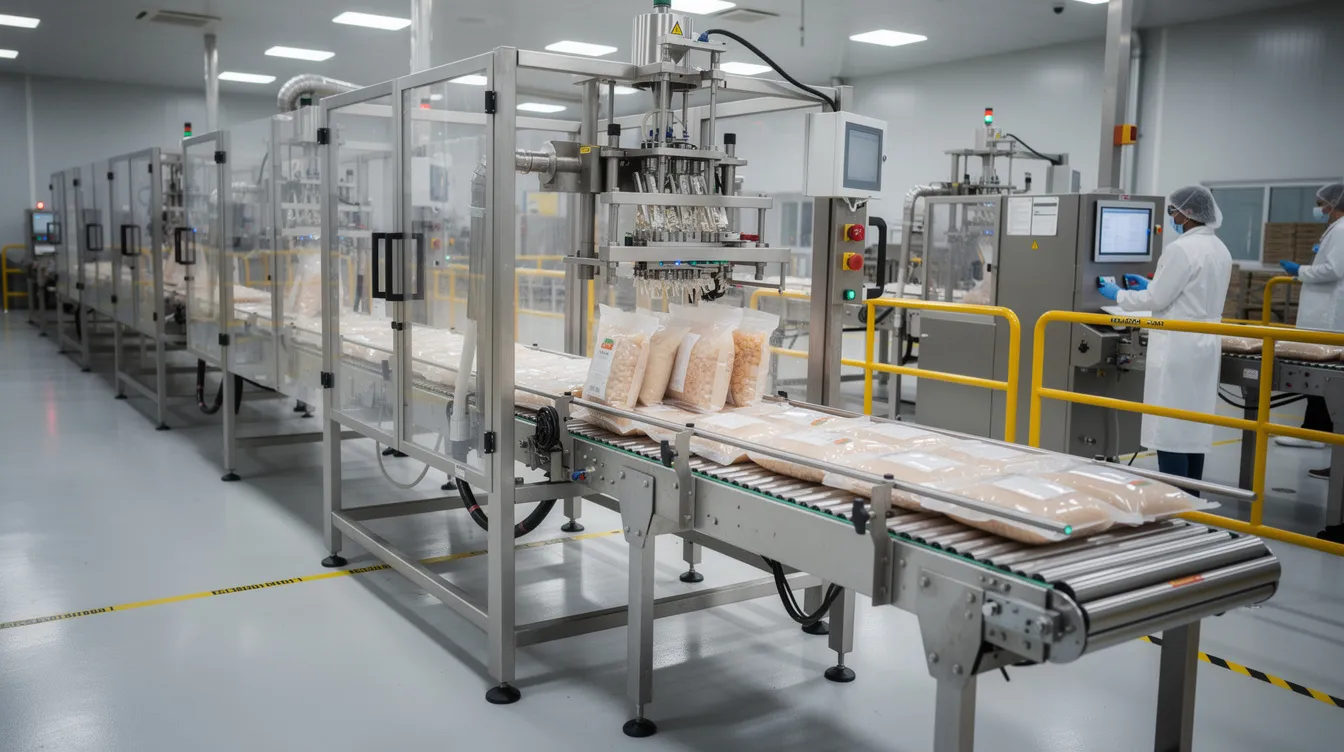
Packaging: Packaging machines are needed for moisture-proof packing of millet products. Bajra flour is susceptible to rancidity due to its germ fat content. Appropriate barrier packaging (laminated pouches, nitrogen flushing for premium packs) and storage at cool, dry conditions extend shelf life. For reference on the atta manufacturing process and flour mill flow, a detailed flow chart article is available.
Dust collection, aspiration systems, PPE for workers, regular sanitation, and pest management are non-negotiable for food-grade operations.
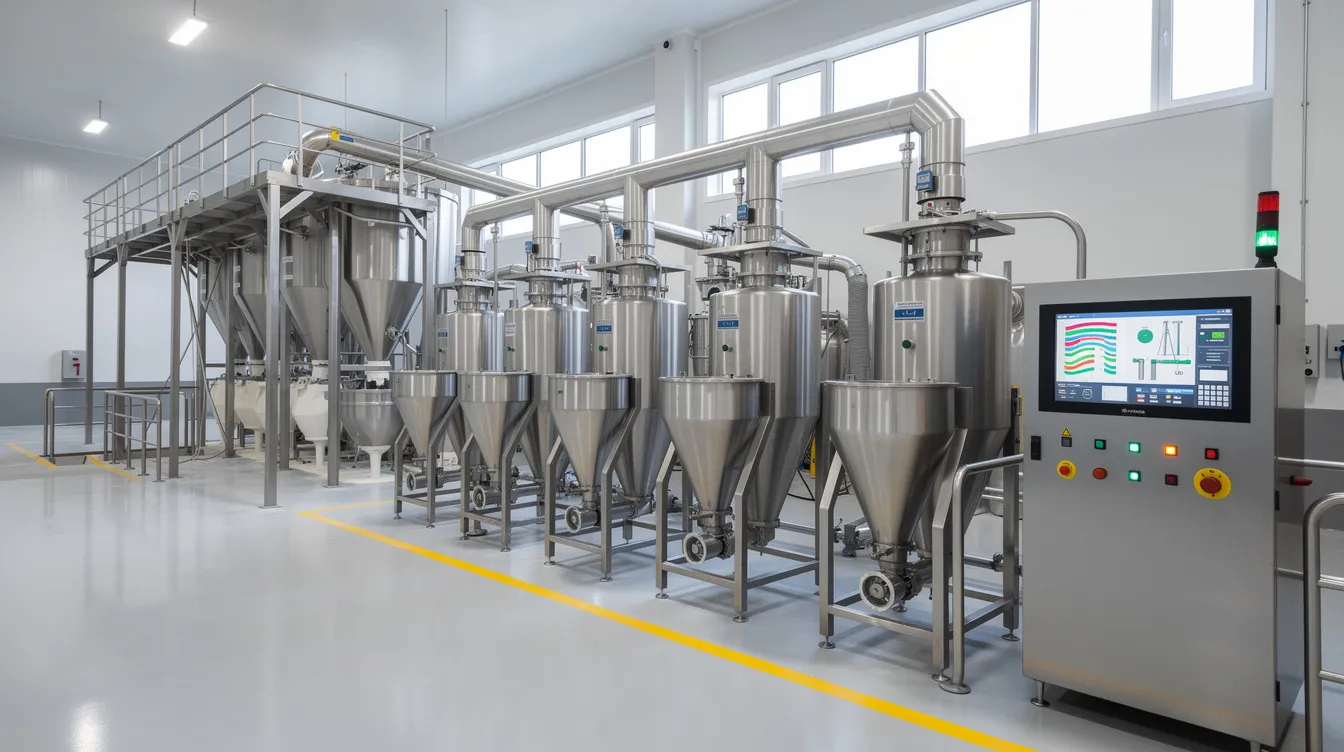
Bajra Processing Plant Machinery and Equipment
Machinery selection must match planned plant capacity, product range (flour only versus flour plus grits and dehulled grain), and automation level. Relying solely on vendor catalogues without independent technical evaluation can lead to mismatched equipment and inflated costs. Machinery requirements in a DPR include specifics on purpose, specifications, and costs for each machine.
Core machinery groups include:
- Grain intake and handling: tippers, reception pits, bucket elevators, screw conveyors
- Pre-cleaning and destoning: pre-cleaners, aspirators, destoners, magnetic separators
- Grading and separation: rotary sieves, indent cylinders
- Dehulling (optional): abrasive or CSNR-type dehullers for husk removal
- Milling: hammer mills, pin mills, or roller mills depending on product specification
- Classification: plansifters, vibro sieves, purifiers
- Packing: semi-automatic or fully automatic weighing and bagging systems
- Dust control: centralised aspiration, cyclone separators, bag filters
A millet processing unit typically includes aspirators and husk separators alongside these core machines. Millet processing requires grain cleaning and grading machines at minimum, even for the simplest bajra flour mill.
| Equipment | Role in Process | Capacity Range (Illustrative) | Mandatory / Optional |
|---|---|---|---|
| Pre-cleaner + Aspirator | Remove dust, chaff, light impurities | 2-50 TPH | Mandatory |
| Destoner | Remove stones, heavy impurities | 2-30 TPH | Mandatory |
| Grader / Separator | Size-based grain classification | 2-25 TPH | Mandatory |
| Dehuller / Decorticator | Remove husk for dehulled products | 0.5-10 TPH | Optional |
| Hammer Mill / Pulveriser | Grind grain into flour | 0.5-15 TPH | Mandatory |
| Plansifter / Vibro Sieve | Classify flour by particle size | 1-20 TPH | Mandatory |
| Bucket Elevators / Conveyors | Material transfer between stages | Matched to line | Mandatory |
| Packing Machine | Fill and seal bags/pouches | 60-600 packs/hr | Mandatory |
| Dust Collection System | Remove airborne dust | Matched to plant | Mandatory |
| Metal Detector | Detect metallic contaminants | Inline | Recommended |
Essential equipment includes de-huskers, graders, and packaging machines as minimum for commercial operations. Semi-automatic lines suit 5-10 TPD plants; fully automatic PLC-based systems become cost-effective above 25-50 TPD, reducing human resource requirements while improving consistency.
Vendor evaluation should consider after-sales service network in India, spare parts availability, energy efficiency, and track record with millet processing plants. Machinery costs vary with capacity and technology; any cost figures stated in this article are indicative and not formal quotations.
Plant Layout, Building and Infrastructure Requirements
Processing capacity and layout planning are critical to the success of milling operations. Land selection should prioritise road connectivity, reliable industrial power supply, water availability, and proximity to bajra procurement centres or consumption markets. Typical land requirements range from 500-1,000 sq metres for a 5-10 TPD plant to 3,000-8,000 sq metres for a 50-100 TPD facility, depending on storage and expansion plans.
Functional zoning inside the factory should include: raw material reception and storage, cleaning and milling hall, finished-goods warehouse, packaging area, utility block, administrative office, and quality laboratory. Material flow should be linear; raw grain enters from one end, moves through cleaning, milling, packing, and exits as finished product from the other. Backtracking of material within the process creates contamination risk and inefficiency.
Building design considerations include floor loading capacity for stacked grain bags or silo foundations, ventilation and dust extraction provisions, natural lighting with controlled openings, insulated roofing in hot climates, and fire-resistant construction. Infrastructure requirements cover power connection and transformer sizing, DG backup for critical operations, water storage, drainage, and firefighting systems.
The DPR should contain a basic layout drawing, area statement, and phased-expansion plan for future capacity addition or integration with other grain products.
Bajra Processing Plant Setup Cost and Capital Investment in India
All investment numbers in this section are illustrative, based on typical 2025-26 Indian conditions. They must be updated for each project’s location, capacity, and technology. Capital investment varies based on plant capacity and technology used, and millet processing plant setup costs include both capital investments and operating expenses.
Major components of capital cost include land and site development, civil construction, plant and machinery, grain storage infrastructure, material handling equipment, utilities and electricals, laboratory and office equipment, installation and commissioning, pre-operative expenses, and contingencies.
| Cost Component | 10 TPD Plant (₹ Lakh, Illustrative) | 50 TPD Plant (₹ Lakh, Illustrative) |
|---|---|---|
| Land & Site Development | 15-40 | 40-120 |
| Civil Construction | 30-60 | 100-250 |
| Plant & Machinery | 25-55 | 120-300 |
| Electrical & Utilities | 8-15 | 25-60 |
| Storage Infrastructure | 5-12 | 20-50 |
| Lab, Office & Misc Equipment | 3-6 | 8-15 |
| Installation & Commissioning | 5-10 | 15-30 |
| Pre-Operative & Preliminary Expenses | 4-8 | 10-25 |
| Contingencies (5-10%) | 5-12 | 20-50 |
| Estimated Total Fixed Capital | 100-220 | 360-900 |
| Working Capital Margin (initial) | 15-30 | 40-100 |
| Total Capital Investment | 115-250 | 400-1,000 |
Excludes GST input credit recovery. Land cost can vary widely across states and industrial areas. Banks may or may not finance land depending on policy and title status.
Choice of automation (manual versus automatic packing, silo versus bag storage) changes the initial project cost and payback profile. Fully automatic lines can add 30-60% to machinery cost but reduce per-tonne labour cost by 40-50% at higher capacities. Infrastructure costs for utilities, transformers, and fire safety systems are often underestimated by first-time promoters.
Project Report Bank, under CA Manish Gugliya, prepares project-specific means-of-finance structures (promoter contribution, term loan, subsidies, and internal accruals) based on bank norms and the promoter’s financial profile.
Working Capital Requirements for a Bajra Milling Plant
Working capital is the fund required for day-to-day operations, distinct from fixed capital. For a grain-processing business, working capital assessment must cover raw material inventory and cash flow requirements, and the amount required is often underestimated.
Major current-asset components include raw bajra stock (often 30-90 days of consumption depending on seasonal procurement patterns), packing material inventory (7-15 days), finished goods in warehouse (7-20 days), and receivables from customers. Credit terms range from 15 days for institutional buyers to 45 days or more for distributors.
Current liabilities that offset these assets include supplier credit (if any), wages and salaries payable, utility bills, and statutory dues. The difference; net working capital; is the amount the business must fund.
Illustrative Working Capital Estimate (25 TPD Plant, Bajra Flour):
Assuming annual raw material consumption of ₹6-8 crore, 60 days of grain stock holding, 15 days of finished goods, and 30 days of receivables, the gross working capital requirement could be ₹1.5-2.5 crore. After adjusting for creditors and payables, net working capital might be ₹1.2-2.0 crore. These figures are illustrative and depend on stock policy, credit terms, and capacity utilisation.
Indian banks typically provide cash-credit (CC) facilities or working-capital term loans for such operations. CMA Data (projected balance sheets, stock statements, fund-flow analysis) is the standard format for bank assessment of working capital.
Manufacturing Cost and Production Economics
Raw millet grains account for 70-80% of operating expenses in bajra milling. Operating costs are primarily driven by raw material consumption, and this single variable dominates the per-tonne cost structure. The remaining cost heads; power, labour, packing, repairs, quality assurance, and overheads; collectively form 20-30% of variable costs plus fixed costs.
| Cost Head | ₹ per Tonne of Bajra Flour (Illustrative) | % of Total (Approx.) |
|---|---|---|
| Raw Bajra (at ~₹28-30/kg, adjusted for MSP and transport) | 32,000-36,000 | 68-74% |
| Cleaning and Handling Losses (3-5%) | Absorbed in raw material line | – |
| Power & Fuel (~0.06-0.09 kWh/kg) | 1,200-1,800 | 3-4% |
| Direct and Indirect Labour | 1,000-2,000 | 2-4% |
| Packing Material | 1,500-2,500 | 3-5% |
| Repairs & Maintenance | 400-800 | 1-2% |
| Quality Assurance & Lab | 200-400 | <1% |
| Selling & Distribution | 1,500-3,000 | 3-6% |
| Overheads & Admin | 800-1,500 | 2-3% |
| Total Manufacturing Cost per Tonne | 38,600-48,000 | 100% |
Based on 2025-26 assumptions. Direct and indirect costs will vary by location, scale, and product mix.
How capacity utilisation affects profitability: at 50% utilisation in Year 1, fixed overhead per tonne could be 40-60% higher than at 85% utilisation in Year 3. This is a primary reason why conservative ramp-up assumptions matter in project economics.
Not all by-products have guaranteed cash value. Income from bran, broken grain, or screenings must be estimated conservatively after confirming local demand and regulatory compliance.
Bajra Processing Plant Revenue Model and Profitability
Revenue streams in a bajra processing plant include wholesale bulk flour in 25-50 kg bags, retail-branded packs (1-5 kg), institutional and B2B supplies, dehulled bajra grits or meal, and possible by-product sales. The plan must identify potential customer segments like retail and institutional buyers, as the pricing mechanism and margins differ across each channel.
Bulk flour is a low-margin, high-volume model; realisation might be ₹38-45 per kg. Branded retail millet flour, especially positioned as gluten-free or high-fibre, can command ₹55-80 per kg, but requires investment in packaging, branding, and market segmentation. Gross profit margins for millet processing typically range from 25-35%, with branded products at the higher end and commodity bulk flour at the lower.
Illustrative Revenue Model (25 TPD Plant, 280 operating days, 70% utilisation):
Annual production: ~4,900 tonnes of flour (assuming 85% recovery from cleaned grain). If 60% sold as bulk (₹42/kg average) and 40% as branded retail (₹60/kg average), annual revenue could be approximately ₹12.3 crore plus ₹1.2 crore from by-products, totalling approximately ₹13.5 crore. These are illustrative income and expenditure projections; actual pricing depends on product mix, brand strength, and distribution reach.
Key profitability levers include procurement efficiency, product mix (share of value-added products), plant uptime, energy efficiency, and control over returns and wastage. The EBITDA margin for a well-run millet processing unit with a mix of bulk and branded products typically falls between 8-15% after all operating expenses.
Financial Projections, DSCR, IRR and Break-Even Analysis
Long-term financial projections, typically covering 7-10 years, are necessary to evaluate whether a bajra plant can service term loans, deliver acceptable returns to the promoter, and withstand market volatility. Financial projections include income and expenditure estimates for viability analysis. The core deliverables include a projected profit and loss account, balance sheet, cash-flow statement, term-loan amortisation schedule, and key ratios.
DSCR (Debt Service Coverage Ratio): This measures cash available for debt service divided by total term-loan obligation (principal + interest) for each year. Banks for manufacturing projects typically expect an average DSCR above 1.3-1.5x over the loan tenure. A DSCR below 1.0 in any projection year signals that the project cannot meet its debt obligations from internal cash generation.
Break-even Analysis: The breakeven point (BEP) is the percentage of capacity utilisation where there is no profit or loss. For a bajra milling plant with fixed costs of ₹80-100 lakh per year and contribution per tonne of ₹8,000-12,000, break-even capacity utilisation might be 40-55%, depending on the cost structure and product mix.
Sensitivity Analysis: Profit projections and key indicators for financial viability include return on investment (ROI) and internal rate of return (IRR). A sensitivity analysis examining how a 10% increase in raw material cost, 5% reduction in selling price, or capacity utilisation dropping from 75% to 55% impacts DSCR and IRR is essential. For example, a 10% raw material price increase could reduce EBITDA by 25-35% and push the payback period beyond 6-7 years. Net present value and IRR calculations must use consistent discount rates reflecting the actual cost of capital.
Financial projections typically cover profit and loss statements, cash flow, and balance sheets. Project Report Bank uses professional financial-modelling tools to ensure assumptions are consistent with bank appraisal standards and reflect realistic market forecasts.
Bank Loan and Project Finance for Bajra Processing Plants
The typical financing structure for a bajra processing plant involves promoter contribution (equity and unsecured loans, usually 25-35% of total capital investment), term loan for fixed assets, and working-capital limits for inventory and receivables. Bank financing requires a detailed breakdown of capital costs and working capital.
Banks in India appraise such projects by examining the detailed project report, financial projections, DSCR over the loan tenure, promoter background and net worth, collateral security, and industry trends (millet market data, demand outlook). The DPR is essential for securing bank loans and government subsidies. Key documents include cost estimates and vendor quotations, projected financial statements, CMA Data, KYC documents, and regulatory approvals-in-principle.
Government schemes supporting food processing include the PMFME scheme, which offers 35% capital subsidy up to ₹10 lakh for micro food processing enterprises. Under PMFME, 4,612 millet micro units received support. The PLI Scheme has ₹800 crore allocated for millet-based products until 2026-27, and 29 companies received ₹793.27 crore under PLI Scheme. Proposal of government subsidies such as the PMFME scheme supports food processing initiatives, but availability, eligibility, and budget allocation must be confirmed at the proposal stage. Subsidies should not be assumed in the base-case financial model.
Project Report Bank assists with preparation of bankable bajra processing plant project reports, CMA Data for cash-credit limits, means-of-finance planning, and support during lender discussions. The firm does not promise sanction or specific loan amounts, as these remain at the bank’s discretion based on project funding appraisal.
Regulatory Approvals and Statutory Compliance
Bajra processing and millet flour manufacturing plants fall under the food-processing category and require multiple registrations. Statutory compliance includes obtaining necessary licenses and meeting safety regulations before commercial operations begin. Key regulatory procedures include:
- FSSAI Licence: FSSAI registration is required for food processing units in India. State licence applies for units with turnover below ₹12 crore; central licence above.
- GST Registration: Mandatory for all commercial operations.
- Entity Registration: Proprietorship, partnership, or company incorporation; trade licence or factory licence as applicable under the Factories Act (for units with 10+ workers using power).
- State Pollution Control Board (SPCB): Consent to establish and consent to operate, depending on state classification of flour milling units.
- Fire Safety NOC and Building Plan Approvals from local municipal or development authorities.
- Legal Metrology Compliance: For packed commodities, correct declarations on pouches or bags, weights-and-measures approval, and periodic verification of weighing equipment are mandatory. Key certifications required for retail packing must include nutritional labelling.
Product labels must comply with FSSAI regulations, including claim restrictions, nutritional panels, and allergen declarations if used in mixes. Any health or nutritional claims for millet-based products should be evidence-based and compliant with FSSAI guidelines.
Project Report Bank indicates typical report regulatory procedures in the DPR and refers promoters to specialised legal or regulatory consultants where required.
Market Feasibility and Business Risks
A market analysis identifies local and regional demand for processed millets before investment. Positive drivers include rising health awareness, government promotion of millets, urban demand for gluten-free and high-fibre foods, and institutional interest in millet-based menus. The way the millet market performed between 2020 and 2025 confirms accelerating consumer adoption.
Risk factors cannot be overlooked. Bajra procurement is concentrated in 4-5 states; drought, pest outbreaks (downy mildew can cause 20-40% crop loss), or MSP changes directly affect supply and cost. Demand uncertainty for new brands is real; entering a major market against established wheat flour millers and emerging millet brands requires committed marketing spend and distribution investment.
Product-specific challenges include shorter shelf life of bajra flour compared to wheat flour (bajra’s higher fat content accelerates rancidity), need for cold-chain or quick inventory turnover in some premium segments, and customer acceptance outside traditional consuming regions. The most critical challenges for new entrants are building reliable procurement, managing working-capital cycles, and achieving sufficient capacity utilisation in the first 2-3 years.
Mitigation strategies include conservative financial assumptions, staggered capacity ramp-up, forward contracts or MOUs with buyers, quality-based procurement from tested suppliers, investment in storage and moisture management, and maintaining a diversified product and customer portfolio. A professionally researched bajra processing plant project report from Project Report Bank includes market research, competitor analysis, and risk assessment backed by financial sensitivity analysis and data analysis.
Expansion, Automation and Value-Added Processing Opportunities
Many entrepreneurs start with a basic bajra flour mill and later expand into value-added products and automation as markets stabilise. Expansion paths include adding dehulling and grits lines, installing blending systems for multigrain atta, incorporating extruders for ready-to-cook millet-based snacks, and integrating nitrogen flushing or MAP packaging for extended shelf life. Products like ragi flakes and finger millet flour represent related diversification opportunities.
The investment decision between keeping a dedicated bajra processing unit and moving towards a multi-millet manufacturing plant that handles jowar, ragi, and small millets depends on demand diversity and procurement feasibility. The Ragi Processing Plant Project Report provides detailed insights into finger millet processing economics for comparison.
Automation options for scaling up include automated bagging and palletisation, SCADA/PLC-based process monitoring from high technology organizations, central aspiration and dust systems, and silos for bulk grain handling. These reduce per-unit labour costs but increase capital costs, making them suitable primarily for plants above 25-50 TPD.
Project Report Bank can prepare phased-expansion DPRs showing base-case (bajra only) and expansion-case (multi-millet or value-added product) economics, including incremental capital costs and projected IRR. Detailed insights into market segmentation and technology requirements for expanded operations are built into these reports.
Why a Professional Bajra Processing Plant Project Report Is Important
Machinery quotations or vendor brochures alone do not constitute a complete bajra processing plant project report. They do not provide financial analysis, sensitivity analysis, DSCR evaluation, or risk assessment. A project feasibility study assesses the viability of establishing new business ventures by integrating technical, market, and financial dimensions into a single document. Proper project documentation increases the chance of attracting investors and business partners.
A robust DPR serves as a complete roadmap covering market analysis research, product and capacity definition, detailed process description, machinery selection rationale, civil and utility planning, project-cost estimation, means of finance, financial projections, and risk assessment. It helps promoters make investment decisions, bankers evaluate credit appraisal and DSCR, and investors assess IRR, net present value, and risk-return profiles.
Project Report Bank’s DPRs are prepared under the professional supervision of CA Manish Gugliya, combining Chartered Accountant-level financial modelling with practical understanding of grain-processing operations. Each report is customised based on capacity, location, product mix, and financing structure; not built from generic templates.
Professional DPR, CMA Data and Feasibility Study Services
Project Report Bank is a Chartered Accountant-led industrial project-advisory platform specialising in detailed project reports, CMA Data preparation, project finance advisory, financial modelling, and feasibility studies for MSMEs and manufacturing plants across India.
Services for bajra and grain-processing projects include:
- Bajra processing plant project report preparation (bank-finance and investor-ready)
- CMA Data for term loans and working-capital facilities
- Financial projections with DSCR, IRR, payback period, and sensitivity analysis (7-10 year horizon)
- Project cost assessment and total capital investment planning
- Working-capital assessment and cash-flow modelling
- Expansion and diversification DPRs for multi-millet operations, including market research worldwide and industry analysis
The firm also assists with diversification into related agro and grain projects such as wheat flour mill operations, grain-based animal feed manufacturing, and grain storage infrastructure through dedicated feasibility reports.
Entrepreneurs and investors interested in a customised bajra processing plant project report can share basic details; proposed capacity (TPD), location (state, district), intended products (bulk flour, branded flour, value-added products), and tentative investment budget; via WhatsApp or the website enquiry form at ProjectReportBank.com for a tailored proposal.
Frequently Asked Questions
What is the approximate investment required to start a bajra processing plant in India?
For a 5-10 TPD semi-automatic bajra flour mill, total capital investment (excluding land in some cases) typically falls in the range of ₹1.0-2.5 crore, including machinery, building, electricals, pre-operative expenses, and working capital margin. A 25-50 TPD integrated plant may require ₹4-10 crore depending on automation, building standards, storage infrastructure, and local construction costs. A basic millet processing unit can start with a few lakh rupees if limited to micro-scale (typical capacity for a small-scale bajra processing plant is 500 kg to 1,000 kg per day), but commercial viability at that scale requires careful evaluation of operating costs and market access. All ranges are indicative and must be customised for each project. Investment opportunities should be evaluated through a project-specific DPR.
Which machinery is essential for a commercial bajra milling plant?
Core machines include a pre-cleaner, destoner, grader, hammer mill or pulveriser, plansifter or vibro sieve, bucket elevators, screw conveyors, and packing machines. Optional equipment like dehullers, silos, metal detectors, and automated packaging systems depends on product range and capacity. Transportation requirements for raw material and finished goods should also be planned alongside machinery layout.
Is bajra flour manufacturing profitable for MSME entrepreneurs?
Profitability depends on contribution margin per tonne, capacity utilisation, and product mix. While the millet market is growing and millet production in India supports raw material availability, actual profits are determined by procurement efficiency, selling prices, competition from established flour millers, and disciplined financial management. Gross margins of 25-35% are achievable, but net margins after interest, depreciation, and selling costs are lower. A successful venture requires a clear key success strategy around cost control and market positioning. Technological developments in milling and packaging can improve efficiency over time.
How much working capital is generally needed for a bajra processing unit?
Working capital for grain-intensive units is often equivalent to 1.5-3 months of total operating expenses. The exact figure depends on stock holding policies (seasonal procurement may require 2-3 months of grain inventory), customer credit terms, and payment cycles with suppliers. Bank cash-credit facilities typically finance 60-75% of assessed working capital against stock and receivables.
Why should I engage a professional firm like Project Report Bank instead of using a generic project report?
Generic templates cannot account for project-specific capacity, location-specific costs, product-mix economics, or the promoter’s financing structure. A customised, CA-led DPR from Project Report Bank provides realistic assumptions, bank-compliant formats, integrated financial and technical analysis, and the ability to adapt to specific variable costs, fixed costs, and market conditions. This is the difference between a document that helps you make a business decision and one that merely fills a submission requirement.
Conclusion: Investment and Financial Feasibility of Bajra Processing Plants in India
- Industrial bajra processing offers long-term potential within India’s millet market, but the gap between opportunity and sustainable profitability is bridged only by disciplined planning, validated financial assumptions, and realistic market positioning.
- A detailed bajra processing plant project report, covering financial projections, risk analysis, DSCR evaluation, and sensitivity testing, is essential before finalising land, machinery, or term-loan exposure.
- Procurement strategy (proximity to growing regions, seasonal buying, quality control), plant efficiency (recovery rates, power consumption, maintenance discipline), product positioning (bulk versus branded), and adequate working capital are the decisive factors for healthy profitability and loan-servicing capacity.
- Entrepreneurs and investors evaluating bajra processing or related grain-milling projects can connect with CA Manish Gugliya and Project Report Bank for project-specific DPRs, feasibility studies, CMA Data, and bank-finance documentation. Share your proposed capacity, location, and investment budget via ProjectReportBank.com or WhatsApp for a customised advisory engagement.