
A milk powder project cannot be evaluated solely on the basis of its spray dryer and evaporator. The reliability and cost of power, steam, water and refrigeration can directly determine whether the plant achieves its rated capacity, maintains consistent quality and generates sufficient cash flow to service bank debt. Operating a milk powder plant requires industrial steam, electrical power, clean water, chilled water and compressed air – and each must be planned, budgeted and validated before a single rupee is committed.
Key Takeaways
A reliable supply of utilities is crucial for product quality and production capacity in any milk powder manufacturing facility. Before diving into the details, here are the critical points every promoter should understand:
- Milk powder plant utilities – power, steam, water, refrigeration, compressed air, CIP and ETP – are as critical as the spray dryer itself. Undersized or poorly planned utilities directly reduce capacity utilisation, compromise product quality and weaken loan-repayment capability.
- The largest utility loads in a typical Indian milk powder plant come from multiple-effect evaporation, spray drying and refrigeration. Their sizing must match realistic plant capacity and the intended product mix (SMP, WMP or dairy whitener).
- Accurate estimates of milk powder plant power requirement, steam requirement, water requirement and refrigeration requirement feed directly into CAPEX, OPEX, working-capital assessment and DSCR in a bankable DPR.
- All numerical values discussed in this article are illustrative planning indicators only. They must be validated through detailed engineering, vendor offers and site-specific design before inclusion in any financial proposal.
- CA Manish Gugliya, through ProjectReportBank.com, helps promoters integrate realistic utility planning into DPRs, financial projections and bank loan proposals for milk powder manufacturing projects across India.
Understanding Utilities in a Milk Powder Manufacturing Plant
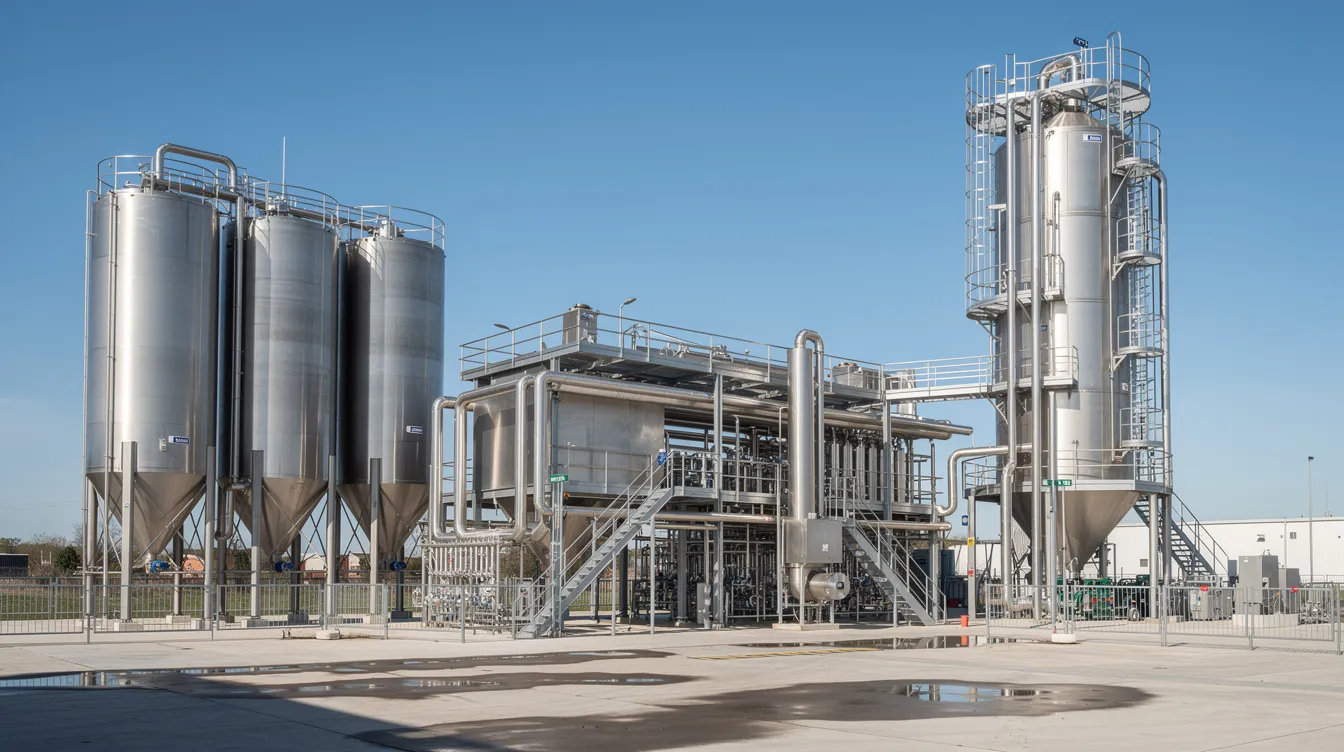
The core process line in a dairy plant – from milk reception through chilling, pasteurization, separation, evaporation, spray drying, powder conveying to packaging – is what converts fresh milk into powdered milk. But this process line cannot operate for a single shift without a network of supporting utility systems. The utilities required for a milk powder plant include electrical power, thermal energy and steam, process and potable water, refrigeration and chilled water, compressed air, CIP (Cleaning-in-Place) systems, effluent treatment, laboratory and administration services, and emergency systems such as DG sets, UPS and fire-fighting pumps. Milk powder manufacturing relies on continuous, precise and contamination-free utility inputs at every stage.
Each production stage draws on specific utilities: milk reception and chilling depend on refrigeration and electrical power for pumps; pasteurization requires steam and boiler systems that provide thermal energy for heating; cream separation and clarification use electrical drives; evaporation – typically through a falling film evaporator arrangement – consumes the largest share of steam; spray drying converts concentrated milk into fine powder particles using heated air, large fans and atomisation systems driven by electricity; and the final product is packaged in airtight containers for long shelf life. Milk powder has a shelf life of 6 months to 3 years, and milk powder retains its original nutritional value and quality when processed and stored correctly.
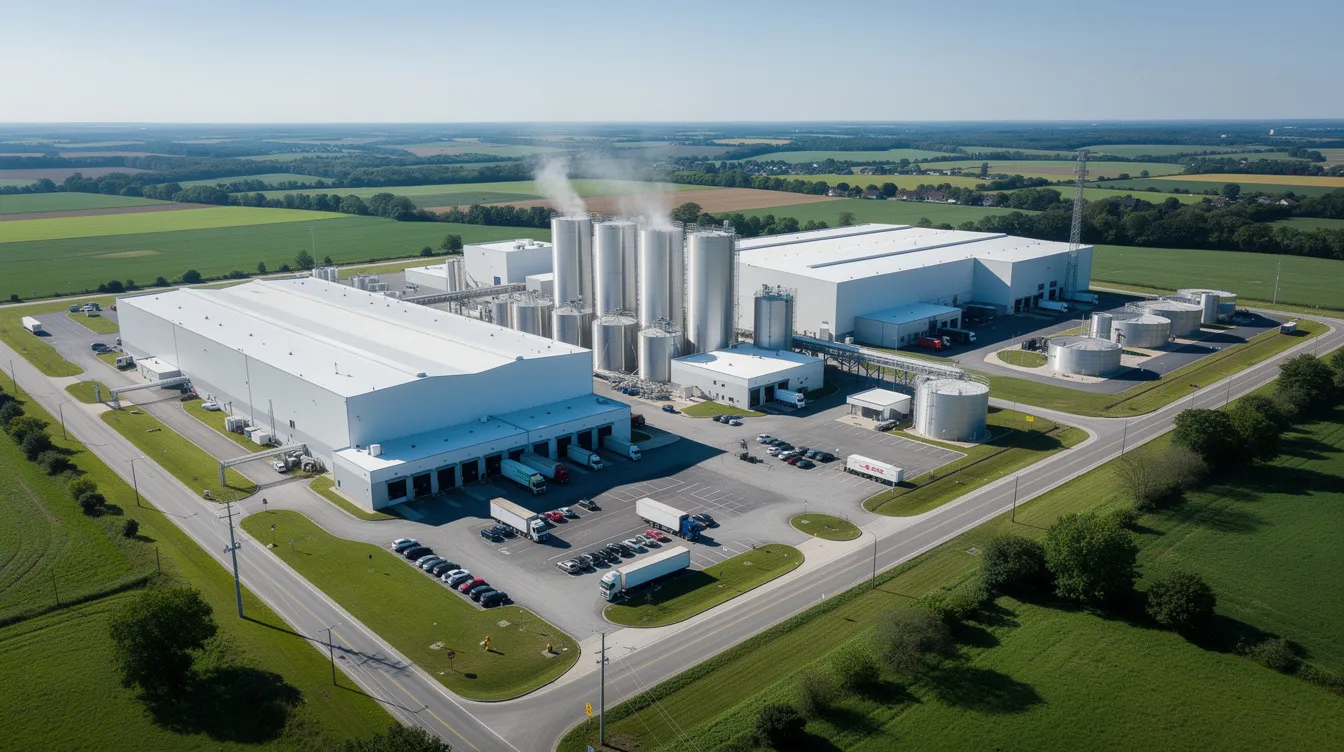
These utility systems are not just equipment lists – they require dedicated space, foundations, access roads and fire-safety clearances within the overall plant layout. The milk powder plant land, building and infrastructure requirements must account for boiler houses, refrigeration blocks, transformer yards, water-storage reservoirs, ETP areas and CIP rooms from the earliest layout stage. Likewise, the capital investment in all these utility packages forms a substantial part of the total milk powder plant machinery and equipment cost.
Milk powder production capacity ranges from 1 to 100 tons per day depending on plant scale, and even at the smaller end, the utility infrastructure described here is essential – it simply scales proportionally. Investing in milk powder plants improves product range and efficiency, and milk powder production reduces storage and transportation costs significantly compared to handling liquid milk.
Factors Determining Utility Requirements
Milk powder plant energy consumption and utility sizing cannot be standardised – they depend on capacity, technology, ambient conditions and product mix. Whether a promoter is planning an SMP, WMP or dairy whitener line directly affects steam, power and refrigeration demands.
The key variables include: milk-handling capacity in LPD or LLPD; expected powder output per day; solids content of incoming raw milk (typically 10–13% total solids for skim milk, higher for whole milk with fat); the share of different products in the mix; operating hours and number of shifts; seasonal variation in milk procurement (flush versus lean); and the targeted capacity-utilisation ramp-up over the first three to five years. Utility integration can significantly reduce energy consumption in milk powder production when evaporators, spray dryers and refrigeration systems are designed as a coordinated network rather than isolated islands.
Evaporation system design has a major influence: the number of effects, the presence of mechanical vapour recompression (MVR) or thermal vapour recompression (TVR), and the level of condensate recovery all determine how much steam per kilogram of product the plant actually consumes. Industry research shows that advanced designs incorporating RO pre-concentration and high-efficiency evaporation can reduce thermal energy by approximately 50% and electrical energy by roughly 19% compared to conventional baselines.
Similarly, automation level, CIP frequency, plant layout, pipeline lengths and ambient temperature – for instance, peak summer in North India versus moderate coastal climates – affect pumping energy, refrigeration load and water consumption. Dynamic load schedules for utilities are important for accurately assessing operational needs across seasons.
Utility sizing must be aligned with milk powder plant capacity planning and future expansion requirements. Final plant-specific utility calculations must be based on a detailed heat-and-mass balance, connected-load schedule and vendor quotations – not on generic thumb rules alone.
Electrical Power Requirement for a Milk Powder Plant
Electricity powers pumps, fans and homogenizers in dairy processing, and the milk powder plant electrical load is distributed across every production stage. Electrical power drives heavy machinery and automated PLC systems in milk processing, from reception through packaging. Electrical power systems supply energy to mechanical and control equipment in milk plants, and electrical power energizes heavy-duty equipment in dairy processing facilities.
The main power-consuming equipment includes:
- Milk reception pumps, dump tanks and plate heat exchangers
- Chilling compressors and glycol-circulation pumps
- Cream separators, clarifiers and high-pressure homogenizers (which create stable emulsions in milk processing)
- Multiple-effect evaporator feed pumps, vacuum pumps and condensate pumps
- Spray dryer main fan, secondary fans, atomisation drive (centrifugal atomiser or high-pressure pump) – spray dryer power consumption is typically one of the top three electrical loads
- Fluid-bed dryer and cooler fans
- Powder conveying, sifting and bagging machines
- Boiler feed-water pumps, water-treatment plant, CIP sets and the ETP
- Lighting, ventilation, HVAC, laboratory and administrative loads
For DPR purposes, the critical electrical concepts are: connected electrical load (total rated kW of all installed motors and equipment), maximum demand (kVA actually drawn at peak), diversity and load factor (typically 0.6–0.8 for powder plants), and power factor correction. These determine the milk powder plant transformer capacity (kVA), demand charges in monthly electricity bills and working-capital projections. Case-study data from Indian dairy plants shows that refrigeration alone can consume over 40% of total plant electricity.
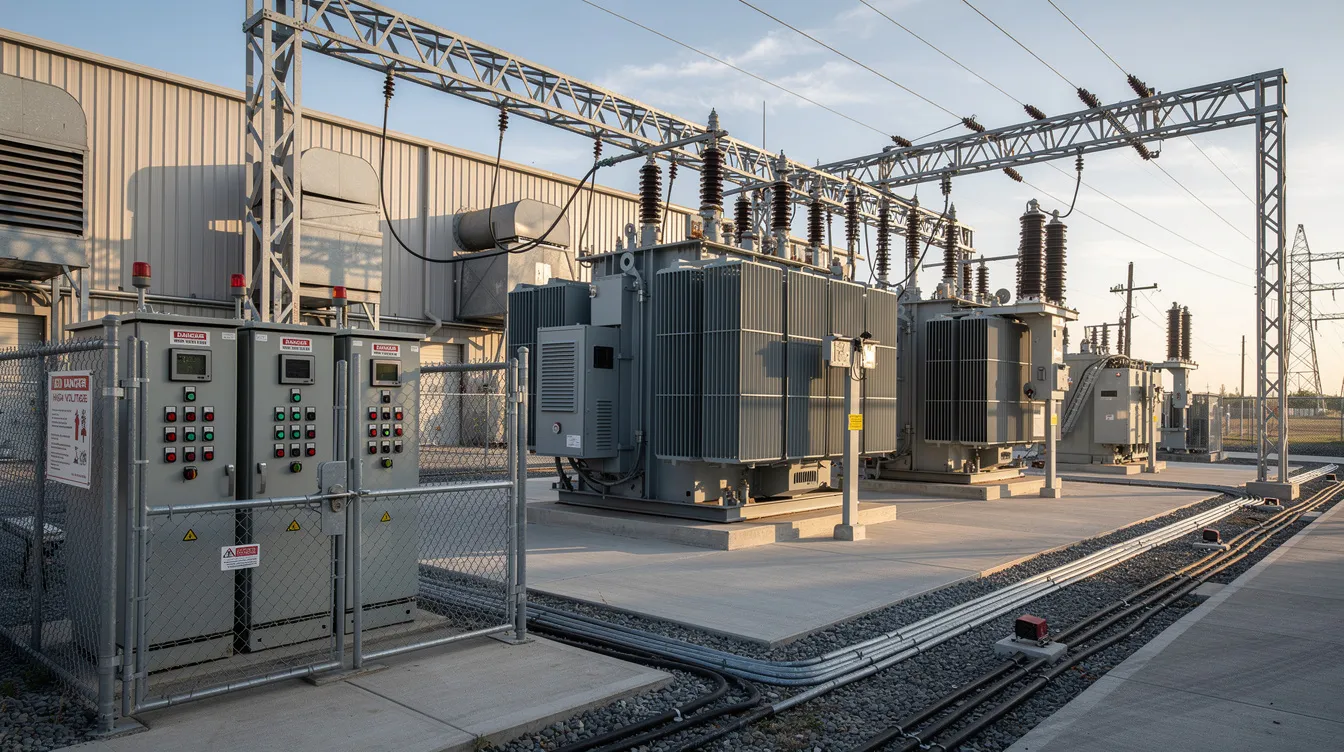
The electrical infrastructure includes: HT connection from the local utility, step-down transformer, HT/LT switchgear panels, motor-control centres, cabling routes, earthing grid, lightning protection, capacitor banks for power-factor improvement and Variable Frequency Drives (VFDs) on large motors such as spray dryer fans and refrigeration compressors.
Standby power is non-negotiable. Milk powder plant DG set capacity must be sized to handle critical loads – refrigeration compressors, key pumps, lighting and control systems – during grid outages. UPS systems protect automation, PLC panels and laboratory equipment. Both DG and UPS are capital-cost items that must be reflected in the project budget.
Illustrative Connected Load by Plant Scale (All Figures Indicative)
| Parameter | Small Plant | Mid-Size Plant | Large Plant |
|---|---|---|---|
| Milk Processing Capacity | Low LPD range | Mid LPD range | High LPD range |
| Approx. Powder Output | 5–10 TPD | 15–30 TPD | 50–100 TPD |
| Indicative Connected Load (kW) | 400–800 | 1,200–2,500 | 4,000–8,000+ |
| Estimated Operating Demand (kW) | 250–550 | 800–1,800 | 2,800–6,000 |
| Assumed Load Factor | 0.60–0.70 | 0.65–0.75 | 0.70–0.80 |
These figures are preliminary planning indicators only. Actual values must come from engineering design, equipment datasheets and vendor offers.
Steam and Thermal-Energy Requirement
Steam generation is critical for essential heat-intensive steps in milk processing. The milk powder plant steam requirement is dominated by multiple-effect evaporation and spray dryer air heating, with additional loads from pasteurization, hot-water generation, CIP and general sanitation. Industrial steam powers evaporators and preheaters in milk processing, and steam and boiler systems provide thermal energy for pasteurization and evaporation stages.
Steam is used for: direct and indirect heating of pasteurisers; preheaters before evaporators; falling film evaporator effects (where high-pressure steam is used to remove water from milk under vacuum); steam-to-air heat exchangers in spray dryers; hot-water loops for CIP and equipment cleaning; and auxiliary uses such as sterilisation. Concentration removes water from milk using evaporators, and the evaporation stage typically consumes the most steam in the entire production process.
Boiler Capacity Selection
Milk powder plant boiler capacity must cover peak steam demand (TPH) across evaporation, drying, pasteurization and CIP running simultaneously, with a safety margin of 15–20% for start-up and load variations. Steam pressure (typically 8–12 bar for dairy applications), dryness fraction and quality must match the requirements of process heat exchangers.
Industry data provides useful benchmarks: SSP Pvt. Ltd reports specific steam consumption of approximately 0.12 kg of steam per kg of product in a five-effect evaporator with TVR, dropping to around 0.09 kg steam per kg product in a seven-effect system with extended TVR. For an overall SMP plant, the Sirsa Cooperative study recorded approximately 0.71 kg of steam per kg of SMP produced, including pasteurization and all auxiliary uses.
Fuel Options
Common boiler fuels in Indian powder plants include biomass briquettes, agro-waste, coal (where still permitted under local emission norms), furnace oil, natural gas and LPG. The final choice depends on local fuel availability, price volatility, emission-control requirements, fuel-handling logistics and storage space. No single fuel is universally cheapest or best – each project must evaluate options specific to its location.
Efficiency and Loss Control
Key measures to reduce milk powder plant boiler fuel consumption include: proper combustion control, condensate recovery from evaporators and heaters, flash-steam recovery, deaerators, boiler economisers, blowdown heat recovery, insulation of all steam and condensate lines, and regular steam-trap maintenance.
Illustrative Fuel-Cost Calculation Framework:
(Total steam demand in TPH) × (Operating hours per day) = Daily steam consumption in tonnes Daily steam × (kg of fuel per kg of steam, at assumed boiler efficiency) × (Fuel cost per kg in ₹) = Daily fuel cost
All inputs must be clearly stated as assumptions and validated against vendor data.
Higher condensate recovery and energy-efficient evaporators (MVR/TVR) can substantially reduce energy consumption and improve profitability – these should be assessed on capital cost, annual savings and payback period within the DPR.
Water Requirement and Water-Treatment Systems
The milk powder plant water requirement covers process water, CIP and hygiene water, boiler feed water, cooling tower make-up, chilled-water circuits, laboratory use, domestic and canteen needs, and statutory fire-fighting reserve. Water treatment systems supply high-purity water for various milk processing needs, and a reliable supply of treated water is mandatory for various tasks in milk processing.
Clean water is used for product formulation and sanitation systems in milk processing. Water treatment systems prevent contamination and ensure quality in milk processing. The different water types required include:
- Raw water for cooling towers, fire-fighting and general washing
- Potable water for domestic use and some process applications
- Softened water for boilers and certain CIP circuits
- RO-treated water for sensitive process needs
- Recovered condensate from evaporators, which can be reused for CIP or as boiler feed after polishing
The water-treatment train typically includes: raw-water storage (ground reservoir plus overhead tank), coarse filtration, pressure sand filters, activated-carbon filters, softeners, RO units where justified by source quality, disinfection via chlorination or UV, and distribution pipelines to various consumption points.
Water-source assessment is critical. Promoters must analyse the proposed source for hardness, TDS, microbiological quality and seasonal reliability. Borewell yield tests or municipal-supply guarantees should be obtained during pre-feasibility. This assessment also links closely to milk procurement and raw material planning for a milk powder plant, since chilling and storage of raw milk depend on continuous water availability.
Research on Punjab dairy plants found that operations with milk powder production had significantly higher water footprints, driven largely by energy-related indirect water consumption. This reinforces the need for careful water budgeting.
Water reuse – such as recycling suitable condensate or using treated ETP effluent for gardening – should be explored, but all reuse must comply with food-safety and pollution-control guidelines and be approved by qualified specialists.
Refrigeration Requirement and Chilled-Water Systems
Refrigeration systems remove heat and maintain required temperatures in milk processing, making refrigeration one of the largest ongoing energy consumers in milk powder plants. Fresh milk is collected and stored in chilled tanks, and chilled water cools milk storage tanks to prevent bacterial growth. Refrigeration systems maintain cold storage for incoming raw milk, and chilled water helps prevent bacterial growth during the critical period between reception and processing.
The milk powder plant refrigeration load depends on: incoming raw milk temperature versus the desired chilled temperature (typically 4–6°C), milk flow rate in litres per hour, residence time in silos, ambient conditions (especially during North Indian summers when ambient temperatures can exceed 45°C), heat gains through tank walls and piping, and any process-cooling loads such as chilled water for homogenisers or air conditioning for sensitive packing areas.
The main components of the refrigeration system include:
- Compressors (commonly ammonia-based industrial machines in Indian powder plants)
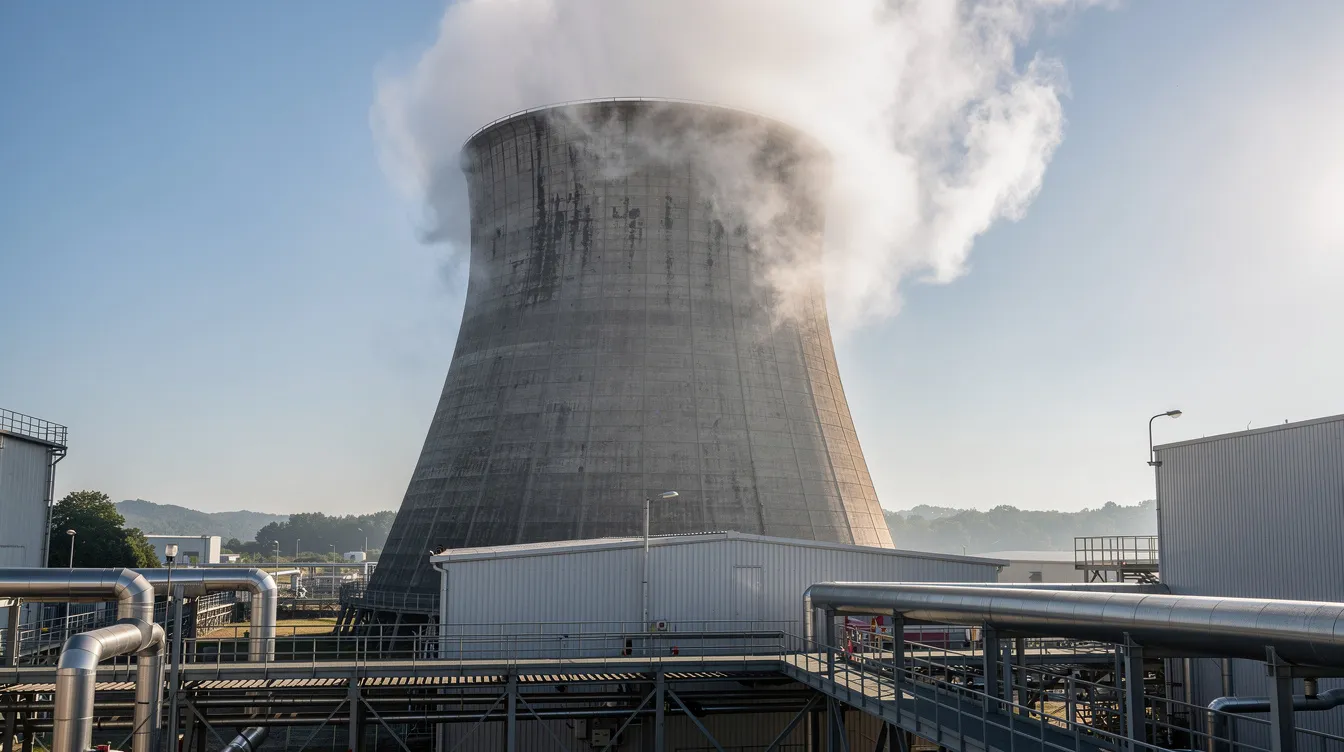
- Condensers (evaporative or cooling-tower-based)
- Expansion devices and evaporators
- Chilled-water tanks and ice-bank tanks where relevant
- Circulation pumps, piping and insulation
- Redundancy arrangements (N+1 compressors for critical operations)
Refrigeration capacity is measured in TR (tonnes of refrigeration). Plants must distinguish between peak TR (occurring when maximum milk arrives during flush season in hot weather) and average TR. A Rajasthan dairy energy audit identified chiller inefficiencies at 0.79 kW per TR versus a benchmark of 0.66 kW per TR – a gap that directly inflates electricity costs.
High-efficiency compressors, variable-speed drives, proper condenser cleaning, good insulation and optimal sequencing of compressor stages are key levers for reducing the refrigeration component of milk powder plant electricity consumption and overall utility cost.
The refrigeration block and cold rooms require specific spatial planning, as covered under milk powder plant land, building and infrastructure requirements.
Compressed Air and Supporting Utilities
Compressed air is a relatively smaller but still critical utility. Compressed air provides pneumatic pressure for operating valves in milk processing. Compressed air systems power pneumatic control valves, actuators, powder-packing machines, bag-filter cleaning mechanisms and various instruments throughout the plant. An air compressor failure can halt production even though its kWh share is modest.
Compressed air systems must maintain appropriate quality to ensure effective operation in dairy processing. Most plants install a central station with multiple screw-type compressors, air receivers, refrigerated dryers and filters. Separate distribution lines are maintained for instrument air (clean, dry, oil-free) and plant air. Pneumatic air in milk processing must be oil-free to prevent contamination of the product or packaging.
Design considerations include: operating pressure (typically 6–7 bar), diversity of use points, leakage losses (which can waste 20–30% of compressed air if unmanaged), provision for a standby compressor and avoiding unnecessarily high pressure settings.
Other supporting utilities to plan include: hot-water generation systems (from steam or direct heaters), ventilation and HVAC for control rooms and laboratories, fire-fighting pumps and hydrants, and utility services for laboratories (gas supply, UPS-backed power, distilled water). Each must be costed in both CAPEX and OPEX within the DPR.
CIP, Sanitation and Effluent Treatment
CIP systems ensure hygienic conditions in milk powder production and are essential for FSSAI compliance and food safety. In a dairy plant, properly designed CIP systems protect against contamination risk and support consistent quality across production batches. Milk is pasteurized to eliminate harmful bacteria, but maintaining hygiene through CIP between batches is equally important.
A typical CIP set-up includes dedicated tanks (caustic, acid, hot water, rinse water), circulation pumps, heaters, chemical dosing systems, return lines and automated control panels. CIP circuits serve pasteurisers, separators, evaporators, spray dryers, milk silos and interconnecting pipelines on a programmed schedule. The CIP water requirement, hot-water demand and cycle frequency must be factored into water, steam and effluent load calculations.
Effluent treatment plants handle wastewater from milk processing operations, including milk spillage, CIP discharge, floor washing, cooling tower blowdown and boiler blowdown. The high BOD and COD from milk losses require appropriately sized biological treatment. Typical ETP stages include: equalisation, primary screening, biological treatment (aerobic or anaerobic as appropriate), clarification, sludge handling and possible tertiary polishing.
Treated-water quality must meet norms specified by the relevant State Pollution Control Board, which must be confirmed for each specific project. Underestimating CIP and ETP requirements is a frequent mistake – both the CAPEX and recurring OPEX (power, chemicals, sludge disposal, manpower) must be captured in the milk powder plant utilities cost in India.
Utility Requirement by Plant Capacity – Illustrative Planning Approach
The following table offers an illustrative comparison framework for different plant scales. These figures are preliminary planning indicators only and must never be treated as equipment specifications or vendor guarantees.
| Parameter | Small | Medium | Large |
|---|---|---|---|
| Milk Processing (LPD) | 50,000–1,00,000 | 2,00,000–4,00,000 | 6,00,000–10,00,000 |
| Approx. Powder Output (TPD) | 5–10 | 20–40 | 60–100 |
| Connected Load (kW) | 400–800 | 1,500–3,000 | 5,000–10,000 |
| Steam Requirement (TPH) | 1–3 | 4–8 | 10–25 |
| Water Requirement (m³/day) | 50–120 | 200–500 | 600–1,500 |
| Refrigeration Load (TR) | 30–80 | 100–250 | 300–700 |
| Standby Provision | 15–25% redundancy on critical systems |
Milk powder plants can produce up to 100 tons per day at the higher end of this scale, with utility infrastructure sized accordingly. To estimate an indicative utility cost per kg of powder, a promoter can: calculate monthly kWh and apply the applicable tariff; estimate monthly fuel consumption using the steam balance and fuel-specific consumption rate; add water and chemical costs; then divide total utility OPEX by expected monthly powder production.
This exercise must be aligned with milk powder plant capacity planning to ensure that neither over-sizing (leading to idle capital) nor under-sizing (causing bottlenecks and quality failures) occurs.
Utility Capital Cost (CAPEX) in a Milk Powder Plant Project
Promoters often focus on visible process equipment and underestimate utility-related CAPEX. Collectively, electrical systems, boiler house, refrigeration plant, water treatment and ETP can form 25–40% of total project cost – a proportion that banks will scrutinise closely.
Major utility CAPEX heads include:
- HT line, substation and transformer
- HT/LT panels, MCCs, capacitor banks, cabling and earthing
- DG set and UPS systems
- Boiler with chimney, fuel-handling system and boiler water treatment
- Steam and condensate piping with insulation
- Refrigeration compressors, condensers, evaporators, chilled-water tanks and cooling tower
- Air compressors, receivers, dryers and distribution piping
- Water-treatment plant and storage systems
- CIP sets
- ETP with all stages
- Fire-fighting system (pumps, hydrants, sprinklers)
Installation, commissioning, structural supports, instrumentation, automation and contingency allowances must be explicitly built into the utility CAPEX estimate. These are rarely “included” in process-equipment quotations.
Each utility package should be backed by at least one budgetary vendor quotation for bank submission. This avoids cost escalation during implementation and strengthens the credibility of the milk powder plant setup cost in India.
Utility Operating Cost and Impact on Profitability
Milk powder plant utility cost – electricity, fuel, water, refrigerants, chemicals, maintenance and manpower – forms a significant component of the per-kg production cost. Energy audit data from Indian dairy operations shows that specific electrical energy consumption ranges from approximately 250–450 kWh per tonne of powder, while specific thermal energy runs between 4.5–6.5 GJ per tonne. In the Sirsa Cooperative case, electricity alone accounted for nearly 65% of variable cost.
A step-by-step approach for estimating utility cost per kg of powder:
- Calculate monthly kWh from the connected-load schedule and assumed load factor; apply applicable electricity tariff slabs
- Estimate monthly fuel consumption from the steam balance, boiler efficiency and fuel-specific consumption rate; multiply by fuel price per kg
- Add water procurement/treatment cost, refrigerant top-ups, CIP chemicals, ETP chemicals, utility maintenance and manpower
- Divide total monthly utility OPEX by expected monthly powder output
Operating costs feed directly into working-capital assessment, contribution margin, break-even analysis and DSCR. Lenders commonly run sensitivity analysis on power-tariff or fuel-price increases to test project robustness. As the plant ramps up capacity over initial years, utility consumption per unit of powder typically improves due to better load factors.
Energy Efficiency and Cost-Reduction Opportunities
An energy-efficient milk powder plant is not just an environmental choice – it is a financial strategy. GEA designs integrated plants for processing milk powder with advanced heat-recovery systems, and similar approaches are increasingly adopted by Indian project designers. A Forbes Marshall case study of a 6,00,000 LPD plant demonstrated how biomass fuel, optimised chilled-water distribution and pipeline routing delivered measurable OPEX reductions.
Key measures include:
- Thermal side: Multiple-effect evaporation, MVR/TVR where feasible, high condensate recovery, boiler economisers, insulation, steam-trap maintenance, blowdown heat recovery
- Electrical and refrigeration side: High-efficiency motors, VFDs on large fans and compressors, optimised spray dryer air-flow and inlet/outlet temperature control, well-maintained condensers, sequencing of compressors
- Water and CIP: Section-wise water metering, reuse of suitable condensate, optimised CIP cycles and chemical concentrations, periodic review of cleaning performance
Each proposed measure should be evaluated in the DPR on the basis of incremental capital cost, expected annual savings and simple payback – not adopted merely because it appears technically fashionable. Spray drying produces consistent milk powder with uniform bulk density when process parameters are properly controlled, and efficiency measures should enhance rather than compromise product temperature profiles and quality.
Incorporating Utilities into DPRs and Bank Loan Proposals
Banks expect a DPR for milk powder manufacturing plant utilities to demonstrate technically adequate, realistically costed and financially sustainable utility infrastructure. The key DPR components include:
- Basis of plant capacity and process-flow description with mass balance
- Connected-load schedule and milk powder plant transformer capacity
- Boiler and refrigeration system descriptions with capacities
- Source and reliability of water
- Fuel availability and logistics
- Utility equipment quotations supporting the CAPEX estimate
- Utility consumption assumptions feeding into production cost and working capital
- Break-even analysis, DSCR and sensitivity analysis covering tariff and fuel-price scenarios
Statutory aspects include: power-connection approvals, water-extraction permissions, boiler registration, pollution-control consents for ETP discharges, fire NOC and building-plan approvals for utility blocks. Mismatch between process capacity and utility capacity is a key risk from a banker’s perspective – the milk powder plant machinery and equipment cost and the utility infrastructure must be coherently sized.
CA Manish Gugliya, as a practising Chartered Accountant and project-finance consultant, assists promoters in preparing customised DPRs, CMA data and financial projections based on promoter inputs, technical consultant data and vendor offers. Financial projections are prepared on the basis of reasonable assumptions – they are not “certified” as guaranteed outcomes.
Utility-Planning Mistakes Commonly Seen in Milk Powder Projects
Many delays, cost overruns and production bottlenecks trace back to avoidable utility-planning errors at the concept or DPR stage. Common mistakes include:
- Focusing only on spray dryer and evaporator costs while under-budgeting boiler, refrigeration and electrical systems
- Underestimating peak electrical and steam loads, leading to equipment running at overload
- Ignoring standby capacity for critical utilities, leaving the plant vulnerable to breakdowns
- Selecting an undersized boiler that operates continuously at overload with poor efficiency and high fuel consumption
- Inadequate water-source assessment – not testing for seasonal yield drops in borewells or municipal supply constraints
- Insufficient refrigeration redundancy and ignoring the impact of high ambient temperatures on cooling tower performance
- Using supplier thumb-rules without reconciling against a proper heat-and-mass balance
- Assuming full-capacity utility consumption from year one despite planned ramp-up
- Not testing sensitivity to higher power tariffs or fuel prices
- Omitting utility maintenance, specialised manpower and ETP chemicals from OPEX projections
Promoters should have their utility plans reviewed by experienced dairy technologists, utility engineers and a project-finance professional before freezing costs and approaching banks.
Practical Due-Diligence Checklist for Milk Powder Plant Utilities
Before finalising plant design and DPR submissions, promoters should verify:
- Confirmed process flow diagram and mass balance for the chosen product mix
- Preliminary heat balance across pasteurization, evaporation and spray drying stages
- Connected-load list for all major motors with rated kW and estimated load factors
- Steam balance identifying evaporator, dryer and CIP as the major users
- Water balance including CIP water requirement, boiler feed, cooling tower make-up and domestic use
- Refrigeration-load calculation in TR for raw milk chilling, cream handling, silos and cold rooms
- Assessment of boiler fuel availability, logistics and storage
- Budgetary quotations for boiler, refrigeration plant, water treatment, air compressor, CIP and ETP packages
- Verification of approvals needed for power, water extraction and effluent discharge
- Land allocation for utility blocks validated against the site plan
- Cross-check of utility cost per kg of powder against available industry benchmarks
- Sensitivity analysis covering at least a 15–20% increase in power tariff and fuel price
- Provision for future expansion in transformer, boiler and water-source capacity
Promoters planning SMP manufacturing plant projects, WMP manufacturing plant projects or dairy whitener manufacturing plant projects will find that product-specific fat content, protein content and nutritional requirements affect evaporation loads, heat treatment intensity and therefore the overall utility profile.
Conclusion
Utilities – power, steam, water, refrigeration, compressed air, CIP and ETP – are not secondary installations in a milk powder plant. They are core components that directly impact product quality, production cost, scale of operations and the project’s ability to service bank debt. A plant with an excellent spray dryer but an undersized boiler, unreliable water source or inadequate refrigeration will never achieve consistent quality or rated capacity.
Realistic, engineering-backed estimates of milk powder plant power requirement, steam requirement, water requirement and refrigeration requirement must be integrated into the plant-layout plan, project-cost estimate, profitability projections and risk analysis from the earliest stage. Utilities provide necessary support for efficient operation of milk powder plants, and every rupee spent on proper utility planning pays for itself in avoided downtime, lower operating costs and stronger bankability.
Entrepreneurs and promoters planning milk powder, SMP, WMP or dairy whitener plants in India are invited to contact CA Manish Gugliya through www.projectreportbank.com for assistance with a customised DPR, CMA data, financial projections, feasibility assessment and bank loan proposal. No promise of loan sanction, subsidy approval or guaranteed profitability is made – the objective is to present your project on a technically sound and financially credible basis.
Frequently Asked Questions (FAQ)
The following questions address practical doubts often raised by promoters while planning utilities for milk powder plants.
How early in the project should utility planning start for a milk powder plant?
Utility planning should begin at the concept stage, in parallel with process-line selection. Boiler house location, transformer yard, refrigeration block, water reservoir and ETP area all influence land layout, building design and overall milk powder plant setup cost in India. At minimum, preliminary heat, steam, water and power balances should be ready before seeking serious vendor quotations or submitting a DPR to banks.
Can I use rule-of-thumb utility consumption figures from other plants for my DPR?
Benchmarks from similar plants provide a useful starting reference, but they must not be copied directly. Actual consumption depends on capacity, evaporator and dryer technology, product mix, milk solids content, ambient climate and plant layout. Lenders increasingly expect project-specific calculations or vendor-backed estimates, especially for projects exceeding ₹10–15 crore in total outlay.
Is it necessary to keep standby capacity for boilers and refrigeration?
Standby or redundancy is strongly recommended for critical utilities. A boiler breakdown during flush season can mean days of lost production and spoiled milk. The degree of redundancy – such as an N+1 compressor configuration or a second smaller boiler – should be decided jointly by the technical designer and promoter, balancing cost against reliability targets and the financial impact of unplanned downtime.
How do utilities influence working-capital limits for a milk powder plant?
Banks include electricity, fuel, water, chemicals and maintenance as operating-expense components when computing working-capital needs. During peak-flush months, powder production and utility bills both rise sharply. Realistic monthly utility-cost projections, aligned with seasonal capacity utilisation and milk availability, help secure adequate working-capital limits and prevent cash-flow stress once the plant begins operations.
Who should prepare or validate the utility estimates in my DPR?
Qualified dairy technologists and utility engineers should prepare or validate steam, power, water, refrigeration and ETP estimates based on the specific process design. CA Manish Gugliya typically bases the financial projections in a DPR on such technical inputs and vendor quotations, ensuring that the document presented to banks reflects a technically feasible and financially sensible utility plan.