Key Takeaways
Setting up a milk powder manufacturing plant in India involves layered capital decisions that go well beyond purchasing a spray dryer. Here are the critical points every promoter should understand before committing funds.
- There is no single standard setup cost. Investment varies widely with capacity (LPD), product mix (SMP, WMP, dairy whitener), technology choice and location. Industrial milk powder plants typically require multiple crores of rupees, with evaporation and spray drying sections forming the dominant share of plant and machinery CAPEX.
- Machinery quotation is not project cost. Fixed capital expenditure, overall project cost and total funding requirement (including working capital) are three distinct figures. Many entrepreneurs underestimate non-machinery components such as utilities, ETP, electricals, installation and interest during construction.
- The global milk powder market was valued at USD 38.47 billion in 2025 and is expected to reach USD 61.76 billion by 2034, with demand for milk powder growing at 8-12% per annum driven by rising urbanization and convenience trends.
- A bankable detailed project report is essential before finalizing investment or approaching banks. All rupee values in this article are illustrative, not quotations.
– CA Manish Gugliya, FCA, DISA (ICAI)
What Is Included in Milk Powder Plant Setup Cost?
The phrase “setup cost” for a milk powder manufacturing plant encompasses far more than the price of a spray dryer or evaporator. It covers every rupee required to take the project from bare land to commercial production – and often beyond, into initial operating months.
Fixed capital investment includes land, building, plant and machinery (reception, processing, evaporation, spray drying, packaging), utility equipment (boilers, refrigeration, water treatment, electricals), effluent treatment, laboratory, safety systems and miscellaneous fixed assets. For a dairy products plant handling powdered milk, each of these carries food-grade specifications that raise costs above generic industrial benchmarks.
Project cost adds preliminary and pre-operative expenses, interest during construction, contingency and margin money for working capital to the fixed capital investment. This is the figure banks appraise.
Working capital requirement covers raw milk purchases, packing materials, finished goods inventory, receivables, utility bills and wages needed to keep the plant running post-commissioning. Milk powder production can stabilize supply chains during seasonal fluctuations, but this also means building stock during flush season – which demands cash.
Total funding requirement equals total project cost plus any additional working capital beyond what is capitalized. Lenders evaluate this aggregate number, not just a machinery invoice.
Never assume the milk powder plant machinery quotation equals total capital expenditure or total investment in the milk powder manufacturing business.
Major Components of Milk Powder Plant Project Cost
Below is a structured view of where capital typically goes in a milk powder plant project. Evaporation, spray drying and utilities usually dominate CAPEX, while ETP, electricals, installation, IDC and contingency are frequently underestimated.
Land and Site Development
A plant handling 1-2 LLPD of milk typically needs 1-3 acres (4,000-12,000 sqm), including space for the spray dryer tower, future expansion, tanker movement and buffer zones. Costs differ sharply between industrial areas in Gujarat, Maharashtra or Uttar Pradesh versus remote rural districts. Site development elements – boundary wall, levelling, internal roads, borewell, compound lighting and greenbelt – can add 10-15% of land cost. The layout and location of the plant directly influence logistics and operational costs. Leasehold development cost and freehold land acquisition are treated differently in project cost estimation.
Factory Building and Civil Construction
Key structures include the milk reception dock, processing hall, evaporator room, tall spray dryer tower (often 15-20 metres), powder handling hall, utility block, finished-goods godown, laboratory and admin block. The plant design must comply with India’s food-safety and product standards, requiring epoxy flooring, washable walls, hygienic drains and stainless steel fittings. Research by Meena et al. estimated building construction costs at approximately ₹5,500/sqm for dairy-grade civil works. Spray dryer tower height necessitates structural reinforcement, steel work and crane provisions that escalate civil cost disproportionately.
Milk Reception and Storage System
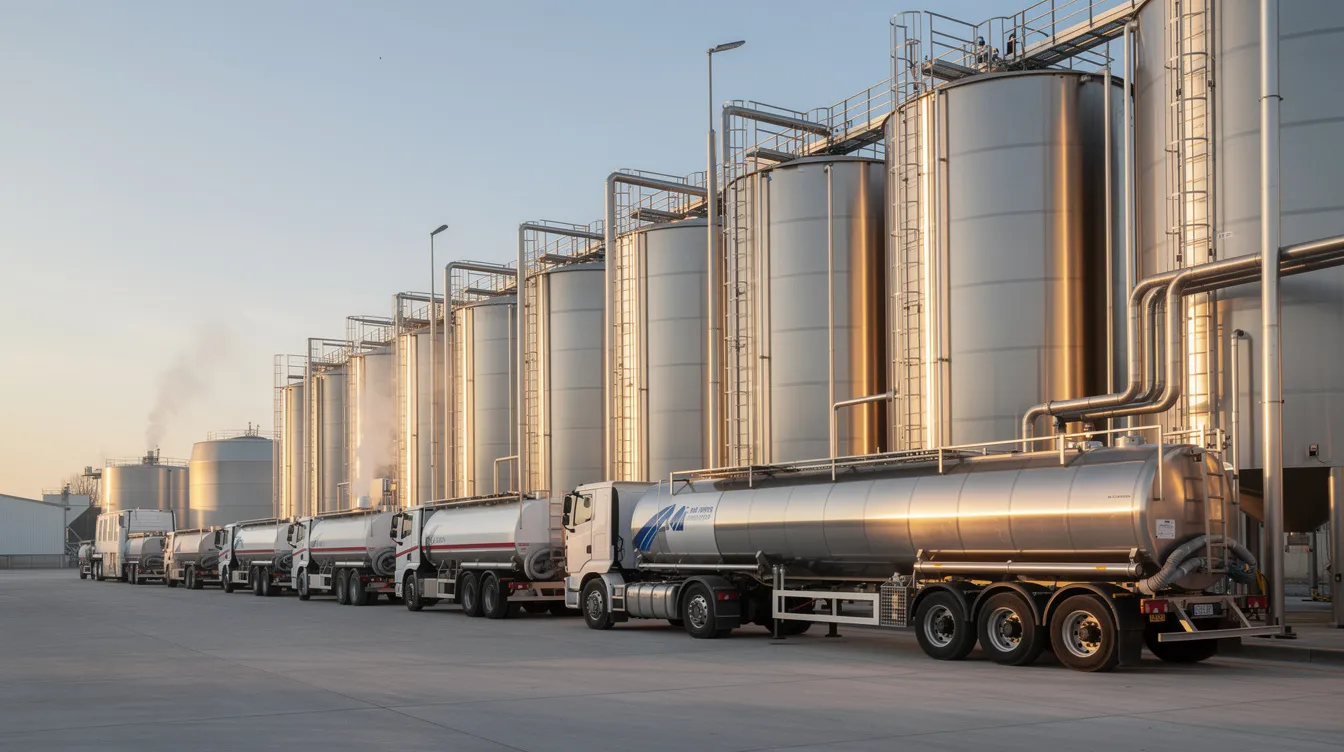
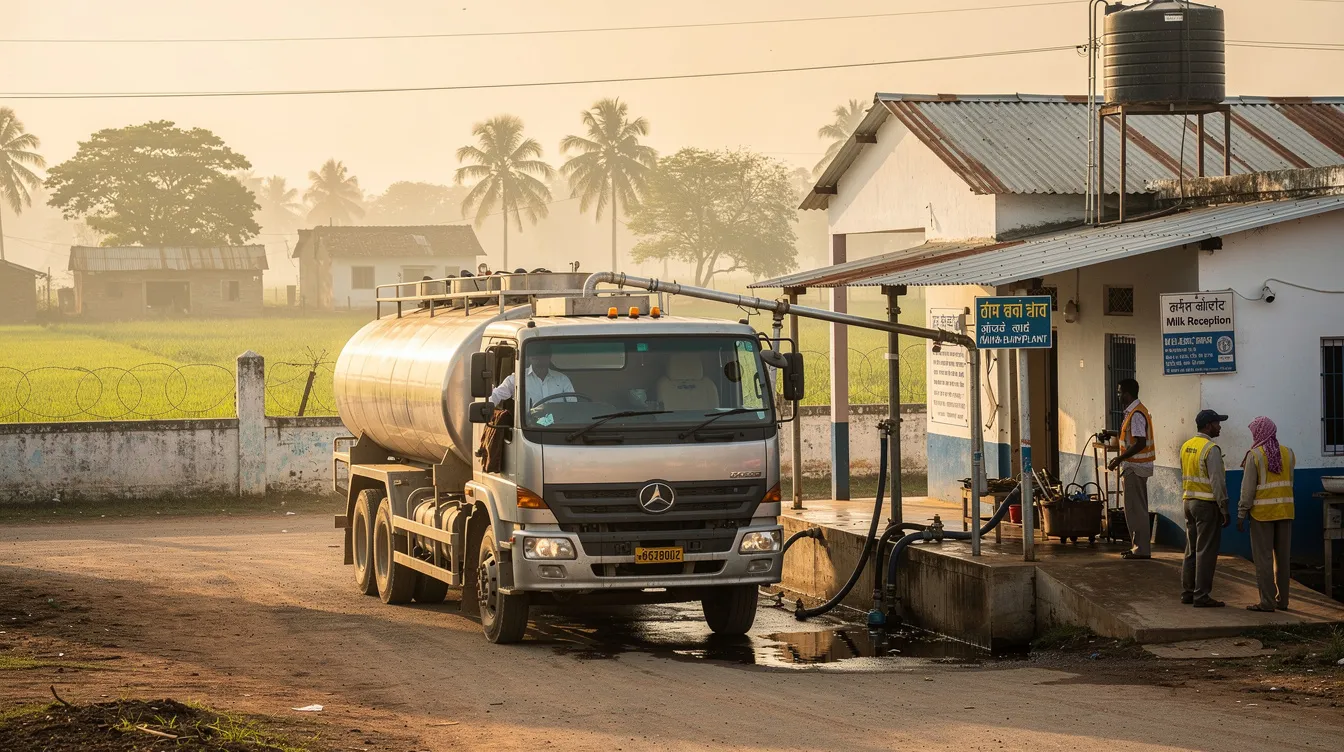
Core assets include a weighbridge, reception dock, dump tanks, plate chillers, raw milk storage tanks and CIPable silos. A milk powder plant requires 500-2,000 litres of raw milk per hour depending on capacity. Buffer storage depends on procurement schedules – plants receiving milk from distant collection routes may need 24-48 hours of tankage, while those near cooperatives may need 4-8 hours.
Milk Processing Section
Equipment here covers the clarifier, cream separator, pasteurizer, homogenizer (where required for whole milk powder or dairy whitener) and standardization tanks. Configuration changes with product mix due to different fat and SNF requirements. Though smaller in cost than spray drying, this section is critical for yield, powder quality and food production standards.
Evaporation System
Multi-effect evaporators (3-effect or 4-effect, falling film) concentrate milk solids before spray drying, dramatically reducing energy consumption per kg of powder. Approximately 9-10 litres of milk produce 1 kg of skimmed milk powder, and evaporators handle the bulk of water removal. Evaporators are among the highest-cost single items, often running into crores for industrial capacities, and require robust steam and condensate systems.
Spray Drying System
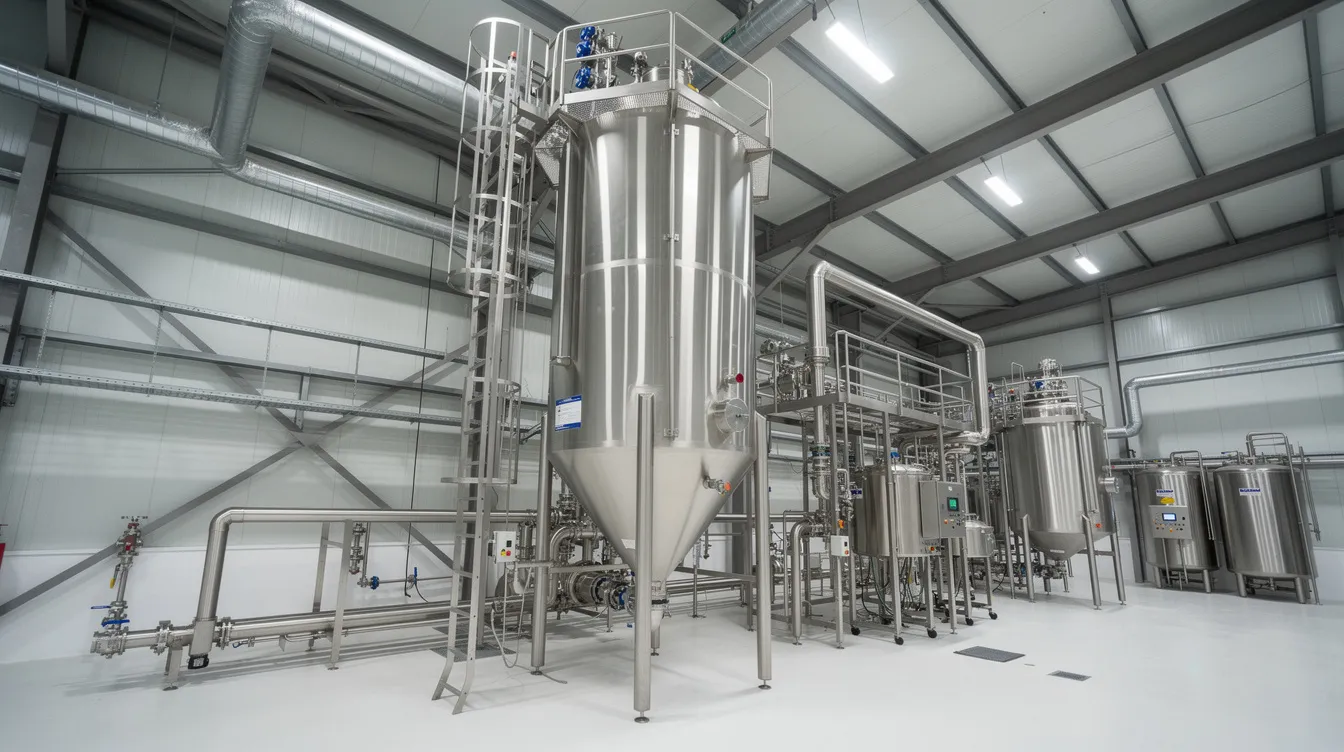
The core of any powder plant: drying chamber, atomizer (nozzle or rotary), hot-air system, cyclones/bag filters, fluid-bed dryer/cooler and powder discharge. According to KAMRIT benchmarking data (2026), the spray drying unit alone often constitutes 35-40% of total plant CAPEX. Spray drying extends the shelf life of milk powder to 18-24 months. Imported high-capacity spray dryers from manufacturers like GEA or Tetra Pak can cost ₹8-15 crore for a 15 MT/day line, while domestic vendors like Alfatech quote units between ₹9 lakh and ₹62 lakh depending on capacity.
Powder Handling and Conveying
Includes pneumatic conveying lines, powder silos, sifters, metal detectors, dehumidified rooms and powder conditioning equipment. Hygienic design and dust control are essential for food safety standards. Under-budgeting this area leads to handling bottlenecks and higher manual labour cost.
Packaging Equipment
Options range from automatic form-fill-seal machines for retail pouches to bulk bag fillers for 25 kg institutional packs, with nitrogen flushing and sealing systems. Product selection (SMP vs dairy whitener vs WMP) and target market change packaging line automation requirements and cost. High-speed, multi-lane lines increase capital cost but reduce per-unit packing expenses for leading milk powder manufacturers.
Boilers and Steam Systems
Steam generation drives evaporation, CIP hot water and general plant heating. Boiler type (solid-fuel, oil, gas, biomass) and capacity depend on evaporation load. Ancillary components include deaerators, water-softening, chimneys, condensate recovery and blowdown systems. Selection of boiler fuel impacts both initial capital expenditure and long-term milk powder production cost.
Refrigeration and Chilling System
Milk chilling from reception to processing is non-negotiable – plate heat exchangers, chilling plants, glycol systems and insulated pipelines are standard. Cold storage for certain dairy products and intermediate materials may be required depending on project design. Proper sizing reduces product losses and improves energy efficiency in the milk powder manufacturing unit.
Electrical Installation and Power Infrastructure
Components include transformer, HT/LT panels, power cabling, MCCs, DG set, lighting and earthing. Milk processing plants require continuous power backup and high-capacity water access. High connected loads from spray dryers and refrigeration plants make electrical infrastructure a substantial cost head. Charges for power connections, DISCOM deposits and potential substation expenses are frequently overlooked.
Water-Treatment System
Systems typically include raw-water storage, sand/carbon filters, softeners, RO plants and hygienic distribution pipelines. Dairy processing typically uses approximately 3 litres of water per 1 litre of milk processed. Water quality directly affects boiler scaling, evaporator performance and final product quality.
CIP (Cleaning-in-Place) System
Multi-tank CIP systems clean milk lines, evaporators, spray dryer internals, silos and tanks without dismantling. Automation, temperature control and chemical-dosing systems are essential for maintaining hygiene standards. Banks and auditors expect adequate cleaning systems in credible milk powder manufacturing projects.
Laboratory and Quality-Control Equipment
Core items include milk analyzers, powder moisture meters, microbiological testing equipment and fat/protein instruments. Quality control infrastructure is essential for testing milk purity and other parameters. Lab costs are small compared to spray dryers but essential for regulatory compliance and export readiness.
ETP and Environmental Infrastructure
Dairy effluent from milk powder manufacturing and CIP operations carries high BOD/COD and requires primary/secondary treatment, sludge handling and sometimes online monitoring. Statutory approvals include environmental clearances and licences from local authorities. ETP costs can be material in states with strict norms and must be included in CAPEX.
Cold Storage and Warehouse Requirements
Standard milk powder stores at ambient conditions, but controlled storage may apply for value-added powders. Warehouse capacity for raw materials, finished goods and spares – including pallet racking and MHE pathways – is crucial for handling seasonal milk procurement and stock building.
Material-Handling Equipment
Forklifts, pallet trucks, conveyors, tanker-unloading systems and hoists are commonly needed. This cost is often underestimated even though efficient movement significantly affects operating cost and safety.
Fire and Safety Systems
Hydrant systems, sprinklers, fire pumps, extinguishers, fire alarm and detection systems are standard. Milk powder dust creates specific fire and explosion risks, requiring ATEX/flameproof equipment where applicable. Compliance affects insurance premiums, approvals and bank appraisal of project risk.
Office and Administrative Infrastructure
Admin block, furniture, IT infrastructure, CCTV and staff amenities form part of miscellaneous fixed assets. Keep this budget realistic but proportionate to overall scale.
Installation and Commissioning
Freight, erection, insulation, piping, cabling and commissioning of milk powder plant machinery can add a significant percentage to equipment cost. Vendors often quote ex-works; promoters must separately budget packing, forwarding, transit insurance and erection charges.
Engineering and Consultancy
Basic and detailed engineering, layout design, utility sizing, project management and HACCP implementation guidance. Professional engineering support prevents costly design errors and rework.
Preliminary and Pre-Operative Expenses
Company formation, statutory fees, architectural fees, pre-operative salaries, initial marketing and travel – capitalized and amortized in financial projections.
Interest During Construction (IDC)
Interest on term loan during the construction and pre-commercial period. IDC depends on implementation schedule, moratorium period and disbursement profile. Lenders closely examine IDC assumptions.
Contingency Provision
Typically 5-10% of hard costs, covering unforeseen price escalations and minor scope changes. Banks prefer transparent contingency provisions.
Margin Money for Working Capital
Promoter’s share of working capital, typically required when banks sanction cash credit limits. Many DPRs treat margin money as part of project cost for means-of-finance calculation. Daily fresh milk purchases in a dairy processing industry project create substantial working-capital needs.
Milk Powder Plant Cost by Capacity
Capacity – measured in litres of milk per day (LPD) and kg of powder output – is the single most important determinant of milk powder plant project cost. Cost per litre of installed capacity typically reduces as plant size increases due to economies of scale, but total rupee investment rises sharply.
| Milk Handling Capacity | Typical Configuration | Indicative Investment Band | Key Cost Drivers |
|---|---|---|---|
| Up to 50,000 LPD (small) | Basic SMP line, domestic spray dryer, manual/semi-auto packing | Lower single-digit crores (a small-to-medium scale milk powder production plant requires ₹50 lakhs to ₹2.5 crore) | Equipment minimum sizes, basic utilities |
| ~1 LLPD (mid-size) | SMP/WMP line, improved automation, bulk + retail packing | Mid-range multi-crore (a medium-scale milk powder facility can cost over ₹10 crore depending on capacity and product type) | Spray dryer specification, utility strength |
| 2-5 LLPD (large) | Multi-product (SMP/WMP/dairy whitener), high automation, export compliance | ₹20-27 crore or more for fixed capital | Imported spray dryer, advanced packaging, larger ETP, retail-grade lab |
These bands are illustrative and based on 2026 benchmarking by KAMRIT. Actual costs depend on vendor quotations, location, automation and product mix.
Two projects with the same milk-handling capacity can have very different costs depending on Indian vs imported spray dryer, manual vs automatic packing, and utility design.
Example Milk Powder Plant Project Cost Breakdown (Illustrative)
Disclaimer: This is an illustrative model for educational purposes, not a quotation or standard cost for the milk powder industry.
For a hypothetical 1-1.5 LLPD milk handling SMP plant with a total project cost in the ₹10-14 crore range:
| Cost Head | Approx. % of Project Cost |
|---|---|
| Spray dryer and evaporation section | 35-40% |
| Other plant and machinery | 10-15% |
| Utilities (boiler, refrigeration, water, electrical) | 15-20% |
| Civil works and building | 10-15% |
| Packaging, silos, powder handling | 5-8% |
| Lab, safety, material handling | 3-5% |
| Pre-operative, IDC, contingency, margin money | 10-15% |
This helps promoters and lenders visualize where capital is concentrated. Initial investment for a modern milk powder plant is significant, and promoters should obtain updated vendor quotes and site-specific estimates before freezing project cost.
Milk Powder Plant Machinery Cost
Plant and machinery is usually the largest single component of fixed capital investment but still only a portion of total project cost. Essential equipment includes pasteurizers, evaporators and spray dryers. Milk powder manufacturing demands specialized high-cost thermal equipment.
Major machinery groups include milk reception, processing (clarifier, separator, pasteurizer, homogenizer), multi-effect evaporator, spray dryer, fluid-bed dryer, powder handling and silos, packaging line, utility equipment, CIP and automation/instrumentation. Evaporation and spray drying sections can easily account for 35-40% or more of machinery CAPEX at industrial capacities.
Selection between local and imported equipment, PLC-SCADA automation levels and hygienic design choices significantly affect cost. A dedicated “Milk Powder Plant Machinery & Equipment” resource should be referenced during DPR preparation for vendor-level specifications.
SMP vs WMP vs Dairy Whitener Plant Cost
Skimmed milk powder, also known as non-fat dry milk, requires effective cream separation and lower fat levels. Whole milk powder retains its fat content for various applications but needs more careful oxidation and flavour control. Dairy whitener is processed for optimal fat-to-protein ratio, often requiring blending systems and accurate dosing of fat, sugar and permitted ingredients.
WMP and dairy whitener lines may need high-shear mixers, agglomerators and modified-atmosphere packaging – increasing CAPEX over a simple SMP plant. Flavoured milk powders cater to tier-2 and tier-3 city markets and add formulation complexity. Infant milk formula can sell for ₹12-18 lakh per tonne at manufacturer level, but infant nutrition products carry stringent regulatory and quality requirements. Skimmed milk powder exports are increasing to Gulf countries and Southeast Asia, making export-grade SMP lines an attractive option.
Align product mix with market strategy and milk procurement profile, then design capacity and cost structure accordingly.
Land and Building Cost for Milk Powder Plant
Land and civil construction can form 10-15% or more of total CAPEX. Key factors include state/region, proximity to milk catchment, highway connectivity and local industrial policies. MoFPI norms suggest technical civil structure costs of up to ₹15,000/sqm for food-processing clusters.
Promoters should compare buying new industrial land, leasing in food parks, or expanding existing dairy infrastructure. Site preparation, food-grade finishes, insulated roofs and mezzanine floors for process equipment all add to civil cost.
Utility Infrastructure Cost in a Milk Powder Manufacturing Plant
Milk drying is highly utility-intensive. Utilities are critical in dairy processing due to high energy and water consumption. Energy costs account for 10-15% of total operating expenses. Core systems include boilers, steam distribution, chilling plants, cooling towers, air compressors, water-treatment plants, hot-water systems and condensate recovery.
Higher initial investment in energy-efficient equipment (multi-effect evaporators, heat recovery, VFDs) can reduce long-term milk powder production cost per kg. Environmental infrastructure – ETP, stack monitoring, noise control – can be material in certain states.
Installation, Engineering and Pre-Operative Costs
Beyond buying machinery, promoters spend considerably on installation (freight, erection, piping, insulation, testing), engineering and consultancy (process design, structural design, vendor coordination), and pre-operative expenses (salaries, training, sample production, statutory fees, insurance during construction). Banks expect these costs to be realistically factored into project cost. Underestimation often results in promoters bringing in extra equity mid-project.
Working Capital Required for Milk Powder Plant
Even a well-designed powder plant cannot run without adequate working capital. Raw milk purchase accounts for 65-70% of operating costs. Raw milk costs can range from 65-85% of operating expenses depending on season and procurement structure.
Major components include raw milk and milk-solids purchases, packing materials, consumables, labour, power, steam and maintenance. Inventory norms cover in-process stock, finished milk powder inventory built during flush season, and debtor cycles from institutional buyers. Banks assess working-capital requirements based on operating cycle and sanction facilities with stipulated margin money.
Project cost is not equal to total funding requirement, as ongoing working-capital needs in the milk powder industry can be substantial.
Factors That Increase Milk Powder Plant Setup Cost
Higher installed capacity, imported spray dryers, fully automated PLC-SCADA controls, multi-product configuration (SMP, WMP, dairy whitener), advanced packaging lines, high land prices, stringent environmental norms, captive power infrastructure, advanced laboratories for export or infant nutrition markets, and future-expansion design all escalate capital expenditure. Distinguish essential investments from discretionary features that may be phased in later.
Factors That Can Reduce Initial Investment (Without Compromising Safety)
- Appropriate initial capacity based on realistic milk procurement, with modular expansion scope
- Phased product mix: start with SMP and bulk packs, add retail packing or dairy whitener lines after market validation
- Optimized plant layout to minimize piping and cabling lengths
- Re-using existing dairy infrastructure (land, reception, cold room, lab) where technically feasible
- Competitive vendor quotations across domestic suppliers
Cost-cutting must never compromise food safety, FSSAI/BIS compliance or core reliability of critical equipment.
Milk Powder Plant Cost per Litre of Milk Handling Capacity
Promoters often benchmark investment using capital cost per LPD as a comparison metric:
Capital Cost per LPD = Relevant Fixed Capital Investment ÷ Installed Milk Handling Capacity (LPD)
For smaller plants, cost per LPD tends to be higher due to minimum critical equipment sizes, while larger plants benefit from economies of scale. However, comparing projects purely on ₹/LPD is misleading if product mix, automation, technology and utility systems differ significantly. Use it as an initial screening tool only.
Milk Powder Production Cost per Kg
Production cost per kg is an operating metric distinct from setup cost, but plant design influences energy consumption and labour productivity. Key heads include raw milk/milk solids, steam and power, labour, packing materials, maintenance, consumables, quality control, overheads and financing cost. Gross margins for skimmed milk powder typically range from 18-24%, and profit margins for well-run milk powder plants can range between 20-30%.
The price of milk can significantly affect the profitability of a powder manufacturing plant. Financial projections in a DPR should link capacity utilization with per-kg cost analysis to test profitability under different scenarios.
Means of Finance for Milk Powder Plant
Typical structure includes promoter’s equity and unsecured loans, term loan from banks/FIs, and where applicable, subsidy or soft-loan instruments. Government schemes can provide subsidies for dairy processing infrastructure under programmes like AHIDF. Debt-equity ratio depends on project risk, promoter background and cash-flow projections rather than a universal rule. Repayment schedules should align with projected cash flows considering seasonality in milk procurement and powder sales.
Milk Powder Plant Setup Cost and Bank Loan Assessment
From my experience in project finance, lenders typically examine milk powder plant proposals on multiple dimensions:
- Reasonableness of CAPEX versus capacity and technology claimed, with verified vendor quotations
- Capacity utilization ramp-up assumptions – 100% from day one is rarely credible
- Milk availability from the identified catchment area, with seasonal and competitive analysis
- Selling price assumptions for SMP, WMP and dairy whitener, tested against recent price trends
- DSCR and break-even analysis under base and stress scenarios, especially in years 1-5
- Working capital adequacy for the milk procurement cycle
A well-prepared milk powder plant DPR for bank loan, supported by realistic technical and financial assumptions, substantially improves credit-appraisal quality.
Why Milk Procurement Capacity Matters Before Finalizing Plant Cost
The chain is straightforward: sustainable milk procurement → achievable capacity utilization → actual powder production → revenue → cash flow → loan repayment. Designing a large spray dryer without a proven milk collection network or cooperative tie-up is a common and costly mistake. Underutilization of a high-CAPEX plant raises fixed costs per kg, erodes margins and strains DSCR. Conduct a detailed milk procurement study as part of the feasibility report before freezing capacity.
Capacity Utilization and Investment Viability
Lenders assume phased utilization – typically 50-60% in year 1, 70-80% in year 2, stabilizing thereafter. Capital investment may be recovered in 4-5 years at 70% capacity for a well-structured SMP plant. Realistic ramp-up curves based on procurement and market development make the feasibility study more credible. Examine downside scenarios before committing CAPEX.
Hidden Costs Entrepreneurs Often Miss
- Electricity-connection charges, transformer and substation costs
- Fire NOC compliance works and staff housing
- Structure reinforcement for spray dryer tower
- Soundproofing for DG sets, chimney height extensions
- Project insurance during construction, bank processing fees
- Extended trial-run expenses and initial spares
- Distribution costs for first commercial dispatches
These “small” items together can materially increase actual setup cost versus initial estimates.
Sample Milk Powder Plant Investment Checklist
Before finalizing investment or issuing purchase orders, verify:
- Technical: Capacity (LPD and kg/hr), product mix, process flow, mass balance, core machinery list
- Land and civil: Title/lease, plot size, spray dryer tower design, utility block, ETP area
- Utilities: Boilers, refrigeration, compressed air, water treatment, electricals, ETP
- Financial: Total project cost, means of finance, projected working capital, implementation schedule, contingency
- Regulatory: FSSAI licensing (mandatory for milk processing facilities), Factory Act, Pollution Control Board consent, fire-safety NOC, GST
- Sensitivity: Key certifications for export, sensitivity checks on milk and energy prices
Milk Powder Plant Setup Cost – Practical Example
Consider a promoter setting up a 2 LLPD integrated dairy processing and SMP plant in a milk-surplus district, supplying institutional buyers.
Sequence: Define capacity → prepare mass balance → select major equipment (evaporator, spray dryer, packaging) → size utilities and buildings → consolidate CAPEX → estimate pre-operative, IDC and working capital → arrive at total project cost.
With an indicative fixed capital of ₹12-18 crore for this configuration, projected revenues at 70% utilization and realistic SMP selling prices should generate sufficient EBITDA for a DSCR above 1.5x in stabilized years. A skimmed milk powder plant can recover capital investment in 4-5 years with disciplined procurement and cost control.
All figures are indicative ranges. Real-life costs must be based on up-to-date vendor quotes, site-specific estimates and expenditure projections. This integrated approach prevents both under-investment (bottlenecks) and over-investment (unnecessary financial burden).
DPR for Milk Powder Manufacturing Plant
A detailed project report brings together technical design, cost estimation, implementation scheduling and financial projections into a single decision-making document. A bankable DPR typically covers:
- Promoter background and milk powder industry overview
- Project concept, capacity, manufacturing process and technology selection
- Milk procurement plan and marketing strategy
- Itemized project cost and means of finance
- Projected P&L, balance sheet and cash-flow statements
- DSCR analysis, break even points, IRR/ROI and sensitivity analysis
For bank loan appraisal, the DPR must be internally consistent – milk procurement assumptions must match production volumes and sales, and project economics must align with installed capacity. Resources like a dedicated “Milk Powder Manufacturing Plant Project Report / DPR” and “Integrated Dairy Processing Plant Project Report for Bank Loan” serve as central reference points.
Common Mistakes While Estimating Milk Powder Plant Cost
- Treating plant and machinery quotation as total project cost
- Assuming negligible cost for ETP, utilities and electrical infrastructure
- Ignoring installation, engineering and commissioning charges
- Not budgeting for working capital or assuming 100% utilization from year one
- Using unrealistic low milk procurement prices or inflated selling prices
- Relying on outdated machinery quotations in a market with rising consumption and commodity-price volatility
- Not accounting for variable costs and fixed costs separately in financial analysis
Periodically update cost estimates during planning, especially given changing commodity prices, exchange rates and interest rates.
Frequently Asked Questions
Below are concise answers to common investor questions. These are based on professional project-finance experience and are indicative – actual numbers must be tailored to each specific project.
What is the approximate minimum investment to start a small milk powder manufacturing unit in India?
Setup cost for a small-scale plant is approximately ₹50-80 lakhs for very basic capacities with limited automation. A small-to-medium scale unit may require ₹50 lakhs to ₹2.5 crore depending on output and product type. True micro-scale “backyard” operations are generally not viable for professional SMP or WMP production due to food-safety, utility requirements and operational expenditure considerations. Treat online figures as broad signals and rely on capacity-specific vendor quotations and DPR-based estimates.
How long does it typically take to set up and commission a milk powder plant?
A milk powder plant typically takes 12-18 months to set up for MSME-size projects, with larger integrated facilities taking longer. Phases include land acquisition and building construction, machinery procurement (imported equipment may have longer lead times), installation, commissioning and trial runs. Delays increase IDC and can raise total project cost – realistic implementation schedules in DPRs are essential.
Is a milk powder plant financially viable and profitable in India?
Profitability depends on raw-milk pricing, product mix, plant utilization, energy efficiency, selling prices and financial structure. Well-planned plants with efficient procurement and realistic capacity sizing can achieve profit margins between 20-30%. Demand in developing countries and domestic markets is strong, and the milk powder market is driven by rising consumption. However, there is no guaranteed ROI – conduct a detailed financial feasibility study with sensitivity analysis before investing.
Do I need a Detailed Project Report (DPR) to get a bank loan for a milk powder manufacturing plant?
For any meaningful capacity or term-loan amount, banks and financial institutions generally insist on a structured project report or DPR. It helps lenders understand project cost, means of finance, revenue model, profitability, DSCR and risk-mitigation strategies. Professionally prepared DPRs aligned with bank formats improve appraisal clarity, though they do not guarantee loan sanction.
What licences and approvals are typically required before operating a milk powder plant?
FSSAI licensing is mandatory for milk processing facilities in India. Other requirements include Factory Act registration, Pollution Control Board consent, fire-safety approvals, local body/building permits and GST registration. Products targeting serve end use sectors like infant nutrition may have additional stringent norms. Export markets may require ISO 22000, HACCP or equivalent certifications. Cross-check current requirements with competent professionals as rules evolve.
Planning a Milk Powder Manufacturing Plant?
The correct question is not simply “What does a milk powder plant cost?” but “What is the appropriate investment for the required capacity, product mix, technology, procurement network and financial structure?” The lowest-cost plant is not necessarily the most viable plant. Investment decisions should be based on a properly integrated technical and financial feasibility assessment covering capacity, project cost, means of finance, working capital, financial projections, DSCR and repayment capacity.
For customized DPR preparation, CMA data, project-finance advisory and bank-loan consultancy for milk powder and dairy processing projects, promoters may reach out through ProjectReportBank.com.
– CA Manish Gugliya, FCA, DISA (ICAI) | Practising Chartered Accountant | Project Finance & DPR Consultant