
Key Takeaways
- This article explains what dairy whitener is, outlines the complete dairy whitener manufacturing process, and focuses on how to prepare a bankable dairy whitener manufacturing plant project report (DPR) for Indian lenders-covering technical setup, capital expenditure, working capital, profitability drivers, DSCR, break-even, and sensitivity analysis.
- The guide is written from the perspective of CA Manish Gugliya (FCA, DISA ICAI) with hands-on experience in detailed project reports, CMA Data, financial projections, and project finance for dairy and food processing projects.
- Readers will gain clarity on major plant components-land, building, utilities, spray drying machinery-along with the dairy whitener plant setup cost structure, means of finance, and key variables that determine project viability.
- All figures and assumptions in an actual DPR must be project-specific; this article provides frameworks and analytical approaches, not a one-size-fits-all project cost or profit estimate.
- The conclusion and FAQ connect technical feasibility with financial viability, DSCR, ROI/IRR, and practical bank loan considerations for a dairy whitener manufacturing business in India.
Introduction: Dairy Whitener Manufacturing Plant Project Report Perspective
A dairy whitener manufacturing plant converts liquid milk-a highly perishable commodity-into a shelf-stable, value-added dairy product that commands higher margins and reaches wider markets than loose or pouch milk ever can. In India, where tea consumption runs deep across every demographic and geography, dairy whitener serves both retail consumers and a massive institutional segment including hotels, railways, vending operators, and defence establishments.
From a project-finance perspective, setting up a dairy whitener manufacturing plant in India is capital-intensive. The process relies on spray drying technology, multi-effect evaporation, and precision formulation systems, all of which demand substantial upfront investment and careful technical planning. This is precisely why a professionally prepared dairy whitener manufacturing plant project report becomes essential before approaching banks, financial institutions, or private investors.
In my experience while preparing project reports for dairy ventures, I have observed that many promoters underestimate the complexity of translating a technically sound manufacturing idea into a financially bankable proposal. A detailed project report (DPR) must integrate product specifications, process design, realistic cost estimates, revenue projections, debt-service capacity, and risk analysis into a single coherent document. Without this, even a promising dairy whitener project struggles to secure term loan approval.
This article walks you through the complete landscape-product basics, manufacturing process, raw materials, capacity planning, machinery, capital expenditure, operating economics, profitability, financial projections, and the structure of a professional dairy whitener project report for bank loan. While detailed guidance on related topics such as milk powder plant setup cost in India is available separately, the focus here remains specifically on dairy whitener manufacturing DPR.
What is Dairy Whitener? Product Definition and Composition
Dairy whitener is a spray-dried milk product formulated specifically for whitening and creaming hot beverages like tea and coffee. Unlike plain milk powder, it is designed for rapid dissolution, superior whitening effect, and resistance to feathering or curdling when added to acidic or hot liquids. This makes it a distinct dairy product produced for a well-defined end use.
General composition of dairy whitener includes:
- Milk solids (SNF and milk fat), providing protein, lactose, and minerals
- Added carbohydrates such as sucrose, dextrose, or maltodextrin for sweetness and body
- Permitted emulsifiers and stabilising salts (phosphate salts, sodium caseinate) to maintain a stable emulsion in hot beverages
- Moisture content controlled to less than 4% for shelf stability
Typically, dairy whitener contains approximately 15–26% protein per 100 grams, 10–28% fat content per 100 grams depending on the product class (skimmed, low fat, medium fat, or high fat), and 35–56% carbohydrates including added sugar. It is more calorie-dense than plain milk powder because of the added sugar and formulation design. Dairy whitener must also meet specific quality parameters for solubility-the insolubility index should not exceed 1.5 ml under FSSAI guidelines-to ensure lump-free performance in beverages.
Exact formulation varies by brand and target segment. In an actual dairy whitener manufacturing plant project report, the proposed product specifications-fat percentage, protein in SNF, carbohydrate levels, moisture, and bulk density-must be clearly stated, as they directly influence process design, ingredient procurement, and financial projections.
Dairy Whitener vs Milk Powder: Practical Comparison for Project Planning
Many entrepreneurs planning a milk powder manufacturing plant confuse dairy whitener with skimmed milk powder or whole milk powder. The technical and financial design of a project fundamentally depends on what product is being manufactured.
| Parameter | Dairy Whitener | Skimmed Milk Powder (SMP) | Whole Milk Powder (WMP) |
|---|---|---|---|
| Primary Purpose | Beverage whitener (tea/coffee) | Reconstitution, dairy processing, food industry use | General milk reconstitution, baking, confectionery |
| Fat Content | 1.5–28% (varies by class) | ≤1.5% | 26–28% |
| Added Sugar | Yes (up to ~18%) | No | No |
| Vitamins | As naturally present | Often fortified with fat soluble vitamins A and D, and water soluble vitamins | As naturally present |
| Dissolution | Optimized for hot beverages, resists forming lumps | Requires reconstitution | Moderate solubility |
| Typical Packaging | Retail pouches, tins, institutional packs | Bulk bags, institutional packs | Bulk bags, retail packs |
| Market Positioning | Retail consumer and institutional beverage | Industrial ingredient, food production | Retail and food manufacturing |
Dairy whitener is usually sweetened and system-stabilised, whereas SMP is a low-fat, high-protein powder suited for process use. WMP has higher milk fat and different solubility behaviour. For readers considering wider product mixes, dedicated articles on Skimmed Milk Powder manufacturing plant and Whole Milk Powder manufacturing plant provide product-specific detail.
For project finance purposes, the product choice affects selling price, demand segments, raw material requirements, and therefore the entire revenue and profitability model in the DPR.
Dairy Whitener Manufacturing Business Opportunity in India
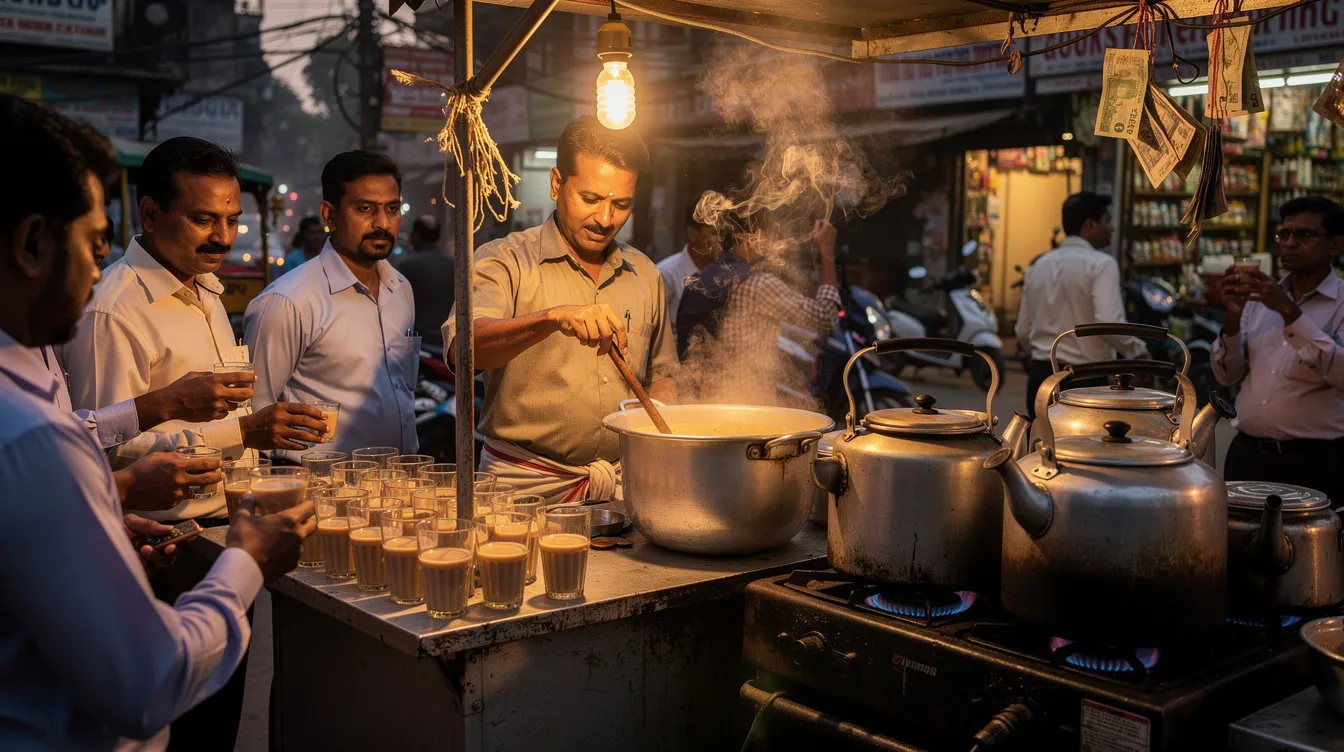
India is a major consumer of dairy whitener due to tea and coffee demand, and the business opportunity in this segment is backed by structural consumption patterns rather than short-term trends. The dairy whitener market is characterized by current demand and growth trends in both domestic and commercial markets. According to IMARC Group research, the Indian dairy whitener market was valued at approximately INR 72.2 billion in 2025, with a projected CAGR of around 8.67% through 2034.
Key demand drivers include:
- Household tea and coffee consumption across urban, semi-urban, and rural India
- Institutional buyers: railways, airlines, defence, hospitals, and corporate pantries
- Hotels, restaurants, and catering (HoReCa) sector and vending machine operators
- Modern retail chains seeking private-label and branded dairy products
- Rising demand in emerging economies and export opportunities to neighbouring countries
Dairy whitener is preferred for its long shelf life and convenience-it can be transported over long distances without cold chain infrastructure, making it an attractive value-added use of surplus milk during flush seasons. At the global level, the global milk powder market was valued at USD 38.47 billion in 2025, is expected to reach USD 61.76 billion by 2034, and is growing at a CAGR of 5.4% from 2026 to 2034-reflecting sustained growth across the global milk powder industry.
For many integrated dairies, dairy whitener complements liquid milk, curd, paneer, and condensed milk, smoothing seasonal fluctuations. More on this approach is discussed in the integrated dairy processing plant project report. However, profitability is never guaranteed-it depends on procurement efficiency, plant utilisation, and cost control, all of which must be tested in a professional feasibility study.
Dairy Whitener Manufacturing Process: Step-by-Step Overview
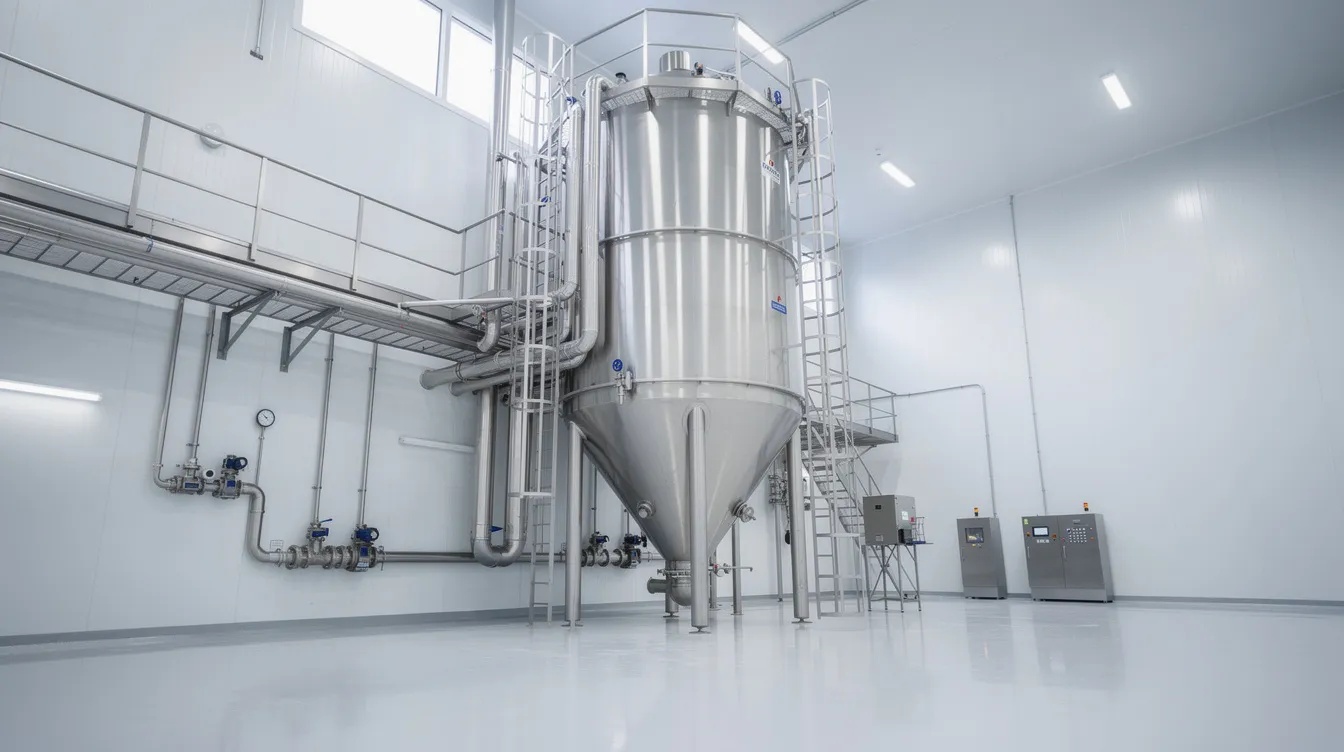
The dairy whitener production process begins with milk procurement and moves through several controlled stages before the final product is packed for dispatch. Dairy whitener is produced through pasteurization and spray drying, with each intermediate step designed to ensure product quality, food safety, and consistent performance in hot beverages.
| Stage | Purpose | Critical Control Points |
|---|---|---|
| Milk Procurement & Reception | Secure quality raw milk | Fat, SNF testing; microbiological load; temperature |
| Filtration / Clarification | Remove physical impurities | Filter integrity; equipment hygiene |
| Standardization | Adjust fat and SNF to target | The production process includes standardization of milk fat and protein to match product specification |
| Pasteurization | Destroy pathogens, extend shelf life | Time-temperature compliance |
| Formulation / Mixing | Add sugar, stabilisers, emulsifiers | Ingredient accuracy; batch records |
| Evaporation / Concentration | Remove water, increase solids | Solids concentration; vacuum pressure |
| Homogenization | Homogenization breaks fat globules into smaller, uniform particles for stable emulsion | Pressure settings (typically 150–200 kg/cm²) |
| Spray Drying | Spray drying rapidly evaporates moisture to create powder | Inlet/outlet air temperature; moisture <4% |
| Powder Handling & Cooling | Conveying, cooling, sieving | Particle size; temperature reduction |
| Quality Testing | Verify composition, solubility, microbiology | FSSAI parameters; insolubility index |
| Packing | Fill into pouches, tins, or bulk bags | Net weight accuracy; sealing integrity |
| Storage & Dispatch | Maintain shelf stability | Cool, dry storage; FIFO rotation |
Quality assurance systems are critical for maintaining product standards at every stage, and safety protocols must be implemented throughout the manufacturing process. From a project-finance perspective, the choice between single-stage and multi-stage spray dryers, level of automation, and inline quality monitoring directly impacts both capital cost and operating efficiency.
Raw Materials and Inputs for Dairy Whitener Production
In dairy whitener manufacturing, raw milk cost is usually the largest component of operating cost, and its price volatility significantly affects profitability. Milk procurement should include details on quality testing and transportation logistics in the DPR.
Main raw materials include:
- Chilled cow milk or buffalo milk (or recombined milk using SMP/WMP)
- Sugar (sucrose), maltodextrin, or other permitted carbohydrates
- Emulsifiers and stabilising salts (e.g., sodium caseinate, phosphates)
- Flavours, if applicable
- Food-grade packaging materials: laminated pouches, tins, corrugated boxes
For medium and large projects, systematic milk collection and procurement infrastructure is essential, especially where direct-farmer procurement or cooperative tie-ups form the supply backbone.
Other consumables-cleaning chemicals, lab reagents, spare parts, filter bags for dust collection, and lubricants-should be properly costed in the DPR. The actual product recipe and ingredient proportions must follow current FSSAI and BIS norms; the project report should explicitly state that regulatory compliance has been considered.
Dairy Whitener Plant Capacity Planning and Product Mix
Capacity planning is one of the most sensitive assumptions in any dairy whitener manufacturing plant project report. Plant capacity and equipment sizing are essential for achieving operational efficiency in formulations. A detailed discussion on methodology is available in the article on dairy plant capacity planning.
Typical capacity metrics include:
- Milk intake capacity (litres per day or lakh litres per day)
- Evaporator capacity (kg water evaporated per hour)
- Spray dryer throughput (kg powder per hour)
- Annual finished dairy whitener output in tonnes, based on operating days and shift patterns
A milk powder plant requires an annual capacity of 10,000–20,000 MT for meaningful economies of scale, though smaller or larger capacities may be appropriate depending on market and procurement realities. Capacity utilisation ramp-up-say Year 1 at 50–60%, reaching 80–85% by Year 4 or 5-should be conservative rather than assuming full utilisation from commissioning.
Seasonal variations in milk production (flush vs lean) affect procurement volumes and cost. Where technically and commercially feasible, a flexible product mix (dairy whitener, SMP, cream milk powder, WMP) helps optimise plant use. From a project-finance viewpoint, over-sizing the spray dryer without secured milk supply and sales contracts can depress DSCR, ROI, and IRR.
Land, Building and Infrastructure Requirements
Hygienic plant layout, safe material flow, and compliance with food-safety norms are non-negotiable for any dairy whitener manufacturing plant in India. Site selection must ensure access to raw materials and utilities-proximity to milk catchment, reliable power, adequate water, and road/rail connectivity.
Key building and infrastructure components:
- Milk reception bay with weigh-bridge
- Raw milk chilling and storage section
- Processing block (pasteurisation, standardisation, formulation)
- Evaporation and spray drying tower (multi-storey structure)
- Powder handling, silo, and packing hall
- Raw material and packing material stores
- Finished-goods warehouse
- Quality-control laboratory
- Utilities block: boiler house, refrigeration plant, water-treatment plant, air compressor room, ETP
- Administrative offices, canteen, and staff amenities
- Internal roads, parking, compound wall, fire and safety infrastructure
The land required depends on capacity and scope for future expansion. Detailed guidance on area norms and zoning is available in the article on dairy plant land, building and infrastructure requirements. Civil-construction cost in the DPR should be broken down by component, recognising that actual quotes depend on location and design.
Dairy Whitener Plant Machinery and Processing Equipment
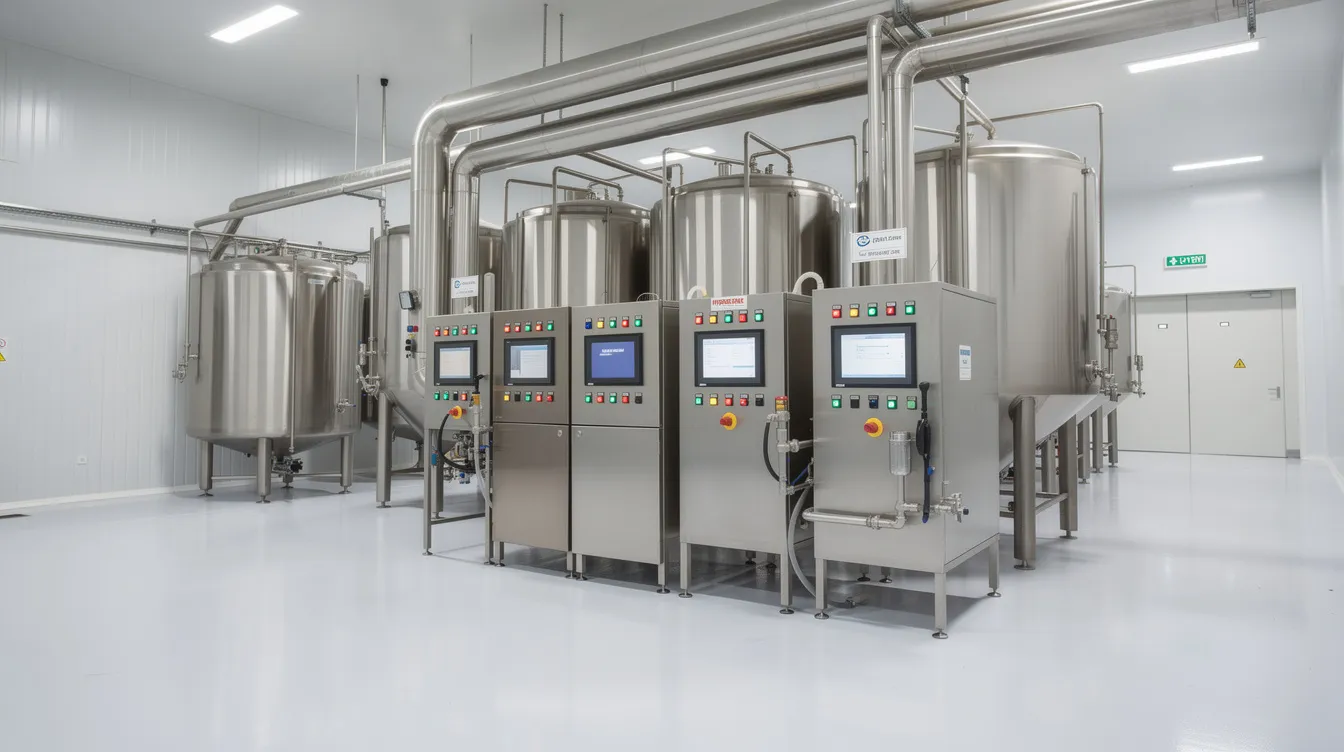
Plant and machinery is usually the largest single component of capital expenditure in a dairy whitener manufacturing project. High-quality machinery is essential for milk powder production, affecting both product quality and operating reliability.
| Equipment Category | Principal Function |
|---|---|
| Milk Reception Tanks & Weigh Bowl | Receive and measure incoming milk |
| Chilling Plant & Storage Silos | Cool and hold raw milk |
| Clarifier & Cream Separator | Remove impurities; separate cream for standardisation |
| Pasteuriser (HTST/UHT) | Heat treatment for food safety |
| Homogeniser | Break fat globules for uniform emulsion |
| Formulation/Mixing Tanks | Blend milk with sugar, stabilisers, emulsifiers |
| Multi-Effect Evaporator | Concentrate milk by removing water efficiently |
| Spray Dryer (Chamber, Atomiser, Hot Air System) | Convert concentrate into powder |
| Cyclones & Bag Filters | Recover fine powder particles from exhaust air |
| Powder Conveying & Fluid Bed Cooling | Transport and cool powder |
| Sieving & Metal Detection | Ensure particle size and detect contaminants |
| Packing Machines (FFS, Tin Filling, Bulk Bag) | Pack finished dairy whitener for sale |
| CIP System | Automated cleaning of process lines |
| Boiler & Fuel Handling | Generate steam for evaporation and drying |
| Refrigeration Plant | Chilling for raw milk and process needs |
| Water Treatment Plant & ETP | Treat process water and effluent |
| Air Compressor | Pneumatic conveying and instrumentation |
| Laboratory Equipment | Quality control testing and analysis |
The level of automation (PLC/SCADA control, auto CIP, automatic bagging) and technology choices significantly influence dairy whitener plant cost in India. Quotations must be obtained from multiple reputed suppliers. Readers seeking deeper technical and pricing insights on evaporators and spray dryers can refer to the article on milk powder plant machinery and equipment cost.
Utilities Requirement: Power, Water, Steam, Refrigeration and ETP
Utilities represent a major operating-cost head in any dairy whitener manufacturing project. The dairy processing plant must consider high requirements for water, electricity, steam, and refrigeration, given the energy-intensive nature of evaporation and spray drying.
Main utility requirements:
- Electrical power: drives, controls, refrigeration compressors, lighting, instrumentation
- Steam / Thermal energy: pasteurisation, evaporation, spray dryer hot-air generation
- Refrigeration: raw milk chilling, cold storage where required
- Process and boiler-feed water: treated to required quality standards
- Compressed air: instrumentation, pneumatic powder conveying
- Fuel: coal, briquettes, natural gas, or furnace oil for boiler or hot-air generator
- ETP: effluent treatment and waste-water management
From a financial perspective, realistic utility-consumption norms (kWh per tonne of powder, kg steam per kg of water evaporated) are essential for accurate operating-cost projections and sensitivity analysis. Energy-efficiency options-heat recovery, condensate return, efficient spray-dryer design-can meaningfully improve margins and DSCR over the project life. A comprehensive discussion is available in the guide on dairy plant power, water, steam, refrigeration and ETP requirements.
Dairy Whitener Plant Setup Cost and Capital Expenditure Structure
There is no single “standard” dairy whitener plant investment. Capital investment depends on plant capacity and technology, as well as land price, level of automation, and whether the plant is standalone or part of a larger integrated dairy complex.
Major capital expenditure heads typically include:
- Land cost and site development (levelling, boundary wall, internal roads)
- Factory building including spray-dryer tower (multi-storey RCC structure)
- Plant and machinery (including erection, installation, commissioning)
- Utility systems (boiler, refrigeration, WTP, ETP, compressors)
- Electrical installation and power distribution
- Laboratory and QA equipment
- Furniture, office equipment, and vehicles
- Preliminary and pre-operative expenses (consultancy, interest during construction, trial-run expenses)
- Contingency provision
- Margin money for working capital
Margin money for working capital is often treated as part of “total capital investment” for bank-appraisal purposes and must be clearly shown in the dairy whitener project report. For related analysis on dairy plant project cost and means of finance and plant setup cost analysis, readers can consult the dedicated articles. Any numerical examples used in a live DPR must be clearly labelled “illustrative only” and adjusted for date, capacity, location, and actual vendor quotations.
Means of Finance for Dairy Whitener Manufacturing Projects
Typical financing structure for a dairy whitener manufacturing project includes promoter’s equity contribution, term loan from banks or financial institutions, possible unsecured or subordinated loans from promoters, and separately sanctioned working-capital limits (cash credit, LC/BG facilities).
From a project-finance angle, maintaining an acceptable debt–equity ratio and ensuring adequate promoter contribution are essential for bankability. The loan tenor should match the useful life of assets, and the repayment schedule must align with projected cash generation. Detailed frameworks on structuring dairy plant project cost and means of finance are discussed separately.
Different banks apply different norms for margin, collateral, credit rating, and promoter track record. A well-prepared DPR supports the loan proposal but cannot substitute for the lender’s independent credit appraisal. While preparing a dairy whitener project report for bank loan, assumptions regarding interest rate, moratorium period, and repayment tenure must be realistic and in line with prevailing market practices.
Working Capital Requirement for Dairy Whitener Plant
Even after installing the manufacturing plant, adequate working capital is needed to procure milk and ingredients daily, hold packaging stocks, extend credit to institutional and trade customers, and manage payment cycles.
Key working-capital components:
- Raw milk and ingredients inventory (determined by procurement frequency and holding days)
- Packing materials stock
- Finished dairy whitener inventory (especially important for seasonal or institutional demand)
- Trade receivables (credit period extended to distributors and institutional buyers)
- Cash and bank balances for day-to-day operations
- Less: trade creditors and other current liabilities
The seasonal nature of milk production can create significant inventory build-up in flush seasons, requiring careful cash-flow planning. Detailed methodology for assessment is discussed in the article on dairy plant working capital requirement and on dairy processing plant CMA Data for bank loan.
In my experience, underestimating working-capital needs is one of the most common mistakes in dairy DPRs. Banks will recalculate requirements based on their norms, so presenting realistic numbers improves the credibility of the entire dairy whitener DPR.
Revenue Model and Market Realisation
A dairy whitener manufacturing business can sell in multiple formats and channels, each with different pricing and margin structures. Key target audiences for dairy whitener include institutional buyers and retail consumers.
Typical revenue streams include:
- Small retail packs under own brand (pouches, sachets, jars)
- Larger institutional packs for HoReCa and catering
- Bulk supplies to beverage premix and vending-machine operators
- Private-label or contract manufacturing for retail chains
- Export or B2B industrial supplies where feasible
The basic revenue framework is: Production Capacity × Capacity Utilisation × Yield (kg powder per kg milk) × Realisation per kg = Projected Revenue. In practice, this must be calculated product-wise, and market analysis should cover existing brands, competitor pricing, and sales projections for dairy whitener.
Market positioning (economy vs premium whitener), distribution strategy, and credit terms all affect achievable selling price and cash-flow assumptions in the dairy whitener plant financial projections. The DPR should reference current market prices of comparable products and any market research or distributor feedback obtained during project planning.
Major Operating Costs and Cost Structure
Operating-cost analysis is at the heart of any dairy whitener manufacturing plant project report, as banks and investors closely examine margins and sensitivity to key cost inputs.
Major operational expenditure heads:
- Raw milk and milk solids (the dominant cost-raw milk accounts for 75–85% of total operating expenses)
- Sugar and other ingredients
- Packaging materials
- Power and fuel (electricity, steam generation, refrigeration)
- Wages, salaries, and human resources costs
- Repairs and maintenance
- Quality-control and laboratory costs
- Factory overheads
- Selling and distribution expenses (freight, sales schemes, marketing)
- Administration, insurance
- Interest on term loan and working capital
- Depreciation
Cost per kg of finished dairy whitener includes raw materials, packaging, labor, and overhead costs. Operating costs increase significantly by the fifth year of operations as maintenance, replacement, and market-expansion expenses rise with scale. From a project-finance perspective, milk procurement price, plant energy efficiency, and product realisation are the three most critical variables influencing gross margin. A broader breakdown of operating costs for dairy processing is explained in the article on dairy processing plant financial projections.
Profitability Analysis of Dairy Whitener Manufacturing Plant
Profitability in DPRs is normally analysed at multiple levels: gross profit (contribution), EBITDA, EBIT, profit before tax (PBT), profit after tax (PAT), and cash accruals. Profit margins for milk powder plants typically range between 20–30%, though actual margins for dairy whitener depend heavily on project economics.
The following factors impact profitability across the projection period:
- Capacity utilisation and ramp-up trajectory
- Powder recovery yield (typically 8–10% weight from raw milk)
- Milk and sugar procurement cost
- Selling-price discipline and product-mix optimisation
- Energy efficiency and packaging cost control
- Interest burden and depreciation
High fixed costs-depreciation, salaries, interest-make it essential for a dairy whitener plant to achieve and sustain adequate throughput, particularly after the initial stabilisation phase. No generic profit percentage should be promised in a DPR; margins should be logically derived from current input prices and achievable market realisation. Detailed profitability modelling techniques are discussed in the article on dairy processing plant feasibility and project viability.
Financial Projections for Dairy Whitener Plant DPR
Well-structured financial projections are essential for bank appraisal and internal decision-making. A comprehensive project report serves as the operational and financial blueprint for investors and regulatory bodies.
Key statements normally included in the DPR:
- Projected Profit & Loss Account (7–10 years or lender-specified period)
- Projected Balance Sheet
- Cash-Flow Statement
- Fund-Flow Statement (where required)
- Working-capital assessment
- Interest and instalment schedules
- Tax estimates and ratio analysis
Assumptions regarding production ramp-up, selling prices, input costs, credit terms, and operating expenses must be internally consistent. Banks frequently question projections where assumptions contradict each other-for instance, showing rising volumes without proportionate raw-material costs. A broader methodology is explained in the guide on dairy processing plant financial projections.
From a CA’s perspective, a transparent assumption sheet and scenario analysis (best case, base case, stress case) add significant credibility to a dairy whitener manufacturing DPR for bank finance.
DSCR and Loan Repayment Capacity
Debt Service Coverage Ratio (DSCR) measures the project’s capacity to service interest and principal obligations from its operating cash flows. It is computed conceptually as cash accruals (after tax and before debt service) divided by total interest plus principal repayment obligations.
Lenders examine both average DSCR over the loan tenure and minimum DSCR in the most stressed year. In certain government dairy schemes, a minimum DSCR of around 1.25 has been specified as a benchmark, though each lender applies its own norms.
Factors that influence DSCR in dairy whitener projects include capacity-utilisation ramp-up speed, milk procurement cost, selling-price stability, energy-cost control, and realistic repayment scheduling (including moratorium period). Detailed methodology is discussed in the article on dairy project DSCR and loan repayment capacity.
While achieving a comfortable DSCR strengthens a loan proposal, final sanction decisions remain with the lending institution based on overall credit appraisal, security, and policy considerations.
Break-Even Analysis for Dairy Whitener Manufacturing Plant
Break-even analysis helps promoters and lenders understand the minimum sales volume or capacity utilisation needed to cover all operating costs.
Main elements include:
- Total fixed costs (salaries, depreciation, certain utilities, insurance, interest)
- Variable costs per unit (milk, sugar, ingredients, packaging, variable utilities)
- Contribution margin per kg of dairy whitener
- Break-even quantity and corresponding capacity utilisation percentage
Because spray-drying plants carry high fixed costs, low capacity utilisation in the initial years can result in losses even when contribution per kg appears positive. In the DPR, break-even capacity utilisation should be clearly stated and compared with planned ramp-up assumptions to ensure the project is not unduly aggressive. A broader analytical framework is available in the article on dairy plant break-even analysis.
ROI, IRR and Payback in Dairy Whitener Projects
Return on Investment (ROI), Internal Rate of Return (IRR), and payback period are essential metrics for evaluating project attractiveness from the promoter’s and investor’s perspective. These are derived from projected cash flows and total capital investment, and they differ from accounting profits shown in the P&L.
Acceptable levels of ROI and IRR vary by investor expectation, perceived risk, and alternative investment opportunities. They should not be artificially inflated in the DPR merely to appear attractive. Payback calculations must consider realistic construction and commissioning timelines, not just commercial-operation dates, since cost overruns and delays directly affect returns. For methodology and interpretation, the dedicated article on dairy project ROI, IRR and payback analysis provides detailed guidance.
Sensitivity and Risk Analysis for Dairy Whitener Plant Viability
Sensitivity analysis is important for understanding how milk prices and selling prices affect profit margins, DSCR, and overall viability of a dairy whitener manufacturing business.
Typical scenarios to test in the DPR:
- 5–10% increase in milk procurement cost
- 5–10% reduction in average selling price
- Slower capacity-utilisation ramp-up than projected
- Rise in energy tariffs or fuel cost
- Project-cost escalation or commissioning delays
- Working-capital pressure due to delayed receivables
- Interest-rate changes on floating-rate term loans
A general framework for dairy project sensitivity and risk analysis can be customised for dairy whitener-specific assumptions. Banks appreciate DPRs that transparently present base case and stress tests rather than only an optimistic scenario.
Qualitative risk-mitigation strategies-long-term milk procurement arrangements, diversified sales channels, phased capacity expansion, and energy-efficiency investments-should also be documented in the DPR.
Statutory and Regulatory Considerations for Dairy Whitener Plant
Regulatory requirements vary by state and location. Promoters must obtain professional and legal advice while implementing the project. Compliance with national food safety authorities and quality management certifications is crucial in dairy processing.
Key registrations and approvals typically relevant in India:
- Business constitution (company, LLP, partnership, proprietorship)
- FSSAI licence for dairy products
- Factory licence under applicable state legislation
- Pollution-control board consent (for ETP, boiler emissions)
- Fire and safety clearances
- Boiler and pressure-vessel approvals
- Electricity-connection approvals
- Labour-law compliances
- GST registration
- Legal metrology compliance for packaged products (declared weight, MRP, batch, expiry date, FSSAI logo, ingredients list, nutritional value disclosure)
Quality control standards for dairy products include microbial analysis and adherence to FSSAI or ISI standards. Government incentives and schemes are available for the food processing and dairy sector in India, but eligibility and current guidelines should be verified at the time of project planning and should not be assumed as guaranteed in the base-case DPR. The dairy whitener project report should state the assumption that all relevant statutory clearances will be obtained, but it should not be construed as regulatory approval itself.
Dairy Whitener Project Report for Bank Loan: Contents and Structure
A well-structured project report includes sections like market analysis, technical layout, and financial projections-functioning as the comprehensive presentation of a dairy whitener project’s technical, commercial, and financial viability to banks, investors, and internal stakeholders.
Key sections usually included in a dairy whitener DPR:
- Promoter background, track record, and net-worth statement
- Project concept, objectives, and proposed product variants
- Market and industry overview (latest industry developments, market trends, key players, rising consumption patterns)
- Raw material and milk procurement plan
- Technical process description and plant layout
- Land and building details
- Machinery and utilities specifications
- Project cost estimate with component-wise breakup
- Means of finance (equity, term loan, working-capital limits)
- Implementation schedule
- Working-capital assessment
- Projected financial statements (P&L, Balance Sheet, Cash Flow)
- DSCR and break-even analysis
- ROI, IRR, and payback period
- Sensitivity analysis and risk discussion
For bank appraisal, data on group exposure, security and collateral offered, and existing banking relationships should be provided separately per lender format. The approach is similar to that used in the integrated dairy processing plant project report, adapted here for dairy whitener.
While professionals can assist in preparing high-quality DPRs, ultimate responsibility for factual information and assumptions rests with the promoters and management.
Common Mistakes in Dairy Whitener Project Planning
In practice, many DPRs for dairy projects fall short not because of lack of information, but because of optimistic assumptions and underestimation of key risks.
Frequent issues observed in dairy whitener project proposals:
- Selecting plant capacity before assessing sustainable milk availability and procurement cost
- Ignoring or underestimating working-capital needs, especially seasonal inventory build-up
- Assuming immediate high capacity utilisation (80–90%) from Year 1
- Using unrealistically high selling prices or unrealistically low raw milk costs
- Underestimating power, steam, and fuel consumption norms
- Inadequate provision for marketing, distribution, and freight expenses
- Not budgeting for maintenance, spares, and replacement cycles
- Copying generic milk powder DPRs without customising for dairy whitener’s specific formulation, market positioning, and process requirements
- Preparing financial projections reverse-engineered merely to achieve a target DSCR or ROI rather than reflecting credible business plans
From a project-finance perspective, credibility matters more than impressive-looking numbers. Promoters should work closely with technical consultants, marketing partners, and experienced financial advisers to build a balanced, realistic dairy whitener manufacturing plant project report before approaching lenders.
Conclusion: Linking Technical Feasibility with Financial Viability
A dairy whitener manufacturing plant can be an attractive, value-added dairy project in India-but its success depends on the combined strength of milk procurement strategy, process technology, capacity utilisation, product quality, market access, and disciplined financial management. The industry trends point to rising consumption of powdered milk and dairy creamers in developing countries and across end use sectors ranging from infant nutrition and infant formula to hot beverages, but individual project viability requires careful, project-specific analysis.
A robust dairy whitener manufacturing plant project report should integrate technical design, market assessment, realistic cost and revenue assumptions, DSCR and break-even analysis, ROI/IRR evaluation, and sensitivity analysis to present a balanced view of project viability. Factors such as milk procurement, powder yield and energy efficiency, working-capital management, financing structure, and risk mitigation must be evaluated together rather than in isolation. Investment opportunities in this segment are real, but they demand thorough preparation.
ProjectReportBank.com and CA Manish Gugliya provide professional assistance for customised detailed project reports, CMA Data preparation, financial projections, feasibility report preparation, project economics analysis, and project-finance advisory for dairy whitener and related milk powder manufacturing projects. No guarantee of loan sanction, profitability, or regulatory approval is implied. Readers should treat this guide as a starting framework and obtain project-specific technical, legal, and financial advice before making investment decisions in a dairy whitener manufacturing business or any food industry venture.
Frequently Asked Questions (FAQs)
The following questions address common queries about dairy whitener plant cost, profitability, process, bank loan, and working capital that supplement the main article. Answers focus on frameworks and factors rather than quoting universal prices or guaranteed outcomes.
What is the approximate cost of setting up a dairy whitener manufacturing plant in India?
Project cost varies widely based on capacity (for example, 2 tonnes per day versus 10 tonnes per day of finished powder), level of automation, imported versus indigenous machinery, land price, and whether the plant is standalone or part of an integrated dairy facility. The main cost blocks include land and site development, civil construction including the spray-dryer tower, plant and machinery (evaporator, spray dryer, utilities, packing line), utilities infrastructure, and margin money for working capital.
Any bankable dairy whitener project report must use updated vendor quotations and location-specific civil-construction estimates rather than generic figures. Promoters should first finalise a tentative capacity and product scope, obtain at least two to three budgetary quotes for key machinery, and then approach a professional for detailed DPR preparation using these inputs. Leading milk powder manufacturers and equipment suppliers like Fonterra Co-operative Group and others serve end use sectors globally, but cost benchmarks from Indian suppliers are more relevant for domestic projects.
Is dairy whitener manufacturing a profitable business in India?
Dairy whitener manufacturing can be profitable where there is reliable milk procurement at competitive rates, efficient plant operation, strong marketing and distribution, and adequate capacity utilisation over time. The main profitability drivers are the gross margin between selling price and total production cost per kg, scale of operations, energy efficiency, powder recovery yield, and the ability to manage working capital and interest costs.
However, profitability is highly sensitive to changes in milk and sugar prices, market competition, and plant utilisation. Many successful dairies treat dairy whitener as one element of a wider dairy products portfolio-alongside powdered milk, liquid milk, and other items-which can help absorb overheads and improve overall returns. A proper feasibility study with sensitivity analysis is essential before concluding on viability. A business plan should account for the extended shelf life advantage of the product when planning distribution and inventory.
What machinery is required for a dairy whitener manufacturing plant?
Core process equipment includes a milk reception and chilling system, clarifier, cream separator, standardisation system, pasteuriser, homogeniser, formulation/mixing tanks, multi-effect evaporator, spray dryer with hot-air system, cyclones and bag filters, powder conveying and cooling system, powder silo, sieving and metal-detection systems, and packing machines for pouches or tins.
Utilities and support equipment include a boiler and fuel-handling system, refrigeration plant, water-treatment plant, air compressor, CIP system, ETP, electrical substation and transformer, and laboratory instruments for quality control. Choice of technology-nozzle versus rotary atomiser, vitamin D retention capability, level of automation-significantly affects both capital cost and operating performance. Detailed machinery information is available in the article on milk powder processing equipment.
How is working capital calculated for a dairy whitener manufacturing business?
Working capital is calculated by estimating average holdings of raw materials (fresh milk, sugar, ingredients), packing materials, finished goods, and trade receivables, plus cash and bank balances, and subtracting credit from suppliers and other current liabilities. Banks typically use operating-cycle analysis-number of days of inventory and receivables minus creditors days-to arrive at working-capital limits, supported by CMA Data and projected balance sheets.
In dairy whitener projects, seasonal milk procurement and inventory build-up must be factored into the working-capital cycle, especially when catering to institutional or export markets. A specific working-capital estimate should be included in the dairy whitener DPR for each projected year.
How do banks evaluate DSCR and financial viability for a dairy whitener plant loan?
Banks examine projected DSCR, profitability, net worth, promoter contribution, security cover, and overall risk profile before sanctioning a term loan. DSCR is computed from projected cash accruals (after tax and before debt service) divided by total interest plus principal obligations. Both average DSCR and minimum annual DSCR are important. Lenders also review break-even analysis, sensitivity of profits to changes in milk price or selling price, and reasonableness of capacity-utilisation and price assumptions.
Promoters can strengthen their loan proposal through a transparent, well-supported dairy whitener manufacturing plant project report, aligned with sound project-finance principles. Understanding that final sanction decisions rest with the lending institution based on overall credit appraisal, security, and policy considerations is essential. A dairy project term loan assessment guide provides further context on lender evaluation methodology.