Key Takeaways
- A milk powder plant is viable only when sustainable, year-round milk procurement supports at least 60–75% practical capacity utilization. Machinery size alone does not determine success.
- Raw milk accounts for 75–85% of total operating expenses, making realistic procurement price, landed cost and seasonal availability assumptions crucial in any milk powder plant project report.
- Use the formula: Raw Milk Quantity × Recoverable Solids × Process Recovery = Powder Output, then work backwards from target production to daily milk requirement.
- Milk procurement planning directly affects working capital, DSCR, break even points and bankability. A ₹1/litre procurement price change on 100,000 litres/day shifts annual cost by ₹3.3 crore.
- CA Manish Gugliya and ProjectReportBank.com integrate procurement feasibility, capacity planning, capital expenditure, working capital and financial projections into customized DPRs for bank loans.
Introduction: Why Milk Powder Plant Milk Procurement Matters More Than Machinery Size
For any milk powder manufacturing plant, the most critical success factor is reliable access to quality raw milk at an economical landed cost – not just installing a large spray drying system. Milk powder production requires high-quality fresh milk as its primary input, and no amount of machinery investment compensates for a weak procurement network.
Many plant project proposals focus almost entirely on installed capacity (10 TPD, 30 TPD) and equipment costs, but ignore whether enough raw milk can actually be procured daily across all seasons. The initial investment for a milk powder plant is significantly high, and this makes procurement reliability even more critical.
This article covers milk powder plant milk procurement and raw material planning from the perspective of project finance, DPR preparation and bank appraisal. Banks evaluate milk powder production plant proposals by checking procurement catchment, milk availability, seasonality, procurement cost, logistics and realistic capacity utilization – not just machinery specifications.
The global milk powder market was valued at USD 38.47 billion in 2025 and is expected to reach USD 61.76 billion by 2034, growing at a CAGR of 5.4% from 2026 to 2034. Rising urbanization is driving demand for shelf-stable dairy products, and infant nutrition consumption is expanding the milk powder market further. Milk powder is a dehydrated dairy product with long shelf life, widely used in food processing and infant nutrition, including infant formula and ready to eat meals.
Why Milk Procurement Is Critical for a Milk Powder Plant
Raw milk is the principal raw material for any powder plant and typically contributes 70–85% of operational expenditure. The financial chain is straightforward:
Milk Availability → Capacity Utilization → Powder Production → Revenue → Contribution → EBITDA → Cash Accrual → Debt Servicing Ability
If a 20 TPD milk powder plant operates at only 40% average utilization due to inadequate procurement, fixed costs per kg of powder rise sharply, hurting EBITDA and DSCR. Lenders now routinely ask: “From where will you get this much milk daily, in lean season also?” In project appraisal, I typically reconcile proposed milk procurement volumes with achievable plant utilization and projected cash flows before presenting the financial analysis.
Raw Materials Required for Milk Powder Manufacturing
Milk powder manufacturing raw materials extend beyond raw milk. A DPR must cost every input:
- Raw milk: The core input. Fat content, SNF percentage, microbial quality and acidity directly affect powder yield and raw material costs per kg of powder. Raw ingredients often carry high microbial loads, requiring strict reception controls.
- Skim milk / cream balancing: For an SMP project, milk is separated – skim goes to drying, cream is monetized. For whole milk powder, fat is largely retained, requiring standardization.
- Sugar and permitted ingredients: Dairy whitener and sweetened powders require sugar, emulsifiers and stabilizers. Functional additives stabilize emulsions and improve mouthfeel, while emulsifiers must possess high thermal stability and solubility.
- Packaging materials: Multi-wall bags, consumer pouches, tin containers – DPR should estimate annual consumption by proposed pack-size mix across packaging systems.
- CIP/cleaning chemicals, laboratory consumables, utility consumables (boiler chemicals, refrigerants): Must be included in operating cost projections.
Ingredient sourcing should focus on nutrition, functionality, flavor and safety, and sourcing specifications must cover both nutrition and safety parameters. Skim milk powder contains primarily lactose, proteins and minerals, with less than 0.1% fat after processing. Infant formula milk powder is fortified with vitamins and minerals, and nutritional fortificants match the profile of whole milk. Full-fat milk powder has a maximum shelf life of about 6 months, while SMP stores longer.
Milk powder can be produced in various forms like whole and skimmed. Beyond dairy, the broader milk powder market also includes plant-based alternatives where base plant raw materials include non-GMO soybeans, organic oats and almonds. Plant-based agricultural commodities are subject to climate shocks and fluctuating yields, plant-based fats are prone to oxidation leading to rancid off-flavors, and plant proteins can introduce beany or earthy flavors. Plant-based milk alternatives can have different nutrient profiles compared to dairy milk, and regulatory requirements for plant-based ingredients differ between markets. Selection for plant-based milk powders must ensure complete water solubility, and powders must reconstitute instantly without clumping or chalky mouthfeel. Plant-based milk powder production involves sourcing raw materials and factory processing. However, this article focuses squarely on dairy-based milk powder plant procurement.
Milk powder is made from fresh milk and, in some formulations, vegetable proteins for specialized products. For SMP, procurement focuses on high SNF milk and optimal cream recovery. For WMP, the focus is on fat and total solids with minimized fat loss. For dairy whitener, complex formulation adds sugar, stabilizers and more involved powder handling.
How Much Milk Is Required to Produce Milk Powder?
There is no single universal conversion ratio. Powder yield depends on fat, SNF, total solids, target moisture, process efficiency and product type. Milk powder typically has a moisture content of 2.5 to 5%.
Concept formula:
Powder Output (kg) ≈ Raw Milk Quantity (kg) × Recoverable Total Solids (%) ÷ (1 – Powder Moisture %)
Illustrative SMP example: Assume cow milk at 4.0% fat, 8.5% SNF (12.5% total solids). After cream separation (~3.5% fat removed), skim contains ~9% solids. With 96% recovery and 4% powder moisture: from 1,000 kg milk, approximately 90 kg solids → ~87 kg recovered → ~90 kg SMP. In practice, Indian projects typically see 7.5–8.5 litres of milk per kg SMP under good conditions, rising to 8.8–9.2 litres during lean season when SNF drops.
For WMP, fat is retained, giving higher total solids per litre but different yield dynamics.
Working backwards: Start with target daily powder production → divide by expected yield per 100 kg milk → add 1–2% process loss margin → arrive at required daily milk procurement volume.
Milk Requirement According to Plant Capacity
The milk powder production line can process 1 to 100 tons per day. Annual production capacity for milk powder plants typically ranges from 10,000 to 20,000 MT for medium-to-large operations. Here is an illustrative reference table:
| Proposed Powder Output (TPD) | Illustrative Daily Milk (KLPD) | Annual Milk (Million L, 330 days) | Key Planning Consideration |
|---|---|---|---|
| 5 | 40–45 | 13–15 | Local procurement network |
| 15 | 120–140 | 40–45 | Multi-district collection, strong chilling |
| 30 | 240–280 | 80–90 | Multiple procurement zones, robust logistics |
Values illustrative for average Indian cow/buffalo mix at moderate solids.
Actual daily milk requirement depends on realistic milk composition, finished product mix (SMP vs WMP vs dairy whitener) and planned capacity utilization. Before finalizing machinery, entrepreneurs should study milk powder plant capacity planning and align capacity with sustainable milk availability.
SMP vs WMP vs Dairy Whitener – Procurement Implications
For an SMP manufacturing plant project, procurement targets milk with good SNF levels. Cream separated during processing must be monetized through ghee, butter or fat-filled products – it is a co-product, not waste. For a WMP manufacturing plant project, fat percentage and total solids strongly influence yield and cost, with stricter quality requirements where product enters infant foods or export markets. For a dairy whitener manufacturing plant project report, sugar, emulsifiers and other ingredients become substantial raw material lines, requiring separate inventory and working-capital modelling.
The DPR must model total product and by-product realization rather than a simple “milk in, powder out” conversion.
Milk Procurement Models for a Milk Powder Plant
Multiple procurement models exist, each with distinct cost, quality control and scalability characteristics:
- Direct farmer procurement: Better quality control and farmer loyalty, but higher management overhead and field staffing.
- Village milk collection centres: Aggregate milk, perform fat and SNF testing, improve route efficiency. Require capital cost for equipment but pay back through quality control.
- Dairy cooperative / producer organization procurement: Quicker scaling, lower field overheads, but dependence on cooperative policies and typically higher procurement price.
- Bulk procurement from existing dairies: Useful for plants designed as balancing facilities during flush season. Risk if those dairies divert milk or start their own powder plant.
- Milk aggregators and contractors: Convenient but weaker traceability, quality variation and adulteration risk.
- Hybrid model: Most sustainable plants combine multiple models. DPRs should clearly state percentage share and separate landed cost assumptions for each.
Planning the Milk Procurement Catchment Area
A realistic procurement catchment analysis is often missing in project reports but is one of the first things a banker will question. Key parameters:
- Number of milk-producing villages within 30–50 km effective radius
- Estimated marketable surplus per village (after local consumption)
- Competing dairies, cooperatives and their procurement rates
- Road connectivity, terrain and travel time to collection points
- Current procurement prices in the competitive landscape
A serious DPR must calculate accessible and procurable milk, not simply present district-level milk production statistics. India’s annual milk production reached approximately 230.58 million tonnes in 2022-23, but only a fraction is procurable by any single plant. Field surveys should classify villages by cattle population, existing procurement and farmer willingness.
Village Collection Centre, Chilling and Transportation
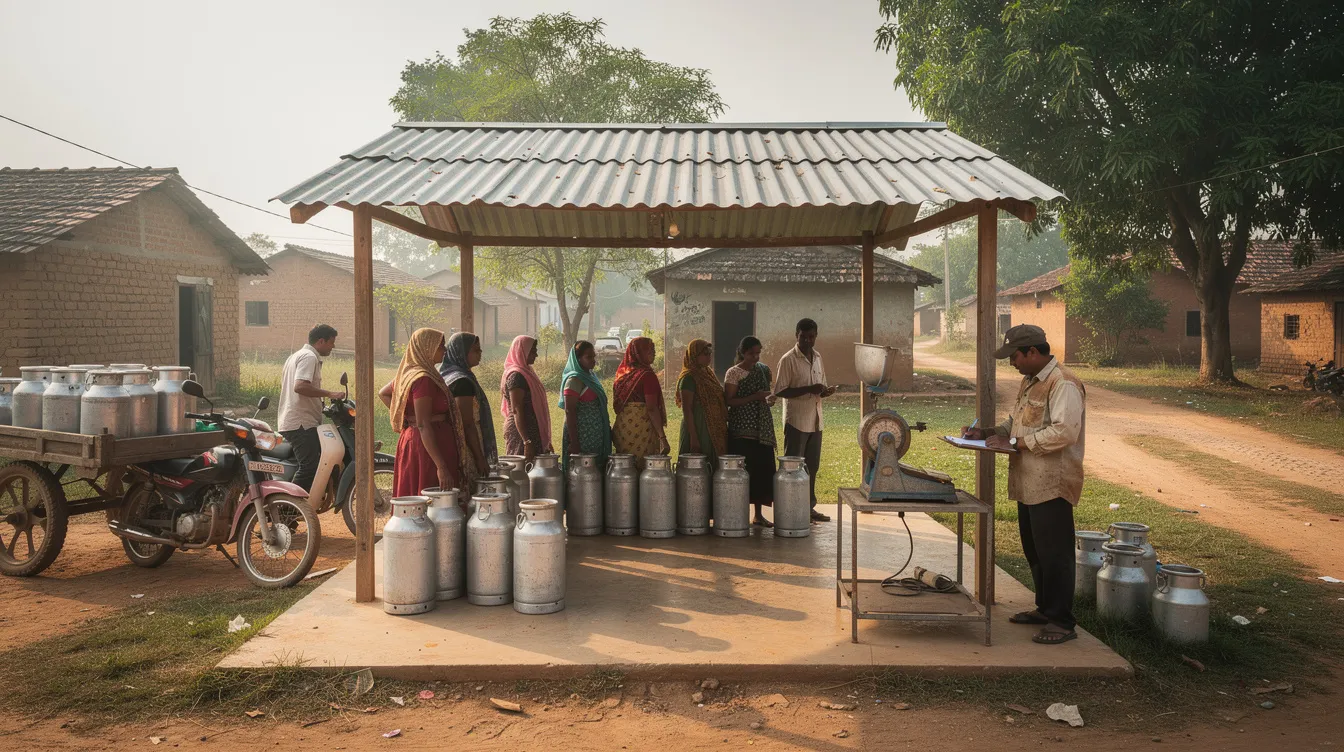
Village milk collection centres are the backbone of procurement networks. Each centre typically needs electronic weighing, an automatic milk analyzer for fat and SNF testing, basic quality testing capability, data recording, farmer payment integration and power backup.
Rapid chilling through bulk milk coolers preserves quality, reduces bacterial growth and maintains powder yield. BMC capacity (1,000 L to 5,000 L) must match expected collection volumes, with chilling centres placed to reduce milking-to-chilling time below 2–3 hours. These facilities form part of wider infrastructure planning covered in milk powder plant land, building and infrastructure requirements.
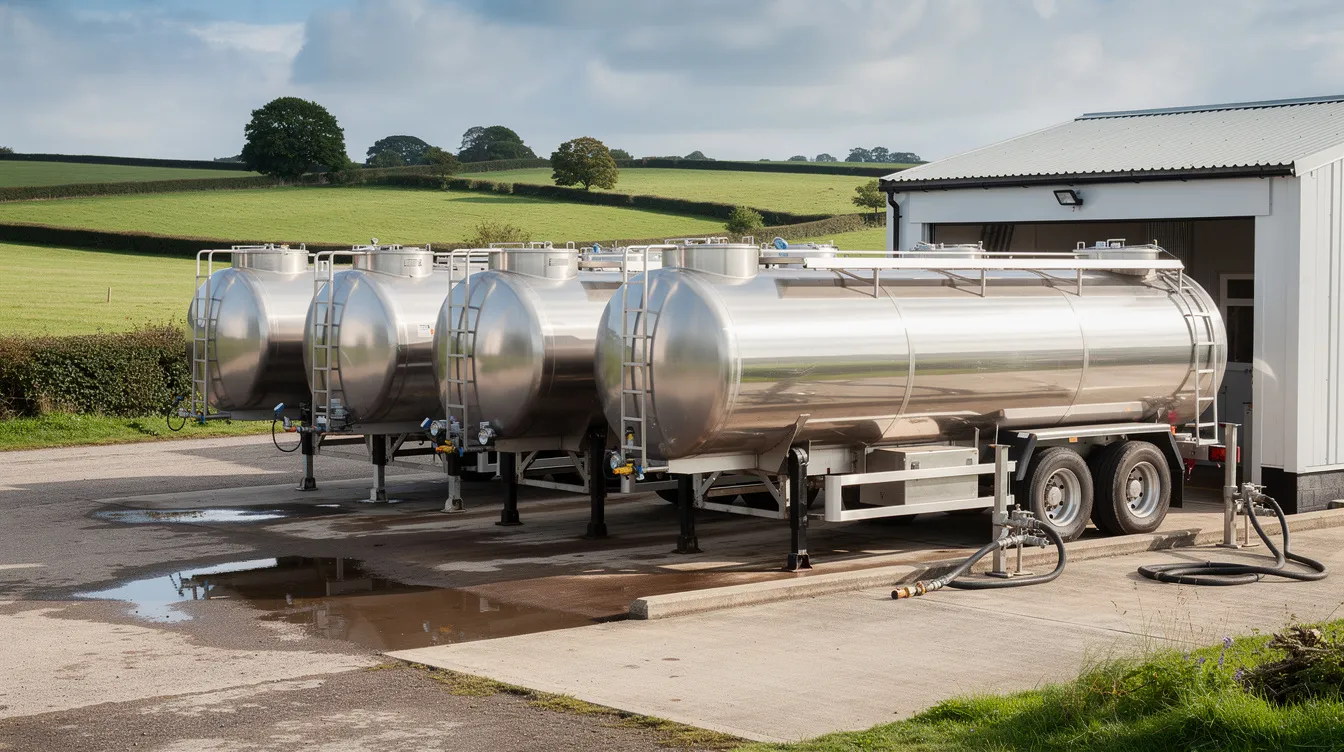
For milk transportation, design efficient routes minimizing distance and transit time. Select tanker capacities (3 KL to 15 KL) based on road conditions and route milk density.
Landed Milk Cost = Procurement Price + Collection Cost + Chilling Cost + Transportation Cost + Testing Cost + Procurement Overheads
The cheapest procurement price does not necessarily mean the lowest landed cost at the factory. In project finance modelling, I generally separate procurement price from logistics cost to analyze sensitivity and identify optimization opportunities. Transportation costs and distribution costs must be explicitly budgeted.
Milk Quality, Procurement Price and Seasonality
Fat content, SNF, total solids, acidity, adulteration, microbial quality and temperature at reception all affect powder yield. A simple comparison: Milk A at 12.5% total solids versus Milk B at 11.5% requires significantly more litres per kg powder, raising effective raw material consumption per kg by several percent.
Average procurement price for milk with 6% fat and 9% SNF was approximately ₹47.23/kg in early 2024. Fat-based and fat-plus-SNF pricing systems exist; quality and volume incentives help maintain supply. Financial projections should never assume a single static procurement price – model gradual increases and test sensitivity.
In most Indian milk sheds, procurement volumes fluctuate 20–30% between flush and lean seasons. During flush, milk powder plants run at higher utilization and build inventory. During lean, supply tightens, prices rise and capacity utilization drops. The plant partly functions as a balancing facility for seasonal surpluses. DPRs should show seasonal capacity utilization patterns, not just annual averages, reflecting price trends and variable costs through the year.
Capacity Planning Must Follow Milk Availability
Promoters should assess milk procurement potential first, then finalize machinery. The preferred sequence:
Procurement Potential → Sustainable Daily Milk → Product Mix → Processing Requirement → Powder Output → Machinery Capacity → Project Cost
Oversizing leads to idle capacity, higher interest and depreciation burden. Undersizing may forgo opportunity but is usually safer from a bank-finance angle. For structured approaches, see milk powder plant capacity planning. Equipment sizing – from milk reception through falling film evaporator, spray dryer and packaging – must match procurement volumes. A 100 KLPD plant with 20 effective operating hours means 5,000 LPH average flow. Details on equipment selection appear in milk powder plant machinery and equipment cost.
Milk powder plant setup costs include machinery and infrastructure extending beyond the factory. Procurement-related capital expenditure includes village collection equipment, BMCs, insulated tankers, testing instruments, IT systems and farmer onboarding. These investments must be grouped with plant building and utilities in the total project cost assessed in milk powder plant setup cost in India.
Working Capital Requirement for Milk Procurement
Milk procurement has a unique working-capital profile – farmers need frequent cash payment while finished goods may sit in inventory.
Average Procurement Working Capital = Daily Milk Volume × Procurement Price × Payment Cycle (days)
Key components: raw milk payments (7–14 day cycles), other raw materials (sugar, packaging, chemicals), finished goods inventory (often 15–60 days, especially powder stocked during flush), debtors (15–45 days). The typical working capital cycle runs 55–70 days. The mismatch – paying farmers quickly while waiting for customer payments – creates cash pressure.
In DPRs, procurement planning must integrate tightly with cash-credit assessment and CMA Data. Separate schedules for milk creditors, inventory and receivables are essential. Conservative promoters maintain contingency buffers for milk price spikes. This directly influences net present value and income projections of the project.
Milk Procurement Cost and Profitability
Gross profit margins for milk powder plants range from 20–30%, but these margins are acutely sensitive to procurement cost. Even a ₹1–2 per litre change in milk procurement price can alter annual profit substantially.
Illustrative sensitivity: A plant procuring 100,000 litres/day for 330 days – a ₹1/litre increase implies ₹3.3 crore additional annual expenditure. At typical SMP selling prices of ₹280–350/kg, this can compress EBITDA from comfortable to borderline.
DPRs should include at least two scenarios: a base case with expected procurement price and a stress case with higher cost and lower utilization. Banks regularly re-work profitability under stress assumptions to check DSCR adequacy. Realistic, slightly conservative assumptions build lender confidence and improve bankability through sound financial analysis and expenditure projections.
Milk Availability Assessment for Bank Loan
Banks treat milk availability as core credit analysis for milk powder projects. Lenders examine:
- Source description and procurement model
- Catchment map with distance bands
- Marketable surplus estimates with data sources
- Competing dairies and their procurement rates
- Preliminary supply tie-ups or MOUs
- Chilling and collection infrastructure plans
- Procurement price assumptions versus historical regional prices
- Seasonal utilization assumptions and coherence with plant capacity
Unrealistic claims – such as procuring 200 KLPD in Year 1 in a competitive district without existing relationships – cause bankers to downgrade proposals. A well-researched procurement section supported by field survey data materially improves project credibility.
Practical Example – Illustrative Milk Procurement Plan
All figures illustrative – not quotations or guarantees.
| Parameter | Illustrative Value |
|---|---|
| Powder plant capacity | 10 TPD (SMP/WMP mix) |
| Operating days | 330/year |
| Stabilized utilization (Year 3+) | 70% |
| Average powder production | 7 TPD |
| Milk-to-powder ratio | ~9.5 L/kg (blended) |
| Daily milk requirement | ~66,500 litres |
| Annual milk procurement | ~22 million litres |
| Average procurement price | ₹36/litre (illustrative) |
| Collection + chilling + transport + testing | ₹2.5/litre |
| Landed milk cost | ₹38.5/litre |
| Annual landed milk cost | ~₹84.7 crore |
| Village collection centres | 25–30 units |
| BMCs/chilling centres | 5–6 units (5,000 L each) |
| Milk tankers | 3–4 insulated (6–10 KL) |
Flush season procurement may reach 80–90 KLPD; lean season drops to 45–50 KLPD. Working capital should be computed on farmer payment cycle (10 days), powder inventory (30 days) and customer credit (20 days). Site preparation and land acquisition costs are additional.
Manufacturing Process and Raw Material Conversion
The milk powder manufacturing process involves sterilization, concentration and drying processes. Raw milk passes through reception, clarification, separation, standardization, pasteurization, evaporation and spray drying. Concentration increases milk’s dry matter content to 45–55% using vacuum evaporators, and spray drying converts concentrated milk into fine powder within 0.4 seconds using hot air. Each stage incurs losses affecting recovery. The drying process and powder handling stages can generate fines and minor losses.
Technical yield assumptions in the DPR must align with the actual production process and equipment supplier guarantees, ensuring the raw milk requirement for milk powder plant calculations remains grounded in process reality. Plant operators should validate recovery rates against operational benchmarks.
Checklist Before Finalizing Milk Procurement Assumptions
Availability & Sourcing:
- [ ] Verified daily milk availability in flush and lean seasons
- [ ] Target procurement radius and village count defined
- [ ] Village collection centres and BMC capacities planned
Quality & Cost:
- [ ] Average fat and SNF composition confirmed from catchment data
- [ ] Procurement price validated against historical data and competitive landscape
- [ ] Landed milk cost computed including all logistics
Process & Utilization:
- [ ] Powder yields aligned with technology supplier data
- [ ] Year-wise capacity utilization build-up realistic
- [ ] Procurement volumes consistent with production and sales projections
Financial Risk:
- [ ] Working capital requirement and CC limit assessed
- [ ] Sensitivity analysis on milk price and utilization performed
- [ ] DSCR and net present value tested under stress scenarios
Conclusion: Integrating Milk Procurement into a Bankable Milk Powder Project
A milk powder plant should never be sized solely on machinery offers. Its sustainable capacity must be anchored in realistic, year-round milk procurement and raw material planning. A sound DPR connects milk availability, procurement network, plant capacity, land and infrastructure, working capital, profitability and debt-servicing ability into one coherent narrative.
From the perspective of a Chartered Accountant and project-finance advisor, integrating procurement surveys, technical assumptions and financial modelling is essential to create a credible, bank-ready milk powder plant project report. Rising demand in developing countries and the expanding global market for dairy products – including concentrated milk products and dehydrated dairy product lines – only strengthens the case for thorough planning.
CA Manish Gugliya and ProjectReportBank.com prepare customized Milk Powder Plant Project Reports, DPRs, CMA Data and financial projections for entrepreneurs, cooperatives and dairy businesses seeking bank finance. These documents support – but do not guarantee – bank loan approval. The key insights shared here reflect practical project-finance experience across multiple dairy plant projects and industry trends in the food processing industry.
FAQ – Milk Powder Plant Milk Procurement & Raw Material Planning
How much milk is normally required to produce 1 kg of milk powder?
In practice, Indian projects typically require 8.5–10.5 litres of milk per kg of SMP or WMP under normal conditions. Higher SNF and total solids reduce the requirement, while lower-solids milk or higher process losses increase it. Protein content and milk proteins in the raw milk influence solids recovery directly. Any DPR should base conversion factors on local milk composition data and technology supplier inputs, not a single generic ratio. The functional properties of the final product also affect drying parameters and yield.
Can a small milk powder plant rely entirely on buying milk from existing dairies?
Small plants under 5 TPD sometimes procure bulk liquid milk from nearby dairies, especially during flush season, but this dependence carries risk if those dairies change strategy or start their own food manufacturing operations. Even small plants should gradually develop a limited collection network to reduce single-supplier risk and improve quality control. Banks examine the stability of such supply arrangements and generally prefer diversified raw milk sources to manage supply chain risk.
What is a reasonable starting capacity utilization to assume in Year 1?
Assuming 80–90% utilization from Year 1 is usually unrealistic unless the promoter already operates a strong procurement network. Many new plants prudently start with 40–55% utilization in Year 1, rising to 65–75% over 3–4 years. The exact trajectory depends on local conditions, promoter experience, regulatory compliance requirements and operating cost structures. Lenders review these assumptions critically against procurement feasibility, and aggressive projections without supporting evidence weaken bankability.
How early should milk procurement planning start before commissioning?
Procurement planning and village engagement should ideally begin 6–12 months before commercial operations. Time is needed to survey villages, set up collection centres, install bulk milk coolers, recruit field staff and build trust with farmers. Plants that commission machinery without a parallel procurement network face severe under-utilization and working-capital stress, undermining even well-planned expenditure projections and income projections.
Does higher milk price always make the project unviable?
Higher milk price does not automatically kill viability if the plant focuses on higher-value products, better yields and strong marketing – for instance, specialized powders for infant nutrition or formulations targeting the food processing sector with high nutritional value. However, it definitely tightens margins for commodity SMP and WMP projects. Promoters should run sensitivity analyses at different price levels and consider product diversification. Banks look more favourably at projects whose profitability and break even points remain acceptable even after moderate milk price increases, reflecting sound financial analysis and realistic variable costs and fixed costs assumptions.