Key Takeaways
- Banks do not finance the entire cost of a milk powder manufacturing plant. They assess the eligible term loan after verifying project cost, promoter contribution, DSCR, asset coverage and security.
- A milk powder manufacturing unit is capital-intensive; spray dryers, evaporators, boilers, civil works, and utilities together push total project cost into the ₹10-18 crore range for a mid-size plant. A structured milk powder project term loan assessment is essential before finalising capacity or placing machinery orders.
- Lenders examine technical feasibility (milk procurement, capacity utilisation, technology), commercial viability (milk powder market demand, product mix, selling prices), and financial strength (net worth, existing liabilities, credit history) before sanction.
- Realistic financial projections, a bankable detailed project report, and internally consistent CMA Data are central to getting a positive appraisal for any milk powder manufacturing business.
- CA Manish Gugliya can help promoters evaluate term-loan eligibility, DSCR, means of finance and repayment capacity, but the final decision on sanction rests with the bank.
Introduction: Why Term-Loan Assessment Matters for a Milk Powder Manufacturing Plant
Setting up a milk powder manufacturing plant in India involves land acquisition, factory construction, high-value machinery (spray dryer, multi-effect evaporator, boilers, refrigeration, ETP), and substantial pre-operative expenses. Dairy processing is capital-intensive and sensitive to raw material fluctuations, so most promoters need a bank term loan to bridge the gap between available equity and total project cost.
Having a strong milk powder market opportunity or a set of machinery quotations is not enough. Banks conduct a structured milk powder project term loan assessment before deciding the sanctionable amount. This appraisal covers the reasonableness of project cost, promoter contribution, technical feasibility of the milk powder manufacturing unit, milk procurement arrangements, installed capacity versus regional milk availability, product mix (skimmed milk powder, whole milk powder, dairy whitener), projected margins, DSCR, security, collateral, and the promoter’s background and financial strength.
This article explains how Indian banks appraise term loans for milk powder manufacturing business projects, how the eligible loan is calculated, and how promoters should prepare their DPR, CMA Data and financial projections accordingly.
What Is Milk Powder Project Term Loan Assessment?
Term-loan assessment is the process by which a bank evaluates how much long-term loan it can safely lend to a milk powder manufacturing plant, based on project risk, repayment capacity and security. The bank does not simply accept the loan amount requested in your application. Instead, it independently tests whether the project can generate enough cash to service debt, whether the promoter has adequate skin in the game, and whether the security structure protects the lender in adverse scenarios.
Several components work together within this framework: total project cost is the full investment required to commission the plant; promoter’s equity is the owner’s own contribution; unsecured loans from promoters or associates may be accepted by some banks if the source is genuine; the eligible term-loan amount is what the bank determines it can safely lend; working-capital limits are separate facilities for inventory, receivables and daily expenses; and capital subsidy, where applicable under schemes like NABARD’s Dairy Entrepreneurship Development Scheme (DEDS), may reduce the effective cost to the promoter.
Term loans for a milk powder plant differ from routine business loans. They carry longer tenure, a structured repayment schedule linked to projected cash flows, and require a detailed project appraisal. Indian lenders segregate term finance from working capital even when the borrower treats everything as one “milk powder plant loan.”
Why Term-Loan Assessment Is Critical for a Milk Powder Manufacturing Unit
A milk powder manufacturing unit with installed capacity of 10,000-20,000 MT per annum involves project costs that can range from ₹10 crore to over ₹25 crore depending on machinery specification, site, and utilities. Establishing a milk powder plant costs ₹50-80 lakhs even at the smaller end, and mid-size greenfield projects run several multiples higher. This capital intensity demands rigorous bank appraisal.
Several sector-specific risks make this assessment non-negotiable. Raw milk procurement is usually the dominant variable cost in milk powder projects, with raw milk purchase accounting for 65-70% of operating costs. Seasonal milk availability can compress margins during lean periods when SNF content drops and the milk-to-powder conversion ratio worsens. Sensitively analyzing price drops is critical for managing risks in milk powder projects, since skimmed milk powder and whole milk powder prices fluctuate with domestic supply-demand cycles and global commodity trends.
Capacity utilisation risks add another layer; greenfield plants may operate at only 40-60% in early years. Quality-control compliance (FSSAI, BIS standards), food safety requirements, and the impact of product mix on realisations all affect projected profitability. Banks must also align their exposure to RBI norms and internal risk policies, making disciplined term-loan assessment unavoidable.
Components of Milk Powder Plant Project Cost
The total project cost for a milk powder manufacturing plant is built up from multiple heads. Banks examine whether quotations, capacities and costs are reasonable and consistent with the proposed production level.
Major capital expenditure items include:
- Land and site development
- Factory building and civil works
- Milk reception and chilling infrastructure (including bulk milk coolers)
- Core processing machinery: pasteuriser, clarifier, homogeniser, cream separator
- Multi-effect evaporator and spray dryer (the spray dryer alone accounts for 35-40% of machinery CapEx in SMP plants)
- Powder handling and packaging line
- Boiler and steam system
- Refrigeration and cold storage
- Electrical installation
- Water treatment and Effluent Treatment Plant
- Laboratory and quality assurance equipment
- Furniture, office equipment and vehicles
Beyond fixed assets, banks include preliminary and pre-operative expenses: company formation, consultancy, DPR preparation, technical know-how fees, trial run expenses, and statutory fees. Interest during construction covers the term-loan interest accrued during the 12-18 month implementation period before commercial operations begin. A contingency provision of 5-10% addresses price variations and minor scope changes.
Promoters planning capital investment should refer to guidance on milk powder plant project cost and means of finance and milk powder plant setup cost in India to align internal budgets with realistic benchmarks before approaching banks.
Means of Finance and Promoter Contribution
Means of finance is the structure that shows how the total capital investment for the milk powder manufacturing plant will be funded. A typical structure includes:
- Promoter’s equity or capital
- Term loan from bank or financial institution
- Unsecured loans from promoters or associates (where the bank permits)
- Internal accruals in expansion projects
- Capital subsidy or grant, only after confirming eligibility from official sources
Banks scrutinise the promoter contribution closely. They check the genuineness and source of funds (own savings, liquid investments, sale of assets), the timing of equity infusion (upfront or proportionately with bank disbursement), the promoter’s net worth and existing leverage, and whether any borrowed funds are being incorrectly presented as margin money.
Government schemes can reduce equity contribution to 25-30% of project cost in eligible cases. NABARD’s DEDS scheme provides capital subsidies for dairy projects, which may lower the effective equity requirement. The PLI scheme offers 10% incentives on sales growth for certain food processing categories. The Kisan Credit Card offers interest rates as low as 4% for dairy farming purposes, though this typically applies to procurement rather than plant finance. In my experience, promoters who document every rupee of their contribution with clear paper trails face fewer queries during bank appraisal.
The required promoter margin depends on the lender, project risk profile, collateral structure and project size; I generally advise promoters not to assume a single fixed percentage will apply to every bank or every dairy project.
How Banks Calculate the Eligible Term-Loan Amount
The term loan requested by the promoter is only a starting point. Lenders conduct a multi-dimensional credit evaluation for dairy processing projects and independently calculate the eligible loan amount.
Key considerations include:
- Eligible project cost after pruning ineligible or inflated items
- Minimum promoter margin requirement
- Acceptable debt-equity ratio band (many Indian manufacturing projects work within 3:1 to 4:1)
- DSCR and cash-flow adequacy over the entire repayment period
- Asset coverage: value of primary and collateral security versus outstanding loan
- Existing debt obligations of the promoter or group
- Bank’s internal exposure norms and sectoral caps
- Overall risk rating of the borrower
A simple conceptual formula:
Indicative Term Loan = Eligible Project Cost – Accepted Promoter Contribution – Other Accepted Long-Term Sources
If DSCR or asset coverage is weak, or if the promoter’s financial position is constrained, the bank may reduce the sanctioned term-loan amount or require higher equity or additional collateral. This section sets the stage for the illustrative example below.
Illustrative Milk Powder Plant Term-Loan Assessment (Hypothetical Example)
This is a purely hypothetical example for educational purposes; it is not a quotation or sanction indication. Actual assessments vary by bank, interest rate, project specifics and time.
Hypothetical Project Cost (15 MT/day SMP Plant)
| Component | Amount (₹ Crore) |
|---|---|
| Land and site development | 1.20 |
| Building and civil works | 2.00 |
| Plant and machinery (evaporator, spray dryer, packaging, pasteuriser) | 7.50 |
| Utilities (boiler, refrigeration, ETP, electrical) | 1.50 |
| Pre-operative expenses and technical know-how | 0.60 |
| Interest during construction | 0.50 |
| Contingencies (5%) | 0.70 |
| Margin for working capital | 1.00 |
| Total Project Cost | 15.00 |
| Promoter contribution (25%) | 3.75 |
| Proposed term loan (75%) | 11.25 |
How a bank would test this proposal:
- Debt-equity ratio: 11.25 / 3.75 = 3:1 (within typical comfort zone for manufacturing)
- Projected cash accrual (PAT + depreciation) at 80% capacity utilisation in Year 3: assume ₹2.40 crore
- Annual debt service (interest at 10% + principal instalment over 8 years after 18-month moratorium): approximately ₹2.10 crore
- DSCR in Year 3: ₹2.40 / ₹2.10 = 1.14; this may be considered low by some lenders
If the promoter increases equity to 30% or demonstrates higher capacity utilisation, the DSCR improves. Capital investment recovery may take 4-5 years at 70% capacity utilisation; the bank will model this ramp-up realistically. Lenders also examine asset coverage, comparing the value of land, building and plant and machinery against the outstanding term loan across the repayment period.
Technical Assessment of the Milk Powder Manufacturing Plant
Beyond financial numbers, banks carry out a technical appraisal of the milk powder manufacturing plant. Technical feasibility directly affects financial viability in dairy processing projects. Milk powder production projects require agricultural and technical appraisal before a lender commits funds.
Plant Capacity and Capacity Utilisation
A milk powder plant requires 500-2,000 litres of raw milk per hour depending on the installed capacity. Banks examine whether the proposed plant capacity is supported by the regional milk shed, seasonal milk availability and realistic market demand. I advise promoters to refer to milk powder plant capacity planning before locking in machinery specifications.
Milk Procurement Arrangements
Approximately 9-10 litres of milk produce 1 kg of skimmed milk powder. During lean season, lower SNF content pushes this ratio to 8.8-9.2 litres. Banks examine whether the promoter has mapped the milk-shed area, established tie-ups with dairy farmers or cooperatives, set up chilling centres, and budgeted for seasonal variation in procurement price. Detailed guidance is available under milk procurement and raw material planning.
Manufacturing Technology
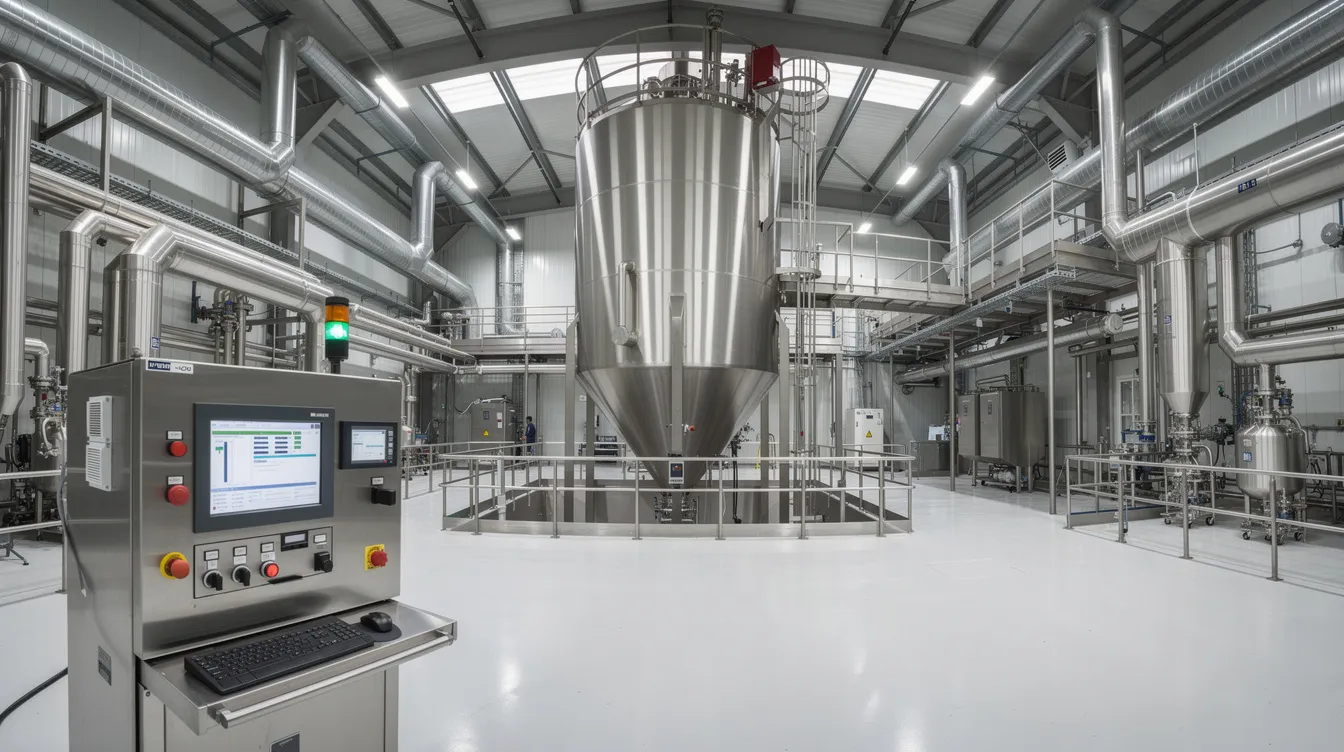
The standard manufacturing process for milk powder production runs through milk reception, clarification, standardisation, pasteurisation, evaporation (multi-effect evaporator for pre-concentration), spray drying, cooling, sieving and packaging. Technical reviews are necessary to validate expected recovery and yield in milk processing; the choice of technology impacts energy costs, powder quality and overall efficiency.
Machinery and Supplier Assessment
Banks review milk powder plant machinery and equipment cost quotations, vendor reputation, after-sales support, warranties, and whether machinery sizing matches projected throughput. European suppliers (GEA, Alfa Laval) carry a CapEx premium; Indian vendors cost 20-30% less but may have longer delivery timelines.
Land, Building and Utilities
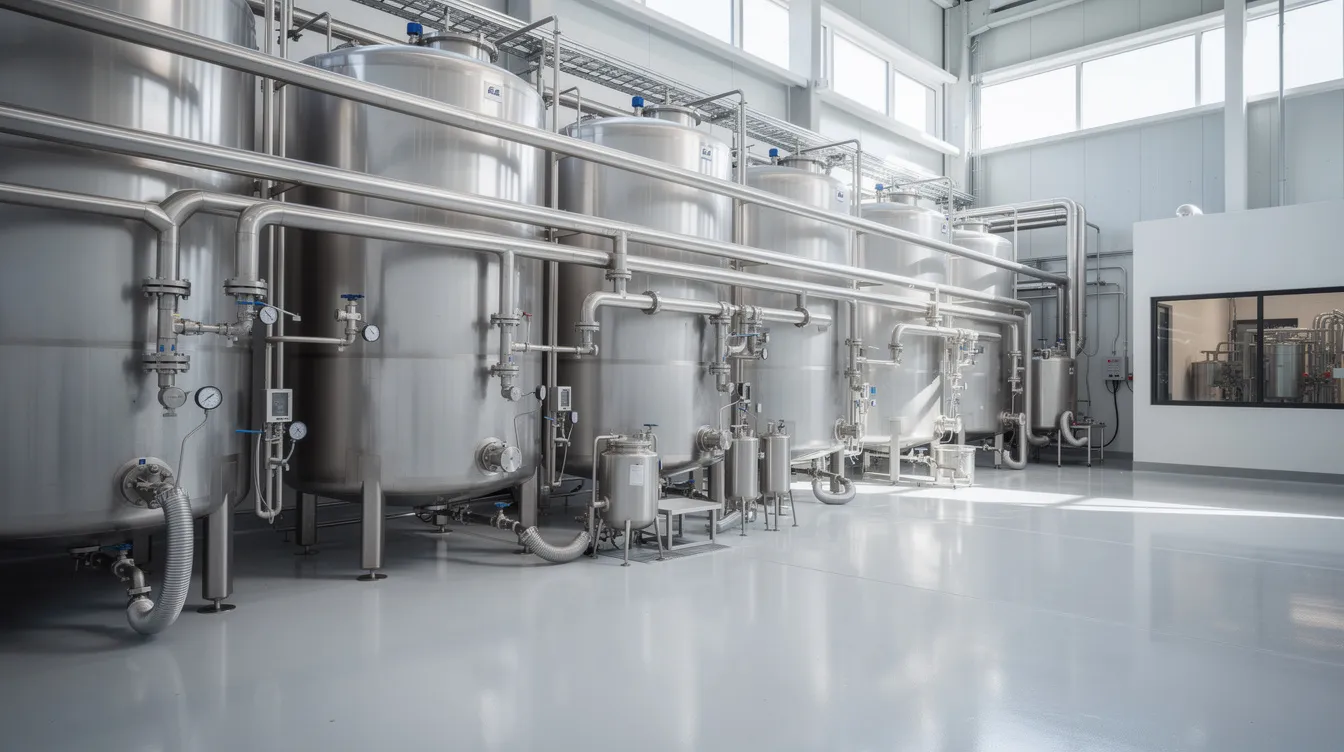
Lenders verify that the proposed site, plant layout, building construction, power supply, steam generation, water treatment, refrigeration and effluent treatment are adequate for the selected capacity. Promoters should validate their DPR assumptions against milk powder plant land, building and infrastructure requirements and milk powder plant utility requirements.
Implementation Schedule
A milk powder manufacturing plant typically takes 12-18 months to set up. Delays in land acquisition, civil works, machinery delivery, trial runs or regulatory approvals increase interest during construction and can cause cost overruns. Banks expect a realistic, milestone-based implementation schedule in the DPR.
Commercial and Market Assessment of the Milk Powder Project
Banks evaluate whether the milk powder manufacturing business can sell its output at viable prices, not just whether the plant can physically produce powdered milk.
India produces over 230 million MT of milk annually, and the milk powder industry serves a large domestic and export market. The global milk powder market was valued at USD 38.47 billion in 2025 and is expected to reach USD 61.76 billion by 2034. Demand for skimmed milk powder is growing at 8-12% per annum, driven by rising urbanisation and health awareness. Skimmed milk powder is essential for infant nutrition and bakery applications. Whole milk powder is used in chocolate manufacturing and high-quality retail packs. The export market is active; India exports skimmed milk powder to Gulf countries and Southeast Asia.
Milk powder’s long shelf life (extending fresh milk’s usability from days to 18-24 months) and the ability to lower transport costs by 60-70% per kg compared to liquid milk are key growth drivers. Market demand influences the viability of product pricing in dairy processing, which is why banks stress-test selling-price assumptions.
Gross profit margins for milk powder range from 20-30%, and a plant with 1,000 litres/hour capacity can achieve 18-24% gross margin at steady-state operations. The milk powder plant revenue model and profitability and milk powder plant feasibility and project viability resources provide deeper analysis of how product mix, rising consumption patterns and competitive landscape shape financial outcomes.
Financial Projections, CMA Data and Cash-Flow Planning
Credible financial projections for 7-10 years are central to milk powder project term loan assessment. Banks in India typically require detailed CMA Data along with the DPR.
Projections should cover year-wise capacity utilisation, production volumes, sales quantity and realisation by product, raw milk cost (which accounts for 65-70% of operating costs), power and fuel, wages, packaging, repairs, administrative and selling expenses, depreciation, term-loan interest, working-capital interest, tax, profit after tax, cash accrual, projected balance sheet and cash-flow statement.
All assumptions, including milk procurement price, conversion ratio from liquid milk to powder, selling price of SMP and whole milk powder, credit period and inventory norms, must remain consistent across the detailed project report and CMA Data. Discrepancies between these documents often lead to queries or delays during bank appraisal.
Promoters can refer to milk powder plant financial projections for more granular modelling guidance. A Chartered Accountant assists in preparing and analysing projections and CMA Data, but does not certify future performance; projections remain estimates based on agreed assumptions.
DSCR and Loan Repayment Capacity for a Milk Powder Plant
Debt Service Coverage Ratio measures how comfortably the project’s cash accruals can cover term-loan instalments and interest in each year.
DSCR = Cash Available for Debt Service / Total Debt Service
Cash available generally includes profit after tax plus depreciation (and sometimes other non-cash charges). Total debt service includes term-loan interest plus principal instalments due in that period. The Debt Service Coverage Ratio typically needs to be above 1.3x to 1.5x for food processing and dairy projects, though the exact threshold varies by lender and borrower profile. No single DSCR benchmark is universally mandatory.
Lenders look at both average DSCR over the loan tenure and year-wise DSCR. DSCR may be lower during the first couple of years when capacity utilisation is still ramping up and the moratorium period is ending.
Using the illustrative project above: if Year 3 cash accrual is ₹2.40 crore and debt service is ₹2.10 crore, DSCR is 1.14. If raw milk costs rise by 10%, the cash accrual drops to ₹1.95 crore, pushing DSCR below 1.0, a scenario no lender would accept without additional safeguards. Conversely, if selling prices improve or capacity utilisation reaches 85%, cash accrual may rise to ₹2.80 crore, yielding a DSCR of 1.33.
A dedicated discussion of milk powder project DSCR and loan repayment capacity covers stress testing and repayment-structure optimisation in greater depth.
Other Financial Ratios and Break-Even Indicators Examined by Banks
Beyond DSCR, lenders check multiple ratios to judge leverage, liquidity and profitability of a milk powder manufacturing unit.
- Debt-equity ratio and Total Outside Liabilities to Tangible Net Worth: indicate how risk is shared between promoters and lenders; most manufacturing projects work within 3:1 to 4:1
- Interest Coverage Ratio (EBIT / Interest): the Interest Coverage Ratio should ideally be greater than 2.0x, indicating that operating profit comfortably covers interest obligations
- Fixed Asset Coverage Ratio: compares the value of fixed assets against outstanding long-term debt
- Current ratio: reflects short-term liquidity adequacy
- Operating profit margin and net profit margin: measure profitability after variable and fixed costs
- Return on Investment, Internal Rate of Return and payback period: indicate overall financial plan attractiveness
The capacity utilisation break-even point measures the percentage of installed capacity at which the plant covers all fixed and variable costs. Projects with a lower break-even point provide a wider safety cushion against demand or price shocks. For a comprehensive treatment, refer to milk powder plant break-even analysis.
Assessment of Working-Capital Requirement
Term-loan assessment must be coordinated with a realistic working-capital plan. Even a fully funded milk powder manufacturing plant can underperform if short of funds for raw milk, packaging and inventory.
Working-capital estimation covers requirements for raw material (raw milk, additives), packaging material, finished-goods inventory of milk powder and by-products like cattle feed, receivables, and cash for operating costs, less creditors and other current liabilities. The typical working-capital cycle for SMP plants runs 55-70 days. Seasonality affects cash flow in milk procurement for dairy processing projects; flush-season stock build-up demands higher working capital when surplus liquid milk is converted into powder for later sale.
Banks finance working capital through cash credit, overdrafts or bill-discounting limits, separate from the term loan. Underestimating the milk powder plant working capital requirement creates liquidity stress once operations begin.
Moratorium, Repayment Schedule and Loan Structuring
Moratorium and repayment schedule design are integral parts of milk powder plant term loan assessment, since they directly influence DSCR and cash-flow pressure in initial years.
Banks estimate the construction and implementation period (often 12-18 months for a new plant) and may allow moratorium on principal repayment during this period plus a short post-commissioning window. Under schemes like Federal Bank’s FABUS, term loans can extend to 84-120 months including moratorium of up to 12 months. A well-structured loan must match the economic life of the project’s assets; RBI’s 2025 Project Finance Directions cap repayment tenor (including moratorium) at 85% of economic life.
The trade-off is straightforward: a very short tenure increases instalment size and depresses DSCR, while an excessively long tenure may not be acceptable given asset life and the bank’s credit norms. I generally advise promoters to align the proposed repayment period with projected cash accruals from the DPR and CMA Data before submitting the proposal.
Security, Collateral and Guarantees in Milk Powder Plant Term Loans
Banks lend against both project cash flows and security.
- Primary security: equitable or registered mortgage of land and building, hypothecation of plant and machinery, and assignment of insurance on the milk powder manufacturing plant assets
- Collateral security (for larger loans): additional property, liquid securities, personal guarantees of promoters, and corporate guarantees from group entities where relevant
- Credit-guarantee coverage: MUDRA loans provide collateral-free financing for dairy businesses up to certain limits; other schemes may also relax collateral requirements for smaller dairy project loans subject to prevailing norms
Collateral requirements vary by bank, scheme, borrower risk rating and loan size. Promoters should verify current scheme conditions from official sources before relying on collateral relaxation.
Documents Required for a Milk Powder Plant Term Loan Application
Banks typically ask for these documents during milk powder plant term loan assessment:
Project documents: Detailed project report focused on milk powder manufacturing, CMA Data and financial projections, implementation schedule, milk procurement plan, market-study note, profitability analysis and DSCR workings.
Promoter and entity documents: Constitution documents (partnership deed, LLP agreement, MoA/AoA), KYC of promoters, PAN, Aadhaar, Udyam registration, GST registration, promoter profiles highlighting dairy or industrial experience.
Financial background: Net worth statements, last 3 years’ income-tax returns, bank statements, existing loan sanction letters and repayment track, CIBIL or other credit reports.
Asset and approval documents: Land-title and property papers, building plans and estimates, machinery quotations, project-related approvals, collateral property documents, and any offtake agreements or letters of intent from key customers.
Statutory Approvals and Regulatory Compliance
Banks expect promoters to identify and plan for relevant approvals before commissioning the milk powder manufacturing plant. An FSSAI license is mandatory for operating a milk powder unit. Other requirements include GST registration, factory and labour-related registrations, legal metrology compliance for packaged goods, consent from the State Pollution Control Board for effluent treatment, boiler permissions, fire and safety NOCs, and electricity contract-demand sanctions suitable for the energy-intensive spray drying and evaporation operations.
Specific approval requirements vary by state and project size. Clear compliance planning in the DPR reassures lenders that project commissioning will not be delayed by avoidable regulatory bottlenecks.
Common Reasons for Reduction or Rejection of a Milk Powder Plant Term-Loan Proposal
From a lender’s perspective, these are the most frequent issues that lead to loan reduction or rejection:
- Project-cost problems: Inflated machinery prices, unrealistic land valuation, missing equipment cost breakdowns, inadequate provision for utilities or ETP
- Financial weaknesses: Inadequate promoter contribution, unexplained margin sources, weak net worth, high existing leverage, inconsistent DPR and CMA Data, projected DSCR below the lender’s comfort range
- Market and procurement gaps: No firm milk-procurement plan, over-optimistic capacity utilisation in Year 1, unsupported selling-price assumptions, ignoring the working-capital impact of seasonal stock build-up
- Documentation and compliance gaps: Incomplete property papers, pending key licences without clear timelines, missing financial statements for existing dairy business operations
How to Improve the Bankability of a Milk Powder Manufacturing Project
Practical steps promoters can take before submitting their term-loan application:
- Select plant capacity only after studying sustainable milk availability and realistic sales channels, using resources like milk powder plant capacity planning
- Obtain multiple comparable quotations to validate machinery and civil-works estimates
- Structure means of finance with transparent promoter contribution and reasonable debt-equity ratio
- Use conservative assumptions for capacity utilisation and selling prices; avoid projecting 90% utilisation from Year 1
- Prepare an adequate working-capital assessment and run sensitivity analysis on DSCR under adverse scenarios
- Ensure consistency between the DPR, CMA Data and loan-application narrative
Role of a Chartered Accountant and Project-Finance Consultant in Milk Powder Plant Loans
A practising Chartered Accountant with experience in project finance can improve the quality and bankability of a milk powder plant loan proposal. The final sanction, however, is always the bank’s independent decision.
I assist promoters with project-concept evaluation for milk powder manufacturing unit proposals, preparation of a bank-oriented detailed project report, assessment of realistic project cost and means of finance, and initial term-loan eligibility estimates. Services also include financial projections, CMA Data preparation and analysis, DSCR computation, repayment-schedule design, break-even and sensitivity analysis; a CA prepares and analyses projections but does not certify future results.
During bank appraisal, I help clarify financial assumptions, respond to lender queries and revise projections if project cost, capacity or means of finance change. Readers can explore dedicated resources on milk powder plant bank loan and project finance at Project Report Bank for a structured understanding of the entire financing journey.
Frequently Asked Questions
How much term loan can a bank typically provide for a milk powder manufacturing plant?
There is no fixed percentage applicable to every project. Banks determine the eligible term loan based on eligible project cost, accepted promoter contribution, DSCR, collateral coverage and internal exposure norms. In many Indian manufacturing projects, lenders are comfortable when promoter equity forms 25-30% of total project cost, but the precise ratio depends on risk profile, security cover and bank policy at the time of appraisal.
Can land and building cost be fully included in the milk powder project term-loan assessment?
Most banks include land development and building cost in overall project cost. Treatment of pure land purchase cost can differ among lenders and schemes; some banks require higher margin on land and building (for instance, 30% margin versus 25% for machinery). Promoters should discuss land-cost eligibility, valuation and mortgage requirements with the prospective lender at the proposal stage to avoid funding gaps.
Is working capital normally financed as part of the term loan for milk powder plants?
Margin money for working capital may be included in total project cost, but regular working-capital funding is provided through separate limits (cash credit, overdraft, bill facilities) and is not clubbed into the long-term term loan. Underestimating working capital or expecting it to be entirely covered under the term loan creates liquidity stress once the plant starts operations.
Can first-time entrepreneurs get a milk powder plant term loan without prior dairy experience?
Prior sector experience helps but is not always mandatory. Banks evaluate overall management capability, technical tie-ups, quality of the detailed project report, promoter financial strength and risk-mitigation plans. New promoters should associate with experienced technical personnel or dairy farming cooperatives, present a well-researched business plan, and demonstrate their financial resources clearly.
What happens if the actual project cost of the milk powder plant increases after sanction?
Cost escalation usually requires discussion with the bank and may involve revising the project report, means of finance and term-loan amount, subject to fresh appraisal. Promoters should avoid committing to major additional expenditure without confirming how the gap will be funded (additional equity, enhanced term loan, or combination) and revisiting DSCR and repayment capacity with their CA. Under RBI’s 2025 Project Finance Directions, banks also monitor cost overruns and DCCO delays closely for compliance purposes.
Conclusion and Professional Call to Action
Successful milk powder project term loan assessment depends on a realistic project cost, adequate promoter contribution, a technically sound plant design, assured milk procurement, prudent financial projections and demonstrable repayment capacity. Banks apply their own lending norms, interest-rate structures, collateral expectations and ratio benchmarks; no article or consultant can guarantee sanction for a milk powder plant term loan.
If you are planning a milk powder manufacturing business or dairy processing expansion, I invite you to consult through www.projectreportbank.com for assistance with milk powder plant DPR, term-loan assessment, CMA Data, DSCR analysis and bank-ready financial projections. The objective is to improve the quality and bankability of your proposal; the final approval decision rests solely with the lending institution.