
Key Takeaways
- A milk powder plant bank loan in India can fund a major part of machinery, civil works and utilities, but banks expect meaningful promoter contribution (typically 10–25% of total project cost) and clear proof of equity source.
- Term loans normally cover eligible fixed assets and capital expenditure, while a separate working capital facility is assessed for milk procurement, inventory, receivables and seasonal stocking needs.
- A bankable, customised milk powder plant DPR for bank loan, supported by robust CMA Data and financial ratios (DSCR ≥1.25×, acceptable debt–equity ratio, adequate current ratio), forms the backbone of lender appraisal and sanction.
- Security will usually comprise mortgage of land and building, hypothecation of plant and machinery, and often additional collateral and personal guarantees, depending on bank policy and project risk.
- Professional project finance preparation, realistic assumptions and consistency across the DPR, CMA Data and loan application significantly improve sanction chances-but never guarantee approval.
Introduction: Milk Powder Plant Bank Loan – Where Does the Money Really Come From?
A milk powder manufacturing plant is among the most capital-intensive ventures in the dairy processing industry. Whether you are setting up a skimmed milk powder line, a whole milk powder unit or a multi-product dairy whitener facility, the investment spans land, factory building, spray dryer and evaporator systems, boiler and steam infrastructure, refrigeration, quality laboratories, packaging lines and substantial working capital for milk procurement. A milk powder plant bank loan can finance a significant portion of this outlay-but only after lenders are satisfied through a detailed, multi-dimensional appraisal.
Banks do not evaluate your proposal based on a machinery quotation alone. They assess the promoter profile, technical feasibility, local milk availability, proposed plant capacity, the overall milk powder plant setup cost in India, realistic capacity utilisation curves, demand in the milk powder market, project cost, means of finance, projected profit margins and loan-repayment capability. Lenders examine DSCR, debt–equity ratio, current ratio, security coverage and internal consistency of assumptions across documents. The global milk powder market was valued at USD 38.47 billion in 2025 and is expected to reach USD 61.76 billion by 2034, driven by rising global dairy consumption and the fact that milk powder can lower transport costs by 60–70% per kg compared to liquid milk. This market growth makes well-structured milk powder plant project finance proposals increasingly relevant.
This article is written in the professional voice of CA Manish Gugliya (FCA, DISA), practising since 2006, with a focus on practical guidance for securing a bank loan for milk powder plant projects rather than generic dairy-loan advice. You will learn how Indian banks structure term loans and working capital for a milk powder unit, what documentation is required, how a DPR and CMA Data support the case, and how to avoid common reasons for rejection.
Understanding Milk Powder Plant Project Finance Structure
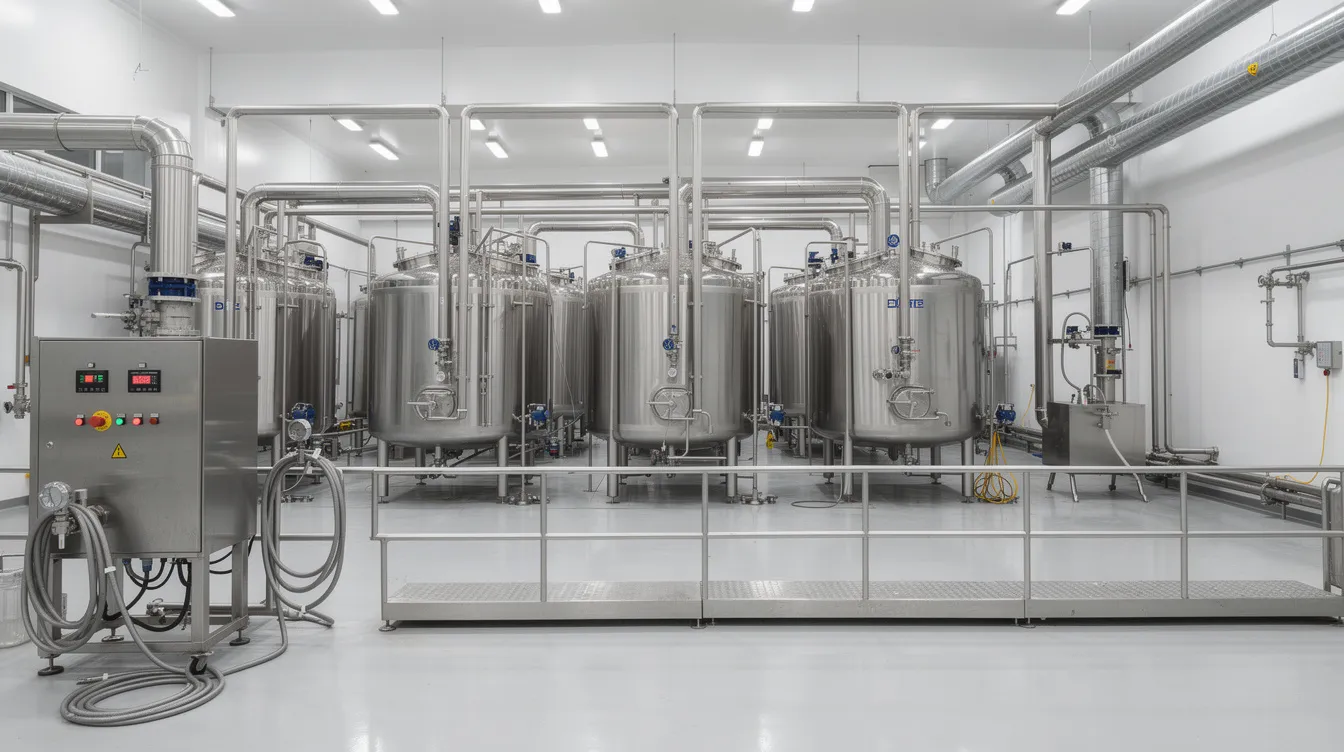
Milk powder plant project finance refers to funding structured around the projected cash flows of a dairy processing and spray-drying unit, rather than relying purely on the promoter’s existing balance-sheet strength. Financing for dairy processing plants often involves specialised commercial bank loans assessed against the project’s ability to generate sufficient returns to service debt.
The typical means of finance for a milk powder manufacturing plant loan include:
- Promoter equity (cash margin plus land contribution at acceptable valuation)
- Bank term loan (covering eligible fixed assets)
- Working capital limits (cash credit, WCDL, bill discounting for the operating cycle)
- Unsecured promoter loans (subject to subordination and lock-in conditions)
- Strategic investor equity, where applicable
- Eligible government subsidy or interest subvention
For a detailed breakdown, refer to the resource on milk powder plant project cost and means of finance.
The financing approach differs based on project type. A greenfield milk powder factory requires full project appraisal. Expansion of an existing dairy plant-say, adding a spray dryer to an operational pasteurisation facility-carries lower perceived risk if the promoter has a track record. Modernisation projects to upgrade technology or increase production capacity utilization may need a lighter appraisal but must still demonstrate incremental viability.
Product mix also influences risk assessment. An SMP manufacturing plant project has different margin and demand dynamics compared to a WMP manufacturing plant project or a dairy whitener manufacturing plant project report. Banks typically issue a term loan for long-term assets and separate cash-credit or working-capital facilities for the operating cycle.
Major Project Components Considered for Bank Finance
Lenders appraise the detailed breakup of project cost-not a lump sum. A professional milk powder plant DPR for bank loan should mirror this structure precisely.
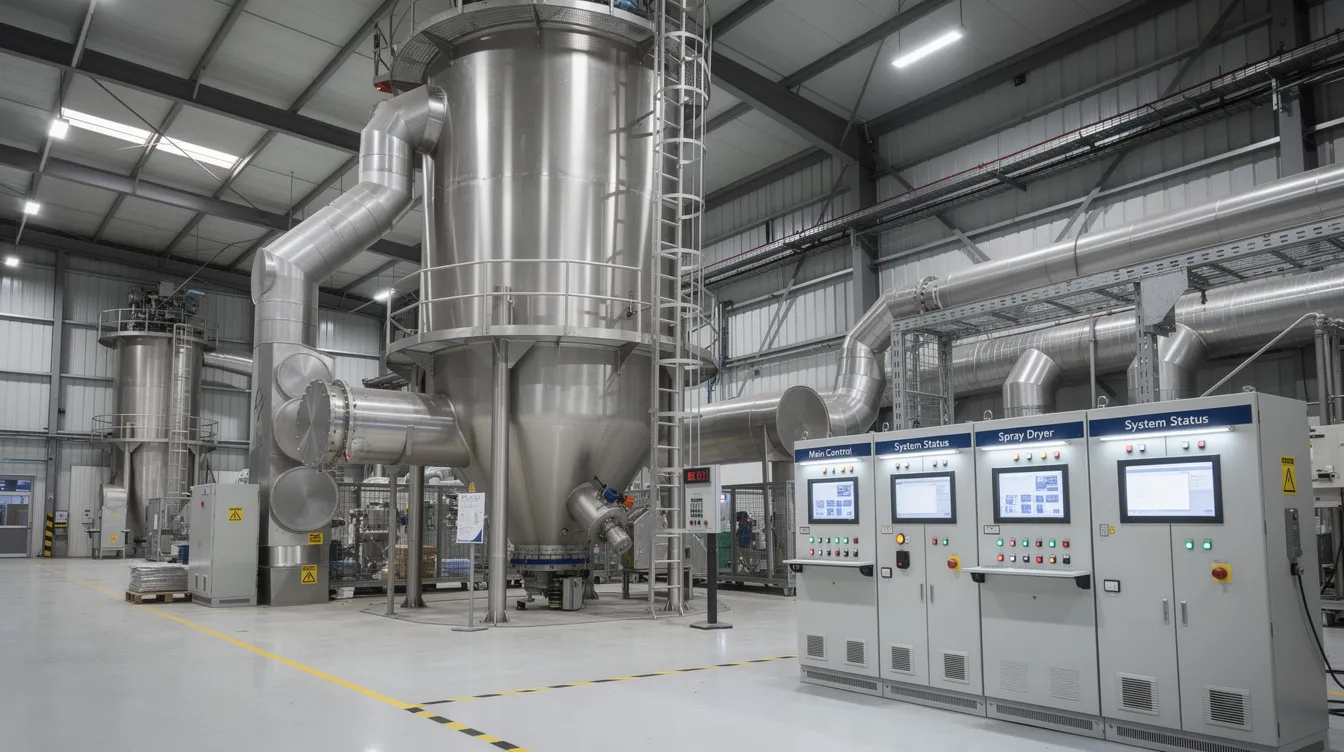
Capital expenditure for a milk powder production plant includes spray dryers and evaporators as the single largest machinery component, often representing 35–40% of total equipment costs. Essential equipment also includes pasteurisers, milk reception and chilling systems, powder handling and automated packaging lines. A milk powder plant requires 500–2,000 litres of raw milk per hour depending on scale, and the capital investment for a small milk powder plant is between ₹50–80 lakhs. Larger units processing 15 MT/day of SMP may involve capex of ₹10–18 crore. For a detailed cost analysis, see milk powder plant machinery and equipment cost.
Utilities and infrastructure eligible for finance include refrigeration and cold storage systems, boiler and steam generation, electrical sub-station, DG sets, water treatment and piping, and compressed air systems-covered in depth in the guide on power, steam, water and refrigeration requirements. Land, factory building and civil construction are also appraised; refer to milk powder plant land, building and infrastructure requirements.
Support systems such as effluent treatment, CIP systems, laboratory and quality assurance equipment, weighbridge, internal roads and plant automation are also considered. Intangible items-preliminary and pre-operative expenses, interest during construction, contingency provision and margin money for working capital-form part of the total capital investment. Some banks may treat land cost or certain promoter-related expenses with stricter margins or exclusion based on internal policy.
Term Loan vs Working Capital Finance for a Milk Powder Plant
Commercial loans for milk powder plants typically combine term loans and working capital-two facilities appraised and documented differently.
Term Loan
Term loans are used for long-term capital expenses in milk powder production: buildings, plant and machinery, utilities, ETP, laboratory equipment and project implementation expenses. Repayment follows a medium- to long-term schedule, typically 5–8 years with a moratorium of 6–24 months during construction. Lenders size the term loan by examining asset cost, economic life, moratorium requirements and estimated cash flows from operations.
Raw milk accounts for 75–85% of total operating expenses in milk powder production, which makes revenue sensitivity to milk prices a critical factor in structuring the repayment schedule.
Working Capital Finance
Working capital loans finance daily operations like purchasing raw milk, packaging material, consumables and meeting payroll. Limits are assessed based on inventory holding norms, receivable cycles and creditor periods. The detailed methodology is explained in milk powder plant working capital requirement.
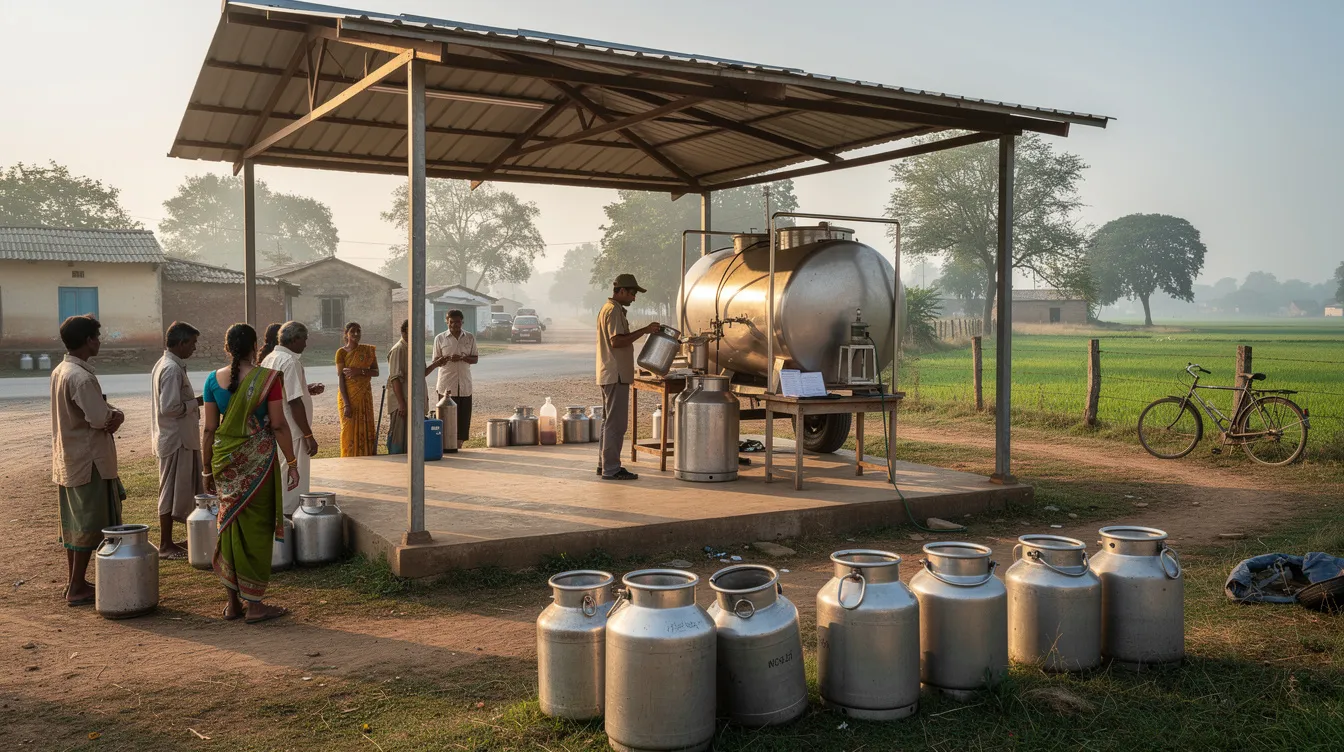
Milk powder plants in India often require higher working capital due to seasonal milk availability (flush vs lean season), stock-building of powdered milk during flush periods, and delayed collections from institutional buyers and the export market. Raw milk accounts for 65–70% of total operating costs, making procurement planning inseparable from working capital sizing.
Promoter Contribution and Means of Finance in Dairy Project Loans
Banks expect a reasonable equity share from promoters for any milk powder plant finance in India. A margin contribution of 10% to 25% of the total project cost is typically required, depending on lender policy, project risk, collateral and applicable scheme guidelines.
Land already owned by promoters may be treated as part of equity contribution at acceptable valuation, and can simultaneously serve as collateral security. Unsecured loans from promoters or group concerns may qualify as quasi-equity if appropriately subordinated and locked in, with clear documentation and source-of-funds explanation.
Equity must be brought in before or alongside term-loan disbursement. Banks will flag circular routing of funds, temporary accommodation entries, or unexplained credits. Consistency between bank statements, income-tax returns and net-worth statements is closely scrutinised. The chosen means of finance must align with the project’s risk profile, collateral availability and projected DSCR-detailed further in project cost and means of finance.
Eligibility Criteria for a Milk Powder Plant Bank Loan
There is no single eligibility checklist across all banks, but most Indian lenders evaluate similar core parameters. Eligible applicants for dairy projects include cooperatives, producer companies, LLPs, private and public limited companies and individual entrepreneurs.
Key eligibility aspects include:
- Constitution: Proprietorship, partnership, LLP, company or producer organisation
- Promoter experience: Prior involvement in dairy business, food processing or related manufacturing process
- Technical capability: Understanding of spray drying, quality assurance and efficient plant operations
- Financial strength: Tangible net worth, gearing levels, CIBIL scores and commercial credit reports; banks may require a clean repayment history to qualify for loans
- Project-specific factors: Clear-title land, reliable power and water, verified milk availability (see milk procurement and raw-material planning), realistic capacity planning and balanced product mix
- Statutory readiness: Udyam/MSME registration, GST, FSSAI licence application, and a clear implementation schedule
Banks evaluate financing applications based on project viability and promoter strength. Milk procurement arrangements are critical for securing financing for dairy projects.
How Banks Appraise a Milk Powder Project in India
Lenders follow a holistic appraisal framework before sanctioning milk powder plant finance in India.
Promoter and Management Appraisal
Banks evaluate promoter background, integrity, domain knowledge in the milk powder industry and dairy products sector, governance practices, succession planning and key technical manpower. A strong project proposal includes detailed cost analysis and managerial qualifications.
Technical Appraisal
Appraisal covers proposed capacity vs milk availability, technology choice (spray dryer size, evaporator configuration), machinery supplier credentials, utilities sizing including power, steam, water and refrigeration requirements, and implementation phasing. Banks assess the detailed process flow and various unit operations involved in converting fresh milk to powdered milk.
Market and Commercial Appraisal
Lenders assess demand for SMP, WMP, dairy whitener and value-added nutritious dairy products. Demand for skimmed milk powder is growing at 8–12% annually, and Indian skimmed milk powder exports are increasing to Gulf countries. Whole milk powder can sell for ₹350–420 per kg in retail, while infant milk formula (within the infant nutrition segment) can yield ₹12–18 lakh per tonne at the manufacturer level. Even contract drying can generate ₹25–40 lakh annually in processing fees. Banks review the competitive landscape, customer segmentation across institutional, retail and export market channels, market trends, and sales-realisation assumptions. For more, see milk powder plant revenue model and profitability.
Financial Appraisal
Banks analyse revenue projections, operating margins, working-capital cycles, DSCR, break-even point and sensitivity to changes in milk price or powder realisation. This involves a comprehensive analysis of total operating expenses, variable costs, fixed costs and project economics under normal operating conditions. For detailed coverage, see the resources on feasibility and project viability, break-even analysis and DSCR and loan repayment capacity.
Security and Risk Appraisal
Lenders review primary security, collateral coverage, guarantees, insurance assignments and key business risks: procurement seasonality, price volatility, regulatory approvals and export risk. Mitigants such as contracts with cooperatives, institutional buyers or leading milk powder manufacturers improve comfort.
Role and Importance of a Bankable DPR for Milk Powder Plant Finance
Generic downloadable project reports are rarely accepted as the sole basis for a bank loan for milk powder plant projects. A detailed project report is essential for securing bank loans for milk processing, and banks expect a customised, data-backed document.
A robust DPR should include: executive summary, promoter background, project location, proposed capacity, detailed manufacturing process description, machinery and supplier quotations, plant layout and civil-work details, milk procurement strategy, human resource requirements, raw material requirements, utilities and an implementation timeline.
The financial section must present a structured project-cost estimate, means of finance, projected revenue and operating expenses, cash-flow statements, projected balance sheets, working-capital assessment, DSCR, break-even analysis and risk-mitigation strategies. Every technical assumption-milk input, recovery rates, plant capacity, energy use, product mix and sales volume-must reconcile with the financial projections.
As a practising Chartered Accountant, I prepare customised DPRs aligned with the bank’s appraisal format. These documents support and strengthen the loan application but do not by themselves guarantee sanction.
CMA Data and Milk Powder Plant Financial Projections
CMA Data is a structured set of projected financial statements and working-capital assessment formats that most Indian banks insist on for substantial milk powder plant bank loan proposals.
Key components include:
- Projected profit and loss accounts (typically 5–7 years)
- Projected balance sheets
- Cash-flow and fund-flow statements
- Working-capital assessment with holding levels for raw milk, powder stock, packing material, receivables and creditors
- Key ratios: current ratio, debt–equity ratio, TOL/TNW, interest coverage and DSCR
CMA Data must cover both the term-loan repayment schedule and working-capital utilisation, with DSCR calculations aligned with the DPR assumptions. A Chartered Accountant assists in preparing and validating these projections but does not “certify” future numbers as guaranteed outcomes-banks treat them as informed estimates. Conservative, defendable assumptions on milk prices, sales realisations, capacity utilisation ramp-up and operating costs ensure credibility during bank scrutiny.
Key Financial Ratios Examined by Banks in Milk Powder Project Appraisal
While benchmarks vary across banks and schemes, certain ratios are commonly examined:
| Ratio / Parameter | Typical Benchmark | Relevance |
|---|---|---|
| Debt–Equity Ratio | 2:1 to 4:1 (varies by lender) | Reflects leverage and promoter stake; very high gearing raises caution for capital-intensive food processing projects |
| Current Ratio | ≥1.33 | Indicates liquidity for handling milk procurement, powder stock and debtor cycles |
| DSCR | ≥1.25× (≥1.50× preferred for larger projects) | Measures ability to service term-loan principal and interest from annual cash flows |
| TOL/TNW | Varies; lower is better | Total outside liabilities to tangible net worth; a risk-protection measure |
| Interest Coverage | ≥2× typically | Operating profit available to cover interest obligations |
| Break-even Level | <60–65% of installed capacity | The break-even point for a milk powder plant depends heavily on raw material costs |
| IRR | 15–20% under optimal conditions | Internal rate of return reflecting project attractiveness |
Gross profit margins for milk powder typically range between 20–30%, with skimmed milk powder plants able to achieve gross margins of 18–24% depending on scale and efficiency. A milk powder plant can achieve an IRR of 15–20% under optimal conditions with healthy profitability potential. Net present value, payback period and production capacity utilization are also evaluated where relevant.
Documents Required for Milk Powder Manufacturing Plant Loan Application
Complete, well-organised documentation determines how quickly a milk powder plant loan application moves from discussion to appraisal.
Promoter and Entity Documents
- PAN, Aadhaar, address proof and photographs of promoters
- Partnership deed, LLP agreement or MOA-AOA with incorporation certificate
- Udyam/MSME registration and GST registration
- Shareholding pattern and management details
- Promoters’ net-worth statements and three years’ income-tax returns
- Existing loan details and 12–24 months’ bank statements
- CIBIL and commercial credit reports
Project Documents
- Bankable detailed project report with profitability analysis and financial analysis
- CMA Data and projected financial statements
- Quotations for major machinery and utilities with specifications
- Civil-work estimates and site layout
- Implementation schedule
- Milk-procurement plan and tie-up documentation
- Draft supply agreements with key customers, if available
Approvals and Registrations
- Land title documents and non-encumbrance certificates
- Building plans and local authority approvals
- FSSAI licensing (a regulatory requirement for milk processing facilities)
- Pollution-control board consent
- Factory registration, fire NOC, boiler registration
- Electricity and water sanctions
- Environmental approvals where capacity thresholds trigger them
The project must comply with local environmental and food safety regulations. Attaching acknowledgement copies or in-principle permissions reassures lenders on implementation feasibility.
Security, Collateral and Guarantees for Milk Powder Plant Bank Finance
Almost all banks require security to back a milk powder manufacturing plant loan. Collateral may include property or factory assets to secure loans for projects.
- Primary security: Equitable or registered mortgage of project land and factory building; hypothecation of plant and machinery, electrical installations, refrigeration and cold storage, and other fixed assets created from bank finance
- Working-capital security: Hypothecation of stocks (raw milk, milk powder, packing materials) and receivables; assignment of key contracts; periodic stock and book-debt statements
- Additional collateral: Other immovable property, liquid securities or deposits, depending on loan size and coverage from primary security
- Guarantees: Personal guarantees from promoter-directors; corporate guarantees from group entities where relevant; assignment of insurance on all assets in favour of the bank
Standard MSME loans can provide collateral-free credit through the CGTMSE Scheme, but this is generally limited to smaller exposures. For medium and large milk powder projects, collateral remains a standard expectation.
Loan Application, Appraisal, Sanction and Disbursement Process
The journey from concept to commercial production typically spans concept finalisation, bank appraisal, sanction and phased disbursement. A milk powder plant typically takes 12–18 months to set up, so timelines must be realistic.
Step-by-step flow:
- Finalise project concept and capacity (see capacity planning)
- Conduct preliminary feasibility and identify the site
- Verify milk availability and procurement arrangements
- Obtain detailed machinery and civil-work quotations
- Prepare the DPR, CMA Data and financial projections
- Freeze project cost and means of finance
- Approach suitable banks or financial institutions
- Submit the formal loan application with complete documentation
- Respond promptly to technical and financial queries
- Facilitate bank site visits, valuation and technical inspection
- Await internal credit-committee approval and sanction letter
- Review and negotiate key sanction terms
- Execute loan and security documents; register charges
- Bring in promoter contribution (before or proportionately with disbursement)
- Receive phased disbursement linked to invoices and site progress
Working-capital limits are typically assessed and released separately once commercial operations approach commencement.

Government Schemes and Financial Assistance for Dairy Processing and Milk Powder Plants
Multiple central and state-level schemes periodically support dairy processing, cold storage and food production, which can complement-but not replace-sound project viability. Dairy processing is a priority sector under India’s MoFPI.
Key categories of support include:
- The Animal Husbandry Infrastructure Development Fund (AHIDF) provides up to 90% coverage of project costs through scheduled bank loans, with 3% interest subvention for eight years including a moratorium period
- Interest subventions of 3% per annum are also available under the Agriculture Infrastructure Fund for eligible borrowers
- The Dairy Processing & Infrastructure Development Fund offers interest subventions for eligible entities, particularly cooperatives
- NABARD supports financing through refinancing schemes for agricultural projects and provides refinance and direct loans for rural agro-processing projects
- PMKSY provides subsidies for milk powder manufacturing projects through the Ministry of Food Processing Industries
- The PLI scheme offers 10% incentives on sales growth for eligible food processing businesses
- APEDA offers financial assistance for dairy product exports
- Government-supported schemes can enhance the financing terms for dairy projects, and government support can reduce equity deployment to 25–30% in some cases through the SDCFPO and related programmes
In project appraisal, most banks treat subsidy and grants as additional comfort. They still underwrite the milk powder plant bank loan primarily on project cash flows and promoter strength. DPRs should model viability on conservative assumptions without assuming timely receipt of maximum financial assistance.
Common Reasons for Milk Powder Plant Loan Rejection or Delay
Many otherwise promising projects face delays due to avoidable weaknesses:
- Financial issues: Inadequate promoter contribution, unclear equity source, weak CIBIL scores, high existing leverage, unrealistic projections of sales price, overestimated capacity utilisation in year one, or underestimation of working capital
- Technical and commercial gaps: Absence of a credible milk procurement plan, mismatch between proposed capacity and local milk availability, over-optimistic export market assumptions, or excessive dependence on a single buyer
- Documentation shortcomings: Incomplete land title, pending regulatory approvals, machinery quotations inconsistent with DPR specifications, data mismatches across DPR, CMA Data and application forms, or delayed responses to bank queries
- Security and profile concerns: Insufficient collateral, weak DSCR, and lack of alignment between the promoter’s background and the complexity of spray-drying operations
How to Improve the Chances of Milk Powder Plant Loan Approval
No consultant can guarantee sanction, but professionally prepared proposals materially improve the odds.
- Select plant capacity after analysing milk-supply patterns, the existing dairy ecosystem and target markets, using insights from capacity planning and revenue model and profitability
- Obtain multiple, detailed quotations for spray dryers, evaporators and utilities to firm up realistic equipment costs and capital expenditure
- Maintain adequate, well-documented promoter contribution; avoid inflated valuations or last-minute unsecured loans from unclear sources
- Build moderate capacity-utilisation ramp-up curves (50–60% in year one), conservative selling prices, adequate working-capital buffers and practical implementation schedules
- Reconcile every technical assumption with the financial projections-milk input, recovery rates, energy consumption, product mix and sales volumes must tie together
- Initiate key licences and regulatory approvals early; document milk-procurement arrangements with cooperatives or FPOs; obtain indicative interest from institutional buyers
Illustrative Financing Structure for a Milk Powder Manufacturing Plant
The following example is purely illustrative-it does not represent a loan commitment or universal benchmark.
Assumed project: A 20,000 litres per day milk powder manufacturing unit with SMP and dairy whitener output.
| Component | Amount (₹ Crore) | Source |
|---|---|---|
| Land and site development | 1.20 | Promoter equity (land owned) |
| Factory building and civil works | 2.80 | Term loan |
| Plant and machinery (spray dryers, evaporators, packaging) | 6.50 | Term loan |
| Utilities (boiler, refrigeration, electrical, water) | 1.80 | Term loan |
| Pre-operative expenses, contingency, IDC | 0.90 | Part equity, part term loan |
| Margin money for working capital | 0.80 | Promoter equity |
| Total project cost | 14.00 | |
| Promoter equity (including land) | 3.50 (25%) | |
| Term loan | 10.50 (75%) | |
| Working capital (cash credit, separately assessed) | 2.00–3.00 | Bank facility |
Banks may accept higher or lower margins and different repayment schedules based on risk perception. Detailed numerical modelling is covered in the linked articles on project cost and means of finance and financial projections. Readers should not treat this example as a policy norm.
Professional Perspective of CA Manish Gugliya on Milk Powder Plant Finance
In nearly two decades of project-finance practice, I have observed that the strongest bank proposals are those where the technical design, milk procurement planning, realistic sales volumes, working-capital cycles, DSCR and collateral position all tell the same coherent story. When a bank’s credit officer finds that capacity, milk input, energy cost, product recovery, revenue and repayment schedule reconcile seamlessly, the proposal moves faster and with fewer queries.
My focus at ProjectReportBank.com is on aligning DPR, CMA Data, projected cash flows and loan-repayment schedules to remove inconsistencies that might otherwise delay or weaken sanction notes during internal credit-committee reviews. Professional support can significantly improve presentation quality and address banker expectations-but final sanction always rests with the lending institution’s independent credit judgement and policy framework.
I encourage promoters to use this guidance to build resilient, sustainable milk powder manufacturing businesses-not merely to format a document that “fits” a bank template.
Conclusion and Call to Action
A milk powder plant can qualify for bank finance when the project demonstrates sound promoter strength, technically viable design, reliable milk procurement, a balanced product mix, realistic assumptions about stable demand in both domestic and global markets, sufficient working capital and satisfactory DSCR. The milk powder manufacturing business offers healthy profitability potential, but lenders will test every assumption before committing funds.
Success in securing a milk powder plant bank loan depends on integrating technical, commercial and financial realities into a coherent milk powder plant project finance proposal-rather than focusing solely on machinery quotes or subsidy expectations.
Entrepreneurs, dairy cooperatives and investors planning a milk powder project are welcome to contact CA Manish Gugliya through ProjectReportBank.com for assistance with:
- Customised detailed project report preparation
- CMA Data and financial projections
- Project cost and means of finance structuring
- Working-capital assessment
- DSCR and repayment analysis
- Bank presentation and loan documentation support
Preparation of a DPR or CMA Data, or engagement of any consultant, cannot by itself guarantee loan approval or subsidy. Lenders will always rely on their independent appraisal, credit policy and risk assessment. That said, well-structured milk powder projects can support dairy production, add long shelf life value to the milk powder industry and tap both domestic and export market opportunities when financed and executed prudently.
Frequently Asked Questions on Milk Powder Plant Bank Loans
Can I get a bank loan for a new milk powder manufacturing plant if I have no prior dairy experience?
Banks do finance first-generation entrepreneurs, but they scrutinise management capability more closely. Having an experienced dairy technologist or plant manager on the core team, along with a strong DPR covering the detailed process flow and unit operations involved, greatly improves comfort. Demonstrating related experience in food processing, cold storage, logistics or dairy trading-and presenting a clear milk-procurement and marketing plan-can partly offset the absence of direct plant-operation history.
Is working capital always sanctioned separately from the term loan for a milk powder project?
Although the appraisal may be consolidated, banks generally issue one facility for the term loan (covering fixed assets) and separate limits for working capital (cash credit, packing credit, bills discounting), each with its own documentation and security structure. In smaller MSME cases, some lenders may initially sanction only a term loan and formalise working-capital limits once commercial production stabilises. Promoters should plan cash flows accordingly and factor in the industry trends of seasonal milk supply when estimating peak working-capital needs.
Can land and building costs be fully financed under the term loan for a milk powder plant?
Treatment of land and building differs across lenders. Many banks finance factory building and civil works more readily than bare land cost, and may cap the financeable percentage of land based on internal policy and valuation. Promoters owning land outright often gain additional comfort with lenders, as the land can serve both as part of equity contribution and as collateral security, reducing pressure on cash-margin requirements.
Do I need export contracts in hand before approaching the bank for a milk powder plant loan?
Firm export orders are not mandatory for most domestic-market-oriented plants, but banks expect at least a realistic marketing strategy and understanding of demand in the dairy processing industry. If a significant share of projected revenue depends on export market sales, lenders will expect evidence such as MOUs, buyer enquiries, understanding of certifications (Halal, BRC, APEDA registration) and risk-mitigation plans for price and regulatory changes. APEDA offers financial assistance for dairy product exports, which can strengthen the commercial narrative.
Does preparation of a DPR guarantee bank-loan approval?
No. A professionally prepared detailed project report and CMA Data significantly strengthen the loan application by presenting consistent, well-supported assumptions to the bank’s credit team. However, final approval depends entirely on the lending institution’s independent appraisal, credit policy, security assessment and risk appetite. The DPR is a critical input-not a guarantee.