
Key Takeaways
Poha, also called flattened rice, beaten rice or rice flakes, is manufactured industrially from raw paddy through a defined sequence: cleaning, soaking, roasting, dehusking, flaking, drying, grading and packaging. This sequence is not merely operational; it directly drives poha recovery, product quality, energy consumption and profitability. Understanding the complete poha manufacturing process flow chart is essential before freezing plant capacity, machinery configuration, project cost, working capital and bank loan requirements.
Variations in paddy quality, moisture conditioning, heat treatment and flaking machine settings are the main technical levers controlling poha thickness, breakage, colour and market price. From a finance and DPR perspective, capacity utilisation, recovery percentage, power and fuel consumption, labour cost and by-product value together determine operating cost, EBITDA, DSCR and overall project viability. Entrepreneurs planning a commercial poha plant should base their decisions on a customised Detailed Project Report (DPR) and can seek professional assistance from ProjectReportBank.com for technical and financial analysis.
Introduction: Poha as a Food Product and Investment Opportunity
Poha is a staple breakfast and snack item across India, consumed daily in states like Maharashtra, Madhya Pradesh, Gujarat, Karnataka, Chhattisgarh and beyond. Mixed with roasted peanuts, onions, spices, coconut or sugar, it forms the base of dozens of regional recipes and snacks. The product also finds use in ready-to-eat food formulations, institutional catering and export markets.
Before finalising a poha manufacturing plant, an entrepreneur must understand how each production stage, from paddy cleaning to finished flakes packaging, affects capacity, recovery, cost of production and profitability. A factory owner who does not grasp the relationship between soaking parameters and flake breakage, or between roasting fuel cost and EBITDA, will struggle to prepare a credible business plan or bank finance proposal.
As a Chartered Accountant and project finance consultant, I routinely prepare DPRs, CMA data, feasibility studies and bank finance proposals for rice processing and poha manufacturing units across India. This article covers the commercial poha production process, process flow chart, machinery, utilities, quality control and their direct linkage with project cost, working capital, DSCR, ROI and bank finance eligibility.
What Is Poha Manufacturing?
Poha manufacturing is the industrial conversion of paddy into flattened rice through a series of controlled operations: paddy cleaning, grading, soaking or moisture conditioning, roasting or parboiling, dehusking (depending on technology), flaking, drying, grading and packaging. The objective is to produce flat light dry flakes of uniform thickness, good colour and minimal breakage.
This process differs from conventional rice milling. In a rice mill, paddy is cleaned, dehusked, polished and graded into a normal rice grain for cooking. In a poha plant, the grain must be softened and partially gelatinised so it can be compressed into flakes without shattering. The additional steps of soaking, heat treatment and flattening are what distinguish the flattened rice manufacturing process from standard milling.
Depending on plant design and regional practice, some units flatten dehusked rice while others flatten heat-treated paddy and separate the husk afterwards. Both approaches produce marketable rice flakes, but they require different machinery configurations and process flow chart layouts.
Process parameters such as moisture content, soaking time, roasting temperature and roller pressure vary with paddy variety, desired poha thickness (thin, medium, thick) and poha manufacturing technology adopted. Understanding this transformation from paddy to flattened rice is the technical foundation for preparing a realistic production process section in any DPR or bank finance proposal.
Raw Materials Required for Poha Manufacturing
Paddy is the primary raw material, and its selection has a direct impact on colour, breakage, thickness, cooking behaviour and commercial value of the finished rice flakes. High-grade paddy is selected through careful procurement processes that evaluate grain size, kernel soundness and uniformity.
Medium and thick rice varieties are best for high-quality poha. Paddy varieties commonly used in Madhya Pradesh, Chhattisgarh and Maharashtra tend to have bold grain structure, adequate starch content and good flaking behaviour. The raw rice used should have sound kernels, minimal discolouration and limited cracked or immature grains to achieve better recovery and reduced fines.
Paddy should arrive at the plant with moderate initial moisture (neither excessively dry nor overly moist). Grains that are too dry crack during flaking; overly moist paddy risks microbial spoilage and inefficient roasting. Impurities such as stones, dust, chaff and metallic particles must be within acceptable limits at the procurement stage.
Secondary raw materials and consumables include:
- Clean water for soaking and washing
- Fuel (husk, briquettes, LPG, coal or other regionally used fuels) for roasting and drying
- Electricity for drives, controls and lighting
- Food-grade packaging materials (poly pouches, laminated bags, HDPE bags)
Raw material planning, including seasonal buying and storage of paddy, is critical. The approach is similar to structured paddy procurement and raw material planning for rice mills. Better paddy quality and planned procurement generally translate into higher yield of marketable flattened rice, lower processing losses and improved project profitability.
Poha Manufacturing Process Flow Chart
The following text-based poha manufacturing process flow chart is suitable for direct inclusion in a DPR or technical annexure:
Paddy Procurement & Receiving ↓ Cleaning & Removal of Impurities ↓ Paddy Grading (Size Separation) ↓ Soaking / Moisture Conditioning ↓ Draining of Water ↓ Roasting / Heating / Parboiling as Per Technology ↓ Tempering / Conditioning ↓ Dehusking / Husk Separation (if not flaked in husk) ↓ Flattening / Flaking of Rice ↓ Drying / Cooling of Poha Flakes ↓ Sieving & Grading into Different Poha Sizes ↓ Removal of Broken Flakes / Fines / Foreign Particles ↓ Quality Inspection & Sampling ↓ Weighing & Packaging (Retail / Bulk) ↓ Finished Poha Storage ↓ Dispatch & Distribution
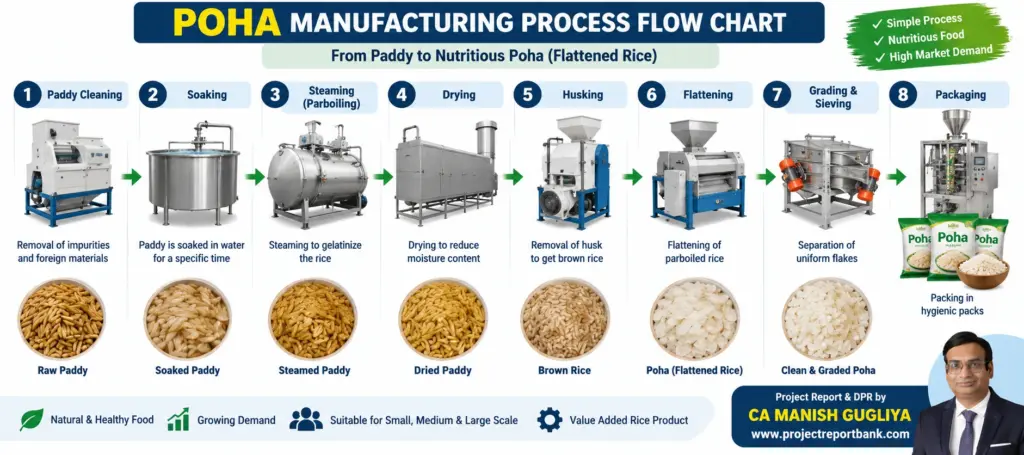
Individual manufacturers may combine or split some steps. For instance, integrated cleaners, in-line roasters and continuous dryers can consolidate multiple operations in an automatic poha manufacturing plant process. The poha production flow chart is not static; it must be customised in a project report to reflect selected machinery, plant capacity and regional practice, while retaining the core sequence from paddy intake to finished flattened rice dispatch.
Step-by-Step Poha Manufacturing Process
The following subsections explain every stage of the poha manufacturing process step by step. Each operation includes typical equipment, control points and finance-relevant aspects such as loss points and energy-intensive stages. Specific parameter values (temperature, time, moisture percentage) must be confirmed with machinery suppliers and pilot runs for the selected paddy variety.
Paddy Procurement
Procurement criteria include preferred grain size, suitable moisture range, low admixture of other varieties and absence of mould, infestation or off-odour. Many poha plants procure paddy seasonally at harvest and store it for several months, which directly affects working capital, storage losses and interest cost on inventory.
Reliable suppliers, farmer tie-ups, local traders and government mandis help ensure consistent supply chain and predictable pricing. Paddy received at the plant should be weighed, sampled and recorded batch-wise for traceability and quality-cost analysis.
Cleaning of Paddy
Cleaning removes physical impurities that can damage machinery, reduce product quality and cause safety issues. Typical equipment includes pre-cleaners with sieves, aspirators for light impurities (straw, chaff, dust), destoners for stones, and magnetic separators for ferrous metals.
Adequate aspiration and dust collection are required to maintain hygiene in food plants. Efficient cleaning reduces foreign matter in the final product and lowers wastage during grading and sorting.
Paddy Grading
Grading separates paddy into different size fractions using rotary graders or plansifters. Uniform grain size ensures more even moisture uptake during soaking and consistent flattening behaviour in the flaking machine, which in turn produces uniform poha flakes.
Some plants divert undersized or oversized fractions to other uses. This diversion should be accounted for in the material balance section of the DPR.
Soaking and Moisture Conditioning
The purpose of soaking is to allow water to penetrate into the grain, soften the endosperm and achieve a controlled moisture level for subsequent roasting and flattening. The cleaned paddy is soaked in hot water to soften the grain and increase moisture content, enabling the rice to absorb water and other liquids uniformly throughout the kernel.
Soaking tanks are typically constructed from RCC or food-grade steel with provisions for water inlet, outlet and overflow. The time required for soaking depends on paddy variety, initial moisture and desired poha type. Over-soaking leads to grain disintegration; under-soaking causes poor flattening and high breakage. Plants may adopt batch soaking or continuous conditioning systems; the chosen method should be reflected accurately in the project report.
Draining and Tempering
Draining removes free water from soaked paddy using perforated containers, draining platforms or mechanical de-watering arrangements. Tempering is a short holding period (often 30 to 60 minutes or longer) during which moisture equalises within each grain, leading to more uniform texture.
Inadequate tempering results in non-uniform flakes, internal stresses and higher breakage during flattening, ultimately increasing fines and reducing saleable poha recovery.
Roasting or Heat Treatment
Roasted or heat-treated paddy develops the characteristic flavour and texture of poha. The heat also stabilises the grain, assists in husk removal and creates partial gelatinisation of starch, making the kernel pliable enough for flattening.
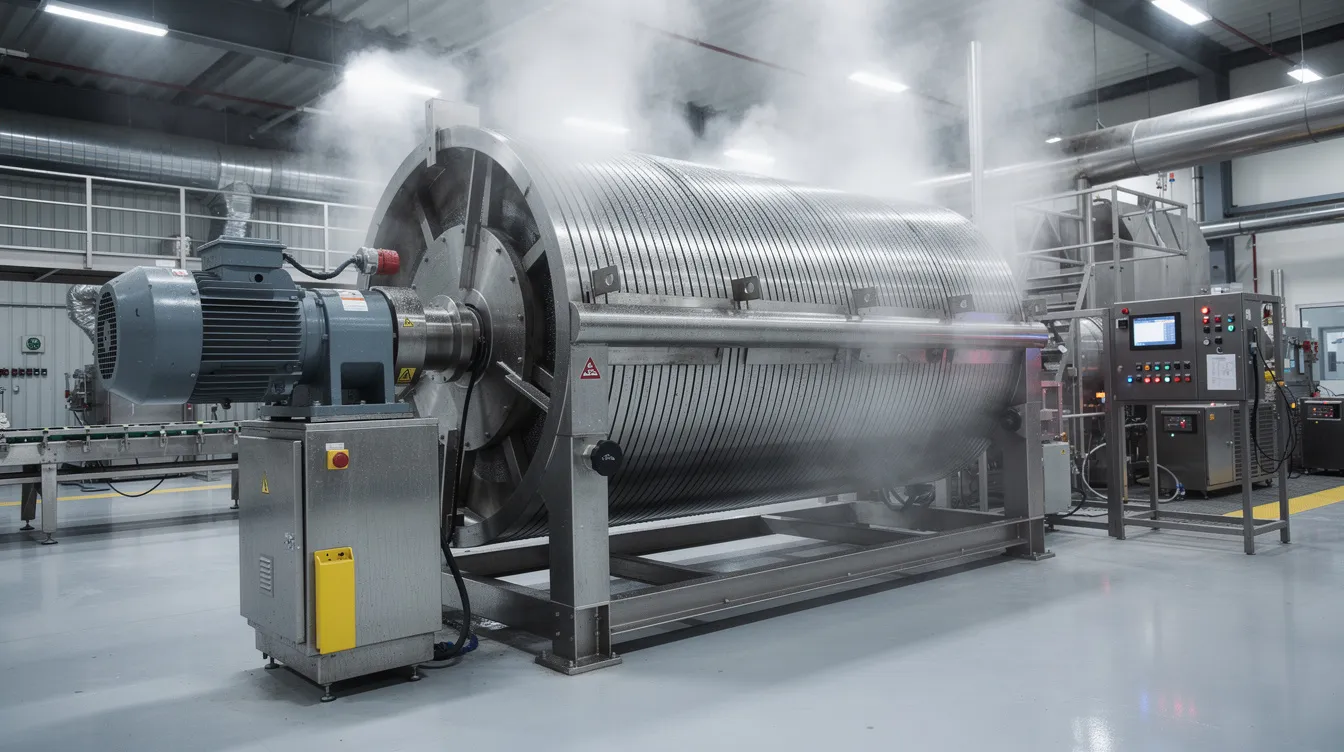
Common equipment includes batch roasters using husk or briquettes as fuel, continuous roasters or steam-jacketed vessels. Main variables are temperature profile, residence time, uniformity of heating and degree of pre-gelatinisation. Inadequate heating yields hard flakes with poor expansion during cooking; excessive heating causes burnt flavour, uneven colour and higher breakage.
Energy audits of poha plants, such as the JP Hansraj factory audit in Ujjain, show that roasting consumes roughly 64% of total thermal energy cost, making it the single largest thermal energy consumer in the plant.
Dehusking
In many industrial poha making process variants, heat-treated paddy is dehusked using rubber roll hullers or similar machines, separating husk from the softened kernel. The husk is aspirated and collected separately, often used as boiler fuel or sold as a by-product.
Some technologies flatten paddy in the husk and remove husk afterwards. The DPR should clearly describe which approach is proposed, as it affects machinery selection and process flow chart details.
Flattening or Flaking
This is the core stage of the flattened rice manufacturing process. Flattening of the rice kernels is done using heavy rollers to create thin flakes. Conditioned rice passes through a poha flaking machine where heavy rollers compress each kernel into a flat flake.
Key control parameters include roller pressure, roller gap/clearance, rice temperature, grain moisture and feed rate. These settings determine whether the output is thin (translucently thin flakes), medium or thick poha, with some grades being two to three times thicker than others. Excessive pressure or low moisture leads to high breakage and fines. Insufficient pressure gives under-flattened, curled or uneven flakes with poor market acceptance. Modern rice flake processing plants may use variable-speed drives and adjustable roller settings to handle different paddy varieties on the same line.
Drying and Cooling
Freshly flaked poha contains higher surface moisture and is warm. It must be dried and cooled to a safe moisture level. Options include batch tray dryers, continuous belt dryers or simple ambient drying with blowers in smaller units. According to the Poha Grading and Marking Rules, 2023, maximum moisture in finished poha is 13.0% by mass.
Under-drying risks spoilage while over-drying causes brittleness. Proper cooling before packaging prevents condensation inside bags, which can cause mould and quality complaints.
Sieving and Grading
Flattened rice is sieved and graded according to thickness and quality. Dried poha passes through vibratory sifters and screens that separate it into commercial grades: thin flakes, medium flakes and thick flakes. Different thicknesses of poha are produced for various culinary uses such as quick soaking or frying.
Grading improves uniformity, allows differential pricing of various grades as per market demand, and removes undersized particles. Excess fines represent a loss in value compared to full flakes; controlling their generation is financially important.
Quality Inspection
Routine quality checks on finished flattened rice include visual inspection for colour and cleanliness, moisture testing, measurement of flake thickness and size distribution, and evaluation of odour and taste. Random sampling from batches verifies absence of foreign matter, insects and contaminants, and supports compliance with FSSAI requirements.
Documenting results lot-wise enables traceability and supports both buyers’ confidence and bank appraisal of the plant’s process discipline.
Weighing and Packaging
After approval, poha is weighed using platform scales or automatic weighers and packed into different sizes. The final product is packaged in moisture-proof materials to ensure shelf life. Common formats include:
| Pack Size | Typical Market Segment |
|---|---|
| 500 gram | Retail consumer |
| 1 kg | Retail consumer |
| 5 kg / 10 kg | Institutional buyers, hotels |
| 25 kg / 50 kg | Wholesale, B2B, export |
Machinery ranges from manual sealing machines to semi-automatic or automatic form-fill-seal (FFS) systems with multi-head weighers. Proper labelling (brand, net weight, ingredients, FSSAI licence, batch details) is required as per applicable regulations.
Poha Manufacturing Machinery Required
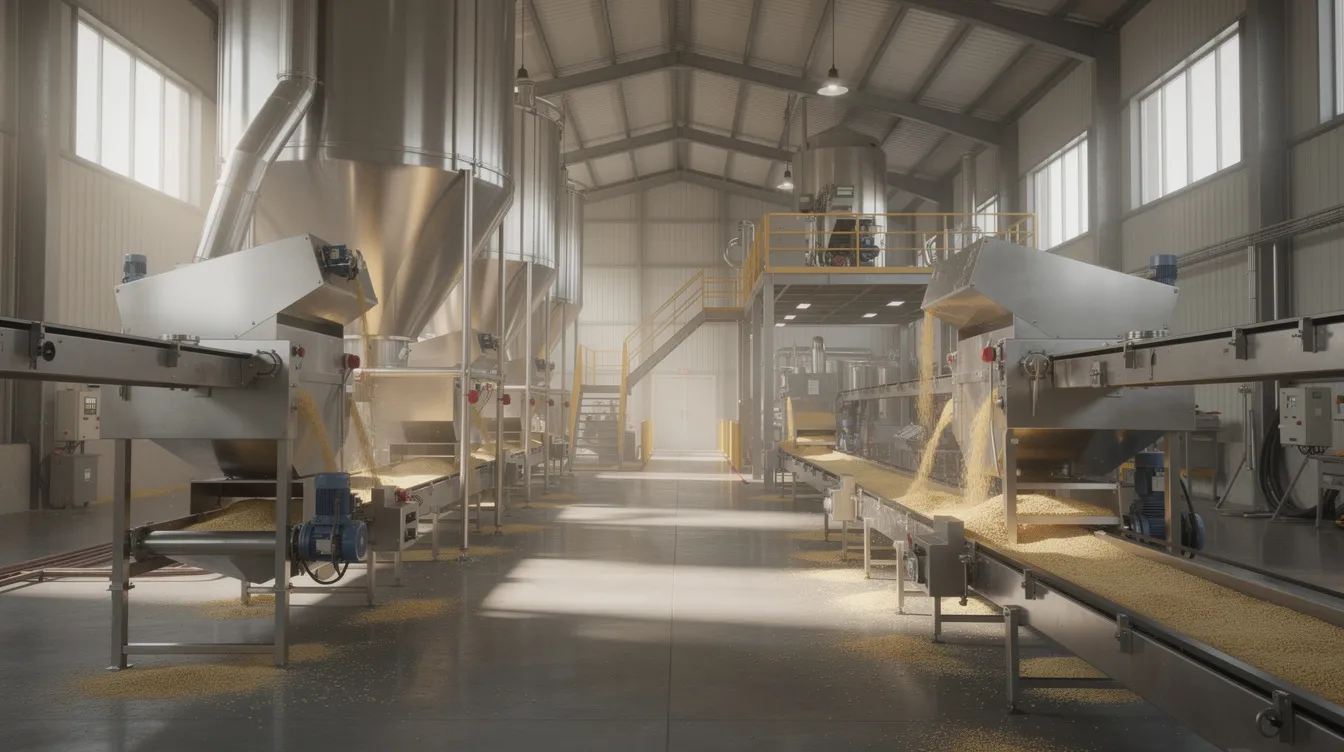
The exact machinery list depends on plant capacity, automation level and chosen flattened rice production process variant. A rice flakes production line includes soaking, roasting, and flaking equipment as its core components, along with several supporting machines.
| Equipment | Function |
|---|---|
| Paddy cleaner / pre-cleaner | Remove dust, straw, light impurities |
| Aspirator | Separate light particles by air |
| Destoner | Remove stones, heavy foreign matter |
| Magnetic separator | Remove ferrous metal particles |
| Paddy grader | Size-separate paddy for uniform soaking |
| Soaking tanks | Hydrate paddy to target moisture |
| Draining / tempering system | Remove free water, equalise moisture |
| Roasting / heating system | Heat-treat paddy for flaking readiness |
| Dehusker | Separate husk from processed rice |
| Poha flaking machine | Flatten conditioned rice into flakes |
| Dryer | Reduce flake moisture to safe level |
| Sieving / grading machine | Classify flakes by size and thickness |
| Elevators and conveyors | Transfer material between stages |
| Dust collection system | Maintain hygiene, collect airborne dust |
| Weighing scales | Portion product for packaging |
| Packaging machine | Seal consumer and bulk packs |
| Electrical control panel | Centralise power distribution and controls |
Equipment layout and connecting conveyors should support logical flow from paddy intake to finished goods storage. While some rice mill infrastructure may be reused, poha processing machinery specifications should be evaluated separately. Realistic rice processing machinery and equipment cost benchmarks for milling can serve as reference, but poha-specific quotations from multiple suppliers are essential.
Automatic vs Semi-Automatic Poha Manufacturing Plant
Entrepreneurs can choose between semi-automatic plants with higher labour involvement and largely automatic poha production lines, depending on investment capacity and scale.
| Parameter | Semi-Automatic | Automatic |
|---|---|---|
| Initial investment | Lower | Higher |
| Labour per shift | Higher | Lower |
| Production capacity | Limited by manual handling | Higher throughput |
| Product consistency | Operator-dependent | More uniform |
| Wastage/breakage | Typically higher | Better controlled |
| Process monitoring | Manual checks | Sensor-based, PLC-controlled |
| Electricity consumption | Moderate | Higher installed load |
| Scalability | Requires re-engineering | Easier to expand |
Automation in poha production improves efficiency and reduces labor costs, especially at medium and large scales. For MSME entrepreneurs, a carefully chosen semi-automatic or partially automated line may offer a balanced entry point. Large integrated food processors typically prefer fully automated lines.
Poha Plant Capacity and Production Planning
Capacity is expressed in kg per hour, tonnes per day (TPD) and tonnes per annum (TPA). Poha manufacturing plants can process 100 to 5000 kg of rice per hour, depending on the scale and machinery installed. Realistic production planning must consider working days per year, operating shifts per day and seasonal paddy availability.
Capacity utilisation typically builds up over the initial 2 to 3 years. Bottlenecks may appear at the roaster, dryer or flaking machine, so these must be sized appropriately. Capacity planning principles explained for plant capacity planning and production capacity in rice mills are equally relevant to poha projects.
DPRs should present a year-wise capacity utilisation plan supported by realistic assumptions on raw material procurement, market demand and maintenance downtime.
Indicative Material Balance and Poha Recovery
For every 100 units of paddy input, outputs include finished poha, husk, broken flakes, fines, cleaning rejects and moisture losses. The following is an illustrative breakdown; actual recovery varies with paddy quality, processing technology, moisture level and plant efficiency.
| Output | Illustrative Range (per 100 kg paddy) |
|---|---|
| Saleable whole poha flakes | 50 to 60 kg |
| Broken flakes and fines | 10 to 15 kg |
| Husk | 18 to 22 kg |
| Cleaning rejects, moisture loss, other | Balance |
Even small improvements in recovery percentage affect turnover and EBITDA. If recovery improves from 50% to 52%, the additional 2 kg per 100 kg of paddy, multiplied across annual throughput, yields meaningful incremental revenue. Conservative recovery assumptions are advisable in bank finance projections until confirmed by trial run data.
Utilities Required for a Poha Manufacturing Plant
Poha plants require electricity, water, thermal energy and in some cases compressed air. Major electricity consumers are the flaking machine (typically 10 to 16 HP motors), elevators, conveyors, dryers and cleaning equipment. Energy audit data from similar plants show that installing energy-efficient motors and variable frequency drives (VFDs) can reduce electricity cost.
Water is consumed in soaking, cleaning, possible boiler feed and sanitation. Thermal energy for roasting and drying represents the largest variable cost component; common fuels include paddy husk, biomass briquettes, coal or gas depending on local availability and environmental norms. Ventilation, dust extraction and lighting must also be provisioned in the plant design.
Land, Building and Plant Layout Considerations
Key areas within a typical plant layout include:
- Raw paddy receiving and storage
- Cleaning section
- Soaking and draining area
- Roasting or heating section
- Dehusking and flaking section
- Drying and cooling zone
- Grading and inspection section
- Packaging room
- Finished goods warehouse
- Utilities area and administrative office
The plant layout should ensure unidirectional material flow from raw paddy intake to finished poha dispatch, avoiding cross-movement. Food-processing areas should be segregated from dusty operations, with proper drainage and sanitation. Broader land, building and plant layout requirements used for rice mills can guide civil planning for poha plants. Building height must accommodate tall equipment such as elevators and vertical dryers.
Paddy Storage and Warehouse Requirements
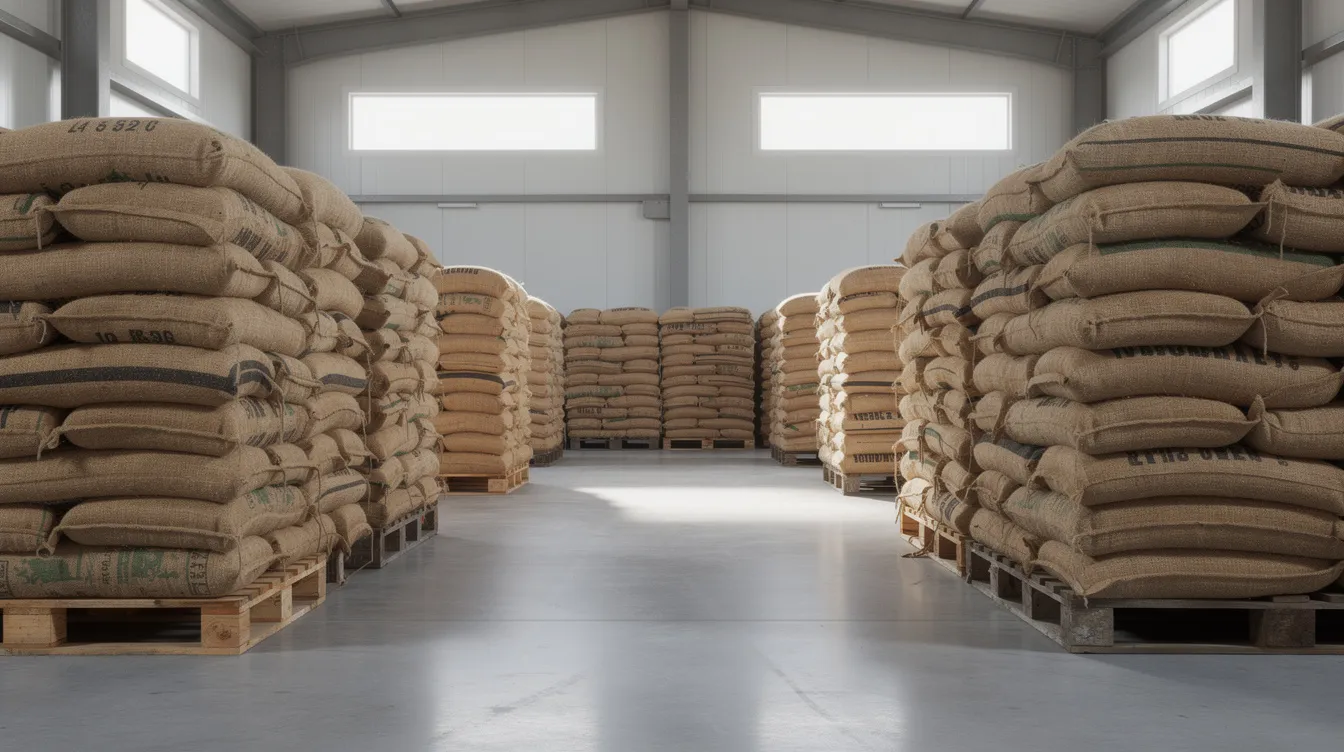
Many poha units procure paddy during harvest season to benefit from lower prices, which demands adequate storage capacity and disciplined warehouse management. Basic requirements include pucca floors, protection from rain, ventilation and arrangements to control moisture ingress and pest infestation.
Good practices include using pallets, proper stacking, periodic aeration, temperature monitoring and FIFO (First In, First Out) dispatch. Storage losses should be conservatively estimated in project calculations. Detailed guidance on paddy storage, warehouse and silo requirements is largely applicable to poha plants.
Quality Control in Poha Manufacturing
A basic in-house quality control system should cover incoming paddy inspection, in-process checks and final product testing. Typical tests on incoming paddy include moisture, foreign matter, damaged grains, admixture and infestation.
In-process controls involve monitoring soaking time and temperature, assessing roasting uniformity, checking flake thickness and breakage at the flaking stage, and verifying moisture after drying. Final product checks include moisture, colour, odour, visible cleanliness, proportion of broken flakes and fines, and simple cook tests to evaluate texture. FSSAI licensing and food safety requirements apply to poha processing plants in India; entrepreneurs should consult current regulations before commissioning.
Food Safety and Hygiene Requirements
Beyond mechanical process control, poha plants must operate under hygienic conditions. Essential practices include hygienic design and maintenance of food-contact surfaces, regular cleaning and sanitation schedules, controlled entry of personnel, hand-washing facilities, protective clothing and pest control measures.
Potable or suitably treated water must be used in soaking and cleaning. Dust management, proper waste collection and safe storage of cleaning chemicals prevent contamination of rice flakes. Documentation of cleaning and maintenance activities supports audits by customers, regulators and financing institutions.
By-Products and Waste Management
Main by-products include paddy husk, broken grains and flakes, fines and dust from cleaning operations. Husk can be used as boiler fuel or sold to industry. Broken grains and fines may serve as cattle feed ingredients or for lower-value food applications.
While by-products contribute some income, their value is lower than saleable poha. The primary focus should be on maximising full-flake recovery. DPRs should include realistic estimates of by-product quantities and potential revenue without over-stating this income in bank loan proposals.
Factors Affecting Poha Quality
Key raw material factors include paddy variety, age (new crop vs aged grain), grain size, initial moisture and storage conditions. Process-related factors include soaking time, water quality, roasting temperature and uniformity, tempering time, dehusking efficiency, roller gap, roller pressure and drying conditions.
Product quality also depends on packaging material, sealing quality and storage conditions. Poha flakes vary in texture, colour and shelf life depending on how well these factors are controlled. Systematic monitoring combined with market feedback helps plant management fine-tune the process for better commercial performance.
Common Production Problems in Poha Manufacturing
Even well-designed plants face recurring operational issues. Early identification and correction are vital from a financial standpoint.
| Problem | Likely Causes | Practical Control |
|---|---|---|
| Excessive breakage | Over-roasting, low moisture at flaking, excessive roller pressure, rough handling | Optimise roasting, check moisture before flaking, adjust roller gap |
| Uneven flakes | Non-uniform soaking, improper tempering, worn rollers, vibration in flaker | Ensure uniform grain size, extend tempering, maintain rollers |
| High moisture in finished poha | Insufficient drying, poor cooling before packing | Calibrate dryer, install cooling section |
| Burnt flavour or discoloured flakes | Over-roasting, hot spots in roaster, poor fuel-air ratio | Inspect roaster, clean regularly, control fuel feed |
| Low recovery / high fines | Combination of above factors, poor operator practices | Operator training, process audits, equipment upgrades |
Inconsistent poha thickness results from improper conditioning, whether that is uneven soaking, inadequate tempering or inconsistent feed to the flaking machine. Persistent low recovery may signal the need for process re-engineering.
Poha Packaging and Finished Goods Storage
Packaging protects poha from moisture uptake, mechanical damage and contamination while carrying brand communication and statutory information. Commonly used materials include LDPE, PP or multi-layer laminated pouches, chosen for their moisture barrier, printability and cost. Meat products and other food items may share similar packaging principles, but poha packaging must prioritise moisture resistance above all.
Storage practices include stacking on pallets, avoiding wall contact, maintaining dry and ventilated warehouses and following FIFO. Temperature and humidity control prevents caking, rancidity and insect infestation. DPRs should estimate required finished goods storage capacity based on production pattern, market distance and credit terms.
Process Automation in Modern Poha Plants
Automation improves consistency, labour productivity and traceability in modern poha plants. Typical automation elements include bucket elevators, screw conveyors, automatic feeders for roasters and flakers, online temperature and moisture monitoring, automatic graders and PLC-controlled dryers.
Integration of automatic weighing, bagging and FFS packaging machines with batch coding minimises manual intervention. Automation also enables better data logging (production volumes, downtime, rejection rates, energy use), which supports management decisions and bank appraisals. Incremental automation can be planned in phases, allowing an MSME to start semi-automatic and upgrade as capacity and markets grow.
Financial Importance of Process Efficiency
Technical efficiency in poha manufacturing translates directly into lower cost of production and higher EBITDA margins. Higher poha recovery increases revenue per tonne of paddy. Lower power and fuel consumption reduces variable cost. Reduced rejections protect margins. Lower downtime improves capacity utilisation.
Packaging material optimisation and efficient labour deployment also affect per-kg cost. Entrepreneurs can use the methodology of analysing operating cost and cost of production for rice mills as a template when computing poha cost structures. Lenders and investors closely examine these operating assumptions while assessing project viability.
Working Capital Implications of Poha Manufacturing
Working capital is a large component in poha projects because of seasonal paddy procurement, inventory holding and credit terms extended to buyers. Typical current assets include stock of paddy, in-process inventory (soaked, roasted, partially processed material), finished poha stock, packaging materials and receivables.
Current liabilities include supplier credit for paddy, trade payables and short-term bank borrowings. A structured assessment similar to working capital requirement for a rice processing project should be applied, with cycles adapted to the poha unit’s own procurement and sales pattern. Entrepreneurs should design working capital limits accounting for paddy price fluctuations and competitive credit terms in the poha market.
Preparing Financial Projections for a Poha Manufacturing DPR
A robust DPR must convert the technical process into quantified financial projections covering at least 7 to 10 years. Key assumptions include installed capacity, phased capacity utilisation, poha recovery percentage, by-product recovery, raw material consumption per tonne of output and expected selling prices for each product grade.
Operating expenses cover power, fuel, labour, repairs, maintenance, packaging, administrative costs, selling expenses and statutory levies. The DPR should project profit and loss, cash flow, balance sheet, fund flow, DSCR, break-even point and sensitivity scenarios. The framework for financial projections for a rice processing DPR can be customised for poha projects with appropriate input data.
Project Cost and Means of Finance
Major components of project cost include land acquisition or leasehold deposit, site development, building and civil work, poha manufacturing machinery, electrical and utility installations, preliminary and pre-operative expenses, interest during construction, contingency and margin for working capital.
Means of finance typically combine promoter’s contribution (equity), term loan from banks or financial institutions and sometimes unsecured loans. The pattern used for project cost and means of finance in rice processing is a helpful reference but must be adjusted to reflect the specific poha plant scale, location and technology. Entrepreneurs should avoid under-estimating pre-operative expenses and ensure adequate contingency for cost escalations.
Bank Loan and Project Finance for a Poha Plant
Banks appraise poha manufacturing projects using principles similar to other agro-processing plants: technical feasibility, market potential, projected profitability and repayment capacity. Aspects reviewed include promoter background, adequacy of equity contribution, quality of DPR, reasonableness of assumptions, plant location, raw material sourcing tie-ups and marketing plan.
Collateral security, coverage under credit guarantee schemes (where available) and working capital assessment also play a role. General guidance on bank loan and project finance for a rice processing plant and term loan assessment applies to poha plants with similar documentation standards. Clear implementation schedules, realistic repayment timelines and evidence of supplier and buyer discussions strengthen the loan proposal.
DSCR and Loan Repayment Capacity
DSCR (Debt Service Coverage Ratio) measures the ratio of cash available for servicing term loan obligations to total debt repayment (interest plus principal) in each year. Lenders look for DSCR above their internal comfort thresholds over the full loan tenor, not just in one or two peak years.
For a poha plant, DSCR is sensitive to operating margin (driven by recovery and selling prices), working capital interest cost and actual versus projected capacity utilisation. A detailed understanding of DSCR and loan repayment capacity in rice processing projects applies directly while structuring repayment schedules. Entrepreneurs should test DSCR under conservative and stressed scenarios before finalising loan size and tenure.
Profitability and Break-Even Analysis
Profitability of a poha plant depends on the difference between realisation per kg of finished poha (plus by-products) and overall conversion cost. Key determinants include paddy purchase price, poha recovery percentage, average selling price of different grades, power and fuel cost, labour cost, packaging cost and finance cost.
Break even analysis determines the minimum capacity utilisation or annual sales volume needed to cover all fixed and variable costs. The methodology for profitability and break-even analysis in rice mills can be adapted for poha plants. Realistic break-even points help promoters and lenders gauge the risk of under-utilisation during initial years.
Feasibility of a Poha Manufacturing Project
A feasibility study evaluates technical, financial, market, operational and funding aspects before committing capital. Typical elements include assessment of regional paddy availability, competition mapping, demand estimation for different poha types, logistics analysis, technology evaluation and environmental considerations.
Financial feasibility integrates project cost, projected profitability, DSCR, IRR and sensitivity to key variables. Frameworks used in feasibility study and project viability for rice mills can guide structured decision-making for poha projects. Treat the feasibility study as a decision tool, not a formality; refine the project concept based on its findings.
ROI, IRR, Payback and Sensitivity Analysis
Investors should evaluate returns using measures such as Return on Investment (ROI), Internal Rate of Return (IRR) and payback period. Sensitivity analysis tests how project viability changes when paddy cost, selling price, poha recovery, capacity utilisation, power tariffs or interest rates move unfavourably.
Such analysis helps promoters understand risk, plan contingencies and design suitable equity and debt structures. The approach outlined for ROI, IRR, payback and sensitivity analysis in rice mill projects can be applied with appropriate inputs to poha manufacturing investments. Base investment decisions on long-term risk-adjusted returns rather than short-term market price spikes.
Relationship Between Poha Manufacturing and Rice Milling
Both poha manufacturing and rice milling start from paddy and share several operations: cleaning, dehusking, grading, storage. They diverge in objectives. A rice mill produces whole milled rice and by-products like bran; a poha plant produces controlled hydro-thermally treated and flattened rice flakes, which then serve as food grains for direct consumption or as ingredients in snacks.
Existing rice mill owners may enjoy advantages in diversifying into poha production: experience with paddy procurement, existing storage infrastructure, handling equipment and knowledge of the rice industry. The Integrated Rice Milling & Processing Plant Project Report & DPR serves as a broader hub resource, while the rice milling process flow chart and production process helps in understanding process similarities and differences.
While some equipment and utilities may be shared between rice milling and poha manufacturing, a separate technical and financial evaluation is still required for the poha project component.
Frequently Asked Questions
How is poha manufactured from paddy?
Paddy is cleaned, graded for uniform size, soaked to raise moisture, roasted or heat-treated to gelatinise the starch surface, dehusked and then flattened using a poha flaking machine with heavy rollers. The resulting flakes are dried, graded into thin, medium and thick categories, inspected for quality and packaged. Each step is designed to produce consistent rice flakes with minimal breakage and acceptable colour. The rice swell and expansion characteristics during cooking depend on how well soaking and roasting are controlled.
Which raw material is used for making poha?
Clean, sound paddy of suitable medium or bold grain varieties is the primary raw material. Water, fuel (husk, briquettes, LPG), electricity and food-grade packaging materials are also required. The nutritional value and cooking behaviour of poha depend on the paddy variety and process parameters. Some companies in India also produce organic poha using certified organic paddy, though these tend to be more expensive varieties.
What is a poha flaking machine?
A poha flaking machine is a specialised roller mill that compresses conditioned rice kernels between heavy rollers to form flat dry flakes. The roller gap, pressure and feed rate are key settings affecting flake thickness and breakage. Adjusting these settings allows a single machine to produce thin, medium or thick poha for different market segments. Poha that is mixed into snack preparations typically uses thin flakes, while preparations served with hot milk or as a cook-at-home product may use thicker flakes. Products like wheat-based or corn-based flakes use different equipment altogether.
What should be included in a poha manufacturing plant project report?
A complete project report should cover the technical poha production process, machinery specifications, plant layout, project cost, means of finance, working capital assessment, financial projections (profit and loss, cash flow, balance sheet), DSCR analysis, break-even analysis, repayment schedule, sensitivity analysis and market assessment. The DPR should be based on actual proposed capacity, machinery quotations, site conditions, raw material sourcing plan and realistic operating assumptions. It should also address demand potential, export possibilities, supply chain logistics, building requirements and applicable food safety norms.
Can a poha manufacturing plant obtain a bank loan?
Bank financing depends on project viability, promoter profile, quality of DPR, equity contribution, projected repayment capacity and lender norms. Banks evaluate technical feasibility, market potential and financial projections before sanction. MSME schemes and credit guarantee coverage may apply depending on plant size and location. Presenting a well-prepared DPR with conservative assumptions, clear implementation timelines and evidence of raw material and buyer discussions strengthens the application.
Conclusion
The poha manufacturing process, from paddy to finished flattened rice, involves a defined sequence: cleaning, soaking, roasting, dehusking, flaking, drying, grading and packaging. While the sequence appears straightforward, commercial success depends on disciplined raw material procurement, precise process control at each stage, efficient use of power and fuel, trained manpower and robust quality systems.
Technical parameters such as paddy quality, moisture conditioning, roasting profile and flaking machine settings directly influence poha recovery, operating cost, EBITDA, DSCR and overall project viability. These parameters must be realistically modelled in the DPR rather than assumed from generic industry averages. Entrepreneurs, investors, CAs and project consultants should base their decisions on a customised poha manufacturing plant project report that integrates technical design, capacity planning, project cost, working capital, financial projections, profitability, break-even, DSCR and sensitivity analysis.
ProjectReportBank.com, under the professional guidance of CA Manish Gugliya, assists promoters in preparing Detailed Project Reports, bank finance DPRs, CMA data, financial projections, feasibility studies, DSCR and loan repayment analysis, break-even studies, ROI and IRR analysis, working capital assessment and project finance documentation for poha manufacturing and allied rice processing projects across India.