Key Takeaways
- Rice mill project cost in India is not just the price of milling machinery. It combines land, civil construction, storage infrastructure, utilities, pre-operative expenses, contingency and working capital into a structured total investment figure that banks evaluate holistically.
- In 2026, many commercial rice mill projects range broadly from under ₹1 crore for small 1–2 TPH semi-automatic units to several crores for 4–10 TPH modern or integrated mills. Typical investment for a commercial rice mill ranges from ₹1.2 crore to ₹5 crore depending on configuration, automation and location. Actual cost must always be based on vendor quotations and site-specific design.
- The distinction between “Cost of Project” (CAPEX plus margin money for working capital) and “Means of Finance” (promoter contribution, term loan, subsidy, internal accruals) is fundamental to any bankable DPR. Total means of finance must equal total project cost.
- Capacity selection, automation level, storage strategy and paddy procurement planning can shift both project cost and working capital requirement more dramatically than most new promoters expect. A higher-capacity plant also locks up more funds in inventory and receivables.
- A bankable rice mill DPR must integrate project cost, means of finance, projected profitability, DSCR and sensitivity analysis into a coherent financial model that supports rice mill bank loan appraisal.
Introduction: Understanding Rice Mill Project Cost in India
Rice mill project cost in India covers far more than the invoice value of a milling line. It encompasses land acquisition, factory buildings, paddy storage godowns, drying infrastructure, milling machinery, colour sorters, packaging systems, electrical installations, boilers, effluent treatment, pre-operative expenses and the working capital needed to begin procurement and operations. As a practising Chartered Accountant who regularly prepares Detailed Project Reports for agri-processing ventures, I find that promoters frequently underestimate total investment because they consider only machinery or shed cost in isolation.
Two rice mills with the same nominal capacity-say 4 TPH-can require substantially different investments depending on whether the project includes parboiling units, silos, advanced colour sorting, automated packaging, husk-fired boilers or export-grade quality control labs. Starting a rice mill project requires balanced capital allocation across all these heads, not just a single machinery purchase order. This article focuses on commercial medium and large rice mills, typically from 1 TPH upward, and covers project cost components, capacity impact, integrated configurations, means of finance, working capital, DSCR and DPR preparation for bank loan appraisal.
What Is Included in Rice Mill Project Cost?
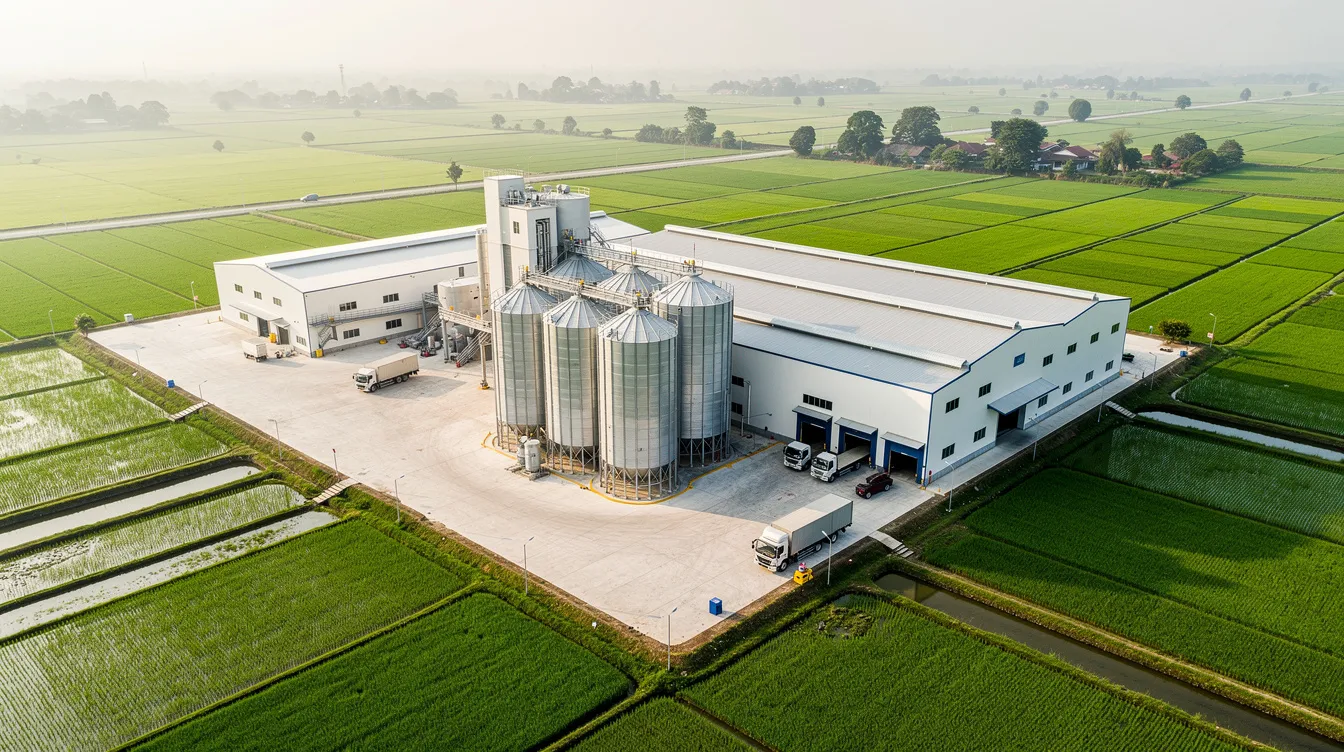
In DPR terminology, rice mill total project cost is a structured capital and funding requirement, not a casual estimate. It generally includes fixed project cost or capital expenditure (land, building, plant and machinery, utilities, miscellaneous fixed assets), preliminary expenses (company formation, factory license fees, professional charges), pre-operative expenses (including interest during construction where applicable, trial-run costs, establishment before commercial production), and margin money for working capital where the DPR presents the complete initial funding picture.
Many promoters focus narrowly on rice mill machinery investment, but banks evaluate the complete capital structure. Lenders want to see land and site development, civil works, electricals, storage infrastructure and contingencies before they assess a term loan quantum. The rice mill working capital requirement is normally financed separately through cash credit or overdraft facilities, but a portion of margin money may appear as part of the total project cost in the DPR so that the lender understands the full funding gap at commissioning. Underestimation leads to implementation delays, cost overruns and stress in loan servicing-problems that a realistic and complete cost picture can prevent.
Major Components of Rice Mill Project Cost
A modern rice mill project cost can be broken into standard heads that most banks and financial institutions in India expect in a DPR. Each component below describes what the head covers and what mainly drives its cost, with references to relevant resources where appropriate. In a typical 4–5 TPH plant, machinery may constitute the largest single share while civil works and storage together form the next major block. Later sections present an illustrative cost table and a means of finance table tying these heads together.
Land and Site Development
Land costs vary greatly based on location and proximity to paddy sources. For a 3–5 TPH commercial rice mill, promoters typically plan for roughly 1.5–3 acres, though how much land is actually needed depends on storage design, truck circulation, expansion plans and local zoning requirements. Land costs for a rice mill in paddy-belt rural areas range from approximately ₹15–30 lakh for 1.5–2 acres, though prices in peri-urban or industrially developed zones can be considerably higher.
Cost elements under this head include purchase or lease price, land conversion charges, site leveling, internal roads, drainage, compound wall, gate, security cabin, green belt and truck circulation space. Land and infrastructure costs can account for 20% to 35% of total expenses in many projects. Efficient rice mill land, building and plant layout requirements can save both initial investment and future expansion expense. Even when land is already owned, its notional value and development cost should still be reflected in the DPR for realistic project economics.
Factory Building and Civil Construction
Rice mill construction cost for buildings typically includes the milling hall, parboiling section (if applicable), paddy and rice godowns, finished goods warehouse, by-product storage, boiler and utilities block, administrative office and laboratory space. Civil cost is driven less by square footage alone and more by structural design factors: building height for elevators and silos, heavy machinery loads requiring RCC foundations, floor pit depths, and whether a PEB (Pre-Engineered Building) or conventional RCC superstructure is chosen.
PEB sheds are increasingly popular in rice mill projects due to speed and flexibility, but foundations and floors still require careful engineering around machinery pits, elevators and heavy storage loads. DPRs usually estimate civil cost based on preliminary architectural drawings or standard benchmarks validated by a civil engineer. Underestimating civil and foundation cost is one of the most common mistakes and often forces additional unplanned promoter contribution during implementation.
Plant and Machinery
Typical machinery for a modern rice mill includes paddy pre-cleaner, destoner, rubber roll husker, paddy separator, whitener, polisher, silky polisher, length grader, thickness grader, colour sorter, bucket elevators, conveyors, aspiration and dust control systems, and automatic weighing and bagging machines. Machinery accounts for 50–65% of total rice mill project cost in most commercial configurations, and the share rises further with higher automation and imported components.
Rice mill machinery costs range from ₹22–37 lakh for a 2 TPH line to ₹65 lakh–₹1.4 crore for a 4 TPH rice mill machinery line. For very small units, mini rice mills with 1 ton per hour capacity cost around ₹2–3 lakhs for the basic machinery alone. Fully automated rice mills are significantly more expensive than semi-automatic ones because of PLC/SCADA panels, advanced sortex machines and integrated packaging. Installation costs for rice mills range from ₹5 lakh to ₹20 lakh depending on complexity. DPRs should clearly separate milling line cost, optional colour sorters, parboiling units, automation panels and erection charges under this head.
Paddy Procurement Infrastructure
Paddy procurement planning determines how much storage, drying, grading and handling infrastructure the project requires, and therefore significantly affects both project CAPEX and working capital. Typical investments include weighbridge, unloading and sampling area, cleaning and pre-grading equipment, drying yards and sometimes satellite purchase centres with small pre-cleaners. Paddy procurement is the largest recurring expense in rice milling, and seasonal procurement patterns in states like Andhra Pradesh, Chhattisgarh, Odisha or West Bengal can result in 3–6 months of inventory holding funded through a mix of own funds and working capital loan.
A bankable DPR must reconcile paddy procurement and raw material planning with storage capacity and working capital cycle so that both term loan and working capital limits are realistically sized.
Paddy Storage, Warehouses and Silos
Storage infrastructure may include covered godowns, bulk silos, drying yards and mechanised handling. Silos and mechanised bulk handling increase initial rice mill infrastructure cost but can reduce handling losses, improve quality preservation and support higher throughput for large 8–10+ TPH projects. Storage design must consider moisture control, aeration, fumigation and lot segregation; insufficient storage is a frequent bottleneck during peak procurement seasons.
Detailed guidance on paddy storage, warehouse and silo requirements helps promoters dimension storage capacity correctly. DPRs should show separate cost heads for paddy storage, finished rice godowns and by-product storage to make the capital expenditure structure transparent.
Utilities and Supporting Infrastructure
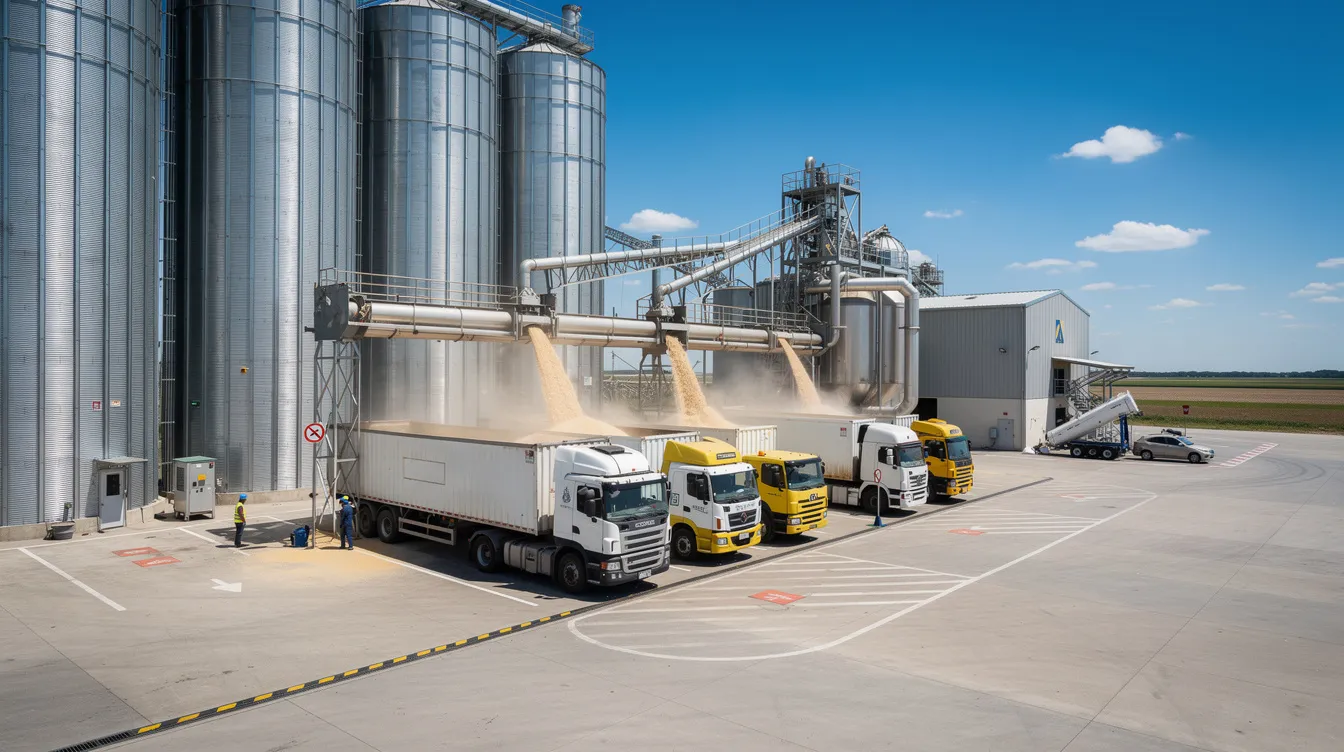
Major utility investments include high-tension electrical connection, transformer and panel boards, internal cabling, standby DG set, boiler (husk-fired or other fuel), steam piping for parboiling, water storage and treatment, air compressors, fire-fighting system and effluent and pollution-control equipment. Utility design is driven by installed machinery load, whether parboiling and drying are steam-based, and local power reliability. Operating expenses include paddy procurement, utilities, labor, and maintenance-and energy cost alone can represent 12–18% of conversion cost.
Electrical and utility costs are frequently under-budgeted when promoters focus only on ex-works machinery price. Pollution-control and fire-safety investments are not optional; non-compliance leads to regulatory hurdles and can impede term loan disbursement. Rice mill projects require compliance with food safety regulations and local laws, including necessary licenses and GST registration.
Laboratory and Quality Control Equipment
Buyers increasingly demand consistent quality. Export-oriented or branded rice suppliers require in-house labs with moisture meters, grain analysers, whiteness meters, sieve sets and packaging integrity testing equipment. While the absolute lab cost is modest compared to machinery, it is critical for accreditation, buyer audits and premium pricing. QA staffing, testing consumables and certification fees appear as operational costs in financial projections, separate from project CAPEX.
Packaging and Finished Goods Handling
Typical packaging systems include automatic bagging machines (10 kg, 25 kg, 50 kg), weighing scales, stitching or sealing machines, belt conveyors and pallets. Configuration depends on target market: bulk supply to institutional buyers versus branded retail packs. Better automation in packaging reduces labor cost and spillage but adds to initial setup cost. The 2026 trend towards more value-added consumer packs justifies moderate additional investment in this area.
Furniture, Office Equipment and Miscellaneous Fixed Assets
Common items include office furniture, computers, CCTV and access control, internal networking, staff lockers and canteen equipment. While individually small, these items together form a noticeable percentage of project cost if ignored. Lenders often insist on clear asset categorisation for hypothecation and insurance purposes.
Preliminary and Pre-Operative Expenses
Preliminary expenses include company incorporation, project report preparation and government fees. Licensing costs for a rice mill typically total ₹1.5–3.5 lakh covering factory license, pollution consent, trade license and related approvals. Pre-operative expenses cover project office costs, salaries during construction, travel, trial-run expenses and interest during construction (IDC) where capitalised. For a rice mill with a 9–15 month implementation period, pre-operative expenses including IDC can be substantial and must be estimated using a month-by-month implementation cash flow.
Contingency Provision
Contingency, often a modest percentage of civil, machinery and utilities cost, protects the project from price variations, design changes and minor scope additions. It is not padding but a prudent buffer that professional DPRs include. In periods of volatile steel, cement and machinery input prices, contingency provides resilience and reduces the risk of last-minute additional funding from promoters. The percentage should be justified in the DPR rather than set at arbitrary levels.
How Rice Mill Capacity Affects Project Cost
Rice mill cost based on capacity is among the most common queries, but costs are not linear. A 2 TPH semi-automatic plant and a 4 TPH fully automated plant with colour sorting and parboiling can differ by several multiples in total investment, not merely double.
Modern rice mills can cost between ₹35–60 lakh for a 2 TPH setup (mini rice mills), while a 4 TPH rice mill costs ₹1.2–2.5 crore in 2026 depending on automation, storage and process integration. Larger rice mills processing 100 tons per day can exceed crores. As capacity increases, machinery size, building height, storage capacity, electrical load and utilities scale up-often with some economies of scale but significantly higher absolute investment. Automation levels significantly influence the capital expenditure at every capacity tier.
Capacity selection must be aligned with paddy availability, market demand, production capacity planning and promoter financial strength. A higher-capacity plant also needs more funds tied up in inventory and receivables, making working capital planning inseparable from capacity decisions.
Integrated Rice Mill Project Cost
An integrated rice mill plant typically includes paddy drying, parboiling systems, large storage silos, bran handling, husk-based power or steam generation, modern colour sorting, advanced packaging and sometimes in-house branding facilities. The choice between raw and parboiled rice production affects investment requirements considerably-parboiled mills cost substantially more due to boiler, steam and drying infrastructure.
Integrated rice mill project cost is significantly higher than a basic raw rice mill of similar TPH. Such plants often target export markets, basmati processing or large institutional contracts, where higher capital cost is justified by superior realisations and by-product monetisation. Detailed exploration of integrated rice mill plant setup cost in India helps promoters evaluate end-to-end configurations. Bank appraisal for integrated projects pays particular attention to technology selection, promoter experience and market tie-ups due to the larger ticket size.
Rice Milling Process and Its Impact on Investment
The rice milling process and production flow-from raw paddy intake through cleaning, dehusking, separation, whitening, polishing, grading, colour sorting to packaging-directly influences machinery scope and therefore project CAPEX. Adding stages such as parboiling, silky polishing, multi-stage grading and sophisticated sortex systems increases modern rice mill project cost but improves head rice recovery (from 52–58% in older huller mills to 65–68% in modern plants), reduces breakage and supports premium positioning.
Some plants also integrate bran stabilisation, husk baling and in-house power generation, each adding to fixed capital but improving overall project economics. From a DPR viewpoint, process selection must be consistent with the target product mix, quality positioning and selling prices used in financial projections.
What Is Means of Finance in a Rice Mill Project?
Means of finance for a rice mill refers to how the total project cost will be funded. Typical sources include promoter’s capital (equity), unsecured loans from promoters or relatives where acceptable to the lender, term loan from a bank or financial institution, internal accruals in expansion projects, and admissible subsidies or incentives. Government initiatives can provide various forms of financial assistance and subsidies for rice mills-for instance, the PMFME scheme offers a credit-linked capital subsidy of 35% of the eligible project cost for qualifying units.
The rice mill capital structure must demonstrate that total means of finance equals the cost of project being financed. A professionally prepared rice mill project report with financials clearly separates these in tabular form to aid quick bank evaluation. The rice mill debt equity ratio should be assessed in light of promoter net worth, projected cash flows and the debt proposed.
Promoter Contribution in a Rice Mill Project
Promoter contribution is the portion of project cost funded through the promoter’s own funds-equity capital and acceptable unsecured loans-rather than bank borrowing. Different banks and schemes have different norms for minimum margin, and no single percentage applies universally. Lenders carefully review sources of promoter contribution to ensure they are genuine and not another form of borrowing.
From a CA’s perspective, adequate promoter stake improves project resilience, reduces interest burden and generally supports better DSCR and loan repayment capacity. Over-leveraging a project-very high debt relative to equity-may lead to stress in adverse years of lower capacity utilisation or compressed margins.
Term Loan for Rice Mill Project
A term loan is the primary form of rice mill project loan used to finance eligible fixed assets: civil construction, plant and machinery, electrical installations, utilities and other capital items. Key features include a sanctioned limit based on appraised project cost and promoter contribution, a moratorium period during construction and stabilisation, and a repayment tenure that may range from 7–10 years depending on capacity and promoter strength.
Specific interest rates, moratorium length and repayment structures are lender-specific and scheme-specific, and should not be generalised. DPR-based financial projections normally show instalment schedules, interest calculations and DSCR for the entire loan tenure so bankers can assess repayment capacity. Proper alignment between implementation schedule, expected commissioning date and start of term loan repayment is critical for avoiding initial cash-flow stress.
Rice Mill Working Capital Requirement
Working capital is essential for seasonal bulk paddy procurement and other operating costs. It is often the largest ongoing funding requirement for a rice mill because of high paddy inventory, processing cycle and trade credit terms. Recurring operating costs include labor, raw materials, and utilities, and monthly operational costs for a rice mill are estimated at ₹1–5 lakh depending on scale.
Major working capital components include paddy inventory (often several months during procurement season), packing materials, stores and spares, finished goods inventory, receivables from buyers-less trade credit from suppliers. Working capital loan for rice mill is usually sanctioned as cash credit or overdraft, based on assessed operating cycle. In some DPRs, margin money for working capital is included in total project cost to present the full initial funding requirement. Inadequate working capital limits, even with a fully installed plant, result in under-utilisation of capacity and poor financial performance.
Why Paddy Procurement Can Become the Largest Funding Requirement
In many rice belts, large quantities of paddy become available in short harvesting windows, creating a need to procure and hold significant stock to run the mill continuously for several months. A 4–5 TPH rice mill operating at reasonable utilisation can consume tens of thousands of tonnes of paddy annually. Even a few months of inventory at current MSP or market prices represents a very large rupee value-sometimes equalling or exceeding the original fixed capital investment. This reality surprises many first-time promoters.
Well-structured procurement strategies-staggered buying from farmers, contract farming, or back-to-back arrangements-combined with bank-assessed working capital limits help smooth cash flows. DPRs should show a month-wise working capital cycle and utilisation rather than flat assumptions.
Illustrative Rice Mill Project Cost Structure
The table below presents an illustrative cost head structure resembling what banks expect in a rice mill financial project report. No absolute rupee values are assigned because actual cost estimation must be based on site-specific designs, vendor quotations and professional civil estimates.
| Project Cost Head | What It Includes | Major Cost Drivers |
|---|---|---|
| Land | Purchase or lease of industrial plot | Location, proximity to paddy belt, area required |
| Site Development | Leveling, roads, drainage, compound wall, gate | Terrain conditions, layout complexity |
| Building & Civil Works | Milling hall, godowns, office, lab, boiler room | Building height, structural loads, PEB vs RCC |
| Plant & Machinery | Milling line, sorting, grading, packaging equipment | Capacity (TPH), automation level, brand selection |
| Storage Infrastructure | Paddy godowns, silos, finished goods warehouse | Inventory months planned, mechanisation level |
| Electrical Installation | Transformer, panels, cabling, DG set | Connected load, power reliability |
| Utilities | Boiler, steam, water treatment, compressed air, fire safety | Parboiling requirement, fuel type, pollution norms |
| Laboratory & QC | Moisture meters, grain analysers, testing equipment | Export orientation, buyer requirements |
| Material Handling & Packaging | Conveyors, bagging, weighing, palletisation | Target market (bulk vs retail), throughput |
| Office & Miscellaneous Assets | Furniture, IT, CCTV, canteen | Scale of operations |
| Preliminary Expenses | Incorporation, licensing, professional fees | Regulatory complexity |
| Pre-operative Expenses | IDC, trial runs, salaries during construction | Implementation period, loan drawdown schedule |
| Contingency | Buffer for price escalation and scope changes | Volatility of steel, cement, machinery inputs |
| Margin Money for Working Capital | Initial paddy procurement, packing materials | Procurement season, inventory months |
Total project cost is divided into machinery, civil works, land, and working capital in this structured manner. Actual rice mill cost estimation must come from detailed quotations and professional assessment before submission to any lender.
Illustrative Means of Finance Structure
The purpose of this table is to show how total project cost is matched with long-term sources of finance in a typical bank-oriented DPR.
| Source | Purpose / Explanation |
|---|---|
| Promoter Contribution | Equity contribution from promoter’s own funds or acceptable sources |
| Term Loan from Bank / FI | Financing eligible fixed assets based on appraised project cost |
| Internal Accruals | May apply where an existing rice mill business is expanding |
| Eligible Incentive / Subsidy | Considered only where eligibility, quantum and timing are reasonably ascertainable |
| Other Permitted Sources | Quasi-equity, unsecured promoter loans or other instruments acceptable to lender |
The rice mill financing structure must respect lender norms on debt–equity ratio, exposure limits and security coverage. Promoters should not assume bank finance for 100% of project cost or treat speculative subsidies as guaranteed sources.
Rice Mill Project Cost Calculation in a DPR
A CA or DPR consultant typically approaches rice mill project cost calculation through a systematic sequence:
- Decide proposed capacity (2, 4, 5, 10 TPH) and annual operating days
- Finalise rice milling process and level of integration (raw vs parboiled, colour sorting, packaging)
- Obtain detailed plant and machinery quotations with specifications and TPH ratings
- Estimate land requirement and prepare preliminary site layout
- Take civil and structural cost estimates based on layout and machinery loading
- Estimate electrical and utility infrastructure based on connected load
- Dimension storage for paddy, rice and by-products based on procurement and dispatch plans
- Estimate preliminary and pre-operative expenses including IDC
- Assess working capital requirement using operating cycle analysis
- Consolidate all heads into cost of project
- Structure means of finance with promoter contribution, term loan and other sources
- Prepare integrated financial projections including P&L, cash flow and balance sheet
- Evaluate DSCR, break-even, ROI and IRR to judge viability
A bankable rice mill detailed project report must show clear workings and assumptions for each step. Sensitivity and risk assessment are performed after base-case projections to test project robustness.
Financial Projections Required for Rice Mill Bank Finance
Rice mill financial projections generally cover at least 7–10 years of operations, matching or exceeding term loan tenure. Key projection elements include production capacity and utilisation ramp-up, paddy quantity and cost, process recovery and yields of rice, broken rice, bran and husk, sales volumes and prices, power and fuel costs, labor and staff expenses, repairs and maintenance, other overheads, interest, depreciation and tax, and projected profit and cash accrual.
Rice mill profit margins in India generally range from 5–10% on sales, making conservative assumptions especially important. For by-products like husk and bran, prudent price assumptions are advisable since over-estimating by-product revenue artificially inflates profitability and DSCR. Banks often ask for rice mill CMA data in standard formats for working capital assessment, prepared from the same base projections. Investing in a modern rice mill can offer strong returns in 2026 given India depends heavily on rice as a staple, but each assumption should be justified by recent market data.
DSCR and Loan Repayment Capacity
DSCR (Debt Service Coverage Ratio) measures how comfortably a project’s yearly cash accruals can service term loan principal and interest obligations. Lenders look at year-wise DSCR and average DSCR across the loan tenure to judge repayment comfort. CA-prepared rice mill loan project reports typically include a detailed DSCR statement derived from projected P&L and cash flow.
DSCR is sensitive to capacity utilisation, margin assumptions, paddy cost fluctuations and base rate or interest rate movements. Conservative base-case assumptions are prudent. Promoters should study DSCR trends in projections to understand potential stress years and consider appropriate moratorium or tenure adjustments with their banker.
Debt–Equity Structure of a Rice Mill
The debt–equity structure represents the mix of promoter funds and borrowed funds financing rice mill total project cost. Higher debt magnifies both returns and risk-attractive ROI in good years but greater vulnerability if margins compress or capacity utilisation falls below plan. Lenders review the proposed ratio, promoter net worth and existing liabilities to ensure the project is sustainably leveraged.
For expansion projects, accumulated reserves from an existing rice mill business often form part of equity, improving the perceived strength of the proposal. A balanced capital structure where promoter contribution, term loan and projected cash flows are well aligned avoids aggressive borrowing solely to minimise own investment.
Break-Even, ROI, IRR and Payback Period
Each metric serves a distinct evaluation purpose. Break-even indicates the level of capacity utilisation or turnover at which the project covers all costs. ROI measures return on total investment. IRR is the discount rate at which project NPV becomes zero. Payback indicates years required to recover initial investment from net cash flows.
Rice milling is one of the most profitable agri-processing investments when managed well. A well-run 4 TPH rice mill can generate ₹35–50 lakh annual EBITDA, offering faster ROI than many food processing ventures. However, these indicators are meaningful only when projections realistically account for paddy cost, sales prices and utilisation ramp-up. Small changes in contribution margin can materially affect payback and IRR. ProjectReportBank.com normally computes these metrics as part of rice mill project feasibility assessment without guaranteeing specific returns.
Sensitivity Analysis for Rice Mill Project Finance
Sensitivity analysis examines how project viability and DSCR change when key factors move unfavourably. Typical scenarios tested in a rice mill DPR include:
- Higher paddy procurement price (+10–15%)
- Lower rice selling price (–5–10%)
- Delayed capacity ramp-up (first-year utilisation at 50–60% instead of 75%)
- Increase in electricity tariff or power cost
- Higher interest cost on term loan
- Longer receivable cycle stretching working capital
Commodity-linked businesses like rice milling are particularly exposed to margin compression. Banks appreciate DPRs that transparently present downside cases and still demonstrate acceptable DSCR and liquidity. Sensitivity results also guide promoters regarding additional contingency, working capital buffers or prudently staggered expansion plans.
Common Mistakes While Estimating Rice Mill Project Cost
Frequent errors that compromise project planning and bankability include:
- Assuming milling machinery invoice alone equals total project cost
- Ignoring building foundations, pits and heavy-duty flooring requirements
- Underestimating paddy storage space and its civil cost
- Neglecting electrical and utility infrastructure beyond machinery motor loads
- Omitting pre-operative expenses and interest during construction
- Budgeting negligible or zero contingency
- Excluding statutory fees, approvals and licensing costs
- Assuming 80–90% capacity utilisation from the first operating year
- Using optimistic selling prices not supported by local market data or demand analysis
- Overestimating government subsidies or counting them before actual sanction
- Not accounting for by-product revenue correctly in either direction
- Excessive debt assumptions that leave no margin for adverse years
Each mistake leads to cost overruns, additional unplanned promoter contribution or tension in servicing the term loan. Banks compare DPR cost heads with their own internal benchmarks, so under-reporting costs weakens credibility. A structured DPR vetted by a CA experienced in project finance helps identify and correct most of these issues before submission.
Documents Required for Preparing a Rice Mill DPR
High-quality rice mill detailed project reports are based on concrete data, not generic assumptions. Key inputs typically requested include:
- Promoter profile, experience and financial statements
- Proposed capacity, process type (raw or parboiled) and target market
- Land documents or lease details showing location and area
- Machinery quotations with specifications, TPH ratings and delivery terms
- Preliminary building and layout drawings or area assumptions
- Utility requirement statements from suppliers
- Information on paddy availability, procurement sources and transportation logistics
- Indicative selling price data and targeted customers
- Existing bank facilities and proposed term loan or working capital requirements
- Any sanction letters for subsidy or special scheme if already obtained
For existing units planning expansion, last three years’ audited financial statements and current CMA data are usually required for integrated analysis. Exact documentation varies by lender and scheme, so DPR preparation should consider specific bank formats where known.
Role of a Detailed Project Report in Rice Mill Financing
A rice mill bankable project report is both a decision-making tool for the promoter and a technical-financial document for the lender. It should not be prepared merely as a formality. A comprehensive DPR integrates technical configuration and process description, capacity planning and expected utilisation, detailed project cost and breakup, means of finance and promoter contribution, working capital assessment, projected financial statements and ratio analysis, DSCR, break-even and profitability metrics, sensitivity analysis and an implementation schedule.
Banks use the DPR to verify whether the proposal is technically feasible, economically viable and aligned with their credit policy. ProjectReportBank.com prepares customised rice mill DPRs with financial projections and CMA data that align with standard banking expectations while being tailored to each project’s specifics. Promoters should be able to explain and defend the assumptions in their DPR during discussions with bank officials, evidencing real involvement in project planning.
How CA Manish Gugliya Can Assist
CA Manish Gugliya is a practising Chartered Accountant and project finance consultant who has worked on multiple agro-processing and MSME industrial projects, including rice mills across different Indian states. Key professional services relevant to rice mill promoters include:
- Preparation of customised rice mill detailed project report and rice mill project report for bank loan
- Development of integrated financial projections and CMA data
- Structured assessment of cost of project and means of finance
- Working capital requirement analysis and operating cycle planning
- DSCR computation, break-even analysis, ROI and IRR calculations
- Scenario and sensitivity analysis on margins, utilisation and interest rates
- Support in presenting project viability and repayment capacity to banks
CA Manish Gugliya assists, analyses and structures proposals based on available data but does not certify future performance, profitability or sanction outcomes. Through ProjectReportBank.com, entrepreneurs can engage for professional DPR preparation and advisory to improve the quality and bankability of their rice mill project submissions.
Frequently Asked Questions on Rice Mill Project Cost & Finance
The following questions address specific queries often raised by entrepreneurs and are answered with practical guidance suitable for 2026 conditions in India. Answers remain indicative-promoters should obtain project-specific advice and quotations before taking final investment decisions.
How much does a rice mill project cost in India in 2026?
Rice mill project cost in India ranges widely depending on capacity, configuration, automation and location. For reference, total startup costs for small-scale mills range from ₹10–25 lakh for very basic setups. Mini rice mills typically range from ₹35 lakh to ₹60 lakh for a 2 TPH semi-automatic unit. A 4 TPH rice mill costs ₹1.2–2.5 crore in 2026. Machinery costs for a rice mill can reach ₹25 lakh to ₹2.5 crore depending on scale and automation. A realistic DPR adds pre-operative expenses, contingency and margin money for working capital to the core CAPEX. Promoters should avoid relying on generic internet figures and instead engage with machinery suppliers, civil contractors and a DPR consultant for accurate estimation.
Is land cost included in rice mill project cost for bank finance?
Most rice mill project reports include land and site development under project cost so that the total investment picture is transparent to the lender. Banks may treat own-land contribution as part of promoter equity, especially where the land is unencumbered and valued appropriately, improving the overall debt–equity profile. Even if lenders do not finance land purchase directly in some cases, the notional value should still appear in the DPR for correct project economics. Promoters should share land documents and valuation reports with their CA and banker for consistent treatment in appraisal.
How does plant capacity affect rice mill profitability and finance?
Higher-capacity mills (4–10 TPH) can enjoy economies of scale in processing cost per tonne but require larger fixed investment and significantly larger working capital for paddy and receivables. Lenders expect realistic capacity utilisation ramp-up curves; a new 5 TPH plant may not reach 80–90% utilisation in the first year, affecting DSCR and payback. Proper rice mill capacity planning and production capacity balances market demand, paddy availability and promoter financial strength. An oversized plant with inadequate working capital limits can be less profitable than a smaller, fully utilised one with optimised finance. Higher efficiency generally correlates with scale, but only when the entire financial structure supports it.
Can a bank term loan finance 100% of rice mill machinery cost?
Term loans typically finance a percentage of eligible asset cost including machinery, with the balance met from promoter contribution. Full 100% financing is generally not provided under normal banking schemes. Banks assess margin requirements at the project level, not just the machinery invoice level, considering total rice mill capital cost and means of finance holistically. In some cases, promoter contribution already invested in land or building may be counted towards margin, but this depends on individual lender policy and valuation. Promoters should discuss possible term loan quantum and margin norms directly with their banker at the planning stage.
Why is a professional DPR important before applying for a rice mill bank loan?
A professional rice mill DPR for bank loan compiles technical specifications, project cost, means of finance, working capital analysis, financial projections and DSCR into a coherent document that aligns with banking norms. Well-prepared DPRs reduce repeated queries, help lenders understand risk and viability clearly, and speed up appraisal compared to informal or incomplete proposals. CA Manish Gugliya, through ProjectReportBank.com, prepares and structures such DPRs and financial projections based on project-specific data, assisting promoters in presenting strong, realistic cases to banks. While a DPR cannot guarantee sanction, it substantially improves the quality, transparency and credibility of a rice mill project finance application.