Key Takeaways
Banks do not sanction a rice mill term loan as a flat percentage of project cost. They assess eligible project cost, promoter contribution, projected cash flow, DSCR and overall viability before deciding the loan quantum.
Term loan assessment for rice mill projects in India centres on realistic project costing, means of finance, repayment capacity and the rice mill’s Debt Service Coverage Ratio. A DSCR of at least 1.5 is typically expected from rice mills by most lenders.
Financial projections, capacity planning, paddy procurement strategy and working capital assessment together determine rice mill term loan eligibility and repayment period. Rice mills require heavy capital expenditure for machinery and infrastructure, making structured project finance essential.
A professionally prepared DPR, CMA data and bankable projections strongly support rice mill project appraisal but never guarantee loan sanction. This article is written from the perspective of CA Manish Gugliya, Chartered Accountant and DPR consultant at ProjectReportBank.com.
Introduction
Term loan assessment for a rice mill in India goes far beyond the assumption that “the bank will give 70 to 80 percent of project cost.” Every component of the project cost must be justified, every revenue assumption must be backed by market reality, and the projected cash flow must demonstrate that the business can comfortably service both principal and interest over the proposed repayment period.
A typical rice milling project in India ranges from 2 TPH to 8 TPH capacity, and may include modern systems such as colour sorters, paddy dryers, boilers and parboiling units. SBI offers Rice Mill Plus loans for new and existing mills, and new rice mills are eligible for financing under the scheme. Loans can be used for machinery, factory building, or working capital. These projects demand structured project finance because the capital outlay, seasonal raw material cycles and thin processing margins leave little room for poorly planned borrowing.
Banks examine total project cost, eligible project cost, promoter contribution, means of finance, machinery and building cost, plant capacity, capacity utilisation, paddy availability, revenue, profitability, cash accrual, DSCR, debt-equity ratio, working capital requirement, repayment period, moratorium, existing liabilities and overall rice mill project viability. A Detailed Project Report, CMA data and financial projections form the backbone of a bankable rice mill project report for bank loan that supports detailed credit appraisal. Banks often require a comprehensive credit appraisal report following standard CMA data.
The sections below provide a step-by-step, banker-style view on rice mill term loan assessment, relevant for new rice mills, expansion and modernisation of existing units.
What Is Term Loan Assessment for a Rice Mill?
A term loan is a long-term loan used to finance fixed assets of a rice mill: factory building, plant and machinery, electricals and other capital expenditure. Term loans for rice mills typically have a repayment period of 5 to 7 years.
Term loan assessment is the process by which banks determine how much of the rice mill project cost is eligible for term loan, how much promoter contribution is required, and whether projected cash flow can comfortably service the proposed repayment schedule. Interest rates for rice mill loans are typically floating and linked to the base rate.
“Eligible project cost” differs from total project cost. Items such as speculative land cost, unrelated vehicles, excessive contingencies or luxury civil work may not be considered financeable. Promoter contribution is the owner’s equity (own funds and accepted unsecured loans) that must be brought into the project; it directly affects the rice mill debt-equity ratio and the lender’s comfort level.
The distinction between term loan (for fixed assets) and working capital finance (cash credit, working capital demand loans) that funds paddy procurement, inventory and receivables is important. Working capital facilities usually have a 12-month repayment period. Banks look at total bank exposure, not just the term loan size.
The term loan amount requested in the DPR is only a proposal. The sanctioning bank may reduce or restructure it after its own rice mill credit appraisal and risk assessment.
What Can a Rice Mill Term Loan Finance?
A rice mill term loan usually supports long-term, non-current assets required for milling operations. Each cost head in the rice mill project report should be backed by realistic estimates, quotations or valuation reports, because banks scrutinise reasonableness during appraisal. Exact eligibility of each component varies with lender policy, government schemes and project configuration.
Land Development
Raw land purchase is often funded largely by the promoter. Some banks may consider only land development (levelling, boundary wall, filling, internal roads) as part of eligible project cost, while others may reckon a portion of land value subject to caps. Factory land already owned by the promoter can be treated as part of promoter contribution at a reasonable valuation, improving the rice mill debt-equity structure. Land on a lease basis may also be acceptable depending on the lender’s policy and lease tenure.
Location matters: proximity to paddy procurement centres, mandis, highways and power supply is part of the bank’s technical and commercial viability assessment.
Factory Building and Civil Construction
The term loan typically covers the rice mill factory building, paddy godowns, finished goods warehouse, by-product storage, office building, utility blocks (boiler house, DG set room), internal roads and drainage. Civil cost estimates should be based on actual drawings or plinth area rates issued by PWD or a chartered engineer, segregated by functional areas: production, storage, administrative and utility sections.
Excessive or luxurious civil construction may not be fully considered in eligible project cost and can trigger reduction in the assessed term loan.
Rice Milling Machinery
Core rice mill machinery normally financeable includes:
- Paddy cleaner, de-stoner, husker, paddy separator
- Whitener/polisher, silky polisher, length grader, thickness grader
- Colour sorter, elevators and conveyors
- Weighing, bagging and packing systems
Additional systems often included: paddy dryer, boiler, parboiling plant (for parboiled rice mills), cyclone, dust collection, material handling equipment and in-process weighing systems. Rice mills require dedicated power connections to manage high energy consumption, so electrical systems (panel boards, cabling, motors), transformer, DG set, laboratory equipment and basic automation are also part of plant and machinery cost.
For current market ranges and machinery line selection, refer to Rice Mill Machinery & Equipment Cost. Machinery cost for a 4 TPH line ranges from approximately Rs.65 lakh to Rs.1.4 crore, while 8 to 10 TPH automated lines can reach Rs.1.5 to 2.8 crore depending on automation and imports.
Installation and Electrification
Banks usually recognise installation, erection, alignment, commissioning and electrical works as separate but eligible heads. Typical items include civil foundations for machines, structural supports, erection labour, cabling, control panels, lighting, transformer installation and grid connection charges payable to the DISCOM. These amounts are often estimated at 8 to 12 percent of machinery cost and should be supported by quotations.
Pre-Operative Expenses
Pre-operative expenses for a rice mill project include company formation, legal and registration fees, consultancy fees for DPR and technical design, interest during construction where bank policy permits, and initial staff recruitment and training. Banks often cap IDC and may not finance interest on unsecured loans. These expenses are capitalised in the project cost and included in the term loan assessment, subject to lender scrutiny.
Contingency
Contingency is typically 3 to 5 percent of civil and machinery cost, covering minor cost escalations not foreseen at the DPR stage. Banks accept reasonable contingency but may question very high provisions, especially where detailed quotations and civil estimates are already available. The 500 TPD Mayiladuthurai DPR used 5 percent contingency on civil and machinery costs.
Rice Mill Project Cost and Eligible Cost for Bank Finance
The standard structure is:
Total Project Cost = Fixed Assets (land development, building, plant and machinery, installation, electricals, utilities) + Pre-operative Expenses + Margin for Working Capital + Other Eligible Project Costs
The total investment planned by the promoter (which may include personal vehicles, excessive land or speculative purchases) is often higher than the bank-financeable project cost that enters the term loan assessment. Margin for working capital included in project cost is the long-term portion to be brought by the promoter; actual working capital finance is assessed separately through cash credit or WCDL facilities.
For a detailed reference on structuring project cost and means of finance, see Rice Mill Project Cost & Means of Finance. Clearly breaking up project cost heads in the DPR helps the bank identify eligible cost, decide term loan amount and evaluate whether the means of finance are realistic.
How Is the Term Loan Amount Calculated?
Banks calculate the feasible term loan based on eligible project cost, acceptable promoter contribution and other long-term funding sources like subsidies or quasi-equity.
Illustrative Example (for educational purposes only):
| Particulars | Amount |
|---|---|
| Eligible Project Cost | Rs.10 crore |
| Promoter Contribution | Rs.3 crore |
| Proposed Term Loan | Rs.7 crore |
Formula: Term Loan Requirement = Eligible Project Cost minus Eligible Promoter Contribution minus Other Eligible Sources of Finance (such as capital subsidy already tied up).
After this calculation, banks further refine the term loan amount based on DSCR, repayment capacity, security coverage and risk perception. The actual margin percentage, loan quantum and structure vary across banks, schemes, borrower profiles and regions.
Promoter Contribution and Margin Requirement
Promoter contribution is the long-term owner’s stake, typically comprising cash brought in, capitalised land or building already owned, and sometimes unsecured loans from promoters or relatives if acceptable to the bank. A promoter’s contribution of 15 to 25 percent of the total project cost is commonly required by lenders. Margin money requirements for term loans range from 15 percent to 25 percent.
Banks verify the genuineness and source of promoter contribution through bank statements, income proofs, sale deeds, capital account and net-worth statements. There is no single universal percentage; each bank has its own norms which may also vary for new units, expansion projects, subsidy-linked schemes and CGTMSE-covered loans. CGTMSE offers collateral-free loans for eligible MSME rice mills through the Credit Guarantee Fund Trust, which can reduce margin and collateral requirements for smaller projects.
Banks typically insist that promoter contribution be brought in upfront or proportionately with bank disbursement.
Debt-Equity Ratio in Rice Mill Term Loan Assessment
Debt-equity ratio for a rice mill project is: Total Long-Term Debt (primarily term loan) divided by Tangible Net Worth (promoter’s equity including capitalised land and acceptable unsecured loans). A very high debt-equity ratio indicates heavy dependence on borrowed funds, increasing repayment risk if cash accrual falls short.
For example, a Rs.8 crore term loan on Rs.4 crore equity gives a 2:1 debt-equity ratio. If the promoter increases equity to Rs.5 crore, the ratio improves to 1.6:1. Banks generally have internal comfort ranges but never look at debt-equity in isolation; they read it alongside DSCR, profitability, working capital structure and collateral security.
Importance of Production Capacity in Term Loan Assessment
Installed production capacity directly influences machinery cost, factory size, paddy procurement requirements, working capital, energy load and overall project cost. Annual capacity in tonnes per year is derived from TPH multiplied by operating hours multiplied by operating days, and capacity utilization assumptions (such as 50 percent in Year 1, 65 percent in Year 2, 75 percent in Year 3) feed into revenue, profit and DSCR calculations.
Assuming 100 percent capacity utilisation from Year 1 is considered unrealistic. Such projections cause banks to discount projected revenues and reduce eligible term loan. Capacity sizing should match local paddy availability, procurement radius, target market and promoter management capability. For guidance on choosing appropriate mill capacity, refer to Rice Mill Plant Capacity Planning & Production Capacity.
Machinery Cost Assessment by Banks
Banks do not simply accept the DPR’s lump-sum machinery cost. They often call for competitive quotations from reputed rice mill machinery suppliers and compare these with market benchmarks. Technological efficiency directly influences operating margins and debt-servicing capacity for rice mills.
Key aspects banks examine: machinery make and model, supplier track record, offered capacity, energy efficiency, after-sales service, warranty terms, and alignment of the line layout with proposed capacity and product mix. Installation, freight, taxes and insurance must be well documented. Further details on current market ranges are available at Rice Mill Machinery & Equipment Cost.
Land, Building and Plant Layout Assessment
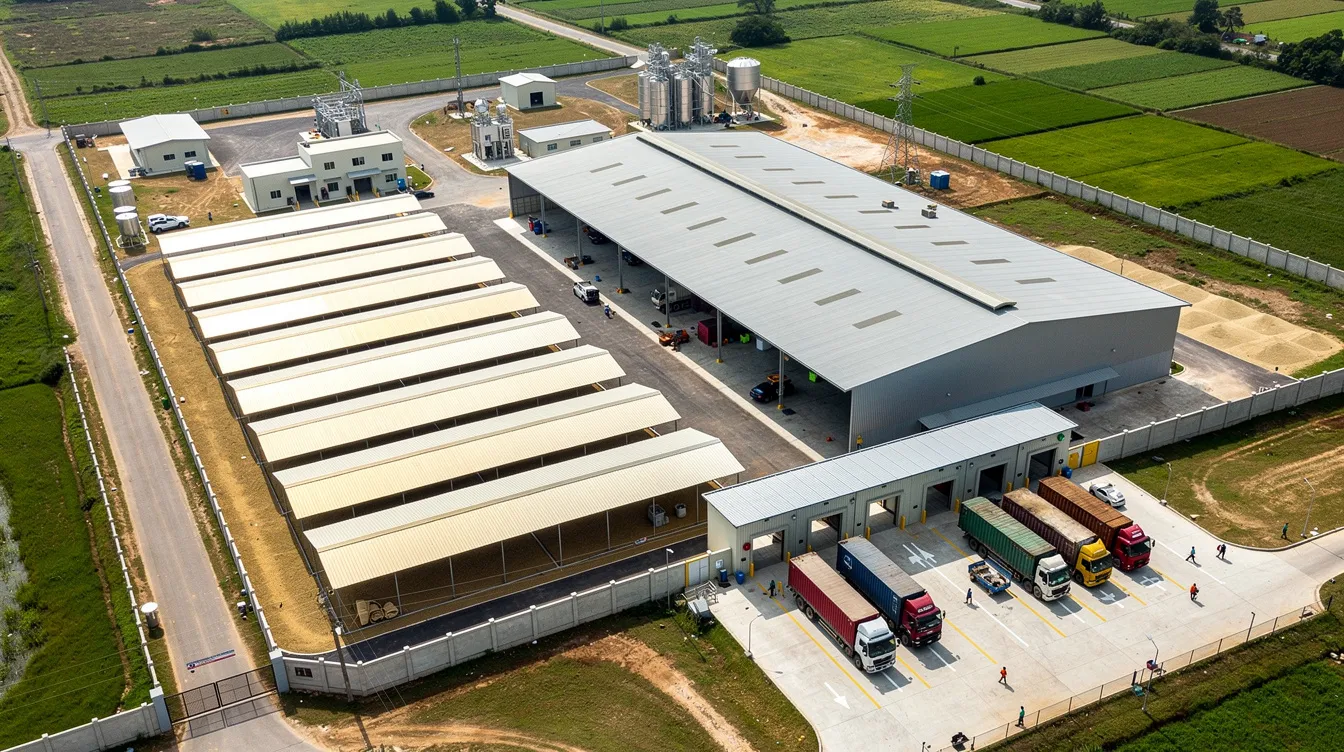
Banks usually ask for a basic plant layout drawing showing production area, paddy unloading and storage area, milling section, finished goods godown, by-product storage, administrative area and utility blocks. A 4 TPH project typically needs 1.5 to 2 acres of land to accommodate the milling shed, paddy storage godown, drying yard, weighbridge and truck movement.
Under-sized or ill-planned layouts (no space for paddy storage or expansion, congested vehicle movement) negatively impact technical viability. For planning land and civil design, see Rice Mill Land, Building & Plant Layout Requirements.
Raw Material Availability and Paddy Procurement
For any rice mill loan appraisal, sustained paddy availability within an economic procurement radius (often 50 to 100 km) is critical. Paddy is harvested in a compressed window of 3 to 4 months, and seasonal agricultural cycles impact working capital requirements. Seasonal cash flow adjustments are critical due to procurement peaks and inventory holding periods.
Banks analyse paddy procurement sources: local mandis, FCI or state agencies, direct purchase from farmers, and custom milling contracts. Paddy price volatility, variety mix and moisture content issues must be realistically reflected in rice mill financial projections. Government policies can affect pricing and subsidies for rice mills, impacting financial stability. The procurement strategy, whether bulk seasonal inventory or rolling procurement, feeds directly into working capital requirement.
For comprehensive planning, see Paddy Procurement & Raw Material Planning for Rice Mill.
Paddy Storage and Warehouse Requirement
Because the harvest season is concentrated, many rice mills must procure bulk paddy and hold inventory for several months. Adequate storage and warehousing prevent grain damage and allow for better market timing. Storage capacity planning interacts with both working capital and term loan: larger warehouses increase project cost but reduce seasonal procurement risk.
Banks assess storage loss assumptions, moisture loss and handling losses when reviewing yield and profitability estimates. For detailed storage design guidance, refer to Paddy Storage, Warehouse & Silo Requirements for Rice Mill.
Revenue Model Considered in Loan Assessment
Banks study the rice mill’s proposed revenue model covering sale of rice and by-products. Rice mills must consider how to monetize by-products like rice bran and husk. A typical paddy conversion yields approximately 68 percent rice, 22 percent husk and 7 percent bran.
Recovery percentages and selling prices should be commercially reasonable. Banks are cautious about overly optimistic selling prices; they may sensitise projections by assuming slightly lower recovery or prices. Product mix variations (non-basmati, basmati, fortified rice, parboiled rice) each have different pricing and demand characteristics.
For a deeper discussion of revenue streams, see Rice Mill Revenue Model & Product Mix.
Financial Projections Required for Term Loan Assessment
Banks expect structured financial projections including projected Profit and Loss Account, Balance Sheet, Cash Flow Statement and sometimes Fund Flow Statement. Financial projections for a rice mill typically span a 5-year horizon in a detailed project report, though many banks require projections covering the full repayment tenure.
Core components include: production and sales assumptions, paddy consumption, power and fuel, wages, repairs, administrative expenses, interest, depreciation, tax and resulting profit and cash accrual. Projections must be internally consistent; installed capacity, utilisation levels, paddy requirement, selling prices, recovery percentages, working capital levels and loan repayment should all mathematically reconcile.
For professional projection preparation, refer to Rice Mill Financial Projections for DPR.
DSCR and Loan Repayment Capacity
DSCR = Cash Available for Debt Service divided by Debt Service Obligation (principal + interest)
Cash available typically includes profit after tax plus depreciation plus non-cash charges. A DSCR of at least 1.5 is typically expected from rice mills.
Numerical example: If cash available for debt service in a particular year is Rs.2.4 crore and total term loan repayment (principal + interest) is Rs.1.6 crore, DSCR is 1.5. This means the business generates Rs.1.50 for every Rs.1.00 of debt obligation, leaving a cushion for adverse scenarios.
Banks focus on both average DSCR over the loan tenure and year-wise DSCR, paying close attention to the lower DSCR years during capacity ramp-up. Moratorium on principal can ease early-year DSCR, but interest during moratorium must still be considered. Even a project with sufficient assets may not support the proposed loan if cash generation is inadequate.
For deeper analysis, see DSCR & Loan Repayment Capacity for Rice Mill Project.
Rice Mill Profitability and Break-Even Assessment
Banks review gross profit margin, EBITDA, profit before tax and profit after tax to ensure the rice mill business model is economically sound. The break-even point for modern automated rice mills ideally should be between 40 to 55 percent capacity utilization. The capacity utilization percentage required to achieve break-even must be carefully assessed.
Break-even illustration: If fixed costs are Rs.3 crore and contribution margin is 15 percent of sales, break-even sales occur at approximately Rs.20 crore. Lower break-even capacity gives more comfort to banks, as the rice mill can service debt even at moderate utilisation.
For detailed computation methods, refer to Rice Mill Profitability & Break-Even Analysis.
Working Capital vs Term Loan for Rice Mill
Term loan finances long-term fixed assets (building, machinery, utilities). Working capital facilities (cash credit, OD, WCDL) finance short-term current assets: paddy inventory, finished goods, receivables and operating expenses. Cash credit limits for rice mills depend on turnover and stock value. Gold loans can provide short-term funding for small rice mills during peak paddy purchases season.
Rice mill working capital requirements are typically high during harvest season due to bulk paddy procurement. Underestimating working capital can create liquidity stress, leading to delayed term loan instalments even when the project is theoretically profitable. Lenders typically evaluate the security collateral requirements along with cash flow stability when appraising rice mill loans.
For a detailed working capital calculation approach, see Working Capital Requirement for Rice Mill.
Loan Repayment Period and Moratorium
Rice mill term loan repayment period is decided based on project cash flow, expected life of assets created and bank policy. The typical project timeline includes land acquisition, civil construction, machinery procurement, installation, trial production and commencement of commercial production. This implementation period determines the moratorium requirement.
Moratorium on principal is a period (often until or slightly after commercial operation date) where only interest is serviced. Too short a moratorium may stress cash flow if stabilisation takes longer. Repayment frequency (monthly, quarterly, half-yearly instalments) should be aligned with projected cash generation patterns and seasonal sales cycles. The actual requirement depends on the lender’s prevailing credit policy, borrower profile, project configuration and appraisal.
Term Loan Repayment Schedule
A professional rice mill DPR should contain a detailed year-wise term loan schedule showing opening balance, disbursement, principal repayment, interest, total debt service and closing balance. This schedule must reconcile with the projected Profit and Loss Account (interest expense) and Balance Sheet (loan outstanding) for every year.
The repayment schedule is used to compute year-wise DSCR and verify whether each year’s projected cash accrual is sufficient to service instalments. Any restructuring in tenure or moratorium during appraisal requires revising this schedule and re-testing DSCR.
How Banks Assess Rice Mill Project Viability
Term loan assessment is part of a broader rice mill viability study covering technical, commercial and financial dimensions. Evaluating a term loan for a rice mill requires assessing technical feasibility and financial viability. Even if collateral is strong, banks generally sanction term loans only when the project is sound on all three fronts.
Technical Viability
Banks assess suitability of technology (conventional vs modern automatic rice mill), correctness of machinery line, adequacy of utilities (power, water, steam) and the match between installed capacity and projected production plan. Technical and operational feasibility include factors such as milling capacity and technology. For larger projects, banks may seek a techno-economic viability report.
Commercial Viability
Banks assess paddy supply and availability, competition from existing rice mills engaged in similar processing, buyer base (wholesalers, traders, institutional buyers, government procurement agencies), product positioning and price competitiveness. A well-documented marketing and procurement strategy in the DPR helps justify capacity utilisation assumptions.
Financial Viability
Main financial factors: projected profitability, cash accrual, DSCR, break-even point, working capital cycle and overall debt servicing capacity. Lenders evaluate operational stability and financial performance. Weak financial viability typically leads to reduction in loan amount, tighter repayment terms or project rejection.
Bank Loan and Project Finance for Rice Mill
Term loan for rice mill is one component of an integrated financing plan that may also include working capital limits, non-fund based facilities (bank guarantees, LCs) and sometimes government subsidy or credit guarantee support. A complete rice mill project finance structure shows means of finance with promoter contribution, term loan, working capital limits and other long-term sources clearly identified.
Banks look at combined exposure (term loan + working capital) and evaluate whether projected cash flow can service interest on both, in addition to repaying term loan principal. For a broader guide to structuring overall bank finance, see Bank Loan & Project Finance for Rice Mill Plant.
New Rice Mill vs Expansion of Existing Rice Mill
Banks evaluate greenfield (new rice mill) projects differently from expansion or modernisation of existing units because of differences in track record, cash flow history and implementation risk.
For new rice mills, banks focus on promoter experience in rice trading or milling, project implementation risk, market development efforts and higher emphasis on equity and security. For expansion, the analysis centres on last 3 to 5 years financial statements, existing turnover, profitability, existing capacity utilisation and repayment track record of current loans. Banks assess incremental production, incremental contribution and incremental cash flow to judge whether additional term loan instalments can be serviced without stressing existing operations.
Common Reasons Banks May Reduce the Requested Term Loan
Practical reasons the sanctioned term loan often comes lower than requested:
- Overestimated project cost, inflated building or machinery cost
- Inclusion of non-eligible items and unrealistic contingencies
- Insufficient promoter contribution or weak promoter net worth
- Low DSCR, weak projected profitability or inadequate cash flow
- Excessive overall borrowing including other businesses
- Unrealistic capacity utilisation or over-optimistic selling prices
- Doubtful raw material availability or paddy supply concerns
- Unsatisfactory credit history or credit rating below eligibility criteria (rice mills must have a credit rating of SB-9 or above in many bank frameworks)
- Unresolved land title issues or missing statutory approvals
- Inadequate working capital assessment
Upfront realistic costing, conservative projections and clear documentation reduce the chance of downward revision.
Sensitivity Analysis Before Taking a Rice Mill Term Loan
Sensitivity analysis examines how profitability and DSCR change when key assumptions move adversely. Typical stress scenarios include lower capacity utilisation, higher paddy purchase price, lower rice selling price, higher power tariffs and delayed commissioning.
Example: If rice selling prices drop 5 percent and paddy prices rise 5 percent from the base case, DSCR may fall from 1.50 to below 1.25, signalling repayment stress. Promoters should perform such scenario testing while working with their CA or DPR consultant to avoid over-borrowing. A well-documented sensitivity analysis in the DPR demonstrates risk awareness and supports positive appraisal discussions.
Documents Required for Rice Mill Term Loan Assessment
KYC and Constitution:
- PAN, Aadhaar, address proof, photographs
- Partnership Deed, MOA/AOA, LLP Agreement, Udyam Registration
Financial Documents:
- Last 3 years audited financial statements and income tax returns
- Bank statements (6 to 12 months), net worth statements
- Details of existing loans and secured facilities
Project Documents:
- Land documents (sale deeds, lease deeds, mutation, NA conversion)
- Building plan and civil estimate, machinery quotations
- Project implementation schedule, supplier agreements if any
DPR and Projections:
- Detailed Project Report with financial projections and business plan
- CMA data, working capital assessment, DSCR workings
- Term loan repayment schedule, evidence of promoter contribution
Compliance with local regulations includes obtaining necessary environmental and operational permits. Pollution control clearances are mandatory for rice mills. Collateral is required for loans over Rs.10 lakhs, while loans under Rs.10 lakhs may not require collateral security. Exact documentation requirements vary between banks.
Role of DPR in Rice Mill Term Loan Appraisal
A Detailed Project Report for rice mill term loan is a structured financial, technical and commercial blueprint that the bank uses as the base for its appraisal. A bankable rice mill DPR covers: project concept, industry overview, installed capacity, technology and machinery details, manufacturing process, land and building plan, raw material and market analysis, project cost and means of finance.
It includes detailed financial projections, DSCR analysis, break-even analysis, working capital assessment, loan repayment schedule and sensitivity analysis. A DPR, however well prepared, does not guarantee loan sanction; it supports the banker’s decision-making by providing complete information for credit appraisal. Professional preparation by an experienced Chartered Accountant or project finance consultant reduces errors and improves appraisal quality.
Practical Example of Rice Mill Term Loan Assessment
The following is an illustrative case for a medium-sized rice mill project. All figures are for educational understanding only.
| Particulars | Illustrative Amount |
|---|---|
| Land Development | Rs.40 lakh |
| Building & Civil Works | Rs.1.20 crore |
| Plant & Machinery | Rs.2.80 crore |
| Electrical & Utilities | Rs.35 lakh |
| Pre-operative Expenses | Rs.15 lakh |
| Contingency | Rs.20 lakh |
| Margin for Working Capital | Rs.40 lakh |
| Total Project Cost | Rs.5.50 crore |
| Promoter Contribution | Rs.1.65 crore (30%) |
| Proposed Term Loan | Rs.3.85 crore |
- Debt-equity ratio: approximately 2.3:1
- Assumed repayment tenure: 7 years (excluding 12-month moratorium)
- Annual principal instalment: approximately Rs.55 lakh
- If annual interest is approximately Rs.35 lakh, total debt service is Rs.90 lakh per year
- Required annual cash accrual for DSCR of 1.5: at least Rs.1.35 crore
If projected PAT plus depreciation in Year 2 is Rs.1.45 crore, DSCR is approximately 1.61, which appears comfortable. If the bank finds DSCR in Year 1 is below 1.25 due to low initial capacity utilisation, it may ask for higher equity or extended moratorium.
This example is for educational understanding only and should not be treated as a bank sanction norm, lending commitment or guaranteed financing structure.
Integrated Rice Mill Project Cost Perspective
Integrated rice mill projects (with parboiling, dryers, silos, bran oil plant, captive power) involve higher and more complex project costs compared to simple sheller-cum-polisher units. Capacity, automation level, technology choice, type of dryer and inclusion of parboiling and storage infrastructure all materially change the term loan requirement.
Location factors (land availability, local construction costs, power quality, water source and logistics connectivity) influence setup cost. For readers planning larger integrated facilities, refer to Integrated Rice Mill Plant Setup Cost in India. Lenders may place extra emphasis on phased implementation and robust DSCR under multiple scenarios before finalising term loan sanctions for such projects.
Frequently Asked Questions
How much term loan can I get for a rice mill?
There is no fixed percentage applicable to all cases. Banks consider eligible project cost, acceptable promoter contribution, DSCR, security and overall risk. For the same project cost, two borrowers may receive different sanctions depending on equity strength, credit history, collateral and quality of DPR. The actual requirement depends on the lender’s prevailing credit policy, borrower profile, project configuration and appraisal.
What DSCR is considered comfortable for rice mill term loans?
Many banks look for a DSCR above 1.5 on average and for individual years, though these thresholds vary. Promoters should aim for conservative projections where DSCR leaves adequate cushion under mildly adverse conditions, rather than just meeting a theoretical minimum. Primary security includes hypothecation of stock and collateral of assets created through the loan.
Can rice mill machinery be financed through a term loan?
Rice mill machinery, including colour sorters, dryers, boilers and modern automated milling equipment, is routinely financed through term loans. Banks review machinery quotations, supplier credibility, installed capacity and cost reasonableness before including machinery in the eligible project cost.
Is collateral compulsory for a rice mill term loan?
Smaller MSME loans may be eligible for schemes under the Credit Guarantee Fund Trust (CGTMSE) depending on bank and scheme guidelines, which can reduce or eliminate external collateral requirements for loans within specified credit limits. For larger rice mill projects, banks often prefer tangible collateral such as land and building as insured and secured assets, in addition to primary security on the plant and machinery.
Who should prepare financial projections and DPR for a rice mill project?
Projections and DPR should be prepared in collaboration between the promoter and an experienced Chartered Accountant or project finance consultant familiar with rice milling, banking practices and CMA data formats. Projections should reflect ground realities of paddy availability, local electricity tariffs, labour costs, applicable services and market prices. Access to a website like ProjectReportBank.com provides professional resources, but a DPR should never be based on generic templates alone.
Professional Assistance for Rice Mill DPR and Term Loan Assessment
I am CA Manish Gugliya, Chartered Accountant and project finance consultant. Through ProjectReportBank.com, I assist rice mill promoters with Detailed Project Reports, bank finance DPRs, project cost assessment, means of finance structuring, financial projections, term loan assessment, DSCR and repayment schedule modelling, profitability analysis, break-even analysis, working capital assessment and CMA data preparation.
My approach focuses on realistic assumptions aligned with current industry conditions and lender expectations, so that the rice mill project report supports clear and efficient bank appraisal. While professional DPR and projections improve clarity, they do not guarantee bank sanction; final approval always depends on the lender’s independent credit decision. The form and value of each projection should reflect the subject project’s actual operating conditions and market store of information.
If you are planning a new rice mill, expansion or modernisation project and require a detailed DPR, financial projections or term loan assessment for bank finance, you may contact CA Manish Gugliya through ProjectReportBank.com for professional project finance and DPR consultancy.