Key Takeaways
- A rice mill feasibility study in India must integrate technical design, paddy procurement, marketability of rice and by-products, operational costs, and realistic financial projections before any capital commitment or bank loan proposal.
- Rice mill project viability is judged not only on projected profit but also on cash flow strength, DSCR, working capital cycle, and bankability for term loan and working capital limits.
- Feasibility must cover technical, market, operational, and financial dimensions along with risk and sensitivity analysis specific to the proposed location, capacity, and product mix.
- In my experience as CA Manish Gugliya, many rice mill projects face stress because of unrealistic capacity utilization, paddy price assumptions, and underestimated working capital rather than because of lack of demand.
- Each rice mill plant feasibility study should end with a reasoned conclusion on investment viability, repayment capacity, and whether to proceed, modify, or defer the project, rather than forcing a positive picture.
Introduction: Why Feasibility Comes Before Investment
Many entrepreneurs in India begin their rice mill project by collecting machinery quotations, negotiating land deals, or speaking with contractors. The feasibility study comes as an afterthought, often prepared only because the bank asks for a project report. This sequence is backwards. A rice mill feasibility study should be the first step before placing any order or acquiring land.
A professional rice mill project feasibility report brings together concrete elements: total project cost (land, building, machinery, pre-operative expenses), proposed plant capacity (for example, 4 TPH or 8 TPH), expected rice recovery, product mix, selling prices, operational costs, and working capital needs. Starting a rice mill requires an investment of ₹7.5 lakhs to ₹5 crore depending on scale; the difference between a profitable venture and a stressed one lies in how well these variables interact.
Rice mill project viability depends on that interaction. Even if the projected P&L looks profitable, weak cash flow, tight DSCR, high leverage, or insufficient working capital can make the project un-bankable. This article uses the terms rice mill feasibility study, rice mill project viability analysis, rice mill DPR, and rice mill bankability assessment throughout. It is written from the perspective of CA Manish Gugliya, a practising Chartered Accountant who prepares DPRs, financial projections, and feasibility assessments for rice mills and other MSME projects across India.
What is a Rice Mill Feasibility Study?
A rice mill feasibility study is a structured evaluation of whether a proposed rice milling unit (new, expansion, or modernization) is technically sound, commercially sensible, and financially viable at a particular location with a defined processing capacity and product mix. A feasibility study for a rice mill business evaluates technical viability, financial return, and market risks before capital is deployed.
The dimensions of feasibility include:
- Technical feasibility: machinery selection, plant layout, utilities, production process design
- Market feasibility: demand, competition, pricing, customer segments
- Operational feasibility: availability of skilled labour, power, logistics, after sales support from equipment suppliers
- Financial feasibility: profitability, cash flow, DSCR, break even point
- Commercial feasibility: product mix, customer contracts, distribution strategy
- Economic feasibility: wider cost-benefit analysis where required by government schemes
A rice mill financial feasibility study in India checks whether the project can sustain its operating cycle, service debt on time, and withstand realistic fluctuations in paddy price and rice realization. Rice is a staple food for over 3 billion people globally, and global demand continues to grow; but demand alone does not make a project viable. For bank loan proposals, the feasibility study must be robust enough to support rice mill project appraisal for bank loan and align with lender expectations.
Difference Between Rice Mill DPR and Feasibility Study
A rice mill DPR (Detailed Project Report) is the comprehensive document submitted to banks and investors. The feasibility study is the analytical exercise that tests whether all the numbers and assumptions in that DPR hold together under scrutiny.
A standard rice mill project report or DPR typically includes promoter background, project rationale, proposed capacity, technical details and process flow, machinery list and quotations, land and building plan, detailed project cost, means of finance, implementation schedule, and statutory approvals required. A bank-oriented DPR will also include financial projections (P&L, balance sheet, cash flow), working capital assessment, DSCR analysis, break even analysis, and profitability analysis.
The rice mill business feasibility analysis critically checks whether DPR assumptions are aligned with ground realities. For instance: Is the projected rice husking and recovery ratio achievable with the chosen machinery? Are the assumed selling prices consistent with local market prices? Do the labour costs reflect the target area’s wage levels? In practice, the same professional (such as CA Manish Gugliya) often both prepares the DPR and performs the feasibility review, but the mindset must remain analytical and questioning rather than document-filling for formality.
Technical Feasibility of a Rice Mill Project
Technical feasibility focuses on whether the proposed technology, machinery, and plant configuration can deliver the planned production capacity and product quality consistently. A rice mill typically processes raw paddy into polished rice through a series of operational stages. Rice milling involves various operational stages including paddy cleaning, dehusking, and sorting.
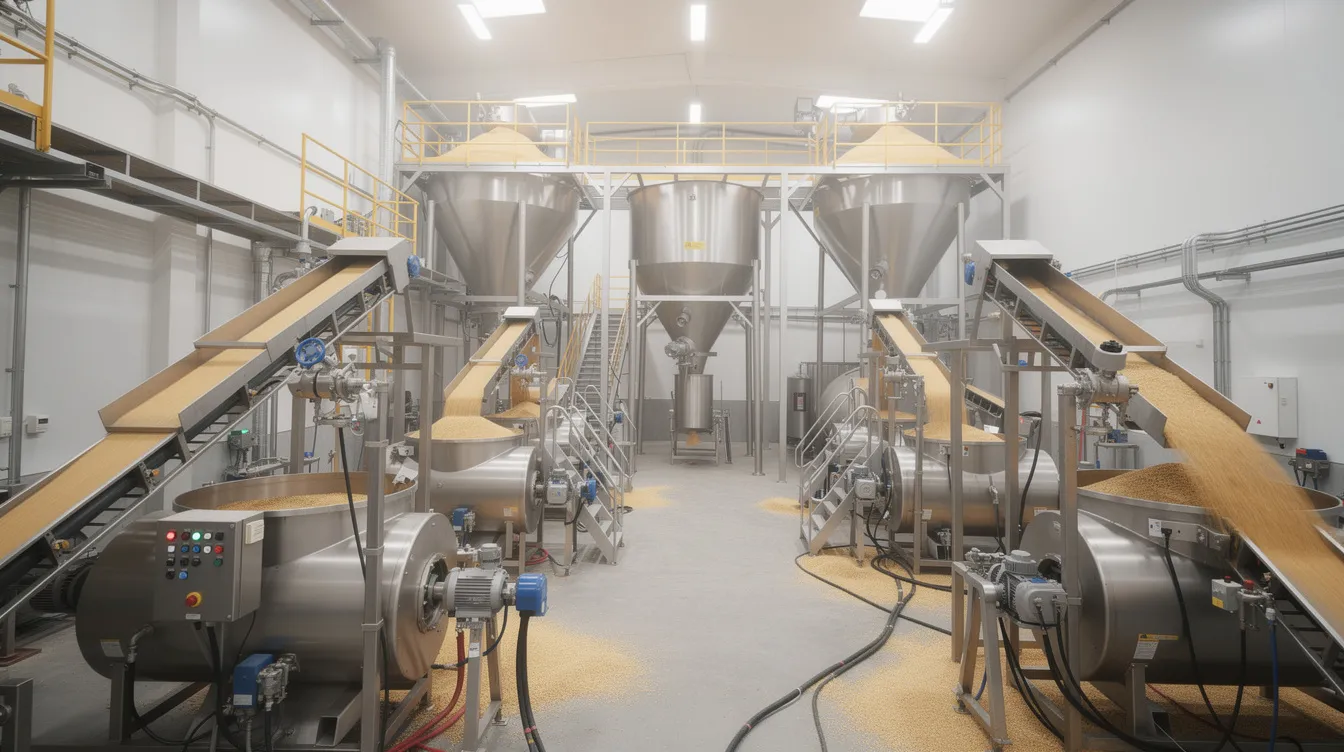
The rice milling production process runs in sequence: paddy intake and weighing, cleaning, destoning, dehusking (rice husking), paddy separation, whitening, polishing, grading, length grading, colour sorting, blending, and packing. The entire process must be designed so that machinery capacity matches planned throughput and paddy availability. A 4 TPH plant, for example, requires annual paddy supply of roughly 15,000 to 20,000 MT; if local production cannot support this volume, the plant will operate underutilized.
Modern milling technology can reduce operational costs and improve quality. Premium imported shellers from manufacturers like Satake or Bühler can deliver 5-8% higher head-rice yield compared to basic rubber-roll shellers, but cost 30-40% more. This trade-off must be evaluated based on the target market: premium or export segments may justify the higher capex, while commodity rice may not. Select suitable machinery based on production capacity and budget, and evaluate suppliers on performance, spares availability, and machinery and equipment cost over the lifecycle.
Technical feasibility must also address utilities: power (a transformer, DG set for backup), boiler and steam for parboiling if applicable, water, compressed air, and storage silos or godowns for paddy and husk. Proper by-product handling for bran and husk needs planning upfront.
Land, Building and Plant Layout Feasibility
Incorrect land sizing or poor layout can permanently increase operational costs and constrain future expansion. This makes layout planning a core part of rice mill project cost and viability analysis.
Major functional zones to plan include: raw paddy storage, pre-cleaning area, milling building, finished goods warehouse, by-product storage (bran and husk), utilities block, administrative office, quality control laboratory, parking, weighbridge, and internal roads. For a 2 TPH mini mill, about 0.5 to 1 acre is typical; a 4 TPH commercial unit needs roughly 1.5 to 2 acres; larger integrated mills may require 4 to 10 acres depending on storage and expansion provisions.
Plant layout must ensure a logical process flow from paddy unloading to finished rice dispatch, minimizing material handling, backtracking, and congestion. PEB (Pre-Engineered Building) sheds are popular for rice mills, offering 18-25% cost savings over RCC structures. Building cost per square foot in 2026 ranges from ₹1,400 to ₹2,600 depending on specifications. Fire safety clearances, drainage, and compliance with local building by-laws matter. For detailed layout guidance, refer to the resource on rice mill land, building, and plant layout requirements.
Raw Material Availability and Paddy Procurement Feasibility
In my experience, paddy availability and procurement terms are among the most decisive factors in rice mill market feasibility and investment viability. Many proposals I review devote pages to machinery specifications but only a paragraph to raw material sourcing.
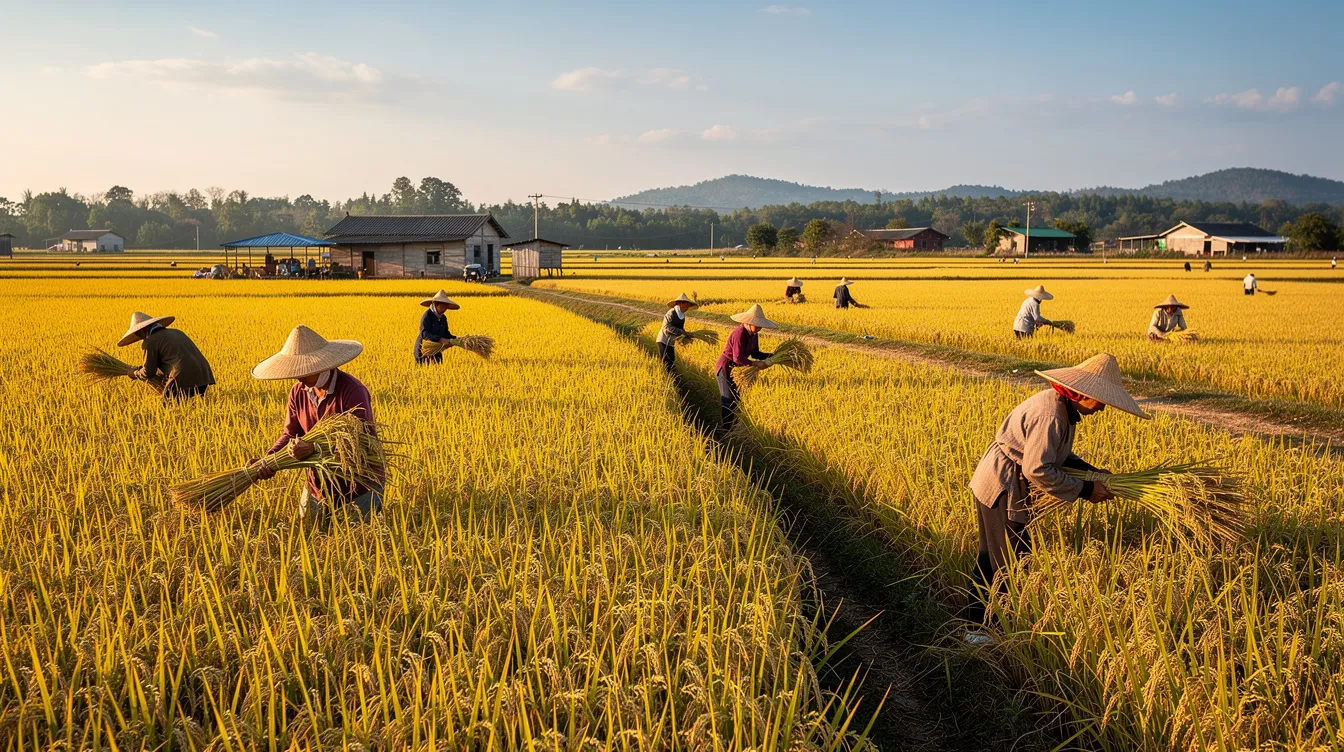
The feasibility study must survey paddy production in a defined procurement radius (30 to 80 km, depending on the region), using recent production data, mandi arrivals, and the number of existing rice mills competing for the same paddy. Raw material sourcing involves evaluating the availability and seasonal supply of paddy. Choose a location with access to paddy and transportation networks to keep procurement costs manageable.
Key procurement factors include:
- Seasonality: Kharif season delivers the bulk of supply; freshly harvested paddy can carry moisture above 20%, requiring drying to safe levels (around 14%)
- Procurement channels: direct from farmers, through commission agents, mandis, or Farmer Producer Organizations (FPOs)
- Price risk: the single largest component of operational costs; feasibility should model three procurement price scenarios (MSP-based, typical market price, and stressed high-price)
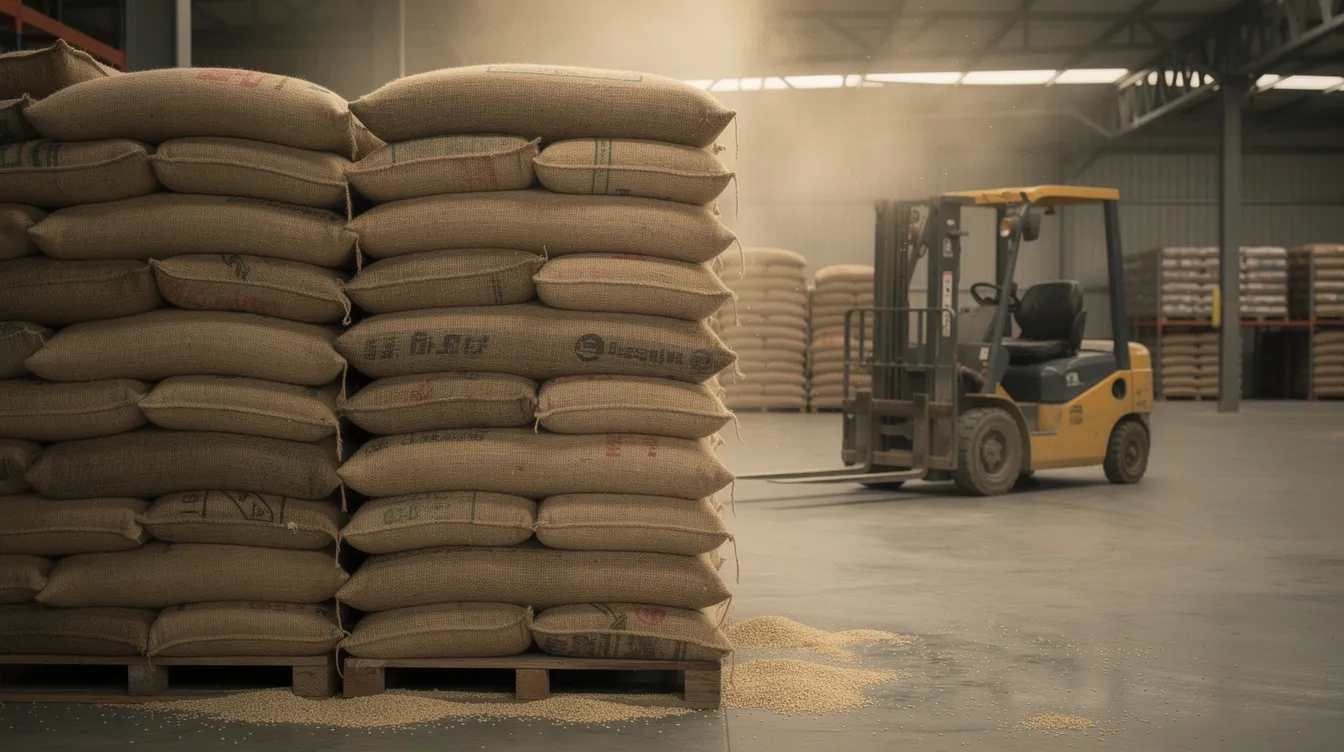
- Storage: large paddy stocks need proper warehousing to avoid fungal damage and weight loss
For detailed procurement strategy, see the guide on paddy procurement and raw material planning for rice mill. Inventory planning ties directly to paddy storage, warehouse, and silo requirements.
Market Feasibility, Product Mix and Revenue Model
Rice mill commercial feasibility depends on how well the promoter understands local, regional, and (if applicable) export markets. The rice market in India is projected to reach ₹13 trillion by 2025, which signals scale; but market competition influences the selling price of milled rice, and a new entrant’s competitive advantage must be clearly identified.
Conduct thorough market research to understand local rice demand. Market analysis should include target market identification and competitive landscape assessment. Understanding demand involves analysing consumption patterns and consumer segments: institutional buyers (government, caterers, food processors), wholesale and retail distribution, and branded vs. bulk opportunities. The impact of packaging, quality control, and certification on achievable selling prices should not be overlooked.
Revenue streams from a rice mill include head rice (various rice varieties and grades), broken rice, rice bran, and husk. By-products from rice milling can create additional revenue streams such as rice bran and husk, and these can contribute meaningfully to overall profitability. A typical recovery from paddy yields approximately 60-68% head rice, 5-15% broken rice, 5-10% bran, and 20-22% husk depending on paddy quality and technology. The feasibility study should clearly state assumed recovery percentages and product mix and translate them into projected sales volumes and realizations. For a deeper framework, see the article on rice mill revenue model and product mix.
Rice Mill Project Cost, Capital Investment and Means of Finance
Rice mill project cost and viability are tightly linked. Underestimation of capital cost is one of the most common issues I observe while reviewing project reports for bank finance. Starting a rice mill requires ₹7.5 lakhs to ₹5 crore investment. Mini rice mills cost around ₹2-3 lakhs for 1 ton per hour capacity for the machinery alone, while larger rice mills processing 100 tons per day can cost several crores. Rice mill installation costs vary based on machinery specifications and construction scope.
Standard components of total project cost include:
- Land (purchase or lease) and site development
- Civil construction for plant and godowns
- Plant and machinery (the largest single line item in most projects)
- Electrical works, utilities (boiler, generator, transformer, water system)
- Vehicles and material handling equipment
- Preliminary and pre-operative expenses, including interest during construction
- Contingency provision
- Margin for working capital
For a 4 TPH project, hidden and ancillary costs (storage silos, mechanical dryers, weighbridge, QC lab, power transformer, licensing, insurance) can add ₹40-90 lakhs over headline machinery costs. The means of finance structure typically comprises promoter contribution (equity and unsecured loans), term loan, and working capital limits. The debt-equity ratio influences term loan viability and lender comfort; bank schemes for rice mill clusters allow DER up to 3:1 for loans above ₹1 crore. For a detailed breakdown, see the resources on integrated rice mill plant setup cost in India and rice mill project cost and means of finance.
Operating Costs, Working Capital and Cash Cycle
Accurate estimation of operational costs and working capital requirements is central to any rice mill financial feasibility study, because these determine the cash flow profile and day-to-day liquidity. Operational costs include labour, utilities, and maintenance expenses, and they impact rice mill profitability directly.
Major operating cost heads include paddy/raw material cost (usually 70-80% of total cost), electricity and fuel (including for parboiling and drying), direct and indirect labor costs, repairs and maintenance, consumables and spares, bags and packaging, inward and outward transportation, insurance, administrative overheads, selling and distribution expenses, and statutory compliance costs.
Working capital feasibility must consider peak-season paddy stocking (often 3-6 months of procurement in one season), typical credit period given to customers, average collection period, and credit available from suppliers. Inadequate working capital can force a mill to operate below capacity even when the rice mill project viability analysis shows attractive margins at full utilization. The working capital requirement for a rice mill forms a critical part of any bankability assessment.
Rice Mill Financial Projections and Key Viability Indicators
Well-structured financial projections are the backbone of any rice mill feasibility report. They form the basis for cash flow projections, DSCR analysis, and overall viability assessment. Financial projections should include capital expenditures, operational costs, profitability analysis, and risk assessment.
Projections normally cover 7-10 years and include projected P&L, balance sheet, cash flow statement, and supporting schedules for capacity utilization, sales, raw material consumption, power, labour, and loan repayment. Projections must be internally consistent: capacity utilization should correspond to realistic ramp-up, raw material quantities should match production norms, and selling prices should align with current market data plus reasonable escalation.
Rice mill profit margins in India range from 5-10%, which means small errors in assumptions can flip a project from viable to stressed. Break-even analysis helps assess the risk of rice mill projects by identifying the minimum capacity utilization needed to cover all fixed and variable costs. For professional support in preparing these, see the guide on rice mill financial projections for DPR and rice mill profitability and break-even analysis.
| Indicator | What It Measures | Why It Matters |
|---|---|---|
| Capacity Utilization | Actual vs. installed production | Directly drives revenue and cost absorption |
| Gross Profit Margin | Revenue minus raw material cost | Indicates pricing power and procurement efficiency |
| EBITDA Margin | Operating surplus before interest, tax, depreciation | Core measure of operational efficiency |
| Break-Even Utilization | Capacity at which revenue equals total cost | Shows minimum viable throughput |
| DSCR (Average) | Cash available vs. debt service obligations | Primary bankability metric |
| Debt-Equity Ratio | Total debt vs. promoter equity | Measures financial leverage and risk |
| Interest Coverage Ratio | EBIT vs. interest expense | Ability to service interest obligations |
| IRR | Internal rate of return on equity/project | Investor’s return metric |
| Payback Period | Time to recover initial investment | Risk horizon indicator |
DSCR, Loan Repayment Capacity and Bankability Assessment
Debt Service Coverage Ratio (DSCR) measures cash available for servicing term loan obligations (profit after tax plus depreciation plus interest on term loan, or equivalent cash accrual) divided by total debt service (interest plus principal repayment) for each year. Annual DSCR and average DSCR over the loan tenure are central to rice mill bankability assessment.
When preparing a rice mill loan feasibility analysis, it is essential to align the moratorium period, loan tenure, and repayment instalments with realistic capacity ramp-up. Bank norms from schemes like Cent Food Processing require average DSCR of at least 1.25, ICR of 1.50, and current ratio of 1.10. Term loan tenure can extend to 10 years including moratorium of up to 18 months for greenfield units.
A project can be profitable in accounting terms but still not bankable if DSCR is weak, cash flows are volatile, or the working capital cycle is stretched. Banks also consider promoter background, credit history, collateral, and sector outlook alongside DSCR. One West Bengal case study showed first-year DSCR of 1.70, dropping to 1.22 in year two, with average DSCR of 1.52 over the loan life. For detailed guidance, see the resources on DSCR and loan repayment capacity for rice mill projects and term loan assessment for rice milling projects.
Capacity Utilization, Recovery Ratios and Sensitivity Analysis
Assumptions about capacity utilization and rice recovery ratios have a direct, often non-linear impact on rice mill project viability and debt repayment capacity. Many DPRs assume 80-90% utilization from year one; realistic figures are closer to 40-60% in the first year, ramping to 70-80% by year three.
Rice recovery components include head rice percentage (typically 60-68% for non-premium paddy with good machinery), broken rice, rice bran, husk, and process losses. Actual figures vary with paddy variety, moisture, technology, and operational control. Even a 2-3% drop in head rice recovery can reduce revenue enough to push DSCR below acceptable levels.
The following illustrative sensitivity table shows how changes in key assumptions affect project outcomes (all figures are illustrative only):
| Scenario | Change from Base Case | Likely Impact on DSCR | Impact on Payback |
|---|---|---|---|
| Base Case | None | Satisfactory (above 1.30) | Within projected range |
| Higher Paddy Cost (+10%) | Raw material cost rises | Falls by 0.15-0.25 | Extends by 6-12 months |
| Lower Rice Selling Price (-8%) | Revenue drops | Falls by 0.20-0.30 | Extends materially |
| Lower Capacity Utilization (55% vs. 70%) | Revenue and absorption both drop | May fall below 1.10 | Extends by 1-2 years |
| Combined Stress | Paddy +8%, price -5%, utilization 60% | May fall below 1.00 | Project viability at risk |
Rice mill sensitivity analysis and risk analysis are indispensable parts of a serious feasibility study, helping promoters and lenders understand how robust or fragile the project is under adverse conditions.
Illustrative Example of a Rice Mill Feasibility Analysis
All numbers below are hypothetical. They do not represent quotations, industry benchmarks, guaranteed returns, or financial advice for any specific project.
Consider a 4 TPH raw rice mill in a paddy-surplus district in India. The plant operates 270 days per year. Capacity utilization is assumed at 50% in year one, 65% in year two, and 75% from year three onward. Annual paddy procurement at 75% utilization is approximately 16,000 MT.
Project cost is assumed at ₹1.80 crore (land, building, machinery, utilities, pre-operative expenses, contingency, and margin for working capital). The means of finance: 25% promoter contribution (₹45 lakhs) and 75% term loan (₹1.35 crore) at a notional interest rate of 10% per annum, repayable over 7 years with a 12-month moratorium.
Revenue is derived from quantity multiplied by price for each product: head rice (the primary revenue driver), broken rice, bran, and husk. After deducting paddy cost, power, fuel, labour, packaging, transport, repairs, administration, and interest, the EBITDA and cash accrual are calculated. DSCR is then derived by dividing cash accrual (adjusted for interest) by annual debt service.
If head rice selling price drops by 8% or paddy cost rises by 10%, the DSCR falls noticeably, and the payback period extends. This illustrates why a rigorous rice mill feasibility study must test multiple scenarios before concluding on investment viability.
Common Risks, Mistakes and How to Judge Overall Project Viability
Risk identification and mitigation are central to rice mill investment viability. Key project risks include:
- Raw material risk: paddy availability and price volatility across seasons
- Market price risk: fluctuations in rice and by-product prices driven by market demand shifts and competition for market share
- Capacity utilization risk: not achieving projected throughput due to procurement gaps or demand constraints
- Working capital risk: insufficient limits during peak procurement, delayed renewals
- Technology and quality risk: inefficient machinery selection, inferior paddy quality affecting product quality and recovery
- Interest rate risk: higher finance cost eroding margins
- Regulatory risk: obtaining necessary licenses, food safety certifications, and environmental clearances is mandatory. Register with MSME for government benefits. Obtain a factory license from the Department of Labour. Secure a No Objection Certificate from the State Pollution Control Board. Register for the Prevention of Food Adulteration Act if applicable. Acquire a license from the Food Safety and Standards Authority of India. Register for Goods and Services Tax if turnover exceeds the exemption limit.
- Management risk: insufficient operational experience and weak financial management
Common mistakes in feasibility reports include assuming full capacity utilization from year one, using overly optimistic paddy prices, ignoring by-product revenue, underestimating working capital, ignoring interest during construction, and preparing projections that are not internally consistent. Many reports are copy-pasted templates with no connection to the proposed project’s specific conditions.
A rice mill project can be considered financially viable when it demonstrates: verified paddy availability, realistic recovery ratios, balanced product mix with market access at a competitive price, adequate margins above break even, manageable debt-equity ratio, satisfactory DSCR under base case, acceptable performance under sensitivity analysis, and sufficient working capital arrangements. In my professional approach, the conclusion of a feasibility study may be to proceed as planned, proceed with modifications, or defer the project if risks outweigh returns. That conclusion is always case-specific.
Role of a Chartered Accountant in Rice Mill Financial Feasibility
As CA Manish Gugliya, I assist promoters and existing rice mill owners by structuring rice mill DPRs, financial projections, CMA data, and project viability reports that are technically coherent and suitable for evaluation by banks and financial institutions.
The professional support I provide includes reviewing project cost estimates, advising on means of finance structure, preparing projected financial statements and cash flow projections, carrying out DSCR and break-even analysis, and assisting with working capital assessment. My role also includes analysing assumptions behind capacity utilization, paddy procurement, production process efficiency, and selling prices, then performing scenario and sensitivity analysis.
I prepare, assist in preparing, review, and analyse the rice mill project feasibility report and associated financials. I do not certify future results or guarantee loan sanction; final decisions always rest with the concerned bank or investor under applicable policies. Entrepreneurs can access further guidance and professional services through www.projectreportbank.com, where rice mill-specific resources and DPR support services are available.
Frequently Asked Questions (FAQ)
How do I check the feasibility of a rice mill project in my district?
Start by verifying paddy production data for your target area using district agriculture office records and mandi arrival statistics. Assess local rice demand, count existing mills competing for the same paddy, and estimate transportation costs. Prepare a rough project cost based on machinery quotations and construction estimates. With these inputs, basic financial projections can indicate whether the project merits a detailed rice mill business plan and DPR. Professional assistance can then refine assumptions and stress-test viability.
Is a feasibility study mandatory for obtaining a rice mill bank loan?
While no single law mandates a feasibility study, banks in practice expect a structured rice mill project report or DPR with feasibility analysis before considering term loan and working capital limits. Lenders need to see realistic financial projections, DSCR calculations, break-even analysis, and risk assessment. A project submitted without these elements faces delays or rejection at the credit appraisal stage.
How long does it take to prepare a detailed rice mill feasibility report and DPR?
A realistic timeline is three to six weeks, depending on availability of project data, machinery quotations, land documents, and clarity of the promoter’s plan. If the promoter has already finalized capacity, machinery suppliers, and location, the process moves faster. Projects requiring parboiling, export orientation, or multiple product lines need additional analysis time.
Should an existing rice mill planning expansion conduct a fresh feasibility study?
Existing rice mills have a distinct advantage: historical operational data on paddy procurement, recovery ratios, product-wise realization, power consumption, labour productivity, and customer credit behaviour. A fresh feasibility study for expansion uses this data to reassess capacity, margins, and debt servicing history, producing projections grounded in actual performance rather than assumptions. The study should also evaluate whether modernization or technology upgrade (such as adding colour sorters or automated packaging) would improve efficiency and profitability more than simple capacity addition.
Can a rice mill project be profitable but still not bankable?
Yes. A project may show accounting profit on projected P&L statements but remain un-bankable if the DSCR is below lender thresholds, the working capital cycle is stretched, promoter contribution is inadequate, or cash flows are too sensitive to paddy price or rice realization changes. Bankability assessment goes beyond profitability to examine repayment capacity, collateral, promoter creditworthiness, and the resilience of projections under stressed conditions. This is why constant vigilance over projection quality and assumption realism matters more than optimistic headline numbers.