

Key Takeaways
Commercial milk powder manufacturing converts surplus liquid milk into a long shelf life, easily transportable dry powder through a controlled sequence of evaporation and spray drying. The typical process of milk powder production involves thermal and mechanical steps, and the core industrial route follows: raw milk reception → quality control → standardization → pasteurization → evaporation → spray drying → fluid bed drying and cooling → packaging. Each stage plays a direct role in determining the final powder quality, energy consumption, and manufacturing cost.
Process design choices such as evaporator configuration, spray dryer type, utilities, and automation directly affect energy consumption, powder quality, milk powder plant setup cost in India, and the bankability of the project. Different product lines-SMP, WMP, dairy whitener, and infant formula-use the same basic steps but with different fat standardization, heat treatment, and drying parameters.
This article is written by CA Manish Gugliya (FCA, DISA), a practising Chartered Accountant and project finance consultant associated with ProjectReportBank.com. The focus here is on the milk powder manufacturing process and spray drying technology from a DPR, project planning, and financing viewpoint-not as detailed process engineering design. All technical ranges given are indicative; actual values depend on milk composition, product specifications, plant capacity, equipment selected, and detailed engineering.
Introduction: Why Convert Liquid Milk into Milk Powder?
Indian dairies and entrepreneurs use milk powder manufacturing to handle seasonal milk surpluses, stabilize their dairy operations, and supply institutional buyers across confectionery, bakery, recombination plants, and infant formula units. Liquid milk contains around 87% water. Converting it into dried milk powder dramatically reduces volume and weight, giving long shelf life and making storage and long-distance transport practical.
Industrial milk powder production is not just “drying milk.” It is a controlled sequence where each stage-especially evaporation and spray drying-affects energy cost, yield, powder quality, and ultimately project profitability. This article covers the mainstream route used worldwide in the dairy industry: vacuum evaporation followed by spray drying with hot air. Niche technologies like freeze drying or roller drying exist but serve different, limited applications.
All technical ranges and parameters in this article are indicative. Actual values depend on milk composition, product specifications, plant capacity, milk powder processing equipment selected, and detailed engineering done by the technology supplier.
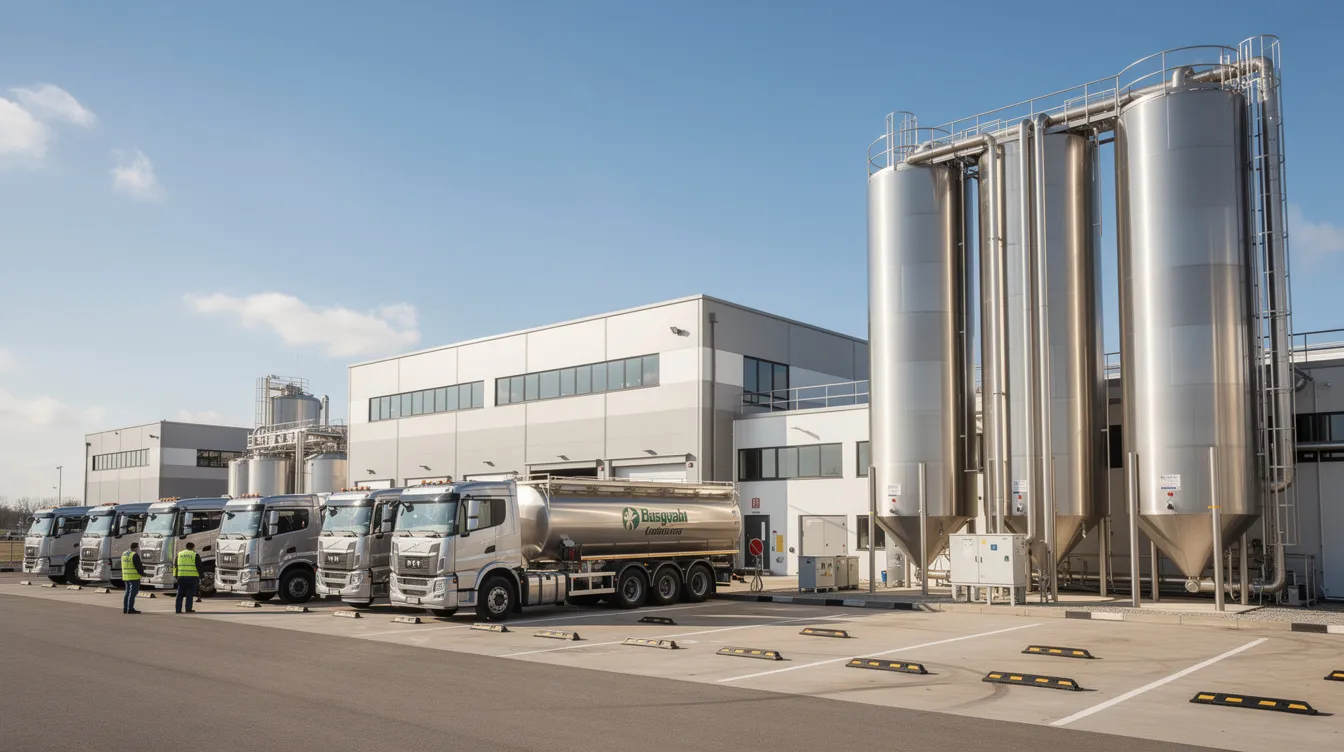
What Is Milk Powder Manufacturing?
The milk powder manufacturing process involves the controlled removal of water from fresh cow or buffalo milk to produce a microbiologically safe, free-flowing powder that can be reconstituted into liquid milk or used as a dairy ingredient in food products. Liquid milk with roughly 9–12% solids-not-fat (SNF) and 3–6% fat content is converted into dry powder with approximately 95–97% total solids using evaporation followed by spray drying.
Three key product categories dominate the market. Skim milk powder (SMP) has very low fat (less than 1.5%), is mainly SNF-based, and is widely used in recombined milk, dairy beverages, and bakery applications. Whole milk powder (WMP) retains higher fat content (typically 26–30%) and finds use in confectionery, beverages, and recombination. Dairy whitener is a formulated powder with standardized fat, sugar, and sometimes emulsifiers, designed specifically for tea and coffee whitening and instant reconstitution.
While the processing route is broadly similar across these products, each has its own standardization, heat treatment, and drying requirements. Dedicated project pages on the Skimmed Milk Powder manufacturing plant and Whole Milk Powder manufacturing plant cover product-specific DPR-level details.
Milk Powder Manufacturing Process – Step-by-Step Overview
The full industrial sequence from fresh milk to finished powdered milk follows this order: raw milk reception → quality testing → filtration and clarification → chilling and silo storage → standardization → pasteurization and preheating → evaporation (milk concentration) → optional homogenization → spray drying → fluid bed drying and cooling → sieving → packaging → warehouse storage.
In a well-designed milk powder production line, these steps are integrated with automatic controls, CIP (Clean-in-Place) systems, and utility systems including steam, refrigeration, compressed air, and hot water. Raw milk is never fed directly to the spray dryer. It is first clarified, standardized, and concentrated into a high-solids liquid feed to reduce energy consumption and improve dryer performance. The following sections cover each stage in detail.
Milk Reception and Quality Testing
The quality of incoming raw milk fundamentally limits the achievable quality of milk powder. Drying cannot correct seriously defective milk. Raw milk is received in chilled tankers and tested for quality parameters upon arrival at the processing plant.
Key quality checks include:
- Organoleptic evaluation: smell, colour, and visible cleanliness
- Temperature verification to confirm the milk has stayed chilled (typically below 5°C)
- Fat and SNF measurement, which influence yield and standardization for SMP or WMP
- Acidity and pH tests to detect souring or bacterial growth
- Platform tests for adulteration and added water, along with antibiotic screening where required
- Basic microbiological indicators as per the dairy’s internal standards
Milk found outside specified limits-for example, high acidity, presence of inhibitors, or serious adulteration-is typically rejected or diverted. From a project-finance angle, investment in proper reception, testing, and chilling infrastructure is essential and must be reflected in the DPR and bank appraisal, not treated as optional.
Filtration, Clarification and Chilling
The objective here is to remove physical impurities and quickly stabilize milk temperature to slow bacterial growth before further processing. The milk is passed through a clarifier to remove physical impurities, sediment, somatic cells, and heavier particles, improving cleanliness and final powder appearance. Strainers and inline filters handle visible solids upstream.
Plate heat exchangers or instant coolers bring milk temperature below 4–5°C. Milk is then held in insulated silos with automatic agitators and level controls. Hygienic design of tanks, pipelines, valves, and CIP-friendly layouts is crucial, and must be budgeted within the milk powder plant machinery and equipment scope. Inadequate chilling or dirty systems increase bacterial load, leading to higher heat treatment requirements and off-flavours in the final powder.
Milk Standardization
Standardization adjusts milk’s fat content to meet specifications for the target product before concentration and drying. Milk is standardized to achieve specific fat content before processing. Centrifugal separation divides milk into cream and skim milk. These streams are then re-mixed in precise ratios-often using inline standardization systems-to achieve the required fat percentage.
For SMP production, cream separation removes nearly all fat, leaving skim milk with less than 1.5% fat. For WMP, standardized whole milk retains higher fat, requiring cream addition back to the required 26–30% fat content in the finished powder. For dairy whitener manufacturing, the process involves both milk standardization and recipe formulation with sugar and additives at a later stage.
Standardization is critical for consistent milk powder quality. From a DPR viewpoint, cream separation policies affect by-product generation (cream, butter, ghee), additional revenue streams, and overall project cash flows.
Pasteurization / Heat Treatment
Pasteurization ensures microbial safety, extends shelf life, and conditions proteins for better behaviour during evaporation and spray drying. Milk is pasteurized at 72.3°C for at least 15 seconds in standard HTST processing, though different time–temperature combinations are used depending on product type.
Preheating typically heats milk to 72°C to 120°C depending on the product specification. This step:
- Destroys pathogenic bacteria, enhancing product safety
- Inactivates lipase enzymes to prevent fat breakdown, especially important for WMP
- Achieves controlled denaturation of whey protein, which improves powder solubility and functional properties
- For high-heat skim milk powder, preheating at 85–88°C or higher is applied, affecting the Whey Protein Nitrogen Index (WPNI)
Common equipment includes HTST plate pasteurizers or tubular systems with regenerative heat transfer sections to reduce steam consumption. Pasteurization capacity must be sized to match both the evaporator and spray dryer capacity to avoid bottlenecks.
Evaporation and Milk Concentration
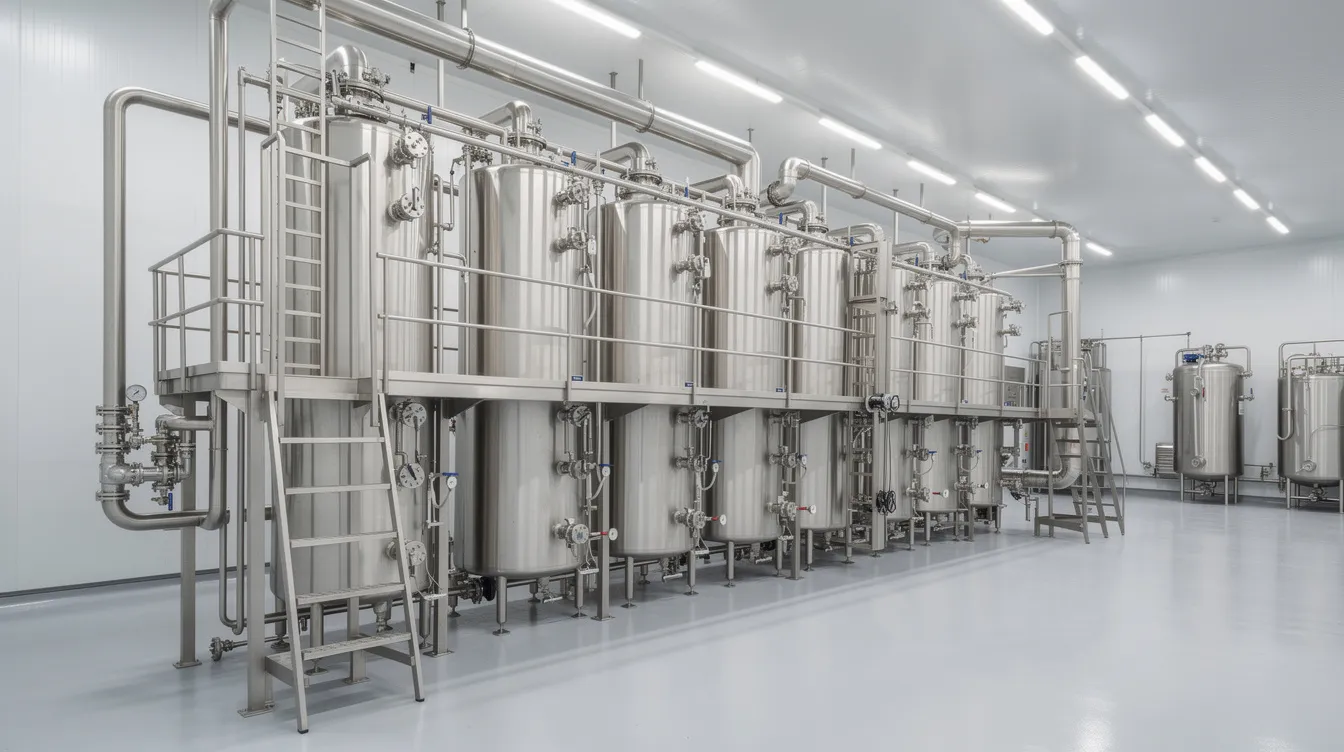
The milk concentration process is the heart of energy optimization in milk powder manufacturing. Removing water using an evaporator is far cheaper per kilogram than evaporating the same water inside the spray dryer using hot air. This principle is well-documented in dairy processing literature and is central to plant economics.
Preheated standardized milk enters a vacuum evaporator, typically a falling-film type. Under reduced pressure, milk boils at a lower temperature (well below its normal boiling point), allowing water to evaporate without excessive thermal damage to milk solids. Concentration removes water to about 48–50% total solids for SMP, and somewhat lower for WMP (around 35–40% total solids), depending on viscosity and product requirements.
Multiple-effect evaporators introduce steam into the first effect and reuse vapour from each effect as the heating medium for the next, dramatically reducing fresh steam consumption per kilogram of water removed. Indian plants like Govind Milk Powder Plant use six-effect evaporators with steam pressures around 17.5 kg/cm². Technologies like mechanical vapour recompression (MVR) can further reduce energy use, though they increase CAPEX.
In DPRs, assumptions on evaporation temperature, number of effects, and energy consumption feed directly into power and fuel costs, DSCR calculations, and bank appraisal. Efficient evaporation means a smaller spray dryer, lower fuel bills, and improved competitiveness.
Spray Drying Technology for Milk Powder
In industrial milk powder production, spray drying is the dominant drying method because it converts concentrated liquid feed into dry powder within seconds, with relatively gentle and limited prolonged heat exposure to milk components. This continuous process is what makes large-scale milk powder manufacturing commercially viable.
The basic milk spray drying sequence works as follows: concentrated milk from the evaporator is temperature-conditioned and pumped into the spray dryer. An atomizer breaks the liquid feed into a mist of fine droplets. These droplets contact hot filtered air inside a large drying chamber, rapidly evaporating water. Spray drying typically occurs at temperatures of 150–220°C (inlet air). Dried powder particles fall to the bottom of the chamber or are carried with exhaust air and recovered via cyclones or bag filters.
Spray drying produces fine, spherical particles with high solubility-a key quality advantage over alternatives like roller drying. The selection of an industrial spray dryer for a dairy plant-capacity, configuration, level of automation, type of atomizer-should be done with full consideration of the intended product mix and utility availability, as this strongly influences project investment and operating cost.
Feed Preparation Before Spray Drying
The liquid feed to the spray dryer is concentrated milk whose properties must be carefully controlled for stable drying. Key parameters include total solids level (too low increases energy consumption, too high causes viscosity problems), feed temperature (raised moderately to reduce viscosity and improve atomization), and homogeneity of the feed.
For products like infant formula or dairy whitener, additional ingredients such as sugar, minerals, vitamins, or emulsifiers may be blended into the liquid feed using dedicated mixing systems. Feed quality issues often manifest as dryer instability, wall deposition, or powder inconsistency. Appropriate feed prep equipment and controls must be included in the processing line design and DPR.
Atomization: Rotary vs Nozzle Systems
Atomization converts concentrated milk into a cloud of fine droplets, greatly increasing the surface area available for rapid drying. Two main systems are used commercially.
Rotary atomizers use a high-speed rotating disk or wheel (for example, Amul’s plant operates a centrifugal atomiser at approximately 15,000 rpm) that throws milk outward into droplets. These handle large capacities and a wide range of feed viscosities, making them common in big SMP and WMP plants. Pressure nozzle atomizers use high pressure pumps to force feed through small high pressure nozzles, creating a spray cone. These can produce specific particle size distributions preferred for certain specialty and instant powders.
The choice depends on product type, desired particle size and bulk density, feed solids, cleaning requirements, and operation strategy. From a project-finance view, atomizer selection affects not only powder properties but also capital cost, spare-part cost, and the long-term total cost of ownership of the milk powder spray dryer.
Hot Air Generation and Distribution
Hot air is the other critical input in spray drying. It must be clean, properly heated, and evenly distributed within the drying chamber. Ambient air is filtered to remove dust, then heated using steam or fuel-fired air heaters designed to avoid contamion of product-contact air. Spray drying uses hot air at 150–220°C at the inlet. Controlled fans and blowers supply the right volume and pressure.
Inlet temperature and airflow rate are crucial drying parameters. They govern droplet drying rate, outlet temperature, powder moisture content, and thermal stress on the product. Many dairy plants prefer indirect air heating systems that keep combustion products (hot gas and drying gas) separate from product-contact air. Hot air system design, including heat recovery, is a major driver of energy consumption and must be carefully modelled in the DPR.
Spray Drying Chamber and Powder Recovery
Inside the drying chamber, atomized droplets encounter hot air and water evaporates rapidly. Particles move along specific airflow patterns-often co-current flow in dairy applications-where both the drying air and droplets travel in the same direction. Product temperature remains below air temperature due to evaporative cooling until near the end of drying, protecting heat-sensitive components. Typical outlet temperature ranges from 75–95°C depending on the product.
Key concepts include residence time (too short causes high moisture, too long causes overheating) and wall deposition (sticky particles adhering to chamber walls if the drying profile or feed properties are mismatched).
Powder recovery systems include:
- Primary collection at the base and cone of the drying chamber
- Secondary collection using cyclones or bag filters to separate fine particles from exhaust air
- Pneumatic conveying of collected powder to fluid beds, sifters, and packaging lines
High-efficiency powder recovery improves yield, reduces product loss, and controls dust emissions-contributing to both profitability and environmental compliance.
Fluid Bed Drying and Cooling
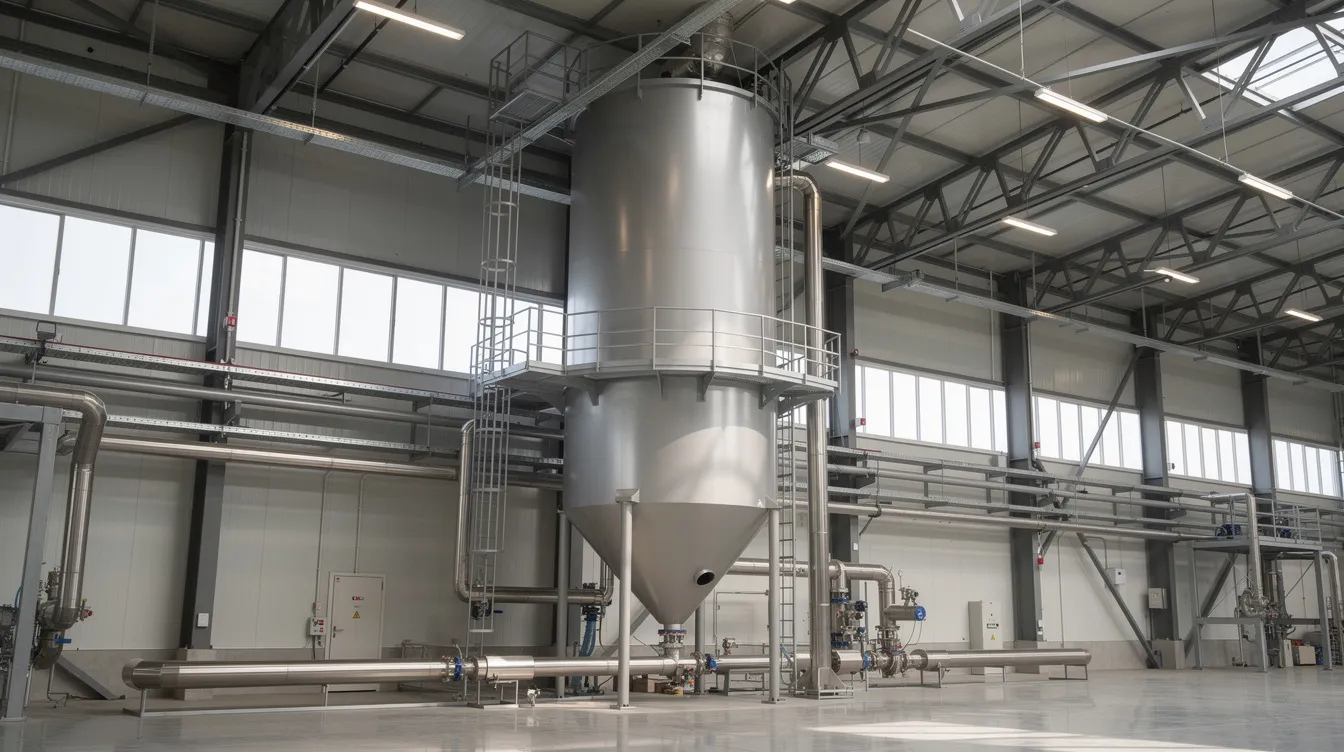
After the main spray dryer, a fluidized bed system fine-tunes powder moisture, equalizes temperature, and can create agglomerated powder structures. Many Indian plants use three-stage configurations: a primary spray dryer chamber, a static fluid bed integrated within the dryer, and an external vibrating fluid bed downstream.
In a fluid bed, warm or cool air passes upward through a shallow bed of powder, causing powder particles to “fluidize” and ensuring efficient heat transfer and mass transfer. This achieves final moisture reduction (to below 3–3.5% for SMP, below 2.8% for WMP), cools powder to safe storage temperatures (approximately 30°C), and where required, creates porous agglomerates. Agglomeration may produce instant milk powder for ease of reconstitution-a key feature for consumer-grade products.
Inadequate final cooling or moisture control leads to lumping, caking, poor flowability, and reduced shelf life. Fluid bed capacity must be sized along with the spray dryer as part of an integrated production line, not added as an afterthought.
Milk Powder Manufacturing Process Flow Chart
Raw Milk Reception ↓ Quality Testing ↓ Filtration / Clarification ↓ Chilling & Silo Storage ↓ Standardization (Fat/SNF) ↓ Pasteurization / Preheating ↓ Evaporation (Milk Concentration) ↓ Optional Homogenization ↓ Feed Conditioning ↓ Atomization in Spray Dryer ↓ Contact with Hot Air / Primary Drying ↓ Fluid Bed Drying & Cooling ↓ Sieving / Sifting ↓ Packaging ↓ Finished Milk Powder Storage
While this flow chart looks simple, each block involves equipment, automation, quality control, and utilities that must be planned and costed in the project report. A more detailed milk powder manufacturing flow diagram with instrumentation and utility tie-ins is prepared during detailed engineering, but the above is adequate for conceptual DPR and bank discussions.
Entrepreneurs should keep this flow handy when interacting with machinery suppliers so that no critical step-CIP, refrigeration, ETP-is left out of scope. For bank appraisal, clarity of process flow demonstrates seriousness and preparedness.
Major Machinery Used in Milk Powder Manufacturing
A complete industrial milk powder production line extends well beyond the spray dryer. It includes milk handling, processing, utilities, powder handling, and cleaning systems.
Core process equipment:
- Milk reception, weighing, and metering systems
- Raw milk storage silos with chilling arrangements
- Clarifiers, filters, and cream separators for fat separation
- Standardization systems and intermediate balance tanks
- Pasteurizers and preheaters (plate or tubular type)
- Falling-film multi-effect evaporator with associated pumps
- Homogenizer (especially for WMP, infant formula, and whitener lines)
- Concentrate holding and feed tanks
- High-pressure feed pumps or rotary atomizer feed systems
- Spray dryer machine for milk powder, including drying chamber and support structure
- Atomization system (rotary atomizer or pressure nozzles)
- Hot air heater, combustion system, and air filtration units
- Cyclones, bag filters, or other powder recovery equipment
- Fluid bed dryer and cooler
- Powder conveying systems, sifters, and magnet traps
- Automatic packing machines for bulk bags or retail packs
Key support systems (must be captured in CAPEX):
- CIP system for automated cleaning
- Refrigeration plant for milk chilling
- Boiler and steam distribution system
- Water treatment plant, softeners, and RO where needed
- Compressed air systems
- Electrical substation, panels, automation, and SCADA
- Effluent treatment plant (ETP)
For a deeper discussion on scope, specifications, and indicative costs, refer to the dedicated article on milk powder processing equipment and machinery cost.
SMP vs WMP vs Dairy Whitener Manufacturing Process
While the core milk powder production process steps remain similar, the management of fat, solids, heat treatment, and formulation differs across SMP, WMP, and dairy whitener.
| Factor | SMP | WMP | Dairy Whitener |
|---|---|---|---|
| Raw material basis | Skim milk (cream removed) | Standardized whole milk | Standardized milk + sugar/additives |
| Fat consideration | Must be less than 1.5% fat | Requires 26–30% fat in finished powder | Controlled fat with added emulsifiers |
| Homogenization | Generally not required | Mandatory to stabilize fat globules | Often required |
| Heat classification | Low-, medium-, high-heat grades | Standard processing | Product-specific |
| Spray drying emphasis | Higher inlet temperatures, higher TS feed | Lower inlet temperatures, lower TS feed | Formulation-dependent |
| Key product properties | High solubility, low fat oxidation risk | Susceptible to oxidation, proper packaging critical | Instant reconstitution, whitening ability |
Each product line has its own market dynamics, pricing, and regulatory standards. Entrepreneurs must align the proposed product mix with milk procurement pattern and market study. Detailed project-level economics are available in dedicated pages for the SMP manufacturing project, the WMP manufacturing project, and the dairy whitener manufacturing plant.
Factors Affecting Spray Dryer Performance
Spray dryer performance determines not only technical output-moisture, particle size, heat stability-but also daily throughput, steam and power consumption, and therefore profitability.
Feed-related factors: Total solids and viscosity of the liquid feed, temperature and consistency delivered to the atomizer, and the presence of fat and emulsifiers all affect droplet behaviour and drying kinetics.
Operating parameters: Inlet temperature and outlet temperature, airflow rate and distribution, droplet size distribution from atomizer settings, and chamber loading relative to design capacity.
Practical issues: Fouling and wall deposition, powder build-up in cyclones or bag filters affecting recovery, and frequency of cleaning cycles that reduce available operating hours. Computational fluid dynamics modelling is sometimes used by equipment suppliers to optimize air distribution, though this is part of detailed engineering.
For DPR and financial projections, realistic assumptions on achievable evaporation rate per hour, expected downtimes, and utility consumption under local conditions matter far more than theoretical maximum capacities from brochures.
Quality Parameters of Finished Milk Powder
Buyers-confectionery manufacturers, recombination plants, institutional users-specify quality parameters that the final powder must meet consistently.
- Moisture content: Final moisture content of milk powder is usually 2.5–5%, affecting flowability, caking, and shelf life
- Fat and protein levels: Tied to product specifications and regulatory standards
- Powder solubility, dispersibility, and wettability: Especially important for dairy whitener and instant powders
- Bulk density: Affects packaging efficiency and shipping cost
- Particle size distribution: Linked to mouthfeel and reconstitution; spray dried milk powder typically consists of spherical particles
- Microbiological quality: Total plate count, coliforms, and other indicators per relevant standards
- Sensory aspects: Colour, flavour, absence of scorched particles, and maintenance of nutritional value
Detailed specifications should conform to the latest FSSAI, BIS, or Codex standards. Maintaining quality consistency requires stable process conditions, skilled operators, and disciplined maintenance. Superior quality commands better realization, directly improving projected margins in DPR calculations.
Energy Consumption in Milk Powder Manufacturing
Milk powder plants are energy-intensive operations. Major energy consumers include the evaporation system (steam for multi-effect evaporators), spray drying (hot air generation and large fans), refrigeration for milk chilling, compressed air systems, pumps, conveyors, and CIP systems using hot water and chemicals.
Good process design reduces specific energy consumption through multiple-effect evaporators, vapour recompression, heat recovery in pasteurizers and from exhaust air, proper insulation, and minimized hold-up in pipelines. The goal is energy efficient operation that balances low energy consumption with powder quality.
Accurate estimation of steam, power, and fuel consumption per tonne of milk powder is essential for calculating power and fuel cost in the DPR. Energy-saving features may increase initial CAPEX but often improve lifecycle profitability and thermal efficiency, which bankers evaluate via DSCR and payback analyses.
Utilities Required for a Milk Powder Plant
Beyond process machinery, reliable and adequately sized utilities are essential. Under-design here often causes bottlenecks and plant underutilization.
- Electricity: Motors, controls, instrumentation, lighting, and automation
- Steam: Pasteurization, evaporation, hot water generation, and some air heaters
- Water: Milk processing, CIP, boiler feed, and cooling
- Refrigeration: Chilling raw milk arrives at the plant and maintaining silo temperatures at lower temperatures
- Compressed air: Instrumentation, valves, and some conveying
- ETP: Dairy effluents from CIP and utilities
Each utility system should appear as a separate line item in project cost-not hidden inside “miscellaneous.” Banks scrutinize whether utility sizing is realistic, because inadequate provision prevents the plant from running at rated capacity.
Cleaning, Hygiene and CIP Systems
Dairy plants producing dried milk powder must follow rigorous hygiene standards. CIP systems automate the circulation of water and cleaning chemicals through tanks, pipelines, pasteurizers, evaporators, and parts of the dairy spray dryer.
Controlled temperature, flow, and chemical concentration remove milkstone, fat residues, and microbial films from product-contact surfaces. Good hygienic design from the drawing-board stage-smooth surfaces, drainability, minimal dead-legs-reduces cleaning time and increases available production hours.
CIP skids, chemical storage, and wastewater neutralization must all be included in project cost and discussed when assessing environmental compliance and operational expenditure. UHT treatment equipment and specialty food science applications demand even stricter hygiene protocols.
Packaging and Storage of Milk Powder
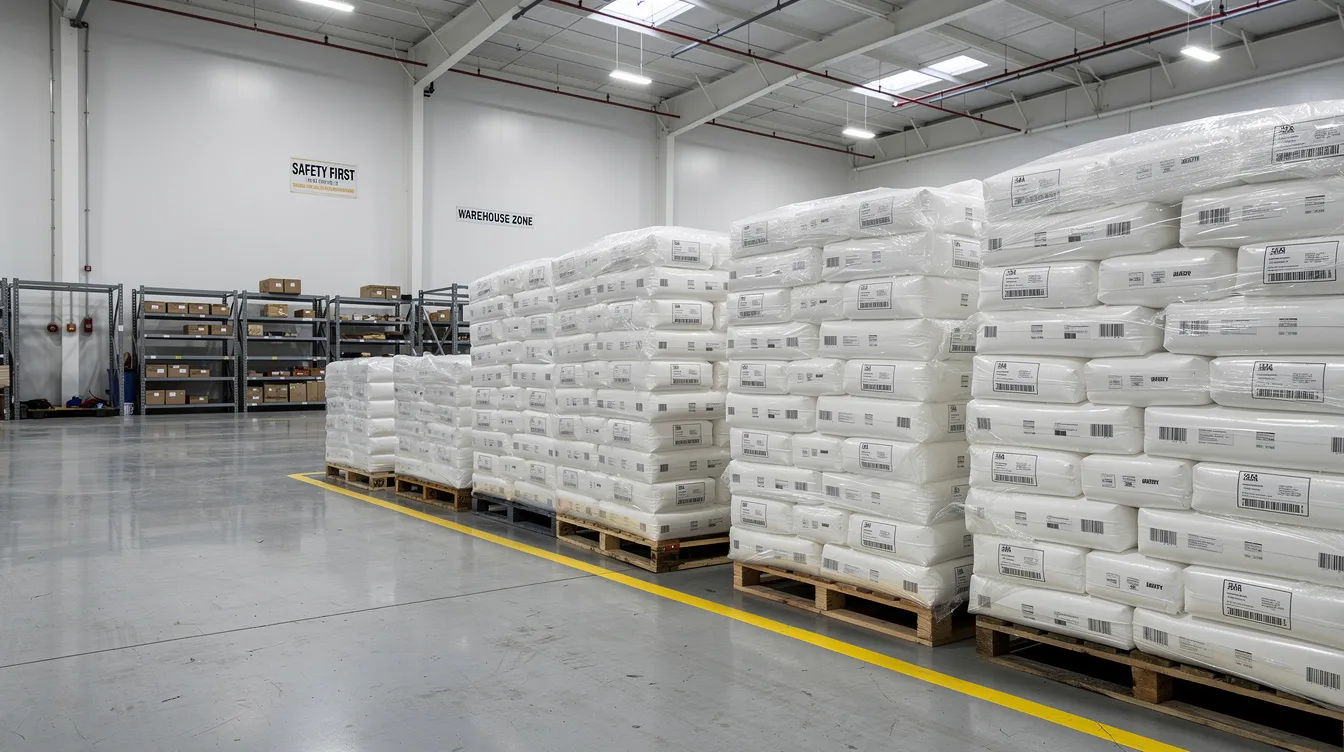
Once powder leaves the dryer and fluid bed, it is sensitive to moisture pickup and oxidation. Milk powder must be protected from moisture, oxygen, and light. Moisture-proof packaging extends the shelf life of milk powder significantly.
Common packaging formats include multi-layer paper or plastic bags-milk powder is typically packed in 25 kg multi-wall bags for industrial buyers-and tinplate cans or laminated pouches for consumer packs. Nitrogen flushing is used to protect milk powder from oxidation, especially for WMP and infant formula. Proper packaging is essential regardless of scale.
Finished milk powder must be stored under controlled conditions to prevent deterioration. Proper storage temperature for milk powder is 10–20°C in cool, dry, odour-free warehousing with FIFO practices. Under these conditions, milk powder can remain usable for 12–24 months. Packaging material selection and shelf-life targets affect working capital tied up in inventory and should be highlighted in the DPR.
Environmental Considerations
Modern milk powder plants must manage environmental responsibilities alongside production. Key aspects include dairy effluent from CIP and washing (high in organic load, requiring proper ETP design), boiler emissions, and powder dust emissions from dryer exhaust and bagging areas managed through cyclones and bag filters.
Water conservation through condensate reuse from evaporators, leak minimization, and optimized CIP cycles supports both cost reduction and compliance. Environmental management costs-including ETP-should be clearly provided in bankable project reports rather than deferred.
How Manufacturing Technology Affects Milk Powder Plant Project Cost
Two plants with the same nominal capacity can have very different project costs depending on technology, automation, imported versus domestic equipment, and depth of utility provision.
Key technology decisions influencing CAPEX:
- Type and number of effects in the evaporator
- Single versus multi-stage spray dryer with integrated fluid beds
- Rotary versus nozzle atomizers and redundancy
- Degree of process automation and SCADA
- Powder handling and packaging sophistication
- Boiler, refrigeration, and transformer sizing
- ETP and environmental control systems
- Civil construction for tall spray dryer towers and silos
Investors should not chase minimum initial cost alone. They should evaluate lifecycle cost, reliability, energy efficiency, and quality consistency-these factors determine long-term cash flows. Detailed guidance is available in the article on milk powder plant investment and setup cost in India.
Importance of Capacity Utilization
Even a technologically advanced milk powder plant can struggle financially if it runs at low capacity utilization. Seasonal milk availability, competition for milk procurement, demand volatility for SMP, WMP, and dairy whitener, and the ability to switch product mix all affect achievable utilization.
High fixed costs-depreciation, interest, manpower-must be absorbed over adequate production volume. Underutilization pushes up per-unit cost and erodes competitiveness. Working capital planning must account for inventory build-up during flush season.
From my experience preparing DPRs, lenders focus on realistic capacity ramp-up-say 50–60% in the initial year, gradually rising-rather than assumptions of 100% utilization from Day 1. Entrepreneurs must conduct realistic milk availability and market studies before finalizing capacity.
Manufacturing Process Considerations for DPR Preparation
A Detailed Project Report for a milk powder plant must translate technical process choices into credible numbers for project cost, operating cost, revenues, and financial indicators.
Key aspects to define clearly:
- Proposed capacity: liquid milk intake and expected tonnes per day of milk powder
- Product mix: SMP, WMP, dairy whitener, by-products like cream, butter, ghee
- Process route: number of evaporator effects, spray dryer type, fluid bed arrangement
- Milk availability analysis and procurement strategy
- Utility requirements with specific consumption estimates
- Manpower planning across production, QC, maintenance, and administration
- Yield and loss assumptions at each stage
- Raw material consumption per tonne of finished product, produce powder output assumptions
- Power, fuel, packaging, repair, and maintenance costs
- Working capital requirement covering inventory, receivables, and procurement cycles
A well-prepared DPR grounded in realistic manufacturing process parameters gives confidence to both promoters and bankers regarding feasibility, repayment capacity, and DSCR.
Common Mistakes While Planning a Milk Powder Plant
Many issues seen during bank appraisal or post-commissioning arise from planning oversights, not technology limitations.
Process and capacity mistakes:
- Selecting plant capacity without studying milk availability and competing dairy plants
- Focusing only on spray dryer nameplate capacity while ignoring balancing equipment
- Underestimating utilities like boiler, refrigeration, and ETP
- Treating ceramic materials, starch derivatives, or animal feed as add-on product lines without proper study
Commercial planning mistakes:
- Weak product-mix strategy with no clarity on SMP, WMP, or whitener focus
- Ignoring seasonality and assuming uniform milk intake and sales year-round
- Underestimating working capital for milk procurement, inventory, and customer credit
Technical-financial integration issues:
- Using incomplete machinery quotations that exclude CIP, silos, cold rooms, or ETP
- Over-optimistic assumptions on capacity utilization and selling price
- Not planning for laboratory facilities and quality control
- Ignoring powder properties and free flowing powder specifications required by the target market
Professional guidance in DPR preparation and technology selection helps avoid these pitfalls and presents a stronger case during bank appraisal.
FAQs About Milk Powder Manufacturing Process
Is spray drying the only way to manufacture milk powder commercially?
Spray drying is the dominant method in modern industrial milk powder manufacturing. Roller drying involves concentrated milk being applied as a thin film on steam-heated drums, but roller drying can lead to a cooked flavor in milk powder and produces flake-like particles rather than the spherical particles produced by spray drying. Freeze drying preserves quality well but is prohibitively expensive for bulk milk powder. For mainstream SMP, WMP, and dairy whitener projects in India, banks and buyers generally expect spray dried milk powder because of its superior solubility, flowability, and consistent quality.
How long does it take to convert fresh milk into milk powder in a plant?
In a continuous industrial setup, the time from milk reception to packed finished powder for a given lot is typically several hours, as milk passes through reception, chilling, standardization, pasteurization, evaporation, spray drying, and packaging in sequence. The drying process inside the spray dryer itself takes only seconds. From a planning perspective, total plant throughput per hour and per day matters more than exact residence time.
Can the same plant produce both SMP and WMP?
Many commercial plants are designed with flexibility to produce both skimmed and whole milk powder by adjusting cream separation, standardization, homogenization, and drying conditions. Such flexibility requires thoughtful process design and may increase initial CAPEX slightly. The DPR should clearly spell out the intended flexibility and its implications on investment, product mix, and working capital.
What skills and manpower are needed to run a milk powder plant?
A milk powder plant requires skilled dairy technologists, qualified quality-control staff, experienced boiler and refrigeration operators, electricians, fitters, and trained operators for evaporators, spray dryers, and packing lines. Technology suppliers provide initial training at commissioning, but long-term success depends on retaining competent staff and following documented SOPs. Manpower planning and associated salary costs must be realistically captured in the DPR.
Can a small entrepreneur start with a very small spray drying plant?
Smaller-capacity dryers and pilot-scale spray dryers exist, but commercial viability depends on per-unit manufacturing cost, market access, and ability to procure consistent quality milk at scale. Very small plants often face higher per-kg overheads. Entrepreneurs should carefully examine local milk economics and potential contract manufacturing opportunities. Sometimes collaboration with existing dairies can be more viable-this option should be evaluated during DPR preparation.
Conclusion
Industrial milk powder manufacturing is built around two core technologies-evaporation and spray drying-supported by robust milk handling, utilities, hygiene systems, and packaging. The same milk powder manufacturing process can yield very different financial outcomes depending on technology selection, plant sizing, energy efficiency, capacity utilization, product mix, and market positioning.
Entrepreneurs should treat process design, machinery selection, utility planning, and financial modelling as an integrated exercise. Buying a spray dryer first and preparing financial projections later is a recipe for trouble. Every technical assumption-from evaporator effects to inlet temperature to fluid bed sizing-directly shapes the numbers in the project report.
At ProjectReportBank.com, CA Manish Gugliya supports promoters with DPR preparation, CMA data, financial projections, and project finance planning for milk powder and other dairy projects. No guaranteed loan sanctions or profitability claims are made-what is offered is structured, realistic, and professionally prepared documentation that gives your project the best possible foundation. Use the process understanding from this article as a base for deeper discussions on feasibility and detailed project planning with your technology supplier and financial advisor.