Key Takeaways
- A wheat bran processing plant converts bran, middlings, shorts and other grain milling by-products into higher-value feed ingredients such as cleaned graded bran, pellets and blended feed premixes, serving cattle feed, dairy nutrition and poultry feed markets across India.
- Project Report Bank, led by CA Manish Gugliya (FCA, DISA, 20+ years of experience), prepares customised wheat bran processing plant project reports covering machinery selection, capacity planning, plant layout, capital cost estimation, means of finance, and full financial projections for Indian investors, flour mills and feed manufacturers.
- Profitability depends primarily on bran procurement price, product mix (loose bran versus pellets versus blends), capacity utilisation and stable linkage with organised animal feed manufacturers – with typical wheat processing plants reporting gross profit margins of 10–15%.
- Industrial plants are commonly sized in the 5–20 TPH range, employing key equipment such as pre-cleaners, vibrating screen units, bran finisher, hammer mills, pellet mills, coolers, dust collection systems and automated packing lines.
- A bankable DPR with 7–10 year financial projections, DSCR analysis, IRR computation and sensitivity testing is essential before committing capital or approaching banks for term loans and working capital finance.
Wheat Bran Processing Plant Project Report – Introduction and Investment Context
Wheat flour milling is one of the largest grain processing segments in India. Every roller flour mill producing wheat flour, bread flour, semolina or related products generates a significant volume of by-products – primarily wheat bran, wheat middlings, shorts and pollard. In a typical Indian roller mill, approximately 18–22% of the wheat grain exits as bran and related by-product streams, creating a stable and geographically concentrated raw material base around major wheat processing clusters.
A wheat bran processing plant project report is a comprehensive Detailed Project Report that integrates market analysis, technical design, machinery specifications, production planning and a full financial model suitable for bank finance, investor evaluation and internal decision-making. A comprehensive project report must demonstrate technical feasibility, financial viability, and regulatory compliance to serve as a credible investment planning document.
Project Report Bank, led by CA Manish Gugliya, specialises in preparing professional DPRs and feasibility studies rather than selling generic templates. Every engagement involves customised assumptions for the specific location, capacity, product mix and financing structure proposed by the promoter. This article covers market potential, product options, the manufacturing process, plant and machinery, project cost, profitability, DSCR, IRR and key project risks from an Indian investor perspective.
Wheat Bran and Grain Milling By-Products – Industrial Overview
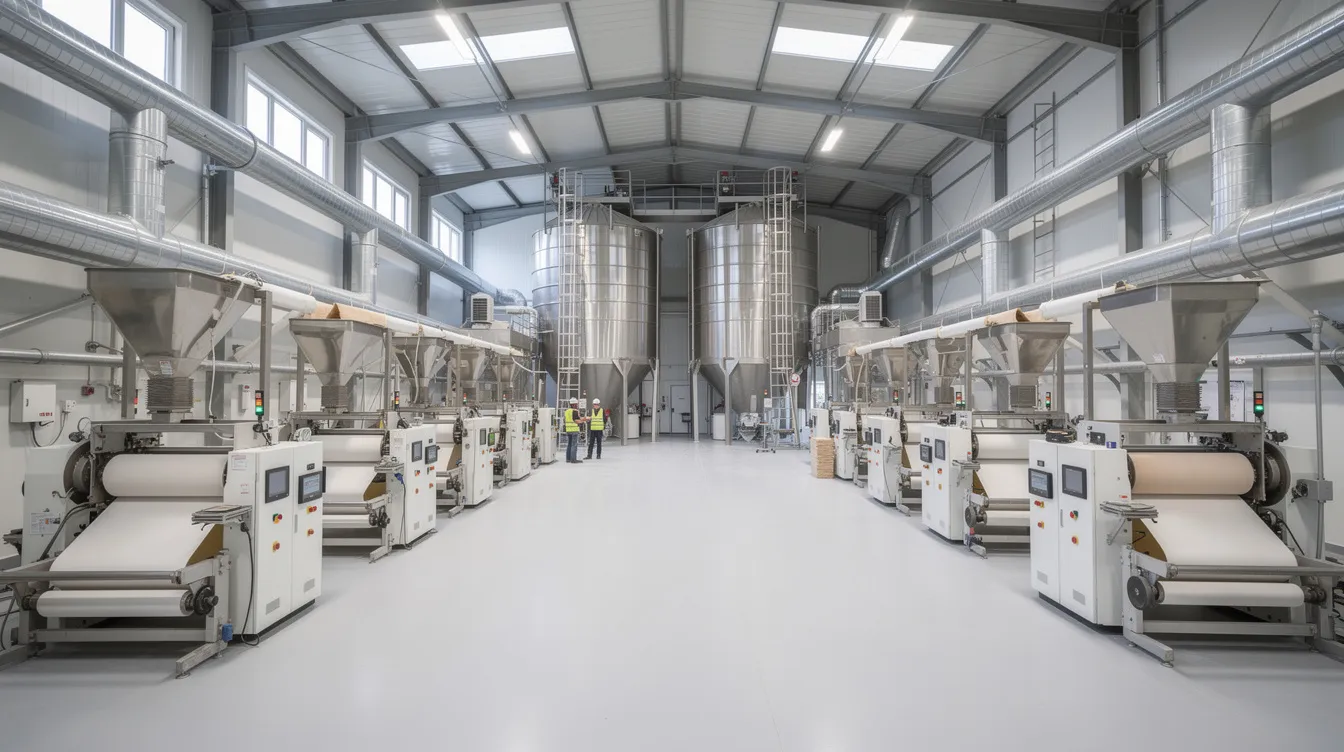
Wheat bran originates from the outer layers of the wheat grain – pericarp and aleurone – separated during roller milling. In India, wheat grain composition is approximately 13–17% bran, 2–3% germ and 80–85% mealy endosperm. A flour mill plant typically includes multiple roller mills in series, progressively reducing the endosperm to flour while separating bran and other fractions. Modern flour mills can process 10 to 1,000 tons of wheat daily, and by-product volumes scale proportionally.
Middlings and shorts are finer particles containing some endosperm along with bran fragments, carrying relatively higher protein and energy content compared to coarse bran. Pollard and screenings represent additional milling streams. The plansifter classifies flour into fine and coarse particles, and intermediate fractions are routed to bran finisher machines or impact detachers for further flour recovery.
From a nutritional perspective:
- Wheat bran constitutes 55–60% of nonstarch carbohydrates in the grain, with crude protein typically ranging 14–19%, crude fibre 6–13%, and ash 4–7% on a dry matter basis.
- Feed-grade wheat bran provides TDN of approximately 65–70% for ruminants, making it a widely used ingredient in dairy and cattle feed concentrate mixes.
Feed-grade bran – commonly supplied loose to cattle feed manufacturers and dairy farmers – differs significantly from food-grade bran used in bakery products and health-food segments. Food-grade material demands higher standards for microbiological quality, colour, moisture (below 10%), pesticide residues and particle consistency.
Commercially, by-product realisations from bran, germ and other milling streams significantly affect the overall economics of medium and large wheat flour mills. Understanding atta manufacturing processes and flour mill operations is therefore essential context for evaluating bran value addition projects.
Market Potential and Demand for Wheat Bran Processing in India
The demand landscape for processed wheat bran in India is driven by compound cattle feed manufacturers, dairy nutrition companies, integrated feed mills and regional feed ingredient traders. Poultry feed producers also use wheat bran within formulation-appropriate inclusion limits. India’s animal feed industry was estimated at approximately INR 1,110 billion in 2024, projected to reach INR 2,025 billion by 2033 at a CAGR of around 6.9%.
Globally, wheat production reached 772 million tons in 2017, and around 150 million tons of wheat bran are produced annually from milling operations worldwide. The wheat processing market size was valued at USD 52.40 billion in 2025 and is expected to reach USD 77.01 billion by 2034, reflecting sustained growth in global food systems and feed ingredient demand.
Wheat bran competes with other grain-based feed ingredients such as maize, broken rice and de-oiled rice bran (DORB). In India, DDGS (distillers dried grains with solubles) from the ethanol sector has increasingly substituted wheat bran in certain feed rations, sometimes suppressing both demand and price.
Key wheat-growing and milling states – Punjab, Haryana, Uttar Pradesh, Rajasthan, Madhya Pradesh, Gujarat and Maharashtra – provide concentrated raw material sourcing zones. Proximity to these grain processing plant clusters supports raw material security and reduces logistics costs.
Serious investors should commission location-specific market studies, secure long-term offtake discussions and conduct competitor mapping before finalising capacity and product mix in their wheat bran processing plant project report.
Wheat Bran Value Addition Opportunities and Product Portfolio
A wheat bran value addition plant can be designed at different technological levels – from simple cleaning and grading operations to pelletisation and advanced blended feed ingredients. The investment required and margin per tonne increase progressively with process complexity.
Commercially relevant product categories include:
- Cleaned and graded loose wheat bran (coarse and fine fractions segregated by customer specification).
- Ground or micronised bran for specific feed formulations requiring controlled particle size.
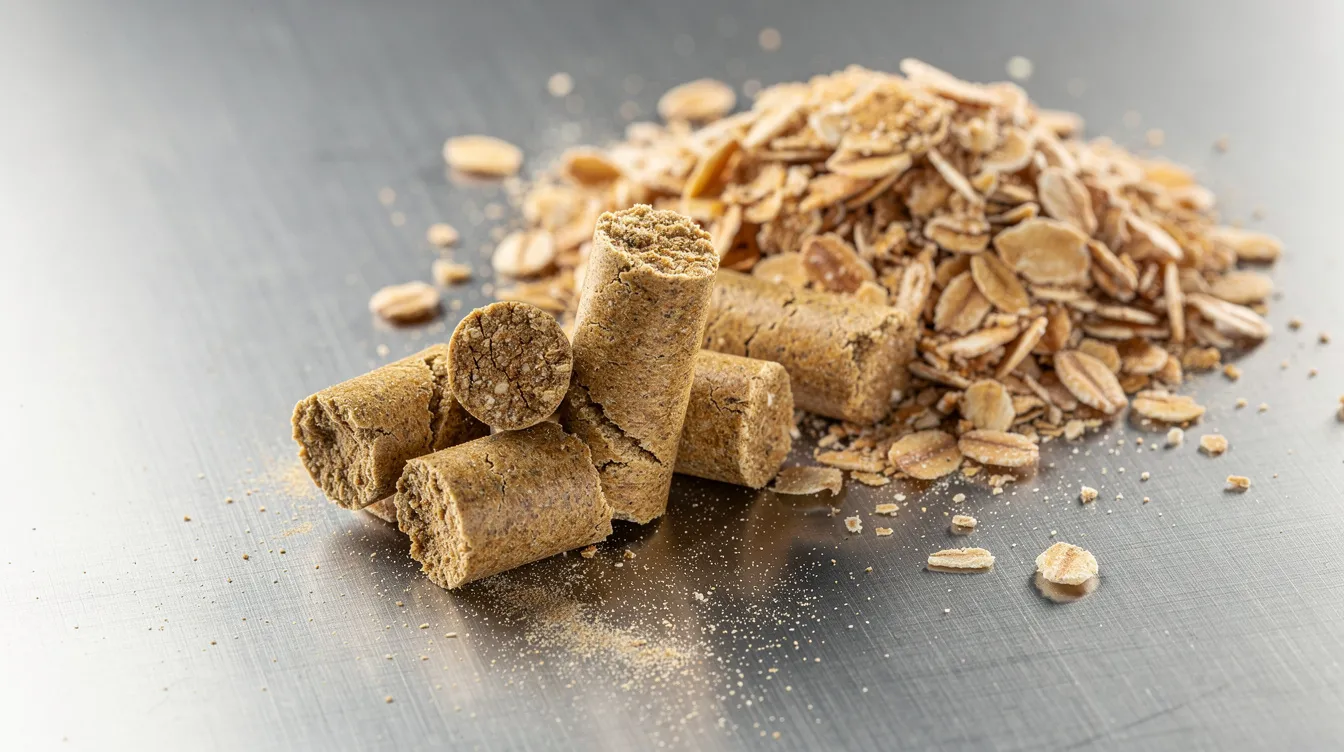
- Wheat bran pellets with higher bulk density, improving transport efficiency and handling convenience.
- Value-added bran-based feed premix blends incorporating other by-products such as maize grits, oilseed meals or broken rice.
- Heat-treated or stabilised bran products – wheat bran contains active lipase enzymes that can cause rancidity if not stabilised during processing, making thermal treatment relevant for extended shelf life.
- Food-grade wheat bran and fibre ingredients, subject to stricter process control and regulatory compliance.
Beyond conventional feed applications, wheat bran serves as a low-cost substrate for enzyme production. Ferulic acid is extracted from wheat bran for pharmaceutical use. Wheat bran can also be used in bioremediation processes and is utilised for producing organic acids like lactic acid. These biotechnology applications, while niche, can produce enzymes and organic acids that represent emerging value streams for various industries.
Wheat middlings, shorts and other grain milling by-products can be included in the same processing plant to create a wider product portfolio and better raw material utilisation, improving overall contribution margins.
Low-complexity commodity processing (minimal cleaning and packing) requires modest investment but generates thin margins. Higher-complexity plants with pellet mills, coolers, mixers and automated packing add incremental value and investment at each step.
Wheat Bran Processing Plant – Manufacturing Process and Process Flow
Mechanical processing of wheat bran usually follows steps such as cleaning, grinding, and packaging, though the exact configuration depends on the target product portfolio.
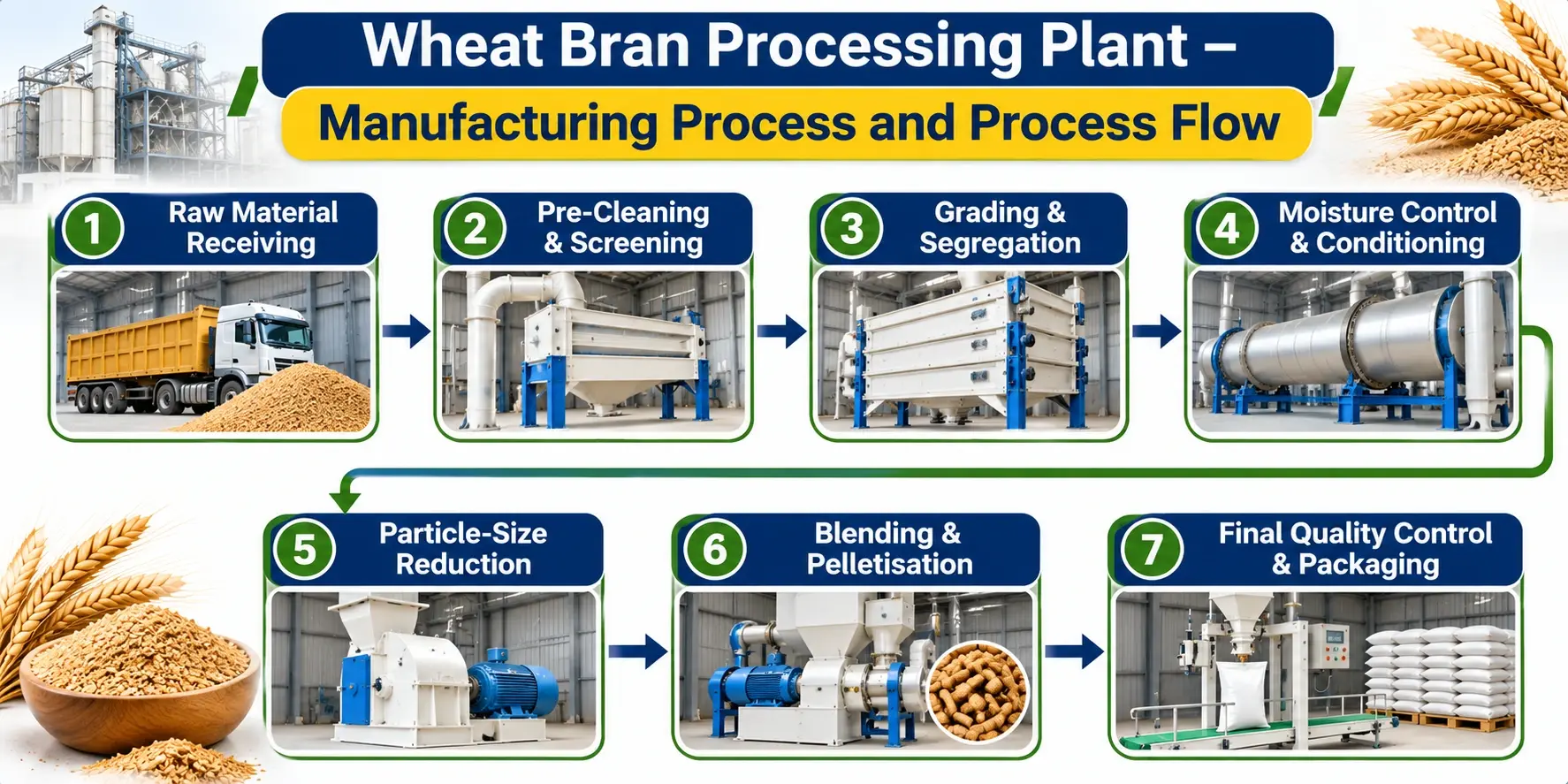
Raw material receiving: Bran arrives in bulk trucks from roller flour mills. Wheat is typically conditioned to 15–17% moisture before milling at the flour mill; the resulting bran usually arrives at 12–15% moisture. Each consignment is sampled for moisture, visible impurities, odour and colour.
Pre-cleaning and screening: Industrial screens, aspirators and de-stoners remove foreign matter including stones, straw, metal fragments and dust. Magnetic separators capture ferrous contaminants. This stage is critical for both feed-grade and food-grade products.
Grading and segregation: Plansifters, rotary sieves or bran classifiers separate coarse bran from fine particles and middlings. Cut points are adjusted based on buyer specifications. Different fractions may command different prices.
Moisture control and conditioning: Where bran arrives with high moisture, low-temperature dryers or conditioning with tempering bins stabilise moisture for safe storage and pelletisation. Controlled drying prevents fungal growth and maintains nutritional value.
Particle-size reduction: Plants producing ground bran or specialised feed ingredients use hammer mills or other milling machines with appropriate screens. Aspiration systems manage dust and heat generated during grinding. Quality parameters for wheat bran – including moisture content, crude protein, crude fibre and ash content standards – are monitored throughout.
Blending and pelletisation (for value-added lines): Bran is blended with other ingredients in ribbon or paddle mixers. For pellet production, the mixture is conditioned (with water or steam where applicable), passed through a pellet mill, and then cooled to stabilise pellets and reduce moisture. The production line for pelletisation requires careful calibration of die specifications, conditioning temperature and throughput rate.
Final quality control and packaging: Finished products undergo moisture confirmation, bulk density checks and contamination screening. Depending on customer requirements, mycotoxin testing may be conducted. Products are weighed, bagged into 25–50 kg PP/HDPE bags or jumbo bags, stitched, palletised and stored in ventilated warehouses.
Housekeeping, dust management, explosion risk mitigation and cross-contamination avoidance are integral to safe operations. Dust from grinding and pelleting zones must be managed through dedicated extraction systems.
Wheat Bran Processing Plant Machinery and Equipment
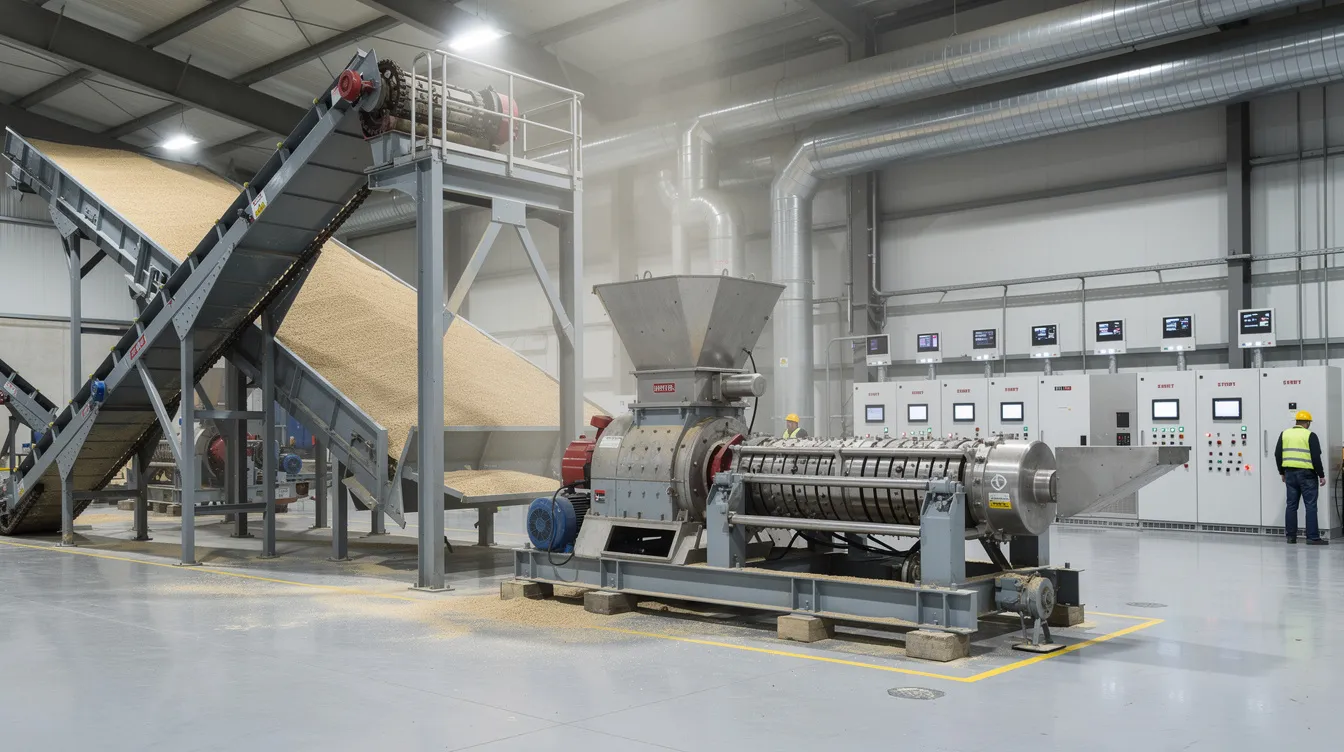
Machinery configuration depends on capacity, product range and automation level planned by the investor. A 5 TPH plant producing only cleaned loose bran requires substantially different equipment compared to a 15 TPH facility manufacturing pellets and blended feed ingredients.
The main equipment categories in logical production sequence include:
| Equipment Category | Function | Key Selection Criteria |
|---|---|---|
| Receiving hopper, belt conveyors, tipper | Raw material intake and transfer | Throughput capacity, truck turnaround |
| Pre-cleaners, vibrating screen, aspirators | Foreign matter removal | Screen aperture, cleaning efficiency |
| Magnetic separator | Metal contaminant removal | Gauss rating, belt vs drum type |
| De-stoner | Stone and heavy particle removal | Capacity, air flow design |
| Bran finisher / impact detacher | Flour recovery from bran | RPM, screen configuration |
| Grading sieves, plansifters | Particle classification | Number of decks, mesh sizes |
| Hammer mill / pulveriser | Particle size reduction | Motor power, screen options, wear parts |
| Ribbon mixer / paddle mixer | Blending ingredients | Batch size, mixing uniformity |
| Conditioner | Pre-pelleting moisture and heat treatment | Steam or water injection capacity |
| Pellet mill | Pellet formation | Die diameter, roller configuration, TPH |
| Pellet cooler | Temperature and moisture reduction post-pelleting | Counter-flow vs cross-flow design |
| Screw conveyors, bucket elevators | Material handling throughout plant | Capacity, material of construction |
| Dust collection (cyclones, bag filters) | Dust extraction, air quality, safety | Air volume, filter media, explosion venting |
| Weighing and bagging machine | Packaging finished products | Accuracy, bags per hour |
| PLC / SCADA control panel | Centralised automation and monitoring | Integration capability, operator interface |
| Laboratory equipment | Moisture, protein, fibre testing | Accuracy, speed of results |
The roller mill is the core machine in flour milling operations upstream, and modern flour mills use PLC-based control systems for automation. Automation in grain processing enhances efficiency and sustainability, and similar principles apply to bran value addition plants.
For pellet lines specifically, equipment cost estimates for India indicate a 2 TPH line at approximately USD 70,000–150,000 and a 5 TPH line at USD 150,000–330,000 (installed equipment, excluding civil works). Domestic hammer mills of 1–2 TPH capacity range from approximately ₹2–8 lakh.
The wheat bran processing plant project report should include a detailed machinery schedule listing each machine, its function, indicative capacity range, power rating and key selection parameters based on supplier discussions.
Plant Capacity, Production Planning and Operating Schedule
Investors typically evaluate alternative capacities based on market access and raw material availability:
- 2–3 TPH for small regional units integrated with a flour mill.
- 5–10 TPH for mid-sized industrial plants with diversified product lines.
- 10–20 TPH or above for large integrated flour mill-linked operations.
Wheat processing plants of this nature can process 50,000 to 200,000 MT annually depending on configuration. Annual installed capacity is derived from hourly rated capacity multiplied by working hours per shift (typically 8 hours), shifts per day (1–3), and working days per year (280–330 days). For example, a 5 TPH single-shift plant operating 300 days produces approximately 12,000 tonnes per year at full utilisation.
Production capacity should be determined based on market demand and available resources. The DPR should incorporate realistic capacity utilisation build-up – typically 50–60% in year 1, increasing gradually to 80–90% by year 3 – rather than assuming full utilisation from inception.
Product mix planning (percentage of loose bran, pellets, blended feed ingredients) directly determines effective throughput, bottleneck equipment and achievable margin per tonne. Higher-level production planning concepts such as changeover times, batch scheduling and multi-product lines are discussed in greater depth in the context of integrated animal feed mill projects.
Land, Building, Utilities and Infrastructure Requirements
Land requirement depends on capacity, storage approach (silos versus warehouse), truck movement area and future expansion plans. Smaller plants may operate within existing industrial premises, while integrated units with pelletisation and bulk storage need larger plots.
Core building spaces include:
- Raw material godowns or silos for wheat bran and other by-products
- Processing hall for machinery installation with adequate headroom
- Pellet and blending section (if applicable)
- Finished goods warehouse with ventilation
- Utility block, QC laboratory, administrative office and staff amenities
Key utilities include electrical power (connected load calculated from machinery schedule), compressed air for bagging and automation, and industrial water for cooling and sanitation. Some plant configurations require steam generation for conditioning before pelletisation, though this is not mandatory for every wheat bran processing facility.
Dust extraction and fire protection systems are essential for safety in wheat bran processing plants, particularly in grinding and pelleting zones where fine organic dust creates explosion hazards. Proper ventilation, emergency exits and compliance with factory and building codes must be addressed in the project design. The DPR should include a basic plant layout ensuring smooth material flow, segregation of raw and finished goods, and safe truck entry/exit.
Wheat Bran Processing Plant Cost and Capital Investment Structure
Wheat processing plant setup costs include capital and operational expenditures, and the exact project cost depends on capacity, automation level, location, civil construction standards and selected technology. Capital investments primarily cover machinery and land development costs, with machinery costs typically representing the largest portion of capital expenditure.
Fixed capital investment breaks down into:
| Cost Head | Description |
|---|---|
| Land and site development | Purchase or lease, levelling, fencing, approach road |
| Civil construction and building | Processing hall, warehouses, utility block, office |
| Plant and machinery (including installation) | All production equipment, erection, commissioning |
| Material handling systems | Conveyors, elevators, bins, silos |
| Electrical installations | Transformer, panels, cabling, earthing |
| Dust extraction and pollution control | Cyclones, bag filters, ducting |
| Laboratory and testing equipment | Moisture meter, sieve analysis, weighing |
| Furniture and office equipment | Administrative requirements |
Preliminary and pre-operative expenses – company formation costs, project consultancy and DPR preparation, interest during construction, trial-run expenses and contingencies – are included in total project cost. A project report should cover capital cost estimation, means of finance, and projected profitability indicators to present a complete investment picture.
Margin for working capital forms part of total project cost. Banks expect promoters to bring a portion of working capital as margin while the balance is funded through cash credit or other working capital limits.
Project Report Bank prepares project-specific capital cost estimates based on actual supplier quotations, architectural drawings and current market data, avoiding generic one-size-fits-all assumptions.
Raw Material Procurement and Operating Cost Structure
The primary input is wheat bran sourced from roller flour mills, with possible additions of wheat middlings, shorts, pollard and other agro by-products for blended products. Proximity to flour mills reduces logistics costs for sourcing raw wheat bran and helps maintain quality through shorter transit times.
Procurement models include long-term supply arrangements with nearby flour mills, spot purchases from milling clusters, and direct tie-ups with integrated wheat flour producers. In major production centres, bran prices have recently ranged from approximately ₹18–25 per kilogram, with significant regional and seasonal variation.
Operating costs are driven by raw material consumption, mainly wheat grains and their milling by-products. In an upstream wheat flour mill, wheat grains account for approximately 85–90% of total operating expenses. For a bran processing plant, raw bran procurement similarly dominates the variable cost structure, typically representing 60–70% of total operating cost.
Key operating cost components beyond raw material include:
- Inward freight and handling charges
- Power consumption of milling machine, pelletisation and material handling equipment
- Packing material (PP bags, labels, stitching thread)
- Direct labour and supervision
- Maintenance, consumables and spare parts
- Quality-testing consumables
- Warehouse costs and selling and distribution expenses
Moisture content, foreign matter and storage losses (shrinkage, infestation, sweepings) influence effective raw material cost per tonne of finished product and must be realistically captured in the DPR. The projected operating cost increases significantly by the fifth year due to inflation, scale-up and maintenance cycles.
Wheat Bran Processing Plant Profitability and Revenue Model
Profitability depends on the spread between processed product realisation per tonne and net input cost of wheat bran, adjusted for processing yield and operating expenses. Wheat processing plants typically exhibit gross profit margins of 10–15%, making cost discipline and volume throughput critical.
Revenue sources include sale of loose cleaned bran, pellets, blended feed ingredients, and possibly custom-toll processing for feed companies using the investor’s plant and machinery.
Key profitability drivers include:
- Stable supply of bran at competitive prices
- Regular buyers from organised cattle feed and dairy nutrition segments
- Price premium for pellets versus loose bran (typically 10–15% higher realisation)
- Efficient power consumption per tonne processed
- Disciplined working capital management and receivable control
Scenario illustration: Consider a mid-size plant processing 10,000 tonnes annually. If bran procurement averages ₹22/kg and processed pellets sell at ₹25/kg, the gross spread is ₹3,000 per tonne, generating approximately ₹3 crore in gross contribution. After deducting power, labour, packing, maintenance and overheads – which might total ₹1.5–2 crore – EBITDA could range ₹1–1.5 crore. However, if bran procurement price rises to ₹24/kg without a corresponding increase in sale price, the gross spread compresses to ₹1,000 per tonne and EBITDA drops sharply. This sensitivity underscores why commodity-linked margins require conservative planning.
The wheat bran processing plant project report from Project Report Bank incorporates realistic depreciation, interest, taxation and contingency assumptions to estimate profit before tax, profit after tax, break-even sales and expected return on capital employed.
Financial Projections, DSCR, IRR and Project Feasibility Analysis
A bankable DPR for a wheat bran value addition plant must include integrated 7–10 year financial projections: projected profit and loss account, balance sheet and cash flow statement under consistent technical and commercial assumptions. Financial projections assess ROI and long-term sustainability of the proposed investment.
The term loan repayment schedule is structured considering likely moratorium, repayment period, interest rate and expected cash generation. DSCR (Debt Service Coverage Ratio) is computed year-wise and on an average basis from cash profits. Banks typically require average DSCR of 1.2–1.5 or higher over the repayment period.
Standard feasibility metrics include:
- Internal rate of return (IRR) – acceptable range for agro-processing projects is generally 15–25% pre-tax
- Net present value (NPV) at appropriate discount rate
- Payback period
- Break-even capacity utilisation – typically 60–70% for mid-size plants
Sensitivity analysis tests the project under adverse scenarios such as lower capacity utilisation, higher bran purchase price, lower sale price or higher finance cost, demonstrating resilience or vulnerability through DSCR and NPV movements.
CA Manish Gugliya, through Project Report Bank, prepares detailed Excel-based financial models tailored to each project, enabling promoters to discuss bank finance, term loans and working capital limits with evidence-backed projections.
Regulatory Approvals and Compliance Considerations in India
Applicable registrations and approvals vary by state, capacity, product category and business constitution. Common requirements include:
- Business registration (proprietorship, partnership, LLP or private limited company), PAN, TAN and GST registration
- Factory licence under the Factories Act where worker thresholds and process conditions require it
- State Pollution Control Board consents (Consent to Establish and Consent to Operate) for dust emissions, noise and environmental management
- Regulatory registrations are required for food safety compliance when processing wheat bran for human consumption – FSSAI licensing applies where the plant produces food-grade wheat bran or fibre ingredients
- Applicable feed-quality norms and contractual specifications for feed-grade material
- Legal metrology and packaging regulations: net weight declarations, batch number, manufacturing date and other statutory labelling on bagged products
- Fire safety, building-use permissions and workplace safety compliance
The food industry segment demands stricter compliance than feed-grade processing. Not all approvals apply to every project, and the DPR should identify requirements specific to the proposed location, scale and product range.
Major Project Risks and Mitigation Strategies
| Risk Category | Key Risks | Mitigation Strategies |
|---|---|---|
| Raw material | Price volatility, supply disruption, competition from other buyers, quality inconsistency | Multi-year supply contracts, diversified sourcing, location near milling clusters |
| Quality & storage | High moisture causing fungal growth and mycotoxins, pest infestation, lipase-driven rancidity | Adequate ventilation and drying, stabilisation treatment, strict QC protocols |
| Operational | Dust explosion hazards, equipment breakdowns, low energy efficiency | Dust extraction systems, preventive maintenance schedules, backup power, trained operators |
| Market & commercial | Buyer concentration, price competition from unprocessed bran, delayed payments, policy changes (export bans) | Diversified customer base across cattle feed, poultry feed and dairy segments, credit insurance, multiple product lines |
| Financial | Under-utilisation, cost overruns, working capital strain | Conservative capacity ramp-up, adequate contingency, realistic financial projections, appropriate debt-equity ratio |
The wheat bran processing plant project report should include a structured risk register and sensitivity analysis, enabling promoters and lenders to clearly understand and plan for key uncertainties. The environmental impact of operations should also be assessed and mitigated through appropriate pollution control measures.
Integrated Flour Mill Versus Standalone Wheat Bran Processing Plant
Investors must evaluate two distinct business models:
Integrated flour mill approach: Bran value addition is established within an existing or proposed wheat flour mill. Advantages include assured bran availability from in-house wheat processing, lower inward logistics, better quality control from grain reception to finished feed ingredient, and potential for capturing more of the grain value chain including whole grains processing.
Standalone processing plant: An independent unit procures bran from multiple mills. Benefits include flexibility in sourcing, opportunity to locate closer to major feed-consuming clusters rather than milling hubs, and the ability to specialise in bran-based feed ingredients without operating a flour business. However, raw material sourcing risk is higher.
| Parameter | Integrated Mill | Standalone Plant |
|---|---|---|
| Raw material security | High (captive supply) | Moderate (market-dependent) |
| Logistics cost | Lower | Higher |
| Base capital requirement | Higher (includes milling) | Lower (processing only) |
| Quality control | End-to-end | Dependent on supplier quality |
| Scalability | Linked to milling capacity | Flexible |
| Financing complexity | Higher total project cost | Simpler, focused appraisal |
Detailed considerations for flour mill economics, including ROI, IRR and sensitivity analysis, are addressed in related project report content.
How to Prepare a Bankable Wheat Bran Processing Plant DPR
A bankable Detailed Project Report must integrate technical and financial sections cohesively. Essential components include:
- Promoter and company background with relevant experience
- Project concept, proposed products and target markets
- Industry overview and market demand assessment – detailed project reports must address market potential and needs assessment for wheat bran
- Technical configuration: machinery schedule, layout, civil drawings and environmental management
- Capacity assumptions, manpower planning and implementation schedule
- Capital expenditure estimation with supplier-backed quotations
- Working capital assessment aligned with projected production and credit terms
- Means of finance: promoter contribution, term loan and working capital limits
- 10-year financial projections: P&L, balance sheet, cash flow
- DSCR, IRR, NPV, break-even and payback period analysis
- Sensitivity analysis under conservative, base and optimistic scenarios
- Risk register and mitigation framework
Production capacity must reconcile with sales volume projections. Bran procurement must reconcile with raw material cost. All numbers must flow consistently into financial statements. Project Report Bank prepares customised DPRs aligned with Indian bank formats and appraisal practices, helping promoters avoid inconsistencies that commonly delay sanctions.
Why Serious Investors Need a Professional Feasibility Study
Wheat bran processing is a commodity-linked business with thin contribution margins, making rigorous techno-economic feasibility analysis critical before committing substantial capital. The growth potential in this sector is real but margin discipline is paramount.
A professional feasibility study validates project assumptions on bran availability, achievable sale prices, plant capacity, operating costs, funding structure and repayment capability under realistic and stress scenarios. It evaluates different technology options (pellets versus only loose bran), location choices and integration benefits. Such a study assesses whether available nutrients in the by-product stream can be commercially converted into adequate returns.
Financial modelling by an experienced Chartered Accountant assesses DSCR, IRR, working capital gaps, cash flow timing and potential strain on promoters, enabling informed go/no-go decisions. The feasibility study should be viewed as an investment planning tool protecting both capital and borrowing capacity – not merely bank documentation.
Professional DPR & Project Finance Advisory by Project Report Bank
Project Report Bank is a Chartered Accountant-led professional advisory firm specialising in customised Detailed Project Reports, CMA Data, financial modelling and bankable documentation for manufacturing and agro-processing projects across India.
Services relevant to wheat bran and grain milling by-product plants include DPR preparation, plant cost estimation, means of finance planning, bank loan proposal preparation, DSCR and IRR analysis, working capital assessment and project viability evaluation. The practice has experience across integrated animal feed mills, cattle feed plants, automatic feed pellet manufacturing plants and grain-based feed ingredient projects.
Project Report Bank provides robust financial and project planning support but does not guarantee bank sanctions or investor funding. The objective is to strengthen the promoter’s case with professional-level documentation capable of withstanding lender scrutiny.
Serious promoters and existing flour mill or feed mill owners are encouraged to connect with CA Manish Gugliya through ProjectReportBank.com, preferably via WhatsApp, for a customised wheat bran processing plant project report and feasibility engagement.
Frequently Asked Questions – Wheat Bran Processing Plant Project Report
The following FAQs address common practical queries from an Indian industrial and project-finance perspective. All responses are general guidance; project-specific answers require a customised DPR or feasibility study.
What is the minimum practical capacity for a wheat bran processing plant?
Very small capacities often struggle with economies of scale, fixed cost absorption and logistics efficiency. Commercially meaningful standalone plants typically start from 3–5 TPH upwards, depending on market access and product complexity. Smaller units may still be viable when tightly integrated with an in-house flour mill or feed mill, where fixed infrastructure is already available. Capacity should be sized based on confirmed raw material tie-ups and realistic off-take estimates rather than theoretical market potential. Plants capable of processing oats, barley, corn, rice, rye, millet, spelt, maize or other cereals alongside wheat bran can improve utilisation but require suitable equipment flexibility.
Can an existing wheat flour mill add a bran value addition line without a complete new project?
Many flour mills can bolt on a bran cleaning, grading, pelletisation and packing line within existing premises, subject to space, utility and regulatory considerations. The incremental project still requires its own expansion DPR covering additional machinery, civil modifications, utilities and incremental working capital. Existing operations should also be reassessed for plant layout, dust control and warehousing to avoid bottlenecks between flour milling, bran processing and finished goods dispatch. This approach can increase productivity across the entire milling operation while improving flour quality yields.
How do banks typically view wheat bran processing projects for term loans?
Banks treat wheat bran processing as part of the broader agro-processing and animal feed ingredient segment, focusing on promoter profile, raw material security, confirmed buyers, DSCR projections and collateral coverage. A structured wheat bran processing plant project report with 10-year projections, realistic assumptions and sensitivity analysis significantly improves clarity and speed of appraisal. While the sector is suitable and familiar to many Indian lenders, they remain cautious about thin margins and price volatility, making conservative financials important. Stability of cash flows matters more than projected peak profitability.
What working capital challenges are common in wheat bran value addition plants?
Major working capital pressures arise from stocking adequate bran inventory, extending credit to bulk feed buyers and managing fluctuating commodity prices without immediate pass-through. Delays in receivables from large feed manufacturers can strain cash flows even when the plant operates profitably at contribution level. The DPR should include a detailed working capital assessment, cash flow projections and realistic assumptions on credit terms. Demand cycles in dairy and poultry sectors can also affect payment patterns seasonally.
What is a reasonable expectation for payback period in such projects?
Payback period depends on capacity, CapEx intensity, product mix, financing structure and actual performance versus projections – it cannot be standardised across all projects. Investors generally target moderate payback timelines aligned with typical agro-processing projects, but payback should be evaluated together with DSCR, IRR and risk profile rather than in isolation. A pasta, bread or food ingredient line added alongside feed-grade bran processing may alter the investment profile. Detailed financial modelling during the feasibility study provides a more reliable indication under conservative, base and optimistic scenarios.
Conclusion – Investment Outlook and Project Feasibility for Wheat Bran Processing Plants in India
Wheat bran and grain milling by-products represent a stable, under-optimised resource stream in India, with clear opportunities for value addition through cleaning, grading, pelletisation and blended feed ingredient manufacturing. The starch and fibre-rich composition of these by-products ensures sustained demand from animal feed and emerging biotechnology applications.
Success depends not only on technical machinery selection and plant setup, but also on disciplined procurement, strong buyer relationships, working capital planning and realistic expectations about commodity-linked margins. Investors must resist the temptation to assume favourable pricing will persist and instead prepare for the full range of market conditions.
A professional wheat bran processing plant project report prepared by an experienced team like Project Report Bank, under the guidance of CA Manish Gugliya, helps promoters structure bankable projects, avoid common planning errors and make informed capacity and investment decisions. The numbers should tell a logical business story – defensible, consistent and capable of withstanding scrutiny by lenders and investors alike.
Serious entrepreneurs, existing flour mill owners and feed manufacturers are invited to discuss their proposed wheat bran value addition plant and obtain a customised DPR and financial feasibility study through ProjectReportBank.com or via WhatsApp.