Key Takeaways
- A rigorous animal feed manufacturing plant feasibility study is essential before committing several crores of rupees to a 50–300 TPD feed mill. Feasibility is multi-dimensional-covering market demand, raw material supply, plant capacity, manufacturing economics, working capital, animal feed plant financial feasibility analysis, and structured risk assessment.
- Lenders and equity investors look far beyond machinery quotations and optimistic revenue projections. They expect bankable financial projections, DSCR analysis, IRR computation, sensitivity testing, and a properly structured animal feed manufacturing project risk assessment before considering a proposal.
- Investor readiness requires clarity on funding structure, promoter capability, corporate governance, scalability, unit economics, and downside stress-testing-not just an attractive large scale animal feed plant project report with high-level numbers.
- Raw materials account for 80–85% of operating costs in feed manufacturing, making procurement strategy, price volatility management, and supplier diversification among the most critical determinants of project viability.
- Project Report Bank, led by CA Manish Gugliya (FCA, DISA), helps Indian promoters with customised feasibility studies, bankable DPRs, CMA Data preparation, financial modelling, and animal feed plant investor readiness documentation tailored to project-specific assumptions.
Introduction – Why Feasibility Assessment Is Critical for Large-Scale Animal Feed Investments
India’s animal feed industry is at a pivotal stage of industrial growth. In 2025, the country produced approximately 57.73 million metric tonnes of compound animal feed, marking a 4.5% year-on-year increase. The domestic market was valued at roughly USD 14.5 billion in 2025 and is expected to grow to approximately USD 21.07 billion by 2031. Driven by expanding poultry farming, dairy intensification, and rising protein consumption growth across the country, the animal farming industry presents a compelling case for new manufacturing investment.
However, strong sectoral demand does not automatically mean every proposed animal feed manufacturing plant will be financially viable. The commercial success of a feed mill depends on factors that go well beyond national production statistics-local and regional market saturation, proximity to raw material suppliers and transportation hubs, product mix suitability, manufacturing cost structure, working capital availability, and the promoter’s ability to manage operational and financial risks over the long term.
Typical large-scale animal feed projects in India-ranging from 50 TPD to 300 TPD installed capacity-require capital investment that can easily cross ₹25 crore for a mid-size operation and extend beyond ₹100 crore for larger, fully automated facilities including working capital. At this scale, the financial consequences of incorrect assumptions become substantial. A miscalculation in raw material cost, capacity utilisation, or receivables management can turn an apparently profitable project into a cash-flow crisis within the first two or three years of operation.
This is precisely why a comprehensive animal feed manufacturing plant feasibility study is not a procedural formality. It is a decision-making instrument-one that helps promoters, lenders, and investors evaluate whether a proposed project is commercially sensible, financially resilient, and capable of generating sufficient cash flow to service its obligations under realistic conditions. The objective is not to produce attractive projections, but to prepare defensible assumptions that can withstand scrutiny from banks, equity investors, and the promoter’s own financial judgment.
What Is an Animal Feed Manufacturing Plant Feasibility Study?
A feasibility study for an animal feed manufacturing plant is an integrated evaluation covering technical, commercial, financial, regulatory, and operational dimensions of the proposed project. A feasibility study assesses market demand, technical requirements, and financial viability for projects of this nature, providing the promoter with a structured basis for deciding whether to proceed, redesign, or abandon the investment.
In professional practice, feasibility assessment progresses through distinct stages, each adding greater depth and financial rigour. Understanding these stages helps promoters commission the right level of analysis at the right time-avoiding both premature over-investment in detailed studies and under-investment that leaves critical questions unanswered.
A preliminary feasibility screens broad viability: whether the proposed scale, target market, and approximate capital investment make directional sense before committing to land acquisition or machinery procurement. A detailed techno-economic feasibility goes deeper, covering process selection, plant capacity sizing, raw material sourcing strategies, utilities, manpower, and manufacturing economics in quantitative terms. A bankable Detailed Project Report (DPR) translates this into the format required by financial institutions-project cost, means of finance, CMA Data, debt service coverage, repayment schedules, and compliance documentation. An investor-ready feasibility study adds equity-specific dimensions: equity IRR, valuation approach, growth strategy, scaling roadmap, and exit flexibility for potential investors.
Project implementation and risk monitoring form a fifth layer, ensuring that assumptions made during feasibility are periodically compared with actual performance post-commissioning and that corrective actions are taken when deviations emerge.
| Assessment Type | Purpose | Depth of Financial Analysis | Typical Outputs | When to Commission |
|---|---|---|---|---|
| Preliminary Feasibility | Screen broad viability before major spending | Approximate; order-of-magnitude estimates | Go/No-Go on detailed study; concept note | Before land or machinery commitments |
| Techno-Economic Feasibility | Evaluate technical, commercial, and operational viability in detail | Detailed cost modelling, P&L projections | Process design, capacity plan, cost-benefit analysis | After preliminary screening confirms potential |
| Bankable DPR | Meet lender requirements for project finance | Full financial projections, DSCR, CMA Data | Project cost, means of finance, repayment schedule, projected financials | Before bank loan application |
| Investor-Ready Feasibility | Satisfy equity investor due diligence | Equity IRR, NPV, valuation, scenario analysis | Investment thesis, financial model, pitch documentation | Before approaching investors or PE funds |
| Implementation Monitoring | Track actual vs projected performance | Variance analysis, updated forecasts | MIS reports, course-correction recommendations | Post-commissioning, ongoing |
Large-Scale Animal Feed Manufacturing Project – Industrial Investment Scope
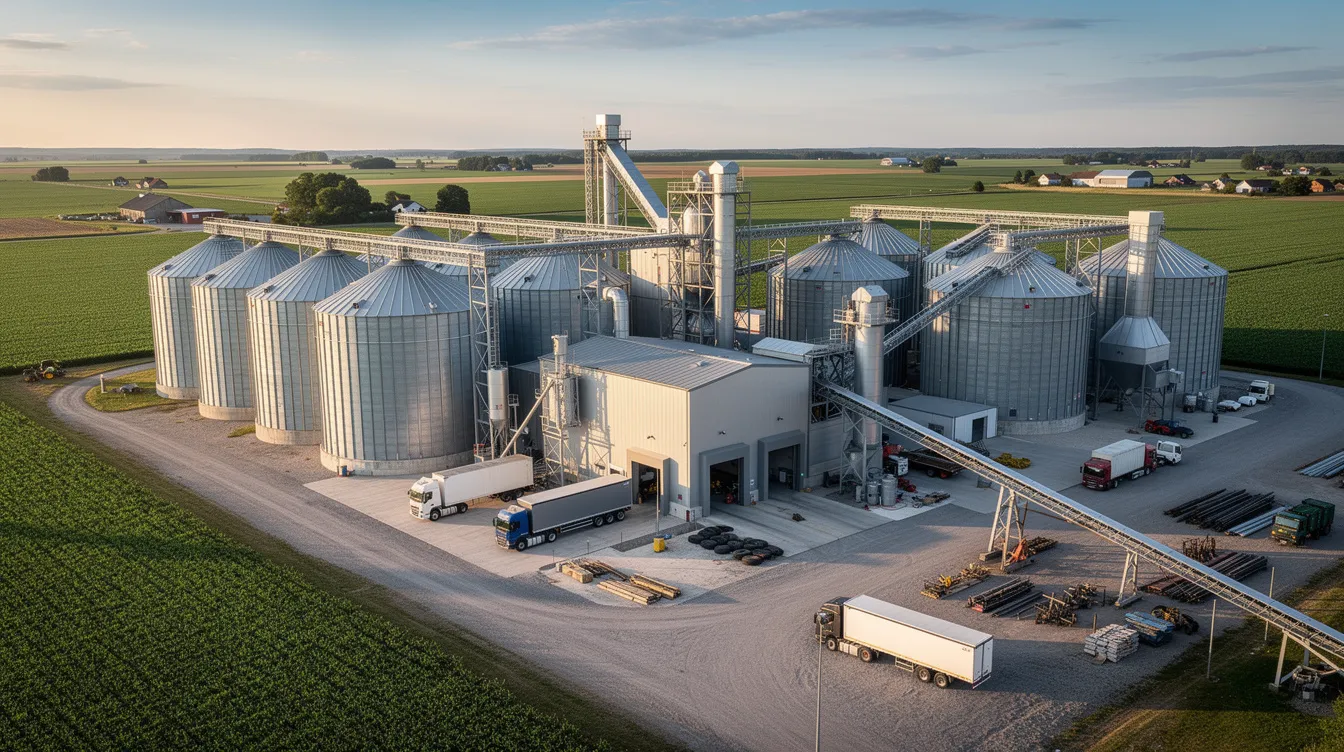
Indian promoters typically evaluate animal feed manufacturing projects across four broad capacity configurations-50 TPD, 100 TPD, 200 TPD, and 300 TPD-with the choice driven by local market demand, available capital, existing operations, and growth ambitions. Animal feed manufacturing plants commonly require annual production capacity ranging from 20,000 to 100,000 MT depending on scale, product mix, and operating schedule.
A 50 TPD plant generally serves localised demand within a compact geographic radius, supplying small and medium poultry farmers, cattle feed dealers, and local livestock farming operations. A 100 TPD facility targets regional markets, serving a mix of dealers, institutional buyers, and possibly one or two broiler integrators. At 200 TPD and above, the operation takes on a distinctly industrial character-serving multiple states, maintaining extensive dealer networks, and potentially catering to aquaculture, fish feed, and specialty feed segments alongside core poultry and cattle feed lines.
Installed plant capacity must be evaluated alongside actual achievable annual production. A plant rated at 100 TPD operating for 300 days on a single shift will produce approximately 30,000 MT per year. However, real-world utilisation depends on market absorption, production ramp-up speed, maintenance downtime, and seasonal demand variations. Assuming 90–95% utilisation in Year 1 without supporting evidence is a common planning error.
Automation level, product format (pellet vs mash feed), storage infrastructure including silos and warehousing, and the presence of an in-house quality control laboratory all significantly alter both capital investment requirements and the operating cost structure. For detailed guidance on animal feed mill capacity planning and how to match installed capacity with realistic production targets, promoters may refer to our dedicated capacity planning resource.
| Parameter | 50 TPD | 100 TPD | 200 TPD | 300 TPD |
|---|---|---|---|---|
| Annual Rated Capacity (MT/year) | ~15,000 | ~30,000 | ~60,000 | ~90,000 |
| Typical Working Days | 300 | 300 | 300–310 | 300–320 |
| Operating Shifts | 1 | 1–2 | 2 | 2–3 |
| Storage Needs | Moderate | Significant | Extensive silos + warehouses | Large-scale integrated storage |
| Automation Level | Semi-automatic | Intermediate to high | High; PLC/SCADA | Fully automated |
| Commercial Suitability | Local/district market | Regional market | Multi-state distribution | Pan-regional; institutional buyers |
Capital investment varies significantly by plant capacity and location. Minimum investment for a small-scale plant starts at approximately USD 4.5 million. A mid-size plant requires approximately USD 9 million, while large-scale facilities may need around USD 12 million or more to establish, depending on technology, land cost, and infrastructure requirements.
Market Feasibility and Demand Assessment
Robust demand analysis is central to any animal feed manufacturing plant feasibility study. The installed capacity of a proposed plant must be aligned with real, addressable market size-not optimistic assumptions derived from national statistics. Market demand analysis for animal feed should assess local and national trends, competitive intensity, and the specific dynamics of the target geography.
The global animal feed market was valued at USD 548.1 billion in 2025, with projections suggesting the animal feed market is projected to reach USD 702.75 billion by 2034. Global poultry feed consumption is projected to reach 1.2 billion metric tons by 2030, with Asia Pacific expected to contribute over 40% of total poultry feed demand. These numbers confirm that the global animal feed industry offers structural growth, but a project promoter in India must translate this macro opportunity into a defensible local sales forecast.
Market analysis includes local livestock population trends and competitive landscape evaluation. Regional demand mapping should cover poultry population, cattle and buffalo feed requirements, proximity to commercial farming clusters, and the distribution radius within which freight economics remain viable-typically 150–250 km for bulk animal feed. Beyond this radius, logistics cost erodes contribution margins rapidly, especially for low-margin products like cattle feed and buffalo feed.
Competition assessment requires identifying existing animal feed manufacturing plants in the target region, understanding their installed versus utilised capacity, pricing strategies, dealer margins, and market reputation. The presence of leading animal feed manufacturers or large integrated poultry operations producing their own feed changes the competitive equation significantly.
Market analysis should also evaluate customer segmentation: small farmers purchasing bags from retail dealers, regional distributors handling bulk volumes, institutional buyers like organised dairies and poultry integrators, and export opportunities where relevant. Credit practices vary widely-dealer credit periods of 30–60 days are common, and institutional buyers may demand even longer cycles, directly impacting working capital and default risk.
Market Feasibility Checklist:
- Conduct field visits to identify active farming clusters within the planned distribution radius
- Interview 15–20 dealers, distributors, and institutional buyers for demand estimates and credit expectations
- Analyse regional poultry and dairy production data from state animal husbandry departments
- Map competitor locations, capacities, product lines, pricing, and market share
- Study raw material availability and logistics within the sourcing geography
- Review price trends for major feed products over the past 3–5 years
- Estimate addressable market volume using bottom-up, customer-segment-level projections
- Validate demand assumptions against regional livestock population growth and modern farming techniques adoption
There are about 5,650 animal food manufacturing facilities in the United States, reflecting the scale of organized animal feed manufacturing in mature markets. India’s animal feed industry, while growing rapidly, is still transitioning from unorganised farm-level mixing to commercial feed production, which creates permanent demand for quality-focused animal feed production from properly structured manufacturing operations.
Technical Feasibility and Manufacturing Technology Assessment
Technical feasibility covers production capacity sizing and raw material sourcing strategies alongside the selection of appropriate manufacturing technology. The choice between mash feed, pellet feed, and crumble feed production depends on the target animal species, market expectations, and available capital. Most large-scale Indian plants producing broiler growth feed, layer rations, and cattle feed increasingly favour pellet and crumble formats because they enhance animal growth performance and reduce feed wastage.
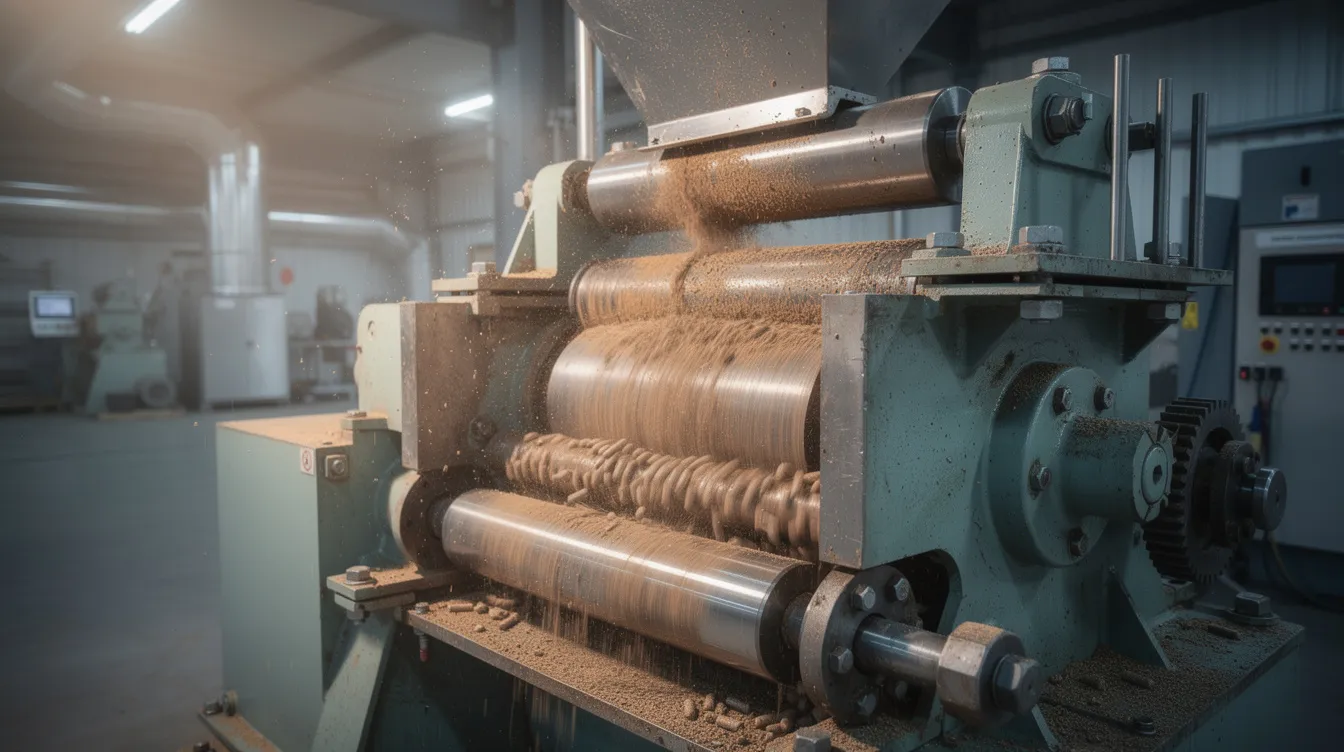
Animal feed production involves grinding, mixing, and pelleting processes as core operations. The sequential process flow in a modern animal feed manufacturing facility typically includes:
- Raw material receiving and testing – Incoming ingredients tested for moisture, protein, mycotoxins
- Cleaning and magnetic separation – Removal of foreign matter, stones, and metallic contaminants
- Raw material grinding – Hammer mills or roller mills reduce particle size for uniform mixing
- Ingredient batching – Automated or semi-automated weighing of ingredients per formulation
- Mixing – Horizontal or vertical mixers ensure homogeneous feed with feed additives and premixes
- Steam conditioning – Moisture and heat treatment before pellet formation
- Pelletisation – Ring-die pellet presses compress conditioned mash into pellets
- Cooling – Counter-flow coolers reduce pellet temperature and moisture
- Crumbling and screening – Where required for starter feeds or specific animal species requirements
- Packaging and storage – Bagging, weighing, stitching, and finished-goods warehousing
Technical feasibility should match this process flow to the intended product mix. A plant producing broiler starter, grower, finisher, layer feed, and cattle feed simultaneously needs careful capacity balancing to avoid bottlenecks at grinding, pelletising, or packaging stages.
Machinery selection deserves careful evaluation. Rated capacity on a manufacturer’s nameplate often differs from commercially achievable output. Energy consumption per MT, the degree of automation through SCADA and PLC systems, ease of maintenance, availability of local spare parts, and after-sales service support all influence both capital expenditure and long-term operating economics. Features automated production lines offer significant advantages in batch consistency and labour efficiency, but increase upfront machinery costs.
Quality control protocols are essential for raw material testing and safety verification. An in-house laboratory equipped for proximate analysis, mycotoxin screening, and pellet durability testing is increasingly expected by institutional buyers and integrators. Feed formulation software helps nutritionists develop species specific nutrition solutions-including nutritionally balanced feed formulations and advanced compound feed formulations-that optimise cost while meeting nutritional targets for different animal species.
Equipment redundancy for critical components such as compressors, grinders, and boilers reduces the risk of production stoppages. Human resources planning outlines staffing needs and safety protocols for operations, maintenance, quality control, and logistics teams.
For readers evaluating automatic animal feed mill machinery and EPC cost or seeking a detailed industrial feed pelleting plant project report, these companion resources provide deeper machinery-level analysis.
Raw Material Supply Feasibility and Procurement Risk
Raw materials account for 80–85% of operating costs in animal feed manufacturing, making supply feasibility and price risk the heart of any animal feed manufacturing project risk assessment. Even modest fluctuations in key ingredient prices can dramatically alter gross contribution, EBITDA, cash flows, and debt servicing capacity.
Animal feed production requires maize, soybean meal, and oil cake as primary ingredients, supplemented by broken rice, wheat bran, de-oiled rice bran (DORB), DDGS, groundnut cake, sunflower cake, fish meal, and vitamin-mineral premixes. Maize alone accounts for a dominant share of operating expenses in poultry feed formulations, with domestic prices around ₹26/kg and soybean meal around ₹48/kg as of mid-2026. These prices are subject to significant seasonal and policy-driven volatility.
Seasonality is a critical factor. Maize prices typically decline during and immediately after the kharif harvest (October–December) and rise during lean months. Stocking strategy must account for both price optimisation and raw material storage risks-moisture ingress, mycotoxin development, and pest damage can render stored material unusable and pose serious risks to animal health and product quality. India’s corn production is expected to decline from approximately 48.5 MMT to around 44 MMT in MY 2026/27 due to land diversion, adding further supply chain risks.
Procurement models range from direct farmer purchases at mandis to contracts with large traders and processors, each with trade-offs in price, quality consistency, and payment terms. Raw materials should be sourced close to the manufacturing plant wherever possible, and site selection should consider proximity to raw material suppliers and transportation hubs. Geographic diversification of suppliers reduces concentration risk.
Quality risks including aflatoxin contamination, variable protein levels, and foreign matter require robust testing, supplier qualification, and rejection protocols. Long-term contracts stabilise pricing and secure supply continuity, though they require careful structuring to avoid locking in unfavourable terms during price corrections.
Raw material procurement strategy is crucial for operational efficiency. Changes in raw material prices quickly affect gross contribution, EBITDA, and DSCR, which is why ongoing price monitoring must feed into regular financial re-forecasting. Supplier diversification, framework contracts, and partial hedging-where available-help manage volatility without speculating on commodity markets.
Capital Investment and Project Cost Feasibility
Precise capital expenditure depends on plant capacity, technology level, land prices, and geographic location. A feasibility study should use project-specific estimates rather than copying generic numbers from published reports.
Total capital investment covers land acquisition and site preparation, civil construction and factory buildings, plant and machinery, raw material handling systems, silos and warehouses, utilities including power systems, boilers, and compressors, quality control laboratory, effluent treatment and dust control systems, waste management systems, and other fixed assets such as vehicles and IT infrastructure.
Machinery costs represent the largest portion of capital expenditure, typically accounting for 40–55% of total fixed investment depending on automation level. Beyond tangible assets, intangible and soft costs-engineering and consultancy fees, pre-operative expenses, interest during construction, statutory fees, and contingency provisions-must be included to avoid funding gaps during implementation.
Margin money for working capital is part of total project cost from a banker’s perspective, even though it is not fixed capital investment. Banks typically require promoter contribution of 15–25% as margin against working capital limits.
Based on observed industrial practice, a 100 TPD plant with intermediate automation, pellet capacity, and storage silos would likely require capital investment in the range of ₹25–60 crore, while larger facilities of 200–300 TPD may require ₹80–150 crore or more.
| Cost Head | Sub-Components |
|---|---|
| Land & Site Development | Land acquisition, levelling, boundary, internal roads |
| Civil Construction | Factory building, warehouses, office, lab, utility blocks |
| Plant & Machinery | Grinding, batching, mixing, pelletising, cooling, crumbling, packaging |
| Material Handling | Conveyors, elevators, hoppers, pneumatic systems |
| Storage Infrastructure | Raw material silos, finished goods warehouse |
| Utilities | Electrical installation, transformers, boilers, compressors, DG sets |
| QC & Lab Equipment | Testing instruments, formulation software |
| Pollution Control | Dust collection, ETP, noise attenuation |
| Vehicles & IT | Forklifts, trucks, ERP/MIS systems |
| Pre-Operative Expenses | Consultancy, trial runs, training, interest during construction |
| Contingency | Typically 5–10% of hard costs |
| Working Capital Margin | Promoter’s margin contribution for bank WC limits |
Common pitfalls include under-budgeting utilities and storage, ignoring pre-operative expenses, and failing to provide adequate contingency-each of which can create cost overruns and require additional funding under pressure. For a detailed exploration of grain-based animal feed plant setup cost, promoters may refer to our dedicated cost planning guide.
Operating Cost and Manufacturing Economics
Operating cost assumptions largely determine profitability. Even a well-designed plant can be unviable if variable and fixed costs are mis-estimated or if product pricing is unrealistic. Financial feasibility includes capital and operational expenditure estimations, with the operating cost structure requiring careful itemisation.
Major variable costs include raw materials (the dominant component), packing materials such as bags and labels, power and fuel including steam generation where relevant, inward freight on raw materials, and outward freight or dealer delivery costs. In the first year of operations, operating costs primarily cover raw materials and utilities, with utilities representing around 5–10% of total operating expenses. Transportation and packaging costs contribute to the remaining operating expenses.
Key fixed costs comprise factory salaries and contract labour, repairs and maintenance, security, quality control expenses, insurance, administrative overheads, and selling expenses including dealer incentives.
Gross profit margins in animal feed manufacturing typically range from 15–25%, while net profit margins typically fall between 5–12%, depending on product mix, scale, location, and efficiency. Operating costs are driven by raw materials, mainly maize and soybean meal, and operating costs increase significantly by the fifth year due to inflation in wages, power tariffs, and input prices.
The conceptual flow linking revenue to profitability follows a clear hierarchy:
Sales Revenue → Raw Material & Variable Costs → Contribution → Fixed Operating Costs → EBITDA → Depreciation & Interest → Profit Before Tax → Profit After Tax
Contribution per MT-calculated as selling price minus variable cost per MT-is the starting point for evaluating whether fixed costs and debt servicing can be covered. Contribution varies meaningfully among different feed lines: broiler feed typically commands higher profit margins than cattle feed or buffalo feed due to shorter production cycles and pricing power. The poultry feed industry generally offers better margins than ruminant feed segments.
Promoters should track product-wise margins rather than relying on a single blended margin. Detailed modelling of cost per MT, capacity utilisation ramp-up, and price trends is covered in our dedicated resource on animal feed mill financial projections.
Working Capital Assessment and Cash Conversion Cycle
Large-scale feed manufacturing is capital-intensive not only in terms of plant and machinery but also in working capital for raw materials, finished stock, and customer credit. Many projects that appear profitable on paper experience severe cash-flow stress because working capital requirements were underestimated during feasibility.
Each component of the working capital cycle requires separate estimation:
- Raw material inventory days: Higher during harvest season when bulk procurement at favourable prices is typical; 30–60 days is common
- In-process and finished goods inventory: Usually short for perishable feed products; 7–15 days
- Receivables collection period: Varies by customer segment; dealers typically 30–60 days, integrators may demand longer
- Creditors/supplier credit days: Negotiated terms with raw material suppliers; 15–30 days
Typical industry patterns in India involve higher stocking during kharif and rabi harvest windows for maize and soybean, varying credit norms between small dealers and large institutional buyers, and significant regional differences in payment practices.
Working capital requirement is computed using one full operating cycle, then translated into bank working capital limits-cash credit, overdraft-and promoter margin contribution. Growth in sales volume, while attractive on paper, often increases working capital requirement disproportionately. A plant scaling from 50 to 100% utilisation may need to nearly double its procurement, inventory, and receivables financing, straining cash flow and DSCR if not planned in advance.
Detailed working capital assessment methodology, including normative holding periods and bank appraisal norms specific to animal feed manufacturing, is discussed in our animal feed manufacturing plant working capital guide.
Inadequate working capital is a major reason otherwise technically sound animal feed plants underperform or shut down within the first 3–5 years. This risk is compounded when receivables stretch beyond projected levels or when raw material prices spike, requiring larger procurement outlays than budgeted.
Animal Feed Plant Financial Feasibility Analysis
Animal feed plant financial feasibility analysis encompasses integrated financial statements, key ratios, and investment-return metrics projected over at least 7–10 years. Its purpose is to test whether the proposed project can generate sufficient cash to meet operating expenses, debt obligations, and provide an adequate return on invested capital under reasonable assumptions.
Core components include projected profit and loss accounts, projected balance sheets, fund-flow or cash flow statements, and supporting schedules for capacity utilisation, product pricing, raw material consumption, salary escalation, and loan repayment. Financial projections should include cash flow statements and net present value analysis to capture the time value of money.
Break-even analysis helps evaluate the financial feasibility of projects by identifying the minimum production volume or revenue at which the project covers all costs. Important financial indicators that lenders and investors typically evaluate include:
| Financial Metric | Analytical Purpose | Key Limitations |
|---|---|---|
| EBITDA Margin | Measures operating profitability before financing and depreciation | Does not reflect cash flow timing or working capital needs |
| Net Profit Margin | Captures profitability after all costs including tax | Can be distorted by depreciation methods and tax incentives |
| Break-Even Volume | Identifies minimum production for cost recovery | Static analysis; doesn’t account for seasonal demand variation |
| DSCR (Year-wise & Average) | Evaluates ability to service debt obligations | Does not reflect equity returns; sensitive to depreciation policy |
| Project IRR | Measures return on total project investment | Sensitive to terminal value and assumes reinvestment at IRR rate |
| Equity IRR | Measures return specifically to equity investors | Higher leverage artificially inflates equity IRR |
| Net Present Value | Captures absolute value creation in present terms | Depends heavily on discount rate selection |
| Payback Period | Indicates time to recover initial investment | Ignores cash flows beyond payback; no risk adjustment |
DSCR is computed based on cash available for debt servicing-typically net profit after tax plus depreciation plus interest on term loan-divided by term loan principal repayment plus interest. Banks typically expect an average DSCR of 1.25x–1.35x for manufacturing projects, with no single year falling below approximately 1.15x. IRR and NPV are sensitive to assumptions about capacity ramp-up, selling price, raw material cost, and financing mix; they should be used as decision-support tools, not marketing slogans.
No single indicator independently establishes investment viability. Financial analysis must be read as an integrated picture.
Illustrative Financial Feasibility Assessment – 100 TPD Animal Feed Plant
This section presents a hypothetical example using assumed figures solely for illustration. Real projects require customised modelling based on actual market conditions, vendor quotations, and location-specific cost data.
Assumptions:
- Installed capacity: 100 TPD
- Working days: 300 per year
- Capacity utilisation: Year 1 at 55%, Year 2 at 65%, Year 3 at 75%, stabilising at 80–85% from Year 4
- Product mix: 70% poultry feed, 30% cattle feed
- Average selling price: Assumed ₹32,000/MT (blended, illustrative)
- Average raw material cost: Assumed ₹26,000/MT (blended, illustrative)
Annual Production and Revenue (Year 3 – 75% Utilisation):
- Production: 100 × 300 × 0.75 = 22,500 MT
- Revenue: 22,500 × ₹32,000 = ₹72.00 crore (illustrative)
Cost Structure (Year 3 – Illustrative):
| Item | ₹ Crore (Approx.) | % of Revenue |
|---|---|---|
| Raw Materials | 58.50 | 81.3% |
| Packing, Power, Fuel, Freight | 5.40 | 7.5% |
| Total Variable Cost | 63.90 | 88.8% |
| Fixed Costs (Labour, Maintenance, Overheads, Selling) | 3.60 | 5.0% |
| EBITDA | 4.50 | 6.3% |
| Depreciation | 1.80 | – |
| Interest on Term Loan | 1.60 | – |
| PBT | 1.10 | – |
Debt Servicing Illustration:
Assuming a term loan of ₹25 crore repayable over 7 years with annual principal repayment of approximately ₹3.57 crore plus interest:
- Cash available for debt service (PAT + Depreciation + Interest): ₹1.10 + ₹1.80 + ₹1.60 = ₹4.50 crore
- Annual debt obligation: ₹3.57 + ₹1.60 = ₹5.17 crore
- Year 3 DSCR: 4.50 / 5.17 = ~0.87x
This illustrative scenario shows that at 75% utilisation with these assumed margins, the project would not meet minimum DSCR requirements in Year 3. This does not mean the project is unviable-it demonstrates why assumptions around capacity ramp-up, selling prices, and cost efficiency must be tested rigorously.
How conclusions would change:
- If capacity utilisation reaches 85% in Year 3 instead of 75%, production rises to 25,500 MT, revenue to ₹81.60 crore, and EBITDA improves significantly, potentially pushing DSCR above 1.20x
- A 10% increase in raw material prices would reduce EBITDA by approximately ₹5.85 crore at full utilisation, severely compressing margins
- If receivable days stretch by an additional 30 days, working capital requirement increases by approximately ₹6–7 crore, requiring either additional bank limits or promoter infusion
This is precisely why lenders and investors insist on sensitivity analysis beyond base-case numbers. A Detailed Project Report provides a roadmap for technical feasibility and financial viability, but only when built on validated, stress-tested assumptions.
Animal Feed Manufacturing Project Risk Assessment
Animal feed manufacturing project risk assessment must be explicit, structured, and grounded in practical Indian operating conditions. Risk assessment identifies potential market and operational risks that can materially affect project economics. Generic risk statements without specific mitigation strategies add little value to a feasibility study.
Market risks include demand slowdowns caused by disease outbreaks in poultry or livestock, aggressive pricing by large integrated players who manufacture their own feed, and shifts in farmer preferences toward unorganized or cooperative supply channels. Market fluctuations in egg and meat prices directly affect farmer purchasing power and, consequently, feed demand.
Raw material risks encompass crop failure, government export restrictions or tariff changes, price volatility driven by ethanol blending policies diverting corn from feed use, and quality issues like mycotoxin contamination. These supply chain risks can simultaneously increase procurement cost and reduce product quality, damaging both margins and brand credibility. Improving animal productivity through nutritionally balanced feed formulations requires consistent raw material quality.
Technical and operational risks include technology mismatch with actual production requirements, poor EPC execution causing commissioning delays, chronic bottlenecks at grinding or pelletising stages, equipment failures, and inconsistent product quality that undermines customer confidence. Feed technology selection errors are costly to rectify post-installation.
Financial risks involve interest rate increases, cost overruns during construction, delays in project completion that escalate interest during construction, stressed DSCR in early years, and inadequate working capital provisions.
Regulatory and environmental risks include stricter pollution norms, changes in labour laws, or new quality regulations for animal feed and feed additives that require additional investment. Animal feed manufacturing requires environmental clearances for compliance, and delays in obtaining Consent to Establish or Consent to Operate from State Pollution Control Boards can push back commercial production timelines.
Governance risks arise from weak internal controls, related-party transactions, inadequate MIS, and over-dependence on a few customers or a single procurement channel.
| Risk Category | Potential Impact | Likelihood | Severity | Suggested Mitigation |
|---|---|---|---|---|
| Demand shortfall | Lower utilisation, revenue below projections | Medium | High | Bottom-up demand validation; diversified customer base |
| Raw material price spike | EBITDA compression, DSCR stress | High | High | Diversified sourcing; seasonal stocking; framework contracts |
| Quality/contamination | Product recalls, customer loss | Medium | High | In-house lab testing; supplier qualification; traceability |
| Equipment breakdown | Production loss, delivery defaults | Medium | Medium | Preventive maintenance; standby critical equipment |
| Cost overrun during implementation | Funding gap, additional borrowing | Medium | Medium | Detailed cost estimation; adequate contingency (5–10%) |
| Regulatory delays | Extended pre-operative period, higher IDC | Medium | Medium | Early compliance mapping; professional statutory support |
| Working capital crunch | Inability to procure or dispatch | High | High | Adequate WC limits; promoter margin; receivables management |
| Governance weakness | Investor/lender concern; fraud risk | Low–Medium | High | Independent audits; MIS implementation; board oversight |
Sensitivity Analysis and Stress Testing
A single optimistic financial projection is inadequate for a serious investor or lender. Financial feasibility must be validated across multiple scenarios to understand how robust the project economics are when assumptions deviate from the base case.
Three scenarios should be defined and modelled through the complete financial framework:
- Base Case: Management’s realistic expectation based on validated assumptions
- Downside Case: Mild adverse changes-perhaps 5–7% higher raw material costs, 10% lower capacity utilisation, or 15 additional receivable days
- Severe Downside Case: Multiple unfavourable factors occurring simultaneously-10% raw material cost increase, 5% lower selling prices, delayed capacity ramp-up, and higher interest rates
Each scenario should be evaluated against EBITDA margin, year-wise DSCR profile, cumulative cash surplus, project IRR, and equity IRR. At minimum, the project should demonstrate ability to service debt even under the downside case, and the severe downside should be examined to identify the point at which the business would require additional capital or covenant waivers.
Typical sensitivities to test include a 5–10% increase in maize and soybean meal prices, lower average selling price realisation due to competitive pressure, delayed capacity utilisation, higher power tariffs, longer receivable collection periods, and higher borrowing interest rates.
Findings from sensitivity analysis directly inform decisions about leverage levels, working capital buffers, contingency provisions, and risk mitigation strategies. A project that breaks even only under optimistic assumptions is fundamentally different from one that remains cash-positive even when conditions deteriorate moderately. Similar analytical frameworks for sensitivity and risk evaluation are discussed in our guide on dairy project sensitivity and risk analysis, which illustrates comparable methodology for capital-intensive food processing projects.
Bank Finance Feasibility and Lender Evaluation
Banks and financial institutions in India evaluate an animal feed manufacturing plant proposal through a lens that often differs from how promoters perceive their own project. While a promoter may emphasise market opportunity and growth potential, a lender’s primary concern is repayment certainty, collateral coverage, and cash flow robustness.
Key lender focus areas include:
- Promoter background and net worth: Track record in manufacturing, existing business performance, credit history
- Sector experience: Prior involvement in the animal feed industry, livestock farming, or related agro-processing
- Financial contribution: Promoter equity as a percentage of total project cost; typically 25–35% for manufacturing
- Project cost reasonableness: Validated through independent assessment, not just vendor quotations
- Projected DSCR and cash flow: Year-wise analysis with average DSCR typically expected above 1.25x–1.35x
- Security and collateral: Primary security of project assets plus collateral coverage
- Working capital assessment: Drawing power, inventory and receivable norms, margin adequacy
- Statutory compliance: All required approvals in place or timeline established
CMA Data and a bankable DPR present structured financial information covering fund-based and non-fund-based limits, projected balance sheets, working capital cycle, and ratio analysis. Regulatory compliance includes securing business licenses and permits, and lenders verify that the project has a realistic compliance timeline.
Even a financially viable project may face sanction challenges if collateral is inadequate, promoter track record is weak, or lender risk appetite for the animal feed sector is limited at that point in time. Project Report Bank prepares bank-ready project finance documentation including animal feed plant bank loan DPR and CMA Data tailored to Indian banking norms.
Animal Feed Plant Investor Readiness – What Equity Investors Evaluate
Animal feed plant investor readiness is fundamentally different from bank readiness. Equity investors focus on scalability, governance, risk-adjusted returns, and exit potential rather than solely on collateral and debt service coverage. Domestic feed production growth and the expanding animal feed industry create an investable macro thesis, but investors evaluate whether a specific project can capture that opportunity profitably.
Key components of an investable equity story include:
Investment thesis and market opportunity: A quantified view of addressable market, competitive positioning versus leading animal feed manufacturers, and a credible go-to-market strategy. The global economy’s increasing focus on protein consumption growth and animal welfare standards supports long-term demand, but investors want evidence of regional demand capture capability.
Unit economics: Contribution per MT, capacity utilisation breakeven, cash break-even, and visibility on improving margins through scale, sourcing optimisation, and product mix upgrade. Investors in the animal agriculture sector look for evidence that the promoter can achieve higher profit margins as operations scale.
Promoter capability and governance: Prior execution track record, management depth, quality of MIS systems, and willingness to adopt robust reporting and audit practices. Investors evaluate whether promoters understand advanced nutrition science, feed technology, and manufacturing operations deeply enough to manage the business through market cycles.
Capital structure and fund utilisation: Clear mapping of how funds will be used-land, machinery, working capital, marketing-along with proposed debt-equity ratio and contingency buffers. Investors want confidence that their capital is deployed efficiently and not subsidising inadequate planning.
Valuation and exit: Reasonable valuation expectations, potential exit routes including secondary sale, strategic sale to larger feed players, or partial buyback over a 5–7 year horizon. Equity investors in India’s animal feed industry typically target equity IRR of 15–25%, depending on scale and risk profile.
Investor Readiness Checklist:
- ☐ Addressable market clearly quantified with bottom-up demand estimates
- ☐ Competitive positioning articulated versus regional and national players
- ☐ Unit economics demonstrated with product-wise contribution analysis
- ☐ Break-even utilisation identified and achievable within 2–3 years
- ☐ Risk assessment completed with explicit mitigation strategies
- ☐ Governance framework established: independent audits, MIS, board structure
- ☐ Financial model stress-tested across multiple scenarios
- ☐ Funding requirement and utilisation mapped clearly
- ☐ Realistic exit pathway identified for equity investors
- ☐ Promoter equity contribution committed and documented
The difference between a bankable DPR and an investor-ready DPR is significant. A bankable DPR focuses on debt servicing ability, security coverage, and regulatory compliance. An investor-ready DPR expands this with growth strategy, equity IRR, valuation logic, and a narrative demonstrating how the business can scale and generate attractive risk-adjusted returns. Projects without demonstrated governance, margins, or a credible future expansion plan are generally unsuitable for external equity.
Debt Funding vs Equity Funding for Large-Scale Animal Feed Projects
Large animal feed projects usually require a blend of promoter equity, bank debt, and sometimes strategic or institutional equity rather than relying on any single funding source. The optimal financing mix should emerge from the animal feed plant financial feasibility analysis and the project’s risk profile, not from maximum leverage targets alone.
| Parameter | Bank Term Loan | Working Capital Facility | Promoter Equity | External Equity (PE/Strategic) |
|---|---|---|---|---|
| Cost of Capital | Interest rate (currently 10–13% for manufacturing) | Interest + processing fees | No fixed cost; equity IRR expected | High; 15–25% IRR expectation |
| Repayment Obligation | Fixed principal + interest schedule | Revolving; renewal-based | None; risk capital | None; dividend/exit-driven |
| Ownership Dilution | None | None | Full control | Partial dilution; governance rights |
| Security Requirement | Primary + collateral | Hypothecation of current assets + collateral | None | None, but investor protection clauses |
| Flexibility | Rigid; covenants, prepayment terms | Moderate; drawing power linked | Maximum | Negotiable; depends on term sheet |
| Suitability | Core project capex financing | Procurement and sales cycle funding | Foundation capital; demonstrates commitment | Scalable projects with governance and growth visibility |
Promoter equity represents long-term capital at risk with no fixed repayment obligation, but carries the expectation of adequate return and full operational control. Bank term loans provide leveraged capital at a defined cost but impose strict repayment schedules, covenants, and security requirements.
External equity-from private equity firms, strategic partnerships with grain or feed companies, or joint venture structures-brings patient capital and potentially industry expertise, but involves ownership dilution and governance-sharing arrangements. Not every feed manufacturing business is suitable for external equity, particularly projects without demonstrated scale, governance infrastructure, extensive production capacities, or a credible growth proposition.
Regulatory, Environmental and Quality Compliance Feasibility in India
Compliance requirements vary by state, land zoning, plant size, and feed type, and must be confirmed with relevant local authorities during the feasibility stage. Statutory approvals include licenses from the Pollution Control Board and various registration requirements depending on jurisdiction.
Typical approvals and registrations include:
- Industrial land allotment or land-use conversion permissions
- Factory licence under the Factories Act
- Labour registrations under applicable central and state labour laws
- Fire safety clearance from the local fire department
- Electrical safety certification
- Boiler registration, where steam boilers are used
- State Pollution Control Board consents-Consent to Establish and Consent to Operate
- GST registration and other applicable tax registrations
Environmental aspects include dust control systems for grinding and raw material handling areas, noise management, effluent treatment for cleaning operations, and adherence to norms for solid waste disposal from screening and aspiration processes. Feed safety certifications are necessary for livestock and poultry feed, and north American regulators track feed materials for safety compliance in export markets, which may be relevant for promoters targeting international customers.
Quality-related frameworks include applicable BIS standards for animal feed, quality control protocols for incoming raw materials and finished products, and voluntary certifications such as ISO 22000 or HACCP depending on customer expectations. The American Feed Industry Association provides reference standards that some institutional buyers may benchmark against. Animal feed, unlike human food products or nutritionally balanced pet food, may or may not fall under certain FSSAI regulations depending on product type and additives-promoters must seek updated professional and legal guidance on this.
Feasibility studies should include an initial compliance mapping to estimate time and cost for all required licences, approvals, and environmental clearances. Delays in obtaining these consents can escalate interest during construction and strain project cash flows significantly.
Common Reasons Large-Scale Animal Feed Projects Fail Financial Feasibility
Understanding failure patterns helps promoters design more resilient business models. The most common reasons large-scale animal feed manufacturing projects fail to clear financial feasibility include:
- Overestimated market demand: Planning capacity based on national statistics rather than validated local addressable demand. India’s largest feed plants succeed partly because they are located in high-density livestock and poultry zones with proven offtake.
- Unrealistic capacity utilisation: Assuming 85–90% utilisation in Year 1 without customer commitments, distribution networks, or brand recognition to support such volumes.
- Underestimated raw material costs: Using average or historical prices without modelling seasonal peaks and policy-driven volatility. Maize accounts for a dominant portion of variable cost, and even modest price swings compress margins.
- Inadequate working capital: Failing to budget for the full cash conversion cycle, especially when receivable days are longer than assumed or when bulk seasonal procurement requires large cash outlays.
- Excessive debt reliance: Structuring projects with minimal promoter contribution, leading to high fixed repayment obligations that become unsustainable during low-utilisation periods.
- Poor plant location: Selecting land based solely on price without considering proximity to raw material sources, target markets, labour availability, and transport connectivity.
- Technology selection errors: Over-investing in automation that the market does not yet justify, or under-investing in pelletising and quality control that institutional buyers require.
- Underestimated logistics expenses: Ignoring outward freight costs that erode margins beyond the economically viable distribution radius.
- Weak distribution networks: Launching production without established dealer relationships, institutional supply agreements, or a go-to-market plan.
- Insufficient promoter contribution: Promoters who stretch to minimise equity investment often find that banks require higher margins, leading to funding gaps.
Actionable mitigation strategies include phased capacity addition aligned with demand build-up, conservative base-case projections with explicit sensitivity analysis, pre-approved working capital limits before commercial production begins, diversified raw material sourcing with framework contracts, and early market tie-ups with key customers and distribution partners.
Step-by-Step Feasibility Assessment Before Making an Investment Decision
A structured, stage-gate approach prevents promoters from locking in major commitments-land purchase, machinery orders, or term loan obligations-before critical questions have been adequately answered.
Stage 1 – Project Concept: Define the investment objective, target animal species (poultry, cattle, aquaculture), geographic focus, plant capacity options (50–300 TPD), and broad investment envelope. Clarify whether this is a greenfield project, brownfield expansion, or diversification from an existing animal feed processing project.
Stage 2 – Preliminary Market Validation: Conduct secondary research and targeted field visits sufficient to determine whether addressable demand justifies proceeding to detailed feasibility. This includes evaluating the competitive landscape, existing capacity, and initial pricing intelligence.
Stage 3 – Technical Configuration: Shortlist manufacturing technologies, prepare preliminary plant layout, and identify process requirements for the intended product mix-mash, pellet, crumble, or integrated production including breeder feed, broiler growth feed, layer feed, and cattle feed. Evaluate whether shrimp feed formulations, fish feed, pig feed, or liquid feed should be part of the product strategy.
Stage 4 – Raw Material & Supply Chain Assessment: Map sourcing geography for feed materials, identify suppliers, estimate procurement costs, and evaluate storage and transportation logistics. Assess whether the region offers sufficient maize, soybean, and other feed ingredients to sustain the planned annual production capacity.
Stage 5 – Capital Cost Estimation: Develop project cost estimates based on layout design, vendor budgets, construction cost assessments, and pre-operative expense calculations. Machinery costs account for the majority of fixed investment and should be based on actual quotations.
Stage 6 – Working Capital Planning: Model the full cash conversion cycle, estimate bank working capital requirements, and determine promoter margin contribution needed.
Stage 7 – Integrated Financial Projections: Build 7–10 year financial projections including P&L, balance sheet, cash flow, DSCR, IRR, and net present value analysis. Ensure all projections are internally consistent and linked to operational assumptions.
Stage 8 – Risk and Sensitivity Analysis: Stress-test projections under downside and severe downside scenarios. Evaluate impact on EBITDA, DSCR, cash flow, and return metrics.
Stage 9 – Bankability and Investor Readiness Assessment: Determine whether the project meets lender requirements for a bankable DPR and, if relevant, equity investor expectations for an investor-ready large scale animal feed plant project report.
Stage 10 – Final Investment Decision: Make a structured Go, Conditional Go, Redesign, or No-Go decision based on integrated findings. For approved projects, prepare an implementation roadmap covering procurement, construction, commissioning, and market launch.
A professional adviser like Project Report Bank typically structures these stages into a cohesive feasibility study and DPR for promoters and financiers, ensuring each stage informs the next in a logical sequence.
How a Professional DPR and Feasibility Study Supports Investment Decisions
A professionally prepared DPR translates technical and commercial inputs into a coherent financial narrative for banks and investors. It includes a detailed project description, market analysis, technical configuration, project cost, means of finance, working capital assessment, financial projections, and structured risk and sensitivity analysis.
The value of an independent review by a Chartered Accountant-led advisory team lies in validating assumptions, benchmarking ratios against industry norms, and ensuring that projections are internally consistent, mathematically accurate, and compliant with banking requirements. Similar professional rigour applies across capital-intensive manufacturing sectors, whether the project involves integrated rice milling and processing or large-scale animal feed production.
A bankable DPR supports lender discussions by clarifying funding requirements, loan structure, repayment schedule, DSCR profile, and security coverage. An investor-ready feasibility study expands this with equity-focused analysis-equity IRR, valuation logic, growth roadmap, and governance framework.
While a DPR does not guarantee funding-sanction decisions depend on individual lender policies, borrower-specific circumstances, and prevailing market conditions-it significantly improves the quality of discussions and helps promoters take more informed decisions before committing capital.

Professional Animal Feed Manufacturing Project Feasibility & DPR Consultancy in India
Project Report Bank is a Chartered Accountant-led professional advisory firm headed by CA Manish Gugliya (FCA, DISA, ICAI), specialising in industrial DPRs, feasibility studies, and project finance advisory for manufacturing projects across India. With more than 20 years of professional experience, the practice combines practical business understanding with structured financial analysis.
Services relevant to animal feed manufacturing include:
- Customised animal feed manufacturing plant feasibility study preparation for 50–300 TPD projects
- Large scale animal feed plant project report and techno-economic feasibility studies
- Bank finance DPR and CMA Data preparation tailored to Indian banking norms
- Detailed financial modelling with DSCR, IRR, NPV, and break-even analysis
- Project cost estimation and working capital planning
- Investment risk assessment and sensitivity analysis
- Animal feed plant investor readiness documentation for equity fundraising
- Project finance advisory and loan structuring
The firm works on project-specific assumptions for plant capacity, technology, location, and product mix rather than generic templates, ensuring practical and bank-acceptable outputs. Professional feasibility assessment is particularly valuable before committing to significant land purchases, machinery orders, term loan obligations, or outside equity investment.
Promoters planning new feed mills or expansion of existing plants-whether involving cattle feed, poultry feed, aquaculture feed, or integrated multi-species operations-are encouraged to engage early in the planning process. For specific project contexts, complementary resources on integrated animal feed mill project reports, animal feed mill expansion project reports, and cattle feed project report preparation provide additional reference points.
Frequently Asked Questions
The following questions address practical doubts that promoters and investors frequently raise when evaluating large-scale animal feed manufacturing investments. Specific cost figures, DSCR targets, and funding structures are tailored individually and require sharing basic project parameters such as proposed capacity, location, and promoter profile.
How long does a comprehensive Animal Feed Manufacturing Plant Feasibility Study usually take?
A comprehensive feasibility study for a large-scale animal feed plant typically requires 3–6 weeks, depending on project complexity, plant size (a 50 TPD project is simpler to model than a 300 TPD multi-product facility), availability of baseline data from the promoter, and the extent of primary market research required. Bankable DPRs with full financial modelling, CMA Data, and risk analysis may take slightly longer than a preliminary feasibility assessment, particularly when vendor quotations, land documentation, and regulatory mapping are being compiled simultaneously.
What information does a promoter need to provide to start a feasibility study?
Key inputs include proposed plant capacity and location, targeted animal species and product mix, tentative technology preferences (mash, pellet, or crumble), land status and availability, promoter background and existing businesses, initial thoughts on funding mix and promoter contribution capacity, and any available market intelligence or customer relationships. Missing information can be refined during the engagement, but clarity on broad vision and investment appetite helps shape the study efficiently and avoids rework.
Can an existing small or medium feed mill use this type of feasibility study for capacity expansion?
Absolutely. Detailed feasibility studies and large scale animal feed plant project reports work very well for expansion or modernisation projects, including evaluation of de-bottlenecking, automation upgrades, new product lines, and the decision between building a greenfield plant versus expanding brownfield capacity. Historic performance data from the existing plant-actual production volumes, raw material consumption, customer credit patterns, and financial results-significantly improves the quality of projections and risk analysis for expansion projects.
Is it necessary to commission a feasibility study before applying for a bank loan?
While some promoters approach banks with only machinery quotations and estimated turnover figures, lenders increasingly expect structured DPRs and financial projections for projects above certain investment thresholds. Completing a professional animal feed manufacturing plant feasibility study and DPR before approaching banks improves sanction prospects, demonstrates seriousness, and protects promoters from overcommitting to configurations that may not be financially viable. The cost of a professional feasibility study is a fraction of the capital at risk in a multi-crore project.
Does Project Report Bank assist with both bank debt and equity investor documentation for animal feed projects?
Project Report Bank supports the full spectrum of project documentation: bank finance DPRs and CMA Data, animal feed plant financial feasibility analysis, investor-ready financial models, and pitch documentation tailored for strategic investors or private equity. Equity funding suitability is evaluated on a case-by-case basis-not every animal feed project is advisable for external equity investment, particularly when scale, governance infrastructure, margin profile, or growth outlook may not meet institutional investor expectations. The advisory approach ensures that promoters pursue funding strategies aligned with their project’s actual characteristics rather than aspirational assumptions.
How does raw material price volatility affect feed mill profitability?
Since raw materials represent 80–85% of total operating expenses, even a 5–10% sustained increase in maize or soybean meal prices can reduce EBITDA margins substantially, compress DSCR below acceptable levels, and increase working capital requirements. Akralos Supplies Animal Feeds and akralos animal nutrition are examples of international players that manage this through scale, procurement expertise, and formulation flexibility. Indian promoters must build price monitoring, supplier diversification, seasonal stocking strategies, and formula cost optimisation into their operating model to manage this risk.
Why is sensitivity analysis necessary before financing an industrial feed plant?
Sensitivity analysis tests whether the project can withstand plausible adverse conditions-higher input costs, lower selling prices, slower demand build-up, or tighter credit markets-without breaching debt service obligations or requiring emergency capital. Lenders and investors rely on sensitivity results to gauge the project’s resilience and determine appropriate financing terms. A project that remains cash-positive only under optimistic conditions carries significantly higher risk than one that demonstrates adequate coverage even in a downside scenario.
What is the difference between a bankable DPR and an investor-ready DPR?
A bankable DPR is structured primarily around lender requirements: project cost reasonableness, means of finance, DSCR profile, collateral coverage, CMA Data, and repayment capability. An investor-ready DPR expands this with equity-specific analysis including equity IRR, business valuation, scalability narrative, competitive differentiation, governance framework, and exit flexibility. The underlying financial data should remain consistent across both formats, but the emphasis, depth of analysis, and presentation differ based on the intended audience. Animal feed serves diverse markets and different animal species, and the investment thesis must reflect the specific market opportunity the project intends to capture. Regardless of whether the project supports animal welfare improvements, livestock health outcomes, or the broader objective of improving animal productivity through advanced compound feed formulations and immune system functioning, the financial documentation must substantiate the claims with evidence-based projections.
Conclusion – Making a Financially Sound Animal Feed Manufacturing Investment
A large-scale animal feed manufacturing plant is a long-term, capital-intensive commitment where the margin for error narrows as capital deployed increases. Success depends on the convergence of robust market demand, secure raw material sourcing, efficient manufacturing operations, disciplined working capital management, and a sound financial structure that can withstand market fluctuations. The global animal feed market’s growth trajectory and India’s expanding livestock and poultry sectors provide a supportive macro environment, but macro trends do not substitute for project-level financial analysis.
Integrated feasibility assessment-covering technical configuration, market validation, capital investment, manufacturing economics, working capital planning, animal feed manufacturing project risk assessment, and sensitivity testing-is essential before committing to final investment decisions. Even technically well-designed animal feed manufacturing plants can fail if demand is overestimated, working capital is insufficient, the distribution strategy is weak, or the funding mix is overly aggressive. The animal feed industry rewards disciplined operators who combine operational knowledge with financial prudence.
Promoters and investors planning serious animal feed manufacturing projects in India-whether greenfield plants, brownfield expansions, or diversification from existing agricultural operations-are invited to engage Project Report Bank for a customised animal feed manufacturing plant feasibility study, bankable DPR preparation, financial modelling, or animal feed plant investor readiness support. Professional assessment before major commitments is not an expense; it is a safeguard for the investment itself. Pet food annually commands significant market attention globally, and the animal feed sector-spanning poultry, dairy, cattle, aquaculture, and specialty feed-deserves the same rigour in project evaluation. The United States producing feed through its network of thousands of facilities demonstrates how organized, professionally managed feed manufacturing operations create sustainable enterprises. India’s animal feed manufacturing sector offers similar structural opportunity for promoters willing to invest in both physical infrastructure and financial planning discipline.