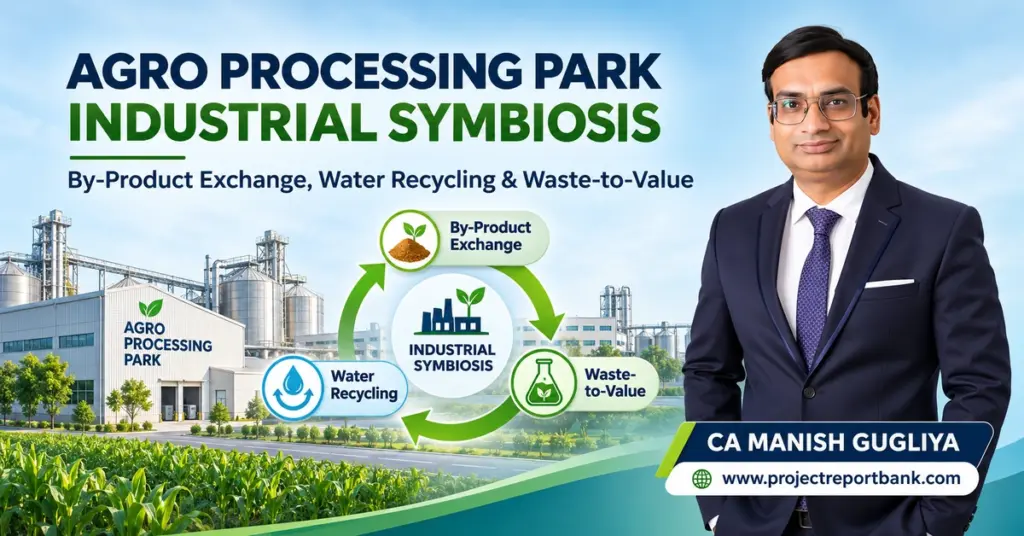
Key Takeaways
- Agro processing park industrial symbiosis can reduce combined operating costs by 10–30% through planned exchange of by products, shared utilities, water recycling and waste-to-value processing among co-located food and agro units.
- Integrated planning of material and energy flows-connecting grain milling with feed plants, biomass boilers, biogas digesters and common effluent treatment-creates measurable improvements in IRR, DSCR and overall project bankability for investments above ₹5 crore.
- By-product exchange (rice husk to boilers, bran to feed mills, fruit peels to biogas) is often the most immediately bankable component, converting disposal liabilities into revenue streams.
- Common water recycling and wastewater treatment infrastructure can reduce freshwater demand by 30–70%, while centralised energy systems lower fuel costs and improve environmental compliance.
- Project Report Bank, led by CA Manish Gugliya, FCA, DISA (ICAI), prepares customised feasibility studies, Detailed Project Reports, financial models and CMA Data for integrated agro-processing parks with industrial symbiosis features.
Introduction – Why Agro Processing Park Industrial Symbiosis Matters Now
Agro processing park industrial symbiosis is the deliberate design of resource exchanges-materials, water, energy and waste heat-among multiple food and agro-processing units sharing a common industrial park. Unlike stand-alone factories that manage their own raw materials, effluents and residues in isolation, an integrated park can design these flows from day one, converting what was traditionally waste disposal into productive input for a neighbouring unit.
The commercial relevance in India from 2024 onwards is difficult to overstate. Rising power and fuel tariffs, stricter pollution norms from CPCB and state pollution control boards, growing water scarcity across states like Maharashtra and Karnataka, and volatile raw material prices are collectively pushing agro-processing units to seek structural cost advantages. A professionally planned agro-processing park offers exactly this: shared infrastructure that delivers both economic benefits and environmental benefits that no single factory can achieve independently.
Globally, the concept is proven. By 2020, approximately 438 eco industrial parks existed worldwide, and the most cited example-the Kalundborg Eco-Industrial Park in Denmark-demonstrates resource sharing among 13 firms, saving approximately EUR 24 million annually. In Europe, the Śmiłowo Eco-Park utilises 300,000 tons of meat waste yearly, converting it into energy and feed. These models from industrial ecology are now being adapted for developing countries, including India, where crop-specific residues (rice husk, wheat bran, oilseed cake), seasonal supply patterns and local regulatory conditions demand a different approach. This article, authored from the project-finance and DPR perspective of CA Manish Gugliya at Project Report Bank, quantifies the cost savings, payback periods and risks involved in building agro-processing parks around industrial symbiosis principles.
What Is Industrial Symbiosis in Agro Processing Parks?
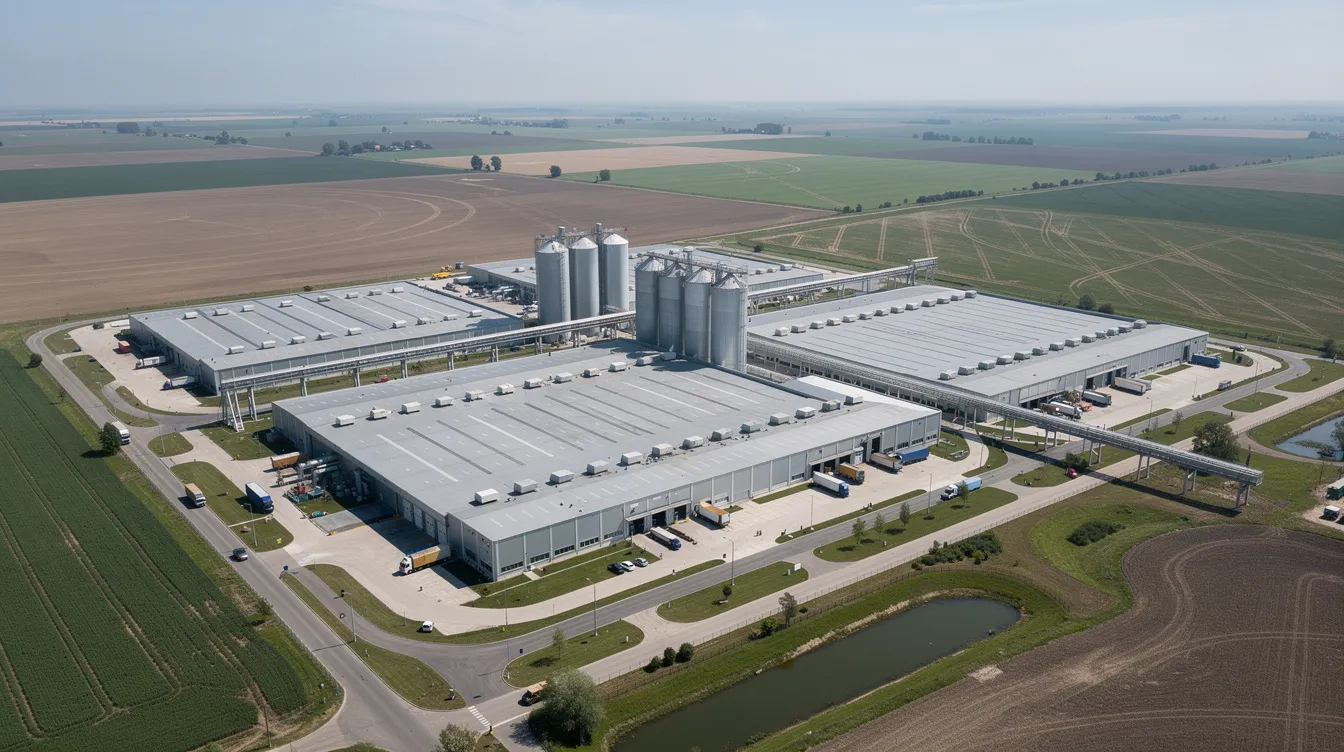
Industrial symbiosis in agro-processing parks refers to the planned and coordinated exchange of by products, waste heat, water, energy and shared services among different food processing and agro-based units located within a common industrial park. The objective is to create a production system where the waste or residue of one unit becomes a productive input for another, and where shared infrastructure replaces duplicated individual systems.
This differs fundamentally from conventional waste management. In a traditional setup, each unit operates its own effluent treatment plant, burns biomass or husk inefficiently, sells residues cheaply to external traders, or pays disposal costs to third parties. Industrial symbiosis reverses this logic. Instead of treating residues as problems requiring expenditure, the park treats them as resources requiring coordination. The result is a closed loop production system that retains value within the park boundary, reduces waste generation and lowers the collective compliance burden.
Typical resource flows in an agro-processing park include:
- Rice husk from rice mills directed to a central biomass boiler for steam and electricity generation
- Wheat bran from flour mills supplied to an on-park animal feed plant
- Whey from dairy processing sent to feed supplement manufacturers or protein extraction units
- Fruit and vegetable peels and pomace routed to a biogas or bio-CNG plant
- Treated wastewater from a shared CETP reused for cooling towers, boiler make-up, landscaping and fire water
The coordinating role falls to the park developer or Special Purpose Vehicle (SPV). The SPV must plan these exchanges at the project design stage, invest in common utilities-CETP, biomass boiler, biogas plant, water recycling systems-and structure lease terms, offtake agreements and utility contracts that bind tenants into a functional industrial ecosystem.
For successful integration, several prerequisites must be met: the park must host a compatible mix of industries generating predictable by products in sufficient quantities; quality specifications for each exchange must be clearly defined; legal clarity must exist on whether a material is classified as food, feed or waste; pipeline corridors and handling infrastructure must be built; and long-term supply and offtake contracts must be in place before operations commence.
Consider a practical India-style symbiosis chain: a grain milling complex (rice and wheat mills) co-located with an animal feed plant, a biomass boiler and a biogas unit. Rice mills generate husk, which fuels the biomass boiler supplying steam and electricity back to the milling units. Wheat flour mills produce bran, which becomes raw material for the feed plant. An oilseed crusher on the same park produces deoiled cake for the feed plant. A fruit and vegetable processing unit sends its peels and off-spec product to the biogas digester. Digestate from the biogas plant is packaged as organic fertiliser, replacing chemical fertilizers for nearby farms. Wastewater from all units flows to the central ETP, is treated and recycled for cooling towers, boiler feed and utility cleaning. This interconnected approach-where resource flow mapping identifies every incoming and outgoing material-is what distinguishes a symbiotic park from a conventional industrial estate.
Industrial Symbiosis in Food Processing Parks vs Generic Eco Industrial Parks
Industrial symbiosis in food processing parks shares the foundational principles of generic eco industrial parks-shared utilities, material exchange, waste heat recovery and centralised environmental treatment. However, the food processing sector introduces constraints that do not apply to heavy manufacturing or chemical industrial systems.
Food processing parks must comply with FSSAI regulations for hygiene, traceability and food safety. Cross-contamination between edible and non-edible streams is a serious risk. By products destined for animal feed must meet feed-grade quality standards, including limits on moisture, aflatoxin and microbiological contamination. Perishability of raw materials and by products demands faster handling and processing cycles. Seasonality of agricultural production means that feedstock volumes for boilers, biogas plants and feed units can vary significantly across the year. Odour management and pest control become critical when fruit, vegetable and dairy processing units operate near communities.
These differences require that industrial ecology theory be customised. A generic eco-industrial park model designed for petrochemical or metals industries cannot be transplanted directly into a food-processing cluster without accounting for these environmental aspects and regulatory complexities.
Comparison: Generic Eco Industrial Park vs Agro/Food Processing Park
| Attribute | Generic Eco Industrial Park | Agro/Food Processing Park |
|---|---|---|
| Industry mix | Heavy manufacturing, chemicals, metals | Food, agro, feed, packaging; mostly small-medium scale |
| Regulatory focus | Air emissions, hazardous waste | + FSSAI food safety, feed norms, traceability |
| By-product destination | Non-edible industrial reuse | Edible/feed uses with strict quality standards |
| Water reuse | Process cooling, industrial wash | Extra caution; food-contact reuse only at potable standard |
| Seasonality | Relatively stable inputs | Varies with crop seasons and harvest cycles |
| Community sensitivity | Industrial buffer zones often adequate | Odour, pest and effluent concerns near villages |
In Indian eco parks and industrial eco parks focusing on food production, these differences must be addressed at the master-planning stage itself, not as an afterthought during operations.
Industrial By-Product Exchange Between Agro-Processing Units
Agro processing park by-product exchange is often the most immediately bankable element of industrial symbiosis. The investment required is relatively modest-primarily handling, storage and transport infrastructure-while the revenue impact is direct: residues that previously incurred disposal costs now generate income or reduce input costs for neighbouring units.
Waste and by-product characterisation is the essential first step. This involves cataloguing the composition, quantity, variability and quality parameters of every residue stream across the park’s tenant mix. Matching waste streams to potential circular solutions then facilitates resource recovery across the park.
By-Product Exchange Matrix for Agro-Processing Parks
| Processing Industry | By-Product Generated | Potential Receiving Industry | Commercial Application |
|---|---|---|---|
| Rice milling | Rice husk | Biomass boiler / cogeneration plant; brick/cement industry | Boiler fuel for steam/electricity; ash as biochar or soil amendment |
| Wheat flour milling | Wheat bran | Animal feed mills; pellet plants | High-energy feed ingredient |
| Maize wet milling / starch processing | Germ, gluten, fibre | Feed concentrate producers; oil extraction units | Protein/fat extraction; feed formulation |
| Oilseed crushing (soy, mustard, groundnut) | Deoiled cake / oilseed meal | Feed industry; fish feed; export | Protein-rich animal feed; aquaculture feed |
| Fruit & vegetable processing | Peels, pomace, pulp waste | Biogas plants; compost units; pectin extraction | Biogas/bio-CNG; organic fertiliser; extracted components |
| Dairy processing | Whey, permeate | Feed supplement manufacturers; protein powder units | Liquid feed; whey protein concentrate; fermentation substrate |
| Breweries / distilleries | Spent grain; spent wash | Animal feed; biogas; compost | Wet feed; anaerobic digestion; organic manure |
| Biomass ash (from husk combustion) | Fly ash, bottom ash | Brick / cement plants; soil amendment units | Partial cement replacement; biochar; pH correction |
For each by-product type, the following parameters determine commercial viability:
- Quality specifications: Moisture content must typically be below defined thresholds (e.g., rice husk below 12–14% moisture for efficient combustion). Aflatoxin and microbiological limits apply strictly when by products enter the food supply chain or animal feed. Feed-grade materials must meet Bureau of Indian Standards or FSSAI-notified specifications.
- Storage and drying: Perishable by products (whey, fruit pomace) require rapid processing or refrigerated storage. Husk and bran need covered dry storage to prevent moisture ingress and spoilage.
- Logistics radius: Proximity analysis minimises transportation costs between waste generators and users. Bulk, low-density residues like rice husk are typically uneconomic to transport beyond 50–100 km. Heavier or higher-value by products (oilseed meal, whey concentrate) can justify somewhat longer distances.
- Legal classification: Food-grade and feed-grade by products are subject to FSSAI and feed safety regulations. When a material is classified as waste, different GST treatment, licensing requirements (waste management authorisations) and manifest documentation apply. Misclassification creates both tax and legal risk.
Inter-unit supply contracts should specify minimum guaranteed volumes, pricing mechanisms (formula-based, linked to quality and moisture), penalties for deviation and dispute resolution. These contracts reduce revenue volatility for downstream units such as feed mills and biogas digesters, and they improve the bankability of the park-level financial model.
The success of by-product exchange depends heavily on optimising the agro processing park industry mix to ensure that generating and receiving units are present in the right proportions. A park with three rice mills but no biomass boiler, or a large feed plant with insufficient bran suppliers, will not achieve effective symbiosis. Tenant curation is therefore a project-planning function, not an afterthought.
Common Water Recycling and Wastewater Reuse Infrastructure
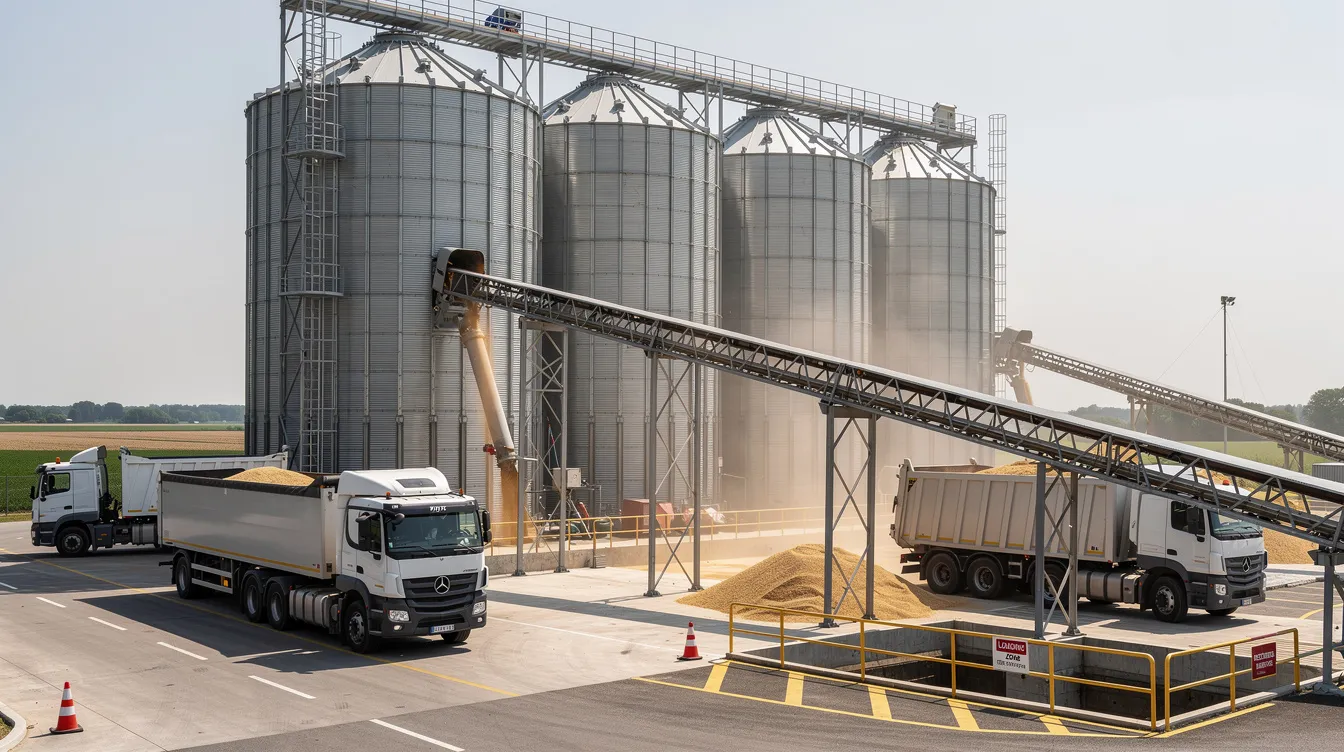
Agro processing park water recycling is a core common utility that can reduce freshwater demand by 30–70%, depending on the treatment technology deployed and the types of industrial processes present in the park.
The starting point is a park-level water balance: quantifying freshwater sources (municipal supply, groundwater, surface water), process water requirements (washing, blanching, CIP systems), cooling water circulation, boiler make-up, domestic use, losses (evaporation, product incorporation) and recoverable fractions. Cooling and washdown water are typically the largest recoverable streams.
A shared CETP or advanced ETP for the park requires careful design:
- Effluent segregation: High-COD organic streams (e.g., fruit and vegetable wash water, distillery spent wash, dairy effluent) must be separated from low-load streams (domestic sewage, vegetable peeling water). This improves treatment efficiency and reduces chemical costs.
- Equalisation: Tanks to handle peak flows and variable loads across shifts and seasons.
- Primary treatment: Screening, oil and fat traps, dissolved air flotation (DAF).
- Biological treatment: Aerobic systems (MBBR, SBR) for moderate-strength effluent; anaerobic systems (UASB) for high-COD streams, with the added benefit of biogas recovery.
- Polishing and reuse: Ultrafiltration (UF), reverse osmosis (RO), activated carbon filtration. ZLD systems (MEE, ATFD) where mandated by SPCB, though these raise both CAPEX and OPEX significantly and must be financially justified in the DPR.
Treated water can be safely reused for cooling towers, boiler feed (after RO and demineralisation), floor washing in non-critical areas, crate washing, gardening, fire water reservoirs and dust suppression. Reuse for direct food-contact operations is permissible only if the reclaimed water meets potable standards (IS 10500 or equivalent). Internal SOPs must ensure no cross-connection between reclaimed industrial water and potable supply lines.
Individual ETP vs Central CETP: Comparison
| Parameter | Individual ETP per Unit | Central CETP with Recycling |
|---|---|---|
| CAPEX per unit | Higher (duplicated equipment) | Lower (shared infrastructure, economies of scale) |
| OPEX per kL | Higher (smaller scale, less specialised staff) | Lower (pooled O&M, bulk chemical procurement) |
| Operator skill | Each unit needs trained operator | Centralised, professionally managed |
| Land footprint | Multiple small ETPs across park | Single consolidated plot |
| Compliance monitoring | Each unit audited separately | Centralised sampling, online monitoring |
| Long-term risk | Higher (individual unit neglect) | Lower (SPV accountability, shared investment) |
According to industry data, a 200–500 KLD biological ETP for food processing applications typically has a CAPEX of ₹1.2–3.0 crore, with advanced reuse stages (anaerobic + biogas recovery + RO) pushing this to ₹2.5–5.5 crore. Net operating costs range from ₹8–40 per kL depending on effluent strength and the extent of reuse. These costs are significantly lower per unit when shared across multiple tenants via a shared water and effluent treatment utility in agro processing parks.
Regulatory compliance requires online flow meters, composite sampling, adherence to SPCB discharge standards, and regular audits. Wastewater treatment systems must also be designed for seasonal variation in effluent volumes and composition, particularly in parks processing seasonal crops.
Waste-to-Value Business Opportunities in Agro Processing Parks
Agro processing park waste to value projects convert residues that would otherwise require disposal into commercially saleable products. These can be structured as SPV-owned facilities, tenant-led investments, or third-party operations under long-term contracts. Industrial symbiosis can convert waste into valuable materials and energy when the right technologies are deployed at appropriate scale.
Biomass briquettes and pellets: Using rice husk, sawdust, groundnut shells and other dry agricultural residues. Minimum economic scale is typically 20–50 tonnes/day input. End products serve boiler users, brick kilns and industrial fuel markets. Pre-processing (drying, screening) is essential for consistent quality.
Biogas and bio-CNG: From fruit and vegetable waste, dairy effluent, press mud, cow dung and other high-COD organic streams. A 5 TPD CBG plant requires CAPEX of approximately ₹25–35 crore, with feedstock input of 10–25 tonnes per tonne of CBG depending on feedstock type. Larger plants spanning 70–300 TPD input capacity, as built by companies like Biofics across 11 Indian states, achieve better economics through scale. Revenue from solid and liquid fermented organic manure (FOM/LFOM) is critical-studies indicate that at 200 TPD capacity, including manure revenue can push IRR to approximately 17.6%, whereas without it, commercial viability is often questionable. Industrial symbiosis can generate 460,000 GJ of bioenergy through such integrated biogas and biofuel production systems.
Compost and organic fertiliser: Digestate from biogas plants and composted processing residues serve agricultural markets. Sale of organic manure replaces chemical fertilizers in nearby farming, creating a circular economy loop and supporting sustainability goals that drive zero-waste initiatives within agro-processing ecosystems.
Animal feed ingredients: Bran, deoiled cake, dried whey and other processing residues, when meeting feed-grade specifications, serve the livestock and aquaculture feed industry. Waste utilization through feed manufacturing is one of the most commercially proven pathways.
Value-added extraction: Pectin from citrus peels, essential oils from spice processing residues, protein isolates from oilseed germ-these require higher technical investment and regulatory compliance but can be viable with an anchor tenant or shared extraction facility.
Critical bankability considerations:
- Long-term feedstock availability and seasonal variation must be assessed rigorously
- Pre-processing requirements (drying, chipping, de-gritting) add cost
- Contamination risks (plastics, metals in food waste) require sorting infrastructure
- Offtake agreements-for power, CBG under SATAT, organic fertiliser-must be locked before financial closure
- Not every by-product justifies on-site processing; in some cases, sale to specialised external food processors or traders is financially superior, and this analysis must be explicit in the feasibility study
Government schemes often support infrastructure development in agro-processing parks, including Central Financial Assistance under the National Bioenergy Programme for bio-CNG generation.
Integrated Energy and Common Utility Systems
An integrated common utility system can include a central biomass-fired boiler, steam and hot water ring main, central refrigeration plant with chilled water or brine distribution, common compressed air network and, where technically feasible, gas engine-based cogeneration. These centralised systems represent a direct application of industrial symbiosis applied to the energy flows of a multi-tenant park.
The role of industrial symbiosis in energy is straightforward: rice husk, groundnut shells, sawdust and other biomass generated by park tenants become captive fuel for the central boiler, replacing non renewable resources like coal and diesel. Waste heat from boilers, compressor exhausts and refrigeration condensers can be recovered for pre-heating boiler feedwater, drying grains or husk, or supplying process hot water. As an example, Goodrich Carbohydrates Ltd installed a rice husk-fired boiler of 12 TPH capacity, consuming approximately 19,198 tonnes of husk per year as captive fuel, reducing greenhouse gas emissions by 25,978 tCO₂e annually.
Centralised utilities are preferable to independent systems when:
- Tenant density is high, with multiple units requiring similar steam pressure and temperature
- Base-load demand is substantial, justifying investment in long-life energy assets
- The developer or SPV is willing to own, operate and maintain shared infrastructure
- Biomass supply from park tenants is sufficient for captive consumption, with supplemental sourcing from nearby agricultural areas
Metering and billing are essential to the financial viability of shared utilities. Individual steam, chilled water and compressed air meters must be installed for each tenant. Differential tariffs for peak and off-peak consumption, minimum offtake commitments embedded in lease or utility agreements, and transparent cost-plus pricing structures ensure that the utility plant recovers its investment while tenants receive competitive rates. Without enforceable minimum offtake obligations, shared assets risk underutilisation, directly threatening payback periods and DSCR.
For detailed guidance on designing shared steam and refrigeration systems in agro processing parks, including dairy plant utility configurations, the technical specifications must be developed as part of the DPR process.
Master Planning and Infrastructure Layout for Industrial Symbiosis
Early-stage master planning is the single most important determinant of whether industrial symbiosis will actually function in practice. Layout decisions made during the planning phase-zoning, pipeline corridors, utility block placement-are extremely difficult and expensive to reverse once construction begins.
Key layout principles for symbiotic agro-processing parks:
- Zoning: Wet processes (dairy, beverages, fruit pulp) separated from dry processes (flour milling, feed production). Odour- and noise-intensive units (biogas plant, biomass yard, boiler house) located downwind and away from sensitive park areas and neighbouring villages. Food-grade units segregated from non-food or waste-handling zones with adequate buffer and green belt.
- Utility corridors: Dedicated corridors for steam pipelines, chilled water lines, effluent conduits, biogas piping and electrical cabling. Pipeline bridges where road crossings are required. These corridors must be planned for current capacity plus future expansion.
- Shared infrastructure: Central biomass storage yard near the boiler house; central utility block housing boiler, compressor, chiller and DG sets; CETP located downstream with gravity-fed effluent collection where possible.
- Access and circulation: Internal roads optimised for heavy truck movement-raw material intake, finished product dispatch and by-product transport between units. Secondary roads for by-product and residue handling to avoid congestion on main park roads.
A simplified text-based flow diagram illustrates the connections: grain intake at receiving dock → milling units (producing husk and bran) → bran conveyed to feed plant → feed dust and fines to briquetting unit → briquettes and husk to central biomass yard → biomass boiler generates steam distributed via ring main to milling, feed and dairy units → condensate returns to boiler house → boiler blowdown and process effluent flow to central ETP → treated water pumped to cooling towers, boiler make-up (via RO) and landscaping → biogas from fruit/vegetable waste digester supplements boiler fuel or generates electricity.
Safety considerations include fire risk in grain dust accumulation zones, explosion risk in biomass handling areas, stack placement relative to wind direction, and adequate setback distances compliant with PESO and state fire norms. Buffer zones towards nearby villages, water bodies and sensitive ecological systems must conform to environmental clearance conditions.
For comprehensive guidance on infrastructure layout and EPC cost planning for integrated grain complexes, layout decisions should be integrated with utility sizing and tenant allocation from the earliest project stage.
Tenant Mix, Value Chain Integration and Feedstock Security
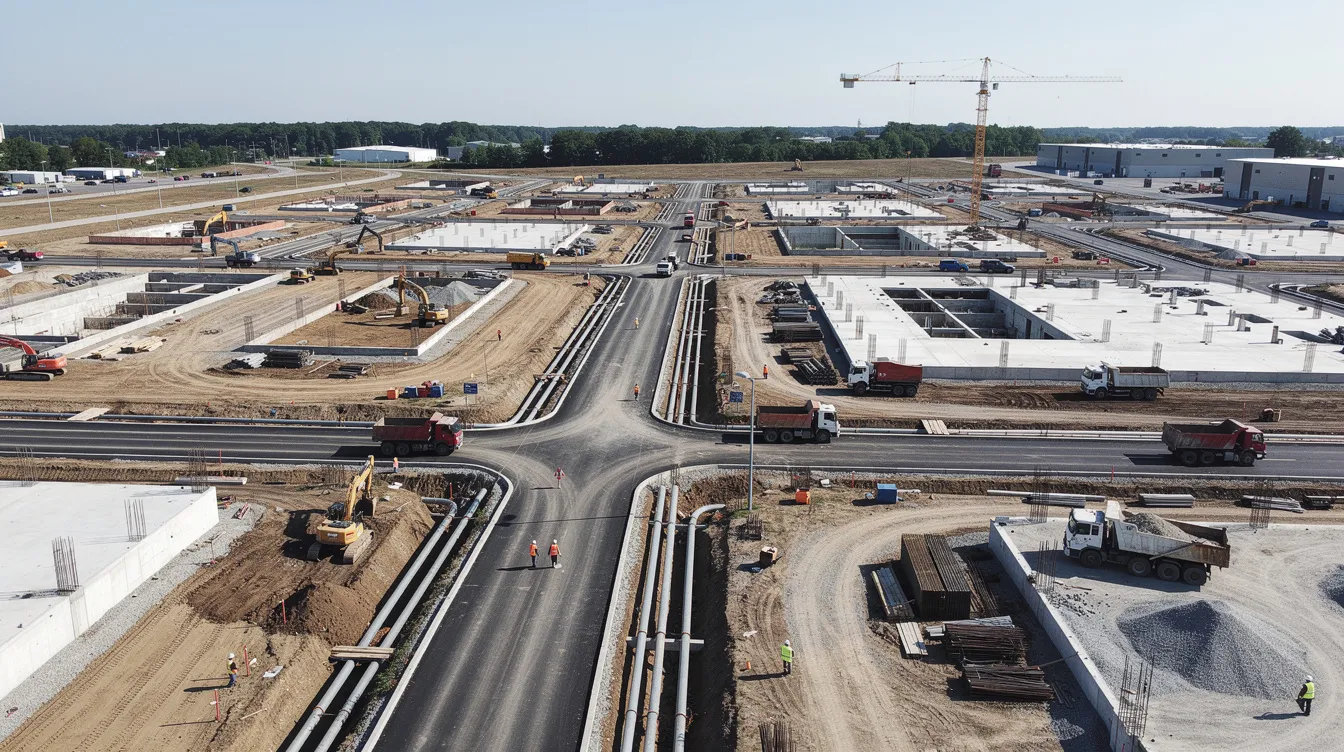
Successful industrial symbiosis depends on a thoughtfully curated tenant mix, not random allocation of plots. The park developer must design value chains that maximise internal resource loops across cereals, oilseeds, fruits and vegetables, dairy and ancillary industries.
Mapping the complete value chain helps identify the right tenants:
- Upstream linkages: Farmer Producer Organisations (FPOs), mandis, collection centres and grain aggregation systems that ensure reliable raw material supply. Collection centres in agro-food parks help farmers access markets and stabilise procurement volumes. Such initiatives enhance collaboration among farmers, processors and stakeholders.
- Core processing: Rice mills, flour mills, solvent extraction plants, dairy units, fruit pulp processors-these generate the primary by products that drive symbiosis.
- Downstream users: Feed mills, biogas plants, packaging units, briquetting plants-these consume by products and generate their own revenue streams, completing the circular loop.
Agro-food parks integrate agro-processing hubs and rural transformation centres, improving agricultural productivity and sustainability in the surrounding catchment. They also facilitate knowledge transfer through training programmes for farmers on grading, post-harvest handling and quality improvement.
Balancing anchor tenants-large, stable, high-volume plants-with MSME units is essential. Anchor tenants provide base-load by-product supply and shared-infrastructure utilisation, while MSMEs add diversity and flexibility. A park with only small units may struggle to justify the capital investment in shared utilities; a park dominated by one large tenant faces concentration risk if that tenant shuts down.
For detailed strategies on securing feedstock supply, promoters should explore grain aggregation and FPO linkages for agro processing parks.
CAPEX, OPEX and Economic Benefits of Industrial Symbiosis
Industrial symbiosis typically increases initial CAPEX-for CETP infrastructure, pipeline networks, biomass boilers, biogas plants and water recycling systems-but can significantly reduce combined OPEX and create new revenue streams for both the park SPV and individual tenants. Economic feasibility studies must assess both the capital and operational expenditure sides of this equation to determine whether the incremental investment delivers adequate returns.
Key cost and benefit items to quantify:
| Category | Cost / Benefit Items |
|---|---|
| Additional CAPEX | CETP, biomass boiler, biogas plant, pipeline corridors, storage yards, metering systems |
| Additional OPEX | Shared O&M staff, chemicals, maintenance, sludge handling, monitoring |
| Savings | Reduced purchased power/fuel, reduced freshwater consumption, avoided waste disposal fees |
| Revenue | By-product sales (feed, fertiliser, biogas/CBG), utility service charges, steam/chilled water tariffs |
Illustrative Financial Scenario (assumptions are illustrative, not market quotations):
Consider a 50-acre agro park with 10 tenants including a rice mill, flour mill, feed plant, dairy, fruit processor and ancillary packaging units. Shared infrastructure includes:
- CETP: 500 KLD capacity – CAPEX approximately ₹3.5 crore
- Biomass boiler: 5 TPH – CAPEX approximately ₹4.0 crore
- Biogas plant: 50 TPD fruit/vegetable waste – CAPEX approximately ₹8.0 crore
- Pipelines, storage, metering – CAPEX approximately ₹3.0 crore
- Total incremental shared infrastructure CAPEX: approximately ₹18.5 crore
Assumptions: 80% utilisation in the first full operating year; municipal water tariff ₹30 per kL; daily freshwater demand without recycling 1,000 m³; water recycling reduces demand by 60%; biomass boiler replaces furnace oil at ₹55,000 per kL equivalent.
| Benefit Stream | Annual Estimate |
|---|---|
| Water savings (600 m³/day × ₹30 × 300 days) | ₹54 lakh |
| Fossil fuel displacement (biomass vs furnace oil) | ₹1.0–1.5 crore |
| Biogas/CBG revenue and organic fertiliser sales | ₹1.5–2.5 crore (including digestate) |
| By-product revenue (bran, ash, feed ingredients) | ₹40–80 lakh |
| Avoided waste disposal costs | ₹15–25 lakh |
| Total estimated annual net benefit | ₹3.5–5.5 crore |
At the midpoint estimate of ₹4.5 crore annual net benefit against ₹18.5 crore CAPEX, the simple payback period is approximately 4.1 years. IRR for the shared infrastructure component may range from 15–22% depending on actual utilisation and pricing-materially better than the 8–12% IRR typical of parks without symbiosis features.
Sensitivity: If tenant occupancy drops from 80% to 60%, annual benefits decline by roughly 25%, extending payback to approximately 5.5 years. If biomass or by-product prices move adversely by 15%, IRR can fall by 3–5 percentage points. Financial viability includes assessing ROI and payback periods under multiple scenarios, not just the base case.
These figures are illustrative. Detailed IRR, DSCR and cash flow projections must be prepared through a professional financial model with project-specific assumptions. For guidance on park-level financial projections for industrial symbiosis infrastructure, transparent assumptions and sensitivity analysis are essential.
Research from various eco industrial parks suggests that industrial symbiosis, at scale, can generate over EUR 100 million in gross profit across participating firms-demonstrating the magnitude of economic benefits possible when industrial symbiosis networks function effectively.
Revenue Models for Developers and SPVs
Park developers implementing industrial symbiosis have multiple revenue structuring options beyond conventional plot lease or rental income:
- Utility sale tariffs: Steam per tonne, chilled water per TR-hour, recycled water per kL-billed at cost-plus margin with transparent metering.
- Waste receiving fees: Charging tenants for organic waste or effluent received at biogas plant or CETP, replacing disposal costs.
- By-product offtake: SPV purchases residues from tenants at agreed prices, processes them (e.g., briquetting, composting) and sells finished products.
- Fixed service charges: Monthly infrastructure maintenance and common facility charges allocated across tenants by area, consumption or agreed formula.
- Performance-linked bonuses: Revenue sharing when shared utilities exceed target efficiency or availability.
Ownership models vary:
| Model | Description | Pros | Cons |
|---|---|---|---|
| Developer-owned | SPV owns and operates all shared utilities | Full control, integrated planning | Higher CAPEX burden, operational complexity |
| Separate utility SPV | Dedicated SPV for utilities, separate from park SPV | Ring-fenced cash flows, specialised management | Additional corporate structure, coordination overhead |
| Tenant-owned | Individual tenants own plants, connected by contracts | Lower developer CAPEX | Coordination challenges, fragmented decision-making |
| Third-party BOT/OOO | External operator builds, owns and operates | Off-balance sheet for developer, specialised expertise | Revenue sharing, long-term lock-in, less control |
Take-or-pay or minimum-offtake contracts are essential for bankability of large shared assets. Lenders typically require evidence that a biomass boiler, CETP or biogas plant will achieve minimum utilisation levels regardless of individual tenant performance. These contracts, embedded in lease agreements, provide the revenue certainty that supports debt service.
For detailed approaches to structuring an agro processing park revenue model, the financial structure must align utility pricing with tenant economics to ensure long-term economic sustainability.
Environmental and Social Benefits Beyond Direct Cost Savings
While the primary focus of any DPR should be quantified financial impact, the environmental benefits of industrial symbiosis are substantial and increasingly relevant to lenders, investors and regulators.
Key environmental advantages include: reduced greenhouse gas emissions from substituting coal and diesel with biomass and biogas (eco industrial parks can reduce CO2 emissions significantly-industrial symbiosis has been documented to reduce CO2 emissions by 92,000 tons annually in established networks); lower freshwater withdrawal through water recycling and pollution prevention; reduced landfill and waste disposal loads; and improved local air and water quality. These contributions to environmental sustainability directly support India’s commitments under sustainable development goals.
Social benefits extend to additional rural employment in biomass collection, handling and processing; improved community perception of the park (reducing resistance to new industrial development in the natural environment); and alignment with ESG criteria increasingly required by institutional lenders and the private sector. Agro-food parks improve agricultural productivity and sustainability in surrounding regions through economic growth and rural transformation.
Life cycle assessment (LCA) can be used by sophisticated investors to compare industrial symbiosis scenarios with baseline cases, quantifying environmental impacts across the full production cycle. Environmental impact assessments further quantify reductions in greenhouse gas emissions and resource consumption. However, unless a specific investor or policy scheme monetises these benefits-through carbon credits, green financing terms or renewable energy certificates-the DPR should treat them as supplementary to the financial analysis, not as a substitute for demonstrated commercial viability.
The broader concept of industrial metabolism-tracking how industrial systems consume resources and generate outputs-provides the analytical framework. But for practical project planning, the focus must remain on economic efficiency and measurable cost reduction.
Regulatory Approvals, Compliance and Risk Considerations in India
Agro-processing parks require a combination of approvals and environmental compliance before commissioning shared infrastructure. Regulatory compliance evaluates both local and, where applicable, international standards for agro-processing operations.
Key approvals relevant to industrial symbiosis components:
- State Pollution Control Board (SPCB) Consent to Establish and Consent to Operate for CETP, boilers, biogas plants and individual processing units
- Environmental clearance from MoEFCC where park size or unit capacities exceed applicable thresholds
- Water abstraction licences (for groundwater or surface water use)
- Discharge licences specifying treated effluent quality parameters (COD, BOD, TSS, pH)
- Solid Waste Management Rules compliance for by-product handling and disposal
- Bioenergy plant permissions under MNRE/state energy department guidelines
Food and feed-specific requirements:
- FSSAI licences for all food processing units
- Feed safety norms and registration for units manufacturing animal feed
- Traceability documentation separating food from waste streams
- BIS standards for potable water quality where reclaimed water contacts food-grade surfaces
Requirements vary significantly by state, industry, capacity and waste classification. Appropriate legal frameworks and agreements facilitate resource sharing in symbiosis, but promoters should not rely on generic checklists. Professional advisors familiar with CPCB/SPCB guidelines and MoEFCC notifications must be engaged for site-specific compliance planning.
Common risk areas:
- Misclassification of waste versus by-product leading to GST disputes or legal proceedings
- Non-compliance with ZLD requirements where mandated by state boards
- Odour and nuisance complaints from surrounding communities
- Potential NGT litigation if effluents or solid materials are not managed according to prescribed standards, potentially affecting human health
For a comprehensive guide to statutory approvals for agro processing parks in India, each approval must be mapped against the specific production processes and utility systems planned for the park.
Major Operational and Commercial Risks in Industrial Symbiosis
Industrial symbiosis introduces operational interdependencies that create risks not present in stand-alone facilities. A realistic project risk analysis must address these explicitly.
Operational risks:
- Frequent breakdowns of CETP or biogas plants disrupting multiple tenant operations simultaneously
- Inconsistent effluent quality from tenants overloading treatment systems
- Cross-contamination of food-grade areas from waste-handling operations or pipeline leaks
- Fire hazards in biomass storage yards and grain dust accumulation zones
- Corrosion and leakage in pipelines carrying steam, effluent or biogas across the park
- Technology failure in innovative technologies not yet fully proven at required scale-technology readiness levels must be assessed for each conversion technology
Commercial risks:
- Lower-than-expected tenant occupancy reducing utilisation of shared infrastructure
- Shutdown of anchor tenants that supply key by products, disrupting feedstock for boilers or biogas plants
- Adverse changes in fuel prices making biomass less competitive against grid power or natural gas
- Inability to secure bankable offtake agreements for CBG, compost or feed products
- Contractual disputes between tenants over supply volumes, quality or pricing
Mitigation strategies:
- Robust O&M contracts with performance guarantees and penalty clauses
- Conservative design margins (10–20% above peak projected loads)
- Diversification of feedstock sources-both from park tenants and external procurement within economic logistics radius
- Technical due diligence on tenant industrial processes before lease approval
- Risk-sharing clauses in lease and utility agreements (e.g., force majeure provisions, early termination compensation)
- Maintaining standby systems for critical utilities (backup boiler, emergency water supply)
These risks must be captured in a formal project risk analysis section of the DPR, supported by sensitivity analysis on utilisation rates, tariff structures and CAPEX overruns. The goal is not to eliminate risk-which is impossible in complex systems-but to quantify, allocate and manage it through appropriate contractual and engineering measures, thereby building economic resilience into the project structure.
Feasibility Study and DPR Requirements for Symbiotic Agro Parks
The scope of an integrated feasibility study for a symbiotic agro-processing park goes well beyond a conventional single-unit DPR. It must assess location suitability, raw material catchment, proposed industry mix, infrastructure backbone and industrial symbiosis opportunities specific to that geography and value chain.
A DPR for agro processing park industrial symbiosis should contain:
- Material flow diagrams showing every by-product exchange between tenants
- Water and energy balances for the entire park, covering both individual units and shared systems
- Sizing calculations for CETP, boilers, chillers, biogas plants, pipelines and storage
- CAPEX estimates with contingencies for each shared infrastructure component
- Phased implementation schedules aligned with tenant onboarding timelines
- Stakeholder mapping identifying key entities for governance, including the SPV, anchor tenants, utility operators and regulatory bodies
The financial model must be built on project-specific assumptions-not generic templates-to develop reliable financial projections: revenue from utilities and lease charges, operating cost of shared facilities, cash flows, DSCR, IRR, NPV, break-even point and payback period. Financial projection models are essential for evaluating project bankability, and lenders will particularly scrutinise utilisation assumptions, tariff structures and enforceability of inter-tenant contracts.
For parks seeking bank finance, CMA Data must reflect the shared infrastructure economics, ring-fenced utility revenues and debt-servicing capacity of the SPV. The means of finance, promoter contribution, term loan quantum and repayment schedule must be derived from the integrated financial model, not prepared as a standalone exercise.
Relevant resources for promoters include the integrated agro-processing park feasibility study framework, agro processing park setup cost estimation methodologies, and agro processing park bank loan DPR and CMA data preparation guidance.
Illustrative Industrial Symbiosis Case Flow – Integrated Grain and Agro Park
Consider an integrated grain industrial complex in India where wheat, rice and maize processing units are co-located with a feed mill, a solvent extraction plant, a small dairy unit, a fruit-pulp processing line and a biogas-cum-biomass power plant.
Specific resource links in this illustrative case:
- Rice mill produces husk (approximately 20–22% of paddy weight) → routed to central biomass boiler for steam and captive power generation
- Wheat flour mill generates bran (approximately 20–25% of wheat processed) → supplied to animal feed plant as primary ingredient
- Solvent extraction plant produces deoiled cake → partially consumed by on-park feed plant, partially exported to regional feed markets
- Dairy unit generates whey → supplied to feed supplement liquid manufacturing or, if volumes justify, to a whey protein processing unit on the park
- Fruit pulp line generates peels and off-spec product → fed to anaerobic biogas digester
- Biogas digester produces CBG (for sale or captive use) and digestate → digestate packaged as organic bio-fertiliser for nearby farms, closing the loop back to the agricultural sector
- Treated wastewater from CETP → reused for cooling towers, gardening, road dust suppression and boiler make-up (after RO treatment)
- Boiler ash → supplied to nearby brick manufacturers or used as soil amendment
This case could be evaluated using a life cycle assessment lens to quantify environmental benefits-reduced greenhouse gas emissions from coal substitution, reduced water withdrawal from recycling, avoided landfill from food waste diversion-without turning the analysis into an academic exercise. The LCA provides supplementary evidence for investors and lenders who require environmental performance documentation, but the primary evaluation remains financial.
For detailed planning of integrated grain industrial complex symbiosis, every resource link must be validated against realistic volumes, quality specs and commercial terms before inclusion in the DPR.
This example demonstrates how an industrial environment functioning as an integrated ecosystem-rather than a collection of isolated production processes-can achieve superior resource efficiency, lower operating costs and stronger project economics.
Project Financing, Bankability and Investor Perspective
Banks and investors evaluating agro-processing parks with industrial symbiosis features typically look for:
- Clear SPV structure with ring-fenced cash flows from utility operations
- Realistic utilisation ramp-up assumptions supported by binding tenant commitments
- Firm contracts (take-or-pay, minimum offtake) that reduce revenue volatility
- Proven technologies for shared utilities-lenders are cautious about unproven or pilot-stage systems
- Adequate promoter contribution and realistic debt-equity structure
Common infrastructure creates possibilities for dedicated term loans or infrastructure credit for CETP and utility systems, separate from the park development loan. Lenders may require escrow mechanisms for utility payment collection from tenants, ensuring debt service priority. Take-or-pay clauses in tenant agreements provide the contractual foundation that bankers need to approve infrastructure loans.
Green or sustainability-linked financing may become more accessible where the project credibly demonstrates resource savings and emission reductions-through documented energy displacement, water recycling volumes or verified greenhouse gas reduction. However, such financing terms depend on actual lender policies and market conditions at the time of application, and should not be assumed in the base-case financial model.
The Kalundborg Eco-Industrial Park saves EUR 14 million annually through energy and material exchanges alone-and up to EUR 24 million when broader efficiencies are included-demonstrating that industrial symbiosis delivers measurable financial returns, not just environmental aspirations. In India, the agricultural industry and the food processing sector are increasingly recognising that sustainable methods and resource efficiency directly translate to economic efficiency and competitive advantage. Such models represent a shift towards a closed loop economy where industrial symbiosis networks function as interconnected economic systems.
Professional financial modelling, stress testing and DSCR analysis are essential to translate these potential benefits into bankable documentation. Technological innovation in wastewater treatment, biomass energy and by-product processing continues to expand the range of business opportunities available, but each must be evaluated on its own production economics within the specific park context. The challenge lies not in identifying possibilities but in structuring them as commercially viable industrial processes within appropriate supply chains and value chains.
How Project Report Bank Assists Developers of Symbiotic Agro Parks
Project Report Bank, led by CA Manish Gugliya, FCA, DISA (ICAI), supports developers, state agencies and corporates in conceiving and executing agro-processing parks with industrial symbiosis features. The practice covers the full spectrum from initial concept notes through detailed DPRs to lender presentations, drawing on more than 20 years of professional experience in project finance, financial modelling and feasibility analysis.
Key professional services relevant to symbiotic agro parks include:
- Integrated feasibility studies covering industry mix, material flow analysis and symbiosis opportunity assessment
- Customised DPR preparation with detailed CAPEX and OPEX estimation for common utilities and shared infrastructure
- Financial projections with DSCR, IRR, NPV, break-even and sensitivity analysis based on project-specific assumptions
- CMA Data preparation for bank loans, including ring-fenced utility revenue modelling
- Loan structuring, means of finance planning and promoter contribution advisory
- Investor-ready documentation and pitch deck preparation for equity fundraising
Work is based on project-specific assumptions, field realities and iterative discussion with promoters, EPC contractors and subject-matter experts-not on generic templates or standardised reports. Every financial model is built to withstand scrutiny from bankers, investors and regulatory authorities.
Promoters planning integrated agro-processing parks with investments above ₹5 crore are invited to reach out for professional DPR and financial modelling support tailored to their specific project, location and tenant mix.
Frequently Asked Questions on Agro Processing Park Industrial Symbiosis
What is agro processing park industrial symbiosis in simple terms?
It is the planned exchange of by products, water, energy and waste heat among multiple food and agro-processing units located in a common park. Instead of each unit managing its own residues and utilities independently, the park designs these flows so that one unit’s waste becomes another’s input-reducing costs, improving resource efficiency and creating additional revenue. It requires deliberate planning, compatible tenant selection and shared infrastructure investment.
How does by-product exchange practically reduce operating costs?
When a rice mill’s husk fuels a shared boiler instead of being sold cheaply or disposed of, the park avoids purchasing fossil fuel. When a flour mill’s bran goes to an on-park feed plant instead of to an external trader at low margins, the feed plant saves on raw material procurement and the mill earns a better price. These direct substitutions reduce waste disposal expenditure and purchased input costs across the park. The net effect on operating costs typically ranges from 10–30%, depending on the tenant mix and the extent of integration.
Is common wastewater recycling safe for food processing units?
Yes, provided the treatment system is properly designed, operated and monitored. Reclaimed water can be safely used for cooling towers, boiler make-up (after RO and demineralisation), floor washing, crate washing and landscaping. However, it should not be used for direct food-contact operations unless it meets potable water standards (IS 10500). Segregation of reclaimed and potable supply lines, regular quality testing and online monitoring are mandatory safeguards.
Can every by-product be converted into a profitable product?
No. Commercial viability depends on the quantity generated, the quality consistency, the availability of a receiving industry, the processing cost and the offtake price. Some residues are best sold to specialised external processors rather than processed on-site. The feasibility study must evaluate each by-product stream on its own production economics and market conditions-not assume that all residues automatically have value.
When should a promoter invest in shared utilities versus stand-alone systems?
Shared utilities are generally preferable when the park has sufficient tenant density, similar utility requirements (steam pressure, cooling temperature), a stable base-load demand and a developer or SPV willing to invest in and manage common infrastructure. For very small parks with two or three units, or where tenant requirements are highly specialised and incompatible, stand-alone systems may be more practical. The decision should be made through a detailed cost-benefit analysis as part of the DPR, comparing CAPEX, OPEX, reliability and long-term flexibility under realistic utilisation scenarios.
Conclusion – Making Industrial Symbiosis Work in Real Agro Parks
Properly designed agro processing park industrial symbiosis can materially improve the long-term viability of large agro and food processing parks in India. By converting processing residues into revenue through agro processing park by-product exchange, reducing freshwater dependence through agro processing park water recycling, and creating new income streams through agro processing park waste to value projects, a symbiotic park delivers demonstrably better economics than a conventional industrial estate.
However, industrial symbiosis is not an automatic formula for profitability. It requires technical compatibility between co-located units, a disciplined tenant mix, robust inter-unit contracts, sustained regulatory compliance, and sustainable development-oriented infrastructure that functions reliably over decades. The gap between concept and commercial success is bridged only by rigorous feasibility analysis, realistic financial modelling and professional project documentation.
For developers, infrastructure investors, state agencies and anchor processors planning integrated agro-processing parks, the starting point is a comprehensive feasibility study and DPR that evaluates every symbiosis opportunity on its own financial merit. Project Report Bank and CA Manish Gugliya bring the project-finance expertise, financial modelling rigour and DPR preparation experience needed to convert these complex, multi-tenant, multi-stream projects into bankable investment proposals. Serious promoters with investments above ₹5 crore are invited to engage for customised advisory and documentation support.