Key Takeaways
- A multi-tenant agro-processing park earns recurring income through lease rental on industrial plots and sheds, common area maintenance charges, and usage-based utility and facility fees – entirely separate from tenants’ own sales of processed products.
- Project viability depends on realistic assumptions for occupancy ramp-up, competitive prices for rent and services, operating cost control, and the ability to recover large upfront processing infrastructure investment over 10–15 years.
- A 10-year financial model computing DSCR, project IRR, equity IRR, payback period and sensitivity analysis is essential for bank finance and investor evaluation. Project Report Bank prepares such customised DPRs and projections.
- Agro-processing parks utilise multiple revenue streams for financial viability – combining plot and shed rentals, cold storage income, shared processing facility fees, utility margins and ancillary services to maximise asset utilisation.
- All examples in this article are illustrative for Indian conditions and should be customised in a professional DPR before final investment decisions.
Introduction: Multi-Tenant Agro Processing Park Business & Revenue Model
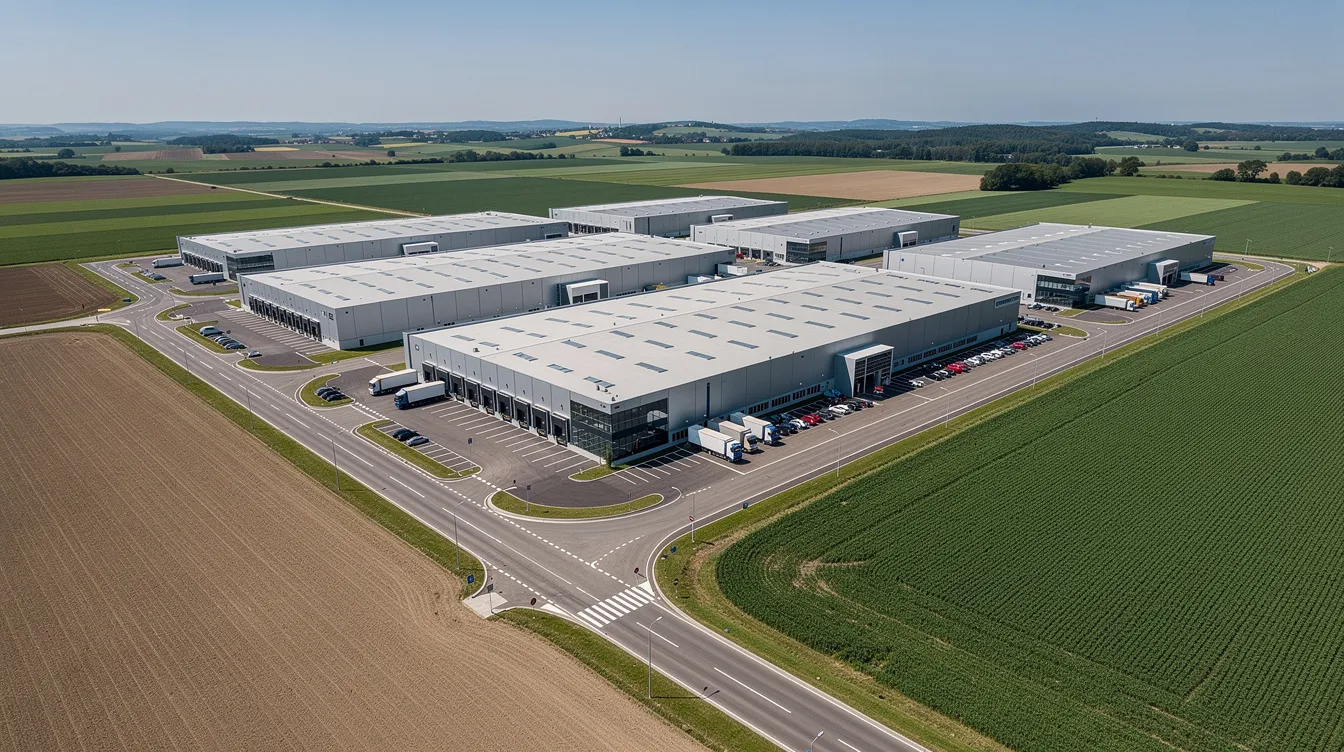
A multi-tenant agro-processing park is a developer-owned industrial campus that provides processing infrastructure – developed plots, factory sheds, warehousing, cold storage, common utilities and shared facilities – leased to multiple food processing units. The developer or special purpose vehicle (SPV) builds and maintains the park. Tenants operate their own manufacturing business within leased spaces.
This article focuses on the agro processing park revenue model: how the park developer earns recurring income through lease rental, service charges and usage-based tariffs. It does not address the manufacturing margins of tenants’ processed products.
Agro-processing parks connect agricultural production with consumer markets. They convert dispersed farm produce into value-added processed products through tenants such as flour mills, oilseed processors, spice units, cold chain operators and packaging units. Agro-Processing Centres enhance farmers’ income significantly by reducing post-harvest losses and enabling value addition at the farm-gate region itself. Around 273 agro-processing complexes have been installed in India under AICRP guidance, and data from one such centre recorded a monthly profit of Rs. 86,025 – demonstrating that even at micro scale, agro-processing can convert farm surplus into stable revenue.
The typical project scale for multi-tenant parks in India ranges from ₹25 crore to ₹150 crore, promoted by developers, state agencies, or anchor industry groups through an SPV structure. The key revenue pillars include multi tenant agro processing park lease rental, agro processing park service charges, utility and shared facility income, and ancillary revenue streams. For the complete project concept and components, refer to the Multi-Tenant Agro Food Processing Park Project Report.
Business Model Overview & Positioning of the Developer/SPV
The developer’s primary business is industrial infrastructure and service provision. Tenant units focus on agro-processing operations, marketing and production of goods sold to markets and consumers. The developer monetises land and building assets through:
- Long-term lease of industrial plots and ready-built factory sheds
- Separate billing for power, water, steam, effluent treatment and common services
- Usage-based charges for shared processing equipment, packaging and testing facilities
- Ancillary income from canteens, office spaces, training halls and advertisement boards
Typical legal structures involve a 30–60 year land lease from the state or private owners to the SPV, with sub-lease of plots and sheds to processing units. Registration of long-term lease deeds provides bankers comfort on security and cash flow visibility.
Bankability depends on visible contracted agro processing park rental income – locked-in leases and anchor tenant agreements – backed by realistic financial projections rather than speculative occupancy claims. Agro-processing parks need strong backward and forward linkages for stable operations, ensuring raw material supply from farmers and offtake connections to consumer markets. Combining multiple services can maximise asset utilisation across the park.
Tenants benefit from shared processing infrastructure, common packaging, testing and logistics facilities at competitive prices compared with establishing stand-alone plants. Readers interested in land sizing and zoning may refer to Agro Processing Park Land Requirement.
Revenue Sources of a Multi-Tenant Agro Processing Park
Agro-processing parks generate income through shared utility and infrastructure fees alongside space rental. Revenue streams can be grouped into recurring fixed, usage-based variable and one-time categories:
Recurring Fixed Revenue:
- Developed industrial plot lease rentals – long-term lease of bare plots with internal roads and utilities at boundary. Land leasing provides predictable, recurring baseline revenue. Typically charged per sq. ft per month with 3–5 year lock-in and annual escalation.
- Ready-built factory shed rentals – monthly rent on covered area in standardised industrial sheds, usually at a higher rate per sq. ft than bare plots due to ready-to-use processing infrastructure.
- Warehousing and cold storage rentals – storage income from dry warehouses, cold rooms and frozen storage. Cold storage services reduce post-harvest loss and provide steady cash flow. Rates may be per pallet position, per MT per month, or per kg per month.
- Common infrastructure and maintenance charges – fixed monthly service charges recovering CAM (internal roads, street lighting, security, landscaping and admin block upkeep).
Usage-Based Variable Revenue:
- Power, steam, water and utility supply charges – consumption-based tariffs with metering, designed as pass-through of bulk purchase cost plus a margin for O&M.
- Effluent treatment and waste management charges – per KL or per MT charges for using common effluent treatment plant (CETP) and organic waste collection, often based on pollution load (COD/BOD slabs).
- Common packaging, testing and laboratory service income – fee-based income from shared packaging lines, quality testing labs and food safety certification facilities. Testing and certification services elevate the export readiness of tenants, and APEDA provides export promotion and market intelligence support for those targeting international markets.
- Equipment and shared processing facility usage fees – hourly or batch-wise charges for IQF lines, drying units, pulping, milling or freezing tunnels. Contract processing services allow smaller tenants to access high-cost machinery they could not justify purchasing independently.
- Material handling, logistics and dispatch charges – forklift services, weighbridge, internal transportation and truck loading. Agro-processing parks generate revenue from logistics and transportation services as an operational add-on.
One-Time and Ancillary Income:
- Documentation fees, connection charges, initial processing infrastructure installation fees
- Cafeteria leases, small retail outlets, training halls, office space rental, solar rooftop leases and advertising board income
- Security deposits (typically 6–12 months’ rent) are refundable liabilities, not revenue in financial statements
- Pass-through collections such as direct statutory levies should not be treated as revenue in financial modelling
Branded processed goods command higher prices than loose commodities, which is precisely why tenants invest in park-based facilities for proper packaging, grading, and longer shelf life. Processed goods command better prices than raw commodities, creating strong demand for quality processing infrastructure.
Lease Rental Structure, Pricing and Security Deposits
Lease rental is the primary recurring income for the developer and must be structured to balance competitiveness for tenants with viability for lenders and investors.
- Typical Indian industrial lease tenures range from 9 to 30 years with renewal options. Lock-in periods for tenants are commonly 3–5 years with 6–12 months’ notice periods, which directly impact cash flow stability and DSCR.
- Base rentals for plots and sheds depend on location, quality of processing infrastructure and regional industrial benchmarks. For example, parks in Maharashtra and Punjab have reported shed rents ranging from ₹10–₹25 per sq. ft per month, while industrial zones near major cities may see ₹25–₹45 per sq. ft per month.
- Rental escalation clauses – typically 5–7% per annum or 15% every 3 years – feed directly into the agro processing park revenue model and 10-year projections. These escalations are essential for maintaining profitability against rising operating costs.
- Multi-tier pricing is common: lower rent for larger anchor tenants taking bigger areas; premium rates for strategically located plots (corner, near gate) and specialised facilities like cold storage and HACCP-compliant clean rooms.
- Security deposits are commonly 6–12 months’ rent for private parks, possibly lower for government-supported schemes. Deposits are refundable liabilities, not income in project financial statements.
- Some parks use occupancy-linked revenue models where anchor tenants pay minimum guaranteed rent plus a throughput-linked charge (e.g., per MT processed) through specialised shared facilities.
- Lease and rental terms must remain consistent with assumptions used in Agro Processing Park Financial Projections to avoid gaps during lender appraisal.
- GST and stamp duty treatment depends on the legal and contractual structure of the SPV and tenant arrangement. Exact tax applicability should be confirmed with professional advisors.
Service Charges, CAM & Utility Cost Recovery
A professionally structured park clearly separates rent (for space) from service charges (for operations and maintenance of common infrastructure and utilities). Payment structures must align with operating costs to maintain financial stability.
- CAM or agro processing park service charges are fixed per sq. ft per month fees covering roads, lighting, security, landscaping, housekeeping, administration and minor repairs. Typical CAM in Indian industrial parks ranges from ₹1 to ₹8 per sq. ft per month depending on location and quality.
- Fixed charges (minimum per connection for power, water, CETP) are distinguished from variable charges based on actual consumption measured by meters or logs.
- Cost-plus pricing for utilities: the park procures bulk power, water and steam and recovers these costs from tenants at a tariff covering purchase cost, line losses and reasonable margin for O&M and future replacements, keeping the park economically viable. Energy optimisation strategies are crucial to reducing operational expenses.
- Transparent tariff formulae – for example, power tariff indexed to DISCOM rates, water tariff linked to treatment cost – should be communicated in lease agreements with clear change mechanisms to avoid disputes.
- CETP charges can be based on effluent volume and concentration (COD/BOD slabs) to discourage highly polluting discharges and protect common processing infrastructure.
- Some parks adopt prepaid metering or advance deposits for utilities to minimise recovery risks and improve working capital management.
- The DPR should include a clear schedule of tariffs, expected recovery percentages and assumptions on bad debts. For design and sizing of common utilities, a separate technical assessment is recommended.
Tenant Mix, Anchor Tenants & Occupancy Planning
Park revenue stability depends on well-planned tenant mix, timely absorption of space and long-term occupancy rather than headline rental rates. Agro-processing parks can face financial difficulties due to low tenant occupancy and seasonal fluctuations.
- Anchor tenants – a large rice mill, oilseed processor, dairy or integrated food company – de-risk the project through early commitments, stable occupancy and attracting smaller MSME tenants. Rice milling serves over half of India’s population, ensuring consistent demand for such anchor units. India is a net exporter of rice and spices, and flour milling and spice processing enjoy very high demand domestically.
- Diversification across segments – grains, pulses, edible oil, spices, fruits and vegetables, cold chain, packaging – spreads risk and improves year-round utilisation. Diverse tenant mixes can enhance revenue sustainability. Jaggery holds great potential among health-conscious consumers as a niche processing segment.
- Agro-processing parks align their operations with agricultural production and seasonality for efficiency, so planning tenant mix around complementary harvest cycles reduces idle capacity.
- Greenfield parks typically require 2–5 years to reach stabilised occupancy. Realistic occupancy ramp-up assumptions drive agro processing park financial feasibility and lender comfort.
- Financial models should assume 5–10% structural vacancy and churn rather than unrealistic 100% occupancy.
- Anchor tenants may receive discounted rent, step-up rentals, revenue share models or longer lock-ins, because their early commitment influences project bankability. Parks also need to establish long-term relationships with market players to ensure financial sustainability.
- For industry mix and anchor tenant strategy, refer to Agro Processing Park Industry Mix and Value Chain Integration and Agro Processing Park Anchor Tenant Selection.
- Robust lease agreements with clear default, termination and cure clauses are essential to safeguard rental income and minimise legal disputes.
Agro-processing parks can act as intermediaries between farmers and processors to ensure raw material supply, strengthening the whole process from farm to market.
Capital Investment, Operating Expenses & Cost Structure
Understanding capex and opex is crucial for designing a sustainable agro processing park revenue model that recovers investment over 10–15 years while staying competitive.
Major Capital Cost Components:
- Land acquisition or lease premium, site development and grading
- Internal roads, drainage, boundary wall, gate and weighbridge
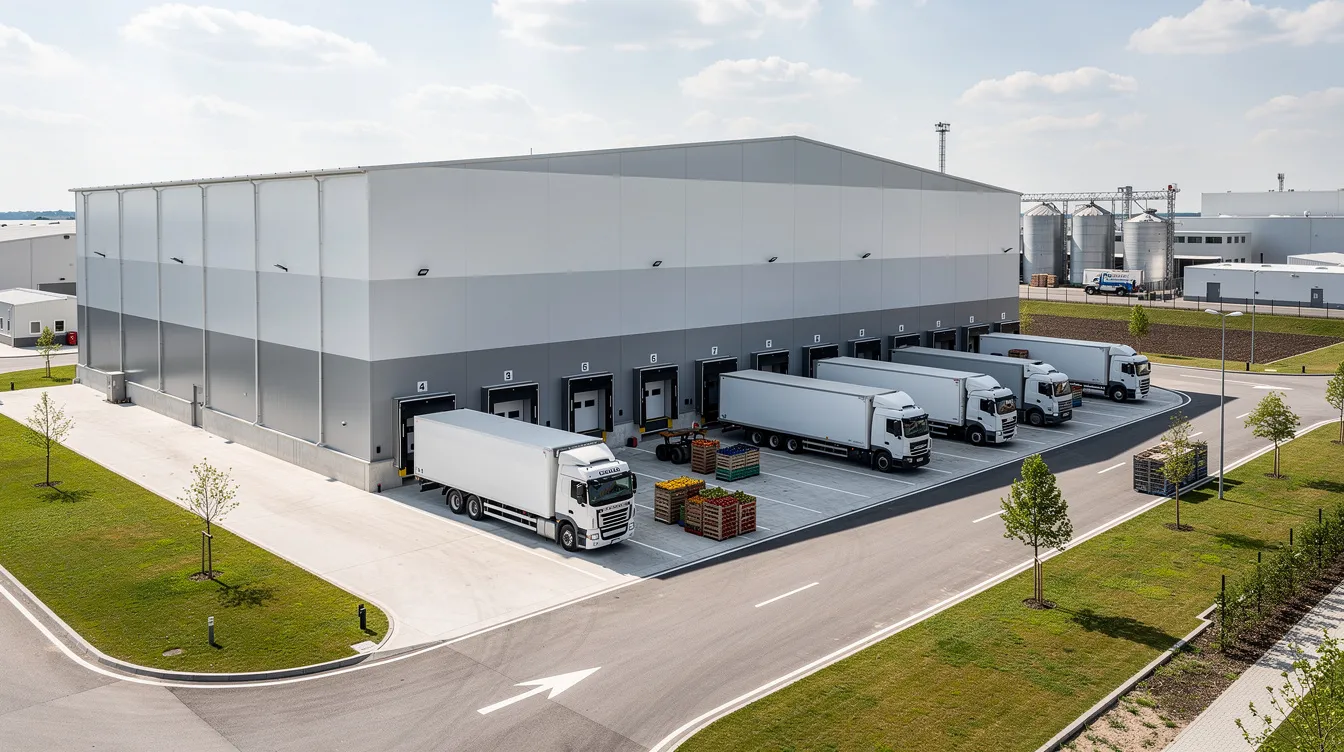
- Industrial sheds, warehouses, cold storage building
- Office/admin blocks, CETP, water systems, power distribution
- DG sets, firefighting systems, specialised processing infrastructure (IQF, machine rooms)
- Investment for a smaller Agro-Processing Centre is approximately Rs. 25–30 lakhs, while multi-tenant parks with full infrastructure range from ₹25 crore upward
For detailed breakdown of processing infrastructure, plant and machinery and civil works, see Agro Processing Park Setup Cost.
Soft Costs: Design and engineering, statutory approvals, environmental clearances, project management consultancy, interest during construction (IDC), pre-operative expenses and contingencies (5–10% of hard costs).
Operating Cost Structure:
| Cost Category | Nature | Recovery Mechanism |
|---|---|---|
| Staff (technical, maintenance, security, admin) | Fixed | Covered from rental margin and CAM |
| Bulk power and fuel | Variable | Pass-through to tenants with margin |
| Routine maintenance | Fixed | CAM charges |
| Water and effluent treatment consumables | Variable | Usage-based billing |
| Insurance and property tax | Fixed | Included in base rent or separate levy |
| Marketing and business development | Fixed | Developer expense |
Maintenance reserves and sinking funds for periodic replacement of major processing infrastructure components (refrigeration equipment, transformers, pumps) are essential to avoid sudden cash flow shocks. Financing costs – interest on term loans, principal repayments – are major outflows that agro processing park rental income and service margins must comfortably support.
Illustrative Agro Processing Park Revenue Model & Example Calculations
The following example uses a hypothetical 20-acre park with approximately 2,50,000 sq. ft of leasable area (60% developed plots, 40% built-up sheds and cold storage) to demonstrate how revenues and EBITDA are derived.
Assumptions:
| Parameter | Assumption |
|---|---|
| Total leasable area | 2,50,000 sq. ft |
| Developed plots | 1,50,000 sq. ft |
| Built-up sheds | 80,000 sq. ft |
| Cold storage / warehousing | 20,000 sq. ft |
| Plot rent | ₹12/sq. ft/month |
| Shed rent | ₹22/sq. ft/month |
| Cold storage rent | ₹35/sq. ft/month |
| CAM charges | ₹3/sq. ft/month on occupied area |
| Year 1 occupancy | 60% |
| Stabilised occupancy (Year 4+) | 90% |
| Annual rent escalation | 5% |
Illustrative Year 1 Revenue (at 60% Occupancy):
| Revenue Stream | Calculation | Annual Income (₹ Lakhs) |
|---|---|---|
| Plot rental | 1,50,000 × 60% × ₹12 × 12 | 129.60 |
| Shed rental | 80,000 × 60% × ₹22 × 12 | 126.72 |
| Cold storage rental | 20,000 × 60% × ₹35 × 12 | 50.40 |
| CAM charges | 2,50,000 × 60% × ₹3 × 12 | 54.00 |
| Utility margin (net) | Estimated at ~10% of collections | 18.00 |
| Shared facility fees | Estimated | 12.00 |
| Total Gross Revenue | 390.72 |
Illustrative Year 1 Operating Expenses:
| Expense | Annual (₹ Lakhs) |
|---|---|
| Staff costs | 60.00 |
| Repairs and maintenance | 25.00 |
| Utilities (net of recovery) | 15.00 |
| Admin, insurance, property tax | 20.00 |
| Marketing | 8.00 |
| Total Opex | 128.00 |
| EBITDA | 262.72 |
Cash Flow Illustration (Year 1): If annual debt service (interest + principal) is ₹180 lakhs, then DSCR = 262.72 ÷ 180 = 1.46. A 10% drop in occupancy (from 60% to 50%) would reduce EBITDA to approximately ₹218 lakhs and DSCR to about 1.21 – illustrating the sensitivity of the agro processing park financial feasibility to occupancy levels.
These numbers are purely illustrative. Each project requires a customised financial model reflecting actual land cost, construction estimates, local rental benchmarks and specific tenant commitments.
Ten-Year Projections, IRR, DSCR & Sensitivity Analysis
Institutional lenders and investors expect long-term projections – typically 10 years or more – to evaluate recurring park revenues and ability to service debt from lease-backed cash flows. Monitoring financial performance metrics is essential for agro-processing park management on an ongoing basis.
- Occupancy ramp-up modelling should assume phased lease-up over the first 3–5 years (e.g., 60% → 75% → 85% → 90%), with stabilised occupancy thereafter and periodic lease renewals.
- Annual rental escalation of 5–7% and service charge indexation linked to inflation or a pre-defined percentage feed into year-wise revenue growth.
- Key financial metrics from 10-year cash flows include EBITDA margin (%), CFADS (cash flow available for debt service), average and minimum DSCR, project IRR, equity IRR, NPV and payback period for equity.
- DSCR analysis should use realistic term loan tenure and interest rate assumptions consistent with prevailing Indian project finance norms (8–12 year repayment, amortising structure).
- Sensitivity analysis should test occupancy level, rental rates, escalation rate, capital cost overrun, interest rate increase and implementation delay – each scenario showing impact on DSCR and equity IRR.
- Working capital needs – deposits with utilities, receivables from tenants (30–60 days), maintenance reserves – affect cash flow timing and bank appraisal.
- Detailed guidance on building long-range financial models is available in Agro Processing Park Financial Projections.
While projections can demonstrate the potential for attractive IRR and payback, neither developers nor advisors should treat them as guaranteed returns. They are decision-support tools.
Financial Feasibility, Bankability & Project Finance Structuring
A strong agro processing park revenue model must convert into a bankable financing plan with appropriate debt-equity ratio, repayment schedule and security structure acceptable to lenders.
- Typical capital structure norms for such infrastructure projects in India are 60:40 or 70:30 debt-equity. Exact gearing depends on project risk, promoter profile and quality of contracted rentals.
- Term loans are usually secured by mortgage on land and processing infrastructure, assignment of lease receivables, escrow of park cash flows and promoter guarantees.
- Many banks expect minimum pre-sale or pre-lease conditions – anchor tenant MoUs or signed lease agreements for a portion of the area – before full debt disbursal.
- Conservative assumptions on occupancy and tariffs in the DPR ensure DSCR remains comfortable even under moderate stress scenarios.
- Public-private partnerships can help mitigate infrastructure debt in agro-processing parks. Utilising government grants can improve project internal rate of return – schemes such as PM Kisan SAMPADA support cold chains and processing infrastructure, while PMFME offers credit-linked subsidies for micro processing units. Udyam registration unlocks MSME credit and priority lending for smaller tenants, making the park more accessible to entrepreneurs.
- Banks scrutinise compliance with environmental norms, building codes, fire safety and pollution board consents. Non-compliance can disrupt operations and impact rental income.
- For professional DPR and CMA Data support for loan appraisal, refer to Agro Processing Park Bank Loan DPR and CMA Data.
DPR, CMA Data & Role of Professional Advisory
Multi-crore agro-processing parks are complex, long-gestation investments. Banks expect a rigorous, independently prepared Detailed Project Report and CMA Data rather than generic templates.
A bankable DPR for an agro processing park revenue model should cover:
- Technical concept, processing infrastructure layout, land and building plan
- Machinery list, utilities design, tenant mix strategy
- Implementation schedule, regulatory framework and statutory approvals
- Detailed cost estimates, means of finance, projected P&L, balance sheet and cash flows
- DSCR analysis, break-even, ROI, IRR, payback period and sensitivity scenarios
CMA Data for bank finance should map historical promoter financials (if any), projected working capital needs, term loan structure, security and repayment capacity in bank-compatible formats.
Project Report Bank, led by CA Manish Gugliya, focuses on customised financial modelling and commercially grounded assumptions rather than copy-paste data, aligning with banker expectations for project finance. Serious promoters should also review concept notes such as the Agro Processing Cluster Project Report before completing their park plan.
Engaging a professional advisor early – during the concept and land acquisition stage – helps optimise layout, processing infrastructure, revenue model and financing structure together, improving long-term viability.
Risks in Agro Processing Park Revenue Model & Mitigation Strategies
Even with strong demand for food processing infrastructure in the sector, multi-tenant parks carry specific risks that must be identified and mitigated in the DPR.
| Risk | Description | Mitigation |
|---|---|---|
| Occupancy risk | Slower-than-expected tenant sign-ups | Pre-marketing, anchor MoUs, phased development |
| Rental default | Tenants delaying or defaulting on rent | Security deposits, advance billing, penal clauses |
| Utility recovery | Under-recovery due to losses or disputes | Accurate metering, transparent tariffs, audits |
| Cost overrun | Increase in construction or machinery costs | Contingencies (5–10%), fixed-price contracts |
| Regulatory risk | Non-compliance with FSSAI, pollution board norms | Professional design, compliance audits, timely consents |
| Maintenance risk | Deterioration of cold storage, equipment | Sinking funds, preventive maintenance schedules |
| Refinancing risk | Interest rate changes at loan maturity | Conservative DSCR cushion, good banking relationships |
The DPR should include a qualitative risk matrix and quantitative sensitivity analysis so promoters, bankers and investors can see how robust the agro processing park financial feasibility is under different scenarios.
Conclusion: Building a Sustainable Agro Processing Park Revenue Model
A successful agro processing park revenue model combines well-priced multi tenant agro processing park lease rental, transparent agro processing park service charges, and efficient processing infrastructure utilisation to produce stable, recurring cash flows. The expected outcome is a venture that serves the local agriculture sector while generating sustainable profits for developers and investors.
Long-term financial viability depends more on disciplined occupancy planning, realistic tariffs, cost control and proactive risk management than on aggressive assumptions. Each park is location- and segment-specific – whether focused on grains, oilseeds, spices, dairy or fruits – and requires customised DPR and financial modelling rather than copying generic numbers.
Ten-year projections with DSCR, IRR and payback, backed by conservative assumptions and proper documentation, are crucial for bankability and investor comfort. The creation of a robust financial framework requires careful attention to every assumption.
Professional DPR & Financial Feasibility Advisory – CA Manish Gugliya
Project Report Bank is a Chartered Accountant-led professional project-finance advisory platform specialising in industrial and agro-processing infrastructure across India.
Key services relevant to agro-processing parks include:
- Bankable DPR preparation with customised financial modelling
- Financial feasibility studies with 10-year projections
- DSCR and IRR analysis, sensitivity scenarios
- CMA Data for bank loans and term loan structuring
- Investor-ready documentation and fundraising advisory
CA Manish Gugliya brings more than 20 years of experience in project finance, enabling practical assumptions on processing infrastructure cost, occupancy, pricing and working capital in line with Indian banking practices. Promoters planning new agro-processing parks or expansion of established clusters should request a customised assessment rather than relying on generic templates.
Serious developers, SPVs and investors are welcome to contact the advisory team through www.projectreportbank.com for a tailored agro processing park revenue model, DPR and funding roadmap.
Frequently Asked Questions
How long does it usually take for an agro processing park to become financially stable?
Most greenfield agro-processing parks in India require 2–4 years to achieve 70–80% occupancy and around 5–8 years to reach full stabilisation of cash flows. The timeline depends on location, marketing efforts, anchor tenant strategy and the region’s agricultural volumes. Construction and regulatory approvals typically take 18–30 months, during which interest during construction is capitalised and no rental income flows in. A well-structured revenue model should plan sufficient promoter margin and contingency to cover early-year cash flow deficits until DSCR becomes comfortable. Family members and associates of the promoter group often need to be prepared for this extended gestation.
Should a park focus more on leasing developed plots or ready-built factory sheds?
Leasing developed plots requires lower upfront building capex and allows tenants to construct custom units, but may yield slightly lower rental per sq. ft and slower monetisation. Ready-built sheds demand higher initial investment but attract MSME tenants faster, generate higher rentals and allow the developer to maintain uniform processing infrastructure and food safety standards. Most successful parks adopt a mix – dedicated anchor plots for large processors who need custom plant layouts plus a centre of standardised sheds for smaller processors and micro units. The form and proportion should be decided based on local demand, land cost and the park’s financing capacity. The purchase decision for tenants is often driven by whether plug-and-play sheds are available with maximum infrastructure readiness.
Is it advisable to link park revenues to tenants’ production or sales volumes?
Some developers explore throughput-linked charges (e.g., per MT processed through common processing infrastructure, oil extraction lines or packaging facilities) in addition to fixed rent. Such models can align incentives and increase upside during high utilisation periods, but they also introduce volatility and require robust metering, reporting and audit mechanisms. For bankability, fixed lease rentals and service charges should form the core stable revenue base providing thousands of rupees in predictable monthly income, while volume-linked charges can be treated as optional upside. This approach ensures the park’s base financial stability even during lean production seasons.
What minimum documentation do banks expect for financing an agro processing park?
Key documents include a detailed DPR with technical and financial feasibility, sanctioned land records and title documents, key statutory approvals or in-principle clearances (environmental, fire, pollution board), projected financial statements and CMA Data, and draft or signed lease and licence agreements with anchor tenants. Banks typically ask for a clear means of finance plan, evidence of promoter contribution, and a term loan repayment schedule aligned with projected rental income and service charge cash flows. The installation of proper governance and compliance systems demonstrated in the DPR adds to lender confidence. Project Report Bank assists in preparing bank-compliant DPRs, CMA Data and supporting financial models to facilitate smooth appraisal. Knowledge of the complete documentation checklist before approaching institutions saves considerable time during the sanction process.